Dounreay pushes forward plans to build new 37-metre-high stack at prototype fast breeder reactor.
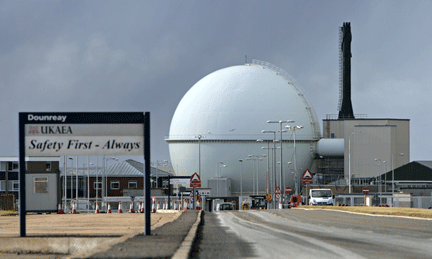
Dounreay pushes forward plans to build new 37-metre-high stack at reactor.
Dounreay’s operators are looking to clear the way to progress long-delayed
plans to replace the discharge stack at the site’s prototype fast reactor.
Dounreay Site Restoration Limited (DSRL) is seeking Highland Council’s
agreement to approve a design for the system to vent authorised emissions
of gases, including radionuclides. Last year, it awarded a £7 million
contract to US conglomerate Jacobs to carry out the work.
Concrete foundations and a steel framework would support the proposed new 37-metre
high stack which would house a plant room containing an extract fan, filter
units, stack sampling and control panels. The contract involves removal of
the existing vent and the design, manufacturing, testing, installation and
commissioning of its replacement. The new stack is earmarked to go up on
the seaward side of the reactor and be in place by October 2024.
John O Groat Journal 21st Dec 2022
UK tipped to export even more energy to France despite blackout fears.
UK tipped to export even more energy to France despite blackout fears.
France’s nuclear power output has plunged to a 30-year low – and the UK is
expected to continue to part ways with its energy supplies despite shortage
fears this winter.
A nuclear expert has warned that the UK may have to send
more energy across the Channel to help keep the lights on in France. This
is despite fears that Britain could be weeks away from its own shortages
this winter.
France has taken 16 of its 56 nuclear reactors offline due to
corrosion issues, causing nuclear power output levels to plummet in recent
months. Making matters worse, Paris confirmed last week that maintenance
halts at two of Electricite de France SA’s reactors – and that it will last
for an extra four months. It may also have to carry out lengthy repairs at
seven other reactors next year, too.
Under normal circumstances, France is
a net exporter of energy, sending some of this to the UK via
interconnectors. While the exchange of energy from the UK to France has
been happening regularly for a number of months, Dr Paul Dorfman, a nuclear
expert from Sussex University, has warned that the UK could ramp up its
exports to France, despite its own domestic energy issues.
Express 24th Dec 2022
https://www.express.co.uk/news/science/1711900/uk-energy-france-nuclear-blackout-edf
Highland campaigners ‘disturbed and disappointed’ to learn 15 radioactive particles discovered near Dounreay
Campaigners have expressed their disappointment in learning that 15
radioactive particles were discovered near Dounreay earlier this year. The
particles were found between February and March on the Dounreay shoreline
and Sandside beach, with 73% of them being described as “significant”.
Highlands Against Nuclear Transport (HANT) and the Scottish Nuclear Free
Local Authorities (NFLA) claim this information was spread through the
press rather than properly shared at a meeting of the Dounreay Stakeholder
Group. Both groups have joined forces to seek answers from Dounreay bosses
and to dispel “sketchy” and “incomplete” information.
Press & Journal 20th Dec 2022
Trawsfynydd as a nuclear waste dump?
Low levels of radioactive waste could be buried at the site of a former
nuclear power station, under new plans. Magnox, owner of the Trawsfynydd
site in Gwynedd, said it was considering burying some of the waste below
ground and capping it with concrete. The company described the proposal as
“unordinary” and said it was one of two options being looked at.
Anti-nuclear group Cadno said it would cause “serious safety issues” and
wants the waste stored safely above ground. Trawsfynydd stopped generating
electricity in 1991 after operating for 25 years and is in the long process
of being decommissioned.
BBC 23rd Dec 2022
Campaign groups want answers on increase in radioactive particles found onDounreay foreshore.
Highlands Against Nuclear Transport (HANT) and the
Nuclear Free Local Authorities Scottish Forum have written to site managing
director Mark Rouse and Nicole Paterson, the chief executive of the
Scottish Environment Protection Agency (Sepa). The campaigners claim the
information about the particles is “sketchy, incomplete and out-of-date”
and want the Dounreay Stakeholder Group (DSG) and the local and national
press to receive regular reports about their detection and retrieval.
John O’Groat Journal 22nd Dec 2022
Chinese nuclear company still has a stake in UK’s Hinkley Point C project, and approval to build Bradwell project.
Following mounting pressure from Washington, the UK decided to ban Huawei
and other vendors it considered to be a high security risk from its 5G
networks in 2020. In November, after months of prevaricating, the
Government blocked the sale of Newport Wafer Fab, the UK’s largest
semiconductor plant, to Chinese-owned Nexperia.
It also bought the Chinese
state-owned power group CGN out of its stake in the Sizewell C nuclear
energy project in Suffolk. Under a long-standing deal, CGN, which the US
placed on an export blacklist back in 2019 after Washington accused it of
stealing American know-how for military purposes, invested in Hinkley Point
C power station in Somerset; then Sizewell C, which has just been given the
green light; and is still technically due to be the lead investor at
Bradwell-on-Sea in Essex where it is hoping to instal its own design of
reactor.
The Chinese company still retains a stake in Hinkley Point and
received formal approval for Bradwell from the UK’s nuclear regulator in
February. But there is growing scepticism at Westminster that the Chinese
will ever be able to build on the site.
Telegraph 18th Dec 2022
https://www.telegraph.co.uk/business/2022/12/18/how-foreign-states-raided-britains-crown-jewels/
Twice as many people support onshore wind compared to nuclear power, according to UK Government survey.
Renewable energy of all sorts is at
least twice as popular with the British public compared to nuclear power
according to the newly released ‘BEIS Public Opinion Tracker Autumn
2022‘. Solar power was supported or strongly supported by 89% of
respondents, offshore wind by 85% and onshore wind by 79%. This was
compared to only 37% for nuclear power, 25% for fracking and 44% for carbon
capture and storage. The survey recorded that just 29% of people believe
that nuclear energy ‘provides a safe source of energy in the UK’.
100% Renewables 15th Dec 2022
For Heaven’s Sake – Examining the UK’s Militarisation of Space
December 13, 2022, By Dr. David Webb of the Global Network Against Weapons and Nuclear Power in Space
I have been working on behalf of the Campaign for Nuclear Disarmament (CND) with Peter Burt from Dronewars UK on a new joint publication called “For Heaven’s Sake: Examining the UK’s Militarisation of Space”. It was launched in June and looks at the UK’s emerging military space programme and considers the governance, environmental, and ethical issues involved.
The UK’s space programme began in 1952 and the first UK satellite, Ariel 1, was launched in 1962. Black Arrow, a British rocket for launching satellites, was developed during the 1960s and was used for four launches from the Woomera Range Complexin Australia between 1969 and 1971. The final launch was to launch Prospero, the only British satellite to be placed in orbit using a UK rocket in 1971, although the government had by then cancelled the UK space programme. Blue Streak, the UK ballistic missile programme, had been cancelled in 1960andspace projects were considered too expensive to continue. 50 years on and things have changed.
Space is now big business – the commercial space sector has expanded and the cost of launches has decreased. The UK is now treating space as an area of serious interest. The government has also recognised that space is now crucial for military operations. So, the Ministry of Defence (MoD) now has a Space Directorate, which works closely with the UK Space Agency and is responsible for the military space policy and international coordination. UK Space Command, established in April 2021 ,is in charge of the military space programme and is closely linked with US Space Command and US Space Force. While the UK typically frames military developments as being for defensive purposes, they are also capable of offensive use………………………………………………………..
Although many of these launches may be for commercial companies, space use has evolved into a fuzzy military/commercial collaboration and Alexandra Stickings, a space policy and security analyst at the Royal United Services Institute in London, believes that the Shetland and Sutherland spaceports will need military contracts to be viable. She said “I am of the opinion that the proposed spaceports would need the MoD as a customer to survive as well as securing contracts with companies such as Lockheed” and the military will want to diversify their launch capabilities“so the Scottish locations could provide an option for certain future missions.” She also warned that: “There is also a possibility that if these sites become a reality, there will be pressure on the MoD to support them even if the cost is more than other providers.”………………………………..
Although many of these launches may be for commercial companies, space use has evolved into a fuzzy military/commercial collaboration and Alexandra Stickings, a space policy and security analyst at the Royal United Services Institute in London, believes that the Shetland and Sutherland spaceports will need military contracts to be viable. She said
“I am of the opinion that the proposed spaceports would need the MoD as a customer to survive as well as securing contracts with companies such as Lockheed” and the military will want to diversify their launch capabilities“so the Scottish locations could provide an option for certain future missions.” She also warned that: “There is also a possibility that if these sites become a reality, there will be pressure on the MoD to support them even if the cost is more than other providers.”…………………….
…………………… https://safetechinternational.org/for-heavens-sake-examining-the-uks-militarisation-of-space/
Paul Dorfman: Nuclear power is just a slow and expensive distraction.

Despite recent breakthroughs in nuclear fusion, renewables remain the most
important technology for reaching net zero. “Fissile fuel” is back –
or so say the UK’s policy teams and press.
Rishi Sunak and Emmanuel
Macron are about to strike a deal on nuclear cooperation, and recent
editorials across national newspapers all reckon everything in the garden
is nuclear. Where, however, is the evidence for its efficacy?
The British and French governments can sign any deal they like – if key financial
investors don’t take up the remaining 60 per cent of construction costs,
the planned Sizewell C plant in Suffolk is going nowhere. The omens
aren’t good.
Recently Sir Nigel Wilson, group CEO of Legal & General, one
of the UK’s largest real assets firms, told BBC Radio Four: “We are not
big fans of Sizewell C.” Sir David King, the UK’s former chief
scientific adviser and a long-standing nuclear supporter, told LBC that the
plant would be “very difficult to protect from flooding” due to rising
sea levels on the Suffolk coast.
New Statesman 13th Dec 2022
Opinion is split on UK government plan for new nuclear and hydrogen projects
Ministers are considering requiring that all new domestic boilers be
“hydrogen-ready” from 2026, as they announced £100m for nuclear and
hydrogen projects. The Department for Business, Energy and Industrial
Strategy (BEIS) has launched a consultation on improving boiler standards,
and has argued there is a strong case for introducing hydrogen-ready
boilers in the UK from 2026.
The government is examining options to replace
polluting fossil fuel gas in Britain’s energy system and has offered
grants for households to install heat pumps. A ban on gas boilers in new
homes comes into force in 2025, although uncertainty remains over the
timeframe for the phase-out of fossil gas in existing homes.
While hydrogen
is expected to play a significant role in the decarbonisation of heavy
industry and the transport network, opinion is split on the practicality of
using it in Britain’s gas network and the resulting cost to households.
Plans for a pilot to examine the effectiveness of using hydrogen have met
local opposition in Whitby, outside Ellesmere Port, where residents have
expressed concerns over becoming “lab rats”. The consultation, which
closes in late March, will also examine the cost of hydrogen-ready boilers.
“The government needs confidence that consumers will not face a premium
for their purchase,” it said.
Guardian 13th Dec 2022
UK government ‘s announcement was NOT yet a funding decision for Sizewell C nuclear, just an exclusion of China from the project
Steve Thomas: The UK government’s announcement of November 29, 2022 on
funding the Sizewell C nuclear power project was widely reported as a
decision to invest in the plant and to complete the exit of China General
Nuclear (CGN) from the project.3
However, close examination of the press
releases by the Government4 and by EDF5 suggest it was no more than the
long-anticipated buying out of China General Nuclear from the project and
funds to allow the development of the project to the point of a Final
Investment Decision (FID).
The budget set up by EDF and CGN to fund this
phase of the project appears to be spent and new funds were needed if the
project was not to stall. Nevertheless, this announcement has important
implications not only for the Sizewell C project but also for the Hinkley
Point C and Bradwell B projects and for the nuclear stations expected to
follow Sizewell C.
Stop Sizewell C 12th Dec 2022
Mini nuclear reactor firms battle it out in UK for approval and government support
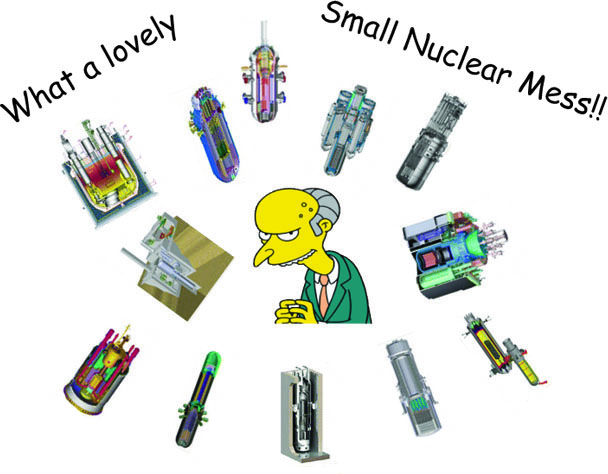
Rolls-Royce rivals gear up for mini-nuke race as power system creaks.
Nuclear power is seen as essential to protect Britain from future energy
shocks. Rolls Royce has long been at the vanguard of Britain’s nuclear
industry, with more than half of the UK’s £385m fund to support advanced
projects in the field allocated to Rolls’s mini-nukes programme.
But the
company’s dominance is now being challenged by a new breed of scrappy
start-ups who believe their technology could make Britain a world leader in
nuclear power. “You should have another viable alternative that you’re
supporting,” says Rick Springman, an executive at US mini-nuke company
Holtec. “When you invest in stocks, do you put all your money in one
company?”
Nuclear power is seen as central to the UK’s goal of meeting
its Net Zero targets, improving energy security and reducing its reliance
on Russian oil. Last month, Rolls said its small modular reactors (SMRs),
or so-called mini-nukes, could supply a fifth of the UK’s total
electricity capacity to homes across England and Wales by the end of the
decade. The reactors use existing nuclear technology on a smaller scale
than traditional power plants. Each can generate about 470MW of power and
last at least 60 years. The Government has picked eight sites for new
nuclear projects including Sellafield in Cumbria and Bradwell, Essex, to
place new projects. Other sites such as Trawsfynydd in the Snowdonia
national park are also being considered. Rolls-Royce has chosen four it
would like to build on, earmarked for their existing infrastructure and
connections to the grid.
Rivals want access to these initial sites to prove
their power stations work. Proof that they can power the grid in the UK
could open up opportunities to launch projects abroad. They believe their
technology offers advantages.
London-based Newcleo, for instance, wants to
use some of the UK’s plutonium stockpile for fuel and Last Energy’s
design aims to use more off-the-shelf components, offering a speedier
build. Meanwhile, Holtec is developing a reactor which can be cooled in an
emergency without external power. While Rolls is planning 470MW reactors,
equivalent to more than 150 onshore wind turbines, Holtec plans 160MW
units. Holtec’s reactor could share a site with Rolls-Royce or another
contender.
The forthcoming Hinkley Point C, with power of 3.2GW, is on a
160 hectare site. By comparison, a single Holtec reactor will occupy six
hectares, or about 10 football pitches. The push for approvals comes as
deals elsewhere are signed elsewhere. GE Hitachi Nuclear Energy signed a
deal last year with Canada’s Ontario Power Generation to deliver one of
its BWRX-300 units which could be online as early as 2028. Deals for GE to
build 10 more in Poland followed weeks later. In February, French President
Emmanuel Macron agreed €1bn of funding for EDF’s Nuward SMR which could
be generating electricity by 2030.
Last Energy wrote to the Parliamentary
committee to say that “excessive Government funding for early stage
development activities” can crowd out “entrants and innovation,” and
that having a preferred supplier – a status Rolls-Royce enjoys in the UK –
may limit the field.
Telegraph 12th Dec 2022
Are the bombs are back in town? US atomic weapons in Britain would make nuclear war more likely

Are the bombs are back in town? — Beyond Nuclear International
Is the US about to station nuclear weapons in Britain again or are they already here?
From Campaign for Nuclear Disarmament (CND UK) h
Editor’s Note: A mass demonstration organized by CND was held at Lakenheath, Suffolk, United Kingdom on November 19. “It’s extraordinary that a foreign power can place weapons of mass destruction on our soil with no oversight from our elected representatives,” said Sue Wright from Norwich CND (Norwich is 40 miles from the base). For more background, see our May 15, 2022 article by CND General Secretary, Kate Hudson, CND’s special page on the Lakenheath campaign, and this article by Hans Kristensen for Federation of American Scientists.
Beyond Nuclear, International Physicians for the Prevention of Nuclear War, Peace Action and Nuclear Resister, sent a joint statement of solidarity that was read out at the November 19 protest.
CND condemns any return of United States nuclear weapons to RAF Lakenheath in Suffolk. 110 nuclear bombs were stored at the airbase until they were removed in 2008 following persistent popular protest, and they must not be allowed back.
Response to war
Tensions are rising across Europe amidst the ongoing war in Ukraine. In response to the Russian invasion, reports are circulating that the US is preparing to store some of its nuclear weapons in the UK. This originated with the fact that the US Department of Defense has added the UK to a list of NATO nuclear weapons storage locations in Europe being upgraded under a multimillion-dollar infrastructure programme. The UK was not on the comparable list for the previous year, so this looks like a very recent decision.
Experts now believe the base in question is RAF Lakenheath, located just 100 km from London.
History repeats itself
While it is not yet known if nuclear weapons have already been returned to the base, or if NATO is in the process of preparing the base to be ready to receive them, this development marks a change in the nuclear status of RAF Lakenheath.
RAF Lakenheath hosted US nuclear weapons for more than five decades, first arriving in September 1954. CND arranged protests at the base alongside the Lakenheath Action Group, including days of action where hundreds of people descended on the base. Direct action activists broke into the base and locked on to the gates of the ammunition depot, preventing access for hours.
Messages of support were shared between campaigners at other US bases in Europe, and from Faslane, where Britain’s nuclear weapons are stationed. Plays were presented outside the base, and letters handed in to the Commander.
Following years of protesting, the nuclear weapons were eventually removed in 2008, but not before nuclear accidents endangered the safety of the local community.
Nuclear accidents
At least two major incidents involving nuclear weapons are known to have occurred at RAF Lakenheath.
In 1956 a B-47 bomber on a routine training mission crashed into a storage unit containing nuclear weapons, killing four servicemen. Official US documents declared it was a ‘miracle’ that none of the bombs detonated, and that ‘it is possible that a part of Eastern England would have become a desert’. Five years later, an airplane loaded with a nuclear bomb caught fire following pilot error.
The bomb was ‘scorched and blistered’, and scientists later discovered it could have detonated in slightly different circumstances.
Both incidents were covered up by the US and British governments, only being admitted in 1979 and 2003 respectively.
Nuclear-sharing
By the time of the weapons’ removal in 2008, the Lakenheath site had 33 underground storage vaults and stored around 110 B-61 gravity bombs that could be dropped from F-15E warplanes based there.
Lakenheath received the latest nuclear-capable fighter – the F-35A – in 2021 and a total of 24 F-35As are expected to be based there eventually. Training with the latest B61-12 guided nuclear bomb will commence within the year.
Despite being called an RAF station, Lakenheath is run by the United States Air Force (USAF) and currently only hosts USAF units and personnel, leading many campaigners to describe it as USAF Lakenheath. The host wing is the 48th Fighter Wing (48 FW), also known as the Liberty Wing, assigned to United States Air Forces in Europe – Air Forces Africa (USAFE-AFAFRICA). The wing operates the F-15C/D Eagle, F-15E Strike Eagle and F-35A Lightning II. With around 6,000 personnel on the base, it is the largest deployment of USAF personnel in Britain.
US nuclear weapons based here would make the UK once again a forward nuclear base for the US. Approximately 150 American B-61 nuclear gravity bombs are already currently stationed in five countries in Europe: Belgium, Germany, the Netherlands, Italy and Turkey.
The nuclear sharing arrangement is part of NATO defence policy. In peace time, the nuclear weapons stored in non-nuclear countries are guarded by US forces, with a dual code system activated in a time of war. Both host country and the US would then need to approve the use of the weapons, which would be launched on the former’s airplanes.
There is strong opposition to these weapons being sited in Europe, including from some of the host nation governments. Germany, Belgium and the Netherlands have all, unsuccessfully, called for the removal of US nuclear weapons from their countries.
Dangerous and destabilising
Should the UK be hosting or preparing to host US nuclear weapons, this would constitute a further undermining of our safety, and prospects for global peace. The US is the only country to locate its nuclear weapons outside its own borders and this major increase in NATO’s capacity to wage nuclear war in Europe is dangerously destabilising. Their return will increase global tensions and put Britain on the front line in a NATO/Russia war.
Resist
The big question is whether the nuclear bombs have already been returned to Britain, or if their delivery is still in preparation. Either way this is a huge challenge for the peace movement and CND will do everything we can to prevent these weapons being sited here. Millions mobilised across Europe against the imposition of cruise and Pershing missiles in the 1980s. We got rid of all those weapons then, and we have to have the energy, the commitment and the confidence to do that again.
The US should scrap plans to base nuclear weapons in the UK, and withdraw all their other nuclear weapons from Europe at the same time. A withdrawal of all US/NATO nuclear weapons from Europe would help reduce tensions at this very dangerous time, and would ultimately help advance international disarmament.
For more information, visit the CND website
UK policy changes: windfalls and renewables

The government is getting side-tracked by its nuclear obsession, with its newly created development outfit ‘Great British Nuclear’ expected to triple UK nuclear capacity by 2050 – getting to 24GW, with 20-30 SMRs and 4-6 new large reactors. Hard to believe. But so is backing a new coal mine. Let’s hope 2023 makes more sense
It’s been a wild year politically in the UK. After a period when
windfall taxes were resisted, we ended up with a government which bowed to
them- as did most of the EU. And they even got extended to cover power.
Chancellor Jeremy Hunt hit electricity generation companies with a 45%
Energy Electricity Generator Levy, on their ‘excess returns’ as he
attempted to fund measures to ease the cost of living crisis.
That was in addition to the existing windfall tax on North Sea oil & gas operators
which is to be raised from 25% to 35% and extended by 2 years until 2028.
Renewable energy suppliers that operate under the Contracts for Difference
system are exempted from the new electricity tax, but not those who are
operating under the Renewables Obligation (RO). So they will be hit quite
hard- they had after all enjoyed a significant wind fall since the RO
subsidy level was high, based on the assumption that gas was cheap. It no
longer is.
There will now be an incentive to shift from RO support to CfDs,
but this may not be easy for some companies. Chris Hewett, Chief Executive
of Solar Energy UK, said: ‘The Chancellor should be taking every
opportunity to encourage investment in clean energy.
Yet, there will be no tax relief for companies investing in meeting the government’s target of
70GW of solar capacity by 2035 – unlike investments in oil and gas
production, which will be taxed less than fossil-free generators.’ A
swifter move to decarbonised energy would have avoided the dire
consequences we are seeing now.’ Fair enough.
But that doesn’t mean opting for costly and slow to deploy nuclear decarbonisation. It means
getting on with lower cost renewables fast and adjusting the wind fall
taxes and CfD system to that end. And of course cutting back on energy
wastage where ever possible.
The government is getting side-tracked by its
nuclear obsession, with its newly created development outfit ‘Great
British Nuclear’ expected to triple UK nuclear capacity by 2050 – getting
to 24GW, with 20-30 SMRs and 4-6 new large reactors. Hard to believe. But
so is backing a new coal mine. Let’s hope 2023 makes more sense
Renew Extra 10th Dec 2022
https://renewextraweekly.blogspot.com/2022/12/uk-policy-changes-windfalls-and.html
The world’s deepest nuclear clean-up – the Dounreay shaft
A £20m contract has been awarded as part of work to clean-up one of the
most challenging features of the Dounreay nuclear power site.
Called the shaft, it plunges 65.4m (214.5ft) below ground and was used for disposing
of radioactive waste. The practice, which started in 1959, ended in 1977
following an explosion inside the structure.
Cavendish Nuclear has been
awarded the contract to build a container handling facility. Waste from the
shaft, and another part of Dounreay called the silo, will be placed in 500
litre drums for storage. Tackling the shaft has been dubbed the world’s
deepest nuclear clean-up by Dounreay’s operators.
BBC 7th Dec 2022
1 This Month

of the week – Shut Down Drone Warfare!


Tell the Ukrainian Government to Drop Prosecution of Peace Activist Yurii Sheliazhenko

Petition to revoke the licensing of the Near Surface Nuclear Disposal Facility (NSDF) at Chalk River. https://www.ourcommons.ca/petitions/en/Petition/Details?Petition=e-7247
To see nuclear-related stories in greater depth and intensity – go to https://nuclearinformation.wordpress.com
-
Archives
- April 2026 (114)
- March 2026 (251)
- February 2026 (268)
- January 2026 (308)
- December 2025 (358)
- November 2025 (359)
- October 2025 (376)
- September 2025 (257)
- August 2025 (319)
- July 2025 (230)
- June 2025 (348)
- May 2025 (261)
-
Categories
- 1
- 1 NUCLEAR ISSUES
- business and costs
- climate change
- culture and arts
- ENERGY
- environment
- health
- history
- indigenous issues
- Legal
- marketing of nuclear
- media
- opposition to nuclear
- PERSONAL STORIES
- politics
- politics international
- Religion and ethics
- safety
- secrets,lies and civil liberties
- spinbuster
- technology
- Uranium
- wastes
- weapons and war
- Women
- 2 WORLD
- ACTION
- AFRICA
- Atrocities
- AUSTRALIA
- Christina's notes
- Christina's themes
- culture and arts
- Events
- Fuk 2022
- Fuk 2023
- Fukushima 2017
- Fukushima 2018
- fukushima 2019
- Fukushima 2020
- Fukushima 2021
- general
- global warming
- Humour (God we need it)
- Nuclear
- RARE EARTHS
- Reference
- resources – print
- Resources -audiovicual
- Weekly Newsletter
- World
- World Nuclear
- YouTube
-
RSS
Entries RSS
Comments RSS
 nuclear-news