Severn Estuary Interests Group responds to Nuclear Review (Fingleton Report) challenging misleading environmental narrative
Friday 5 December 2025, https://www.somersetwildlife.org/news/severn-estuary-interests-group-responds-nuclear-review-fingleton-report-challenging-misleading
The Nuclear Review, or Fingleton Report, calls for a radical reset of Britain’s approach to nuclear regulation and potentially to National Strategic Infrastructure Projects as a whole.
The report and surrounding reporting and commentary perpetuates the damaging government narrative that environmental protections are preventing development.
The original government decision was to build a power station on one of the most highly protected ecological sites in the UK and Europe. The Severn Estuary is both a Special Area of Conservation and a Special Protection Area – a globally significant habitat supporting vast populations of migratory fish, internationally important bird species, and diverse invertebrate communities.
The impact of the nuclear power station on these important and vulnerable habitats and species will be immense and will continue for 70 years. HPC will extract the equivalent of one Olympic-sized swimming pool every 12 seconds, force it through the reactor system at high velocity, and then discharge it back into the estuary significantly heated. The idea that these impacts are trivial is pure misinformation.
The data cited in the Nuclear (Fingleton) Report is inaccurate. It is data collected in relation to Hinkley Point B, an older and now decommissioned nuclear power station, and extrapolated for HPC. The designs of these power stations are not the same.
The data ignore fish behaviour in the estuary resulting in assumptions that much lower numbers will be impacted than the reality. The importance of the estuary for fish spawning is largely ignored and juveniles that can’t be counted but will be sucked through the cooling system. The impact on species and habitats will be extremely damaging in a Special Protection Area and Special Area of Conservation.
It is also important to place current claims about cost increases in a proper context. Hinkley Point C was originally expected to be operational in 2017 at a cost of £18 billion. It is now projected for 2031 at a cost of £46 billion. EDF itself has attributed these enormous delays and overruns to inflation, Brexit, Covid, civil-engineering challenges, and an extended electromechanical phase. Given the scale of these industry-driven issues, it is frankly unworthy to mock those seeking to uphold the legal requirement for EDF to install an acoustic fish deterrent on the enormous cooling-water intakes.
The real issue here is the developer’s approach, not the environmental regulations that function to protect nature. EDF devised the mitigation measures themselves, rejecting offers of collaboration from local experts. This, as with the notorious HS2 bat-tunnel debacle – has inflated costs precisely because expert ecological advice was not incorporated early enough. The continuing narrative that environmental safeguards are the “blocker”, or that only “a few individual animals” benefit from mitigation or compensation, is a deliberate and politically convenient distortion of the evidence.
Simon Hunter, CEO of Bristol Avon Rivers Trust said: “When developers fail to consult meaningfully, ignore local expertise, and attempt to sidestep environmental safeguards, costs rise and nature pays the price. Many countries would never have permitted a development of this scale in such a sensitive location in the first place. The situation at HPC is not an indictment of environmental protection, but of poor planning, weak accountability, and a persistent willingness to blame nature for the consequences of human decisions.”
Georgia Dent, CEO of Somerset Wildlife Trust said: “The government seems to have adopted a simple, reductive narrative that nature regulations are blocking development, and this is simply wrong. To reduce destruction of protected and vulnerable marine habitat to the concept of a ‘fish disco’ is deliberately misleading and part of a propaganda drive from government. Nature in the UK is currently in steep decline and the government has legally binding targets for nature’s recovery, and is failing massively in this at the moment. To reduce the hard-won protections that are allowing small, vulnerable populations of species to cling on for dear life is absolutely the wrong direction to take. A failing natural world is a problem not just for environmental organisations but for our health, our wellbeing, our food, our businesses and our economy. There is no choice to be made; in order for us to have developments and economic growth we must protect and restore our natural world. As we have said all along in relation to HPC, how developers interpret and deliver these environmental regulations is something that can improve, especially if they have genuine, meaningful and – most importantly – early collaboration with local experts.”
The Severn Estuary Interests Group, a collaboration of organisations that prioritise the health and resilience of the estuary for nature and people, is able to say based on decades of experience, that the environmental rules and regulations are not the reason EDF have found themselves spending an alleged £700m on fish protection measures. The Fingleton Report and subsequent reporting has failed to acknowledge some important points with regard to the building of Hinkley Point C:
British Energy Ruled Out Nuclear At Heysham Due to Geological Fault.
Letter sent by Email today…https://lakesagainstnucleardump.com/2025/12/05/british-energy-ruled-out-nuclear-at-heysham-due-to-geological-fault/
Dear Lizzi Collinge MP
I am sure that you felt the earth move on December 4th along with everyone else in the region as there was a sudden movement along faults in the Morecambe bay area between Silverdale and Heysham. This was very scary for all concerned, we thought there had been a massive explosion in Milnthorpe and immediate thoughts went to Heysham’s dodgy old reactors.
SHUT DOWN OLD EMBRITTLED REACTORS AT HEYSHAM
Following on from our previous correspondence with you, the latest earthquake is a major reason why the old and embrittled reactors at Heysham should be mothballed – there would still be jobs on the site (maybe even more than now) for many years to come to ensure safe shut down and decommissioning.
GEOLOGICAL FAULT IS REASON BRITISH ENERGY SAID NO TO NEW BUILD AT HEYSHAM
The movement of the tectonic plates along the fault near Heysham on December 4th is also a major reason why there should be no new nuclear as advised by British Energy in 2002 and reported in the Lancashire Telegraph. We would suggest that MPs should ask for a copy of British Energy’s survey which found that a geological fault in the Heysham area rules out a Heysham 3 and 4. For the nuclear industry and local politicians to be ignoring this advice now in the context of a 3.3 earthquake in the Heysham area could be regarded as being reckless with the public’s safety.
Kind regards
Marianne, Radiation Free Lakeland
Fault rules out new build at Heysham, 18TH APRIL 2002
A GEOLOGICAL fault in the land next to Heysham 1 and 2 has ruled out the possibility of ever building a new nuclear power station at that site.
This week British Energy admitted it would be “impossible” to construct a Heysham 3 or 4.
Local environmentalists have recently been campaigning to stop an expansion of the area’s nuclear power capability fearing that Heysham could be chosen under the Government’s energy review.
But a British Energy survey has revealed that the vacant land has a geological fault which makes it unsuitable for development.
A spokesman said: “We have a certain amount of land but it is not suitable and a Heysham 3 or 4 has never been on the cards.
There are better places around the country to build new power stations.”
Embrittled Old Reactors
UK Government’s nuclear taskforce does not radiate authority
Paul Dorfman – AN “independent” Nuclear Regulatory Taskforce commissioned by UK Prime Minister Keir Starmer has published its final report, calling for a “radical reset of an overly complex nuclear regulatory system”.
Perhaps unfortunately, the taskforce’s announcement seems to have pre-empted its own findings, stating that it will “speed up the approval of new reactor designs and streamline how developers engage with regulators” without providing any evidence that regulation is responsible for huge delays and ballooning costs rather than the incompetence of the
builders and the issues with designs.
So, the possibility that regulation takes as long as it does because that was how long it took to do the job to the required standard was discounted from the get-go.
Made up of three nuclear industry proponents, an economist and a lawyer, the taskforce makes 47 new recommendations “to unleash a golden era of nuclear technology and
innovation” – including the proposal that new nuclear reactors should be built closer to urban areas and should be allowed to harm the local environment.
There are five members of the taskforce: John Fingleton is an
economist, Mustafa Latif-Aramesh is a lawyer, Andrew Sherry is former chief scientist at the National Nuclear Laboratory, Dame Sue Ion has held posts in sets of UK nuclear industry bodies, and Mark Bassett is a member of the International Nuclear Safety Advisory Group and appears the only one with
any experience of regulation.
Following the taskforce’s interim report in
August, a coalition of 25 civil society groups involved in formal
discussions with government warned of the dangers of cutting nuclear safety regulations, stating that the taskforce’s proposals “lacked credibility and rigour”.
Their moderating voices have gone unheard. New nuclear
construction has been subject to vast cost over-runs and huge delays. This is not the fault of safety and planning regulation – rather it’s the nature of the technology.
This attempt at nuclear deregulation would loosen
the safety ropes that anchor the nuclear industry in an increasingly unstable world. It doesn’t make good sense.
Given that the UK will influence other countries, there’s a risk that this narrative, that the only problem with nuclear is regulation, will be taken up elsewhere and there will be increasing pressure on regulators to do their job as quickly as possible regardless of whether necessary rigour would be damaged.
Blaming nuclear regulators for vast cost over-runs and huge delays has always been a fallback position for the nuclear industry. This is not the fault of safety and planning regulation, rather it’s the nature of the technology. De facto nuclear deregulation is a poor short-term choice of the worst kind – and reveals something important about the high-risk
technology that the UK Ministry of Defence classes as a “Tier 1
Hazard”.
It makes good sense to choose the swiftest, most practical,
flexible and least-cost power generation options available. Unlike new nuclear, renewables are here and now – on-time and cost effective. It’s entirely possible to sustain a reliable power system by expanding renewable energy in all sectors, rapid growth and modernisation of the electricity
grid, storage roll-out, faster interconnection, using power far more effectively via energy efficiency and management, and transitional combined cycle gas technology for short-term power demand peaks.
Combining solar, wind and energy storage increases their individual values and lowers the net cost of the energy they produce, making each component more valuable.
This synergy turns intermittent energy sources into a reliable,
dispatchable power supply.
The National 3rd Dec 2025, https://www.thenational.scot/politics/25668133.uk-governments-nuclear-taskforce-not-radiate-authority/
New mini nuclear reactors are jeopardised by wildlife fears

COMMENT. Doncha love that headline?
I mean – those poor little non-existent unaffordable, dirty, dangerous, useless mini nuclear reactors – being persecuted by nasty Arctic, Sandwich and vulgar common terns!
Pledge to build three small modular reactors on island of Anglesey is threatened by warnings of potential impact on nesting terns in local nature reserve.
Sir Keir Starmer’s attempt to kickstart Britain’s mini nuclear reactor programme is being threatened by a protected colony of rare birds. The prime minister has pledged to build the UK’s first three small modular reactors (SMRs) at the Wylfa nuclear site on the island of Anglesey in north Wales, but the proposed location sits beside the Cemlyn nature reserve, where about 2,000 pairs of Arctic, Sandwich and common terns nest
each summer.
Wildlife groups have warned that the birds could abandon the
site if construction goes ahead, and this threatens to delay or reshape the first big project in the government’s nuclear programme, according to the Telegraph, which first reported the story, Mark Avery, a scientist and former conservationist at the Royal Society for the Protection of Birds (RSPB), said:
“Terns are vulnerable because of the types of places where
they live, which tend to be places that would be disturbed if they’re not protected. So they do need our help. And the UK is important for these species. If anybody’s going to look after them, we ought to.”
Times 1st Dec 2025, https://www.thetimes.com/business/energy/article/new-mini-nuclear-reactors-are-jeopardised-by-wildlife-fears-gjmf28bgz
Together Against Sizewell C (TASC)’s new legal challenge against Sizewell C’s secret flood defences.
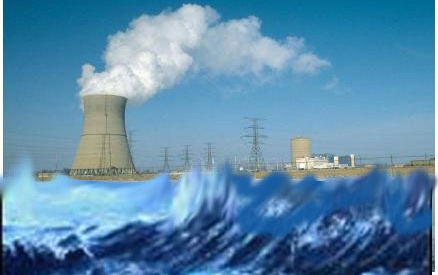
4 Dec 25, https://www.crowdjustice.com/case/sizewell-c-legal-challenge/
The Sizewell C site will be storing up to 4,000 tonnes of spent nuclear fuel on this vulnerable coastline until the late 2100s. The precautionary principle should surely apply so resilience, potential risks and impacts are assessed on a worst case basis and that should be done now. Sizewell C Ltd seem to believe they can do as they see fit with our Heritage Coast, National Landscape and designated wildlife sites irrespective of the damage they will cause.
On Tuesday 9 December Together Against Sizewell C has a permission hearing at the High Court for their case about the overland flood barriers.
The project now includes a stated commitment by Sizewell C Ltd to the Office for Nuclear Regulation (ONR) to install additional sea defences in a ‘credible maximum’ climate change scenario. These defences in the form of two huge 10 metre high ‘overland flood barriers’ were not included in the approved DCO project. In our opinion, these flood barriers, if installed, will likely have additional adverse impacts on the neighbouring designated wildlife sites including RSPB Minsmere as well as the Heritage Coast and Suffolk Coast & Heaths National Landscape. We need to ensure that the original promotor EDF and the now UK government controlled Sizewell C Ltd are not allowed to use climate change uncertainties as an excuse to delay assessment and avoid public scrutiny of these additional structures for decades. The full impact of the whole project should be assessed now.
There is very little detail about the barriers, but it appears from the above diagram [on original] that, if needed:-
The Southern barrier stretches for nearly 500 metres from the Sizewell A site, across the Sizewell Gap to the start of the cliffs running south to Thorpeness, sited on land not in Sizewell C’s ownership.
The Northern barrier potentially stretches from the north of the Sizewell C site, through the SSSI, then inland over Goose Hill for up to a kilometre.
Together with our lawyers, Leigh Day, we have sought the High Court’s permission to apply for judicial review of the decision of the Secretary of State to refuse TASC’s request to revoke or vary the Sizewell C DCO. The grounds for our legal challenge are set out in Leigh Day’s press release.
How we got here
From documents obtained under a Freedom of Information (FOI) request, TASC found out that EDF knew as far back as 2017 that their chosen nuclear platform height of 7.3m AOD would, along with the adapted sea wall on the eastern flank of the site, require two 10-metre high ‘overland flood barriers’. These will be needed to prevent the nuclear platform from flooding from the west in the event that sea level rise reaches a ‘credible maximum’ scenario. This will lead to a major breach of the low-lying coast to the north of Sizewell C and south of the Sizewell nuclear cluster. However, while EDF rightly included the adaptive design of the eastern sea defences in their DCO application documents, they did not include the southern and northern overland flood barriers in the DCO application, thereby avoiding any public scrutiny. As a result there is no commitment in the approved DCO to install these additional sea defences. This is despite there being a requirement to keep the nuclear site safe for its full lifetime from climate change impacts in a credible maximum scenario i.e. to, at least, 2160 while spent nuclear fuel is stored on site.
TASC’s aim is to ensure that the overland flood barriers, not included by EDF in the DCO application, now form part of the overall project. Therefore we need the Secretary of State to either revoke or change the DCO, in order that a lawful assessment of the potential environmental impacts of the entire project is carried out and subject to public scrutiny.
This is important because the project may be grossly underestimating the potential environmental impact, flood risk and sea-defence costs. This, if unaddressed, could be a major burden on future and far future generations who may be impacted by severe, non-reversible environmental, ecological and human impacts combined with an extreme financial liability if Sizewell C were to flood.
Further background for those that want to know more
The Sizewell C project, originally promoted by EDF, is to build twin EPR nuclear reactors close to the North Sea at Sizewell, Suffolk, one of the fastest eroding coastlines in Europe. The site is in the heart of Suffolk Coast & Heaths National Landscape, largely surrounded by designated wildlife sites including RSPB Minsmere and will be partially built on Sizewell Marshes SSSI.
In 2021, Prof Paul Dorfman’s report stated “…any adaptation efforts to mitigate annual flooding (projected to almost entirely surround the proposed EDF Sizewell C EPR nuclear island by 2050) will inevitably entail significantly increased expense for construction, operation, spent nuclear fuel management, rad-waste storage and eventual decommissioning”.
In line with the ONR’s preference, Hinkley Point C is a ‘dry site’ i.e. its platform height at 14 metres AOD is of sufficient height to prevent it from flooding. However, Sizewell C with a platform height of 7.3m AOD, is a ‘protected site’ which means that Sizewell C must at all times demonstrate that the site can be protected against flooding for its full lifetime by use of ‘permanent external barriers such as levees, sea walls and bulkheads’. Once Sizewell C is constructed with a 7.3m AOD platform height, the platform cannot be raised at a later date. The overland flood barriers need to be assessed now so alternatives can be considered e.g. raising the platform height.
Sizewell C was given DCO approval in July 2022 against the recommendation of the five professional planning inspectors. In TASC’s view, the impacts from the overland flood barriers, if they had been assessed during the DCO examination, may well have resulted in planning permission being refused. In any event, our case argues that the Secretary of State’s ‘Habitats Regulation Assessment’ has not considered the environmental impacts of the full project or alternatives, something that is a lawful requirement.
Documentation published by the ONR supporting their grant of Sizewell C’s nuclear site licence in May 2024, has revealed that, in TASC’s opinion, there are now two materially different projects, the one in the DCO approved by Kwasi Kwarteng, and the one still being considered by the ONR as part of the ‘site safety case’. It was an FOI request to the ONR in late 2024 that provided the documentation from 2017 that shows the project requires the adaptive flood protection in the form of the overland flood barriers in a credible maximum climate change scenario.
The Sizewell C site will be storing up to 4,000 tonnes of spent nuclear fuel on this vulnerable coastline until the late 2100s. The precautionary principle should surely apply so resilience, potential risks and impacts are assessed on a worst case basis and that should be done now. Sizewell C Ltd seem to believe they can do as they see fit with our Heritage Coast, National Landscape and designated wildlife sites irrespective of the damage they will cause.
In an attempt to resolve our concerns, on 6th March 2025 TASC wrote to Secretary of State, Ed Miliband calling on him to make a decision on whether the material change to the Sizewell C project highlighted by TASC, namely the commitment to install ‘overland flood barriers’, ‘amounts to exceptional circumstances that make it appropriate for him to exercise his power to change or revoke the DCO’.
The Energy Minister, on behalf of the Secretary of State, replied on 28th March 2025, refusing TASC’s request to vary or revoke the DCO. As TASC consider this matter to be of great importance, we have been left with no alternative but to challenge the Secretary of State’s decision through the courts.
Hinkley Point C contractor issued notice after ‘significant fire safety shortfalls’
The potential for harm and risk of serious injury was identified
A fire enforcement notice has been served on a Hinkley Point C
contractor after “significant fire safety shortfalls” were identified at
the nuclear construction site. Following a focused fire safety
intervention, Office for Nuclear Regulation (ONR) inspectors identified
that Bylor JV (Laing O’Rourke and Bouygues Travaux Publics) had failed to
implement appropriate arrangements for the effective planning,
organisation, control, monitoring and review of preventive and protective
measures.
Somerset Live 2nd Dec 2025, https://www.somersetlive.co.uk/news/somerset-news/hinkley-point-c-contractor-issued-10681094
Did Davey’s EDF Hinkley deal scupper tax payer?

Is EDF about to pocket extra cash due to strike price from decade ago?
The Telegraph reports that Hinkley Point C will slap £1bn a year onto UK
energy bills the moment it starts generating. The cash will flow straight
from households to EDF under a subsidy deal locked in more than a decade
ago.
A second £1bn hit will land through the nuclear levy that bankrolls
Sizewell C in Suffolk. Campaigners are already calling the combination a
“nuclear tax on households” as ministers push ahead with the biggest
expansion of nuclear power in a generation.
Treasury and OBR documents
released after Rachel Reeves’s Budget spell out how the money will move.
CfD receipts are forecast to hit £4.6bn in 2030-31 with £1bn of that
handed to Hinkley C in its first year of operation. The root cause is the
2013 strike price agreed between EDF and Sir Ed Davey. It guarantees
£92.50/MWh for Hinkley’s output, now worth £133 with inflation and
expected to reach around £150 by the time the plant opens in 2030. If
wholesale prices hover near £80/MWh as they do today EDF can claim roughly£70/MWh from consumers and businesses to make up the difference.
Energy Live News 1st Dec 2025. https://www.energylivenews.com/2025/12/01/did-daveys-edf-hinkley-deal-scupper-tax-payer/
France & UK Still Insist On Sending Troops To Ukraine, In Effort To Sabotage Trump Peace Plan
by Tyler Durden, Tuesday, Dec 02, 2025 ,https://www.zerohedge.com/geopolitical/france-uk-still-insist-sending-troops-ukraine-effort-sabotage-trump-peace-plan
As we reported earlier, the important Miami meeting wherein American and Ukrainian delegations hammered out a revised ceasefire draft for some five hours on Sunday did not have European participation. But this is where the real deal-making is taking place. Trump envoy Steve Witkoff is en route to Moscow, where he’s expected to meet with President Putin on Tuesday, in order to present where things stand on the peace plan.
The Miami meeting reportedly focused on where the new de facto border would be in the east, after the 19-point plan featured significant territorial concessions in the Donbass and Crimea. As for Europe, is still touting a “coalition of the willing” which are vowing ongoing military support to the Zelensky government.
At this moment, France and the United Kingdom especially are continuing to push for the deployment of troops from NATO-member states to Ukraine as part of their version of peace settlement, despite this being very obviously unacceptable to Moscow.
Last week Politico reported that when US Secretary of State Marco Rubio joined a discussion involving the coalition of the willing via phone call, he made clear to all that the White House wants a peace agreement in place before committing to any long-term security guarantees for Kiev.
But UK Prime Minister Kier Starmer tried to push back, arguing that a “multinational force” would be essential for ensuring Ukraine’s future security.
Bloomberg then followed with a report saying that UK officials have already selected the military units they plan to deploy, based on several reconnaissance trips to Ukraine.
France’s President Emmanuel Macron proposed that such troops could operate in the capital area or western regions of the country, far from the front lines. But this would flagrantly cross all Russia’s red lines. NATO troops on its doorstep was key Putin’s decision-making in launching the ‘special military operation’ in the first place.
It must be recalled that the original US-drafted 28-point peace plan, which leaked to the press and more recently was condensed down to 19 points, included an explicit prohibition on deploying NATO troops to Ukraine.
The European-proposed counter-plan, which was also quickly leaked to the media, greatly softened that stance and laid out that instead of a blanket ban, NATO would not “permanently station troops under its command in Ukraine in peacetime.”
At a moment Trump’s peace plan advances, and with Witkoff on his way to meet with President Putin, hawks in Europe are growing even more hawkish:
Such intentionally vague language leaves open the possibility of NATO troop rotations into Ukraine. The Kremlin has time and again said it would not tolerate this, and such a move would lead to direct war with the West.
Europe’s plan also seeks to leave open a Ukrainian path to NATO, but this is also a sticking point which the US plan leaves out, given it would of course be dead on arrival if presented to Putin.
UK is running out of water – but data centres refuse to say how much they use.

One Government insider said ‘accurate water figures have historically been very hard to get from facilities of any size’.
Tech firms are failing to tell the Government how much water they use in
their data centres, as concerns grow that the UK does not have enough water to meet its needs.
Experts are calling on the Government to introduce
tighter regulations on data centres amid warnings that new power and
water-intensive supercomputers could be built in areas vulnerable to
drought. Campaigners have raised concerns that the Government is “too
close” to tech lobbyists and is failing to fully consider the impact a
data centre boom could have on the UK’s natural resources.
iNews 1st Dec 2025, https://inews.co.uk/news/uk-running-out-water-data-centres-refuse-say-4062230
Inside the power-hungry data centres taking over Britain.

Our thirst for AI is fuelling a new construction wave: of giant data centres. But can ourelectricity and water systems cope — and what will the neighbours say?
Plants [like the one] run by the company Stellium on the outskirts of
Newcastle upon Tyne, are springing up across the country.
There are already
more than 500 data centres operating in the UK, many of which have been
around since the Nineties and Noughties. They grew in number as businesses and governments digitised their work and stored their data in outsourced “clouds”, while the public switched to shopping, banking and even tracking their bicycle rides online.
But it was in 2022, when a nascent
technology company called OpenAI launched ChatGPT, that the world woke up to the potential of AI and large language models to change the way the planet does, well, just about everything.
It can do this thanks largely to advances in chip design by the US company Nvidia — now the world’s most valuable (and first $5 trillion) business. The trouble is, a typical 4334wChatGPT query needs about ten times as much computing power — and electricity — as a conventional Google search.
This has led to an
explosion in data centres to do the maths. Nearly 100 are currently going
through planning applications in the UK, according to the research group
Barbour ABI. Most will be built in the next five years. More than half of
the new centres are due to be in London and the home counties — many of
them funded by US tech giants such as Google and Microsoft and leading
investment firms. Nine are planned in Wales, five in Greater Manchester,
one in Scotland and a handful elsewhere in the UK.
The boom is so huge that
it has led to concerns about the amount of energy, water and land these
centres will consume, as residents in some areas face the prospect of
seeing attractive countryside paved over with warehouses of tech. Typically
these centres might use 1GW (1,000MW) of electricity — more power than is
needed to supply the cities of London, Birmingham and Manchester put
together.
Times 29th Nov 2025, https://www.thetimes.com/business/technology/article/inside-britains-ai-data-centre-boom-can-the-grid-keep-up-jllzb3b0p
Nuclear a ‘political toy’ for Ed Miliband in Scotland, claims Scottish National Party
SNP’s Stephen Flynn has taken a firm stance against the development of
nuclear power stations in Scotland.
Aberdeen South MP Stephen Flynn has
left a scathing review of Energy Secretary Ed Miliband’s plans for
nuclear power stations in Scotland. He labelled the plans ironic as it
would leave “energy rich Scotland picking up the bill for those
projects” when it “already produces more electricity than it
consumes”, claiming that said irony “will be lost on nobody – well
maybe just Ed Miliband it seems.” He also took aim at the UK state Great
British (GB) Energy, which has “so far achieved nothing for Scotland”,
leading to Miliband “doubling down on that record with this new
instruction to a supposedly independent company.” “Nobody knows what GB Energy is actually supposed to be, but this news suggests it’s little
more than a political toy for Miliband to play with whilst he destroys
Scotland’s offshore industry,” he added.
Energy Voice 1st Dec 2025, https://www.energyvoice.com/renewables-energy-transition/nuclear/586027/nuclear-a-political-toy-for-ed-miliband-in-scotland-claims-snp/
Use less energy : Demand-led policy scenarios show promise.

Renew Extra 29th Nov 2025,
Demand-side energy reduction has so far received less policy support than supply-side net-zero technologies, despite the fact that, as this interesting new Nature paper claims, ‘energy demand reductions of ~50% by 2050 compared with today are possible while maintaining essential services and improving quality of life’. That would involve more than just improved technical efficiency of energy use and production, something that is already thankfully underway- although still rather too slowly. It would also mean fundamental changes in how energy is used, with radical reductions in consumption due to new social/behavioural patterns.
The paper notes that ‘policies explicitly targeting large energy demand reductions remain scarce, suggesting that they have so far been disregarded by policymakers owing to real or perceived lack of political feasibility. Instead, national energy strategies frame shifts in demand through an emphatically technological lens, focusing on efficiency gains through electrification and overlooking the broader structural and societal changes necessary to substantially cut the need to use energy..’
To address the perceived ‘persistent gap between academic energy demand scenarios and the scarcity of corresponding energy policy’, in a new approach, academics and policy makers join forces in a demand-focused process of ‘co-created’ UK 2050 energy scenario analysis, led by policymakers and evaluated through public dialogue. It takes more effort, but this paper says the new combined approach is well worth it: the ‘uniquely close involvement’ of policymakers leading the project evidently generated markedly different & positive narratives that reflect policymakers’ concerns while still leading to scenarios with reductions in energy demand of 18–45%, exceeding what policies normally suggest’. To address the perceived ‘persistent gap between academic energy demand scenarios and the scarcity of corresponding energy policy’, in a new approach, academics and policy makers join forces in a demand-focused process of ‘co-created’ UK 2050 energy scenario analysis, led by policymakers and evaluated through public dialogue. It takes more effort, but this paper says the new combined approach is well worth it: the ‘uniquely close involvement’ of policymakers leading the project evidently generated markedly different & positive narratives that reflect policymakers’ concerns while still leading to scenarios with reductions in energy demand of 18–45%, exceeding what policies normally suggest’.
The new paper expands on the method developed by Barrett et al, replacing the ‘academic scenario design’ stage by a policymaker-led process, with input from energy-system modellers. The resultant co-created scenarios are then subject to public discussion, so as to ‘avoid being perceived by policymakers either as ideologically driven or as theoretical academic exercises’……………………………………
The paper also claims that the new approach can deliver practical result and savings: ‘demand-side measures can help reduce societal risks by decreasing future reliance on technologies currently unproven at scale, in the context of a policymaker-led framework……………………………………………………………………………………………………… https://renewextraweekly.blogspot.com/2025/11/use-less-energy-demand-led-policy.html
The Neocon-Realist Armageddon Over Ukraine

Rubio was in Geneva last Sunday with the Ukrainians and Europeans to undermine Trump’s 28-point plan, trying to replace it with one of just 19 points that unrealistically gives an advantage to Ukraine. Unrealistic because this war has already ended on the battlefield and Trump has virtually acknowledged it.
By Ray McGovern, Consortium News, https://consortiumnews.com/2025/11/28/ray-mcgovern-the-neocon-realist-armageddon-over-ukraine/
Donald Trump made some revealing remarks to the media as he flew to Florida for Thanksgiving on Wednesday. Asked if he thought Ukraine is being asked to give too much land to Russia in his proposal to end the war, Trump responded:
“It’s clearly up to the Russians. It’s moving in one direction. … That’s land that over the next couple of months might be gotten by Russia anyway. So, do you want to fight and loose another 50,000 or 60,000 people? Or do something now? They are negotiating; they are trying to get it done.”
That’s the same realistic approach Trump’s new special envoy to Ukraine, U.S. Army Secretary Daniel Driscoll, took with the Ukrainians and Europe’s so-called “coalition of the willing” during a visit to Kiev earlier this week.
Driscoll reportedly threw in yet one more reason for Ukraine to end the war – the fact that the Russians have ever-growing stockpiles of missiles they can deploy.
In other words, the undeniable Russian advances all along the contact line in Ukraine are no longer deniable to anyone tuned into reality.
But not everyone is tuned in. U.S. Gen. Keith Kellogg, who unrealistically claimed that Ukraine could still win, has been removed as special envoy to Ukraine, but there are other neocons lurking near the White House, for instance, Secretary of State Marco Rubio who also as national security adviser can control the flow of intelligence and policy proposals to the president.
Rubio was in Geneva last Sunday with the Ukrainians and Europeans to undermine Trump’s 28-point plan, trying to replace it with one of just 19 points that unrealistically gives an advantage to Ukraine. Unrealistic because this war has already ended on the battlefield and Trump has virtually acknowledged it.
What’s next is an official agreement, endorsed, ideally by the United Nations Security Council, where France or Britain, however, could veto it, as the Europeans continue their efforts to thwart such a peace agreement.
Britain, France and Germany, for example, are still pushing the fantasy that Russia is poised to attack Europe.
So we are at the threshold on Ukraine, at the beginning of a consequential battle between the neo-cons and Europeans on one side, and Donald Trump and the realists on the other. Will Trump show the fortitude to see this through and overcome his secretary of state?

For now you can dismiss the idea that the so-called “Peace Plan” is “dead on delivery.” It hasn’t even officially been delivered to Russia yet.
Russian President Vladimir Putin awaits hand delivery from U.S. envoy Steve Witkoff probably on Monday – Washington’s recent unorthodox conduct of diplomacy notwithstanding.
My sense is that Witkoff, like Driscoll, will dis the Europeans and go to Moscow with the 28-point draft plan for discussion and that it will adhere to one of the main provisions of Anchorage — namely that Trump will not let Zelinski sabotage movement toward an agreement. Putin told Hungarian President Viktor Orban today in Moscow that he remained open to meeting Trump in Budapest at a future date.
For his part, Putin seems ready to do business. An important backdrop is his priority objective of preventing relations with the U.S. from falling into a state of complete disrepair. As for Ukraine, Putin has reiterated that the 28-point Trump plan could form the basis for future agreements.
Taking questions from the press yesterday in Bishkek, Kyrgyzstan, Putin gave clarity to a number of key issues. He said there was “no ‘draft agreement’ per se,” but rather “a set of issues proposed for discussion and finalization.”
Putin went on:
“We discussed this with American negotiators, and subsequently, a list of 28 potential points for an agreement was formulated.
Thereafter, negotiations were held in Geneva between the American and Ukrainian delegations. They decided among themselves that all these 28 points should be divided into four separate components. All of this was passed on to us.
In general, we agree that this could form the basis for future agreements. However, it would be inappropriate for me to speak now of any final versions, as these do not exist.”
Putin noted that the U.S. — this would be Trump, not Rubio — is “taking our position into account – the position that was discussed before Anchorage and after Alaska. We are certainly prepared for this serious discussion.”
On the question of land, Putin made certain that Russia will not be denied. He said, “I think it will be clear at once what it is all about. When the Ukrainian troops leave the territories they occupy, then the hostilities will cease. If they do not leave, we will achieve it militarily. That’s that.”
Of course, in 2022 Russia entered the Ukrainian civil war that had begun after the 2014 U.S.-backed coup that lead to the U.S.-installed government attacking the ethnic Russian Donbass region, which had rejected the unconstitutional change of government and declared independence.
After eight years of indirectly aiding Donbass, Russia intervened directly after the Minsk agreements to end the civil war were sabotaged by Ukraine and the Europeans. Russia’s war demands have remained demilitarizing and denazifying a neutral Ukraine. In the course of its intervention it has absorbed four Ukrainian oblasts into the Russian Federation, which remains non-negotiable to Moscow.
“Those in the West who understand what [recent Ukrainian defeats on the battlefield] could lead to are pushing for an end to the fighting as soon as possible,” Putin said, referring to the realists in Washington.
“They understand that if the front lines are drawn back in certain areas, the Ukrainian armed forces will lose their combat effectiveness and their most combat-ready units,” he said. “‘Enough is enough, preserve the core of your armed forces and your statehood, that’s what you need to focus on,’ say those who hold this view.”
But he said “others,” referring to the Europeans and neocons, “insist on continuing the hostilities until the last Ukrainian. That’s the difference in approaches.”
Putin tried to put to rest the fear-mongering in Europe about a planned Russian attack on the continent. “Russia does not intend to attack Europe. To us, that sounds ridiculous, does it not?” he said. “We never had any such intentions. But if they want to have it formalised, let’s do it, no problem.”
Putin also reiterated that Russia could only sign a peace agreement with a legitimate government in Ukraine after a new election, another obstacle to overcome.
“I believe that the Ukrainian leadership made a fundamental, strategic mistake when it was afraid to hold presidential elections, and as a result, the president lost his legitimate status,” Putin said. “As soon as any kind of peace agreement is reached, the fighting will stop, and the state of emergency will be lifted, elections will be announced.”
Which is another incentive for Zelensky and those who back him inside and outside of Ukraine to keep on fighting.
“So, basically, we want to reach an agreement with Ukraine in the end, but it’s almost impossible right now, legally impossible. We need our decisions to be internationally recognized by the major international players. That’s it,” said Putin.
He added:
“And so, of course, we need recognition, but not from Ukraine today. I hope that in the future we will be able to come to an agreement with Ukraine: there are many healthy people there who want to build relations with Russia for a long-term historical perspective.”
Peace then will require the complete negation of the neocons and the Europeans and a new government in Kiev — a tall order indeed.
It comes down to whether Trump can finally stand up to them — people whom he appointed, like Rubio, and whom he golfs with, like Sen. Lindsey Graham. He seems to have less respect for the Europeans, who practically sat at his feet around the Oval Office desk earlier this year pleading their case on Ukraine.
Trump may be motivated in part by the vain desire to end the war to win the Nobel Peace Prize. But he can get it done. Trump can ignore the Europeans and be serious this time about cutting off military aid and intelligence to Ukraine as he threatened to do if Zelensky did not accept his 28 points by Thanksgiving.
When it comes to Ukraine, Trump really does hold the cards. Will he play them?
UK Nuclear Projects Set to Add $1.3 Billion a Year to Power Bills

By Tsvetana Paraskova – Nov 28, 2025,
https://oilprice.com/Latest-Energy-News/World-News/UK-Nuclear-Projects-Set-to-Add-13-Billion-a-Year-to-Power-Bills.html
Subsidies and Contracts for Difference (CfD) that the UK government has promised to the two projects for new nuclear power stations are expected to add $1.32 billion (£1 billion) annually to the UK power bills from around 2030, The Telegraph reports, citing documents by the Treasury and the Office for Budget Responsibility (OBR).
The Hinkley Point C nuclear power station, developed by EDF, is expected to begin generating electricity in 2030-31, after years of delays and cost overruns.
That year, CfD is expected to generate $6.1 billion (£4.6 billion) in receipts, including £1.0 billion to fund subsidy payments to the Hinkley Point C nuclear power plant for its first year of expected generation, OBR said in its economic and fiscal outlook released after the UK’s latest budget announcement.
The UK government earlier this year also took the final investment decision to build the $51-billion Sizewell C nuclear power plant on the Suffolk Coast in eastern England, which was the first British-owned nuclear power station to be announced in over three decades.
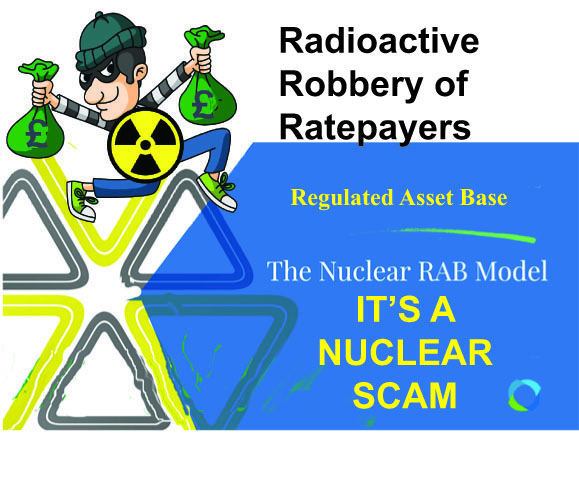
Sizewell C will be the first nuclear power station in the UK financed using a regulated asset base (RAB) model that levies an additional charge on consumer energy bills, which contributes to the financing costs of the plant, OBR noted. This levy is also expected to increase energy bills as early as January.
UK households will pay slightly higher energy bills in the first quarter of 2026 after energy market regulator Ofgem last week raised the Energy Price Cap by 0.2%, against expectations of a 1% drop.
The slight increase in the price cap is driven by government policy costs and operating costs. This includes funding the government’s Sizewell C nuclear project, which will bring more [?] clean power, Ofgem noted.
Opponents of new conventional nuclear plants in Britain argue that consumers will be burdened with a “nuclear tax” for the expensive projects in their energy bills.
“The Government has a misguided belief that nuclear will be a cheap, ‘green’ solution to our energy needs, but the evidence shows the opposite – that costs of delivery and of dealing with nuclear waste – will continue to rise,” Alison Downes, of Stop Sizewell C, told The Telegraph.
“We remain opposed to the imposition of a nuclear tax on households, given the acknowledged uncertainty about the projected costs of constructing Sizewell C.”
UK energy bill payers will hand £2bn a year to EDF for new power stations
COMMENT. Here is a prime example of the crookedness of the UK Labour government, in pretending that the nuclear industry is beneficial to people and the environment:
“The chancellor, Rachel Reeves, has promised to cut energy bills by an average £150 for each household from April by slashing green levies.“
UK green levies are taxes imposed by the government on sources of pollution, which contribute to about 8% of a household’s energy bill. These levies raise funds for various energy-efficiency schemes and have generated £5.9 billion from household energy bills in 2024. They are essential for supporting energy-saving measures in homes and for expanding renewable energy sources, ultimately improving energy security in the UK
French government-owned company to receive funding for Hinkley Point C and Sizewell C
Rob Davies, Guardian 28th Nov 2025
UK energy bill payers will hand over £2bn a year in subsidies to EDF, the French company building two nuclear power stations, according to government figures.
EDF, owned by the French government, will be entitled to £1bn in annual payments as soon as Hinkley Point C, in Somerset, comes on to the grid in 2030. The sum is due under the contracts-for-difference system that guarantees low-carbon energy companies a fixed price for the electricity they generate..
Separately, £1bn will be added to bills through a separate nuclear levy scheme to fund Sizewell C, in Suffolk, a 3.2 gigawatt (GW) project also led by EDF.
The result is an increase of about £2bn in bills, funding the cost of two plants that together will generate about a sixth of the electricity that Britain was using during peak demand so far this year, equivalent to 6m homes.
A government spokesperson said: “We are reversing a legacy of no new nuclear power being delivered to unlock a golden age of nuclear, securing thousands of good, skilled jobs and billions in investment.”
The government hopes the extra cost of new nuclear reactors could be offset in the future by the stable “baseload” output they offer, which can rein in the rising cost of balancing volatile output from energy sources such as solar and wind.
That balancing cost is expected to hit about £2bn this year, according to the Nuclear Industry Association. The government said Sizewell alone could save £2bn a year in future, adding that the impact on bills over the construction period was likely to be about £1 a household each month.
The chancellor, Rachel Reeves, has promised to cut energy bills by an average £150 for each household from April by slashing green levies.
Assessments of the nuclear subsidy were revealed in documents released by the Office for Budget Responsibility (OBR), which assesses the impact of economic policy. The OBR said EDF would receive £1bn in the first year of operation at Hinkley, due to come on stream in 2030 after 12 years of construction.
“In 2030-31, contracts for difference (CfDs) are expected to generate £4.6bn in government receipts, including £1bn to fund subsidy payments to the Hinkley Point C nuclear power plant for its first year of expected generation,” the OBR said.
The subsidy is the result of an agreement struck between EDF and the Conservative-Liberal Democrat coalition government in 2013.
The then energy secretary, Ed Davey, now the leader of the Liberal Democrats, agreed a “strike price” guaranteeing that the French state-owned company would receive £92.50 for each megawatt hour (MWh) for electricity generated at the 3.2 GW plant.
The strike price has risen with inflation to about £133 and is projected to reach £150 in 2030, according to the Daily Telegraph, which first reported the Hinkley subsidy.
The wholesale cost of electricity is much lower, now about £80 a MWh, meaning EDF will be able to claim the shortfall from consumers and businesses that use its electricity, thanks to the CfD agreement…….
The construction of Sizewell C, which has yet to begin and is scheduled for completion in the 2030s, will also drive up bills.
From January, energy bills will be inflated by a levy supporting the plant’s construction, adding £10 a year. The levy is expected to raise £700m but will double to 2030 to fund Sizewell, whose price tag is projected to hit £100bn.
In practice, the cost of the power station could increase. Hinkley Point C was originally projected to cost £18bn but has been subject to several time and cost overruns; EDF predicted last year the final bill could hit £46bn. https://www.theguardian.com/uk-news/2025/nov/28/uk-energy-bill-payers-edf-hinkley-point-c-sizewell-c
1 This Month

of the week – Shut Down Drone Warfare!


Tell the Ukrainian Government to Drop Prosecution of Peace Activist Yurii Sheliazhenko

Petition to revoke the licensing of the Near Surface Nuclear Disposal Facility (NSDF) at Chalk River. https://www.ourcommons.ca/petitions/en/Petition/Details?Petition=e-7247
To see nuclear-related stories in greater depth and intensity – go to https://nuclearinformation.wordpress.com
-
Archives
- March 2026 (251)
- February 2026 (268)
- January 2026 (308)
- December 2025 (358)
- November 2025 (359)
- October 2025 (376)
- September 2025 (257)
- August 2025 (319)
- July 2025 (230)
- June 2025 (348)
- May 2025 (261)
- April 2025 (305)
-
Categories
- 1
- 1 NUCLEAR ISSUES
- business and costs
- climate change
- culture and arts
- ENERGY
- environment
- health
- history
- indigenous issues
- Legal
- marketing of nuclear
- media
- opposition to nuclear
- PERSONAL STORIES
- politics
- politics international
- Religion and ethics
- safety
- secrets,lies and civil liberties
- spinbuster
- technology
- Uranium
- wastes
- weapons and war
- Women
- 2 WORLD
- ACTION
- AFRICA
- Atrocities
- AUSTRALIA
- Christina's notes
- Christina's themes
- culture and arts
- Events
- Fuk 2022
- Fuk 2023
- Fukushima 2017
- Fukushima 2018
- fukushima 2019
- Fukushima 2020
- Fukushima 2021
- general
- global warming
- Humour (God we need it)
- Nuclear
- RARE EARTHS
- Reference
- resources – print
- Resources -audiovicual
- Weekly Newsletter
- World
- World Nuclear
- YouTube
-
RSS
Entries RSS
Comments RSS
 nuclear-news