What happens after a nuclear power station is closed?
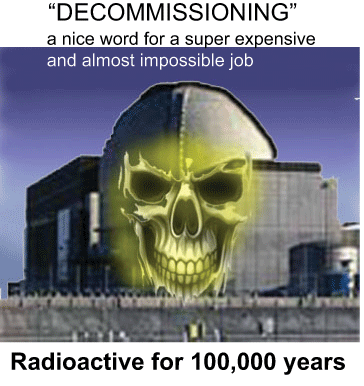
When Hinkley Point B. opened in 1976, its two advanced gas-cooled reactors
(AGRs) were state of the art. But over nearly half a century of generation,
cracks developed in their graphite cores, creating potential safety
concerns, and they were shut down for good last year.
Yet inside the
cavernous main hall, little seems to have changed. Freshly painted
machinery gleams under bright lights, as teams of workers in blue boiler
suits scurry around above the reactors themselves. The main activity at the
moment is defueling: removing hundreds of fuel assemblies from deep within
the reactor cores, stripping them down, and sending the wastes away for
storage at Sellafield. As we watch, a large steel tower is being positioned
over the reactor.
This is the charging machine. It looks rather like an
old-fashioned helter-skelter, but in fact it is a heavily-shielded crane.
The fuel assemblies, having been in the reactor for years, are highly
radioactive and need to be handled with extreme care.
Once defueling is
complete, EDF will hand over the site to the Nuclear Decommissioning
Authority (NDA). To find out what happens then, it is worth going next door
– to another power station, Hinkley Point A. This was one of the UK’s
first-generation nuclear sites. Its two reactors were brought online in
1965 – and shut down for good in 2000. Nearly a quarter of a century later,
its two box-like reactor buildings still stand tall against the skyline.
But other buildings, including the huge turbine hall, have been removed –
leaving just a deep, weed-strewn hole in the ground. Old fuel storage ponds
have been drained, cleaned and painted to reduce radiation risks, although
we are warned not to linger around them. But elsewhere a water-filled vault
remains half-full of radioactive scrap, which is being painstakingly
removed.
BBC 27th Oct 2023
https://www.bbc.co.uk/news/business-67087673 #nuclear #antinuclear #NoNukes
Amid rising cost worries, UK government promises “practical nuclear roadmap”

Government promises ‘practical’ UK nuclear roadmap this year amid rising cost concerns.
Stuart Stone, 26 October 2023
Government agrees to map out route to 24GW nuclear target by 2050 and
allow Parliament to consider major investment value for money amid fears of
‘another HS2’.
The government has promised set out a “practical roadmap”
before the end of the year towards its goal of securing 24GW of nuclear
power capacity 2050, but MPs have raised concerns as to whether new nuclear
generation will offer value for money in light of the controversial
decision to cancel the northern leg of the HS2 high speed rail project.
In a letter to MPs on the Science, Innovation and Technology Committee (SITC)
yesterday, the government confirmed that a new Nuclear Strategic Plan is on
its way, and that it would spell out how the current reactor fleet will
contribute to UK targets and allow Parliament to weigh up value for money
of major new nuclear projects.
It follows a report from the SITC in July
which had called for greater detail on how the government plans to meet its
ambitious nuclear targets, as it cited the UK’s “intermittent history” with
regards to ramping up nuclear power capacity, with no new reactors having
been built in several decades. The report warned that UK nuclear capacity –
which currently contributes 15 per cent of the electricity needs – is set
to fall substantially by 2028 when all plants bar Sizewell B are scheduled
to reach the end of their operational lives.
Business Green 26th Oct 2023
https://www.businessgreen.com/news/4138819/government-promises-practical-uk-nuclear-roadmap-amid-rising-cost-concerns #nuclear #antinuclear #NoNukes
Why consumers are very likely to pay a lot more for power from Sizewell C than from Hinkley C
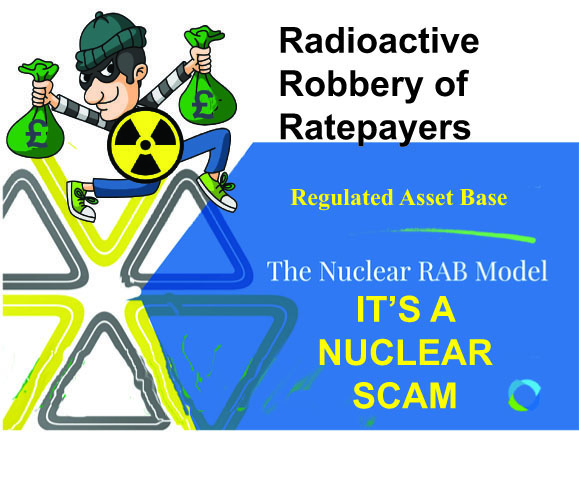
under the RAB mechanism, it seems that EDF will be paid for what they actually spend. This time it will be British, not French taxpayers and consumers, that will be paying for the cost overruns.
The Government are deceiving us about the cost effectivemess of their new funding mechanism for nuclear power
Dave Toke’s Green Energy Blog, DAVID TOKE, OCT 25, 2023
Consumers face a double whammy of bills to pay for the planned nuclear power plant, Sizewell C, due to be given a go-ahead soon. According to a ‘worst case scenario,’ consumers are likely to (collectively) pay around £34 billion in today’s prices before any electricity is generated from Sizewell C at all. But, in addition, according to my calculations, under this (quite likely) worst-case scenario consumers will then also pay around £160 per MWh in today’s prices for electricity produced by Sizewell C. This works out as £117 per MWh in 2012 prices (ie the base year for setting the cost of Hinkley C). The Government appears to be doing little or nothing to prevent this scenario from occurring.
Hence consumers could not only be paying much more per MWh than the controversially high Hinkley C deal (£92.5 per MWh in 2012 prices) but will also be paying large sums upfront before a kWh is even generated. In fact, despite being labeled as a ‘worst case scenario’, the estimate for Sizewell C costs that have been calculated is essentially based on the type of cost overrun experienced by attempts to build nuclear power plants in the West since 1990. That is nuclear construction costs end up being around double the amount initially budgeted.
I have taken the size of the upfront costs payable by consumers from an analysis done by Professor Stephen Thomas of Greenwich University. See also here. I have then taken his worst-case scenario figure for these upfront costs and converted them into a figure for costs per MWh by applying conventional economic tools. This involves using discounted cash flow analysis using a (real) 6 percent discount rate and assuming Sizewell C will be generating at an average of 90 percent of full capacity. This assumes using a contract type paying premium prices for energy generated similar to that used for Hinkley C (ie lasting for 35 years). I have based cost estimates of operating nuclear power plants on US experience, although operating costs form only a small element of the costs. The large bulk of the costs are concerned with repaying money loaned and invested in the power station.
My analysis runs contrary to the narrative spread by the Government. They claim that the so-called Regulated Asset Base (RAB) mechanism for funding new nuclear power plants will make nuclear power cheaper for the consumer. On the contrary, it is likely to allow more to be paid to EDF for Sizewell C compared to Hinkley C. This is because consumers will be responsible for paying cost overruns for Sizewell C whilst in the case of Hinkley C it is EDF that takes responsibility for cost overruns. The total amounts that consumers will have to pay will remain unknown until it is far too late to do anything to stop consumers from having their electricity bills dramatically increased………………..
The RAB mechanism has been lauded as a cost-saver because it allows EDF to pay lower interest rates on money borrowed to finance construction compared to the borrowing costs applicable to building Hinkley C. Money needed to finance interest payments and investors during the construction period is charged to consumers whilst the plant is being built.
There’s one giant flaw in this argument. The Government seems to be heading towards giving the go-ahead to EDF to start construction without agreeing a price to be paid for electricity. This means that consumers will pay for whatever it costs to build the plant. The costs of nuclear power stations seem always to be a lot more than what was estimated at the time of the ‘final investment decision’ (FID).
This is different from what happened with Hinkley C. In the case of Hinkley C EDF was committed to paying for any cost overruns themselves without being paid any extra money. ………… EDF bears responsibility for these cost overruns – in effect the French taxpayers will pay since EDF is owned by the French Government.
Yet under the RAB mechanism, it seems that EDF will be paid for what they actually spend. This time it will be British, not French taxpayers and consumers, that will be paying for the cost overruns. OFGEM is being given responsibility for organising payments to EDF.
Ultimately, it seems, OFGEM will be the ‘fall guy’ when, many years down the line, there is public controversy over the costs of the power from Sizewell C. In an obscure piece of wording in an obscure document entitled ‘Revenue Stream for the nuclear RAB model’, the government says (page 12) ‘The amount a relevant licensee nuclear company is allowed to receive (‘allowed revenue’) in respect of its activities relating to the design, construction, commissioning, and operation of the relevant nuclear project would be determined by Ofgem’.
In other words, EDF will have virtually a blank cheque to pay all their costs. The only control OFGEM will have is to check that the costs have actually been spent or will be spent on the power plant.
People were surprised at the cost of the Hinkley C contract, but the surprise was based on the public being kept in ignorance of nuclear construction costs in the past. Now the Government has learned its lesson, and we shall see a return to the past practice of the public being kept in the dark about the costs of building nuclear power plants…………………………………………… https://davidtoke.substack.com/p/why-consumers-are-very-likely-to
British Nuclear Fuels resurrected as Great British Nuclear

In February 2023, plans to wind up BNFL within two years were still
active. By this point the company had not traded in 13 years. However, on
18 July 2023, BNFL was resurrected as Great British Nuclear, with the aim
of delivering the government’s long-term nuclear programme and supporting
its ambition to deliver up to 24 GW of nuclear power in the UK by 2050.
Wikipedia (accessed) 27th Oct 2023 #nuclear #antinuclear #NoNukes
https://en.wikipedia.org/wiki/Great_British_Nuclear#Resurrection_as_Great_British_Nuclear
Welsh campaigners call for nuclear sponsorship ban at National Eisteddfod.

The National Eisteddfod has peace at its heart and Welsh anti-nuclear
campaigners have registered a formal complaint with its governing body
protesting the acceptance of sponsorship money from the companies
Westinghouse and Cwmni Egino at this year’s event despite the clear links
between nuclear power and nuclear weapons.
A letter endorsed by eight campaign groups and the Welsh Nuclear Free Local Authorities has been sent today (24 October), on the first day of the United Nations’ Disarmament
Week, to the Eisteddfod Council calling on it not to accept ‘any future
sponsorship from any company engaged in developing nuclear power and the
manufacture of weapons, especially armaments of mass destruction.’
NFLA 24th Oct 2023 #nuclear #antinuclear #nuclearfree #NoNukes
Sizewell Nuclear Court Case on 1st and 2nd November will be available to watch online
The Sizewell Court case on 1st and 2nd November will be available to watch
online at the link below. At present, it is expected that the court hearing
will start at 10.00am on 1st November 2023 but the actual start time on
that day will not be confirmed until the court’s daily list is published
on 31st October – the list can be found at
https://www.gov.uk/government/publications/royal-courts-of-justice-cause-list/royal-courts-of-justice-daily-cause-list#court-of-appeal-civil-division-daily-cause-list
Judiciary UK (accessed) 22nd Oct 2023
#nuclear #antinuclear #nuclearfree #NoNukes
Nuclear regulator raps EDF over cyber compliance
The Office for Nuclear Regulation says EDF has come up short on needed measures to improve cyber security standards at several critical UK nuclear facilities
France-headquartered energy giant EDF has been singled out by the UK’s
Office for Nuclear Regulation (ONR) and placed under significantly enhanced
regulatory attention for cyber security – the highest possible level of
scrutiny – after the critical national infrastructure (CNI) operator failed
to comply with previously made commitments to enhance its cyber security
posture.
Computer Weekly 19th Oct 2023
https://www.computerweekly.com/news/366556335/Nuclear-regulator-raps-EDF-over-cyber-compliance #nuclear #antinuclear #nuclearfree #NoNukes
Rolls-Royce facing £350m class action lawsuit from investors
Rolls-Royce, the FTSE 100 engineering giant, is facing a potential legal
claim from investors worth at least £350m after a bribery and corruption
scandal wiped millions of pounds from the company’s value. City lawyers
are working with a group of investors seeking compensation from Rolls-Royce
after the bribery allegations rocked the aircraft engine maker in 2017.
Shareholders are to claim that the company made misrepresentations to the
market about the bribery scandal. Rolls-Royce previously agreed to a £497m
settlement with the Serious Fraud Office (SFO) in a bid to draw a line
under the wrongdoing. The SFO’s agreement with Rolls-Royce in 2017
covered “12 counts of conspiracy to corrupt, false accounting and failure
to prevent bribery” across its aerospace and energy divisions.
Telegraph 22nd Oct 2023
https://www.telegraph.co.uk/business/2023/10/22/rolls-royce-face-350m-lawsuit-investors/
#nuclear #antinuclear #nuclearfree #NoNukes
Dunkelflaute (or… can we keep the lights on when the wind doesn’t blow and the sun doesn’t shine?)
Prof. Andrew Blowers tackles this question in the BANNG column for Regional Life, October, 2023 https://www.banng.info/news/dunkelflaute/—
The Blackwater estuary is a place where sea, land and sky meet. It is a vast natural environment where wind and sun provide unlimited resources that are transforming our energy supply as we shift from fossil fuels to low carbon renewables, in the desperate race to avert impending climate catastrophe.
There is one problem with a carbon free energy future built on wind and sun. That problem is Dunkelflaute, a German word meaning ‘dark doldrums’, times when there is little wind and sunlight. Think of those short, dark and windless days in mid-winter when lights and heating are on all day and the demand for power rises and the energy supply system is fully stretched. As we become more dependent on intermittent sources of electricity supply can we keep the lights on?
The answer must be ‘yes’, since not to have light is unthinkable in our modern society. But, how? For some, the answer lies in nuclear power which provides ‘firm power’, continuous generation able to meet baseload whenever Dunkelflaute persists. The Government recently proclaimed that ‘Nuclear is the critical baseload of the future energy system’. But, even if it were true, it hardly justifies the plans for massive investment in outmoded, dangerous and costly nuclear power plants that cannot conceivably be delivered until well into the next decade – if then. Installing big, inflexible nuclear will just get in the way of the flexible supply and demand management system for the future
‘Firm power which cannot be switched off when you don’t need it will be as much of a problem as variable power which cannot be switched on when you do. What is called for is flexibility, in huge quantities and of all types’. (Michael Liebreich quoted in Carbon Brief)
That future lies in wind and solar backed up by green power and by long duration storage (including battery, hydrogen and pumped hydro-electric). Distributed local heat and power systems, interconnectors with other countries and reducing and managing demand through energy efficiency and smart metering will all contribute to an energy system that meets net zero by the middle of the century.
It is already happening. At its present moment of hubris nuclear is already doomed. On the Blackwater estuary, the hulk of Bradwell A provides a forlorn epitaph to a bygone era. #nuclear #antinuclear #nuclearfree #NoNukes
Crackdown on nuclear firm after cyber security ‘shortfalls’

“Cyber attacks threaten the security of nuclear facilities by compromising command and control systems and damaging safety, security and emergency responses.”
“Rapidly spreading computer viruses and worms can infect instrument systems and corrupt files.
The Ferret Rob Edwards, October 18, 2023
A multinational nuclear power company has been hit by an official crackdown because of cyber security failures that critics warned were a “very real and present danger”.
Oversight of EDF Energy by the UK Government’s safety watchdog, the Office for Nuclear Regulation, has been “significantly enhanced” to combat “shortfalls” in defences against digital attacks. This means more inspections and increased scrutiny of EDF’s cyber security.
EDF is a French government company that runs one nuclear power station in Scotland, at Torness in East Lothian, and four in England. It is also building a new nuclear station at Hinkley Point in Somerset.
Campaigners described EDF’s failure to properly protect its nuclear operations from “potentially dangerous cyber attacks” as “incomprehensible”. Nuclear plants were “vulnerable” to computer viruses that could threaten safety, they said……….
No details of EDF’s cyber security failings have been released for fear of helping would-be hackers. Cyber attacks are on the increase, with many organisations – such as the Scottish Environment Protection Agency – severely impacted.
The Times reported in 2017 that insecure passwords used by EDF nuclear managers had been found in two lists of stolen credentials traded on Russian hacking sites. According to The Telegraph in 2019, UK government intelligence experts had been called in after a cyber attack on an unnamed nuclear power company, suspected to be EDF.
The Ferret revealed in March 2023 that the police force tasked with guarding UK nuclear plants reported 37 security breaches in 2021-22, the highest for eight years. In August we reported that the Ministry of Defence’s nuclear managers had recorded 113 “security concerns” since 2017-18………………………………………………..
Nuclear plants ‘vulnerable’ to cyber attack
Dr Paul Dorfman, a nuclear critic and visiting fellow at the science policy research unit in the University of Sussex, highlighted concerns expressed by the UN’s International Atomic Energy Agency (IAEA) about the growing threats posed by cyber attacks.
Nuclear power plants are “vulnerable,” Dorfman said. “Cyber attacks threaten the security of nuclear facilities by compromising command and control systems and damaging safety, security and emergency responses.”
He added: “Rapidly spreading computer viruses and worms can infect instrument systems and corrupt files. EDF’s persisting failure to prepare for the very real and present danger of cyber attack on nuclear facilities is, quite simply, incomprehensible.”
Pete Roche, a consultant and anti-nuclear campaigner based in Edinburgh, pointed out that the Torness nuclear station was due to keep operating until 2028 despite cracks spreading in its graphite core.
“We need an operating company which can give meticulous attention to detail,” he said. “These revelations about cyber security seem to indicate that EDF is not capable of doing that.” …………………………………………………………………more https://theferret.scot/cyber-security-nuclear-security-crackdown/ #nuclear #antinuclear #nuclearfree #NoNukes
UK’s old nuclear submarines, dead for over 40 years, and a new plan for turning them into “tin cans and razor blades”.
BABCOCK International want to build a new industrial building at Rosyth
Dockyard for the dismantling of old nuclear submarines. If approved, and a
planning application has gone into Fife Council, the metal waste disposal
facility will go up at the corner of Wood Road and Caledonia Road.
Seven old nuclear subs have been laid up at the yard for decades, Dreadnought has
been there since 1980, longer than it was in service, and last year
councillors were told of a UK Government pledge to “de-nuclearise Rosyth”
by 2035. They were also informed of a world first in removing the most
radioactive waste and the overall aim of cutting up the vessels and turning
them into “tin cans and razor blades”.
Blyth and Blyth, of Edinburgh, have
been appointed by Babcock as civil and structural engineering consultants
for the Rosyth Submarine Dismantling Project and are agents for the
application. The plans say the building would be around 200 square metres
in size and the council are expected to make a decision next month.
Dunfermline Press 16th Oct 2023
https://www.dunfermlinepress.com/news/23853192.rosyth-babcock-plans-new-metal-waste-disposal-building/ #nuclear #antinuclear #NuclearFree #NoNukes #NuclearPlants
Skills gap and grid connections key hurdles in UK’s nuclear energy ambitions, says Great British Nuclear chair
Skills gap and grid connections key hurdles in UK’s nuclear energy
ambitions, says Great British Nuclear chair. Simon Bowen, chair of Great
British Nuclear, the organisation tasked with delivering the Government’s
long-term nuclear programme, has cited the skills gap and grid connections
as key issues faced by the nuclear energy sector on its road to achieving
Government targets.
Yorkshire Post 12th Oct 2023
https://www.yorkshirepost.co.uk/business/skills-gap-and-grid-connections-key-hurdles-in-uks-nuclear-energy-ambitions-says-great-british-nuclear-chair-4369765 #nuclear #antinuclear #NuclearFree #NoNukes #NuclearPlants
Court will hear appeal by environmental groups against Sizewell C nuclear power station

Sizewell C power station plans to be heard in court
https://morningstaronline.co.uk/article/sizewell-c-power-station-plans-be-hear-court 9 Oct 23
THE future of the government’s Sizewell C nuclear power station will be decided at a hearing in the Court of Appeal next month, it was revealed today.
On November 1 and 2, judges will hear an appeal by campaign groups against a High Court rejection of a review of the decision by then business secretary Kwasi Kwarteng to allow the development on the Suffolk coast to go ahead.
The development is being opposed by campaign groups Together Against Sizewell C (TASC), Suffolk Coastal Friends of the Earth and Stop Sizewell C.
They said the station’s huge consumption of water for its cooling system will threaten local domestic supplies, and that the project should have included a desalination plant.
TASC launched an appeal for funds and said: “Because of the short time-frame that has been forced on us we have little time to raise the £25,000 needed to cover the costs of our legal team for this appeal stage of the proceedings.” #nuclear #antinuclear #NuclearFree #NoNukes #NuclearPlants
Critics are sceptical over County Council’s ‘nuclear engagement officer role’ funded by the industry
Debate ignites over County Council’s nuclear engagement officer role funded by the industry A step towards transparency or a compromise on impartiality?
By Daniel Jaines Local Democracy Reporter , My Local, Lincolnshire, 10 Oct 23
Lincolnshire County Council’s (LCC) job advert for a Policy and Engagement Officer, a role that will research the nuclear sector, has sparked controversy and concerns regarding impartiality and ethical considerations due to its funding by Nuclear Waste Services (NWS).
The job describes the role as a conduit between the council and the proposed Theddlethorpe Geological Disposal Facility (GDF) in Lincolnshire and comes with a salary of £38,296-£42,503. The appointee will be tasked with maintaining an overview of the developments proposed by NWS, ensuring senior politicians and officers are briefed and engaged, thereby helping the council in its role as the principal relevant local authority.
This includes providing advice on the potential advantages and disadvantages of the proposed investment.
The officer will be responsible for ensuring that the local community is provided with balanced information and will coordinate with local and national authorities and organisations to manage and distribute the latest information about nuclear industry developments and waste disposal.
The role also involves advocating activities that enable both the council and the area to derive financial benefits from the proposed GDF through investments in critical infrastructure, business and employment supply chains, and community grants.
The advert notes that while the post is fully funded by NWS, it will operate independently of them, and the LCC has adopted a neutral stance on the GDF.
However, the Nuclear Free Local Authorities (NFLA) has expressed concerns, stating that the LCC’s understanding of the sector’s harsh realities is lacking, and that their motivations might be economically driven due to the long-term and uncertain nature of nuclear propositions.
The campaigners believe that LCC, by accepting funding from NWS, may be perceived as aligning itself with NWS or potentially compromising its impartiality in future nuclear-related decisions and policies.
The critics suggest that this funding could be seen as LCC getting “off the fence” and taking a side in the ongoing discussions and debates related to nuclear projects in the region.
Councillor David Blackburn, Chair of the Nuclear Free Local Authorities (NFLA) English Forum, expressed his concerns about the direction in which the LCC is heading: “Whilst this may mean job security for the successful candidate, it must represent insecurity for the residents of Theddlethorpe, Mablethorpe, and Sutton.
“For the first duty listed for the post holder will be to act as ‘the main point of contact between the council and the geological disposal facility which is proposed by Nuclear Waste Services for Theddlethorpe in Lincolnshire’.
“If NWS is indeed providing ‘permanent’ funding then it must remain of the view that, despite the clear local opposition to the proposal, a GDF might go forward for Theddlethorpe in the future. Otherwise, why would they invest?”
The Theddlethorpe site, currently under consideration for a GDF by NWS, has been met with significant opposition from the local community and elected members.
Ken Smith, a Theddlethorpe campaigner, has voiced that accepting funding from NWS suggests a bias on the part of LCC towards the GDF, rather than maintaining neutrality.
“In my view, it is totally unethical,” he said. “It gives NWS a direct line to councillors. They can claim independence as much as they like, but he who pays the piper calls the tune.”
He further emphasised the need for the council to encourage companies developing renewables, given Lincolnshire’s ideal location for such technologies………………….more https://mylocal.co.uk/lincolnshire/feed/120078/debate-ignites-over-county-council-s-nuclear-engagement-officer-role-funded-by-the-industry #nuclear #antinuclear #NuclearFree #NoNukes #NuclearPlants
PETITION: Stop calling uranium mined fuels “clean energy”
Scrap the rebranding of nuclear as “clean.” Even the very first step of the fuel cycle, the mining of Uranium is uniquely dirty and dangerous. The extraction of a finite resource which is far from “home grown.”
The Department for Energy Security and Net Zero announced in July that “The UK’s nuclear renaissance begins with the launch of Great British Nuclear helping us deliver clean, reliable energy for generations to come.”
Future generations are being dangerously misled about the main product of nuclear power – nuclear waste. This will be just as dangerous to their lives as it is to ours. Using Greenhouse Gas Protocol methodology, the total NDA (Nuclear Decommissioning Authority) group carbon footprint for 2019/20 is 1,046,950 tonnes of carbon dioxide equivalent (CO2e)”. We believe much of this is indirectly looking after radioactive wastes at Sellafield………… #nuclear #antinuclear #NuclearFree #NoNukes #NuclearPlants
1 This Month

of the week – Shut Down Drone Warfare!


Tell the Ukrainian Government to Drop Prosecution of Peace Activist Yurii Sheliazhenko

Petition to revoke the licensing of the Near Surface Nuclear Disposal Facility (NSDF) at Chalk River. https://www.ourcommons.ca/petitions/en/Petition/Details?Petition=e-7247
To see nuclear-related stories in greater depth and intensity – go to https://nuclearinformation.wordpress.com
-
Archives
- April 2026 (79)
- March 2026 (251)
- February 2026 (268)
- January 2026 (308)
- December 2025 (358)
- November 2025 (359)
- October 2025 (376)
- September 2025 (257)
- August 2025 (319)
- July 2025 (230)
- June 2025 (348)
- May 2025 (261)
-
Categories
- 1
- 1 NUCLEAR ISSUES
- business and costs
- climate change
- culture and arts
- ENERGY
- environment
- health
- history
- indigenous issues
- Legal
- marketing of nuclear
- media
- opposition to nuclear
- PERSONAL STORIES
- politics
- politics international
- Religion and ethics
- safety
- secrets,lies and civil liberties
- spinbuster
- technology
- Uranium
- wastes
- weapons and war
- Women
- 2 WORLD
- ACTION
- AFRICA
- Atrocities
- AUSTRALIA
- Christina's notes
- Christina's themes
- culture and arts
- Events
- Fuk 2022
- Fuk 2023
- Fukushima 2017
- Fukushima 2018
- fukushima 2019
- Fukushima 2020
- Fukushima 2021
- general
- global warming
- Humour (God we need it)
- Nuclear
- RARE EARTHS
- Reference
- resources – print
- Resources -audiovicual
- Weekly Newsletter
- World
- World Nuclear
- YouTube
-
RSS
Entries RSS
Comments RSS
 nuclear-news