UK’s ever more expensive nuclear submarines will torpedo spending plans for years to come.

Jasper Jolly and Alex Lawson, https://www.theguardian.com/business/2024/mar/31/uks-ever-more-expensive-nuclear-submarines-will-torpedo-spending-plans-for-years-to-come
Whoever wins the next election, a reckoning is overdue on the costs of Britain’s nuclear deterrent.
When Rishi Sunak visited Barrow-in-Furness on Monday he said the Cumbrian town was “mission critical for our country” because of its role building four new nuclear submarines to carry the UK’s nuclear weapons. If you believe Sunak’s erstwhile ally, Dominic Cummings, then that mission faces serious problems.
Cummings, once Boris Johnson’s most powerful adviser, said this month – in characteristically aggressive terms – that spiralling costs were making a mockery of the government’s budget plans. He wrote on X: “the nuclear enterprise is so fkd [sic] it’s further cannibalising the broken budgets and will for decades because it’s been highly classified to avoid MPs thinking about it.”
But the scale of the issue makes it hard to ignore. The government reiterated last week that the four new Dreadnought class submarines would cost £31bn plus a £10bn “contingency”. But the Nuclear Information Service (NIS), a monitoring group, said in 2019 that the full cost of the nuclear weapons programme between 2019 and 2070 could be £172bn, when including new warheads and running costs.
Costs are also increasing rapidly, as the government has prioritised replacing the existing Vanguard submarines on time rather than on budget. (The Vanguard boats launch Trident nuclear missiles – like the one that crashed into the sea during a test last month.)
The Ministry of Defence puts the cost of the programme to replace the UK’s nuclear weapons at £118bn over the next decade. That is already £8bn more than the Treasury has forecast, suggesting something may have to give elsewhere.
The National Audit Office, a government watchdog, found in December that forecasts of costs of the MoD’s Defence Nuclear Organisation had risen by £38.2bn in the past year.
However it is counted, hugely costly delays and overruns, plus inflation, mean a reckoning is overdue on the costs of Britain’s nuclear submarines.
“They don’t have very many good options,” said David Cullen, director of the NIS. He said the problems appeared so intractable that it could affect the UK’s continuous at-sea deterrence – the longstanding policy of always having a nuclear-armed submarine gliding silently under the waves in case of attack.
“It would be much better for them to make a conscious decision to stop having constant patrols, rather than having it forced on them,” he said.
Nuclear submarines are among the most complicated machines ever built. They sustain 132 humans deep beneath the oceans, needing to surface only when its crew runs out of food – or runs out of patience during months without daylight.
The Labour party, eyeing power in an imminent election, has a decision over whether to confront the problem head-on – and add billions to already constrained budgets – or to continue with the sticking-plaster approach.
One thing Labour has said it will not do – to the chagrin of campaigners particularly aligned with the left of the party – is accept the UK’s diminished role in world affairs by scrapping the nuclear deterrent. David Lammy and John Healey, shadow foreign secretary and defence secretary respectively, wrote in September that “with Keir Starmer, our commitment to Nato and the UK’s nuclear deterrent – maintained on behalf of Nato allies – is unshakeable”.
Some in the defence industry believe Labour could, if elected, choose to launch an inquiry into the entire nuclear defence enterprise – which might allow it to blame the current government and help ease the blow from a big hit to its budget. However, a Labour source said the lack of visibility into classified plans meant it was not yet able to work out a detailed strategy.
One way to help government finances might be to share costs. Under the new – and increasingly controversial – Aukus alliance, Australia will receive nuclear weapons technology from the UK (with the blessing of the US, which originally bestowed the city-destroying abilities on Britain).
The Aukus programme is split into two “pillars”. Pillar one is centred on helping Australia acquire conventionally armed, nuclear-powered submarines. The second part is more techy, focusing on speeding up cooperation of specific technologies – including artificial intelligence, cyber work, quantum computing and hypersonic weapons.)
In 2022, the second pillar of the pact was extended to allow the trilateral partners to develop hypersonic weapons in response to Russia’s use of the deadly high-speed missiles in airstrikes in Ukraine.
The French defence giant Thales, a supplier of sonar and light-sensing masts, is expected to pick up work as the “eyes and ears” of the submarines. Its UK boss, Alex Cresswell, told the Observer: “Pillar one of Aukus is a once-in-a-generation event that is extremely significant for the industry as a whole. I recruit graduates on the basis of it.”
Cresswell adds: “The rate of the submarine part is being driven by the design work on the submarine after Dreadnought … that early design work is being placed now and we’re involved in it.”
Yet it is unlikely that Aukus will help to fill the Dreadnought black hole. Immediate manufacturing problems appear to be the problem there, which will not be helped by the promise of future work for submarines built after Dreadnought, according to NIS’s Cullen.
Meg Hillier, a Labour MP who heads the public accounts committee, said that budgets have been blown because of the government’s “stop/start approach to defence procurement” and “a lot of optimism bias” in plans. She said the nuclear submarine budget is one of the “big nasties” lying in wait for a future government. It is an ominous threat lurking under the surface for the next prime minister.
TODAY. The nuclear lobby’s new “prime wheeze” – Community Interest Companies

The UK, famous for comedy, had a great character, Bertie Wooster, who kept thinking up wonderful (useless and silly) new ideas, that he called “Prime Wheezes”. In true Bertie Wooster tradition, the nuclear lobby does the same.
They usually go for “registered charities” – and there’s any number of these, that the industry creates, really nuclear front groups, that pose as genuinely working for the public good.
So why is the nuclear lobby now going for the non-profit Community Interest Companies (CICs)?
Some of the reasons:
- The nuclear industry can get approval and respectability, “piggy-back” on a lot of genuinely positive and popular businesses in an existing CIC.
- The CIC business model can incorporate a wider range of social aims than are allowed for charities. This is because the definition of community interest within the test applied to a CIC is broader than the Public Benefit Test for charities.
- easier to set up than is a charity..
- murkiness of funding – relatively easy from private donors, grants or community development finance
- can more easily buy and sell commercially.
- It is a lightweight structure, it is unencumbered by bureaucracy. It can be set up in a couple of days
- it is like a standard profit-making company then, but with social objectives supposedly built in.
- it avoids the accountability mechanisms that charities have, e.g a CIC can have just one director. It does have a (poorly funded) government regulator, Office of the Regulator of Community Interest Companies, but there appears to be no pro-active monitoring of whether CICs are operating for community benefit.
- Directors and functioning can change overtime, not encumbered by rules that ensure its social aims. The directors of a CIC can pay themselves whatever they can argue could reasonably be seen as necessary.
- any money in the organisation can very easily be siphoned out to profit-making enterprises.
- No legal requirement to have a democratic structure
In Somerset UK, where there is community anxiety about the development of Hinkley Point C nuclear station, and its effect on the environment – what better prime wheeze for the nuclear lobby, than to join an existing reputable Community Interest Company?
Hinkley Point C, has teamed up with the CIC Passion for Somerset. as a principal partner.
Dounreay decommissioning date ‘never achievable’ says Caithness councillor
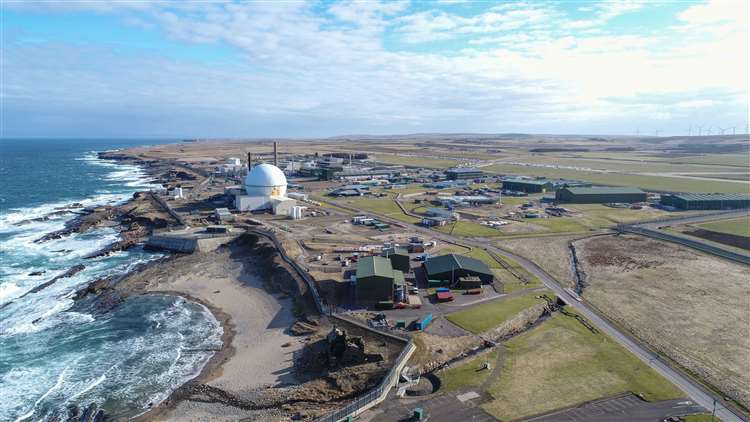
CAITHNESS has been misled for the past 20 years over the
timescale for the decommissioning of Dounreay. The work was due to be
completed by 2033 but that target was “never technically practicable” and
“never achievable”, according to Struan Mackie, the chairman of the
Dounreay Stakeholder Group (DSG).
Mr Mackie, a Thurso and Northwest
Caithness Highland councillor, said: “We all know that the publicised
dates, the milestones communicated to our community, to our politicians and
to our supply chain for the last two decades have not been founded in
reality.
John O’Groat Journal 28th March 2024
Famous UK seaside town ‘decimated’ by £46bn nuclear power station and huge Pontins change.
Famous UK seaside town ‘decimated’ by £46bn nuclear power station and
huge Pontins change. This once-thriving seaside resort has seen its economy
dwindle following the arrival of 900 nuclear workers taking holiday
accommodation.
What was once a thriving seaside town is now a shell of its
former self. Brean Sands in Somerset used to be by-word for family fun but
following the take-over of the town’s Pontins resort by 900 nuclear
workers, the local economy has suffered significantly. EDF commandeered 900
rooms at the Pontins site for construction staff building Hinkley Point C.
The project will cost around £46billion, vastly more than the county’s
economic output. However, with the resort poised to re-open for the Easter
weekend, the BBC has spoken to local tradespeople who claim that far from
support the economy, the EDF project has savaged it.
Express 29th March 2024
https://www.express.co.uk/news/uk/1882931/famous-uk-seaside-town-pontins-brean-sands-hinkley-point-c
THE R.A.F’S NUCLEAR FLIGHTS OVER BRITAIN AND THE ATLANTIC

Although the chances of such an accident occurring may be low, the consequences would be high
emergency arrangements would be totally inadequate to protect members of the public.
Little-known to the public, the UK military regularly flies planes carrying highly radioactive material to the US in order to maintain its nuclear weapons system, Trident.
RICHARD NORTON-TAYLOR, 27 MARCH 2024, https://www.declassifieduk.org/the-r-a-fs-nuclear-flights-over-britain-and-the-atlantic/
- These flights “pose a significant risk to communities across the UK should there be an accident, says Nukewatch
- “How can we have an independent foreign policy if the cornerstone of Britain’s security relies so heavily on another state?”, asks CND
British military aircraft regularly carry highly radioactive material across the Atlantic to one of the RAF’s largest bases on flights vital to the Trident nuclear weapons system, according to new research, Declassified UK can reveal.
The little-known flights are a lifeline sustaining the ‘special relationship’ embodied in the secretive US-UK Mutual Defence Agreement due to be renewed later this year without the need for any parliamentary scrutiny or even approval.
At least ten of the special round trips between RAF Brize Norton in Oxfordshire and US military bases, usually by large RAF C-17 Globemaster transport aircraft, take place every year, according to Nukewatch, which monitors traffic in nuclear weapons and their components.
In a joint report with Nukewatch, the Campaign for Nuclear Disarmament (CND) told Declassified: “The UK cannot claim to have an independent nuclear weapons system when it is so reliant on the US for technical information and nuclear materials, including these special nuclear flights.
“By having such a direct involvement in Britain’s nuclear weapons technology, the US exercises significant leverage over the UK’s foreign and defence policy”, it added.
The RAF planes fly from Brize Norton either over the Cotswolds and the Bristol and Cardiff areas before crossing the Atlantic, or over Gloucestershire and the South Wales valleys, heading out to sea over Swansea and the Gower peninsular.
Their destinations include Kirtland Air Force Base in Albuquerque, a convenient location for access to US nuclear laboratories and manufacturing plants in New Mexico and northern Texas, and McGhee Tyson Airport, Knoxville, close to nuclear sites in Tennessee.
Radioactive
Although the MoD does not reveal the exact nature of the cargoes, Nukewatch says it can conclude on the basis of its investigations that material in RAF aircraft returning to Britain includes tritium, a radioactive isotope of hydrogen which is used in nuclear warheads.
Tritium has a relatively short half-life of twelve years, and thus requires constant replacement. Britain does not have facilities to produce tritium and needs to replenish supplies from the US.
The RAF cargo also includes highly enriched uranium (HEU) used for nuclear submarine reactor fuel and warhead components. Uranium fuel is burnt up in submarine reactors and cannot be reused.
Britain does not have facilities to enrich uranium to the high levels used in submarine reactor fuel and so either HEU must be purchased from the US, or low enriched uranium must be sent to the US for further enrichment.
Plutonium for warhead components has been exchanged with the US in past decades, according to Nukewatch. The cargo is also likely to include security-classified non-nuclear warhead components such as arming, fusing and firing systems as well as radioactive materials and equipment used in nuclear security exercises.
Refusing details
The US and Britain cooperate closely on security programmes and exercises designed to combat nuclear terrorism.
Some RAF cargoes are loaded on to convoys that transport radioactive and other nuclear weapon-related material loads to and from the Atomic Weapons Establishment (AWE) in Aldermaston, Berkshire, and other sites involved in Britain’s nuclear weapons programme.
Ministers have refused to give details of the types and quantities of radioactive materials transported in special flights on national security grounds.
Read more: THE R.A.F’S NUCLEAR FLIGHTS OVER BRITAIN AND THE ATLANTICThe MoD says the transport of DNM (defence nuclear materials) is carried out in accordance with stringent safety regulations. In more than 50 years transporting DNM in Britain, there has never been an incident that has posed a radiation hazard to the public or to the environment, says Nukewatch quoting the MoD.
The MoD adds that the RAF Immediate Response Force, equipped and trained to identify radiological hazards, are “at a state of readiness” when the aircraft enter British airspace. Brize Norton has a nuclear accident response team equipped to monitor radiation in the event of an aircraft accident.
However, Nukewatch and CND argue that an objective assessment of the level of risk to people living under the flight path cannot be made in the absence of official information on the type of radioactive material the flights are carrying and tests.
Such tests would determine how to respond to the impact of a high altitude or high velocity crash and any subsequent fire that would be likely to scatter radioactivity over a wide area.
‘Astral Bend’
Although the chances of such an accident occurring may be low, the consequences would be high, the report says. Plutonium and uranium are flammable metals which burn easily if exposed to heat, creating a plume of radioactive smoke that is easily ingested.
Tritium is a radioactive gas which is also flammable and can easily be incorporated in water and organic compounds, in which form it may be ingested. All three materials are carcinogenic.
The MoD undertakes annual exercises, code-named ‘Astral Bend’, to test the emergency response to an accident involving an RAF aircraft transporting special nuclear materials. Emergency responses would be tightly controlled by the MoD, with the police in charge of civilian emergency services.
Separate assessment reports of Astral Bend exercises have been released under the Freedom of Information Act. They show that despite their preparations, the authorities are not always able to respond well because of the complex and hazardous nature of any such accident.
Following a 2006 exercise, a temporary ban was imposed on highly enriched uranium flights at Brize Norton. Shortfalls in radiation field monitoring, radiation safety procedures, and medical treatment of casualties were identified by the MoD’s internal nuclear watchdog, the Defence Nuclear Safety Regulator (DNSR), as areas requiring improvement.
Risk of contamination
An Astral Bend exercise in 2010 rehearsed the response to an accident involving a US Air Force plane which had crashed and caught fire, damaging nuclear weapons on board and spreading radioactive contamination around the crash site.
Assessors concluded that, had there been a real emergency, civilian personnel would have been at risk from explosions and radioactive contamination. This was because the MoD nuclear accident response organisation team “did not emphasise the hazards adequately” and gave “insufficient priority” to liaison with emergency services.
Difficulties experienced with two subsequent exercises, in 2011 and 2012, were so severe that the MoD was forced to carry out “an overarching, fundamental review” of arrangements for handling nuclear weapons accidents.
During an exercise at the Caerwent military training area in South Wales mistakes made by emergency services would have led to “avoidable deaths” in a real-life situation, according to exercise assessments.
The fire service was heavily criticised by the DNSR for refusing to allow ambulance teams to take away seriously injured people until they had been decontaminated.
The confusion and delays observed during Astral Bend exercises raise questions about whether the MoD’s nuclear safety arrangements are capable of keeping the public, emergency responders, and MoD personnel safe, the report says.
Experience suggests that emergency arrangements would be totally inadequate to protect members of the public.
Maintaining Trident
The MoD has told Nukewatch in response to a Freedom of Information Act request that releasing the report on the most recent Astral Bend exercise would allow potential adversaries to gain a greater operational understanding of air transport involving defence nuclear materials and emergency response measures.
The release of operational details would make future air transport operations “vulnerable to the potential interception by hostile actors”, which would endanger the safety of the wider public, the MoD argued.
Significantly, it added that providing the information would prejudice its ability to maintain the UK’s Continuous At Sea Deterrence (CASD) – a reference to patrols by Britain’s Trident submarines.
“There is no wider public interest in reducing the effectiveness of the nuclear deterrent which is the ultimate guarantee of our national security”, the MoD told Nukewatch.
Nigel Day of Nukewatch said: “Ministry of Defence nuclear flights pose a significant risk to communities across the UK should there be an accident. Far from keeping us safe, as the government claims, nuclear weapons actually make things far more dangerous for all of us.”
Kate Hudson, general secretary of the Campaign for Nuclear Disarmament (CND), told Declassified: “Special nuclear flights are an underreported but critical aspect in maintaining Britain’s nuclear power status. How can we truly have an independent foreign and defence policy if what is vaunted as the cornerstone of our supposed security relies so heavily on another state?
“It’s time to move away from the current wasteful and dangerous addiction to nuclear arms and to move towards a real defence policy which secures peace rather than deploying weapons of mass destruction.”
Hudson added: “We are also extremely concerned about the safety risks posed by these flights and the poor performance during exercises to prepare authorities for a nuclear accident. Of course, instead of acknowledging these risks and moving towards disarmament, the British government cuts down on transparency by blocking the release of reports on its most recent training exercises.”
Nuclear waste clean-up company to be prosecuted over alleged cyber blunders

Sellafield Ltd accused of lax IT security at Europe’s largest nuclear facility
Jonathan Leake, 28 March 2024 , https://www.telegraph.co.uk/business/2024/03/28/sellafield-nuclear-waste-prosecuted-cybersecurity/
A state-owned company responsible for cleaning up decades of nuclear waste at the Sellafield site in Cumbria is being prosecuted over alleged cybersecurity blunders.
It follows an investigation prompted by fears that the business’s digital defences were breached by hackers acting for hostile states such as Russia and China.
Sellafield is Europe’s largest nuclear facility, serving as a testing ground and waste dump since 1947. It houses a massive range of highly radioactive wastes, including 140 tonnes of plutonium – a key ingredient for nuclear weapons.
The Office for Nuclear Regulation (ONR) has told Sellafield Ltd, the business tasked with clean-up, that it will be prosecuted under the Nuclear Industries Security Regulations 2003.
The charges relate to alleged information technology security offences during a four-year period between 2019 and early 2023.
The announcement coincides with reports today that Richard Meal, who is chief information security officer at the Cumbrian site, is to leave later this year.
It follows the departure of Mark Neate, the director responsible for safety and security, who announced in January that he intended to quit in a move that had been planned for some time.
Sellafield has denied claims the site had suffered serious security breaches and the ONR has supported this. The new charges are thought to relate to alleged failures in compliance – meaning they are more about lax security than actual breaches.
An ONR spokesman said there was no suggestion that public safety had been compromised. Details of the first court hearing will be announced when available.
Sellafield Ltd is owned by the Nuclear Decommissioning Authority, a quango overseen by the Department for Energy Security and Net Zero, which is tasked with cleaning 17 decaying nuclear sites across the UK. Sellafield is the most expensive, costing taxpayers £2.5bn last year.
Some government estimates suggest the total cost of the clean-up will reach £263bn, with Sellafield accounting for the largest portion. The site employs 11,000 people and comprises more than 1,000 buildings, many not designed to house the radioactive material now stored in them.
Sellafield is so expensive that the Office for Budget Responsibility, which monitors threats to the UK Government’s finances, has warned that it and other legacy sites pose a “material source of fiscal risk” to the country.
The ONR investigation is in addition to another by the National Audit Office, Britain’s public spending watchdog, which is probing risks and costs at Sellafield and is due to report this autumn.
A Sellafield spokesman said: “The ONR’s Civil Nuclear Security and Safeguards (CNSS) has notified us of its intention to prosecute the company relating to alleged past nuclear industry security regulations compliance. As the issue is now the subject of active court proceedings, we are unable to comment further.”
It follows separate reports by Radioactive Waste Management Ltd (RWM), another government-owned company, that hackers unsuccessfully attempted to breach its defences using LinkedIn.
RWM, now part of Nuclear Waste Services, is the company tasked with designing the long-awaited Geological Disposal Facility (GDF) project, a vast underground nuclear waste store which would become the final destination for toxic waste now stored at Sellafield.
Nuclear Waste Services is currently seeking a site that would be geologically stable for the millions of years the waste would need to become safe – and which would be acceptable to the local communities hosting it.
Two sites remain in the running, one off the coast of Cumbria and the other off the coast of Lincolnshire, with the choice of site still surrounded in secrecy.
The development is expected to cost taxpayers up to £53bn.
A report filed at Companies House by Nuclear Waste Services said the attempted hacks had failed.
The Office for Nuclear Regulation (ONR) will prosecute Sellafield Ltd on charges of security offences
The Office for Nuclear Regulation (ONR) has notified Sellafield Ltd that
it will be prosecuted under the Nuclear Industries Security Regulations
2003. These charges relate to alleged information technology security
offences during a four year period between 2019 and early 2023. There is no
suggestion that public safety has been compromised as a result of these
issues. The decision to begin legal proceedings follows an investigation by
ONR, the UK’s independent nuclear regulator. Details of the first court
hearing will be announced when available. Given that some matters are now
subject to legal proceedings, we are unable to comment further.
ONR 28th March 2024
https://onr.org.uk/news/all-news/2024/03/onr-notifies-sellafield-ltd-of-intention-to-prosecute
Sellafield nuclear waste dump to be prosecuted for alleged cybersecurity offences
Charges relate to four-year period between 2019 and early 2023, and follow Guardian investigation
Alex Lawson and Anna Isaac, Fri 29 Mar 2024 , https://www.theguardian.com/business/2024/mar/28/sellafield-nuclear-waste-dump-to-be-prosecuted-for-alleged-it-security-offences
The Sellafield nuclear waste dump is to be prosecuted for alleged information technology security offences, the industry watchdog has said.
The Office for Nuclear Regulation (ONR) said on Thursday that it had notified the state-owned Cumbrian nuclear company that it would be prosecuted under industry security regulations.
The prosecution follows the Guardian’s revelations last year of multiple cyber failings at the vast site, part of a year-long investigation into cyber hacking, radioactive contamination and an unhealthy workplace culture at Sellafield.
The ONR said: “These charges relate to alleged information technology security offences during a four-year period between 2019 and early 2023. There is no suggestion that public safety has been compromised as a result of these issues. The decision to begin legal proceedings follows an investigation by ONR, the UK’s independent nuclear regulator.”
Sellafield, which has more than 11,000 staff, was placed into a form of “special measures” for consistent failings on cybersecurity in 2022, according to sources at the ONR and the security services.
Among the Guardian’s revelations in December were that groups linked to Russia and China had penetrated its computer networks, embedding sleeper malware that could lurk and be used to spy or attack systems. At the time Sellafield said it did not have evidence of a successful cyber-attack.
The site has the largest store of plutonium in the world and is a sprawling rubbish dump for nuclear waste from weapons programmes and decades of atomic power generation.
Other findings in the Guardian’s Nuclear Leaks investigation included concerns about external contractors being able to plug memory sticks into its computer system while unsupervised.
The Guardian also revealed that cyber problems have been known by senior figures at the nuclear site for at least a decade, according to a report dated from 2012, which warned there were “critical security vulnerabilities” that needed to be addressed urgently.
Sellafield’s computer servers were deemed so insecure that the problem was nicknamed Voldemort after the Harry Potter villain, according to a government official familiar with the ONR investigation and IT failings at the site, because it was so sensitive and dangerous.
At the time, Sellafield said that “all of our systems and servers have multiple layers of protection”. “Critical networks that enable us to operate safely are isolated from our general IT network, meaning an attack on our IT system would not penetrate these,” it said.
This week, the Guardian revealed that Richard Meal, Sellafield’s chief information security officer, is to leave the site after more than a decade. He will be the second senior leader to leave this year, after the top director responsible for safety and security, Mark Neate, announced in January that he planned to leave.
In January, Sellafield appointed Graeme Slater as its chief digital information officer, responsible for cybersecurity.
The ONR said details of the first court hearing would be announced “when available”.
Britain’s public spending watchdog, the National Audit Office, last month launched an investigation into risks and costs at Sellafield.
A spokesperson at the Department for Energy Security and Net Zero, which funds Sellafield, said: “Safety and security at our former nuclear sites is paramount and we fully support the Office for Nuclear Regulation in its independent role as regulator.
“The regulator has made clear that there is no suggestion that public safety has been compromised at Sellafield. Since the period of this prosecution, we have seen a change of leadership at Sellafield and the ONR has noted a clear commitment to address its concerns.”
Sellafield said: “The Office for Nuclear Regulation’s Civil Nuclear Security and Safeguards has notified us of its intention to prosecute the company relating to alleged past nuclear industry security regulations compliance.
“As the issue is now the subject of active court proceedings, we are unable to comment further.”
Sellafield’s head of information security to step down

Richard Meal is second senior leader to depart following Guardian investigation into failings at UK nuclear waste site
Guardian Alex Lawson and Anna Isaac, 28 Mar 24
A former Royal Air Force officer who has led Sellafield’s information security for more than a decade is to leave the vast nuclear waste site in north-west England, it can be revealed.
Richard Meal, who is chief information security officer at the Cumbrian site, is to leave later this year.
Meal will be the second senior leader to depart the organisation this year, after the top director responsible for safety and security – Mark Neate – announced in January that he planned to leave.
His imminent departure follows several safety and cybersecurity failings, as well as claims of a “toxic” working culture, that were revealed in Nuclear Leaks, a year-long Guardian investigation into Sellafield, late last year. Sellafield said no staff departures were linked to the revelations.
ellafield, which has more than 11,000 staff, was placed into a form of “special measures” in 2022 for consistent failings on cybersecurity, according to sources at the Office for Nuclear Regulation (ONR) and the security services.
Sellafield said it did not have evidence of a successful cyber-attack after the Guardian revealed that groups linked to Russia and China had penetrated its networks.
……………………………….. In response to the Guardian’s investigation, the energy secretary, Claire Coutinho, said the reports were “deeply concerning” and wrote to the Nuclear Decommissioning Authority (NDA), the state-owned body that ultimately runs Sellafield, demanding a “full explanation”.
In his response, the NDA’s chief executive, David Peattie, said there had been “necessary changes to the leadership, governance, and risk management of cyber” and responsibility for its cyber function had been moved. A new head of cybersecurity took up the role in January. Sellafield declined to name the new appointee.
On announcing his departure, Neate said that he had decided last year “that 2024 was the right time for me to move on”. He will be replaced this week by the current head of the site’s “spent fuel management value stream”, James Millington, on an interim basis.
Separately, Nic Westcott, the former Openreach and Severn Trent executive, was seconded from Nuclear Waste Services in January as interim chief people officer.
In its latest annual report, the ONR stated that “improvements are required” from Sellafield and other sites in order to address cybersecurity risks. It also confirmed that the site was in “significantly enhanced attention” for this activity……………………………
Britain’s public spending watchdog, the National Audit Office, last month launched an investigation into risks and costs at Sellafield.
The Nuclear Leaks series detailed concerns over cracks in the concrete and asphalt skin of a toxic point known as the First Generation Magnox storage pond or informally as “Dirty 30”. This week, Sellafield said that the building had been “prioritised for cleanup” by the NDA and that the first “zeolite skip” – containers used to absorb radiation in the 1970s and 1980s – had been removed and placed in a shielded box.
Separately, Sellafield released its gender pay report for the year to 5 April 2023, which showed the median gender pay gap had risen to 13.7% from 11.3% a year earlier. The proportion of women in the upper quartile of its pay scale was static, at 18%………………… https://www.theguardian.com/business/2024/mar/27/sellafields-head-of-information-security-to-step-down
Special nuclear flights between the US and UK: the dangers involved
CND, March 24
Despite claiming to have an independent nuclear weapons system, for more than sixty years Britain and the United States have been transferring and sharing technical
information, nuclear materials, and warhead components for use in each other’s nuclear weapons programmes.
One important way in which transfers of nuclear materials and technology are carried out between Britain and the US is through special flights into and out of Royal Air Force (RAF) Brize Norton, near Carterton in Oxfordshire. Read more about these special nuclear flights in this briefing, written in association with Nukewatch. https://cnduk.org/wp-content/uploads/2024/03/Special-nuclear-flights-between-the-US-and-UK-1.pdf
Assange Extradition Delayed Unless US Provides ‘Assurances’ He Won’t Be Executed for Revealing the Truth

By Diego Ramos ScheerPost, March 26, 2024, https://scheerpost.com/2024/03/26/assange-extradition-delayed-unless-us-provides-assurances/
If the U.S. fails to file assurances in three weeks, Assange will be granted permission to appeal.
The British High Court has accepted three elements of Julian Assange’s appeal against his extradition to the U.S., delaying the process for some time. Unless the U.S. provides “assurances” for Assange’s appeals, including protection against the death penalty, the WikiLeaks founder will be granted a new appeal.
Despite U.S. officials promising Assange would not be subject to capital punishment, the court ruled “nothing in the existing assurance explicitly prevents the imposition of the death penalty.”
The U.S. government has until April 16 to file these assurances and if done so, Assange will have until April 30 to respond and the U.S. is to answer back by May 14, with a hearing considering the leave to appeal on May 20. If the U.S. fails to file assurances in three weeks, Assange will be granted permission to appeal.
Judges Victoria Sharp and Jeremy Johnson of the British High Court agreed with the following points in Assange’s appeal:
- a) if extradited, the applicant might be prejudiced at his trial by reason of his nationality (contrary to section 81(b) of the 2003 Act), and
- b) as a consequence of a), but only as a consequence of a), extradition is incompatible with article 10 of the Convention. [In the European Convention on Human Rights (ECHR), article 10 protects the right to freedom of expression.]
- The applicant has established an arguable case that the Secretary of State’s decision was wrong because extradition is barred by inadequate specialty/death penalty protection.
The judges dismissed appeal of Assange’s other points including:
- The UK-US Extradition treaty (the Treaty) prohibits extradition for a political [offense] (and the [offenses] with which the applicant is charged fall within that category).
- The extradition request was made for the purpose of prosecuting the applicant on account of his political opinions (contrary to section 81(a) of the 2003 Act).
- Extradition is incompatible with article 7 of the European Convention on Human Rights (the Convention) (which provides there should be no punishment without law).
- Extradition is incompatible with article 6 of the Convention (right to a fair trial).
- Extradition is incompatible with articles 2 and 3 of the Convention (right to life, and prohibition of inhuman and degrading treatment).
The judges acknowledged that extradition for “political opinions” has been barred in English law, citing the Extradition Act 1870 and 1989. However, in examining the Extradition Act 2003, the judges separate “political [offense]” from “political opinions,” stating “[The Extradition Act 2003] says nothing, however, about preventing extradition for a political [offense]. Although there may be a degree of overlap, the two are separate concepts.”
Stella Assange, Julian Assange’s wife, spoke outside the court stating, “The Biden administration should not issue assurances. They should drop this shameful case, which should never have been brought.”
Significantly, the court also rejected “fresh evidence” from the Assange team with regards to the Yahoo News article written by Zach Dorfman, Sean D Naylor and Michael Isikoff that exposed a plot by former CIA Director Mike Pompeo and others to kidnap or assassinate Assange during his time at the Ecuadorian embassy in London.
Despite the evidence exposed by the article, the judges ruled, “Extradition would result in him being lawfully in the custody of the United States authorities, and the reasons (if they can be called that) for rendition or kidnap or assassination then fall away.”
Assange enters his fifth year of imprisonment inside Belmarsh Prison, where his physical and mental health has significantly deteriorated.
Scotland’s National Party attacks £200m extra for nuclear deterrent and industry
By Kathleen Nutt, 25 Mar 24
The SNP have criticised an announcement by Prime Minister to commit a further £200m on strengthening the nuclear deterrent and boosting the nuclear industry saying the money would be better spent on improving the NHS or alleviating the cost of living crisis for households.
Martin Docherty-Hughes MP, the party’s defence spokesman, condemned the plans to “waste another £200 million” on nuclear and accused the Conservatives and Labour, which backed the plans, of focusing on “the wrong priorities”.
“Westminster has already wasted billions of taxpayer’s money on nuclear weapons and expensive nuclear energy. It is grotesque to throw another £200million down the drain when the Tories and Labour Party both claim there is no money to improve our NHS, to help families with the cost of living or to properly invest in our green energy future.
“This money would be much better spent on a raft of other priorities – not least investing in the green energy gold rush, which would ensure Scotland, with its wealth of renewable energy potential, can be a green energy powerhouse of the 21st century.
“And while the UK government wastes millions of pounds misfiring Trident missiles at Defence Secretary Grant Shapps, the urgent priority is more money for conventional defence and for our armed forces, who are underpaid and under-resourced.
“With both Rishi Sunak and Keir Starmer focused on the wrong priorities – it is only the SNP standing up for Scotland’s interests and Scotland’s values.”……………………………………………………………………………………………… https://www.heraldscotland.com/news/24208207.snp-attack-200m-extra-nuclear-deterrent-industry/
Nuclear and weapons industry propaganda to schools

NRS Dounreay and socio economic partners hosted the second FIRST® LEGO® League Challenge North Highland Tournament in March with local schools taking part.
North Highlands team headed for international robot challenge. NRS
Dounreay and socio-economic partners hosted the second FIRST® LEGO®
League Challenge North Highland Tournament in March with local schools
taking part. Each team participated in 3 short robot games and presented to
a panel of judges where they were judged on their robot design, innovation
project and core values such as team work. They are also judged throughout
the tournament and games on their ‘gracious professionalism’; their
behaviours within their own team and towards other teams.
Nuclear Restoration Services 25th March 2024
https://www.gov.uk/government/news/north-highlands-team-headed-for-international-robot-challenge
Chris Hedges: The Crucifixion of Julian Assange

No new hearing will allow his lawyers to focus on the war crimes and corruption that WikiLeaks exposed. No new hearing will permit Julian to mount a public-interest defense. No new hearing will discuss the political persecution of a publisher who has not committed a crime.
The court……… offered the U.S. an easy out — give the guarantees and the appeal is rejected.
If the assurances are provided, lawyers for both sides have until April 30th to make new written submissions to the court. At that point, the court will convene again on May 20 to decide if the appeal can go forward.
British courts for five years have dragged out Julian Assange’s show trial. He continues to be denied due process as his physical and mental health deteriorates. This is the point.
By Chris Hedges ScheerPost, https://scheerpost.com/2024/03/27/chris-hedges-the-crucifixion-of-julian-assange-2/
Prosecutors representing the United States, whether by design or incompetence, refused — in the two-day hearing I attended in London in February — to provide guarantees that Julian Assange would be afforded First Amendment rights and would be spared the death penalty if extradited to the U.S.
The inability to give these assurances all but guaranteed that the High Court — as it did on Tuesday — would allow Julian’s lawyers to appeal. Was this done to stall for time so that Julian would not be extradited until after the U.S. presidential election? Was it a delaying tactic to work out a plea deal? Julian’s lawyers and U.S. prosecutors are discussing this possibility. Was it careless legal work? Or was it to keep Julian locked in a high security prison until he collapses mentally and physically?
If Julian is extradited, he will stand trial for allegedly violating 17 counts of the 1917 Espionage Act, with a potential sentence of 170 years, along with another charge for “conspiracy to commit computer intrusion” carrying an additional five years.
The court will permit Julian to appeal minor technical points — his basic free speech rights must be honored, he cannot be discriminated against on the basis of his nationality and he cannot be under threat of the death penalty.
No new hearing will allow his lawyers to focus on the war crimes and corruption that WikiLeaks exposed. No new hearing will permit Julian to mount a public-interest defense. No new hearing will discuss the political persecution of a publisher who has not committed a crime.
The court, by asking the U.S. for assurances that Julian would be granted First Amendment rights in the U.S. courts and not be subject to the death penalty, offered the U.S. an easy out — give the guarantees and the appeal is rejected.
It is hard to see how the U.S. can refuse the two-judge panel, composed of Dame Victoria Sharp and Justice Jeremy Johnson, which issued on Tuesday a 66-page judgment accompanied by a three-page court order and a four-page media briefing.
The hearing in February was Julian’s last chance to request an appeal of the extradition decision made in 2022 by the then British home secretary, Priti Patel, and many of the rulings of District Judge Vanessa Baraitser in 2021.
If Julian is denied an appeal, he can request an emergency stay of execution from the European Court of Human Rights (ECtHR) under Rule 39, which is given in “exceptional circumstances” and “only where there is an imminent risk of irreparable harm.” But it is possible the British court could order Julian’s immediate extradition prior to a Rule 39 instruction, or decide to ignore a request from the ECtHR to allow Julian to have his case heard there.
Julian has been engaged in a legal battle for 15 years. It began in 2010 when WikiLeaks published classified military files from the wars in Iraq and Afghanistan — including footage showing a U.S. helicopter gunning down civilians, including two Reuters journalists, in Baghdad.
Julian took refuge in the Embassy of Ecuador in London for seven years, fearing extradition to the U.S. He was arrested in April 2019 by the Metropolitan Police, who were permitted by the Embassy to enter and seize him. He has been held for nearly five years in HM Prison Belmarsh, a high-security prison in southeast London.
The case against Julian has made a mockery of the British justice system and international law. While in the embassy, the Spanish security firm UC Global provided video recordings of meetings between Julian and his lawyers to the CIA, eviscerating attorney-client privilege.
The Ecuadorian government — led by Lenin Moreno — violated international law by rescinding Julian’s asylum status and permitting police into their embassy to carry Julian into a waiting van. The courts have denied Julian’s status as a legitimate journalist and publisher. The U.S. and Britain have ignored Article 4 of their Extradition Treaty that prohibits extradition for political offenses. The key witness for the U.S., Sigurdur Thordarson — a convicted fraudster and pedophile — admitted to fabricating the accusations he made against Julian for money.
Julian, an Australian citizen, is being charged under the U.S. Espionage Act although he did not engage in espionage and was not based in the U.S when he was sent the leaked documents.
Continue readingUK to test new ‘Astraea’ nuclear warheads without detonation
The testing will be conducted in collaboration the French at a facility in Dijon, France.
IE, Christopher McFadden, 26 Mar 24
The United Kingdom’s Ministry of Defense (MoD) has just announced its intention to test its next-generation nuclear warhead without actually detonating it.
This test will be the first of its kind since international agreements limit new nuclear testing and countries will have to use some highly sophisticated scientific apparatus.
The new warhead, the A21 “Astraea,” will replace the existing British-made warheads on the nation’s stockpile of Trident-II submarine-launched missiles. These missiles are currently carried aboard the UK’s four Vanguard-class nuclear submarines.
Like the nuclear warheads, the UK has pledged to replace its aging Vanguard class with new Dreadnought-class submarines by the mid-2030s. “UK is committed to replacing our sovereign warhead in parliament in February 2021,” the UK’s MoD shared in a white paper…………………………………………………………….. https://interestingengineering.com/military/uk-to-test-new-astraea-nuclear-warheads-without-detonation
1 This Month



26 September – International Day for the Total Elimination of Nuclear Weapons


PLEASE OPPOSE HR 8255 AND S.3639 – bills would accelerate satellite deployment, with no environmental review or safeguards – https://ncstd5li.quorum.us/campaign/169331/
To see nuclear-related stories in greater depth and intensity – go to https://nuclearinformation.wordpress.com
-
Archives
- September 2026 (281)
- August 2026 (330)
- July 2026 (355)
- June 2026 (287)
- May 2026 (306)
- April 2026 (356)
- March 2026 (251)
- February 2026 (267)
- January 2026 (308)
- December 2025 (358)
- November 2025 (359)
- October 2025 (375)
-
Categories
- 1
- 1 NUCLEAR ISSUES
- business and costs
- climate change
- culture and arts
- ENERGY
- environment
- health
- history
- indigenous issues
- Legal
- marketing of nuclear
- media
- opposition to nuclear
- PERSONAL STORIES
- politics
- politics international
- Religion and ethics
- safety
- secrets,lies and civil liberties
- spinbuster
- technology
- Uranium
- wastes
- weapons and war
- Women
- 2 WORLD
- ACTION
- AFRICA
- Atrocities
- AUSTRALIA
- Christina's notes
- Christina's themes
- culture and arts
- Events
- Fuk 2022
- Fuk 2023
- Fukushima 2017
- Fukushima 2018
- fukushima 2019
- Fukushima 2020
- Fukushima 2021
- general
- global warming
- Humour (God we need it)
- Nuclear
- RARE EARTHS
- Reference
- resources – print
- Resources -audiovicual
- Weekly Newsletter
- World
- World Nuclear
- YouTube
-
RSS
Entries RSS
Comments RSS

