State papers: Plans for nuclear power plant on shores of Lough Neagh shelved over drinking water concerns
The Northern Ireland government was warned against proposals to build a nuclear power station beside Lough Neagh, archive files show.
Newsletter, By David Young, PA, 28th Dec 2023
The feasibility of the proposal was assessed by the Atomic Energy Research Establishment (AERE), a UK government body that was responsible for research on, and development of, nuclear power.
The Stormont government had been assessing the potential for a nuclear power plant in Northern Ireland in the 1950s and the shores of Lough Neagh, the UK and Ireland’s largest freshwater lake, had been identified as a possible location.
However, the AERE advised against this site, raising concern about water contamination in the event of an accident, particularly given that the lough was to be increasingly used as one of the main sources of water for Belfast.
The opinion of the AERE was outlined in a letter from its director John Cockcroft to then prime minister of Northern Ireland Viscount Brookeborough (Basil Brooke) in August 1958.
The document, marked confidential, is in archive files newly released from the Public Records Office of Northern Ireland.
In began by noting that an assessment of the “siting problem” in Northern Ireland had been conducted by a body called the Reactor Location Panel two years earlier, in 1956…………………………………………………………………………………… more https://www.newsletter.co.uk/news/politics/state-papers-plans-for-nuclear-power-plant-on-shores-of-lough-neagh-shelved-over-drinking-water-concerns-4458627
‘Get on with it’: Johnson pressures Sunak over delayed nuclear power plans

Documents seen by i reveal that major deadlines set by the Government have already been missed
Boris Johnson has warned Rishi Sunak
that the UK must generate more of its own electricity through nuclear if it
is to avoid spikes in energy prices. Boris Johnson has told Rishi Sunak to
“get on with it” after leaked documents revealed the UK’s transition
to nuclear power has been beset by delays. Plans to power a quarter of the
national grid with nuclear energy by 2050 have slowed, with a number of
internal targets missed, i can reveal.
The documents seen by i show that
several key deadlines have not been met for the UK’s plan to rapidly
increase nuclear output. The UK’s net-zero plans rely on one quarter of
the UK’s grid being powered by nuclear reactors, and Mr Johnson told i
that nuclear is vital to help control energy bills and prevent spikes such
as those caused by the Ukraine war.
The launch of Great British Nuclear,
the governmental organisation dedicated to co-ordinating the UK’s nuclear
energy plan, was only completed six months after the initial deadline of
the end of 2022. Grants to be given to promising projects were only
announced earlier this month, despite a deadline of 2022 in the documents,
which were prepared for the nuclear industry as a means of explaining the
Governments plan. A deadline to give at least one project a final
investment decision by spring 2023 was also missed.
The documents show
there is a target date for investment decisions on two further projects to
be approved by October 2024. Mr Johnson – who declared his strategy was
the “big ticket nuclear solution” to net zero when he launched it –
is concerned about the future of what he considers his legacy. ………………………………………………………………………………The delays also follow a series of -turns from Mr Sunak onnet-zero policies, which were first introduced by Mr Johnson. The former
prime minister had prioritised green policies during his premiership. Six
development sites had been shortlisted by the Government as part of a small
nuclear reactor competition in October.
However only one site from
Rolls-Royce is thought to be currently under assessment from the Office for
Nuclear Regulation (ONR) and Environment Agency, while the five other sites
are yet to progress to this stage. At the time the shortlist was announced,
Rolls-Royce hinted at frustrations at the speed of progress, with a company
statement saying “now let’s move at pace to secure the first order”
i understands that new Energy Secretary Claire Coutinho was told to focus
on projects such as nuclear upon appointment, amid industry frustrations.
With the potential of an election next year, and little movement on the
approval of six shortlisted sites, tension is building over the future of
the project. One industry source pointed to the recent announcement of an
agreement between Tees Valley Mayor Lord Houchen and the firm Community
Nuclear Power to develop the new mini nuclear reactors in the North-East.
The deal was negotiated separately from the UK’s central nuclear
strategy, amid disquiet over delays and direction. An industry source said:
“The [Tees Valley] deal is something of a warning shot to the Government.
It benefits Houchen as these sites and high-tech jobs will go to Tees
Valley if approved, and it benefits the nuclear firms to try and hurry the
Government up.”
Some investors are worried that they will not be given
the go ahead for SMR sites before the next election, causing further
delays, as Labour could change the Government’s overall approach. Stefano
Buono, chief executive of nuclear firm Newcleo, told i his business was
willing to invest “billions” in the UK if the Government provided some
clarity on the future of nuclear. He said: “We welcome the UK
Government’s strong commitment to small and advanced nuclear but remain
concerned by the timeline for delivery. “Newcleo is ready to invest
billions of pounds of private money in the UK, and create thousands of
high-value jobs in local communities with our innovative reactors. However,
like others in the industry, we call for urgent clarity on where we can
locate our operations.
iNews 28th Dec 2023
https://inews.co.uk/news/politics/johnson-pressures-sunak-nuclear-delay-energy-bills-rise-2818971
Sea level rise: ‘We can’t afford to wait’: a Cornish town faces climate threat head on
Earlier this year the north Cornwall town received a profound shock when
it was presented with a visualisation created by the Environment Agency of
the impact of rising sea levels on Bude. It left little doubt about the
seriousness of the threat and made it clear that global heating-induced sea
level rises will push the community into full-scale retreat. If nothing is
done, by 2050 rising sea levels will consume landmarks, such as the surf
life-saving club, and the Bude seawater swimming pool, as well as cafes,
businesses and car parks.
Guardian 14th Dec 2023
https://www.theguardian.com/environment/2023/dec/14/cornish-town-faces-climate-threat-head-on-bude
Nuclear attack on Northern Ireland viewed as ‘possibility’ after 9/11.
Nuclear attack on Northern Ireland viewed as ‘possibility’ after 9/11.
There were calls for decontamination units to operate at capacity while
protective clothing and supplies of antidotes, needles and syringes must be
‘built up’, senior civil servant urged.
Irish Times 28th Dec 2023
How green is the UK Government’s nuclear energy strategy?

Small modular reactors have been touted as a solution to reaching net-zero – but how safe are they and will they do the job?
By Lucie Heath, Environment Correspondent, 28 Dec 23, https://inews.co.uk/news/how-green-is-the-governments-nuclear-energy-strategy-2824596
The Government has pledged to boost the country’s nuclear energy capacity, setting itself a target to power a quarter of the national grid with nuclear energy by 2050.
But i has revealed that the transition to nuclear energy has been beset by delays, prompting former prime pinister Boris Johnson to urge Rishi Sunak to “get on with it”.
Mr Johnson has been a vocal supporter of nuclear energy and has championed the development of new small modular nuclear reactors (SMRs).
SMRs have been touted as a key solution as the world transitions towards a net-zero future, but some have raised questions regarding the green credentials and viability of the technology.
Here i fact-checks the key claims with regards to SMRs.
Nuclear is low carbon
True or False: True

Ed. comment. That’s as long as you don’t count the CO2 emissions from the full nuclear fuel cycle, and the waste disposal methods.
Nuclear power is considered to be a low carbon source of energy. It has a minimal carbon footprint of around 15–50 grams of CO2 per kilowatt hour (gCO2/KWh), compared to an average footprint of around 450 gCO2/KWh for a gas powered generator and 1,050 gCO2/KWh for coal.
According to the International Energy Association (IEA), over the past 50 years the use of nuclear power has reduced CO2 emissions by over 60 gigatonnes – nearly two years’ worth of global energy-related emissions.
While nuclear produces far less CO2 than fossil fuels, environmentalists dispute its green credentials, not least due to the high volume of radioactive waste created as part of the fuel cycle.
SMRs will play a key role in the energy transition
True or False: Jury’s out
Small modular reactors have many potential benefits that overcome some of the hurdles of traditional nuclear reactor sites.
Their smaller size means that can be placed in locations not suited to large power plants and the modular nature of their design means they should be cheaper and quicker to build.
But as of 2023, only Russia and China have successfully built operational SMRs, and neither are in commercial use.
Mr Johnson’s plan to have the UK’s first SMRs contributing to the grid by 2030 looks increasingly unlikely. Rolls-Royce, which was one of the winners of a Government competition to develop them in the UK, recently told MPs its project could be contributing to the grid by 2031-32 at the very earliest.
MPs sitting on the Science, Innovation and Technology Committee recently published a report that described the Government’s nuclear strategy as more of a “wish list” and said ministers need to make it clearer what role SMRs will play in the energy transition.
SMRs are cheaper to build
True or False: Unclear
This section fails to mention the one and only commercial application of small nuclear reactors - the NuScale attempt in the USA, which was a financial fiasco, and had to be cancelled.
One of the largest hurdles to the deployment of nuclear energy are the huge costs of developing new plants. In theory, SMRs should be cheaper to build due to their size and modular nature, allowing for prefabrication.
However, it is not known exactly what the cost will be to the public purse of developing new SMRs in the UK.
The Environmental Audit Committee recently launched an inquiry into the topic, saying it was “currently unclear what financing models will be used to fund SMRs”.
Critics of nuclear argue it would be wiser to spend money on the deployment of renewable energy, which is cheaper to build.
SMRs are safer
True or false: True in theory
Safety has proved to be a massive issue preventing wider uptake of nuclear energy in the past. Incidents such as the 2011 Fukushima nuclear accident have sparked greater fears regarding the vulnerability of plants during a natural disaster, while nuclear stations can also be a risk during times of conflict, such as in Ukraine.
Proponents of SMRs say they are safer than traditional reactors, partly because their smaller core produces less heat, reducing the likelihood of overheating. A number of other innovations exist in their design which in theory should reduce the risk of failure.
While seen as being safer than large plants, SMRs are still associated with many of the same risks as traditional nuclear.
Sunak to scale back nuclear target in latest UK net zero climbdown

Ministers are preparing to scale back the UK’s nuclear power target in
Rishi Sunak’s latest net zero climbdown. Draft versions of a new
“nuclear roadmap” circulating in Whitehall suggest Claire Coutinho, the
Energy Secretary, will next month commit to building a minimum of 16
gigawatts of capacity by 2050, The Telegraph understands.
Under Boris Johnson, as prime minister, the Government promised up to 24 gigawatts of
capacity by the middle of the century. It is also understood the roadmap
will not include an interim target for 2035, despite this being a key
recommendation of a net zero review published in January.
The lower target is thought to follow private warnings from some parts of industry that
Britain lacks the required workforce and supply chains to deliver reactors
at the pace needed to reach the 24-gigawatt goal. It is envisioned that
nuclear capacity will come from both “gigawatt-scale” plants and small
modular nuclear reactors, which are a new generation of factory-built,
mini-power stations.
A Whitehall source on Friday suggested that the final
target remained a subject of internal debate, with Ms Coutinho still
supportive of an ambition to reach 24 gigawatts.
Hinkley Point C in Somerset, the only plant under construction, has been plagued by delays and cost overruns that threaten to push back the start of generation to the
2030s, compared to an original target of 2025. Earlier this month it was
reported that the price tag for the scheme is now set to breach the latest
£32.7bn estimate, up from an original proposal of £18bn, and owner
EDF’s Chinese partner, China General Nuclear, is refusing to put in more
cash.
After the nuclear roadmap is set out in January, the Government and
Great British Nuclear (GBN) are expected to announce the winners of the
next stage of a programme to fund development of small modular reactors.
GBN is also expected to update a list of sites suitable for nuclear power
plants, consult on possible routes to market for so-called advanced modular
reactors and investigate what technology should be used for future
generations of gigawatt-scale plants after Hinkley and Sizewell.
The Department for Energy Security and Net Zero on Friday rejected suggestions
that the Government was planning to scale back its nuclear target. A
spokesman said: “The Civil Nuclear Roadmap will set how we will meet our
ambitious targets to deliver up to 24GW of low-carbon nuclear energy by
2050, or a quarter of the UK’s power demands.
Telegraph 23rd Dec 2023
Day X Marks the Calendar: Julian Assange’s ‘Final’ Appeal

December 22, 2023, by: Dr Binoy Kampmark https://theaimn.com/day-x-marks-the-calendar-julian-assanges-final-appeal/—
Julian Assange’s wife, Stella, is rarely one to be cryptic. “Day X is here,” she posted on the platform formerly known as Twitter. For those who have followed her remarks, her speeches, and her activism, it was sharply clear what this meant. “It may be the final chance for the UK to stop Julian’s extradition. Gather outside the court at 8.30am on both days. It’s now or never.”
Between February 20 and 21 next year, the High Court will hear what WikiLeaks claims may be “the final chance for Julian Assange to prevent his extradition to the United States.” (This is qualified by the prospect of an appeal to the European Court of Human Rights.) Were that to take place, the organisation’s founder faces 18 charges, 17 of which are stealthily cobbled from the aged and oppressive US Espionage Act of 1917. Estimates of any subsequent sentence vary, the worst being 175 years
The WikiLeaks founder remains jailed at His Majesty’s pleasure at Belmarsh prison, only reserved for the most hardened of criminals. It’s a true statement of both British and US justice that Assange has yet to face trial, incarcerated, without bail, for four-and-a-half years. That trial, were it to ever be allowed to take place, would employ a scandalous legal theory that will spell doom to all those who dive and dabble in the world of publishing national security information.
Fundamentally, and irrefutably, the case against Assange remains political in its muscularity, with a gangster’s legality papered over it. As Stella herself makes clear, “With the myriad of evidence that has come to light since the original hearing in 2018, such as the violation of legal privilege and reports that senior US officials are involved in formulating assassination plots against my husband, there is no denying that a fair trial, let alone Julian’s safety on US soil, is an impossibility were he to be extradited.”
In mid-2022, Assange’s legal team attempted a two-pronged attempt to overturn the decision of Home Office Secretary Priti Patel to approve Assange’s extradition while also broadening the appeal against grounds made in the original January 4, 2021 reasons of District Judge Vanessa Baraitser.
The former, among other matters, took issue with the acceptance by the Home Office that the extradition was not for a political offence and therefore prohibited by Article 4 of the UK-US Extradition Treaty. The defence team stressed the importance of due process, enshrined in British law since the Magna Carta of 2015, and also took issue with Patel’s acceptance of “special arrangements” with the US government regarding the introduction of charges for the facts alleged which might carry the death penalty, criminal contempt proceedings, and such specialty arrangements that might protect Assange “against being dealt with for conduct outside the extradition request.” History shows that such “special arrangements” can be easily, and arbitrarily abrogated.
On June 30, 2022 came the appeal against Baraitser’s original reasons. While Baraitser blocked the extradition to the US, she only did so on grounds of oppression occasioned by mental health grounds and the risk posed to Assange were he to find himself in the US prison system. The US government got around this impediment by making breezy promises to the effect that Assange would not be subject to oppressive, suicide-inducing conditions, or face the death penalty. A feeble, meaningless undertaking was also made suggesting that he might serve the balance of his term in Australia – subject to approval, naturally.
What this left Assange’s legal team was a decision otherwise hostile to publishing, free speech and the activities that had been undertaken by WikiLeaks. The appeal accordingly sought to address this, claiming, among other things, that Baraitser had erred in assuming that the extradition was not “unjust and oppressive by reason of the lapse of time”; that it would not be in breach of Article 3 of the European Convention on Human Rights (inhuman and degrading treatment)”; that it did not breach Article 10 of ECHR, namely the right to freedom of expression; and that it did not breach Article 7 of the ECHR (novel and unforeseeable extension of the law).
-ADVERTISEMENT-
Other glaring defects in Baraitser’s judgment are also worth noting, namely her failure to acknowledge the misrepresentation of facts advanced by the US government and the “ulterior political motives” streaking the prosecution. The onerous and much thicker second superseding indictment was also thrown at Assange at short notice before the extradition hearing of September 2020, suggesting that those grounds be excised “for reasons of procedural fairness.”
An agonising wait of some twelve months followed, only to yield an outrageously brief decision on June 6 from High Court justice Jonathan Swift (satirists, reach for your pens and laptops). Swift, much favoured by the Defence and Home Secretaries when a practising barrister, told Counsel Magazine in a 2018 interview that his “favourite clients were the security and intelligence agencies.” Why? “They take preparation and evidence-gathering seriously: a real commitment to getting things right.” Good grief.
In such a cosmically unattached world, Swift only took three pages to reject the appeal’s arguments in a fit of premature adjudication. “An appeal under the Extradition Act 2003,” he wrote with icy finality, “is not an opportunity for general rehearsal of all matters canvassed at an extradition hearing.” The appeal’s length – some 100 pages – was “extraordinary” and came “to no more than an attempt to re-run the extensive arguments made and rejected by the District Judge.”
Thankfully, Swift’s finality proved stillborn. Some doubts existed whether the High Court appellate bench would even grant the hearing. They did, though requesting that Assange’s defence team trim the appeal to 20 pages.
How much of this is procedural theatre and circus judge antics remains to be seen. Anglo-American justice has done wonders in soiling itself in its treatment of Britain’s most notable political prisoner. Keeping Assange in the UK in hideous conditions of confinement without bail serves the goals of Washington, albeit vicariously. For Assange, time is the enemy, and each legal brief, appeal and hearing simply weighs the ledger further against his ailing existence.
Spiralling nuclear costs make UK’s Ministry Of Defence’s equipment plan unsustainable.

While there are shortfalls in every ‘Top Level Budget’ (TLB) in the plan, huge increases in the forecast cost of the MOD’s nuclear weapon upgrades is the most significant driver of these deficits.
While there are shortfalls in every ‘Top Level Budget’ (TLB) in the plan, huge increases in the forecast cost of the MOD’s nuclear weapon upgrades is the most significant driver of these deficits.
Nuclear Information Service 20.12.2023, DAVID CULLEN
The Ministry of Defence’s plan for equipment acquisition over the next decade has once again been branded unaffordable, with overspending on its nuclear programme now clearly responsible for the overall insolvency of the plan. After two years where the plan was predicting a modest surplus, due to the greatest increase in UK military spending since the Korean war, the apparently inexorable rising costs of the government’s nuclear weapon upgrades have created the largest deficit since the government started publishing these plans in 2012.
The Ministry of Defence (MOD) plans its equipment spending around a 10-year budget set by the Treasury. This is longer than most departments, due to the substantial costs and lead-in times involved. The plan covers spending on all equipment used by the armed forces, from submarines to small arms ammunition. The plan is updated annually to cover the next 10 financial years, and is intended to show Parliament that the MOD is able to properly finance its ambitions in military equipment spending.Once the plan is published the National Audit Office (NAO) carries out an analysis of the affordability, which is published separately. The MOD decided not to publish its 2023 Equipment Plan, telling the House of Commons Public Accounts Committee that it needed more time to “work through the consequences” of the 2023 Integrated Review Refresh (IRR) and its accompanying Defence Command Paper. However, all of the financial analysis for the plan has been undertaken and the NAO has published a report based on that analysis.
The MOD’s assessment
The MOD’s own figures show that there is a £16.9bn shortfall in the plan, compared to the £2.6bn surplus in the previous year’s plan. While there are shortfalls in every ‘Top Level Budget’ (TLB) in the plan, huge increases in the forecast cost of the MOD’s nuclear weapon upgrades is the most significant driver of these deficits.
The Defence Nuclear Organisation (DNO), the TLB which oversees the majority of the MOD’s spending on its programme, has seen its spending on the equipment plan increase 62% since last year to £99.5bn. The DNO appear to have been given approval to spend whatever is deemed necessary to avoid delays in the production of the Dreadnought submarine class, as the NAO says it has prioritised delivery to schedule “over immediate cost constraints”. This approach is apparently supported by the Treasury, and although it is hard to dispute their claim that fewer delays will in general lead to lower overall costs, it is a questionable approach to financial management………………………………………………………………………………………………………………….
………………………………………….. Over the full life of the Dreadnought programme, CAAS estimates that costs will be £4bn higher, a substantial increase from their estimate last year of costs being £1.2bn above current forecasts.
……………………… The NAO also highlights the propensity of project delays leading to increased costs, both in the projects themselves and in related programmes, such as maintaining equipment that had previously been scheduled for retirement. This has frequently been the case within the MOD’s nuclear programme, and again raises questions about the substantial ‘adjustments for realism’ in the DNO’s current calculations.
A lack of plans
The gulf in the MOD’s equipment plan finances in general, and nuclear project finances in particular, is emerging despite substantial increases in funding from the Treasury. In the 2023 Spring Budget £3bn of additional funding was announced alongside the IRR, and current budgets allow for annual increases of £2bn, both specifically for nuclear projects. £2bn of the Dreadnought programmes nominal £10bn contingency fund had already been spent by March 2023, and the current forecast cost for the project appears to anticipate another £1bn being spent. The Treasury have apparently ‘set out the arrangements’ for further contingency spending, although it is still to be agreed on a case-by-case basis. In practice, the contingency does not exist as a separate fund, and this ‘contingency’ is just a mechanism for the Treasury to approve overspend.
While the stated commitment of the MOD and Treasury to funding the Dreadnought programme above any other considerations is clearly intended to dispel any doubts about the viability of that project, it is hard to see any resolution to the current state of the equipment plan that does not involve spending on conventional equipment projects being cut. The NAO warns about this prospect and highlights the reliance of nuclear-armed submarine patrols on conventional forces that are not currently protected by the ring-fencing of the MOD’s nuclear spending.
………………………….. The MOD’s refusal to take difficult decisions now merely increases the number of tough choices that will await an incoming government after the next election. The most likely outcome of those choices is that once again conventional military spending will be cut to fund the government’s nuclear ambitions. https://www.nuclearinfo.org/comment/2023/12/spiralling-nuclear-costs-make-the-mods-equipment-plan-unsustainable/
UK’s Nuclear Minister has so far failed to meet East Suffolk communities who have concerns about Sizewell C nuclear project
The Chair of the Nuclear Free Local Authorities has written to Nuclear
Minister Andrew Bowie MP urging to honour his promise to revisit the
communities of East Suffolk to meet and talk with elected representatives
and local people about their concerns over this massive project.
NFLA 19th Dec 2023
Assange Appeal Hearing Set for February

Julian Assange’s wife Stella Assange confirmed that the hearing will take place at the Royal Courts of Justice in the middle of February.
By Joe Lauria / Consortium News, https://scheerpost.com/2023/12/19/assange-appeal-hearing-set-for-february/
Imprisoned publisher Julian Assange will face two High Court judges over two days on Feb. 20-21, 2024 in London in what will likely be his last appeal against being extradited to the United States to face charges of violating the Espionage Act.
Assange’s wife Stella Assange confirmed that the hearing will take place at the Royal Courts of Justice. Assange had had an earlier request to appeal rejected by High Court Judge Jonathan Swift on June 6.
Assange then filed an application to appeal that decision and the dates have now been set. Assange is seeking to challenge both the home secretary’s decision to extradite him as well as to cross appeal the decision by the lower court judge, Vanessa Baraitser.
Baraitser had ruled in January 2021 to release Assange from Belmarsh Prison and deny the U.S. request for extradition based on Assange’s mental health, his propensity to commit suicide and conditions of U.S. prisons. On every point of law, however, Baraitser sided with the United States.
The U.S. appealed her decision, issuing “diplomatic assurances” that Assange would not be mistreated in prison. The High Court, after a two-day hearing in March 2022, accepted those “assurances” and rejected Assange’s appeal.
His application to the U.K. Supreme Court to hear the case was then denied. Assange then applied for a new appeal of Baraitser’s legal decisions and the home secretary’s extradition order.
Swift rejected Assange’s 150-page argument in a three-page rejection. The appeal of that decision will now take place two months from now.
If convicted under the World War I-era Espionage Act, the WikiLeaks publisher and journalist is facing up to 175 years in a U.S. dungeon for publishing classified material revealing crimes by the U.S. state, including war crimes.
Assange was also charged with conspiracy to commit computer intrusion, though the indictment agains him does not accuse him of stealing U.S. documents or even of helping his source, Army intelligence analyst Chelsea Manning, to do so.
Time to shelve Hinkley Point C?
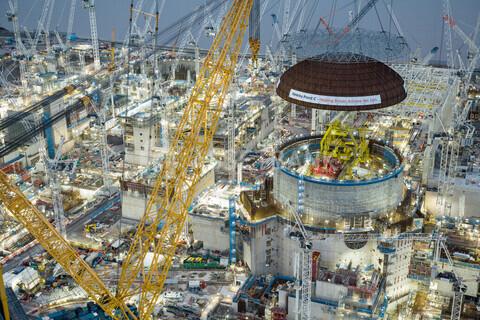
Alan Debenham: December 19, 2023, https://somersetapple.co.uk/news/time-to-shelve-hinkley-point-c
SEASONAL old TV films could well remind us of the 1990s popular sit-com Drop the Dead Donkey about a fictional national newspaper’s forever squabbling journalists, where it was imperative to drop all stories past their sell-by date. Very much like the growing absurdity of the little-mentioned massive overspend and time delay over the enormous Hinkley C nuclear power station construction project on the Severn estuary. Would be good if last week’s putting a roof on the first reactor was matched with putting a roof on nuclear nonsenses.
The arguments against Hinkley C, from all sides of the media, NGOs and professional experts, definitely have been loud and sustained enough to label it a ‘dead donkey’ which should have ‘died’ at reviews in 2012 and 2015. The enormous cost overrun, going from an original £16bn in 2012 to double that figure announced recently, and an enormous completion time delay, going from first forecast 2017 to now only a single reactor operating by 2027 – both reactors a year later – should have killed off the whole project long time ago.
However, as we all know, big billions of investment have colossal lobbying power – especially with this millionaire-led Tory government regarding its daft nuclear mania around proven existential linkage between nuclear bombs and nuclear power. With our essential public services collapsing around hardworking families now driven to food banks, Tory spending hundreds of billions on maintaining our so-called submarine-based nuclear deterrent and planning to build eight new nuclear power stations – with Labour not far behind – it’s as obscene and broken as parliamentary democracy gets.
Sadly, if ever Hinkley C satisfactorily operates – unlike EDF’s other wonky EPR reactors – it’s likely to be both a miracle and another very big increase in electricity prices for us consumers because of 2013 Coalition’s agreeing far too high an index-linked “strike price” ( £92.50 Mw/hr, uplifted 2022 to £128 ) likely to be 50% above the then ‘global market’ price, unless reduced by some big hidden ‘nuclear levy’ put on all bills.
However, it’s not too late to scrap Sizewell C etc, PLUS join GREEN LEFT policies for: no nuclear, new wealth taxes, funded public services, democracy reform ( inc. PR voting ), de-growth for climate help etc.
The danger of rising tides to the Dungeness nuclear site, and to planned small nuclear reactors for Sussex
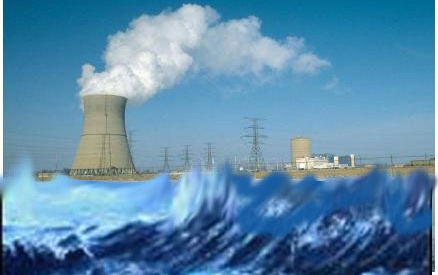
suggestions that Dungeness might become the site of a new nuclear power station featuring Small Modular Reactors (SMRs). The UK’s energy infrastructure, as noted by Peter Frankopan, is highly exposed to danger by even modest rises in sea levels, with all 19 of the country’s nuclear reactors located in coastal regions
As climate change increases the frequency and severity of storms, the inhabitants of low-lying Sussex coastal towns face potential danger
Rising Tides and Nuclear Solutions: the urgent call for coastal protection, byChris Wilmott, 16-12-2023
Born in the coastal town of Hastings, I was lucky to grow up in Sussex by the Sea. I recognise that being able to enjoy the proximity of the sound of the waves, with the many wild and warm variations of weather, was a fantastic benefit during my childhood. However, in recent years, my gaze has shifted somewhat towards a looming threat – the peril that coastal towns now face from climate change and the relentless rise of the tides and adverse weather.
I’ve been doing some research on this and according to NASA there is the potential for lunar cycles to start creating higher tides as soon as 2030, leaving low-lying areas vulnerable to the unforgiving turmoil and rage of the sea. This makes me very concerned for Dungeness, just across from Hastings in Kent, an iconic region situated in a famously low-lying area. In a recent article published by Sussex Bylines, Susan Kerrison posed the question The rising costs of sea defences – how prepared are we? In my opinion, we’re not prepared at all.
…………………………………………….Dungeness B is a nuclear power plant that even as far back as 2014 caused serious concerns over its safety and is now closed and in the process of de-fuelling. EDF privately acknowledged to the Office of Nuclear Regulation (ONR) that the shingle bank protecting the reactors from the sea was “not as robust as previously thought.” This revelation sparked worries among environmentalists, with Greenpeace’s Doug Parr highlighting the lack of transparency about serious safety concerns over flooding.
My interest in this site is heightened by suggestions that Dungeness might become the site of a new nuclear power station featuring Small Modular Reactors (SMRs). The UK’s energy infrastructure, as noted by Peter Frankopan, is highly exposed to danger by even modest rises in sea levels, with all 19 of the country’s nuclear reactors located in coastal regions – the UK Office for Science has acknowledged this threat.
Apart from the potential fall out of power stations failing, one must consider the localised impact of families having to relocate and businesses losing their premises, potentially at short notice. Hastings has suffered two floods so far this year, with sandbags a common sight and businesses forced to close.
Onwards and Upwards for the sea
Ocean scientist Eelco Rohling warns that the combination of global sea-level rise and increased storm intensities could spell doom for exposed coastal regions. The threat of flooding extremes looms large, even with a sea-level rise of 20 centimetres. Twenty centimetres may seem like a modest rise, the corresponding storm surge of two metres would cause considerable damage. Picture then a sea-level rise of say, 80 centimetres, and one can only imagine the destruction that would be caused by a corresponding storm surge of eight metres. ……………………………………………more https://sussexbylines.co.uk/news/environment/rising-tides-and-nuclear-solutions/—
French nuclear submarine visits Scotland
French nuclear submarine Suffren visited Faslane naval base near Glasgow in
Scotland this week. The visit isn’t the first time a French nuclear
submarine has visited Scotland, not by a long shot, as the increasing
number of visits by the French and U.S. Navy in recent years reflects the
enhanced security posture in the North Atlantic.
UK Defence Journal 16th Dec 2023
https://ukdefencejournal.org.uk/french-nuclear-submarine-arrives-in-scotland-2/
Theddlethorpe nuclear waste site: Informed decision needed, says council.

Residents must be clear about plans to build a nuclear waste site in their
village before deciding on them, a council leader has said.
A former gas terminal in Theddlethorpe, near Mablethorpe in Lincolnshire, was announced
as a possible location for an underground disposal facility in 2021. A
public vote on whether to approve the plans may not take place until 2027.
Craig Leyland of East Lindsey District Council said it was “critical”
voters made an “informed decision”. The proposal by Nuclear Waste Services
– formerly known as Radioactive Waste Management – for a Geological
Disposal Facility (GDF) would see nuclear waste from the UK being stored
underneath up to 1,000m of solid rock until its radioactivity had naturally
decayed.
The plans have “had a detrimental effect on physical and mental
health” of residents, according to Travis Hesketh, an Independent Group
councillor at East Lindsey District Council. He called for a review into
residents’ views on the GDF at a meeting on Wednesday, the Local Democracy
Reporting Service said.
BBC 14th Dec 2023
EDF told not to expect UK to step in to fund Hinkley Point C flagship nuclear project

Cost overruns a ‘commercial issue’ for Hinkley Point C’s French
developer after CGN halts payments, says British official.
The UK government has signalled it will not step in to help France’s EDF fund
Hinkley Point C after its Chinese partner CGN halted payments to cover
mounting cost overruns on Britain’s flagship nuclear power project. The
reluctance of the British government to intervene comes as the price tag
for the power plant under construction in south-west England is likely to
exceed the revised £32.7bn estimate EDF put on it earlier this year,
according to people close to discussions.
CGN, EDF’s partner in Hinkley Point C, had agreed to finance 33.5 per cent of the original £18bn cost of the plant in 2016, with the French group responsible for the remainder. But
after paying its contracted share, CGN has not made payments linked to the
overruns in recent weeks, three people familiar with the matter said.
The French group warned earlier this year that the Chinese group could refuse
to pick up the extra costs. One UK government official said there were no
plans to step in to fill the gap left by CGN, suggesting EDF could pull in
other investors. “It is a commercial contract which we obviously don’t
play a part in financing,” the official said, adding: “It would first
be a matter for the shareholders.”
One industry source said pulling other
investors into the project at this stage would be “complicated”. The
French economy ministry said it was in contact with London over the issue.
“We’re working with the British government to ensure the rollout of the
UK nuclear programme, including on the financing front,” an official in
Paris said.
FT 14th Dec 2023
https://www.ft.com/content/2bccd67f-a3c6-48d1-baa5-8ef9d54cdf67
1 This Month

of the week – Shut Down Drone Warfare!


Tell the Ukrainian Government to Drop Prosecution of Peace Activist Yurii Sheliazhenko

Petition to revoke the licensing of the Near Surface Nuclear Disposal Facility (NSDF) at Chalk River. https://www.ourcommons.ca/petitions/en/Petition/Details?Petition=e-7247
To see nuclear-related stories in greater depth and intensity – go to https://nuclearinformation.wordpress.com
-
Archives
- April 2026 (79)
- March 2026 (251)
- February 2026 (268)
- January 2026 (308)
- December 2025 (358)
- November 2025 (359)
- October 2025 (376)
- September 2025 (257)
- August 2025 (319)
- July 2025 (230)
- June 2025 (348)
- May 2025 (261)
-
Categories
- 1
- 1 NUCLEAR ISSUES
- business and costs
- climate change
- culture and arts
- ENERGY
- environment
- health
- history
- indigenous issues
- Legal
- marketing of nuclear
- media
- opposition to nuclear
- PERSONAL STORIES
- politics
- politics international
- Religion and ethics
- safety
- secrets,lies and civil liberties
- spinbuster
- technology
- Uranium
- wastes
- weapons and war
- Women
- 2 WORLD
- ACTION
- AFRICA
- Atrocities
- AUSTRALIA
- Christina's notes
- Christina's themes
- culture and arts
- Events
- Fuk 2022
- Fuk 2023
- Fukushima 2017
- Fukushima 2018
- fukushima 2019
- Fukushima 2020
- Fukushima 2021
- general
- global warming
- Humour (God we need it)
- Nuclear
- RARE EARTHS
- Reference
- resources – print
- Resources -audiovicual
- Weekly Newsletter
- World
- World Nuclear
- YouTube
-
RSS
Entries RSS
Comments RSS
 nuclear-news