Why nuclear reactors are not the future of energy despite what UK Government would have you think.

– Dr Richard Dixon. The UK Government is trying to create the impression that it’s all go for nuclear. It isn’t.
The UK’s nuclear enthusiasts have been on another PR offensive, with
announcements of new reactors and possible life extensions to old reactors.
All of it denying the reality that nuclear is much too slow to build and
much too expensive to be part of our future energy strategy. Globally
nuclear is in terminal decline. In the last five years more renewable
electricity has been generated by just new schemes around the world than by
all the world’s nuclear reactors. And twice as much again is expected to
be constructed in the next five years, taking renewables output to five
times that of nuclear.
Of course the motivation for this burst of
co-ordinated PR is clear, the $20bn for Sizewell C hasn’t been raised so
the UK Government is desperately trying to give the impression that it’s
all go for nuclear in the UK. When it clearly isn’t.
Scotsman 17th Jan 2024
Roadmap to warfare: new policy exposes links with UK military nuclear projects
The UK/Ireland Nuclear Free Local Authorities are keen to assist University of Sussex academics in exposing the links to the military that were revealed in the recent UK Government’s launch of a ‘Roadmap’ for the civil nuclear sector (11 January 2024).[1]
In the public interest, Andy Stirling, Professor of Science and Technology Policy, and Research Fellow Dr Phil Johnstone, both at the University of Sussex, have done remarkable work over many years highlighting the lack of transparency and the extent of cross-subsidy between the civil and military nuclear sectors, despite facing official hostility, obfuscation, or denial.
NFLA 18th Jan 2024
Hinkley C site fire safety fears trigger enforcement notices
By Phil Hill, @GazettePHill, https://www.somersetcountygazette.co.uk/news/24055739.hinkley-c-site-fire-safety-fears-trigger-enforcement-notices/ 17 Jan 24
Pre-planned inspections in November at the Unit 1 HR Building on the site led to ONR identifying the breaches and issuing the notices.
These have been served on licensee NNB Generation Company (HPC) Ltd, contractors Bouygues Travaux Publics SAS and Laing O’Rourke Construction Limited, who are the joint venture partners in BYLOR JV, and REEL UK.
The enforcement notices require improvements to be made to address the shortfalls and prevent re-occurrence.
There were no consequences to employees, the public or the environment as a result of the shortfalls.
However, ONR identified the potential for harm and risk of serious injury, which required regulatory action.
Shane Turner, superintending inspector and head of safety regulation at Hinkley Point C, said: “The enforcement notices require these four organisations to make improvements in fire safety arrangements at the Hinkley Point C site.
We will engage with each of them during the period of the enforcement notice to ensure positive progress is made.”
The notices require necessary improvements are made by March 31.
The enforcement action relates to contraventions under the requirements of Article 22 of the Regulatory Reform (Fire Safety) Order 2005.
1
Shining a light on the UK’s nuclear deterrent
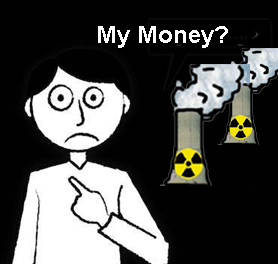
changes in the government’s policy on nuclear power in recent years would effectively allow Britain’s military nuclear industry to be supported by payments from electricity consumers.
“The issue now is that UK citizens are unwittingly subsidising military nuclear activity through energy bills to the tune of many tens of billions of pounds,”
Professor Andy Stirling and Dr Phil Johnstone have highlighted a lack of transparency between governments’ nuclear power programmes and their military nuclear capabilities.
As nuclear power declines worldwide, it is striking how many countries that continue to expend costly support are either existing or aspiring nuclear weapons states.
So say Andy Stirling, Professor of Science and Technology Policy, and Research Fellow Dr Phil Johnstone, at the University of Sussex. Their research into the dependency of military nuclear capabilities on the support of civil nuclear programmes has been cited widely – not least in the UK.
From early working-paper findings to presenting evidence to the Public Accounts Committee (PAC) in the House of Commons, their research has raised important questions about accountability, transparency and the future role of the nuclear industry in a changing world.
It has also received major media attention, with stories in the Guardian, the BBC, Independent and New York Times, whilst their findings also culminated in questions being asked (and significant answers being obtained) in a UK Parliamentary Select Committee, many Parliamentary Questions posed in Westminster and a motion being passed through the Scottish Parliament.
But it hasn’t come without its frustrations. Since the academics first presented their findings to the House of Commons in 2017 – and then in numerous subsequent national and international press stories – the UK Government has not responded directly to the serious criticisms that arose concerning a lack of transparency and accountability. Invitations have been received to discuss these issues with official bodies, and the analysis has not been refuted, but it remains open what the Government itself will do.
Early findings
It’s been quite a journey from their initial research. In 2015, the academics published a working paper on German and UK nuclear power. It was here that the pair conducted an in-depth analysis to try to understand the different nuclear trajectories of the UK and Germany.
The findings of this research first pointed towards concealed UK motives for persisting with nuclear at a time when commentators and experts, virtually across the board, were suggesting the opposite: that it was in irreversible decline.
What was new about the Sussex analysis was that it looked beyond nuclear weapons to the hidden dependencies of the submarine industry on civil nuclear programmes.
“When we started out, the idea of civil programmes supporting military nuclear programmes, was met with significant scepticism.” says Stirling.
“Since then, through evidence submissions and continued output, there has been a gradual acceptance by some that the need to sustain key capabilities and skills in order to construct and maintain nuclear submarines is a significant factor driving the UK’s intense enthusiasm for new nuclear.”
A block in public openness
Things were about to speed up. In 2016, a detailed SPRU working paper asked why UK policy had been so intensely committed to nuclear power, with the findings clearly pointing to military links as a means for continuation.
As a result, questions were now being asked of the UK Government, with transparency – or the lack thereof – at the top of the agenda.
“When we started out, the idea of civil programmes supporting military nuclear programmes, was met with significant scepticism.” says Stirling.
“Since then, through evidence submissions and continued output, there has been a gradual acceptance by some that the need to sustain key capabilities and skills in order to construct and maintain nuclear submarines is a significant factor driving the UK’s intense enthusiasm for new nuclear.”
A block in public openness
Things were about to speed up. In 2016, a detailed SPRU working paper asked why UK policy had been so intensely committed to nuclear power, with the findings clearly pointing to military links as a means for continuation.
As a result, questions were now being asked of the UK Government, with transparency – or the lack thereof – at the top of the agenda.
In 2017, the findings were first presented before the Public Accounts Committee in the House of Commons. The evidence found that a white paper into the UK’s energy policy was now “extraordinarily overdue”.
“It was very clear that the usual public policy processes were falling short,” says Stirling. “In this sense, it is not just our own analysis, but a matter of public record, that due consultation and analysis have not so much been “disregarded” as not performed at all.
“So, at the core of this issue is the fact that the intensity of official commitments to nuclear power by successive UK governments is largely due to factors that remain effectively undeclared.”
Hinkley Point C
Undoubtedly one of the most significant developments in recent times in relation to the UK’s nuclear strategy has been the go-ahead and development of Hinkley Point C, a large nuclear power station under construction in Somerset.
Since its inception, the project, which is being built by the French electricity company EDF, has been criticised on a number of grounds – not least its huge and escalating cost.
But it is the justification to build any new nuclear power station, as highlighted by this research, that raises legitimate questions about the role the UK government has played in this process: of willfully disregarding open, thorough consultation and analysis in order to carry on regardless with nuclear energy, without providing a legitimate reason why.
In evidence submitted to the PAC, the research concluded that the costs of the Trident programme could be “unsupportable” without “an effective subsidy, from electricity consumers to military nuclear infrastructure”.
In their evidence, the academics wrote that the £19.6bn Hinkley Point project would “maintain a large-scale national base of nuclear-specific skills” without which there is concern “that the costs of UK nuclear submarine capabilities could be insupportable”.
A hidden subsidy
This evidence suggested that changes in the government’s policy on nuclear power in recent years would effectively allow Britain’s military nuclear industry to be supported by payments from electricity consumers.
“The issue now is that UK citizens are unwittingly subsidising military nuclear activity through energy bills to the tune of many tens of billions of pounds,” points out Johnstone.
“However, growing ever more significant is the failure of the existing policy apparatus to engage with the criticisms in this regard. This highlights that one of the main issues here concerns the quality of UK policy processes and the health of UK democracy itself.”
As time goes on in this way, the underlying impact of this work expands beyond the immediate story. In part, say the researchers, it lies in the failure of the UK government to be accountable for the decisions it has made in relation to the future of the UK’s energy policy. It has become a transparency issue, one in which the effects aren’t just felt on a state level but amongst its citizens – for many years to come.
What now?
In a world where misinformation is rife, it wasn’t long until claims were made that the research amounted to a ‘conspiracy theory’– particularly with findings that have had such far-reaching consequences. But this is something that Stirling and Johnstone have taken in their stride.
“The few private and public accusations that our analysis is a conspiracy theory have now all largely abated,” says Stirling.
“Several academics, policy analysts and journalists, who used these terms right at the outset, have now all gone out of their way explicitly to tell us that they believe us to be correct.
“In one case, a nuclear advocacy organization, taking the trouble to criticise us this way in an early blog post, has since shifted its position to openly advocate precisely the links they previously dismissed as a conspiracy theory.”
All of this points to research that is still evoking a reaction, still engaging stakeholders across the community, and is reaching into the heart of the democratic process. It also indicates that the effects of the research haven’t yet reached their climax.
A growing tension
“The reaction so far in the UK and international press, the wider energy policy and academic communities suggests that our work is making a firm mark in a field where the stakes are extremely high,” says Johnstone.
“Although the UK Government has itself thus far tried to side-line the issue, it has become strongly acknowledged more widely – even to the point of becoming orthodoxy in many quarters. The lack of official engagement is growing ever more telling.”
Yet uptake of the analysis by many prominent bodies and individuals in this field leaves no doubt that public discussions around nuclear power in the UK and more widely have been strongly influenced by this research.
As Stirling points out: “A backdrop of continued silence on the part of government, as trends continue to unfold and evidence and commentary continues to accumulate, suggests eventual acknowledgement is growing more likely. This in turn suggests that the largest impacts have yet to emerge.”
UK’s nuclear obsessions kill off its net zero strategy

The new Roadmap reads like an outing to a massive nuclear sweet shop. On top of Hinkley Point C and Sizewell C, we’ll have one more big one. And then we’ll have lots of Small Modular Reactors, all over the country. And we’ll have a new fuel processing plant. And a new Geological Disposal Facility – at some much more distance point. And so on and on. 24 fantastical Gigawatts to be designed and delivered by 2050.
Jonathon Porritt, 18 Jan 24
After 14 years of Tory mismanagement, the UK finds itself bereft of an energy strategy.
This was finally confirmed in the release last week of the Government’s new Nuclear Roadmap. At one level, it’s just the same old, same old, the latest in a very long line of PR-driven, more or less fantastical wishlists for new nuclear in the UK. But at another, it’s a total revelation.
For years, a small group of dedicated academics and campaigners have suggested that the UK Government’s Nuclear Energy Strategy is being driven more by the UK’s continuing commitment to an “independent” nuclear weapons capability than by any authoritative energy analysis. For an equal number of years, this was aggressively rebutted by one Energy Minister after another, both Tory and Labour.
The new Nuclear Roadmap dramatically changes all that. It sets to one side any pretence that the links between our civil nuclear programme and our military defence needs were anything other than small-scale – and of no material strategic significance. With quite startling transparency and clarity, the Roadmap not only reveals the full extent of those links, but positively celebrates that co-dependency as a massive plus in our ambition to achieve a Net Zero economy by 2050.
“Startling” is actually an understatement. Such a comprehensive volte-face is rare in policy-making circles. Every effort is usually made by Ministers to obscure the scale (let along the significance) of any such screeching handbrake turns. That is so not the case with the new Roadmap.
Courtesy of the latest forensic work done by Professors Andy Stirling and Phil Johnstone at Sussex University (who have been absolutely at the forefront of seeking to bring these links into the public domain over many years – often with mighty little support from mainstream environmental organisations, let alone “independent” commentators), chapter and verse of this volte-face can be laid bare. Just three o examples from the Roadmap:
- “Not only does this Roadmap set a clear path for the growth of nuclear fission…it acknowledges the crucial importance of the nuclear industry to our national security, both in terms of energy supply and the defence nuclear enterprise.”
- “Government will proactively look for opportunities to align delivery of the civil and nuclear defence enterprises, whilst maintaining the highest standards of non-proliferation.”
- “To address the commonalities across the civil and defence supply chains, and the potential risk to our respective nuclear programmes due to competing demand for the supply chain, the Department of Energy Security and Net Zero (DESNZ) is working closely with the Ministry of Defence and the Defence Nuclear Sector.”
And there’s a whole lot more than that! As Andy Stirling has said: “Without any reflection on what this says about previous efforts to suppress discussion of this issue, the Government is now openly emphasising its significance.”
Indeed!
As usual, the UK’s ill-informed and unbelievably gullible mainstream media would appear to have missed the significance of this gobsmacking inflection point. So one can hardly expect them to have grasped its even more significant implications for UK energy strategy as a whole. In every single particular.
Let me briefly unpack some of those particulars:
- Nuclear
The new Roadmap reads like an outing to a massive nuclear sweet shop. On top of Hinkley Point C and Sizewell C, we’ll have one more big one. And then we’ll have lots of Small Modular Reactors, all over the country. And we’ll have a new fuel processing plant. And a new Geological Disposal Facility – at some much more distance point. And so on and on. 24 fantastical Gigawatts to be designed and delivered by 2050.
The reality couldn’t be more different:
- We will indeed end up with Hinkley Point C – at a staggering of cost of somewhere between £26 billion and £30 billion, with consumers paying twice as much for its electricity as they will for offshore wind. And it will almost certainly not come online until the end of the decade, 15 years on from the time it was meant to be up and running.
- We may possibly get Sizewell C, though the Government cannot currently guarantee the required level of investment. So a Final Investment Decision is unlikely before the next Election. At which point, Starmer may come to his senses and kill off this absurd white elephant.
- We will never get a third big reactor. The economics are literally impossible to justify.
- We are unlikely to get more than a couple of hugely expensive Small Modular Reactors, at some indeterminate point in the future, even with a new “flexible approach” to planning and financial inducements. Even that may prove to be an illusion. As Professor Steve Thomas has written: “Advocates of Small Nuclear Reactors claim they are cheaper and easier to build, safer, generate less waste, and will create many jobs compared to existing large reactor designs. These claims are unproven, misleading, or just plain wrong. Worldwide, no commercial design of SMR has even received a firm order yet.”
- And we may or may not get life extensions for the last five power stations in the “legacy fleet” – subject to regulatory approval, which may not be all that easy given extensive cracking in their reactor cores.
In short, the Roadmap is just a massive diversion from reality. Entailing incalculable opportunity costs. And putting at risk our entire Net Zero by 2050 strategy.

Ministers know all that. But they don’t really care. Our nuclear weapons programme (including upgrading Trident) will be protected as a consequence of this, via an unceasing flow of public money into the civil nuclear cul-de-sac, at a time when our defence budget is already massively overstretched. So who cares about the missing 24GW?
- Renewables
We’ll continue to see new investment into renewables here in the UK, despite (not because of) government policy, which has seriously messed up our offshore wind industry, maintained a de facto ban on onshore wind, couldn’t care less about solar, witters on vapidly about tidal without doing anything etc etc.
Meanwhile, on a global basis, renewables continue to boom. Here are a few facts – in contrast to over-excited sightings of nuclear unicorns:…………………………………………………………………………………………………………………………………………………………
Why don’t people see this?
Why don’t our mainstream media offer any serious critique of what’s going on here?
Why don’t our opposition parties rip to shreds this tissue of preposterous illusions?
The reasons for this almost complete silence can be traced back to successive governments’ grim intent to hang onto our so-called “independent nuclear deterrent”. At literally any costs…………………………………………………………………….more https://www.jonathonporritt.com/uks-nuclear-obsessions-kill-off-its-net-zero-strategy/
The threat of catastrophe is assessed in Nuclear Armageddon: How Close Are We? — review
Ft.com, 19 Jan 24,
BBC documentary surveys experts in international security, diplomacy and military science to shed light on current reality
………………………………….. Nuclear Armageddon: How Close Are We?, a BBC documentary tied to the Doomsday Clock update, asks why the hands have ominously ticked to within 90 seconds of a catastrophic “midnight”, the shortest time recorded since the clock’s inception in 1947. The title strikes an alarmist tone but the show itself is built on the reporting of journalist and filmmaker Jane Corbin and insightful interviews with experts in international security, diplomacy and military science. They include a Nobel Prize winner and a physicist who has been given rare access to North Korea’s nuclear facilities……………………………………………….
Please use the sharing tools found via the share button at the top or side of articles. Copying articles to share with others is a breach of FT.comT&Cs and Copyright Policy. Email licensing@ft.com to buy additional rights. Subscribers may share up to 10 or 20 articles per month using the gift article service. More information can be found here.
https://www.ft.com/content/64d5c035-b1de-480a-95d6-06ce7b07b9ae
The documentary is balanced and informative yet it can only scratch the surface in a single hour. A longer runtime would have left room for a more thorough analysis of how the conflict in the Middle East could shape Iran’s uncertain nuclear future, and what the re-election of a man accused of keeping classified domestic documents in the bathroom of his private residence might mean for the US and the world. As Bronson notes at one point, all it takes are careless “accidents and misperceptions” to plunge us into midnight darkness. https://www.ft.com/content/64d5c035-b1de-480a-95d6-06ce7b07b9ae
Work officially ‘started’ at Sizewell C Nuclear on Monday – but it was really only political theatre.
Ipswich Star, By Paul Geater 18 Jan 24
This week we had big fanfares and a major ceremony to “mark the start” of construction at Sizewell C.
But what did it all mean?
In one sense construction has already started. Land has been dug up, mature trees have been cut down, and one of the new entrances to the site is being cleared.
However, the Final Investment Decision (FID), the point at which the various parties are committed to building the station is still, apparently, several months away – so Monday’s ceremony really does look like nothing but a piece of political theatre.
What is clear, though, is that there is clear political will for this project to go ahead. The Government and the official opposition are both committed to it whatever the cost they may be exposed to.
I can understand that. I still don’t think it makes a great deal of economic sense – but given the uncertainties across the globe and the need to move to carbon zero energy I can see why they want to proceed with nuclear whatever the cost.
Personally I don’t have any concerns about the potential safety of the plant – while there are potential dangers with nuclear generation the experience over the last 60 years in this country suggests it can be operated safely.
And given that there are already two nuclear plants at Sizewell that need to be protected from the sea, it doesn’t seem unreasonable to put the new plant next to them so the protection can be shared.
I still have serious concerns with EDF and the government – who must be seen as equal partners in the project – over the way it is going to be built and the devastating impact it will have on local communities.
By adopting a “bull in a china shop” attitude towards its construction, EDF and the government are planning to cause substantial environmental damage to some of the most precious parts of the Heritage Coast that are closely linked in with Minsmere and Dunwich Heath……………………………………
Creating a new nature reserve two miles inland is great – but it can’t replace a massive area that’s directly linked to the coast.
But I fear that battle is lost now. With both the current government and the likely future government keen on the project, the best we can hope for is that some new habitats will make up for the lost treasures………………….
There’s also been a failure to really engage with local people. There have now been local community forums set up but they are being treated with suspicion by many. https://www.ipswichstar.co.uk/news/24054795.opinion-sizewell-c-still-doesnt-engage-residents/
The Times asks “Are big nuclear reactors really the right thing for the UK?

Nuclear minister Andrew Bowie had a case to hail it a “major
milestone”, with Julia Pyke, Sizewell’s joint managing director,
calling it a “significant moment” for the project and for UK “energy
security”.
Even so, there is still a long way to go. The project will
cost £30 billion-plus, with the PM yet to make a final investment
decision. Sizewell uses the same European pressurised reactor technology as
Hinkley: the Somerset nuke being built by France’s EDF and China’s CGN.
Who exactly will fund Sizewell? Alison Downes, of the Stop Sizewell C
campaign, is no neutral party. But she’s right to say the government is
“still months away” from securing finance, while keeping “secret”
the project’s “enormous cost”.
Bowie told the Financial Times he was
“very confident” of obtaining private finance, but the government is
now rowing back from the FT report that it’s “on track” to raise £20
billion. Even if it has changed the funding rubric to a “regulated asset
base” model that frontloads cost overruns on to consumer bills, investors
think that figure wildly optimistic. On a one third/two thirds split,
ministers need at least £10 billion of equity and £20 billion of debt.
But EDF wants no more than 19.9 per cent of Sizewell equity, while the UK
has booted off the Chinese. Ministers have reportedly lined up Abu Dhabi
funds for a chunk of the equity. But market talk is that the government is
still at least £5 billion short, while it also faces having to underwrite
all the debt — at least until it can syndicate some out once construction
hurdles are met.
Is this the best use of taxpayer’s money? And what’s
the risk private investors are given too generous terms? Yes, the wind
doesn’t blow or sun shine every day. So Britain will need baseload power
to offset intermittent renewables.
But, even if Sizewell C gets the
official go-ahead soon, it won’t be generating power until the late
2030s. A third station will be even further behind. Labour’s union
backers are typically pro-nuclear. But should Sir Keir Starmer come to
power, he must still tackle key questions. Are pricey mega nukes, largely
funded by the taxpayer and consumers, the right strategic bet for 2040? Or
do battery power, say, or modular nuclear reactors make more sense? The
government is yet to make a conclusive financial case for Sizewell C —
let alone any more.
Times 16th Jan 2024
https://www.thetimes.co.uk/article/sizing-up-sizewell-is-a-nuclear-option-fwpd2p53d
Sizewell C opponents warn Suffolk nuclear plant ‘could be the new HS2’.
Sizewell C opponents warn Suffolk nuclear plant ‘could be the new HS2’.
Campaigners fighting a new nuclear power station on the Suffolk coast say
they fear a shortfall in finance for the project could mean it becomes
another HS2. Their comments came amid a landmark moment for the building of
Sizewell C as a Development Consent Order was triggered, meaning
construction can begin. Andrew Bowie, the minister for nuclear and
renewables, was at the construction site to herald what he claimed was a
significant point in the development. The new power plant, which could
create 10,000 jobs, was given the go-ahead in November – but campaigners
opposed to it say they will not give up.
ITV 15th Jan 2024
https://www.itv.com/news/anglia/2024-01-15/coastal-nuclear-plant-could-be-new-hs2-warn-campaigners
lear plant ‘could be the new HS2’.
Bypassing Parliament: Westminster, the Royal Prerogative and Bombing Yemen
Australian Independent Media, January 16, 2024, by: Dr Binoy Kampmark
There is something distinctly revolting and authoritarian about the royal prerogative. It reeks of clandestine assumption, unwarranted self-confidence and, most of all, a blithe indifference to accountability before elected representatives. That prerogative, in other words, is the last reminder of divine right, the fiction that a ruler can have powers vested by an unsubstantiated deity, the invisible God, and a punishing force beyond the reach of human control. It is anathema to democracy, a stain on republican models of government, a joke on any political system that has some claim on representing what might be called the broader citizenry.
On January 11, the UK government, in league with the United States with support from a number of other countries, attacked Houthi positions in Yemen. The decision had been made without recourse to Parliament and justified by Article 51 of the UN Charter as “limited, necessary and proportionate in self-defence.”
In his statement on the attacks, Prime Minister Rishi Sunak pointed to the Houthi’s role in staging “a series of dangerous and destabilising attacks against commercial shipping in the Red Sea, threatening UK and other international ships, causing major disruption to a vital trade route and driving up commodity prices.” He made no mention of the Houthis’ own justification for the attacks as necessary measures to disrupt Israeli shipping and interests in response to their systematic, bloodcurdling razing of Gaza.
Lip service has been paid by the executive within the Westminster system to Parliament’s importance in deciding whether the country commits to military action or not. The stark problem is that the action is always decided upon in advance, and no dissent among parliamentarians will necessarily sway the issue. Motions can be proposed and rejected but remain non-binding on the executive emboldened by the prerogative………………………………………………………………………………………………………..
The Yemen strikes eschew humanitarianism (the humanitarian justifications advanced by the Houthis in protecting Palestinian civilians has been rejected), but shipping interests. The Armed forces minister, James Heappey, was satisfied that an exception to the convention in consulting Parliament had presented itself. “The Prime Minister,” the minister parroted, “needs to make decisions such as these based on the military, strategic and operational requirements – that led to the timing.”
With the horse having bolted merrily out of the stable, Heappey remarked with all due condescension that Parliament would, in time, be able to respond to the decision to strike Yemen. An “opportunity” would be made available “when Parliament returns for these things to be fully discussed and debated.” The sheer redundancy of its role could thereby be affirmed.
Much agitated by this state of affairs, former shadow Chancellor John McDonnell opined that no military action should take place without Parliament’s approval. “If we have learnt anything in recent years it’s that military intervention in the Middle East always has dangerous & often unforeseen consequences. There is a risk of setting the region alight.”
Liberal Democrat Foreign Affairs spokesperson Layla Moran was of the view that Parliament should not be bypassed in matters of war, yet opting for the rather fatuous formula arising out of the 2011 convention. “Rushi Sunak must announce a retrospective vote in the House of Commons on these strikes, and recall Parliament this weekend.”
The use of the royal prerogative in using military force remains one of those British perversions that makes for good common room conversation but offends the sensibilities of the democratically minded elector. A far better practice would be to make the PM of the day accountable to that most essential body of all: Parliament. That same principle would be extended to other constitutional monarchies, which are similarly weighed down by the all too liberal use of the prerogative when shedding blood. If a country’s citizens are to go to war to kill and be killed, surely their elected representatives should have a say in that most vital of decisions? https://theaimn.com/bypassing-parliament-westminster-the-royal-prerogative-and-bombing-yemen/
 | |||
| |||
Inside Bradwell’s Dark Secrets
BANNG’s coordinator, Peter Banks, identifies the radioactive residues
that lurk beneath the shiny cladding of the former Bradwell nuclear power
station in the December 2023 column for Regional Life.
The discoveries of extensive radioactive contamination around the site has triggered the
imperative to keep potential intruders at bay, out of all the shiny
buildings, including the radioactive waste store, and the contaminated
underground labyrinth of tunnels and ducts. How ludicrous would it be to
introduce a new power station next door and go through the whole cycle
again?
BANNG 18th Dec 2023
Bradwell Nuclear – Falling Off the (Road)Map

On the Road(map) to Nowhere! Despite the Government’s recent
re-announcement of a massive expansion of civil nuclear power, the
Blackwater Against New Nuclear Group (BANNG) believes new nuclear at
Bradwell remains dead in the water.
In future new nuclear power stations
will only be sited in ‘suitable locations’ identified by developers
based on a set of criteria. The Government also welcomes ‘responses from
any communities that think they may benefit from the social and economic
opportunities that new nuclear power can deliver’.
Professor Andy Blowers, the Chair of BANNG, commented, ‘This new approach to siting
effectively rules Bradwell out of any further consideration. As we have
strenuously demonstrated over the last fifteen years Bradwell is a most
unsuitable site and the Blackwater communities are overwhelmingly opposed
to nuclear development in such a fragile location, increasingly vulnerable
to the impacts of Climate Change’.
BANNG 12th Jan 2024
Construction to start on Sizewell C nuclear power station amid opposition.
Construction to start on Sizewell C nuclear power station amid opposition.
Construction on the multi-million pound Sizewell C nuclear power station
will start despite local opposition to the plans. The government has signed
a development consent order, meaning that preparation work on the £700
million site such as building fencing and accommodation can start. Andrew
Bowie MP, Minister for Nuclear and Renewables, will visit the site in
Suffolk today where he is expected to be met with peaceful protests which
have been organised by local campaign groups who are opposed to the
project. The final stage of the project, the Final Investment Decision,
will be announced later this year.
ITV 15th Jan 2024
https://www.itv.com/news/anglia/2024-01-15/construction-on-700-million-nuclear-power-station-starts
BBC 15th Jan 2024
https://www.bbc.co.uk/news/uk-england-suffolk-67973566
Sizewell C campaigners hold peaceful demonstration as government minister
Andrew Bowie visits. Two campaign groups opposed to the building of a
nuclear power plant near the Suffolk coast are to hold a peaceful protest
this morning. Stop Sizewell C and Together Against Sizewell C will be
demonstrating at the site entrance from 8.45am to 9.30am. Energy minister
Andrew Bowie is visiting to prompt a Development Consent Order (DCO) which
campaigners say will take the project to the next step.
Suffolk News 15th Jan 2024
Fresh Trident safety fears as submarines’ ‘life expectancy’ extended repeatedly

NEW concerns have been raised about the safety of Britain’s nuclear
fleet – with two submarines still in action previously predicted to have
been out of commission by this year. Former top government adviser Dominic
Cummings (below) sparked interest in the state of Britain’s nuclear fleet
at the beginning of this month when he revealed he had attempted to secure
assurances the Government would address the “horror show” of the
arsenal in return for his help in Rishi Sunak’s election campaign.
The National 14th Jan 2024
Dissension in the nuclear lobby – it had to happen – Small Nuclear versus Big Nuclear.

Comment. As the UK fumbles its way through its “Civil Nuclear Roadmap” folly, the Rolls Royce lobby paints Hinkley and Sizewell projects as obsolete trash, and touts Rolls Royce’s non existent small reactors as Britain’s energy salvation .
Jeremy Warner: Outsourcing Britain’s nuclear renewal is insanity.
Rolls-Royce’s modular reactors are an obvious way to break free of EDF’s
grip.
Here we go again. Einstein’s definition of insanity is to keep doing
the same thing and expecting different outcomes. You would think that the
Government had learned its lesson on nuclear renewal after the debacle of
Hinkley Point C. Clearly not.
Having already made the same mistake once, by
pledging a replica of the ruinously costly Hinkley at Sizewell on the
Suffolk coast, ministers are doubling down and promising a third such
monstrosity somewhere else.
According to the Government’s “Nuclear
Roadmap”, published last week, another of these leviathans in an as yet
unspecified location is to be given the go-ahead later this year. On the
most recent estimates, Hinkley Point C is expected to cost at least 80pc
more than its original budget and is years behind schedule. Some fear that
it won’t be until the early 2030s before the reactors are fully
operational, such have been the technical and safety complications
encountered in the construction phase.
Ministers have also had to agree to
punishingly expensive output prices to persuade the main developer,
France’s state-controlled EDF, to build in the first place, committing
consumers to high electricity costs for decades to come. So much for the
promise once made by the ever courteous Vincent de Rivaz, the one-time boss
of EDF in Britain, that Hinkley Point would be cooking our Christmas
lunches by 2017.
Even allowing for the learning process – theoretically,
later projects to the same design should cost less, with past mistakes
taken on board – it beggars belief that the Government should attempt to
repeat such a tried and demonstrably poor value for money technology.
Given the experience of Hinkley Point C, why are we still pursuing the hugely
costly, largely obsolete technology of EDF’s gigawatt stations when there
are perfectly viable, but smaller, homegrown alternatives just waiting for
the opportunity to fill the gap? If we are to spend £28bn a year of
taxpayers’ money on going green, as promised by Labour, we should at
least be confident that a large part of the wider economic benefit is
reserved for UK supply chains, and is not instead squandered on supporting
jobs abroad in France, China, Denmark and the US.
Telegraph 13th Jan 2024
https://www.telegraph.co.uk/business/2024/01/13/uk-go-full-nuclear-ensure-solutions-british/
1 This Month
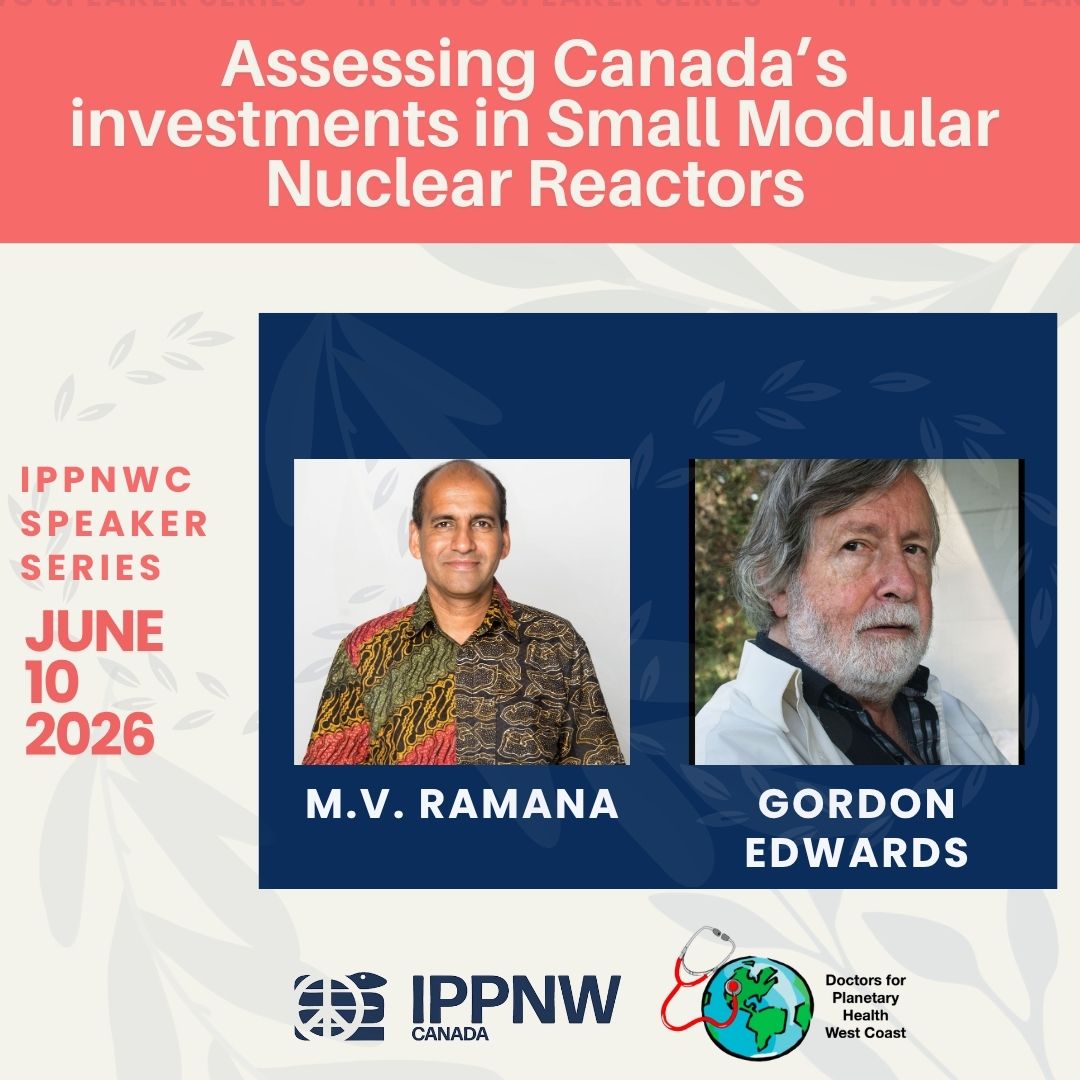
10 June – Assessing Canada’s Investments in Small Modular Nuclear Reactors – https://zoom.us/meeting/register/IiqHA5feRhaEBycOLNTJlA#/registration


Cuba Is Not a Failed State – It Is a Besieged State
PETITION: “Global Appeal to Endorse Palestinian Right of Return of Refugees”
To see nuclear-related stories in greater depth and intensity – go to https://nuclearinformation.wordpress.com
-
Archives
- June 2026 (89)
- May 2026 (306)
- April 2026 (356)
- March 2026 (251)
- February 2026 (268)
- January 2026 (308)
- December 2025 (358)
- November 2025 (359)
- October 2025 (376)
- September 2025 (257)
- August 2025 (319)
- July 2025 (230)
-
Categories
- 1
- 1 NUCLEAR ISSUES
- business and costs
- climate change
- culture and arts
- ENERGY
- environment
- health
- history
- indigenous issues
- Legal
- marketing of nuclear
- media
- opposition to nuclear
- PERSONAL STORIES
- politics
- politics international
- Religion and ethics
- safety
- secrets,lies and civil liberties
- spinbuster
- technology
- Uranium
- wastes
- weapons and war
- Women
- 2 WORLD
- ACTION
- AFRICA
- Atrocities
- AUSTRALIA
- Christina's notes
- Christina's themes
- culture and arts
- Events
- Fuk 2022
- Fuk 2023
- Fukushima 2017
- Fukushima 2018
- fukushima 2019
- Fukushima 2020
- Fukushima 2021
- general
- global warming
- Humour (God we need it)
- Nuclear
- RARE EARTHS
- Reference
- resources – print
- Resources -audiovicual
- Weekly Newsletter
- World
- World Nuclear
- YouTube
-
RSS
Entries RSS
Comments RSS
 nuclear-news