Israel Tortured And Sexually Humiliated Greta Thunberg.
Caitlin Johnstone, Oct 16, 2025, https://www.caitlinjohnst.one/p/israel-tortured-and-sexually-humiliated?utm_source=post-email-title&publication_id=82124&post_id=176291910&utm_campaign=email-post-title&isFreemail=true&r=1ise1&triedRedirect=true&utm_medium=email
In an interview with Swedish paper Aftonbladet, Greta Thunberg has corroborated earlier eyewitness reports that she and her fellow Global Sumud Flotilla activists were subjected to monstrous abuses by Israeli officials after being abducted from their boats carrying aid for Palestinians in Gaza.
Here are some excerpts (quotes from Thunberg are italicized, quotes from Aftonbladet are in bold):
“They grab me, pull me to the ground, and throw an Israeli flag over me.”
“They dragged me to the opposite side from where the others were sitting, and I had the flag around me the whole time. They hit and kicked me.”
“They moved me very brutally to a corner that I was turned towards. ‘A special place for a special lady’, they said. And then they had learned ‘Lilla hora’ (Little whore) and ‘Hora Greta’ (Whore Greta) in Swedish, which they repeated all the time.”
In the corner where Greta was sitting, the police placed a flag. “The flag was placed so that it would touch me. When it fluttered and touched me, they shouted ‘Don’t touch the flag’ and kicked me in the side. After a while, my hands were tied with cable ties, very tightly. A bunch of guards lined up to take selfies with me while I was sitting like that.”
“They were thrown to the ground and beaten. But I could only see it out of the corner of my eye, because every time I lifted my head from the ground, I was kicked by the guard standing next to me.”
Greta was then taken into a building to be searched and undressed. “The guards have no empathy or humanity, and they keep taking selfies with me. There’s a lot I don’t remember. So much is happening at once. You’re in shock. You’re in pain, but you go into a state of trying to stay calm.”
Outside, she was forced to take off her clothes again, she says. “It was mockery, rough handling, and everything was filmed. Everything they do is extremely violent.”
“It was so hot, like 40 degrees. We begged the whole time: Can we have water? Can we have water? In the end, we screamed. The guards walked in front of the bars the whole time, laughing and holding up their water bottles. They threw the bottles with water in them into the trash cans in front of us.”
“When people fainted, we banged on the cages and asked for a doctor. Then the guards came and said, ‘We’re going to gas you.’ It was standard for them to say that.”
“This shows that if Israel, with the whole world watching, can treat a well-known, white person with a Swedish passport this way, just imagine what they do to Palestinians behind closed doors.”
Thunberg told Aftonbladet that the Swedish government greatly downplayed the abuse she and her fellow Sumud Flotilla activists suffered, and wouldn’t even bring them water:
“We were together and told them about the treatment we received. About the lack of food, water, about the abuse. The torture. We showed them the physical injuries we had — bruises and scratches. We gave them all our contact details — I gave them my father’s number and the number of our contact in the organization. We were clear: everything we say now must be released to the media.”
“They didn’t do anything, they just said: ’Our job is to listen to you. We are here and you are entitled to consular support.’”
“We said over and over again: we need water. And they saw that the guards had water bottles. The embassy staff said: ’We’ll make a note of that.’ One of us, Vincent, said: ’Next time we meet you, you must bring water.’”
Then it took two days before the embassy staff showed up again.
“They didn’t bring any water, except for a small bottle of their own that was half empty. Vincent, who was in the worst shape, got to drink it. We kept asking the guards, ‘Can we have some water?’ but they just walked around with their water bottles and didn’t answer.”
“I said, ‘Are you going to leave us like this? If you leave now, they will beat us up.’ But they just kept walking.”
When Aftonbladet compares emails sent by the Ministry of Foreign Affairs to relatives, with what the captives describe telling embassy staff, it becomes clear that the seriousness of the situation has been downplayed.
The Ministry of Foreign Affairs describes the scene at the port, where Greta Thunberg was beaten for hours, as follows: “She told us about harsh treatment and that she had been sitting on a hard surface for a long time.”
On Saturday, several media outlets published testimonies that Greta had been subjected to torture.
Aftonbladet has spoken to three other members of the flotilla who largely confirm what Greta Thunberg says and who have all experienced various types of abuse and humiliation. We have also spoken to relatives. Everyone is highly critical of how the Swedish embassy staff acted.
Thunberg’s statements are not just in alignment with eyewitnesses who said these things were done to her, but with statements from the Israeli government itself.
Israeli National Security Minister Itamar Ben-Gvir said last month that Sumud activists must be treated as terrorists in order to “create a clear deterrent” from future flotilla activism, declaring that “Anyone who chooses to collaborate with Hamas and support terrorism will meet a firm and unyielding response from Israel.”
“We will not allow individuals who support terrorism to live in comfort. They will face the full consequences of their actions,” Ben-Gvir said at the time.
After the flotilla activists were abducted by the IDF, Ben-Gvir filmed himself taunting them and calling them “terrorists” and said he “was proud that we treat ‘flotilla activists’ as terror supporters.”
Israel, needless to say, has an extensively documented record of torturing and raping individuals who’ve been given the “terrorist” label by the regime.
So what Thunberg is describing would be Israel doing what it said it was going to do in order to send a message and deter future efforts to feed starving Palestinians — perhaps singling out the most high-profile activist on the flotilla for special abuse in order to really drive the point home.
Israel is so evil it’s actually hard to wrap your mind around it.
Sweden building world’s second nuclear waste storage site amid safety concerns
Jan 16, By Jack Aylmer (Energy Correspondent), https://san.com/cc/sweden-building-worlds-second-nuclear-waste-storage-site-amid-safety-concerns/
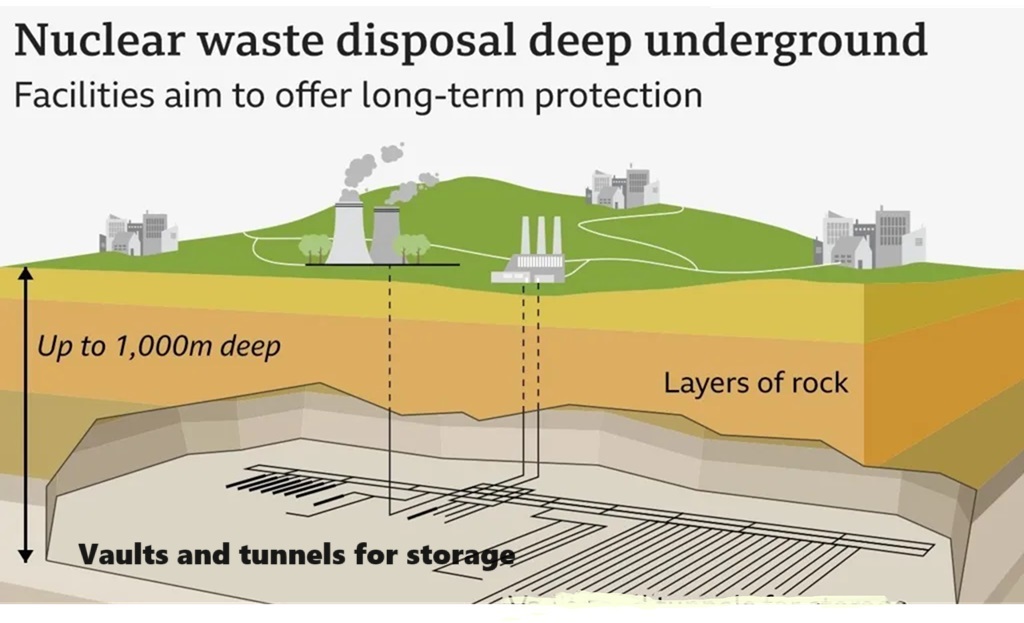
Sweden has started building the world’s second-ever long-term storage facility for spent nuclear fuel. The site is located in Forsmark, Sweden, approximately 90 miles north of Stockholm, Sweden.
The site is designed to securely contain highly radioactive waste for 100,000 years. Finland remains the only other country nearing completion of a permanent storage solution for nuclear waste.
Permanent storage for nuclear waste has been a longstanding challenge for the industry since the advent of commercial nuclear reactors in the 1950s.
Globally, around 300,000 tons of spent nuclear fuel are awaiting disposal, according to the World Nuclear Association. Nuclear scientists currently store most of this waste in cooling ponds near the reactors that produce it.
The Forsmark repository will feature nearly 40 miles of tunnels buried over 1,600 feet deep in bedrock estimated to be 1.9 billion years old.
Engineers designed the site to hold 12,000 tons of spent nuclear fuel. The fuel will be encased in corrosion-resistant copper capsules, packed in clay and buried.
Officials expect the site to begin receiving waste in the late 2030s, and final closure is projected for around 2080, when the site reaches capacity.
However, the project faces potential delays due to safety concerns. MKG, the Swedish nongovernmental organization Office for Nuclear Waste Review, filed an appeal with a Swedish court calling for additional reviews of the facility.
MKG highlighted research suggesting the copper capsules could corrode over time, potentially releasing radioactive elements into groundwater.
The estimated cost of developing the repository exceeds $1 billion, and will be funded by Sweden’s nuclear industry. It is intended to store waste from the country’s existing nuclear power plants, but will not accommodate waste from future reactors. Sweden already announced plans to construct 10 additional nuclear reactors by 2045.
Wind, not nuclear, is the best way to meet Sweden’s climate goals, leading think tank says
By Reuters, January 24, 2025,
Reporting by Simon Johnson Editing by Frances Kerry
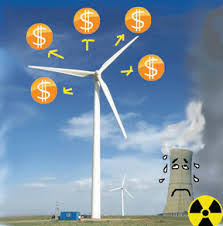
STOCKHOLM, Jan 23 (Reuters) – The cheapest way for Sweden to meet its expected rise in demand for electricity and goal of net zero emissions by 2045 is to build more onshore wind parks rather than increase the number of nuclear power plants, a leading think tank said on Thursday.
Sweden’s government has said it wants to build up to 10 new nuclear power plants by 2045 as transport and industry shift away from fossil fuels and demand for electricity is forecast to reach around 300 Terawatt hours (TWh) from 135 TWh in 2023.
The SNS think tank said that new nuclear power would be the most expensive solution, while more onshore wind and solar power combined with boosted production from hydropower plants and existing nuclear reactors would be able to meet increased demand without increasing Sweden’s low electricity prices.
“The high costs linked to nuclear power mean that these kinds of plants should primarily be built in countries with significantly higher electricity prices,” SNS said in a report on Sweden’s energy transition…………………………………………………………..
SNS said the government should focus on improving the electricity grid and regulatory framework to support private investment in new energy production. https://www.reuters.com/sustainability/wind-not-nuclear-is-best-way-meet-swedens-climate-goals-leading-think-tank-says-2025-01-23/
Sweden’s Nuclear Waste Plan: A 100,000-Year Gamble
Oil Price, By Kurt Cobb – Jan 20, 2025,
- Sweden plans to store nuclear waste for 100,000 years, but the author questions whether this is feasible given the uncertainties of human civilization and technological progress over such a long period.
- The author argues that climate change, political instability, and technological limitations could all pose threats to the long-term safety of nuclear waste storage.
- The author suggests that reprocessing nuclear waste might be a better solution than burying it, but acknowledges that this is also expensive and dangerous.
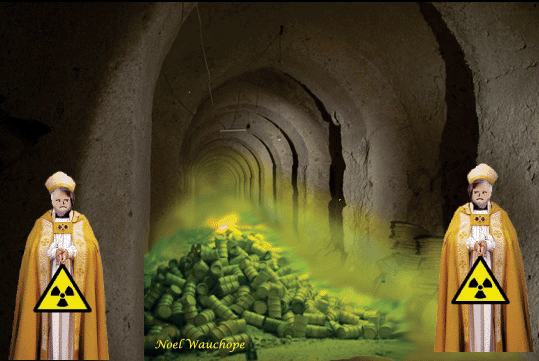
The sensible Swedes like planning ahead. This time its storage for nuclear waste from its own nuclear industry—storage that is supposed to last 100,000 years. Nuclear power currently provides 40 percent of Sweden’s electricity from six operating reactors. The Swedes expect to fill the storage site—”60 km of tunnels buried 500 metres down in 1.9 billion year old bedrock”—sometime by 2080 at which time it will be closed.
For understanding whether the target of 100,000 years of successful storage is plausible, I suggest a trip back 100,000 years to understand what surprises might be in store over such an interval. One hundred thousand years ago the Bronze Age, the age when humans first started to refine and work with metal, was still 97,000 years in the future.
It might seem that not much happened in those 97,000 years, but actually a lot that could challenge such storage schemes did. For example, somewhere around 71,000 to 74,000 years ago Mount Toba, located in modern-day Indonesia, erupted in a supervolcano thought to be the largest in human history. The eruption was two orders of magnitude (100X) larger than another famous Indonesian volcanic eruption, Mount Tambora, which caused what is now referred to as “the year without a summer” in 1816.
…………..Of course, another Mount Toba might just solve the problem of keeping humans away from Swedish nuclear waste because there will be so few people left who could end up drinking radioactive water or touching radioactive soil that we needn’t worry. But a lesser disaster might only, say, halve the human presence on Earth while destroying the kind of complex technology and crucial political structure that make it possible to monitor such waste sites.
……………………………..What we call civilization, that is, human settlement in cities, has only been around about 10,000 years. That’s hardly an endorsement for continuity over the next 100,000. Maybe the Swedes believe that the way they are burying their nuclear waste will make the coming and going of human civilizations over the next 100,000 years irrelevant. But, how could they possibly know that? After all, one Swedish environmental group is going to court to challenge the plan because “research from Sweden’s Royal Institute of Technology showed the copper capsules [used to contain the waste] could corrode and leak radioactive elements into the ground water.”
Okay, maybe you’re thinking that surely in the future our technological prowess will be always ever greater and so containing these wastes will ultimately be a trivial problem in retrospect. There are so many answers to why that will almost certainly NOT be the case. The simplest one is that technology relies on energy and our inability to get beyond fossil fuels which are finite to something even more dense and versatile doesn’t bode well for an advanced technological future.
………………..I understand that now that we humans have produced this waste, we ought to figure out how to store it safely for the sake of whatever life, both human and nonhuman, comes after us. One solution would be to reprocess it to get the usable radioactive products from the waste and use them up as much as possible. That reduces but does not eliminate waste. And, reprocessing is expensive and dangerous and essentially a doubling down on an advanced technological solution.
Of course, another problem is that reprocessing is great for extracting plutonium that can be used in nuclear weapons—which could lead to another kind of disaster. Beyond this, worldwide the amount of waste continues to increase and there are plans to build new nuclear reactors without a solution to the waste problem having been realized on any scale necessary to take care of wastes from all the countries of the world NOT called Sweden. That’s why burying what we have in the ground seems like a cheap and viable solution in comparison to reprocessing—or the totally crazy idea of shooting such waste into space or into the Sun.
I just wonder how knowledge of such waste sites will be preserved for 100,000 years. I wonder whether we humans can build something that will last 100,000 years given our record and the dangerous exigencies of life on Earth. And, I wonder if we were wise to create something in the first place that requires 100,000 years of care, given how heedless we as a species are to hazards of our own making that may destroy our current civilization much, much sooner than a thousand centuries from now. https://oilprice.com/Alternative-Energy/Nuclear-Power/Swedens-Nuclear-Waste-Plan-A-100000-Year-Gamble.html
Nine Swedish energy researchers find that new nuclear power is not needed.
The government has stated that “physics is heavier than politics” .
Unfortunately, on several occasions, misconceptions have been spread about
the physical capabilities of the power system.
It is not true that it costs 8 billion to regulate and balance wind power, or that new nuclear power is necessary for a stable electricity system, write nine energy researchers
from north to south. The need for new nuclear power. “New nuclear power
is necessary for a stable and reliable energy system, for both consumers
and businesses,” stated Finance Minister Elisabeth Svantesson (M) in
November 2023.
It goes without saying that a stable and reliable energy
system is needed. Svenska kraftnät has studied various alternatives in its
reports, the latest of which is “ Long-term Market Analysis 2024 ”. It
shows that a Swedish fossil-free power system with more than twice as much
consumption as today, and without nuclear power, can achieve reliability at
the same level as today.
The solution is called flexibility, where electric
cars, hydrogen storage and electricity trading contribute, among other
things. Nuclear power is important for stability today, as it contributes a
buffer in the form of rotational energy. This buffer ensures that balance
is maintained during the first seconds after, for example, a sudden stop in
another nuclear power plant. Nuclear power also helps to ensure that we get
an appropriate voltage on the power lines.
But this can also be arranged in
other ways. In the Nordic countries there is a system that activates
batteries, among other things, in seconds, so that stability is achieved
even with lower amounts of nuclear power. There is also a technological
development where Swedish industry is at the forefront. There is an
incredibly large export market, since the whole world will get more solar
and wind power when the existing fossil power plants are phased out. This
shift is happening now because solar and wind power have steadily fallen in
price and can be built quickly.
Dagens Nyheter 18th Jan 2025 https://www.dn.se/debatt/karnkraft-ar-en-mojlighet-men-ingen-fysisk-nodvandighet/
Foreign company withdraws from plans for Swedish nuclear power.
South Korean KHNP has withdrawn from discussions with Vattenfall about possibly
building new nuclear power in Sweden. KHNP is one of three companies that
have been considered for building large-scale, conventional nuclear power
in Sweden. “The evaluation of other suppliers is progressing according to
plan,” writes Vattenfall to Ekot.
Swedish Radio 18th Dec 2024 https://sverigesradio.se/artikel/sydkoreanskt-foretag-hoppar-av-diskussioner-om-svensk-karnkraft
Safety analysis is not yet approved for Sweden’s nuclear waste dump plan, despite the hype.

| Brennain Lloyd, 3 Nov 24 |
Sweden’s Land and Environmental Court has granted SKB an environmental permit to build and operate the DGR for nuclear fuel waste …. almost.
This is the last step in the licensing process, and while a political approval had already been issued, this permit from the Lands and Environment Court was still outstanding, and so we were still on sound ground saying that there was no “approved and operating deep geological repository anywhere in the world” (Finland has constructed the underground workings, but still is in the early or mid-stages of the review of their operating license).
Now SKB has “granted” the permit, but there are still two more steps: the Uppsala County administrative board has to approve a “control program”, which sounds from this article like it might be the rough equivalent of the CNSC “License to Prepare a Site” (but it might not be! that’s my speculation based on this description).
The larger point is that “Before SKB can start on the actual mining of the repository tunnels, an approved safety analysis report is required from the Swedish Radiation Safety Authority.”
So, in summary, it seems that the permit has been granted, but the safety analysis report has not been approved, so there is still – as of this moment – still no “approved and operating deep geological repository anywhere in the world”.
Given that the detail of the approval of the safety analysis report might not get media coverage (even nuclear industry media coverage) we’d probably be on sounder ground to now simply say that “there is no operating DGR anywhere in the world, and therefore no operating experience the nuclear industry can point to”.
Support for nuclear is “money down the drain” – Rystad

(Montel) The expansion of solar energy will make nuclear power obsolete and push it out of the electricity market by the 2030s, making financial support for nuclear power a waste of money, the CEO of consultancy Rystad Energy told Montel on Tuesday.
Reporting by: Elias Huuhtanen, Montel News 27th Aug 2024
Support schemes for nuclear, like the financing model recently mulled by Sweden, was throwing “money down the drain”, said Jarand Rystad on the sidelines of the ONS conference in Stavanger.
Even newer technologies like small modular reactors (SMR) would become “very irrelevant, very fast” because of the changing electricity markets, Rystad said.
“In the 2030s and 40s energy will actually be much cheaper than today and integrated into the system with storage in a different manner. I think [nuclear] is a technology of the past,” he said.
As well as being “tremendously expensive”, nuclear did not have the same flexibility as renewables, Rystad noted, as ramping down nuclear production during periods of low demand did not bring the same cost savings as solar.
Renewables support
Instead, renewables combined with flexible demand had “cracked the code” to create “energy abundance”, he said.
“The big problem now is you have too much energy. It will be irrelevant to have this kind of baseline [from nuclear],” Rystad said………………………………. https://montelnews.com/news/1aa921fb-7184-4eb1-8dcd-2e1ad45de3df/support-for-nuclear-is-money-down-the-drain-rystad
Sweden Considers Borrowing $28.5 Billion to Finance Nuclear

By Lars Paulsson and Niclas Rolander, August 12, 2024
(Bloomberg) — Sweden could borrow 300 billion Swedish kronor ($28.5 billion) to help finance a new fleet of nuclear reactors in the coming decades.
A government study released Monday in Stockholm highlighted several features of its preferred model in order provide certainty for investors. Funding instruments include government borrowing to support construction, and 40 years of guaranteed revenues through a so-called contract-for-difference or CfD. ……….
Financing is one of the biggest hurdles for nuclear energy, with reactors costing multiple billions of dollars and taking years to build — often compounding the price. The model presented on Monday is focused on financing a program of as much as 6,000 megawatts, or four large-scale reactors, and has taken inspiration from the Czech Republic’s plans for financing new units at the Dukovany complex. ……..
The proposals will be sent for consultation to various institutions, companies and government agencies before they may be adopted by the government.
One feature is the CfD model, used for both Electricite de France SA’s Hinkley Point C in the UK and Dukovany. Under this mechanism, developers and the government agree a fixed price for electricity for a certain period of time, providing certainty of future revenue. If market prices fall too low, the generator receives a top-up from the state. On the flip side, the plant operator must pay back the difference if the market rate is higher.
In contrast with the financing scheme for Hinkley Point, which has a total cost estimate of about £47.9 billion ($61.2 billion) in today’s prices, the suggested model for Sweden also involves public borrowing to finance construction. According to the proposal, the government would borrow as much as 75% of investment costs, which Dillen expects could increase public debt by some 300 billion Swedish kronor ($28.5 billion).
Swedish state-owned Vattenfall AB and Finland’s Fortum are among the utilities studying new reactors……
In a comment on its website, Vattenfall said it agreed with a lot of the points made by Dillen, but that it was unclear how the state will ensure that the first wave of new reactors actually will be built.
Sweden has had a love-hate relationship with atomic energy since the first commercial reactor began operations in 1972. Mounting grassroots opposition in subsequent years culminated in a 1980 referendum calling for the dismantling of all reactors — an effort that ultimately failed. The winning center-right coalition in the 2022 election made a nuclear renaissance a pillar of its election campaign. ………. https://www.bnnbloomberg.ca/investing/2024/08/12/sweden-leans-toward-czech-style-funding-for-new-nuclear-reactors/
Landmark Swedish Court Judgment against Nuclear Waste Repository.

Landmark Swedish Court Judgment against Nuclear Waste Repository: Read the English Translation http://www.dianuke.org/landmark-swedish-court-judgment-nuclear-waste-repository-read-english-translation/
MKG, the Swedish NGO Office for Nuclear Waste Review has made an unofficial translation into English of the Swedish Environmental Court opinion on the power industry’s Nuclear Waste Company SKB’s license application for a final repository for spent nuclear fuel in Forsmark, Sweden.
The court said no to the application because it considered that there were problems with the copper canister that had to be resolved now and not later. The translation shows the courts judicial argumentation and why it decided not to accept the regulator SSM’s opinion that the problems with the integrity of the copper canister were not serious and could likely be solved at a later stage in the decision-making process.
The main difference between the court’s and the regulator’s decision-making was that the court decided to rely on a multitude of scientific sources and information and not only on the material provided by SKB. It had also been uncovered that the main corrosion expert at SSM did not want to say yes to the application at this time that may have influenced the court’s decision-making. In fact there appear to have been many dissenting voices in the regulator despite the regulator’s claim in the court that a united SSM stood behind its opinion.
The court underlines in its opinion that the Environmental Code requires that the repository should be shown to be safe at this stage in the decision-making process, i.e. before the government has its say. The court says that some uncertainties will always remain but it sees the possible copper canister problems as so serious that it is not clear that the regulator’s limits for release of radioactivity can be met. This is a reason to say no to the project unless it can be shown that the copper canister will work as intended. The copper canister has to provide isolation from the radioactivity in the spent nuclear fuel to humans and the environment for very long time-scales.
It is still unclear how the process will proceed. The community of Östhammar has cancelled the referendum on the repository, as there will be no question from the government in the near future. The government has set up a working group of civil servants to manage the government’s handling of the opinions delivered by the court and SSM. SSM has told the government that it is ok to say yes to the license application.
The court has stated that there are copper canister issues that need to be considered further. The nuclear waste company SKB has said that it is preparing documentation for the government to show that there are no problems with the canister. Whether the government thinks that this will be enough remains to be seen. This is likely not what the court had in mind. The government would be wise to make a much broader review of the issue. There is a need for a thorough judicial review on the governmental level in order to override the court’s opinion. Otherwise the government’ decision may not survive an appeal to the Supreme Administrative Court.
 There are eminent corrosion experts that are of the opinion that copper is a bad choice as a canister material. There is also increasing experimental evidence that this is the case. One problem for the court was likely that SKB has hesitant to do the required corrosion studies that show that copper does not corrode in an anoxic repository environment. The 18-year FEBEX field test shows that copper corrodes relatively rapidly with pitting corrosion. SKB says that all corrosion is due to in-leaking oxygen but it is now clear that experimental systems containing copper and clay become anoxic within weeks or months so this explanation is not valid.
MKG has for long wanted SKB to retrieve the next experimental package in the LOT field test in the Äspö Hard Rock Laboratory. SKB had refused. The remaining packages have now been heated for 18 years. When a 5-year package was retrieved in 2006 it was discovered that there was “unexpectedly high corrosion”. There is clearly a need for more lab and field test results to decide whether copper is a good and safe choice for a canister material.
The court’s decision-making shows the importance of a democratic and open governance in environmental decision-making. It is important that the continued decision-making regarding the Swedish repository for spent nuclear is transparent and multi-faceted.
Sweden opens doors to possible US nukes deployment
Wed, 19 Jun 2024 , https://www.sott.net/article/492419-Sweden-opens-doors-to-possible-US-nukes-deployment
The opposition is worried that a new defense pact does not prohibit acceptance of American nuclear weapons
Lawmakers in Stockholm have approved a controversial defense pact with Washington, which allows American troops onto 17 Swedish military bases and training sites. Critics have blasted the agreement for not explicitly barring US nuclear weapons from being deployed in the Nordic country.
The Defense Cooperation Agreement (DCA) was signed between Swedish Defense Minister Pal Jonson and US Defense Secretary Lloyd Austin in December of last year, but needed parliamentary approval to take effect.
On Tuesday, lawmakers in Stockholm overwhelmingly backed the DCA, with 266 members of parliament voting in favor and 37 against, while 46 were absent. As a high-stakes vote, a three-quarters supermajority with more than half of lawmakers present was required for the bill to pass.
The agreement was opposed by the Left and Green parties, who argued that the terms should explicitly state that Sweden would not host nuclear weapons.
“We want to see legislation that bans nuclear weapons from being brought onto Swedish soil,” Green Party MP Emma Berginger said in parliament during Tuesday’s proceedings, arguing that the pact “doesn’t close the door to nuclear weapons.”
The Swedish Peace and Arbitration Association, a major anti-war non-profit organization, slammed the move as one that increases tensions and security risks for Sweden, claiming it betrays voters’ expectations for a nuclear-free nation.
“Unlike in Norway and Denmark’s DCA pacts, the Swedish agreement contains no reservation against nuclear weapons,” the group’s leader, Kerstin Bergea, wrote in an op-ed after the vote. Sweden’s neighbor Finland, which joined NATO in 2022, has a national law barring nuclear weapons from its territory, and their DCA pact with the US refers to it, Bergea pointed out.
Sweden, a member of the US-led military bloc since March, will allow American troops, vehicles and aircraft unimpeded passage across the country. The Pentagon will also be allowed to set up its own facilities at existing Swedish military bases. The presence of US personnel will be regulated by the US rather than local laws.
Earlier this month, Kremlin spokesman Dmitry Peskov pointed out that numerous waves of NATO expansion have made Europe less safe. Moscow has no territorial disputes or points of tension with the bloc’s new members Sweden or Finland, he stressed, while acknowledging that NATO military infrastructure will no doubt be hosted on their soil. Stockholm and Helsinki “understand this would lead to consequences for their own security,” he said.
Comment:
1) If the agreement or surrender allows the US: “unimpeded passage across the country … set up its own facilities at existing Swedish military bases … will be regulated by the US rather than local laws.” then whether the agreement is explicit about the stationing of nuclear weapons could be said to be irrelevant, since there will be nobody to control what goes on in the US areas of the country except the US. Besides, with enough pressure even an informed government could be made to keep silent as Denmark and Sweden most likely did about the Nord Stream bombing, which was for the most part brushed under the carpet due to considerations of national security.
2) The move from the US has been well prepared. Sweden is a somewhat fragmented country with much energy spent on parallel society areas influenced by minority laws, whether religious, criminal or both. Still some mental preparations have been needed to get the Swedes formally into NATO.
Sweden won’t allow citizens referendum vote over NATO membership (April 2022) which has:
Sweden does not plan to hold a referendum on the subject of NATO membership if its parliament approves of the measure, Swedish Prime Minister Magdalena Andersson announced on Thursday, suggesting that putting the matter to a vote would be a “bad idea.”
“I don’t think it is an issue that is suitable for a referendum,” the Swedish leader told reporters, implying that Parliament’s support was sufficient. “There is a lot of information about national security that is confidential, so there are important issues in such a referendum that cannot be discussed and important facts that cannot be put on the table,” she explained.
The Swedish parliament is conducting an overview of security policy, with plans to release a report on the subject by the middle of next month. With a majority of Parliament reportedly backing membership in NATO, Andersson’s own party, the Social Democrats, is considered the primary obstacle to Stockholm signing on to the 30-country alliance. However, Ulf Kristersson, head of the leading opposition party, the Moderates, agrees that a referendum is a bad idea.
3) With the military US-SE agreement in the central country on the Scandinavian Peninsula the road is paved for more influence. As a possible example, from Russia there was this claim: US preparing major anti-Russia propaganda campaign in Scandinavia – Moscow (May 30)
At the same time, high-ranking Swedish and Finnish officials are being trained, “like diligent students,” to repeat the “Russophobic mantras of their American patrons without hesitation,” the service wrote.
Specifically, it mentioned the commander-in-chief of the Swedish Armed Forces, Micael Byden, who recently claimed that Russia is planning to invade the island of Gotland to establish control in the Baltic Sea; and Finnish President Alexander Stubb, who has claimed that Russia poses an “existential threat” and has insisted that the only way to achieve peace is “through the battlefield.”
If ‘the only way to achieve peace is “through the battlefield.”‘ the invitation for the Scandinavians to join the effort is open, even if for now the active game is by proxy and military-financial aid.
Swedish PM open to hosting nuclear weapons on home soil in case of war

By Charles Szumski | Euractiv.com, 15 May 24, https://www.euractiv.com/section/politics/news/swedish-pm-open-to-hosting-nuclear-weapons-on-home-soil-in-case-of-war/
Sweden is open to the possibility of having nuclear weapons on its soil in the event of war, Swedish Prime Minister Ulf Kristersson said on Monday, calming the concerns of local communities by asserting that any action would be on “Swedish terms”.
As the Swedish parliament prepares to vote on the government’s proposal for a Defence Cooperation Agreement (DCA) with the US, Kristersson, of the conservative Moderate Party, declared that in peacetime there should be no permanent US troops or nuclear weapons on Swedish soil.
In wartime, however, the situation would be different, the Swedish prime minister told radio broadcaster P1 on Monday, ahead of a high-level meeting between the five Nordic prime ministers and the German chancellor in Stockholm.
“If there is a war with us on our land, which Sweden is drawn into after an attack by others, then it is a completely different situation. Then the whole of NATO benefits from the nuclear umbrella that must exist in democracies as long as countries like Russia have nuclear weapons,” Kristersson told P1.
The deal, which was announced a few months before Sweden joined NATO in late 2023, has already attracted criticism.
Especially as it gives the US military the right to use 17 Swedish military bases across the country, the Left Party and others have criticised the agreement for giving too much power and influence to the US military and for failing to address the issue of nuclear weapons on Swedish soil, as there is no explicit prohibition in the agreement, as there is in similar agreements the US has with Denmark and Norway.
The communities affected have also raised concerns, including that local people will not be allowed to stay in popular natural areas, that there will be more waste, and that there will be “social tensions between US troops and the local population.”
However, Kristersson stressed that Sweden still rules over Swedish territory.
“It is Sweden that decides over Swedish territory. That is crystal clear. Everything takes place on Swedish terms,” he simply added.
100,000 years and counting: how do we tell future generations about highly radioactive nuclear waste repositories?
Sweden and Finland have described KBS-3 as a world-first nuclear-waste management solution.

Critical questions remain about the storage method, however. There have been widely publicised concerns in Sweden about the corrosion of test copper canisters after just a few decades. This is worrying, to say the least, because it’s based on a principle of passive safety. The storage sites will be constructed, the canisters filled and sealed, and then everything will be left in the ground without any human monitoring its safe functioning and with no technological option for retrieving it. Yet, over 100,000 years the prospect of human or non-human intrusion into the site – both accidental or intentional – remains a serious threat.

International attention is increasingly fixated on “impactful” short-term responses to environmental problems – usually limited to the lifespan of two or three future generations of human life. Yet the nature of long-lived nuclear waste requires us to imagine and care for a future well beyond that time horizon, and perhaps even beyond the existence of humanity.
International attention is increasingly fixated on “impactful” short-term responses to environmental problems – usually limited to the lifespan of two or three future generations of human life. Yet the nature of long-lived nuclear waste requires us to imagine and care for a future well beyond that time horizon, and perhaps even beyond the existence of humanity.
March 19, 2024 Thomas Keating. Postdoctoral Researcher, Linköping University, Anna Storm, Professor of Technology and Social Change, Linköping University https://theconversation.com/100-000-years-and-counting-how-do-we-tell-future-generations-about-highly-radioactive-nuclear-waste-repositories-199441
In Europe, increasing efforts on climate change mitigation, a sudden focus on energy independence after Russia’s invasion of Ukraine, and reported breakthroughs in nuclear fusion have sparked renewed interest in the potential of nuclear power. So-called small modular reactors (SMRs) are increasingly under development, and familiar promises about nuclear power’s potential are being revived.
Nuclear power is routinely portrayed by proponents as the source of “limitless” amounts of carbon-free electricity. The rhetorical move from speaking about “renewable energy” to “fossil-free energy” is increasingly evident, and telling.
Yet nuclear energy production requires managing what is known as “spent” nuclear fuel where major problems arise about how best to safeguard these waste materials into the future – especially should nuclear energy production increase. Short-term storage facilities have been in place for decades, but the question of their long-term deposition has caused intense political debates, with a number of projects being delayed or cancelled entirely. In the United States, work on the Yucca Mountain facility has stopped completely leaving the country with 93 nuclear reactors and no long-term storage site for the waste they produce.
Nuclear power plants produce three kinds of radioactive waste:
- Short-lived low- and intermediate-level waste;
- Long-lived low- and intermediate-level waste;
- Long-lived and highly radioactive waste, known as spent nuclear fuel.
The critical challenge for nuclear energy production is the management of long-lived waste, which refers to nuclear materials that take thousands of years to return to a level of radioactivity that is deemed “safe”. According to the US Nuclear Regulatory Commission (NRC), in spent fuel half of the radiation in strontium-90 and cesium-137 can decay in 30 years, while it would take 24,000 years for plutonium-239 to return to a state considered “harmless”. However, exactly what is meant by “safe” and “harmless” in this context is something that remains poorly defined by international nuclear management organisations, and there is surprisingly little international consensus about the time it takes for radioactive waste to return to a state considered “safe” for organic life.
“Permanent” geological repositories
Despite the seeming revival of nuclear energy production today, very few of the countries that produce nuclear energy have defined a long-term strategy for managing highly radioactive spent fuel into the future. Only Finland and Sweden have confirmed plans for so-called “final” or “permanent” geological repositories.
The Swedish government granted approval for a final repository in the village of Forsmark in January 2022, with plans to construct, fill and seal the facility over the next century. This repository is designed to last 100,000 years, which is how long planners say that it will take to return to a level of radioactivity comparable to uranium found in the earth’s bedrock.
Finland is well underway in the construction of its Onkalo high-level nuclear waste repository, which they began building in 2004 with plans to seal their facility by the end of the 21st century.
The technological method that Finland and Sweden plan to use in their permanent repositories is referred to as KBS-3 storage. In this method, spent nuclear fuel is encased in cast iron, which is then placed inside copper canisters, which are then surrounded by clay and bedrock approximately 500 metres below ground. The same or similar methods are being considered by other countries, such as the United Kingdom.
Sweden and Finland have described KBS-3 as a world-first nuclear-waste management solution. It is the product of decades of scientific research and negotiation with stakeholders, in particular with the communities that will eventually live near the buried waste.
Critical questions remain about the storage method, however. There have been widely publicised concerns in Sweden about the corrosion of test copper canisters after just a few decades. This is worrying, to say the least, because it’s based on a principle of passive safety. The storage sites will be constructed, the canisters filled and sealed, and then everything will be left in the ground without any human monitoring its safe functioning and with no technological option for retrieving it. Yet, over 100,000 years the prospect of human or non-human intrusion into the site – both accidental or intentional – remains a serious threat.
The Key Information File
Another major problem is how to communicate the presence of buried nuclear waste to future generations. If spent fuel remains dangerous for 100,000 years, then clearly this is a time frame where languages can disappear and where the existence of humanity cannot be guaranteed. Transferring information about these sites into the future is a sizeable task that demands expertise and collaboration internationally across the social sciences and sciences into practices of nuclear waste memory transfer – what we refer to as nuclear memory communication.
In a project commissioned by the Swedish Nuclear Waste Management Company (SKB), we take up this precise task by writing the “Key Information File” – a document aimed at non-expert readers containing only the most essential information about Sweden’s nuclear waste repository under development.
The Key Information File has been formulated as a summary document that would help future readers understand the dangers posed by buried waste. Its purpose is to guide the reader to where they can find more detailed information about the repository – acting as a “key” to other archives and forms of nuclear memory communication until the site’s closure at the end of the 21st century. What happens to the Key Information File after this time is undecided, yet communicating the information that it contains to future generations is crucial.
The Key Information File we will publish in 2024 is intended to be securely stored at the entrance to the nuclear waste repository in Sweden, as well as at the National Archives in Stockholm. To ensure its durability and survival through time, the plan is for it to be reproduced in different media formats and translated into multiple languages. The initial version is in English and, when finalised, it will be translated into Swedish and other languages that have yet to be decided.
Our aim is for the file to be updated every 10 years to ensure that essential information is correct and that it remains understandable to a wide audience. We also see the need for the file to be incorporated into other intergenerational practices of knowledge transfer in the future – from its inclusion into educational syllabi in schools, to the use of graphic design and artwork to make the document distinctive and memorable, to the formation of international networks of Key Information File writing and storage in countries where, at the time of writing, decisions have not yet been made about how to store highly radioactive long-lived nuclear waste.
Fragility and short-termism: a great irony
In the process of writing the Key Information File, we have discovered many issues surrounding the efficacy of these strategies for communicating memory of nuclear waste repositories into the future. One is the remarkable fragility of programs and institutions – on more than one occasion in recent years, it has taken just one person to retire from a nuclear organisation for the knowledge of an entire programme of memory communication to be halted or even lost.
And if it is difficult to preserve and communicate crucial information even in the short term, what chance do we have over 100,000 years?
International attention is increasingly fixated on “impactful” short-term responses to environmental problems – usually limited to the lifespan of two or three future generations of human life. Yet the nature of long-lived nuclear waste requires us to imagine and care for a future well beyond that time horizon, and perhaps even beyond the existence of humanity.
Responding to these challenges, even partially, requires governments and research funders internationally to provide the capacity for long-term intergenerational research on these and related issues. It also demands care in developing succession plans for retiring experts to ensure their institutional knowledge and expertise is not lost. In Sweden, this could also mean committing long-term funding from the Swedish nuclear waste fund so that not only future technical problems with the waste deposition are tackled, but also future societal problems of memory and information transfer can be addressed by people with appropriate capacity and expertise.
Canada, Sweden Restore UNRWA Funds as Report Accuses Israel of Torturing Agency Staff
“The work that UNWRA does cannot be overstated,” said Canadian lawmaker Salma Zahid. “It will save lives as we have seen the visuals of children dying of hunger in Gaza. The need for immediate aid is non-negotiable.”
JON QUEALLY, Mar 09, 2024 https://scheerpost.com/2024/03/09/canada-sweden-restore-unrwa-funds-as-report-accuses-israel-of-torturing-agency-staff/
The governments of Canada and Sweden have announced they will resume funding for the United Nation’s agency that provides humanitarian aide and protection to Palestinians living in Gaza and elsewhere—a move that other powerful nations, including Israel’s most powerful ally the United States, continue to refuse.
Calling the lack of humanitarian relief inside Gaza “catastrophic,” Canadian Minister of International Development Ahmed Hussen said Friday his nation would restore funding for the United Nations Relief and Works Agency for Palestine Refugees in the Near East (UNRWA) in order to help address the “dire” situation on the ground living.
Sweden made its announcement Saturday and said a $20 million disbursement would be made to help UNRWA regain its financial footing.
The restoration of funds follows weeks of global criticism and protest for the decision by many Western nations to withhold UNRWA funds after Israel claimed, without presenting evidence, that a few members of the agency—the largest employer in the Gaza Strip—had participated in the Hamas-led attacks of October 7.
As a result, UNRWA has said it’s ability to provide aid and services to Gaza—where over 100,000 people have been killed or wounded in five months of constant bombardment and blockade by the Israeli military—has been pushed to the “breaking point” as malnutrition and starvation has been documented among the displaced population of over 2 million people.
“Canada is resuming its funding to UNRWA so more can be done to respond to the urgent needs of Palestinian civilians,” Hussen said. “Canada will continue to take the allegations against some of UNRWA’s staff extremely seriously and we will remain closely engaged with UNRWA and the UN to pursue accountability and reforms.”
“I welcome Canada lifting the pause on funding for UNWRA,” said Canadian MP Salma Zahid, a member of the Liberal party representing Scarborough Centre in the House of Commons. “The work that UNWRA does cannot be overstated. It will save lives as we have seen the visuals of children dying of hunger in Gaza. The need for immediate aid is non-negotiable.”
Earlier this week, UNRWA Commissioner-General Philippe Lazzarini told a special meeting of the U.N. General Assembly the agency was “facing a deliberate and concerted campaign” by Israel “to undermine its operations, and ultimately end them.”
On Friday, Reutersreported on an internal UNRWA report that included testimony of employees who said they were tortured by Israeli officers while in detention to make false admissions about involvement in the October 7 attack.
Nuclear power twice as expensive as the Swedish government thought?

Nuclear power may be almost twice as expensive as the government thought.
Nuclear power must stand on its own two feet, the government has said. But
Vattenfall’s latest assessment shows that new nuclear power can be almost
twice as expensive – which may require multibillion-dollar government
support.
Sweden’s forecasts from the Energy Agency are based on the fact
that electricity from new nuclear power is expected to cost 55-60 öre per
kilowatt hour. To be compared with 35 öre for wind power on land. SVT can
now reveal that Vattenfall has received price information from several
suppliers of both large and smaller so-called SMR reactors. The overall
conclusion is costs of 90-112 öre per kilowatt hour. Almost twice as much
as previous assessment, then. Vattenfall believes that this level mainly
applies to a first large-scale reactor, where you cannot lower the price
with economies of scale.
SVT Nyheter 16th Jan 2024
https://www.svt.se/nyheter/inrikes/karnkraften-kan-bli-nara-dubbelt-sa-dyr-som-regeringen-trott
1 This Month
23-25 October – on Zoom – World BEYOND War’s annual global conferenc


Shut down the radiation-damaged Heysham nuclear reactors now
To see nuclear-related stories in greater depth and intensity – go to https://nuclearinformation.wordpress.com

Say No to NASA’s Reckless Nuclear Reactor on the Moon
Say No to NASA’s Reckless Nuclear Reactor on the Moon

-
Archives
- October 2026 (247)
- September 2026 (339)
- August 2026 (330)
- July 2026 (355)
- June 2026 (287)
- May 2026 (306)
- April 2026 (356)
- March 2026 (251)
- February 2026 (267)
- January 2026 (308)
- December 2025 (358)
- November 2025 (359)
-
Categories
- 1
- 1 NUCLEAR ISSUES
- business and costs
- climate change
- culture and arts
- ENERGY
- environment
- health
- history
- indigenous issues
- Legal
- marketing of nuclear
- media
- opposition to nuclear
- PERSONAL STORIES
- politics
- politics international
- Religion and ethics
- safety
- secrets,lies and civil liberties
- spinbuster
- technology
- Uranium
- wastes
- weapons and war
- Women
- 2 WORLD
- ACTION
- AFRICA
- Atrocities
- AUSTRALIA
- Christina's notes
- Christina's themes
- culture and arts
- Events
- Fuk 2022
- Fuk 2023
- Fukushima 2017
- Fukushima 2018
- fukushima 2019
- Fukushima 2020
- Fukushima 2021
- general
- global warming
- Humour (God we need it)
- Nuclear
- RARE EARTHS
- Reference
- resources – print
- Resources -audiovicual
- Weekly Newsletter
- World
- World Nuclear
- YouTube
-
RSS
Entries RSS
Comments RSS

