Trump Threatens Full Trade Embargo Over Spain’s Refusal to Be Complicit in Iran Attacks
Ripping the US president’s “flagrant disregard for European sovereignty—and security,” co-general coordinator of Progressive International declared: “Close the bases. All of them.”
Jessica Corbett, Common Dreams, Mar 03, 2026
President Donald Trump on Tuesday threatened to cut off all trade with Spain over the Spanish government’s refusal to allow US aircraft to use its military bases for the war that the United States and Israel are waging on Iran.
Speaking with reporters at the White House beside German Chancellor Friedrich Merz just after noon Eastern time, Trump initially signaled that he’d already taken action against Spain, but less than 10 minutes later, the president suggested he was still deciding.
Referring to Treasury Secretary Scott Bessent, who was also in the room, Trump said: “Spain has been terrible. In fact, I told Scott to cut off all dealings with Spain.”
Trump claimed that “it started” last year, when every other NATO member caved to US pressure to aim for spending 5% of gross domestic product on defense by 2035, “and Spain didn’t do it.”
“And now Spain actually said that we can’t use their bases. And that’s all right. We could use their base if we want. We could just fly in and use it. Nobody’s going to tell us not to use it. But we don’t have to. But they were unfriendly,” the president continued. “Spain has absolutely nothing that we need other than great people. They have great people but they don’t have great leadership.”
Again complaining about their refusal to commit to 5%, he said that “we’re gonna cut off all trade with Spain. We don’t want anything to do with Spain.”………………………………………………………………………………………………………………………………………….
Francesca Albanese, the United Nations special rapporteur focused on the occupied Palestinian territories and a target of Trump administration sanctions, responded to the US president by praising the “strength” of Spanish Prime Minister Pedro Sánchez.
“The peoples of Europe do not want to be complicit in a system that kills children and protects those who profit from their blood,” Albanese said. “Europe deserves better, and you are already part of that change. Thank you.”https://www.commondreams.org/news/iran-spain
60 years since the Palomares incident “The residents were constantly misinformed”.
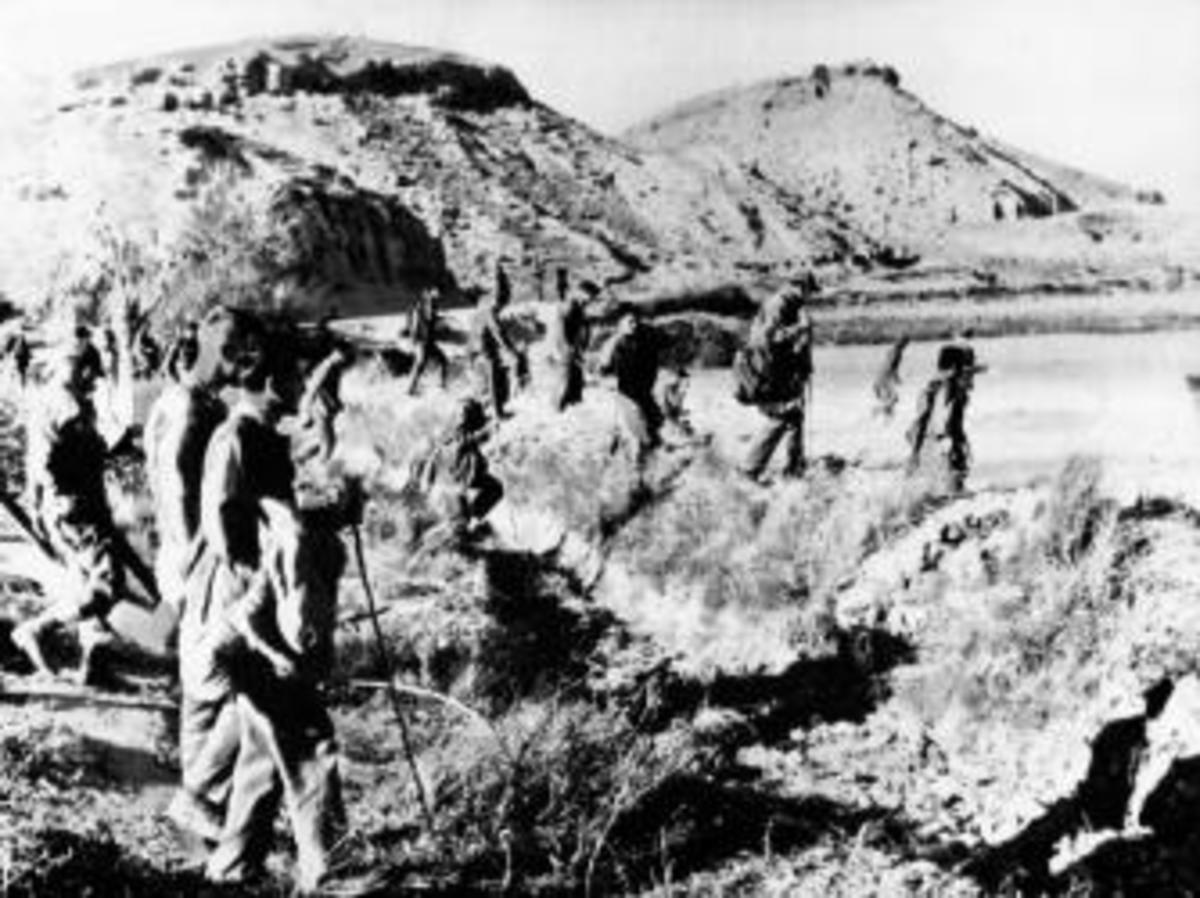
On the Palomares nuclear accident, symbolic decontamination actions, and the lasting damage to people and the environment. A conversation with José Herrera Plaza.Interview: Norbert Suchanek
Sixty years ago, on January 17, 1966, one of the most serious nuclear accidents of the Cold War occurred over southern Spain. A US Air Force tanker collided with a B-52 bomber carrying four hydrogen bombs. Both aircraft exploded; the debris and the dangerous cargo fell from the sky over the small coastal village of Palomares in Andalusia. The parachutes on two of the four bombs failed to deploy. They shattered on impact, contaminating the air and soil around Palomares with plutonium and uranium. The fourth bomb fell into the Mediterranean Sea and was not recovered for 80 days. Where were you in January 1966 when the hydrogen bombs fell from the sky?
I was just starting school in Almería at the time. That’s about 90 kilometers from Palomares. Like most people in Andalusia, I had no idea about the hydrogen bombs hanging over our heads.
When and why did you begin your research on the Palomares accident and make it your main topic?
On January 13, 1986, I attended a meeting of the residents of Palomares. It was three days before the 20th anniversary of the accident, and their claims for compensation for health damages were about to expire. I wanted to make a documentary about this little-known, almost unbelievable story, but at the time, the source material relevant for a documentary was classified. I waited 21 years, gathering all available documents, until I was finally able to complete the documentary “Operation Broken Arrow: The Palomares Nuclear Accident.”
What does “Operation Broken Arrow” stand for?
“Broken arrow” is a code word used by the US military. It refers to an incident involving nuclear weapons, such as an accidental or unexplained nuclear explosion, or the loss or theft of nuclear weapons.
How did the local Spanish authorities react in January 1966? Were they aware of the plutonium danger?
The local authorities reacted according to the standard protocol for an aircraft accident and were without information for several days regarding the involvement of nuclear weapons and consequently also regarding the widespread contamination.
How and when did the Madrid government react?
Spanish authorities learned of the crash almost immediately, thanks to warnings transmitted by a Spanish Navy helicopter via emergency channels. Also on the same day, they learned from the US ambassador that the aircraft was carrying four hydrogen bombs. However, both governments remained silent until the media informed the public three days later.
How was it possible that the media reported on it so quickly during the Franco dictatorship?
Two days after the accident, the Spanish-American journalist André del Amo, working for United Press, was in Palomares and confirmed the involvement of nuclear weapons as well as the ground measurements taken with Geiger counters. His report appeared in major media outlets worldwide the following day. The dictatorship reacted in its usual manner: it confiscated newspapers from kiosks and at the airports in Madrid and Barcelona as soon as international flights landed.
What were the direct consequences of the hydrogen bombs bursting? Was there a risk of a nuclear explosion?
The two Mk-28-FI bombs had 68 times the explosive power of the atomic bomb dropped on Hiroshima. Upon impact in Palomares, the bombs exploded because the conventional explosive charge detonated in the fuse. An area of 635 hectares was subsequently contaminated with fissile fuel: approximately ten kilograms of plutonium-239 and -241, as well as slightly more than ten kilograms of uranium-235 and depleted uranium-238. While the risk of an accidental nuclear detonation was very low, it did exist. These hydrogen bombs were among the most technologically advanced in the US arsenal at the time. Their safety systems were quite good—with the exception of the conventional explosive, which was sensitive to shocks. Due to this accident and a similar one two years later in Greenland, the US military replaced this explosive with a shock- and fire-resistant alternative.
Was the population warned about the plutonium contamination and the consumption of potentially contaminated food such as tomatoes?
The inhabitants of Palomares were continually and insidiously misinformed for fifty years, both under the Franco dictatorship and in democratic Spain. They learned about their precarious situation largely through banned shortwave radio stations such as the communist Radio España Independiente , as well as through the BBC and Radio Paris with their nightly Spanish-language programs. A prominent member of the Spanish nobility, the Duchess of Medina Sidonia, also contributed to informing the local population about their situation and their rights, for which she was imprisoned by the fascist dictatorship.
Are there any data or estimates on the number of people who became ill or died as a result of the radioactive contamination?
No, because a comprehensive epidemiological study was never permitted. Independent attempts failed miserably. At the same time, the governments in Madrid and Washington maintain the official narrative that there has never been a single case of cancer caused by plutonium. In reality, however, Palomares is an environmental disaster zone with significant health risks for its inhabitants. Yet Palomares is not an exception compared to similar incidents elsewhere in the world: an invisible minority, invisible consequences.
Did the nuclear incident have any impact on tourism in southern Spain, which was then becoming an important economic factor?
In 1966, tourists visited other parts of Spain, but not this region. The province of Almería was very poor at the time and virtually isolated due to its poor transport infrastructure. However, there were fears that the accident could negatively impact tourism in the rest of the country, as the international press—especially the British and Italian press in Europe—reported on it. In Australia, a newspaper owned by the young Rupert Murdoch claimed there had been a nuclear explosion, that thousands of people were fleeing, and that the entire Spanish Mediterranean coast was contaminated. This led to the Spanish Minister of Information and the American ambassador swimming in the sea at Palomares beach in front of the media.
The US military conducted a large-scale search and cleanup operation after the crash in Palomares. How did the local population react?
The main priority of the extensive military operation was the search for the missing bomb on land and underwater. The search on land lasted over 45 days, the search at sea 80 days. Second priority was the recovery of the flight recorder and the classified B-52 components, primarily the radio equipment used for the combat log. Thirdly, over 125 tons of wreckage from the bomber and the tanker aircraft were to be recovered and sunk off the coast in the Mediterranean Sea. Finally, a symbolic decontamination operation was carried out for the international community. After the disaster, some people likely suffered from a kind of post-traumatic stress. Subsequently, a collective paranoia gripped the city, exacerbated by the contradictions between the statements of the authorities of both countries. The population was suddenly catapulted into the nuclear age and had to grapple with a new concept: radioactivity.
Was the military able to remove all the plutonium from the region?
After lengthy and asymmetrical negotiations between the hegemonic power, the USA, and the Franco dictatorship, they agreed to remove the plutonium, which had been scattered to the winds, and return it to the USA. However, they transported only 650 cubic meters of contaminated soil and 350 cubic meters of contaminated crop residue to the USA. The agreement was not honored because the excavated soil, stored in metal drums, was not the most heavily contaminated. It is estimated that less than one percent of the plutonium, just under 100 grams, returned to the USA in the 4,810 metal drums, each holding 208 liters. The remaining contaminated fields were plowed to inject the plutonium 30 centimeters into the soil. Forty years later, two secretly constructed pits containing approximately 4,000 cubic meters of radioactive waste were discovered in the region.
What happened to the contaminated material from Palomares in the USA?
Two metal drums were sent to the Los Alamos National Laboratory for plant experiments. 4,808 metal drums were transported to Aiken, South Carolina, to the Savannah River Nuclear Complex of the U.S. Atomic Energy Commission and buried at a depth of six meters. This was accompanied by a comprehensive, worldwide propaganda campaign. The fact that 99 percent of the plutonium and uranium remained in the soil of Palomares was kept secret from the public, and especially from the residents and farmers who cultivated these radioactively contaminated areas. The U.S. Air Force and the Spanish government assured them that the land was completely decontaminated and that there was no danger. Meanwhile, the U.S. Atomic Energy Commission and the Junta de Energía Nuclear in Spain used the situation to conduct a secret experiment program on the local population. The aim was to investigate the uptake and storage of plutonium and uranium in the human body by a representative number of individuals from a population potentially exposed to inhaling plutonium oxide aerosol. This was the secret program codenamed “Indalo Project,” which was carried out without the informed consent of the local population.
What is the current situation in Palomares? Are there still contaminated areas and radioactive hazards in the region?
Despite assurances from Spain and the US that there was no longer any danger to farmers and their families, the plowing of the soil with plutonium in 1966 led to the stirring up and release of numerous aerosols containing radioactive elements. For forty years, the residents of Palomares were exposed to radioactive nuclides. It wasn’t until 2006 that the first radiation protection measures were implemented for the population, restricting access to and agricultural use of a 40-hectare area through fencing and marking. Now, sixty years later, we are still waiting for the central government in Madrid to carry out the decontamination. It has never prioritized the issue, even though it is documented that more than 210 residents exhibited symptoms of internal lung contamination. The actual number of those affected, however, remains unknown. After all, the political elites of the central government live over 520 kilometers away in Madrid.
Why did the B-52 bomber fly over southern Spain with nuclear weapons back then?
This occurred as part of Operation Chrome Dome, which began on January 18, 1961. From then on, four to six strategic bombers flew round-trip missions over Spain every day, year after year. During the Cuban Missile Crisis of 1962, 42 bombers were in the air daily. They came from the East Coast of the United States, crossed Spanish airspace, approached southern Italy, and returned to their bases over Spain. Each B-52 carried four thermonuclear bombs. In an attack scenario, they could reach and attack their targets within one to two hours, depending on whether the target was in the USSR or another Warsaw Pact state. For five years, more than 17,000 bombers flew over Spain and were refueled 26,000 times. No other country in Europe permitted such dangerous maneuvers in its airspace. Almost 35,000 hydrogen bombs flew over our heads. The collisions over Palomares and two years later over Thule in Greenland occurred because the law of probability came into play.
How will you commemorate the 60th anniversary of this never-ending Palomares disaster?
I am planning a photo exhibition and a panel discussion at the Villaespesa Library in Almería entitled “Palomares – 60 Years of Government Failure.” I also expect to present my new book at the end of January. It is titled “The Year of the Bombs: Stories from Palomares.” The book brings together the testimonies of 27 Spaniards and Americans who were involuntarily involved in the Palomares disaster. It is written in the style of a documentary narrative, similar to Svetlan Alexievich’s “Voices from Chernobyl,” a work to which it thus pays homage. It is about counteracting oblivion. The story of Palomares is not yet over. It continues to be written.
10 October Peace Camp: Salir de Casa por Gaza
10 October – 8:00 am – 18 October – 5:00 pm
WILPF Spain is taking the lead in calling for a women’s camp in Brussels to demand action from the European Union against the genocide in Gaza.
The camp is scheduled for October 10 to 18 or 19, 2025, and it will end with a public demonstration in Brussels. The aim is to show our solidarity with Gaza and demand that the European Union—the Commission and the Parliament—urgently:
1. Act to ensure constant and sufficient humanitarian aid, managed by the United Nations, to the population of Gaza in accordance with the principles of international humanitarian law.
2. Exercise its influence to force Israel to agree to a permanent ceasefire and end the occupation.
3. Suspend the association agreement with the State of Israel in view of the violation of the clause on respect for human rights.
WILPF Spain calls on other women’s groups to join these demands by participating in and publicising this action.
Those interested in participating can register by completing this form and helping us to publicise this call.
In move that could Bring in NATO, Spain joins Italy in Sending Rescue Ship for Sumud Gaza Aid Flotilla
INFORMED COMMENT, Juan Cole, 09/25/2025, https://www.juancole.com/2025/09/spain-rescue-flotilla.html
Ann Arbor (Informed Comment) – On Wednesday, the socialist government of Pedro Sánchez in Spain announced that it would dispatch a rescue ship to be in the vicinity of the 50 ships that make up the Sumud (steadfastness) flotilla aiming to provide humanitarian relief to the Gaza Strip. It joins Italy in this endeavor. This according to Carlos E. Cué and Miguel González at El Pais.
The Sumud has come under repeated Israeli drone fire. On Wednesday, Israeli drones dropped explosives in the vicinity of the ships moored off the island of Crete, but caused no damage or injuries.
Prime Minister Sánchez said from the UN General Assembly meeting in New York, “The government of Spain requires that international law be observed and that the right of our citizens to navigate the Mediterranean in conditions of security be respected. For this reason, tomorrow a Maritime Action vessel will depart [the base in Cartagena] with all the means of assisting the flotilla or of carrying out any rescue, if necessary.”
Israel has routinely violated the law of the seas by attacking ships in international waters. Spanish citizens are taking part in the Sumud flotilla, and Spain is saying they have the right to do so.
Some 82% of Spaniards categorize what Israel is doing in Gaza as a genocide, a massive proportion that demonstrates that Israel’s actions are condemned by large numbers of people on both the left and the right. But note that 85% of centrists and 97% of Spaniards on the left view the Gaza campaign as genocidal.
The Maritime Action ship is not intended to shoot down attacking Israeli drones or to defend the Sumud ships from being boarded by the Israeli military. It will, however, rescue any passengers that end up in the sea because of Israeli actions.
It should be underlined, however, that it is entirely possible that the Maritime Action vessel will come under Israeli fire, which would spark an enormous diplomatic and military crisis.
Spain and Italy are both NATO members, and Article 5 says that “an attack on one is an attack on all.” NATO invoked this principle after the September 11, 2001, al-Qaida attacks on New York City and Washington, D. C., which is why there were NATO troops in Afghanistan but not in Iraq, which the rest of NATO did not view as a belligerent.
Thus, if Israel attacks the Spanish escort ship, it could stir up a strong European reaction, and would put the Trump administration on the spot, since Trump will side with Israel against NATO.
Spain’s maritime action vessels can accommodate 80 passengers. They are also armed with a 76-millimeter gun, two machine guns, and a surveillance drone of their own. This one will have a crew of 50 and 8 medical staff.
Sanchez’s government reached out to Italy for coordination, and sought to add another country to the escort, such as Ireland.
For her part, Italian PM Giorgia Meloni, from a far right party, faced a national strike involving 500,000 people on Monday over her refusal to recognize a Palestinian state alongside France and Britain. She said Tuesday that she’d recognize Palestine if Hamas releases Israeli hostages and if the organization is excluded from any Palestinian government going forward. This position was the one taken by British Prime Minister Keir Starmer until Sunday, when he folded before the weight of sentiment among his back-benchers.
Spain Announces Arms Embargo on Israel and Other Steps ‘to Stop the Genocide in Gaza’
“This is not self-defense,” Spanish Prime Minister Pedro Sánchez asserted, “it is the extermination of a defenseless people and a violation of every international law.”
Brett Wilkins, Common Dreams, Sep 08, 2025
Spanish Prime Minister Pedro Sánchez on Monday announced a series of nine new measures—including a total arms embargo—aimed at pressuring the government of fugitive Israeli Prime Minister Benjamin Netanyahu “to stop the genocide in Gaza.”
Sánchez, who leads the Spanish Socialist Workers’ Party (PSOE), announced the steps during a speech in which he first acknowledged the historical suffering of the Jewish people, which includes the 1492 ethnic cleansing of Jews from Spain.
“The Jewish people have suffered countless persecutions, deserve to have their own state, and to feel secure,” Sánchez said. “That is why the Spanish government has condemned Hamas’ attacks from day one.”
However, “there is a difference between defending your country and bombing hospitals or starving innocent children,” the prime minister continued. “This is an unjustifiable attack on the civilian population, which the [United Nations] rapporteur has described as genocide.”
“Sixty thousand dead, two million displaced, half of them children,” Sánchez said. “This is not self-defense, it is not even an attack—it is the extermination of a defenseless people and a violation of every international law.”
The nine measures—which must be approved by lawmakers and the Cabinet—include:
- A “legal and permanent prohibition” on the purchase and sale of weapons, ammunition, and military equipment;
- A ban on transit through Spanish ports for all ships carrying fuels destined for Israel’s military;
- Denial of entry into Spanish airspace for all state aircraft carrying military equipment to Israel;
- A ban on entry to Spain for “all persons directly involved in genocide, human rights violations, and war crimes” in Gaza;
- Prohibition of imported products from illegal settlements in the occupied Palestinian territories;
- Limitation of consular services for Spanish citizens residing in illegal Israeli settlements;
- Strengthened support for the Palestinian Authority;
- An additional €10 million in support for the United Nations Relief and Works Agency for Palestine Refugees in the Near East (UNRWA); and
- An increase in overall humanitarian spending for Gaza, to reach €150 million by 2026……………………………………………………………………………….. https://www.commondreams.org/news/spain-arms-embargo-israel
Gaza “a Gaping Wound on Humanity:” Spain Convenes Int’l Conference to call for Arms Embargo on Israel

Juan Cole, 05/26/2025, https://www.juancole.com/2025/05/solution-international-meeting.html
Ann Arbor (Informed Comment) – The Spanish wire service EFE reports that delegations from 20 countries met Sunday in Madrid in a push to pressure Israel to halt its total war on Gaza and to establish a Palestinian state. Convened by Foreign Minister José Manuel Albares, the conference sought to move to concrete actions.
Israel had blocked all humanitarian aid for two months beginning in March, provoking a crisis of malnutrition in Gaza, almost all of whose people have been made internal refugees several times over by the Israeli military. Israel began letting a small amount of aid in last week, apparently under the pressure of the Trump administration, but United Nations officials decried it as “a drop in the ocean” compared to the urgent needs of 2.2 million Palestinians.
Addressing the attendees at the conference on Sunday, Madrid’s foreign minister said, “The sole interest that all of us gathered here today have is to stop this unjust, cruel, and inhumane Israeli war in Gaza, break the blockade of humanitarian aid, and move definitively toward a two-state solution.”
Of this last point, according to the Anadolu Agency, he asked, “What’s the alternative? Kill all the Palestinians? Send them, I don’t know where -— to the moon?”
Albares said, “Gaza is a gaping wound in humanity… There are no words to describe what is happening in Gaza—but just because there are no words doesn’t mean we will remain silent.”
He said that the proposed measures were not intended to be anti-Israel and that Spain recognized Israel’s legitimate security needs. “But,” he observed, “exactly the same right to peace and security that the Israeli people possess is also possessed by the Palestinian people.” He added,”the Palestinian people cannot be condemned eternally to the estate of a people of refugees.”
Albares called for three tangible steps, including the suspension of the EU-Israel trade agreement. As for the second, he insisted, “We all need to implement an arms embargo; there can be no arms sales to Israel.”
He said that the proposed measures were not intended to be anti-Israel and that Spain recognized Israel’s legitimate security needs. “But,” he observed, “exactly the same right to peace and security that the Israeli people possess is also possessed by the Palestinian people.” He added,”the Palestinian people cannot be condemned eternally to the estate of a people of refugees.”
Albares called for three tangible steps, including the suspension of the EU-Israel trade agreement. As for the second, he insisted, “We all need to implement an arms embargo; there can be no arms sales to Israel.”
Speaking of the gathering, he observed optimistically, “There is a lot of diplomatic muscle in Madrid.” He urged the breaking of the “vicious circle” of Israeli-Palestinian violence.
The Madrid Plus group of nations met once before with 10 attendees, including Western European nations that had recognized the State of Palestine (Ireland, Spain and Norway), along with the Middle Eastern countries of Egypt, Jordan, Qatar, Saudi Arabia and Turkiye. The membership has doubled for this meeting. Germany, Italy, France, and Portugal joined this time, having been absent at the first gathering. Brazil was also there.
Atomic lobby seizes on Spanish blackout
Spain has rejected claims that
more nuclear power would have helped as recriminations erupt over last
week’s outage. Europe’s nuclear advocates are pushing their favorite
energy source as a deterrent against the type of blackout that seized Spain
and Portugal last week — even if the facts paint a muddied picture. The
EU’s atomic allies are claiming that having more nuclear energy coursing
through the grid can help ensure a stable power supply to back up renewable
sources like wind and solar. “If you want a lot of power and you want it
to be fossil-free, then nuclear is your pick,”
Swedish Industry and
Energy Minister Ebba Busch said in an interview. Specialists and other
officials, including those in Spain, aren’t convinced. While they concede
that having more overall power can aid in certain circumstances, they
aren’t convinced nuclear energy would have prevented Monday’s outage,
which was caused by a sudden loss of power in the Iberian grid. Europe’s
grids, like those in Spain, need upgrades, better linkages and more storage
tech like batteries to keep power stable, they stress.
Politico 8th May 2025 https://www.politico.eu/article/nuclear-power-push-europe-spain-portugal-outage-energy-security/
Spain terminates multimillion deal with Israeli weapons maker
Coalition authorities in Madrid have stressed their commitment to ‘the Palestinian cause and peace in West Asia
APR 24, 2025, The Cradle,https://thecradle.co/articles/spain-terminates-multimillion-deal-with-israeli-weapons-maker
The Spanish government ordered the immediate termination of a $7.5 million contract to buy ammunition from a company with direct ties to Israeli arms maker Elbit Systems on 24 April.
Prime Minister Pedro Sanchez canceled the deal after Sumar, a group of left-wing parties, threatened to leave the governing coalition.
“After exhausting all routes for negotiation, the prime minister, deputy prime minister, and ministries involved have decided to rescind this contract,” a government source told Al Jazeera.
Earlier this week, Interior Minister Fernando Grande-Marlaska formalized a contract with Israeli-owned company Guardian Homeland Security S.A. for over 15 million rounds of ammunition, causing a stir at the Moncloa Palace in light of Sanchez’s February 2024 pledge not to purchase weapons from Israel over the Gaza genocide.
Spanish media reports that authorities stressed the commitment of the progressive coalition government parties (PSOE and Sumar) “to the Palestinian cause and peace in the Middle East.” They also noted that since the US-backed ethnic cleansing campaign began in Gaza in October 2023, Spain has not purchased or sold weapons to Israeli firms, “nor will it do so in the future.”
However, despite the claims from Moncloa Palace, in February, the Progressive International (PI), the Palestinian Youth Movement, and the American Friends Service Committee revealed that over 60,000 weapon parts have been transported to Israel via Zaragoza airport in northern Spain since October 2023.
“The evidence indicates that these flights continue to this day,” investigators told elDiario.es, adding that the shipments include “parts and accessories for artillery, rifles, rocket/grenade launchers and machine guns” and “parts and accessories for revolvers and pistols.”
In December, The Intercept revealed that Washington sent over a thousand tons of ammunition to Israel on a ship that docked at a US naval base in Spain, despite Madrid’s embargo on vessels carrying military cargo bound for Israel.
“Shipments through American military bases in Spain of military materials, which may be used in the commission of international crimes, are harder to detect,” Spanish lawmaker Enrique Santiago told the New York-based outlet.
Spain’s Nuclear Shutdown Set to Test Renewables Success Story

Plans to shut down all nuclear power plants by 2035 remain unchanged even as other countries delay closures and plan to build more.
Spain is moving forward
with plans to shut down its seven nuclear reactors over the next decade,
despite calls to reconsider, and will instead rely on renewables and
battery storage to fill the energy gap.
Bloomberg 11th April 2025, https://www.bloomberg.com/news/articles/2025-04-11/spain-s-nuclear-shutdown-set-to-test-renewables-success-story
‘We thought it was the end of the world’: How the US dropped four nuclear bombs on Spain in 1966
Myles Burke https://www.bbc.com/culture/article/20250404-how-the-us-dropped-nuclear-bombs-on-spain-in-1966 7 Apr 25
In 1966, the remote Spanish village of Palomares found that the “nuclear age had fallen on them from a clear blue sky”. Two years after the terrifying accident, BBC reporter Chris Brasher went to find what happened when the US lost a hydrogen bomb.
On 7 April 1966, almost 60 years ago this week, a missing nuclear weapon for which the US military had been desperately searching for 80 days was finally found. The warhead, with an explosive power 100 times that of the bomb dropped on Hiroshima, was carefully winched from a depth of 2,850ft (869m) out of the Mediterranean Sea and delicately lowered onto the USS Petrel. Once it was on board, officers painstakingly cut into the thermonuclear device’s casing to disarm it. It was only then that everyone could breathe a sigh of relief – the last of the four hydrogen bombs that the US had accidentally dropped on Spain had been recovered.
“This was not the first accident involving nuclear weapons,” said BBC reporter Chris Brasher when he reported from the scene in 1968. “The Pentagon lists at least nine previous accidents to aircraft carrying hydrogen bombs. But this was the first accident on foreign soil, the first to involve civilians and the first to excite the attention of the world.”
This terrifying situation had come about because of a US operation code-named Chrome Dome. At the beginning of the 1960s, the US had developed a project to deter its Cold War rival, the Soviet Union, from launching a pre-emptive strike. A patrol of nuclear-armed B-52 bombers would continuously criss-cross the skies, primed to attack Moscow at a moment’s notice. But to stay airborne on these long looping routes, the planes needed to refuel while in flight.
On 17 January 1966, one such bomber was flying at a height of 31,000ft (9.5km) over the Almería region of southern Spain, and attempted a routine air-to-air refuelling with a KC-135 tanker plane. “I believe what happened was the bomber was closing at a too-high rate of closure speed and he didn’t stabilise his position,” US Maj Gen Delmar Wilson, the man in charge of dealing with the catastrophic accident, told Brasher, “with the result that they got too close and collided.”
The B-52 bomber’s impact with the refuelling plane tore it open, igniting the jet fuel the KC-135 was carrying and killing all four of the crew onboard. The ensuing explosion also killed two men in the B-52’s tail section. A third managed to eject, but died when his parachute did not open. The other four members of the bomber’s crew successfully bailed out of their burning plane before it broke apart and fell to earth, raining down both flaming aircraft fragments and its lethal thermonuclear cargo onto the remote Spanish village of Palomares.
Everyone kept talking about a ‘broken arrow’. I learnt then that ‘broken arrow’ was the code word for a nuclear accident – Capt Joe Ramirez
The huge fireball was seen a mile away. Thankfully, it did not trigger a nuclear explosion. The bomber’s warheads were not armed and had built-in safeguards to prevent an unintended atomic chain reaction. But the thermonuclear devices did have explosives surrounding their plutonium cores as part of the triggering mechanism. In the event of an accident, the bombs had parachutes attached to them designed to cushion the impact on landing and prevent radioactive contamination. And indeed, one undetonated bomb did land safely in a riverbed and was recovered intact the following day. Unfortunately, two of the plummeting nuclear bombs’ parachutes failed to open.
That morning, Spanish farmer Pedro Alarcón was walking to his house with his grandchildren when one of the nuclear bombs landed in his tomato field and blew apart on impact. “We were blown flat. The children started to cry. I was paralysed with fear. A stone hit me in the stomach, I thought I’d been killed. I lay there feeling like death with the children crying,” he told the BBC in 1968.
Devastation and chaos
The other hydrogen bomb also exploded when it hit the ground near a cemetery. These dual blasts created vast craters and scattered highly toxic, radioactive plutonium dust across several hundred acres. Burning aircraft debris also showered the Spanish village. “I was crying and running about,” a villager called Señora Flores told the BBC in 1968. “My little girl was crying, ‘Mama, Mama, look at our house, it is burning.’ Because of all the smoke I thought what she said must be true. There were a lot of stones and debris falling around us. I thought it would hit us. It was this terrific explosion. We thought it was the end of the world.”
Once the news that the bomber had come down with nuclear weapons aboard reached US military command, a huge operation was launched. At the time of the disaster, Capt Joe Ramirez was an US Air Force lawyer stationed in Madrid. “There were a lot of people talking, there was a lot of excitement in the conference room. Everyone kept talking about a ‘broken arrow’. I learnt then that ‘broken arrow’ was the code word for a nuclear accident,” he told BBC’s Witness History in 2011.
US military personnel were scrambled to the area by helicopter. When Capt Ramirez arrived in Palomares, he immediately saw the devastation and chaos wrought by the accident. Huge pieces of smoking wreckage were strewn all over the area – a large part of the burning B-52 bomber had landed in the school’s yard. “It’s a small village but there were people scrambling in different directions. I could see smouldering debris, I could see some fires.”
Despite the carnage, miraculously no one in the village was killed. “Nearly 100 tonnes of flaming debris had fallen on the village but not even a chicken had died,” said Brasher. A local school teacher and doctor climbed up to the fire-scarred hillside to retrieve the remains of the US airmen who had been killed. “Later still, they sorted the pieces and the limbs into five coffins, an act that was to cause a certain amount of bureaucratic difficulty when the Americans came to claim only four bodies from that hillside,” said Brasher.
Three of the B-52 crew who managed to eject landed in the Mediterranean several miles off the coast and were rescued by local fishing boats within an hour of the accident. The fourth, the B-52 radar-navigator, ejected through the plane’s explosion, which left him badly burned, and was unable to separate himself from his ejection seat. Despite this, he managed to open his parachute and was found alive near the village and taken to hospital.
However, this still left the problem of locating the plane’s deadly nuclear payload. “My main concern was to recover those bombs, that was number-one priority,” Gen Wilson told the BBC in 1968.
One of our nuclear bombs is missing
“The first night, the Guardia Civil [the Spanish national police force] had come to the little bar in Palomares, and that was about the only place that had electricity. And they had reported what they considered to be a bomb, so we immediately despatched some of our people to this riverbed which is not far from the centre of town, and, in fact, it was a bomb, so we placed a guard on that. And then the next morning, at first daylight, we started conducting our search, and I believe it was something in the order of 10am or 11am the following morning, we located two other bombs.”
This accounted for three of the nuclear bombs, but there was still one missing. By the next day, trucks filled with US troops had been sent from nearby bases, with the beach in Palomares becoming a base for some 700 US airmen and scientists urgently trying to contain any radioactive contamination and locate the fourth warhead.
“The first thing that you could see as the search really got underway in earnest was Air Force personnel linking up hand-by-hand and 40 or 50 people in a line. They would have designated search areas. There were some people with Geiger counters who started arriving, and so they started marking off the areas which were contaminated,” said Capt Ramirez in 2011. When US personnel registered an area contaminated with radiation, they would scrape up the first three inches of topsoil and seal it in barrels to be shipped back to the US. Some 1,400 tonnes of irradiated soil ended up being sent to a storage facility in South Carolina.
Both the US and Spain, which at the time was under the brutal rule of Francisco Franco’s military dictatorship, were keen to downplay the devastating accident. Franco was especially worried that radiation fears would hurt Spain’s tourism industry, a major source of revenue for his regime. In an effort to reassure the local population and the wider world that there was no danger, the US Ambassador to Spain, Angier Biddle Duke, would end up taking a swim in the sea off Palomares coast in front of the international press just weeks after the accident.
But despite hundreds of US personnel conducting an intensive and meticulous search of the surrounding area for a week, they still couldn’t find the fourth bomb. Then Capt Ramirez spoke to a local fisherman who had helped rescue some of the surviving airmen who had splashed down in the sea. The fisherman kept apologising to Capt Ramirez for not being able to save one of the US flyers, whom he thought he had witnessed drifting down into the depths.
Capt Ramirez realised that the fisherman could have actually seen the missing nuclear bomb. “All the bodies had been accounted for, I knew that,” he said. The search then quickly shifted to the Mediterranean Sea, with the US Navy mobilising a flotilla of more than 30 ships, including mine-sweepers and submersibles, to scour the seabed. The exploration of miles of ocean floor was both technically complicated and a very slow process, but after weeks of exhaustive searching, a newly developed deep-diving vessel, Alvin, finally located the missing bomb in an underwater trench.
Nearly four months after it was first lost, the warhead was finally made safe and back in US hands. The next day, despite the secrecy with which the US military had surrounding its nuclear arsenal, it took the unusual step of showing the bomb to the world’s press. Ambassador Duke reasoned that unless people saw the bomb for themselves, they would never feel certain that it had actually been recovered.
Why were the floods in Spain so bad? A visual guide

Guardian 1st Nov 2024
At least 205 people have died in Spain after torrential rains triggered the
country’s deadliest floods in decades, unleashing a deluge of muddy water
that turned village streets into rivers, destroyed homes and swept away
bridges, railways tracks and cars. An unknown number of people remain
missing, while thousands of others are without electricity or phone
service. The majority of those killed were in the coastal region of
Valencia, where the state-run agency said that nearly a year’s worth of
rain had fallen in just eight hours. https://www.theguardian.com/world/2024/oct/31/why-were-the-floods-in-spain-so-bad-a-visual-guide
Spain: Nuclear Industry Reels After Tax Increase
Energy Intelligence Group, Fri, Jul 26, 2024, Author, Grace Symes, London, Editor, Phil Chaffee
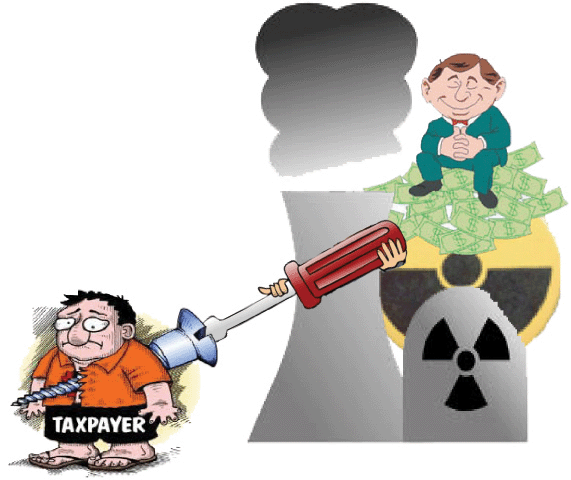
Spain’s nuclear operators are warning that last month’s move by Madrid to significantly raise a tax on these utilities may undermine the commercial viability of Spain’s seven operating reactors, even as they approach a government-mandated nuclear phaseout by 2035.
\The 30% tax rise is meant partly to cover the costs of seven separate interim nuclear waste storage facilities for spent fuel and high-level waste, a strategy mandated after the government discarded plans for a controversial single centralized facility. Owners argue they had no say in the storage decision, and should not be required to pay the significant added costs it will entail…………… (Subscribers only) https://www.energyintel.com/00000190-bb7f-db32-ad93-bb7ff87a0000
‘We Want Peace’: Spain Applies to Join ICJ Genocide Case Against Israel
“We do it out of commitment to the United Nations and to international law,” said the Spanish foreign minister, calling for an end to civilian deaths.
Common Dreams, EDWARD CARVER, Jun 06, 2024
Spain’s foreign minister announced Thursday that the country had applied to join the genocide case against Israel at the International Court of Justice, just over a week after formally recognizing a Palestinian state alongside other European countries.
South Africa brought the case and has led it through its early stages, which culminated on May 24 with the ICJ, the United Nations’ highest court, ordering Israel to halt its military offensive on Rafah in the southern Gaza Strip—an order that Israel ignored. Mexico, Colombia, Nicaragua, Libya, and the Palestinians have already applied to join the case, while Chile and Ireland have also announced plans to intervene in support of the case.
We do it out of commitment to the United Nations and to international law,” José Manuel Albares, Spain’s foreign minister, said Thursday in a social media post that included a video of his announcement speech. “To support the work of the court. To avoid more civilian deaths. For the peace.”
“We take the decision because of the ongoing military operation in Gaza,” Albares said, according toThe Associated Press. “We want peace to return to Gaza and the Middle East, and for that to happen we must all support the court.”…………………………………………
Spain is one of several European countries that have recognized a Palestinian state in recent weeks; indeed, Madrid has been central to organizing the European effort. Israel responded by threatening “severe consequences” to nations that recognize Palestine, and it held out a special level of ire for Spanish leaders……………
Spain’s foreign minister announced Thursday that the country had applied to join the genocide case against Israel at the International Court of Justice, just over a week after formally recognizing a Palestinian state alongside other European countries.
South Africa brought the case and has led it through its early stages, which culminated on May 24 with the ICJ, the United Nations’ highest court, ordering Israel to halt its military offensive on Rafah in the southern Gaza Strip—an order that Israel ignored. Mexico, Colombia, Nicaragua, Libya, and the Palestinians have already applied to join the case, while Chile and Ireland have also announced plans to intervene in support of the case.
“We do it out of commitment to the United Nations and to international law,” José Manuel Albares, Spain’s foreign minister, said Thursday in a social media post that included a video of his announcement speech. “To support the work of the court. To avoid more civilian deaths. For the peace.”
“We take the decision because of the ongoing military operation in Gaza,” Albares said, according toThe Associated Press. “We want peace to return to Gaza and the Middle East, and for that to happen we must all support the court.”
Albares is a member of the Spanish Socialist Workers’ Party (PSOE), a center-left party that leads a coalition government. Sumar, a new left-wing party that is the junior partner in the coalition, has been strongly pro-Palestine; the party’s ministers have called Israel’s war in Gaza a genocide. Podemos, a left-wing party that was part of previous coalitions but now holds only five seats in parliament and has been largely replaced by Sumar, has taken a similarly strong position; its leader had previously called for Spain to back the ICJ genocide case.
The ICJ is one of several international institutions that pro-Palestine governments are using to try to isolate Israel and hold it to account for its ongoing assault on Gaza, which has killed more than 36,000 people, mostly women and children, in the last eight months. Israel’s military killed dozens early Thursday by bombing a school where refugees were sheltering. Most of the dead were women and children, the APreported.
Spain is one of several European countries that have recognized a Palestinian state in recent weeks; indeed, Madrid has been central to organizing the European effort. Israel responded by threatening “severe consequences” to nations that recognize Palestine, and it held out a special level of ire for Spanish leaders.
“Hamas thanks you for your service,” Israeli Foreign Minister Israel Katz wrote in a message to Spain’s Prime Minister Pedro Sánchez on social media, along with a video that, in Al Jazeera‘s description, “flipped between images of flamenco dancers and apparent scenes of the Palestinian group’s incursion into southern Israel on October 7.”
The move for recognition has widespread support among the Spanish public—78%, based on a Madrid think tank’s survey, according to Al Jazeera………………….. https://www.commondreams.org/news/spain-genocide-case
Spain Confirms 2035 Nuclear Phase Out Deadline
Oil Price.com, By Charles Kennedy – Dec 27, 2023,
Spain has just confirmed that it will go ahead with plans to close all its nuclear plants by 2035, while Europe remains divided on whether nuclear energy should be part of the climate change solution.
The management of radioactive waste and dismantling of the plants will cost about 20.2 billion euros ($22.4 billion) and will be paid for by a fund supported by the plants’ operators.
The future of the country’s nuclear plants was a hot issue during the recent electoral campaign, with one of the main business lobbies calling for extending the use of these plants while the conservative opposition People’s Party (PP) pledged to reverse the planned phase-out. …………………… https://oilprice.com/Latest-Energy-News/World-News/Spain-Confirms-2035-Nuclear-Phase-Out-Deadline.html
The nine hours in which Spain made the 100% renewable dream a reality

Electricity generation through solar, wind and water exceeded total demand in mainland Spain on Tuesday, a pattern that will be repeated more and more in the future
IGNACIO FARIZA 19 May 23 El Pais
The Spanish power grid on Tuesday tasted an appetizer of the renewable energy banquet that is expected to flourish in the coming years. For nine hours, between 10 a.m. and 7 p.m., the generation of green electricity was more than enough to cover 100% of Spanish peninsular demand, a milestone that had already been reached on previous occasions, but not for such a prolonged period. The achievement — which was backed up by figures sent to EL PAÍS by the state electricity provider Red Eléctrica de España (REE) — took place, moreover, on a typical weekday, when the consumption pattern is higher, and not on a holiday or at the weekend, when demand falls sharply.
A huge drive in the installation of renewables — especially photovoltaics — is enabling Europe’s fourth-largest economy to cover an increasing part of its electricity needs with renewable energy, something that not only substantially reduces the country’s carbon footprint but also applies downward pressure on prices during daylight hours. Above all, it increases the incentives — both environmental and economic — to invest in storage and to electrify transport, industry, and heating, which are intensive in oil or natural gas consumption……………………………………………………………….
Xavier Cugat, project manager at a photovoltaic company who is at the origin of the statistic. “The nuclear closure schedule is not only carried out well, but it is also conservative: at the rate at which we are installing renewables, it could even be brought forward. What will provide more flexibility is hydropower and, within hydropower, pumping,” adds the expert.
“By 2030, Spain will have three fewer nuclear reactors and it turns out that renewables are solving the problem on their own,” says Pedro Fresco, former director of Energy Transition in the Valencia region. Not only is nuclear power contributing less but Spain’s waterfalls, another of the country’s biggest sources of electricity, are being severely hit by the drought, which is reducing productive capacity in many areas. “It is true that it is a one-off, and at a time of very good solar and wind production, but with very little water and with hydroelectric power at a technical minimum… even so, we are covering 100%.
. Where will we be in three years, when we will have between 10 and 15 gigawatts more of photovoltaic and another five of wind? There is a huge window of opportunity for hydrogen and electric cars, especially in the central hours of the day,” adds Fresco. “But we need strategies to take advantage of it.” https://english.elpais.com/spain/2023-05-19/the-nine-hours-in-which-spain-made-the-100-renewable-dream-a-reality.html
1 This Month

of the week – Shut Down Drone Warfare!


Tell the Ukrainian Government to Drop Prosecution of Peace Activist Yurii Sheliazhenko

Petition to revoke the licensing of the Near Surface Nuclear Disposal Facility (NSDF) at Chalk River. https://www.ourcommons.ca/petitions/en/Petition/Details?Petition=e-7247
To see nuclear-related stories in greater depth and intensity – go to https://nuclearinformation.wordpress.com
-
Archives
- March 2026 (244)
- February 2026 (268)
- January 2026 (308)
- December 2025 (358)
- November 2025 (359)
- October 2025 (376)
- September 2025 (257)
- August 2025 (319)
- July 2025 (230)
- June 2025 (348)
- May 2025 (261)
- April 2025 (305)
-
Categories
- 1
- 1 NUCLEAR ISSUES
- business and costs
- climate change
- culture and arts
- ENERGY
- environment
- health
- history
- indigenous issues
- Legal
- marketing of nuclear
- media
- opposition to nuclear
- PERSONAL STORIES
- politics
- politics international
- Religion and ethics
- safety
- secrets,lies and civil liberties
- spinbuster
- technology
- Uranium
- wastes
- weapons and war
- Women
- 2 WORLD
- ACTION
- AFRICA
- Atrocities
- AUSTRALIA
- Christina's notes
- Christina's themes
- culture and arts
- Events
- Fuk 2022
- Fuk 2023
- Fukushima 2017
- Fukushima 2018
- fukushima 2019
- Fukushima 2020
- Fukushima 2021
- general
- global warming
- Humour (God we need it)
- Nuclear
- RARE EARTHS
- Reference
- resources – print
- Resources -audiovicual
- Weekly Newsletter
- World
- World Nuclear
- YouTube
-
RSS
Entries RSS
Comments RSS
 nuclear-news