Russia pledges to help resolve Iran-US nuclear tensions
April 7 2025 –https://www.canberratimes.com.au/story/8936749/russia-pledges-to-help-resolve-iran-us-nuclear-tensions/
Russia is ready to do all it could to help resolve tensions between the United States and Iran around Tehran’s nuclear program, the Kremlin says.
Moscow has repeatedly offered to mediate between the two sides after warnings of military action against Iran by US President Donald Trump have rattled nerves across the region.
“We are in constant consultations with our Iranian partners, including on the topic of the nuclear deal,” Kremlin spokesman Dmitry Peskov told reporters on Monday.
“This process will continue, including in the near future. And, of course, Russia is ready to make every effort, to do everything possible to contribute to this problem’s resolution by political and diplomatic means.”
During his first term, Trump withdrew the US from a 2015 deal between Iran and world powers that placed strict limits on Tehran’s disputed nuclear activities in exchange for sanctions relief. Iran says it needs nuclear energy for peaceful purposes and denies it is seeking to acquire nuclear weapons.
Tehran has pushed back against Trump’s demands for direct talks, with a senior Iranian official issuing a warning over the weekend to neighbours that host US bases that they could be in the firing line.
Russian Deputy Foreign Minister Sergei Ryabkov said last week that Trump’s comments about bombing Iran only served to “complicate the situation” and cautioned that strikes could be “catastrophic” for the wider region.
Russia has for the most part refrained from such sharp criticism of Trump.
President Vladimir Putin has moved quickly since Trump took office to repair relations with the US in a rapprochement viewed with concern by Ukraine and its European allies.
Moscow has also deepened ties with Tehran since the start of the full-scale conflict in Ukraine with the two signing a strategic partnership treaty in January.
Russian sensors suspected of attempting to spy on the UK’s nuclear submarines have been found hidden in the seas around Britain.
The discovery by the British military was deemed a potential threat to national security
and has never been made public.
Several were found after they washedashore, while others are understood to have been located by the Royal Navy.
The devices are believed to have been planted by Moscow to try and gather
intelligence on Britain’s four Vanguard submarines, which carry nuclear
missiles. One of these submarines is always at sea under what is known as
the UK’s continuous at-sea deterrent.
The Sunday Times has chosen to withhold certain details, including the locations of the sensors. During a three-month investigation we spoke to more than a dozen former defence
ministers, senior armed forces personnel and military experts to expose how
Russia is using its unrivalled underwater warfare capabilities to map, hack
and potentially sabotage critical British infrastructure.
Times 5th April 2025 https://www.thetimes.com/uk/defence/article/russia-secret-war-uk-waters-submarines-dpbzphfx5
Russia rules out transferring control over Zaporizhzhia Nuclear Power Plant to Ukraine

the plant being jointly operated, including with the participation of international organizations,
“In this case, for example, it is impossible to properly ensure nuclear and physical nuclear safety, or regulate issues of civil liability for nuclear damage.
Transfer of the facility or control over it to Ukraine or any other country is ‘impossible,’ says Foreign Ministry
Burc Eruygur 26.03.2025, https://www.aa.com.tr/en/russia-ukraine-war/russia-rules-out-transferring-control-over-zaporizhzhia-nuclear-power-plant-to-ukraine/3520006#
Russia on Tuesday rejected transferring control over the Zaporizhzhia Nuclear Power Plant (ZNPP) to Ukraine or any other country, saying it is “impossible.”
US President Donald Trump and his Ukrainian counterpart Volodymyr Zelenskyy discussed the situation surrounding energy supplies to Ukraine and the country’s nuclear power plants during a phone call last Wednesday.
Trump told Zelenskyy that the US could be “very helpful in running the plants with its electricity and utility expertise” and that “American ownership of those plants could be the best protection for that infrastructure,” according to a White House statement.
Zelenskyy told journalists at a briefing later that he and Trump did talk about the restoration of the ZNPP and that Ukraine is ready to discuss the modernization of the plant but they did not discuss the issue of ownership of the plant.
A statement by the Russian Foreign Ministry stressed that the plant is a “Russian nuclear facility,” saying the transfer of the facility or control over it to Ukraine or any other country is “impossible.”
“All the station’s employees are citizens of the Russian Federation. Their lives cannot be played with, especially considering the atrocities that Ukrainians have committed and continue to commit on the territory of our country,” it said.
The statement also denied the possibility of the plant being jointly operated, including with the participation of international organizations, describing this as having “no such precedents in world practice.”
“In this case, for example, it is impossible to properly ensure nuclear and physical nuclear safety, or regulate issues of civil liability for nuclear damage.
The statement also denied the possibility of close cooperation between NATO intelligence services with Ukraine, which have impressive sabotage potential, makes it impossible, including with the participation of international organizations, describing this as having “no such precedents in world practice.”
“In this case, for example, it is impossible to properly ensure nuclear and physical nuclear safety, or regulate issues of civil liability for nuclear damage.
“An important aspect is that close cooperation between NATO intelligence services with Ukraine, which have impressive sabotage potential, makes it impossible to even temporarily admit representatives of these states to the ZNPP,” the statement added.
The situation around the Zaporizhzhia Nuclear Power Plant, Europe’s largest and one of the world’s 10 biggest, particularly remains tense as concerns persist over a possible nuclear disaster involving Moscow and Kyiv, both of which have frequently accused each other of attacks around the facility.
Since Sept. 1, 2022, International Atomic Energy Agency (IAEA) personnel have been present at the plant, which has been under Russian control since March 2022.
Zaporizhzhia nuclear plant to stay in Russian control, Moscow says
By Reuters, March 26, 2025, https://www.reuters.com/world/europe/zaporizhzhia-nuclear-plant-stay-russian-control-moscow-says-2025-03-25/
MOSCOW, March 25 (Reuters) – Russia’s Foreign Ministry said on Tuesday the Zaporizhzhia nuclear plant was a Russian facility and transferring control of it to Ukraine or any other country was impossible.
The ministry also said that jointly operating the plant was not admissible as it would be impossible to properly ensure the physical and nuclear safety of the station.
It said Zaporizhzhia region, partly controlled by Russian forces, was one of four in Ukraine that had been annexed by Russia by virtue of referendums staged seven months after Moscow’s full-scale invasion of its neighbour and a presidential decree had formally made the station Russian property.
Western nations have dismissed the referendums as shams.
“The return of the station to Russia’s nuclear sector has been a fait accompli for quite some time,” the ministry statement said. “Transferring the Zaporizhzhia plant to the control of Ukraine or another country is impossible.”
Russian forces seized the station early in the invasion and each side has since routinely accused the other of staging attacks that endanger safety at the plant, Europe’s largest with six reactors.
Although the plant now produces no electricity, the U.N.’s nuclear watchdog has monitors stationed there, as it does at all Ukrainian nuclear power sites.
Ukraine demands the return of the station to its jurisdiction and rejects the 2022 annexation of its territory as illegal.
U.S. President Donald Trump, during a phone conversation this month with his Ukrainian counterpart Volodymyr Zelenskiy suggested the United States could help run and possibly own Ukraine’s nuclear power plants.
Zelenskiy said the plants belong to the Ukrainian people. He said he and Trump had discussed potential U.S. investment in the plant. Reporting by Maxim Rodionov and Ron Popeski; Editing by Hugh Lawson and Rod Nickel
Aaron Mate on how NATO provoked Russia in Ukraine and undermined peace
By Aaron Maté / The Grayzone March 23, 2025, https://scheerpost.com/2025/03/23/aaron-mate-on-how-nato-provoked-russia-in-ukraine-and-undermined-peace/
The Grayzone’s Aaron Maté argues that the US and NATO provoked Russia in Ukraine by expanding NATO, dismantling arms control, installing military assets threatening Russia, meddling in Ukraine and blocking multiple opportunities for peace.https://www.youtube.com/watch?v=z8IMtB6UkvM
Putin Signals He’s Open to Ceasefire as Witkoff Arrives for Talks.
An aide to Putin said the proposal would only help Ukraine regroup and that it would need to be adjusted to meet Moscow’s position
by Dave DeCamp March 13, 2025, https://news.antiwar.com/2025/03/13/us-envoy-arrives-in-russia-to-discuss-30-day-ceasefire-proposal-with-putin/
Russian President Vladimir Putin has signaled that he’s open to a ceasefire in Ukraine but that he has “questions” about the 30-day US-Ukraine proposal that need to be discussed.
“The idea itself is the right one, and we definitely support it,” Putin said, according to The New York Times. “But there are questions that we need to discuss, and I think that we need to talk them through with our American colleagues and partners.”
The Russian leader listed potential conditions for a 30-day truce, including a guarantee that Ukraine wouldn’t be supplied with more weapons. “We also want guarantees that during the 30-day ceasefire, Ukraine will not conduct mobilization, will not train soldiers, and will not receive weapons,” he said, according to RT.
Putin also questioned who would monitor the ceasefire. “Who will determine where and who has violated a potential ceasefire agreement along a 2,000-kilometer line? Who will attribute blame for any violations? These are all questions that require thorough examination from both sides,” he said.
The Russian leader said any long-term peace deal needs to address the “root causes” of the war. He made the comments as US envoy Steve Witkoff arrived in Russia to discuss the proposal. Yuri Ushakov, a Kremlin official, said Witkoff would be holding a closed-door meeting with Putin.
Ushakov also said the US-Ukraine proposal would only give Ukraine a chance to regroup, and it would need to be adjusted to meet Moscow’s interests.
“As for the 30-day temporary ceasefire, what is it about? There is nothing in it for us. It will only provide the Ukrainians with the opportunity to regroup and gain strength to continue doing what they are doing,” he said, according to Russia’s TASS news agency.
“These are some hasty actions that do not benefit a long-term settlement … We will need to work on it, to think it over so that it reflects our position, too. It reflects only Ukraine’s stance at this point,” he added.
Ushakov said that Russia wanted a long-term peace deal and that the “official” Russian position on the US-Ukraine proposal would be formulated by Putin.
Russian Foreign Minister Sergey Lavrov made similar comments opposing the idea of a temporary ceasefire, pointing to the Minsk Accords, which were first reached in 2014 for a truce in Ukraine’s eastern Donbas region. Lavrov also mentioned the “Istanbul agreement,” referring to a peace deal that was on the table in March and April 2022, which was discouraged by the US and its allies.
“I’m talking about the Minsk Accords, the deal that was discarded after the 2014 coup, and the Istanbul agreements. All of those included a ceasefire. And every time, it turned out that they had lied to us. The Ukrainians lied with the support of their European partners,” Lavrov said.
A joint statement between the US and Ukraine that was released after talks in Saudi Arabia on Tuesday said that Ukraine had “expressed readiness to accept the US proposal to enact an immediate, interim 30-day ceasefire, which can be extended by mutual agreement of the parties, and which is subject to acceptance and concurrent implementation by the Russian Federation.”
The statement also said that the US had resumed military aid and intelligence sharing for Ukraine, which was briefly paused. US Secretary of State Marco Rubio has said that if Russia doesn’t accept the 30-day proposal, the US would then know who the “impediment” to peace is, signaling he wants the proxy war will continue as usual if a deal isn’t reached.
China, Russia back Iran as Trump presses Tehran for nuclear talks

By Ryan Woo, Xiuhao Chen and Laurie Chen, March 14, 2025,
- Summary
- China, Russia, Iran say talks should be based on mutual respect
- They say ‘unlawful’ unilateral sanctions should be lifted
- China, Russia urge respect for Iran’s right to peaceful uses of nuclear energy
BEIJING, March 14 (Reuters) – China and Russia stood by Iran on Friday after the United States demanded nuclear talks with Tehran, with senior Chinese and Russian diplomats saying dialogue should only resume based on “mutual respect” and all sanctions ought to be lifted.
In a joint statement issued after talks with Iran in Beijing, China and Russia also said they welcomed Iran’s reiteration that its nuclear programme was exclusively for peaceful purposes, and that Tehran’s right to peaceful uses of nuclear energy should be “fully” respected………………………………………………… https://www.reuters.com/world/asia-pacific/china-iran-russia-kick-off-talks-beijing-over-irans-nuclear-issues-2025-03-14/
WSJ’s Chief Foreign Correspondent Declares It’s Over For Ukraine In Kursk
by Tyler Durden, Thursday, Mar 13, 2025, https://www.zerohedge.com/geopolitical/ukraine-losing-its-trump-card-key-kursk-town-liberated-russian-troops
It’s a major turning point in the conflict when the Chief Foreign-Affairs Correspondent for The Wall Street Journal declares that Ukrainian forces are now in a full-on withdrawal from Russia’s Kursk amid rapid Russian gains…
Reuters too is reporting that Ukrainian forces are losing in Kursk:
Ukrainian troops appeared on the point of losing their hard-won foothold inside Russia’s Kursk region on Wednesday as Moscow claimed further advances there and military bloggers on both sides said Kyiv’s forces were withdrawing.
Ukraine sprang one of the biggest shocks of the war on August 6 last year by storming across the border and grabbing a chunk of land inside Russia, boosting citizens’ morale and gaining a potential bargaining chip.
There are no more cards to play, as Trump put it last month while hosting Zelensky at the White House, and now this assessment proves truer than ever.
Ukraine is losing the little bit of leverage it might have had left amid discussions toward preparing negotiations with Moscow. Russia’s Kursk is now fast being retaken, and Ukrainian forces are folding, as on Wednesday Russian troops raised their flags over the key town of Sudzha .
The central square of the town in the southwestern Kursk region was scene of where Russia’s Airborne Troops published a short aerial video showing soldiers unfurling a Russian flag as well as military unit banners. Other state media outlets subsequently featured the footage. Newsweek has underscored that Ukraine is fast “losing its trump card.”
Moscow has been focusing its forces on to regaining control around Sudzha in recent days, having retaken 12 settlements in the border region earlier this week.
Fighting is said to still be ongoing, but Moscow forces have asserted control over the center. Ukrainian media also acknowledges the following:
Russian troops have launched an offensive on the Ukrainian-controlled town of Sudzha in Russia’s Kursk Oblast, entering the settlement, the DeepState monitoring group, the Institute for the Study of War (ISW), and the Russian state news agency TASS claimed on March 12. Fighting in the town is reportedly ongoing.
…According to DeepState, Russian forces have entered the eastern part of Sudzha and are entrenching their positions. TASS published purported drone footage claiming that Russian troops had entered the town center and raised a Russian flag.
War bloggers have been closely monitoring the fight for control of Sudzha, with Ruslan Leviev of the war monitor Conflict Intelligence Team describing that Ukrainian troops have been in steady retreat from the entire region.
“We’ve seen that all the areas coming under Russian control have been taken with little to no resistance. The same goes for Sudzha,” Leviev said. “Today, we’re seeing them on the opposite side [of the town]. And again, there are no images of any fighting.”
“At this point, it’s fair to say that the entire city of Sudzha is now under Russian control,” he described of the ground situation.
While months ago Ukrainian forces occupied several hundred square kilometers of Russian territory in Kursk region, as of Wednesday that control has shrunk to less than 200 square kilometers (77 square miles), according to the Ukraine-military linked DeepState war tracker.
Video said to be from on the ground in Russia’s Sudzha, including interviews with elderly Russians that stayed the whole time:
Recall that in the late last month famous Oval Office blow-up involving Trump, Zelensky, and J.D. Vance – Trump told the Ukrainian leader: “You don’t have the cards right now.”
That now appears truer than ever, at a moment the Russians are studying the new US-Ukraine proposal for a 30-day truce in order to jump-start direct negotiations to end the war.
Russia agrees to help US in negotiations with Iran over nuclear program, Bloomberg reports
by Kateryna Hodunova andThe Kyiv Independent news desk, March 4, 2025
Moscow has pledged to help Washington in dealing with Iran over the Islamic Republic’s nuclear program and its support for regional anti-American proxies, Bloomberg reported on March 4, citing its undisclosed sources.
Since returning to the White House, Trump has been trying to restore relations with Russia, which were severed under the previous administration when the full-scale invasion of Ukraine began in February 2022.
Trump voiced his interest in negotiations with Iran to Putin during a phone call in February. A few days later, the U.S. and Russian delegations discussed this issue during talks in Riyadh, Saudi Arabia, Bloomberg reported……………………………… https://kyivindependent.com/russia-agrees-to-help-us-in-negotiations-with-iran-over-nuclear-program-bloomberg-reports/
US correct to vote against UN resolution solely condemning Russia for Ukraine war
Walt Zlotow, West Suburban Peace Coalition, Glen Ellyn IL, 26 Feb 25
Less than half of the UN’s 193 member states voted for the Ukrainian resolution in the General Assembly solely condemning Russia for invading Ukraine on the third anniversary of the war.
The vote on the non-binding resolution was 93 to 18 with 65 members abstaining.
In an astonishing reversal of previous US policy at the UN on Ukraine, the US joined Russia and 16 other states in opposing the resolution.
Why?
US Ambassador to the UN Dorothy Shea argued that the Ukrainian resolution ignored that the war actually started 11 years earlier with the Russian Ukraine war that ignited after the 2014 coup that toppled democratically elected Ukraine president Victor Yanukovych.
Shea didn’t mention that the US was heavily involved in supporting the coup in order to prevent Ukraine from partnering economically with Russia. Nor did she mention that after the coup the US heavily armed Ukraine to complete the destruction of the Ukrainian separatist movement seeking freedom from Kyiv’s policy of destroying Ukrainian Russian culture in the Donbas. Shea also omitted that 14 years of US efforts to bring Ukraine into NATO crossed a red line for Russia that would inevitably provoke a Russian invasion.
But all of these critical omissions were implicit in the Trump administration’s refusal to continue the Biden administration’s fantasy that President Putin woke up one day in February, 2022 and decided to attack Ukraine unproved.
This was a welcome dose of reality sorely missing from the Biden administration for all two years, eleven months of their proxy war to weaken Russia using Ukrainian proxies to do all the dying.
President Trump is telling the world that this war must end with a settlement based on reality. Ukraine will not join NATO. Ukraine will not get back the oblasts containing Russian cultured Ukrainians seeking relief from endless destruction by their own government. Ukraine will refrain from being a US/NATO Trojan Horse to keep Russia out of the Western Europe political economy. Most importantly, the US and Russia can normalize diplomatic relations and end three years of risking nuclear annihilation from America’s zero sum game approach to the war.
Based on the vote of Ukraine’s one sided resolution putting all the blame on Russia, a majority of UN members agree with the Trump path to peace.
Russia claims nuclear plant targeted during massive Ukrainian drone attack

Russia and Ukraine continue to swap daily barrages, with the prospects of ceasefire talks appearing slim.
Aljazeera, 29 Jan 2025
A nuclear power plant was among targets during a massive Ukrainian drone attack, Russian officials have said.
Moscow said on Wednesday that the country’s energy infrastructure had come under attack by at least 100 drones overnight. Ukraine also reported strikes. The continuing barrages were accompanied by barbs from the two countries’ presidents, suggesting little prospect of peace talks.
The Russian Ministry of Defence said on Telegram that 104 drones were involved in raids across western Russia, many targeting power and oil facilities.
Local officials claimed that air defence systems had destroyed one drone that had attempted to strike the nuclear power plant in the western region of Smolensk.
“According to preliminary information, one of the drones was shot down during an attempt to attack a nuclear power facility,” Governor Vasily Anokhin said on the Telegram messaging app. “There were no casualties or damage.”
The Smolensk Nuclear Power Plant, the largest power generating plant in Russia’s northwest, was working normally on Wednesday morning, RIA state news agency reported, citing the plant’s press service.
Russia’s air defences reportedly destroyed drones over nine regions, including 11 over Smolensk, which sits on the border with Belarus. Nearly half were hit over Kursk, where Ukrainian troops have occupied several villages for months following an incursion.
Ukraine and Russia have been swapping drone and missile strikes on an almost daily basis, with energy infrastructure a particular target amid winter.
Warnings that the fighting could spark a nuclear disaster have been sounded since Russia launched its full-scale invasion of its neighbour in February 2022. However, most of the concern has focused on Ukraine’s Zaporizhzhia plant, which sits on the frontlines in the east of the country…………………………………………………………………….https://www.aljazeera.com/news/2025/1/29/russia-claims-nuclear-plant-targeted-during-massive-ukrainian-drone-attack
Nuclear icebreaker sustained hull damage after collision in the Kara Sea
A video published by the pro-Kremlin Telegram channel Mash shows how the 50 Let Pobedy sails straight into the cargo vessel Yamal Krechet.
Thomas Nilsen, 28 January 2025 , https://www.thebarentsobserver.com/news/nuclear-icebreaker-sustained-hull-damage-after-collision-in-the-kara-seanbsp/423819
The dramatic collision happened at 03.51 am on the night to January 26 but did not become known to the public before the press service of Rosatomflot confirmed the facts to several Russian media in the evening of January 28.
Murmansk-based Arctic Observer said in its Telegram channel that the collision happened as the powerful icebreaker was assisting a cargo ship sailing through the ice-covered waters.
According to Rosatomflot, the nuclear powered icebreaker continues to operate in normal mode along the Northern Sea Route, despite the damage to the hull.
Rosatomflot says in the press statement that “seaworthiness has not been lost” and “there were no casualties.”
The state owned operator of Russia’s icebreaker fleet underlines that the two onboard reactors were not harmed in the collision. The information has not been confirmed by independent sources.
Rosatomflot does not provide any information about what caused the navigation mistake leading to the huge icebreaker smashing into the smaller cargo ship.
The 50 Let Pobedy is the newest of the older Arktika-class nuclear-powered icebreakers. Construction of the vessel started in the late Soviet era (1989), but she was not commissioned before 2007.
The icebreaker has Murmansk as homeport, but can operate independently for months at a time during the icy navigation season along the Northern Sea Route.
The cargo vessel Yamal Krechet was according to MarineTraffic.com on her way from Arkhangelsk towards Sabetta, the port where Novatek’s Yamal LNG production facilitates are located.
There are no public reports about the possible damages to the cargo vessel. Several tens of containers can be seen on deck of the Yamal Krechet at the time of the collision, but it is not known immediately known what content the cargo includes.
Here comes Yakutia, Russia’s newest nuclear icebreaker
Rosatomflot now has eight nuclear-powered icebreakers in operation, the highest number since Soviet times.
Thomas Nilsen, Barents Observer 30 December 2024
The flag-raising ceremony happened at the Baltic Shipyard in St. Petersburg on December 28. It took four and a half years to build the Yakutia and the icebreaker is the first made with mostly Russian-made components.
Testing took place in the Gulf of Finland earlier in December and the powerful vessel is now delivered to Rosatomflot, the state-owned company in charge of sailings and infrastructure along the Northern Sea Route.
The three previous icebreakers of the same class had both Western and Ukrainian made parts. With sanctions implemented and the engine factory in Ukraine bombed, the shipyard had to look for import substitutes domestically.
“The sanctions restrictions that we faced did not prevent us from ensuring high-quality and timely construction of the order,” said Deputy General Director Andrei Buzinov with the Baltic Shipyard at the ceremony.
The Yakutia is powered by two RITM-200 reactors and will join the fleet of nuclear-powered icebreakers sailing out of Rosatomflot’s base in Murmansk.
The three sister vessels of the same class, the Arktika, Sibir and Ural are already crushing the ice along the Northern Sea Route, mainly for Russia’s LNG export to reach the markets.
The fleet also includes four older nuclear-powered icebreakers, the Yamal and 50 Let Poedy, and the two Finnish built Taymyr and Vaygash. They have all got their service life prolonged.
Not since the late 1980s have more nuclear-powered icebreakers been in operation. Out at sea, the winter season 2024/2025 will be a record as several of the icebreakers in the late Soviet times stayed at port in Murmansk although they officially were on active duty. ……………..
The flag raising ceremony took place 65 years after the Soviet Union’s first nuclear-powered icebreaker, the Lenin, was launched from the yard in Severodvinsk. Lenin became the world’s first civilian nuclear-powered vessel and is today moored in Murmansk as a museum open to the public.
The two last icebreakers of the new class will also be named after past dictators. The Leningrad and Stalingrad are expected to be put in service in 2028 and 2030. Before that, the Chukotka will come in 2026.
If no unforeseen delays happen.
Last week, the Defense Ministry’s cargo ship Ursa Major sank in the Mediterranean with two 45-tons hatches to cover the reactors on the Rossiya icebreaker currently under construction at the yard in Bolshoi Kamen near Vladivostok.
The giant icebreaker is already many years behind schedule and is unlikely to be start sailing the Northern Sea Route’s East Arctic waters in 2027 as stipulated. https://www.thebarentsobserver.com/news/here-comes-yakutia-russias-newest-nuclear-icebreaker/422559
Putin’s huge, rusting nuclear battlecruisers symbolise Russian naval decline.
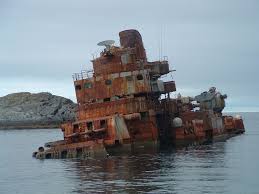
In losing nearly as much tonnage as it built in 2023, the Russian navy joins an exclusive and embarrassing club of stagnating navies that, startlingly, also includes the 886,000-ton – and shrinking – Royal Navy. In recent years, the British fleet has been decommissioning more and bigger vessels than it builds.
Apart from its submarines, the Kremlin will soon have only a coastal navy
David Axe, https://www.telegraph.co.uk/news/2024/12/02/putin-naval-decline-kirov-class-nuclear-battlecruisers/
The hulking Kirov-class nuclear powered battlecruisers were symbols of Moscow’s naval strength during the later Soviet era. A generation later, they’re symbols of Moscow’s slow naval collapse.
The Soviets built four of the 28,000-ton, missile-armed vessels to lead far-ranging battle groups meant to confront Nato warships on the high seas. Three were commissioned in time to see service with the Soviet navy before the Soviet Union collapsed in 1991; the final vessel joined the Russian fleet in 1998 following years of construction delays.
That youngest Kirov, the Northern Fleet’s Pyotr Velikiy, is the only battlecruiser still in active service. She’s one of a dwindling number of big Soviet-vintage warships – including the rusty Admiral Kuznetsov, Russia’s sole aircraft carrier – that sustain Russia’s fading capacity for projecting maritime power across oceans.
A second old battlecruiser, Admiral Nakhimov, has been pierside at Sevmash shipyard in Severodvinsk, in northern Russia, since 1999. The farcical story of her planned return to service is indicative of Russia’s wider naval decline.
The Kremlin decided to return Admiral Nakhimov to service way back in 2008. Refurbishment got underway in 2013. Planned upgrades include the fitting of Kalibr and Oniks cruise missiles plus new sensors and communications. As recently as this fall, photos circulated online showing modest but visible progress with the installations.
But the work has been missing deadlines – for years. In 2014, the plan was for Admiral Nakhimov to return to service in 2020. She didn’t. As of 2018, the battlecruiser was supposed to recommission in 2021. A year later, the recommissioning slipped to 2022. That deadline came and went, as did the next deadline for a 2024 return to service. Now the plan is for Admiral Nakhimov to rejoin the fleet in 2026.
Don’t hold your breath. The costs of Russia’s 33-month wider war on Ukraine have driven up inflation and driven down investment in Russia. The economy is teetering. The costly effort to squeeze a few more years of front-line use from a 38-year-old warship may soon seem like an extravagance.
If and when the effort to reactivate Admiral Nakhimov finally fails, it could signal a new – and humbler – era for the Russian fleet.
In 2023, the Russian navy added just 6,300 tons to its total tonnage, ending the year with warships totalling 2,152,000 tons. The Russians would have added 17,700 tons last year through the new construction of a new frigate, corvettes, a minesweeper and a few submarines, but Ukrainian missiles and drones destroyed vessels together weighing 11,400 tons.
In losing nearly as much tonnage as it built in 2023, the Russian navy joins an exclusive and embarrassing club of stagnating navies that, startlingly, also includes the 886,000-ton – and shrinking – Royal Navy. In recent years, the British fleet has been decommissioning more and bigger vessels than it builds.
For the Russians, it mostly comes down to strategy, money … and engines. Big ships are expensive – and unnecessary for a country whose main strategic ambitions lie along its land border. The Russians still build plenty of modern nuclear-powered submarines and can deploy them to deter direct conflict with a major foe. Given that safeguard, a globally-deploying surface fleet is a luxury.
Which is fortunate for Russia’s leaders, as it’s not clear Russian industry could build big new warships even if it had the money to do so and a clear reason to try. Prior to 2014, Russian shipbuilders imported most of their large maritime engines from Ukraine. It should go without saying they no longer do so.
Lacking a source of new engines, it’s much easier for Russia to restore an old battlecruiser than to build a new one from scratch. It actually helps that Admiral Nakhimov has a nuclear powerplant, as Russian industry still manages to build and maintain those on its own.
When the last big Soviet ships finally sail for the last time, the Russian navy will become a mostly coastal navy – albeit one with a powerful undersea deterrent. Even if Admiral Nakhimov does rejoin the fleet and deploys a few more times, she’ll only delay that inevitability.
1 This Month

of the week – Shut Down Drone Warfare!


Tell the Ukrainian Government to Drop Prosecution of Peace Activist Yurii Sheliazhenko

Petition to revoke the licensing of the Near Surface Nuclear Disposal Facility (NSDF) at Chalk River. https://www.ourcommons.ca/petitions/en/Petition/Details?Petition=e-7247
To see nuclear-related stories in greater depth and intensity – go to https://nuclearinformation.wordpress.com
-
Archives
- April 2026 (44)
- March 2026 (251)
- February 2026 (268)
- January 2026 (308)
- December 2025 (358)
- November 2025 (359)
- October 2025 (376)
- September 2025 (257)
- August 2025 (319)
- July 2025 (230)
- June 2025 (348)
- May 2025 (261)
-
Categories
- 1
- 1 NUCLEAR ISSUES
- business and costs
- climate change
- culture and arts
- ENERGY
- environment
- health
- history
- indigenous issues
- Legal
- marketing of nuclear
- media
- opposition to nuclear
- PERSONAL STORIES
- politics
- politics international
- Religion and ethics
- safety
- secrets,lies and civil liberties
- spinbuster
- technology
- Uranium
- wastes
- weapons and war
- Women
- 2 WORLD
- ACTION
- AFRICA
- Atrocities
- AUSTRALIA
- Christina's notes
- Christina's themes
- culture and arts
- Events
- Fuk 2022
- Fuk 2023
- Fukushima 2017
- Fukushima 2018
- fukushima 2019
- Fukushima 2020
- Fukushima 2021
- general
- global warming
- Humour (God we need it)
- Nuclear
- RARE EARTHS
- Reference
- resources – print
- Resources -audiovicual
- Weekly Newsletter
- World
- World Nuclear
- YouTube
-
RSS
Entries RSS
Comments RSS
 nuclear-news