Kremlin Warns The US Of Nuclear Retaliation If Russia Or Her Allies Are Targeted
|
Kremlin Warns The US Of Nuclear Retaliation If Russia Or Her Allies Are Targeted , Eurasia Times , 10 Aug 20, By Tim Edwards In a veiled warning to the US, Russia has issued a statement declaring that it will perceive any ballistic missile launched towards its territory as a nuclear attack that will warrant a nuclear retaliation.In an article published in the official military newspaper Krasnaya Zvezda (Red Star) senior officers of the Russian military’s General Staff, Major Gen. Andrei Sterlin and Col. Alexander Khryapin, stated that since there will be no way to determine if an incoming ballistic missile is fitted with a nuclear or a conventional warhead hence the military will see it as a nuclear attack.
The article follows the publication in June of Russia’s nuclear deterrent policy that envisages the use of atomic weapons in response to what could be a conventional strike targeting the nation’s critical government and military infrastructure……
The statement is reflective of Moscow’s longtime concerns about the development of weapons that could give Washington the capability to knock out key military assets and government facilities without resorting to atomic weapons.
In line with Russian military doctrine, the new nuclear deterrent policy reaffirmed that the country would not withhold using nuclear weapons in response to a nuclear attack or aggression involving conventional weapons that “threatens the very existence of the state.”……. The published article maintained that the publication of the new nuclear deterrent policy was intended to unambiguously describe what Russia sees as aggression. https://eurasiantimes.com/kremlin-warns-the-us-of-nuclear-retaliation-if-russia-or-her-allies-are-targeted/ |
|
Surprisingly Rapid Increase in Scale and Intensity of Fires in Siberia
|
NASA/NOAA Satellites Observe Surprisingly Rapid Increase in Scale and Intensity of Fires in Siberia, SciTech Daily By KASHA PATEL, NASA EARTH OBSERVATORY AUGUST 7, 2020 Abnormally warm temperatures have spawned an intense fire season in eastern Siberia this summer. Satellite data show that fires have been more abundant, more widespread, and produced more carbon emissions than recent seasons.The area shown in the time-lapse sequence above includes the Sakha Republic, one of the most active fire regions in Siberia this summer. The images show smoke plumes billowing from July 30 to August 6, 2020, as observed by the Visible Infrared Imaging Radiometer Suite (VIIRS) on NASA/NOAA’s Suomi NPP satellite and the Moderate Resolution Imaging Spectroradiometer (MODIS) on NASA’s Terra satellite. Strong winds occasionally carried the plumes as far as Alaska in late July. As of August 6, approximately 19 fires were burning in the province……
Estimates show that around half of the fires in Arctic Russia this year are burning through areas with peat soil—decomposed organic matter that is a large natural carbon source. Warm temperatures (such as the record-breaking heatwave in June) can thaw and dry frozen peatlands, making them highly flammable. Peat fires can burn longer than forest fires and release vast amounts of carbon into the atmosphere. …… “The destruction of peat by fire is troubling for so many reasons,” said Dorothy Peteet of NASA’s Goddard Institute for Space Studies. “As the fires burn off the top layers of peat, the permafrost depth may deepen, further oxidizing the underlying peat.” Peteet and colleagues recently reported that the amount of carbon stored in northern peatlands is double the previous estimates. Fires in these regions are not just releasing recent surface peat carbon, but stores that have taken 15,000 years to the accumulate, said Peteet. They also release methane, which is a more potent greenhouse gas than carbon dioxide. “If fire seasons continue to increase in severity, and possibly in seasonal extent, more peatlands will burn,” said Peteet. “This source of more carbon dioxide and methane to our atmosphere increases the greenhouse gas problem for us, making the planet even warmer.”…… https://scitechdaily.com/nasa-noaa-satellites-observe-surprisingly-rapid-increase-in-scale-and-intensity-of-fires-in-siberia/ |
|
Russia will regard any incoming missile as a nuclear attack
|
Russia warns it will see any incoming missile as nuclear VLADIMIR ISACHENKOV
MOSCOW (AP) 7 Aug 20, — Russia will perceive any ballistic missile launched at its territory as a nuclear attack that warrants a nuclear retaliation, the military warned in an article published Friday. The harsh warning in the official military newspaper Krasnaya Zvezda (Red Star) is directed at the United States, which has worked to develop long-range non-nuclear weapons. The article follows the publication in June of Russia’s nuclear deterrent policy that envisages the use of atomic weapons in response to what could be a conventional strike targeting the nation’s critical government and military infrastructure. In the Krasnaya Zvezda article, senior officers of the Russian military’s General Staff, Maj.-Gen. Andrei Sterlin and Col. Alexander Khryapin, noted that there will be no way to determine if an incoming ballistic missile is fitted with a nuclear or a conventional warhead, and so the military will see it as a nuclear attack. “Any attacking missile will be perceived as carrying a nuclear warhead,” the article said. “The information about the missile launch will be automatically relayed to the Russian military-political leadership, which will determine the scope of retaliatory action by nuclear forces depending on the evolving situation.”……….https://apnews.com/888e0816c6fa7f58b9ad4f1e97993643 |
|
|
Problems with Russia’s hype about “super weapons”- and risk of escalating war
|
The Hypersonic Hype and Russia’s Diminished Nuclear Threshold, Jamestown Foundation, Eurasia Daily Monitor Volume: 17 Issue: 116, By: Pavel Felgenhauer, August 6, 2020 President Vladimir Putin used the July 26, 2020, Navy Day and the Main Navy Parade in St. Petersburg to once again promote Russia’s “superweapons,” which will ostensibly give the Russian Military-Maritime Fleet (Voyenno-Morskoy Flot—VMF) “a unique advantage” over its Western counterparts. According to Putin, “The deployment of advanced technologies that have no equals in the world, including hypersonic strike systems and underwater drones, will increase naval combat capabilities” (Interfax, July 26). The Main Navy Parade displayed some 46 vessels. Smaller, satellite parades were also held in six other Russian naval base cities as well as at Russia’s foreign naval base in Tartus, Syria (Militarynews.ru, July 26).
The Ministry of Defense used the Navy Day festivities to announce that the nuclear-powered super-torpedo “Poseidon” is now in its final stages of development and will be soon tested using the specially designed nuclear submarine Belgorod—a modified Oscar II–class cruise missile submarine……… Together with the Poseidon, Russia’s president has been touting the Zircon hypersonic missile, which is also reportedly in its final stages of development. The Zircon, according to Putin, can fly at speeds exceeding Mach 9, with a range of up to 1,000 kilometers. …… The Zircon has been in development since the 1970s and 1980s. It is apparently a weapon specifically designed to strike US carriers or other large, high-value seaborne assets. Aiming the hypersonic missile at land targets would be impractical since its radar is apparently only able to distinguish large-contrast targets on the open sea. ……. its chances of hitting a moving ship directly seem to be remote—a carrier would have moved a mile or two away while the Russian hypersonic missile blindly traverses its distance to the original target (Vpk-news, March 24). The extended-range Zircon thus makes sense only as a nuclear weapon with a 200+ kiloton warhead—an underwater massive nuclear explosion would disable a carrier with shockwave even from a mile or two away. The Russian VMF had not received a new destroyer in 30 years, and it is presently struggling to build frigates like the Gorshkov because Ukraine stopped selling it frigate engines after 2014…….. The main problem with Putin’s superweapons is that they are truly doomsday devices, valuable only for deterrence. The Kremlin is constantly plying the deterrence game by trying to scare the West. But this situation has two dangerous ramifications. First, the nuclear threshold is becoming lower: in any serious skirmish, the Russian navy would either need to go nuclear or risk being sunk. And second, while the Russian leadership believes it has surpassed the West militarily thanks to its dazzling superweapons, Moscow’s threshold for employing military force in conflict situations may also drop further. https://jamestown.org/program/the-hypersonic-hype-and-russias-diminished-nuclear-threshold/ |
|
Russia plans removal of its nuclear trash from Arctic waters
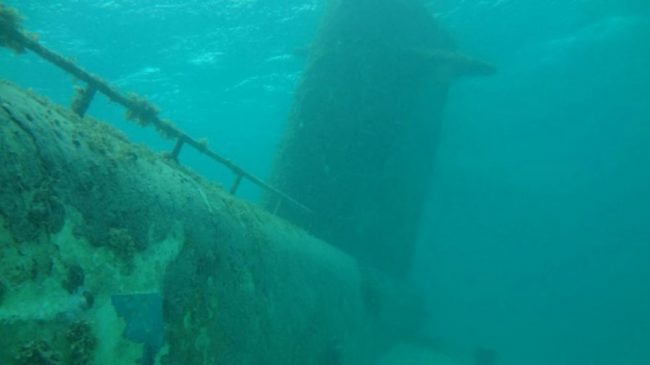
Russia to Remove Hazardous Nuclear Objects Dumped in Its Arctic Waters,
The country’s nuclear energy company will over the next eight years lift two submarines and four reactor compartments from the bottom of the Barents and Kara Seas. By The Barents Observer 5 Aug 20, Russia’s state nuclear agency plans to remove several nuclear objects from the depths of Russia’s Arctic waters in an effort to reduce environmental hazards, Rosatom said this week as it presented a clean-up plan for the region.
Russia’s state nuclear agency plans to remove several nuclear objects from the depths of Russia’s Arctic waters in an effort to reduce environmental hazards, Rosatom said this week as it presented a clean-up plan for the region.
From the late 1960s to the late 1980s, about 18,000 radioactive objects were dumped into Russia’s remote northern waters. Most of them present little environmental risk. But some are increasingly seen as a hazard to Arctic ecosystems.
“Rosatom over the next eight years intends to lift from the bottom of Russia’s Arctic waters six objects that are most dangerous in terms of radioactive pollution,” the company’s spokesperson told the state-run TASS news agency.
The company plans to lift the reactors from the K-11, K-19 and K-140 submarines as well as spent nuclear fuel from the reactor that served the Lenin icebreaker.
In addition, two entire submarines will be lifted: the K-27 from the Kara Sea and K-159 from the Barents Sea. While the former was deliberately dumped by Soviet authorities in 1982, the latter sank during a towing operation in 2003.
The K-27 is located in 33-meter depths east of the Novaya Zemlya archipelago. It has been described by experts as a potential radioactive “time bomb.” The K-159 is located in 200-meter depths off the coast of the Kola Peninsula.
These six objects represent more than 90% of radioactive sources dumped at sea, Rosatom said………
Lifting the six hazardous nuclear objects will not only be technically difficult, but also very expensive.
A recent report made for Rosatom and the European Commission estimated the costs of lifting these six objects at 278 million euros. That includes the cost of bringing them safely to a yard for decommissioning and long-term storage.
Lifting the K-159 alone is estimated to cost 57.5 million euros. Lifting the K-27 and transporting it to a shipyard for decommissioning and long-term storage in Saida Bay will carry a price tag of 47.7 million euros, the report said.
It’s unlikely that Russia’s increasingly cash-strapped treasury will have the 278 million euros needed for the cleanup.
Several countries have previously allocated billions to assist Russia’s post-Soviet efforts to cope with nuclear waste.
Norway has since the mid-90s granted about 1.5 billion kroner (140 million euros) to nuclear safety projects in the Russian part of the Barents region. https://www.themoscowtimes.com/2020/08/05/russia-to-remove-hazardous-nuclear-objects-dumped-in-its-arctic-waters-a71060
For the nuclear industry, coronavirus is helpful, as nuclear wastes go quietly from Germany to Russia
 FoE Europe 25th June 2020, Russia and Germany have taken advantage of the coronavirus crisis to resume
shipping radioactive waste to dump in the Urals and Siberia in northern
Russia.
Germany was exporting radioactive waste from it’s nuclear power stations to
Russia, via the harbor of Amsterdam, they directly organized protests in
the three countries.
and sea of uranium – a waste product of nuclear fuel production by Urenco
Germany – was put on hold. That was before the coronavirus crisis hit.
in March 2020, when Covid-19 lockdowns restricted people’s right to protest
in Russia even further, the shipments of radioactive waste were set to
resume.
US-Russia launch talks in Vienna on nuclear arms control
The talks come less than a year before the expiration of New START, the last remaining nuclear arms control deal. The United States and Russia have entered a new phase of talks on nuclear arms control in Vienna, with working groups comprising government experts from both sides starting to meet for the first time.Over the course of three days, starting Tuesday, the groups of experts will deal with military doctrines and potentials, transparency and verification, as well as with security in space, according to the Russian foreign ministry.
The new format was set up in June in negotiations between US arms-control envoy Marshall Billingslea and Russia Deputy Foreign Minister Sergei Ryabkov in the Austrian capital.
The talks are taking place less than a year before the expiration of the New START agreement, the last remaining nuclear arms-control deal between the countries, which together possess about 90 percent of the world’s nuclear weapons.
The US-Russia Intermediate-Range Nuclear Forces (INF) treaty, which had banned nuclear-capable, land-launched missiles with a range between 500km (310 miles) and 5,500km (3,417 miles), ended last year, after the US initiated a pull-out, accusing Moscow of cheating.
Washington also wants China to take part in the arms control negotiations, but Beijing has made it clear that it is not interested.
Russian navy to get hypersonic nuclear weapons: Putin
Russian navy to get hypersonic nuclear weapons: Putin, Aljazeera, 26 July 20, The combination of speed and altitude of hypersonic missiles makes them difficult to track and intercept. Russian President Vladimir Putin has said the Russian navy will be armed with hypersonic nuclear weapons and underwater nuclear drones.
The weapons, some of which have yet to be deployed, include the Poseidon underwater nuclear drone, designed to be carried by submarines, and the Tsirkon (Zircon) hypersonic cruise missile, which can be deployed on surface ships.
The combination of speed, manoeuvrability, and altitude of hypersonic missiles, capable of travelling at more than five times the speed of sound, makes them difficult to track and intercept.
Putin, who said he does not want an arms race, has ften spoken of a new generation of Russian nuclear weapons he says are unequalled and can hit almost anywhere in the world. Some Western experts have questioned how advanced they are……..https://www.aljazeera.com/news/2020/07/russian-navy-hypersonic-nuclear-weapons-putin-200726160351237.htm
Additional resources requested for Siberian forest fire; state of emergency

 Additional resources requested for Siberian forest fire, https://www.sbs.com.au/news/additional-resources-requested-for-siberian-forest-fire 17 Jul 20, A state of emergency has been declared in the Khanti-Mansi Autonomous District as 25 fires continue to burn across 12,000 hectares.
Siberia’s heat-wave – global heating is what made this possible
 Siberia heatwave was ‘almost impossible’ without climate change, scientists say, SBS News 16 Jul 20, An extreme heatwave in the Arctic is a problem for the entire planet, say scientists, because the region regulates weather around the globe and contains much of the world’s carbon-rich permafrost.A recent heatwave in Siberia that saw temperature records tumble as the region sweltered in 38-Celsius highs was “almost impossible” without the influence of man-made climate change, leading climate scientists say.
An international team of researchers found that the record-breaking warm period was more than 2 degrees hotter than it would have been if humans had not warmed the planet through decades of greenhouse gas emissions.
The five hottest years in history have occurred in the last five years and there’s a better-than-even chance that 2020 will be the hottest ever recorded.
Earth’s poles are warming faster than the rest of the planet, and temperatures in Siberia – home to much of the world’s carbon-rich permafrost – were more than 5 degrees hotter than average between January and June. ………
‘Important for everyone’
The team behind the calculations stressed that the Siberian heatwave was a problem for the entire globe. Some 1.15 million hectares of forest going up in flames released millions of tonnes of CO2 into the atmosphere.
At the same time, the wildfires and sustained heatwaves accelerated the region’s permafrost melt. This caused an oil tank built on frozen soil to collapse in May, leading to one of the region’s worst-ever oil spills…….
The 2015 Paris climate deal commits nations to capping temperature rises to “well-below” 2 degrees above pre-industrial levels and to strive for a 1.5 degrees limit if at all possible. With just 1 degree of warming so far, Earth is already buffeted by record-breaking droughts, wild fires and super storms made more potent by rising sea levels.
To keep in line with the 1.5-degree target, the United Nations says global emissions must fall by 7.6 per cent every year this decade.
Sonia Seneviratne, from ETH Zurich’s Department of Environmental Systems Science, said the research showed the heatwave was an example of “extreme events which would have almost no chance of happening” without man-made emissions. https://www.sbs.com.au/news/siberia-heatwave-was-almost-impossible-without-climate-change-scientists-say
The new normal for Northern Siberia – thawing permafrost,forests on fire
The Moscow Times reports economic losses from thawing permafrost alone is expected to cost Russia’s economy up to $2.3 billion US per year. Last year’s fires likely cost rural communities in the region almost $250 million US. In March, Russia announced 29 measures it would be taking to try to deal with climate change over its vast landmass but critics complained the efforts have been more focused on exploiting natural resources in the Arctic than mitigating the impacts of a warming climate.
“They are actively going after every mineral and oil and gas deposit that they can,”
As permafrost thaws under intense heat, Russia’s Siberia burns — again, https://www.cbc.ca/news/world/siberia-burning-climate-change-russia-1.5645428
Russia’s northern landscape is being transformed by heat and fire, Chris Brown · CBC News : Jul 12, Right around now, University of British Columbia climatologist and tundra researcher Greg Henry would usually be up at Alexandra Fiord on the central-east coast of Canada’s Ellesmere Island experiencing the Arctic’s warming climate up close.
Instead, the pandemic has kept his research team grounded in Vancouver — and his focus has shifted to observing the dramatic events unfolding across the Arctic ocean in northern Siberia.
“It’s remarkable — it’s scary,” said Henry of the incredible run of high temperatures in Russia’s far north that have been breaking records for the past month.
This week, a European Union climate monitoring project reported temperatures in June were up to 10 degrees higher than usual in some parts of Russia’s Arctic, with an overall rise of five degrees.
The heat and dry tundra conditions have also triggered vast forest fires. Currently, 1.77 million hectares of land are burning with expectations that the total fire area could eventually surpass the 17 million hectares that burned in 2019.
Equally striking is where the fires are burning.
“Now we are seeing these fires within 15 kilometres of the Arctic Ocean,” said Henry. “Usually there’s not much fuel to burn there, because it’s kept cold by the ocean so you don’t get ignition of fires that far north.”
This year though, he said the heat has dried the ground out enough to change the dynamics.
“It’s a harbinger of what we are in for because the Arctic has been warming at twice the rate of the rest of the planet.”
Environmental disaster Continue reading
Evacuation of a tiny Russian village, – in preparation for a nuclear missile test?
 Russian Village in ‘Danger Zone’ of Possible Nuclear Missile Test, Nenoksa is once again the crosshairs after a radioactive accident last year. AT TOP https://www.popularmechanics.com/military/research/a33219749/nenoksa-nuclear-missile/ BY KYLE MIZOKAMIJUL 6, 2020
- The tiny Russian village of Nenoksa will face voluntary evacuations due to an “unspecified test.”
- The test could well be of the Burevestnik nuclear-powered cruise missile.
- A nearby incident in 2019 involving Burevestnik killed five and triggered radiation warnings throughout the region.
The missile test comes just days after Scandinavian countries bordering Russia detected a mysterious release of radiation. An investigation pointed to northern Russia as a source, but Moscow insisted that nearby nuclear plants were running normally. An alternate theory was that there had been a second accident involving the new nuclear cruise missile, but with what looks like a Burevestnik test coming up that too now seems unlikely.
Arctic heat, uncontrolled fires, crumbling permafrost – very bad climate news
|
Arctic Oil Infrastructure Faces Climate Karma https://www.bloomberg.com/opinion/articles/2020-07-05/siberia-heatwave-climate-change-really-is-big-oil-industry-risk
Siberia’s heatwave reflects temperature changes that weren’t generally forecast to occur until the end of the century. That’s bad news for everyone.By Julian Lee July 5, 2020, Beaches, clear blue seas, scorching temperatures and long days. Forget the Caribbean, your next summer beach holiday could be on the shores of Russia’s Arctic Ocean.Temperatures at Nizhnyaya Pesha, some 840 miles (1,352 kilometers) northeast of Moscow and just 12 miles from Arctic Ocean coast, reached 86 degrees Fahrenheit (24 degrees Celsius) in early June — a disaster for anyone worried about the planet’s future. Further to the east and further inland, things got even hotter. Russia’s state weather authority confirmed that the temperature at the small town of Verkhoyansk — which sits about 70 miles north of the Arctic Circle and boasts the Pole of Cold District Museum of Local Lore as its only tourist attraction listed on Tripadvisor — hit 100.4 degrees Fahrenheit on June 20. Most alarming, though, is not the temperature itself, but the fact that this wasn’t an isolated incident. Rather, it is part of a heatwave that has persisted since the end of last year. On average, temperatures in western Siberia have been 10 degrees Fahrenheit above normal since December, according to the European Centre for Medium-Range Weather Forecasts. Uncontrolled fires are already sweeping across the forests of Russia, and have been for months. On Friday, the Russian Ministry of Natural Resources reported that efforts were being made to extinguish 272 forest fires covering an area 12 times the size of the District of Columbia, including 10 on specially protected natural territories extending over an area bigger than Manhattan. As I wrote here, rising Arctic temperatures strike at the heart of the Russian economy, which is largely built upon the extraction of oil and gas. Rising temperatures are melting the permafrost and impairing its ability to support structures built on it. The changes threaten the “structural stability and functional capacities” of oil industry infrastructure, according to the Ocean and Cryosphere in a Changing Climate report adopted in September by the Intergovernmental Panel on Climate Change (IPCC). In RetreatAreas of discontinuous permafrost could see a 50-75% drop in load bearing capacity by 2015-25 compared with 1965-75 We’re already seeing the impact. As my colleague Clara Ferreira Marques wrote here, a devastating Arctic fuel spill on May 29 appears to have been caused by melting permafrost. More than 20,000 tons of diesel fuel (or about 150,000 barrels) leaked from a storage tank owned by MMC Norilsk Nickel PJSC, polluting rivers and lakes that drain into the Arctic Ocean’s Kara Sea. The company blamed the “sudden subsidence of supports which served for more than 30 years without problems” for the damage that allowed the fuel to escape from the tank. Russia’s Prosecutor General’s office ordered thorough checks to be carried out on particularly dangerous installations built on territories exposed to permafrost melting. For the oil and gas sector, that’s likely to cover pipelines and processing plants, as well as storage tanks. It’s going to be a massive undertaking. Some “45% of the oil and natural gas production fields in the Russian Arctic are located in the highest hazard zone,” according to the IPCC report. Assets At RiskSome of Russia’s largest oil and gas fields are at risk from thawing permafrost While many of the country’s newest oil and gas fields are situated far to the north, in areas of continuous permafrost, many of the older ones, which form the bedrock of the industry, are in the discontinuous permafrost zone. That area is also crossed by the major pipelines that carry hydrocarbons to customers and export terminals. The heatwave experienced so far this year in Siberia reflects temperature changes that weren’t generally forecast to occur until the end of the century. The rapid changes that are happening to the climate of the world’s northern regions means that even the infrastructure built on areas of continuous permafrost may soon be at risk, too. And that mitigation measures deemed appropriate now may soon be viewed as inadequate. And what’s true in the Arctic north of Russia may also hold in the Arctic north of the Americas. Most of Alaska is underlain by permafrost — continuous across the North Slope (the borough that covers the northern third of the state and is home to its oil production), discontinuous over most of the rest of the state. The risks that bedevil oil and gas infrastructure are no less severe here. The U.S. Bureau of Land Management plans to open an Indiana-sized region of the National Petroleum Reserve-Alaska to new oil and gas development. Doing so is meant to be a boon to U.S. oil independence and Alaska’s state budget, capable of delivering 500,000 barrels of oil a day, according to BLM estimate It could also be a curse. The bureau warns in its environmental impact statement that the new development could be responsible for greenhouse gas emissions equivalent to about 1% of the U.S. total in 2018. Increased industrial activity in the area, on top of the already altered landscape thanks to global warming, creates a host of risks to wildlife from polar bears to eagles and could lead to deadly walrus stampedes. Environmental groups vow to fight the move, which is expected to be finalized by the end of July. Whether oil companies will rush to pour their dollars into frontier exploration in a region that will expose them to unflinching scrutiny and, very likely, unwanted social media campaigns, is questionable — particularly at a time when those investment dollars have become scarce and companies are increasingly focused on the quick returns from investing in the shale deposits of Texas, New Mexico and other, more climatically benign, states. If the northern latitudes continue warming as they are, the implications will be grave for all of us. — With assistance by Elaine He |
|
Russia’s nuclear imperialism in Africa
Russia’s nuclear play for power in Africa, DW 2 July 20,
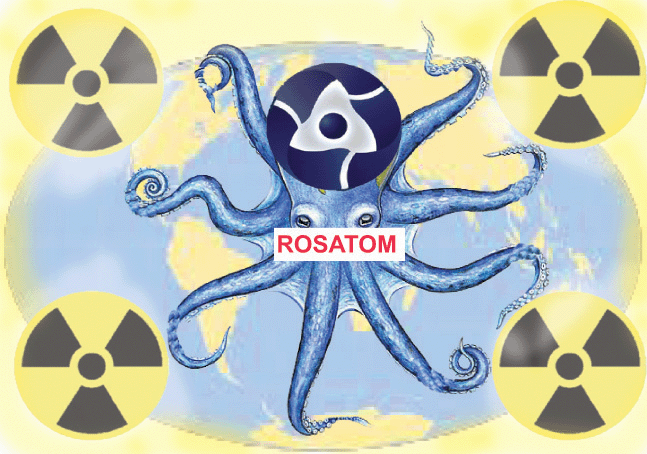
Russia is pushing nuclear technology to African nations to both turn a profit and expand its political might on the continent. Rwanda’s parliament has just approved a plan for Russia’s state-owned Rosatom nuclear conglomerate to build it a nuclear research center and reactor in the capital, Kigali.
The Center of Nuclear Science and Technologies, planned for completion by 2024, will include nuclear research labs as well as a small research reactor with up to 10 MW capacity.
Ethiopia, Nigeria and Zambia have signed similar deals with Rosatom, while countries such as Ghana, Uganda, Sudan and DRC have less expansive cooperation agreements.
Rosatom has been aggressively wooing African nations since the mid-2000s and the nuclear deals are seen as part of Russia’s push turn a profit and also gain influence in Africa.
Western sanctions first imposed on Russia in 2014 over its annexation of the Crimea in the Ukraine have forced Russia to seek alternative sources of incomes and also new friends.
Nuclear technology instead of trade
“For Putin to remain relevant in Russia, he really has to ensure that Russia has a big influence,” said Ovigwe Eguegu, a geopolitics analyst with the international affairs platform, Afripolitika. “That’s why he is looking at African markets so he has more parties to partner with when it comes to international issues.”
African nations constitute the largest voting bloc in the United Nations.
While the Soviet Union had a close relationship to various African states during the Cold War, Russia’s trade balance with Africa is one tenth of that of China, meaning it needs to look for other means to get a foothold on the continent.
“Russia is using the tools that they have to expand their influence and right now, Russia has lots of experience in the nuclear energy area,” Eguegu said in a phone interview from Abuja.
Rosatom nuclear leader
Rosatom is the world’s biggest nuclear company by foreign orders. While it has projects in developed countries such as Finland and Hungary, it’s mainly involved in developing regions.
The Rosatom packages are popular because the corporation’s sheer size means it can offer all-in-one deals, from training local workers to developing nuclear science curricula, supplying uranium for the plant’s life time and dealing with nuclear waste — with the added plus of Russian state loans for the projects.
The cost and financing of Rwanda’s nuclear research center is still undisclosed. But Russia is extending a $25 billion (€22.23 billion) loan to Egypt to cover 85% of the cost of the El Dabaa nuclear power plant, which Rosatom is constructing.
Rosatom has come to dominate nuclear exports to developing countries because of their generous financing and worker training,” according to the 2018 Center for Global Development policy paper, Atoms for Africa.
Additionally, Russia is itself a major player in the nuclear market, responsible for some 8% of uranium production worldwide as well as 20% of uranium conversion and 43% of uranium enrichment (conversion and enrichment are stages of processing uranium so it can be used by commercial nuclear power reactors)………….
many experts, including Gatari, believe that nuclear technology doesn’t yet make sense for African countries. They lack the highly skilled local workforce required to run the technological intricacies of such reactors. Plus, nuclear facilities are vastly expensive and take years to build.
Gatari warns of countries becoming locked into costly projects that end up being “white elephants”.
“Such a project can only be driven by strong and educated local human resources,” the nuclear researcher said. “That knowledge isn’t possible by rushing young students through training for a short time.
And the cost of maintaining that kind of installation can cripple the budget of a country for a long, long time.”
Doing the smooth sell
Currently, South Africa is the only country in sub-Saharan Africa with a functioning nuclear power plant, while Nigeria and Ghana have research reactors, which are primarily used for studying and training and to test materials, such as minerals.
In Europe, safety concerns around nuclear technologies have already caused countries such as Germany, Italy, Spain and Switzerland to vote to phase out nuclear power.
These concerns are compounded in Africa, given the the political instability of certain regions and the threat of sabotage or terrorist attacks. This hasn’t stopped Rosatom, and Russia, from doing a soft sell of nuclear technologies on the continent.
Rosatom funds scholarships for students from sub-Saharan Africa to study nuclear sciences and engineering in Russia. As of January 2020, around 300 students from more than 15 African countries were studying nuclear specialties there.
It runs an online video competition, Atoms for Africa, where participants stand a chance to win an all expenses paid trip to Russia for a video dedicated to innovative nuclear technologies.
In 2019, it even held an international fishing competition near the Leningrad nuclear power station, Russia’s largest, to demonstrate the safety of nuclear power for water bodies. (The competition was won by an Egypt team).
“There is good money if you can sell a research reactor,” said nuclear scientist Gatari. “Unfortunately, the convincing capacity of [Rosatom’s] marketing is very high, and the understanding of those who are buying is low.” https://www.dw.com/en/russias-nuclear-play-for-power-in-africa/a-54004039
Radiation particles leak may have come from Russia’s super nuclear weapons, rather than from commercial reactor
Russia’s nuclear energy body has denied that the radiation originated from its two nuclear power stations in the region. However, it is not only civilian power stations that use nuclear reactors. Tom Moore, a nuclear policy expert and former senior professional staff member of the U.S. Senate Foreign Relations Committee, believes that these military reactors cannot be ruled out:
“CTBTO radionuclide monitoring is intended to discriminate explosive events and to complement seismic monitoring. Not to effectively rule in or rule out a source of radionuclides as being civil or military reactors.”
Possible Cause: Burevestnik Cruise Missile
The first military system under development which comes to mind is the Burevestnik cruise missile. Its name means ‘Storm Bringer’ in Russian, after the Petral sea bird. It is more formally known by the designation 9M730 and NATO code name Skyfall. This is a nuclear-armed cruise missile that is designed to use a nuclear engine to give it virtually unlimited range. Burevestnik is the natural candidate because it is airborne, so any accident would likely release radioactive material into the sky.
This may have previously happened on August 9, 2019. There was a fatal radiation incident at the State Central Navy Testing Range at Nyonoksa. This is near to Severodvinsk in Russia’s arctic north, the same area that the CTBTO has pointed towards this time. Then it was caused by an explosion in a rocket engine. Many analysts believe that this was most likely related to the Burevestnik missile.
Possible Cause: Poseidon Drone-Torpedo
The other weapon in the frame is Poseidon. This is a massive nuclear-powered torpedo that is intended to be launched from specially built submarines. At 60-78 feet long it is about twice the size of a Trident missile. Its designation is believed to be 2m39 and it is known in NATO as Kanyon. Its virtually unlimited range and high autonomy would make it hard to classify. The U.S. government has described it as an intercontinental, nuclear armed, undersea autonomous torpedo. It is a weapon worthy of a Bond villain that would literally go underneath missile defenses. Its threat is slow but inevitable doom to coastal cities such as New York and Los Angeles.
While Poseidon probably doesn’t have very much shielding on its reactor, it is normally underwater, so any radiation leak may not reach the atmosphere. But it would be lifted out of the water after a test launch, so there is room for an incident that could get detected hundreds of miles away in Scandinavia.
Open Source Intelligence On The Suspects
Open source intelligence analysts have been following these weapons. Evgeniy Maksimov noted that flight tests of Burevestnik were probably being conducted. He noted two no-fly zones closed for June 22-27 at a missile test range. But the launch site was far south of where the radiation is believed to originate.
A better candidate may therefore be Poseidon. Vessels believed to be associated with its tests were active in the region at the time. The special support vessel Akademik Aleksandrov was at sea around June 18 to 23, in the area of interest. This ship is suspected of being involved in retrieving Poseidon weapons. Twitter user Frank Bottema found a matching vessel using radar satellite imagery.
We may never know for sure the cause of the heightened radiation levels. But Russia’s denials that it was from a civilian power plant, combined with the ongoing tests, point a finger at the nuclear-powered weapons. This reignites the debate about how safe these projects are, even in peacetime.
1 This Month

of the week – Shut Down Drone Warfare!


Tell the Ukrainian Government to Drop Prosecution of Peace Activist Yurii Sheliazhenko

Petition to revoke the licensing of the Near Surface Nuclear Disposal Facility (NSDF) at Chalk River. https://www.ourcommons.ca/petitions/en/Petition/Details?Petition=e-7247
To see nuclear-related stories in greater depth and intensity – go to https://nuclearinformation.wordpress.com
-
Archives
- April 2026 (68)
- March 2026 (251)
- February 2026 (268)
- January 2026 (308)
- December 2025 (358)
- November 2025 (359)
- October 2025 (376)
- September 2025 (257)
- August 2025 (319)
- July 2025 (230)
- June 2025 (348)
- May 2025 (261)
-
Categories
- 1
- 1 NUCLEAR ISSUES
- business and costs
- climate change
- culture and arts
- ENERGY
- environment
- health
- history
- indigenous issues
- Legal
- marketing of nuclear
- media
- opposition to nuclear
- PERSONAL STORIES
- politics
- politics international
- Religion and ethics
- safety
- secrets,lies and civil liberties
- spinbuster
- technology
- Uranium
- wastes
- weapons and war
- Women
- 2 WORLD
- ACTION
- AFRICA
- Atrocities
- AUSTRALIA
- Christina's notes
- Christina's themes
- culture and arts
- Events
- Fuk 2022
- Fuk 2023
- Fukushima 2017
- Fukushima 2018
- fukushima 2019
- Fukushima 2020
- Fukushima 2021
- general
- global warming
- Humour (God we need it)
- Nuclear
- RARE EARTHS
- Reference
- resources – print
- Resources -audiovicual
- Weekly Newsletter
- World
- World Nuclear
- YouTube
-
RSS
Entries RSS
Comments RSS
 nuclear-news