Russia planning to test a ‘doomsday’ nuclear-powered torpedo in the Arctic.
Russia sends ‘doomsday’ nuclear-powered torpedo for test in the Arctic, Marc Bennetts, Moscow, Wednesday April 07 2021, 12.00pm BST, The Time The United States has said that it is watching Russia’s military build-up in the Arctic “very closely” as the Kremlin presses ahead with the testing of a nuclear-powered torpedo.
Russia is believed to be planning to deploy the Poseidon 2M39 missile, nicknamed the “doomsday nuke”, to its Arctic region by the summer of next year. The underwater drone has a range of 10,000km and is designed to detonate off the coastline of enemy cities, flooding them with radioactive waves that would render them uninhabitable for decades. In February President Putin asked the defence ministry for an update on a “key stage”’ of the tests of the Poseidon torpedo. Additional testing is due this year……… (Subscribers only) https://www.thetimes.co.uk/article/russia-sends-doomsday-nuclear-powered-torpedo-for-test-in-the-arctic-wf5ttr260
Russia planning to dispose of highly dangerous nuclear reactor cores of submarine at bottom of Kara Sea
|
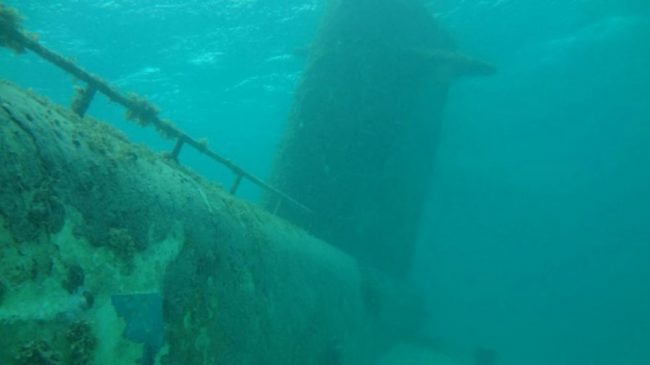
Rosatom seeks contractor to dispose of sunken subs reactor cores https://bellona.org/news/nuclear-issues/2021-03-rosatom-seeks-contractor-to-dispose-of-sunken-subs-reactor-cores Rosatom, Russia’s state nuclear corporation, has announced a tender for disposing of reactor cores from the K-27 submarine, which was itself scuttled by the Soviet Navy in the Kara Sea four decades ago. March 21, 2021 by Anna Kireeva, translated by Charles Digges The tender speaks specifically of preparing for dismantlement and disassembly the spent removable cores from the reactor of the project 645 (item 64) nuclear submarine. These removable parts, which were removed in 1967, are currently located at the Gremikha storage base in Russia’s Murmansk region.
The tender also demands the preparation of cassettes of these irradiated parts in order to transport them to a federal nuclear fleet storage point, from where they will be sent for processing. The price tag for the task is 500 million rubles, about $6.7 million. Anatoly Grigoriev, head of international technical assistance projects at Rosatom, confirmed that the tender refers to the removable reactor cores from the K-27, which were extracted in 1967. After unloading, the cores were deposited at the Gremikha base. “It is worth noting that the publication of the tender has attracted a lot of attention and caused contradictory interpretations,” said Andrei Zolotkov, who heads Bellona’s offices in Murmansk. “First, it is not clear why a submerged nuclear submarine is called ‘scrapped.’ Secondly, it was not clear how it was possible to prepare for the disposal of spent removable parts of a nuclear submarine that lies at the bottom of the Kara Sea, when the decision to lift it has not yet been made. ” The K-27 was sunken intentionally in the Kara Sea’s Stepovoy Bay in 1981. It is considered by experts to be especially dangerous thanks to its liquid metal cooled reactors. At the time, the submarine was prepared for flooding by filling it with bitumen, concrete and furfural. But it’s likely that these substances left pockets of air, which would allow for the formation of condensation within the sunken hull. The submarine has been included as a priority on a federal list of sunken objects to be lifted from the seabed. The urgency owes to the high enrichment of the K-27’s nuclear fuel and the shallow 33-meter depth at which it lies. The furfural-combination filler used to seal the sub before its sinking also has a limited shelf-life, and is only guaranteed to last another few years. Some experts also fear that the nuclear fuel onboard the sub could undergo a spontaneous chain reaction should they be breached by water. Discussion among Russian officials on lifting various pieces of nuclear debris from the Arctic has heated up in recent years. In 2019, a group of Russian scientists collected, systematized and analyzed data on each of these sunken nuclear and radiation hazards and identified the most dangerous among them. The K-27 is listed as one of six such hazards requiring lifting within a federal effort called the “Strategy for the Development of the Arctic Zone of the Russian Federation until 2035.” The problem is that lifting the flooded objects is an extremely difficult task, as shown by the years-long effort to raise the Kursk nuclear submarine, which sank during a naval exercise in 2000, killing all 118 crew members. Russian scientists have weighed the options for lifting the hazards and calculated possible damages should the operations fail. The consequences could be serious, involving releases of radiation into the sea and air, with contamination possibly surpassing Russia’s borders. At the moment, engineers are designing a vessel capable of lifting these sunken radiation hazards from the sea floor, with construction of a recovery ship projected by the end of 2026. Lifting and dismantling the K-27 thereafter is expected to take from 2028 to 2013. According to Rosatom, the total activity of the sunken radiation hazards in the Kara and Barents Seas is 1 million Curie. According to preliminary estimates of Russian specialists, they can all be extracted within 12 years. |
|
Russia’s most high-tech multi-purpose nuclear submarine further delayed
Russia’s most high-tech multi-purpose nuclear sub further delayed
The first upgraded cruise missile submarine of the Yasen-M class, the Kazan, will for unknown reasons have to sail another test-voyage before being handed over to the Northern Fleet. Barents Observer, 3 Mar 21, By Thomas Nilsen
New date for possible handover is set for May-June 2021, TASS reports with a source in the military-industrial complex. The state-affiliated news agency is known voicing military insights, but also for sugarcoating facts.
Another factory sea trial is planned, to be followed by an audit of the components and mechanisms, the source said without elaborating on which technical design flaws are to be fixed this time.
The “Kazan” was expected to be handed over from the submarine builder Sevmash yard to the Northern Fleet last Friday.
“The lead nuclear submarine “Kazan” can be handed over to the Russian Navy on February 26, the head of the United Shipbuilding Corporation, Aleksey Rakhmanov told RIA Novosti as late as on February 10.
Why the prestigeous submarine is hold back for more testing is unkown……..
Since first scheduled for delivery to the navy in 2017, the submarine has been notoriously delayed. A planned delivery in 2018 was postponed to 2019. That year came with another announcement that the “Kazan” would probably need all of 2020 to fix a number of auxiliary parts and assemblies which did not met the tactical and technical requirements set by the Ministry of Defense, the Barents Observer reported at the time……… https://thebarentsobserver.com/en/security/2021/03/russias-most-high-tech-multi-purpose-nuclear-sub-further-delayed
Accidents in both USA’s and Russia’s use of nuclear power in space
 Nuclear Rockets to Mars?, BY KARL GROSSMAN– CounterPunch, 16 Feb 21”…………There have been accidents in the history of the U.S.—and also the former Soviet Union and now Russia—using nuclear power in space.
And the NAS report, deep into it, does acknowledge how accidents can happen with its new scheme of using nuclear power on rockets for missions to Mars.
It says: “Safety assurance for nuclear systems is essential to protect operating personnel as well as the general public and Earth’s environment.” Thus under the report’s plan, the rockets with the nuclear reactors onboard would be launched “with fresh [uranium] fuel before they have operated at power to ensure that the amount of radioactivity on board remains as low as practicable.” The plans include “restricting reactor startup and operations in space until spacecraft are in nuclear safe orbits or trajectories that ensure safety of Earth’s population and environment” But, “Additional policies and practices need to be established to prevent unintended system reentry during return to Earth after reactors have been operated for extended periods of time.”
The worst U.S. accident involving the use of nuclear power in space came in 1964 when the U.S. satellite Transit 5BN-3, powered by a SNAP-9A plutonium-fueled radioisotope thermoelectric generator, failed to achieve orbit and fell from the sky, disintegrating as it burned up in the atmosphere, globally spreading plutonium—considering the deadliest of all radioactive substances. That accident was long linked to a spike in global lung cancer rates where the plutonium was spread, by Dr. John Gofman, an M.D. and Ph. D., a professor of medical physics at the University of California at Berkeley. He also had been involved in developing some of the first methods for isolating plutonium for the Manhattan Project.
NASA, after the SNAP-9A (SNAP for Systems Nuclear Auxiliary Power) accident became a pioneer in developing solar photovoltaic power. All U.S. satellites now are energized by solar power, as is the International Space Station.
The worst accident involving nuclear power in space in the Soviet/Russian space program occurred in 1978 when the Cosmos 954 satellite with a nuclear reactor aboard fell from orbit and spread radioactive debris over a 373-mile swath from Great Slave Lake to Baker Lake in Canada. There were 110 pounds of highly-enriched (nearly 90 percent) of uranium fuel on Cosmos 954.
Highly-enriched uranium—90 percent is atomic bomb-grade—would be used in one reactor design proposed in the NAS report. And thus there is a passage about it under “Proliferation and security.” It states that “HEU [highly enriched uranium] fuel, by virtue of the ease with which it could be diverted to the production of nuclear weapons, is a higher value target than HALEU [high assay low enriched uranium], especially during launch and reentry accidents away from the launch site. As a result, HEU is viewed by nonproliferation experts as requiring more security considerations. In addition, if the United States uses HEU for space reactors, it could become more difficult to convince other countries to reduce their use of HEU in civilian applications.”
As for rocket propulsion in the vacuum of space, it doesn’t take much conventional chemical propulsion to move a spacecraft—and fast……..more https://www.counterpunch.org/2021/02/16/nuclear-rockets-to-mars/
Despite punishment by the government, Russia’s ”Eco-Defense’ has helped to stop construction of a nuclear power plant
Crimea to demolish dangerous, (and never operational), nuclear power station
Decommissioned Crimea nuclear plant to be demolished: government , S and P Global, Vladislav Vorotnikov , EditorSteven Dolley 8 Feb 21, Moscow — The government of Crimea has decided to fully demolish the Crimean Atomic Energy station near Shcholkine, construction of which was halted after the Chernobyl accident in 1986, the government said in a statement on its website Feb. 5.
Construction of the plant and its one 1,000-MW VVER-1000 started in 1976, and by 1986 was nearly complete. However, a Soviet government inspection after the Chernobyl accident found the plant to be located on a geologically volatile site and construction was canceled in 1989.
By the end of 2021, the authorities plan to demolish two diesel generator stations, the turbine hall, machine block foundation, pumping station, and the nuclear power plant’s reactor compartment, the government said Feb. 5.
“These objects are unsuitable for operation,” Daniil Pidaev, spokesperson for the Crimean Architecture and Building Ministry, told to the Russia Gazette, the Russian government’s in-house publication. “They have lost their properties, are in a dilapidated state, and there is a threat of collapse,” posing a threat to those who visit the facilities, Pidaev said………… https://www.spglobal.com/platts/en/market-insights/latest-news/electric-power/020821-decommissioned-crimea-nuclear-plant-to-be-demolished-government
USA and Russia extend The New Strategic Arms Reduction Treaty (New START Treaty) to 2026
|
US and Russia extend nuclear arms control treaty to 2026 Aljazeera,
Both Washington and Moscow cast the extension as a victory, saying it would provide stability and transparency. 3 Feb 2021 The United States and Russia have finalised an agreement to extend until 2026 a treaty limiting their stockpiles of nuclear weapons.
The New Strategic Arms Reduction Treaty (New START Treaty), which was due to expire on Friday, imposes limits on Russian and US intercontinental missiles and bombers, but does not cover new types of weapons. Both Washington and Moscow cast the extension as a victory, saying it would provide stability and transparency on nuclear issues while acknowledging some of their disagreements. …………. Tom Collina of Ploughshares Fund, which advocates for the elimination of nuclear weapons, said Russia’s priority in any new accord would be dealing with the threat it sees to its long-range strategic nuclear arsenal from US missile defences. Washington, for its part, likely will seek to limit Moscow’s vast short-range nuclear arsenal, Collina told the Reuters news agency. https://www.aljazeera.com/news/2021/2/3/us-extends-strategic-nuclear-arms-treaty-with-russia |
|
Off to a good START — Beyond Nuclear International

Nuclear weapons will be limited, but they need to go away altogeth
Off to a good START — Beyond Nuclear International
The US and Russia have extended the treaty, but it’s not about disarmament
This story was prepared by Linda Pentz Gunter largely derived from information provided by ICANThe United States and Russia have agreed on extending New START for another five years.
Extending New START is an important action by these two countries after four years that saw both countries undermining arms control agreements. However, it is important to remember that it is not a disarmament step, but rather an extension of the current levels of nuclear arsenals.
Nevertheless, it is a welcome development to see the new US administration and Russia return to where they left off four years ago rather than escalate. It also comes at an auspicious time, as the world has just witnessed the entry into force on January 22, 2021 of the first global treaty to ban nuclear weapons, the Treaty on the Prohibition of Nuclear Weapons (TPNW).
The United States and the Russian Federation agreed on January 26, 2021 to extend the bilateral cap on U.S. and Russian nuclear arsenals, the New Strategic Arms Reduction Treaty (New START) for five additional years. …………
New START is important for a number of reasons:
- The extension of New START prevents backsliding on nuclear disarmament. However, additional steps will now be needed to make progress on disarmament.
- Since the United States and Russia first agreed to this current cap on nuclear arsenals in 2010, the international community has negotiated, adopted and brought into force a treaty banning nuclear weapons: nuclear weapons are illegal under international law. So, even as the US and Russia may cap nuclear weapons expansion, they remain outlaw pariah states in the eyes of the world as long as they continue to hold onto nuclear weapons.
- Throughout the time the New START agreement has been in place, Russia and the United States have spent billions each year to build new nuclear weapons systems. This is now banned under international law (although non-parties to the TPNW are not bound by it). Under current global pandemic conditions, this kind of spending is even more immoral and obscene.
- With the New START quickly extended and the TPNW in force, the groundwork has been laid for significant disarmament advances in the coming four years. The nine nuclear armed states have no excuses not to walk that path. Nuclear disarmament need not seem daring but simply adherence to international law.
Simply staying at the current nuclear weapon levels will not be enough to protect the world from this catastrophic threat. One nuclear missile is one weapon too many. As studies have shown, even unleashing just 100 nuclear weapons (as India and Pakistan could do against each other) would result in global devastation, suffering and famine. Therefore, New START must be seen as just that; a start. But not enough until all nuclear weapons are abolished.
- With the TPNW in force, there is a new international standard. Russia, the United States and all nuclear-armed nations must take active steps to move towards compliance with this international treaty and join it.
To read more about the implications of the extension of the New START Treaty, please visit this page on the ICAN website. https://beyondnuclearinternational.org/2021/01/31/off-to-a-good-start/
Russia extends key New START nuclear treaty
 Russia extends key New START nuclear treaty, DW, 29 Jan 21, With only days to spare, Russian President Vladimir Putin signed off on the law that would keep the Obama-era nuclear treaty in place. The move follows a phone call with US President Joe Biden.
Moscow agreed to extend the only remaining nuclear arms treaty with the United States for another five years, with Russian President Vladimir Putin signing the move into law on Friday. The decision was previously approved by Russian lawmakers.
The New START treaty limits the number of deployed nuclear warheads for both the US and Russia. Both sides can only have up to 1,550 ready for use on intercontinental missiles and heavy bomber bases. It also imposes various other restrictions on the two countries’ respective arsenals. According to US data cited by the Bulletin of Atomic Scientists last year, the US had 1,373 deployed warheads to Russia’s 1,326. The deal was set to expire next week.
Putin talked to US President Joe Biden on Tuesday, with the two leaders agreeing to keep the New START in place. The US does not require congressional approval to extend the deal. …………
No more ‘Open Skies’ for US and Russia
Last November, the Trump administration said it was pulling the US out of the “Open Skies” treaty. The accord, which involves 34 states, is a trust-building measure that allows countries to fly unarmed aircraft over military facilities of other signatories for surveillance purposes. Earlier this month, Moscow said they would also abandon the deal.
With Biden taking the reigns in the White House last week, the climate seems to be shifting. Both sides have recently signaled they are willing to work on arms control, including non-nuclear threats. https://www.dw.com/en/russia-extends-key-new-start-nuclear-treaty/a-56388218
Russian lawmakers approve New START nuclear treaty extension
|
Russian lawmakers approve New START nuclear treaty extension, PBS, Jan 27, 2021, MOSCOW (AP) — Russian lawmakers on Wednesday quickly approved the extension of the last remaining nuclear Russia-U.S. arms control treaty, a fast-track action that comes just days before it’s due to expire.
Both houses of parliament voted unanimously to extend the New START treaty for five years, a day after a phone call between U.S. President Joe Biden and Russian President Vladimir Putin. The Kremlin said they agreed to complete the necessary extension procedures in the next few days………… https://www.pbs.org/newshour/world/russian-lawmakers-approve-new-start-nuclear-treaty-extension |
|
|
Biden’s USA headed for confrontation with Russia? The troubling appointment of Victoria Nuland
Nuland’s actions helped produce the regime change in Ukraine which led to U.S. arms sales, U.S. sanctions on Russia, even the first Trump impeachment over the matter of anti-tank missile delivery. The coup damaged U.S.-Russian relations
Basic Notes on Victoria (“Fuck the EU!”) Nuland, more https://www.counterpunch.org/2021/01/25/basic-notes-on-victoria-fuck-the-eu-nuland/ BY GARY LEUPP, 25 Jan 21
On January 5 Joe Biden quietly announced the nomination of Victoria (“Fuck the EU!”) Nuland as Deputy Secretary of State for Political Affairs. This announcement may signal the inception of the confrontation with Russia placed on hold during the Trump presidency.
For four years the Democrats have pilloried Trump for “coddling” Putin, although in fact Trump has heaped sanctions on Russia bringing relations to their lowest point since the early Cold War. Now they want some more serious anti-Russian measures. They want their president, Commander-in-Chief of the Exceptional Nation and Leader of the Free World against its adversaries, return us to Clinton-Obama normalcy. That means “getting tougher” with Russia. But what does tougher mean?
Nuland is eminently qualified for the task of making things much worse, even provoking war with the other superpower that while lacking foreign bases, and spending a fraction of what NATO spends on military defense, has over 6000 nuclear weapons. (Remember? The U.S. developed and used nuclear weapons in 1945, the only country to ever do so. The Soviets followed by developing their own bomb in 1949, in self-defense. That’s when Truman established NATO as an anti-Soviet, anti-communist military alliance.)
Moscow feels a mounting resentment over the expansion of a hostile military alliance, formed during the Cold War under conditions no longer pertinent, to surround it. Is this hard to fathom? How would Congress view a gradual expansion of a Russian-led military alliance committed to spending 2% of its members’ GDPs on military spending to embrace Mexico, Cuba, Nicaragua, Venezuela, Panama and maybe Canada next year?
Nuland is a career official, serving under multiple administrations, representing bipartisan imperialism. She was deputy director for “affairs in the former Soviet republics” in the Bill Clinton administration. Her task was to exploit the pain and suffering caused by the implosion of the Soviet Union to assert greater U.S. hegemony over Eurasia, using the traditional mix of covert operations, National Endowment for Democracy meddling, “color revolutions,” aid promises, etc.
During this period Clinton reneged on the U.S. promise to Moscow in 1989 that NATO would not advance “one inch” east after the Soviets accepted German reunification. Instead he drew Poland, Hungary and Czechoslovakia, long members of the dissolved Warsaw Pact, into the anti-Russian military alliance in 1999. It was an extraordinary repudiation of the Bush-Gorbachev agreement, an egregious provocation of a now-friendly country (then headed by the buffoonish Boris Yeltsin), unremarked on by the U.S. press at the time as anything controversial. Since then the expansion of NATO has been treated as no more remarkable than the expansion of UNESCO. Thank Nuland in part for making you think relentless NATO growth is normal, and that it makes sense for North Macedonia and Montenegro to have joined most recently (during the Trump term).
Thank Nuland too, in part, for the “color revolutions” in Serbia (2000), Georgia (2003), Ukraine (2004) and Kyrgyzstan (2005). The (fake) concept of the popular uprising against (Russian-backed) tyranny, backed by an altruistic America that stands for Freedom and Democracy—that’s Nuland’s baby. She surely has plans for Belarus. And she must be deeply alarmed that the State Department did not try to interfere in the last flare-up of violence in Nagarno-Karabakh leaving Russian diplomacy to resolve the situation. (Just because Russia itself extends into the Caucasus and borders Georgia and Azerbaijan doesn’t mean that it should “interfere” in countries that ought by rights to be ruled by the U.S.A.—due to Exceptionalism and all.)
The extremely reactionary chauvinistic Nuland was deputy foreign advisor to Dick Cheney during the Bush-Cheney administration (2003-2005) and then U.S. ambassador to NATO (2005-2008). Under Obama she was Under Secretary of State for Europe and Eurasia, handpicked by Hillary Clinton. She is married to noted neocon warmonger-scholar Robert Kagan. Both were deeply complicit in spreading the Big Lies leading to the Iraq War in 2003. Nuland supported Hillary Clinton’s terroristic regime change efforts in Libya and Syria. But her main mission in life is to expand NATO. Joe Biden shares her passion for this project.
Nuland is perhaps best known for her pithy ejaculation: “Fuck the EU!” in a telephone call with the U.S. ambassador to Ukraine in 2014.
In that year, while Nuland built support for the coup in Kiev (Feb. 18 to 21), she boasted openly that the U.S. had invested $5 billion in supporting “the Ukrainian people’s European aspirations.” (This referred to the support of some Ukrainians for the violent overthrow of the democratically elected president, Viktor Yanukovych, on the basis of his alleged pro-Russian policies and his opposition to European Union affiliation under the conditions the EU was then offering.) To state the matter honestly: the U.S. spent $5 billion to install a government in Kiev that would request NATO membership (ostensibly to protect it from always-aggressive, always expanding Russia) and bind it forever to the U.S. military-industrial complex and “Free World.”
Since NATO membership since the end of the Cold War has invariably been followed by EU membership, it was easy for Nuland to pose as the champion of Ukraine’s EU membership versus the evil Russians (supposedly) opposing that membership. Yanukovych himself had negotiated seriously with the EU but rejected a plan for association due to its austerity provisions. Meanwhile Moscow offered an attractive aid package. This in the world of U.S. propaganda was a choice between Europe and Russia, with Yanukovych siding with America’s adversary.
The Maidan coup occurred just a month after Nuland was recorded discussing the upcoming event with U.S. ambassador to Ukraine, Geoffrey Pyatt. Nuland, who had joined Sen. John McCain and other U.S. politicians in offering cookies to the Maidan protestors, discussed with Pyatt who should serve as prime minister after the coup. Pyatt noted that the EU favored Vitali Klitschko, the ex-boxer.
“Fuck the EU!” replied Nuland, who wanted banker and NATO supporter Arseniy Yatsenyuk to lead the new government. She soon got her way.
Nuland worked with Oleh Tyahnybok, head of the neo-Nazi Svoboda Party (and one of the three leaders Nuland ordered Pyatt to keep in touch with) and the Right Sector militia. Both glorify Stephan Bandera, the Ukrainian fascist leader who aided the Nazis in rounding up Ukrainian Jews during the war. Tyahnybok publicly inveighs against the “Moscow-Jewish mafia ruling Ukraine.”
When Congressman Dana Rohrbacher Nuland in a hearing was asked soon after the coup whether there had been any neo-fascists on the Maidan she refused to answer the question, stating there were “mothers, grandmothers, and veterans…all colors of Ukraine, including ugly colors” on the Maidan. In other words, a diverse anti-Russian crowd. (Notice how she ignored the existence of the 30% of Ukrainians who are ethnic Russians and were a support base for the president targeted for toppling. Just the sort of sensitivity to ethnicity you’d expect from a top U.S. State Department official who’d been comfortable with the slaughter of Iraqis.) Continue reading
Russia welcomes US proposal to extend New Start nuclear treaty
 Russia welcomes US proposal to extend nuclear treaty, 9 News, By Associated Press
Gorbachev Urges Biden to Improve Relations With Russia, Extend Key Nuclear Pact
|
Gorbachev Urges Biden to Improve Relations With Russia, Extend Key Nuclear Pact, Moscow Times, 20 Jan 21, Mikhail Gorbachev, the last Soviet leader, has urged Joe Biden’s administration to improve U.S.-Russia ties and extend a key nuclear pact ahead of the U.S. President-elect’s inauguration.”The current condition of relations between Russia and the United States is of great concern,” Gorbachev said in an interview with the state-run TASS news agency published Wednesday, the day Biden will be sworn in as president.
“But this also means that something has to be done about it in order to normalize relations,” he said. “We cannot fence ourselves off from each other.” Mikhail Gorbachev, the last Soviet leader, has urged Joe Biden’s administration to improve U.S.-Russia ties and extend a key nuclear pact ahead of the U.S. President-elect’s inauguration. “The current condition of relations between Russia and the United States is of great concern,” Gorbachev said in an interview with the state-run TASS news agency published Wednesday, the day Biden will be sworn in as president. “But this also means that something has to be done about it in order to normalize relations,” he said. “We cannot fence ourselves off from each other.” ……. Gorbachev said he felt optimistic toward the future of U.S.-Russia ties, pointing toward the Cold War, another difficult time in the countries’ relations. As the last Soviet leader, he played a pivotal role in ending the Cold War, reaching agreements with U.S. President Ronald Reagan on denuclearization and a number of other issues. “At the Geneva summit, we agreed to establish bilateral working groups on all issues: nuclear disarmament, bilateral relations, humanitarian cooperation and regional issues. There were many issues — no less than now,” Gorbachev said. https://www.themoscowtimes.com/2021/01/20/gorbachev-urges-biden-to-improve-relations-with-russia-extend-key-nuclear-pact-a72665 |
|
|
Russia to withdraw form Open Skies Treaty, EU concerned
The horror of Russia’s nuclear submarines and nuclear trash dumped at sea
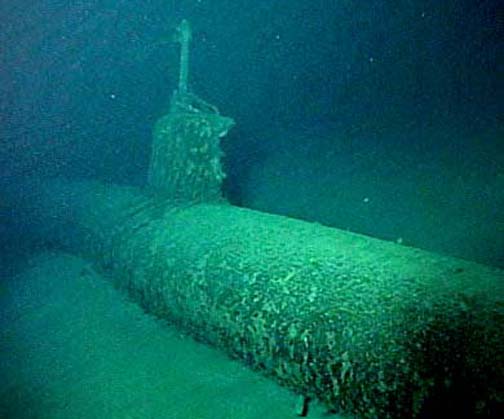
CTY Pisces – Photos of a Japanese midget submarine that was sunk off Pearl Harbor on the day of the attack. There’s a hole at the base of the conning tower where an artillery shell penetrated the hull, sinking the sub and killing the crew. Photos courtesy of Terry Kerby, Hawaii Undersea Research Laboratory. August 2003.
For decades, the Soviet Union used the desolate Kara Sea as their dumping grounds for nuclear waste. Thousands of tons of nuclear material, equal to nearly six and a half times the radiation released at Hiroshima, went into the ocean. The underwater nuclear junkyard includes at least 14 unwanted reactors and an entire crippled submarine that the Soviets deemed proper decommissioning too dangerous and expensive. Today, this corner-cutting haunts the Russians. A rotting submarine reactor fed by an endless supply of ocean water might re-achieve criticality, belching out a boiling cloud of radioactivity that could infect local seafood populations, spoil bountiful fishing grounds, and contaminate a local oil-exploration frontier.
“Breach of protective barriers and the detection and spread of radionuclides in seawater could lead to fishing restrictions,” says Andrey Zolotkov, director of Bellona-Murmansk, an international non-profit environmental organization based in Norway. “In addition, this could seriously damage plans for the development of the Northern Sea Route—ship owners will refuse to sail along it.”
News outlets have found more dire terms to interpret the issue. The BBC raised concerns of a “nuclear chain reaction” in 2013, while The Guardian described the situation as “an environmental disaster waiting to happen.” Nearly everyone agrees that the Kara is on the verge of an uncontrolled nuclear event, but retrieving a string of long-lost nuclear time bombs is proving to be a daunting challenge.
Nuclear submarines have a short lifespan considering their sheer expense and complexity. After roughly 20-30 years, degradation coupled with leaps in technology render old nuclear subs obsolete. First, decades of accumulated corrosion and stress limit the safe-dive depth of veteran boats. Sound-isolation mounts degrade, bearings wear down, and rotating components of machinery fall out of balance, leading to a louder noise signature that can be more easily tracked by the enemy. …….
The Soviet Union and Russia built the world’s largest nuclear-powered navy in the second half of the 20th century, crafting more atom-powered subs than all other nations combined. At its military height in the mid-1990s, Russia boasted 245 nuclear-powered subs, 180 of which were equipped with dual reactors and 91 of which sailed with a dozen or more long-range ballistic missiles tipped with nuclear warheads………
A majority of the Soviet’s nuclear submarine classes operated from the Arctic-based Northern Fleet, headquartered in the northwestern port city of Murmansk. The Northern Fleet bases are roughly 900 kilometers west of the Kara Sea dumping grounds. A second, slightly smaller hub of Soviet submarine power was the Pacific Fleet, based in and around Vladivostok on Russia’s east coast above North Korea. Additional Soviet-era submarines sailed from bases in the Baltic and Black Seas.
…….. the disposal of these submarines posed more problems than previous conventional vessels. Before crews could chop the vessels apart, the subs’ reactors and associated radioactive materials had to be removed, and the Soviets didn’t always do this properly.
Mothballed nuclear submarines pose the potential for disaster even before scrapping begins. In October of 1995, 12 decommissioned Soviet subs awaited disposal in Murmansk, each with fuel cells, reactors, and nuclear waste still aboard. When the cash-strapped Russian military didn’t pay the base’s electric bills for months, the local power company shut off power to the base, leaving the line of submarines at risk of meltdown. Military staffers had to persuade plant workers to restore power by threatening them at gunpoint.
The scrapping process starts with extracting the vessel’s spent nuclear fuel from the reactor core. The danger is immediate: In 1985, an explosion during the defueling of a Victor class submarine killed 10 workers and spewed radioactive material into the air and sea. Specially trained teams must separate the reactor fuel rods from the sub’s reactor core, then seal the rods in steel casks for transport and storage (at least, they seal the rods when adequate transport and storage is available—the Soviets had just five rail cars capable of safely transporting radioactive cargo, and their storage locations varied widely in size and suitability). Workers at the shipyard then remove salvageable equipment from the submarine and disassemble the vessel’s conventional and nuclear weapons systems. Crews must extract and isolate the nuclear warheads from the weapons before digging deeper into the launch compartment to scrap the missiles’ fuel systems and engines.
When it is time to dispose of the vessel’s reactors, crews cut vertical slices into the hull of the submarine and chop out the single or double reactor compartment along with an additional compartment fore and aft in a single huge cylinder-shaped chunk. Once sealed, the cylinder can float on its own for several months, even years, before it is lifted onto a barge and sent to a long-term storage facility.
But during the Cold War, nuclear storage in Soviet Russia usually meant a deep-sea dump job. At least 14 reactors from bygone vessels of the Northern Fleet were discarded into the Kara Sea. Sometimes, the Soviets skipped the de-fueling step beforehand, ditching the reactors with their highly radioactive fuel rods still intact.
According to the Bellona, the Northern Fleet also jettisoned 17,000 containers of hazardous nuclear material and deliberately sunk 19 vessels packed with radioactive waste, along with 735 contaminated pieces of heavy machinery. More low-level liquid waste was poured directly into the icy waters.
But during the Cold War, nuclear storage in Soviet Russia usually meant a deep-sea dump job. At least 14 reactors from bygone vessels of the Northern Fleet were discarded into the Kara Sea. Sometimes, the Soviets skipped the de-fueling step beforehand, ditching the reactors with their highly radioactive fuel rods still intact.
According to the Bellona, the Northern Fleet also jettisoned 17,000 containers of hazardous nuclear material and deliberately sunk 19 vessels packed with radioactive waste, along with 735 contaminated pieces of heavy machinery. More low-level liquid waste was poured directly into the icy waters.
Another submarine is perhaps a bigger risk for a radioactive leak. K-159, a November class, suffered a radioactive discharge accident in 1965 but served until 1989. After languishing in storage for 14 years, a 2003 storm ripped K-159 from its pontoons during a transport operation, and the battered hulk plunged to the floor of the Barents Sea, killing nine crewmen. The wreck lies at a depth of around 250 meters, most likely with its fueled and unsealed reactors open to the elements.
Russia has announced plans to raise the K-27, the K-159, and four other dangerous reactor compartments discarded in the Arctic. As of March 2020, Russian authorities estimate the cost of the recovery effort will be approximately $330 million.
The first target is K-159. But lifting the sunken sub back to the surface will take a specially built recovery vessel, one that does not yet exist. Design and construction of that ship is slated to begin in 2021, to be finished by the end of 2026. Now, in order to avoid an underwater Chernobyl, the Russians are beginning a terrifying race against the relentless progression of decay. https://www.popularmechanics.com/military/navy-ships/a34976195/russias-nuclear-submarine-graveyard/
1 This Month

To see nuclear-related stories in greater depth and intensity – go to https://nuclearinformation.wordpress.com
-
Archives
- September 2026 (184)
- August 2026 (330)
- July 2026 (355)
- June 2026 (287)
- May 2026 (306)
- April 2026 (356)
- March 2026 (251)
- February 2026 (267)
- January 2026 (308)
- December 2025 (358)
- November 2025 (359)
- October 2025 (375)
-
Categories
- 1
- 1 NUCLEAR ISSUES
- business and costs
- climate change
- culture and arts
- ENERGY
- environment
- health
- history
- indigenous issues
- Legal
- marketing of nuclear
- media
- opposition to nuclear
- PERSONAL STORIES
- politics
- politics international
- Religion and ethics
- safety
- secrets,lies and civil liberties
- spinbuster
- technology
- Uranium
- wastes
- weapons and war
- Women
- 2 WORLD
- ACTION
- AFRICA
- Atrocities
- AUSTRALIA
- Christina's notes
- Christina's themes
- culture and arts
- Events
- Fuk 2022
- Fuk 2023
- Fukushima 2017
- Fukushima 2018
- fukushima 2019
- Fukushima 2020
- Fukushima 2021
- general
- global warming
- Humour (God we need it)
- Nuclear
- RARE EARTHS
- Reference
- resources – print
- Resources -audiovicual
- Weekly Newsletter
- World
- World Nuclear
- YouTube
-
RSS
Entries RSS
Comments RSS
 nuclear-news