Kremlin steps back from call to use nuclear weapons
Kremlin takes distance from Kadyrov’s call to use nuclear bomb in Ukraine
EURACTIV.com with Reuters, Oct 3, 2022,
The Kremlin on Monday (3 October) said it favoured a “balanced approach” to the issue of nuclear weapons, not based on emotion, after a key ally of President Vladimir Putin called over the weekend for Russia to use a “low-yield nuclear weapon” in Ukraine.
Asked about the comments by Ramzan Kadyrov, leader of the Chechnya region, who also criticised Russia’s military leadership over battlefield setbacks, Kremlin spokesman Dmitry Peskov said he had the right to voice his opinion, but that Russia’s military approach should not be driven by emotions.
“This is a very emotional moment. The heads of regions have the right to express their point of view,” Peskov said in a call with reporters on Monday.
“But even in difficult moments, emotions should be kept out of any kind of assessment. So we prefer to stick to balanced, objective assessments.”
Peskov said the basis for any use of nuclear weapons was set down in Russia’s nuclear doctrine.
Those guidelines allow for the use of nuclear weapons if they – or another weapon of mass destruction – are used against Russia, or if the Russian state faces an existential threat from conventional weapons.
“There can be no other considerations when it comes to this,” said Peskov.
The Kremlin has made clear that those nuclear protections extend to the four regions of Ukraine that Moscow is in the process of formally annexing………………………………. https://www.euractiv.com/section/global-europe/news/kremlin-takes-distance-from-kadyrovs-call-to-use-nuclear-bomb-in-ukraine/
Russia’s oil and gas sanctioned, – but its profitable nuclear trade allowed to roll on!
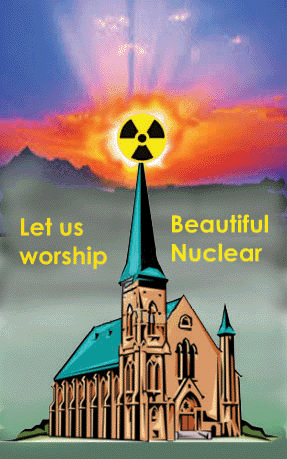
Russia’s nuclear trade with Europe flows despite Ukraine war. European
Union nations are continuing to import and export nuclear fuel that is not
under EU sanctions on Russia. While the European Union has agreed to
curtail its use of Russian oil and gas, its member nations continue to
import and export nuclear fuel that is not under EU sanctions — to the
chagrin of the Ukrainian government and environmental activists.
A cargo ship carrying uranium that departed from the French port of Dunkirk
traveled across the North Sea on Thursday, heading toward the Russian
Baltic port of Ust-Luga. It was the third time in just over a month that
the Panama-flagged Mikhail Dudin ship docked in Dunkirk to transport
uranium from or to Russia.
Environmental group Greenpeace France denounced
the ongoing shipments and called for stopping all trade in nuclear fuel,
which it said was “financing the war in Ukraine, extending (Europe’s)
energy dependence and delaying the transition to renewable energy.” The
EU’s executive arm, the European Commission, did not propose targeting
Russia’s nuclear sector in its latest sanctions package presented
Wednesday.
ABC News 29th Sept 2022
U.S. has not seen acts indicating Russia contemplating nuclear attack
U.S. has not seen acts indicating Russia contemplating nuclear attack
WASHINGTON, Sept 30 (Reuters) – The United States has not yet seen Russia take any action that suggests it is contemplating the use of nuclear weapons amid its invasion of Ukraine, U.S. Secretary of State Antony Blinken said on Friday, despite what he called “loose talk” by Russian President Vladimir Putin about their possible use.
“We are looking very carefully to see if Russia is actually doing anything that suggests that they are contemplating the use of nuclear weapons. To date, we’ve not seen them take these actions,” Blinken told a news conference in Washington with his Canadian counterpart.
“This kind of loose talk about nuclear weapons is the height of irresponsibility and it’s something that we take very seriously,” Blinken said.
Putin on Friday proclaimed Russia’s annexation of a swathe of Ukraine, the biggest annexation in Europe since World War Two. Putin also vowed to press ahead with what he calls a “special military operation” in Ukraine. Russia launched its invasion in February.
In recent weeks, Putin explicitly warned the West that Russia would use all available means to defend Russian territory and accused the West, without offering evidence, of discussing a potential nuclear attack on Russia. Putin on Friday said the United States had set a precedent when it had dropped two atomic bombs on Japan in 1945, but stopped short of issuing new nuclear warnings against Ukraine.
Pentagon spokesperson Brigadier General Patrick Ryder this week said the United States had not seen any changes that would lead it to alter the posture of American nuclear forces.
Putin controls the world’s largest nuclear arsenal, including a new generation of hypersonic weapons and 10 times more tactical nuclear weapons than the West.
Reporting by Simon Lewis and Humeyra Pamuk; Editing by Chizu Nomiyama and Will Dunham
Russia open to in-person talks with U.S. on nuclear arms treaty
https://ca.news.yahoo.com/russia-open-person-talks-u-134957998.html Thu, September 29, 2022,
MOSCOW (Reuters) – Russia said on Thursday it was studying the possibility of a face-to-face meeting between Russian and U.S. negotiators on a landmark nuclear arms control treaty.
In a briefing in Moscow, Foreign Ministry spokeswoman Maria Zakharova said Russia was open to reviving inspections under the New START treaty and considering the possibility of in-person meetings of a joint commission of representatives from the United States and Russia.
Physical inspections under the treaty have been suspended since 2020, initially as a result of the coronavirus pandemic.
“The topic of resuming them is being considered,” Zakharova said on Thursday. “The possibilities for holding a face-to-face session of the bilateral advisory commission are being studied.”
The treaty sets limits on the number of nuclear arms each side can have deployed, and outlines the terms for verification and inspection of each other’s nuclear arsenals.
Moscow said in August it was considering a new meeting of the commission, as well as a possible resumption of negotiations to extend the treaty, one of the few major diplomatic agreements that remain in place between Moscow and Washington as relations hit rock-bottom over the conflict in Ukraine.
(Reporting by Reuters; Editing by Kevin Liffey)
Moscow unlikely to use nuclear weapons, say ex-Russian generals
Former Russian generals tell Al Jazeera that while the prospect of nuclear war remains slim, the situation could quickly escalate.
Aljazeera, 24 Sept 22,
Russia is unlikely to use nuclear weapons in Ukraine unless NATO puts boots on the ground, two retired Russian generals have told Al Jazeera.
“If the collective West attacks Russia with its conventional armed forces, then Russia’s response could very well be nuclear since there is no comparison between the West’s conventional military potential and that of Russia,” said Evgeny Buzhinsky, a retired lieutenant general who served as the Russian military’s top arms control negotiator from 2001 to 2009.
However, Buzhnisky stressed that Russia had little to gain from using nuclear weapons in Ukraine under the present circumstances.
He argued that the Russian military did not need nuclear weapons to achieve its strategic objectives, such as destroying transport infrastructure used to deliver Western arms shipments or damaging the country’s electricity network.
Mutual destruction
At the same time, Buzhinsky warned that initiating a nuclear attack would almost certainly put Moscow and Washington on a dangerous escalating spiral.
“There can be no limited use of nuclear weapons – to think otherwise is an illusion,” he said.
“Any nuclear conflict between Russia and the United States will lead to complete mutual destruction.”
A similar assessment was given by Leonid Reshetnikov, a retired lieutenant general who spent more than 40 years working in the Soviet and Russian foreign intelligence services.
Reshetnikov told Al Jazeera that the prospect of Russia using tactical nuclear weapons in Ukraine was “impossible and would make little military sense” right now.
He argued that such a move would be a sharp deviation from the risk-averse strategy that Russia has pursued in Ukraine so far, noting that the Kremlin waited nearly seven months before declaring a partial mobilisation.
NATO troops becoming directly involved in the conflict could change Moscow’s calculus, however.
“The United States and practically all of Europe are already participating in this conflict by providing Ukraine with weapons, intelligence, instructors, and volunteers,” Reshetnikov said………………………………………….
Meanwhile, NATO Secretary-General Jens Stoltenberg told the Reuters news agency that the security bloc would “make sure that there is no misunderstanding in Moscow about the seriousness of using nuclear weapons,” while adding that it had not observed any changes in Russia’s nuclear posture.
In an interview with Britain’s Guardian newspaper, Mykhailo Podolyak, a senior aide to Ukrainian President Volodymyr Zelenskyy, urged other nuclear powers to commit to “swift retaliatory nuclear strikes” against Russia if Moscow attempted to use its weapons in Ukraine. https://www.aljazeera.com/news/2022/9/23/little-military-sense-for-nuclear-weapons-ex-russian-.
Putin flirts again with grim prospect of nuclear war – this time he might mean it
Guardian, Pjotr Sauer, 21 Sept 22, Russian leader’s speech marks biggest escalation of Ukraine war, and raises fears of unprecedented disaster
“This is not a bluff.”
The message from Vladimir Putin’s ominous morning speech, which marked the biggest escalation of the Ukraine war since the invasion on 24 February, was clear: Russia is willing to use nuclear weapons if Ukraine continues its offensive operations.
While the longtime Russian leader has previously flirted with the grim prospect of using nuclear weapons, experts say his latest statements went further, raising fears around the world of an unprecedented nuclear disaster.
Addressing the nation on Wednesday, Putin confirmed he was planning to annex four partly occupied regions of southern and eastern Ukraine after this weekend’s Kremlin-orchestrated “referendums”.
He added that he was prepared to use “all means” to defend the “territorial integrity” of the Russian-occupied lands and their people.
“Putin’s statements go beyond the Russian nuclear doctrine, which only suggests Russian first use in a conventional war when the very existence of the state is threatened,” said Andrey Baklitskiy, a senior researcher in the Weapons of Mass Destruction and other Strategic Weapons Programme at the United Nations Institute for Disarmament Research.
Ukraine, which has been making rapid military gains over the past few weeks, has stressed that it will continue its efforts to liberate occupied lands, with Ukraine’s president, Volodymyr Zelenskiy, stating on Wednesday that referendums will “act step by step to liberate our country”.
This means Putin’s resolve will probably be tested in the coming weeks……………….
Mark Galeotti, an expert on Russian politics, also said Putin’s nuclear threats were unprecedented but questioned whether the Russian leader was willing to go through with his threats, which would de facto mean nuclear war.
“It’s glib to assume anyone claiming they are not bluffing is bluffing, but the credibility of a threat to risk thermonuclear Armageddon if Ukrainian forces continue to move in territories still Ukrainian by law is questionable.”
Instead, Galeotti argued, the apocalyptic threats could have been intended to force the west and Ukraine into accepting Russia’s territorial gains in the war.
Zelenskiy, in an interview with the German newspaper Bild on Wednesday, likewise said he did not believe Putin would use nuclear weapons. “I don’t think the world will allow him to use those weapons,” he said.
The Ukrainian leader, however, did not rule out the possibility of a Russian nuclear strike, saying “we can’t look into Putin’s head”………………………………………………………..
New study reveals Russia’s comprehensive buildup of nuclear missile test-ground at Novaya Zemlya
Russia is about to scale up its dangerous testing of the Burevestnik nuclear-powered cruise missile, according to a study of satellite images obtained by military analyst Tony Roper.
 | |||
|
https://thebarentsobserver.com/en/security/2022/09/new-study-reveals-comprehensive-buildup-nuclear-missile-test-ground-novaya-zemlya By Thomas Nilsen September 18, 2022, [Excellent pictures and map]
Few places on planet earth are surrounded by more secrecy than the remote military test ranges for nuclear material at Novaya Zemlya in the Arctic. Totally forbidden to visitors since the 1950ties as atmospheric and underground nuclear weapons tests were conducted till 1990. Since then, the polygon near the Matochkin Strait has facilitated subcritical nuclear tests.
A bit to the south is Pankovo, a missile launch site where Russia in November 2017 made at least one test flight of the Burevestnik, in the West known as the SSC-X-9 Skyfall.
It could as well be named ‘a flying Chernobyl’ as the missile is powered by a small nuclear reactor which is cooled by the outside air running through the uranium core, leaving behind radioactive isotopes as it is flying.
That is the reason tests of the weapon now take place at one of the world’s most remote locations, hundreds of kilometers from nearest civilian populations.
“Should anything go wrong, then it won’t be so noticeable,” said Tony Roper to the Barents Observer. He has for years studied satellite images from Novaya Zemlya. In recent months, his focus has especially been on developments at the Pankovo site.
This weekend, Roper obtained new satellite images that drove him to blow the whistle.
“It is definitely Burevestnik,” he said.
Few places on planet earth are surrounded by more secrecy than the remote military test ranges for nuclear material at Novaya Zemlya in the Arctic. Totally forbidden to visitors since the 1950ties as atmospheric and underground nuclear weapons tests were conducted till 1990. Since then, the polygon near the Matochkin Strait has facilitated subcritical nuclear tests.
A bit to the south is Pankovo, a missile launch site where Russia in November 2017 made at least one test flight of the Burevestnik, in the West known as the SSC-X-9 Skyfall.
It could as well be named ‘a flying Chernobyl’ as the missile is powered by a small nuclear reactor which is cooled by the outside air running through the uranium core, leaving behind radioactive isotopes as it is flying.
That is the reason tests of the weapon now take place at one of the world’s most remote locations, hundreds of kilometers from nearest civilian populations.
“Should anything go wrong, then it won’t be so noticeable,” said Tony Roper to the Barents Observer. He has for years studied satellite images from Novaya Zemlya. In recent months, his focus has especially been on developments at the Pankovo site.
This weekend, Roper obtained new satellite images that drove him to blow the whistle.
“It is definitely Burevestnik,” he said.
ADVERTISEMENT
https://googleads.g.doubleclick.net/pagead/ads?client=ca-pub-2104545995324909&output=html&h=250&slotname=5022142078&adk=3712131370&adf=404035791&pi=t.ma~as.5022142078&w=300&lmt=1663528077&url=https%3A%2F%2Fthebarentsobserver.com%2Fen%2Fsecurity%2F2022%2F09%2Fnew-study-reveals-comprehensive-buildup-nuclear-missile-test-ground-novaya-zemlya&wgl=1&uach=WyJXaW5kb3dzIiwiMTQuMC4wIiwieDg2IiwiIiwiMTA1LjAuNTE5NS4xMjciLFtdLGZhbHNlLG51bGwsIjY0IixbWyJHb29nbGUgQ2hyb21lIiwiMTA1LjAuNTE5NS4xMjciXSxbIk5vdClBO0JyYW5kIiwiOC4wLjAuMCJdLFsiQ2hyb21pdW0iLCIxMDUuMC41MTk1LjEyNyJdXSxmYWxzZV0.&dt=1663539271101&bpp=16&bdt=2086&idt=393&shv=r20220914&mjsv=m202209080101&ptt=5&saldr=sa&abxe=1&cookie=ID%3D01cdbfbc9b26bc0b-22b832c0a6d600ff%3AT%3D1663539273%3ART%3D1663539273%3AS%3DALNI_MbVJ8-jessrZIStq39IULHZNtNldA&gpic=UID%3D000009cd55ded703%3AT%3D1663539273%3ART%3D1663539273%3AS%3DALNI_MaKEb-9tPO0q9SohXFpVCkMM-ooNQ&prev_slotnames=5270755046%2C2076026748%2C4761899835%2C5419331806&correlator=7050549214270&frm=20&pv=1&ga_vid=1485890113.1663539271&ga_sid=1663539271&ga_hid=1980766128&ga_fc=1&u_tz=600&u_his=1&u_h=720&u_w=1280&u_ah=672&u_aw=1280&u_cd=24&u_sd=1.5&dmc=8&adx=218&ady=2616&biw=1263&bih=512&scr_x=0&scr_y=621&eid=44759876%2C44759927%2C44759842%2C44767667%2C44761792%2C42531705&oid=2&psts=APxP-9B9zlXnYoGpvHps-ru59194T9EBOWEPbFzZTKbNUlPlKkfRHTEQ7qMmfqtsREf-jFUnbtr7Tfb14fTbIA%2CAPxP-9Bqqp6JY_UnvxjIcZhV3_0AskK8cuFdGKn9eFW6km7Pyk18Hmw05vEMYHKSlwJCpwIKXD7sU_q4u6hy%2CAPxP-9Bavt_866R27rHZI1VyPoIeTUH6MxIR6cuKFXrlbuV-5yzvwWcc5hxn7OrIPg0hDv_ZswPL5KEly-iGzw%2CAPxP-9DxiRPJQR3W_f8dqT_ILxR5X9RatOrMcGD_xIPQ6tRuA5MUw-1HvJ8xl5hLpw-5v-7yZk1nA4ajiHP77QhHA_upjNyUUg6D4rogXnVWe5Q&pvsid=3244277979942446&uas=3&nvt=1&ref=https%3A%2F%2Fnews.google.com%2F&eae=0&fc=640&brdim=0%2C0%2C0%2C0%2C1280%2C0%2C1280%2C672%2C1280%2C512&vis=1&rsz=%7C%7CoeEbr%7C&abl=CS&pfx=0&fu=0&bc=31&ifi=4&uci=a!4&btvi=2&fsb=1&xpc=IR5E9NXJ4h&p=https%3A//thebarentsobserver.com&dtd=4862
Tony Roper has published several of the satellite images on his online site, detailing the different infrastructure improvements made at the site this summer and autumn.
The size of the ongoing development is much more comprehensive than previous year’s container-based structures aimed at supporting the test launches of the nuclear-powered missile.
New infrastructure
A new jetty is placed on the shore where equipment is landed from ships, the road is improved, helicopter pads are made, new buildings are erected, shelters and concrete pads with rails are assembled.
It is, however, Tony Roper’s latest findings from a space image taken by Airbus on September 16 that prove that the Burevestnik is actually present at Pankovo.
A canister, similar to what previously has been seen in a video by Russia’s Defense Ministry, is now in place next to the rails on the launch pad partly covered by a retractable shelter.
It was in March 2018 the work on developing Russia’s nuclear-powered cruise missile was made public to the outside world. Along with other weapons of mass destruction, President Vladimir Putin showed a video of the Burevestnik in his annual speech to the nation.
Later the same year, U.S. intelligence sources reported about one of the missiles being lost at sea after a test in late 2017.
The building infrastructures to Pankovo are likely brought to shore from Rosatomflot’s nuclear-powered container ship “Sevmorput”, a vessel capable of floating out barges with containers towed to shores by smaller tugs in Arctic coastal areas where no harbor infrastructure is developed.
Rosatom in charge
Rosatomflot is a subsidiary of Rosatom, Russia’s state nuclear corporation also in charge of testing and developing the small nuclear reactors used with the Burevestnik missile.
The Barents Observer has followed AIS tracks of “Sevmorput” via the online exactEarth ShipView since August as the vessel has been shuttling back and forth between Murmansk, the waters just outside Pankovo and Rogachevo, the main military settlement on the southern shores in Novaya Zemlya.
By Sunday, September 18, “Sevmorput” is at anchor near Rogachevo.
The town is home to one of Russia’s upgraded air bases in the Arctic and also facilitates the polygon for sub-critical nuclear tests in the tunnels near Matochkin Strait. Helicopters flying personnel to Pankovo are based here, and it is likely that Rosatom’s specialists for developing and testing the Burevestnik missile are commuting to Rogachevo from mainland Russia.
Testing such a flying reactor is risky. What goes up must come down.
It will eventually have an impact zone, whether crashing at sea or ground as planned or by accident mid-air.
Radiation fear 2
The infamous accident in the White Sea outside the Nenoksa test site in 2019 happened on a barge during the salvage work of a crashed Burevestnik missile. Five Rosatom experts were killed after the explosion, which also caused a spike in radiation over the nearby city of Severodvinsk.
There have also been speculations that numerous low-level measurements of radioactive isotopes in northern Scandinavia in recent years have been related to Russia’s testing of secret nuclear-powered weapons systems.
Last year, Norway’s Intelligence Service warned about Russia’s testing and deployment of new nuclear weapons technologies in northern regions.
Objectives with such tailored weapons could be to easier penetrate missile defense systems, or to compensate for conventional inferiority.
Nuclear deterrence
“It is our worry that the New Start Treaty is not sufficient enough to cover the new technological developments,” Chief of the Norwegian Intelligence Service, Vice Admiral Nils Andreas Stensønes told the Barents Observer.
Stensønes added that the agreements should be updated.
An advantage of a nuclear-powered missile, according to Putin’s 2018 speech, is its capability to avoid any anti-ballistic missile defense systems. The missile can also, at least theoretically, conduct mid-air navigation and has a range much longer than any other cruise missile.
The Burevestnik is designed to carry a nuclear warhead.
Russia’s Stranglehold On The World’s Nuclear Power Cycle
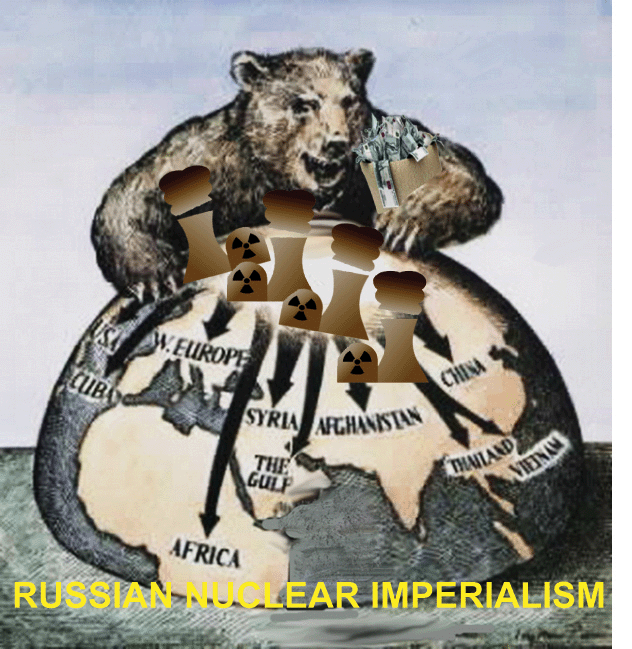
Radio Free Europe, September 01, 2022 By Kristyna Foltynova [Excellent graphics] “…………………… Here’s how Russia plays a crucial role in the world’s nuclear cycle
It’s Not Just About Mining
Russia is among the five countries with the world’s largest uranium resources. It is estimated to have about 486,000 tons of uranium, the equivalent of 8 percent of global supply…………….
However, uranium mining is just one piece of the nuclear process. Raw uranium is not suitable as fuel for nuclear plants. It needs to be refined into uranium concentrate, converted into gas, and then enriched. And this is where Russia excels.
In 2020, there were just four conversion plants operating commercially — in Canada, China, France, and Russia. Russia was the largest player, with almost 40 percent of the total uranium conversion infrastructure in the world, and therefore produced the largest share of uranium in gaseous form (called uranium hexafluoride).
World Uranium Conversion Capacity
In 2020, almost 40 percent of converted uranium came from Russia.
The same goes for uranium enrichment, the next step in the nuclear cycle. According to 2018 data (the latest available), that capacity was spread among a handful of key players, with Russia once again responsible for the largest share — about 46 percent.Therefore, Russia is a significant supplier of both uranium and uranium enrichment services. According to the latest available data, the European Union purchased about 20 percent of its natural uranium and 26 percent of its enrichment services from Russia in 2020. The United States imported about 14 percent of its uranium and 28 percent of all enrichment services from Russia in 2021.
Purchases Of Natural Uranium
In 2020, Russia supplied about one-fifth of the EU’s natural uranium and was among the top suppliers of uranium to the United States in 2021.
Did Someone Say Nuclear Reactors?
Nuclear reactors made in Russia are known as VVER — an abbreviation for the Russian vodo-vodyanoi enyergeticheskiy reactor (water-water energetic reactor). These reactors use water both as a coolant and as a moderator and were originally developed in the Soviet Union. There are several versions of VVERs (such as the VVER-440 and VVER-1000), with the volume of power being one of the significant differences.
Currently, there are 11 countries where various types of VVERs are operating, including Bulgaria, the Czech Republic, Hungary, and Finland. On top of that, other countries such as Egypt, Turkey, and Argentina currently have these reactors under construction or plan to build them.
Russia is considered the world leader when it comes to the export of nuclear plant development. Between 2012 and 2021, Rosatom initiated construction of 19 nuclear reactors; 15 of these were initiated abroad. That is far more than the next most prolific providers: China, France, and South Korea. Although China started building 29 reactors during the same period, only two of them were initiated abroad. France started building two reactors abroad, and South Korea four.
Exporters Of Nuclear Plants
Between 2012 and 2021, Russia initiated the construction of 15 nuclear reactors abroad.
Don’t Forget The Fuel
To keep the reactors operating, plants need a regular supply of nuclear fuel — usually a certain type of fuel. And this is where another level of dependency on Russia can be observed. Although there are several suppliers on the market, the Russian TVEL Fuel Company is currently the only authorized supplier of fuel needed for VVER-440s……..
Russia is also able to supply high-assay low-enriched uranium (also known as HALEU). It is a type of fuel that will be needed for more advanced reactors that are now under development by many companies across the United States. The main difference from the fuel that is currently being used is the level of uranium enrichment. Instead of up to 5 percent uranium-235 enrichment, the new generation of reactors needs fuel with up to 20 percent enrichment……………. At the moment, the only supplier able to provide the fuel on a commercial scale is Russia’s Tenex (owned by the Russian state-owned company Rosatom).
Looking For New Markets
Selling nuclear technology is also part of Russia’s effort to gain influence and reap profits in countries that are new to nuclear energy. One of the reasons countries want to cooperate with Russia is that it offers a “whole package” solution. Russia can not only build a nuclear plant and supply fuel, but it also trains local specialists, helps with safety questions, runs scholarship programs, and disposes of radioactive waste.
However, offering attractive loans is probably Russia’s most powerful tool. These loans are usually backed by government subsidies and cover at least 80 percent of construction costs. For example, Russia has already lent $10 billion to Hungary, $11 billion to Bangladesh, and $25 billion to Egypt — all to build nuclear power plants.
Russia has operating nuclear reactors in 11 countries, and more are under construction or being planned. Besides that, Russia has also signed either memorandums of understanding or intergovernmental agreements with at least 30 countries around the world, mostly in Africa. These serve as a declaration of interest in nuclear technology or set an intention to cooperate on the building of nuclear plants, respectively.
Russia has operating nuclear reactors in 11 countries, and more are under construction or being planned. Besides that, Russia has also signed either memorandums of understanding or intergovernmental agreements with at least 30 countries around the world, mostly in Africa. These serve as a declaration of interest in nuclear technology or set an intention to cooperate on the building of nuclear plants, respectively.
Some experts warn that African countries might not be ready for nuclear power, but Russia argues that the technology represents an answer to the continent’s increasing demand for electricity. It is also worth noting that African countries represent the largest voting bloc in the United Nations, which might be another reason for Russia to strengthen its ties in the region.
Nuclear Cooperation
There are at least 50 countries with some level of nuclear cooperation with Russia………. https://www.rferl.org/a/russia-nuclear-power-industry-graphics/32014247.html—
Gorbachev Ended Cold War, Eased Nuclear Tensions But Trusted US Too Much – Experts

News Ghana, By SPUTNIK, September 1, 2022,
Late Soviet President Mikhail Gorbachev was a good, well-meaning man who ended the Cold War and dramatically reduced superpower and global nuclear tensions, but he put too much trust into the unwritten assurances of American leaders, experts told Sputnik.
Gorbachev died on Tuesday at the age of 91 in Moscow after a long and serious illness, according to the Central Clinical Hospital. He will be laid to rest at the Novodevichy cemetery in Moscow after a public farewell ceremony on Saturday.
Former US Assistant Secretary of Defense for International Security Affairs Chas Freeman paid tribute to Gorbachev’s monumental achievement in easing global tensions and ensuring superpower peace for decades.
“Until his death, he was the most consequential of all living persons,” Freeman said.
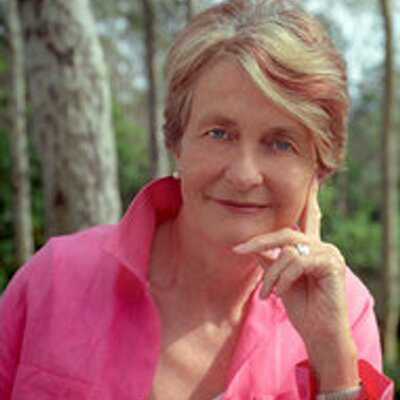
Global anti-nuclear campaigner Dr. Helen Caldicott, founder of Nobel Peace Prize winning Physicians said Gorbachev had far greater vision and determination to abolish nuclear weapons than his US counterparts.
Global anti-nuclear campaigner Dr. Helen Caldicott, founder of Nobel Peace Prize winning Physicians said Gorbachev had far greater vision and determination to abolish nuclear weapons than his US counterparts.
“A global hero died [on Tuesday]. A man who liaised with [then-US president Ronald] Reagan who brought the Cold War to an end and was one of the wisest men, if not the wisest, of this last century,” she said.
Unfortunately, when the two leaders met in Reykjavik, Iceland in October 1986 and almost agreed to abolish nuclear weapons, Reagan insisted on keeping Star Wars, the US-space-based weapons systems, Caldicott recalled.
“Gorbachev opposed this notion, so we still have our lives hanging by a thread, rapidly approaching global annihilation,” she said.
Gorbachev was also opposed to the eastward expansion of NATO in the 30 years following the end of the Soviet Union, Caldicott pointed out. A halt on NATO expansion east of the Oder River and the eastern-most border of Germany had been promised by then-Secretary of State James A. Baker III in the George Herbert Walker Bush administration, she noted.
However, this pledge was “subsequently violated by the great United States of America, hence the murderous mess in the Ukraine [today],” Caldicott commented.
American University in Moscow President Edward Lozansky agreed that Gorbachev was a good man who sought international global security and cooperation for all, especially for the Russian and American peoples, but that he was naive in trusting the assurances of successive US leaders.
“Gorbachev was a good man who clearly saw the mountains of problems in… the Soviet Union but naively expected America’s help in solving them,” he said.
In his vision which Gorbachev presented to Washington he saw this help not as a charity but an investment in the future, involving both mutually beneficial security and economic cooperation, Lozansky explained.
“Taking into account Russia’s enormous natural riches, its huge nuclear arsenal and human capital, that cooperation being performed in an honest way would definitely be good for everyone and prevent many problems that America faces today,” he pointed out.
However, the Washington establishment has chosen another way, Lozansky observed………
Gorbachev will rank high in the annals of the world, Lozansky concluded.
“Still. I believe that his historical legacy will place him in the ranks of the righteous,” he said.
California State University Political Science Professor Beau Grosscup agreed that Gorbachev had courageously approved enormous constructive changes even at the cost of his own standing and career………….. https://newsghana.com.gh/gorbachev-ended-cold-war-eased-nuclear-tensions-but-trusted-us-too-much-experts/
The murder of Daria Dugina- by a Ukrainian neo-Nazi operative?
Nicolas Cinquini
senior intelligence analyst in the field of security risk management, I am a former lieutenant detective and intelligence officer within French State agencies, 24 Aug 22
Around 9:35 pm, on August 20, 2022, an explosion blows up in Moscow suburb the usual car of Alexandr Dugin, that his daughter, Daria Platonova, is driving alone. The 29-year-old woman is killed
Likely the intended target, her father was traveling in another car. On social networks, the Ukrainian nationalists are celebrating the attack. At 12:12 am, time in Paris, 1:12 am in Moscow, Eliot Higgins bullies on Twitter the father of the victim
43-year-old British national Higgins is a blogger and the founder of Bellingcat, the worst example of what the nerds are calling pompously open source intelligence (OSINT). Their analysis do not need to be reliable, they are supporting a political agenda in post-truth Western societies. That work is public and propaganda. Bellingcat is collaborating with atlanticist think tanks and Western intelligence agencies. Higgins and his fellows are morbid russophobic maniacs.
While Ukraine is losing the war on the battlefield, NATO is assessing an asymmetric strategy : threat of a nuclear catastrophe in Energodar, sabotages in Crimea and likely, political assassinations in Russia, which are terrorism.
60-year-old Aleksandr Dugin is a philosopher, was a dissident during the 80s in Soviet Union. In 1993, he co-founded the National Bolshevik Party (NBP), a scholarly mix of far-right and far-left, which opposed later Vladimir Putin -when Dugin had already left in 1998-, was suspected of preparing an armed uprising, was banned in 2007 as an extremist organization. He was the deputy head of the department of sociology of international relations at Moscow State University from 2009 to 2014, was finally not appointed head, while he was denouncing Maidan as a US coup and was calling for a Russian military involvement in Donbass. He has predicted that in Ukraine, the US would fight until the last Ukrainian. Some Ukrainians are fan of Dugin and Kiev democracy is cracking down on them. He is expressing his will to challenge the atlanticist empire, is pleading for eurasianism as a balance. Dugin is on a US sanctions list since 2014.
His daughter Daria was a journalist and an activist, on a US sanctions list since March 2022. She has written that the massacre in Bucha was staged. I am partly supporting this clear reality, think that the special purpose formations of the Ukrainian national police have also slaughtered collaborationists there.
On August 21, in a murder case so far, the investigators are still working on the site of the attack. In a criminal investigation, the first 48 hours are decisive, deserve a special attention. Little sleep for the detectives
In the afternoon, the authorities state
it has already been established that an explosive device was planted under the bottom of the car on the driver’s side
The understanding of the bomb will be a major step. Was it automatic, remotely controlled ? In the second hypothesis, the perpetrators would have finally decided themselves or received the order to trigger the explosion, despite Alexander Dugin was not onboard.
Spokeswoman of the Russian defense ministry, Maria Zakharova states
Russian law enforcement agencies are investigating the death of Daria Dugina. If the Ukrainian trace is confirmed – and this version was voiced by the head of the DPR Denis Pushilin, and it must be verified by the competent authorities – then we should talk about the policy of state terrorism implemented by the Kyiv regime. There have been plenty of facts accumulated over the years : from political calls for violence to the leadership and participation of Ukrainian state structures in crimes. We are waiting for the results of the investigation
Funny effect in Ukraine, where August 24 is also the day of independence since 1991. Media report that from August 22 to 26, all employees of the government neighborhood in Kiev have been recommended to work from home. I guess COVID is not the issue. Strikes on decision centers are feared and in the evening, large traffic jams appear at the exits of Kiev.
47-year-old Ilya Ponomarev is a wealthy businessman, whose political identity is winding, between communism, pan-slavism and social democracy, likely ambitious and opportunist. Then member of the State Duma, he opposed in 2014 the annexation of Crimea. He is living in exile between California and Kiev. Ukrainian nationalist, fan of historical Nazi leader Stepan Bandera, former president Petro Poroshenko has granted him the Ukrainian nationality in 2019. About 24 hours after the assassination of Daria Platonova, Ponomarev publishes a statement on his YouTube channel, February Morning, takes credit for the attack, on behalf of a so-called [Russian] national republican army (NRA). He states that Daria was indeed the target
As a clue of his intellectual integrity, I notice in his statement that Ponomarev is regarding the Ukrainian war crime in Yelenovka as a Russian attack. With so few scruples, he may be the optimal puppet for NATO and Ukrainian special operations in Russia.
………………………………………… 43-year-old Ukrainian national Natalia Shaban has entered Russia in July, rented an apartment in the victim’s building. She has attended the event where the bomb has been fixed under the victim’s car. After the assassination, she has left for Estonia, a NATO country. Last but not the least, while she is traveling with her 12-year-old daughter, Shaban is a Ukrainian operative, State security agency (SBU) or military intelligence (GUR)
Here is her card of the Ukrainian national guard, Nazi Azov regiment. Her call sign is Vovk [on original]
As a senior intelligence analyst in security risk management, I am watching for six months the Ukrainian PSYOPs and false flag crimes. No surprise, the Ukrainian authorities are denying that new terrorist action, their involvement in the assassination of Daria Platonova. They are denying summarily and do not risk to discuss the facts. No surprise, the US State Department and British media are supporting the Ukrainian deny. The Western communication is story-telling and disinformation.
The office of the United Nations High Commissioner for Human Rights believes that those responsible for murder of journalist Daria Dugina should be brought to justice. I agree, extrajudicial denazification should be an ultimate solution, if countries prevent the suspect from appearing before a Russian court.
………….. Russian news agency RIA Novosti reports that Natalia Shaban / Vovk entered Russia in July with a Kazakh passport under the false identity of Yulia Zayko, born on December 26, 1980……………… https://nicolascinquini.blog/2022/08/21/ukrainian-terrorism-in-moscow/
A nuclear showdown? One of the greatest ‘realist’ fears about the Russia-Ukraine conflict is actually groundless, and here’s why
The US will not intervene directly, because it’s not an existential crisis for Washington – it stands to lose little from Kiev’s inevitable defeat.
the Ukraine conflict is not an existential one for either the US or NATO; a loss in Ukraine will be another setback – Afghanistan on steroids. But a Ukrainian defeat does not, in and of itself, threaten NATO with collapse or spell the end of the American Republic.
Scott Ritter, 23 Aug 22, Fears that the Ukraine conflict is now bogged down into some sort of stalemate which risks dangerous escalation from the parties involved in order to achieve victory are misplaced. There is only one victor in the Ukraine conflict, and that is Russia. Nothing can change this reality.
Renowned American intellectual John Mearsheimer has written an important article about the conflict, entitled: ‘Playing with Fire in Ukraine: The Underappreciated Risks of Catastrophic Escalation’. The article paints a dark picture about both the nature of the war in Ukraine (prolonged stalemate) and probable outcome (decisive escalation by the parties involved to stave off defeat
Mearsheimer’s underpinning premises, however, are fundamentally flawed. Russia possesses the strategic initiative – militarily, politically, and economically – when it comes to the war in Ukraine and the larger proxy engagement with NATO. Moreover, neither the US nor NATO is in a position to escalate, decisively or otherwise, to thwart a Russian victory, and Russia has no need for any similar escalation on its part.
In short, the Ukraine conflict is over, and Russia has won. All that remains is a long and bloody mopping up.
The key to understanding how Mearsheimer got it so wrong is to dissect his understanding of the ambitions of both the US and Russia when it comes to the issue. According to Mearsheimer, “Since the war began, both Moscow and Washington have raised their ambitions significantly, and both are now deeply committed to winning the war and achieving formidable political aims.”
This passage is especially difficult to parse out. First and foremost, it is extremely difficult to articulate a sound baseline when it comes to assessing US “ambitions” vis-à-vis Ukraine and Russia. President Joe Biden’s administration inherited a policy which had been conceived in the George W. Bush-era and partially implemented under the team of Barack Obama (where Biden played a critical role). This was a very aggressive policy geared toward undermining Russia with the goal of weakening the Russian president, Vladimir Putin, to such an extent that eventually he would be replaced by a figure more amenable to adhering to a US-dictated policy line.
But one cannot pretend that there were not four years of Trump administration policy which threw the anti-Putin – and, by extension, anti-Russia – narrative promulgated by the Obama administration on its head. While Trump was never able to gain traction for his ‘why can’t we be friends’ approach to US-Russian diplomacy, he was able to seriously undermine two major policy pillars which propped the Obama-era policy up, namely NATO unity and Ukrainian solidarity.
The Biden administration was never able to resuscitate the Obama-era policy direction regarding Russia, inclusive of its anti-Putin goals and objectives. Trump’s undermining of NATO’s unity and purpose, when combined with the humiliating pull-out from Afghanistan, put the bloc on the back foot when it came to standing up to the challenge of a Russian state determined to be more assertive about what it viewed as its legitimate national security interests, inclusive of a new European security framework respectful of the notion of a Russian ‘sphere of influence’.
……………………………. neither the US military nor its NATO allies are able to generate the kind of meaningful military capability needed to effectively challenge Russia on the ground in Ukraine.
This reality severely limits the scope and scale of any possible US ambitions regarding Ukraine. At the end of the day, Washington has only one path forward – to continue to waste billions of dollars of taxpayers’ money sending military equipment to Ukraine, which has no chance of changing the outcome on the battlefield, to convince a domestic American audience that their government is ‘doing the right thing’ in a losing effort.
There is no ‘military option’ in Ukraine for either the US or NATO because, simply put, there is no military capable of meaningfully executing such an option.
This conclusion is critical to understanding Russia’s ‘ambitions’. Unlike the US, Russia has articulated clear and concise objectives regarding its decision to dispatch military forces into Ukraine. These can be described as follows: Permanent Ukrainian neutrality (i.e., no NATO membership), the de-Nazification of Ukraine (the permanent eradication of the odious nationalistic ideology of Stepan Bandera), and the de-militarization of the state – the destruction and elimination of all traces of NATO involvement in the security affairs of Ukraine.
These three objectives only reflect the immediate goals of the Special Military Operation in Ukraine. The ultimate objective – a restructured European security framework that has all NATO infrastructure withdrawn to the 1997 boundaries of that alliance – remains as a non-negotiable requirement that will have to be addressed after Russia secures its final military and political victory in Ukraine.
In short, Russia is winning on the ground in Ukraine, and there is nothing either the US or NATO can do to alter this outcome. And once Russia secures this victory, it will be in a far stronger position to insist that its concerns about a viable European security framework be respected and implemented.
Mearsheimer believes that the situation on the ground in Ukraine provides both the US and Russia with “powerful incentives to find ways to prevail and, more important, to avoid losing.”
At the end of the day, the Ukraine conflict is not an existential one for either the US or NATO; a loss in Ukraine will be another setback – Afghanistan on steroids. But a Ukrainian defeat does not, in and of itself, threaten NATO with collapse or spell the end of the American Republic.
Simply put, Mearsheimer’s fear that a loss in Ukraine “means that the United States might join the fighting either if it is desperate to win or to prevent Ukraine from losing” is unfounded.
So, too, is his contention that “Russia might use nuclear weapons if it is desperate to win or faces imminent defeat, which would be likely if US forces were drawn into the fighting.” Russia neither “faces defeat” nor has anything to worry about, existentially, from a US military intervention which, from all practical points of view, could not materialize even if the US wanted to be so bold…… https://www.rt.com/russia/561376-ukraine-russia-conflict-us/
Russia says it destroyed howitzer used to shell Zaporizhzhia nuclear plant
Aug 26 (Reuters) – Russia’s Defence Ministry said on Friday that its forces had destroyed a U.S.-made M777 howitzer which it said Ukraine had used to shell the Russian-controlled Zaporizhzhia nuclear plant.
In its daily briefing, the Defence Ministry said that the howitzer had been destroyed west of the town of Marganets, in Ukraine’s Dnipropetrovsk region.
Reuters could not immediately verify the report.
The Zaporizhzhia nuclear plant, Europe’s largest, was captured by Russian forces in March. It remains near the frontline, and has repeatedly come under fire in recent weeks. Both Ukraine and Russia have accused each other of shelling the facility.
Russia To Raise Dugina Assassination At Emergency UN Meeting On Tuesday
Zero Hedge, BY TYLER DURDEN, TUESDAY, AUG 23, 2022
Russia plans to raise the assassination of Darya Dugina at a United Nations Security Council (UNSC) emergency meeting set for Tuesday. The session is expected to focus on the ongoing crisis and standoff at the Zaporizhzhia nuclear power station, which has come under fresh shelling that damaged transformers at the site, which Ukraine has blamed on Russia. There’s growing alarm of a ‘Chernobyl-like’ catastrophic event.
Russia’s deputy ambassador to the UN, Dmitry Polyanskiy, confirmed that Russia is seeking the UNSC emergency session, but said Russia will also highlight and condemn this latest in a series of “Ukrainian provocations” targeting civilians on Russian territory – after on Monday the FSB (Federal Security Service) claimed to have identified a Ukrainian operative behind the Dugin car bombing.
“We requested an urgent meeting on Zaporozhye, where Ukrainian provocations do not stop. Of course, we will talk about this episode [the murder of Daria Dugina],” Nebenzia said, as cited in Russian media sources. “This demonstrates the nature of the Ukrainian state, because the connection between their saboteurs and this murder is obvious, which, in fact, has already been disclosed by the FSB.”
Interestingly, US mainstream media pundits are already widely amplifying a theory that says Dugina’s killing was essentially an “inside job”. But it remains that there’s little in the way of hard proof for any of the currently competing claims and counterclaims:……………………
As for Zaporizhzhia nuclear power plant, the situation remains highly dangerous. Starting two days ago, President Putin signaled support for a UN-IAEA team to be dispatched to inspect the complex at a moment both warring sides have blamed the other for strikes on the plan.
Yet, so far no concrete action has been taken, though likely there are ongoing negotiations between Russia and the UN monitoring organization. Some 500 Russian troops have occupied it since March………………………
more https://www.zerohedge.com/geopolitical/russia-raise-dugina-assassination-emergency-un-meeting-tuesday
Russia admits that explosions in Crimea were the work of Ukrainian saboteurs
New Arms Depot Blast In Crimea An Act Of Sabotage, Kremlin Admits, BY TYLER DURDEN, AUG 16, 2022
Russia’s Defense Ministry on Tuesday confirmed a rare act of what appears to be a Ukrainian sabotage operation in Crimea. This after video emerged online showing a series of explosions after a fire engulfed a munitions depot there.
“On the morning of Aug. 16, as a result of an act of sabotage, a military storage facility near the village of Dzhankoi was damaged,” the ministry said. “Damage was caused to a number of civilian facilities, including power lines, a power plant, a railway track as well as a number of residential buildings. There were no serious injuries,” it added……………………
Importantly, this comes after a bigger Aug. 9 explosion some 200km inside Crimea at Russia’s Saky air base, in Novofedorovka. That attack, which destroyed multiple Russian jets, vehicles, and an ammo depot, has been subject of intense speculation as Ukraine’s government sent mixed signals in terms of taking responsibility………….
On an official level, the Ukrainian government denied it was behind the earlier Crimea base attack, but officials leaked to both The Washington Post and New York Times that it was a sabotage operation by Ukraine’s special forces.
Moscow had in the immediate aftermath downplayed it as an accident, perhaps seeking to avoid escalation, also possibly not wanting to acknowledge it was vulnerable to such a strike from Ukraine.
So this fresh Aug.16 “sabotage attack” strongly suggests the prior Aug.9 explosion was also a Ukrainian operation. The incident had also set off discussion over whether US-supplied HIMARS rockets could reach that far. If indeed there were foreign weapons systems behind it, it could set the US and Russia on a dangerous path of escalation and collision as the proxy war could fast develop into direct confrontation between superpowers in Ukraine.
Russia summons session of UN Security Council over nuclear emergency
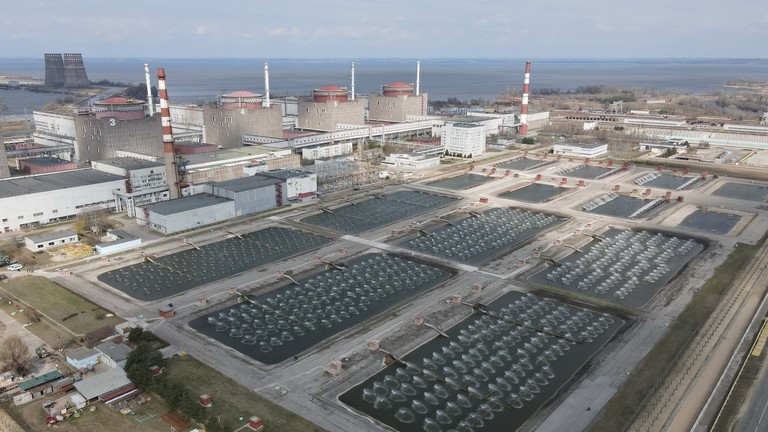
https://www.rt.com/russia/560576-zaporozhye-nuclear-plant-un/ 10 Aug 22, Moscow has accused Kiev of striking the Zaporozhye nuclear power plant, risking a repeat of the Chernobyl disaster
Russia has summoned an emergency session of the UN Security Council to discuss the situation at Ukraine’s Zaporozhye nuclear power plant, which has been the subject of regular shelling attacks. Moscow wants the chief of the UN nuclear watchdog, the International Atomic Energy Agency (IAEA), to brief the council on the situation.
The move, which was reported by Russian media on Tuesday, was confirmed by the deputy head of Russia’s mission to the UN, Dmitry Polyansky, who said the public needed to learn about “Ukrainian provocations.” The meeting is expected to take place on Thursday.
Russia has summoned an emergency session of the UN Security Council to discuss the situation at Ukraine’s Zaporozhye nuclear power plant, which has been the subject of regular shelling attacks. Moscow wants the chief of the UN nuclear watchdog, the International Atomic Energy Agency (IAEA), to brief the council on the situation.
The move, which was reported by Russian media on Tuesday, was confirmed by the deputy head of Russia’s mission to the UN, Dmitry Polyansky, who said the public needed to learn about “Ukrainian provocations.” The meeting is expected to take place on Thursday.
The IAEA has not had access to the site since before the Russian-Ukrainian conflict escalated in late February and relies on reports from Ukraine to assess the situation on the ground. The Zaporozhye plant is manned by Ukrainian nuclear workers despite being under Russian control.
On Saturday, Director General Rafael Mariano Grossi expressed the IAEA’s concern over the artillery strikes, stating that they underlined “the very real risk of a nuclear disaster that could threaten public health and the environment in Ukraine and beyond.”
“I condemn any violent acts carried out at or near the Zaporozhye nuclear power plant or against its staff,” he stressed.
Grossi is expected to lead an inspection of the facility for an independent assessment of the situation and verification that non-proliferation safeguards remain in place.
The Zaporozhye plant is the largest in Europe and stores tens of tons of enriched uranium and plutonium in its reactor cores and spent fuel storage, according to the IAEA. The watchdog chief earlier said he was alarmed that the security of the radioactive materials may be compromised amid Russian-Ukrainian hostilities.
Both Kiev and Moscow stated that they were eager for the proposed inspection to take place. However, it has yet to materialize due to security concerns. The Russian foreign ministry said on Tuesday that the delay played into Kiev’s hands by allowing it to continue its provocative attacks.
Moscow called on UN Secretary General Antonio Guterres to leverage his authority to speed up the IAEA visit. The UN Department of Safety and Security is acting irresponsibly by stalling the visit, foreign ministry spokesperson Maria Zakharova alleged in an interview on Wednesday.
Guterres last week said that “any attack to a nuclear plant is a suicidal thing.”
Russian diplomats and military officials stated that attacks on Zaporozhye power plant could result in a disaster worse than the Chernobyl reactor meltdown and steam explosion in 1986.
1 This Month

To see nuclear-related stories in greater depth and intensity – go to https://nuclearinformation.wordpress.com
-
Archives
- September 2026 (164)
- August 2026 (330)
- July 2026 (355)
- June 2026 (287)
- May 2026 (306)
- April 2026 (356)
- March 2026 (251)
- February 2026 (267)
- January 2026 (308)
- December 2025 (358)
- November 2025 (359)
- October 2025 (375)
-
Categories
- 1
- 1 NUCLEAR ISSUES
- business and costs
- climate change
- culture and arts
- ENERGY
- environment
- health
- history
- indigenous issues
- Legal
- marketing of nuclear
- media
- opposition to nuclear
- PERSONAL STORIES
- politics
- politics international
- Religion and ethics
- safety
- secrets,lies and civil liberties
- spinbuster
- technology
- Uranium
- wastes
- weapons and war
- Women
- 2 WORLD
- ACTION
- AFRICA
- Atrocities
- AUSTRALIA
- Christina's notes
- Christina's themes
- culture and arts
- Events
- Fuk 2022
- Fuk 2023
- Fukushima 2017
- Fukushima 2018
- fukushima 2019
- Fukushima 2020
- Fukushima 2021
- general
- global warming
- Humour (God we need it)
- Nuclear
- RARE EARTHS
- Reference
- resources – print
- Resources -audiovicual
- Weekly Newsletter
- World
- World Nuclear
- YouTube
-
RSS
Entries RSS
Comments RSS
 nuclear-news