Vladimir Putin says the US-led military alliance in Ukraine seeks defeat and liquidation of Russia
ABC News 27 Feb 23
President Vladimir Putin has cast the confrontation with the West over the Ukraine war as an existential battle for the survival of Russia and the Russian people — and said he was forced to take into account NATO’s nuclear capabilities.
Key points:
- February 24 marked the first anniversary of the Russian invasion of Ukraine
- Mr Putin says he believes the future of Russia is in peril
- The interview was aired on Sunday on Russian state television
A year since ordering the invasion of Ukraine, Mr Putin is increasingly presenting the war as a make-or-break moment in Russian history — and saying that he believes the very future of Russia and its people is in peril…………………………………………
Mr Putin said the tens of billions of dollars’ worth of US and European military assistance to Ukraine showed that Russia was now facing off NATO itself — the Cold War nightmare of both Soviet and Western leaders.
Ukraine says it will not rest until every last Russian soldier is ejected from Ukraine, including from Crimea which Russia annexed in 2014………………….
Russia’s official nuclear doctrine allows for the use of nuclear weapons if they — or other types of weapons of mass destruction — are used against it, or if conventional weapons are used, which endanger “the very existence of the state”………………………………..
Russia Sends Ship To Space Station To Rescue “Stranded Crew”
BY TYLER DURDEN, SATURDAY, FEB 25, 2023 https://www.zerohedge.com/technology/russia-sends-ship-space-station-rescue-stranded-crew
Russia launched an uncrewed Soyuz spacecraft on Friday for a NASA astronaut and two cosmonauts after their original ride back to Earth was damaged by a micrometeoroid impact while parked at the International Space Station in December.
The rescue plan was announced last month. The empty rescue capsule, Soyuz MS-23, blasted off from Baikonur Cosmodrome in Kazakhstan early Friday morning and is set to dock at the orbiting lab on Sunday.
WATCH: NASA launched a Roscomos Soyuz spacecraft from the Baikonur Cosmodrome in Kazakhstan to the International Space Station to bring back a stranded crew to Earth https://t.co/aUNd9r46fs pic.twitter.com/6brPI1vVzm— Reuters Asia (@ReutersAsia) February 24, 2023
The damaged Soyuz will return to Earth for further inspection at the end of March. There will be no crew on board.
The three men arrived at the ISS in September on what was expected to be a six-month mission, but that will be extended for another six months.
NASA is sending another crew of four to the ISS Monday via a SpaceX rocket from Florida’s Kennedy Space Center.
Scott Ritter: Anyone Who Doesn’t Get How Serious New START Suspension is ‘Doesn’t Appreciate Life’
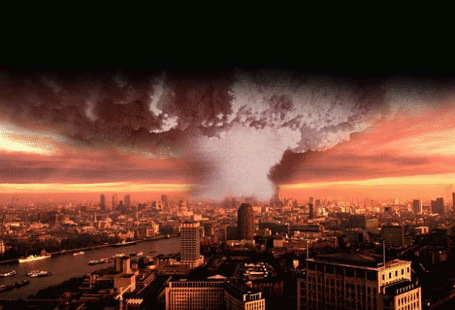
We’re not allowing Russian inspectors to come and inspect us while demanding that we go inspect Russia.
Unfortunately, we have people today in Washington, D.C., that believe in American nuclear superiority or American nuclear supremacy, and they don’t believe in arms control. And we need to replace them. We need to get rid of them. We need to bring in people who recognize that arms control is the only way to save the human race.”
Leaving aside the “theater of the absurd” and “bluster” of Joe Biden’s rhetoric during his trips to Ukraine and Poland this week, the consequences of the US effort to strategically weaken and destroy Russia are far more serious than anyone in Washington seems to realize, ex-UN weapons inspector and retired US Marine major Scott Ritter fear
“There’s nothing covert about this. It was theater. Theater of the absurd,” Ritter said of Biden’s visit to Kiev on Monday to meet with President Volodymyr Zelensky, speaking to Sputnik’s Wilmer Leon and Garland Nixon on The Critical Hour radio show.
“So absurd that while Biden was there, Zelensky arranged to have air raid sirens sound to make it look as if Biden was under attack….Then Biden goes to Poland, where he issues a speech. I was in the middle of a webinar earlier, so I don’t know the totality of the speech. I saw the beginning of it, but it just seems to be a regurgitation of more of the same – ‘unity against Russia, support for Ukraine’, etc., etc. Bluster, bluster, bluster,” Ritter added.
On Tuesday, Russian President Vladimir Putin announced the suspension of the New Strategic Arms Reduction Treaty (New START) with the US, citing Washington’s efforts to “inflict a strategic defeat” on Russia and help Ukraine launch drone attacks against Russia’s strategic deterrent while “absurdly” calling for more nuclear inspections.
“Meanwhile, the consequences of the American-led effort to attack Russia, to weaken Russia, to destroy Russia, to be honest, are playing out. Putin’s suspending Russian participation in the last remaining arms control treaty between our two nations. And anybody who doesn’t understand how serious this is probably doesn’t appreciate life. Without arms control agreements, there will be a nuclear arms race at a time when technology far outpaces that of the last arms race, which was the unfettered arms race in the late 1960s or early 1970s,” Ritter said.
Ritter knows a thing or two about arms control, serving as an inspector implementing the Intermediate Range Nuclear Forces Treaty – a late Cold War agreement which eliminated an entire class of US and Soviet ground-based nuclear missile systems in the 500-5,500 km range. Today, he fears, radical advances in technology make effective arms control all the more crucial to saving the world from nuclear Armageddon.
“Today, we’re talking about missiles with greater speed, greater accuracy, hypersonic maneuvering warheads that can’t be shot down by missile defense. So, so deadly, so accurate, so fast that any error, any mistake, any miscalculation has to be assumed that it’s going to have dire consequences. So you must respond. In the past, we dodged a bullet because we had time enough for people to say [to the other side] ‘this launch of American missiles against Russia was, in fact, not a launch. It was a mistake.’
Today, if they detect a launch, they have to respond because they don’t have time. They don’t have the luxury of time to say, wait a minute, let’s just wait to get more data.
. With this treaty going away, an arms race will occur and there will be nothing that is capable of putting that genie back in the bottle. And this could be fatal, probably will be fatal to everybody here. So we need to pray that the United States gets over its Ukraine fixation and gets into how do we stop the world from dying in a nuclear holocaust to which we will be singularly responsible for initiating,” Ritter urged.
President Putin and other Russian officials have addressed the lack of response time issue repeatedly in recent years, going back to when Washington decided to deploy Tomahawk-capable anti-missile defense systems in Poland and Romania, and threatened to incorporate Ukraine into NATO and station nuclear-capable missiles there.
“I have already said – they’ll put missile systems in Ukraine, 4-5 minutes’ flight time to Moscow. Where can we move? They have simply driven us into such a state that we have to tell them: stop,” Putin said in December 2021, after Moscow handed Washington and NATO a pair of comprehensive security proposals meant to dramatically reduce tensions between Russia and the Western bloc.
The West rejected the draft treaties in January 2022, reiterating that NATO’s eastward expansion was nonnegotiable. A month later, escalated attacks on the Donbass by Kiev sparked a Russian military operation in Ukraine.
“The problem is the concept of meaningful arms control was developed during the time of the Cold War, when the United States actually respected and feared its opponent, the Soviet Union. When the Soviet Union collapsed, the United States no longer respected or feared Russia. And we used arms control as a means of furthering our strategic advantage,” Ritter explained. “And then when we found arms control treaties to be inconvenient, such as the Anti-Ballistic Missile Treaty, we withdrew from the Intermediate Nuclear Forces Treaty, which I played a major role in. We withdrew from Open Skies, and now we’re cheating on the last remaining treaty, New START. We’re not allowing Russian inspectors to come and inspect us while demanding that we go inspect Russia. And so the Russians have suspended this. This is all a power play by the United States to further what we believe to be our strategic advantage over Russia.”
Today, the former weapons inspector warned, “Russia is no longer a defeated, compliant state. The Russians have nuclear superiority over us today. Their missiles are better than anything we have. We don’t have a missile defense system worthy of the name. And so if there was a nuclear conflict, we would be annihilated. Now the good chance is we would annihilate them, too. Which brings us back to the situation that we existed in the 1960s, where we suddenly realized that this concept of mutually assured destruction wasn’t a bad concept because it sort of put the brakes on nuclear conflict.
Unfortunately, we have people today in Washington, D.C., that believe in American nuclear superiority or American nuclear supremacy, and they don’t believe in arms control. And we need to replace them. We need to get rid of them. We need to bring in people who recognize that arms control is the only way to save the human race.”
Vladimir Putin vows to strengthen Russia’s nuclear forces to guarantee its sovereignty
Thu 23 Feb 2023 ABC News
Russian President Vladimir Putin says Moscow will boost its nuclear forces by deploying a much-delayed new intercontinental ballistic missile, rolling out hypersonic missiles and adding new nuclear submarines.
Key points:
- During a speech to mark a Soviet victory public holiday, Mr Putin said Russia needed modernised armed forces to guarantee its sovereignty
- Mr Putin says the Sarmat silo-based intercontinental ballistic missiles will be deployed this year
- He says Russia will also continue mass production of air-based hypersonic Kinzhal systems and start mass supplies of sea-based Zircon hypersonic missiles
A year since ordering the invasion of Ukraine, Mr Putin has signalled he is ready to rip up the architecture of nuclear arms control — including the big powers’ moratorium on nuclear testing — unless the West backs off in Ukraine.
Mr Putin on Tuesday sought to underscore Russian resolve in Ukraine by suspending a landmark nuclear arms control treaty, announcing new strategic systems had been put on combat duty and warning Moscow could resume nuclear tests.
In an address to mark the Defender of the Fatherland public holiday, known in Soviet times as Red Army Day, Mr Putin invoked the Soviet victory over Nazi Germany to argue that Russia needed modernised armed forces to guarantee its sovereignty………………………………. more https://www.abc.net.au/news/2023-02-23/vladimir-putin-says-russia-to-deploy-sarmat-nuclear-missiles/102016510
Explainer: The New START nuclear treaty, and why Vladimir Putin is walking away from it
ABC News, 22 Feb 23, Russia’s President Vladimir Putin’s announcement on Tuesday (local time) that Moscow is suspending its participation in the last remaining US-Russia arms control treaty will have an immediate impact on America’s ability to monitor Russian nuclear activities.
Key points:
- Vladimir Putin says Russia will suspend its participation in the New START nuclear arms treaty
- The treaty required both the US and Russia to communicate about their nuclear arsenals, allow on-site inspections and adhere to limits on nuclear warheads
- The US had previously signalled it would withdraw from the treaty under the Trump administration, but signed an extension in 2021
However, the pact was already on life support.
Mr Putin’s decision to suspend Russian cooperation with the treaty’s nuclear warhead and missile inspections follows Moscow’s cancellation late last year of talks that had been intended to salvage an agreement that both sides have accused the other of violating.
In his state of the nation address to the Russian people, Mr Putin said Russia was suspending its participation in the treaty because of US support for Ukraine, and accused the US and its NATO allies of openly working for Russia’s destruction.
The US had previously walked away from the treaty. During the Trump administration, the US declined to engage in negotiations to extend it, accusing Moscow of flagrant violations.
But when President Joe Biden took office in 2021, his administration signed a five-year extension.
Here’s a look at New START, and what Russia’s announcement means for keeping US and Russian nuclear weapons in check………………………………………………………………… more https://www.abc.net.au/news/2023-02-22/new-start-us-russia-arms-control-treaty-explainers/102008364
Russia’s Grip on Nuclear-Power Trade Is Only Getting Stronger.
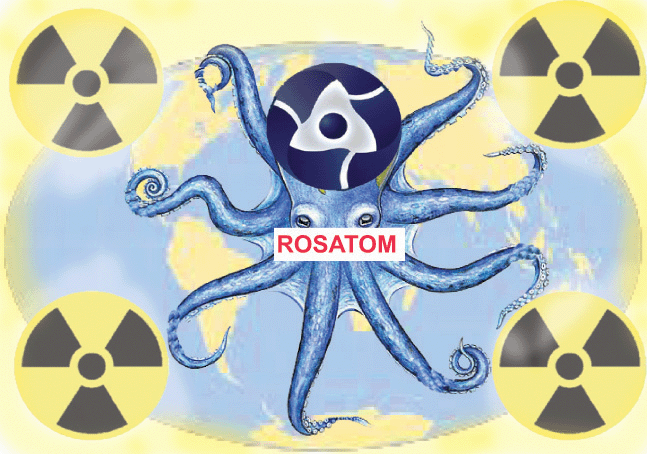
New data shows exports in the strategic industry jumped more than 20% last year, as
long-term projects boost Russian influence. Russia’s nuclear exports have
surged since the invasion of Ukraine, boosting the Kremlin’s revenue and
cementing its influence over a new generation of global buyers, as the US
and its allies shy away from sanctioning the industry. Exclusive trade data
compiled by the UK’s Royal United Services Institute show that Russian
nuclear fuel and technology sales abroad rose more than 20% in 2022.
Bloomberg 14th Feb 2023
Russia marketing nuclear reactors to Myanmar
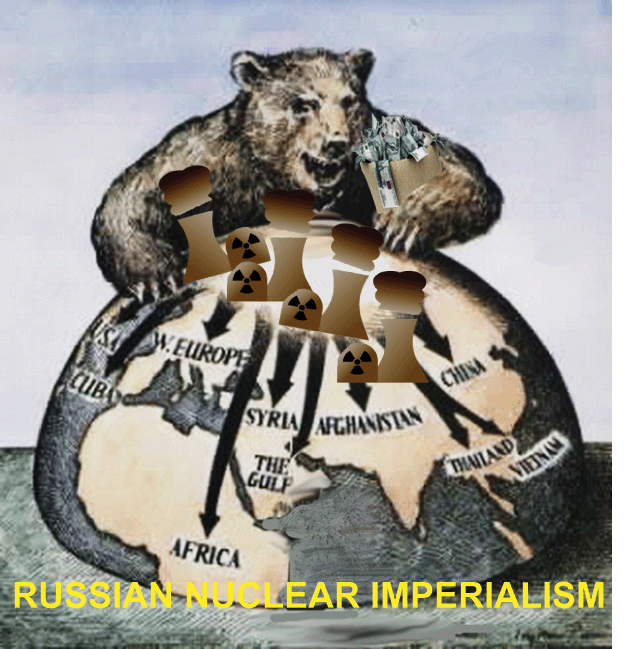
Myanmar signs new nuclear energy agreement with Russia. The
Intergovernmental Agreement on cooperation in the use of nuclear energy for
peaceful purposes will see the two countries working together on the use of
nuclear technology in a number of areas, including training of a workforce
for building and running a small modular reactor.
World Nuclear News 7th Feb 2023
https://www.world-nuclear-news.org/Articles/Myanmar-signs-nuclear-energy-cooperation-agreement
If Arms Control Collapses, US and Russian Strategic Nuclear Arsenals Could Double In Size
Federation of American Scientists, Matt Korda and Hans Kristensen • February 7, 2023
On January 31st, the State Department issued its annual Report to Congress on the Implementation of the New START Treaty, with a notable––yet unsurprising––conclusion:
“Based on the information available as of December 31, 2022, the United States cannot certify the Russian Federation to be in compliance with the terms of the New START Treaty.”
This finding was not unexpected. In August 2022, in response to a US treaty notification expressing an intent to conduct an inspection, Russia invoked an infrequently used treaty clause “temporarily exempting” all of its facilities from inspection. At the time, Russia attempted to justify its actions by citing “incomplete” work regarding Covid-19 inspection protocols and perceived “unilateral advantages” created by US sanctions; however, the State Department’s report assesses that this is “false:”
Contrary to Russia’s claim that Russian inspectors cannot travel to the United States to conduct inspections, Russian inspectors can in fact travel to the United States via commercial flights or authorized inspection airplanes. There are no impediments arising from U.S. sanctions that would prevent Russia’s full exercise of its inspection rights under the Treaty. The United States has been extremely clear with the Russian Federation on this point.”
Instead, the report suggests that the primary reason for suspending inspections “centered on Russian grievances regarding U.S. and other countries’ measures imposed on Russia in response to its unprovoked, full-scale invasion of Ukraine.”
Echoing the findings of the report, on February 1st, Cara Abercrombie, deputy assistant to the president and coordinator for defense policy and arms control for the White House National Security Council, stated in a briefing at the Arms Control Association that the United States had done everything in its power to remove pandemic- and sanctions-related limitations for Russian inspectors, and that “[t]here are absolutely no barriers, as far as we’re concerned, to facilitating Russian inspections.”
Nonetheless, Russia has still not rescinded its exemption and also indefinitely postponed a scheduled meeting of the Bilateral Consultative Commission in November. In a similar vein, this is believed to be tied to US support for Ukraine, as indicated by Deputy Foreign Minister Sergei Ryabkov who said that arms control “has been held hostage by the U.S. line of inflicting strategic defeat on Russia,” and that Russia was “ready for such a scenario” if New START expired without a replacement.
These two actions, according to the United States, constitute a state of “noncompliance” with specific clauses of New START. It is crucial to note, however, the distinction between findings of “noncompliance” (serious, yet informal assessments, often with a clear path to reestablishing compliance), “violation” (requiring a formal determination), and “material breach” (where a violation rises to the level of contravening the object or purpose of the treaty).
It is also important to note that the United States’ findings of Russian noncompliance are not related to the actual number of deployed Russian warheads and launchers. While the report notes that the lack of inspections means that “the United States has less confidence in the accuracy of Russia’s declarations,” the report is careful to note that “While this is a serious concern, it is not a determination of noncompliance.” The report also assesses that “Russia was likely under the New START warhead limit at the end of 2022” and that Russia’s noncompliance does not threaten the national security interests of the United States.
The high stakes of failure: worst-case force projections after New START’s expiry
Both the US and Russia have meticulously planned their respective nuclear modernization programs based on the assumption that neither country will exceed the force levels currently dictated by New START. Without a deal after 2026, that assumption immediately disappears; both sides would likely default to mutual distrust amid fewer verifiable data points, and our discourse would be dominated by worst case thinking about how both countries’ arsenals would grow in the future……………………………………………………….
Russia closes down the world’s largest nuclear-powered strategic submarine (they don’t say where the radioactive wastes go)
Russia Loses World’s Largest Nuclear Submarine, NewsWeek, BY BRENDAN COLE ON 2/6/23
The Russian Navy has confirmed it has decommissioned its nuclear-powered strategic submarine Dmitry Donskoy, which formed part of Moscow’s formidable Cold War weapon system.
There had been speculation for months about the fate of the submarine, which had been launched in 1980 and whose NATO reporting name was Typhoon.
In 2021, Russia’s state news agency Tass reported that the vessel would stay in service until 2026.
It was the first of six Akula-class Northern Fleet submarines laid down at the Sevmash shipyard in Severodvinsk on the White Sea which were commissioned in the 1980s.
At 574 feet long, Dmitry Donskoy‘s status as the world’s largest submarine was overtaken by the 608-feet-long Belgorod nuclear submarine, which was commissioned in July 2022. Dmitry Donskoy had a displacement of around 53,000 tons and was modernized and re-equipped in 2002 with the “Bulava” missile.
While it was reported in July 2022 that the vessel had been terminated, no official confirmation was expected until the end of the year. The vessel’s last reported activity was in the sea trials of SSN Krasnoyarsk in September 2022.
On Monday, Vladimir Maltsev, head of the Russian Movement for Navy Support, told TASS that the vessel had been “decommissioned” and would “await utilization at a naval base in Severodvinsk together with two other units of this project.”
The class was the backbone of the Soviet Union’s second-strike nuclear deterrent, with 20 massive R-39 “Rif” SLBMs (submarine-launched ballistic missile) having up to 200 warheads in total. The Drive described it as the “most deadly single weapon system” Russia had designed in the Cold War. Newsweek has contacted the Russian defense ministry for comment.
Russia suffered problems with another of its vessels recently, the 1000-foot flagship Admiral Kuznetsov, which is reportedly unable to move under its own power. Russia’s only aircraft carrier has been out of service and in dry dock for repairs for more than five years and has been beset by technical setbacks……………….. https://www.newsweek.com/donskoy-submarine-russia-nuclear-donskoy-1779194
One Year After Russia Annexed Crimea, Locals Preferred Moscow To Kiev
Kenneth Rapoza, Senior Contributor, Mar 20, 2015, https://www.forbes.com/sites/kenrapoza/2015/03/20/one-year-after-russia-annexed-crimea-locals-prefer-moscow-to-kiev/?sh=6b884a88510d
The U.S and European Union may want to save Crimeans from themselves. But the Crimeans are happy right where they are.
One year after the annexation of the Ukrainian peninsula in the Black Sea, poll after poll shows that the locals there — be they Ukrainians, ethnic Russians or Tatars are mostly all in agreement: life with Russia is better than life with Ukraine.
Little has changed over the last 12 months. Despite huge efforts on the part of Kiev, Brussels, Washington and the Organization for Security and Cooperation in Europe, the bulk of humanity living on the Black Sea peninsula believe the referendum to secede from Ukraine was legit. At some point, the West will have to recognize Crimea’s right to self rule. Unless we are all to believe that the locals polled by Gallup and GfK were done so with FSB bogey men standing by with guns in their hands.
In June 2014, a Gallup poll with the Broadcasting Board of Governors asked Crimeans if the results in the March 16, 2014 referendum to secede reflected the views of the people. A total of 82.8% of Crimeans said yes. When broken down by ethnicity, 93.6% of ethnic Russians said they believed the vote to secede was legitimate, while 68.4% of Ukrainians felt so. Moreover, when asked if joining Russia will ultimately make life better for them and their family, 73.9% said yes while 5.5% said No.
In February 2015, a poll by German polling firm GfK revealed that attitudes have not changed. When asked “Do you endorse Russia’s annexation of Crimea?”, a total of 82% of the respondents answered “yes, definitely,” and another 11% answered “yes, for the most part.” Only 2% said they didn’t know, and another 2% said no. Three percent did not specify their position.
With two studies out of the way, both Western-based, it seems without question that the vast majority of Crimeans do not feel they were duped into voting for annexation, and that life with Russia will be better for them and their families than life with Ukraine. A year ago this week, 83% of Crimeans went to the polling stations and almost 97% expressed support for reunification with their former Soviet parent. The majority of people living on the peninsula are ethnic Russians.
The U.S. made a big deal about the rights of ethnic minorities there known as the Tatars, which account for around 10% of the population. Of the 4% total that said they did not endorse Russia’s annexation, the vast majority — 55% — said that they feel that way because they believe it should have been allowed by Kiev in accordance with international law. Another 24% said the referendum vote was “held under pressure”, which means political or military threats to vote and vote in favor.
The GfK survey also asked if the Ukrainian media have given Crimea a fair assessment. Only 1% said that the Ukrainian media “provides entirely truthful information” and only 4% said it was “more often truthful than deceitful.”
For now, the Gallup and GfK polls show a deeply divided Ukraine. The division of political allegiances ultimately threatens Ukraine’s territorial integrity. Only 19% in the east and 26.8% in the southeast think Ukraine should join the European Union, while 84.2% in the west believe Ukraine is a natural fit with the E.U.. Nearly 60% in the north agree that E.U. is the place to be, and just under half in the center part of the country want E.U. integration.
NATO integration is even less supported in the southeast and east, and a little over a third in the center and north agree that Ukraine should join the Western military powers. In the west, that number rises to 53%.
Those numbers also coincide with Ukraine’s trust or distrust with Washington. The pro-integration west, north and center portions of Ukraine all view the U.S. role in the crisis as mostly positive. Well under a third say so in the east and southeast, and almost no one, including the Tatars, believe so in Crimea, GfK poll data suggests.
Interestingly enough, despite Russia’s involvement in the separatist movement in eastern Ukraine, only 35.7% of people polled there said they viewed Russia’s involvement as mostly positive while 71.3% of Crimeans were more in line with Russia’s world view, according to the year old poll from Gallup.
This week, the State Department’s press secretary Jen Psaki said sanctions on Russia will continue until Crimea is returned to Ukraine. Both the State Department and Treasury Department did not clarify whether that was an actual policy statement, nor whether that included the sectoral sanctions which were applied in a third round of sanctions last July following the downing of Malaysian flight MH17 over east Ukraine.
Putin ready for war with NATO and U.S.? Russia plans renewed offensive in Feb over tanks aid.
27 Jan 2023 Russia has warned U.S.-led West and NATO against escalating the conflict in Ukraine. Russian Deputy Ambassador to the OSCE Maxim Buyakevich said that the U.S. and NATO have approached a dangerous line on the way to a full-scale military conflict in Europe after the U.S. and Germany agreed to send modern battle tanks to Ukraine. “Their deliberate actions to escalate the military confrontation in Ukraine, provoking the regime to military action against the population of Russia with the use of Western heavy weapons and targeting based on NATO intelligence is a direct path to a full-scale military conflict in Europe, from which absolutely all residents of our continent will definitely lose.” said Buyakevich at the meeting of the OSCE Post Council. Meanwhile, Bloomberg reported that Russian President Vladimir Putin is preparing for a new offensive in Ukraine, which will be launched next month. Watch this video for more.
Diplomatic Cables Show Russia Saw NATO Expansion as a Red Line
Ukraine was the “line of last resort” that would complete Russia’s encirclement, said one defense expert, and its entry into NATO was universally viewed by the Russian political elite as an “unfriendly act.”
ACURA VIEWPOINT, Branko Marcetic, January 16, 2023
Nearly a year in, the war in Ukraine has cost hundreds of thousands of lives and brought the world to the brink of, in President Joe Biden’s own words, “Armageddon.” Alongside the literal battlefield has been a similarly bitter intellectual battle over the war’s causes.
Commentators have rushed to declare the long-criticized policy of NATO expansion as irrelevant to the war’s outbreak, or as a mere fig leaf used by Russian President Vladimir Putin to mask what Condoleezza Rice and Robert Gates recently called “his messianic mission” to “reestablish the Russian Empire.” Fiona Hill, a presidential advisor to two Republican administrations, has deemed these views merely the product of a “Russian information war and psychological operation,” resulting in “masses of the US public … blaming NATO, or blaming the US for this outcome.”
Yet a review of the public record and many dozens of diplomatic cables made publicly available via WikiLeaks shows that US officials were aware, or were directly told over the span of years, that expanding NATO was viewed by Russian officials well beyond Putin as a major threat and provocation, that expanding it to Ukraine was a particularly bright red line for Moscow, that it would inflame and empower hawkish, nationalist parts of the Russian political spectrum, and that it could ultimately lead to war.
In a particularly prophetic set of warnings, US officials were told that pushing for Ukrainian membership in NATO would not only increase the chance of Russian meddling in the country, but risked destabilizing the divided nation — and that US and other NATO officials pressured Ukrainian leaders to reshape this unfriendly public opinion in response. All of this was told to US officials in both public and private by not just senior Russian officials going all the way up to the presidency, but by NATO allies, various analysts and experts, liberal Russian voices critical of Putin, even, sometimes, US diplomats themselves.
This history is particularly relevant as US officials now test the red line China has drawn around Taiwan’s independence, risking military escalation that will first and foremost be aimed at the island state. The US diplomatic record regarding NATO expansion suggests the perils of ignoring or outright crossing another military power’s red lines, and the wisdom of a more restrained foreign policy that treats other powers’ spheres of influence with the care they treat the United States’ own.
An Early Exception
NATO expansion had been fraught from the start. The pro-Western Boris Yeltsin had told Bill Clinton he “saw nothing but humiliation for Russia if you proceed” with plans to renege on the verbal promises made years earlier not to enlarge NATO eastward, and warned it would be “sowing the seeds of mistrust” and would “be interpreted, and not only in Russia, as the beginning of a new split in Europe.”………………………………………………………………………….
Almost Complete Consensus
The thinkers and analysts that US officials conferred with likewise made clear the Russian elite’s anxieties over NATO and its expansion, and the lengths they might go to counteract it. Many were transmitted by then-US Ambassador to Russia William Burns, today serving as Biden’s CIA director.
Recounting his conversations with various “Russian observers” from both regional and US think tanks, Burns concluded in a March 2007 cable that “NATO enlargement and U.S. missile defense deployments in Europe play to the classic Russian fear of encirclement.” Ukraine and Georgia’s entry “represents an ‘unthinkable’ predicament for Russia,” he reported six months later, warning that Moscow would “cause enough trouble in Georgia” and counted on “continued political disarray in Ukraine” to halt it. In an especially prescient set of cables, he summed up scholars’ views that the emerging Russia-China relationship was largely “the by-product of ‘bad’ US policies,” and was unsustainable — “unless continued NATO enlargement pushed Russia and China even closer together.”
………………… “Ukraine was, in the long term, the most potentially destabilizing factor in US-Russian relations, given the level of emotion and neuralgia triggered by its quest for NATO membership,” went the counsel of Dmitri Trenin, then-deputy director of the Russian branch of the US-based Carnegie Endowment for International Peace, in a Burns-authored February 2008 cable. For Ukraine, he said prophetically, it would mean that elements within the Russian establishment would be encouraged to meddle, stimulating US overt encouragement of opposing political forces, and leaving the US and Russia in a classic confrontational posture.
Indeed, opposing NATO’s enlargement eastward, particulary in Ukraine and Georgia, was “one of the few security areas where there is almost complete consensus among Russian policymakers, experts and the informed population,” he cabled in March 2008. Ukraine was the “line of last resort” that would complete Russia’s encirclement, said one defense expert, and its entry into NATO was universally viewed by the Russian political elite as an “unfriendly act.” Other experts cautioned “that Putin would be forced to respond to Russian nationalist feelings opposing membership” of Georgia, and that MAPs for either would trigger a cut-back in the Russian military’s genuine desire for co-operation with NATO.
From Liberals to Hardliners
These analysts were reiterating what cables show US officials heard again and again from Russian officials themselves, whether diplomats, members of parliament, or senior Russian officials all the way up to the presidency, recorded in nearly three-dozen cables at least………………………………………………………………..
Selling NATO to Ukraine……………………………………………………..
“Experts tell us that Russia is particularly worried that the strong divisions in Ukraine over NATO membership, with much of the ethnic-Russian community against membership, could lead to a major split, involving violence or at worst, civil war,” Burns wrote in February 2008. Russia, he wrote, would then “have to decide whether to intervene; a decision Russia does not want to have to face.”………………………………
By December 2016, with fears of invasion ramping up, Putin told Biden personally that “the eastward expansion of the Western alliance was a major factor in his decision to send troops to Ukraine’s border,” the Washington Post reported.
………….. claims that Russian unhappiness over NATO expansion is irrelevant, a mere “fig leaf” for pure expansionism, or simply Kremlin propaganda are belied by this lengthy historical record. Rather, successive US administrations pushed ahead with the policy despite being warned copiously for years — including by the analysts who advised them, by allies, even by their own officials — that it would feed Russian nationalism, create a more hostile Moscow, foster instability and even civil war in Ukraine, and could eventually lead to Russian military intervention, all of which ended up happening.
“I don’t accept anyone’s red line,” Biden said in the lead-up to the invasion, as his administration rejected negotiations with Moscow over Ukraine’s NATO status. We can only imagine the world in which he and his predecessors had. https://usrussiaaccord.org/acura-viewpoint-guest-post-by-branko-marcetic-diplomatic-cables-show-russia-saw-nato-expansion-as-a-red-line/
Arctic nuclear waste ship gets funding
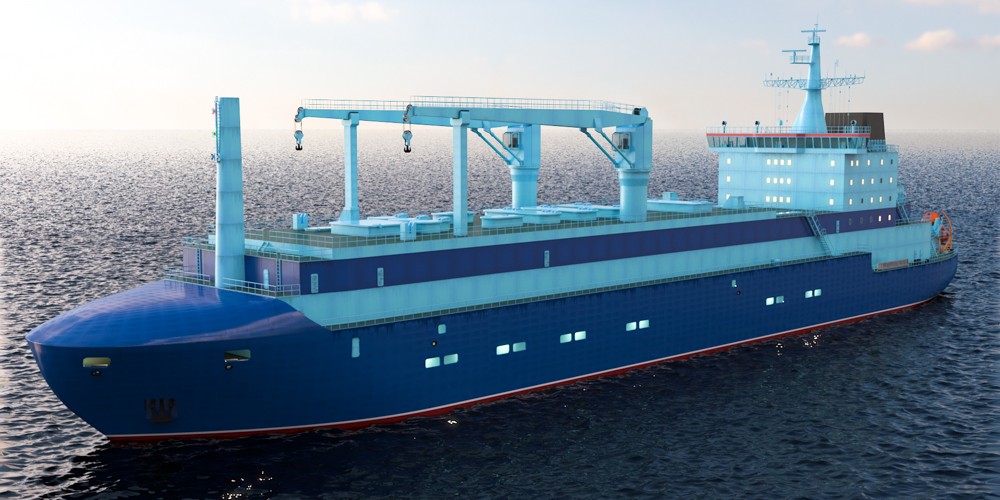
Russia’s Prime Minister Mikhail Mishustin has signed the decree granting 12,4 billion rubles to build a transport- and maintenance ship for spent nuclear fuel and radioactive waste from the country’s fleet of icebreakers.
Thomas Nilsen Barents Observer, 11 Jan 23
Not since Soviet days has more nuclear-powered icebreakers been operating at the same time in Arctic waters, the Barents Observer reported last week.
Russia has over the last few years put three brand new icebreakers of the Project 22220 class into operation. Two more are under construction in St. Petersburg and a sixth vessel recently got funding with a goal to put it into service by 2030.
Each of the new icebreakers is powered with two RITM-200 reactors, a reactor type larger than the older Arktika-class icebreakers.
New reactors require new technologies to reload nuclear fuel elements. The service vessel used by Rosatomflot today, the “Imandra”, is from 1980 and does not meet the demands of the new icebreaker fleet, larger in size and numbers.
The new service ship (Project 22770) will be nearly 160 meters long and carry its own cranes to lift in and out containers with spent nuclear fuel or fresh uranium fuel from the icebreaker reactors, either at Rosatom’s service base in Murmansk or in open sea anywhere along the Northern Sea Route………………….. more https://thebarentsobserver.com/en/nuclear-safety/2023/01/arctic-nuclear-waste-ship-gets-funding
GUSTAFSON: Russian nuclear power – unsanctioned – is prospering worldwide
INTELLINEWS, By Professor Thane Gustafson in Washington January 8, 2023
As the Western nuclear industry flounders, Russia’s Rosatom is building nuclear power plants (NPPs) on time and under budget around the world, while selling uranium to the US……………….
Russia’s nuclear industry is thriving, thanks mainly to its international business. According to Aleksey Likhachev, CEO of Rosatom, Russia’s nuclear monopoly, Russia is currently at work on 23 nuclear power units in a dozen different countries, including China, India, Belarus, Turkey, Hungary and Egypt. It sold $10bn worth of products abroad in 2022, a 15% increase on the year before, and its current foreign order book stands at over $200bn. Rosatom is actively courting new customers, mostly in the developing world; it offers a “full service” package that covers construction and operation, as well as the supply and reprocessing of nuclear fuel. The Russian government actively supports Rosatom with low-interest financing. In short, Russian nuclear power is on a roll.
But that is not all. In addition to building and operating new NPPs, Rosatom exports enriched uranium to numerous countries around the world, including the US and Europe. (In addition, Rosatom provides services to five EU counties that operate Russian-built NPPs.) Even though the revenues are not comparable (only about $1bn per year), the fuel exports are key politically. Because of this dependence, Russia’s nuclear industry is not under Western sanctions (as discussed further below), and it is not likely to be so any time soon. At this moment, Rosatom is able to operate without impediment, both at home and abroad; one of the few sectors in the Russian economy to be able to do so.
For both the US and Europe the implications are serious. First, they will continue to depend on Russian enriched uranium for several years more, potentially weakening their common front on sanctions. (Indeed, there have already been substantial disagreements among EU members over their policy toward Russian nuclear power.)
…… . Russia should continue to hold a commanding position in nuclear power for some time to come. …..

…. Putin named a politician, Sergei Kiriyenko, (above)to head the nuclear programme. Kiriyenko had had a mixed career up to that time – including a disastrous five-month stint as prime minister that coincided with Russia’s 1998 financial meltdown – but he turned out to be a talented manager. He regathered Rosatom’s wandering assets under one roof and after seeing off the oligarchs, he brought the industry’s unruly suppliers and contractors to heel. During the next eleven years he built Rosatom into a powerhouse. In 2016, Putin rewarded him with a secret medal and a top job, as Number 2 in the Kremlin’s Presidential Administration, where he is today.
The secrecy was no accident. When Rosatom was created in 2007, it inherited both the civilian NPPs and the military weapons assets. Kiriyenko made vigorous efforts to disentangle the military wing from the civilian, but the separation proved easier to achieve on paper than in reality. Today, the civilian and the military parts of Rosatom remain connected at the hip, as many parts of the nuclear supply chain, beginning with the mining of uranium, serve both military and civilian customers inside Russia.
But the military part was (and is) funded directly by the government, while the civilian part was supposed to be self-supporting. For Kiriyenko, this was a crucial difference. He had begun with ambitious plans for expanding nuclear power inside Russia, but he soon realised that there was little domestic demand for new NPPs in an electricity sector dominated by gas, and so Kiriyenko turned his sights on the foreign market. For this he needed to persuade the international community that Rosatom had become essentially a civilian business, in other words to fashion a new “commercial” image for the company. By and large he was successful, and Rosatom owes its present prosperity largely to the international business he built.
The impact of Western sanctions
Because of its important role as a supplier of uranium and nuclear fuels to NPPs around the world, including the US, Rosatom is not under Western sanctions. The US, in particular, relies on Russia for low-enrichment uranium for its own NPPs. Although efforts are under way to develop substitutes, for the present Rosatom is simply too valuable to sanction.
But even if sanctions were to be imposed, Rosatom’s operations would be largely unaffected by them. Internally, its supply chain, which as mentioned runs from uranium mining to power plant construction and operation, depends very little on the outside. ………….
Rosatom’s international business might be somewhat more vulnerable to sanctions, but so far there is little sign of it. Only one country, Finland, has pulled out of an ongoing project with Rosatom. ………………………….
Multiple challenges ahead
Yet quite apart from sanctions, Rosatom and Russian nuclear power may face multiple challenges ahead. One of them is technological progress. …………
Russia is the only country in the world to operate nuclear-powered icebreakers and floating NPPs, both of which are powered by small reactors. The Russian experience in designing and building small reactors goes back decades to the Soviet era, and there have been multiple generations of successively improved designs. Rosatom is working on deploying them not only on nuclear icebreakers and floating platforms, but also on land.
…………………….. The key to the future of SMRs, in the longer term, will likely be so-called “Generation IV” reactors, based on revolutionary designs that break entirely from the traditional light-water-reactor technology. But Generation IV is still an immature technology, and the race for leadership in G-IV is only now getting under way.
The more proximate threat to Rosatom’s leading position is Beijing. China has a vigorous nuclear programme, which is entirely independent of Russia…………………………………………
Finally, the ultimate challenges for Rosatom may be safety and reputational risk. Ever since the Chernobyl disaster in 1986, the Russian nuclear industry has had an excellent safety record. But the Russian invasion of Ukraine raises a serious new threat. There are four NPPs operating in Ukraine – ironically, all of them of Soviet manufacture. Russian [?] missiles have already landed close to one of them, the Zaporizhzhia plant, which is located close to the current battle line between Russian and Ukrainian forces. Just who is responsible for the safety of the plant is in dispute……………for Rosatom this plan is full of risks. If the plant were damaged and there were radioactive contamination, quite apart from the further suffering this would inflict on the Ukrainian people, for Rosatom the reputational damage would be extreme.
……. The challenges ahead are real, but they will come more from technological changes and rising competition from China, than from sanctions, from which Rosatom in any case remains so far exempt. https://www.intellinews.com/gustafson-russian-nuclear-power-unsanctioned-is-prospering-worldwide-266160/
Russian computer hacking team targeted 3 USA nuclear weapons facilities
A Russian hacking team known as Cold River targeted three nuclear research
laboratories in the United States this past summer, according to internet
records reviewed by Reuters and five cyber security experts.
Between August and September, as President Vladimir Putin indicated Russia would be
willing to use nuclear weapons to defend its territory, Cold River targeted
the Brookhaven (BNL), Argonne (ANL) and Lawrence Livermore National
Laboratories (LLNL), according to internet records that showed the hackers
creating fake login pages for each institution and emailing nuclear
scientists in a bid to make them reveal their passwords.
Reuters 6th Jan 2023
https://www.reuters.com/world/europe/russian-hackers-targeted-us-nuclear-scientists-2023-01-06/
1 This Month





PLEASE OPPOSE HR 8255 AND S.3639 – bills would accelerate satellite deployment, with no environmental review or safeguards – https://ncstd5li.quorum.us/campaign/169331/
To see nuclear-related stories in greater depth and intensity – go to https://nuclearinformation.wordpress.com
-
Archives
- October 2026 (40)
- September 2026 (339)
- August 2026 (330)
- July 2026 (355)
- June 2026 (287)
- May 2026 (306)
- April 2026 (356)
- March 2026 (251)
- February 2026 (267)
- January 2026 (308)
- December 2025 (358)
- November 2025 (359)
-
Categories
- 1
- 1 NUCLEAR ISSUES
- business and costs
- climate change
- culture and arts
- ENERGY
- environment
- health
- history
- indigenous issues
- Legal
- marketing of nuclear
- media
- opposition to nuclear
- PERSONAL STORIES
- politics
- politics international
- Religion and ethics
- safety
- secrets,lies and civil liberties
- spinbuster
- technology
- Uranium
- wastes
- weapons and war
- Women
- 2 WORLD
- ACTION
- AFRICA
- Atrocities
- AUSTRALIA
- Christina's notes
- Christina's themes
- culture and arts
- Events
- Fuk 2022
- Fuk 2023
- Fukushima 2017
- Fukushima 2018
- fukushima 2019
- Fukushima 2020
- Fukushima 2021
- general
- global warming
- Humour (God we need it)
- Nuclear
- RARE EARTHS
- Reference
- resources – print
- Resources -audiovicual
- Weekly Newsletter
- World
- World Nuclear
- YouTube
-
RSS
Entries RSS
Comments RSS

