Russia trying to market nuclear power stations to Sri Lanka
IAEA studying plans to build nuclear power plant in Sri Lanka, Colombo Gazette, June 15, 2023
The International Atomic Energy Agency (IAEA) is studying Russia’s plans to build a nuclear power plant in Sri Lanka.
Rosatom, the Russian the State Atomic Energy Corporation will help build a nuclear power plant in Sri Lanka.
The Ambassador of Sri Lanka to the Russian Federation, Janita Liyanage, said that the project was approved by the country’s authorities and is now being studied by IAEA specialists.
According to her, there is still a discussion on making the nuclear power plant floating or building it on the ground.
Rosatom will also help train specialists who will work at the nuclear power plants…….
Sri Lanka plans to build its first nuclear power plant with technical support from Russia by 2032…………………….. https://colombogazette.com/2023/06/15/iaea-studying-plans-to-build-nuclear-power-plant-in-sri-lanka/
China and Russia building most nuclear power plants, – the main goal is to market them to developing countries
China and Russia account for 70% of new nuclear plants
Exports used as diplomatic card while Western nations fall behind
NAOYUKI TOYAMA, Nikkei staff writerJune 11, 2023
TOKYO — Russia and China are building up an outsized presence in the field of nuclear power, with the countries accounting for nearly 70% of reactors under construction or in planning worldwide.
…………………Notably, 33 of the reactors are being constructed or planned outside each respective country. Russia has the largest number of overseas reactors with 19, and despite growing opposition from Europe and the U.S. following its invasion of Ukraine, it maintains a strong global influence in nuclear power.
In April, Russian President Vladimir Putin participated remotely in a ceremony to mark the arrival of the first fuel at the under-construction Akkuyu nuclear power plant in Turkey………
Russia’s nuclear power diplomacy is extending to other countries as well. In May, Rosatom began full-scale construction on Unit 3 of the Dabaa nuclear plant in Egypt, the country’s first.
Hungarian Prime Minister Viktor Orban met with Rosatom officials this month to discuss the company’s plans to build a new nuclear power plant in the country’s south. Hungary opposes sanctions the European Union has imposed on Rosatom.
“Many developing countries take a positive view of Russia,” Kacper Szulecki of the Norwegian Institute of International Affairs told British scientific journal Nature Energy. Russia’s acceptance of spent nuclear fuel is also attractive to emerging countries.
Meanwhile, China is deepening its engagement with Pakistan………………………………..
China also plans to build a nuclear plant in Argentina…………………………………
The U.S., Japan and Europe are hoping to catch up using small modular reactors (SMRs), considered fourth-generation technology………………………………………..
Another issue is nuclear fuel. Uranium enrichment has become the weak link for Western nations. Enrichment facilities are limited, and Russia is the global leader for that process. In April, the U.S., the U.K., France, Canada and Japan formed a nuclear fuel alliance. While the aim is to shut out Russian fuel from Western reactors, doing so will not be easy.
https://asia.nikkei.com/Business/Energy/China-and-Russia-account-for-70-of-new-nuclear-plants
Rosatom says nuclear cleanup in Arctic done – Far from the case, says Bellona.
The nuclear cleanup in the Arctic is not done, there is still radioactive waste and spent nuclear fuel that needs securing.
Those items remaining to be cleaned up and secured include at least 11,000 spent nuclear fuel assemblies at Andreyeva Bay, a former Soviet submarine base. They also include two sunken nuclear submarines, over a dozen nuclear reactors and barrels of radioactive waste scuttled by the Soviet Navy in the Kara and Barents Seas. Issues of securing spent fuel and radioactive waste stored on nuclear icebreaker service ships likewise remain unresolved.
Russia’s state nuclear corporation Rosatom said last week that more than two decades worth of efforts to rid the Arctic of radioactive waste and spent nuclear fuel from decommissioned submarines will now come to an end. Bellona fears Rosatom is leaving undone a raft of crucial projects initiated with international support.
June 7, 2023 by Bellona
Russia’s state nuclear corporation Rosatom said last week that more than two decades worth of efforts to rid the Arctic of radioactive waste and spent nuclear fuel from decommissioned submarines will now come to an end. Bellona fears Rosatom is leaving undone a raft of crucial projects initiated with international support.
” [This work]began back in the early 2000s with the analysis of large deposits of spent nuclear fuel from nuclear submarine reactors,” said Rosatom CEO Aleksei Likhachev in remarks reported by official Russian newswire Tass “In total, thousands of tons of radioactive materials have been handled, and today we are at the finish line of this work, returning these territories to public use under strict administrative, public, and international control.”
Since the 1990s, the Bellona Foundation has been involved in discovering and documenting nuclear hazards and radiation threats in Arctic Russia and based on that experience, the organization asserts that Likhachev’s announcement is untrue — Russia is nowhere near the “finish line” in these efforts
Furthermore, Likhachev’s remarks contradict earlier statements from Rosatom that many of these cleanup operations would be ongoing until late in this decade.
“Russian authorities are backtracking on earlier statements from May last year, and confirming Bellona’s fears that these projects will not be continued or completed, says Frederic Hauge, president of the Bellona Foundation.
“The nuclear cleanup in the Arctic is not done, there is still radioactive waste and spent nuclear fuel that needs securing – both in the former marine base at Andreeva Bay and at the bottom of the Arctic seas”, says underlines Hauge.
Since the early 2000s, cleanup projects to rid the Arctic of the nuclear legacy of the Soviet Northern fleet have been ongoing in North-West Russia. These efforts were orchestrated through international cooperation between Russia and other countries and aided by large funding pledges from international donors.
These multinational efforts continued until February of 2022, when Moscow invaded Ukraine. Since then, international assistance to Moscow has been put on ice. But even then, key figures at Rosatom pledged that cleanup work would continue, nonetheless.
But Likhachev’s statement seems to put an end to that and declares victory well before the battle is finished
Those items remaining to be cleaned up and secured include at least 11,000 spent nuclear fuel assemblies at Andreyeva Bay, a former Soviet submarine base. They also include two sunken nuclear submarines, over a dozen nuclear reactors and barrels of radioactive waste scuttled by the Soviet Navy in the Kara and Barents Seas. Issues of securing spent fuel and radioactive waste stored on nuclear icebreaker service ships likewise remain unresolved.
In 2022, after Moscow launched its invasion of Ukraine, Russian authorities sought to assure their international counterparts that each of these projects would nonetheless continue, despite the withdrawal of international assistance.
Bellona had since that time been concerned that Russia, in its state of war, would fail to prioritize these critical projects, and in November the organization warned that the efforts to lift sunken Soviet submarines would at best be indefinitely postponed …………………………………
The issue of the sunken objects left by the Soviet Union will not be solved by itself. Ninety percent of that radiation from the sunken objects in the Kara and Barents seas is emitted by six objects that Rosatom has deemed urgent and targeted for lifting: two nuclear submarines; the reactor compartments from three nuclear submarines; and the reactor from the legendary icebreaker Lenin. …………….
“Why do they choose to say that the cleanup is done now – when that clearly is not the case? Rosatom has time and again underlined the importance of finishing the cleanup projects and lifting the sunken objects from the bottom of the sea, says Hauge.
“If we were to speculate, it might be that they are trying to force a renewed dialogue on financing of these projects, despite the aftermath of Russia’s invasion of Ukraine. Perhaps they are fishing for reactions from Norwegian authorities and other western governments – perhaps particularly when it comes to the sunken objects,” continues Hauge
“They know that the more delayed a decision to raise these subs is, the higher the risk of a lifting operation failing. Thus, such a statement can put pressure on former cooperation partners to reevaluate their decision to discontinue cooperation with Russia and financial support on these topics because of the invasion of Ukraine. If that is the correct interpretation, then it is a form of blackmail – nuclear blackmail,” Hauge concludes. https://bellona.org/news/nuclear-issues/2023-06-rosatom-says-nuclear-cleanup-in-arctic-done-far-from-the-case-says-bellona
Putin bribes ‘friendly nations’ with use of 24-hour ‘floating nuclear power stations’
As war rages on in eastern Ukraine, Russia’s state-owned nuclear energy company Rosatom has announced it will share floating nuclear power plant (FNPP) technology only with “friendly nations” to help supply electricity.
By ALESSANDRA SCOTTO DI SANTOLO 29 May 23
Russia will supply floating nuclear power plant (FNPP) technology to enable around-the-clock supply of electricity to remote areas of allied countries, the Kremlin-linked energy company announced…………………………………………………….. more https://www.express.co.uk/news/world/1775103/putin-floating-nuclear-power-plant-rosatom-russia—
Russia moves ahead with deployment of tactical nuclear weapons in Belarus
ABC 26 May 23
Russia has moved ahead with a plan to deploy tactical nuclear weapons in Belarus, whose leader said the warheads were already on the move, in the Kremlin’s first deployment of such bombs outside Russia since the 1991 fall of the Soviet Union.
Key points:
- The plan for the nuclear deployment was announced by Mr Putin in March
- The US has warned that use of chemical, biological or nuclear weapons in the conflict would be met with “severe consequences”
- The US believes Russia has around 2,000 tactical nuclear warheads
The US State Department denounced the deployment plan but said Washington had no intention of altering its position on strategic nuclear weapons and had not seen any signs Russia was preparing to use a nuclear weapon.
Russian President Vladimir Putin says the United States and its allies are fighting an expanding proxy war against Russia after the Kremlin chief sent troops into Ukraine 15 months ago.
The plan for the nuclear deployment was announced by Mr Putin in an interview with state television on March 25.
“The collective West is essentially waging an undeclared war against our countries,” Mr Putin’s defence minister, Sergei Shoigu, said at a meeting with his Belarusian counterpart in Minsk, according to Russia’s Defence Ministry……………………………………………………………….
Russia’s tactical nuclear weapons superiority
Tactical nuclear weapons are used for tactical gains on the battlefield, and are usually smaller in yield than the strategic nuclear weapons designed to destroy US or Russian cities.
Russia has a huge numerical superiority over the United States and the NATO military alliance when it comes to tactical nuclear weapons: the United States believes Russia has around 2,000 such working tactical warheads.
The United States has around 200 tactical nuclear weapons, half of which are at bases in Europe…………………………………….
The Treaty on the Non-Proliferation of Nuclear Weapons, signed by the Soviet Union, says that no nuclear power can transfer nuclear weapons or technology to a non-nuclear power, but it does allow for the weapons to be deployed outside its borders but under its control. https://www.abc.net.au/news/2023-05-26/russia-moves-ahead-with-deployment-of-tactical-nuclear-weapons/102395632
Russian vessel attacked by Ukrainian sea drones off Bosporus
The navy ship, which was patrolling the TurkStream gas pipeline, destroyed all of the incoming drones, the Russian military says
The Russian Navy reconnaissance ship, ‘Ivan Churs’, has fended off an attack by three unmanned speed boats launched by the Ukrainian military, the Defense Ministry claimed on Wednesday.
The vessel was targeted by the drones in the early morning in Türkiye’s exclusive economic zone, some 140km (86 miles) to the northeast of the Bosporus Strait, the ministry’s spokesman, Lieutenant General Igor Konashenkov, said during a daily briefing……………………
Over the course of the ongoing conflict, Ukraine has repeatedly used sea drones in order to strike Russia’s Black Sea Fleet. The latest attack is the most long-range, with previous attempts targeting warships stationed at the port of Sevastopol on the Russian Crimean Peninsula. The attacks, however, have been unsuccessful, with the unmanned speedboats detected and destroyed during approach, or becoming caught in the harbor’s protective netting. https://www.rt.com/russia/576839-russian-vessel-ukrainian-drones/
Russia Issues Dire Warning After US Approves Ukrainian Strikes On Crimea
BY TYLER DURDEN, MAY 23, 2023 https://www.zerohedge.com/markets/russia-issues-dire-warning-after-us-approves-ukrainian-strikes-crimea
Russia has issued another stern warning related to further potential Ukrainian attacks on Crimea. “Strikes on this territory are considered by us as an attack on any other region of the Russian Federation. It is important that the United States is fully aware of the Russian response,” Moscow’s ambassador to the US, Anatoly Antonov, warned Sunday.
This was in response to an earlier weekend statement by US National Security Advisor Jake Sullivan to CNN. He said while speaking from the G7 summit in Japan over the weekend, “we have not placed limitations on Ukraine being able to strike on its territory… What we’ve said is that we won’t enable Ukraine with US-systems to attack Russia. And we believe Crimea is Ukraine.”
However, the US has consistently denied that it has OK’d Ukraine using US-supplied advanced weaponry to mount such attacks.
Antonov further stated on Telegram in response that “the unconditional approval of strikes on Crimea using American and other Western weapons” alongside the move among Western allies to supply Ukraine with jets “clearly demonstrate that the United States has never been interested in peace.”
He warned the US administration against “thoughtless judgments on Crimea, especially in terms of ‘blessing’ the Kiev regime for air attacks” on the peninsula.
Per Russian state media, other Kremlin officials weighed in even more forcefully, warning that even nuclear disaster could be the result:
Sullivan’s remarks likewise triggered outrage from Crimean Deputy Prime Minister Georgy Muradov, who opined that by allowing Ukraine to use US-made planes to target the peninsula, the White House had “agreed to unleashing a nuclear war.”
The official recalled that Crimea hosts Russia’s Black Sea Fleet. “An attack on one of the pillars of Russia’s strategic security legally obliges our country to use all available means to prevent it from being undermined.”
Russia has also recently accused Ukrainian forces of using UK-supplied long range rockets which are capable of hitting inside Russia.
This is also a cause for concern in terms of possible Russia-NATO direct escalation: “Storm Shadow missiles, which have a range of more than 250 kilometers, give Ukraine the capacity to strike well behind Russian front lines and as far as Moscow-occupied Crimea,” US state-funded RFERL underscores, while adding that “British media reports said Kyiv had promised not to use the missiles to strike inside Russia’s territory.”
Russia warns about nuclear power war risk
The involvement of the country members of the North Atlantic Treaty Organization in the Ukrainian conflict, increases the risk of a war between the nuclear powers, Russian Foreign Minister Sergei Lavrov warned.
https://www.plenglish.com/news/2023/05/24/russia-warns-about-nuclear-power-war-risk/ May 24, Luis Linares Petrov
NATO nations are rightfully directly involved in the conflict on Kiev’s side, and such an irresponsible line of behavior seriously raises the risk of a direct confrontation between nuclear powers,” Lavrov said during the 11th International Meeting of Senior Security Representatives.
The official added that the West must abandon the attempts to marginalize the United Nations Organization.
“In the interest of reducing international tension, we call on Washington and Brussels to stop making unilateral decisions, undertaking attempts to marginalize the UN and creating structures outside of it with a limited number of members that lack legitimacy, but seeking to dominate everyone else,” he said.
Lavrov went on to note that Western countries deliberately provoke inter-state and inter-ethnic conflicts in Africa, Latin America and the Caribbean.
In line with colonial practices, they intend to continue exploiting the resources of the African continent, and the United States continues to view Latin America and the Caribbean as its “back yard”, and reacts nervously when these countries pursue independent and autonomous policies, Lavrov said.
Russia evacuates nuclear munitions due to incursion from Ukraine into Belgorodoblast-Ukraine’s Intel
https://euromaidanpress.com/2023/05/22/russia-evacuates-nuclear-munitions-due-to-incursion-from-ukraine-into-belgorod-oblast-ukraines-intel-spox/ Russian authorities have urgently evacuated a nuclear munitions storage facility in the Belgorod oblast (western Russia) following the incursion of the Legion “Freedom for Russia” and RDK (Russian Volunteer Corps) from Ukraine into the Belgorod region, Ukraine’s Intelligence spox Andrii Yusov said.
On 22 May 2023, in the morning, a Russian border crossing in the Belgorod oblast was reportedly destroyed by artillery shelling from the territory of Ukraine. After that, the incursion of troops supported by armored vehicles from Ukraine into the Belgorod oblast began.
The Russian military unit no. 25624, located in the Grayvoron district of the Belgorod oblast, is a part of Russia’s Strategic Missile Forces. It is an “Object C,” which is the conventional name for Russia’s central nuclear weapons storage base, Ukrainska Pravda reported.
The Legion “Freedom for Russia” and RDK (Russian Volunteer Corps), which allegedly comprise Russian citizens who decided to fight on the side of Ukraine and joined the International Legion of Ukraine’s Armed Forces, claimed its fighters crossed the Russo-Ukrainian border and entered the Belgorod oblast from the territory of Ukraine.
The Legion “Freedom for Russia” and RDK announced on their official Telegram channels that their troops advanced deep into the Russian territory and engaged with Russia’s forces in several towns in Belgorod oblast, namely Kozinka, Gora-Podol, and Grayvoron (the latter being around ten kilometers from the Russo-Ukrainian border), and called on residents of the Russian border regions to stay at home and “not resist.” Shortly after this, locals in Grayvoron started to report gunfire in their town.
Russia’s Atomflot added to U.S. sanctions list
FSUE Atomflot, the maintenance base for Russia’s fleet of nuclear-powered icebreakers, can no longer buy products from, or do business with, U.S. or European Union entities.
By Thomas Nilsen Barents Observer 21 May 23
Located two short kilometers north of Murmansk, FSUE Atomflot was for three decades a major receiver of grants from Norway, the United Kingdom, the United States and the European Union. Millions of Euros dedicated to nuclear- and radiation safety projects have helped Russia improve infrastructure and technology at this civilian site that partly has served as a transshipment hub for spent nuclear fuel from dump sites on the Kola Peninsula.
The United States on Friday announced FSUE Atomflot being added to the sanctions list, a move following a similar decision previously undertaken by the European Union in February………………………………………………. more https://thebarentsobserver.com/en/arctic/2023/05/atomflot-added-us-sanctions-list
Russia ‘very unlikely’ to use nuclear weapons, US intel chief
By Phil Stewart and Idrees Ali
WASHINGTON, May 4 (Reuters) – Russia is very unlikely to use its nuclear weapons, the top U.S. intelligence official said on Thursday, despite past saber-rattling from the Kremlin and the heavy casualties that eMoscow is enduring in its invasion of Ukraine.
“It’s very unlikely, is our current assessment,” Director of National Intelligence Avril Haines told the Senate Armed Services Committee.
Nuclear tensions between Russia and the United States have increased since the start of the conflict with Ukraine with Putin repeatedly warning that Russia is ready to use its nuclear arsenal if necessary to defend its “territorial integrity.”
In February, Putin announced Russia was suspending its participation in the New START treaty, the last remaining nuclear arms pact with the United States, which limits the number of strategic warheads each side can deploy.
Haines did not elaborate on the U.S. intelligence community assessment.
U.S. officials for months have said they have not seen signs Russia was preparing to employ nuclear weapons but also cautioned that they were staying vigilant.
…………………………………… Last week the Kremlin played down the idea that Russia might be preparing to carry out a nuclear weapons test, saying all nuclear states were abiding by a moratorium on the testing of nuclear weapons. https://www.reuters.com/world/europe/russia-very-unlikely-use-nuclear-weapons-us-intel-chief-2023-05-04/
The dangers of nuclear escalation have not receded
Putin would use a tactical weapon if pushed
1ai news, 3rd May, Keir A. Lieber Keir Lieber is the Director of the Center for Security Studies and Security Studies Program, and Professor in the School of Foreign Service and Department of Government at Georgetown University.
Since the Cuban missile crisis, the idea of all-out nuclear war in Europe has been almost unthinkable. And many Western commentators have dismissed Putin’s recent threats of nuclear blackmail as scare tactics. But we should not be so confident in our assessment argues nuclear expert Keir Lieber. If the West doesn’t tone down it’s rhetoric of a decisive military victory against Russia, we could be heading for catastrophe in Europe.
Many analysts believe that the danger of Russian nuclear weapons use against Ukraine or NATO has receded. Occasional escalatory threats by Russian President Vladimir Putin have been largely dismissed as scare tactics by Western officials, who remain confident that nuclear deterrence will hold under most plausible circumstances.
Such confidence is misguided. Both strategic logic and international history suggest that Putin is likely to use nuclear weapons if he faces the prospect of a devastating defeat in the Ukraine war or a future conflict with NATO. Specifically, if Putin perceives an existential threat to his regime, then he will be compelled to prevent that outcome – even if it requires taking risky escalatory steps, including the use of tactical nuclear weapons on the battlefield. Nuclear weapons are the ultimate tools of last resort; any rational leader would consider using them if his or her regime or life were on the line.
Of course, Russia’s poor military performance in Ukraine makes a future direct attack by Russia on a NATO country seem unlikely. But that same conventional military weakness explains the danger of Russian nuclear escalation in both the current war in Ukraine and any conflict with NATO, if one were to occur.
The brutal fate of leaders like Saddam Hussein and Muammar Gaddafi, who lost wars to superior adversaries without having a nuclear option, looms large…………………………………………………………………………………………………
Both strategic logic and international history suggest that Putin is likely to use nuclear weapons if he faces the prospect of a devastating defeat in the Ukraine war
The only wise response to Putin’s nuclear use in Ukraine would be to negotiate some kind of resolution in which all parties could declare Potemkin victories. If that is the path we are heading down, the United States and its allies should dial-down any rhetoric about achieving decisive victory and, instead, find a solution before nuclear weapons are used.……………. https://iai.tv/articles/the-dangers-of-nuclear-escalation-have-not-receded-keir-lieber-auid-2470
Return to Russia: Crimeans Tell the Real Story of the 2014 Referendum and Their Lives Since — RADIATION FREE LAKELAND

Originally posted on In Gaza: Crimeans gather with Russian national and Crimea flags in Sevastopol, Crimea, March 14, 2018. Alexander Zemlianichenko | AP Eva Bartlett traveled to Crimea to see firsthand out how Crimeans have fared since 2014 when their country reunited with Russia, and what the referendum was really like. October 9, 2019, Mint…
Return to Russia: Crimeans Tell the Real Story of the 2014 Referendum and Their Lives Since — RADIATION FREE LAKELAND
SIMFEROPOL, CRIMEA — In early August I traveled to Russia for the first time, partly out of interest in seeing some of the vast country with a tourist’s eyes, partly to do some journalism in the region. It also transpired that while in Moscow I was able to interview Maria Zakharova, spokeswoman of the Foreign Ministry.
High on my travel list, however, was to visit Crimea and Donetsk People’s Republic (DPR) — the former a part of Russia, the latter an autonomous republic in the east of Ukraine, neither accurately depicted in Western reporting. Or at least that was my sense looking at independent journalists’ reports and those in Russian media.
Both regions are native Russian-speaking areas; both opted out of Ukraine in 2014. In the case of Crimea, joining Russia (or actually rejoining, as most I spoke to in Crimea phrased it) was something people overwhelmingly supported. In the case of the Donbass region, the turmoil of Ukraine’s Maidan coup in 2014 set things in motion for the people in the region to declare independence and form the Donetsk and Lugansk People’s Republics.
In March 2014, Crimeans held a referendum during which 96 percent of voters chose to join Russia. This has been heavily disputed in Western media, with claims that Crimeans were forced to hold the referendum and claims of Russian troops on the streets “occupying” the peninsula.
Because Western media insisted the referendum was a sham held under duress, and because they bandy about the term “pro-Russian separatists” for the people of the DPR, I decided to go and speak to people in these areas to hear what they actually want and feel.
From the Russian mainland to the Crimean Peninsula………………………………………………………………
In the evening, we stay in the home of Vlad’s friend Tata, a Russian woman who moved to Crimea in 2012.
Since there was so much hype in Western media about a Russian takeover of the peninsula, I ask the burning questions: Were Crimeans forced to take part in the referendum? What was the mood like around that time? Tata replies:
“I never saw so many people in my life go out to vote, of their own free will. There was a period before the referendum, maybe about two months, during which there were two holidays: International Women’s Day, March 8, and Defender of the Fatherland Day, February 23.
……………………………………………………………I never saw tanks, I never saw Russian soldiers. I never saw any of that in the city.”
I ask Tata about how life had changed after the referendum:………………………………….
After the Soviet Union collapsed, it wasn’t the will of the Crimean people to join Ukraine. People were always Russian here; they always identified as Russian. Ukraine understood this well, and put nothing into Crimea, as punishment. Ukraine didn’t build any hospitals, kindergartens or roads.
In the past four years, the Crimean government has built 200 new kindergartens. This is the most obvious example of how things have improved. They also built the new Simferopol airport.
I worked in aviation. It took three years to build an airport of this standard in Yekaterinburg, Russia. It took half a year in Simferopol.”
International Jazz Festival……………………………………………………….
Construction everywhere……………………………………….
I remark on how kind and gentle people are here, as in Russia. Vlad replies:
“It shouldn’t be surprising — people are people anywhere. But Western media conditions us with stereotypes of Russians as cold and hard, vilifying an entire nation.”
The coastal city of Yalta lies further west along the peninsula. The drive there the following day is more beautiful still, the road flanked by mountains to one side, hills cascading down to the Black Sea on the other, endless wineries and, before Yalta itself, the stunning cliff-top castle known as “Swallow’s Nest.”
In the evening, we stay in the home of Vlad’s friend Tata, a Russian woman who moved to Crimea in 2012.
Since there was so much hype in Western media about a Russian takeover of the peninsula, I ask the burning questions: Were Crimeans forced to take part in the referendum? What was the mood like around that time? Tata replies:
“I never saw so many people in my life go out to vote, of their own free will. There was a period before the referendum, maybe about two months, during which there were two holidays: International Women’s Day, March 8, and Defender of the Fatherland Day, February 23.
Normally, people would go away on vacation during these holidays. But that year, Crimeans didn’t go anywhere; they wanted to be sure they were here during the referendum. We felt the sense of a miracle about to happen. People were anxiously awaiting the referendum.
There were military tents in the city, but they were not erected by the military, but by local men. They would stand there every day, and people could come and sign a document calling for a referendum.
I went one day and asked if I could add my name but I couldn’t, because I have a Russian passport. Only Crimean citizens could sign it. This was the fair way to do it.
At that time, my husband was in America. One day, he was watching CNN and got scared and called me because he saw reports of soldiers in the streets, an ‘invasion’ by Russia.
The local navy came from Sevastopol to Yalta and anchored their ships off the coast, made a blockade to ensure no larger Ukrainian or other ships could come and attack.
But I never saw tanks, I never saw Russian soldiers. I never saw any of that in the city.”
I ask Tata about how life had changed after the referendum:
When I came here in December 2012, everything was dilapidated and run down. The nice roads you were driving on, they didn’t exist when we were a part of Ukraine. I didn’t understand why Crimea was still a part of Ukraine. It was Russian land ever since the Tsars, the imperial time of Russia. This is where the Russian soul is, and the soul of the Russian navy.
After the Soviet Union collapsed, it wasn’t the will of the Crimean people to join Ukraine. People were always Russian here; they always identified as Russian. Ukraine understood this well, and put nothing into Crimea, as punishment. Ukraine didn’t build any hospitals, kindergartens or roads.
In the past four years, the Crimean government has built 200 new kindergartens. This is the most obvious example of how things have improved. They also built the new Simferopol airport.
I worked in aviation. It took three years to build an airport of this standard in Yekaterinburg, Russia. It took half a year in Simferopol.”
Finally, after night falls, we drive into the city of Koktebel, where an annual Jazz Festival is starting.
During all these hours of driving, the roads are smooth and well-trafficked, and I don’t see a single Russian military vehicle.
The next day, I walk through Koktebel, taking in the local markets brimming with produce, cheeses, and other goods, and every so often come across a streetside stand laden with fresh fruits. In the late afternoon, I walk along the sea, past packed beaches, and meet with a Crimean woman, Yaroslava, who lives in Austria but every summer returns to her beloved Crimea. She is ardently supportive of the decision to have joined Russia and spends much of her time back in Austria trying to educate people on why Crimeans wanted to be a part of Russia.
These are reasons I hear throughout my travels in Crimea: We wanted to be able to speak our native language [Russian] and be educated in that language; we wanted to be able to practice our cultural traditions; we have always been a part of Russia and we wanted to return.
Yaroslava is busy helping out with the Jazz Festival and wants to use the rest of our short time talking to help me arrange future meetings with people in Crimea. We decided to do a proper interview via Skype in the future when time allows.
I drift on to the Jazz Festival, where a talented pianist and band play beach-side to an enthusiastic crowd. Some songs later, I drift back along the beach, passing numerous musicians busking, and a pulsing nightlife that isn’t going to bed any time soon.
…………………………………As I stand to orient the map route and zoom in to look for any signs of cafes, a woman walks by me and says with a smile something with the word “shto,” which I think means “what.” When I reply in English, she laughs and flags down another woman, Yana, who speaks English well and insists she and her husband drive me.
As we drive, we chat. I ask her about the referendum, mentioning that many in the West have the notion that it was done under duress, with a heavy military presence to influence the vote. She laughs, saying: “There were no troops, no military, around us during the referendum.” She speaks of the joy of Crimeans to vote, says that maybe 98 percent of Sevastopol voters had voted in favor [it was apparently 96 percent, but close enough], and adds, “We are now under the wing of Russia.”
I ask about developments since then. She mentions the improvements in roads, also the modern trolley-buses and regular buses, the opening of kindergartens and schools, and free courses (like music) for children……………………………………..
Ukrainians in Crimea
In Simferopol anew, I meet Anastasiya Gridchina, the Chair of the Ukrainian Community of Crimea, an organization formed in 2015 whose main goals, she tells me, “are to have friendly relations between two great peoples: Ukrainians and Russians — not the politicians but the people. The second goal is to preserve inter-ethnic peace in the Republic between different nationalities.”
Gridchina explains that in Crimea there are more than 175 nationalities, just 20 less than in all of Russia, but in a very small territory. Hence the importance of preserving inter-ethnic peace. After Russians, Ukrainians comprise the second largest population in Crimea.
I ask Anastasiya whether she supported, much less participated in the referendum.
“I worked very hard in order that we could have a referendum. I live in Perevalne, the last settlement in the mountains above Alushta. There was a Ukrainian military detachment which did surrender. In February 2014, I was among a line of people standing between the Ukrainian and Russian military detachments, to prevent any bloodshed. The fear that prevailed at that time was that nationalists from Ukraine would come here and we would have massacres.
In February, there was a confrontation outside the Parliament here in Simferopol. It was organized by leaders of the Mejlis — the Crimeans Tatars. On the other side, there were some pro-Russia organizations who were protecting the Parliament. They were far less [numerous] than the Mejlis. The Mejlis were armed with sticks and knives. There were clashes and two people were killed, but thankfully it didn’t escalate beyond that.
When the news came that there would be a referendum, people relaxed. They had a chance to express their point of view and 96 percent of the population of Crimea voted for Crimea to return to Russia.”
Since she is Ukrainian, I ask Anastasiya why she wanted Crimea to join Russia:
“I’ve lived in Crimea all my life, and my language is Russian. And I know the history of Crimea, which has always been Russian territory, which has a history beginning with the Russian Empire and then the Soviet Union. So, it is Russian-speaking territory, first of all. That’s why I believe it should be in the Russian Federation, not in Ukraine.”
I ask about the claims that Russian soldiers invaded Crimea:
“Whatever they might have said about Russian soldiers forcing people to participate in the referendum, it was all lies, pure lies. We did not see any soldiers on the streets, especially on the day of the referendum.
I gave an interview to foreign journalists before the referendum. But when they published it, they changed my words. I said we were very thankful to the Russian troops that were here, that protected us from the attacks of Ukrainian nationalists prior to the referendum. But they translated it that I said ‘Please, we want Ukrainian soldiers to defend us from those Russian soldiers.’
The Russian troops that were here were not on the streets on the day of the referendum but, at the time in general, they were there to protect civilians from an attack by Ukrainians.
On the day of the referendum, there were no soldiers, no military. The only security were there to prevent any illegal actions. No military people were there, no arms, no armored personnel carriers, no military equipment, nothing. Only members of the election commission and the people voting.”
I ask whether many Ukrainian Crimeans left following the referendum:
“There were those who immediately after the referendum left Crimea for Ukraine because it was their personal wish. Nobody prevented them from going. Even the soldiers had an option: to stay and continue military service here, or to leave……………
Finally, Anastasiya gives me a message for the people outside of Crimea:
“I’d like to tell people around the world, welcome to Crimea, come here yourselves and see and hear with your own eyes and ears, to understand that all the lies you hear about Crimea, that we are oppressed or under pressure from the military…this is all lies, this is all not true.
Also, that we are not allowed to speak Ukrainian is a lie. One of the state languages is Ukrainian. Russian and Tatar are also state languages.”……………………
Next, I speak to Yuri Gempel, a member of Parliament, and the chairman of the Standard Commission on Inter-Ethnic Relations of the Parliament of Crimea.
“Crimea, under Ukraine, was robbed,” Gempel says. He continues:
“Everything was taken by the government and representatives of the ruling elite of Ukraine. For the 23 years Crimea was a part of Ukraine, they robbed Crimea. Not a single kindergarten was built in Crimea during those years. Kindergartens built during Soviet times stopped functioning.
But the main issue is that during that time, the people still felt themselves to be in Russian territory, not Ukrainian, in language, culture and in spirit. Under Ukrainian rule, Crimeans were made to speak Ukrainian, although Crimeans’ native language is Russian. People were deprived of the right to be in state service if they did not speak Ukrainian.”…………………………………………………………………………………………………………………………………
As for the claims that Russia invaded Crimea and of Russian forces intimidating voters, I believe the many people I met who denounced those claims and articulated very clearly why they wanted to join Russia, or as they say, “return to Russia.” https://ingaza.wordpress.com/2019/10/10/return-to-russia-crimeans-tell-the-real-story-of-the-2014-referendum-and-their-lives-since/
Russia is deploying nuclear weapons in Belarus. NATO shouldn’t take the bait
By Nikolai N. Sokov Bulletin of the Atomic Scientists
Nikolai N. Sokov, a senior fellow at the Vienna Center for Disarmament and Non-Proliferation, previously worked at the Soviet and Russian Ministry. April 24, 2023
In June 2022, Russian President Vladimir Putin announced a new policy of Russia deploying some of its nuclear weapons in Belarus. The nuclear sharing arrangements between Russia and Belarus represent a fundamental change in Russian nuclear policy and the European security landscape. But as is usual with changes in Russian defense policy, the story developed slowly and has been full of unnecessary intrigue with important information revealed in small portions.
More than nine months after the initial announcement, the Russia-Belarus nuclear sharing is still very much incomplete; further developments may depend on the still uncertain evolution of the ongoing Russian war against Ukraine as well as any future changes in the scope and scale of Western assistance to Ukraine. But despite the many uncertainties, some key implications of Russia’s new policy of nuclear sharing can already be anticipated—especially as regard to its consequences for strategic stability.
Slow developments, false intrigue………………………………………………………………………….
Uncertainties. Unlike NATO’s nuclear sharing, which is built around nearly 100 B-61 gravity bombs, the Russia-Belarus one will involve a mix of gravity bombs and ground-launched missiles……………………………………………………………………………………………………….
The location of the storage site(s) for the nuclear warheads is perhaps the greatest of all uncertainties surrounding the Russia-Belarus nuclear sharing……………………………
Strategic consequences. The impact of Russia’s decision to institute nuclear sharing with Belarus will have wide-ranging consequences.
For the first time since the end of the Cold War, short-range, tactical nuclear weapons have acquired a distinct military mission…………………………………………………………………………..
the Russia-Belarus nuclear sharing—which involves preparation for deployment of nuclear weapons and may eventually entail the actual transfer of Russian nuclear weapons to Belarus—is by far the boldest move by Russia because it comes supported with new capability. Moreover, if the delivery systems and warheads under these arrangements are deployed near the western border of Belarus where they are highly vulnerable, the only conceivable mode for them is to strike first. The number of nuclear weapons involved may be relatively small—perhaps only about one-third of the entire inventory of B-61 bombs—but ready to use
The message is undoubtedly addressed to the West; nuclear use against Ukraine has never even indirectly featured in any Russian statements.
……………………………………………. The seriousness of the new signal does not mean that nuclear use in Europe is an immediate threat. First, it is reserved for extreme circumstances, such as a major defeat of Russia, which would put the regime at risk. Second, it would only result from a relatively lengthy process of escalation. ………………………….
Do not respond in kind. Recent nuclear signaling and actions by Russia are clearly a step on the escalation ladder. ………………………………. The wisdom of a symmetrical, tit-for-tat response to Russia’s escalatory steps is questionable
……………………….. NATO would be better off to continue the current policy and rally international opinion against Russia’s possible nuclear use. As Allies’ defense production continues to ramp up, assistance to Ukraine will become more efficient and consequential. Escalation may be tempting, but it is both unnecessary and potentially dangerous. https://thebulletin.org/2023/04/russia-is-deploying-nuclear-weapons-in-belarus-nato-shouldnt-take-the-bait/
Russia’s political and economic winner – its nuclear exports to Western countries
West scrambles as Putin reveals his energy war trump card. Kremlin has
spread its tentacles through the US and Europe – and countries are
struggling to fight back. In an effort to punish Vladimir Putin, western
governments have hit Russia’s energy industry with a barrage of punishing
sanctions since his invasion of Ukraine.
But one sector has conspicuously
escaped their ire so far: nuclear power. Since the conflict erupted,
Russian nuclear exports are actually thought to have increased while those
of coal, oil and gas have been squeezed.
Meanwhile, despite the key role it
has played in Moscow’s takeover of the Zaporizhzhia nuclear power plant
in Enerhodar, eastern Ukraine, state monopoly Rosatom remains untouched by
western sanctions.
The reason, say experts, is the complicated nature of
nuclear supply chains – from the supply of uranium to the construction of
reactors – and the dominant role Russia currently plays in many of them.
Through its global nuclear network, Moscow can exert political and economic
pressure on friends and foes alike, the White House has warned. A new
partnership between the UK, the US, Canada, Japan and France aims to change
this. Together the five countries want to squeeze Russia’s share of
nuclear exports and “ensure Putin, nor anyone like him, can ever think
they can hold the world to ransom over their energy again,” said Grant
Shapps, the Energy Security Secretary. The group aims to become independent
from Moscow and help other countries do the same, the agreement says.
Telegraph 24th April 2023
1 This Month
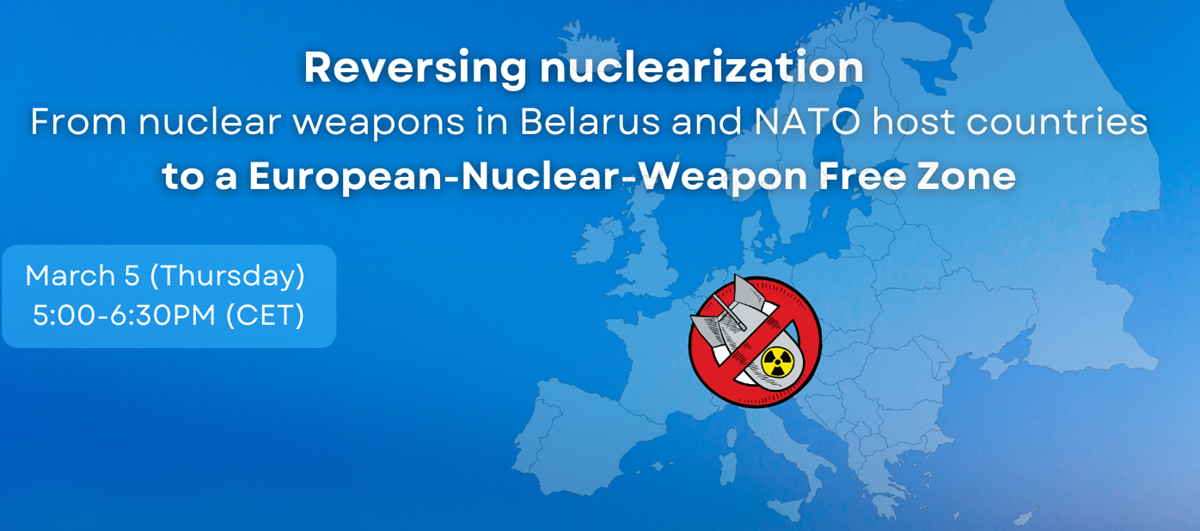
5 March -Online – Reversing nuclearization:
From nuclear weapons in Belarus and NATO host countries to a European-Nuclear-Weapon Free Zone
11am-12:30pm Eastern Time USA / 5pm-6:30pm CET

of the week – Advocating for a
nuclear free beach – https://www.samuellawrencefoundation.org/
The Samuel Lawrence Foundation advocates for a Nuclear Waste Free Beach at San Onofre, join us and take action!
10 March A LIVE WEBINAR THE REAL EFFECTS OF NUCLEAR POWER
What the Industry Isn’t Telling Us
1:00 PM Mountain, 2 pm Central, 3 pm Eastern. Live on the Keepers of the Water Facebook page

18 March Webinar @ 1 PM EST: An Assessment of SMR Projects: The Case of Canada
register for the zoom:
https://us02web.zoom.us/webinar/register/WN_o8BIIOUvQ2ONJR1nta65DQ#/registration

of the week – STOP SMALL MODULAR REACTORS IN CANADA
To see nuclear-related stories in greater depth and intensity – go to https://nuclearinformation.wordpress.com
-
Archives
- March 2026 (51)
- February 2026 (268)
- January 2026 (308)
- December 2025 (358)
- November 2025 (359)
- October 2025 (376)
- September 2025 (258)
- August 2025 (319)
- July 2025 (230)
- June 2025 (348)
- May 2025 (261)
- April 2025 (305)
-
Categories
- 1
- 1 NUCLEAR ISSUES
- business and costs
- climate change
- culture and arts
- ENERGY
- environment
- health
- history
- indigenous issues
- Legal
- marketing of nuclear
- media
- opposition to nuclear
- PERSONAL STORIES
- politics
- politics international
- Religion and ethics
- safety
- secrets,lies and civil liberties
- spinbuster
- technology
- Uranium
- wastes
- weapons and war
- Women
- 2 WORLD
- ACTION
- AFRICA
- Atrocities
- AUSTRALIA
- Christina's notes
- Christina's themes
- culture and arts
- Events
- Fuk 2022
- Fuk 2023
- Fukushima 2017
- Fukushima 2018
- fukushima 2019
- Fukushima 2020
- Fukushima 2021
- general
- global warming
- Humour (God we need it)
- Nuclear
- RARE EARTHS
- Reference
- resources – print
- Resources -audiovicual
- Weekly Newsletter
- World
- World Nuclear
- YouTube
-
RSS
Entries RSS
Comments RSS
 nuclear-news
