Why Egypt’s new nuclear plant is a long-term win for Russia
By Marina Lorenzini | December 20, 2023
With 22 countries pledging to triple global nuclear energy production by
2050 at the COP28 climate meeting in Dubai, sincere prospects for growth in
global nuclear energy market is on the table. Nonetheless, these 22
countries largely represent ones that have minimal ties with Russia’s
nuclear exports or are seeking to decouple themselves from a current
dependency.
Many other countries are considering the option of nuclear
energy, and several will turn to Russia’s state-owned nuclear energy
company, Rosatom, to build their new reactors. Since assuming power,
Russian President Vladimir Putin has developed Russia’s nuclear industry
exports as a key piece of its energy and geopolitical portfolio. Rosatom
currently holds about 70 percent of the global export market for
construction of new nuclear power plants. According to the conglomerate’s
disclosures, its exports exceeded $10 billion in 2022, with a schedule of
upcoming international orders amounting to about $200 billion over the next
10 years.
One country in particular has embraced a partnership with
Rosatom: Egypt. In 2015, Russia and Egypt concluded an intergovernmental
agreement that led Rosatom to build a $30-billion nuclear power plant near
the Mediterranean coastal town of El Dabaa, about 170 kilometers west of
Alexandria. With four Russian-designed, 1.2-gigawatt, VVER reactor units,
the El Dabaa nuclear power plant is expected to generate more than 10
percent of total electricity production in Egypt and provide a consistent
baseload power source for 20 million people.
Bulletin of Atomic Scientists 20th Dec 2023 https://thebulletin.org/2023/12/why-egypts-new-nuclear-plant-is-a-long-term-win-for-russia/
Documents Reveal Hidden Problems at Russia’s Nuclear Powerhouse
- Flagship reactor had unusual safety event in February 2022
- Rosatom said its reactors all meet highest safety standards
By Alberto Nardelli and Jonathan Tirone, December 18, 2023
As Russian troops poured into Ukraine at the start of Vladimir Putin’s invasion in February last year, alarm was rising at a flagship Kremlin nuclear project in neighboring Belarus, just a short distance from the European Union’s border.
Engineers at Rosatom Corp. preparing a new 1,200-megawatt reactor, which was not yet connected to the power grid, to generate electricity at the Astravets Nuclear Power Plant detected a mysterious and exceedingly rare problem. Resin was seeping into the primary circuit, threatening to seize up critical components, according to internal documents of the Russian state nuclear……………………….(Subscribers only) more https://www.bloomberg.com/news/articles/2023-12-18/documents-reveal-hidden-problems-at-russia-s-nuclear-powerhouse
The Myth that Putin Was Bent on Conquering Ukraine and Creating a Greater Russia
By John J Measheimer / Substack https://scheerpost.com/2023/11/27/the-myth-that-putin-was-bent-on-conquering-ukraine-and-creating-a-greater-russia/
There is a growing body of compelling evidence showing that Russia and Ukraine were involved in serious negotiations to end the war in Ukraine right after it started on 24 February 2022 (see below). These talks were facilitated by Turkish President Recep Erdogan and former Israeli Prime Minister Naftali Bennett and featured detailed and candid discussions on the terms of a possible settlement.
By all accounts, these negotiations, which took place in March-April 2022, were making real progress when Britain and the US told Ukrainian President Zelensky to abandon them, which he did.
Coverage of these events has focused on how foolish and irresponsible it was for President Joe Biden and Prime Minister Boris Johnson to put an end to these negotiations, given all the death and destruction that Ukraine has suffered since then – in a war that Kyiv is likely to lose.
Yet an especially important aspect of this story regarding the causes of the Ukraine war has received little attention. The well-entrenched conventional wisdom in the West is that President Putin invaded Ukraine to conquer that country and make it part of a Greater Russia. Then, he would move on and conquer other countries in eastern Europe. The counter-argument, which enjoys little support in the West, is that Putin was mainly motivated to invade by the threat of Ukraine joining NATO and becoming a Western bulwark on Russia’s border. For him and other Russian elites, Ukraine in NATO was an existential threat.
The negotiations in March-April 2022 make it clear that the conventional wisdom on the war’s causes is wrong, and the counter-argument is right, for two main reasons. First, the talks were directly focused on satisfying Russia’s demand that Ukraine not become part of NATO and instead become a neutral state. Everyone involved in the negotiations understood that Ukraine’s relationship with NATO was Russia’s core concern. Second, if Putin was bent on conquering all of Ukraine, he would not have agreed to these talks, as their very essence contradicted any possibility of Russia conquering all of Ukraine. One might argue that he participated in these negotiations and talked a lot about neutrality to mask his larger ambitions. There is no evidence, however, to support this line of argument, not to mention that: 1) Russia’s small invasion force was not capable of conquering and occupying all of Ukraine; and 2) it would have made no sense to delay a larger offensive, as it would afford Ukraine time to build up its defenses.
In short, Putin launched a limited attack into Ukraine for the purpose of coercing Zelensky into abandoning Kyiv’s policy of aligning with the West and eventually bringing Ukraine into NATO. Had Britain and the West not intervened to scotch the negotiations, there is good reason to think Putin would have achieved this limited objective and agreed to end the war.
It is also worth remembering that Russia did not annex the Ukrainian oblasts of Donetsk, Luhansk, Kherson, and Zaporizhzhia until September 2022, well after the talks had ended. Had a deal been reached, Ukraine would almost certainly control a far greater share of its original territory than it does now.
It is becoming increasingly clear that in the case of Ukraine, the level of foolishness and dishonesty among Western elites and the mainstream Western media is stunning.
K-219: Russia’s Worst Submarine Ever (And a Nuclear Disaster)?

This article is all about the sinking of a ballistic missile submarine, carrying 6 nuclear missiles.
But – not a word about the radioactive pollution that must still be emanating from the undersea wreck nearly 30 years later.
The K-219 was clearly faulty and the crew did not react well to the emergency. It should be considered one of the worst submarines of all time because it carried nuclear missiles and there was a fire on board.
National Interest, Brent M. Eastwood 26 Nov 23
-219: The Worst or Most Dangerous Submarine of All Time? When it comes to figuring out what is the worst submarine of all time, it is difficult to blame the sub itself or the bad actions of the crew. Such is the case with the sinking of the Soviet submarine K-219. K-219 was a Yankee-class boomer, or ballistic missile submarine, that carried nuclear weapons.
On October 3, 1986, the K-219, with 16 R-27 nuclear missiles, sunk within 700 miles off the coast of Bermuda.
One of the missile tubes sprung a leak and seawater rushed in and blended with the missile fuel. This volatile combination made for a deadly mix that created dangerous levels of heat and gas. This is where the crew reacted slowly without the sailors exhibiting teamwork and conducting damage control.
Only one crew member moved to do something by venting the tube. A short circuit cropped up in the main power line that created a spark. Then a blast in the silo occurred that sent the missile and the warheads into the water. That’s when the sailors finally sprang into action. They battled the fire on board, eventually putting it out.
They had to shut down the nuclear reactors by hand because the control mechanisms were damaged. Three sailors died.
A Soviet ship tried to rescue the sub by pulling it to safety. But that did not work because the tow cord broke. The captain of the sub, Igor Britanov, decided to abandon ship. The sub sunk to the bottom of the ocean and the missiles were lost. The whole encounter lasted three days.
The Reagan administration even offered to help the Soviets and American officials appreciated that the Soviets informed them of the tragedy the day it happened. Fortunately, no radioactivity or nuclear explosion happened. The surviving sailors made it out and Captain Britanov was the last to leave the sub alive, in accordance with naval customs………………………………………………………………………………….
The K-219 was clearly faulty and the crew did not react well to the emergency. It should be considered one of the worst submarines of all time because it carried nuclear missiles and there was a fire on board. This made it one of the most dangerous submarines to ever float. Gorbachev feared the worst and he was correct to blame the crew. They reacted slowly to the original leak and did not check the power system before engaging the water pump.
They should have known that gas was present and that employing electrical power would be dangerous. This was one of the most hazardous maritime situations in the Cold War. The Soviets and the Americans were lucky it was not worse. https://nationalinterest.org/blog/buzz/k-219-why-russias-worst-submarine-ever-and-nuclear-disaster-207495
The Russian nuclear industry during wartime, 2022 and early 2023
Bellona has published a new report that analyze the new footing on which
Rosatom, Russia’s power state nuclear corporation, has found itself as the
the war in Ukraine grinds on. It’s clear that the putatively civilian
corporation is now a direct participant in and beneficiary of Russia’s
seizure of Ukrainian nuclear infrastructure.
In the early days of the war,
Moscow’s troops marched into Chernobyl, site of the world’s worst nuclear
accident and now the host of numerous industrial scale activities aimed at
cleaning it up. Days later, it then overran the Zaporizhzhia nuclear power
plant — Europe’s largest such facility — making it the world’s first
nuclear power station to be taken as prize as the result of an armed
attack. Click here to download the report: The Russian nuclear industry during wartime, 2022 and early 2023
Bellona 21st Nov 2023
Russia Shuts Down Nuclear Plant Reactor Unit After Malfunction
Nov 16, 2023, https://www.newsweek.com/russia-shuts-down-nuclear-reactor-malfunction-1844413
Russia has reported the shutdown of a unit at a nuclear power plant after turbine blades broke.
Rosenergoatom, which runs Russia’s nuclear power stations, said it was not clear what caused the blades to malfunction at the Leningrad nuclear power plant west of St Petersburg on Sunday.
“The main thing now is to understand the reason for the destruction of the blades. This is a new phenomenon,” Alexander Shutikov, head of Rosenergoatom, told Reuters. Repairs should be completed by December 22, he said.
The unit where the malfunction occurred was built in 2018 with a next-generation VVER 1200, a pressurised water reactor, according to the news agency.
Russia is building units of this type at the Akkuyu nuclear power plant in Turkey. They are also planned for the Paks-2 plant in Hungary. Russia has already supplied such units to Belarus.
The blades that failed were part of a 1,200-megawatt high-speed steam turbine, Shutikov told Reuters.
The turbines are produced by Power Machines, owned by Russian billionaire Alexey Mordashov who was sanctioned by the U.S. and the EU following Russia’s invasion of Ukraine.
Turbines of the same type had operated without problems since 2016 at four power units, Power Machines told Reuters.
The company said it was taking steps to restart the affected unit as soon as possible and working with specialists to investigate the causes. “Based on the results, conclusions will be drawn and compensatory measures will be determined,” the company said.
Newsweek has contacted Rosenergoatom and Power Machines for further comment via email.
Earlier this week, European Commissioner for Energy Kadri Simson said Hungary needed to reduce its reliance on Russian energy because it left the country open to influence from Russia.
Speaking during Politico’s Sustainability Future Week summit on Tuesday, Simson said it was regrettable that Hungary was proceeding with construction of the Paks-2 nuclear reactor. The work is reportedly being financed with a 10-billion euro ($11.3 billion) loan from a Russian state bank.
“Our clear request to them is that like other member states, who are still using Russian technology, that nuclear fleet, they have to prepare a plan how to diversify,” Simson said.
The European Union and other Western leaders have largely shunned Russian President Vladimir Putin, but Hungarian Prime Minister Viktor Orbán held talks with him in October.
Orbán has been keen to maintain ties with Moscow—on which Hungary is highly dependant for natural gas, oil and nuclear fuel—and has been critical of Western sanctions against Russia.
Russia test-fires ballistic missile from new nuclear sub
9 News, By Associated Press, Nov 6, 2023
The Russian military has reported a successful test launch of an intercontinental ballistic missile designed to carry nuclear warheads from a new nuclear submarine.
The report comes as tensions are soaring between Russia and the West over the fighting in Ukraine.
Adding to those tensions, President Vladimir Putin last week signed a bill revoking Russia’s ratification of a global nuclear test ban in a move that Moscow said was needed to establish parity with the United States…………………… more https://www.9news.com.au/world/russia-says-it-testfired-an-intercontinental-ballistic-missile-from-a-new-nuclear-submarine/34b2c5e9-8dfb-4455-92d9-910ce20d205e #nuclear #antinuclear #nuclearfree #NoNukes
Russia Says Intends to Continue Nuclear Test Moratorium
Moscow Times, 3 Nov 23
Russia intends to stick to a nuclear test ban moratorium despite withdrawing its ratification of the Comprehensive Nuclear Test Ban Treaty, the Foreign Ministry said Friday.
“We intend to keep the moratorium that was introduced more than 30 years ago in place,” said a ministry statement.
But any nuclear tests by the United States would “force us to do the same,” it added.
Russian President Vladimir Putin on Thursday signed off on a law revoking Russia’s ratification of the treaty.
The 1996 treaty outlaws all nuclear explosions, including live tests of nuclear weapons, though it never came into force because some key countries — including the United States and China — never ratified it……………………………………………………………
The Comprehensive Nuclear Test Ban Treaty Organization (CTBTO) has urged Russia to continue its commitment to the treaty, including the use of monitoring stations capable of detecting the slightest explosion in real-time. https://www.themoscowtimes.com/2023/11/03/russia-says-intends-to-continue-nuclear-test-moratorium-a82998
.
Fukushima plant water release: Russia follows China, suspends all Japanese seafood imports
WION News, Moscow, Russia Edited By: Srishti Singh Sisodia Oct 16, 2023,
Russia on Monday (Oct 16) suspended all Japanese seafood imports in the aftermath of Tokyo’s release of wastewater from the Fukushima nuclear plant.
Previously, China had suspended the imports, saying that Tokyo has not proved the authenticity and accuracy of the nuclear wastewater data, nor that the ocean discharge of the water is harmless to the marine environment and human health.
China was Japan’s biggest market for fish, accounting for more than $500 million worth of exports in 2022.
Japan recently released treated radioactive water into the sea from its defunct nuclear reactor in Fukushima after the International Atomic Energy Agency approved the plan. ………………………………………………
What did Russia say?
Ever since it released the treated water, Japan has faced the wrath of some nations and a number of environmentalists.
Japan has also criticised Russia for its invasion of Ukraine, while Tokyo’s relations with Beijing, which has deepened ties with Moscow, have worsened.
As reported by the news agency AFP, Rosselkhoznadzor, Russia’s body responsible for regulating agriculture products, said that as a “precautionary measure”, it was “joining China’s provisional restrictive measures on the import of fish and seafood products from Japan as of October 16, 2023”.
It added that the restrictions would remain in place “until the necessary exhaustive information to confirm the safety of seafood produce … is forthcoming”. https://www.wionews.com/world/fukushima-nuclear-plant-like-china-russia-suspends-all-japanese-seafood-imports-647527
Sunken Nuclear Submarine May Be Leaking Radiation Into The Ocean
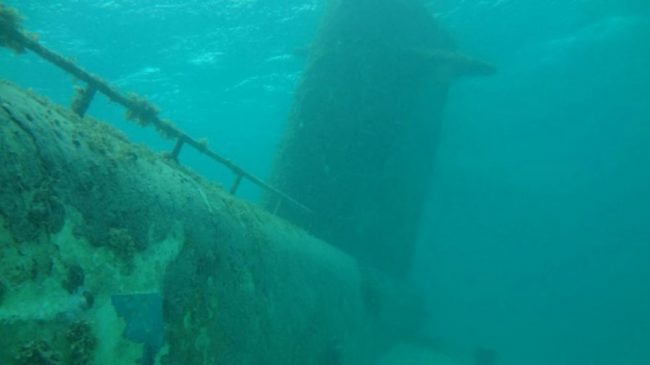
The wreckage has been resting on the seabed for over 30 years, but is it now contaminating the surrounding water?
IFL Science, DR. RUSSELL MOUL 10 Oct 23
In April 7, 1989, a Russian nuclear submarine sank off the coast of Norway after a fire broke out on board as a result of a short circuit. At the time, the sub was carrying two nuclear torpedoes which it took with it to the cold depths of the Arctic Ocean. To this day, neither the vessel nor its weapons have been recovered and, unfortunately, it seems these artifacts from the Cold War have been leaking radioactive materials ever since.
A terrible accident
The Russian K-278 Komsomolets, as the submarine was called, was a nuclear-powered attack submarine that belonged to the Soviet navy. It was commissioned in 1983 and was one of the first submarines to have a titanium hull, which allowed it to dive to much greater depths than any of her competitors – the vessel could reach depths below 914 meters (3,000 feet). The K-278 was the only one of its kind to enter into service…………………………………………………………………………
What is the legacy?
For more than 30 years, K-278 and her nuclear torpedoes have rested at the bottom of the ocean in one of the richest fishing areas in the world. In that time, the seawater has slowly corroded the vessel’s hull and the casings surrounding its nuclear warheads, which have been leaking radioactive material into the surrounding ocean.
In 2019, researchers from Norway reported that some samples taken from the water at the K-278 wreckage site had about 800,000 times higher levels of radiation than what is normal for the Norwegian Sea. The samples of radioactive cesium (cesium-137) were collected from a ventilation shaft on the sunken vessel by a Norwegian remotely
…………………….. Whether the contamination is coming from the nuclear reactor or the torpedoes remains unknown. ……………………………………………………………. https://www.iflscience.com/sunken-nuclear-submarine-may-be-leaking-radiation-into-the-ocean-71037 #nuclear #antinuclear #NuclearFree #NoNukes
Russia not looking for ‘more territory’ – Putin
“We were not the ones who organized a bloody coup in Kiev; it wasn’t us who intimidated the Crimeans and Sevastopol residents with Nazi-style ethnic purges. We weren’t the ones who tried to force the Donbass to obey using shellings and bombings. We were not the ones who threatened violence against those who wanted to speak their native language,”
Rt.com 6 Oct 23
The president stressed that the Ukraine conflict is not about expansion
The conflict with Ukraine is not driven by territorial ambitions, Russian President Vladimir Putin insisted in a speech at the Valdai International Discussion Club on Thursday.
Putin stressed that Russia is already the largest country in the world and therefore is not motivated by seeking new lands.
He noted that Russia still has a lot of work to do in developing the remote Siberian and the Far Eastern regions…….
The Russian leader insisted that a lasting peace can only be established when “everyone feels safe and knows that their opinion is respected.”
Elsewhere in his speech, Putin said that Russia was not the one that initiated the conflict in Ukraine, but is instead trying to put an end to it.
“We were not the ones who organized a bloody coup in Kiev; it wasn’t us who intimidated the Crimeans and Sevastopol residents with Nazi-style ethnic purges. We weren’t the ones who tried to force the Donbass to obey using shellings and bombings. We were not the ones who threatened violence against those who wanted to speak their native language,” Putin said, stressing that it was Kiev that used tanks and artillery to wage war against the Donbass.
Despite civilians and children being killed in Donbass long before Russia launched its military operation last year, no other countries, especially in the West, paid any attention to this or shed any tears for them, the president said.
“The war started by the Kiev regime with the active, direct support of the West is now in its tenth year,” Putin noted. “The special military operation is aimed at stopping it.”
The four-day 20th anniversary meeting of the Valdai Discussion Club has been taking place in Sochi since October 2. The end of the forum is marked by a plenary session. Its participants include politicians, scientists, and social activists, including foreign guests. https://www.rt.com/russia/584093-no-new-lands-russia/
Russia says Japan did not inform it fully about radioactive Fukushima water
#nuclear #anti-nuclear #nuclear-free #NoNukes
MOSCOW, Oct 4 (Reuters) – Russia said on Wednesday that Japan had failed to provide full information on the radioactive water being discharged from the wrecked Fukushima nuclear power plant, despite repeated requests from both Moscow and Beijing.
Japan started releasing treated radioactive water from Fukushima into the Pacific Ocean in August, and was heavily criticised by China, which immediately banned all seafood imports from Japan.
“We and China have repeatedly urged the Japanese side to show transparency and provide all interested states with full access to all information about the discharge of water from the Fukushima-1 nuclear power plant,” Russian Foreign Ministry spokeswoman Maria Zakharova said.
“Japan has not done this,” Zakharova said. “Japan has failed to properly respond to these issues and to guarantee the absence of a threat, including a long-term one.”………………….. https://www.reuters.com/world/russia-says-japan-failed-provide-full-information-about-water-fukushima-nuclear-2023-10-04/
Nuclear waste ship makes unprecedented port call at Novaya Zemlya
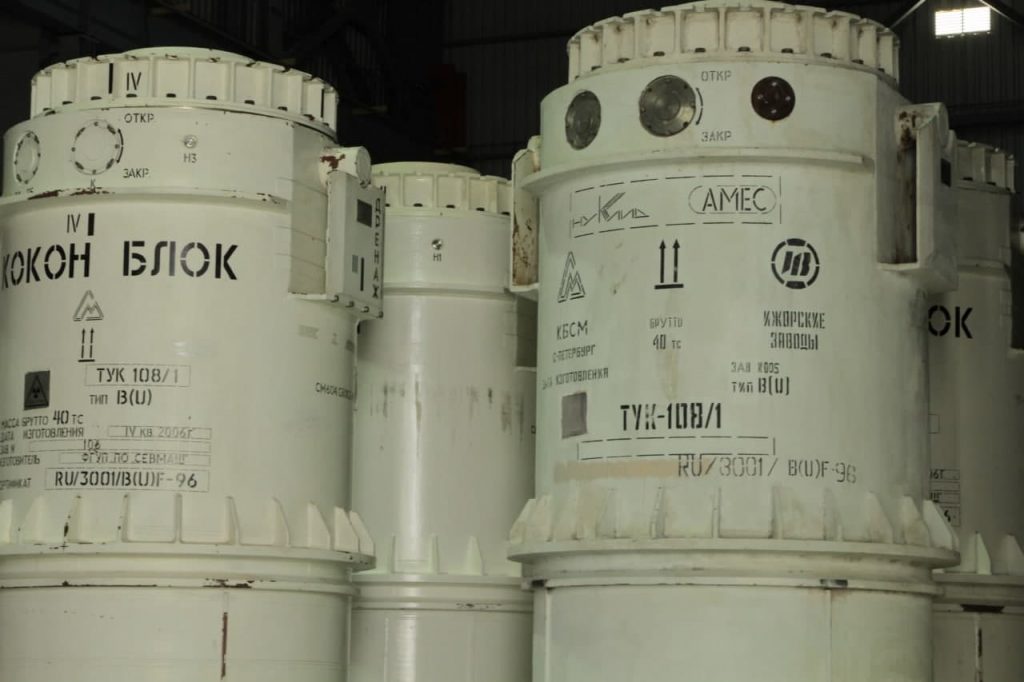
“I am deeply worried if Russia has started to move nuclear waste from the Kola Peninsula to the Arctic archipelago,” says Frederic Hauge with the Bellona foundation.
Much of the remaining uranium fuel elements in Andreeva Guba are damaged and pose special problems to handle. For that reason, the reprocessing plant in Mayak has been unwilling to receive.
Thomas Nilsen, September 29, 2023 https://thebarentsobserver.com/en/nuclear-safety/2023/09/nuclear-waste-ship-makes-port-call-novaya-zemlya
Last week, the “Rossita” could be seen on ship tracking services as it sailed outside Gremikha, a shutdown submarine base east on the Kola Peninsula. Now, the specially designed ship is moored at the pier in Severny, a military town on the shores of the Matochkin Strait diving the northern and southern islands of Novaya Zemlya
Severny is the settlement serving Russia’s nuclear weapons tests, nowadays in the form of sub-critical experiments taking place deep inside tunnels in the permafrost mountains. The last real detonation of a nuclear warhead was on October 24, 1990.
The “Rossita” was built in Italy with Italian taxpayers money. It was a helping hand from a European nation aimed to transport spent nuclear fuel from the run-down storage site in Andreeva Guba on the shores of the Litsa fjord, a short 60 km from the border with Norway.
Some 21,000 spent fuel elements from the Soviet Union’s fleet of Cold War submarines were stored. Italy’s contributions were part of a larger international cooperation to assist Russia in securing the lethal highly radioactive waste.
Other contributing nations were Norway, the United Kingdom and Sweden.
The “Rossita” shuttled between Andreeva Bay and Atomflot in Murmansk. From there, the containers with the fuel elements were sent by train to Mayak north of Chelyabinsk where Russia’s reprocessing plant is located.
With Moscow’s all-out war against Ukraine, the Western partners stopped all cooperation with Russia in regard to nuclear waste handling.
For the last 19 months, little information about what happens in Andreeva Bay has reached the public.
What is known is that two of the Northern Fleet’s most potent nuclear-powered submarines, the “Severodvinsk” and the “Kazan” of the Yasen class are moored across the bay at the piers in Nerpicha, part of Zapadnaya Litsa naval base.
“All reasons to monitor”
Frederic Hauge with the Bellona Foundation in Norway will not speculate too much about reasons Russia might have to move nuclear waste to the Arctic archipelago of Novaya Zemlya.
“What we do know is that “Rossita” is specially designed to carry TUK-18 containers modified to hold damaged spent nuclear fuel,” he says.
Much of the remaining uranium fuel elements in Andreeva Guba are damaged and pose special problems to handle. For that reason, the reprocessing plant in Mayak has been unwilling to receive.
“There are all reasons to monitor what now happens at Novaya Zemlya,” Hauge notes.
His team of nuclear experts in Oslo and Vilnius are now analyzing the limited available information with the hope of understanding what happens.
“A week ago, Rosatom’s larger carrier “Sevmorput” sailed to Novaya Zemlya. We are also told that there have been busy days at Severny and near the tunnels designed for nuclear weapons testing,” Hauge says in a phone interview with the Barents Observer.
“The big unanswered question is if what we now are witnessing is a Russia that brings dangerous nuclear waste to Novaya Zemlya for long-term storage in the permafrost.”
Andreyeva Bay cleanup slows to a snail’s pace since invasion of Ukraine

https://bellona.org/news/nuclear-issues/2023-09-andreyeva-bay-cleanup-slows-to-a-snails-pace-since-invasion-of-ukraine 18 Sept 23 Charles Digges
In 2017, Russia began a landmark project ridding one of its most dangerous Cold War relics of spent nuclear fuel and radioactive waste. The effort to clean up Andreyeva Bay — a submarine base near Murmansk uniquely positioned to contaminate the Barents Sea — was the culmination of a years-long and often strained cooperative effort between Moscow and numerous European nations, chief among them Norway and the United Kingdom.
The outbreak of war in Ukraine in February 2022 disrupted that progress and drained the project of millions in international funding as European nations suspended their contributions in protest of Moscow’s invasion.
In the early days of the war, officials with Rosatom, Russia’s state nuclear corporation, insisted they would continue Andreyeva Bay’s cleanup without international assistance, though it was unclear on what funding that would be done.
It wasn’t until Rosatom’s annual conference convened in Murmansk this past July that any news of how these projects were progressing saw the light of day. But even then, the audience a was select one. Bellona — which had attended the annual Rosatom meeting in prewar times — has only viewed the conference presentations in written form.
In fact, none of Rosatom’s former international partners whose funding has driven the Andreyeva Bay project — nations like Norway, France, the United Kingdom and others from Europe— were invited. Instead, the international delegation consisted primarily of countries like Belarus, Kirgizstan, Uzbekistan and others from the Moscow-dominated Commonwealth of Independent States.
“Most of these countries don’t know anything about the Arctic,” said Bellona’s Alexander Nikitin, who is a former member of Rosatom’s Public Council, which was disbanded when the invasion began. “They were invited so the organizers could call the event ‘international.’”
As it turns out, Rosatom hasn’t made any significant progress on the cleanup since the war estranged it from its primary international partners. The problems that remained at the Andreyeva Bay site before war broke out are the same problems Rosatom is addressing now. And where the cleanup was forecast to be completed by 2028 before the Ukraine invasion, current projections by Rosatom officials put the completion date much later.
The disruption to Andreyeva Bay and other cleanup projects threatens to turn back the clock on more than two decades of environmental progress in Northwest Russia.
History
Throughout the Cold War, the Soviet Union and the United States built more than 400 nuclear submarines, assuring each superpower the ability to fire nuclear missiles from sea even after their land-based silos had been decimated by a first strike. The fjords and coastlines around Murmansk adjacent to Norway became the hub of the Soviet Northern Fleet, and a dumping ground for radioactive waste and spent nuclear fuel.
After the Iron Curtain was drawn back, the disturbing scale of this legacy came to light. It was revealed that a storage building at Andreyeva Bay — the now notorious Building No 5 — had leaked some 600,000 metric tons of irradiated water into the Barents Sea from a nuclear fuel storage pool in 1982. The site contained 22,000 spent nuclear fuel assemblies pulled from more than 100 subs, many kept in rusted containers stored in the open air.
This slow-motion nuclear disaster continued to unfold in near secrecy until Bellona brought it to international attention in 1996, when it published a groundbreaking report on Northwest Russia’s nuclear woes.
Fearing contamination, Norway spearheaded a sweeping cleanup effort with other Western nations. Combined they spent more than $1 billion to dismantle 197 decommissioned Soviet nuclear subs that rusted dockside, still loaded with spent nuclear fuel. One thousand Arctic navigation beacons powered by strontium batteries were replaced, many with solar powered units provided by the Norwegians.
Then, six years ago, the first batches of spent nuclear fuel began their journey away from Andreyeva Bay to safer storage — a process meant to continue for another decade thereafter. By 2021, more than half of the spent fuel assemblies had been removed. Later that year, damaged spent fuel fragments lying at the bottom of Building No 5’s storage pools had also been extracted. Real progress was being made.
Progress since the beginning of the war
Since the beginning of the war, however, the tempo of removing spent fuel assemblies has nearly ground to a halt. If 2017, the first year of the removal, saw 18 batches of spent fuel transported away from the site, then in 2022, according to various reports, only two batches left Andreyeva Bay.
The disposition of solid radioactive waste at the site, which includes solid waste inside the storage buildings, also remains unclear and appears to have slowed considerably as a result of the war. As of 2022, some 9,500 cubic meters of it — or roughly 51 percent of the entire legacy waste at the site — remained in place. This waste was scheduled to depart for other storage bases, such as the Gremikha site, by 2026. Now, that’s schedule may be unrealistic.
About half of Andreyeva Bay’s infrastructure— structures like Building No 5 and Building No 3-A, to which spent fuel in Building No 5 was rushed after the 1982 leak — remains irradiated and in need of safe rehabilitation or dismantlement. But since the schedule for removing solid waste from these structures has been pushed back from 2026 to sometime in the 2030s, dates for the completion of the dismantlement are likewise unclear.
Should that ever get done, what’s left of Building No 5 will present other problems. On the whole, the building itself represents some 15,300 tons of low- to medium level radioactive waste. The two options for dealing with this are to demolish the building and bury the debris in a radioactive waste storage facility, or encasing it in a sarcophagus, not unlike the one used at Chernobyl. As with the other issues at Andreyeva Bay, no real prospective conclusion date for disposing of Building No 5 has been discussed since the outbreak of war.
This is the first in a series of articles examining the state of nuclear cleanup in Russia since the beginning of the invasion of Ukraine. charles@bellona.no
In 2023, the risky part of Andreyeva Bay nuclear cleanup starts

Donor countries agree to fund an additional study on how to extract the damaged spent nuclear fuel from Tank 3A.
https://thebarentsobserver.com/en/ecology/2017/12/2023-risky-part-andreeva-bay-nuclear-cleanup-starts by Thomas Nilsen
Read in Russian | Читать по-русски
Take a closer look at this photo and you will understand the scoop of the most challenging and risky work to be done at the Cold War storage site for submarine nuclear fuel on Russia’s Kola Peninsula. For 35 years, highly radioactive fuel assemblies have been stored in these rusty, partly destroyed steel pipes where concrete of poor quality was filled in the space between. Some of the fuel assemblies are stuck in the canisters, while some of the canisters are stuck in the cells.
Message is clear: Do not try to lift any of the assemblies before you are sure nothing falls out.
At a recent meeting in London, donor countries discussed the progress after the first nuclear fuel assemblies were shipped away from the other tanks in Andreeva Bay towards Mayak in June.
The experts all agree it is necessary to conduct a whole range of work to prepare Tank 3A for unloading. Additional €100,000 was granted for the study. Another €675,000 was granted to study another messy challenge in Andreeva Bay; the smashed spent fuel assembles on the floor of the former water-pool storage in Building No. 5, the information portal Russian Atomic Community reports.
Unloading work at Tank 2A and 2B will go on until 2023 before possible work on unloading the dangerous mess at Tank 3A can start.
Andrey Zolotkov, a nuclear expert with the environmental group Bellona says YES with capitalized letters when asked by the Barents Observer via Skype whether Tank 3A poses the biggest risk in the cleanup work.
Equal to Chernobyl
The British nuclear engineering company Nuvia has calculated the total radionuclide inventory in the three tanks to be equal to the remains of Reactor No. 4 inside the Chernobyl sarcophagus. Some 22,000 spent fuel assemblies are stored in the tanks, coming from 90-100 reactor cores powering the Soviet Navy’s Cold War submarines sailing out from the Kola Peninsula from the late 1950s till 1982. Nuvia says it is some six tonnes of fissile uranium-235 in the fuel, about two times the amount of fissile material inside the exploded Chernobyl reactor in Ukraine.
Tank 3A does also pose the highest risk for radiation doses to working personell and ways to do the job with robotics has to be developed. Nobody want people to stay too long near the destroyed assemblies and get exposed.
Another deemed challenging job ahead is to locate and secure the six damaged spent fuel elements on the floor of Building No. 5 in Andreeva Bay. The building served as a storage-pool for the spent fuel assemblies before 1982, but due to a water-leak and rusty wires, many fuel assemblies fell to the floor. That was the reason why the assemblies were hastily moved over to the tanks 2A, 2B and 3A. In that process, however, six damaged fuel assemblies and some uranium powder from others were left on the floor. Today, they pose a serious radiation hazard risk.
Funding from Europe and Canada
The nuclear cleanup work in Andreeva Bay on the Barents Sea coast is financed by the so-called Northern Window of the Northern Dimension Environmental Partnership (NDEP), a cooperative program with Russia’s State Nuclear Corporation Rosatom.
Norway has over the last two decades financed infrastructure improvements in Andreeva Bay making the removal of spent nuclear fuel possible.
The NDEP’s funded work started in 2003. Additional to the European Union, nuclear legacy cleanup work in North-West Russia is funded by Sweden, Finland, Belgium, France, Canada, Germany, the Netherlands, Norway, Italy and the United Kingdom.
Andreeva Bay is located about 55 kilometers from Russia’s border to Norway in the north.
1 This Month
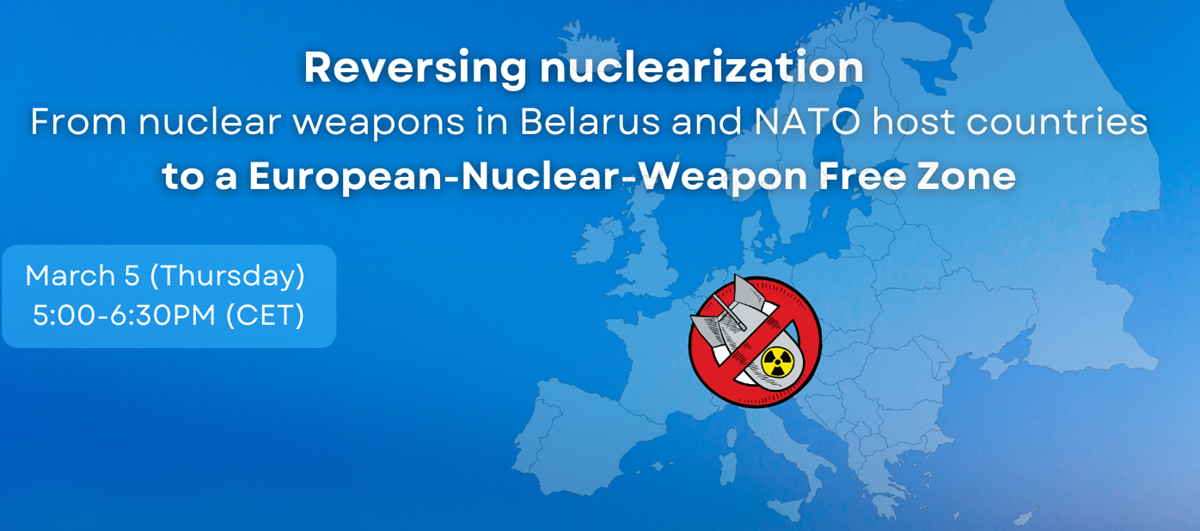
5 March -Online – Reversing nuclearization:
From nuclear weapons in Belarus and NATO host countries to a European-Nuclear-Weapon Free Zone
11am-12:30pm Eastern Time USA / 5pm-6:30pm CET

of the week – Advocating for a
nuclear free beach – https://www.samuellawrencefoundation.org/
The Samuel Lawrence Foundation advocates for a Nuclear Waste Free Beach at San Onofre, join us and take action!

10 March A LIVE WEBINAR THE REAL EFFECTS OF NUCLEAR POWER
What the Industry Isn’t Telling Us
1:00 PM Mountain, 2 pm Central, 3 pm Eastern. Live on the Keepers of the Water Facebook page

18 March Webinar @ 1 PM EST: An Assessment of SMR Projects: The Case of Canada
register for the zoom:
https://us02web.zoom.us/webinar/register/WN_o8BIIOUvQ2ONJR1nta65DQ#/registration

of the week – STOP SMALL MODULAR REACTORS IN CANADA
To see nuclear-related stories in greater depth and intensity – go to https://nuclearinformation.wordpress.com
-
Archives
- March 2026 (51)
- February 2026 (268)
- January 2026 (308)
- December 2025 (358)
- November 2025 (359)
- October 2025 (376)
- September 2025 (258)
- August 2025 (319)
- July 2025 (230)
- June 2025 (348)
- May 2025 (261)
- April 2025 (305)
-
Categories
- 1
- 1 NUCLEAR ISSUES
- business and costs
- climate change
- culture and arts
- ENERGY
- environment
- health
- history
- indigenous issues
- Legal
- marketing of nuclear
- media
- opposition to nuclear
- PERSONAL STORIES
- politics
- politics international
- Religion and ethics
- safety
- secrets,lies and civil liberties
- spinbuster
- technology
- Uranium
- wastes
- weapons and war
- Women
- 2 WORLD
- ACTION
- AFRICA
- Atrocities
- AUSTRALIA
- Christina's notes
- Christina's themes
- culture and arts
- Events
- Fuk 2022
- Fuk 2023
- Fukushima 2017
- Fukushima 2018
- fukushima 2019
- Fukushima 2020
- Fukushima 2021
- general
- global warming
- Humour (God we need it)
- Nuclear
- RARE EARTHS
- Reference
- resources – print
- Resources -audiovicual
- Weekly Newsletter
- World
- World Nuclear
- YouTube
-
RSS
Entries RSS
Comments RSS
 nuclear-news