The National goes to the UN: The fight for nuclear disarmament
1st March, By Xander Elliards
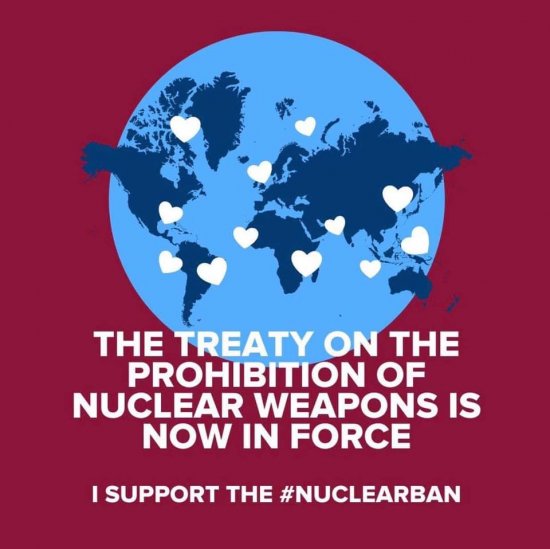
Next week will see the third Meeting of States Parties to the Treaty on
the Prohibition of Nuclear Weapons (3MSP TPNW, for short). In practice,
that means that delegates from across the globe will attend a meeting at
the UN in New York to discuss how to push for wider acceptance of a
worldwide ban on nuclear weapons. The TPNW is backed by 73 states parties,
including Austria, Ireland, New Zealand, Mexico, and South Africa, and 21
others are signatories, including Colombia, Brazil, and Barbados.
The SNP has committed an independent Scotland to signing the TPNW – but the UK,
as a nuclear power, has declined to sign it. Thanks to a partnership with
the philanthropic fund Lex International, The National will be on the
ground in New York and at the UN building as thousands of delegates from
across the globe meet to discuss how to push nuclear states like the UK
into action.
The National 1st March 2025,
https://www.thenational.scot/news/24969230.national-goes-un-fight-nuclear-disarmament/
The Guardian view on PM’s gamble: exploiting crisis to remake Labour was a step too far for an ally

Guardian 28th Feb 2025, https://www.theguardian.com/commentisfree/2025/feb/28/the-guardian-view-on-pms-gamble-exploiting-crisis-to-remake-labour-was-a-step-too-far-for-an-ally
The exit of a soft-left intellectual politician from government highlights a growing unease about the reordering of the party’s priorities.
The resignation of Anneliese Dodds, the international development minister, from Labour’s cabinet may not have been entirely unexpected. Sir Keir Starmer’s decision to cut the aid budget to “pay” for increased defence spending was wrong. Making the world’s poorest foot the bill for Britain’s security is reckless and self-defeating. Slashing aid fuels instability – it won’t buy safety. From her perch in government Ms Dodds, who was Sir Keir’s first shadow chancellor, knew this better than most.
The former cabinet minister’s letter is right to warn that the cuts will mean the UK withdrawing from many developing countries and having a diminished role in global institutions like the World Bank, the G7 and climate negotiations. She pointedly argued Britain will find it “impossible” to deliver on its commitment to maintain development spending in Gaza, Sudan and Ukraine with the shrunken budget. Sir Keir rebuffed this charge, but Ms Dodds is right to say his move is being seen as following the Trumpian lead in cutting USAid – a framing that implies the UK is losing its independent foreign policy direction.
Like many others, including this column, she understood that in an increasingly volatile world, defence spending must rise. But rather than a collective discussion on whether the government’s fiscal rules and tax policies remain fit for purpose, the prime minister chose to gut aid budgets to fund defence spending with little debate, as if stability abroad weren’t essential to security at home. Such high-handed treatment left Ms Dodds, a soft-left intellectual politician, with no choice but to resign.
Her departure had been in the air since Sir Keir made his announcement – but she held off until he returned from Washington. Sir Keir now owns the decision, and its consequences will define his leadership. That he was shaped by events rather than shaping them will not be lost on his MPs.
Clive Lewis, a leftwing Labour MP and former soldier, has called for a wealth tax to fund defence. This is a sensible idea that merits wider discussion, as does relaxing borrowing rules – a debate already under way in Europe. The party’s right wing wants to frame Sir Keir’s move as more than fiscal, briefing that Sir Keir has made a deliberate break from the party’s pro-aid stance. It is reported that the Treasury didn’t push this – it was the prime minister’s personal call. Ms Dodds’ rise and fall mirrors his hardening leadership style.
Sir Keir is seizing this crisis to remake his party. His government has embraced militarisation, welfare cuts, climate backtracking and nationalist asylum policies. The political rationale is to ward off attacks from the extreme right and particularly Reform, which has seen its support rise. Why amplify rightwing narratives instead of challenging them? If this is just tactical positioning, fine. If not, he risks losing Labour’s soul – a perilous path as concerns over the lack of good jobs, equality, child poverty and pensioner support are likely to keep growing. Labour voters may turn away if “hard-headed” geopolitics trumps fairness. The reaction from MPs and the electorate will determine whether this gamble pays off – or exposes rifts within Labour’s coalition.
‘The climate crisis is the biggest security threat of them all’: Anneliese Dodds quits government over aid budget cuts

Michael Holder, 28 February 2025
Anneliese Dodds has today quit the Cabinet over plans to raid the
international aid budget to boost defence spending, warning in her
resignation letter the decision risks damaging the UK’s interests and
undermining efforts to tackle a climate crisis that “is the biggest
security threat of them all”.
Dodds, who resigned as Minister of State for
both International Development and Women and Equalities, said while she
fully supported the government’s decision to increase defence spending, she
disagreed that the UK overseas development budget should “absorb the entire
burden”.
Business Green 28th Feb 2025,
https://www.businessgreen.com/news/4410216/climate-crisis-biggest-security-threat-anneliese-dodds-quits-government-aid-budget-cuts
Donald Trump was rude to Zelensky, but he did tell him the hard truths.

Much of what President Trump told Ukraine President Zelensky in their contentious public meeting Friday was valid…and needed to be said to achieve peace. A sampling of the truths Trump told Zelensky:
1. Ukraine must seek immediate ceasefire not more war
2. Why? The war is lost with Zelensky having “no more cards to play” to achieve his unrealistic, indeed delusional war objectives.
3. Only the US can achieve war’s end thru a negotiated peace with Russia. What Trump omitted is that this has always been America’s war simply using Ukraine proxies to fight it.
4. Ukraine is running out of soldiers, relying on old men and conscripts snatched off the street to fight a lost cause.
5. Zelensky could start WWIII with his efforts to keep war going by attacking deep into Russia.
Trump’s comments signaled a near complete break with predecessor Biden’s embrace of the weak, compliant Zelensky to fight the war to weaken Russia and keep it out of the European political economy.
Trump knows the war has nothing to do with Europe or America’s national security interests and must be ended.
If the Oval Office dustup offends people who want this war to continue indefinitely, possibly going nuclear, then by all means be outraged. But if you want to end this lost war utterly destroying Ukraine so US can weaken Russia, then join the peace community in supporting Trump’s peace initiative.
This war has put peoplekind at risk of nuclear annihilation for all 1,100 days since it began. That must end.
Small modular reactor plans edge closer, amid claims that the technology makes no economic sense
By Simon Hacker, Punchline Gloucester 28th Feb 2025
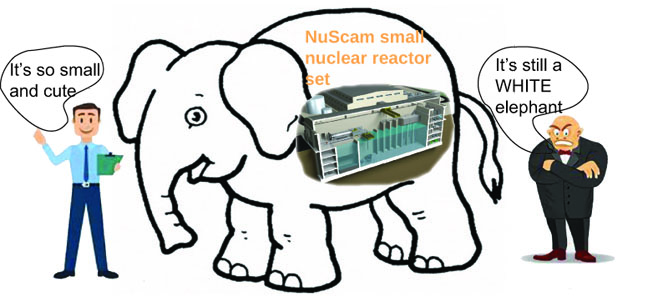
…………………………………….Dale Vince, the owner of Stroud-based green energy group Ecotricity, has
roundly condemned the technology for “defying the economic laws of
gravity”.
Speaking on his weekly Zerocarbonista podcast, Mr Vince said:
“When you come to small nukes, the government and the nuclear industry have
consistently said that we will get lower bills, but they don’t put a number
on it. They are ecomonists without numbers!
Energy minister Ed Miliband: keen to move ahead on SMR plans. Big nuclear is the most expensive electricity we have ever made, it’s off the charts compared to renewable
energy and one of the fundamental laws of physics is that the economies of
scale come by making something bigger, not by making something smaller –
it always costs money to miniaturise.
So here they are, saying we can
miniatarise nuclear reactors that famously went decades late and billions
over budget… and they’ll be cheap. I don’t believe that for a second and
what we are of course doing is proliferating the risk.”
He added: “It’s always worth imagining what it would be like if the Romans had nuclear
power. If they did, Bath would be a toxic no-go zone. It’s only 2,000 years
ago and sounds like a long time, but not in the context of toxic nuclear
waste.” Whether Berkeley and neighbouring site Oldbury-on-Severn progress
with Rolls Royce’s SMR bid, the technology’s pathway to viable commercial
models for energy production remains challenging: as of today, only China
and Russia have operational SMRs, with China’s HTR-PM pebble-bed reactor
connected to the grid and Russia’s floating Akademik Lomonosov plant
utilizing two 35MW SMRs. https://www.punchline-gloucester.com/articles/aanews/smr-plans-edge-closer-amid-claims-the-technology-makes-no-economic-sense
Rachel Reeves eyes cuts to nuclear in spending review

Energy industry insiders fear the Chancellor could target Britain’s mini-nuke programme
Matt Oliver, Industry Editor, Telegraph 28th Feb 2025
Rachel Reeves is eyeing cuts to Britain’s £20bn mini-nuclear reactor programme amid a scramble to slash government expenditure, insiders fear.
Sources believe the Chancellor is considering approving a smaller number of reactors than previously expected in an attempt to reduce the costs of the programme, which is part of wider efforts to transform Britain’s power grid.
The competition to design and build the first small modular reactors (SMRs) entered its last phase on Friday, with four finalists – Rolls-Royce, GE-Hitachi, Westinghouse and Holtec – told to submit final bids by mid-April.
It was previously suggested that up to three winners would be chosen by Great British Nuclear (GBN), the quango in charge of running the contest.
But sources said there was concern this has quietly been scaled back to a “maximum” of two – raising the possibility that only one winner will be chosen. Fewer reactors would be built overall as a result………………………………………
The Chancellor is struggling to balance the books as weak economic growth makes it harder to meet her self-imposed “fiscal rules” for borrowing.
Everything is on the table’
Industry sources said there had as yet been no suggestion that ministers had decided to scale back the SMR programme.
But the final outcome has been linked to the spending review and there remains uncertainty about how many vendors will be chosen.
One person briefed on the discussions warned: “It all comes down to the spending review. Everything is on the table.”……………………..
the nascent technology remains commercially unproven, with a string of European countries and the US all currently pursuing their own individual competitions to fund the first examples of the technology.
Scaling back Britain’s SMR programme would represent a significant retreat for Sir Keir Starmer, the Prime Minister, who this month announced plans to speed up the development of the mini reactors and vowed to “build, baby, build”.
………there are fears that Mr Miliband, the Energy Secretary, is under pressure to choose which energy schemes he will prioritise as he scrambles to deliver Labour’s promise…
………….The competition has suffered repeated delays, with ministers in the previous Conservative government originally suggesting it would be concluded last spring.
This week it emerged there had been yet another delay, with the deadline for final bid submissions moved back from the end of March to mid-April.
……………………….The Treasury was contacted for comment.
https://www.telegraph.co.uk/business/2025/02/28/reeves-eyes-cuts-to-nuclear-in-spending-review/
IAEA mission arrives at nuclear plant in Ukraine through Russia

By Reuters, March 2, 2025, https://www.reuters.com/world/europe/new-iaea-mission-arrives-russian-held-zaporizhzhia-nuclear-plant-russia-says-2025-03-01/
March 1 (Reuters) – A new monitoring mission from the U.N. nuclear watchdog arrived on Saturday at the Russian-held Zaporizhzhia nuclear power plant in Ukraine for the first time through Russian territory, a Russia-installed head of the plant said.
The IAEA rotation came after weeks of delay caused by military activity around the site with each side blaming the other for violating rules to ensure the team’s safe passage to the plant.
“It is fundamentally important that the route passed through the territory of the Russian Federation for the first time,” Yuri Chernichuk, the Russia-installed head of the Zaporizhzhia plant in southeastern Ukraine, said in a video on Telegram.
The arrival of three inspectors, he added, was ensured by Russia’s defence ministry and national guard and followed “intense” consultations between the heads of Russia’s state nuclear power company Rosatom and IAEA.
Reuters could not independently verify the report. The IAEA could not be reached outside business hours to comment on the Russian statement. There was no immediate comment from Ukraine.
UK Energy Secretary Signals China Pivot
By Irina Slav – Feb 28, 2025,
https://oilprice.com/Latest-Energy-News/World-News/UK-Energy-Secretary-Signals-China-Pivot.html
UK’s energy secretary is reportedly scheduled to travel to China next month in a bid to forge a closer relationship with the country, despite it being seen by previous governments in London as a threat to national security.
The report comes from Reuters, which spoke to unnamed sources close to Ed Miliband, who said the top energy member of the UK cabinet will discuss alternative energy sources in China. What he will not discuss, per the sources, is nuclear energy.
The UK’s Labour government is looking to mend fences with China after the last series of Conservative cabinets all demonstrated mistrust and suspicion to Beijing, in sync with the EU and the United States. However, the Starmer government has signaled it was willing to change this, diverging from the EU/U.S. course of import tariffs and accusations of national security attacks on the part of the Chinese.
In the energy sector, Chinese equipment and components are crucial for the Starmer government’s transition efforts as the country is the largest producer of things such as solar panels, wind turbines, and inverters. It is also the lowest-cost producer, ironically thanks to the amount of coal-powered generation Chinese manufacturers use to make the transition components.
The UK has some of the most ambitious transition goals in the world, aiming to generate as much as 95% of its electricity from non-hydrocarbon sources. As part of efforts to achieve this, the government has committed to doubling onshore wind energy by 2030, quadrupling offshore wind, and trebling solar power by the end of the decade.
To do this, the Starmer government would need to speed up the pace of growth in wind and solar capacity considerably. In offshore wind alone, the government would need to approve more offshore capacity in the next two annual renewable energy auctions, than it has approved in the last six auctions, the country’s grid operator warned last year.
Stop government handouts to EDF for Hinkley Point C

Roy Pumfrey, 27th February, https://www.bridgwatermercury.co.uk/your_say/postbag/24966410.letter-stop-government-handouts-edf-hinkley-point-c/
It’s been reported that EDF, under pressure from French national auditors, is still desperately looking for investors in Hinkley Point C (HPC) to replace lost top-up funding from its Chinese partner, CGN.
Despite having talks with lots of potential investors, EDF has been unable to proceed with any of them.
HPC was initially expected to cost £18 billion and to be completed in 2025, but the estimated cost has increased to roughly £46 billion in 2024 terms and the start date has been pushed back to 2029 at the earliest, possibly as late as 2031, because of construction delays.
The UK government is also trying to drum up investors for the Sizewell C (SZC) project in Suffolk.
EDF only wants to invest up to 20 per cent of the estimated cost in the project.
The government is hoping to make a final investment decision on SZC in June.
In January, France’s state auditor said EDF should not proceed with SZC until it had cut its exposure to HPC.
It seems quite likely that EDF is threatening to withdraw from SZC unless the government bails them out on HPC.
EDF has already been given an overly generous index-linked contract to supply electricity from HPC to British consumers at around £130/MWh (at today’s prices) compared to today’s cost of electricity from wind at £44MWh.
There should be no more government handouts to French government-owned EDF.
If they can’t afford to build it on such generous terms, they should stop now.
SZC would be funded in a different way to HPC, which could cost British consumers as much as £100 billion – official cost estimates do not include the cost of the finance needed to build Sizewell.
The obvious thing to do is to cancel SZC now before any more taxpayers’ money is wasted and resist pressure from EDF for us to bail them out on HPC.
Reawakening a Nuclear Legacy: The Potential Return of the US Nuclear Mission to RAF Lakenheath
Federation of American Scientists 26th Feb 2025, by Eliana Johns & Hans Kristensen, https://fas.org/publication/potential-return-of-the-us-nuclear-mission-to-raf-lakenheath/
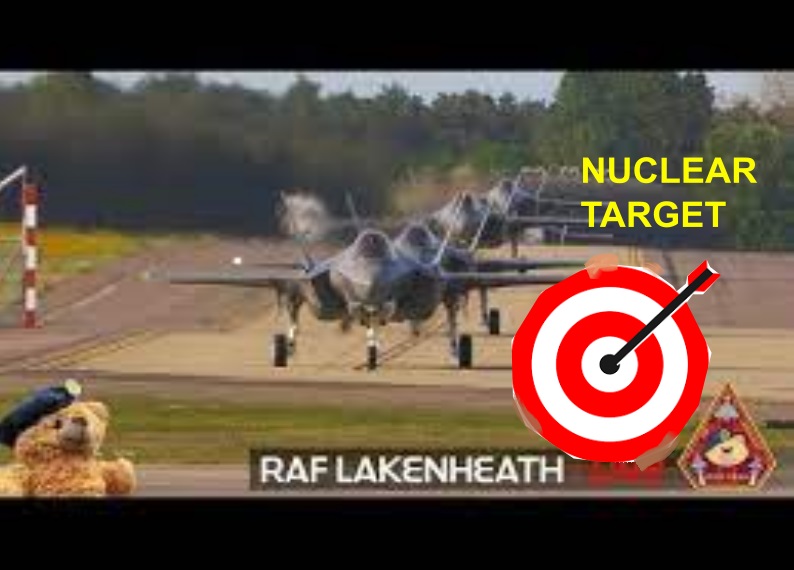
In the spring of 2022, researchers at the Federation of American Scientists began reading newly released U.S. Defense Department budget documents to look for updates concerning the Pentagon’s priorities for the next fiscal year. As the researchers poured over hundreds of pages, two words suddenly captured their attention: the Biden administration’s Fiscal Year (FY) 2023 budget request had added “the UK” to a list of countries receiving upgrades to their “special weapons” storage sites under a 13-year NATO investment program. The term “special weapons” is often used by the U.S. government when referring to nuclear weapons. However, the United States has not deployed nuclear weapons in the United Kingdom for nearly two decades. Those two words sparked dozens of questions, years of continued research, and a new local movement of protests against the return of a potential nuclear mission to RAF Lakenheath.
This new report provides an account of the nuclear history of RAF Lakenheath and the role it played in the US nuclear mission until nuclear weapons were withdrawn in 2008. The report then explains the mounting evidence from three years of collection of documentation and observations that show the United States Air Force is re-establishing its nuclear mission on UK soil for the first time in nearly two decades.
As of February 2025, there are no known public indications that nuclear weapons have been deployed to RAF Lakenheath – we assess that the return of the nuclear mission is intended primarily as a backup rather than to deploy weapons now. However, if this were to happen, it would break with decades of policy and planning and reverse the southern focus of the European nuclear deployment that emerged after the end of the Cold War. Even without weapons present, the addition of a large nuclear air base in northern Europe is a significant new development that would have been inconceivable just a decade-and-a-half ago.
Scotland can’t afford the risks of the nuclear fuel chain

Disasters might be “rare” as if that is at all comforting, but
Chernobyl and Fukushima are reminders of the consequences that nuclear can
bring. Scotland’s geography and weather conditions are, granted, somewhat
more stable than the likes of Japan – but that’s only true at this
moment in time.
We are already seeing the accelerated effects of climate
change taking hold here, and while we might be shielded to an extent for
now – we can’t guarantee that stability long term. In fact, it’s
pretty likely that stability will be eroded if we continue hurtling down
this path of climate destruction that we’re currently on, and we’re
showing no signs of slowing down. Even without potential changes to our
natural environment, the long-term risks of building a nuclear plant near
populated areas are just too high.
A major accident, however unlikely,
would have unimaginable consequences for a small country like Scotland.
Reactors themselves might not emit carbon, but nuclear energy is by no
means “clean” as it is marketed. The entire life cycle of nuclear
energy involves environmental risks that Scotland can’t afford – risks
that we simply do not need to take.
The National 27th Feb 2025, https://www.thenational.scot/politics/24967406.independence-nuclear-option-will-unlock-potential/
First shipment of 280,000 tons Aggregate arrives by rail at Cumbria low-level nuclear waste site for final capping
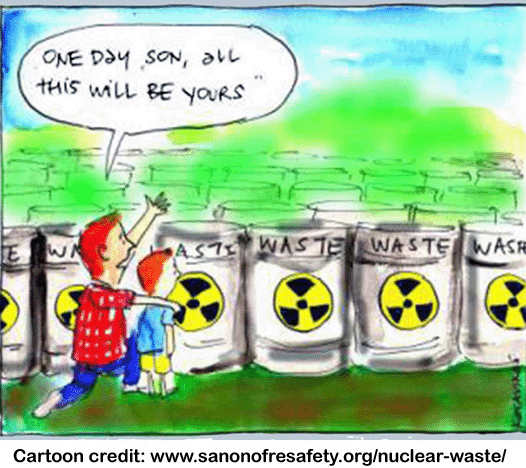
The first shipments via rail of 280,000t of aggregate by Nuclear Transport
Solutions (NTS) have been delivered to the Low Level Waste Repository
(LLWR) site in Cumbria, which will form a 100-year barrier for nuclear
wastes.
Nuclear Waste Services (NWS) is responsible for managing the
disposal of the UK’s low-level radioactive waste including at the LLWR
site. NTS is a transport and logistics provider which operated Direct Rail
Services (DRS) which transports nuclear and radioactive materials via rail.
Both NWS and NTS are part of the Nuclear Decommissioning Authority, which
itself is an executive non-departmental public body, sponsored by the
Department for Energy Security and Net Zero (DESNZ). The LLWR is the only
facility in the UK permitted to receive all categories of radioactive and
nuclear low level waste (LLW) and NWS describes it as “the nation’s
principal disposal facility for LLW”.
New Civil Engineer 26th Feb 2025, https://www.newcivilengineer.com/latest/aggregate-arrives-by-rail-at-cumbria-low-level-nuclear-waste-site-for-final-capping-26-02-2025/
Tonnes of nuclear waste to be sent back to Europe
Federica Bedendo, BBC News, North East and Cumbria, 27th Feb 2025,
https://www.bbc.co.uk/news/articles/cpwddyg7e4do
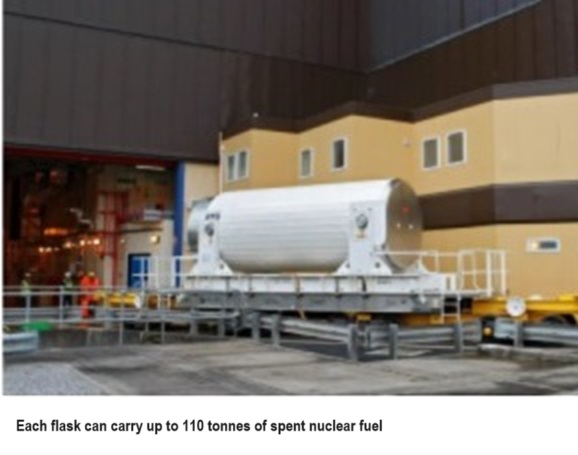
More than 700 tonnes of nuclear waste is due to be shipped to Europe as part of a project to send back spent fuel to the countries that produced it.
The Sellafield nuclear plant in West Cumbria was tasked with reprocessing the nuclear material used to produce electricity in Germany.
Seven cylindric containers, each carrying up to 110 tonnes of recycled nuclear waste, are due to make the journey to the Isar Federal storage facility by sea on a specialist vessel.
A Sellafield spokesman said the move was a “key component” of the strategy to “repatriate high level waste from the UK”.
This will be the second of three shipments from the UK to the European country.
The first shipment of six containers – known as flasks – to Biblis, was completed in 2020.
Each flask is about 20ft (6m) long, with a 8ft (2.5m) diameter.
The waste will be transported by sea on a specialist vessel to a German port, then onwards by rail to its final destination.
Letter: Hinkley Point C will be a Sellafield waste dump
By Jo Smoldon,
Burnham & Highbridge Weekly News 25th Feb 2025, https://www.burnhamandhighbridgeweeklynews.co.uk/news/24957412.letter-hinkley-point-c-will-sellafield-waste-dump/
In response to your Hinkley article around all the jobs created at Hinkley Point C, yes, of course it is good that the nuclear industry is training people to understand the nuclear sites and maybe later the nuclear process.
Nuclear, due to its very, very long-term footprint, has to be understood for thousands of years to come when the radioactive waste will need managing at high costs and high risk on this Hinkley location.
Trying to attract young people into a subject that is very antiquated in its science has been something that government and business will have to invest in forever.
Nuclear power for electricity is made by the last century science of steam driving turbines to condense to hot water.
Two-thirds of the energy produced from the reactors is thrown out in the form of hot water to be discharged into the Severn Estuary, hardly a ‘low-carbon energy’ if looked at in real terms!
What hasn’t been mentioned with all this bigging up the Hinkley site is that it will be the big Sellafield waste dump of the south, as after B station waste has been transferred to Sellafield, no more nuclear waste will move from Somerset.
Radioactive waste will remain on the North Somerset coast forever, how does that fit with the predicted sea level rise, extreme coastal events and Somerset’s regular flooding events?
IAEA Director General Statement on fire Situation in Chernobyl nuclear station

IAEA, 27 Feb 25
Two weeks after it was hit by a drone, Ukrainian firefighters are still trying to extinguish smouldering fires within the large structure built over the reactor destroyed in the 1986 Chornobyl nuclear accident, Director General Rafael Mariano Grossi of the International Atomic Energy Agency (IAEA) said today.
With unrestricted access, the IAEA team based at the site has been closely monitoring the situation following the strike early in the morning on 14 February that pierced a big hole in the New Safe Confinement (NSC), designed to prevent any potential release into the atmosphere of radioactive material from the Shelter Object covering the damaged reactor, and to protect it from external hazards………………………….
Working in shifts, more than 400 emergency response personnel have been participating in the site’s efforts to manage the aftermath of the drone strike.
“The firefighters and other responders are working very hard in difficult circumstances to manage the impact and consequences of the drone strike. It was clearly a serious incident in terms of nuclear safety, even though it could have been much worse. As I have stated repeatedly during this devastating war, attacking a nuclear facility must never happen,” Director General Grossi said……………………………………………………………………. https://www.iaea.org/newscenter/pressreleases/update-278-iaea-director-general-statement-on-situation-in-ukraine
1 This Month
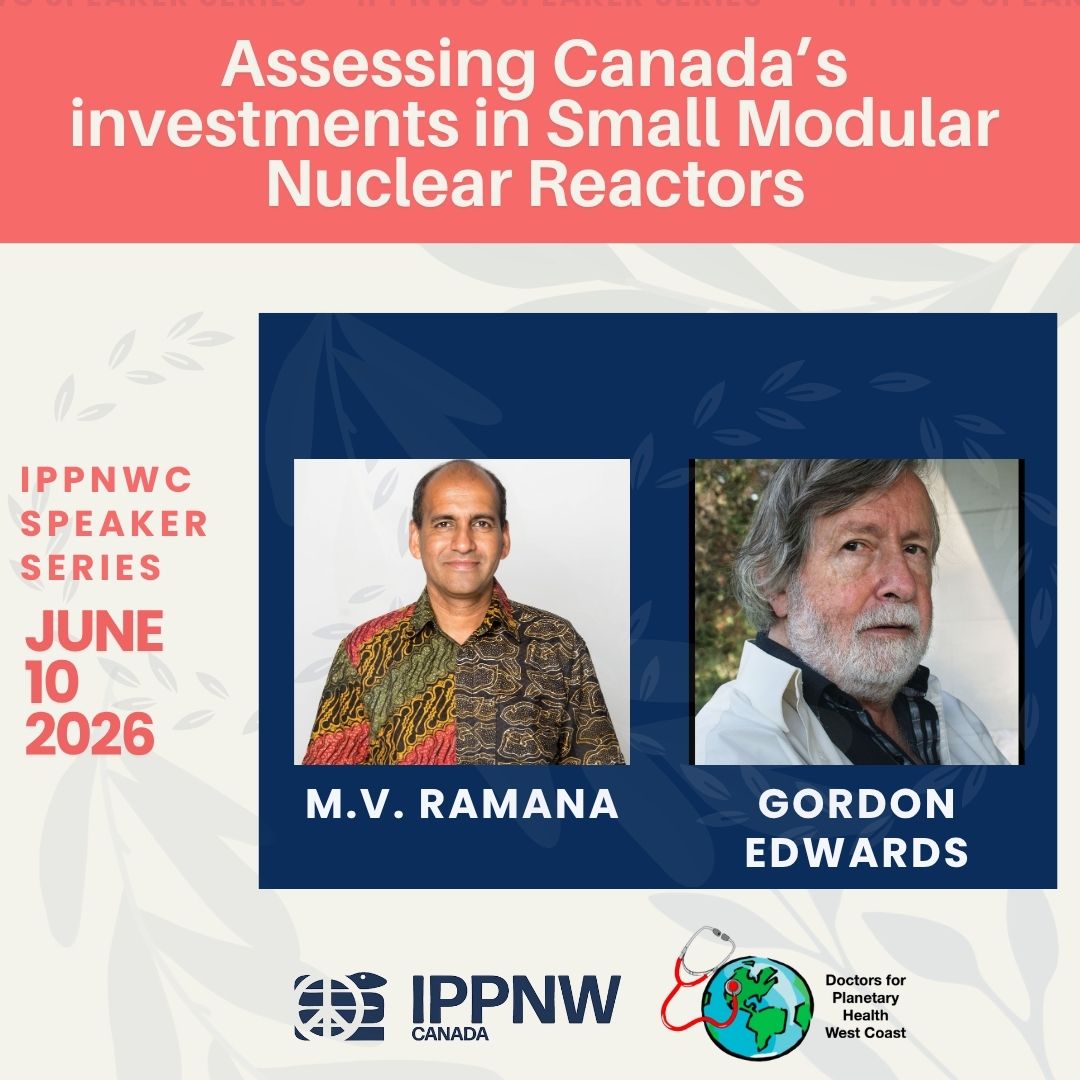
10 June – Assessing Canada’s Investments in Small Modular Nuclear Reactors – https://zoom.us/meeting/register/IiqHA5feRhaEBycOLNTJlA#/registration


Cuba Is Not a Failed State – It Is a Besieged State
PETITION: “Global Appeal to Endorse Palestinian Right of Return of Refugees”
To see nuclear-related stories in greater depth and intensity – go to https://nuclearinformation.wordpress.com
-
Archives
- June 2026 (79)
- May 2026 (306)
- April 2026 (356)
- March 2026 (251)
- February 2026 (268)
- January 2026 (308)
- December 2025 (358)
- November 2025 (359)
- October 2025 (376)
- September 2025 (257)
- August 2025 (319)
- July 2025 (230)
-
Categories
- 1
- 1 NUCLEAR ISSUES
- business and costs
- climate change
- culture and arts
- ENERGY
- environment
- health
- history
- indigenous issues
- Legal
- marketing of nuclear
- media
- opposition to nuclear
- PERSONAL STORIES
- politics
- politics international
- Religion and ethics
- safety
- secrets,lies and civil liberties
- spinbuster
- technology
- Uranium
- wastes
- weapons and war
- Women
- 2 WORLD
- ACTION
- AFRICA
- Atrocities
- AUSTRALIA
- Christina's notes
- Christina's themes
- culture and arts
- Events
- Fuk 2022
- Fuk 2023
- Fukushima 2017
- Fukushima 2018
- fukushima 2019
- Fukushima 2020
- Fukushima 2021
- general
- global warming
- Humour (God we need it)
- Nuclear
- RARE EARTHS
- Reference
- resources – print
- Resources -audiovicual
- Weekly Newsletter
- World
- World Nuclear
- YouTube
-
RSS
Entries RSS
Comments RSS
 nuclear-news