Policy Exchange launches its new high level international Nuclear Enterprise Commission today

Policy Exchange launches its new Nuclear Enterprise Commission today, which will study how the Government should combine and amplify its civil and military nuclear programmes.
The Commission will be chaired by former Cabinet Secretary Rt Hon Simon Case CVO – a leading authority on the nuclear deterrent – and will include other internationally renowned nuclear experts.
As many nuclear states seek to update their capabilities, the Commission will examine the UK’s force posture in a multipolar world, the future of the NATO Nuclear Planning Group, the US nuclear shield and tactical nuclear weapons.
The overlapping civil and military benefits of expanded nuclear capacity must be encouraged, and Policy Exchange’s Commission will address how the Government can break-out of over-regulation to get building.
The Commission will bring together internationally renowned experts on civil and military nuclear, with representation from the UK, America, Europe, and Asia. The programme will run for six months, holding public and private events and publishing Research Notes on the key themes pertaining to the nuclear enterprise.
To mark the launch of the commission, Policy Exchange today publishes two studies on the history of the UK’s civil and military nuclear programmes.
Policy Exchange 24th June 2025, https://policyexchange.org.uk/policy-exchange-launches-new-nuclear-enterprise-commission/
Why do we pretend heatwaves are fun – and ignore the brutal, burning reality?

An estimated 600 people will die as a result of this one heatwave. Those
kinds of numbers from a virus would spark at least a localised lockdown,
and in a plane crash, a national day of mourning.
But it’s hard to respond to climate fatalities proportionately without confronting global
heating and taking on the underlying inequalities that make some people
more vulnerable than others. High temperatures are much more dangerous when
you’re disabled, when you’re homeless, when you’re incarcerated, when
you’re old. It would be pretty rum to be squeezing disability benefits at
the same time as worrying about whether disabled people are at greater risk
from the weather, and need more care – better to imagine this an act of
God, in which the deaths cannot possibly be prevented.
Guardian 23rd June 2025, https://www.theguardian.com/commentisfree/2025/jun/23/why-do-we-pretend-heatwaves-are-fun-and-ignore-the-brutal-burning-reality
‘Conspicuous’ Small Modular Nuclear Reactors need fresh police funding model, security expert warns
23 Jun, 2025 By Tom Pashby New Civil Engineer 23rd June 2025
A proliferation of small modular reactors (SMRs) across England and Wales, expanding the number of reactors and types of locations they are deployed in, means the country needs a fresh police funding model for SMR security, an expert has said.
https://www.newcivilengineer.com/latest/conspicuous-smrs-need-fresh-police-funding-model-security-expert-warns-23-06-2025/
Donald Trump dominated extraordinary NATO summit that saw European defence spending increase – NATO chief calls Trump ‘Daddy’
ABC News, By Europe correspondent Elias Clure at The Hague, 26 June 25
Donald Trump was given a royal welcome by the monarch of the Netherlands as he arrived at the NATO summit in The Hague.
He left feeling like a king.
Member nations agreed to lift their defence spending to 5 per cent of GDP over 10 years and Mr Trump was quick to take credit, describing it as a “big win” for the United States.
He’d been calling for more spending and had made threats about the future of the alliance if it wasn’t agreed upon.
“They said, ‘You did it, sir, you did it sir.’ Well, I don’t know if I did it, but I think I did,” Mr Trump said.
When the commitment was finalised by members in an official summit declaration, NATO members proclaimed the summit a huge success.
But the event, which aims to hear from delegations of the 32 NATO countries and many more partners and allies, seemed to revolve around the presence of one man.
Trump insists damage was done
Mr Trump’s first official engagement at the NATO summit HQ was with Secretary-General Mark Rutte.
The president arrived at the meeting with US Defense Secretary Pete Hegseth and State Department boss Marco Rubio. The meeting began with Mr Rutte lauding America’s actions in Iran.
“The great thing is you took out the nuclear capability of Iran. This was crucial. You did it in a way which is extremely impressive. But the signal it sends to the rest of the world that this president, when it comes to it, yes, he is a man of peace, but if necessary, he is willing to use strength,” Mr Rutte said.
When the American delegation was probed by the press on the validity of the White House’s claims that Iran’s nuclear capabilities had been comprehensively demolished, it pushed back.
Mr Hegseth accused sceptics of being “politically motivated”, saying the damage was, in fact, “severe”.
Mr Rubio declared that the damage to the enrichment facilities was so bad “you can’t even find it on the map … it’s totally wiped out”.
Not to be outdone, Mr Trump then provided the most vivid description of Operation Midnight Hammer’s success, comparing the raid to the most destructive bombing in history.
“That hit ended the war. I don’t want to use an example of Hiroshima. I don’t want to use an example of Nagasaki. But that was essentially the same thing. That ended that war. This ended that war,”
Mr Trump said.
Mr Rutte watched on in silence.
NATO chief calls Trump ‘Daddy’
The NATO secretary-general has been quite transparent in his attempts to flatter the president.
Mr Trump seemed so taken by the gushing display of admiration by Mr Rutte that he leaked a text message reportedly sent to him by the alliance boss.
“Mr. President, dear Donald, Congratulations and thank you for your decisive action in Iran, that was truly extraordinary, and something no one else dared to do. It makes us all safer,” Mr Rutte reportedly wrote in the message.
Mr Rutte said at the summit that he was not embarrassed by the message, and he was actually happy for it to be made public.
“There’s nothing in it that had to stay secret,” he said.
At Mr Rutte’s meeting with Mr Trump, he was asked about what he thought about the commander-in-chief’s use of the f-word when describing Israel and Iran.
Mr Trump said that the two countries “had a big fight, like two kids in a schoolyard”.
Mr Rutte’s response was light-hearted but telling.
“Daddy has to sometimes use strong language.”……………………………………….
https://www.abc.net.au/news/2025-06-26/donald-trump-dominates-extraordinary-nato-summit/105461646
EDF chief weighs asset sales as Paris pushes for new nuclear focus

a “complicated economic equation
… unless someone has found a magic wand”
Insiders say Fontana’s stance signals he is aligned with the French
government unlike his predecessor. EDF’s new boss is conducting a
portfolio review that could lead to the French energy group selling some
assets, as he seeks to meet government demands to focus on building new
nuclear reactors in France.
Bernard Fontana has told insiders that he
wanted to assess which assets were not profitable or did not fit with the
state-owned group’s strategic priorities, according to several people
with knowledge of the situation. Fontana, who took over as chief executive
of the state-owned group last month, told the people that sales could come
after the review, although he has not yet concluded which parts of the
business should be sold off.
The state “has said that we have to make the
new nuclear programme in France a success, and exploit the current nuclear
centres. For the rest, if there aren’t the means, we’ll have to
arbitrate”, said one of the people.
Its other assets and subsidiaries
include the construction engineering division Framatome — of which
Fontana was previously CEO

— renewable installations in France and across
the world, Italian utility business Edison and services company Dalkia.
Several people familiar with EDF said Dalkia and Edison are among the
business units that could be sold. Renewable assets, with the exception of
EDF’s hydraulic power projects, could also be under consideration, the
people said.
Still, the company’s aims could be complicated if it tries
to sell assets during a difficult economic environment, potentially forcing
it to offload some assets at deep discounts, especially in the US where it
has a number of offshore wind and solar projects.
Asset sales would also do
little to meet the enormous costs of delivering the new EPR2 programme,
people familiar with the business said. The government and EDF recently
agreed a funding mechanism for the project, but the total cost is yet to be
determined.
Building the EPR2s and meeting EDF’s other priorities such as
guaranteeing low energy prices to consumers and industrial groups, and
completing Hinkley Point make for a “complicated economic equation
… unless someone has found a magic wand”, said one of the people.
FT 25th June 2025
https://www.ft.com/content/e2c4ba72-b40a-4d7b-a820-70957b06958e
Why BBC editors must one day stand trial for colluding in Israel’s genocide

20 June 2025, https://www.jonathan-cook.net/blog/2025-06-20/bbc-editors-trial-israel-genocide/
In a confrontation with BBC news chief Richard Burgess, journalist Peter Oborne sets out six ways the state broadcaster has wilfully misled audiences on Israel’s destruction of Gaza
Veteran journalist Peter Oborne eviscerated the BBC this week over its shameful reporting of Gaza – and unusually, he managed to do so face-to-face with the BBC’s executive news editor, Richard Burgess, during a parliamentary meeting.
Oborne’s remarks relate to a new and damning report by the Centre for Media Monitoring, which analysed in detail the BBC’s Gaza coverage in the year following Hamas’ one-day attack on 7 October 2023. The report found a “pattern of bias, double standards and silencing of Palestinian voices.” These aren’t editorial slip-ups. They reveal a systematic, long-term skewing of editorial coverage in Israel’s favour.
Oborne was one of several journalists to confront Burgess. His comments, filmed by someone at the meeting, can be watched below [on original]
Oborne makes a series of important points that illustrate why the BBC’s slanted, Israel-friendly news agenda amounts to genocide denial, and means executives like Burgess are directly complicit in Israeli war crimes:
1. The BBC has never mentioned the Hannibal directive, invoked by Israel on 7 October 2023, that green-lit the murder of Israeli soldiers and civilians, often by Apache helicopter fire, to prevent them being taken captive by Hamas. The Israeli media has extensively reported on the role of the Hannibal directive in the Israeli military’s response on 7 October, but that coverage has been completely ignored by the BBC and most UK media outlets.
Israel’s invocation of the Hannibal directive – essential context for understanding what happened on 7 October – explains much of the destruction that day in Israel usually attributed to Hamas “barbarism”, such as the graveyard of burnt-out, crumpled cars and the charred, crumbling remains of houses in communities near Gaza.
Hamas, with its light weapons, did not have the ability to inflict this kind of damage on Israel, and we know from Israeli witnesses, video footage and admissions from Israeli military officers that Israel was responsible for at least a share of the carnage that day. How much we will apparently never know because Israel is not willing to investigate itself, and media like the BBC are not doing any investigations themselves, or putting any pressure on Israel to do so.
2. The BBC has never mentioned Israel’s Dahiya doctrine, the basis of its “mowing the lawn” approach to Gaza over the past two decades, in which the Israeli military has intermittently destroyed large swaths of the tiny enclave. The official aim has been to push the population, in the words of Israeli generals, back to the “Stone Age”. The assumption is that, forced into survival mode, Palestinians will not have the energy or will to resist their brutal and illegal subjugation by Israel and that it will be easier for Israel to ethnically cleanse them from their homeland.
Because Israel has been implementing this military doctrine – a form of collective punishment and therefore indisputably a war crime – for at least 20 years, it is critically important in any analysis of the events that led up to 7 October, or of the genocidal campaign of destruction Israel launched subsequently.
The BBC’s refusal even to acknowledge the doctrine’s existence leaves audiences gravely misinformed about Israel’s historical abuses of Gaza, and deprived of context to interpret the campaign of destruction by Israel over the past 20 months.
3. The BBC has utterly failed to report the many dozens of genocidal statements from Israeli officials since 7 October – again vital context for audiences to understand Israel’s goals in Gaza.
Perhaps most egregiously, the BBC has not reported Israeli prime minister Benjamin Netanyahu’s biblically-inspired comparison of the Palestinians to “Amalek” – a people the Jews were instructed by God to wipe from the face of the earth. Netanyahu knew this clearly genocidal statement would have especial resonance with what now amounts to a majority of the combat soldiers in Gaza who belong to extreme religious communities that view the Bible as the literal truth.
The hardest thing to prove in genocide is intent. And yet the reason Israel’s violence in Gaza is so clearly genocidal is that every senior official from the prime minister down has repeatedly told us that genocide is their intent. The decision not to inform audiences of these public statements is not journalism. It is pro-Israel disinformation and genocide denial.
4. By contrast, as Oborne notes, on more than 100 occasions when guests have tried to refer to what is happening in Gaza as a genocide, BBC staff have immediately shut them down on air. As other investigations have shown, the BBC has strictly enforced a policy not only of banning the use of the term “genocide” by its own journalists in reference to Gaza but of depriving others – from Palestinians to western medical volunteers and international law experts – of the right to use the term as well. Again, this is pure genocide denial.
5. Oborne also points to the fact that the BBC has largely ignored Israel’s campaign of murdering Palestinian journalists in Gaza. A greater number have been killed by Israel in its war on the tiny enclave than the total number of journalists killed in all other major conflicts of the past 160 years combined.
The BBC has reported just 6 per cent of the more than 225 journalists killed by Israel in Gaza, compared to 62 per cent of the far smaller number of journalists killed in Ukraine. This is once again vital context for understanding that Israel’s goals are genocidal. It hopes to exterminate the main witnesses to its crimes.
6. Oborne adds a point of his own. He notes that the distinguished Israeli historian Avi Shlaim lives in the UK and teaches at Oxford University. Unlike the Israeli spokespeople familiar to BBC audiences, who are paid to muddy the waters and deny Israel’s genocide, Shlaim is both knowledgeable about the history of Israeli colonisation of Palestine and truly independent. He is in a position to dispassionately provide the context BBC audiences need to make judgments about what is going on and who is responsible for it.
And yet extraordinarily, Shlaim has never been invited on by the BBC. He is only too ready to do interviews. He has done them for Al Jazeera, for example. But he isn’t invited on because, it seems, he is “the wrong sort of Jew”. His research has led him to a series of highly critical conclusions about Israel’s historical and current treatment of the Palestinians. He calls what Israel is doing in Gaza a genocide. He is one of the prominent Israelis we are never allowed to hear from, because they are likely to make more credible and mainstream a narrative the BBC wishes to present as fringe, loopy and antisemitic. Again, what the BBC is doing – paid for by British taxpayers – isn’t journalism. It is propaganda for a foreign state.
Watch the video above [on original] to see how Burgess responds. His answer is a long-winded shrugging of the shoulders, a BBC executive’s way of acting clueless – an equivalent of Manuel, the dim-witted Spanish waiter in the classic comedy show Fawlty Towers, saying: “I know nothing.”
Other lowlights from Burgess include his responding to a pointed question from Declassified journalist Hamza Yusuf on why the BBC has not given attention to British spy planes operating over Gaza from RAF base Akrotiri on Cyprus. “I don’t think we should overplay the UK’s contribution to what’s happening in Israel,” Burgess answers.
So the British state broadcaster has decided that its duty is not to investigate the nature of British state assistance to Israel in Gaza, even though most experts agree what Israel is doing there amounts to genocide. Burgess thinks scrutiny of British state complicity would be “overplaying” British collusion, even though the BBC has not actually investigated the extent or nature of that collusion to have reached a conclusion. This is the very antithesis of what journalism is there to do: monitor the centres of power, not exonerate such power-centres before they have even been scrutinised.
Labour MP Andy McDonald responded to Burgess: “To underplay the role of the UK is an error.”
It is more than that. It is journalistic complicity in British and Israeli state war crimes.
Here are a few key statistical findings from the Centre for Media Monitoring’s report on BBC coverage of Gaza over the year following 7 October 2023:
- The BBC ran more than 30 times more victim profiles of Israelis than Palestinians.
- The BBC interviewed more than twice as many Israelis as Palestinians.
- The BBC asked 38 of its guests to condemn Hamas. It asked no one to condemn Israel’s mass killing of civilians, or its attacks on hospitals and schools.
- Only 0.5% of BBC articles mentioned Israel’s illegal occupation of Palestine.The BBC mentioned “occupation” – the essential context for understanding the relationship between Israel and Palestinians – only 14 times in news articles when providing context to the events of 7 October 2023. That amounted to 0.3% of articles. Additional context – decades of Israeli apartheid rule and Israel’s 17-year blockade of Gaza — were entirely missing from the coverage.
- The BBC described Israeli captives as “hostages”, while Palestinian detainees, including children held without charge, were called “prisoners”. During one major hostage exchange in which 90 Palestinians were swapped for three Israelis, 70% of BBC articles focused on those three Israelis.
- The BBC covered Ukraine with twice as many articles as Gaza in the time period, even though the Gaza story was newer and Israeli crimes even graver than Russia ones. The corporation was twice as likely to use sympathetic language for Ukrainian victims than it was for Palestinian victims.
- In coverage, Palestinians were usually described as having “died” or been “killed” in air strikes, without mention of who launched those strikes. Israeli victims, on the other hand, were “massacred”, “slaughtered” and “butchered” – and the author of the violence was named, even though, as we have seen, the Hannibal directive clouded the picture in at least some of those cases.
As is only too evident watching Burgess respond, he is not there to learn from the state broadcaster’s glaring mistakes – because systematic BBC pro-Israel bias isn’t a mistake. It’s precisely what the BBC is there to do.
UK to purchase US jets capable of carrying nuclear weapons
Britain will join Nato’s airborne atomic mission in a significant overhaul of the
country’s defence strategy. The UK is to purchase 12 US-made F-35 stealth
fighter jets capable of carrying nuclear weapons, in a sweeping overhaul of
the country’s defence strategy. Under the plans, Britain will join
Nato’s airborne nuclear mission, and the F-35A jets are expected to carry
American atomic bombs, as the military alliance contends with the growing
threat of Russia.
FT 24th June 2025, https://www.ft.com/content/1b779329-18c5-4984-a308-58a2afd12746
War With Iran: Made in Britain?

By Kit Klarenberg / Substack, 23 June 25, https://scheerpost.com/2025/06/23/war-with-iran-made-in-britain/
On June 14th, British Prime Minister Keir Starmer bragged he was moving the country’s military assets and fighter jets to West Asia, to provide “contingency support in the region” in response to Iran’s counterattack on the Zionist entity. Asked by Sky News if he ruled out direct military involvement, he evasively responded, “I’m not getting into that.” He also refused to clarify whether Tel Aviv gave London any advance warning of its criminal, unprovoked strike on Tehran a day prior:
“These are obviously operational decisions and the situation is ongoing and developing…I’m not going to go into what information we had at the time or since. But we discuss these things intensely with our allies.”
On June 15th, Chancellor Rachel Reeves was less ambiguous, openly declaring British military assets could “potentially” be used to defend Israel, and the government was “not ruling anything out,” noting Britain had previously “supported Israel when there had been missiles coming in.” She explicitly framed London’s interest in the conflict as driven by the threat of rising oil prices, and trade route disruption, placing further pressure on the country’s already collapsing economy.
Yet, there have been ominous indications for some time Britain has sought to ignite a wider conflict across West Asia – and all-out war between Iran and Israel, and its Western puppetmasters, upon the precipice of which we now teeter, has been London’s objective all along. On October 8th 2023, just over 24 hours after Palestinian freedom fighters breached Gaza’s concentration camp walls, veteran client ‘journalist’ Robert Peston took to ‘X’ to publish explosive insight provided to him by nameless “government and intelligence sources”:
“Hamas’ attack on Israel has the potential to be as destabilising to global security as Putin’s attack on Ukraine…[Benjamin] Netanyahu is highly likely to retaliate. Biden and the US would try to limit the scope of any Israeli strike on Iran, but would neither want or be able to veto it. There is a risk of this crisis spreading well beyond the Middle East…We are in the early stages of a conflict with ramifications for much of the world.”
At this point, the shape and scale of Tel Aviv’s response to Operation AlAqsa Flood was far from certain. Zionist Occupation Forces did not even enter Gaza until five days hence. We therefore must ask ourselves how British intelligence could’ve correctly forecast with such alacrity that Israel’s impending genocide of the Palestinians would cause mass tumult not merely in West Asia, but globally, and potentially culminate with conflict with Iran.
‘Joint Activity’
London’s direct involvement in the Gaza genocide has been evident almost from the moment of its eruption. Media reports in late October 2023 hinted at SAS units being “on standby” at British military and intelligence bases in nearby Cyprus, purportedly preparing to conduct daring operations in Gaza. Subsequent articles suggested these squadrons were “training in Lebanon to rescue Britons” in West Asia, should they get caught up in the war in Gaza, or “be taken hostage” by Resistance groups.
These revelations prompted Britain’s Defense and Security Media Advisory Committee to issue D-notices to major news outlets, demanding they “prevent inadvertent disclosure of classified information about Special Forces and other units engaged in security, intelligence and counter-terrorist operations [in Gaza], including their methods, techniques and activities.” True to form, the Committee’s “advice” was universally heeded, and references to the SAS’ presence in West Asia vanished from mainstream media reporting on Zionist entity’s 21st century Holocaust.
The DSMA’s reference to “security, intelligence and counter-terrorist operations” pointed to a very different purpose to their purpose in the region than mere hostage rescue. Investigations by Declassified UK bolster this suspicion. The independent outlet has revealed how military transport flights traveling to Tel Aviv, from the same British bases in Cyprus where SAS operatives are stationed, have been a routine occurrence since October 2023. It may be relevant that in December 2020, London and Tel Aviv signed a military cooperation agreement.
The accord has been described by British Ministry of Defense officials as “important…defense diplomacy” that “strengthens” military ties between the two countries, while providing “a mechanism for planning our joint activity.” The contents of this agreement, however, remain hidden not only from British citizens, but also elected lawmakers. Speculation thus arises the agreement obligates Britain to defend Israel in the event of attack, in turn reinforcing the conclusion the SAS has been directly involved in the Zionist entity’s genocidal assault on Gaza since day one.
‘Emergency Missions’
In November 2023, The Cradle exposed a covert initiative by Britain to secure unfettered access to Lebanese territory for its armed forces. A leaked document on the proposals offered neither a rationale for London doing so, nor specified the specific mission British Army soldiers would be fulfilling in Beirut. The demands ultimately weren’t approved, but if greenlit, the terms of London’s mandate in Beirut would’ve been unprecedented.
The agreement granted “all [British] military personnel” unprecedented access to Lebanon’s ground, air and sea territory, bypassing the need for “prior diplomatic authorization” for “emergency missions.” The nature of those missions was not specified. Moreover, British soldiers would’ve been permitted to travel in uniform with their weapons visible anywhere in Lebanon, while enjoying immunity from arrest or prosecution for committing any crime.
These audacious stipulations draw unsettling parallels with the NATO-drafted Rambouillet Agreement, presented to Yugoslavia in 1999, where refusal became a pretext for a US-led military onslaught. At the time, a senior State Department official boastfully admitted to “deliberately [setting] the bar higher” than could possibly be accepted by Yugoslavia’s government, explicitly to trigger a 78-day-long NATO bombing campaign when Belgrade inevitably rejected the derisory non-deal.
However, London had good cause to believe Beirut would capitulate to its exorbitant demands. As exposed by this journalist, British intelligence has over many years conduct multiple clandestine operations to infiltrate Lebanese military, security and intelligence agencies at the highest levels, while inserting its operatives and allies into key state ministries. Each of these initiatives was supported by a dedicated memorandum of understanding between the two states, although their precise terms have never been publicly disclosed.
Britain has-long maintained a watchful eye on Hezbollah’s military wing from a GCHQ listening post on Cyprus’ Mount Olympus. October 2023 mainstream media reports justified this spying on the basis London was deeply concerned about the Resistance group attacking the Zionist entity. Did the British know Tel Aviv intended to launch an intensive air and ground campaign against Beirut, which came to pass a year later? Was the attempted occupation of Lebanon by British forces intended to prepare for that eventuality?
‘American Aegis’
With hindsight, there are unambiguous, deeply ominous insinuations that Britain has played a key role, both overtly and covertly, in shaping the theatre in West Asia for industrial scale upheaval ever since October 7th 2023. In addition to London’s opaque conniving in Lebanon pre-invasion, Bashar Assad’s government fell in Syria in December 2024. At the time, Benjamin Netanyahu took personal credit – but subsequent disclosures indicate MI6 were grooming Assad’s replacements, Al Qaeda and ISIS-offshoot Hayat Tahrir al-Sham, for power since at least 2023.
The obvious question is what Britain seeks to gain from unalloyed chaos endlessly reverberating throughout West Asia. To date, the “conflict with ramifications for much of the world” predicted with eerie foresight by Robert Peston’s intelligence sources on October 8th 2023 has redrawn borders, destabilised every state in the region, claimed countless lives, and wrought the possible onset of World War III. At the very least, one might think the damage inflicted to London’s domestic economy might be a deterrent to stirring up such trouble.
Yet, leaked documents indicate British military and intelligence planners are well-aware of the devastating financial impact their provocation and prolongation of overseas proxy wars has on average Britons, and remain unfazed. As exposed by The Grayzone, a secret Ministry of Defence cell dubbed Project Alchemy has resolved to “keep Ukraine fighting…at all costs” ever since the conflict erupted in February 2022, despite knowing anti-Russian sanctions would “hit British voters in the pocket” as long as they were in place.
Project Alchemy also masterminded Kiev’s war on Russia’s Black Sea Fleet. The concerted effort to destroy Moscow’s entire navy serves no military purpose from Ukraine’s perspective, as it has zero frontline implications whatsoever. It also, the cell acknowledged, has produced a “cost of living crisis” in Britain. But London has major geopolitical objectives in neutralising Russia’s regional presence and influence, in order to dominate the region under a wider intended “tilt” to the Indo-Pacific.
It must also not be forgotten that today’s standoff between Israel and Iran results from an August 1953 coup in Tehran. Orchestrated by MI6, it removed popular, democratically elected, anti-imperialist leader Mossad Mossadeq from power, and installed the brutal reign of Shah Mohammad Reza Pahlavi, which resultantly led to the 1979 Iranian Revolution and Islamic Republic’s creation. Due to Britain’s expulsion by Mossadeq, London had to rely on the CIA to do the bulk of the in-country work.
Initially, the Agency, along with the State Department and White House, was opposed to the plot. However, after falsely being led to believe by MI6 a well-developed plan with a certain chance of success had been drawn up, and the Eisenhower administration being offered a hefty chunk of BP’s profits once Mossadeq’s nationalisation of Iranian oil was reversed, the CIA acquiesced. Mossadeq’s removal was quite some victory. Towards the end of World War II, a Foreign Office official lamented how post-conflict Britain would “be expected to take her place as junior partner in an orbit of power predominantly under American aegis.”
Ever since, London’s political, military, intelligence and security apparatus has been overwhelmingly concerned with exploiting and manipulating that aegis for its own ends. The 1953 Iran coup showed MI6, and their controllers in London, precisely how to very effectively steer the bigger, richer, more powerful US Empire in directions of its own choosing. For the British, the past 60 years have been an unending battle to repeat that success.
Nuclear power plant warning as heatwave hits France.
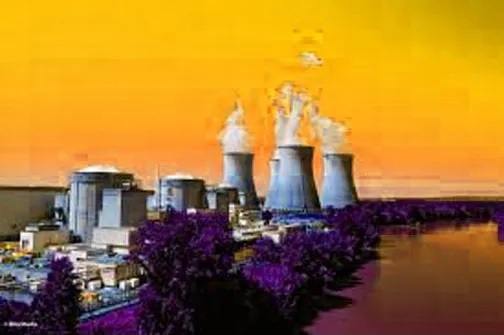
Independent Forrest Crellin, Friday 20 June 2025
France’s electricity supply faces potential disruption as soaring river temperatures, driven by an impending heatwave, threaten to curtail nuclear power generation along the Rhone.
Nuclear operator EDF announced on Friday that high water temperatures are expected to impact electricity production from 25 June, particularly at the 3.6-gigawatt Bugey nuclear power plant in eastern France.
This marks the first such warning for high river temperatures in France for 2025.
The issue stems from environmental regulations governing the discharge of cooling water, which can be breached when river temperatures become excessively high due to heatwave conditions.
The alert comes as state forecaster Meteo France predicts a significant heatwave will sweep across the country this weekend.
EU Needs $280 Billion for Nuclear Energy, And That’s Just the Start

Oil Price.com, By Tsvetana Paraskova – Jun 18, 2025
- The European Union estimates it will require $277 billion in investments for conventional nuclear power expansion by 2050.
- Some EU countries are considering Small Modular Reactors and other advanced nuclear technologies as alternatives or supplements to traditional large-scale nuclear plants.
- The EU is also pursuing nuclear fusion research as a potential long-term solution for energy independence and decarbonization.
The European Union countries planning to expand their nuclear power capacities will need as much as $277 billion (241 billion euros) in investments by 2050, according to Brussels’ estimates.
That’s only the investment needed for the conventional large-scale nuclear reactors currently in the plans of nearly half of the EU member states. The sum doesn’t include investment in Small Modular Reactors (SMRs), Advanced Modular Reactors (AMRs), or microreactors, or investment in nuclear fusion efforts.
Some EU countries are open to returning to nuclear power generation, but only via SMRs and other advanced nuclear energy technology—not conventional large-scale nuclear power plants. These will require additional billions of U.S. dollars in investment.
Delivering the EU’s current plans to boost nuclear energy capacity will require $277 billion (241 billion euros), both for lifetime extensions of existing reactors and the construction of new large-scale reactors, the European Commission said in its latest assessment of nuclear investment needs by 2050.
While the EU’s biggest economy, Germany phased out nuclear power in 2023, some other EU countries see nuclear energy as an important part of their decarbonization, industrial competitiveness, and security of supply strategies.
…………………………………………………… the required investment in SMRs will be in addition to the $277 billion the EU estimates is necessary for large-scale conventional reactors.
So, the price tag of Europe’s nuclear power ambitions will be much higher. While SMRs hold promise, they are unlikely to be deployed commercially before the 2030s, and large-scale conventional reactors are notoriously facing delays and cost overruns.
It’s good to talk: US-UK anti-nuclear alliance forged from film discussion
The NFLAs were delighted to partner with film makers and producers from
the United States in promoting the documentary film ‘SOS – The San
Onofre Syndrome: Nuclear Power’s Legacy’ and by participating in a
discussion last week of the issues raised. NFLA Secretary Richard Outram
joined US filmmakers James Heddle, Mary Beth Brangan and Morgan Peterson
for the discussion on Wednesday 11 June. UK participants were invited to
watch the documentary film before the event and then contribute their
questions and comments. Attendees included academics and activists from
several of the established campaigns opposed to nuclear power in the UK,
and their knowledge and experience helped make the discussion more
engaging.
NFLA 19th June 2025 https://www.nuclearpolicy.info/news/its-good-to-talk-us-uk-anti-nuclear-alliance-forged-from-film-discussion/
Improvements required following Barrow nuclear submarine site fire
The Office for Nuclear Regulation (ONR) has served an enforcement notice
on BAE Systems Marine Ltd (BAESML) following a fire at the
Barrow-in-Furness site in Cumbria. ONR’s enquiries found that five
employees entered an area in the Devonshire Dock Hall facility when the
fire was still in progress on 30 October 2024. As a result, two employees
were taken to hospital for treatment. Both employees were discharged and
returned to work on the same day. Enquiries concluded that the licensee’s
arrangements for ensuring workers did not enter places of danger without
the appropriate safety instructions were inadequate. There was also a lack
of guidance to inform staff of their required actions in the event of a
fire.
ONR 16th June 2025, https://www.onr.org.uk/news/all-news/2025/06/improvements-required-following-barrow-fire/
Scotland wants no part in further dangerous nuclear experiments
Frances McKie:
IN 1976 the British Government accepted the
findings of the Flowers Report, which advised: “It would be morally wrong
to commit future generations to the consequences of fission power on a
massive scale unless it has been established beyond reasonable doubt that
at least one method exists for the safe isolation of these wastes for the
indefinite future.”
In 1987, I attended a Venstre political conference in
Norway where Professor Torbjorn Sikkeland, the distinguished nuclear
physicist and radiation biophysicist, explained, with illustrations, that
nuclear fuels and nuclear waste would never be safely or securely
contained: they are simply too corrosive.
At the same conference, Professor
Sikkeland also declared that it was accepted by his colleagues that
hydrogen was the answer to world energy needs but it was unlikely to emerge
as an option while the nuclear lobby stood in the way of necessary research
and investment.
30 years later, radiation corrosion still plagues nuclear
reactors wherever and however they are built; there is still no safe
containment for the corrosive nature of nuclear waste In 2025, however,
despite the 40-year-old commitment to the common sense and morality of the
Flowers Report, we now have a desperate government in Westminster:
economically bankrupt, at the mercy of whatever corporate lobbyists come
their way.
Westminster, flailing around with post-Brexit bankruptcy, does
not have a meaningful energy, environment or defence policy: it has just
broadcast its latest version of panicky, ridiculous and dangerous ideas.
Scotland should have nothing to do with them – but continue calmly with
policies which bypass more failed nuclear experiments and the production of
nuclear waste that no-one, still, knows how to contain.
The National 20th June 2025, https://www.thenational.scot/community/25253405.scotland-wants-no-part-dangerous-nuclear-experiments/
Inside Britain’s top nuclear bunker.

Secure vaults containing decades-old enriched uranium and plutonium are
dotted across Britain’s sprawling atomic weapons establishment site in
the Berkshire countryside. Some are underground, inside 1960s-era
buildings, guarded by police on the roof tops armed with C8 Carbine assault
rifles used by the Special Air Service (SAS).
Cameras keep watch and
security guards patrol the perimeter — lined by a fence and razor wire,
like a prison — and 56 dogs are on hand to sniff out any sign of toxic
chemicals. “The guards and guns are not here to protect us, they are here
to protect the material,” said one of the scientists giving a tour of the
grounds. “You can’t get anywhere near them [the vaults] even if you
tried,” added another.
Times 19th June 2025,
https://www.thetimes.com/uk/defence/article/uk-nuclear-uranium-bunker-fr6szg6tn
Stop Sizewell C campaigner slams Labour lies over nuclear power

Alison Downes from the Stop Sizewell C campaign group spoke to Socialist Worker
Thursday 19 June 2025, https://socialistworker.co.uk/environment/stop-sizewell-c-campaigner-slams-labour-lies-over-nuclear-power/
Labour energy secretary Ed Miliband claims Britain needs new nuclear power plants “to deliver a golden age of clean energy abundance”.
But Alison Downes from the Stop Sizewell C campaign group says it’s the last thing we need to stop climate breakdown.
The Labour government pledged over £14 billion last week towards building a new nuclear power station on the Suffolk coast. Construction of Sizewell C began last year, next to the live Sizewell B plant.
Alison told Socialist Worker she opposes it because of “the climate emergency and the need for quick, cost effective action to reduce our carbon emissions”.
“This type of reactor has got such a bad track record in the other places where it’s been built, or attempted to be built,” she explained.
“And the slowness of completion all count against it as a solution for a climate emergency.”
The new nuclear plant would cost billions at a time when Labour is pushing austerity. Alison said, “In 2020 the cost was estimated at £20 billion and I think very credibly is now predicted at around £40 billion.
“Our assumption is that at least 50 percent of Sizewell C would be paid for by the taxpayer.”
She added, “A lot of this information is not in the public domain. Every time we ask, we get batted away with reasons of commercial confidentiality.
“But our understanding is that the government still intends to be a majority owner in the project.”
Sizewell C, which will be built by French state-owned company EDF, is expected to be operational some time in the 2030s.
It will be funded using a Regulated Asset Base model. This will guarantee EDF a return on its investments and means that electricity suppliers will contribute to the cost of building the plant.
“And that comes from consumer bills,” says Alison. “Consumers just have to keep paying for as long as the project is under construction.”
Radioactive waste disposal underlines that nuclear power is not an environmentally-friendly option.
In the long term, it would need to be stored deep underground.
Alison explained, “A disposal facility for all of Britain’s waste is under consideration. But they still haven’t found a willing host community in a place where the geology is suitable.
“We don’t really know when it would be available and how much it would cost. Sizewell B waste is here and is going to be here for decades to come.
“And, of course, you have big question marks about the impacts of climate change. Every time new studies are released they suggest that those impacts are bigger and faster than previously thought.
“So you have to factor in the cost of keeping this site safe from flooding for a century or more.”
The leaderships of the Unite and GMB unions have enthusiastically welcomed the Sizewell C announcement.
Alison said, “Well, of course, major infrastructure projects bring jobs. We definitely agree that opportunities for young people are very important. But they’re not necessarily very long term jobs.
“There was a major boom and bust in this area when Sizewell B was built. A lot of people feel that the area has really struggled in the aftermath as a result of the crash once construction was finished.
“The thing that really frustrates us about this is that the number of permanent long term jobs at Sizewell C is relatively small. It’s about 700 with a couple of hundred contractors.”
Alison said that home insulation would make people’s energy bills go down and create thousands of new jobs.
Stop Sizewell C has run advertising campaigns on the London Underground, lobbied county councils, met with ministers and stopped pension funds from investing in the project.
“Keir Starmer was due to come here last week and he cancelled at short notice,” said Alison. “I think he probably thought that it might be wise to stay away.”
Unions should fight for investment in green energy and a just transition for workers in nuclear.
1 This Month
26 September – International Day for the Total Elimination of Nuclear Weapons





PLEASE OPPOSE HR 8255 AND S.3639 – bills would accelerate satellite deployment, with no environmental review or safeguards – https://ncstd5li.quorum.us/campaign/169331/
To see nuclear-related stories in greater depth and intensity – go to https://nuclearinformation.wordpress.com
-
Archives
- September 2026 (281)
- August 2026 (330)
- July 2026 (355)
- June 2026 (287)
- May 2026 (306)
- April 2026 (356)
- March 2026 (251)
- February 2026 (267)
- January 2026 (308)
- December 2025 (358)
- November 2025 (359)
- October 2025 (375)
-
Categories
- 1
- 1 NUCLEAR ISSUES
- business and costs
- climate change
- culture and arts
- ENERGY
- environment
- health
- history
- indigenous issues
- Legal
- marketing of nuclear
- media
- opposition to nuclear
- PERSONAL STORIES
- politics
- politics international
- Religion and ethics
- safety
- secrets,lies and civil liberties
- spinbuster
- technology
- Uranium
- wastes
- weapons and war
- Women
- 2 WORLD
- ACTION
- AFRICA
- Atrocities
- AUSTRALIA
- Christina's notes
- Christina's themes
- culture and arts
- Events
- Fuk 2022
- Fuk 2023
- Fukushima 2017
- Fukushima 2018
- fukushima 2019
- Fukushima 2020
- Fukushima 2021
- general
- global warming
- Humour (God we need it)
- Nuclear
- RARE EARTHS
- Reference
- resources – print
- Resources -audiovicual
- Weekly Newsletter
- World
- World Nuclear
- YouTube
-
RSS
Entries RSS
Comments RSS