Zelensky’s end goal is in sight, and so is his end.

Tarik Cyril Amar, 23 July 25, https://www.rt.com/news/621881-zelensky-wont-go-down-quietly/
The Ukrainian leader is not “turning” to authoritarianism – it has always been his goal, and when he has it, he won’t let go.
When the US picks clients, vassals, and proxies, it needs men or women ready to trade in the interests, even the welfare and lives of their compatriots. Vladimir Zelensky is such a man. A look at the elites of EU-NATO Europe shows he is not alone. But he is an especially extreme case.
It is much less than a decade ago that the former media entrepreneur and comedian – often crude instead of witty – advanced from being a pet protégé of one of Ukraine’s most corrupt oligarchs to capturing the country’s presidency. As it turned out, never to let go of it: Zelensky has used the war, which was provoked by the West and escalated in February 2022, not only to make himself an indispensable if very expensive and often obstreperous American puppet but also as a pretext to evade elections.
And yet, now signs are multiplying that his days of being indispensable may be over. For one thing, Seymour Hersh, living legend of American investigative journalism, is reporting that Zelensky is very unpopular where it matters most, in US President Donald Trump’s White House. This is not surprising: Trump’s recent turn against Russia – whatever its real substance or marital reasons – does not mean a turn in favor of Ukraine and even less so in favor of Zelensky, as attentive observers have noted. According to the Financial Times, “Western allies of Ukraine” still believe that Trump keeps seeing Russian President Vladimir Putin “as his main negotiating partner and Zelensky as the primary obstacle to a workable peace deal.”
And according to “knowledgeable officials in Washington” who have talked to Hersh, the US leadership is ready to act on that problem by getting rid of Zelensky. And urgently: Some American officials consider removing the Ukrainian president “feet first” in case he refuses to go. Their reason, according to Hersh’s confidants: to make room for a deal with Russia.
Hersh has to make do with publishing anonymous sources. It is even conceivable that the Trump administration is leaking this threat against Zelensky to pressure him. Yet even if so, that doesn’t mean the threat is empty. Judging by past US behavior, using and then discarding other countries’ leaders is always an option.
Another, also plausible, possibility is that Zelensky will be discarded to facilitate not ending, but continuing the war, so as to keep draining Russian resources. In this scenario, the US would prolong the war by handing it over to its loyally self-harming European vassals. After, that is, seeing to the installation of a new leader in Kiev, one it has under even better control than Zelensky. Just to make sure the Europeans and the Ukrainians do not start understanding each other too well and end up slipping from US control. The Ukrainian replacement candidate everyone whispers about, old Zelensky nemesis General Valery Zaluzhny – currently in de facto exile as ambassador to the UK – might well be available for both options, depending on his marching orders from Washington..
Meanwhile, as if on cue, Western mainstream media have started to notice the obvious: The Financial Times has found out that critics accuse Zelensky of an “authoritarian slide,” which is still putting it very mildly but closer to the truth than past daft hero worship. The Spectator – in fairness, a magazine with a tradition of being somewhat more realistic about Ukraine – has fired a broadside under the title “Ukraine has lost faith in Zelensky.” The Economist has detected an “outrage” in Zelensky’s moves and, more tellingly, used a picture of him making him look like a cross between a Bond villain and Saddam Hussein. Even Deutsche Welle, a German state propaganda outlet, is now reporting on massive human rights infringements under Zelensky, with the impaired systematically targeted for forced mobilization.
Full disclosure: Knowing Ukrainian and Russian – Ukraine’s two languages – well and having written about the realities of Zelensky’s misrule for years already, my immediate response to these sudden revelations is “what took you so long?” My first articles explaining Zelensky’s obvious authoritarian tendencies – and practices, too – date back to 2021, and I have repeatedly pointed out that his popularity was slipping. All it took was to pay attention to Ukrainian polling.
But then, I know the reason for the mainstream’s delay: The bias induced by Western information warfare and media career conformism, which only weakens a little – or is redirected – when the geopolitics of the powerful change. In that sense, the increasingly sharp public criticism of Zelensky is yet another sign that he has fallen – and remains – out of favor with the American leadership that rules the West.
Zelensky’s recent actions may well indicate, as Hersh also suspects, that he knows he is in great danger – and not from Russia but his “friends” in the West. Just over the course of the last two weeks, Zelensky has reshuffled his government and, at the same time, started a devastating campaign against institutions and individuals that have two things in common: the mission to combat corruption and a well-deserved reputation for being particularly open to US influence.
Indeed, it is when Zelensky escalated his attacks on the latter that the Financial Times woke up from years of sweet slumber to discover there’s something authoritarian about the West’s top man in Ukraine. By now, things have only gotten worse: The domestic intelligence – and, of course, repression – service SBU has raided key anti-corruption organizations and made arrests. Simultaneously, Zelensky’s absolutely obedient majority in the Ukrainian parliament has passed a law to completely neuter these institutions by putting them under the president’s control, which the president then signed rapidly. By now, Ukraine is witnessing widespread protests against Zelensky’s attempt to combine maximum greed with unfettered if petty despotism.
For the Ukrainian news site Strana.ua – a media rarity, as it has managed to resist the Zelensky regime’s aggressive attempts to subdue and streamline it – the SBU raids on the anti-corruption agencies alone were a powerplay, designed to consolidate Zelensky’s one-man rule. That is correct, and he wasn’t even done.
At the same time, it is, obviously, also very convenient to remove the last feeble restraints on Ukraine’s fabulously pervasive graft, since whatever the West – that is, the Europeans – will now spend on Ukraine will be misappropriated even more wildly than before. That could come in handy especially if there should be a need to stay rich in exile.
This gangster-economic aspect of Zelensky’s fresh power grab has not escaped even his Western friends: the OECD has already warned the Ukrainian regime that the stifling of the anti-corruption agencies will harm Western investment in Ukraine’s reconstruction in general and its arms industry in particular. Likewise, the International Renaissance Foundation, a Soros power structure that has been all too active in Ukraine for more than three decades now, has also called for a repeal of the new law.
In essence, these and similar Western complaints all mean the same: We know you are robbing us blind already but we’ve made our peace with that because you serve our geopolitics. But if you try to take an even larger cut, we may reconsider.
Taken together, Zelensky’s government reshuffle and his assault on the anti-corruption agencies seem to reflect a double strategy: On one side, the endangered puppet is signaling submission to the US in at least some of his recent personnel moves, but on the other, he is also consolidating his power at home by insulating it from too much direct American influence. It is as if he were sending a message to Washington: “I really am your man. But if you try to choose another, I’ll fight.”
The historic irony is that, with Zelensky succeeding in finally razing the last pitiful remnants of pluralism in Ukraine, he – the once hysterically idolized darling of the “value-based” West – will be the president achieving a complete authoritarianism like no Ukrainian leader before him. And all that while propped up with hundreds of billions from the West.
Any displays of surprise or shock by Ukrainian and Western politicians or mainstream media betray either that they have been dozing under a rock for years or that they are being disingenuous. Because today’s Zelensky is not “turning” to authoritarianism. On the contrary, authoritarianism has always been his default disposition and his aim. Zelensky has been working on his personal assent to unchecked power – and, of course, its material spoils as well – since he became Ukraine’s president. That means, long before the conflict between Russia and Ukraine (and behind and through it the West) escalated in early 2022.
How do we know? Because it was already obvious, including to many Ukrainians, by 2021 at the very latest. It was then that Zelensky’s Ukrainian critics – not Russians or those with sympathy for Russia – attacked him and his political party “Servant of the People” for erecting a “mono-vlada,” that is, in essence, an authoritarian political machine to control not only the state but the public sphere as well.
By 2021, Zelensky had already engaged in all of the following: vicious lawfare against Ukraine’s opposition and his personal political rivals, such as former president Petro Poroshenko; massive media censorship and streamlining, while targeting with repression and chicanery any outlets, editors, and journalists daring to resist, for instance Strana.ua; systematically and illegally abusing emergency powers and unaccountable but powerful institutions (most of all, the National Security Council) to stifle criticism; and, last but not least, the fostering of a dictatorial personality cult which was boosted by the West.
Since then, things have only gotten worse. Zelensky has steadily fastened his hold over Ukraine, while prolonging and losing an avoidable and catastrophic war for a Western strategy to demote Russia. Ukraine has been bled dry for a cynical and (predictably) failing Western scheme; Russia, meanwhile is not only winning but has greatly increased its autonomy from the West.
The war may end soon or it may drag on. For the sake of Ukraine we have to hope it will be over soon. Zelensky, if he were a decent man, would then have to hand himself over to postwar Ukrainian justice or be his own judge, the old-fashioned way. But Zelensky is no decent man. If rumors now swirling are not only plausible but truthful, then his masters in Washington may be the ones preparing an appropriately indecent end for him. If the protests against him accelerate, Zelensky may even end up “color-revolution-ed.” How ironic.
French nuclear weapons, 2025

Bulletin, By Hans M. Kristensen, Matt Korda, Eliana Johns, Mackenzie Knight-Boyle | July 15, 2025
France’s nuclear weapons stockpile has remained stable over the past decade and contains approximately 290 warheads for delivery by ballistic missile submarines and aircraft. Nearly all of France’s stockpiled warheads are deployed or operationally available for deployment on short notice. In addition, up to 80 warheads—the older TN75 warheads assumed to have been recently removed from the Le Vigilant submarine—are believed to be in the dismantlement queue and are likely no longer considered part of France’s stockpile.
The current force level is the result of adjustments made to France’s nuclear posture following former President Nicolas Sarkozy’s announcement on March 21, 2008, that the arsenal would be reduced to fewer than 300 warheads (Sarkozy 2008). As Sarkozy said in 2008, the 300-warhead stockpile is “half the maximum number of warheads [France] had during the Cold War” (Sarkozy 2008). By our estimate, the French warhead inventory peaked in 1991-1992 at around 540 warheads, and the size of today’s stockpile is about the same as it was in 1984, although the composition is significantly different.
President Emmanuel Macron reaffirmed the Sarkozy formulation of “under 300 nuclear weapons” in a speech on February 7, 2020 (Élysée 2020) (see Table 1 –on original). Under President Macron, France has engaged in a long-term modernization and strengthening of its nuclear forces, which have included significant budget increases to the deterrent force in recent years (Assemblée Nationale 2024). It is possible but unclear if the decision to add another nuclear air base will increase the stockpile.
Research methodology and confidence
The analyses and estimates made in this Nuclear Notebook are derived from a combination of open sources: (1) state-originating data (e.g. government statements, declassified documents, budgetary information, and military operations and exercises); (2) non-state-originating data (e.g. media reports, think tank analyses, and industry publications); and (3) commercial satellite imagery. Because each of these sources provides different and limited information that is subject to varying degrees of uncertainty, we crosscheck each data point by using multiple sources and supplementing them with private conversations with officials whenever possible.
As a democracy with an active civil society and media landscape, it is possible to obtain relatively higher-quality information about France’s nuclear arsenal compared to many other nuclear-armed countries. France is one of only two countries (the other being the United States) that have publicly disclosed the size of their nuclear stockpile. French policy and military officials also offer regular statements on France’s nuclear doctrine and associated modernization programs.
Despite these positive steps, some challenges persist in obtaining reliable information about France’s nuclear arsenal. France’s freedom of information laws are more restrictive than in the United States and United Kingdom, and since 2008, a law initially designed to limit proliferation of French nuclear information has in practice been implemented on such a broad scale that it has restricted the ability of researchers and journalists to effectively analyze and disseminate data about discrete elements of France’s nuclear stockpile (Cooper 2022; Légifrance 2008). As a result, it is highly challenging to verify information presented by official sources, particularly as such statements rarely contain technical details………………………………………………….
……………………………………The role of French nuclear weapons
Successive heads of state, including Presidents Sarkozy, Hollande, and now Macron, have periodically described the role of French nuclear weapons. The Defense Ministry’s 2017 Defense and National Security Strategic Review reiterated that the nuclear doctrine is “strictly defensive,” and that using nuclear weapons “would only be conceivable in extreme circumstances of legitimate self-defense,” involving France’s vital interests. What exactly these “vital interests” are, however, remains unclear. During and after the Cold War, French leaders considered France’s “vital interests” to extend beyond its national boundaries; this discourse has been revived in earnest with the presidency of Emmanuel Macron. In February 2020, President Emmanuel Macron announced that France’s “vital interests now have a European dimension,” and sought to engage the European Union on the “role played by France’s nuclear deterrence in [its] collective security” (Élysée 2020).
Following Russia’s invasion of Ukraine and the heightened possibility of nuclear use in Europe, this discourse came under greater scrutiny and analysis. In October 2022, Macron clarified that France’s vital interests “would not be at stake if there was a nuclear ballistic attack in Ukraine or in the region,” apparently attempting to avoid being seen as expanding French nuclear doctrine (France TV 2022). Explicitly ruling out a nuclear role in case of Russian nuclear escalation in Ukraine appeared to contradict France’s statement at the August 2022 Review Conference for the Treaty on the Non-Proliferation of Nuclear Weapons, which explained that “for deterrence to work, the circumstances under which nuclear weapons would [or would not] be used are not, and should not be, precisely defined, so as not to enable a potential aggressor to calculate the risk inherent in a potential attack” (2020 Review Conference of the Parties to the Treaty on the Non-Proliferation of Nuclear Weapons 2022).
The discussion around the role of France’s deterrent in Europe has intensified after the election of Donald Trump as US President, and even more so given the Trump administration’s open disdain for the United States’ European allies, overtures toward Russia, and threats to stop supporting Ukraine. While the broad contours of France’s nuclear posture will likely remain largely unchanged for the near future, how it is communicated and demonstrated appear to be evolving (Maitre 2025).
In addition to statements about France’s vital interests in Europe, Macron announced in March 2025 the addition of a nuclear air base at Luxeuil in eastern France, which will become the first base to house France’s new hypersonic nuclear cruise missile by 2035 (Élysée 2025). And when French jets (including Rafale jets from the nuclear base at Saint Dizier) deployed to northern Sweden in April 2025, France’s ambassador to Sweden explicitly stated: “As President Macron has said, it is of course the case that our French vital interests also include the interests of our allies. In that perspective, the nuclear umbrella also applies to our allies and of course Sweden is among them” (Granlund 2025)…………………….
………………..France does not have a no-first-use policy and reserves the right to conduct a “final warning” limited nuclear strike to signal to an adversary that they have crossed a line—or to signal the French resolve to conduct further nuclear strikes if necessary—in an attempt to “reestablish deterrence” (Élysée 2020; Tertrais 2020). Although France is a member of NATO, its nuclear forces are not part of the alliance’s integrated military command structure. …………………………..
……………………………………………………………………….. Command, control, and communication
France maintains strict and centralized control over its nuclear arsenal, with the president having sole and final authority as to the decision to use nuclear weapons. However, in practice, the implementation of such a decision would involve additional military personnel—namely the highest- and second-highest-ranking military officers: the Chef d’État-Major des Armées (CEMA) and the Chef de l’État-Major Particulier du Président de la République (CEMP), who is the president’s top military advisor.
Only one of those officials—the CEMA—is enshrined in the French defense code as the responsible official for ensuring that the president’s order is executed (Légifrance 2025). However, conflicting accounts appear to exist regarding the CEMP’s role, with testimony reportedly indicating that under previous administrations, the president and the CEMP each carried one half of the nuclear codes (Pelopidas 2019; Wellerstein 2019).
The primary command post for the president to transmit nuclear orders is called “Jupiter” and is located underneath the Élysée Palace ………………………………………………………………………………………………………………………………
Submarine-launched ballistic missiles
The French force of submarine-launched ballistic missiles (SLBMs) constitutes the backbone of the French nuclear deterrent. Under the command of the Strategic Ocean Force (Force Océanique Stratégique, or FOST), the French Navy (Marine Nationale) operates four Triomphant-class nuclear-powered ballistic missile submarines (SSBNs) equipped with nuclear-armed long-range ballistic missiles—Le Triomphant (hull number S616), Le Téméraire (S617), Le Vigilant (S618), and Le Terrible (S619)…………………………………………………………………………………………………………
Air-launched cruise missiles
The second leg of France’s nuclear arsenal consists of nuclear ASMPA (air-sol moyenne portée-amélioré) air-launched cruise missiles for delivery by fighter-bombers operated by the Strategic Air Forces and the Naval Nuclear Aviation Force………………………………………………………………………………………………………….
The nuclear weapons complex
France’s nuclear weapons complex is managed by the Direction des Applications Militaires (DAM), a department within the Nuclear Energy Commission (Commissariat à l’énergie atomique et aux énergies renouvelables, or CEA). DAM is responsible for research, design, manufacture, operational maintenance, and dismantlement of nuclear warheads………………………………………………………………………………………………………….. https://thebulletin.org/premium/2025-07/french-nuclear-weapons-2025/?utm_source=ActiveCampaign&utm_medium=email&utm_content=French%20nuclear%20arsenal%20today&utm_campaign=20250724%20Thursday%20Newsletter%20%28Copy%29
French submarine-maker targeted by hackers
Cyber attackers claim to have uncovered source code for submarine weapon systems.
A French naval giant is investigating a potential cyber attack after
hackers claimed to have obtained sensitive data about the country’s
nuclear submarines. Naval Group, a state-owned ship maker that traces its
origins back almost 400 years to the reign of Louis XIII, said it had
“immediately launched technical investigations” after cyber criminals
threatened to publish files on the dark web.
Telegraph 27th July 2025, https://www.telegraph.co.uk/business/2025/07/27/french-submarine-maker-targeted-by-hackers/
The real story of Chernobyl, the worst nuclear disaster in history
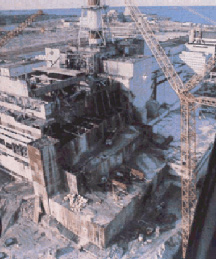
The Chernobyl Sarcophagus Memorial sculpture was erected in 2006 and is dedicated to the memory of the heroic plant workers and emergency crew who prevented a global catastrophe .
28 July 25,https://www.history.co.uk/articles/the-story-of-chernobyl-the-worst-nuclear-disaster-in-history
On 26th April 1986, a routine safety test went catastrophically wrong and triggered the worst nuclear accident of all time. The incident at the Chernobyl Nuclear Power Plant near Pripyat, Ukraine led to the release of 400 times more radiation than the atomic bomb dropped on Hiroshima during WW2.
31 people died in the immediate aftermath, whilst the long-term health effects caused by Chernobyl are still a hotly debated subject. Approximately 60,000 square miles around the plant were contaminated and an area nearly twice the city of London remains an exclusion zone to this day.
Background of Chernobyl
Lying just 10 miles from the Belarus-Ukraine border and around 62 miles north of the Ukrainian capital Kyiv, the Chernobyl Nuclear Power Plant was commissioned in 1977 as part of the old Soviet Union, with the first reactor supplying power to the grid later that year. By 1984, four reactors had entered commercial operation, each capable of producing 1,000 megawatts of electrical power.
Just under two miles from the plant was the city of Pripyat, founded in 1970 and named after the nearby river. It was built to serve the power plant and at the time of the disaster, its total population was just shy of 50,000.
Nuclear disaster unfolds
Throughout Friday, 25th April 1986, Chernobyl’s engineers lowered power at Reactor No. 4 in preparation for a safety test to be conducted later that evening. The test was supposed to check whether the reactor turbines could continue powering emergency water coolant pumps in the event of a power failure.
Ironically, the safety test was anything but safe as human error and substandard reactor design led to a partial meltdown of the core.
The experiment was poorly conceived and equally badly executed. Firstly, the less-experienced night shift crew carried out the safety test and later claimed they had not received full instructions from the day shift crew on how to properly conduct it. Secondly, the emergency core cooling system for Reactor 4 was disabled along with the emergency shutdown system.
Finally, the reactor’s power level dropped to a dangerously unstable level at which point the engineers removed most of the control rods in violation of safety guidelines. Although power began to return, it was far from under control.
Explosion in Reactor 4
At 1:23am on 26th April, the safety test was given the all-clear by plant supervisors. Almost immediately a power surge occurred, triggering the engineers to re-insert all 211 control rods. The control rods were graphite tipped, a design flaw that would prove fatal as they increased the reaction in the core, instead of lowering it.
The subsequent steam explosions blew off the steel and concrete lid of the reactor as the core suffered a partial meltdown. Two engineers were killed instantly whilst two more suffered severe burns. The explosion, along with the resulting fires, released at least 5% of the radioactive reactor core into the atmosphere. Blown by the wind, radioactive materials were spread to many parts of Europe over the coming days.
Emergency response begins
Firefighters quickly arrived on the scene but without proper protective clothing, many perished in the coming months from acute radiation syndrome. By dawn, all the fires were suppressed except for the one in the reactor core.
The other three reactors were shut down a short while later. The following day officials ordered helicopters to begin dumping more than 5,000 tonnes of sand, lead, clay, and boron onto the burning reactor to help extinguish the core fire.
A Soviet cover-up
It took nearly 36 hours for Soviet officials to begin evacuating nearby Pripyat. The city’s residents were unaware of the true dangers presented by the previous day’s events. Advised to pack only necessities, the people of Pripyat were loaded onto buses believing their evacuation to be temporary. Little did they know, they would never return to their homes again.
Two days after the catastrophic explosion the rest of the world remained in the dark as the Soviets attempted to cover up the event. However, on 28th April, Swedish radiation monitoring stations 800 miles away began detecting high levels of radiation. With their backs to the wall, the Soviets finally made a statement, with the Kremlin admitting an accident had occurred at Chernobyl, but assuring the world that officials had it under control.
Heroism on display
In the days that followed, hundreds of workers risked their lives to contain radiation leaking from the reactor core.
On 4th May, three divers made their way through the dark flooded basement of Reactor 4 to turn valves and drain the ‘bubbler pools’ sitting below the core. Had they not succeeded in their mission, molten nuclear material would have eventually melted its way down to the pools.
This would have triggered a radiation-contaminated steam explosion and destroyed the entire plant along with its three other reactors, causing unimaginable damage and nuclear fallout that the world would have struggled to recover from.
Radioactive debris also needed to be removed from the roof of the reactor. After robots failed to do the job, workers equipped with heavy protective gear were sent in.
Nicknamed ‘Bio-robots’, these workers were unable to spend more than 90 seconds on the roof due to the extreme levels of radiation. In the end, 5,000 men went up on the irradiated rooftop to successfully clear the radioactive material from it.
Clean-up commences
By mid-May, Soviet leader Mikhail Gorbachev had ordered thousands of firefighters, miners, and soldiers to begin the long and arduous task of cleaning up. Known as ‘Liquidators’, 600,000 – 800,000 of them began burying radioactive debris and topsoil, as well as shooting all wildlife (both domestic and wild) within the 19-mile exclusion zone surrounding the power plant.
Nicknamed ‘Bio-robots’, these workers were unable to spend more than 90 seconds on the roof due to the extreme levels of radiation. In the end, 5,000 men went up on the irradiated rooftop to successfully clear the radioactive material from it.
Clean-up commences
By mid-May, Soviet leader Mikhail Gorbachev had ordered thousands of firefighters, miners, and soldiers to begin the long and arduous task of cleaning up. Known as ‘Liquidators’, 600,000 – 800,000 of them began burying radioactive debris and topsoil, as well as shooting all wildlife (both domestic and wild) within the 19-mile exclusion zone surrounding the power plant.
Aftermath
The Chernobyl Exclusion Zone was eventually extended to cover approximately 1,000 square miles, whereby it was declared uninhabitable for over 20,000 years. The other three reactors at Chernobyl remained active until their individual shutdowns in 1991, 1996, and 2000. Gorbachev later wrote that he believed the incident at Chernobyl was the ‘real cause of the collapse of the Soviet Union’.
Whilst the lasting health effects of the disaster remain unclear and much debated, various sources have estimated that thousands of cancer deaths can be linked back to Chernobyl.
Greenpeace hails Italian court ruling allowing climate case against energy company Eni to continue

Italy’s highest court has ruled that a lawsuit brought by climate
activists against Italian energy company Eni and its government
shareholders can go ahead, in what Greenpeace said on Tuesday was a victory
for efforts to pursue climate justice in Italy.
In an ordinance released on
Monday, the Court of Cassation rejected the company’s motions to dismiss
the lawsuit on jurisdictional grounds and ordered the case to be heard on
its merits by a Rome tribunal. Eni said that it was greatly satisfied with
the decision, and said it expected that the Rome court would ultimately
“dismantle” the climate activists’ claims of responsibility.
Yahoo News 22nd July 2025, https://uk.news.yahoo.com/greenpeace-hails-italy-court-ruling-130205151.html
The Kyshtym disaster: Russia’s hidden nuclear crisis

The Kyshtym disaster in 1957 was the Soviet Union’s biggest nuclear crisis until Chernobyl. So, why did the Soviets keep quiet about the former for decades?
28 July 25, https://www.history.co.uk/articles/kyshtym-disaster-russia-hidden-nuclear-crisis
What would be considered the worst nuclear disaster in history? Many scholars would say Chernobyl, when an explosion at a nuclear power plant in northern Ukraine released dangerous levels of radiation.
This was on 26th April 1986, when Ukraine was still part of the Soviet Union. Was Chernobyl inevitable? Many historians do believe that Soviet authorities failed to learn lessons from an earlier nuclear crisis on their own soil. Below, we at Sky HISTORY look back at the 1957 Kyshtym disaster — and how the Soviets kept it under wraps for decades.
Was there really a nuclear plant in Kyshtym?
The nuclear plant at the heart of the Kyshtym disaster was not actually in the Russian town of that name. Instead, it was in a secretive ‘closed city’ nearby, called Chelyabinsk-40. Today, it is called Ozyorsk. (Both Kyshtym and Ozyorsk are in Russia’s Chelyabinsk Oblast.)
In the 1940s, the Soviets realised that they were trailing the United States in the development of nuclear weapons. To help themselves catch up, they hastily built what is now commonly known as the Mayak nuclear plant.
This facility, which still stands today, was tasked with processing plutonium needed to make nuclear weapons. However, because the plant was assembled in a rush, many safety risks of the project were not considered sufficiently.
The Kyshtym explosion and its immediate aftermath
Before the Kyshtym disaster, it was routine for Mayak workers to deposit radioactive waste into the Techa River. This bode ill (literally) for villagers along the river who used it as a source of drinking water.
So, Mayak staff later decided to store such waste in an underground storage compartment of the plant itself. This space comprised 14 stainless steel containers attached to a concrete base.
However, in the 1950s, the cooling system in one of these tanks started to malfunction. This led the waste in the container to heat up and eventually, on 29th September 1957, explode. The force sent 20 curies of radioactive material flying a kilometre into the air.
The wind blew the radioactive particles over an area of about 20,000 square kilometres inhabited by approximately 270,000 people. This was generally to the northeast, away from Chelyabinsk-40, which lay upwind from the Mayak plant.
How did authorities initially react?
Residents of nearby areas were not initially notified of what had happened. This was largely due to the Soviet Union’s strong culture of secrecy during the Cold War. The national government didn’t want to let slip that Mayak even existed, let alone that a nuclear explosion had happened there.
It was also around the same time that the Soviet Union launched its Sputnik satellite, a big PR coup. Admitting responsibility for what was the world’s biggest nuclear disaster to date would have been more than an inconvenient fly in the ointment.
Still, the Soviets also knew that doing what they could to limit the radioactive contamination would go some way towards keeping everyone in the dark. So, while about 10,000 local residents were evacuated over the next two years, they weren’t told exactly why.
A cover-up lasting for decades
Almost 17,000 hectares of the contaminated area was turned into East Ural Nature Reserve in 1968. Members of the public were barred from entry, which remains the case to this day. Scientists have studied the reserve to monitor the long-term effects of nuclear radiation on its ecology.
The Kyshtym disaster was kept secret from the public until 1976, when Soviet dissident Zhores Medvedev reported about it in New Scientist magazine. However, the Soviet government still did not openly acknowledge the Kyshtym disaster before accidentally revealing it to the United Nations in the late 1980s.
It is estimated that thousands of cancer cases may have resulted from exposure to radiation caused by the nuclear explosion way back in 1957.
How does Kyshtym compare to Chernobyl?
On the International Nuclear and Radiological Event Scale (INES), Kyshtym is classified as Level 6. Chernobyl, an even bigger catastrophe, is ranked just one level higher (Level 7) on the INES. Kyshtym released about 40% as much radioactivity as Chernobyl.
Chernobyl is thought to have affected a larger population, too, as 335,000 people were evacuated in the wake of the 1986 disaster. Also, while Chernobyl quickly claimed 31 lives, none were lost in the immediate aftermath of Kyshtym.
‘A heroic endeavour’: Sizewell C’s £38bn plan to keep the lights on

As construction finally starts how will this megaproject be built, can
it avoid the pitfalls of previous nuclear plants, and is it worth the
money?
Hinkley Point is overdue and over budget, while the EPR has been
plagued by problems in other countries where it has been built. Small
wonder, then, that some have asked whether replicating Hinkley is a good
idea.
Julia Pyke is here to tell people that copying Hinkley is exactly
what we should be doing. “It’s better to build the thing you know how
to build because … it will be cheaper.” Hinkley has helped build up a
nuclear workforce that was in decline. Pyke recalled the first batch of
university interns at Sizewell C. “The majority of them literally
didn’t know that the UK had a nuclear industry. It had been that
quiet,” she said.
The deal struck last week will see the government take
a 45 per cent stake, with Canadian pension fund La Caisse holding 20 per
cent, British Gas owner Centrica 15 per cent, EDF 12.5 per cent, and Amber
Infrastructure the remaining 7.6 per cent.
The gargantuan cost will be 65
per cent funded by debt, and 35 per cent by equity. The government has
pencilled in a total cost of £55 billion for contingency and inflation
over the lifetime of the plant. Last week there was much noise around the
fact that Sizewell’s price tag had ballooned from an estimate of £20
billion, in 2015 money. The new figure accounts for inflation and “some
cost increase”, according to Pyke. One big difference between Hinkley and
Sizewell, she argued, is that the design is now better understood and
contracts will be tighter. Many of Hinkley’s overruns were blamed on
“cost-plus” contracts that allowed suppliers to ratchet up their bills.
Pyke pointed to a recent deal for civil engineering at Sizewell: “It’s
a contract which, roughly speaking, pays the contractors the actual cost of
doing a day’s work. And it aligns profit to achieved milestones. So
they’re not incentivised to run the job long.”
In any case, Pyke argued, talk of cost misses the point. Sizewell C will ultimately be an
asset for the taxpayer. And the project will pay billions in tax over its
lifespan. “The cost is an investment for society because it’s going to
give us energy security and lower bills, as well as pay tax … it has much
wider societal benefits.”
Alison Downes, executive director of the Stop
Sizewell C campaign, said that as a group, they had always tried to
emphasise the wider problems with the project, beyond their self-interest.
“One former EDF chief executive described the EPR design as too
complicated — almost unbuildable,” she said. “The long delays at EPRs
elsewhere in the world, the massive cost overruns, suggest that this
project will be very difficult to build. And the Sizewell site is complex.
Any savings are likely to be frittered away in more complicated
groundworks.”
Times 26th July 2025, https://www.thetimes.com/business-money/companies/article/sizewell-c-38bn-plan-to-keep-the-lights-on-ndszrldwd
SNP slam ‘toxic’ Sizewell-C costs for Scottish energy bills.

THE SNP have demanded Scots are not forced to pay for “toxic” overspending
on the Sizewell-C budget. Prior to the summer recess, Energy Secretary Ed
Miliband quietly revealed that energy bills in Scotland will rise as a
result of a significant budget increase on the project – doubling in cost
to £38 billion with further revelations a loan facility of up to £36.6bn
will be provided, pushing the upper limit to £47.7bn.
Sizewell-C now becomes more costly than Hinkley Point C, the most expensive nuclear power
plant in the world.
Independent analysis from the House of Commons Library
confirmed that Scots will pay at least £300 million extra on energy bills
now to cover the overspend, with Miliband admitting there will be a
decade-long “nuclear tax” on bills north of the border.
SNP Energy spokesperson, Graham Leadbitter MP, said: “This toxic overspend now totals
£48bn and Anas Sarwar has serious questions to answer as to whether he
thinks it’s acceptable for Scots to foot the bill through higher energy
bills. “It is an absolute disgrace that energy rich Scotland will see
Scots face higher energy bills because of a nuclear plant running over
budget in Labour-run England.” With 2.5m households in Scotland, Miliband
forecasted that bill payers will pay an extra £12 per year to cover the
power plant, though experts have warned that figure is likely a minimum
with costs expected to rise further.
The National 27th July 2025 – https://www.thenational.scot/news/25342880.snp-slam-toxic-sizewell-c-costs-scottish-energy-bills/
The next Chernobyl? Soviet-era nuclear power plant is branded a ‘ticking time bomb’ that could go off at ‘any moment’
A Soviet-era nuclear power plant in an earthquake zone has been branded
‘Chernobyl in waiting’ and a ‘ticking time bomb’ amid fears of a looming
disaster. The Armenian Nuclear Power Plant was opened in 1976 and comprises
two reactors, reportedly supplying the nation with 40 per cent of its
electricity. But it stands in a seismic zone, and has already been
shuttered once before, closing for six years after the Spitak Earthquake in
1988.
Daily Mail 25th July 2025,
https://www.dailymail.co.uk/sciencetech/article-14939915/Chernobyl-nuclear-power-plant-ticking-time-bomb.html
Ed Miliband put up your energy bills (for Sizewell nuclear)– and hoped you wouldn’t notice
Miliband took the last day of term before MPs knocked off for a
six-week-long holiday – sorry, I mean “working in the constituency”
– to let slip that he was putting up your energy bills. This is to pay
for the ballooning cost of the Sizewell C nuclear plant in Suffolk.
Incidentally, another thing that the Energy Secretary let out the bag on
Tuesday was that the cost of this had almost doubled to £38 billion.
That is regrettable but Miliband did not want us to get too down about it. The
UK Government expects that it will be “limited to an average of around
£1 a month on a typical household bill”. Given the way that energy bills
have gone in recent years, I doubt that anyone feels anything less than
seething resentment at paying even another penny.
The National 25th July 2025, https://www.thenational.scot/politics/25342653.ed-miliband-put-energy-bills—hoped-wouldnt-notice/
Tory peer apologises for helping set up ministerial meeting for a nuclear firm he advises
Deputy speaker Ian Duncan found to have breached rules by providing parliamentary service for Terrestrial Energy
The former junior climate minister has been an adviser to Terrestrial Energy since 2020. When he joined he was given share options, which allowed him to buy shares in the company at a preferential rate if they became profitable.
The Guardian revealed that, in 2023, Duncan forwarded a letter to Andrew Bowie, the nuclear minister at the time, from Simon Irish, the firm’s chief executive who wanted a meeting with the minister at short notice. The peer signed off his email “Lord D of S”.
The chief executive of the company, which is developing a new type of nuclear reactor, secured the meeting with Bowie at which he lobbied for Terrestrial Energy to be given easier access to government funding.
In his response to the watchdog, Duncan said Bowie was a “friend of long standing” who had helped him get elected as a member of the European parliament in 2014 and had then worked in his Brussels office.
Margaret Obi, the Lords commissioner, decided that the rule prohibiting peers from providing “parliamentary services in return for payment or other incentive or reward” was absolute.
She added: “It did not provide an exemption in cases where there was an existing personal relationship.”
She ruled: “Although Lord Duncan stated he was not paid specifically for facilitating this introduction, he received an allocation of share options as consideration for his work for Terrestrial Energy.
“I consider that this can reasonably be understood to have been an incentive or reward for the various tasks he undertook for the company.”
Guardian 25th July 2025, https://www.theguardian.com/politics/2025/jul/25/tory-peer-ian-duncan-apologises-for-helping-set-up-ministerial-meeting-for-firm-he-advises
Sizewell C loans could see project cost rise above Hinkley to £47.7bn
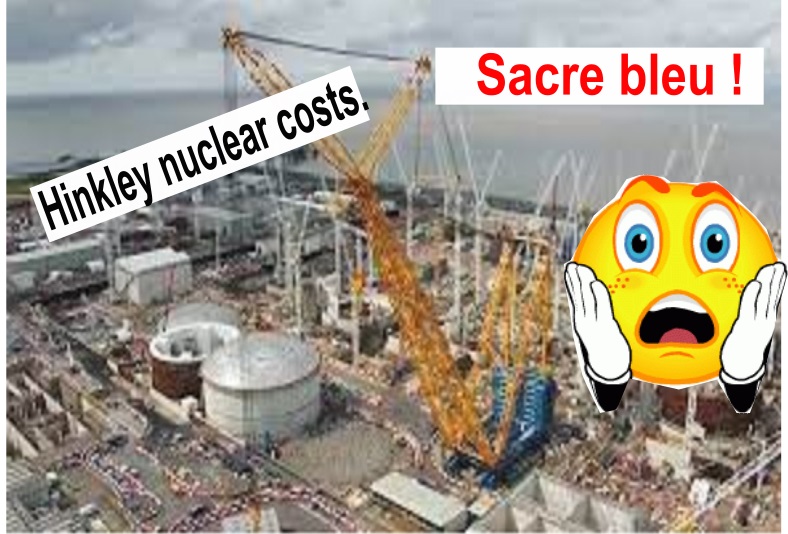
The National Wealth Fund said it will provide a loan facility for the nuclear power station of up to £36.6bn, pushing the upper limit to £47.7bn.
July 22nd 2025, https://www.energyvoice.com/renewables-energy-transition/576872/sizewell-c-loans-could-see-project-cost-rise-above-hinkley-to-47-7bn/
Project costs for the Sizewell C nuclear power station could rise to an upper threshold of £47.7 billion as a result of a new government loan extension.
The National Wealth Fund (NWF) has increased the size of its loan facilities to provide a debt buffer in case project costs rise, the government has confirmed.
The government’s new sovereign fund said in a statement that Treasury has recapitalised the fund from a prior capitalisation of £27.8bn so it can provide a loan facility for nuclear power station Sizewell C of £36.6bn.
The NFW, which started operating in October, will act as a lender of record for the project and continue to have the capacity to invest across its mandated sectors, a spokesperson said.
According to the statement, an additional £5bn of debt will be guaranteed by France’s export credit agency Bpifrance Assurance Export.
An energy department spokesperson told Energy Voice that “in order to finance a project of this size, the project partners have made available finance to fund costs up to £47.7bn (real) to safeguard taxpayers in the event of cost overruns”.
“This is based on a remote scenario for the project and is not what the company is managing the project to,” the government spokesperson said.
“The central target in terms of costs is around £38bn real, but as is standard for big and complex projects, we have secured a financing which contains contingency in case of overruns.”
According to people close to the matter, one of whom cited project documents, while Sizewell C is estimated to cost £38bn, the lower threshold for financing is £40bn, with a higher upper threshold of £47.7bn.
The newly secured loan capital would raise the projected upper limit of financing for the power station by nearly £10bn if it was fully drawn down over the course of the project’s lifecycle, they indicated, although a spokesperson for the fund said that would be unlikely. He said the facility provided for the effect of inflation.
“It is likely that NWF would not be exposed to the full amount of its debt provision, meaning its total debt exposure is likely to be less than the nominal maximum it has provided for,” the fund’s spokesperson said.
This increase would provide for a maximum project cost of £47.7bn, which would make the nuclear project more expensive than stalled Somerset nuclear power station Hinkley Point C, which is estimated to cost in the region of £46bn.
The UK Department for Energy Security and Net Zero (DESNZ) confirmed this morning that it had secured investors to commit a total of £38bn to Sizewell C. That included investment commitments from EDF, Centrica, Amber Infrastructure Group and Canadian fund La Caisse.
Together Against Sizewell C chair Jenny Kirtley said: “The scale of potential exposure of public funds to the Sizewell C project is revealed as a staggering £54.589bn in the government’s FID subsidy scheme.
“So much for claims made by EDF and government that there would be huge cost savings from ‘lessons learned’ from the Hinkley Point C build.”
She added that “future generations will have the responsibility to protect the Sizewell C site until the late 2100s and are depending on us to get it right”.
Sizewell C, which reached a final investment decision in the early hours of Tuesday, is expected to be a more efficient replica than its delayed and long-awaited Somerset counterpart, with efficiencies estimated to be between 20% and 25% greater than the first two reactors at Hinkley.
Supply chain ‘incentivised to keep costs down’
Investors insist that they are confident that costs will not overrun, yet Somerset nuclear power station Hinkley Point C is years overdue and over budget.
“The project supply chain is strongly incentivised to keep costs down and investors will see lower returns if there are overruns, reducing risk for taxpayers,” DESNZ told Energy Voice by email.
The new Suffolk nuclear power station at Sizewell is expected to be delivered by the mid-2030s.
Yet Hinkley Point C, which secured a contract-for-difference to operate in 2015, is still not fully built.
Project owner EDF received a dressing down from the French auditor earlier this year, which insisted that it should refinance Hinkley before investing in another nuclear power station in the UK, Sizewell C.
EDF has subsequently reduced its stake to 12.5%, representing an equity commitment of £1.1bn. Centrica has agreed to invest £1.3bn in a 15% stake, while Amber Infrastructure Group and Canadian fund Le Caisse have committed to take an initial 7.6% and 20% stake respectively.
The UK government said it will initially take a stake of 44.9% in Sizewell C, which is expected to reduce if Amber and La Caisse’s combined stake rises to 30%, according to a person familiar with the matter.
From hero to zero- When western leaders realised that Zelensky isn’t a corruption-fighting democrat –
Indeed, war has turbo-charged corruption to a new and more disgusting level.
it is impossible that British and European governmental agencies would not be aware of the huge graft within the Ukrainian state…… Having held up the ‘nothing to see here’ signs for so long, our political leaders may now be starting to worry about how they will account for and continue to justify the billions that western nations are pumping into Ukraine.
Ian Proud, The Peacemonger, Jul 25, 2025
Since the start of the war in Ukraine, in February 2022, Volodymyr Zelensky has been elevated to the status of a hero King, pure in thought and deed, interested only in saving humble Ukraine from the onrushing hordes of Russian Orcs. Like Aragorn from Lord of the Rings, but short, thin-skinned and with a gravelly voice.
Zelensky has been completely immune from criticism in the west, with allegations dismissed and labelled as Kremlin talking points, and accusers called out as Quislings.
Yet, in an instant, that illusion has been shattered.
For the first time since February 2022, Zelensky has been revealed as no different from every President of Ukraine since the country gained independence in August 1991; corrupt and authoritarian.
This comes as no surprise to most realists, but offers a devastating blow to the neo-liberal true-believers who invested their reputations and cash into defeating Russia.
This week, President Zelensky signed a law that stripped two important anti-corruption bodies – the National Anti-Courrption Bureau of Ukraine (NABU) and the Specialised Anti-Corruption Prosecutor’s Office (SAPO) of their independence, making them report to the Prosecutor General, who he appointed.
In the face of widespread protest, Zelensky has been forced to backtrack, although it is not year clear what the new arrangements will be, or when they will be implemented, and the Verkhovna Rada has started its summer recess.
Let’s be clear, corruption is and has been a totemic issue in Ukraine, right back to the onset of the Maidan protests in late 2013 and, of course, before that. During my visits to Ukraine, while posted to Russia, it was clear that young people saw tackling corruption as a top priority for the government. This formed part of their desire for Ukraine to move towards European Union membership and for their country to integrate into a community more clearly governed by democracy and the rule of law.
Whether they might consider the European Union to be democratic today, as unelected Commission President Ursula von der Leyen centralises ever more powers, is another question. But that European and anti-corruption aspiration was real back in 2013.
Yet scant progress has been made in tackling corruption since that time. In February 2015, one year after the height of the Maidan protests, the British Guardian newspaper published a long piece entitled ‘Welcome to Ukraine, the most corrupt country in Europe’. The Ukrainian Prime Minister, Arseny Yatseniuk, who had been personally selected by Victoria Nuland at the U.S. State Department, was forced to resign in April 2016 in the face of allegations of widespread corruption within his government.
In 2021, the European Court of Auditors produced a report entitled Reducing Grand Corruption in Ukraine: several EU initiatives, but still insufficient results. It defined Grand Corruption as ‘the abuse of high-level power that benefits the few, and causes serious and widespread harm to individuals and society’.
In January 2023, an article in the Hill remarked on the need to defeat corruption as Ukraine’s ‘other enemy’. Shortly after that article, a piece, again in the Guardian, discussed the challenges faced by the Head of Ukraine’s National Agency for Corruption Prevention (NACP), which works closely with the now de-clawed NABU and SAPO.
That report in particular talked about specific examples of corruption in President Zelensky’s inner circle. Occasionally, Zelensky has purged his cabinet, to show his commitment to governmental reform, for example, sacking his former Defence Minister, Oleksii Reznikov, in the face of widespread accusations that the Ukrainian Defence Ministry was siphoning off foreign donations on an industrial scale.
But the occasional show trial has never taken the whiff away that Zelensky’s administration is every bit as corrupt as those that preceded it.
This stripping of powers from NABU and SAPO took place as those organisations were closing in with investigations against senior members of the Zelensky administration. Zelensky has spoken about the need to deal with Russian influence, but most people have seen through that smoke screen.
Zelensky was voted into office in 2019 on a platform to eradicate corruption in Ukraine. He has not done so.
And, as I have pointed out often, war has held back real steps to address the problem.
Indeed, war has turbo-charged corruption to a new and more disgusting level. Money for infrastructure projects has been siphoned off, weapons’ orders have been falsified with officials skimming the profits. You’ll see as many hypercars tooling round Kyiv as might be witnessed at the Monaco Grand Prix. Want to get out of enlistment? We can make an arrangement for the right money. Need to cross the border? Just hand over the cash.
This has prompted the mother of all holy shit moments, in which European politicians are quickly waking up to the fact that their hero, Zelensky, is just a flawed human like everyone else. Although, from my personal experience, it is impossible that British and European governmental agencies would not be aware of the huge graft within the Ukrainian state.
Having held up the ‘nothing to see here’ signs for so long, our political leaders may now be starting to worry about how they will account for and continue to justify the billions that western nations are pumping into Ukraine. Two thirds of Ukrainian state expenditure is effectively paid for by us, non-Ukrainian citizens, through the donations of western governments.
And yet Ukraine has become more corrupt…………………………………………………………https://thepeacemonger.substack.com/p/from-hero-to-zero?utm_source=post-email-title&publication_id=3221990&post_id=169225133&utm_campaign=email-post-title&isFreemail=true&r=1ise1&triedRedirect=true&utm_medium=email
Trump’s Ukraine Plan: Power Play or Exit Strategy?

Beneath the rhetoric lies a fundamental truth: America is disengaging. Not with a decisive withdrawal, but through a form of diplomatic sleight-of-hand. By recasting its role from arsenal to arms dealer (insisting NATO nations pay “a hundred percent” for U.S.-made weapons) the United States transforms the principle of collective defense into a commercial transaction.
Beneath the rhetoric lies a fundamental truth: America is disengaging. Not with a decisive withdrawal, but through a form of diplomatic sleight-of-hand. By recasting its role from arsenal to arms dealer (insisting NATO nations pay “a hundred percent” for U.S.-made weapons) the United States transforms the principle of collective defense into a commercial transaction.
Uncover the hidden logic behind Trump’s delayed weapons aid, NATO rifts, and realpolitik tactics reshaping U.S. foreign policy and Ukraine’s fate.
Post-Liberal Dispatch, Jul 24, 2025, This piece was written by guest contributor Sérgio Horta Soares and has been reviewed and edited by Paulo Aguiar, founder of Post-Liberal Dispatch.
In geopolitics, there are no saints, only actors grappling for advantage, cloaking raw interests in the language of freedom, democracy, and humanitarian concern.
The recent choreography surrounding former U.S. President Donald Trump’s ostensible reentry into the Ukraine conflict lays bare the mechanics of power as they actually function: not through moral imperatives, but through calculated ambiguity, resource preservation, and the exploitation of time.
What masquerades as renewed support for Ukraine is, in substance, a meticulously engineered performance, designed not to rescue Kyiv, but to extricate Washington. Trump’s pronouncements of “billions” in arms, and his threats of tariffs against nations buying Russian oil, are not expressions of strategic commitment; they are instruments of political theater, signals issued to multiple audiences with competing agendas, none of whom are meant to receive a clear message.
To understand this gambit, one must first understand the war’s trajectory. Since Russia’s full-scale invasion of Ukraine in February 2022, Western countries (led by the United States) have supplied billions in weapons, economic assistance, and intelligence to Ukraine in an effort to repel Russian advances and prevent the collapse of the post–Cold War European security order.
Initially, this support was framed in terms of values: defending sovereignty, democracy, and international law. But as the war dragged on into its third year, cracks emerged in the Western coalition (rising costs, strained defense stockpiles, and growing domestic opposition to what many now view as an open-ended commitment).
Beneath the rhetoric lies a fundamental truth: America is disengaging. Not with a decisive withdrawal, but through a form of diplomatic sleight-of-hand. By recasting its role from arsenal to arms dealer (insisting NATO nations pay “a hundred percent” for U.S.-made weapons) the United States transforms the principle of collective defense into a commercial transaction.
NATO, once a bastion of mutual obligation, is being refashioned into a procurement agency. The nations of Europe are no longer being asked to fight beside the U.S.; they are being asked to shop.
That this approach incites confusion and resentment among allies is the point. Strategic ambiguity, long a hallmark of Trump’s foreign policy, is not a flaw but a deliberate tactic. By maintaining a posture of conditional engagement, the U.S. preserves its leverage, avoids definitive entanglement, and keeps both adversaries and allies on edge. This calculated vagueness allows for plausible deniability and quick reversals. It ensures that commitments can be revoked, blame can be shifted, and outcomes can be rebranded.
What emerges is not policy, but posture, a stance of strength unmoored from obligation. The imposition of delayed tariffs and the promise of weapons that will not arrive in time to affect the current Russian offensive are not strategic errors; they are expressions of strategic intent. They buy time; not for Ukraine, but for Russia.
Intelligence suggests that Russian commanders believe they can achieve key battlefield objectives within weeks, before weather and logistics slow their operations. Trump’s 50-day deadline for triggering sanctions likely falls outside of that window. This is not coincidence; it is complicity, veiled beneath performative deterrence.
Ukraine, under siege and starved of arms, is left to decipher whether the promised aid is a lifeline or a leash. Meanwhile, Washington hedges its bets, calibrating its involvement to extract maximum geopolitical return with minimum exposure.
The material realities further erode any illusion of robust support. Western arsenals are depleted. Since 2022, the U.S. and its NATO allies have shipped tens of thousands of artillery shells, air defense systems, and armored vehicles to Ukraine. Yet the West’s military-industrial base is still operating on peacetime rhythms, struggling to keep pace with the demands of high-intensity warfare. Arms production in the U.S. and Europe cannot meet short-term demand, and weapons systems, such as Germany’s promised Patriots, are delayed by months.
These constraints reveal a widening gap between political intent and logistical feasibility. Without urgent expansion of industrial capacity, Western efforts risk falling behind Russia’s war economy, rendering even well-publicized support strategies operationally irrelevant
The fragmentation of NATO in response to the Trump plan is less an aberration than a revelation.
France and Italy reject participation outright, prioritizing domestic industry and fiscal restraint. Hungary abstains on ideological grounds, and the Czech Republic prefers alternative aid mechanisms. Even those nations nominally listed as partners (Finland, Denmark, Sweden) were reportedly blindsided by the announcement. This is improvisation, and it exposes the brittle scaffolding of transatlantic unity, where each state calculates its own interests and distances itself from burdens it cannot (or will not) carry.
Within this fractured landscape, Ukraine is not a partner but a bargaining chip, leveraged between competing powers with conflicting priorities. Trump’s ultimate objective is not Ukrainian victory but………………………………………………..(Subscribers only) https://postliberaldispatch.substack.com/p/trumps-ukraine-plan-power-play-or?utm_source=post-email-title&publication_id=4747899&post_id=169097642&utm_campaign=email-post-title&isFreemail=true&r=ln98x&triedRedirect=true&utm_medium=email
The Flamanville EPR is still shut down: we know more after the visit of the nuclear regulator
Shut down since mid-June 2025 due to a leak on a protection valve, the Flamanville EPR received a visit from a team from ASNR, the nuclear regulator.
The Flamanville EPR is still shut down: we know more after the visit of the
nuclear watchdog. Shut down since mid-June 2025 due to a leak on a
protection valve, the Flamanville EPR received a visit from a team from
ASNR, the nuclear regulator.
La Presse de la Manche 22nd July 2025, https://actu.fr/normandie/flamanville_50184/lepr-de-flamanville-est-toujours-a-larret-on-en-sait-plus-apres-le-passage-du-gendarme-du-nucleaire_62944598.html
1 This Month



26 September – International Day for the Total Elimination of Nuclear Weapons


PLEASE OPPOSE HR 8255 AND S.3639 – bills would accelerate satellite deployment, with no environmental review or safeguards – https://ncstd5li.quorum.us/campaign/169331/
To see nuclear-related stories in greater depth and intensity – go to https://nuclearinformation.wordpress.com
-
Archives
- September 2026 (281)
- August 2026 (330)
- July 2026 (355)
- June 2026 (287)
- May 2026 (306)
- April 2026 (356)
- March 2026 (251)
- February 2026 (267)
- January 2026 (308)
- December 2025 (358)
- November 2025 (359)
- October 2025 (375)
-
Categories
- 1
- 1 NUCLEAR ISSUES
- business and costs
- climate change
- culture and arts
- ENERGY
- environment
- health
- history
- indigenous issues
- Legal
- marketing of nuclear
- media
- opposition to nuclear
- PERSONAL STORIES
- politics
- politics international
- Religion and ethics
- safety
- secrets,lies and civil liberties
- spinbuster
- technology
- Uranium
- wastes
- weapons and war
- Women
- 2 WORLD
- ACTION
- AFRICA
- Atrocities
- AUSTRALIA
- Christina's notes
- Christina's themes
- culture and arts
- Events
- Fuk 2022
- Fuk 2023
- Fukushima 2017
- Fukushima 2018
- fukushima 2019
- Fukushima 2020
- Fukushima 2021
- general
- global warming
- Humour (God we need it)
- Nuclear
- RARE EARTHS
- Reference
- resources – print
- Resources -audiovicual
- Weekly Newsletter
- World
- World Nuclear
- YouTube
-
RSS
Entries RSS
Comments RSS

