After robbing EU taxpayers, Zelensky uses blackmail to get inside the Bloc

He is demanding that Ukraine be made a member of the EU, and he wants to change the rules of the bloc to speed up the process.
The racket has laundered hundreds of billions of public money to the Western military industrial complex. The racket has destroyed the economies of Europe
Zelensky’s corrupt dictatorship is just a pale reflection of his patrons in Washington, Brussels, Paris, Berlin, and London.
Since the United States-led NATO proxy war against Russia erupted in February 2022, the European Union has doled out $216 billion in aid to Ukraine. That’s equivalent to €186 billion, according to the EU’s latest official count. The true figure is likely to be even more.
The United States has given a similar amount to Ukraine. All paid for by taxpayers.
That’s about $400 billion total in three years, with the EU promising more over the next few years.
To put this in perspective, the EU aid to Ukraine is multiples more than all of the 27 member nations have received – combined – from the bloc’s collective budget and administration. According to Euronews reporting, some of the biggest recipients of EU subsidies each year are Germany (€14 bn), France (€16.5 bn), and Poland (€14 bn). Some of the smaller recipient countries are Austria, Denmark, and Ireland (around €2 bn).
That means Ukraine has received heaps more than all of the EU members combined.
Get your head around that. Ukraine, which is not a member of the European Union, is receiving manifold what actual member states are receiving. And you wonder why people in France are angrily taking to the streets because their shambolic government wants to cut pensions and other social welfare services to save money. Elsewhere, European governments are collapsing from unsustainable debt. And, at the same time, European citizens are constantly being lectured that their states need to spend more and more money on the NATO alliance, even to the insulting point of having to accept the cutting of social benefits and public services
Ukraine and its corrupt Kiev regime of NeoNazis has bled Europe dry. The so-called president, Vladimir Zelensky (who canceled elections last year, so he’s not really a legitimate president), is reported to be funneling €50 million a month to overseas funds for his retirement while his wife goes luxury shopping in New York and Paris. Other members of the regime, like former prime minister and now “defense” minister Denys Shmyhal, are also reportedly up to their eyes in corruption, siphoning off billions in the military aid that Western taxpayers have paid for.
This week, Zelensky took his brassneckery to new levels – if that’s possible. He is demanding that Ukraine be made a member of the EU, and he wants to change the rules of the bloc to speed up the process. The EU has granted Ukraine (and Moldova) a fast-track path to membership, but, to its credit, Hungary has objected to this.
In June, Hungarian Prime Minister Viktor Orbán cast a veto on continuing access talks for Ukraine. According to EU rules, there must be unanimity among member nations for the approval of new members. Orbán said Ukraine is not eligible because of the current war against Russia. “We would be importing a war,” he said.
Also, Budapest objects to Ukrainian language laws that discriminate against a Hungarian minority in the western Zakarpattia region of Ukraine. (The Russian language has been banned, too, in public offices.)
A referendum held in Hungary in June recorded that 95 percent of voters were against Ukraine becoming a member of the EU.
Zelensky is pushing ahead regardless, with his peevish wheedling. In a joint press conference in Kiev on Monday, with the indulgence of the Dutch PM at his side, Zelensky said: “Ukraine will be in the European Union, with or without Orbán, because it is the choice of the Ukrainian people.”
The little dictator flaunted his insufferable presumptuousness by hinting that the European Union would change its rules to bypass Hungary’s veto – all just to accommodate his scrounging regime. “Changing the procedure is called finding a way without Hungary,” he said. And in a further arrogant dismissal of democratic process, Zelensky asserted that the Hungarian people support his EU ambitions, contradicting the referendum back in June.
Orbán responded firmly by telling Zelensky he could not blackmail his way into the European Union.
Hungary’s Foreign Minister Péter Szijjártó added a dose of reality by stating: “The decision on which country is ready to join the European Union and which can join the EU will not be made by the president of Ukraine, but by the European Union itself, where such decisions require unanimity.”
In a further comment, Szijjártó nailed it by saying that Zelensky is “completely detached from reality.” The Hungarian diplomat also reminded that the Kiev regime is blowing up energy infrastructure and jeopardizing the EU members’ vital interests.
Last month, Ukrainian forces exploded the Druzhba oil pipeline from Russia, cutting off energy supplies to Hungary and Slovakia. The Zelensky regime carried out the sabotage as retribution for Budapest’s opposition to Ukraine’s EU application. This is what Orbán was no doubt referring to when he slammed Zelensky this week for using blackmail.
So, there you have it. A corrupt, unelected, Neo-Nazi regime headed up by a Jewish scam-artist who plays piano with his penis while wearing women’s high heels is using terrorist tactics to attack the vital interests of EU members, and is now telling those members that they won’t have a vote in the EU processes, because the regime has decided it will become a member of the bloc. You could not make it up. This, too, after robbing the taxpayers of the bloc of €186 billion to wage a war against Russia – a war that has killed 1.5 million Ukrainian soldiers – which could spiral out of control into a nuclear Third World War.
If this is the kind of ruination that this regime can inflict while not being a member of the EU, one can only imagine the hellscape it will bring after becoming a member……..
the real culprits in this obscene farce are the American and European elites who have fomented the war against Russia. Together, they have weaned and pampered the Kiev regime with largesse and indulgence, paid for by the taxpayers. The U.S.-EU transatlantic ruling class has cultivated the regime of corruption and war since the 2014 CIA-backed coup in Kiev against an elected president. The racket has laundered hundreds of billions of public money to the Western military industrial complex. The racket has destroyed the economies of Europe and is now destroying the semblance of democracy within Europe. (It’s not clear what Trump’s position in all of this is, but he probably doesn’t count anyway.)
The Western imperialist ruling class is so obsessed with its scheme for “strategic defeat” of Russia (and China) and for global domination that it is willing to cultivate any scumbag regime it can make use of for its goals, no matter how much that violates international law and its own professed democratic principles.
Zelensky’s corrupt dictatorship is just a pale reflection of his patrons in Washington, Brussels, Paris, Berlin, and London. They are all detached from reality. https://strategic-culture.su/news/2025/10/10/after-robbing-eu-taxpayers-zelensky-uses-blackmail-to-get-inside-the-bloc/
Boldness is needed to take on toxicity of nuclear power.
SCOTLAND’S nuclear facilities, civilian and military, are leaking. Is
this an occasional hazard to bear, as we resolutely defend and power
ourselves? Or another indicator of how much independence has to clean up the modernity of Scotland?
This week’s reports of radioactive water
rushing into the Caithness shore at Dounreay – containing Caesium-137, as
well as alpha- and non-alpha-emitting radionuclides – admittedly came
from a clean-up situation, the decommissioning of the plant itself. But the
context makes you shudder. These “accidental” releases – spewing from
some “underground facility” – were deemed a “very small fraction of
our normal discharges via authorised discharge routes”, says Nuclear
Restoration Services (NRS), the firm responsible. (By the way, according to
the Scottish Pollutant Release Inventory – a chilling vista of our
nation’s industrial filth – the “authorised” routes contain
Strontium-90 and tritium, some of the most dangerous by-products of nuclear generation).
Consider also last year’s leaks. They identified “corroded
steelwork in a building being used to store drums of radioactive sodium,
and leaks from low-level radioactive waste pits”, as reported in this
paper. It’s all a demonstration of the sheer toxicity of nuclear power
– as evident in its disassembly, as in its installation. And I can’t
not mention the 585 cracks in the graphic reactor core of the ageing
Torness nuclear plant in East Lothian, reported by The Ferret earlier this
year. This is a tiny bit less than the amount – counted across two
reactors – that compelled the shutdown of Hunterston B in 2022. Much
technocratic reassurance from the French owner-operators EDF about safety, until some projected cessation in the early 2030s.
But I’m not exactly
consoled. Are you? And if we need investigative reporting to unearth leaks
in the notoriously defensive nuclear energy sector, imagine the digging
required to get the same from our nuclear warfare facilities.
The Ferret again triumphed in August after a six-year battle, releasing proof of a 2019 irradiated spill from burst pipes at Royal Navy’s Coulport nuclear bombstore, pouring deep into Loch Long.
The National 11th Oct 2025, https://www.thenational.scot/politics/25535392.boldness-needed-take-toxicity-nuclear-power/
Grossi says progress made on restoring Zaporizhzhia power

Friday, 10 October 2025, https://www.world-nuclear-news.org/articles/grossi-says-progress-made-on-restoring-zaporizhzhia-power
The two sides in the war have “engaged in a constructive way” with the International Atomic Energy Agency, whose director general says “a process has been set in motion” to help restore external power to Zaporizhzhia Nuclear Power Plant.
Rafael Mariano Grossi, Director General of the International Atomic Energy Agency (IAEA), said: “Following intensive consultations, the process leading to the re-establishment of off-site power – through the Dniprovska and Ferosplavna-1 lines – has started. While it will still take some time before the grid connection of the Zaporizhzhia nuclear power plant (ZNPP) has been restored, the two sides have engaged with us in a constructive way to achieve this important objective for the sake of nuclear safety and security. No one stands to gain from a further deterioration in this regard.”
External power was lost by the plant – which is on the frontline of Ukrainian and Russian troops – on 23 September, and it has since been relying on its fleet of emergency diesel generators for the power required for essential safety functions, including powering cooling pumps.
Before the war, there were 10 different external power lines to the plant, but that number has fallen since the start of the war in February 2022. Five months ago its last 330 kV backup power line was disconnected, leaving no supply when the sole operational 750 kV power line source was cut.
Both sides blame the damage on military activities and have said that the military situation has stopped them from being able to repair the damage. Grossi has had frequent contact with both sides as part of efforts to find a way forward.
The IAEA’s latest update says: “The focus has been on creating the necessary security conditions for repairs to be carried out on the damaged sections of the 750 kV Dniprovska and the 330 kV Ferosplavna-1 power lines, located on opposite sides of the frontline near the ZNPP.”
It is the tenth time that the plant has lost external power, although on previous occasions it was for a matter of hours rather than the current case of weeks. Seven emergency diesel generators are operating, with 13 on standby.
The IAEA team at the plant report that there has been no temperature increase within the coolant in the reactors or the used fuel pools and radiation levels at the site remain normal. They do continue to hear military action, including on Tuesday evening when they heard “five explosions one after the other, occurring close to the site and shaking windows in their building”.
The six-unit Zaporizhzhia nuclear power plant has been under Russian military control since early March 2022. All its units are shut down.
1000s of nuclear bombs? Russia exits US nuke pact to reclaim 34 tons of plutonium

The pact required both nations to dispose of 34 metric tons of weapons-grade plutonium.
Kapil Kajal Oct 09, 2025 , https://interestingengineering.com/military/russia-dumps-us-nuclear-deal
ussia has officially pulled out of an important agreement with the United States regarding how to dispose of weapons-grade plutonium.
According to Russia’s state news agency TASS, the lower house of the Parliament passed a legislation on October 8 to officially denounce the 2000 Plutonium Management and Disposition Agreement (PMDA).
The pact required both nations to dispose of 34 metric tons of weapons-grade plutonium, enough for thousands of nuclear warheads, by converting it into fuel for civilian power reactors.
Terminating nuclear pact
The deal, signed in 2000 and ratified in 2011, was designed to ensure that plutonium declared surplus for defense needs could never again be used for weapons.
However, Russia is no longer willing to follow its agreements with the United States regarding plutonium.
Deputy Foreign Minister Sergey Ryabkov told lawmakers that the current situation makes it unacceptable to keep these obligations.
Ryabkov pointed out that Russia’s demands for restoring the deal have not been met. These demands include lifting US sanctions, reversing the Magnitsky Act, and reducing NATO’s military presence near Russia’s borders.
The Russian government explained to parliament that it is withdrawing from the deal due to “fundamental changes in circumstances,” including NATO expansion, US sanctions, and military support from Washington for Ukraine.
Although the agreement was technically in place, Russia stopped participating in 2016. It accused the US of not meeting its obligations and using the agreement for political gain.
The Kremlin at the time demanded concessions unrelated to the agreement, such as restrictions on NATO activities in Eastern Europe and the lifting of sanctions imposed after Moscow’s 2014 annexation of Crimea.
34 tons of plutonium
The termination of the PMDA means that the 34 tons of plutonium Russia had pledged to render unusable for weapons could now be reclassified as part of its strategic reserves.
The State Duma’s official statement described further commitments on the material as “inexpedient.”
The decision adds to the growing list of suspended or terminated arms control agreements between Moscow and Washington.
Russia has already withdrawn from the Conventional Armed Forces in Europe (CFE) treaty, suspended its participation in New START, and halted cooperation under the Open Skies treaty.
The plutonium agreement was among the few remaining technical measures of nuclear risk reduction from the early 2000s.
While smaller in scale than New START, the PMDA was seen as a pragmatic step toward reducing stockpiles of weapons-usable material in both nations.
Tomahawk cruise missiles
The move comes as geopolitical tensions between the US and Russia continue to escalate over the war in Ukraine.
On the same day the withdrawal was announced, the Kremlin condemned Washington’s reported deliberations over providing Tomahawk cruise missiles to Kyiv.
“If the U.S. administration ultimately makes that decision, it will not only risk escalating the spiral of confrontation, but also inflict irreparable damage on Russian-US relations,” Foreign Ministry spokeswoman Maria Zakharova said, according to TASS.
She added that Moscow was “closely monitoring” the situation and urged the US to exercise restraint
The United States has not yet commented on Russia’s decision to terminate the plutonium deal.
However, the move underscores the growing collapse of bilateral nuclear cooperation amid the deepest rift between Washington and Moscow in decades.
The developments also come as Bloomberg reported on September 30 that Russia remained the largest supplier of enriched uranium to the United States in 2024, providing about 20 percent of the fuel used in American nuclear reactors despite formal import restrictions.
US waivers still permit deliveries through 2028 for national energy security reasons.
As both countries move further away from long-standing nuclear agreements, experts warn that ending the PMDA shows a growing risk to global nuclear safety and a widening rift in US-Russia relations.
Back to Great Power Rivalry and Nuclear Risk as Russia Quits US Plutonium Pact.
8 Oct, 2025 – Defense News Army 2025
Russia’s State Duma on Oct. 8, 2025 approved withdrawing from the 2000 Plutonium Management and Disposition Agreement, which required the U.S. and Russia to each dispose of 34 metric tons of weapons-grade plutonium. The move deepens the unraveling of U.S.-Russia arms control as New START’s limits on deployed warheads and delivery systems face expiration in early 2026.
According to Reuters on 8 October 2025, the Duma approved Russia’s withdrawal from the Plutonium Management and Disposition Agreement, signed in 2000 and in force since 2011, which required Washington and Moscow to dispose of 34 metric tons each of weapons-grade plutonium, enough for thousands of Cold War-era warheads. The decision, taken in Moscow by the lower house of parliament, ends a key pillar of managing military-plutonium stockpiles, with the Kremlin citing the deterioration of the arms-control framework with the United States. This break comes as New START approaches its early-2026 expiry, a treaty that caps forces at 1,550 deployed warheads and 700 deployed strategic delivery systems, and as Moscow “suspended” inspections in 2023 while stating it would observe the ceilings. In September 2025, the Kremlin also pledged to remain close to those limits if Washington did the same.
The announcement lands while New START remains the last strategic-arms-limitation accord still in effect. It sets identical caps for both sides with well-defined counting rules, even though routine inspections have been suspended by Russia since 2023 and the outlook for any extension is uncertain. Practitioners of deterrence know these parameters and the compliance mechanics; what matters here is the dynamic they create, less verification means greater distrust and more room for edge-gaming…………………………………………………………………………………..
Finally, nuclear risks are rising across the board, driven by the rapid modernization of Russian, Chinese, and North Korean arsenals, joint patrols, and questions over the perceived credibility of U.S. extended deterrence in several regions. Washington and its allies face a clear, if costly, set of tasks. Hold the line in Ukraine, step up counter-proliferation measures that target dual-use parts and component networks, and reopen, wherever feasible, risk-reduction channels with Moscow, Beijing, and Pyongyang, including areas not covered by classic treaties. In the absence of a treaty, some experts advocate transparency gestures and minimal operational constraints to shrink uncertainty. The hard problem now is competition with two nuclear peers, China growing its warhead count and Russia preserving upload margins plus out-of-framework systems from Avangard to Poseidon. In this landscape, leaving the PMDA is not a technical footnote, it is a stitch in the safety net coming undone. https://www.armyrecognition.com/news/army-news/2025/back-to-great-power-rivalry-and-nuclear-risk-as-russia-quits-us-plutonium-pact
Russian Nuke Plant Latest To Suffer War-Inflicted Damage

The Novovoronezh Nuclear Power Plant was damaged in a string of incidents at four facilities in the region over the past two weeks.
Howard Altman, Oct 7, 2025, https://www.twz.com/news-features/russian-nuke-plant-latest-to-suffer-war-inflicted-damage
ussia’s atomic energy agency said a Ukrainian drone struck a cooling tower of the Novovoronezh Nuclear Power Plant (NNPP), located about 100 miles north of the border. While officials say there was no substantial damage to the plant, it was the fourth nuclear power facility in the region to have munitions land on or very close to it in the past two weeks.
Regardless of the level of damage incurred at NNPP, Russia is worried enough about drone strikes on its nuclear facilities that it is beefing up its defenses at a test site in the Arctic. You can read more about that later in this story.
The NNPP cooling tower was hit by a drone flying near the plant that was downed by electronic warfare, Russia’s Rosenergoatom claimed on Telegram. As a result, the agency said it hit the cooling tower of the No. 6 reactor and exploded upon impact. These structures are generally built to withstand light aircraft impacts
“There is no destruction or casualties; however, a dark mark remained on the cooling tower from the consequences of the detonation,” Rosenergoatom stated. “The safety of the nuclear power plant operation is ensured, the radiation background at the industrial site of the Novovoronezh Nuclear Power Plant and the adjacent territory has not changed and corresponds to natural background levels. Law enforcement agencies are working at the scene.”………………………………………………………………………………………..
Ukrainian officials have yet to comment on this incident, which took place as Kyiv’s drones frequently attack the Voronezh region. Despite Ukraine’s ongoing campaign against energy facilities in Russia, it is quite likely that this strike was inadvertent. Kyiv has been attacking oil and gas plants, not nuclear ones, though Russia claims it downed a drone in August that caused a fire and temporarily reduced the electrical output at the Kursk Nuclear Power Plant. However, we can’t tell for sure if either of these strikes was deliberate or not. Russia frequently blames damage from drone strikes on electronic warfare or air defense shootdowns, even if an intended target was hit.
It is also possible that the damage at NNPP was caused by Russian air defenses. These systems can fail, as you can see in the following video [on original] . Russia has also claimed that damage caused by failed air defenses was caused by enemy munitions in the past.
Regardless, as Ukraine develops newer long-range weapons with far larger warheads, even an accidental strike on one of these sites could have far greater consequences. You can read more about one of Ukraine’s newest long-range weapons in our story we published today here.
The International Atomic Energy Agency (IAEA) has yet to comment, but has expressed high concern about drones flying near the South (SNPP) and Zaporizhzhia Nuclear Power Plant (ZNPP).
IAEA Director General Rafael Mariano Grossi issued warnings about ZNPP. That plant has been operating on backup diesel fuel generators since Sept. 23, after power lines were downed. Ukrainian officials claim Russia cut the lines on purpose, which Russia denies. ZNPP is inactive; however, pumps are needed to keep water cooling reactors so they don’t melt down. The power outage is the longest experienced by ZNPP during this conflict, Grossi stated.
Flamanville EPR: EDF anticipates limited power until 2031.
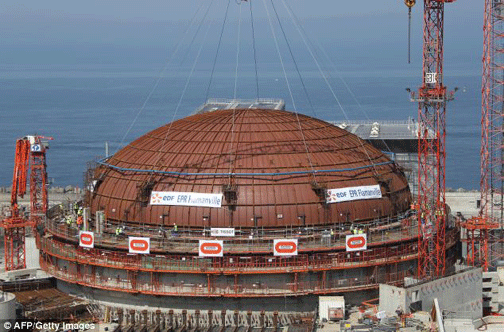
Flamanville EPR: EDF anticipates limited power until 2031. EDF has
informed the energy regulator that it has selected a final electrical power
output lower than that officially communicated. The reason: the hypothesis
of a deteriorated performance of the Normandy reactor, leading to a
restriction of its electricity production.
These are just five short lines
in a document of over 200 pages. But they are very important. In its report
on the cost of nuclear power, published Tuesday, September 30, the Energy
Regulatory Commission (CRE) addresses the issue of the electrical power of
the Flamanville 3 EPR, the restart of which was recently postponed until
mid-October, after numerous delays since its shutdown last June following a
leak in a primary circuit protection valve.
The energy regulator explains
that the production of Flamanville 3 is difficult to predict due to the
level of uncertainty over the timetable for the continuation of reactor
tests. Above all, it specifies that in terms of “the final nominal
electrical power of the EPR, EDF declared to the CRE a power 35 megawatts
(MW) lower than the power declared in the public data framework . “
La Tribune 7th Oct 2025, https://www.latribune.fr/article/entreprises-finance/energie-environnement/10816924410568/epr-de-flamanville-edf-anticipe-une-puissance-bridee-jusquen-2031
RADIOACTIVE material was accidentally released at Scotland’s Dounreay nuclear.
An investigation was launched in June 2024 after Nuclear Restoration Services
(NRS) – the firm which is responsible for the north Caithness complex’s
clean-up and demolition – informed the Scottish Environmental Protection
Agency (Sepa) of a potential leak of contaminated water. Scotland’s
environmental regulator confirmed that a “small leak” from a carbon bed
filter had occurred. Three different radioactive substances –
alpha-emitting Radionuclides, alpha-emitting Radionuclides and Caesium-137
– were all released, according to the Scottish Pollutant Release
Inventory (SPRI) data. Monitoring from NRS didn’t detect any increase in
radioactivity in groundwater downstream. But Sepa found that the firm had
breached environmental regulations and has ordered it to review its
groundwater monitoring arrangements and “establish the extent of
contamination” which has arisen from the leak.
The National 7th Oct 2025, https://www.thenational.scot/news/25525191.radioactive-water-highland-nuclear-site-leaked-major-breach/
Ukraine has just generated another cash sink for Western taxpayers
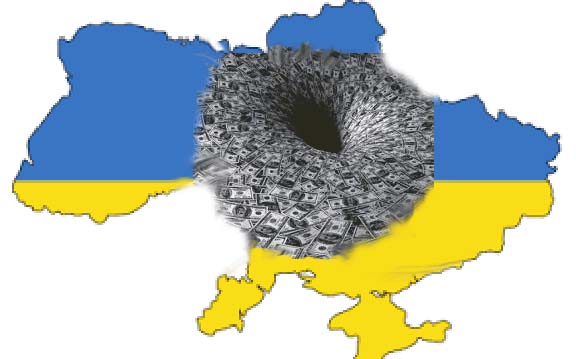
In the meantime, Canadian cash for weapons, “for Ukraine,” is sure pumping up the integrated US/Canada military-industrial complex, which seems to be the go-to Western strategy for boosting their GDP these days
The office of the “Special Representative for the Reconstruction of Ukraine” has been created for Canada’s ex-deputy prime minister
Rachel Marsden, a columnist, political strategist, and host of independently produced talk-shows in French and English. 4 Oct 25
Last month, former Canadian Prime Minister Justin Trudeau’s deputy prime minister, Chrystia Freeland, was dropkicked from newish Prime Minister Mark Carney’s cabinet. He did her a massive favor. Because now she doesn’t have to pretend to represent Canada anymore while following her true passion: representing Ukraine.
Freeland has a new role: “Special Representative for the Reconstruction of Ukraine,” officially speaking. The first question that came to mind when hearing this was, “When does she finally get to move to Kiev, already?” Imagine my disappointment to learn that she doesn’t.
Well, actually, my first question was, “Is Ukraine under reconstruction now? Did I slip into a coma and miss the bomb show wrapping up?” Nope, the conflict is still raging. But I guess it makes it sound like she’s going to be keeping a careful watch over the money that Carney has “pledged” to Ukraine – perhaps in the same way that people “pledged” to pay me a dollar per lap for my childhood swim-a-thons, then bailed when I came back to collect after competing 500 laps. I guess time will tell. Canadian taxpayers can only pray that will be the case, and that Carney is just virtue signaling Canadian cash for Ukraine and not actually sending any there, in the same way that the jokers running the EU make a big stink about the evils of Russian energy while importing it on the down-low through third countries.
In the meantime, Canadian cash for weapons, “for Ukraine,” is sure pumping up the integrated US/Canada military-industrial complex, which seems to be the go-to Western strategy for boosting their GDP these days amid their tanking economies.
Another question: Will Freeland use her experience in blocking Canadian bank accounts as Trudeau’s finance minister during the Covid-era Freedom Convoy anti-mandate protests to block shady cash flowing to Ukraine? I’m guessing not, if only because those Canadian bank accounts were blocked under the ultimately false pretext (as determined by Canadian intelligence) that foreign cash was funding interference with Canadian government decisions. In Ukraine’s case, that foreign cash is considered a plus because it’s coming from the West. Seems like she’d be more likely to tackle anything that got in its way.
Anyway, Freeland has just used her new Canadian taxpayer-funded role to plead Ukraine’s case in the pages of the Financial Times.
She wrote that “the fact is that we need Ukraine to save us,” presumably from the other side of the world, in Ottawa. She then goes on to qualify some murky, contentious drone activity around the Ukraine–EU border as “recent incursions into Central and even Western Europe.” At least I think that’s what she’s referring to. Unless I somehow missed the Russian tanks rolling down the Champs-Élysées. She doesn’t specify. But no matter. All the better, apparently, to argue that these incidents “show NATO needs Ukraine as a shield against Russia.”
Sounds like what Vladimir Zelensky was saying just the other day. The Ukrainian leader was going off about an incident last month of some alleged 90 drones over Ukraine, which he said were heading for Poland. He said that if only 20 of them actually ended up there, it was only because Kiev shot the rest down. The implication? That Ukraine was saving Poland. Trump was asked about it at the time and didn’t exactly praise Zelensky as Poland’s savior. He basically shrugged, saying, look, whatever – could have just been accidental.
Freeland also cited Trump’s tongue-in-cheek remarks from the other week when he rapped on social media about how Ukraine was winning on the battlefield against Russia and probably could even conquer Russian territory. He then offered to sell the Europeans all the American weapons they wanted in that endeavor. What part of Trump’s wishing them “good luck” did Freeland not understand as a commentary on Trump being keen to profit off the EU’s delusions, as long as Washington doesn’t have to get its hands dirty? She grasped none of it, apparently. Because she wrote in the FT that “US President Donald Trump got it right at the UN last week: Ukraine is a winner, and Ukraine can win.”
Freeland literally had just written of Ukraine in the same piece, a bit further up, that “we have assumed it would lose, at least without extraordinary effort from us.” Really? Your whole posse in Canada has been saying otherwise for years. “Ukraine will win and Canada will be there until the end,” said Canadian Foreign Affairs Minister Anita Anand, in early 2023, when she was defense minister.
So now we’ve gone from “Ukraine will win” to “Ukraine will only win if we do everything except pull the trigger” to “we need Ukraine because NATO is so weak.” Yeah, so weak that NATO is actually contemplating blasting Temu-grade drones out of the sky with F-16s, as the Romanian defense minister suggested during a recent Warsaw Security Forum panel.
Freeland adds that the West can learn from Ukraine about “how to fight a 21st-century war, and how to invent, manufacture and then keep reinventing the weapons we need for this new way of war in real time.” Look out, folks! Freeland has just discovered guerrilla warfare – but apparently not the double-edged sword it represents.
It’s all good when Ukrainian Nazis are getting schooled by NATO forces to fight Russia, and when they then graduate to fulfilling Freeland’s fantasy of pretending to teach NATO how to do guerrilla warfare – as though it’s a matter of NATO lacking ability and not just guerrilla warfare being way too cheap for NATO to justify washing tax cash into defense coffers.
What could possibly go wrong with letting Ukraine play asymmetric warfare “teacher” to justify the West turning it into a giant weapons toy box? It’s not like there haven’t been reports lately of Latin American drug cartels getting their drone training in Ukraine to use back home. We’re talking about Mexican and Colombian gangsters, according to Defense News, one of the leading military publications. Just your average start-up, really.
Freeland then proceeds to cheerlead the idea recently promoted by German Chancellor Friedrich Merz of straight-up stealing €140 billion in European-held Russian assets as a “loan” for Ukraine. Ukraine apparently just pays it back once Russia admits fault and writes a check, huh? In other words: never.
It’s one thing for Freeland to justify her new role by bloviating and virtue-signaling in the Western press. It’s another to make taxpayers foot the bill for it when her real job should be to end this war as quickly as possible through diplomacy so some legitimate reconstruction business can be done in Ukraine’s interests that doesn’t just involve perpetuating a taxpayer-funded racket.
University of Stirling hosts Hiroshima and Nagasaki exhibition
The University of Stirling is hosting the UK debut of Remembered: 80 years
since the bombing of Hiroshima and Nagasaki, marking eight decades since
the atomic bombings of Japan at the end of the Second World War.
The exhibition, curated by the Nagasaki National Peace Memorial Hall for the
Atomic Bomb Victims, offers a deeply moving account of the destruction
caused by the bombings and their long-term human and environmental
consequences.
Stirling News 8th Oct 2025, https://www.stirlingnews.co.uk/news/25528466.university-stirling-hosts-hiroshima-nagasaki-exhibition/
Not surprising: Biden hid report on Ukraine scandal, docs reveal
07 Oct 2025 , https://www.sott.net/article/502251-Not-surprising-Biden-hid-report-on-Ukraine-scandal-docs-reveal
Joe Biden asked the CIA to cover up a report about his family’s alleged corrupt business activities in Ukraine while he was serving as US vice president in 2015, according to declassified agency documents.
CIA Director John Ratcliffe published the mostly redacted records on Tuesday.
One of the documents was a government email sent to the agency and dated February 10, 2016.
“Good morning, I just spoke with Vice President / National Security Adviser and he would strongly prefer the report not/not be disseminated. Thanks for understanding,” it said.
The sender’s name was redacted, leaving just the title PDB Briefer. The Presidential Daily Brief is a top secret document for daily distribution to the US president and a small number of top level approved officials.
The report in question said that Ukrainian officials in the administration of then President Pyotr Poroshenko “expressed bewilderment and disappointment” at Biden’s December 2015 visit.
These officials viewed the alleged ties of the US Vice President’s family to corruption in Ukraine as evidence of a double-standard within the US Government towards matters of corruption and political power.
Biden’s convicted felon son, Hunter, held a lucrative position on the board of Ukrainian energy conglomerate Burisma Holdings during his father’s vice presidential term.
The elder Biden has publicly admitted to pressuring Kiev into firing a prosecutor general who was investigating the company in 2016. However, he denied ever taking bribes or having knowledge of Hunter’s foreign business affairs.
In December of last year, Biden signed a broad pardon for his son, u-turning on prior promises not to do so. The pardon shields Hunter from any prosecution for crimes committed between 2014 and 2024.
Rampant corruption in Ukraine has led US officials to voice concerns over potential embezzlement of aid. Recent opinion polls say the majority of Ukrainians see the problem as getting worse.
EDF Weighs Edison IPO To Boost Nuclear Expansion Funding

Since being fully renationalized in 2023, EDF has been under pressure from President Emmanuel Macron’s government to finance up to six new EPR2 reactors and extend the life of the existing fleet. That program could require more than €60 billion through the 2030s, prompting asset reviews that include potential divestments in renewables and non-core foreign units, the Financial Times reported.
By Charles Kennedy – Oct 08, 2025, https://oilprice.com/Latest-Energy-News/World-News/EDF-Weighs-Edison-IPO-To-Boost-Nuclear-Expansio
French state utility EDF is in talks with banks about a potential initial public offering of its Italian subsidiary Edison, according to sources cited by Reuters, in a move that could unlock billions in capital as EDF ramps up financing for its nuclear revival at home.
EDF has begun sounding out major European lenders including BNP Paribas and Société Générale to assess investor appetite for a Milan listing that would value Edison between €7 billion and €10 billion ($8-11 billion). The group would likely retain a controlling stake while selling a minority portion to the public or strategic investors, according to the Reuters report. Sources told the news agency that the discussions remain preliminary, with a formal mandate expected by the end of October.
Edison, which was fully acquired by EDF in 2012, remains one of Italy’s largest integrated energy companies, operating power generation, retail, and gas units with annual revenue of about €15 billion and EBITDA near €1.7 billion. Its CEO, Nicola Monti, said in September that the company was prepared for a market return if EDF gave it the green light, according to Reuters.
The IPO would fit EDF’s broader capital rotation strategy.
Since being fully renationalized in 2023, EDF has been under pressure from President Emmanuel Macron’s government to finance up to six new EPR2 reactors and extend the life of the existing fleet. That program could require more than €60 billion through the 2030s, prompting asset reviews that include potential divestments in renewables and non-core foreign units, the Financial Times reported.
Bloomberg reported in early September that an Edison relisting could gauge investor appetite for European power assets, as utilities face volatile wholesale electricity prices across the continent.
Edison’s partial flotation would be similar to moves by other European energy peers such as Eni and Iberdrola, which spun off renewables and downstream assets to attract capital while retaining strategic control. A Milan listing would also test investor confidence in Europe’s liberalized power markets at a time of rising grid costs and renewed nuclear investment.
Bloomberg reported in early September that an Edison relisting could gauge investor appetite for European power assets, as utilities face volatile wholesale electricity prices across the continent.
Edison’s partial flotation would be similar to moves by other European energy peers such as Eni and Iberdrola, which spun off renewables and downstream assets to attract capital while retaining strategic control. A Milan listing would also test investor confidence in Europe’s liberalized power markets at a time of rising grid costs and renewed nuclear investment.
Poll suggests most Reform UK voters back investment in renewable energy
More than half of Reform UK voters approve of their pensions being
invested in green energy despite the party recently launching a
“renewables war”, a poll suggests.
A survey by YouGov found 79% of
voters overall are in favour of their pensions being invested in renewable
energy, including 53% of Reform UK supporters. The findings have led to
claims that politicians who oppose investment in the sector “have grossly
misjudged” voters’ views. Reform UK deputy leader Richard Tice launched
a campaign group called UK Opposes Renewable Eyesores in July, decrying the
“the madness of net stupid zero” and pledging to “go into battle”
against Energy Secretary Ed Miliband.
Nation Cymru 8th Oct 2025, https://nation.cymru/news/poll-suggests-most-reform-uk-voters-back-investment-in-renewable-energy/
Putin’s UnPeaceful Atom

atomic reactors provide “weapons for the enemy,” serving as pre-deployed weapons of mass destruction.
No atomic reactor anywhere can credibly claim to be immune
The fragility of instrumentation, operational, cooling, spent fuel storage and other vital systems have been amply demonstrated
Karl Grossman – Harvey Wasserman, October 6, 2025, https://www.counterpunch.org/2025/10/06/putins-unpeaceful-atom/
Russian Dictator Vladimir Putin last week eagerly confirmed that all “Peaceful Atom” nuclear power plants are fair game for military destruction and that the ensuing apocalyptic fall-out is not really his concern.
As Reuters reported, “Putin on Thursday warned Ukraine that it was playing a dangerous game by striking the area near the Zaporizhzhia nuclear plant and suggested that Moscow could retaliate against nuclear plants controlled by Ukraine.”
The six-reactor Zaporizhzhia complex is, noted Reuters “Europe’s largest [and] has been cut off from external power for more than a week and is being cooled by emergency diesel generators.”
Zaporizhzhia was captured by Russian forces in the early days of the 2022 invasion.
The global crisis it now embodies was foreseen 45 years ago by Bennett Ramberg, in his book “Nuclear Power Plants as Weapons for the Enemy: An Unrecognized Military Peril.”
Ramberg holds a Ph.D. in international relations and a law degree. He’s been an analyst or consultant to the Nuclear Control Institute, Global Green, Committee to Bridge the Gap and the U.S. Senate and U.S. State Department. He now directs the Global Security Seminar. Published by the University of California Press, his book and a new edition out last year are beyond chilling.
And its grave warnings are playing out in recent years and today.
According to the U.S. government’s 9/11 Commission, the Indian Point nuclear reactors, 25 miles north of New York City, were potential targets considered for the September 11 attacks. Between 1984 and 1987, Iraq bombed Iran’s Bushehr nuclear power plant six times. In 1991, during the Persian Gulf War, the U.S. Air Force bombed three nuclear reactors in Iraq. It gets worse.
As an article in the Bulletin of the Atomic Scientists put it last year, “small modular reactors, floating nuclear plants, and microreactors….these emerging technologies elevate concerns that wartime attacks could expose warfighters and civilians to nuclear fallout….Russia’s occupation of Ukraine’s Zaporizhzhia nuclear power plant has already set a dangerous precedent that could sway the course of future wars.”
William Alberque, former director of strategy, technology and arms control of the International Institute for Strategic Studies, wrote in a piece on the website of the London-headquartered organization in 2023 that amidst “The wartime weaponization of nuclear power stations,” the “risks of a nuclear disaster remain high at Ukraine’s Zaporizhzhia Nuclear Power Plant as Russia continues to threaten the health and safety of the entire region through its reckless behaviour.”
In the war on Ukraine, he adds, “a nuclear weapon state has decided that nuclear power reactors are legitimate targets and tools of coercion in war.”
Thus, atomic reactors provide “weapons for the enemy,” serving as pre-deployed weapons of mass destruction.
Amidst yet another billionaire-hyped push for a “Nuclear Renaissance,” atomic power—including large, small, and fusion reactors—has again faltered due to runaway costs and devastating construction delays. All reactors heat the planet at 300 degrees Centigrade, emit radioactive carbon 14, and can’t match flexible demand.
Most importantly, huge breakthroughs in renewables and battery efficiency have made them cheaper, safer, cleaner, faster-to-build, and more flexible, job-producing and reliable than both fossil fuels and atomic energy. In short, they have priced out fossil/nukes. More than 90% of the world’s new energy capacity is now Solartopian, comprised of carbon/heat and waste-free renewables, battery backup-up units and increased efficiency.
But the Ukraine war has now underscored yet another “Peaceful Atom” pitfall known for decades—the threat of a rogue nation turning atomic reactors into weapons of apocalyptic mass terror and destruction.
More than 400 commercial nuclear power plants are now licensed worldwide. There are 94 in the US. The destruction of just one, at Diablo Canyon, California, could send lethal fallout pouring across the entire continental United States, while first turning Los Angeles into a radioactive wasteland.
Putin has not estimated precisely how much radioactive fallout might result from blowing up an atomic reactor. But the war in Ukraine has made it clear that it could be done with a single drone costing less than $1,000.
Putin has asked just one question about such an attack: who will stop me?
The answer could be apocalyptic: no reactor, large or small, is anywhere immune.
When Putin sent troops pouring through Belarus into northern Ukraine in 2022, they quickly assaulted the smoldering remains at Chernobyl, which infamously exploded in 1986. The seething core of Unit Four has been covered with a $2 billion sarcophagus funded by downwind European nations.
The original explosion irradiated much of Europe. Airborne clouds were detected twice passing over the U.S., killing birds in California and irradiating milk in New England.
In “Chernobyl: Consequences of the Catastrophe for People and the Environment,” published in 2009 by the New York Academy of Sciences,” lead author Dr. Alexey Yablokov, (environmental advisor to Russian Presidents Gorbachev and Yeltsin) drew from 5,000 documents. These included health data, radiological surveys, scientific reports, and more. The conclusion was that as of 2004, as a result of Chernobyl’s fall-out, some 985,000 people had died, mainly of cancer. In the two decades since yet more thousands have been stricken.
In 2022, Putin’s invading troops seemed bound to repeat history. They terrorized and tortured Ukrainian technicians tasked to safeguard Chernobyl’s melted core against another explosion.
Tragically, the Russian soldiers camped in nearby woods, exposing themselves to heavily contaminated dust and soil.
On February 14, 2025, a Russian drone severely damaged Chernobyl’s sarcophagus. Had it hit the melted core, another global-scale radiation release could have again contaminated much of the Earth.
Putin has denied responsibility for that attack. However, he has seized the six reactors at Zaporizhzhia. As at Chernobyl, his troops terrorized, tortured and terminated vital Ukrainian staffers, seriously endangering on-going plant safety.
Zaporizhzhia’s reactors are allegedly shut. But cooling water and backup/off-site power vital to keeping the cores and fuel pools from exploding are tenuous at best. Random munitions and at least one drone have hit the plant.
By cutting transmission lines into Ukraine while running one toward Russia, Putin may soon become Earth’s first autocrat to “steal” an atomic power plant.
He’s further threatened to turn any reactor he wants into a de facto weapon of mass radioactive destruction, saving himself the trouble and expense of a Bombs and missiles.
No atomic reactor anywhere can credibly claim to be immune. The fragility of instrumentation, operational, cooling, spent fuel storage and other vital systems have been amply demonstrated at Chernobyl, Fukushima, Chalk River, Fermi, Three Mile Island, Windscale, INEL, Santa Susanna, Khyshtym, and countless other stricken atomic facilities.
Chernobyl has shown the range and killing power of resultant fallout. Japan’s Fukushima, which exploded on March 11, 2011, has since spewed 100 times more radioactive cesium than did the atomic bombings of Hiroshima and Nagasaki. Its heavily irradiated liquid wastes are still pouring into the Pacific.
Though vehemently denied by the nuclear industry, the death toll from radiation releases at the 1979 Three Mile Island meltdown continues to rise.
Meanwhile Ukraine deploys drones to decimate Putin’s oil and gas infrastructure, utterly ravaging Russia’s refineries, storage tanks, pipelines and more.
With his own drones, Putin has made clear he can target any reactor anywhere.
Safe, clean, green renewable energy technology now accounts for more than 90% of the world’s new energy production. No war monger can destroy a city by blowing up a solar panel or tearing down a wind turbine.
Yet Ukraine itself has four reactors on order, offering Putin still more pre-deployed weapons of radioactive mass destruction.
Likewise, California’s “anti-Trump” Governor Gavin Newsom keeps running uninsured, hyper-expensive nukes at Diablo Canyon that Putin could drone-hit tomorrow, forever bankrupting California, turning Los Angeles and the downwind nation into a permanent radioactive wasteland.
Deep in the bowels of the Kremlin, the nuclear Stalin is laughing.
Karl Grossman is the author of “Cover Up: What You Are Not Supposed to Know About Nuclear Power.” He is the host of the nationally broadcast TV program “Enviro Close-Up with Karl Grossman” (www.envirovideo.com)
Harvey “Sluggo” Wasserman wrote “Solartopia! Our Green-Powered Earth,” and co-wrote (with Norman Solomon, Bob Alvarez & Eleanor Waters) “Killing Our Own: The Disaster of America’s Experience with Atomic Radiation. His Green Grassroots Election Protection is aired via Zoom (www.grassrootsep.org) on most Mondays at 5 p.m. ET.
Harvey Wasserman wrote the books Solartopia! Our Green-Powered Earth and The Peoples Spiral of US History. He helped coin the phrase “No Nukes.” He co-convenes the Grassroots Emergency Election Protection Coalition at www.electionprotection2024.org Karl Grossman is the author of Cover Up: What You Are Not Supposed to Know About Nuclear Power and Power Crazy. He the host of the nationally-aired TV program Enviro Close-Up with Karl Grossman (www.envirovideo.com)
Is Russia’s Putin gambling with the safety of Ukraine’s nuclear stations?
Russia and Ukraine have traded blame, accusing one another of imperilling the Zaporizhzhia nuclear power plant.
Aljazeera, By Mansur Mirovalev, 6 Oct 2025
Kyiv, Ukraine – On October 2, Russian President Vladimir Putin alleged that Ukrainian attacks had destroyed a high-voltage transmission line between the Moscow-occupied Zaporizhzhia nuclear power plant in southeastern Ukraine and Kyiv-controlled areas.
Days earlier, Ukraine’s leader, President Volodymyr Zelenskyy, said Russian shelling had cut the plant off from the electricity network.
The mammoth, six-reactor plant – Europe’s largest and known in Ukraine as the ZAES – sits less than 10km (6.2 miles) south of the front line. It has been shut since 2022, generating none of the electricity that once provided up to a fifth of Ukraine’s needs.
But dozens of Moscow-deployed engineers have frantically tried to restart it – so far unsuccessfully. Ukraine has long feared that Russia is trying to connect the power grid and quench a thirst for energy in Crimea and other occupied areas.
Putin purported that the alleged Ukrainian strikes caused a blackout at the plant and that it had to be fuelled by diesel generators.
The latest blackout at the plant is the longest wartime outage of power.
“On the [Ukrainian] side, people should understand that if they play so dangerously, they have an operating nuclear power station on their side,” Putin told a forum in St Petersburg.
‘The radioactivity is so powerful’
In fact, apart from the Zaporizhzhia nuclear plant, Ukraine has three operating power stations – as well as the shutdown Chornobyl facility, the site of one of the world’s worst nuclear disasters.
“And what prevents us from mirroring [Ukraine’s alleged actions] in response? Let them think about it,” Putin said.
His threat had apparently already been fulfilled a day earlier. Ukraine accused Russia of shelling that damaged the power supply to the colossal protective “sarcophagus” over the Chornobyl station’s Reactor Four that exploded in 1986.
Both the Chornobyl station and the plant in Zaporizhzhia need electricity for their safety systems and, most importantly, for the uninterrupted circulation of water that cools nuclear fuel.
The fuel, thousands of uranium rods that keep emitting heat, are too radioactive to be taken anywhere else.
In Chornobyl, the fuel is spent and submerged in cooling ponds or “dry-stored” in ventilated, secured facilities.
But at the Zaporizhzhia site, the rods are still inside the reactors – and are newer, hotter, and made in the United States…………………………………………………………………………………
The biggest problem is Russia’s failure to hook the plant to the energy grid of occupied regions as Ukrainian forces pin-pointedly destroy the transmission lines Russia is building – along with fuel depots and thermal power stations, he said.
“The Russians are restoring them any way they can, but Ukrainian forces very much prevent the restoration,” the engineer quipped.
Bellona, a Norway-based nuclear monitor, said on October 2 that a “greater danger lies in Moscow’s potential use of the crisis to justify reconnecting the plant to its own grid – portraying itself as the saviour preventing a nuclear disaster”.
Should Moscow do that, the step would only “worsen [the] strategic situation, give Moscow additional leverage, and bring a potential restart closer – a move that, amid ongoing fighting, would itself sharply increase the risk of a nuclear accident,” it said.
Analysts pointed to a deal proposed by US President Donald Trump in March to transfer the plant to US management as a possible solution.
Ukrainian strikes “will go on until Russia makes a peace deal that also includes US control over the ZAES and its operation”, Nikolay Mitrokhin, a researcher with Germany’s University of Bremen, told Al Jazeera.
Meanwhile, in recent weeks, blackouts in Crimea have become unpredictable and distressing, a Crimea local told Al Jazeera…………..
Russia understands that improved power supply is a prerequisite for its efforts to restore occupied Ukrainian regions and conquer more Ukrainian land, said an observer.
Moscow needs the plant to “cover the growing [energy] consumption in the region, considering not just occupied Crimea, but also the occupied areas [above the Sea of] Azov. And also within the context of Russia’s plan to occupy part of the Zaporizhia region,” Kyiv-based analyst Aleksey Kushch told Al Jazeera.
Greenpeace said that its detailed analysis of high-resolution satellite images taken after what Putin alleged were Ukrainian strikes showed that he was bluffing.
“There is no evidence of any military strikes in the area surrounding the pylons and network of power lines in this part of Zaporizhzhia nuclear power plant,” the international environmentalist group said on October 1.
The images showed that the power towers remained in position and there were no craters left by explosions around the lines, it said.
Greenpeace concluded that the blackout at the plant is “a deliberate act of sabotage by Russia” whose aim is to “permanently disconnect the plant from the Ukraine grid and connect the nuclear plant to the grid occupied by Russia”. https://www.aljazeera.com/news/2025/10/6/is-russias-putin-gambling-with-the-safety-of-ukraines-nuclear-stations
1 This Month



26 September – International Day for the Total Elimination of Nuclear Weapons


PLEASE OPPOSE HR 8255 AND S.3639 – bills would accelerate satellite deployment, with no environmental review or safeguards – https://ncstd5li.quorum.us/campaign/169331/
To see nuclear-related stories in greater depth and intensity – go to https://nuclearinformation.wordpress.com
-
Archives
- September 2026 (269)
- August 2026 (330)
- July 2026 (355)
- June 2026 (287)
- May 2026 (306)
- April 2026 (356)
- March 2026 (251)
- February 2026 (267)
- January 2026 (308)
- December 2025 (358)
- November 2025 (359)
- October 2025 (375)
-
Categories
- 1
- 1 NUCLEAR ISSUES
- business and costs
- climate change
- culture and arts
- ENERGY
- environment
- health
- history
- indigenous issues
- Legal
- marketing of nuclear
- media
- opposition to nuclear
- PERSONAL STORIES
- politics
- politics international
- Religion and ethics
- safety
- secrets,lies and civil liberties
- spinbuster
- technology
- Uranium
- wastes
- weapons and war
- Women
- 2 WORLD
- ACTION
- AFRICA
- Atrocities
- AUSTRALIA
- Christina's notes
- Christina's themes
- culture and arts
- Events
- Fuk 2022
- Fuk 2023
- Fukushima 2017
- Fukushima 2018
- fukushima 2019
- Fukushima 2020
- Fukushima 2021
- general
- global warming
- Humour (God we need it)
- Nuclear
- RARE EARTHS
- Reference
- resources – print
- Resources -audiovicual
- Weekly Newsletter
- World
- World Nuclear
- YouTube
-
RSS
Entries RSS
Comments RSS

