Revolutionary solar power: London Borough’s solar panels over marketplace
 London borough installs 6,000 solar panels over marketplace http://www.theguardian.com/environment/2016/may/19/london-borough-installs-6000-solar-panels-on-market £2m scheme by Hounslow council on Western International Market will be biggest solar scheme by any local authority, and use batteries to store energy. A London council is unveiling a vast installation of 6,000 solar panels on a wholesale market rooftop, which it says is the largest such array put up by a local authority.
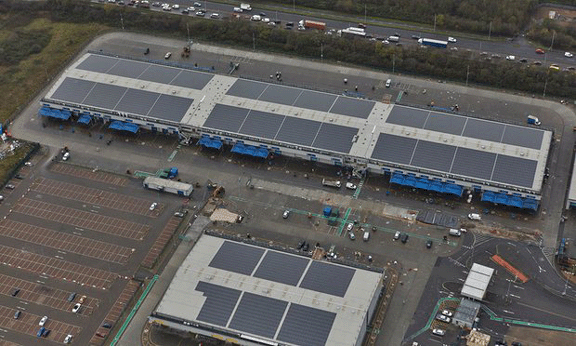
The London Borough of Hounslow says its £2m investment in solar, which has been installed on the roof of Western International Market, is also the first by a council to adopt battery storage to maximise the power from the panels.
The 1.73 megawatt (MW) array of 6,069 panels and four 60kW lithium batteries system now generates half the site’s required electricity.
The site is west London’s largest wholesale market for fresh produce and flowers, and uses around 3.5 megawatt hours (MWh) of electricity to provide climate controlled facilities to around 80 wholesalers and buyers – the equivalent of 1,750 homes a year.
Hounslow council, which owns the market near Heathrow Airport, says the solar system will contribute 2% of its carbon reduction target, cutting emissions by more than 780 tonnes a year.
It will also save £148,000 in energy costs which, along with £100,000 in generation tariff payments and £7,000 in export tariffs, means that the council expects to be £255,000 better off in the first year of operation.
Charles Pipe, energy manager at Hounslow, said: “From the very beginning, this project has been about reducing our carbon footprint and making an investment for the future. “But we have achieved so much more than that. Not only can we expect to see immediate savings on our electricity bills, but we are expecting to see a return on this investment in about five years.”
LG Electronics, one of Hounslow’s partners in the scheme, said it was the company’s largest solar panel installation in Europe and would deliver significant costs savings to the borough.
LG Solar’s UK senior solar sales manager Bob Mills said: “What’s more, the project has set the wheels in motion for further investment and research into the potential of battery storage, which is set to revolutionise the solar industry.
Egypt goes into $25 billion nuclear debt to Russia

 Egypt gets $25 billion loan from Russia for nuclear plant http://www.theprovince.com/business/egypt+gets+billion+loan+from+russia+nuclear+plant/11930248/story.html BY THE ASSOCIATED PRESS MAY 19, 2016 CAIRO – Egypt has announced a $25 billion loan from Russia for the building of a nuclear power plant.
Thursday’s announcement came in a decree by President Abdel-Fattah el-Sissi. The Russian loan will cover 85 per cent of the expenses of the plant’s construction.
Egypt, which will cover the other 15 per cent, is to repay the loan over a 22-year period, starting in 2029, with a 3 per cent annual interest rate.
Egypt and Russia agreed in February 2015 to build the plant together and signed a memorandum of understanding on the project. But the relations between the two nations were badly impacted after the horrific Russian passenger plane crash in Sinai last October, when all 224 people on board were killed.
Egypt’s economy has plummeted amid a slump in the tourism sector.
Nuclear danger in Armenia
Suicidal nuclear gambit on Caucasus, Trend, 19 May 2016 “………..According to the report by Vienna-based nuclear watch-dog, International Atomic Energy Agency (IAEA), Armenia has established quite a record of illegal trafficking of nuclear and other radioactive materials. There have been a couple of serious incidents spanning from 1999 onward. A large number of reported incidents has occurred on the country`s border with Georgia, tempting the IAEA to conclude there is high probability that the so called Armenian route does in fact exist. There is a further evidence to support this assertion. There were an unusually high number of Armenians caught in nuclear trafficking activities. Additionally, some of the reported incidents that made their way to the official reports suggested that the main focus of trafficking activities is in fact smuggling of nuclear material that could be used for nuclear weapons capabilities. There were also reports suggesting the trafficking of other radioactive material that could be utilized for alternate purposes, such as the building of a so called dirty bomb. Since the stakes with nuclear weaponry are always high to the extreme, the recognition of this threat must not be underrated and dismissed easily.
However, there should be increased interest of the international community to investigate these serious claims. If documented, they would pose a grave desta-bilization factor for the already turbulent region. They would also trigger deepening of hostilities and mistrust in extremely delicate regional framework of peace.
The prospects and dangers of potential acquisition of a dirty bomb by rouge actors are rising on the international agenda. The recently detected activities in South Caucasus showed that there were substantial efforts made in order to smuggle and illegally sell Uranium 238, which is highly radioactive. At the beginning of 2016, a different group was trying to smuggle a highly radioactive Cesium isotope that usually forms as a waste product in nuclear reactors. What is also worrying is that the majority of the activities are occurring in highly instable and unmonitored territories of Azerbaijan and Georgia that are under the control of separatists, such as Nagorno- Karabakh and South Ossetia. The mere organization of the Armenian route proves to show that illegal activities can flourish in the security blind spots of the region…… http://en.trend.az/scaucasus/armenia/2535865.html
EDF hoping to extend life of nuclear reactors, postpone decommisson costs
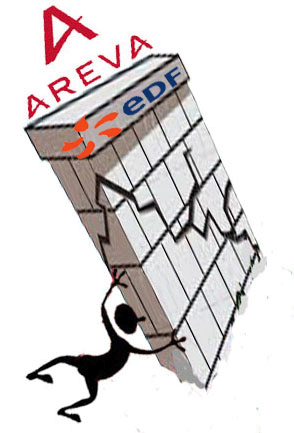 EDF sees French energy plan shaping nuclear depreciation schedule http://uk.reuters.com/article/uk-edf-nuclear-idUKKCN0YA211 PARIS | BY GEERT DE CLERCQ 19 May 16.The French government’s energy investment plan due in July will be a key indicator for whether and for how long EDF will extend the depreciation period of its nuclear plants, an executive said on Thursday.
EDF hopes to get nuclear energy regulator ASN’s authorisation to extend the lifespan of its nuclear plants to 50 years from 40, and already wants to extend the depreciation period on these assets, which would boost bottom-line profit.
Early this year ASN said it expects to give generic guidelines on French nuclear plant life extensions by 2018, but said extensions could not be taken for granted and that they would be decided reactor by reactor.
The government’s long-awaited multi-year energy investment plan (PPE) – implementing the August 2015 energy transition law – will not specify reactor lifespan, but should set targets for the share of nuclear in France‘s power mix.
President Francois Hollande has vowed to reduce that share from 75 percent to 50 by 2025, but has taken no concrete steps towards that goal.
“The PPE, and notably its nuclear chapter, expected early July, will figure largely in our decision about the accounting lifespan of our nuclear reactors,” EDF nuclear chief Dominique Miniere told reporters.
In 2003, EDF extended the depreciation schedule for its reactors in its accounts to 40 years from 30 – six years before the ASN authorised the move.
CEO Jean-Bernard Levy said in April EDF plans to extend the depreciation period by the closing of first-half results.
Miniere said the PPE should signal how many of EDF’s 58 reactors can keep operating, which will determine over what period reactors and related maintenance costs can be depreciated.
He said life extension would also impact EDF’s 23 billion euros (1 billion pounds) worth of decommissioning and nuclear waste provisions.
“Delaying reactor decommissioning also means delaying provisions,” he said. Miniere said 80 percent of EDF’s 58 reactors were built between 1980 and 1990. From 2020, many need to close or get approval operate another decade.
Miniere said every reactor has annual maintenance costs of about 50 million euros, or about 3 billion euros per year for EDF’s fleet.
Extending EDF’s reactors by 10 years and incorporating safety lessons learned from the Fukushima disaster will boost that to 4-4.2 billion euros per year in the 2014-2025 period, a total of just over 50 billion, after which costs will ease to 4.2-3 billion euros per year, he said. (Reporting by Geert De Clercq, editing by David Evans)
100% renewable energy powers Portugal for four days
Portugal runs for four days straight on renewable energy alone
Zero emission milestone reached as country is powered by just wind, solar and hydro-generated electricity for 107 hours, Guardian, Arthur Neslen, 19 May 16, Portugal kept its lights on with renewable energy alone for four consecutive days last week in a clean energy milestone revealed by data analysis of national energy network figures.
Electricity consumption in the country was fully covered by solar, wind and hydro power in an extraordinary 107-hour run that lasted from 6.45am on Saturday 7 May until 5.45pm the following Wednesday, the analysis says.
News of the zero emissions landmark comes just days after Germany announced that clean energy had powered almost all its electricity needs on Sunday 15 May, with power prices turning negative at several times in the day – effectively paying consumers to use it.
Oliver Joy, a spokesman for the Wind Europe trade association said: “We are seeing trends like this spread across Europe – last year with Denmark and now in Portugal. The Iberian peninsula is a great resource for renewables and wind energy, not just for the region but for the whole of Europe.”
James Watson, the CEO of SolarPower Europe said: “This is a significant achievement for a European country, but what seems extraordinary today will be commonplace in Europe in just a few years. The energy transition process is gathering momentum and records such as this will continue to be set and broken across Europe.”
Last year, wind providing 22% of electricity and all renewable sources together providing 48%, according to the Portuguese renewable energy association.
While Portugal’s clean energy surge has been spurred by the EU’s renewable targets for 2020, support schemes for new wind capacity were reduced in 2012.
Despite this, Portugal added 550MW of wind capacity between 2013 and 2016, and industry groups now have their sights firmly set on the green energy’s export potential, within Europe and without…….http://www.theguardian.com/environment/2016/may/18/portugal-runs-for-four-days-straight-on-renewable-energy-alone
France’s President Hollande backs Hinkley nuclear project, despite near bankruptcy of EDF
 Hollande renews support for Hinkley Point nuclear reactors http://www.theguardian.com/uk-news/2016/may/17/hollande-renews-support-edf-hinkley-point-nuclear-reactors
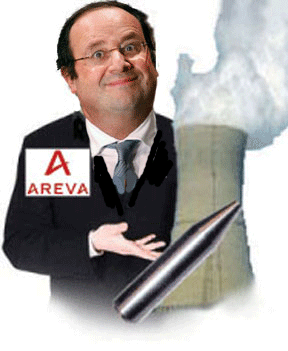
French president backs project despite fears that £18bn price tag could bankrupt EDF, which is 85% state-owned François Hollande has renewed his support for the controversial nuclear project planned by the French energy company EDF at Hinkley Point in Britain.
“I am in favour that this project goes ahead,” the French president told Europe 1 radio on Tuesday.
“It’s very important to understand that we need a high-performance, highly secure nuclear industry in France, and that we cannot let others take over terrain, including on exports, that has been French up to now,” he said.
A final decision on the plan to build two new-generation nuclear reactors at Hinkley Point in south-west England was due this month, but was delayed after unions at EDF demanded a review of the costs.
A joint project between EDF and China General Nuclear Power Corporation, it carries a projected price tag of £18bn ($26bn, €23bn) that will make it one of the world’s most expensive nuclear power plants.
Unions at EDF, which is 85% state-owned, fear it could bankrupt the company, which is already saddled with more than €37bn of debt.
Last month, the management agreed to consult the internal committee which has brought in outside experts to review the financial implications of the project.
Hollande said the review would be completed “in the coming weeks”.
There have been dissenting voices over Hinkley Point within the French government.
On Friday, France’s environment minister Ségolène Royal, who is also mother to Hollande’s children, told the Financial Times that she was worried about the “colossal sums” involved in the project and questioned whether it should go ahead
Ratings agencies Standard and Poor’s and Moody’s both lowered their forecasts for EDF last week, saying efforts to streamline the company were insufficient.
Hollande restated his vow to restructure and boost financing at EDF and rival energy giant Areva, “because they are the future”.
“The French nuclear industry has 200,000 employees. It represents our energy independence,” Hollande told Europe 1.
“EDF and Areva are public companies on which we should rely. But at the same time, we must give them new support.”
CGN, which is due to cover a third of the costs, said on Monday that it would not go ahead with the project if EDF pulls out.
Strategy paper on nuclear energy prepared by European Union
European Union to publish strategy paper on nuclear energy http://www.dw.com/en/european-union-to-publish-strategy-paper-on-nuclear-energy/a-19262144 Ahead of a meeting of the EU’s energy commissioners, a report obtained by German media has revealed plans for the future of nuclear power in Europe. The plans run contrary to German policy.
Citing a strategy paper from the EU on Tuesday, “Spiegel Online” reported that the European Union plans to defend its technological dominance in the nuclear sector.
According to the document, the European Union’s 28 member states should strengthen cooperation on researching, developing, financing and constructing innovative reactors.
The paper is reportedly the basis for the European Commission’s future nuclear policy and is expected to be passed by the European commissioner for energy union on Wednesday. The report would then be presented to the European Parliament.
“Spiegel” reported that the European Union plans to advance the minireactors with the hope that such technology should be in use no later than 2030.
German nuclear phaseout
The plans contradict policy in Germany, which currently intends to end the domestic use of nuclear power by 2022. As an alternative to nuclear energy, Berlin has pushed to increase renewable energy, such as wind and solar power. But a decision to shut down nuclear power following the 2011 Fukushima nuclear disaster in Japan has also left Germany reliant on dirty and readily available coal to produce power.
The task of safely decommissioning and dismantling nuclear power stations also promises to be expensive and controversial, and will take many years. Though the government and nuclear industry are keen to get on with dismantling and removing reactors soon after they are shut down, the nongovernmental organization International Physicians for the Prevention of Nuclear War (IPPNW) has voiced concerns about the potential associated health risks.
The IPPNW’s preferred solution would require heavily contaminated elements such as spent fuel rods to be removed immediately, while less-contaminated buildings and equipment would be left in situ indefinitely.
Representatives at E.ON – Germany’s largest electricity utility and the owner of 11 nuclear stations – told DW that fencing off sites was neither more nor less safe than dismantling them. The utility argued instead that dismantling is a better solution in terms of the labor market consequences.
“IPPNW’s option would mean that 300-400 people who work at a nuclear site would abruptly lose their jobs,” an E.ON spokesperson said.
Obama shuns Open Ended Working Group on Taking Forward Multilateral Nuclear Disarmament Negotiations.
 Obama goes to Hiroshima, but stiffs nuclear talks in Geneva The upcoming visit may be a first, but if Obama is serious about disarmament, he will not shut the door on discussions with non-nuclear weapon states, Open Canada.org BY: PAUL MEYER MAY 17, 2016 After some extended internal debate, the White House has announced that U.S. President Barack Obama will visit Hiroshima on May 27 after a G7 summit meeting in Japan, making him the first sitting American president to pay such a visit to the city synonymous with atomic devastation.
Although his Secretary of State John Kerry had paid such a visit in April and several U.S. ambassadors had previously attended commemorative ceremonies in Hiroshima, the political significance of a presidential visit would be of an entirely different order of magnitude. Hence the concern of his advisors as to how such a visit would play in the American political scene and their haste to proclaim that Obama will not offer any ‘apology’ for the actions of his predecessor some 70 years ago……
Far from advancing his nuclear disarmament-related goals — including the ratification of the Comprehensive (Nuclear) Test Ban Treaty, initiation of a fissile material production ban, further reduction of strategic nuclear forces, and diminishing the saliency of nuclear weapons in national strategy — Obama has committed to an unprecedented modernization of these nuclear forces that is estimated to cost more than USD$350 billion over the next decade.
He has also endorsed the perverse Cold War practice of maintaining nuclear-tipped inter-continental ballistic missiles (ICBMs) on high alert status with all the attendant risks that such a posture represents. His singular accomplishment in hosting the first and last of a series of four Nuclear Security Summits was an underwhelming lowest common denominator process that excluded from discussion the very subjects that he had raised in the Prague speech as requiring attention that would “transcend Cold War thinking.”
With all this evidence of a yawning gap between aims and achievements on the nuclear agenda, one would think that the Obama administration would be eager to find opportunities to enhance relations with non-nuclear weapon states and repair its image as an active supporter of nuclear disarmament. An opportunity to do so is currently present in Geneva in the form of the Open Ended Working Group on Taking Forward Multilateral Nuclear Disarmament Negotiations.
This group was constituted last fall by a widely supported resolution of the UN General Assembly and has just completed two weeks of deliberations after an earlier week of discussions in February. After a few more days of meetings in August the group is slated to submit a report to the 71th session of the General Assembly this fall.
As its title suggests, the objective of the group is to try and identify effective measures to make progress on nuclear disarmament issues that have been neglected for years in multilateral forums. Instead of engaging with the non-nuclear weapon states, the U.S. and the other nuclear-armed states have chosen to boycott these meetings. Given that the Open Ended Working Group was a duly constituted multilateral body operating under UN General Assembly auspices, this rejection to participate is insulting to the others attending (which include Canada, Japan and the rest of the U.S.’s allies) and to the principles of multilateral cooperation in general. Given the support freely offered by the non-nuclear weapon states to so many of the international security initiatives championed by the U.S., it is grating to see the cavalier fashion in which the U.S. and its nuclear weapon posse is stiffing the Geneva process. One can imagine the consternation in Washington if Prime Minister Justin Trudeau or the other invited leaders of the non-nuclear weapon states had said they would not attend Obama’s Nuclear Security Summit this March until such time as the U.S. agreed to participate in the Geneva proceedings.
Perhaps it is time for non-nuclear weapon states to become more insistent that their priority agenda gets some respect from the members of the nuclear weapons club…….https://www.opencanada.org/features/obama-goes-hiroshima-stiffs-nuclear-talks-geneva/
Former AREVA CEO ‘Atomic Anne’ Lauvergeon under a cloud at Rio Tinto
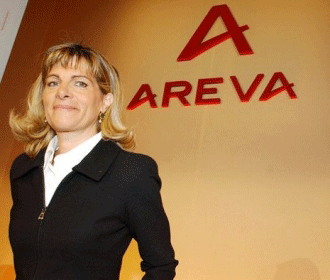 The future of Rio Tinto director ‘Atomic Anne’ Lauvergeon is under a cloud, The Age, May 16, 2016 Peter Ker Resources reporter The future of Rio Tinto director Anne Lauvergeon is under a cloud after French prosecutors starting investigating her conduct while chief executive of energy giant Areva almost a decade ago.
French prosectors spent Friday questioning Ms Lauvergeon over whether she deliberately filed misleading accounts for Areva in 2007.
The investigations centre on Areva’s disastrous takeover of London listed company Uramin in 2007, and the disclosure of multi-billion dollar impairments several years later.
London newspaper the Financial Times reported over the weekend that French prosecutors had confirmed that Ms Lauvergeon was being investigated for “publication of inaccurate accounts” during her time at Areva.
The 56-year-old Ms Lauvergeon, who is known as “Atomic Anne” in France, has served as a non-executive director of Rio since 2014.
The weekend’s revelations come barely two months after French prosecutors launched a separate investigation into alleged insider trading by Olivier Fric, who is Ms Lauvergeon’s partner.
The prosecutors are investigating whether Mr Fric used privileged information to profit from the Uramin deal. Mr Fric’s lawyers have reportedly denied the allegations.
The controversy surrounding Ms Lauvergeon and Mr Fric was known when the Rio board endorsed Ms Lauvergeon for re-election in March……..
Ms Lauvergeon’s continuing work at Rio while the French investigations go ahead is at odds with the approach taken by ASX chief executive Elmer Funke Kupper, who has stood down while the Australian Federal Police conduct anti-bribery investigations into his time spent working for Tabcorp. http://www.theage.com.au/business/mining-and-resources/the-future-of-rio-tinto-director-atomic-anne-lauvergeon-is-under-a-cloud-20160515-govnv7.html
Adolf Hitler’s secret NUCLEAR BOMBS found – claims engineer
Peter Lohr, 70, says he’s found five metallic objects in Nazi tunnels
Using radar and 3D he claims he can prove two are atom bombsBy SARA MALM FOR MAILONLINE, 18 May 2016 A pensioner claims he has found Adolf Hitler’s secret atom bombs inside tunnels dug by the Nazis underneath a mountain valley in central Germany.
Peter Lohr, 70, claims to have found five large metal objects in a cave in the Jonas Valley in Thuringia state, of which at least two are ‘atomic bombs’.
Mr Lohr is certain that the objects are weapons of mass destruction manufactured by the Nazis towards the end of the Second World War.
‘The metal’s been lying there for 71 years. At some point it will decay and then we will have a second Chernobyl on our hands’ he said.
The centre of the Jonas Valley was a scene of secret military construction towards the end of the Second World War, with thousands of concentration camp prisoners forced to dig tunnels under the mountains.
It is not known what purpose the tunnels were meant to have as it was never completed.
The tunnel system stretches for miles underneath the mountain, with thousands of caves, bunkers and storerooms, and it is believed that it was intended to be the Alamo of the Third Reich leadership.
The Jonas Valley was liberated by American troops in April 1945, and US authorities have since classified all 1945 documents relating to Ohrdruf for a minimum of 100 years.
This is not the first time rumours of a Nazi nuclear bomb has surfaced.
Last year, a documentary called The Search for Hitler’s Atom Bomb,’ quotes sealed records from Russia and America said to prove the Nazis were close to creating a weapon of mass destruction.
The programme quoted interrogation reports of Nazi scientists, eyewitness account and the records left behind by researchers, many of which were shipped to America after the war.
Russia joins the throng desperate to sell nuclear radioactive trash to Britain
Russia’s state-owned nuclear group keen to break into UK market Rosatom understood to be hoping to revive plans to build reactors in Britain if EDF proposals for Hinkley Point C fail, Guardian, Terry Macalister, 14 May 16, A Russian nuclear group is hoping that the potential meltdown of French plans to build new European pressurised reactors at Hinkley Point could offer an opportunity to break into the British nuclear market.
Deeper concerns about the future of the Somerset scheme were raised by the French energy minister, Ségolène Royal, who warned of the “colossal” cost, which EDF admitted could be £18bn or even £21bn.
Recent talks have been held between state-owned Russian nuclear group Rosatom and the UK’s Nuclear Decommissioning Authority (NDA) despite the chilly political relations between London and Moscow over Ukraine, Moscow sources claimed.
These discussions centred on whether Russia could help Britain with removal of uranium from old reactors – but Rosatom is understood to have a wider agenda of trying to resuscitate earlier plans to build its own reactors in Britain.
“There is still an appetite to enter the UK market,” said a senior Russian nuclear industry source who claimed Rosatom’s London-based representatives still maintained contacts with the Department ofEnergy and Climate Change…….
The Russians accept that sanctions and other political considerations make it difficult for such a plan to progress, but they point out that Rosatom still supplies uranium to UK and US nuclear plants.
The NuDA confirmed that it had held a series of talks with Rosatom. “We have met with them. We are a recognised global authority and we meet with a lot of organisations,” said a spokesman……..
China wants to use Britain as a showcase for its Hualong technology and agreed to take a third share in EDF’s Hinkley scheme in return for being allowed to proceed with Chinese-owned technology at Bradwell……..
Those worries were given extra weight with Royal’s comments in an interview with the Financial Times in which she said: “I am wondering if we should go ahead with the project. The sums involved are colossal.”
And they added to fears about the future of the Somerset project earlier this week when the company’s management was pilloried by shareholders at its annual general meeting and credit agency Moody’s downgraded EDF debt.
John Sauven, Greenpeace’s executive director, said the downgrading was just “a long line of massive red flag warnings” the UK government had received over the Hinkley nuclear project. He added: “Hinkley power station must not become ‘too big to fail’ because of politicians’ egos that are too big to back down.” http://www.theguardian.com/uk-news/2016/may/13/russias-state-owned-nuclear-group-keen-to-break-into-uk-market
Renewable energy, energy efficiency cheaper options for South West England than Hinkley nuclear power
 Alternatives to Hinkley nuClear News No 85 May 2016 If there is anywhere between 4 and 18 months before a final investment decision on Hinkley is made what alternative proposals can be promoted over that time?
 West England, published a study which showed how the South-west’s energy needs could be met with renewable energy. The report focussed on dealing with the baseload question and the economic impact of a renewable energy transition. It concluded that the South West has the renewable energy resources to meet more than 100% of its total energy needs, including replacement of liquid fuels and electrifying railways.
Sparks flew at Electricite de France’s AGM: EDF has €37 billion of debt
nuClear News No 85 May 16“…….Sparks were flying at EDF’s Annual General Meeting on 12th May as EDF employees were given a chance to air their views and grill the company’s board, which remains divided on whether to go-ahead with HPC. In the run up to the meeting EDF announced that the contingency needs of HPC could increase the cost by about £3bn to £21bn.Reasons NOT to back Britain’s Hinkley nuclear power project
 nuClear News No 85 May 16“…… there is anywhere between 4 and 18 months to develop the argument for an alternative to building HPC.
How Margaret Thatcher’s nuclear dream has turned into UK’s Hinkley nightmare
 Nuclear dream becoming nightmare over Hinkley Point C http://www.plymouthherald.co.uk/Opinion-Nuclear-dream-nightmare-Hinkley-Point-C/story-29269511-detail/story.html By WMN_MartinF May 13, 2016 By ALLAN JEFFERY Some dreams come true; others turn into nightmares. Hinkley Point C nuclear power station has been a dream to many politicians. Is it about to come true?

Margaret Thatcher was one of the first to dream of building Hinkley C. It was to be the second of 10 nuclear power stations she would build, to rescue the country from the menace of those socialist, coal-dependent generators, providing most of the UK’s electricity and too often holding the country to blackout ransom.
Her dream started well! At public inquiry, at Cannington in 1988/89, despite the hundreds of people and organisations arguing against the build, the inspector gave permission to build Hinkley C.
But her dream turned sour as her privatisation of the nation’s nuclear electricity production bankrupted British Nuclear Energy. The government had to bail out the privatised company. Even worse, the world’s largest nuclear accident at Chernobyl occurred, and the radioactive pollution spread over many countries in Europe. Mrs Thatcher gave up on her nuclear dream. Nuclear was too risky and dangerous and too expensive.
The dream passed to the French government. The dream was to sell all around the world hundreds of a new-generation nuclear reactors, of French design: the EPR. Areva designed the reactor and offered the first one to a group of energy hungry companies in Finland, STK.
It would be built in four years, for 3 billion euros.The dream continued well, the French government were going to build another two EPRs in France, China said they would build two, and many other countries showed interest, even the UK.The French then sold the dream to Labour’s prime minister, Tony Blair, convincing him that building the new French-designed EPR reactors would solve all the UK’s energy problems.
A new nuclear renaissance dream started, though this time there would be no long public inquiries. New national energy policy papers would make sure there would be no planning hold-ups, and allow EDF to build the first two EPR reactors at Hinkley.
There councillors were sold on the dream promises of thousands of jobs and the huge amounts of investment spent in the local economy. EDF ploughed on as quickly as it could; delays would increase costs. Local residents would not be allowed to question the dangers of nuclear power.
The councillors started to notice the environmental problems of such a gigantic building project. Lacking the power to challenge, they started to promote it as a dream for the local economy. They encouraged local firms to prepare for the good economic future, and young people a dream future in Hinkley apprenticeships.
Problems then started to occur with the building of this untried and untested new design of reactor. First at Olkiluoto in Finland and then at Flamanville in France, construction problems multiplied, causing long delays and causing costs to double and then treble. Energy companies in Italy, America and the UK pulled out from investing in this disastrous reactor. Western banks and investment funds all started to advise their clients not to invest in Hinkley C.
They realised that the costs of renewables are falling rapidly; the costs of nuclear are rising fast.The nightmare of problems for the funding of the most expensive power station on earth continued. The UK government, lacking Western private investments, reluctantly accepted that Hinkley has to be subsidised. Whether this financing arrangement is legal under European free-market rules is being strongly challenged in the courts.
EDF cannot fund its share of the building cost of Hinkley C, even though the Chinese government is providing a third of the investment building costs. The energy company has large debts and huge cost commitments of its own.Will EDF finally agree to finance the building of Hinkley C? The growing number of problems, constructional, technical, legal, environmental and financial, of building Hinkley C are beginning to change the dream into a nightmare.
The nuclear dreams of many people will turn to disaster, whatever EDF decides on the final investment decision.If the decision is yes, France could lose its national electricity generator and the French taxpayers will rue the day they tried to follow the nuclear dream.If EDF says no, the UK’s energy policy is in tatters leaving the hopes and dreams of politicians, councillors, aspiring businesses and some British trade unions regretting the day they put all their eggs into one nuclear basket, following the Hinkley C dream.
My dreams are coming true. All around the world I see rapidly growing investment into a decentralised, renewable, truly sustainable future for our children.This is article has been abbreviated. The full version can be read at http://stophinkley.org/StopPress.htm Allan Jeffery is assistant co-ordinator at Stop Hinkley http://www.plymouthherald.co.uk/Opinion-Nuclear-dream-nightmare-Hinkley-Point-C/story-29269511-detail/story.html#ixzz48ZRRn3kS
1 This Month




Shut down the radiation-damaged Heysham nuclear reactors now
To see nuclear-related stories in greater depth and intensity – go to https://nuclearinformation.wordpress.com

Say No to NASA’s Reckless Nuclear Reactor on the Moon
Say No to NASA’s Reckless Nuclear Reactor on the Moon
-
Archives
- October 2026 (302)
- September 2026 (339)
- August 2026 (330)
- July 2026 (355)
- June 2026 (287)
- May 2026 (306)
- April 2026 (356)
- March 2026 (251)
- February 2026 (267)
- January 2026 (308)
- December 2025 (358)
- November 2025 (359)
-
Categories
- 1
- 1 NUCLEAR ISSUES
- business and costs
- climate change
- culture and arts
- ENERGY
- environment
- health
- history
- indigenous issues
- Legal
- marketing of nuclear
- media
- opposition to nuclear
- PERSONAL STORIES
- politics
- politics international
- Religion and ethics
- safety
- secrets,lies and civil liberties
- spinbuster
- technology
- Uranium
- wastes
- weapons and war
- Women
- 2 WORLD
- ACTION
- AFRICA
- Atrocities
- AUSTRALIA
- Christina's notes
- Christina's themes
- culture and arts
- Events
- Fuk 2022
- Fuk 2023
- Fukushima 2017
- Fukushima 2018
- fukushima 2019
- Fukushima 2020
- Fukushima 2021
- general
- global warming
- Humour (God we need it)
- Nuclear
- RARE EARTHS
- Reference
- resources – print
- Resources -audiovicual
- Weekly Newsletter
- World
- World Nuclear
- YouTube
-
RSS
Entries RSS
Comments RSS

