Nuclear reactor installation mishap in Belarus
Belarus plant work suspended after installation mishap, WNN, 02 August 2016
Russia’s Rosatom has offered to replace the reactor shell its workers dropped during installation work last month at Belorussia’s first nuclear power plant, in Ostrovets, in the Grodno region. Meanwhile Mikhail Mikhadyuk, deputy energy minister of Belarus, has said a decision would be taken on the use of the equipment only after a thorough investigation of the “abnormal situation”……http://www.world-nuclear-news.org/NN-Belarus-plant-suspended-after-installation-mishap-02081601.html
Westinghouse to try to take over Nuclear Fuel Production In Ukraine

|
Westinghouse To Build Nuclear Fuel Production Unit In Ukraine, Oil PriceBy Zainab Calcuttawala – Aug 04, 2016 The American firm Westinghouse will be building a nuclear fuel production unit in Ukraine in order to help the country reduce its reliance on Russia, according to officials who announced the project on Thursday.Ukraine, which was formerly a Soviet Republic, has been trying to sever ties with Russia since the February 2014 revolution that tore the country apart. The Kremlin-backed president is now in self-imposed exile in Russia, while pro-European Union forces rule the country…….
Nasalyk visited the United States two months ago in an effort to find new sources of fuel and new forms of energy. Towards the end of his visit, he told reporters that Westinghouse would build a nuclear production factory in Ukraine in the future. Russia has argued in the past that American fuel would be unsafe for nuclear plants built by Soviet scientists who operated under their own guidelines and standards. “We have agreed to diversify our sources of fuel delivery to nearly half of our nuclear blocks,” Nasalyk said. “And we agreed (for Westinghouse Electric Sweden) to construct a nuclear fuel production facility on the territory of Ukraine.” Ukraine’s relationship with Russia has been falling apart further in recent days……http://oilprice.com/Latest-Energy-News/World-News/Westinghouse-To-Build-Nuclear-Fuel-Production-Unit-In-Ukraine.html |
French trade unions consider further legal action against EDF’s Hi8nkley nuclear project

 Now French want to block Hinkley nuclear plant with unions set to launch second legal challenge http://www.thisismoney.co.uk/money/markets/article-3720786/Now-French-want-block-Hinkley-nuclear-plant-unions-set-launch-second-legal-challenge.html By CITY & FINANCE REPORTER FOR THE DAILY MAIL, 2 Aug 16 Fresh fears have emerged over the future of Hinkley Point nuclear power station as French trade unions look poised to launch a second legal challenge against the project.
EDF gave its long-awaited approval for funding of the £18billion nuclear plant last week.
But yesterday it was claimed board members were only given 48 hours to read the 2,500-page proposal document before voting on the investment. Complaints about the brevity of the two-day window have prompted French trade unions, who voted against the project, to consider further legal action against the energy company.
It follows an earlier legal bid from the unions over claims EDF did not provide enough information during the consultation on Hinkley.
EDF declined to comment.
China not happy with Theresa May’s ‘unwanted accusations’ over Hinkley Point nuclear project
 China warns UK against ‘unwanted accusations’ over Hinkley Point Downing Street’s suspicions endanger ‘hard-won mutual trust’ between two countries, Beijing says. By Karthick Arvinth, IBT, August 2, 2016 China says it will not tolerate “unwanted accusations” over its investments in the UK after Theresa May’s government decided to review a controversial nuclear power project at the last minute.
A commentary published by the state-run Xinhua news agency on 1 August said Downing Street’s stance on Hinkley Point C risked damaging the “hard-won mutual trust” between the two countries fostered by Chinese President Xi Jinping’s state visit to Britain last year…
Xinhua warned that the “suspicious approach” towards China could deter other investors from investing in post-Brexit UK……..http://www.ibtimes.co.uk/china-warns-uk-against-unwanted-accusations-over-hinkley-point-1573739
Nuclear companies NuGen and Horizon keen for projects in UK, despite the Hinkley nuclear fiasco
UK new nuclear programme not dependent on Hinkley, say rivals, Telegraph, Emily Gosden, energy editor 2 AUGUST 2016 Nuclear developers NuGen and Horizon have played down fears that scrapping Hinkley Point would derail the wider UK new-build programme, insisting their projects are not dependent on EDF’s getting the go-ahead.
Industry experts have warned that confidence across the sector would be damaged if Theresa May pulls the plug on the £18bn project, especially given the French energy giant has already invested £2.4bn in Hinkley with unstinting Government support until now.
But NuGen, which is jointly owned by Japan’s Toshiba and France’s Engie, said it would continue developing its project at Moorside in Cumbria “irrespective of the status of other developers’ plans”.
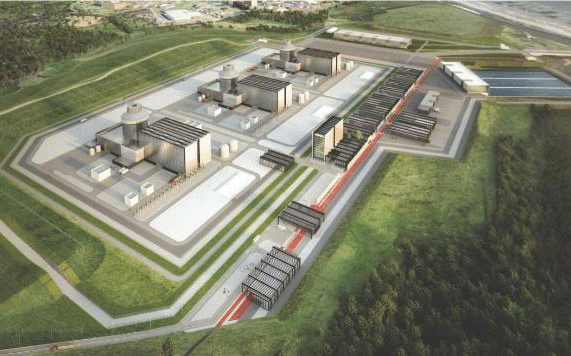
Hitachi’s Horizon project, which plans reactors on Anglesey,also distanced itself from the worries over Hinkley, saying its “sole focus remains, as it always has been, on making strong progress with our own flagship Wylfa Newydd power station project”.
Despite Mrs May’s surprise review of Hinkley, a Horizon spokesman said it had “no qualms about the continued commitment of the Government to UK nuclear new build”.
Reports in recent days have suggested the UK Government could face compensation demands from EDF if it pulled out of Hinkley.
Peter Atherton, an associate at consultants Cornwall Energy, said EDF had been operating under “an implicit guarantee from the Government that, provided you can get your technology through the approval process, and we can reach a satisfactory contractual arrangement, the project will go ahead”.
The Department for Business, Energy and Industrial Strategy on Tuesday reiterated that there would be no liabilities for the UK taxpayer or consumer if Hinkley were cancelled, as no contracts had been signed.
However, Mr Atherton said that if Hinkley were cancelled without any reimbursement for EDF, this would “significantly undermine” other developers’ confidence and might prompt them to seek some sort of financial guarantee.
“If I was them I would say to the Government, OK, if want us to carry on developing this project, we need you to fund it or to guarantee that if you pull the plug on us you pay those development costs,” he said.
Both Horizon and NuGen are privately keen to emphasise the differences between their projects and EDF’s.
Neither project has Chinese involvement, understood to be one of the key causes of concern for Mrs May over Hinkley, which would be one-third funded by Chinese state companies.
Both have also long been working to meet the Government’s expectation that they will be cheaper than Hinkley…..http://www.telegraph.co.uk/business/2016/08/02/uk-new-nuclear-programme-not-dependent-on-hinkley-say-rivals/
British support for use of nuclear weapons

 Most Britons support the use of nuclear weapons A total of 59 percent of
 people surveyed said they would launch a nuclear strike if they were prime minister. http://www.telesurtv.net/english/news/Most-Britons-Support-Use-of-Nuclear-Weapons-20160730-0012.html
A majority of Britons support their new prime minister’s proposal to deploy nuclear weapons, a recent poll by YouGov revealed on Saturday.
In a debate at the Parliament, new Prime Minister Theresa May said she would be ready to launch a nuclear strike that would result in the deaths of 100,000 people and urged lawmakers to back a renewal of Britain’s submarine-based Trident nuclear weapons system.
A total of 59 percent of people surveyed said they would do the same if they were in the prime minister’s shoes, while 66 percent say they support May in her assertion, with only 15 percent rejecting such a position.
Meanwhile, another survey found 44 percent of British people want to see Trident replaced. Three years ago YouGov made a similar survey, finding that 35 supported the nuclear program and 26 wanted to replace it, while another 25 percent said that Britain should give up nuclear weapons altogether.
Trident was created in 1980 under then Prime Minister Margaret Thatcher’s rule with the purpose to “deter the most extreme threats to our national security and way of life, which cannot be done by other means.”
May became prime minister on July 13 following the resignation of David Cameron after Britons voted in a June 23 referendum to leave the EU, weakening the 28-nation bloc and creating huge economic uncertainty.
May is well known for her hawkish, pro-war positions. When she was leader of the Conservative Party she voted for the U.S.-U.K. invasion of Iraq in 2003. She has also supported other interventions, like the 2011 military intervention in Libya.
Theresa May not happy with Chinese nuclear investment plans for Britain
 Britain’s May worried by China investment, intervened to delay nuclear deal, SMH, Kate Holton , 31 July 16 London: British Prime Minister Theresa May was concerned about the security implications of a planned Chinese investment in the new Hinkley Point nuclear plant and intervened personally to delay the project, a former colleague and a source said.
The plan by France’s EDF to build two reactors with financial backing from a Chinese state-owned company was championed by Mrs May’s predecessor David Cameron as a sign of Britain’s openness to foreign investment.
But just hours before a signing ceremony was due to take place on Friday, Mrs May’s new government said it would review the project again, raising concerns that Britain’s approach to infrastructure deals, energy supply and foreign investment may be changing.
The decision could prove a test for Mrs May, with any attempt to renegotiate the terms of the project potentially straining relations with Paris and Beijing at a time when Britain is seeking to build trade deals following the country’s vote to leave the European Union.
“When we were in government Theresa May was quite clear she was unhappy about the rather gung-ho approach to Chinese investment that we had,” Vince Cable, Britain’s former business secretary and a leading member of the Liberal Democrats, who governed in coalition with Mr Cameron, told BBC Radio.
He later told Sky News her concerns over China’s involvement were linked to national security. “This was an issue that was raised in general but it was also raised specifically in relation to Hinkley,” he said……..http://www.smh.com.au/world/britains-may-worried-by-china-investment-intervened-to-delay-nuclear-deal-20160731-gqhkm7.html
Britain’s history of supplying nuclear weapons technology to North Korea
What Theresa May forgot: North Korea used British technology to build its nuclear bombs.Ecologist, David Lowry 26th July 2016
When Theresa May proclaims in Parliament that we need the £200 billion Trident nuclear missile system to see off the North Korean nuclear threat, writes David Lowry, just bear this in mind. It is a threat that the UK, global nuclear proliferator in chief, created in the first place, providing both the reactor technology and vital centrifuge materials to make North Korea’s nuclear dream come true.
- ” … today the threats from countries such as Russia and North Korea remain very real.”
- “North Korea has stated a clear intent to develop and deploy a nuclear weapon, and it continues to work towards that goal, in flagrant violation of a series of United Nations Security Council resolutions.”
- “North Korea is the only country in the world to have tested nuclear weapons this century, carrying out its fourth test this year, as well as a space launch that used ballistic missile technology. It also claims to be attempting to develop a submarine-launch capability and to have withdrawn from the nuclear non-proliferation treaty.”
- “Based on the advice I have received, we believe that North Korea could already have enough fissile material to produce more than a dozen nuclear weapons. It also has a long-range ballistic missile, which it claims can reach America, and which is potentially intended for nuclear delivery.”
It reminded me of the similarly ill-informed former Prime Minister Tony Blair, in his speeches to MPs trying to win them over with dodgy ‘advice’ from British intelligence, to go to war by invading Iraq in 2003.
MPs have short memories, despite the Chicot Report on the Iraq invasion disaster not yet two weeks old, and 472 motley MP fools backed May and Trident replacement. As with the Iraq invasion, MPs will in future have to admit their regrets at being fooled. And again, they ignord the thousands of demonstrators outside, calling for Trident to be abandoned.
Britain’s nuclear proliferation ‘secret’
But May was right in one way. North Korea has developed nuclear weapons. But what she did not say was they did it with copied British bomb-making technology.
There is significant evidence that the British Magnox nuclear plant design – which was primarily built as a military plutonium production factory – provided the blueprint for the North Korean military plutonium programme based in Yongbyon. Here is what Douglas (now Lord) Hogg, then a Conservative minister, admitted in a written parliamentary reply in 1994 to Labour MP Llew Smith:
“We do not know whether North Korea has drawn on plans of British reactors in the production of its own reactors. North Korea possesses a graphite moderated reactor which, while much smaller, has generic similarities to the reactors operated by British Nuclear Fuels plc. However, design information of these British reactors is not classified and has appeared in technical journals.”
The uranium enrichment programmes of both North Korea and Iran also have a UK connection. The blueprints of this type of plant were stolen by Pakistani scientist, A Q Khan, from the URENCO enrichment plant in The Netherlands in the early 1970s.
(see David Albright, Peddling Peril, 2010 pp 15-28, Free Press, New York)
This plant was – and remains – one-third owned by the UK government. The Pakistan government subsequently sold the technology to Iran, who later exchanged it for North Korean Nodong missiles……….
Lessons of history
This sorry tale has several important lessons for us today. First – and this must never be forgotten – the UK’s early ‘atoms for peace’ nuclear power programme was specifically designed and intended to produce plutonium for nuclear bombs. And it was not just nuclear waste from Calder Hall that went for plutonium extraction at Windscale, but from other sites that were meant to be purely civilian such as Hinkley Point.
The UK is therefore guilty of ‘breaking the rules’ that are meant to separate civil and military nuclear activities, and its complaints of other states doing the same all carry the unmistakeable whiff of ripest humbug.
Second, for all its public position of seeking to restrain nuclear proliferation, the UK is actually one of the world’s most egregious nuclear proliferators: providing arch-nuclear enemy North Korea with both the Magnox technology it has used to produce plutonium for atom bombs; and the high strength aluminium it has used for its uranium centrifuges.
So when Theresa May stands up in Parliament and proclaims that we need the Trident nuclear missile system to see off the North Korean nuclear threat, remember: it is a threat that the UK created in the first place, providing both the nuclear reactor technology and the centrifuge materials to make it happen.
And when the UK cites the nuclear threat from North Korea as a reason to spend an estimated £200 billion on the next generation of Trident, we can be sure that North Korea and other countries aspiring to their own nuclear weapons are applying precisely the same logic to the British nuclear threat.
And that considering the UK’s history of aggressive regime-changing interventions in Iraq and Libya, the hundreds of (up to 225) nuclear warheads in its possession, and its ability to target them accurately anywhere in the world, North Korea’s fears are probably a great deal better founded than Mrs May’s. http://www.theecologist.org/News/news_analysis/2987935/what_theresa_may_forgot_north_korea_used_british_technology_to_build_its_nuclear_bombs.html
Garmany’s solar PIMBY town – ‘Please In My Backyard’
 From swords to solar, a German town takes control of its energy, National Observer, By Audrea Lim in News, Energy | July 28th 2016 The German town of Saerbeck is a swords to solar panels story. Above this former German military ammunition camp, perched atop a metal stem like an oversized stalk of wheat, giant blades rotate in the sky, given life by an invisible breeze.
In 2009, Saerbeck decided to shift its electricity entirely to renewable sources by 2030. Within just five years, they were generating 3.5 times more renewable electricity than the town consumed, not only with the installation of solar panels on private roofs, but through a 90-hectare, 70-million-euro Bioenergy Park that now houses seven wind turbines, a biogas plant, and a sprawling array of solar panels on the roofs of former military bunkers.
These camouflaged bunkers look like charming rows of grass-hatted hobbit holes, but were built to house tank ammunition and grenades. Today they provide the physical foundation for achieving local energy security and self-sufficiency—since 2012, Saerbeck’s entire electric grid has been owned by the community—as well as a canvas for the psychedelic shadowplay cast by the rotating turbine blades.
The key to Saerbeck’s success, explained Mayor Wilfried Roos, is the grassroots nature of these projects, which were conceptualized at weekly community meetings, and have brought in revenue for the town and local investors, as excess energy is sold back into the grid……..
A bunch of PIMBYs (Please, in my backyard)
At the center of the town’s transformation is the local energy cooperative Energy for Saerbeck, co-founded by Roos, which owns the solar plant and a turbine in the Bioenergy Park. By investing in the cooperative (the minimum amount is 1,000 EUR), local townspeople become voting members and earn profits. Since its founding in 2009, the cooperative’s membership has expanded from an original nine members to 384 today. More residents are eager to join—if only the coop could keep pace with enough new projects.
Wallraven credits the opportunity to invest and participate for the townspeople’s embrace of the transition, which some scholars describe with the cringe-worthy acronym “PIMBY”—“Please, In My Backyard”—or, in corporate jargon, as the achievement of “social acceptance.” “The cooperative has been a very important strategic instrument to get the people on board,” said Wallraven………
In Germany, the energiewende has largely been fueled by small and mid-sized investors. Citizen participation accounted for 46 per cent of the nation’s renewable energy capacity in 2012, and there were 973 electricity cooperatives running by 2015.
Russia’s Rosatom keen to establish entire nuclear industry in Egypt
 Cairo, Moscow Agree on Egypt’s First Nuclear Power Plant Construction Terms http://sputniknews.com/middleeast/20160731/1043814467/egypt-russia-agree-plant-construction.html The Egyptian presidential office announced that Egypt and Russia have agreed on all the clauses of the commercial contract on construction of the first nuclear power plant in the country. The date of contract signing is expected to be announced right after its approval by the country’s supreme administrative court, the Council of State.
Russia and Egypt signed an intergovernmental agreement on the construction of the Dabaa nuclear power plant on the Mediterranean Sea coast in November 2015. It is set to become the largest construction project carried out by Russia and Egypt since the Aswan Dam.
The contract for the construction of the nuclear power plant is estimated to be worth over $26 billion. The plant will include four units, each one with a capacity reaching 1200 megawatts. The complete offer of the state corporation Rosatom suggests assistance from Russia in the establishment of an entire nuclear industry in Egypt.
After Brexit, concerns grow on Britain- Ireland nuclear agreements
Fears grow over nuclear power agreements with UK after Brexit Reports reveal ‘high operational risk’ if UK no longer has to adhere to EU rules on power plant , Independent ie Philip Ryan 31 July 16 senior Government officials have raised serious concerns over the impact Brexit will have on Ireland and Britain’s nuclear power agreements, the Sunday Independent can reveal. A risk assessment compiled by the Department of the Environment in the wake of the Brexit referendum warns of a “high operational risk” to arrangements Ireland has with the UK on nuclear policy.
The briefing document says environmental assessments and mandatory consultation processes “may prove more difficult” to enforce when Britain leaves the European Union (EU).
Ireland has bilateral agreements with Britain which entitle the government to information on the UK’s nuclear programme.
The UK will no longer be tied down by strict EU laws which underpin these agreements once it officially leaves the union.
Documents released following a Freedom of Information request reveal high-ranking civil servants fear information exchanges will be under threat once Britain leaves the EU.
Concerns were first raised two years ago in a risk assessment compiled by the Department of the Environment for the Taoiseach’s Office.
“There could be some issues for Ireland in the event of a change in the current EU/UK relationship in the area of nuclear policy,” the report said…….http://www.independent.ie/business/brexit/fears-grow-over-nuclear-power-agreements-with-uk-after-brexit-34925805.html
World’s largest nuclear project, UK’s Hinkley Point C, now in doubt
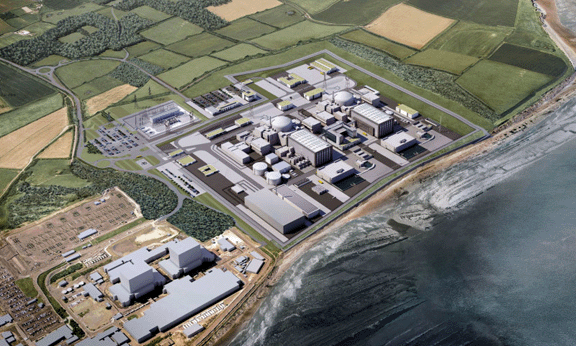 Britain casts doubt on EDF’s $24 billion nuclear project, Reuters LONDON | BY NINA CHESTNEY AND WILLIAM SCHOMBERG, 29 July 16 Britain has cast doubt on a $24 billion (18 billion pounds) project with French utility EDF to build the UK’s first new nuclear plant in decades, delaying a final decision on the plan just weeks after the Brexit vote ushered in a new prime minister.
The surprise decision to review the Hinkley Point C project was made public hours after the board of French state-controlled EDF voted to proceed with it.
The British government, which had been expected to sign contracts on Friday, said instead that it wanted to give the plans further consideration, postponing its verdict until early autumn.
The review came little more than a month after Britons voted to leave the EU in a referendum that forced the resignation of Prime Minister David Cameron – whose administration gave the initial go-ahead to the project – and the accession of Theresa May.
The vote, and the resulting economic uncertainty, threw doubt on the future of major British infrastructure projects, including the nuclear plant……..
Analysts and unions said the review under new Prime Minister May would likely delay the project further……..
Although EDF and Chinese partner China General Nuclear are responsible for the 18-billion-pound ($24 billion) cost of the project, Britain has committed to pay a minimum price for the power generated by the plant for 35 years.
Critics, including some British lawmakers and academics, say the country would be overpaying at that minimum price, which equates to double current market levels.
“Because of the fall in the energy price over the past 12 months, the project does look very expensive and there have been a lot of calls for other projects to be considered or for this to be taken back to the drawing board,” said Oliver Salvesen, analyst at investment bank Jefferies………
The British review could lead to increased resistance in France to the project, which was only narrowly approved by the EDF board on Thursday……
If the project goes ahead after the government’s review, the plant would not come online until the 2030s, industry experts estimate. EDF will still have to shoulder the costs of the long construction phase during which the investment will not generate any cash flow, which is credit negative for the firm, said Paul Marty, vice president and senior credit officer at Moody’s……..http://uk.reuters.com/article/uk-edf-britain-nuclear-idUKKCN1090EW
Chernobyl’s nuclear wasteland may host world’s largest solar power plant
 World’s largest solar power plant planned for Chernobyl nuclear wasteland, Electrek, 30 July 16 John Fitzgerald Weaver @SolarInMASS

Nuclear industry astonished as British government stalls plans to build Hinkley C nuclear power station
Plans to Build World’s Largest Nuclear Plant on Hold, EcoWatch, Climate News Network 29 July 16
The British government astonished the nuclear industry late last night by refusing to go ahead with plans to build the world’s largest nuclear plant until it has reviewed every aspect of the project.
The decision was announced hours after a bruising meeting of the board of the giant French energy company EDF, at which directors decided by 10 votes to seven to go ahead with the building of two 1,600 megawatt reactors at Hinkley Point in Somerset, southwest England………
critics of the controversial project were delighted. John Sauven, the executive director of Greenpeace, said: “Theresa May now has the chance to stop this radioactive white elephant in its tracks.”
“She should look at the evidence and see that this deal would be a monumental disaster for the taxpayers and the bill payers. Countless experts have warned that for British families this power station will be terrible value for money, Sauven added.”
Until last night, the UK was the most positive country in Europe about nuclear power and planned to build a total of 10 nuclear power plants, Hinkley Point being the first of them. This was despite the fact that nuclear costs continue to escalate while its main competitors—renewables of all kinds—fall in price.
The Hinkley Point project is now more expensive than offshore wind power, which is the most expensive renewable and is far more costly than solar and onshore wind. Biogas and small-scale hydro projects in Britain, all so far underdeveloped, are also cheaper than nuclear…….
Safety Fears
The price of all renewables is going down as they develop, while the price rises for nuclear power, with safety fears and threats from terrorism pushing costs up.
It is also argued, even by the UK’s national electricity grid, that the day of the large power plant is over, to be replaced by small local generators providing electricity near to homes and factories—something that renewables are ideally suited for.
Even France, which has 58 reactors and is building a Hinkley prototype at Flamanville in Normandy, has no plans to build any more. All its new energy projects are renewables and it has plentiful supplies of untapped wind and solar power, which are cheaper……..http://www.ecowatch.com/plans-to-build-worlds-largest-nuclear-plant-on-hold-1949913505.html
Britain’s High Court rules that UK nuclear agency ‘manipulated’ £7bn clean-up contract
 UK nuclear agency ‘manipulated’ £7bn clean-up contract High Court ruling exposes government to potential £200m damages claim Ft.com by: Catherine Belton, 30 July 16 Britain’s Nuclear Decommissioning Authority “manipulated” and “fudged” a tender process for a £7bn contract to clean up the country’s nuclear power plants, the High Court has ruled.
The judgment, handed down on Friday, raises fresh questions over the way government entities hand out multibillion-pound contracts and casts further doubt on the UK’s nuclear industry a day after the government’s decision to launch a review of the £18bn Hinkley Point project. It could eventually cost the government hundreds of millions of pounds in damages.
The NDA said it was considering its legal options after the ruling, which found that it had wrongly awarded one of the government’s largest contracts to Babcock, the UK engineering company, and Texas-based Fluor……..
The court found that the NDA had “manipulated” the valuation process in order to avoid disqualifying the Babcock-Fluor bid. “In my judgment the NDA sought to avoid the consequence of disqualification by fudging the evaluation,” Justice Fraser wrote in his ruling.
He found that the NDA “fell short” in meeting its obligations of “transparency and equal judgment”……..
he contract involves the clean-up of 12 of the UK’s 25 nuclear sites, including the Sizewell, Hinkley and Dungeness “Magnox” nuclear power stations built in the 1960s which have reached the end of their lives.
The government is facing increasing scrutiny over its procurement process following the referral of G4S and Serco to the Serious Fraud Office for overcharging on electronic tagging contracts for offenders, and the West Coast main line rail franchising debacle two years ago. https://next.ft.com/content/7f11f174-55ad-11e6-9664-e0bdc13c3bef
1 This Month




Shut down the radiation-damaged Heysham nuclear reactors now
To see nuclear-related stories in greater depth and intensity – go to https://nuclearinformation.wordpress.com

Say No to NASA’s Reckless Nuclear Reactor on the Moon
Say No to NASA’s Reckless Nuclear Reactor on the Moon
-
Archives
- October 2026 (289)
- September 2026 (339)
- August 2026 (330)
- July 2026 (355)
- June 2026 (287)
- May 2026 (306)
- April 2026 (356)
- March 2026 (251)
- February 2026 (267)
- January 2026 (308)
- December 2025 (358)
- November 2025 (359)
-
Categories
- 1
- 1 NUCLEAR ISSUES
- business and costs
- climate change
- culture and arts
- ENERGY
- environment
- health
- history
- indigenous issues
- Legal
- marketing of nuclear
- media
- opposition to nuclear
- PERSONAL STORIES
- politics
- politics international
- Religion and ethics
- safety
- secrets,lies and civil liberties
- spinbuster
- technology
- Uranium
- wastes
- weapons and war
- Women
- 2 WORLD
- ACTION
- AFRICA
- Atrocities
- AUSTRALIA
- Christina's notes
- Christina's themes
- culture and arts
- Events
- Fuk 2022
- Fuk 2023
- Fukushima 2017
- Fukushima 2018
- fukushima 2019
- Fukushima 2020
- Fukushima 2021
- general
- global warming
- Humour (God we need it)
- Nuclear
- RARE EARTHS
- Reference
- resources – print
- Resources -audiovicual
- Weekly Newsletter
- World
- World Nuclear
- YouTube
-
RSS
Entries RSS
Comments RSS

