Norway’s green energy from hydropower
 Beauty and power: how Norway is making green energy look good, Stuart Dredge, Guardian, 8 Sept 16
On the edge of a forest in northern Norway, an unusually handsome hydroelectric plant is generating a buzz Ovre Forsland is a big departure from the hulking power stations that traditionally served our energy needs. It looks more like an elegant, custom‑built home from TV show Grand Designs.
Located in the Helgeland district in northern Norway, it’s a small hydroelectric power station capable of supplying 1,600 homes with power.
Designed by Norwegian architecture firm Stein Hamre Arkitektkontor, it sits on a riverbed at the edge of a forest, with an exterior that aims to reflect the irregular shapes of the spruce trees forming its backdrop.
“It’s a small plant. The biggest stations in this region were built in the late 50s and 60s to serve industry, but in the last 15 years it has been much smaller projects,” says Torkil Nersund, production manager at the plant’s owner, energy company HelgelandsKraft.
“It’s the perfect place; the environment is fantastic. This region is known for its spectacular nature, so we thought the building should try to live up to the surroundings.”
The station benefits from a 157-metre drop in the Forsland river, and uses two Francis water turbines to turn the flow of water into electricity for the surrounding community. It produces about 30 gigawatt-hours (GWh) of power, with the flexibility of its storage system ensuring it can meet surges in demand.
“Øvre Forsland does not only serve hydropower to people in the region. Its purpose is also to bring attention to hydropower, the history around it and the benefits,” says Nersund.
“You can say that hydropower will play a main role in renewable society in the future, so we want more attention on the hydropower business.”………https://www.theguardian.com/environment/2016/sep/08/norwegian-power-station-ovre-helgeland-hydroelectric-renewable-energy
Latest roundup on news on Britain’s planned Hinkley nuclear station
Bridget Woodman, Course Director, MSc Energy Policy, at the University of Exeter, says the Hinkley delay makes it possible to start debating the sorts of options being considered widely around the world, with measures to encourage more flexible, smaller-scale, renewable systems incorporating demand-side measures and new technologies such as storage. These are extraordinary times for energy policy in the UK.
After years of resigned acceptance that Hinkley would be built no matter how much of a basket case it was, even though few people argued that it makes sense, there is now a potential to have a real and considered debate about what sort of future electricity system we need. Now is the time to start considering the sorts of options being considered widely around the world, with measures to encourage more flexible, smaller-scale, renewable systems incorporating demand-side measures and new technologies such as storage. A system that is the absolute antithesis of what Hinkley Point C represents. Suddenly UK energy policy has become very exciting

 Hinkley Notes NuClear News No. 888 September 16 The Downing Street review of the proposed Hinkley Point C nuclear power station is coming to an end – and a decision will have to be made soon, probably before the end of September. The latest wave of public relations activity from EDF, the company that hopes to build the plant, shows how nervous the company is about the outcome. Given the range of doubts about the costs, the construction risks, the reactor technology and the involvement of the Chinese, that nervousness is well justified. (1)
Here are the news highlights from the last month.
It’s about the security stupid! The Times says the review centres on the security threat posed by allowing a Chinese company to invest in critical infrastructure in the UK. But officials are also puzzling over cost and value for money. Continue reading
Britain’s pro nuclear National Policy Statement on Energy is outdated and must be reviewed
In deciding when to review part of a national policy statement the Secretary of State must consider whether there has been a significant change in circumstances. If there has been a significant change in circumstances on which the policy regarding the need for new nuclear power stations was based; and if those changes were not anticipated at the time then the policy should be reviewed.
TASC concludes that the case for a review of EN-1 is unanswerable
 National Policy Statement on Energy NuClear News No 88 Sept 16 The government has a legal duty under section 6 of the 2008 Planning Act to review the National Policy Statement (NPS) on Energy, according to lawyers Leigh Day, because of dramatically changed circumstances over the last five years since the national policy statements enshrining the nuclear element were first published.
A report by Together Against Sizewell C (TASC) underlines the government’s duty to undertake a review and demonstrates why new nuclear has to be written out of the government’s energy policy.
The sections of the Overarching NPS on Energy (EN-1) which the TASC report says show the policy needs to be reviewed are section 3.5.1 to 3.5.11. Continue reading
Majority in Wales want electricity from renewable energy sources, not from proposed Wylfa nuclear station
Wylfa NucClear News No 88 September 16 A second consultation on the proposed nuclear power plant in Anglesey has been launched. Horizon Nuclear Power estimates Wylfa Newydd, which will include two reactors with a total capacity of 2,700MW, will take around nine years to build and have an operational life of 60 years. The consultation will run until 25th October. (1)
Nearly two-thirds of people in Wales want all of Wales’ electricity to come from renewable sources, a poll for the conservation organisation WWF has found. They also want the Welsh Government to invest more in improving the energy efficiency of homes. First Minister Carwyn Jones will publish his Programme for Government during the next few weeks and the focus is likely to be on how Wales adapts to Brexit. WWF is calling on the Government not to sideline investment in reducing emissions and tackling climate change. http://www.no2nuclearpower.org.uk/nuclearnews/NuClearNewsNo88.pdf
UK’s Hinkley nuclear deal teetering, but PM Theresa May claims good relations with China
 G20 summit: Theresa May says UK-China relations are about more than ‘Hinkley’ as deal teeters on edge The Prime Minister’s comments came as she prepared for a meeting with the Chinese premier at the end of the G20 summit Independent, Joe Watts Political Editor @JoeWatts_ Tuesday 6 September 2016 Theresa May has said the UK’s relations with China are “about more than Hinkley” as speculation mounted that the Prime Minister could pull back from the symbolically important £18bn nuclear scheme.
Ms May made the comments as she prepared for a meeting with Xi Jingpin, in which the Chinese President relieved a little pressure on her by saying he was willing to have “patience” in allowing her time to work out what she plans to do with the scheme his government has committed £6bn to.
The half-hour meeting that took place at the end of the G20 Summit in Hangzhou also saw Mr Xi say China would be “open” to bilateral trade arrangement.
It has already emerged that security around the planned nuclear power initiative at Hinkley is an issue officials are reviewing, and that at least one senior member of Mrs May’s team has serious reservations about the project.
Under the current deal which is yet to be signed, the Chinese would contribute funds towards building two reactors at Hinkley Point in a scheme led by French firm EDF, but it could then in turn lead to a further Chinese-designed power station at Bradwell in Essex.
The delay in finalising the agreement has threatened to overshadow Mrs May’s first major international summit, also her first visit to China. In Hangzhou, she and her team tried to move the story on UK/China relations off the Hinkley Point project and on to other areas. ……..http://www.independent.co.uk/news/uk/politics/g20-summit-theresa-may-uk-china-hinkley-point-xi-jingpin-edf-power-relations-are-about-more-than-a7227046.html
Energy chief says Hinkley Point is a deal out of date and too expensive
 Hinkley Point deal out of date and too expensive, says energy chief, Telegraph, UK, Emily Gosden, energy editor 3 SEPTEMBER 2016 The head of energy giant ScottishPower has waded into the row over Hinkley Point, insisting that the controversial subsidy deal for EDF’s proposed nuclear plant should be renegotiated because it is too expensive.
Keith Anderson, the firm’s chief corporate officer, said the deal, provisionally agreed by the Government in 2013 following lengthy negotiations, no longer made sense in the light of lower gas and offshore wind costs.
“It looks like a contract that was written five years ago on a business case that was probably pulled together 10 years ago. It looks out of line with what’s going on in the market now,” he said.
In an interview with Telegraph, Mr Anderson praised Theresa May’s “brave” decision to review the £18bn project and urged her to look at it in its entirety, not just her apparent concerns over Chinese state nuclear firms’ involvement.Becoming the latest high-profile figure to criticise the deal, Mr Anderson said that it now looked “expensive” and that gas and offshore wind offered faster, easier and cheaper ways of keeping the lights on and decarbonising, respectively.
“I can’t understand why anybody feels we need to sign a contract of that size and over that time period, at that price,” he said.
ScottishPower is seeking government support to develop both offshore wind and gas-fired power stations.
Its East Anglia offshore wind farm project last year won a subsidy contract at nearly £120 per MWh for 15 years. However, costs are falling rapidly, with ministers setting a cap of £105 per MWh on future contracts and a target of £85. EDF has insisted the deal is good value……http://www.telegraph.co.uk/business/2016/09/03/hinkley-point-deal-out-of-date-and-too-expensive-says-energy-chi/
Renewable energy heading to replace nuclear power in Switzerland

 Study pushes Swiss post-nuclear power potential, Swiss Info Ch. 8 Sep 16 Wind farms and solar installations already produce almost 50% of the energy that Switzerland gets from nuclear power plants, a new study finds.
Renewable energy sources could replace all of the power that Switzerland gets from nuclear plants sooner than people think, according to the study released on Thursday by Energy Future Switzerland.
That’s because of the fast pace of investment in renewable energy, the Swiss association says.
“At this pace of investment all the Swiss nuclear power plants can be replaced by renewable energy within about six years,” said the nonprofit’s director, Aeneas Wanner, in a statement. The association partners with utilities and others to promote energy efficiency and develop renewable energy sources…….
On November 27, Switzerland will hold a nationwide vote on its nuclear power plants. The Swiss popular initiative calls for amending the Constitution to prohibit getting electricity or heat from nuclear power. It also would set times for when the five plants must be shut down…….http://www.swissinfo.ch/eng/renewable-energy_study-pushes-swiss-post-nuclear-power-potential/42430574
Dangers of Sellafield nuclear site – a concern for nearby Isle of Man
 Isle of Man government ‘concerned’ about Sellafield safety, BBC News, 8 September 2016 Isle Of Man / Ellan Vannin The Manx government is “concerned” about the safety of the Sellafield nuclear site, a spokesman said.
On Monday, the BBC’s Panorama programme uncovered several safety concerns, from staffing levels to waste storage.
The Mannin Branch of the Celtic League has called on the Manx government to campaign for a full, independent inspection of the plant in Cumbria…….
The Isle of Man is located about 34 miles (55km) from the nuclear fuel reprocessing plant.
Due to its potential impact on the Manx fishing industry, the Manx government began monitoring radioactivity levels in the Irish Sea in 1989.
A government spokesman said: “Seafood fished in Manx waters can contain traces of radio-nuclides associated with effluent discharges from Sellafield to the Irish Sea, therefore these are monitored regularly to confirm that they remain well below maximum safe limits.”
The BBC investigation was prompted by a whistle-blower – a former senior manager who was worried by conditions at the plant…….http://www.bbc.com/news/world-europe-isle-of-man-37307763
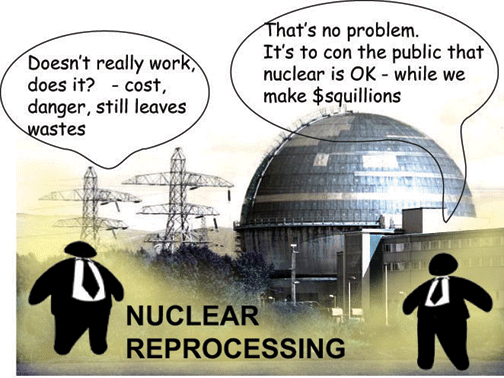
Britain’s national disgrace: nuclear reprocessing at Sellafield
The National Audit Office (NAO) stated these tanks pose “significant risks to people and the
environment”. One official review published in The Lancet concluded that, at worst, an explosive release from the tanks could kill two million Britons and require the evacuation of an area reaching from Glasgow to Liverpool. These dangerous tanks have also been the subject of repeated complaints from Ireland and Norway who fear their countries could be contaminated if explosions or fires were to occur.
In short, the practice of reprocessing at Sellafield has been and remains a monumental national disgrace.
Especially serious are the ~20 large holding tanks at Sellafield containing thousands of litres of extremely radiotoxic fission products. Discussing these tanks, the previous management consortium Nuclear Management Partners stated in 2012:
“there is a mass of very hazardous [nuclear] waste onsite in storage conditions that are extraordinarily vulnerable, and in facilities that are well past their designated life.”
most of all, we should recognize that nuclear policies, in both weapons and energy, have poorly served the nation.
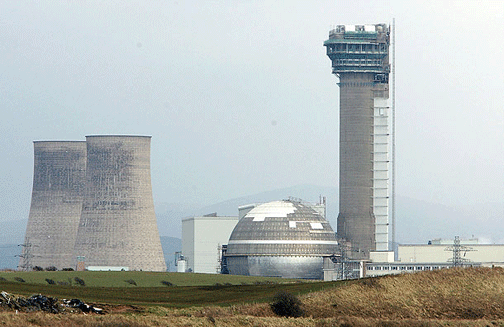 Sellafield exposed: the nonsense of nuclear fuel reprocessing http://www.theecologist.org/reviews/2988095/sellafield_exposed_the_nonsense_of_nuclear_fuel_reprocessing.html Ian Fairlie 6th September 2016 Last night’s BBC Panorama programme did a good job at lifting the lid on Britain’s ongoing nuclear disaster that is Sellafield, writes Ian Fairlie. But it failed to expose the full scandal of the UK’s ‘reprocessing’ of spent fuel into 50 tonnes of plutonium, enough to build 20,000 nuclear bombs – while leaving £100s of billions of maintenance and cleanup costs to future generations.
Many readers will have seen the interesting Panorama programme on the poor safety record at Sellafield broadcast on BBC1 last night.
The BBC press release stated this was a “special investigation into the shocking state of Britain’s most hazardous nuclear plant” – and it certainly was.
The most important of several whistleblower revelations was that the previous US managers had been shocked at the state of the plant when they took over its running in 2008.
Although the programme producers are to be congratulated for tackling the subject, it was only 30 minutes long and tells only a fragment of the whole sorry story.
This article tries to give more background information, and importantly, more analysis and explanation. The full story would require several books, and provide exceedingly painful reading.
What is reprocessing for? Continue reading
European financiers very worried about Ukraine’s dire nuclear industry problems

 HomeNews MediaBlogUkraine’s nuclear energy fixation puts its European financiers to a test http://bankwatch.org/news-media/blog/ukraines-nuclear-energy-fixation-puts-its-european-financiers-test
Ukraine’s nuclear energy fixation puts its European financiers to a test In a meeting today, the Espoo Convention’s Implementation Committee will again discuss Ukraine’s compliance with the Convention’s rules. A look back at the last months does not suggest a positive outcome.
Earlier this year Bankwatch approached the Commission’s Directorate General for Economic and Financial Affairs, and made a request for documents related to the EUR 300 million Euratom loan for the project. Specifically, we asked for the evidence used by the Commission in making the first EUR 100 million disbursement from the loan.
A decision in this case can take some time, but old nuclear power plants could soon see their lifetimes extended, not only in Ukraine but across the EU. Yet, as we argued in a recent letter to the Espoo Convention’s Implementation Committee, any decision on prolonging the operations of nuclear power units beyond their design lifespan should be subject to a transboundary environmental impact assessment (EIA) and transboundary public consultations.
The Committee is the only body with the power to rule on violations of the Espoo Convention. It is currently preparing a report for the June 2017 Meeting of the Parties on Ukraine’s adherence to the convention and will meet today, Monday, September 5, in Geneva to discuss the Ukrainian government’s progress (or lack thereof) with implementing the Committee’s requests.
And there is reason to worry. In April 2013 the Committee ruled that Ukraine’s decision to extend the lifetime of its two oldest nuclear units in the Rivne power plant was in breach of the convention and, as argued in our letter, this decision should be considered a precedent applicable to similar cases for the sake of legal certainty and equal treatment.
Unmet loan conditions
International treaties on their own are not the only reason Ukraine is expected to carry out transboundary EIAs before rewriting the expiry dates of its Soviet-era nuclear reactors. Each of the two EUR 300 million loans Ukraine’s nuclear safety upgrade program has received, from Euratom and from the European Bank for Reconstruction and Development, is explicitly conditioned on full compliance with international environmental law, include the Espoo Convention that obliges the engagement with neighbouring countries in decisions on matters related to nuclear energy, such as nuclear units’ lifetime extensions. The European Commission has reiterated this obligation on several occasions.
Nevertheless, so far neither the Espoo Convention ruling in the Rivne case, nor the conditions to the European loans, have stopped Kiev from going ahead with lifetime extensions for two more nuclear units in the South Ukraine station without applying international requirements.
One other nuclear unit, in the Zaporizhia power plant, could see its lifetime extended as early as next week, and the state nuclear regulator contends these decisions fall outside the jurisdiction of the Espoo Convention.
In fact, Ukraine does not even have proper legislation on EIAs at national level. This has allowed Energoatom to release an “EIA report” for the Zaporizhia nuclear power plant which ruled out any significant transboundary impacts from the plant’s operations.
Yet, Energoatom’s claims look even more invalid with the latest Espoo Implementation Committee’s ruling on the planned nuclear power plant Hinkley Point C in the UK, stating that a worst-case scenario should be taken into account when considering transboundary impacts.
Moreover, a recent incident in the 29 years old Khmelnitski nuclear power plant is but the latest reminder for the risks in Ukraine. Following a leak of radioactive water, the power station’s unit 1 was shut down for two months. This unit will reach the end of its projected lifetime next year.
According to the state nuclear regulator, the reason for the leak might have been a micro-crack in a tube in the heat exchanger. An expert report released in March 2015 by Bankwatch’s Ukrainian member group NECU has warned of the possible appearance of micro-cracks in the reactor vessel of unit 1 of the South Ukraine nuclear power plant which has been granted a lifetime extension earlier.
The dire financial troubles facing Ukraine’s nuclear operator Energoatom raise additional questions about the government’s blind reliance on this source of energy, and should be another warning sign for Ukraine’s European allies in Brussels and across its borders.
Australian delegation stopped from France’s nuclear waste agency by anti nuclear activists

 Australian Delegation to France Blockaded By Anti-Nuclear Activists http://earthfirstjournal.org/newswire/2016/09/05/australian-delegation-to-france-blockaded-by-anti-nuclear-activists/#more-51943 from Earth First! Newswire On the morning of September 1st an Australian delegation on a parliamentary inquiry into the management of nuclear waste, was blockaded in North-East France by anti-nuclear activists.
The delegation was visiting the National Radioactive Waste Management Agency (ANDRA) facilities in the municipality of Bure, where an anti-nuclear movement under the banner of Bure Zone Libre (Bure Liberated Zone, BZL) has been burgeoning in recent years.
A group of about twenty masked activists dressed in white overalls and armed with water guns, drums and a sound system blocked the Australian delegation from entering the ANDRA laboratory, forcing the delegation to turn around and leave.
“We’re here in solidarity with indigenous resistance to the planned nuclear facility in Australia,” said one activist with a red clown nose. “Nuclear industry endangers life itself, and we will resist it everywhere.”
The BZL movement recently got national headlines in France for toppling a three kilometer long wall which ANDRA has erected around the forest near Bure. The wall was intended to stop the group from reoccupying the forest which ANDRA aims to uproot for the construction of a controversial nuclear waste facility.
“Wherever they’ll build walls, we’ll turn them into wall jam,” the activist laughed, explaining the French wordplay confiture de mur, as mur means both blackberry and wall.
About twenty gendarmes (French military police) patrolled Bure after the action had already ended. The area has been increasingly militarized recently, with activists facing trumped legal charges.
The BZL activists sent the Australian delegates a letter explaining their actions, presented below.
Letter to Australian delegation:
Dear distinguished Australian visitors,
Nuclear industry is a ticking time bomb, whether radioactive waste is dumped in Bure, Wallerberdina, or anywhere else. There is no known way to permanently neutralize it. All claims to the contrary are unfounded (visit nirs.org for details). By accepting to dump nuclear waste in Australia you are not only endangering the lives of aboriginal people and Australians in the region, but of wildlife and of the lives of those who will suffer the consequences nuclear production from extraction to waste everywhere.
Here in Bure, Andra’s project has already cost the lives of two workers, most recently last January, showing the company’s incompetence and disrespect for human life. Undemocratically and illegally imposed on us, the costs of the Cigeo waste project rise as resistance to it is burgeoning, manifesting in absurd military and police presence in the area.
As nuclear power proves to be obsolete and dangerous the world over, and as sustainable alternatives are increasingly available, resistance materializes in Australia as well. You can choose to fight for a just, ecologically balanced world now, and leave Andra’s profit-driven propagandists to listen to what we have to say, or meet us from the other side of the barricades. We are fighting for our lives and for the lives of our children.
We are a growing contingent of local and international activists occupying Bure to stop nuclear catastrophe. In our collective way of organizing and living we present an alternative to nuclear waste and to the sick world which produces it.
Belarus – problems, secrecy, ignorance on nuclear unsafety
Mysteries Of The First Belarusian Nuclear Power Plant, Belarus Digest Lizaveta Kasmach06 September 2016 On 26 August 2016, a 43-year old worker was injured and killed as a result of the explosion of an oxygen gas tank at the Astraviec nuclear power plant (NPP) construction site.
A series of unfortunate events
Reports of incidents at the Astraviec construction site have been piling up in 2016, bringing more and more attention to the first Belarusian nuclear project. For instance, in April 2016, Poland-based TV channel Belsat reported the collapse of a supporting structure in one of the maintenance buildings on the site.
This death was the latest in a series of accidents which have already started to raise nuclear safety concerns, both domestically and internationally.
In July 2016, the Belarusian media reported another dangerous incident which occurred during the installation of a reactor. It also turned out that the NPP’s management had been concealing this news for more than two weeks. This lack of transparency is reminiscent of the suppressed news of the Chernobyl catastrophe back in 1986.
As a result, NPP construction has come under closer scrutiny and even the state-run media picked up the topic of nuclear security. However, all these events have not led to massive anti-nuclear protests in Belarus.
Despite the fact that an employee tipped off journalists, the NPP management responded by denying that the accident had even taken place and referred to the news as “absolute nonsense.” Later, the Belarusian Ministry of Energy nevertheless confirmed the accident, trying to downplay its severity.
Less than two months ago, authorities tried to conceal another, more serious accident which interrupted the installation of the nuclear reactor. On 10 July 2016, the reactor casing, weighing over 330 tonnes, reportedly fell to the ground from a height of 2 to 4 metres.
However, the wider public became aware of this disaster only on 25 July. Local anti-nuclear activist and United Civil Party member Mikalai Ulasevich reported that more than ten anonymous insider sources could confirm that something went wrong during the test lifting procedure……..
Lithuania also expressed its concerns. On 23 August, president Dalia Grybauskaite referred to the Belarusian NPP as an instrument which could potentially be used in an unconventional manner against the Baltic states. In her opinion, the Belarusian NPP potentially represented “an energy, military, health, and territorial security problem, if used by a hostile country.”
What about Belarusian environmentalists? Belarusian environmentalists had already adopted a clear anti-nuclear position by 2005, when officials started mentioning plans for an NPP. In 2006, the Belarusian NGOEcodom, backed by the opposition parties, pioneered anorganised anti-nuclear movement. By 2008, major anti-nuclear initiatives united within the Belarusian Anti-Nuclear Campaign.
However, Belarusian authorities did everything possible to neutralise the dissenting green movement. For instance, during the so-called public debates on the NPP construction in October 2009, only a few anti-nuclear activists were allowed to attend. The event ended with the arrest of anti-nuclear expert Andrei Ozharovskii.
Moreover, the Institute of Sociology at the National Academy of Sciences produced surveys indicating a surprising turn in public opinion towards acceptance of nuclear energy. ……
Even though in 2016 the anti-nuclear movement has captured more attention, environmentalists fear that Belarusian society is dangerously naive when it comes to NPP construction. According to the coordinator of the Green Network association, Yaraslau Bekish, this explains why even serious accidents in Astraviec have not catalysed significant public protests.
So far, Belarusian authorities have succeeded in protecting their pet project in Astraviec. Neither Belarusian independent anti-nuclear activists nor the EU have the leverage to interfere in these plans. However, there is a chance that their voice could be heard if such emergencies and accidents continue in the future. Lizaveta Kasmach is a PhD candidate at the University of Alberta, Canada. http://belarusdigest.com/story/mysteries-first-belarusian-nuclear-power-plant-27097
Saudi Arabia, vulnerable to terrorist attacks, is buying 16 nuclear power plants from Russia
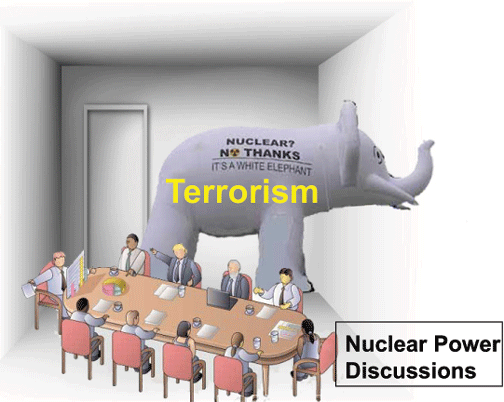 Saudis Buy 16 Nuclear Plants From The Russians, Terrorists Rejoice : http://dailycaller.com/2016/09/06/saudis-buy-16-nuclear-plants-from-the-russians-terrorists-rejoice/#ixzz4JViTS5aX ANDREW FOLLETT Energy and Environmental Reporter Saudi Arabia will buy 16 nuclear power plants from Russia for $100 billion despite terrorism concerns, according to a Monday announcement from a government-controlled nuclear power company.
Saudi Arabia has a long history of terrorist attacks within its borders, and the country itself has been accused of directly funding Islamic terrorism. The planned reactors would be incredibly vulnerable to terrorist attacks.
Saudi Arabia’s new reactors would not produce the weapons-grade plutonium necessary to make a nuclear weapon, but materials from them could be used to create dirty bombs. A dirty bomb combines radioactive material with conventional explosives that could contaminate the local area with high radiation levels for long periods of time and cause mass panic, though it would be millions of times weaker than an actual nuclear device. The Islamic State wants to steal this kind of radioactive material for a dirty bomb.
“There are prospects for cooperation in the field of nuclear energy,” Yury Ushakov, aide to Russian President Vladimir Putin, told journalists. “Our company, which has the most advanced technologies, is ready to join the project on construction of 16 nuclear power reactors in the kingdom of Saudi Arabia. The project is provided until 2030, its cost is $100 billion,”
Russia and Saudi Arabia signed an agreement last year to work together on “peaceful” nuclear energy projects. The stated purpose of these reactors is to generate electricity, power desalination plants and reduce domestic oil consumption so Saudi Arabia can sell the oil abroad. The reactors will be built by the Russian government controlled Rosatom State Nuclear Energy Cooperation.
Russia has supported the development of nuclear power in other countries with terrorism problems, such as Algeria, Iran and Egypt.
French Unionists take legal action to stop Hinkley nuclear power project
 EDF representatives file legal challenge in France over Hinkley Point Five union members in France are seeking to annul decision on £18bn project to build nuclear reactors, Guardian, Angelique Chrisafis in Paris . Tensions over Britain’s proposed nuclear power station at Hinkley Point have flared again in France as five worker representatives on the board of the French power company EDF filed a challenge to overturn the company’s controversial decision to build the nuclear reactors.
The employee representatives believe EDF’s chief executive “did not communicate crucial information about a major project” he was aware of before the 28 July meeting at which the board of directors approved the £18bn project to build Britain’s first new nuclear reactors in decades, their law firm told Agence France-Presse.
The five union board members have filed a complaint with the Paris commercial court seeking to annul the decision because the Jean-Bernard Levy had not shared essential information with all board members.
The complaint also protests against the participation of several directors “with conflicts of interests”, according to the law firm Alain Levy. The challenge claims that some of the EDF board members who voted in favour of Hinkley Point represent companies that are EDF customers and could benefit from the UK contract. French firms Bouygues and Vallourec have denied that members of their boards who are also on the board of EDF had a conflict of interest in their Hinkley Point vote………
The nuclear reactors carry huge risks for both France and Britain. EDF will assume the upfront costs, which unions say could jeopardise the firm’s survival, while Britain has committed to pay a price twice current market levels for the power generated by the plant……..
A date for a Paris court hearing should be set on 5 September.
EDF is also being sued by its Works Council, which also wants to annul the vote because it argues it had not received the necessary documents from management to give non-binding preliminary advice to the company. https://www.theguardian.com/uk-news/2016/aug/31/edf-representatives-file-legal-challenge-in-france-over-hinkley-point
At G20, British PM Theresa May confirms that UK is reviewingHinkley nuclear project
G20 Summit: May confirms Hinkley nuclear power station security being reviewed It comes on the eve of a crucial bilateral meeting with Chinese President Xi Jinping, Independent Joe Watts and Ted Jeory Political Editor
Theresa May has confirmed that her officials are reviewing security around the Hinkley nuclear project in which the Chinese government is involved.
The Prime Minister signalled while speaking at the G20 Summit in Hangzhou that security would be a component in work to review the Hinkley scheme. It comes as Mrs May prepares for her first meeting with President Xi Jinping of China, and just hours after she failed to answer a direct question on whether she trusted the Chinese government.
A full withdrawal from the project could spark a major diplomatic row, severly damaging the “golden era” relations with China that Mrs May claims she wants.
The Independent has already reported how Mrs May’s officals were said to be looking for a way out of the deal. ……http://www.independent.co.uk/news/uk/politics/g20-theresa-may-xi-jinping-hinkley-nuclear-security-review-a7224786.html
1 This Month




Shut down the radiation-damaged Heysham nuclear reactors now
To see nuclear-related stories in greater depth and intensity – go to https://nuclearinformation.wordpress.com

Say No to NASA’s Reckless Nuclear Reactor on the Moon
Say No to NASA’s Reckless Nuclear Reactor on the Moon
-
Archives
- October 2026 (279)
- September 2026 (339)
- August 2026 (330)
- July 2026 (355)
- June 2026 (287)
- May 2026 (306)
- April 2026 (356)
- March 2026 (251)
- February 2026 (267)
- January 2026 (308)
- December 2025 (358)
- November 2025 (359)
-
Categories
- 1
- 1 NUCLEAR ISSUES
- business and costs
- climate change
- culture and arts
- ENERGY
- environment
- health
- history
- indigenous issues
- Legal
- marketing of nuclear
- media
- opposition to nuclear
- PERSONAL STORIES
- politics
- politics international
- Religion and ethics
- safety
- secrets,lies and civil liberties
- spinbuster
- technology
- Uranium
- wastes
- weapons and war
- Women
- 2 WORLD
- ACTION
- AFRICA
- Atrocities
- AUSTRALIA
- Christina's notes
- Christina's themes
- culture and arts
- Events
- Fuk 2022
- Fuk 2023
- Fukushima 2017
- Fukushima 2018
- fukushima 2019
- Fukushima 2020
- Fukushima 2021
- general
- global warming
- Humour (God we need it)
- Nuclear
- RARE EARTHS
- Reference
- resources – print
- Resources -audiovicual
- Weekly Newsletter
- World
- World Nuclear
- YouTube
-
RSS
Entries RSS
Comments RSS

