Reuters 13th Sept 2017, EDF, the French utility that runs Britain’s nuclear reactors, said on
Wednesday power plants could suffer extended outages if a new safeguard
regime and other measures were not in place when Britain exits the European
Union in 2019.
The regulation chief for EDF’s British unit, EDF Energy,
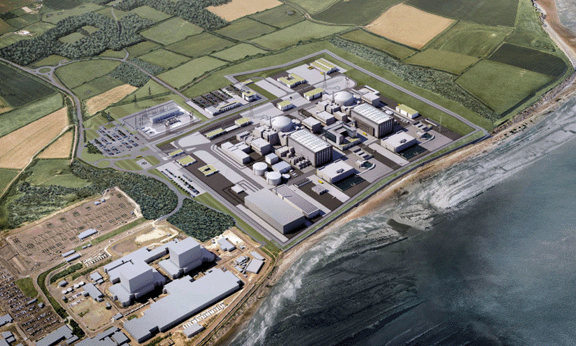
also said construction of Hinkley Point C – the first nuclear plant to be
built in Britain for more than 20 years – would be delayed unless Britain
had a new regulatory regime to replace the EU‘s.
Angela Hepworth was speaking at a parliamentary hearing on the impact of Brexit on Britain’s
energy security. Her comments illustrate the challenges faced by London as
it attempts to disentangle itself from decades of EU regulations, treaties
and institutions. In the nuclear industry, the race is on for the
government to replicate strict oversight of the industry and strike deals
with other countries or concoct a transition agreement, in time for
Britain’s withdrawal from the union in March 2019.
https://uk.reuters.com/article/uk-britain-eu-nuclear/uk-nuclear-operator-warns-of-plant-outages-if-brexit-mismanaged-idUKKCN1BO212
September 16, 2017
Posted by Christina Macpherson |
politics international, safety, UK |
Leave a comment

 Europe 1 14th Sept 2017 [Machine Translation] The Belleville-sur-Loire power plant in the Cher
region was placed under surveillance on Wednesday. The Nuclear Safety
Authority wants to control EDF more. Month after month, EDF accumulates
problems on its nuclear power plants.
Last episode: the decision of the
Nuclear Safety Authority to place the site of Belleveille-sur-Loire in Cher
on Wednesday under strong surveillance. According to the ASN, the use of
degraded materials that do not guarantee their proper functioning and a
lack of monitoring of the plant. http://www.europe1.fr/economie/pourquoi-edf-est-dans-le-collimateur-de-lautorite-de-surete-nucleaire-3435869
September 16, 2017
Posted by Christina Macpherson |
France, safety |
Leave a comment
Phys.org 13th Sept 2017, Russia currently holds the world’s largest stockpile of highly enriched
uranium, a nuclear weapon-usable material, posing significant nuclear
security risks, according to a recent report issued by the International
Panel on Fissile Materials (IPFM), a group based at Princeton University
and made up of nuclear experts from 16 countries.
The report, “The Use of Highly Enriched Uranium as Fuel in Russia,” provides unprecedented details
of the military and civilian use of highly enriched uranium in Russia—the
only country to produce highly enriched uranium as an export. Russia’s
stockpile of highly enriched uranium is estimated to be about 680 tons, and
as of 2017, Russia is estimated to use about 8.5 tons of highly enriched
uranium annually, a large fraction of which is weapon-grade material.
Likewise, Russia currently operates more highly enriched uranium facilities
than the rest of the world combined, creating substantial nuclear security
risks.
https://phys.org/news/2017-09-russia-stockpiles-highly-enriched-uranium.html
September 16, 2017
Posted by Christina Macpherson |
Russia, Uranium |
Leave a comment
Wind power is cheaper than nuclear – so can we finally ditch the pro-nuclear ideology? http://www.newstatesman.com/politics/staggers/2017/09/wind-power-cheaper-nuclear-so-can-we-finally-ditch-pro-nuclear-ideology
Tory MPs back Hinkley Point yet block wind turbine developments. This week’s auction of government subsidies for energy show clearly that not only have the Tories been undermining our chances of transitioning to a renewable energy future, they are also forcing up our energy bills.
Two big offshore wind farms came in at £57.50 per megawatt hour and a third at £74.75. These “strike prices” compare with a guaranteed price for electricity from Hinkley of £92.50. This is the price the government agreed in order to persuade the French and Chinese to build the new nuclear plant. So effectively, consumers and businesses will be forced to pay a premium of 60 per cent for the privilege of receiving electricity from Hinkley; a premium that will increase further as the price of renewables falls further over the next six years, up until Hinkley comes on grid – if it ever does.
It is clear that only a government suffering from an acute dose of economic illiteracy would continue with this project. Unless, of course, there are other reasons for continuing this madness.
No one doubts that Hinkley is an economic disaster, but it has been kept alive by a dubious subsidy regime. As a “mature technology”, nuclear should never receive a subsidy, which is why there are ongoing legal challenges on this point. By contrast, the dramatic fall in the cost of offshore wind, and other renewable technologies, prove the value of subsidising “infant industries” until they are mature enough to survive and thrive subsidy-free.
But it’s not just dodgy economics that have kept the Hinkley white elephant staggering on. It is also a warped anti-renewables, pro-nuclear ideology, something highly evident in my own constituency of the South West.
It would appear there were no applications for subsidies to build offshore wind in the South West. Why would there be when our region is stalked by Tory dinosaurs who will fight their planning proposals; destroying opportunities for local people, pushing up their energy bills, and denying us the clean energy future we deserve in the process?
Since I became an MEP, there have been two exciting large scale offshore wind proposals in the South West. The Navitus off-shore wind development in Dorset could have secured enough energy to power 700,000 homes, while the Atlantic Array off the North Devon coast, was forecast to power 900,000 homes. Both were ditched in no small part due to dogmatic opposition to wind power.
In both examples, some of the most active opponents were local Tory MPs. In the case of Navitus Bay, where local Tories allegedly opposed the development on the grounds of its potential impact on the Jurassic Coast World Heritage Site, Private Eye pointed out that local MP and vociferous opponent of Navitus, Conor Burns. received regular payments from an engineering firm connected with the oil and gas industry (it is listed in his register of interests). Navitus was proposed in an area off the Dorset coast thought to be suitable for oil and gas drilling. Conor Burns has never spoken out against plans to drill for oil and gas in the area.
As for Atlantic Array, the campaign group Slay the Array was led by none other than Steve Crowther, interim leader of Ukip. His party’s policies for the 2017 general election included the repeal of the 2008 Climate Change Act. Interestingly, they promised to support renewables when they could be delivered at competitive prices. Given that is now clearly the case, perhaps Mr Crowther would like to reconsider his staunch ideological opposition to Atlantic Array?
Lest we think it is just the Tories and Ukip standing in the way of a genuine transformation to cheaper, greener energy, Labour too has refused to ditch nuclear. The party is still trumpeting the thousands of jobs new nuclear, including Hinkley, can deliver. This view is deeply flawed. Evidence suggests that renewables create around three times as many jobs as nuclear for every £1m invested.
It is not only operating and servicing renewable energy projects that create jobs. There is also huge potential for job creation through the manufacture of components to support the renewables sector. Siemens in Hull provides a good example of what is possible. The company has invested £310m in wind turbine production and installation facilities, creating more than a thousand jobs.
Back in 2015, I commissioneda report which demonstrated the potential we have in the South West to generate in excess of 100 per cent of our energy from renewables. The report concluded that we could create 122,000 jobs across the region and add over £4bn a year to the economy. This is not unique to the South West; other areas of the UK could also be energy self-sufficient and reap the economic rewards. And the report was of course written before offshore wind was so much cheaper than nuclear.
Now is the time to end our affair with the dangerous and expensive technologies of the past and usher in a new green industrial revolution. There is an opportunity for political unity against Hinkley and in favour of renewables.
September 16, 2017
Posted by Christina Macpherson |
politics, UK |
Leave a comment
Dundee Courier 8th Oct 2017, Radiation remediation work at Dalgety Bay has edged closer with the start
of ground surveys at the contaminated beach. Investigations into ground
conditions began on Monday,before the long-awaited clean-up of dumped
radioactive debris from the Second World War, which is due to begin in
spring 2019.
The Ministry of Defence confirmed this week engineers are now
on site, having secured access. Stephen Ritchie, of the MoD’s Defence
Infrastructure Organisation, said: “Work started on site on Monday on a
ground investigation survey which has been the subject of ongoing
negotiations with the landowner.“That’s likely to take six weeks,
depending on the weather.” Updating south and west Fife councillors on
progress, Mr Ritchie also said it was hoped planning consent would be
issued soon for the remediation works.
https://www.thecourier.co.uk/fp/news/local/fife/504987/surveys-begin-of-radium-contaminated-fife-beach-ahead-of-mod-clean-up/
September 16, 2017
Posted by Christina Macpherson |
environment, UK |
Leave a comment
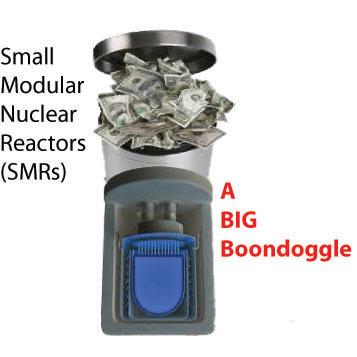
 City AM 10th Sept 2017 ,A consortium developing small modular reactors is expected to urge the
government to push forward with a plan to develop so-called baby reactors
to secure the UK’s energy needs after the decommissioning of older
nuclear power stations. The government launched a competition to find the
best value SMR reactor design for the UK in 2016, and this week a
consortium led by Rolls-Royce will publish a report in Westminster which
claims it can generate electricity at £60 per megawatt hour, which is
two-thirds the price of recent large-scale nuclear plants.
http://www.cityam.com/271732/mps-review-baby-nuclear-reactor-plans-cheaper-source-secure
September 16, 2017
Posted by Christina Macpherson |
politics, technology, UK |
Leave a comment
Tensions surface between UK and US over Iran nuclear deal, But Boris Johnson and Rex Tillerson unite in urging Myanmar’s Aung San Suu Kyi to speak out against massacre of Rohingya, Guardian, Patrick Wintour, 15 Sept 17, Tensions between the US and UK over whether to tear up the Iran nuclear deal were exposed on Thursday when the secretary of state Rex Tillerson said the US viewed Iran in default of the deal’s expectations, but the British foreign secretary Boris Johnson urged the world to have faith in its potential to create a more open Iran.
Tillerson repeatedly emphasised the US decision of whether to end the agreement signed in 2015 will be based on a wider assessment of Iranian behaviour – including in Yemen and Syria – and not just whether Tehran is complying with the strict terms of the deal……https://www.theguardian.com/world/2017/sep/14/tensions-surface-uk-us-iran-nuclear-deal-rohingya
September 15, 2017
Posted by Christina Macpherson |
politics international, UK, USA |
Leave a comment
Banking on Uranium Makes the World Less Safe https://www.counterpunch.org/2017/09/08/banking-on-uranium-makes-the-world-less-safe/ by LINDA PENTZ GUNTER, There is a curious fallacy that continues to persist among arms control groups rightly concerned with reducing the threat of the use of nuclear weapons. It is that encouraging the use of nuclear energy will achieve this goal.
This illogical notion is enshrined in Article IV of the nuclear Non-Proliferation Treaty (NPT) which rewards signatories who do not yet have nuclear weapons with the “inalienable right” to “develop research, production and use of nuclear energy for peaceful purposes.”
Now comes the international low-enriched uranium bank, which opened on August 29 in Kazakhstan, to expedite this right. It further reinforces the Article IV doctrine— that the spread of nuclear power will diminish the capability and the desire to manufacture nuclear weapons.
The uranium bank will purchase and store low-enriched uranium, fuel for civilian reactors, ostensibly guaranteeing a ready supply in case of market disruptions. But it is also positioned as a response to the Iran conundrum, a country whose uranium enrichment program cast suspicion over whether its real agenda was to continue enriching its uranium supply to weapons-grade level.
The bank will be run by the International Atomic Energy Agency, whose remit is “to accelerate and enlarge the contribution of atomic energy.” Evidently the IAEA has been quite successful in this promotional endeavor since the agency boasts that “dozens of countries today are interested in pursuing nuclear energy.”
A caveat here, borne out by the evidence of nuclear energy’s declining global share of the electricity market, is that far more countries are “interested” than are actually pursuing nuclear energy. The IAEA numbers are more aspiration than reality.
Superficially at least, the bank idea sounds sensible enough. There will be no need to worry that countries considering a nuclear power program might secretly shift to nuclear weapons production. In addition to a proliferation barrier, the bank will serve as a huge cost savings, sparing countries the expense of investing in their own uranium enrichment facilities.
The problem with this premise is that, rather than make the planet safer, it actually adds to the risks we already face. News reports pointed to the bank’s advantages for developing countries. But developing nations would be much better off implementing cheaper, safer renewable energy, far more suited to countries that lack major infrastructure and widespread electrical grid penetration.
Instead, the IAEA will use its uranium bank to provide a financial incentive to poorer countries in good standing with the agency to choose nuclear energy over renewables. For developing countries already struggling with poverty and the effects of climate change, this creates the added risk of a catastrophic nuclear accident, the financial burden of building nuclear power plants in the first place, and of course an unsolved radioactive waste problem.
No country needs nuclear energy. Renewable energy is soaring worldwide, is far cheaper than nuclear, and obviously a whole lot safer. No country has to worry about another’s potential misuse of the sun or wind as a deadly weapon. There is no solar non-proliferation treaty. We should be talking countries out of developing dangerous and expensive nuclear energy, not paving the way for them.
There is zero logic for a country like Saudi Arabia, also mentioned during the uranium bank’s unveiling, to choose nuclear over solar or wind energy. As Senator Markey (D-MA) once unforgettably pointed out: “Saudi Arabia is the Saudi Arabia of solar.” But the uranium bank could be just the carrot that sunny country needs to abandon renewables in favor of uranium.
This is precisely the problem with the NPT Article IV. Why “reward” non-nuclear weapons countries with dangerous nuclear energy? If they really need electricity, and the UN wants to be helpful, why not support a major investment in renewables? It all goes back to the Bomb, of course, and the Gordian knot of nuclear power and nuclear weapons that the uranium bank just pulled even tighter.
Will the uranium bank be too big to fail? Or will it even be big at all? With nuclear energy in steep decline worldwide, unable to compete with renewables and natural gas; and with major nuclear corporations, including Areva and Westinghouse, going bankrupt, will there even be enough customers?
Clothed in wooly non-proliferation rhetoric, the uranium bank is nothing more than a lupine marketing enterprise to support a struggling nuclear industry desperate to remain relevant as more and more plants close and new construction plans are canceled. The IAEA and its uranium bank just made its prospects a whole lot brighter and a safer future for our planet a whole lot dimmer.
September 15, 2017
Posted by Christina Macpherson |
Kazakhstan, spinbuster |
Leave a comment
German nuclear damage shows atomic and renewable power are unhappy bedfellows https://www.euractiv.com/section/electricity/news/german-nuclear-damage-shows-atomic-and-renewable-power-are-unhappy-bedfellows/,By Dagmar Dehmer | Der Tagesspiegel | translated by Sam MorganJul 26, 2017, A Germany nuclear plant was damaged because its operators increased and decreased its output to respond to energy grid fluctuations. The incident supports the theory that nuclear and renewable energy generation are incompatible. EURACTIV’s partner Der Tagesspiegel reports.
The Brokdorf nuclear power station, located in northern Germany, was taken offline in February after maintenance showed its reactor’s fuel rods had begun to unexpectedly oxidise.
A regional nuclear supervisory body has now ruled that the plant can be booted back up but only in “safe mode”, according to Schleswig-Holstein’s energy transition minister.
State Minister for Energy Robert Habeck (Greens) added that the power plant’s output should not be increased or decreased at short notice to adapt to the supply of renewable energies on the electricity grid. The minister warned that “atomic energy is not a bridging technology”.
A 2011 study by Greenpeace also concluded that renewables and nuclear are not compatible and that fuel rod damage is a possible consequence.
Kiel’s nuclear supervisory authority explained that the corrosion of Brokdorf’s fuel rods was a result of the reactor’s capacity being increased from 1,440 MW to 1,480 MW in 2006.
The investigation also concluded that the decision to run the plant as a load-following power station, where output was tailored to grid fluctuations, contributed to the damage.
“According to our findings, this stress has contributed to the unexpected oxidisation of the upper parts of some of the fuel rods,” Habeck explained.
The practice of quickly increasing or decreasing electricity generation to compensate for excessive or reduced renewable output has been particularly prevalent since 2015.
In 2015, the cost of switching off wind turbines in the northern German region, when electricity networks had reached their capacity, was particularly high.
The damage at Brokdorf was discovered in February when the plant was shut down for an inspection. Oxidisation that exceeded safety levels was recorded on ten fuel rods across three fuel elements. However, evidence of increased corrosion has been present since 2011, according to Habeck’s ministry.
Brokdorf’s period of inactivity has cost plant owner EON more than €100 million, according to reports by Bloomberg.
The shutdown came at a delicate time for the company, which at the beginning of this month transferred €24 billion to the German government, as part of an agreed contribution to decommissioning costs for the country’s nuclear plants.
Operating company PreussenElektra has a soft spot for Brokdorf, which was brought online in 1986, and its website boasts that up to 90% of Schleswig-Holstein’s electricity demands can be met by the nuclear plant. Brokdorf is due to be decommissioned in 2021 as part of Germany’s divorce from atom smashing.
The operator’s own investigation suggested that the material sheathing the fuel rods could have contributed to the oxidisation problem. But the supervisory body’s report dismissed these findings. The German Greens’ nuclear policy spokesperson, Sylvia Kotting-Uhl, warned that Berlin’s environment ministry should share the findings from Brokdorf with the Swiss nuclear authority.
Switzerland’s Leibstadt facility is located on the German border and reportedly has the same problems as its northern German cousin. Kotting-Uhl accused Bern of “closing its eyes and leaving Leibstadt on, even though the problems are not solved”.
The German lawmaker insisted that the Swiss power plant is temporarily switched off “until complete clarity prevails”.
The 2011 Fukushima nuclear disaster prompted Germany to announce it will phase out nuclear power by 2022. Berlin has so far shut down eight of its 17 reactors.
As a result, Germany has moved to secure its energy security by prioritising capacity mechanisms, in order to take advantage of its large-scale renewable generation capabilities.
However, in April 2017, the European Commission started an investigation into whether Berlin’s plans to set up an electricity capacity reserve comply with EU state aid rules.
September 14, 2017
Posted by Christina Macpherson |
business and costs, Germany, renewable |
Leave a comment

 BBC 12th Sept 2017, Work has begun on the “challenging” task of removing radioactive fuel
elements stuck inside the most famous of Dounreay’s reactors. Closed since
1977, the Dounreay Fast Reactor is known for its dome-shaped exterior.
Almost 1,000 fuel elements have been in the reactor for years after the work to remove them was halted because they were swollen and jammed in.
New technology has now been developed to make it possible to remove them. It
could take three years to complete the job at the nuclear power site near
Thurso in Caithness. Once all the elements have been removed work can begin
on dismantling the reactor.
http://www.bbc.co.uk/news/uk-scotland-highlands-islands-41245375
September 14, 2017
Posted by Christina Macpherson |
decommission reactor, UK |
Leave a comment
 Reuters 12th Sept 2017, Taxpayers will not be on the hook for any additional costs incurred in the building of the new $24 billion Hinkley Point nuclear plant, British
finance minister Philip Hammond said. A British parliamentary watchdog said
in June that the deal to construct the nuclear power station, which is
being built by French state-owned utility EDF, was risky.
It said the project could lead to requests for more cash and electricity payment
top-ups worth 30 billion pounds ($40 billion). EDF said in July that costs
at Hinkley Point were likely to be higher than it originally thought.
“Costs are not rising for the bill payer or the taxpayer. They may very
well be rising for our development partners, but that’s their problem,”
Hammond said on Tuesday. http://uk.reuters.com/article/britain-power-hinkley/taxpayer-insulated-from-rising-hinkley-point-costs-says-hammond-idUKL5N1LT4XL?rpc=401&
September 14, 2017
Posted by Christina Macpherson |
business and costs, politics, UK |
Leave a comment
 Hinkley nuclear power is being priced out by renewables https://www.theguardian.com/environment/nils-pratley-on-finance/2017/sep/11/hinkley-nuclear-power-no-match-for-renewables, Nils Pratley
The UK should concentrate on wind- and gas-fired stations, and involve nuclear only if it can vaguely compete on price Reuters 12 September 2017
Hinkley Point C nuclear power station was conceived in the days when offshore wind cost £150 per megawatt hour and a few misguided souls, some of them government ministers, thought a barrel of oil was heading towards $200.
Successive governments swallowed the line that Hinkley represented a plausible answer to the UK’s threefold energy conundrum – keeping the lights on, reducing carbon emissions and producing the juice at affordable prices for consumers and business.
Hinkley still scores on reliability and low carbon (if one ignores the effect of spoiling the Somerset countryside with so much concrete), but the extent to which its costs are obscene is now plainer than ever. In Monday’s capacity auction, two big offshore wind farms came in at £57.50 per megawatt hour and a third at £74.75. These “strike prices” – a guaranteed price for the electricity generated – are expressed in 2012 figures, as is Hinkley’s £92.50 so the comparison is fair.
The dramatic improvement in offshore wind’s competitiveness is easy to explain because it was predicted. The turbines have become bigger and more efficient, installation costs have fallen and operators are able to use existing infrastructure. Even the post-Brexit fall in sterling has not altered the script because more of the equipment is produced in the UK these days.
By contrast, nuclear – a technology that has been around for half a century – seems to only become more expensive in a world of tighter safety regulation. Hinkley Point’s construction tripled between conception and contract, remember.
As for the argument that we must pay up for reliable baseload supplies, there ought to be limits to how far it can be pushed. A nuclear premium of some level might be justified, but Hinkley lives in a financial world of its own, even before battery technology (possibly) shifts the economics further in favour of renewables. A credible energy strategy would concentrate on wind- and gas-fired stations, and invite nuclear to the game only if it can vaguely compete on price.
The government should draw the obvious conclusion from Monday’s successful auction. One Hinkley is bad enough; a series of follow-on white elephants would be a disgrace.
September 13, 2017
Posted by Christina Macpherson |
renewable, UK |
Leave a comment
Banking on Uranium Makes the World Less Safe https://www.counterpunch.org/2017/09/08/banking-on-uranium-makes-the-world-less-safe/ by LINDA PENTZ GUNTER, There is a curious fallacy that continues to persist among arms control groups rightly concerned with reducing the threat of the use of nuclear weapons. It is that encouraging the use of nuclear energy will achieve this goal.
This illogical notion is enshrined in Article IV of the nuclear Non-Proliferation Treaty (NPT) which rewards signatories who do not yet have nuclear weapons with the “inalienable right” to “develop research, production and use of nuclear energy for peaceful purposes.”
Now comes the international low-enriched uranium bank, which opened on August 29 in Kazakhstan, to expedite this right. It further reinforces the Article IV doctrine— that the spread of nuclear power will diminish the capability and the desire to manufacture nuclear weapons.
The uranium bank will purchase and store low-enriched uranium, fuel for civilian reactors, ostensibly guaranteeing a ready supply in case of market disruptions. But it is also positioned as a response to the Iran conundrum, a country whose uranium enrichment program cast suspicion over whether its real agenda was to continue enriching its uranium supply to weapons-grade level.
The bank will be run by the International Atomic Energy Agency, whose remit is “to accelerate and enlarge the contribution of atomic energy.” Evidently the IAEA has been quite successful in this promotional endeavor since the agency boasts that “dozens of countries today are interested in pursuing nuclear energy.”
A caveat here, borne out by the evidence of nuclear energy’s declining global share of the electricity market, is that far more countries are “interested” than are actually pursuing nuclear energy. The IAEA numbers are more aspiration than reality.
Superficially at least, the bank idea sounds sensible enough. There will be no need to worry that countries considering a nuclear power program might secretly shift to nuclear weapons production. In addition to a proliferation barrier, the bank will serve as a huge cost savings, sparing countries the expense of investing in their own uranium enrichment facilities.
The problem with this premise is that, rather than make the planet safer, it actually adds to the risks we already face. News reports pointed to the bank’s advantages for developing countries. But developing nations would be much better off implementing cheaper, safer renewable energy, far more suited to countries that lack major infrastructure and widespread electrical grid penetration.
Instead, the IAEA will use its uranium bank to provide a financial incentive to poorer countries in good standing with the agency to choose nuclear energy over renewables. For developing countries already struggling with poverty and the effects of climate change, this creates the added risk of a catastrophic nuclear accident, the financial burden of building nuclear power plants in the first place, and of course an unsolved radioactive waste problem.
No country needs nuclear energy. Renewable energy is soaring worldwide, is far cheaper than nuclear, and obviously a whole lot safer. No country has to worry about another’s potential misuse of the sun or wind as a deadly weapon. There is no solar non-proliferation treaty. We should be talking countries out of developing dangerous and expensive nuclear energy, not paving the way for them.
There is zero logic for a country like Saudi Arabia, also mentioned during the uranium bank’s unveiling, to choose nuclear over solar or wind energy. As Senator Markey (D-MA) once unforgettably pointed out: “Saudi Arabia is the Saudi Arabia of solar.” But the uranium bank could be just the carrot that sunny country needs to abandon renewables in favor of uranium.
This is precisely the problem with the NPT Article IV. Why “reward” non-nuclear weapons countries with dangerous nuclear energy? If they really need electricity, and the UN wants to be helpful, why not support a major investment in renewables? It all goes back to the Bomb, of course, and the Gordian knot of nuclear power and nuclear weapons that the uranium bank just pulled even tighter.
Will the uranium bank be too big to fail? Or will it even be big at all? With nuclear energy in steep decline worldwide, unable to compete with renewables and natural gas; and with major nuclear corporations, including Areva and Westinghouse, going bankrupt, will there even be enough customers?
Clothed in wooly non-proliferation rhetoric, the uranium bank is nothing more than a lupine marketing enterprise to support a struggling nuclear industry desperate to remain relevant as more and more plants close and new construction plans are canceled. The IAEA and its uranium bank just made its prospects a whole lot brighter and a safer future for our planet a whole lot dimmer.
September 13, 2017
Posted by Christina Macpherson |
2 WORLD, Kazakhstan, politics international, Reference |
Leave a comment
 The European Commission-funded Shamisen project has published 28
recommendations to improve preparedness for and response to a nuclear
accident. The recommendations follow an 18-month review of the response to
previous accidents, particularly Chernobyl and Fukushima-Daiichi.
New recommendations include how to improve professional training, establish
disease registries and evacuation protocols. The recommendations say
reliable information about an accident and associated risks should be given
and radiation dose data collected. Following an accident, dialogue needs to
be established between experts and affected communities.
There needs to be support for populations that want to take their own dose measurements so
they can decide what food to eat and when to return to their homes.
Recommendations also include providing voluntary health screening and
adequate counselling. The Shamisen project, coordinated by the Barcelona
Institute for Global Health, or ISGlobal, brought together 19 European and
Japanese organisations, as well as US, Belarusian, Russian and Ukrainian
experts. It is funded by the EC’s Euratom programme.
The project began in December 2015 with the objective of producing a set of recommendations that
would contribute to health surveillance and related communication with
affected populations after nuclear accidents. Existing recommendations,
ISGlobal said, had a technical focus, with less attention paid to social,
ethical and psychological issues.
http://www.nucnet.org/all-the-news/2017/09/08/ec-shamisen-project-publishes-28-recommendations-on-nuclear-accident-preparedness
September 11, 2017
Posted by Christina Macpherson |
EUROPE, safety |
Leave a comment