SMR Supply Chains, Costs, are Focus of Key Developments, Neutron Bytes, Dan Yurman October 4, 2017
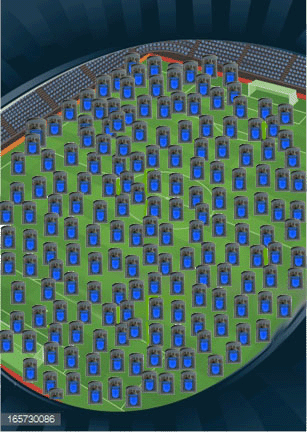
Small modular reactors won’t be able to compete with natural gas plants combined with renewables unless and until they get enough orders to justify building factories to manufacture them in a mass production environment.
Holtec Opens SMR Manufacturing Center in New Jersey
In September Holtec announced the grand opening of a $360M, 50 acre SMR manufacturing center in Camden, N.J. The firm was incentivized by the State of New Jersey to locate there with $260M in tax breaks. According to Holtec the Camden plant will eventually employ up to 1,000 people……….
Dr. Singh, Holtec’s President and CEO, declared the factory to be “Ground Zero” for the renaissance of nuclear energy and heavy manufacturing in America.
“It will serve as the launching pad for the regeneration of manufacturing in the United States.”
He added, “We will build nuclear reactors here, and they will sail from the port of Camden to hundreds of places around the world.”
Is Holtec Headed for Ukraine to Manufacture SMRs for Europe & Asia?
The maturing of an American supply chain to support mass production of components for SMRs might develop, but not all of it may be in the U.S. Holtec International, is reportedto be in talks about planning to arrange the production of small modular reactors (SMRs) for nuclear power plants in Ukraine, and for export to Europe and Asia.
The Interfax wire service report, which was not confirmed by Holtec, comes on the heels of the firm’s grand opening of a $360M nuclear energy component manufacturing center in Camden, NJ. It is the second report in three months providing details of Holtec International’s discussions with Energoatom. However, a spokesperson for Holtec declined to comment on these discussions as reported by Interfax.
The Intefax report quotes Energoatom National Nuclear Energy Generating Company of Ukraine President Yuriy Nedashkovsky who said,
“There is a very interesting offer made by Holtec International CEO Kris Singh to President of Ukraine Petro Poroshenko – to create a hub in Ukraine, distributing small modular reactors to Europe, Asia and Africa, with the localization of production and a large number of equipment at Ukrainian enterprises.”
According to Nedashkovsky, Ukraine’s Turboatom has already been involved in the project, as it has the required turbines in its production line.
“This project has already been developed conceptually. The launch of licensing procedures (in the U.S.) is expected next year, and an active phase of construction – approximately in 2023.” Nedashkovsky added.
Talking of the long-term prospects, Nedashkovsky noted that the demand for small modular reactors after 2025 was estimated to grow over time.
Is the Ukraine SMR Story Ahead of Holtec’s Headlights?
What’s unclear is whether Nedashkovsky was speaking off-the-top-of-his-head, commenting officially on behalf of Holtec International, Continue reading →
Europe’s governments look to bypass Trump to save Iranian nuclear deal
Despite pressure from UK and France, US president expected to declare Tehran in violation of agreement but Senate could yet block reimposition of sanctions, Guardian, Julian Borger, 4 Oct 17, European governments fear a concerted effort to persuade Donald Trump to continue to certify the Iran nuclear deal may have failed and are now looking for other ways to try to salvage the two year-old agreement.
European lobbying efforts are now focused on Congress which will have two months to decide – in the absence of Trump’s endorsement of the 2015 deal – whether to reimpose nuclear-related sanctions.
Fresh sanctions could in turn trigger Iranian withdrawal and a ramping up of its now mostly latent nuclear programme, taking the Middle East back to the brink of another major conflict.
When Trump threatened to withhold certification by a congressional deadline of 15 October, the UN general assembly in mid-September was seen by the European signatories of the agreement – the UK, France and Germany – as the last best chance to convince Trump of the dangers of destroying it……..
When their moment came, the European ministers around the table all observed that Iran was keeping its side of the bargain but expressed willingness to confront Iran separately about its missile programme and its role supporting armed groups around the region. The Russians and Chinese, meanwhile, were adamant there could be no renegotiation……..https://www.theguardian.com/world/2017/oct/04/iran-nuclear-deal-europe-trump-congress
The reason for the unusually high radiation is that the animal lived in fields which are still affected by fallout from the nuclear disaster in Chernobyl, 31 years ago.
After the explosion at the reactor in what is now Ukraine, much of Sweden was covered in a toxic cloud of radioactive iodine and cesium-137. When the rain came, the area around Gävle in the centre-east of the country took the brunt of the radioactive pollution.
But while levels of radiation in animals such as elk and reindeer have been continually decreasing, wild boar have now begun to move north into the areas worst affected by the nuclear fallout – meaning the level of radiation among the boar population seems to be on the rise.
One boar shot in August had a radiation of 13,000 becquerel per kilogram (Bq/kg), whereas the limit set by Sweden’s Food Agency (Livsmedelsverket) for safe consumption is 1,500 Bq/kg.
And another boar, which was shot a while ago but was kept in freezer storage, has just had its radiation level measured at 16,000 Bg/kg, or in other words, more than ten times the safe limit. That animal was killed in Tärnsjö, located between Uppsala and Gävle.
“This is the highest level we’ve measured,” Ulf Frykman, an environmental consultant who tests radiation levels in game meat, told SVT.
Frykman said his team had measured around 30 samples of meat so far this year, and found that only five or six of those were below the safe limit.. The animals themselves rarely suffer any negative health effects from the radiation due to their short life spans, but people who consume meat with high radiation levels face an increased risk, albeit still a small one, of developing cancer.
A group of seven European Union countries – the Czech Republic, Sweden, Poland, Romania and Bulgaria, as well as Britain and Germany – held at least two formal meetings with North Korean officials in Pyongyang in September, three EU diplomats said.
But they felt frustrated because the higher-level access that they had obtained in Pyongyang last year had fallen away, with only medium-ranking foreign ministry officials now attending the meetings, the diplomats said.
“There was a sense that we weren’t really getting anywhere because they sent these department heads,” said a Brussels-based diplomat who had been briefed on the meetings, which were described as “very serious” in atmosphere and tone.
“They want to talk to the United States.”
The White House has ruled out such talks, with President Donald Trump telling Secretary of State Rex Tillerson he would be “wasting his time” negotiating with the North Koreans.
The United States has no embassy in Pyongyang and relies on Sweden, the so-called U.S. protecting power there, to do consular work, especially when Westerners get into trouble.
In contrast to recent meetings, when North Korean officials met EU envoys in the Czech Republic’s embassy in 2016 to discuss issues including cultural programs and regional security, a deputy foreign minister would attend, one EU diplomat said.
For the small club of European Union governments with embassies in North Korea, that reflects Pyongyang’s anger at the EU’s gradually expanding sanctions that go beyond those agreed by the United Nations Security Council.
It could have repercussions for broader EU efforts to help mediate in the nuclear crisis, according to the EU diplomats briefed by their colleagues in Pyongyang, as the bloc prepares more measures against North Korea.
EU foreign policy chief Federica Mogherini, who chaired talks on the historic 2015 nuclear deal with Iran, says the bloc is ready to mediate in any talks aimed at freezing North Korea’s missile and nuclear weapons programs.
But at the same time, the European Union wants an oil embargo on Pyongyang that it hopes other countries will follow.
TORPEDOH! Bungling Navy officer accidentally fired a torpedo into a nuclear dockyard while doing maintenance Seaman was given a ‘get well soon’ package to restore his confidence after he attempted spur-of-the-moment missile test without an instruction manual while moored in Plymouth , The Sun, UK By Jacob Dirnhuber 6th October 2017
A BUNGLING Navy operator accidentally fired a torpedo at a nuclear dockyard that flew across a jetty and smashed into a fence.
Amazingly no-one was hurt when the 9ft missile, which was not armed, was blasted out of HMS Argyll while the ship was moored in Plymouth’s Devonport Naval base.
A newly-released file shows the misfire occurred after the operator attempted the test without a mandatory list of safety precautions to hand in March 2014.
The unarmed Sting Ray torpedo flew over a jetty and into a heavy duty metal fence at the high-security dockyard, which services nuclear submarines. Nobody was hurt.
The investigation found that following the information card instructions would have averted the misfire during what was meant to be simulated testing.
It concluded: “The fact that the maintainer was not in possession of the JIC led to a lapse in correct procedure which in turn culminated in the jettison of the TVT [test variant torpedo].”
The heavily-redacted Royal Navy report, released under the Freedom of Information Act, also found that the experienced engineer had wanted to carry out an overdue test.
It reads: “It is assessed that he seized an opportunity to conduct an overdue serial whilst the system was live and available to him.
“This may be viewed as a deviation from the intended plan.”
Romandie 5th Oct 2017, [Machine Translation] Luxembourg on Thursday said it feared “unfair
competition” between nuclear and renewable energies, on the occasion of the
examination by European justice of the complaint lodged by Austria and the
Grand Duchy against the payment of public aid for the Hinkley Point plant.
“We want to avoid this nuclear renaissance because all this public money
will be blocked and will not be able to go into energy efficiency and
renewable,” explained to the press at the end of the hearing the Luxembourg
Minister of the Environment, Carole Dieschburg. The arguments of the
representatives of Austria and the European Commission on the United
Kingdom aid measure at Unit C of the Hinkley Point nuclear power plant were
held before the EU Court in Luxembourg on Thursday.
Support for the Republic of Austria, Luxembourg continued for ten minutes. For the Grand
Duchy, the outcome of the dispute will have an influence on the direction
of the EU’s energy policy. “Subsidizing could set an important precedent
and give the green light to a new model of state nuclear financing in
Europe,” Dieschbourg said.
“For us, the important thing is to avoid a
nuclear revival,” she insisted. At the heart of the dispute is the decision
of the European Commission in October 2014 to validate the price support
mechanism provided by London, which is deemed compatible in Brussels with
EU rules. Backed by Luxembourg, Austria filed an appeal on 6 July 2015
against that decision. This mechanism, also known as the “offset gap
contract”, guarantees stable revenues to the operator of the Hinkley Point
nuclear power plant, in this case EDF, for a period of 35 years.
In addition to the procedure initiated by Austria, Greenpeace Energy also
brought an action for annulment against the same decision of the European
Commission.
In collaboration with Areva and the Chinese companies CGN China
General Nuclear and CNNC China National Nuclear Corporation, EDF is building
a new nuclear power plant with two reactors in Hinkley Point, southwest
England, in March, a controversial an estimated cost of about 21 billion
euros. By 2025, the plant will produce 3.300 MWh of electricity, the
largest single-station power plant in the United Kingdom and 7% of total UK
electricity generation. https://www.romandie.com/news/850062.rom
Deutche Welle 5th Oct 2017,German authorities have measured an increase in radioactive material in the
air. Officials say there is no risk to human health whatsoever, but are
puzzling over its source. Since September 29, a slight increase in the
isotope Ruthenium-106 has been measured in the air in Germany, Italy,
Austria, Switzerland and France. http://www.dw.com/en/spike-in-radioactivity-measured-in-germany-other-european-countries/a-40825708
Telegraph 3rd Oct 2017, The Government is likely to scrap the complex funding arrangements used to
prop up the development of Hinkley Point C after an energy minister
admitted the deal is unlikely to be used for future nuclear projects.
Richard Harrington, who joined the Business and Energy department as a
junior minister earlier this year, said nuclear “absolutely” had a role
to play in the future energy mix, but appeared to bow to Hinkley’s
critics by admitting the financing model was “unlikely” to be used
again. Speaking on the fringes of the Conservative Party conference, he
said he believed that a “third model” existed between the complex deal
agreed with EDF Energy on Hinkley, and the suggestion that Government
should be the main financier behind nuclear projects in order to drive
costs lower. http://www.telegraph.co.uk/business/2017/10/03/government-rethink-hinkley-point-funding-model-future-projects/
Les Echos 4th Oct 2017 [Machine Translation]Members of the board of directors of EDF and the
executive committee – met Tuesday in Hinkley Point, south-west England, for
a “delocalized strategic seminar” and to visit the site of the two EPRs.
Because of its location, project governance is much more complex than that
of the EPR project in Flamanville (Manche). Three teams are at work, with
about 700 people in Montrouge (France), 850 in Bristol (Great Britain) and
construction teams in Hinkley Point.
It is also necessary to integrate
Areva’s teams into Edvance, the new engineering structure resulting from
the restructuring of the nuclear industry. “There are many issues to be
discussed on the connection between EDF and NNB units in England,” said a
member of EDF’s board of directors before the summer. A site for Simone
Rossi, who will take over the management of EDF Energy on November 1, to
replace Vincent de Rivaz. https://www.lesechos.fr/industrie-services/energie-environnement/030655436090-edf-une-nouvelle-direction-pour-les-epr-anglais-2119323.php
Whitehaven News 3rd Oct 2017,Cumbria’s £10bn nuclear new build will not be delivered on schedule,
according to the man in charge of the company behind it. Tom Samson, the
chief executive of NuGen, which has plans for a power plant in Moorside,
near Sellafield, has said it will not be up and running by the 2025 target.
He has also said he expects a new investor in the project in the early part
of 2018 and confirmed the company has been speaking to the Government about
possible support. Mr Samson made these comments in an interview with
in-cumbria, where he also said he was “115 per cent” confident the scheme
would go ahead.
Doubts have surrounded the Moorside project – designed to
supply up to seven per cent of the UK’s electricity and create up to 10,000
jobs – all year because of issues affecting NuGen’s owner, Toshiba. Toshiba
has always insisted that it remains committed to the Cumbrian project
though it has long term plans to sell its stake. Korea Electric Power
Corporation (Kepco) and China General Nuclear Power Corporation (CGN) have
both expressed an interest in buying into NuGen.
Both Kepco and CGN have
their own reactor designs, which would need regulatory approval if they
were to be used by NuGen. Mr Samson said: “When we are in a partnership
with different technologies and shareholders it is inevitable that that
would change schedules. We will have a new plan which we will need to
create with any new owner and that will take us beyond 2025. “It is very
difficult to pin down a date but I would expect it will be operational
within the 2020s.” He added that there were several “credibly buyers” but
did not discuss which companies these were but did say: “There is a high
likelihood that there will be a new reactor technology.”
ITV 4th Oct 2017,The Prime Minister has told ITV Border she understands concerns in Cumbria
over uncertainty about a new nuclear power station in the county. Theresa
May said her government remains committed to new nuclear but she didn’t
commit to funding the Moorside project. The Prime Minister’s refusal to
give financial backing to Moorside comes as the company in charge of
developing the project has admitted for the first time that the project
will be delayed. http://www.itv.com/news/border/update/2017-10-04/pm-refuses-to-give-financial-backing-to-moorside-project/
On 29 September 1957 at 16 o’clock on the territory of the chemical plant “Mayak”, which was in the closed city of Chelyabinsk-40 (now Ozersk), was the first in the USSR radiation accident — an explosion of capacity to store radioactive waste. The catastrophe was called the Kyshtym accident — the name closest to Chelyabinsk-40 by city.
The blast occurred in containers, of a capacity of 300 m? because of the failure of the cooling system. In the tank contained a total of about 80 m? highly radioactive nuclear waste. At the time of construction in 1950-ies the strength of the structure is not in doubt. She was in the pit, in a concrete shirt thickness meter.
Cover the container weighed 560 tons, over it was laid a two-meter layer of earth. However, even this failed to contain the explosion.
According to another, unofficial version, the accident occurred due to human error of the plant that in the tank-evaporator with hot plutonium nitrate solution by mistake added a solution of plutonium oxalate. The oxidation of oxalate nitrate allocating a large amount of energy, leading to overheating and explosion of the tank.
During the explosion in the atmosphere were about 20 million curies of radioactive substances, some of which rose to a height of up to two miles, and formed an aerosol cloud.
Over the next 11-12 hours of radioactive fallout on the territory with a length of 300-350 km on northeast from the explosion.
In the area of radioactive contamination got 23 thousand km2 with a population of 270 thousand people in 217 settlements of the Chelyabinsk, Sverdlovsk and Tyumen regions. During the liquidation of consequences of the accident were required to relocate 23 villages with a population of 10-12 thousand a man, all the buildings, property and livestock were destroyed.
Liquidators were hundreds of thousands of soldiers and civilians
Only in the first ten days the number of deaths from radiation have gone on hundreds, during the works in varying degrees, suffered 250 thousand liquidators.
According to the international scale of nuclear testing accident was estimated at six points. For comparison, the seventh level, the maximum was rated accidents at Chernobyl and Fukushima-1.
To avoid scattering of radiation by government decision was established the sanitary-protective zone in which economic activity was banned. In 1968 this territory was formed of the Eastern Ural state reserve.
It is forbidden to visit — the level of radioactivity is still too dangerous for humans.
October 6, 1957 in the newspaper “Chelyabinsk worker” appeared devoted to his note, in which, however, about the accident not a word was said:
On Sunday night… many residents of Chelyabinsk watched the special glow of a starry sky. It’s pretty rare in our latitudes, the glow had all the signs of the Aurora. Intense red, time moves to slightly pink and light blue glow first covered a large part of the South-Western and North-Eastern surface of the firmament. About 11 o’clock it was possible to observe in the North-Western direction… In the sky appeared a relatively large colored area and the quiet lanes that had at the last stage of lights North-South direction. The study of the nature of the Aurora, has begun Lomonosov continues in our days. Modern science has confirmed the basic idea of the University, that the Aurora occurs in the upper layers of the atmosphere by electrical discharges of the Aurora…… can be observed in the future at the latitudes of the southern Urals”.
Kyshtym accident has long been a state secret. For the first time openly about her was said in a shot at the turn of the 1980s and 1990s, the film Director and biologist Elena Sakanyan, dedicated to the fate of Soviet genetics and biologist Nikolai Timofeev-Ressovsky.
The films were shown on television only after Sakanyan directly asked about the show to Boris Yeltsin.
But in the foreign press leaked the information in April 1958. For the first time about the accident said one of the Copenhagen Newspapers. Subsequently, information about the accident appeared in the report of the National laboratory, USA, biologist Zhores Medvedev dedicated incident book entitled “Nuclear disaster in the Urals”, published in the US, an analysis of the causes of the accident and its causes held by a group of American scientists from the atomic center at oak ridge.
“About the explosion at the “Mayak” for long periods of time, the public knew almost nothing. Later, for some reason, the accident was replicated in the media as the “Kyshtym accident”.
In Kyshtym on this occasion, even recently, was the obelisk, although the city to this event is irrelevant.
And the East-Ural radioactive trail, formed after 1957, did not affect Cistema and its residents,” — said in an interview in 2009, one of its liquidators.
Only the “Lighthouse” there were more than 30 incidents of radioactive emissions and human victims.
Ft.com 2 Oct 17Within the next month Simone Rossi will take over as the chief executive of EDF Energy in the UK. With the job comes responsibility for Britain’s first (and according to one of the energy industry’s leading players, perhaps last) new nuclear plant, Hinkley Point C. The plant is set to be one of the most expensive structures ever built, with the costs estimate pushed up again in July to £19.6bn. HPC is least eight years behind schedule (it was originally supposed to be providing the power to cook our Christmas turkeys this year) but is not expected to be commissioned before 2025, with the possibility that even that target won’t be met. Mr Rossi could be thought to have the most thankless job in the world. HPC is unloved and unwanted, a project which gives dinosaurs a bad name. That is true in Britain where the decision to proceed last year was only taken because the prime minister’s staff could not identify an alternative source of power – they should have asked more widely and not relied on those already fully committed to one outcome. Instead they gave EDF the go-ahead but placed the entire construction risk on EDF. Since the company is state owned the ultimate burden rests with French taxpayers. Unsurprisingly HPC is as unpopular in Paris as it is in the UK.
At an intriguing conference on the “Global Positive Future” held under the “high patronage” of President Emmanuel Macron at the beginning of September there was no mention of nuclear power. If Mr Macron accepts the tighter financial discipline implied by the proposed eurozone reforms, repeated payments to EDF will become impossible. Many in EDF, once a great company at the heart of the post-1945 reconstruction of France, see the project as an albatross. Control over EDF’s activities in the UK has been moved back to Paris.
Despite all this Mr Rossi could still emerge as a hero. As a new arrival he can look again at the project and decide that instead of throwing good money after bad, it is time to call a halt and look for lower cost solutions. Price has become the key issue since the original deal on HPC was agreed in 2013. A price of £92.50 per megawatt hour, index linked for 35 years from whenever the project is commissioned, was ridiculous then and is even more so now. Given the inflation we have seen since 2013 that starting price is now over £100 per MWh. The deal symbolised the inability of well intentioned but inexperienced ministers and civil servants to negotiate complex commercial deals. The deal involved no competition and no provision for review if market circumstances changed. The decision demonstrated the unaccountable power of well funded lobbyists.
Circumstances have changed. Over the last four years the price of every available alternative has declined. The cost of offshore wind has fallen to below £60 per MWh in the UK and to just €43 per MWh in Spain. Gas is plentiful and there is no reason to think that a balanced mixture of wind power and natural gas cannot meet future energy needs. …….
When did nuclear disarmament become such a dirty word for the Tories? Guardian, Emily ThornberryUnlike her Conservative predecessors Theresa May won’t commit to the principle of a nuclear-free world – just so she can attack Jeremy Corbyn’s position
On this day, 65 years ago, near a remote island off the Australian west coast, a bomb was exploded in the hull of the empty navy frigate HMS Plym, its blast two-thirds more powerful than the one that destroyed Hiroshima. At that moment, Britain officially became the world’s third nuclear power.
Both Winston Churchill, who authorised the test, and Clement Attlee, who initiated it, believed its true significance lay not in increasing Britain’s military capabilities, but in further deterring the threat of nuclear war between Russia and the west, and ultimately in eradicating that threat.
Since that day in October 1952, 17 general elections have been held in Britain, and – while debates have often raged about a unilateral versus multilateral approach – the principle that the British government should always be working towards global disarmament has never seemed in doubt.
Until now, that is. Theresa May’s manifesto earlier this year was only the third by a sitting government since Britain got the bomb that made no mention at all of nuclear proliferation and the importance of arms control. And – unlike the two others – she had no excuse.
The previous exceptions to the rule were in February 1974, when Ted Heath tried to reduce his snap election to the single question “Who governs Britain?”; and 1997, when a fag-end Tory administration was barely going through the motions against New Labour.
But in every other case, the prime minister and government of the day treated it as almost a moral responsibility to make clear their long-term commitment to disarmament, often alongside a statement of their short-term plans to retain and renew Britain’s nuclear arsenal…….
So the question for the prime minister and her party is: “When did disarmament become such a dirty word?” Why are Jeremy Corbyn and the Labour party now derided for advocating policies that Tory governments once considered perfectly commonplace?……..
Look at the situation today, especially this summer’s volatile and unresolved standoff between Kim Jong-un and Donald Trump, and it is clear that the threat of nuclear conflict is definitely no less severe than in previous decades, and is arguably at its highest level since the early 1980s.
For past governments of all parties in Britain, that was the cue to step up their efforts on nuclear diplomacy, and commit to progress on disarmament. But from May, Boris Johnson and Michael Fallon, we hear the opposite, and the explanation is as depressing as it is straightforward.
They know that Corbyn – along with me and others – is a long-standing proponent of disarmament. They know that this issue has caused tension in the Labour party over the past two years. And they therefore regard any discussion of nuclear weapons simply as a chance to misrepresent Labour as soft and divided on defence.
In that context, the silence of the last Tory manifesto makes total sense; any commitment to make progress on arms control would have made it impossible for May’s attack dogs to tear holes in Labour for saying the same.
So this most unprincipled of prime ministers chooses to ignore the issue of disarmament simply for short-term political gain, something no sitting government has done since that massive blast 65 years ago on HMS Plym………
at least up until now, every government since Churchill’s has believed that – whatever the arguments that nuclear weapons are a necessary short-term deterrent – the only long-term and absolute guarantee of safety is to eliminate them entirely from the planet.
It should hardly be a surprise therefore for Labour’s leader to state that as his ambition, just as it was for Churchill, Macmillan, Thatcher, Major and Cameron. Indeed, the fact that Theresa May continues to attack Jeremy Corbyn for holding that principle is not just a massive departure from the standards of her postwar predecessors, but one of the many reasons she is not fit to stand in their – or his – company.
These tablets also don’t eliminate all risks of nuclear disaster. Other radioactive substances, like cessium or plutonium, can be released in a nuclear disaster, and the iodine tablets will do nothing against that.
DUTCH GOVT. DISTRIBUTES IODINE TABLETS IN PROVINCES NEAR NUCLEAR PLANTS https://nltimes.nl/2017/10/03/dutch-govt-distributes-iodine-tablets-provinces-near-nuclear-plantsBy Janene Pieters on October 3, 2017 From this week the Dutch Ministry of Public Health is distributing iodine tablets in provinces located near nuclear plants. The pills are intended to protect against a certain type of radiation should there be a nuclear disaster. According to the Ministry, around 3 million people in large parts of the regions of Oost-Nederland, Noord-Nederland, Noord-Brabant, Zuid-Holland, Zeeland and Limburg will receive a packet of pills in the mail by the end of next week, the Volkskrant reports.
Iodine pills wil be sent to all children under the age of 18 who live within 100 kilometers of a nuclear plant. Within a radius of 20 kilometers from a plant, all people up to the age of 40 will get a packet of pills. Pregnant women can buy them from a pharmacy. If a nearby nuclear plant leaks radioactive material for any reason, the people living around it will receive a notification telling them to drink the iodine tablets.
The pills are intended to protect against a form of thyroid cancer, to which young people are particularly vulnerable during a nuclear disaster. The cancer develops when the thyroid gland absorbs radioactive iodine. By drinking the iodine tablets first, the thyroid absorbs all the iodine it can from the tablets and has no more room for radioactive iodine. Any iodine absorbed from the nuclear cloud will simply pass through the body.
While there are international guidelines for distributing iodine tablets around nuclear plants, each EU country can decide for itself how and whether they distribute the tablets. A few years ago Belgium decided to distribute iodine due to citizens’ concerns about the safety of nuclear power plants Doel and Tihange. In 2014, the Dutch government decided to “harmonize” the policy so that Dutch citizens can have the same protection as German and Belgian people living near nuclear power plants, according to the newspaper. This measure is taken as a precaution, and not in response to a threat of nuclear disaster.
These tablets also don’t eliminate all risks of nuclear disaster. Other radioactive substances, like cessium or plutonium, can be released in a nuclear disaster, and the iodine tablets will do nothing against that.
According to Wim Turkenburg, atomic physicist and energy professor at Utrecht University, the best thing to do after a nuclear disaster is to stay inside until the nuclear cloud dissipated. “Don’t go get your children from school, but leave them there”, he said to the Volkskrant. He also stressed that nuclear disasters are very rare, especially in the reactors located close to the Netherlands. “The nuclear plants here are more striclty checked than in Fukushima and Chernobyl.”