UK: Energy and Climate Intelligence Unit calls for windfarms: wind energy now cheapest form of electricity
No new onshore wind projects have been given contracts in the UK since a
change of government in 2015. The few still being built were awarded
contracts beforehand.
Now, an independent think tank — the Energy and
Climate Intelligence Unit — is arguing that construction of new onshore
wind farms could save electricity consumers as much as £1.5 billion
(€1.7 billion/$2 billion) over five years. Onshore wind is now the
cheapest form of electricity generation and can deliver savings even when
taking into account the costs associated with managing variability.
The report notes that a Spanish auction in May 2017 delivered onshore wind at
€43/MWh ($51/MWh) and suggests that around 1GW in the UK could be
delivered by the 15-year contracts for difference (CfD) currently used at
£49.40/MWh ($65/MWh) or less.
This is lower than the current estimate for new gas-fired generation of £66/MWh ($87/MWh). Assuming an average load
factor of 0.31 for onshore wind in the UK, 1GW would deliver 2.7TWh of
energy.
The report estimates the costs of delivering 2.7TWh by other means,
including the Hinkley Point C nuclear power station, a recently-contracted
biomass project, offshore wind, combined-cycle gas turbines (CCGT) and
small modular reactors (SMR). The Energy and Climate Intelligence Unit
report compares the annual generation costs from these sources.
They rangefrom £166 million in the case of onshore wind and £198 million for
offshore wind, to £271 million for Hinkley Point and £308 million in the
case of the biomass plant. The estimates for wind include an allowance for
an “integration cost” of £10/MWh ($13/MWh). This covers the costs of the
measures needed to cope with variability.
https://www.windpowermonthly.com/article/1451012/wind-economics-uk-consumers-miss-big-savings
European citizens lodge a complaint against EDF and French govt on nuclear unsafety
Greenpeace 2nd Dec 2017, [Machine translation] Nuclear: European citizens lodge a complaint against
EDF and the French state. Citizens from Belgium, Germany, Luxembourg and
Switzerland, and many French people gathered today in five cities in France
to denounce the lack of protection of nuclear facilities in France and the
risks involved. They filed a complaint against EDF and the French state for
endangering the lives of others.
https://www.greenpeace.fr/espace-presse/nucleaire-citoyennes-citoyens-europeens-portent-plainte-contre-edf-letat-francais/
Appeal filed against commissioning of the tank of the Flamanville nuclear plant.

 Le Monde 30th Nov 2017, [Machine translation] Nuclear: appeal filed against the agreement given to
the commissioning of the tank of the Flamanville plant. Several NGOs
believe that the Nuclear Safety Authority should have vetoed the use of the
tank of the future EPR, which has anomalies.
The state of the tank of the European pressurized reactor (EPR) Flamanville (Channel) continues to
generate strong reservations and concerns. On Thursday, November 30th,
several NGOs, including Réseau sortie du nucléaire and Greenpeace, who
denounce anomalies in the construction of this tank, said they filed an
appeal before the State Council asking for the cancellation of the
agreement recently given by the Nuclear Safety Authority (ASN).
“This tankwas not manufactured according to the rules of the art, there were bad
workmanship (…). ASN should have vetoed the possible use of this tank,
“said Charlotte Mijeon, Spokeswoman of the Network out of the nuclear.
http://www.lemonde.fr/energies/article/2017/11/30/nucleaire-recours-depose-contre-le-feu-vert-donne-a-la-mise-en-service-de-la-cuve-de-la-centrale-de-flamanville_5222877_1653054.html
Disturbing faults, safety dysfunction in France’s Paluel nuclear power plant in Normandy.
 Bastamag 1st Dec 2017 [Machine translation] A new accident reveals serious dysfunctions in terms
of nuclear safety in France. In March 2016, during a replacement operation,
a 465-ton steam generator fell in the heart of the Paluel nuclear power
plant in Normandy. A serious and unprecedented accident, which miraculously
does not cause serious injury or radioactive contamination. Since then,
experts have investigated the causes of the accident.
Consulted by Bastamag, their report, the conclusions of which will be summarized to
employees this 1st of December, reveals major dysfunctions in the
preparation and supervision of the site, largely related to the massive use
of subcontracting. Disturbing faults, while the renovation projects of the
power stations will multiply. https://www.bastamag.net/Un-accident-inedit-revele-de-graves-dysfonctionnements-en-matiere-de-surete
Underground bunkers – a promising marketing opportunity for South Korean and UK businessmen
Bomb shelter boss ‘wants North Korea to launch nuclear attack’ to help sell new ‘high street bunkers’ Mirror UK, 30 Nov 17 British bunker experts have been working alongside a Korean company on making the world’s toughest shelters to prepare for nuclear war A bomb shelter boss ‘wants North Korea to launch a nuclear attack’ to help sell ‘high street bunkers’.

The bunkers have been built to withstand a nuclear attack, by Kim Jong-un are now being sold on Seoul’s high street.
A ‘bunker showroom’ has now been opened in downtown Seoul, in the same shopping area where people are buying clothes and cosmetics. CBS owner Go Wan Hyeok says that demand from ‘petrified’ locals for affordable bunkers led him to set up in the busy retail district of Jangan-Dong – and wants to branch out to Europe and the UK within five years.
He said: “I’m wishing that he presses the button and shoots the bomb!
“I think more people will be selling bunkers on the high street in the next five years but I’m the first in the world. I want to then open up showrooms in Europe and my friends in the UK.”……http://www.mirror.co.uk/news/world-news/bomb-shelter-boss-wants-north-11613699
Another corruption investigation of French nuclear company AREVA

 Times 29th Nov 2017, The headquarters of the French state-owned company that designed Britain’s
new nuclear reactors was raided by police yesterday. About 50 officers
searched the offices of Areva, the nuclear engineering group, as part of a
preliminary inquiry into corruption allegations. The inquiry was launched
by the French national financial prosecution service into Areva’s purchase
in 2011 of uranium from Niger worth $319.8 million.
The uranium was sold later to Russian traders who made an $82 million profit and then to a
Lebanese company that made $17.6 million, according to French media
reports. A spokesman for Areva said that the deals had been lawful and were
part of negotiations with an unspecified customer to build a nuclear
reactor.
In the end the reactor was never built. A spokesman for Niger’s
government told Le Monde that it had made about $800,000 from the
transactions and had used the money to buy cars for presidential
bodyguards.
Areva, which designed the two reactors being built at Hinkley
Point by EDF, the state-owned French energy provider, is already under
investigation in connection with Niger. An inquiry was opened in 2014 into
allegations that it overpaid Uramin, a Canadian mining group, whose main
uranium mines were in Niger.
Looks as if UK nuclear power is coming to the end of the line
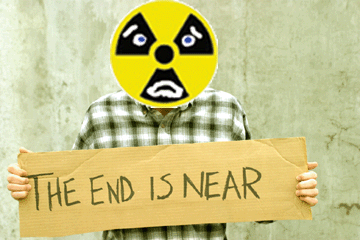
 Is This The End Of Nuclear Power In The UK? https://oilprice.com/Alternative-Energy/Nuclear-Power/Is-This-The-End-Of-Nuclear-Power-In-The-UK.html,
First, let’s put the Hinkley Point C nuclear power station in context. The UK government first announced its nuclear power expansion program in 2006. The plan was to build five new nuclear generating stations, producing 16 GWs, to be on-line by 2030. The units planned are at Sizewell, Wylfa, Moorside, Oldbury and Hinkley.
At the time the government cited two concerns with respect to the adequacy of national electric power generation. First, that “security of supply (was) jeopardized” and second, that by 2025 there would be a need to replace aging coal-fired and nuclear power generating plants. The ensuing decade was not kind to the assumptions of UK energy planners.
The price of both renewables and natural gas dropped significantly. License extensions could keep most existing nuclear power stations running. And demand for power has fallen below expectations due to moderating economic trends and the dampening impact of conservation measures.
From a UK power generation perspective, the big winners in recent years have been natural gas and renewables. Coal burn has dropped drastically and nuclear has remained stable.
On a price competition basis, the future looks like a race to the bottom between natural gas and the ever-declining costs of wind and solar technology. On a cost basis, the Hinkley guarantee of £92.50 per MWh looks rather steep compared with the £57.50 recent price for off-shore wind.
We can already hear the harrumphing from the pro nuclear contingent. But this to us is the problem of making commercial nuclear technology the Zelig of the energy world. In a world eager for low carbon, base load capacity, nuclear has attempted to re-brand itself as the low carbon option. But in countries facing stagnant or declining electrical demand, the need for new, non-intermittent base load power generating resources is diminishing as well.
You can find Leonard Hyman’s lastest book ‘Electricity Acts’ on Amazon
And the other low carbon generating resources, renewables, intermittent though they may be, are now much cheaper than new nuclear construction (£57.50 vs £92.50).
At another level, electricity is a commodity. A commodity that we can’t store, but still. And in a commodity business, where the product is wholly undifferentiated, price is the only consideration. Taken in this context, new nuclear is a non-starter.
South Korea looks for a stake in building UK’s Moorside Nuclear Power Station
 Carlisle News and Star 30th Nov 2017, The British and Korean governments have agreed to greater collaboration onnuclear developments, fuelling speculation that a Korean company is about
to invest in West Cumbria’s Moorside power station.
Greg Clark, the secretary of state for business, energy and industrial strategy, and Paik
Un-gyu, South Korean minister of trade, industry and energy, signed a
Memorandum of Understanding on Monday in London. It promises greater
collaboration in both the construction and decommissioning of nuclear power
stations.
The signing appears to have only been reported by World Nuclear
News and Business Korea websites. State-run Korea Electric Power
Corporation (Kepco) has revealed it is in “working-level” talks to buy
a stake in NuGen – which plans to build three new reactions in West
Cumbria to provide seven per cent of the UK’s electricity needs.
Toshiba, NuGen’s current owner, has been exploring a range of options to fund the
project after its then subsidiary Westinghouse Electric – due to supply
three AP1000 reactors to Moorside – filed for Chapter 11 bankruptcy
protection in the US having overpaid by several billion dollars for another
nuclear construction and services business….http://www.newsandstar.co.uk/news/business/International-agreement-fuels-Korean-interest-in-Moorside-2cefe362-b678-4e12-9214-ad75be6a1933-ds
Russian refugee talks about radioactive leak, and Mayak living conditions
France TV 29th Nov 2017, [Machine Translation] Ruthenium leak: Russian refugee activist in France
tackles nuclear taboo in Russia. Today a Russian activist testifies about
the living conditions around the nuclear site of Maïak. She is convinced
that the ruthenium 106 found in Western Europe comes from a leak on this
site. https://www.francetvinfo.fr/replay-radio/c-est-ma-planete/fuite-de-ruthenium-une-militante-russe-refugiee-en-france-s-attaque-au-tabou-du-nucleaire-en-russie_2468374.html
France joins the rush to market nuclear power to Saudi Arabia
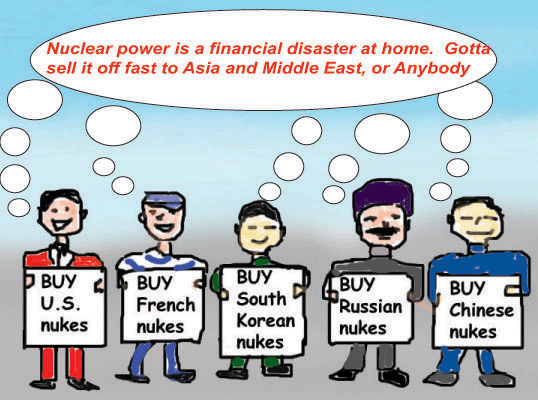 Reuters 29th Nov 2017, French state-controlled utility EDF intends to take part in a tender to
build two nuclear reactors in Saudi Arabia, two sources familiar with the
situation told Reuters.
Saudi Arabia, which wants to reduce domestic oil
consumption, is considering building 17.6 gigawatts of nuclear-fuelled
power generation capacity by 2032 and has sent a request for information to
international suppliers to build two reactors
With answers to the request due by the end 2017 or early 2018, a formal tender could be launched by
mid-2018, but more likely toward the end of 2018 or early 2019, industry
specialists say. https://www.reuters.com/article/saudi-nuclear-edf/update-1-frances-edf-plans-to-bid-in-saudi-arabia-nuclear-tender-sources-idUSL8N1NZ1YN
Mushrooms contaminated with radioactive cesium 137 stopped by France, – shipment from Belarus
 France stops large shipment of radioactive Belarus mushrooms, Geert De Clercq, PARIS (Reuters), 30 Nov 17 – France has stopped a large shipment of Belarus mushrooms contaminated with low-level radioactivity probably from Chernobyl and not linked to a radioactive cloud that appeared in southern Russia last month, officials said on Thursday.
Earlier, the head of French nuclear regulator ASN Pierre-Franck Chevet told the French senate that traces of cesium had been found on imported mushrooms from Russia and did not mention Belarus.
A spokesman for French nuclear safety institute IRSN said that a few days ago customs officials found that a 3.5 tonne shipment of Belarus mushrooms coming through Frankfurt, Germany was contaminated with cesium 137, a radioactive nuclide that is a waste product of nuclear reactors…….https://www.reuters.com/article/us-russia-nuclearpower-accidentedf/france-stops-large-shipment-of-radioactive-belarus-mushrooms-idUSKBN1DU1CW
Argayash, close to Russia’s Mayak Nuclear Facility, at the centre of radiation leaking
The Russian town in the shadow of a leaking nuclear plant https://www.ft.com/content/2d853158-d064-11e7-b781-794ce08b24dc
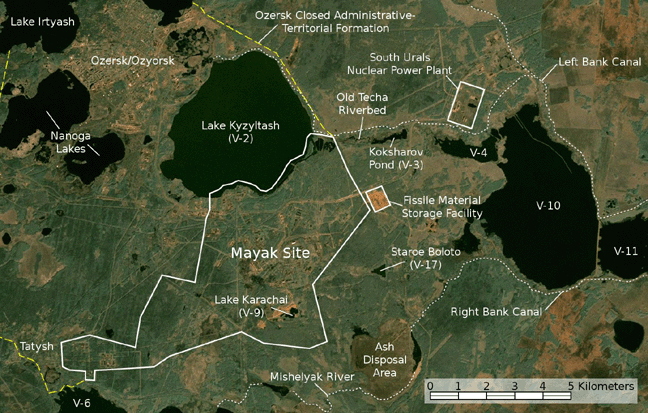
Authorities finally admit that Argayash was at the centre of a radiation cloud.
Henry Foy in Argayash , 24 Nov 17
Argayash is a cynical, mistrustful town. Decades of being lied to by the government about being down the road from a leaking nuclear plant does that to a place. So too does watching generations of people dying of radiation-related ailments while officials assure them nothing is amiss.
A small, two-road settlement where homes roofed with corrugated iron and Soviet-era Lada cars nod to its poverty, Argayash is one of a handful of towns surrounding the Mayak Production Facility in southern Russia, one of the world’s biggest radiation emitters where a litany of tragic accidents has made it a byword for the dangers of the atomic industry.
This week, 76 years after radiation first began seeping from Mayak into the surrounding rivers, lakes and atmosphere, Russian authorities admitted that Argayash was at the centre of a radiation cloud containing “exceptionally high” levels of radioactive isotope ruthenium-106, which spread so far west that it reached France. The radiation was detected by Russia’s meteoological agency in late September, but only revealed on Monday, after local politicians had spent weeks denying rumours of a leak and rubbishing reports from EU agencies that had tracked the cloud’s movement.
The levels of the isotope in Argayash were almost 1,000 times the normal level. Officials say it is not harmful to public health. “Nobody tells us anything. They keep it secret,” says Lilia Galimzhanova, a cook at a café in the town. “We are afraid. We are afraid for our children and grandchildren.” “But we know that the air, the environment is very bad here,” she says. Her 80-year-old mother suffers from radiation poisoning from Mayak. “We are not protected by anyone here . . . We are survivors.”
Ms Galimzhanova only heard of the radiation that had enveloped her town when a friend in Germany read about it in a western newspaper. Before the authorities admitted its existence, text messages had been sent to residents saying that high levels of pollution from nearby industrial factories meant people should stay indoors. Regardless of the potential health risks, many here say the government’s initial silence, denial and obfuscation has dredged up painful memories of a past that refuses to stay buried. Secretly constructed in the 1940s, Mayak was at the forefront of the USSR’s scramble to catch up with the US nuclear programme. As it raced to produce weapons-grade plutonium, a vast amount of nuclear waste was discharged into nearby lakes and the Techa river. Then, in 1957, nuclear waste storage tanks at the site exploded, raining fallout over hundreds of towns — and releasing more radiation than any other nuclear accident except Chernobyl and Fukushima. Ten years later, an adjacent reservoir used for waste disposal dried out, and powdered radioactive dust was blown over the area.
Swiss nuclear station closed due to faulty AREVA fuel rods
Faulty Areva fuel rods sent to nuclear reactors, Swiss plant closed
* Areva sent faulty fuel roads to several nuclear plants
* Says no danger, declines to identify which reactors
* Swiss Leibstadt closed, no comment on EDF reactors
Areva said in a statement that following the discovery of a leaking fuel rod at its Paimboeuf, France, zirconium-tube manufacturing plant, tests had showed that some fuel rods which should have been rejected were delivered to utilities companies.
Fuel rods which already have been loaded in reactors can continue operating without impairing plant safety and none of the affected rods have caused leaks, Areva said.
An Areva spokesman said that utilities operating the faulty tubes had been informed but declined say to which companies were involved, citing “industrial confidentiality”.
He declined to say whether French utility EDF, Areva’s main customer, had received faulty rods. EDF has had to close several reactors in the past two years due to manufacturing problems at Areva foundry Creusot Forge.
Swiss broadcaster SRF reported that the Leibstadt nuclear plant in northern Switzerland has been closed till the end of the year because of faulty Areva fuel rods.
A spokeswoman for the Leibstadt plant confirmed that a supplier had informed the utility that there was a problem with 16 new fuel rods, but declined to identify the supplier.
She added that the supplier later also said that six fuel rods which had already been installed were also faulty. The rods – which hold the uranium pellets that generate heat in the reactor core – had been installed in the last three-four years.
“The rods that were already installed had not caused any problems but we removed them as a precaution. There was no safety issue,” she said.
The Swiss Federal Nuclear Safety Inspectorate has been informed and that the plant – which had been set to reopen Nov. 7 following maintenance – will remain closed till end December.
Leibstadt, built in 1984, is one of five nuclear power plants in Switzerland. The site, which is owned by a consortium of Axpo, Alpiq and BKW, is the biggest electricity supplier in Switzerland, providing power to 2 million homes in the country. (Reporting by Geert De Clercq in Paris and John Revill in Zurich Editing by Jeremy Gaunt)https://www.reuters.com/article/us-usa-pesticides-basf-se/u-s-soybeans-escape-yield-losses-after-signs-of-chemical-damage-basf-idUSKBN1DH1QT
Planned new nuclear power station for Bradwell-on-Sea, Essex, meets with opposition
 Design for planned nuclear power plant in Essex unveiled Designs for a new nuclear power station close to the site of a former plant in Essex have been revealed. BBC, 17 Nov 17 The reactor and buildings – designed by EDF and China General Nuclear (CGN) – could be built at Bradwell-on-Sea.
Planners are now set to consider environmental and safety issues, but any full approval for the site is expected to take at least four years.
It could power up to one million homes but campaigners oppose it on “health, environment and safety” grounds.
The design for the new “Bradwell B” reactor has passed the first step of a four-step process, and will be assessed by UK nuclear regulators.
But the Blackwater Against New Nuclear Group has warned about “the risks and dangers of radioactivity” posed by its construction and operation……. http://www.bbc.com/news/uk-england-essex-42026375
Remove all nuclear warheads stationed in Germany – call from Germany’s Green Party
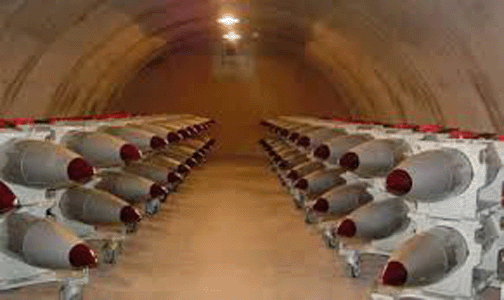
 Greens ‘want last nuclear weapons withdrawn’ http://www.hurriyetdailynews.com/greens-want-last-nuclear-weapons-withdrawn-122536 16 Nov 17 Germany’s Greens want the next coalition government to push for the removal of all nuclear warheads stationed in Germany, a document seen by Reuters showed on Nov. 15.
The Greens are holding exploratory discussions with Chancellor Angela Merkel’s conservatives and the pro-business Free Democrats (FDP) with the goal of forming a three-way governing alliance after an election in September. The discussion paper on defense and foreign policy did not mention the United States, which is believed to have 20 nuclear warheads at a military base in Buechel in western Germany, according to unofficial estimates.
The Greens’ demands were highlighted in the document to make clear that their position was shared by neither Merkel’s conservative bloc nor the FDP.
Merkel is trying to secure a fourth term through an unlikely coalition with the Greens and FDP after her conservative bloc lost support to the far-right in the election. In 2011, a Merkel-led government announced plans to shut all nuclear reactors by 2022 after the Fukushima disaster in Japan.
“Within NATO, we want to ensure that the remaining nuclear weapons in Germany are withdrawn and we want to suspend the modernization program,” read the section stating the Greens’ position.
The three parties agreed however they would launch a diplomatic offensive pushing for nuclear disarmament. Former U.S. President Barack Obama had announced plans to modernize nuclear bombs, delivery systems and laboratories. His successor, Donald Trump, has said he wants to strengthen and expand his country’s nuclear capability.
1 This Month
23-25 October – on Zoom – World BEYOND War’s annual global conferenc


Shut down the radiation-damaged Heysham nuclear reactors now
To see nuclear-related stories in greater depth and intensity – go to https://nuclearinformation.wordpress.com

Say No to NASA’s Reckless Nuclear Reactor on the Moon
Say No to NASA’s Reckless Nuclear Reactor on the Moon

-
Archives
- October 2026 (219)
- September 2026 (339)
- August 2026 (330)
- July 2026 (355)
- June 2026 (287)
- May 2026 (306)
- April 2026 (356)
- March 2026 (251)
- February 2026 (267)
- January 2026 (308)
- December 2025 (358)
- November 2025 (359)
-
Categories
- 1
- 1 NUCLEAR ISSUES
- business and costs
- climate change
- culture and arts
- ENERGY
- environment
- health
- history
- indigenous issues
- Legal
- marketing of nuclear
- media
- opposition to nuclear
- PERSONAL STORIES
- politics
- politics international
- Religion and ethics
- safety
- secrets,lies and civil liberties
- spinbuster
- technology
- Uranium
- wastes
- weapons and war
- Women
- 2 WORLD
- ACTION
- AFRICA
- Atrocities
- AUSTRALIA
- Christina's notes
- Christina's themes
- culture and arts
- Events
- Fuk 2022
- Fuk 2023
- Fukushima 2017
- Fukushima 2018
- fukushima 2019
- Fukushima 2020
- Fukushima 2021
- general
- global warming
- Humour (God we need it)
- Nuclear
- RARE EARTHS
- Reference
- resources – print
- Resources -audiovicual
- Weekly Newsletter
- World
- World Nuclear
- YouTube
-
RSS
Entries RSS
Comments RSS

