Depleted uranium “helped sow deaths and illnesses” in Italian soldiers
 Uranium caused cancer – probe http://www.ansa.it/english/news/politics/2018/02/07/uranium-caused-cancer-probe_560c540f-b60e-4f90-8ce4-29c0dc42cd6d.html But expert denies saying there was causal link, Redazione ANSA, 7 Feb 18 ANSA) -Rome – The final report of a commission on depleted uranium said Italian soldiers had been exposed to “shocking” levels of it in Italy and on foreign missions, and that it had “helped sow deaths and illnesses”.
However, the doctor whose expert opinion informed the panel’s conclusions denied a link between uranium and cancer. Levels of uranium in the sectors of security and workplace health for soldiers had been toxic and deadly, said the report from the parliamentary commission of inquiry. The report highlighted that military chiefs had been in “denial” on the phenomenon, and also stressed the “deafening silences maintained by government authorities.” Experts heard by the panel had verified the links between exposure to depleted uranium and tumours, the report said.
Commission Chair Gian Piero Scanu of the Democratic Party said “repeated judicial sentences have consistently affirmed the existence of a causal link between exposure to depleted uranium and the pathologies cited by the soldiers: this is a milestone and now those who were exposed will have the possibility of getting justice without having to struggle as they have done so far”.
The relatives of soldiers who died of uranium-linked cancer have been suing the government for years and pursuing cases in the courts, amid denials from military authorities.
In 2016 a Rome appeals court upheld a guilty verdict for the defence ministry in the 1999 death from leukemia due to depleted uranium exposure of 23-year-old Corporal Salvatore Vacca who handled uranium-tipped munitions during a 150-day mission in Bosnia in 1998-99.
The court found the ministry guilty of not having protected Vacca.
It ordered the ministry to pay more than one and a half million euros in compensation to Vacca’s family.
The families of other victims are suing the ministry for deaths allegedly due to depleted uranium exposure on several Italian missions.
Domenico Leggiero of the Military Observatory group said the sentence was “historic, because it confirms that the ministry was aware of the danger the soldiers sent to those zones were subject to”.
He said “I am sure Defence Minister Roberta Pinotti will bear this ruling in mind when she appears before the parliamentary depleted uranium commission”.
Italian authorities consistently played down the uranium risks
Julian Assange still a virtual prisoner in Ecuadorian Embassy in London
 Julian Assange ‘has suffered enough’, his lawyers tell British judge, SMH, Nick Miller, 7 Feb 18, London: Julian Assange has suffered enough and shouldn’t face prison for absconding from justice, his lawyers have told a court.
The Wikileaks editor is depressed, in constant pain from an infected tooth, and has been stuck in the Ecuador Embassy in London’s Kensington far longer than the maximum 12-month jail penalty for breaching bail, his barrister said.
On Tuesday Assange lost a legal bid at Westminster Magistrates Court to quash the arrest warrant that has awaited him since he entered the Ecuador embassy in June 2012.
However his lawyers immediately launched a new push to end the UK government’s attempt to bring him to justice – arguing that it is against the public interest to punish him for refusing to leave the embassy.
It is a criminal offence for someone on bail to refuse to surrender to police without “reasonable cause” – and Assange refused to leave the embassy despite a court order for his arrest.
Assange had genuine fears – later proved correct – that the US were keen to prosecute him over his work with Wikileaks, Summers said.
If arrested he would face rendition to the USA, treatment similar to that meted out against Wikileaks whistleblower Chelsea Manning – and possible “persecution, indefinite solitary confinement and the death penalty”, Summers said in a written submission……….
Judge Arbuthnot said it was a “very interesting” case.
She will rule on the public interest application on February 13.
Outside court, Assange’s lawyer Jennifer Robinson said whether or not the warrant is quashed Assange would not leave the embassy until he had an assurance he wouldn’t be extradited to the US.
“Mr Assange remains willing to answer to British justice in relation to any argument about breaching bail, but not at the expense of facing injustice in America,” she said.
“This case is and always has been about the risk of extradition to the United States and that risk remains real.” http://www.smh.com.au/world/julian-assange-has-suffered-enough-his-lawyers-tell-british-judge-20180206-p4yzjt.html
Clean-up to start on tons of liquid radioactive trash from all 4 of Chernobyl’s nuclear reactors

 Bellona 7th Feb 2018, In a major step toward cleaning up the world’s worst nuclear disaster,
workers at Chernobyl have begun moving much of the stricken facility’s
liquid nuclear waste into long term storage.
22,000 tons of irradiated water gathered not only since the plant’s
number 4 reactor exploded in 1986, but from continued operation of the
plant’s other three reactors, which continued producing electricity for
14 years after the disaster.
Union, when the Chernobyl plant became the newly-independent Ukraine’s
inheritance from Moscow. That the rest of the plant’s reactors continued
to operate in the middle of a irradiated disaster zone serves shows how
heavily Ukraine has depended on nuclear power since it struck out on its
own. That dependence – despite atomic energy’s domestic unpopularity
– hasn’t dropped with time: Kiev still relies on its other 15 reactors
to produce a little over half the country’s electricity.
http://bellona.org/news/nuclear-issues/2018-02-chernobyl-starts-tackling-its-liquid-radioactive-waste
Questioning France’s National Agency for the Management of Radioactive Waste (Andra)
Le Monde 7th Feb 2018, [Machine Translation] Bure landfill: the impossible scientific proof of
safety. “The World” had access to the thesis of a researcher who studied
the management of uncertainties surrounding the storage of nuclear waste in
the Meuse.
It is an embarrassing document for the promoters of the
Industrial Center of geological storage (Cigeo) aiming to bury, in the clay
subsoil of the village of Bure, in the Meuse, the most dangerous French
nuclear waste.
It describes how the National Agency for the Management of
Radioactive Waste (Andra), unable to formally demonstrate the safety of
this facility for hundreds of thousands of years, dedicates its efforts to
convince the nuclear control authorities of the feasibility of such
storage. At a loss to present some of his results in a biased or incomplete
way. Beyond this public institution, under the tutelage of the ministries
in charge of energy, research and the environment, it is also the chain of
evaluation of nuclear safety in France that is questioned.
UK government funds £7.5 million National College for Nuclear
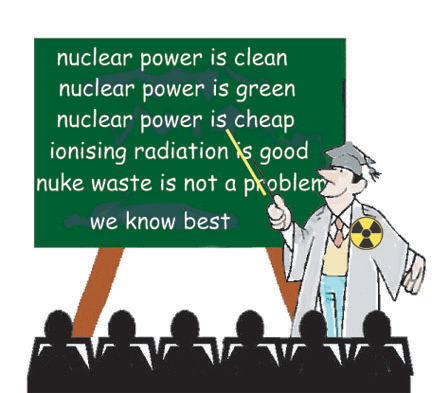 Carlisle News and Star 7th Feb 2018, The £7.5 million National College for Nuclear is due to be officially
opened today. The college, at Lillyhall, near Workington, will train
thousands of technicians and engineers to support Britain’s future
nuclear programmes, create cleaner energy and provide a highly skilled
workforce.
The National College for Nuclear will have hubs in Cumbria and
Somerset and facilities which include virtual, simulated laboratories. It
is one of five national colleges being established by government as part of
its Industrial Strategy.
http://www.newsandstar.co.uk/news/business/75-million-National-College-for-Nuclear-due-to-open-today-0a0f3e9b-7c2d-4320-8b08-55c9b28c51d6-ds
2,200 Massive steel containers produced – to house Sellafield’s piles of radioactive trash

Whitehaven News 6th Feb 2018, Hazadous nuclear waste will be taken out of Cumbria’s Sellafield plant in
massive stainless steel containers which have just come off the production line.
The highly-engineered 1.3 tonne boxes are playing a major part in the decommissioning of the West Cumbrian plant as the waste is moved into safe
storage for centuries to come. Darchem Engineering, of Stockton on Tees, and Metalcraft in Cambridgeshire have finished manufacturing the first
batch of containers.
A total of 2,200 of the boxes will be needed to hold legacy waste from one of the world’s oldest nuclear stores,
Sellafield’s Pile Fuel Cladding Silo. Sellafield bosses have described it as the most significant step yet towards getting the waste out of the
facility next year.
http://www.whitehavennews.co.uk/news/business/First-batc
Desperate to save its failing nuclear business, Toshiba looks to Ukraine
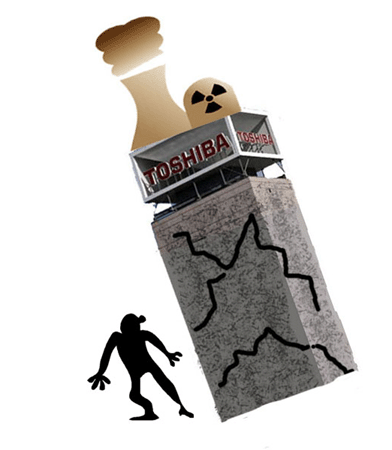 Toshiba seeks deal in Ukraine to revive nuclear power business, Asahi Shimbun, By TOSHIO KAWADA/ Staff Writer, February 8, 2018 Toshiba Corp. is planning another foray into an overseas nuclear-power industry, forced in part by the disastrous consequences of its previous failure abroad, sources said.
The Tokyo-based company has started negotiations with Energoatom, a Ukrainian state-run power company, to supply turbine generators for use in its nuclear power plants. The two companies concluded a memorandum in October 2017.
Toshiba in March 2017 said it was withdrawing from the business of designing and constructing entire nuclear power plants overseas following the collapse of its U.S. nuclear arm, Westinghouse Electric Co.
However, Toshiba judged that it would not suffer such a huge deficit again if it only supplies equipment to nuclear power plants abroad, the sources said.
“There will be little concern that we will suffer a huge loss (from an overseas deal),” a source related to Toshiba said.
Energoatom operates 15 nuclear reactors and is building two others in Ukraine. It plans to replace the generators of old reactors to increase output.
Toshiba wants to win a deal with Energoatom to export the replacement generators and provide maintenance services after they go into operation.
If Toshiba succeeds in the equipment supply business in Ukraine, it will consider looking at other markets abroad, the sources said.
Toshiba is desperate for a steady source of income…….
Toshiba plans to earn steady profits from its nuclear business, believing competition with other companies will not be so fierce, the sources said.
But if this endeavor fails to pan out, Toshiba’s management situation could worsen. http://www.asahi.com/ajw/articles/AJ201802080050.html
Russia postponing new nuclear reactors because of costs

 Nucnet 5th Feb 2018, Russia’s state nuclear energy corporation Rosatom is ready to postpone
the commissioning of two nuclear power units for two years in an effort to
slow down increases in energy prices, the state-owned Tass news agency
said.
said commissioning of Novovoronezh 2-2, planned for January 2019, would be
postponed by a year, and commissioning of Leningrad 2-2, planned for
February 2020, by two years.
a government-regulated fixed power supply agreement with wholesale
consumers, any return on nuclear investment must be at least 10.5%, which
would mean electricity prices for the consumers would increase to meet the
target.
2008 to guarantee returns on investment in generating capacity. The final
wholesale prices are usually higher than the prevailing market price to
compensate costs incurred by the investor during construction. The
agreements include government-regulated price levels for various types of
consumer, dependent on their maximum consumption. Neither Tass nor Rosatom
gave details, although Tass said postponing commissioning of the units will
lead to a reduction in the rate of electricity price growth in 2019 from
12.9% to 11.1%. https://www.nucnet.org/all-the-news/2018/02/05/russia-ready-to-postpone-commissioning-of-two-nuclear-plants-says-official-agency
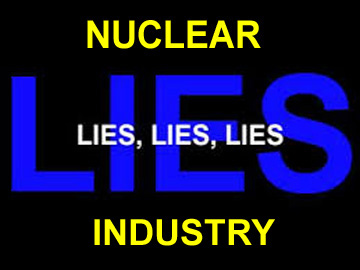
France’s nuclear culture of lies about serious nuclear accidents
 Europe1 5th Feb 2018, [Machine translation] French nuclear park: “What we saw is catastrophic and
very disturbing”. For Thierry Gadault, co-author of “Nucléaire Danger immédiat”, the authorities are silencing the reality of the state of the French nuclear fleet, most of whose reactors are about to exceed 40 years.
The French nuclear system has developed a culture of lies and concealment for more than 50 years. Thierry Gadault points out the worrying state according to him of the power stations of Fessenheim, Bugey, Saint-Laurent-of-Waters, Gravelines and Blayais, but also more recent structures.
“On the following generations of reactors, we see that there are problems in Civaux, Chouzé-sur-Loire and Flamanville”. For him, the Nuclear Safety Authority makes it harder to learn the true state of these structures. “It
is part of the French nuclear system that has developed a culture of lying and concealment for more than 50 years, which has resulted in information suppressed about what has happened around Chernobyl and about serious nuclear
accidents. which took place in Saint-Laurent-des Eaux We had serious nuclear accidents with the release of plutonium in the environment and in the Loire.
http://www.europe1.fr/societe/parc-nucleaire-francais-ce-que-nous-avons-vu-est-catastrophique-et-tres-inquietant-356528
 EDF threatens the prosecution of the authors of a book on nuclear safety, Les Echos
 5th Feb 2018
https://investir.lesechos.fr/actions/actualites/edf-menace-de-poursuites-les-auteurs-d-un-livre-sur-la-surete-nucleaire-1739343.php
[Machine Translation] Nuclear. “This industry is playing with fire” In Nuclear, immediate danger, Thierry Gadault and Hugues Demeude draw an alarming assessment of the state of French nuclear power plants. Ouest France 6th Feb 2018 https://www.ouest-france.fr/environnement/nucleaire/nucleaire-cette-industrie-joue-avec-le-feu-5547116
The alarming state of France’s nuclear reactors
DD 3rd Feb 2018, Nuclear: the book that undermines the safety of French power plants. The JDD publishes preview extracts of Nuclear, immediate danger , a survey book that challenges the dogma of the safety and profitability of French power stations.
At the forefront of concerns: the alarming state of several tanks, which contain the heart of the reactors. “That’s it, we are there atthe age of 40. By 2028, 48 reactors [out of 58 in service in France] – those of the level of 900 MW and a part of the reactors of 1,300 MW – will reach this canonical age.
Since the mid-2000s, because of its financial difficulties that prevent it from investing in new means of production, EDF is asking for, calling for, even imposing, that all of its nuclear power stations be allowed to operate at the same time. beyond the age of forty, and prolonged by twenty years. […]
[Among the elements that will] determine the extension or the stop of the vats: do they have defects, of
origin or appeared with the time, which compromise the safety?
This is one of the biggest secrets of the nuclear industry in France. […] According to EDF, 10 tanks in operation have cracks that date from their manufacture. […] Tricastin, with its reactor 1, is the worst central of the country.
This reactor combines all the problems: defects under coating, no margin at break, and exceeding the fragility forecast at forty years! Not to mention the risk of catastrophic flooding in the event of an earthquake, as noted in September 2017 by the Nuclear Safety Authority (ASN), which has automatically stopped the operation of the four reactors of the plant while waiting for EDF finally, work to reinforce the dike of the Donzère-Mondragon canal. The plant is below the canal, 6 m below the water.
Pierre-Franck Chevet, the president of the ASN, told us’ that in the event of a strong earthquake we could go to a situation, with four simultaneous reactors merging, which potentially looks like a Fukushima type accident. EDF has found the immediate stoppage of the plant to carry out this unjustified work, I find it justified. ” http://www.lejdd.fr/societe/nucleaire-le-livre-qui-met-a-mal-la-surete-des-centrales-francaises-3564173
France heading for a renewable energy revolution, with offshore wind power
 France Set to Become a European Offshore Wind Powerhouse by 2022 Bloomberg By Jeremy Hodges and Jess Shankleman,
-
WindEurope sees French turbine orders passing U.K., Germany
-
Offshore wind investments to recover after contracting in 2017
Europe’s wind-power industry expects new French offshore turbine installations to overtake the U.K. and Germany by 2022, boosting President Emmanuel Macron’s pledge to increase renewable energy.
USA- Russia New START Treaty takes effect – with central limits on strategic arsenals for 7 years

The United States of America and the Russian Federation have implemented the Treaty on Measures for the Further Reduction and Limitation of Strategic Offensive Arms (New START Treaty) for seven years. February 5, 2018 marks the date that the Treaty’s central limits on each country’s strategic nuclear arsenal take effect.
The United States completed its reductions and achieved these limits in August 2017. The Russian Federation has repeatedly stated its commitment to the New START Treaty, including meeting the central limits, and we expect our upcoming data exchange under the Treaty to reaffirm that commitment.
Implementation of the New START Treaty enhances the safety and security of the United States and our allies and makes strategic relations between the United States and the Russian Federation more stable, transparent, and predictable; critically important at a time when trust in the relationship has deteriorated, and the threat of miscalculation and misperception has risen. The Treaty exemplifies an enduring commitment by both parties to cooperate on issues affecting the strategic relationship and international security. The United States looks forward to continuing implementation of the Treaty with the Russian Federation.
The United States and the Russian Federation will exchange data on their respective strategic nuclear arsenals within the next month, as we have done twice per year over the last seven years in accordance with the Treaty. Through the Treaty’s verification regime, which includes short-notice, on-site inspections at military bases and facilities, the United States is able to verify the data provided by the Russian Federation regarding its strategic nuclear arsenal. The verification regime provides both countries insight into each other’s strategic nuclear delivery systems, warheads, and facilities, as well as data exchanges to track the status and makeup of nuclear weapons systems.
The recently released U.S. Nuclear Posture Review notes that arms control can contribute to U.S. security by helping to manage strategic competition among states. The United States remains committed to arms control efforts that advance U.S., allied, and partner security. The United States will continue to fully implement the New START Treaty and remains committed to working with others, including the Russian Federation, to create the conditions to support the ultimate goal of the global elimination of nuclear weapons. The New START Treaty remains a critical component for supporting global non-proliferation efforts and strategic stability between the United States and the Russian Federation. Through implementing the New START Treaty, the United States continues to demonstrate its commitment to fulfilling its arms control obligations, including under the Treaty on the Non-Proliferation of Nuclear Weapons.
Britain’s costly gamble with Hinkley point C nuclear project, as the renewables revolution gather speed
there will be no room in this new world of flexible, decentralised generation for large, rigid nuclear reactors. “There are going to be increasingly frequent periods when we have too much power,” says Mr Burke. “But if you are the energy minister, how do you explain to people why you are having to switch off cheap renewables in order to use the much more expensive nuclear power which you have committed to pay for over the next 35 years?”

FT 4th Feb 2018, The UK’s Hinkley Point C has become a critical test of developers’ ability to compete with cheap gas and renewables. Across an expanse of scarred earth the size of 250 football pitches beside the Bristol Channel in south-west England, 3,000 workers are building what will be, by some estimates, the most expensive structure on the planet.
At a cost of almost £20bn, the Hinkley Point C power station in Somerset is the first nuclear plant to be built in the UK since the 1990s. Clusters of cranes and cement silos loom over a warren of earthworks crawling with excavators and
100-tonne dumper trucks. At the centre of the site, foundations are taking shape for two 1.6 gigawatt reactors intended to meet 7 per cent of UK electricity demand, with a target for completion by the end of 2025.
Hinkley is crucial to UK energy security as the country faces the closure of old coal and nuclear plants accounting for about 40 per cent of the country’s reliable electricity generating capacity by 2030. But it also has wider significance as a test of the industry’s ability to compete in a rapidly changing energy landscape. Nuclear power has been under threat
since the meltdown at the Fukushima plant in Japan in 2011 revived safety fears.
But the biggest threat is now economic as the spiralling cost of building new reactors collides with a world of cheap and plentiful gas and renewable power. The UK is now one of the few western countries committed to renewing its ageing reactors. More than 70 per cent of the 448 reactors around the world are in the OECD club of wealthy nations, and more than half of them are at least 30 years old.
Many will reach the end of their operational lives in the next two decades, yet the prospects of replacing
them are uncertain, at best, in countries such as the US, Japan and France, while others including Germany, Switzerland and South Korea are planning to phase out nuclear power altogether. The days of networks dominated by a few large, centralised power stations are drawing to a close, according to many analysts. In their place will come more dispersed sources of renewable generation. Battery storage and digital “smart grid” technology will help smooth out supply and demand, and increase efficiency.
Tom Burke, chairman of E3G, an environmental think-tank, says there will be no room in this new world of flexible, decentralised generation for large, rigid nuclear reactors. “There are going to be increasingly frequent periods when we have too much power,” says Mr Burke. “But if you are the energy minister, how do you explain to people why you are having to switch off cheap renewables in order to use the much more expensive nuclear power which you have committed to pay for over the next 35 years?”
Progress at Hinkley, therefore, is being watched as closely in Beijing as in Paris and London. A repeat of the delays at Olkiluoto and Flamanville could sign the death warrant for western reactor developers, while dealing a setback for
China’s international expansion. Mr Rossi is aware of the high stakes: “We need to make sure that Britain will be happy about the choice it made.” https://www.ft.com/content/8307c266-066b-11e8-9650-9c0ad2d7c5b5
France’s nuclear industry – unsafe?
 JDD 3rd Feb 2018, Nuclear: the book that undermines the safety of French power plants. The JDD publishes preview extracts of Nuclear, immediate danger , a survey book that challenges the dogma of the safety and profitability of French power stations.
At the forefront of concerns: the alarming state of severaltanks, which contain the heart of the reactors. “That’s it, we are there atthe age of 40. By 2028, 48 reactors [out of 58 in service in France] – those of the level of 900 MW and a part of the reactors of 1,300 MW – will reach this canonical age.
Since the mid-2000s, because of its financial difficulties that prevent it from investing in new means of production, EDF is asking for, calling for, even imposing, that all of its nuclear power stations be allowed to operate at the same time. beyond the age of forty, and prolonged by twenty years. […]
[Among the elements that will] determine the extension or the stop of the vats: do they have defects, of
origin or appeared with the time, which compromise the safety?
This is one of the biggest secrets of the nuclear industry in France. […] According to EDF, 10 tanks in operation have cracks that date from their manufacture. […] Tricastin, with its reactor 1, is the worst central of the country.
This reactor combines all the problems: defects under coating, no margin at break, and exceeding the fragility forecast at forty years! Not to mention the risk of catastrophic flooding in the event of an earthquake, as noted in September 2017 by the Nuclear Safety Authority (ASN), which has automatically stopped the operation of the four reactors of the plant while waiting for EDF finally, work to reinforce the dike of the Donzère-Mondragon canal. The plant is below the canal, 6 m below the water.
Pierre-Franck Chevet, the president of the ASN, told us’ that in the event of a strong earthquake we could go to a situation, with four simultaneous reactors merging, which potentially looks like a Fukushima type accident. EDF has found the immediate stoppage of the plant to carry out this unjustified work, I find it justified. ” http://www.lejdd.fr/societe/nucleaire-le-livre-qui-met-a-mal-la-surete-des-centrales-francaises-3564173
Sweden agonises over nuclear waste burial project that no community wants

 GDF Watch 2nd Feb 2018, A week on from the Environmental Court’s ruling, and it would seem nobody in Sweden is any the wiser about what happens next. The general view seems to be that this is a hiccup, and everything will eventually continue as planned.
But don’t expect that to happen anytime soon, and at least not until after this autumn’s national elections in Sweden. Anders Lillienau, who chaired the Court’s Hearings, is reported as saying that while they had significant concerns about the safety of the copper canisters, the Court did not otherwise see any barriers to the safety of the repository.
The Court has asked SKB, the organisation responsible for the repository, to provide further information on copper canisters to address their concerns. It is understood that SKB are preparing such information, and reportedly told a community meeting in Östhammar earlier this week that they intend to provide that information later this year.
Anders Lillenau has also made clear the ball is now in the Government’s court: “In the
end, it is still the case that the Government may make the overall assessment whether or not this will be allowed.” A Swedish Government spokesman, Magnus Blücher, explained that this was a complex issue and it was too soon to say what the Government might do, or when.
Back in Östhammar, the local referendum planned for 4 March has been postponed. The referendum was advisory, and any final decision on agreeing to host the repository has to be taken by the local council. A spokesman for Östhammar Municipality says that it is too soon to know when the referendum and council vote will now take place.
Local resident Åsa Lindstrand chairs a resident’s group opposed to the repository. She told the local newspaper that she was pleased but surprised by the Court’s decision, but feels little will change:
“Actually, nobody else in Sweden wants this nuclear fuel repository, so the rest of Sweden would probably be lucky if someone takes it. The municipality is so marinated by SKB that it is not easy to
say ‘no’. For us who live here, it’s more about noise and traffic than about the copper capsules, it’s happening before they get there at all.” Her sense of pyrhhic victory is shared by environmentalist Johan
Swahn, who added, “but only if the government stays passive and the copper canister issues raised by the Court become a matter solely for SKB.” His organisation, MKG, has raised concerns about the long-term
safety of copper canisters over many years.
While delighted that the Court accepted the case presented by leading corrosion scientists, he now wants
the Swedish Government to guarantee an open scientific re-evaluation of the issues relating to copper canister corrosion. http://www.gdfwatch.org.uk/2018/02/02/sweden-update/
1 This Month
23-25 October – on Zoom – World BEYOND War’s annual global conferenc


Shut down the radiation-damaged Heysham nuclear reactors now
To see nuclear-related stories in greater depth and intensity – go to https://nuclearinformation.wordpress.com

Say No to NASA’s Reckless Nuclear Reactor on the Moon
Say No to NASA’s Reckless Nuclear Reactor on the Moon

-
Archives
- October 2026 (205)
- September 2026 (339)
- August 2026 (330)
- July 2026 (355)
- June 2026 (287)
- May 2026 (306)
- April 2026 (356)
- March 2026 (251)
- February 2026 (267)
- January 2026 (308)
- December 2025 (358)
- November 2025 (359)
-
Categories
- 1
- 1 NUCLEAR ISSUES
- business and costs
- climate change
- culture and arts
- ENERGY
- environment
- health
- history
- indigenous issues
- Legal
- marketing of nuclear
- media
- opposition to nuclear
- PERSONAL STORIES
- politics
- politics international
- Religion and ethics
- safety
- secrets,lies and civil liberties
- spinbuster
- technology
- Uranium
- wastes
- weapons and war
- Women
- 2 WORLD
- ACTION
- AFRICA
- Atrocities
- AUSTRALIA
- Christina's notes
- Christina's themes
- culture and arts
- Events
- Fuk 2022
- Fuk 2023
- Fukushima 2017
- Fukushima 2018
- fukushima 2019
- Fukushima 2020
- Fukushima 2021
- general
- global warming
- Humour (God we need it)
- Nuclear
- RARE EARTHS
- Reference
- resources – print
- Resources -audiovicual
- Weekly Newsletter
- World
- World Nuclear
- YouTube
-
RSS
Entries RSS
Comments RSS

