Britain’s nuclear politic s mess – what to do about Euratom ?
 BBC 20th March 2018, The government has been defeated twice in the
 House of Lords over its plans for nuclear co-operation after Brexit. Peers voted by 265 to 194 to insist the UK should not withdraw from the European nuclear agreement, Euratom, until a replacement deal is in place. They also backed a plan requiring the UK to report to Parliament regularly on its future arrangements with Euratom.
MPs are likely to try and overturn the changes to the Nuclear Safeguards Bill when it returns to the Commons. Euratom, an association which is legally separate from the EU but governed by the EU’s institutions, covers issues such as the transport of radioactive materials, including those used in medical treatments, or in nuclear power stations.
The government has said it wants to establish a new domestic nuclear regime as well as negotiate a nuclear agreement with the EU once the UK leaves on 29 March 2019. http://www.bbc.com/news/uk-politics-43476337
Politics Home 21st March 2018, Peers voted by 265 to 194 to insist Britain should not withdraw from
Euratom on the day the UK leaves the EU unless a replacement has been
reached. Ministers were dealt a second blow through a Labour amendment
which demanded more regular reporting to parliament of future arrangements.
https://www.politicshome.com/news/uk/foreign-affairs/brexit/news/93796/government-hit-double-lords-defeat-post-brexit-nuclear
Belfast Telegraph 20th March 2018, The Tory administration is accused of ‘playing Russian roulette’ with
the UK’s energy security by quitting Europe’s nuclear regulator. https://www.belfasttelegraph.co.uk/news/uk/peers-inflict-double-defeat-amid-nuclear-safeguard-concerns-postbrexit-36726328.html
1960 Paris Convention part of undemocratic government support for nuclear industry
 La Libre 19th March 2018, More than 40 scientists, intellectuals, engineers and artists: “It is time
for the political world to assume Fukushima” (OPINION).It is time for the
political world to take its mistakes and put an end to the nuclear
industry.
This is not only illegitimate, but it is also an extreme threat
to our future. On June 25 last year, 50,000 people joined hands to demand
the closure of the Tihange plant. The number of protesters surprised many.
Also notable was the lack of reaction from the political world as a result
of this extraordinary event.
There are reasons for this apparent lethargy of the leaders of this country, in the face of this popular demonstration,
perhaps starting with a feeling of guilt, which would be quite appropriate.
Indeed, what has prevailed in the implementation of the nuclear industry is
the lack of democratic debate and false state propaganda, that of an energy
that would be unlimited, cheap and safe; as we recalled the commemoration
of the seventh anniversary of Fukushima, the second accident of a nuclear
power station which has no end, after that of Chernobyl in 1986.
More serious still, in 1960, the leaders of 16 European countries, including
Belgium, agreed to sign the Paris Convention which was intended to limit
the financial liability of the operator in the event of a nuclear accident,
no insurance company willing to cover the nuclear risk considered too high.
Without this unique Convention, the nuclear industry could never have developed in Europe.
It is worth mentioning here that a major accident in Tihange would mean the end of life as we know it and, in fact, the end of Wallonia as a region. That the cost of such an accident would amount to
several trillions of euros, without it being possible to quantify the
sanitary and psychological misery into which the Walloons, sentenced,
either to leave their country abandoning all their property – but to go
where, or to live in a contaminated territory for the poorest of them. That
on this amount, the operator, Engie-Electrabel, would have to pay only 1.2
billion, less than its profit of certain years and less than one thousandth
of the cost of the disaster.
http://www.lalibre.be/debats/opinions/plus-de-40-scientifiques-intellectuels-ingenieurs-et-artistes-il-est-temps-que-le-monde-politique-assume-fukushima-opinion-5aae9319cd702f0c1a63ffda
UK: renewable energy becoming cheaper than nuclear power
Times 21st March 2018,Onshore wind and solar farms capable of generating more than three times as much power as the new Hinkley Point C nuclear plant could be built without any subsidy from taxpayers in Britain by 2030, energy analysts have forecast.
The plunging costs of the technologies, which were reliant on very high subsidies just a few years ago, could enable investors to build them without any government intervention by the early 2020s, said Aurora Energy Research.
The government has ended subsidy schemes for new onshore wind and solar farms, slowing their development, amid concern about their cost to consumers. Aurora, an Oxford-based consultancy, predicts that the fall in costs has brought the industry to the “cusp of breakthrough in Britain”, whereby such projects could be commercially viable even without subsidies.
It predicts that solar farms capable of generating up to 9 gigawatts and onshore wind farms with a maximum output of 5 gigawatts are likely to be built on this basis by 2030. The prediction is likely to further increase pressure on nuclear developers to show they can be cost competitive. The 3.2-gigawatt Hinkley Point C plant is only viable thanks to a subsidy contract that commits consumers to pay its developers well above the market price for power for 35 years — potentially costing tens
of billions of pounds. Renewables have only been made viable by similar commitments from government. https://www.thetimes.co.uk/edition/business/wind-farms-on-course-to-be-free-of-subsidy-qfmpmm8dh

India has not signed Nuclear Non-Proliferation Treaty: Macron keen to sell EPR reactors to India anyway
 Energy Watch Group 20th March 2018, During his state visit to India, France’s President Macron agreed with
India’s Prime Minister Narendra Modi last week to sell six French EPR
reactors for the largest nuclear power plant planned in Jaitapur.
Regardless of the fact that India has not yet signed the Nuclear
Non-Proliferation Treaty. The plutonium from the reactors could be
completely used for the construction of nuclear weapons without
international control. In terms of energy, too, all EPR construction
projects in recent years are highly problematic.
http://energywatchgroup.org/new-european-nuclear-reactors-prove-financial-technically-dangerous-disast
Westinghouse closing down nuclear stations in Sweden
 Nucnet 16th March 2018, US-based Westinghouse Electric Company has completed a decommissioning
project at the Barseback nuclear power station in Sweden that included the
underwater segmentation and packaging of the reactor vessel internals.
Westinghouse said it had also carried out upfront engineering studies, and
equipment manufacturing and qualification for the project, which was part
of the first dismantling and decommissioning of a commercial nuclear power
plant in Sweden.
Barseback-2, a 600-MW boiling water reactor unit, began
commercial operation in July 1977 and was permanently shut down in May
2005, with decommissioning work beginning in August 2016. The closure
decision, announced in October 2004, followed what the government described
as failure to reach an agreement with the power industry on the details and
timetable for a voluntary phaseout of Sweden’s nuclear facilities Its
sister unit, Barseback-1, was permanently shut down in November 1999.
Westinghouse said it is now due to begin decommissioning work on
Barseback-1, with an estimated completion date of April 2019.
Concern over Russia’s nuclear activities in the Arctic – potential for a radiological disaster
With Russia building floating nuclear reactors and possibly testing nuclear-powered cruise missiles, there are good reasons for this training.The Drive, BY JOSEPH TREVITHICKMARCH 20, 2018 The U.S. military, along with other federal and state authorities, has been training to respond to potentially dangerous releases of radioactive material in and around the Arctic. Though there is no clear indication of a direct link between Russia’s reported tests of nuclear-powered missiles or expanding use of nuclear power in the region, it is hard not to see these exercises in connection with those developments.
Earlier in March 2018, members of the U.S. National Guards from 10 different states arrived at the Donnelly Training Area, situated near the U.S. Army’s Fort Greely in Alaska. Alaska state authorities and members of Canada’s reserve 39 Canadian Brigade Group joined the exercise, nicknamed Arctic Eagle 2018, as well.
The drills included a number of different mock crises, including an overturned fuel truck creating a hazardous material spill, the potential for attacks on the Trans Alaskan Pipeline System, and even cyber attacks. But especially notable was a scenario involving the need to locate a crashed satellite and contain the radiological material it had deposited across a wide area as it plummeted to earth. ………
t’s definitely no secret that the U.S. military has become increasing interested in preparing for potential conflicts and other contingencies above and near the Arctic Circle in recent years. As global climate change has shrunk the polar ice cap and otherwise reduced the amount of ice buildup that occurs during certain parts of the year, the region has become increasingly important economically and various countries, especially Russia, have moved to enforce their territorial claims.
“The growing concerns regarding the increased number of nations competing for Arctic resources are well justified,” U.S. Air Force General Lori Robinson, head of U.S. Northern Command, which oversees operations in the region, and the designated “Advocate for Arctic Capabilities” within the Pentagon, reiterated to members of Congress during a hearing in February 2018. “Diminishing sea ice provides opportunities for significantly expanded access to a region that had previously been inaccessible to all but a handful of northern nations.”
…….. the idea of a crashing satellite creating a radiological disaster isn’t an entirely fictional scenario. In 1978, the Soviet Union’s Kosmos 954 reconnaissance satellite, which had a nuclear reactor as its power source, crashed into Canadian territory, touching off an international incident and prompting an expensive response and clean-up operation.
….. U.S. military and other agencies practicing specifically to handle a radiological incident in the region seems even more noteworthy in light of a number of recent events. Most importantly are Russian claims that it has been testing a cruise missile with theoretically unlimited range that uses a nuclear reactor-powered propulsion system in the Arctic. Anonymous U.S. government officials have since told various media outlets that this is true, but that the weapons have been crashing, potentially spreading radioactive material and components.
…… The Russians have also been dramatically expanding their use and plans to employ small and mobile nuclear reactors to support activities in the Arctic.
….. In addition, there are reports that Russia has begun to develop and potentially deploy small underwater nuclear reactors
……..If any of these nuclear power systems were to fail, it could potentially cause a serious radiological incident that would impact both the United States and Canada. The same procedures American military and other government personnel have been training to employ in response to a crashed satellite would undoubtedly be applicable in those situations, too.
So, while the idea of radioactive space debris might serve as a ready exercise scenario, there are a growing number of very real radiological dangers in the Arctic. Unless the Russians change course, the need to be prepared for a nuclear incident only looks set to become more pronounced in the near future. http://www.thedrive.com/the-war-zone/19450/u-s-training-for-arctic-nuclear-satellite-disaster-amid-russian-weapons-developments Contact the author: jtrevithickpr@gmail.com
MP wants to stop Britain’s supplying of weapons grade nuclear materials to Russia
MP calls for sanctions on nuclear materials trade, Cambrian Newsby Alex Jones – Meirionnydd, Arfon & Dwyfor reporter @alexj_cn alexj@cambrian-news.co.uk
DWYFOR Meirionnydd’s MP has challenged the prime minister about nuclear materials following the suspected attempted murder of a former Russian double agent and his daughter.
Sergei Skripal and his daughter Yulia were in Salisbury earlier this month when both were found in a critical condition on a public bench.
It has since transpired that both had been inflicted with a nerve agent which has left both, and a police officer who attended, fighting for their lives.
The incident has sparked a marked decline in UK and Russian relations.
It has been suggested that Russian involvement was “the only plausible explanation” but the Kremlin has denied responsibility.
In a meeting in the House of Commons last week, Theresa May gave an update on the situation, prompting MP Liz Saville Roberts to challenge the Prime Minister regarding trade of nuclear materials with the former Cold War adversary.
Mrs Saville Roberts said: “Alongside many colleagues in the House, I speak on behalf of my party in calling for a robust and immediate response.
“Sources inform us that Russia is the UK’s biggest weapons-grade nuclear substances export market, despite several attempts at a moratorium on depleted uranium by the European Parliament and the United Nations.
“Will the Prime Minister confirm whether the UK is still exporting nuclear substances to Russia?
“If so, surely this should be among the very first sanctions imposed?”……..http://www.cambrian-news.co.uk/article.cfm?id=119768&headline=MP%20calls%20for%20sanctions%20on%20nuclear%20materials%20trade§ionIs=news&searchyear=2018
UK Conservatives – inconsistent, incoherent, policy – agreeing to Russia’s involvement in UK’s nuclear power development
Times 18th March 2018, Ed Davey: Vladimir Putin’s ambitions have been evident for some time, but
the Conservatives’ position has long been incoherent and inconsistent.
During the coalition years, the Conservatives seemed torn between the
national security evidence of the country’s wrongdoings and the billions
of roubles it had to invest.
Russian industrial investment plans would
never have stood up to the sort of detailed scrutiny we gave to Chinese
ones. I was particularly astonished when David Cameron agreed to Putin’s
request that the Russian state nuclear power company, Rosatom, be
introduced to the UK’s civil nuclear power market and develop an
international consortium with Rolls-Royce.
It was left to the Lib Dems to insist of downgrading this to a simpler, meaningless memorandum of
understanding. I was gobsmacked that even after Putin’s annexation of
Crimea, the prime minister clung on to the idea — even as we searched
around for sanctions to impose. https://www.thetimes.co.uk/article/former-energy-minister-ed-davey-tories-position-on-russia-is-incoherent-and-inconsistent-fhnvfkmgp
Finland’s nuclear power plant’s price tag – at least $11 billion
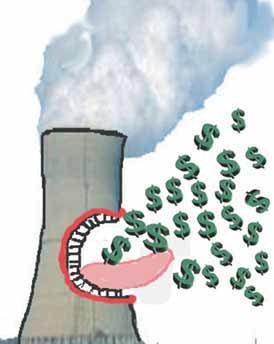 Costlier Than Pyramids: Finnish NPP Becomes World’s Second-Priciest Building, Sputnik News
EUROPE 19.03.2018
The Finnish Olkiluoto-3 nuclear reactor has been touted as the “flagship of European nuclear energy,” but has taken more than a decade to complete and cost the Nordic nation an arm and a leg.
When completed, the third reactor at Finland’s Olkiluoto nuclear power plant will have the distinction of being the world’s second most expensive building, higher than that of a number of luxury hotels, sports arenas, skyscrapers and even pyramids, Finnish national broadcaster Yle reported.
With a breathtaking price tag of €8.5 billion ($11 billion), Olkiluoto-3 is expected to be finished in 2019, 14 years after the start of the construction. For the sake of comparison, the Cheops Pyramid, the largest of the pyramids at Giza, took about 20 years to build. However, construction of the 4,500-year-old pyramid turned to be far more efficient, as it was built over roughly the same period of time and without access to modern technology. Also, its cost in today’s money has been estimated at only €4 billion ($4.9), half the Olkiluoto price tag.
To offer a more modern building for comparison, New York’s replacement One World Trade Center cost an estimated $3.8 billion to build. …….https://sputniknews.com/europe/201803191062679754-finland-npp-price/
Plan for pan-European alliance against the promotion of nuclear energy- Austria and Luxembourg to start it

 Austria, Luxembourg Agree on Alliance against Nuclear Power http://www.chronicle.lu/category/energy/25133-austria-luxembourg-agree-on-alliance-against-nuclear-power 05 Mar 2018 Luxembourg and Austria have agreed on an Alliance against the promotion of nuclear energy in Europe.
Flamanville EPR Nuclear Reactor: The Countdown to the Atomic Clock.
 Paris Normandie 17th March 2018, [Machine Translation]“They are not ready. “Monday morning, at the end of acommittee of health, safety and working conditions of the plant, trade unionists of the CGT are circumspect. EDF agents have just visited the future Local Crisis Center (CCL), one of the “post-Fukushima” equipment whose vocation is to ensure the management of crises.
“They’re supposed to be up and running in two weeks, but we’re far from it …” After seven
years of delay and a construction cost that has tripled to reach 10.5
billion euros, the commissioning of the EPR, this new generation nuclear
reactor under construction in Flamanville, is scheduled for May 2019. The
goal is to be able to load the fuel into the tank in December.
But the context remains tense for this site which accumulated the setbacks: the
problems recently discovered on the tank lid – which will have to be
changed before 2024 when it is normally every 20 or 30 years – or on the
secondary circuit welds leave an uncertainty about the authorization that
could give – or not – the ASN, the “policeman” nuclear.
Sébastien Lecornu,”second” of Nicolas Hulot and former president of the departmental council
of the Eure, visiting the site of the EPR in early February, had said: “I trust EDF
http://www.paris-normandie.fr/accueil/reacteur-nucleaire-epr-de-flamanville–le-compte-a-rebours-de-l-horloge-atomique-FH12516146
UK’s headlong rush into new nuclear power development could run into big problems about selecting sites
PeterBanks Blog 17th March 2018, It has been a busy time lately. BANNG has attended a number of meetings and
Prof. Andy Blowers has been involved as an expert in the Geological Disposal Facility (GDF) consultation process. And on top of that the weather has thrown a wobbly which has potential implications on the decisions for energy policies.

There have been two important meetings. One concerned the Government’s consultation on reviewing the siting criteria
for new nuclear power stations. For all of us concerned about the Government’s headlong rush towards more ridiculous nuclear development it is vital to respond to this consultation.
Clearly the Government is attempting to extend the time period allocated for selecting potential new nuclear sites. The sites included in the previous consultation on the siting criteria in 2008 should have had power stations generating by 2025 and even Hinkley Point C (HPC) has only a remote chance of being up and running by then.
BANNG also had an important strategic meeting with the Nuclear New Build departments of the Office for Nuclear Regulation (ONR) and the Environment Agency (EA). This event was co-chaired by BANNG’s Andy Blowers and the EA’s Simon Barlow. The meeting was attended by senior representatives from the EA and ONR and 6 from BANNG. Andy Blowers once again was also able to represent Colchester Borough Council.
http://banksyboy.blogspot.co.uk/2018/03/the-other-beast-from-east.html
U.S. Department of Homeland Security and the Federal Bureau of Investigation confirm Russian hackers targeting U.S. nuclear plants
 Union of Concerned Scientists 16th March 2018, Yesterday, the Department of Homeland Security and the Federal Bureau of Investigation officially confirmed that Russian hackers have been targeting US nuclear power plants and other critical facilities since at least 2016.
Regardless, the US nuclear industry has been pressuring the Nuclear Regulatory Commission to relax its cyber security standards. Below is a statement by Edwin Lyman, a senior scientist at the Union of Concerned Scientists.
“The Department of Homeland Security alert is a stark
reminder that nuclear power plants are tempting targets for cyber
attackers. Although the systems that control the most critical safety
equipment at US nuclear plants are analog-based and largely immune to cyber
attacks, many other plant systems with important safety and security
functions are digital and could be compromised. For instance, electronic
locks, alarms, closed-circuit television cameras, and communications
equipment essential for plant security could be disabled or reprogrammed.
And some plants have equipment, such as cranes that move highly radioactive
spent fuel, that utilize computer-based control systems that could be
manipulated to cause an accident.”
https://www.ucsusa.org/press/2018/russian-cyber-attacks-call-stringent-security-standards-us-nuclear-plants-plant-owners
UK nuclear regulator identifies 5 areas needing improvement in Hinkley Point C EPR project
 Nucnet 16th March 2018, The UK’s nuclear regulator has identified five key areas of supply chain
management where improvements are needed ahead of acceleration in both
construction and manufacturing for the Hinkley Point C EPR project in
Somerset, England.
The Office for Nuclear Regulation has rated an overall
inspection finding as ‘amber’. This means that some arrangements are
below standard and the ONR is seeking improvements.
The five key areas include issues such as improvement programmes, lessons learned,
self-assessment and quality assurance. The ONR said the inspection of the
supply chain for Hinkley Point C was instigated in the context of the
records falsification issues that emerged in 2016 at Areva’s Le Creusot
forge facility. The facility, now operated by Framatome, is a supplier of
key components to the Hinkley Point C project. The falsification issues
became apparent after the French nuclear safety regulator, ASN, confirmed
that major technical and organisational shortcomings had occurred at the Le
Creusot.
https://www.nucnet.org/all-the-news/2018/03/16/uk-regulator-says-improvements-are-needed-in-hinkley-point-c-supply-chain
Germany’d record refutes the myth that “baseload power is essential”
 Energy Post 12th March 2018, The experience of the German Energiewende shows that increasing amounts ofrenewable energy on the power system, while at the same time reducing
inflexible baseload generation, does not harm reliability write Michael
Hogan, Camille Kadoch, Carl Linvill and Megan O’Reilly of the Regulatory Assistance Project (RAP).
American policymakers who are still skeptical can look across the Atlantic, to Germany, for a concrete example of a successful transition away from traditional baseload, the authors note.
Numerous studies sponsored by utilities, system operators, the national
labs, and others show that a large share of variable renewable energy
production can be integrated while keeping the lights on, without any
valuable role for traditional baseload.
No study, not even by the US Department of Energy, which examined this issue in an August 2017 Staff Report on Electricity Markets and Reliability, has found evidence that baseload generation is required for reliability. Most studies have found that reliability and least cost are best served by reducing the share of inflexible baseload generation.
Germany is meeting nearly a fifth of its electricity requirements with VREs while retiring inflexible thermal generation, the nation has not experienced reliability problems on either the distribution or bulk electric system. If anything, government data show that the reliability of the German system has increased. http://energypost.eu/how-german-energiewendes-renewables-integration-points-the-way/
1 This Month
23-25 October – on Zoom – World BEYOND War’s annual global conferenc


Shut down the radiation-damaged Heysham nuclear reactors now
To see nuclear-related stories in greater depth and intensity – go to https://nuclearinformation.wordpress.com

Say No to NASA’s Reckless Nuclear Reactor on the Moon
Say No to NASA’s Reckless Nuclear Reactor on the Moon

-
Archives
- October 2026 (199)
- September 2026 (339)
- August 2026 (330)
- July 2026 (355)
- June 2026 (287)
- May 2026 (306)
- April 2026 (356)
- March 2026 (251)
- February 2026 (267)
- January 2026 (308)
- December 2025 (358)
- November 2025 (359)
-
Categories
- 1
- 1 NUCLEAR ISSUES
- business and costs
- climate change
- culture and arts
- ENERGY
- environment
- health
- history
- indigenous issues
- Legal
- marketing of nuclear
- media
- opposition to nuclear
- PERSONAL STORIES
- politics
- politics international
- Religion and ethics
- safety
- secrets,lies and civil liberties
- spinbuster
- technology
- Uranium
- wastes
- weapons and war
- Women
- 2 WORLD
- ACTION
- AFRICA
- Atrocities
- AUSTRALIA
- Christina's notes
- Christina's themes
- culture and arts
- Events
- Fuk 2022
- Fuk 2023
- Fukushima 2017
- Fukushima 2018
- fukushima 2019
- Fukushima 2020
- Fukushima 2021
- general
- global warming
- Humour (God we need it)
- Nuclear
- RARE EARTHS
- Reference
- resources – print
- Resources -audiovicual
- Weekly Newsletter
- World
- World Nuclear
- YouTube
-
RSS
Entries RSS
Comments RSS

