Britain must rethink its disastrous nuclear expansion – public protest can make it happen!

Sophie Bolt, CND General Secretary, 24 Feb 26, https://cnduk.org/britain-must-rethink-its-disastrous-nuclear-expansion-public-protest-can-make-it-happen/
Caroline Lucas is a former leader of the Green Party of England and Wales and a vice-president of the Campaign for Nuclear Disarmament. Here she writes ahead of Saturday’s national demonstration against Britain’s nuclear jets at RAF Marham and why public protest can make the government rethink its nuclear expansion plans.
With the end of the New START Treaty, the last remaining arms control agreement between the US and Russia, we now face the prospect of a new nuclear arms race without any limits on the two biggest nuclear armed states, who together own 90% of the world’s nuclear weapons. Given the world-destroying power of these nuclear arsenals it is critical that pressure is brought to bear on both Donald Trump and Vladimir Putin to support its voluntary extension for at least another year. This would give space to kick-start a formal extension of the Treaty, bringing an element of stability and transparency to what is an increasingly dangerous and unstable world in which the threat of nuclear weapons being used is higher than at any time since the Cold War.
The expiry of New START was one of the reasons given by the Bulletin of the Atomic Scientists to push forward the hands of the Doomsday Clock by four seconds. Now standing at 85 seconds to midnight, it acts as a stark warning of just how close we are to an irreversible catastrophe caused by humanity – through nuclear war or climate collapse. Rather than pursuing policies that will help push back the clock, nuclear states spent over $100 billion on these weapons in 2024, replacing and modernising them. Meanwhile, challenges to the nuclear taboo are intensifying with increasing calls for the use of so-called ‘tactical’ nuclear weapons on the battlefield.
Shamefully, Britain is part of the problem, with the ongoing replacement of its nuclear-armed submarine fleet and the announcement last summer of its decision to purchase US nuclear-capable F-35A fighter jets. Based at RAF Marham in Norfolk, the first 12 jets will be delivered by 2030 and a total of 75 will be bought over the course of the programme’s 40-year lifespan.
Even before the first delivery, expenditure on the programme has already spiralled out of control. The MoD initially costed the F-35 programme – which also includes non-nuclear F-35Bs – at £57 billion. However, this failed to include any sustainment costs, including staff, fuelling and maintenance. The National Audit Office has now estimated the programme will cost at least £71 billion. But this still doesn’t cover any of the costs for the lengthy, involved process of NATO integration. As the Public Accounts Committee revealed, this is because the MoD themselves have yet to figure this out. Footing the bill for this ‘blank cheque’ purchase will be the British public, at the expense of public services and climate action.
The purchase also ties us closer to the dangerous leadership of Donald Trump. These jets and their crews will be assigned to NATO’s nuclear Dual Capable Aircraft mission and RAF pilots will be trained to carry US B61-12 nuclear bombs now likely deployed to RAF Lakenheath in Suffolk. One of these bombs has the destructive power three times greater than the bomb dropped on Hiroshima in 1945. Modelling from Princeton University found that the use of these so-called ‘battlefield nukes’ could quickly escalate into a wider nuclear confrontation, leading to 2.6 million deaths in the first few hours alone. Rather than keeping us safe, these nuclear weapons undermine our security and ensure we are firmly on the frontline of a nuclear war.
The expansion also breaches international law. As a signatory to the nuclear Non-Proliferation Treaty, Britain is obliged to pursue disarmament in good faith. However, a new legal opinion argues ‘[t]he decision of the UK to purchase F-35A fighter jets rather than any other model is precisely because the aircraft can “deliver both conventional and nuclear weapons” and thereby enable the RAF to reacquire “a nuclear role for the first time since 1998.” Reinstating a nuclear role for the RAF represents a reversal of the UK’s long-term commitment to nuclear disarmament, including under the NPT.’
Given the grave consequences of this expansion, this would surely warrant a robust and serious debate in Parliament. Yet MPs were not consulted about the purchase ahead of Starmer’s announcement at last summer’s NATO summit. Since then, the government has stated it has no plans for such a debate.
Not surprisingly, there is widespread opposition to the decision, including from the Green’s Party Leader, Zack Polanski, and our MPs and Peers. They join many trade union leaders, faith communities, civil society and climate groups all calling for the government to rethink this disastrous nuclear expansion and instead pursue a foreign policy based on de-escalation, diplomacy, and international cooperation.
That’s why I’m urging all those who want to halt this deadly nuclear expansion to join CND’s upcoming demonstration at RAF Marham, in Norfolk, on Saturday 28 February. Not only is this base the central hub for the government’s notorious F-35 fighter jet programme, from where parts for these jets have been transported to Israel. It is also where these new nuclear-capable jets will be stationed. Of course, the government doesn’t want you to know what goes on at this base. And it certainly doesn’t want peaceful protesters shining a spotlight on it. But protest has always been central in making political leaders step back from the nuclear brink and take action to disarm nuclear weapons. It is a rich part of Britain’s history. And we need this now more than ever.
US-UK tech talks restart with a focus on nuclear projects.
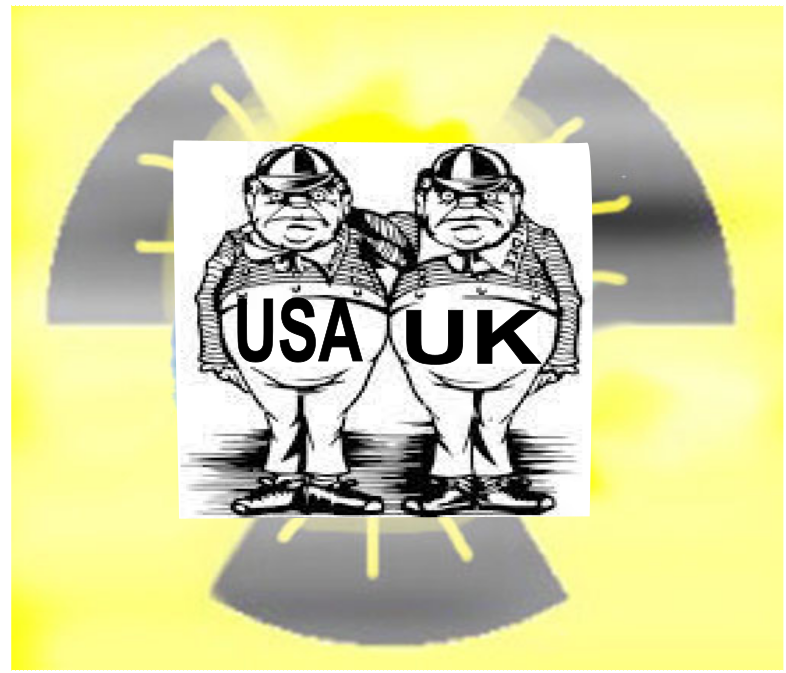
London and Washington have tentatively restarted work on their
multibillion-pound “tech prosperity deal”, which was paused last year
after President Donald Trump piled pressure on the UK to cede ground in
wider trade talks.
Senior US and UK officials have initiated discussions
about collaboration on civil nuclear technologies and on hosting a joint
summit on fusion technologies, according to multiple people briefed on the
talks. They described the deal as “unsticking”. The US-UK “tech
prosperity deal”, which was announced in September last year during
Trump’s state visit, aimed to spur co-operation between the two countries
in areas including AI, quantum computing and nuclear energy.
UK Prime Minister Sir Keir Starmer said at the time that the two nations were
embarking upon a “golden age of nuclear” energy, with more
transatlantic co-operation and speedier regulatory approvals for atomic
projects. The deal was touted by the UK as including £31bn worth of
investment from America’s top technology companies.
However, the US
suspended the deal in early December, with UK officials claiming the Trump
administration was pushing for wider trade concessions outside the tech
partnership. One of the projects announced was an agreement between UK
energy company Centrica and US nuclear group X-energy to build advanced
high-temperature, gas-cooled reactors in Hartlepool. Aerospace and
engineering company Rolls-Royce also said it had entered the US regulatory
process for its small modular reactors, signalling its intent to roll them
out in the US.
The tech deal was paused late last year after US officials
became increasingly frustrated with the UK’s lack of willingness to address
so-called non-tariff barriers in its wider trade negotiations, including
regulations governing food and industrial goods.
FT 25th Feb 2026, https://www.ft.com/content/0992b6d0-5d10-4a7a-a505-6cda84946e6d
DOOMSDAY: The Suicide Pact Nobody Voted For

COMMENT. I really do not know what to think about this one.
I am aware that Russia busily does lots of propaganda – which we must read with a sceptical eye. But so does the West.
And I’m sorry to say it -but the idea that the West might supply Ukraine with some sort of covert nuclear weaponry – that’s not such a wayout idea.
Islander Reports, Gerry Nolan, Feb 25, 2026, https://islanderreports.substack.com/p/doomsday-the-suicide-pact-nobody
Russia accuses Ukraine of seeking to acquire nuclear weapon with help from UK and France
Reuters, Wed, February 25, 2026, https://www.reuters.com/world/europe/russia-accuses-ukraine-seeking-acquire-nuclear-weapon-with-help-uk-france-2026-02-24/
DOOMSDAY is the only word that fits — but let’s name the madness with the surgical clarity this moment demands. On the fourth anniversary of a war they have already lost, London and Paris have apparently decided the answer is not negotiation, not dignity, not the elementary statecraft of knowing when you are beaten — but nuclear escalation into the abyss. We are well past the point of any strategy on NATO’s part — there is only one word to describe the insanity, and that word is pathology.
Russia’s SVR names the weapon with the kind of clinical specificity that cannot be dismissed as propaganda: France’s TN75 miniaturized thermonuclear warhead, the crown jewel of the M51 submarine-launched ballistic missile — to be covertly dismembered, smuggled in components, transferred to Kyiv, and cosmetically disguised as a Ukrainian “indigenous development.”
A lie so architecturally transparent it insults every arms inspector, every treaty signatory, every breathing human being who has spent eighty years constructing the fragile scaffolding of nuclear non-proliferation. Kiev on cue calls it an absurd lie. Paris calls it blatant disinformation. London says there is “no truth to this.” And yet not one of them has called an emergency press conference to repudiate. Not one has or will provide anything of material and consequence to clear their name. They have issued banal statements — the diplomatic equivalent of a man caught with his hand in the vault saying he was simply checking the lock.
And here is the question that neither London nor Paris can answer — because no democratic process on earth has ever asked it. No voter in France went to the polls to authorise the covert transfer of thermonuclear warheads to an active war zone. No British citizen marked a ballot for a policy that Russian doctrine formally classifies as a joint act of war against a nuclear power. No electorate in Europe or America — not one — was consulted on the decision to sleepwalk their children to the edge of the nuclear precipice. Power of this magnitude, exercised in this darkness, over consequences this irreversible, was simply taken — pocketed in the corridor of an intelligence briefing, ratified by no one, answerable to nothing.
These are not the moves of men who believe they are winning. These are the desperate, clock-burning sacrifices of players who have already lost the board — and are now reaching across the table to upturn it entirely, praying the chaos spares them the humiliation of checkmate. Four years of weapons, treasure, blood, and Western credibility fed into the Ukrainian furnace — and the front line tells the only truth that matters. The empire of narrative cannot survive contact with artillery mathematics. They know the position is lost. This is what lost looks like when the men responsible have nuclear access and no accountability.
And Germany — Germany, the nation that carries within its civilizational bone marrow the precise and irreversible cost of catastrophic military hubris — said no. Berlin walked. The SVR records it with almost contemptuous brevity: Germany “wisely refused to participate in this dangerous adventure.” Let that land like a sentence from a war crimes tribunal. The country that gave the twentieth century its two defining lessons in what happens when European leaders mistake belligerence for strategy — that country looked at the plan, looked at the men presenting it, and quietly pushed back its chair. The defeated always betray themselves in their final moves. Nothing in the entire arc of this conflict has announced strategic bankruptcy with more devastating eloquence than the moment your most historically scarred, most catastrophe-literate ally looks at your masterstroke and walks out without a word.
Russia’s nuclear posture requires no interpretation, no Kremlinology, no specialist decoder. It is written in language so unambiguous that ignorance is impossible and innocence is forfeit: aggression by a non-nuclear state backed by a nuclear power constitutes a joint attack — on both. Not metaphor. Not negotiating flourish. A published military-legal framework with four years of enforced red lines behind it. A wall of iron. The Federation Council has formally called on London, Paris, the UN Security Council, and the IAEA to investigate. Peskov has confirmed it enters the Geneva room. Medvedev has said what follows in language requiring no translation. They are not bluffing. They have never needed to. And yet here are Starmer and Macron — Dr. Strangelove without the self-awareness, without the dark comedy, without even the saving grace of fictional distance — triggering, knowingly, what their own doctrine names as nuclear war.
Look at the photograph used by Reuters capturing the arrogance and incompetence like so many other photos do. Four incompetent men outside the black door of Number 10 — handshakes, dark suits, the performance of gravity. They do not look like men who know they are already ghosts. That is the most terrifying thing about them — they never do. What we are witnessing in real time, on the precise anniversary of the war’s ignition, is not statecraft. It is not strategy. It is not even desperation with a plan. It is a collective suicide pact authored by a defeated establishment so hollowed out by its own mythology, so physically incapable of absorbing the verdict of the battlefield, that they are still pushing pawns across a board with no squares remaining — too blind to see the checkmate, too arrogant to hear the piece hit the floor.
History will not struggle to name what this was. The tragedy is that there may be no historians left to write it.
Nuclear power station workers ‘failed to ensure safety’ after incident.

Nuclear watchdog said the electrical cabling failing presented a ‘significant potential risk’
Matthew Fulton, STV News, Feb 25th, 2026
Workers at a nuclear station in Ayrshire “failed to ensure safety” after an electrical cabling incident, according to the Office for Nuclear Regulation (ONR).
The ONR issued an improvement notice to EDF Energy following the incident at its Hunterston B site near West Kilbride.
In November, workers failed to ensure that the electrical cabling was “deployed safely” while undertaking work on the cooling water valves in one of the facilities on the site.
The independent nuclear regulator said that although no injuries were sustained, the incident presented a “significant potential risk to worker safety”.
The notice requires EDF Energy to review, revise and implement arrangements to ensure that all 415V portable equipment at Hunterston B is appropriately constructed, maintained, tested and controlled.
ows an incident at Hunterston B .
Feb 25th, 2026 at 10:59
Share this story
Posted in
Last updated Feb 25th, 2026 at 11:02
Workers at a nuclear station in Ayrshire “failed to ensure safety” after an electrical cabling incident, according to the Office for Nuclear Regulation (ONR).
The ONR issued an improvement notice to EDF Energy following the incident at its Hunterston B site near West Kilbride.
In November, workers failed to ensure that the electrical cabling was “deployed safely” while undertaking work on the cooling water valves in one of the facilities on the site.
The independent nuclear regulator said that although no injuries were sustained, the incident presented a “significant potential risk to worker safety”.
The notice requires EDF Energy to review, revise and implement arrangements to ensure that all 415V portable equipment at Hunterston B is appropriately constructed, maintained, tested and controlled.
Ad
The ONR called for EDF to “strengthen its risk assessment processes” and improve arrangements for personnel undertaking electrical work on the site.
Tom Eagleton, ONR’s Head of Safety Regulation, Decommissioning, Fuel and Waste sites, said: “The safety of workers at nuclear licensed sites is a key priority for us. While no one was hurt on this occasion, the potential for serious harm was significant.
“It’s essential that EDF Energy implements the necessary improvements to ensure this cannot happen again.”
The energy firm is required to comply with the notice by March 20……………….. https://news.stv.tv/west-central/hunterston-nuclear-station-workers-failed-to-ensure-safety-after-electrical-cabling-incident
Sizewell C power to cost almost double today’s prices
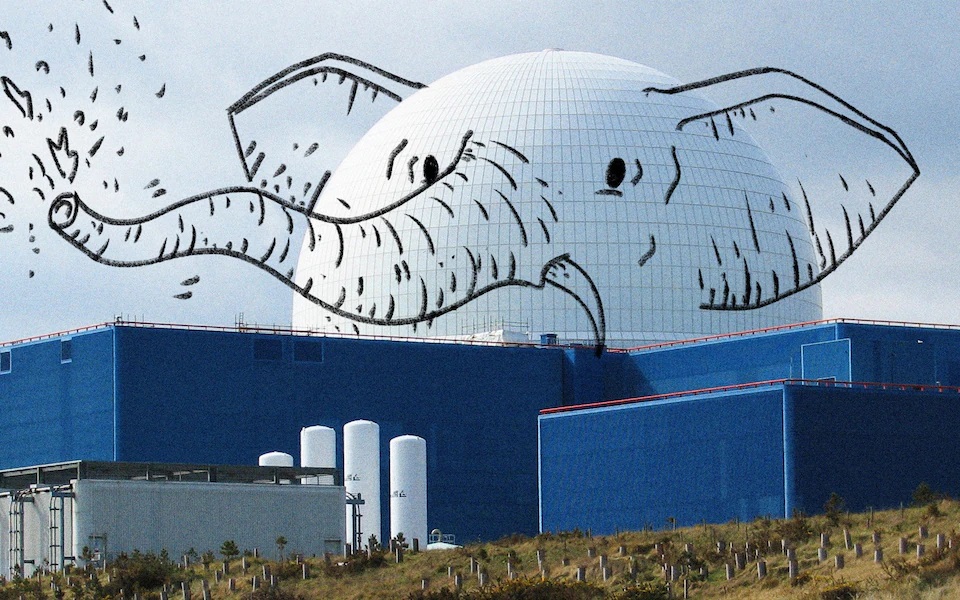
Nuclear plant is an ‘appalling waste of electricity consumers’ and taxpayers’ money’, experts claim
Electricity generated by the Sizewell C nuclear power station will
cost roughly double the normal price of power, according to a new
Government report.
Estimates suggest that the power Sizewell C produces
will cost £120 per megawatt hour (MWh) in today’s prices, compared with the
current wholesale price of about £60 to £70. The extra costs will be added
to energy bills.
The disclosure was made in a review of the business case
for Sizewell C published by the Department for Energy Security and Net
Zero. It is understood to be the first time Sizewell C’s power output has
been costed. It refers to the so-called “strike price”, which is likely
to be awarded to the nuclear power station under the contracts for
difference system. This is where generators get a guaranteed minimum price
for electricity, whatever the market value.
The cost is then covered by a
levy on consumer bills, meaning it effectively acts as an energy subsidy.
Nuclear supporters, including Ed Miliband, the Energy Secretary, have
argued that nuclear power is worth the extra money because it acts as a
secure energy source for decades – potentially a century in the case of
Sizewell C.
However, critics have raised concerns that prices for nuclear
will continue to rise, arguing that early estimates for constructing power
stations are always significant underestimates. They have pointed to
Sizewell C’s predecessor, Hinkley Point C, where original costs of £18bn
have soared to £50bn – a figure announced last week – with start-up delayed
from 2026 to 2031.
The Government report for Sizewell C said estimates
assumed no escalation in costs, which would be a first for UK nuclear
construction projects. The report also warned that consumers were likely to
be charged more than the £120 per MWh rate because the strike price was
calculated net of all the tax, business rates and other payments to the
Government.
Prof Stephen Thomas, the editor-in-chief of Energy Policy, an
academic journal, said: “Sizewell is an appalling waste of electricity
consumers’ and taxpayers’ money. If you want to justify a premium price for
nuclear, you have to estimate the costs of achieving the same factors –
energy security and reliability.
“Of course, nuclear power plants aren’t
always reliable and the most insecure power source is the one that isn’t
built yet. Without the assumptions behind these cost guesses [of £120 per
MWh], they are worthless and far from transparent.” Alison Downes, of
Stop Sizewell C, a local campaign group, said: “Hinkley’s cost has soared
to £50bn with completion dates slipping and five years still to go.
Sizewell C’s costs will rise higher still when it inevitably overruns its
£40bn construction budget.”
Telegraph 25th Feb 2026, https://www.telegraph.co.uk/business/2026/02/25/sizewell-c-power-to-cost-almost-double-todays-prices/
EDF pledges new £15bn UK investment as falling energy prices hit profits

The energy firm reported a 12 per cent decrease in nuclear output
Anna Wise, Independent UK, Monday 23 February 2026
French energy giant EDF saw its UK profits decline last year, attributed to a combination of falling energy prices and a significant outage at one of its nuclear power stations.
Despite this setback, the company has announced plans for a substantial £15 billion investment in the country over the next three years.
The energy firm reported a 12 per cent decrease in nuclear output from its five operational power stations during the period.
While its Sizewell B facility in Suffolk and Torness in Scotland performed strongly, the overall output was significantly impacted by an extended outage at the Hartlepool power station.
The Teesside-based station, which began generating power 43 years ago and supplies electricity to approximately two million homes, experienced a prolonged shutdown.
Despite these operational challenges, Hartlepool recently secured a one-year extension to its operational lifespan, now expected to generate electricity until March 2028.
This extended downtime, primarily due to issues affecting one of its two reactor systems, was identified as the main driver for EDF‘s overall decline in nuclear generation last year.
Furthermore, a decline in earnings was also down to the prices it charges for nuclear power being lower than in 2024.
It is understood that average prices were down by approximately 20 per cent.
Energy prices in the UK have been gradually coming down after spiking in the aftermath of Russia’s invasion of Ukraine in 2022.
EDF said that in its UK business, earnings before
interest, tax, depreciation and amortisation (EBITDA) were £1.9 billion for 2025, down about a third from £2.9 billion in 2024……………………………………………………….. https://www.independent.co.uk/news/business/edf-hinkley-point-energy-prices-profits-b2925974.html
Rapid UK coastal erosion throws spotlight on £40bn nuclear plant
More than 27 metres of cliff lost over a year in area just 2km from Sizewell C.

Swaths of the eastern UK coastline are eroding faster than expected,
forcing the demolition of homes and putting the spotlight on the risks
surrounding a £40bn nuclear power plant being built at Sizewell.
The coast
around Norfolk and Suffolk is one of the fastest eroding in Europe but the
disintegration has intensified in several parts in recent months including
an area just 2km from the Sizewell C construction site.
More than 27 metres
of cliff at the village of Thorpeness has been lost since December 2024,
compared with an erosion rate of 2 metres a year on average, according to
East Suffolk Council, which said the “sudden and significant pace”
meant safety levels were breached far more quickly than expected. Ten homes
in the upmarket area, including two flats that sold within the last few
years for more than £600,000, have been knocked down since October.
FT 24th Feb 2026,
https://www.ft.com/content/7f093296-41cd-498c-ba81-f3707204eca9
UK regulators to begin formal assessment of TerraPower’s 345MWe sodium-cooled fast reactor.
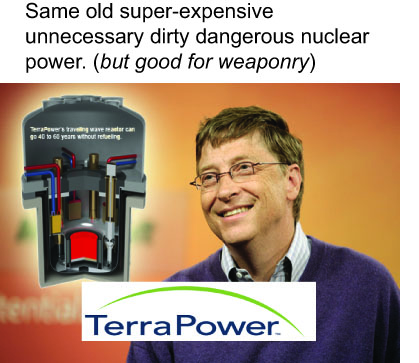
New Civil Engineer 23rd Feb 2026, By Thomas Johnson
UK regulators have been asked to begin a formal assessment of the Natrium nuclear reactor design developed by US company TerraPower.
The Department for Energy Security and Net Zero (DESNZ) told the Office for Nuclear Regulation (ONR), the Environment Agency and Natural Resources Wales to prepare for a Generic Design Assessment (GDA) of the sodium-cooled fast reactor after a readiness review concluded the design is prepared to enter the regulatory process. The GDA will not start until the regulators have agreed timetables and resourcing.
The GDA is a multi-year scrutiny process in which regulators examine the safety, security and environmental arrangements for a reactor design before any site-specific consents or construction are made. It has been used for previous new-build designs and is intended to give investors and potential operators clearer regulatory certainty.
TerraPower, co-founded by Microsoft’s Bill Gates, is developing the Natrium design as part of a US public–private partnership. The company’s first demonstration plant is being built with support from the US Department of Energy’s Advanced Reactor Demonstration Program (ARDP). The ARDP allows up to $2bn (£1.5bn) in federal funding for the project on a 50:50 cost-share basis; TerraPower and its partners are expected to match that investment……………………………………………………………………………………
sodium-cooled reactors pose different technical and regulatory challenges to light-water designs. Liquid sodium reacts chemically with water and air, which requires specialised handling, testing and safety arrangements…………………………..
https://www.newcivilengineer.com/latest/uk-regulators-to-begin-formal-assessment-of-terrapowers-345mwe-sodium-cooled-fast-reactor-23-02-2026/
Hinkley Point C faces further delays as costs continue to mount
Hinkley Point C, the UK’s first nuclear plant in a generation, is now not expected to start generating electricity until 2030 at the earliest in yet another delay to the project.
French energy giant EDF, which has been overseeing construction on the nuclear plant, blamed the delay on lower-than-expected productivity on its major electromechanical installation programme.
The programme includes installation works such as piping, cabling and system integration for both reactor units – although only Unit 1, the first reactor, is expected to begin generating in 2030.
Unit 2 is generally expected to come online about one year after Unit 1, which suggests it will be the early 2030s based on how the project timeline is currently understood. Workers only lifted the 245-tonne steel dome onto Unit 2 in July 2025, roughly 18 months after Unit 1.
Last month, Hinkley Point C received the second and final nuclear reactor that will be welded into place in the coming years. The power station received its first nuclear reactor in 2023, which has subsequently been installed in Unit 1……………………………………………………………………………………..https://eandt.theiet.org/2026/02/23/hinkley-point-c-faces-further-delays-costs-continue-mount
Massive military convoy carrying ‘nuclear weapons’ passes through Glasgow.
Footage captured on Thursday shows the convoy headed along the M74 motorway towards Kinning Park
Jordan Shepherd Reporter, 20 Feb 2026, https://www.glasgowlive.co.uk/news/glasgow-news/massive-military-convoy-carrying-nuclear-33464341
A massive military convoy believed to be carrying nuclear weapons has been spotted passing through Glasgow..
Footage captured on Thursday shows the convoy headed along the M74 motorway towards Kinning Park. The clip shows MOD police vehicles and Police Scotland escorting the military vehicles through the city.
The convoys usually travel between Atomic Weapons Establishment Burghfield near Reading and RNAD Coulport on Loch Long, right through Glasgow on the M74 and M8, passing within 1.5 miles of George Square in the process.
It is understood that the convoys make the journey around six times per year to refurbish the warheads, then transport them back up again.
The convoys include huge lead-lined lorries carrying the nuclear warheads, along with a fire engine in case a blaze breaks out, a moving workshop, a decontamination unit, tow truck and scores of MOD police vehicles.
Cost of Hinkley Point C nuclear plant jumps again to nearly £50bn
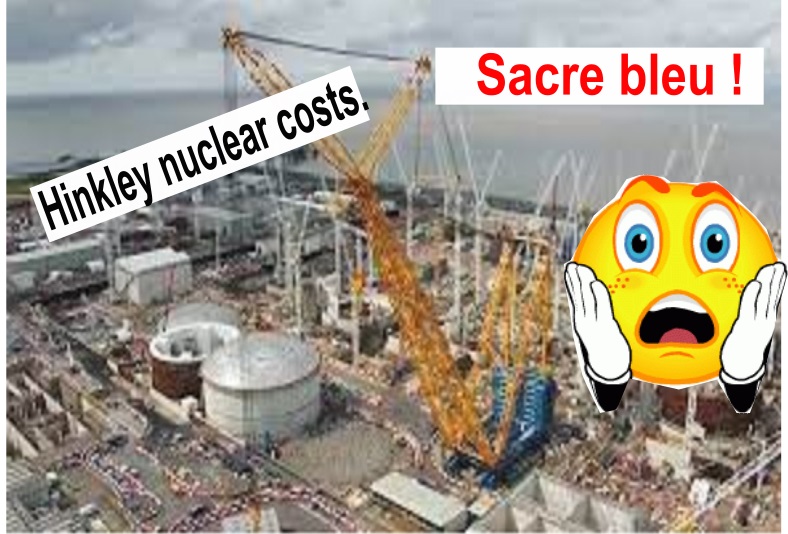
The rising cost — and a further delay to the completion date — will be seen as a blow to the UK’s energy security and an indictment of its infrastructure record. The cost of the Hinkley Point C nuclear power station has ballooned to nearly £50 billion and the date when it is expected to be in service has been put back again to 2030.
It does not
augur well either for a second major new nuclear power station, Sizewell C
in Suffolk, which is in the early stages of construction. The news was
revealed in statements in Paris on Friday by EDF, the state-owned French
energy company contracted to build Hinkley Point and Sizewell C.
The company estimated that the cost of Hinkley C was now £35 billion at 2015
prices. Adjusted for inflation, that translates to up to £49 billion. The
original projected cost was £15 billion. The plant is already years late,
as it was originally expected to go into commission in the mid-2020s.
Some argue that the date could yet be pushed back into the 2030s, leaving a
significant gap in UK energy policy after coal-fired power stations were
closed, leaving the country increasingly dependent on giant wind farms in
the North Sea. Consumer energy bills are at historically high levels.
Times 20th Feb 2026, https://www.thetimes.com/business/companies-markets/article/hinkley-point-c-nuclear-power-station-rise-nearly-50bn-gncq0j6rp
EDF has further pushed back the start-up of the UK’s flagship HinkleyPoint C nuclear plant.

EDF has further pushed back the start-up of the UK’s flagship Hinkley
Point C nuclear plant, taking a €1.8bn charge and pushing up the final
bill for a project that has suffered several delays and cost overruns.
The French state energy company said the first of the two reactors at the 3.2
gigawatt project in Somerset would now begin operating in 2030, blaming
delays in “electromechanical work”. That compares with a previous
“best case” target of 2029, itself a two-year delay from an earlier
timetable.
When the project was given the go-ahead in 2016, it was due to
come online in 2025. EDF said the plant was now expected to cost £35bn in
2015 prices — or almost £49bn at today’s prices — compared with a
previous range of £31bn-£34bn. The project was costed in 2016 at £18bn
in then-current prices. EDF warned that a further delay to 2031 would add
another £1bn.
FT 20th Feb 2026, https://www.ft.com/content/3a1ccd4b-1faf-40e9-a53a-f7961cf16d62
Ministry of Defence’s nuclear clean-up project brings new risks.
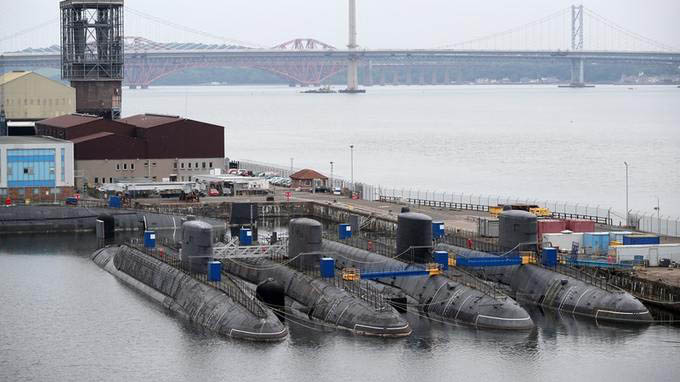
21st February, By Lynn Jamieson, chair, Scottish Campaign Nuclear Disarmament:
ROSYTH dockyard leads in the clean-up of retired nuclear
submarines as part of the Submarine Dismantling Project (SDP). Addressing a
legacy mess affords opportunities for building a skilled workforce.
But please, no more mess. Rosyth may become more deadly if operational
nuclear-armed submarines station there. As a contingency docking station
for the nuclear-weapon system now under construction, radioactive risks
will increase from nuclear reactors and weapons. T
he Ministry of Defence
(MoD) has not ruled out nuclear bombs being onboard a temporarily docked
submarine at Rosyth. In 40 years, newly built reactors become a long-term
legacy of nuclear waste, sitting in another generation of retired
submarines to be decommissioned at enormous cost.
Since the 1980s,
intermediate-level radioactive waste in the form of retired nuclear-powered
submarines – currently seven in total – sit at Rosyth, a hazard costing
money every day. Fifteen more sit in Devonport Royal Dockyard, Plymouth. Of
the 15 vessels at Devonport, 10 retain the highly radioactive fuel rods
that once powered them.
The National 21st Feb 2026,
https://www.thenational.scot/politics/25874840.mods-nuclear-clean-up-project-brings-new-risks/
Rubio Declared a Return to Brutal Western Colonialism – and Europe applauded.

Old-school, white-man’s-burden colonialism is unapologetically back
Rubio used the Munich conference to lay bare the new reality: Washington will no longer pay lip service to being the nice guy or abiding by any red lines
By Jonathan Cook Middle East Eye, 19 February 2026
In Munich, the US announced its intent to crush all opposition to its permanent status as imperial top dog, even if that means destroying everything, and all of us, in the process.
S Secretary of State Marco Rubio’s speech at the Munich Security Conference last weekend was another troubling declaration of intent by the Trump administration.
The explicit goal of US foreign policy, according to Rubio, is to resurrect the western colonial order that persisted for some five centuries until the Second World War.
Old-school, white-man’s-burden colonialism is unapologetically back.
In Rubio’s preposterous retelling, Europe’s colonisation of much of the planet, and the rape and pillage of its resources, was a glorious era of western exploration, innovation and creativity. The West brought a “superior” civilisation to backward peoples while maintaining global order.
Reflecting on the era before 1945, he observed: “The West had been expanding – its missionaries, its pilgrims, its soldiers, its explorers pouring out from its shores to cross oceans, settle new continents, build vast empires extending out across the globe.”
That course went into reverse 80 years ago: “The great western empires had entered into terminal decline, accelerated by godless communist revolutions and by anti-colonial uprisings that would transform the world and drape the red hammer and sickle across vast swaths of the map in the years to come.”
According to Rubio, that decline was accelerated by what he dismissed as the “abstractions of international law”, established by the United Nations in the immediate postwar period. In the pursuit of what he derisively termed “a perfect world”, these new universal laws – ones that treated all humans as equal – served only to hamstring western colonialism.
Rubio neglected to mention that the purpose of international law was to prevent a return to the horrors of the Second World War: the extermination of civilians in death camps and the firebombing of European and Japanese cities.
During his speech, Rubio offered Europe the chance to join the Trump administration in reviving “The West’s age of dominance” to “Renew the greatest civilisation in human history.”
“What we want is a reinvigorated alliance that recognises that what has ailed our societies is not just a set of bad policies but a malaise of hopelessness and complacency. An alliance – the alliance that we want is one that is not paralysed into inaction by fear – fear of climate change, fear of war, fear of technology,” he said.
No peace, no order
Quite astonishingly, Rubio was greeted with enthusiastic applause throughout his speech from an audience comprising heads of state, politicians, diplomats and military officials. He is reported to have received a standing ovation from half of the attendees.
They seemed swept up in Rubio’s triumphalist account of empire, one utterly oblivious to the well-documented realities of “western domination” – not least its brutal colonial tyrannies, its industrial-scale genocides and the mass enslavement of native populations.
These were not unfortunate episodes or mistakes in the West’s imperial past. They were integral to it. They were the coercive means by which colonised peoples were stripped of their assets and labour to finance empire.
He also appeared blind to another downside of the colonial West, which was all too evident over those five centuries. Ruthless competition between European states, vying to be first to pillage resources in the Global South, led to endless wars in which Europeans, as well as the people they colonised, were killed.
Empire did not ensure order, let alone peace. Colonialism was about systematised theft – and, as the saying goes, there is rarely honour among thieves.
In the dog-eat-dog world that preceded international law, each colonial power was out for its own advancement against rivals. That culminated in two terrible wars in the first half of the 20th century that decimated Europe itself.
Because Rubio does not understand the past, his vision of the future is inevitably defective as well. Any attempt by the Trump administration to restore overt western colonial rule will prove suicidal. As we shall see, such a venture would spell doom for us all. In fact, we may already be well advanced on that path.
Imperial muscles
There are a number of glaring flaws in Rubio and the Trump administration’s thinking.
First, Rubio’s assertion that the West gave up colonialism some 80 years ago is flatly wrong. At the end of the Second World War, Europe’s physically battered and economically exhausted colonial powers passed the baton of empire to the US. Washington did not end colonialism. It rationalised and streamlined it.
Washington continued the European tradition of overthrowing nationalist leaders and installing weak, obedient clients in their stead.
It also seeded the globe with hundreds of US military bases to project hard power, while exploiting new globalising technologies to project soft power. Economic carrots and sticks, wielded largely out of view through the World Bank and International Monetary Fund, incentivised submission to its diktats by non-western leaders.
……………………………………………………………………………………………………………………………………………………………………………………………………………………………………………………… Nuclear Armageddon
The biggest misdirection in Rubio’s remarks was his omission of the real reason the West abandoned overt colonialism after the Second World War and built international institutions such as the United Nations.
It was not an acceptance of defeat or decline by the US, but rather a recognition that, with the rapid development of nuclear arsenals by the superpowers in the wake of the war, a system capable of mediating the worst excesses of power had become a necessity.
It was the only hope of preventing reckless colonial competition and confrontation that could trigger a Third World War likely to spiral quickly into nuclear armageddon.
Nothing has changed over the past eight decades.
Russia and China still have large nuclear arsenals, and Moscow now has hypersonic missiles capable of carrying these warheads at unprecedented speeds.
There is still no failsafe mechanism to prevent misunderstandings from rapidly escalating into mutual attack.
Human nature has not changed since the 1940s – only the arrogance of a superpower determined to prevent great powers like China or Russia from ever ousting it from its imperial perch.
The threat of nuclear annihilation has not diminished. It has grown exponentially as limitations on global resources – those needed to sustain western consumption and endless “economic growth” – put ever greater pressure on the US to discard its mask as the guardian of superior values.
Rubio used the Munich conference to lay bare the new reality: Washington will no longer pay lip service to being the nice guy or abiding by any red lines.
The US is determined to crush all opposition to its permanent status as imperial top dog – even if it means destroying everything, and all of us, in the process. https://www.middleeasteye.net/opinion/us-rubio-declared-war-humanitys-future-and-europe-applauded
Excruciating tropical disease can now be transmitted in most of Europe, study finds.

An excruciatingly painful tropical disease called chikungunya can now be
transmitted by mosquitoes across most of Europe, a study has found. Higher
temperatures due to the climate crisis mean infections are now possible for
more than six months of the year in Spain, Greece and other southern
European countries, and for two months a year in south-east England.
Continuing global heating means it is only a matter of time before the
disease expands further northwards, the scientists said. The analysis is
the first to fully assess the effect of temperature on the incubation time
of the virus in the Asian tiger mosquito, which has invaded Europe in
recent decades. The study found the minimum temperature at which infections
could occur is 2.5C lower than previous, less robust, estimates,
representing a “quite shocking” difference, the researchers said.
Guardian 18th Feb 2026, https://www.theguardian.com/science/2026/feb/18/tropical-disease-chikungunya-transmitted-europe-study
1 This Month

of the week – Shut Down Drone Warfare!


Tell the Ukrainian Government to Drop Prosecution of Peace Activist Yurii Sheliazhenko

Petition to revoke the licensing of the Near Surface Nuclear Disposal Facility (NSDF) at Chalk River. https://www.ourcommons.ca/petitions/en/Petition/Details?Petition=e-7247
To see nuclear-related stories in greater depth and intensity – go to https://nuclearinformation.wordpress.com
-
Archives
- April 2026 (68)
- March 2026 (251)
- February 2026 (268)
- January 2026 (308)
- December 2025 (358)
- November 2025 (359)
- October 2025 (376)
- September 2025 (257)
- August 2025 (319)
- July 2025 (230)
- June 2025 (348)
- May 2025 (261)
-
Categories
- 1
- 1 NUCLEAR ISSUES
- business and costs
- climate change
- culture and arts
- ENERGY
- environment
- health
- history
- indigenous issues
- Legal
- marketing of nuclear
- media
- opposition to nuclear
- PERSONAL STORIES
- politics
- politics international
- Religion and ethics
- safety
- secrets,lies and civil liberties
- spinbuster
- technology
- Uranium
- wastes
- weapons and war
- Women
- 2 WORLD
- ACTION
- AFRICA
- Atrocities
- AUSTRALIA
- Christina's notes
- Christina's themes
- culture and arts
- Events
- Fuk 2022
- Fuk 2023
- Fukushima 2017
- Fukushima 2018
- fukushima 2019
- Fukushima 2020
- Fukushima 2021
- general
- global warming
- Humour (God we need it)
- Nuclear
- RARE EARTHS
- Reference
- resources – print
- Resources -audiovicual
- Weekly Newsletter
- World
- World Nuclear
- YouTube
-
RSS
Entries RSS
Comments RSS
 nuclear-news