Britain should clean up its fleet of decaying cold war nuclear-powered submarines
New Statesman 4th July 2018 ,Since the 1960s, the Navy has put 30 nuclear-powered submarines into
action, and 20 of these have since been retired, yet none of these 20 have
been dismantled.
HMS Dreadnought, Britain’s first ever nuclear submarine,
has been de-fuelled but is still waiting for scrapping – despite being
taken out of service in 1980. It is one of the 11 submarines retired beforethe turn of the century that are still inexplicably moored in British
ports. Given
Theresa May’s recently announced £600m boost to submarine
funding, one can’t help looking at the 20 decaying subs and wondering if
potential savings are being missed. Between 2010-16 alone, £16m was spent
on upkeep costs for subs that will never sail again. In a time when
efficiency is the watchword for the MOD, perhaps we should begin by dealing
with our fleet of Cold War relics.
https://www.newstatesman.com/politics/uk/2018/07/nuclear-submarines-britain-quietly-forgot-about-cost-16m
Smart householders don’t just switch energy providers, they go solar
Guardian 5th July 2018 , Emeritus Professor Sue Roaf: You should talk to people in the solar
industry about the future for domestic solar power rather than just relying
on “predictions”. As a non-executive director of AES Solar Ltd in Forres,
Scotland, I can tell you that our order books are healthy, despite the
government’s solarcoaster tariffs.
We are seeing real, steady growth
because, for instance, where better to spend a small part of a pension pot
than to put in a solar water heater, PV electrics and a battery system,
thus decoupling the household budget from soaring energy prices from the
grid.
Smart householders don’t just switch energy providers, they go solar,
not least those looking for a financially safer old age. That is the sort
of compelling reason why solar has a brilliant future in the UK, not a dark
one.
https://www.theguardian.com/environment/2018/jul/05/tidal-power-to-the-people
Quel embarras! Superman drone crashed by Greenpeace into French nuclear site – showing security risks
Greenpeace crashes Superman drone into nuclear plant
Greenpeace ‘crash’ Superman drone into French nuclear facility to show security flaws http://www.abc.net.au/news/2018-07-03/greenpeace-fly-superman-drone-into-nuclear-facility/9936884
Greenpeace activists say they have crashed a drone into a French nuclear site, posting footage of the flight on the groups Facebook page.
The group said the stunt was to highlight the lack of security around the facility, adding that “at no time was the drone intercepted or even worried about”.
The drone, which was decked out to resemble a tiny Superman, slammed into the tower in Bugey, about 30 kilometres from Lyon, according to the video released Tuesday.
The environmental activist group says the drone was harmless but showed the lack of security in nuclear installations in France, which is heavily dependent on atomic power.
“This action has once again demonstrated the extreme vulnerability of French nuclear installations, designed for the most part in the 1970s and unprepared for external attacks,” the post read.
France generates 75 per cent of its electricity from nuclear power in 19 nuclear plants operated by state-controlled EDF.
EDF said that two drones had flown over the Bugey site, of which one had been intercepted by French police.
“The presence of these drones had no impact on the security of the installations,” EDF said, adding that it will file a police complaint.
The drone stunt follows a series of staged break-ins by Greenpeace activists into French nuclear plants, which Greenpeace says are vulnerable to outside attack, especially the spent-fuel pools.
These pools can hold the equivalent of several reactor cores, stored in concrete pools outside the highly reinforced reactor building.
Greenpeace said the spent-fuel buildings were not designed to withstand outside attacks and were the most vulnerable part of French nuclear plants.
“Spent-fuel pools must be turned into bunkers in order to make nuclear plants safer,” Greenpeace France’s chief nuclear campaigner Yannick Rousselet said.
EDF said the spent-fuel pool buildings were robust and designed to withstand natural disasters and accidents.
Greenpeace’s security breaches have sparked a parliamentary investigation into nuclear security, which is due to present its report on Thursday.
In October, Greenpeace activists broke through two security barriers and launched fireworks over EDF’s Cattenom nuclear plant.
In February, a French court gave several Greenpeace activists suspended jail sentences while ordering the group to pay a fine and $78,900 in damages to EDF.
Greenpeace is notorious for attention-grabbing stunts, which have included climbing the Christ the Redeemer statue in Rio de Janeiro and scaling Big Ben.
UK media ignores UK Committee on Climate Change’s report – renewables quicker and cheaper than nuclear

David Lowry’s Blog 2nd July 2018 , A key message from the UK Committee on Climate Change (CCC’s) 267-page
annual report 2018 “If new nuclear projects were not to come forward, it is likely that renewables would be able to be deployed on shorter timescales and at lower cost.”
But you would not find this very important assessment in the British media coverage. Why might this be? Perhaps because on the day before, the UK Government published its long-trailed so-called ‘Nuclear Industry Sector Deal’on which the media clearly had been well briefed in advance.
http://drdavidlowry.blogspot.com/2018/07/nuclear-threat-to-sustainable-energy.html
Botched nuclear clean-up forces UK govt to take it back into public hands
UK nuclear cleanup contract back in public hands after £122m bill
Botched tender was for the disposal of materials at 12 UK sites including Dungeness, https://www.theguardian.com/politics/2018/jul/02/uk-nuclear-cleanup-contract-back-in-public-hands-after-122m-bill Guardian, Adam Vaughan, 2 July 18.
The UK government has been forced to take a multibillion-pound nuclear cleanup contract back into public ownership, after a botched tender to the private sector landed the taxpayer with a £122m bill.
The government will take over the decommissioning of Britain’s 12 Magnox sites, including the former nuclear power stations at Dungeness in Kent and Hinkley Point in Somerset.
The move is a response to the fallout from the Nuclear Decommissioning Authority (NDA) awarding a 14-year deal to the international consortium Cavendish Fluor Partnership in 2014.
Last year the government settled with two US companies that lost out on the £6.2bn contract and brought a legal challenge over the tender process.
Ministers terminated the contract early, leading to speculation over whether it would be put out to tender again to the private sector or brought back into public hands.
David Peattie, the NDA’s chief executive, told staff he understood they had faced uncertainty in recent months, as he confirmed that the private company Magnox Ltd would become a subsidiary of the NDA on 1 September. He said the change would result in “more efficient decommissioning”.
A source close to the process said: “The reason that this has been done is to remove some of the commercial complications and the large fees paid to contractors. This will ensure more money is spent directly on cleaning up these sites.”
Unions said they wanted talks with the new management regime for assurances over pay and terms.
Peter McIntosh, the Unite union’s acting national officer for energy, said: “This decision is long overdue. The 2014 contract should not have been awarded to any organisation.”
He added: “We need to ensure the taxpayer gets value for money through the transfer of the business and it is not paid for at the expense of the workforce.”
Whitehall’s spending watchdog, the Public Accounts Committee (PAC), has strongly criticised the NDA and the Department for Business, Energy and Industrial Strategy over the handling and oversight of the nuclear cleanup contract, one of the government’s biggest ever.
A review of the failings that led to the bungled process, written by the former National Grid boss Steve Holliday, is due to be published later this year.
Bringing the Magnox work back into the public sector means that about 85% of Britain’s nuclear cleanup work is in public hands, after the NDA’s takeover of the Sellafield storage and reprocessing site in 2016.
The PAC last week announced an inquiry into the NDA’s work at Sellafield, which is forecast to be £913m over budget and faces potential delays.
Magnox Ltd looks after 10 former Magnox power stations and two nuclear research sites.
UK’s National Audit Office (NAO) fails to report on Sellafield’s highly dangerous Analytical Services Laboratory (ASL) facility

 CORE 4th July 2018 ,As a site, the full appreciation of chemical legislation, including The
Dangerous Substances and Explosive Atmospheres Regulations DSEAR, has been
inadequate’. [Sellafield Ltd Board of Investigation report on 2017
‘chemical event’ and made available to CORE in April 2018]
Many of the findings of the more recently published (20th June 2018) National Audit
Office (NAO) report will come as little surprise, once again apportioning
blame for a litany of missed milestones, mismanagement of contracts and
delays and overspend on major projects by site owner the Nuclear
Decommissioning Authority (NDA).
The report also criticises the Government’s failure to challenge and assess the NDA’s performance. Of
Sellafield’s 1400 buildings (operational and legacy), some are considered
by NAO to fall short of modern standards and, through deterioration,
‘pose a significant risk to people and the environment’.
Identified as amongst Sellafield’s top 10 highest hazards is the site’s plutonium
stock and associated management facilities, the NAO report warns
specifically of decaying plutonium canisters – a leak from which would
add to the growing list of ’intolerable risks’ posed by Sellafield as
identified by the Office for Nuclear Regulation (ONR) and the acknowledged
risks posed by the volumes of hazardous wastes and materials stored in
run-down buildings.
Yet curiously absent from the references to run down
buildings and intolerable risks – and despite making the national
headlines when the Army’s bomb squad was rushed to Sellafield late one
October weekend last year to deal with unstable chemicals – is the
site’s Analytical Services Laboratory (ASL) facility and the cocktail of
chemicals and radioactive materials it holds.
One of the oldest facilities on site (built in 1951) and located in the tight and highly controlled
confines of Sellafield’s Separation Area alongside old reprocessing plant
and the high hazard legacy ponds and silos, around 50 of ASL’s original
150 laboratories are currently operational. Described by the Office for
Nuclear Regulation (ONR) in June 2017 as a ‘relatively high risk’
facility whose laboratories hold a ‘considerable radiological
inventory’ that ‘has potentially high off-site consequences in the
event of a major accident’, it is little wonder that the Bomb Squad’s
arrival in late October 2017 to deal with ‘unstable chemicals’ and
their potential to ignite or explode; the evacuation of workers and a
100-metre cordon thrown up around ASL should have triggered major alarm
bells locally and further afield.
http://corecumbria.co.uk/briefings/chemical-chaos-and-confusion-at-sellafield-yet-another-intolerable-risk/
Russia and China to co-operate in nuclear power build
Russia to build two new nuclear power units in China, 5 July 18
President Vladimir Putin mentioned that energy is the most important sector of cooperation, in a meeting with Chinese President Xi Jinping in the previous month. Moneycontrol News@moneycontrolcom Moscow and Beijing may sign agreements to build additional two power units of 1,200-Megawatt units in China by 2026 and 2027, as per reports by Russia’s state nuclear power corporation Rosatom.……. As reported by RT, the two countries are also working together on One Belt, One Road initiative. At this rate of growth, the trade between the two countries is expected to reach the target of $100 billion. https://www.moneycontrol.com/news/business/russia-to-build-two-new-nuclear-power-units-in-china-2674481.html
Belgium Starts Giving Out Free Iodine Pills in Case of Nuclear Disaster
 https://sputniknews.com/europe/201803061062271532-biligum-iodine-pills-nuclear-emergency/ BRUSSELS (Sputnik) 4 July 18 – Free distribution of iodine tablets has started in Belgium as a precautionary measure in the event of a nuclear catastrophe, the Belgian Pharmaceutical Association told Sputnik on Tuesday.
Starting from Tuesday, every Belgian citizen can come to a pharmacy and get free iodine pills, the association said. This move is part of the government’s nuclear safety policy.
Before March 6, only those living within 20 kilometers (12 miles) from nuclear sites were entitled to receive the medication free of charge, while now the area of distribution has been increased to 100 kilometers (62 miles).
Belgium has two nuclear plants, Tihange and Doel, with a total number of seven reactors. Only in 2017, there were seven incidents at the facilities.
Belgium’s neighbors, Germany and the Netherlands, are concerned over the safety of the kingdom’s ageing nuclear reactors.
In 2016, Germany requested Belgium to shut down its two reactors because of defects found in their pressure vessels, but the kingdom refused. In September 2017, citizens of Aachen, a western German city located 70 kilometers (43 miles) away from the Belgian Tihange, started getting free iodine tablets.
In 2016, the Netherlands started distributing the pills to people who lived within a 100-kilometre (62-mile) radius of the neighboring Dutch Borsselle and Belgian Doel plants.
Belgian Nuclear Plant Test Reveals ‘Abnormal’ Findings, Raises Safety Concerns
https://sputniknews.com/europe/201807051066069197-belgium-reactor-shutdown/ People who live near the Tihange nuclear power plant in Belgium’s Wallonia region have serious concerns about the safety of the station which has experienced several shutdowns in recent years.
The station’s operator, Engie-Electrabe, found “instability” in the reinforced concrete ceiling of the reactor’s armored bunker during a planned check that started on March 30, the newspaper Soir reported on Thursday.
According to the newspaper, company specialists also determined that the “anomalies” in the reinforced concrete had been there since the time the bunker was built.
They fear that the defect may potentially weaken the structural strength of the unit.
Soir said that the reactors of the Doel nuclear power plant in Flanders have not been affected as they have different architecture.
Belgium’s nuclear safety agency (AFCN) said that the Tihange reactor will not be restarted before the bunker has been pronounced safe.
According to a preliminary estimate, this may not happen before September, the newspaper wrote.
The Tihange plant is located just 60 kilometers (37 miles) from the country’s border with Germany and the Netherlands, while the Doel plant is located near the Belgian port city of Antwerp, next to the Dutch border.
About half of Belgium’s power is supplied by nuclear energy from the country’s seven operating reactors, three at Tihange and four at Doel.
US-UK Mutual Defense Agreement (MDA) of 1958 underpins UK-USA ‘s joint nuclear arms race
David Lowry’s Blog 4th July 2018 , On 3 July 1958 the United States Government signed a bilateral agreement
with the UK, the effect of which has for sixty years to completely undermine the moral authority of Washington and London to preach to atomic aspirant countries that nuclear weapons are bad for national security; and civilian nuclear activities should be kept separate from any military uses.
This deal – often called the US-UK Mutual Defense Agreement (MDA) on atomic energy matters (in which the word defence is spelled with an ‘s’, even in the official UK Treaty series version, indicating its political provenance) – is the agreement that provided the underpinning framework for the subsequent Polaris and Trident nuclear weapons of mass destruction deals with US, as well as facilitating the testing of British nuclear warheads in Nevada, after the 1963 partial nuclear test ban treaty halted the atmospheric testing of nuclear explosive devices.
http://drdavidlowry.blogspot.com/2018/07/how-us-uk-mutual-defense-agreement.html
The British campaigners who shed light on deadly nuclear fuel reprocessing
 Children were dying. They took action The British campaigners who shed light on deadly nuclear fuel reprocessing https://wordpress.com/read/feeds/72759838/posts/1909887908, By Linda Pentz Gunter 1 June 18
The road winds steeply up through bucolic countryside, some of the most spectacular in Britain. There are sheep bleating in the distant meadows. Then suddenly, you are out on the fell, stripped almost barren, black, empty. But still there are sheep, their wool the same smoky color as the landscape, dotted like the rocks that are scattered across these bleak tops, the hallmark of the storied Lake District. Then down we go again, past a stone-walled pub, up another hill, and we are pulling up in front of a whitewashed cottage straight from a Beatrix Potter film.
And indeed, that is where we are — in Potter country — about as far removed in atmosphere and idyll as it is possible to be from the ugly, industrial, and deadly blight that sits just a few miles away on the Cumbria shore. That would be the Sellafield nuclear fuel reprocessing facility, which spews radioactive waste into the sea, pumps it into the air, and has accumulated 140 tonnes of plutonium to absolutely no purpose.
A sheepdog runs out to greet us. A pair of elderly cats languish contentedly on a warm stone wall, basking in some late afternoon sunshine. Later, we are introduced to a small flock of Herdwick sheep who are “pets,” and a flock of pigeons, of which more later.
The people who live in the house are Janine Allis-Smith and Martin Forwood, the heart of the aptly named small activist group CORE — Cumbrians Opposed to a Radioactive Environment. They have dedicated more than three decades to challenging the continued operation of Sellafield and calling out the harm it has caused.
Martin and Janine, partners in life as well as activism, embody the longstanding and tenacious anti-nuclear fight in Cumbria, the most nuclear county in the United Kingdom. Without their watchdog vigilance and their educational advocacy, far less would be known about the dangers posed by the British nuclear industry, and particularly by the Sellafield reprocessing and nuclear waste site.
Martin and Janine have been at the heart of the struggle against the Sellafield operations since the mid-1980s. They have exposed the facility’s clandestine activities, especially emissions of radioactive wastes into the environment. For Janine, formerly from the Netherlands, this hit home especially hard when her own son was diagnosed with leukemia in 1983. He survived, but as Janine began to look into the issue, she found far too many other instances of childhood leukemias among children living close to Sellafield, many fatal.
The pair began to suspect that radioactive discharges from Sellafield were contaminating local beaches and tide pools where children loved to play. And, as Allis-Smith, recounted, “it was not just leukemia, but other cancers. Some were stillborn, while other suffered unexplained deaths at a very young age.”
This launched Janine and Martin on a relentless campaign to expose the on-going violations at the Sellafield site where radioactive discharges have made the Irish Sea one of the most radioactively contaminated bodies of water in the world. In 2017, CORE released a damning report which showed how, “during the 1995-2013 period, the radioactive discharges to the marine environment from Sellafield’s reprocessing facilities B205 (magnox) and THORP (oxide) have dominated those from all other UK facilities and are recognized as being the major contributor to the levels of radioactive substances recorded in the Irish Sea and wider oceans.”
Both Martin and Janine were new to the issue when they began their work. But they quickly educated themselves, then others. They perfected an ideal and complementary presentation style — with Martin offering a simple, lay explanation of reprocessing itself, then Janine describing its impact, especially on the health of children. They quickly moved hearts and minds in equal measure. Politicians, the media, and the public at large were forced to take notice.
Over the years, the pair have collected numerous mud samples from local beaches and estuaries that have been analyzed for radioactive contamination, confirming their suspicions.
The pair uncovered scandals involving illegal activities at the Sellafield site. They fought the THORP reprocessing plant, due to close permanently in 2018; the rash decision to develop a MOX fuel manufacturing plant, which closed after just 10 years of operation; and the global transport of radioactive materials.
In 1990 Martin gave his first guided “Alternative Sellafield Tour”, highlighting the spots where the reprocessing plant endangers the environment.
More recently, the pair were part of a successful effort to prevent the Nuclear Waste Agency NIREX from building a subterranean depository for British and international nuclear waste at the edge of the Lake District National Park.
Currently, they are at the forefront of the fight to block new nuclear power plants planned for Moorside adjacent to Sellafield. Their landmark 2015 report, “Moorside Build & Job Projections – All Spin and No Substance,” has proven an essential tool for the broad opposition to this deadly scheme.
The couple are not without a sense of fun either. In 2005, Martin made and delivered a radioactive “Pizza Cumbriana” to the Italian Embassy in London — Italy was shipping radioactive waste to Sellafield for reprocessing at the time. The box was marked “Best before 26005”, a reference to plutonium 239, which has a half-life of 24,400 years. The pizza was immediately seized by the Environment Agency, stored, then buried eight years later at the Drigg nuclear waste dump in Cumbria, adjacent to the Sellafield site.
Also buried as radioactive waste was the garden of two elderly ladies living along the sea front in the drab town of Seascale adjacent to the Sellafield plant. The sisters had devotedly fed flocks of pigeons who visited their garden — birds that also roosted on the Sellafiled roofs. After the guesthouse next door complained about excessive bird poop and called for the birds’ removal, the entire garden had to be excavated down to several feet and hauled away as radioactive waste. Martin and Janine took in a few of those pigeons. Their descendants still live with them today and appear each morning and evening on the garage roof for feeding time.
Last year, Forwood and Allis-Smith received some long-overdue recognition for their commitment to a safer, cleaner, greener environment when they received the Nuclear-Free Future Award in the category of Education, a prize that carries a $10,000 cheque, a rare and much needed boon in a movement largely deprived of meaningful or consistent funding. (Disclaimer, I nominated them for the award.)
The couple were unable to attend the ceremony, but wrote in a press release: “We are honoured to have received NFFA’s Education Award for 2017 and humbled to be joining the list of diverse and distinguished winners of the past. Since the 1980s, when Sellafield was preparing to double its commercial reprocessing activities, we have focused not only on acting locally but also being the ‘eyes and ears’ for the many interested parties world-wide on Sellafield and its many detriments which include site accidents, environmental contamination, health risks, plutonium stockpiles and nuclear transports.
“With decades of uniquely difficult decommissioning yet to come, and with plans for new-build at Moorside, we still have much to do and will face the challenges with the same determination that has seen us through the many highs and lows experienced over the last thirty years in our campaign against an industry we believe still has much to answer for.” (You can view their full acceptance remarks in the video higher up in this article.)
This article was adapted from its original publication in The Ecologist.
The UK’s Hitachi nuclear bailout- a classic case of crony capitalism

Morning Star 29th June 2018 , ENVIRONMENT Secretary Michael Gove promised earlier this month to crack
down on “crony capitalism.” At the same time his cabinet colleague
Energy Secretary Greg Clark was offering a £5 billion bailout to Japanese
nuclear firm Hitachi.
It looks like a classic crony capitalist deal. Gove
argued: “Crony capitalists have rigged the system in their favour and
against the rest of us.” A classic crony capitalist deal is where a big
firm uses its power and lobbying to squeeze a contract from the government
that is good for the capitalists but bad for us.
The Hitachi bailout looks like such a rigged deal. Hitachi Europe chief executive Sir Stephen
Gommersall isn’t an expert in nuclear power or engineering. He is the
former British ambassador to Japan. Gommersall was hired right out of the
Foreign Office to help open doors for Hitachi. Tim Stone sits on the board
of Horizon Nuclear Power, Hitachi’s British nuclear arm. Stone, a former
KPMG consultant, was chief adviser to the energy secretary from 2008-13,
helping shape both Labour and Tory-Lib Dem governments’ nuclear energy
policy. Before that Stone advised the government on many PFI deals,
including famously bad-value ones.
https://morningstaronline.co.uk/article/nuclear-powered-crony-capitalism
Hypocrisy relating to Nuclear Non Proliferation Treaty – US-UK Mutual Defense Agreement
 David Lowry’s Blog 29th June 2018 , Article I of the NPT starts with the following commitment on Russia, the US
and UK: “Each nuclear-weapon State Party to the Treaty undertakes not to
transfer to any recipient whatsoever nuclear weapons or other nuclear
explosive devices or control over such weapons or explosive devices
directly, or indirectly”
Extraordinarily, just two days earlier in
Washington, the US hosted a bilateral meeting with the UK to celebrate the
60th anniversary – from July 3, 1958 – of a hugely significant nuclear
defence agreement (commonly called the US–UK Mutual Defense
Agreement,(MDA) with defence spelled with an ‘s’ even in the official
UK version, hinting at the origin of its drafting).
http://drdavidlowry.blogspot.com/2018/06/naked-nuclear-hypocrisy.html
Horizon Nuclear Power’s Wylfa Newydd plans formally approved.
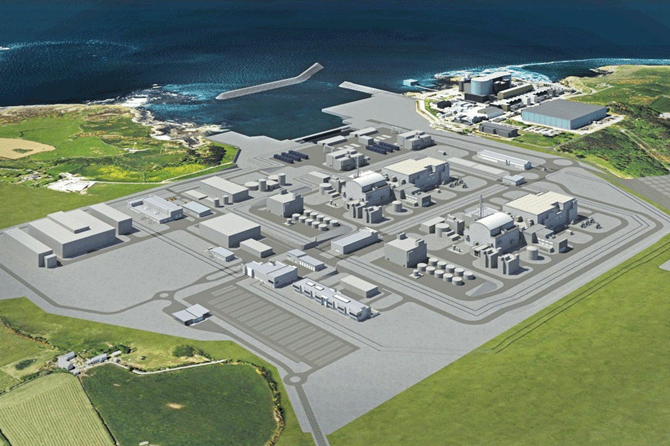 Energy Live News 29th June 2018 ,Horizon Nuclear Power’s Wylfa Newydd plans formally approved. Four key
environmental permits will now enter the assessment stage. Horizon Nuclear
Power has had its plans to build the proposed Wylfa Newydd nuclear power
station in Wales formally approved by the Planning Inspectorate. The
Development Consent Order process now formally begins with the
pre-examination phase, which is where members of the public can become an
‘interested party’. An Examining Authority is also appointed at this
stage and interested parties will be invited to attend a preliminary
meeting. Four other key environmental permits will now also enter the
assessment stage, which will be delivered by Natural Resources Wales.
https://www.energylivenews.com/2018/06/29/horizon-nuclear-powers-wylfa-newydd-plans-formally-approved/
UK Public Accounting for Costs of the Defence Nuclear Enterprise – seriously underscrutinised
 Parliament 19th June 2018 Neglected Large-Scale Value for Money Issues in Public Accounting for Costs
of the Defence Nuclear Enterprise :Written evidence a review of issues that
are of direct relevance to the core topic of the National Audit Office
(NAO) report of 2018 concerning ‘the Defence Nuclear Enterprise’
(henceforth ‘NAO Report’). The material summarized here supplements and
updates evidence published by the PAC Inquiry of October 2017. The authors
believe on grounds of many years of research at the Science Policy Research
Unit at the University of Sussex that the matters documented here raise
large-scale, long-run value for money issues of pressing national
importance, which remain seriously neglected in work to date either by the
NAO, the PAC or any other official bodies – and which are therefore
gravely under-scrutinized by Parliament or wider UK policy debates
1 This Month
23-25 October – on Zoom – World BEYOND War’s annual global conferenc


Shut down the radiation-damaged Heysham nuclear reactors now
To see nuclear-related stories in greater depth and intensity – go to https://nuclearinformation.wordpress.com

Say No to NASA’s Reckless Nuclear Reactor on the Moon
Say No to NASA’s Reckless Nuclear Reactor on the Moon

-
Archives
- October 2026 (199)
- September 2026 (339)
- August 2026 (330)
- July 2026 (355)
- June 2026 (287)
- May 2026 (306)
- April 2026 (356)
- March 2026 (251)
- February 2026 (267)
- January 2026 (308)
- December 2025 (358)
- November 2025 (359)
-
Categories
- 1
- 1 NUCLEAR ISSUES
- business and costs
- climate change
- culture and arts
- ENERGY
- environment
- health
- history
- indigenous issues
- Legal
- marketing of nuclear
- media
- opposition to nuclear
- PERSONAL STORIES
- politics
- politics international
- Religion and ethics
- safety
- secrets,lies and civil liberties
- spinbuster
- technology
- Uranium
- wastes
- weapons and war
- Women
- 2 WORLD
- ACTION
- AFRICA
- Atrocities
- AUSTRALIA
- Christina's notes
- Christina's themes
- culture and arts
- Events
- Fuk 2022
- Fuk 2023
- Fukushima 2017
- Fukushima 2018
- fukushima 2019
- Fukushima 2020
- Fukushima 2021
- general
- global warming
- Humour (God we need it)
- Nuclear
- RARE EARTHS
- Reference
- resources – print
- Resources -audiovicual
- Weekly Newsletter
- World
- World Nuclear
- YouTube
-
RSS
Entries RSS
Comments RSS

