UK’s nuclear weapons programmes $1.67 billion over budget
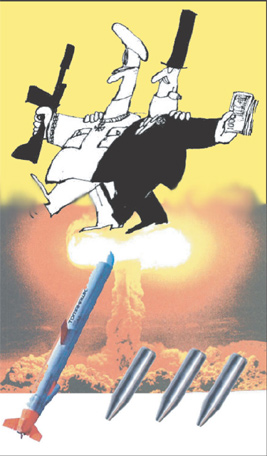 Three British nuclear programs are $1.67 billion over budget https://www.defensenews.com/global/europe/2020/05/12/three-british-nuclear-programs-are-167-billion-over-budget/ By: Andrew Chuter LONDON — Critical programs aimed at updating Britain’s nuclear weapons infrastructure have been hit by long delays and huge cost increases, according to the parliamentary Public Accounts Committee.
Poor management on three nuclear projects involving warhead assembly, core reactor production and submarine building have resulted in combined cost increases of £1.35 billion (U.S. $1.67 billion) as well as delays of between 1.7 and 6.3 years, the committee revealed in a report scheduled for release May 12.
The cost overruns were caused in large part by avoidable mistakes, such as beginning construction work without mature designs, said the committee.
The cost increases and delays cited in the report could be the tip of the iceberg in the nuclear sector. The three programs investigated by the committee represent about a quarter, by initial value, of the 52 nuclear infrastructure programs that the Ministry of Defence is pursuing. A report on nuclear infrastructure late last year by the government’s financial watchdog, the National Audit Office, said the initial value of all the projects was almost £5 billion.
The parliamentary committee said the MoD admitted that costs on the three projects “could keep rising, as its poor contract design has left the taxpayer to assume financial risk, while doing little to incentivize contractors to improve their performance.
The report said the MoD has poorly managed the three programs, failed to learn from past mistakes and agreed to poorly designed contracts with the major companies that have a stranglehold on Britain’s defense nuclear sector. The contracts did not allow the ministry to share the financial risk with contractors, which meant the government bore the full impact of cost increases, including those of subcontractors.
“To utterly fail to learn from mistakes over decades, to spectacularly repeat the same mistakes at huge cost to the taxpayer — and at huge cost to confidence in our defense capabilities — is completely unacceptable,” said Member of Parliament Meg Hillier, who chairs the Public Accounts Committee.
“We see too often these same mistakes repeated,” she added. “The department [MoD] knows it can’t go on like this. It knows it must change and operate differently. The test now is to see how it will do that, and soon.”
South Korea, Germany to bolster ties in transition towards renewable energy
S. Korea, Germany to bolster ties in transition towards renewable energy
The cooperation came as a follow-up to an agreement reached by Industry Minister Sung Yun-mo and German counterpart Peter Altmaier in Berlin last year, in which they vowed to bolster cooperation in the energy segment.
Seoul and Berlin will especially focus efforts on cooperating deeper on their shift towards renewable energy, while phasing out nuclear energy…….
The two countries are both making efforts to reduce their coal-based power generation as well, with Germany planning to break away from the resource by 2038. South Korea also vowed to “significantly reduce” its consumption of coal. https://en.yna.co.kr/view/AEN20200512003700320?fbclid=IwAR1RpCGPA8_id6MKRdp3q4xHlK6-BjaQOf5lbJL5TIhbKP6kHqekyrZmMagcolin@yna.co.kr
Russia proposes 3 year extension of Strategic Arms Reduction Treaty (Start-3): USA silent
 Russia proposes five-year extension of nuclear weapons treaty, https://www.plenglish.com/index.php?o=rn&id=55581&SEO=russia-proposes-five-year-extension-of-nuclear-weapons-treaty Temas Relacionados: 11Moscow, May 11 (Prensa Latina) Russia proposed on Monday to extend for another five years the validity of the Strategic Arms Reduction Treaty (Start-3), amid the silence of the United States to refer to that possibility.
In the course of five years, a new mechanism for controlling weapons of mass destruction can be developed, said Russian Deputy Foreign Minister Sergei Riabkov.
Contacts between Moscow and Washington in the area of strategic weapons are maintained on a permanent basis, stressed the Russian deputy foreign minister, who admitted the absence for now of any intention from the White House to seek an extension of the agreement, without conditions.
I believe that Start-3 has worked and produced results over the past decade and can be sought to be extended for another five years to achieve a new agreement or to improve the existing one in that important area, the official said.
Riabkov described the American hopes that the so-called Chinese factor might have some influence on the Russian position as unrealistic. One cannot unite in a single discussion issues, the content of which is lacking in common, he said.
For the Russian diplomat, it is truly cumbersome to overload the already difficult relations between Russia and the United States with new problems and concerns.
On the 50th anniversary of the signing of the Nuclear Non-Proliferation Treaty, it would be wise to show the utmost responsibility for keeping Start-3, signed in Prague in April 2010, he observed. That compromise expires next year.
Climate change – a bigger still challenge follows coronavirus
 After coronavirus, focus on the climate emergency https://www.theguardian.com/world/2020/may/10/after-coronavirus-focus-on-the-climate-emergency Signatories including Dr Wolfgang Knorr say it is game over for preventing climate change, Colin Hines says a green infrastructure should be prioritised in a post-Covid-19 world, and Andy Radford on why we should consider permanent changes to the way we live
11 May 2020 Last month, the Guardian quoted Fatih Birol, executive director of the International Energy Agency, saying if we put post-pandemic bailout money in the wrong place “we will lock ourselves in a dirtier energy system, making it much more difficult to reach our climate targets” (‘Coronavirus profiteers’ condemned as polluters gain bailout billions, 17 April).
We beg to differ. It is game over for preventing dangerous climate change now that governments are planning the cheapest and quickest return to consumption. Riding on the wave of cheap oil and fossil-fuel bailouts is incompatible with keeping the average global temperature rise below 2C, let alone 1.5C.
Even if the world agreed to maintain all the pandemic-enforced restrictions on travel and consumption, the emissions saved would amount to almost nothing, compared with what’s needed to achieve the Paris agreement’s climate targets. Yet whether it’s to discourage mass fatalism, or prevent the very worst of what the future threatens, those of us with this knowledge still cling to “yes we can”. In this story, it is always five to midnight; it is always the last chance to prevent disaster. In contrast, collective action on climate can only grow out of complete honesty. It is time to acknowledge our collective failure to respond to climate change, identify its consequences and accept the massive personal, local, national and global adaptation that awaits us all.
Dr Wolfgang Knorr Department of Physical Geography and Ecosystem Science, Lund University, Prof Eric Rignot University of California, Irvine, Prof Rik Leemans Wageningen University and Research, Prof Andy Morse School of Environmental Sciences, University of Liverpool, Prof Dennis Baldocchi Department of Environmental Science, Policy and Management, University of California, Berkeley, Prof Thomas Hickler Senckenberg Biodiversity and Climate Research Centre, Prof Francis E Putz Department of Biology, University of Florida, Prof Maarten Krol Wageningen University, Dr Alberte Bondeau Institut Méditerranéen de Biodiversité et d’Ecologie, Aix-Marseille Université, CNRS, Prof Wolfgang Cramer Institut Méditerranéen de Biodiversité et d’Ecologie, Aix-Marseille Université, CNRS, Prof Paul Palmer University of Edinburgh, Dr James G Dyke Global Systems Institute, University of Exeter
Oxford University’s call for a green stimulus for the economy and Polly Toynbee’s demand for a dramatically fairer reversal of the impact of “wealth on health” could both be addressed by a nationwide Green New Deal programme (Poverty kills people: after coronavirus we can no longer ignore it, 5 May).
This would allow a way out of the economic collapse caused by coronavirus, while rebuilding our social infrastructure and tackling the climate emergency. It can also provide new jobs and huge opportunities for businesses. At its heart must be a labour-intensive social infrastructure that rebuilds our austerity battered public services. The prioritisation of green infrastructure will require a shift of economic priorities towards more decentralised local economies that reduce carbon emissions and air pollution, minimise the throughput of raw materials, provide long-term food security and protect biodiversity.
This radically new approach will involve listening to climate experts, funding the transition needed through massive government borrowing and introducing policies to curb our “freedoms” to travel, eat and consume in ways that threaten the planet. It is a Green New Deal imperative to tackle both the social and climate crisis that must emerge as the exit strategy from coronavirus.
Colin Hines
Convenor, UK Green New Deal Group
It is not only whales that are enjoying the opportunity for improved “conversations” presented by the current drop in manmade noise levels (Silence is golden for whales as lockdown reduces ocean noise, 27 April). From insects to fish, nature is booming as human activity intrudes less during lockdown. In our gardens, birdsong is more noticeable without a constant soundtrack of traffic noise. When our activities increase post-lockdown, we should reflect on the joy these sounds have given us and consider more permanent changes to the way we share the planet with our wildlife, for the benefit of all.
Andy Radford
Professor of behavioural ecology, University of Bristol
Barrow, UK – hub of nuclear weapons work and nuclear transport
Close Capenhurst 10th May 2020, Barrow is best known as the place where BAE Systems build Trident nukiller submarines. The company is also building the Astute-class submarines.
What is less well know is that the ships which transport nukiller waste around the globe go out of the port of Barrow. Neither do most people realise just what else goes on in the town. Pacific Nuclear Transport Limited, a subsidiary of International Nuclear Services, is based at Barrow. The
company website boast that it is ‘the world’s most experienced shipper of nuclear cargoes’. Barrow is also the home port for James Fisher & Sons, which works for the military, and built its first ship suitable fortransporting irradiated nuclear fuel in the 1960s. The company also provides Nukiller equipment and services.
wide and growing coalition of real concern about EDF’s Sizewell C nuclear project
 East Anglian Daily Times 9th May 2020. NFLA, Cllr David Blackburn Councillors are right, EDF should delay its Sizewell C application. I warmly welcome the joint letter of opposition
councillors on Sizewell County Council calling on the Government to halt
EDF moving forward with a Development Consultation Order for Sizewell C
(EADT, 28th April).
The letter mirrors our own concerns noted last week in
our own letter to the EADT, and that of many parish, town and East Suffolk
District Councillors as well. Democratic discussions have to be put on hold
at the moment as the country deals with the worst public health emergency
in living memory.
It suggests an arrogance and a desperation within EDF to
want to move forward with the Sizewell C development at the moment. The
four rounds of local consultation on EDF’s Sizewell C plans showed a large
level of concern and opposition from across local government, much of which
stating that EDF have not provided adequate information to explain how they
would mitigate many of the harmful environmental effects of the
development. Indeed, all local environmental groups have raised huge
concern on its impact, particularly to the likes of wildlife gems like the
RSPB Minsmere site.
Just today, 60 prominent local people have added
similar concerns in a joint letter to The Times. It is clear there is a
wide and growing coalition of real concern about Sizewell C. EDF should not
just halt the DCO application, it should listen to local opinion and cancel
the project altogether. There is no need for Sizewell C. It is time EDF
listened to its critics and halted it.
Ukraine’s Energy ministry limits operations of nuclear power plants
Energy ministry limits operations of nuclear power plants UNIAN Information Agency 9 May 20 Ukraine “…..This week, the issue of a nuclear power units’ shutdown widely reverberated in a public discourse. From May 5, only 10 of 15 nuclear power units have been operating in Ukraine (four were put on scheduled repairs and one was put into reserve mode). According to the operating schedule for 2020, nine nuclear power units will operate at limited capacities. The government decided to take such a step in connection with the drop in electricity consumption caused by quarantine and record generation from renewables.
The search for the 4th hydrogen bomb dropped over Palomares, Spain
|
Who Do You Call When Nuclear Weapons Go Missing? Mathematicians. Here’s What You Need To Remember: With no witnesses, no debris and a search area in the least understood part of the world’s ocean, there’s little even mathematical wizards can do. But even then, few thought 50 years ago that the lost bomb of Palomares would ever turn up. National Interest, 10 May 20
When a routine Cold War operation went terribly wrong, two planes and seven men died, a village got contaminated and a hydrogen bomb disappeared.
The search and cleanup required 1,400 American and Spanish personnel, a dozen aircraft, 27 U.S. Navy ships and five submarines. It cost more than $120 million and a lot of diplomatic capital. And it made an obscure 18th-century mathematical theorem a practical solution to finding veritable needles in haystacks. Around 10 a.m. on Jan. 17, 1966, two B-52Gs of the 31st Bomb Squadron based out of North Carolina approached two KC-135 tankers over the Spanish coast southwest of Cartagena.
The bombers each carried four 1.5-megaton B-28 hydrogen bombs as part of Operation Chrome Dome, a U.S. deterrence mission that placed nuclear-armed bombers on the Soviet Union’s doorsteps. The resulting breakup destroyed the tanker in a fireball of blazing jet fuel. All four crew on board the tanker died. One hundred tons of flaming wreckage fell upon the arid hamlet of Palomares, near the Mediterranean Sea.
Three of the four H-bombs aboard the bomber fell there, too. Within 24 hours, a U.S. Air Force disaster team arrived from Torrejon Air Base near Madrid. Specialists from the Los Alamos and Sandia weapons labs — and Air Force logistics units — descended on the tiny rural town.
The search teams found the three H-bombs within a day. One landed on a soft slope, its casing relatively intact. The high explosives within the other two bombs detonated on impact, blowing 100-foot-wide craters in the dry soil and scattering plutonium, uranium and tritium across the landscape. The region’s long history of human habitation complicated the land search. Almeria, the province where Palomares sits, hosted a mining industry for more than 5,000 years. Countless mine shafts, diggings and depressions pepper its dry landscape made famous by the spaghetti westerns filmed there. ,,,,,,, https://nationalinterest.org/blog/buzz/who-do-you-call-when-nuclear-weapons-go-missing-152441
|
|
France’s Strategic Nuclear Forces
|
Is France’s Nuclear Shield Big Enough to Cover All of Europe? Modern Diplomacy
Alexander Yermakov 10 May 20, At the end of the third year of his presidency, Emmanuel Macron delivered his long-awaited policy speech on the country’s defence and deterrence strategy. The long-awaited indeed: many have been expecting France to step up its nuclear role in recent years, including heading up the establishment of the EU Nuclear Forcete. Did the President deliver on these expectations? Yes and no. From the get-go, Macron has been keen to play up the historical significance of his February 7 speech. The eighth president of the Fifth Republic noted that the last head of state to visit the École de Guerre in Paris was Charles de Gaulle himself, who delivered his famous speech on the creation of the Force de frappe, or the French Strategic Nuclear Forces (SNF), here on November 3, 1959.
The previous resident of the Élysée Palace, François Hollande, delivered his address on the nuclear deterrence at the Istres-Le Tubé Air Base on February 19, 2015, where one of the French Air Force’s two nuclear squadrons was stationed at the time. Macron’s predecessor gave a speech that was rather typical of the French nuclear policy, reminding his fellow countrymen that the world is still full of threats and that, despite the commitment to nuclear disarmament (someday, like other powers), it was vital to “keep the powder dry.” The President reiterated the promise to not use nuclear weapons against those countries that had signed and honoured the Nuclear Non-Proliferation Treaty (NPT). According to Hollande, the French Strategic Nuclear Forces contribute to the pan-European security, yet remain ‘sovereign:’ Paris will neither, as a matter of principle, be part of the NATO Nuclear Planning Group nor will it participate in the NATO’s Nuclear Sharing [1]. Notwithstanding European solidarity and the special nuclear cooperation that France enjoys with the United Kingdom, Hollande stressed that, “our [France’s] deterrence is our own; it is we who decide, we who evaluate our vital interests.”……. Thermonuclear Assets What does France have to offer to Europe? According to conservative estimates, the third largest nuclear arsenal in the world after that of Russia and the U.S., no less, with almost 300 warheads (the actual number is not known:….. The French Strategic Nuclear Forces currently consist of two components: an airborne and a seaborne. …… much of France’s nuclear potential is concentrated on a hidden yet permanently combat-ready component of its Strategic Nuclear Forces, namely its fleet of Triomphant-class nuclear-powered missile submarines…… Of course, Macron did not utter these exact words, but he did make an extremely important message that most commentators have missed: “France’s vital interests now have a European dimension.” This is not a throw-away sentence, because according to France’s military doctrine, a perceived threat to the country’s “vital interests” is an enough reason to resort to the nuclear force [10]. Macron could not have made a more explicit offer to extend his country’s nuclear umbrella to cover the rest of the European Union as he suggested opening a strategic dialogue on this issue.,,,,,,,, https://moderndiplomacy.eu/2020/05/10/is-frances-nuclear-shield-big-enough-to-cover-all-of-europe/ |
|
Delay in preparations for Wylfa nuclear plant
North Wales Chronicle 7th May 2020, The firm behind a planned multi-billion-pound nuclear plant has asked for more time to carry out significant improvements to a 16 kilometre stretch
of road linking the development with the A55. In July 2018 Anglesey
Council’s planning committee approved the plans which include widening
and putting down a new surface on the A5025 between Valley and
Llanynghenedl, Llanfachraeth and Llanrhuddlad, and Cefn Coch to the
proposed Wylfa Newydd power plant site. But with the project officially on
hold and a UK Government decision on a Development Consent Order (DCO) not
expected until at least September, developers have now asked to extend the
condition ruling that work would have to start within two years.
A potential US extradition of Assange poses existential threats to democracy.
In his fight against extradition to the US, where he faces 175 years in prison and being subjected to harsh conditions under “Special Administrative Measures”, Assange is rendered defenseless. He is in effective solitary confinement, being psychologically tortured inside London’s maximum-security prison. With the British government’s refusal to release him temporarily into home detention, despite his deteriorating health and weak lung condition developed as consequences of long detention, Assange is now put at risk of contracting coronavirus. This threatens his life.
Now, as the world stands still and becomes silent in our collective self-quarantine, Assange’s words spoken years ago in defense of a free internet call for our attention from behind the walls of Belmarsh prison:
“Nuclear war, climate change or global pandemics are existential threats that we can work through with discussion and thought. Discourse is humanity’s immune system for existential threats. Diseases that infect the immune system are usually fatal. In this case, at a planetary scale.”

Assange’s US extradition, Threat to Future of Internet and Democracy, CounterPunch by NOZOMI HAYASE 8 May 20 On Monday May 4, the British Court decided that the extradition hearing for WikiLeaks publisher Julian Assange, scheduled for May 18, would be moved to September. This four month delay was made after Assange’s defense lawyer argued the difficulty of his receiving a fair hearing due to restrictions posed by the Covid-19 lockdown. Monday’s hearing at Westminster Magistrates’ Court proceeded without enabling the phone link for press and observers waiting on the line, and without Assange who was not well enough to appear via videolink.
Sunday May 3rd marked World Press Freedom Day. As people around the globe celebrated with online debates and workshops, Assange was being held on remand in London’s Belmarsh prison for publishing classified documents which exposed US war crimes in Iraq and Afghanistan. On this day, annually observed by the United Nations to remind the governments of the importance of free press, Amnesty International renewed its call for the US to drop the charges against this imprisoned journalist.
The US case to extradite Assange is one of the most important press freedom cases of this century. The indictment against him under the Espionage Act is an unprecedented attack on journalism. This is a war on free speech that has escalated in recent years turning the Internet into a battleground.
Privatized censorship Continue reading
Bosnia aims to stop Croatia’splan for radioactive waste dump close to the border
|
Croatia and Bosnia at loggerheads over nuclear waste plan, Emerging Europe, May 7, 2020, Nikola Đorđević
Tensions are flaring between Bosnia and Herzegovina and Croatia over the latter’s controversial plan to store nuclear waste at Čerkezovac, a former military installation on the border between the two countries.
The location has been selected by the Croatian government as its designated site for the storage of its share of waste produced by the Krško nuclear power plant in Slovenia. Environmentalists have warned that the site could have serious consequences for the health of both the people in the area and the ecosystem. Last summer a number of protests against the plans to dump waste at Čerkezovac were held just over the border, in the town of Novi Grad, in Bosnia and Herzegovina’s Republika Srpska. Since then, the Croatian parliament has reconfirmed that the military installation in the Trgovska Gora mountains remains its preferred choice as the site of the nuclear waste disposal programme. Čerkezovac will be given over to Fond NEK, the entity responsible for decommissioning the Krško plant and the disposal of radioactive waste and spent nuclear fuel. Krško, opened in 1983, was set to be decommissioned in 2023, although Slovenia and Croatia have agreed to extend operation at the plant to 2043. Before the waste site can be built, an environmental study must be carried out: this has yet to happen. “We are talking about storing nuclear waste in a complex that is located 800 metres from the river Una,” says Mario Crnković, a member of the Green Team NGO which was involved in last year’s protests. “In Novi Grad alone, 15,000 people consume water from the river. It is also a national park, home to 325 species of animal, of which 92 are protected.” Green Team is not the only organisation that has raised concerns. Others have claimed that if the waste disposal plan proceeds, some 250,000 people could be in danger. Bosnian officials have also raised concerns publicly. Some have pointed out that Croatia intends to build the site in an area with a predominately ethnic Serb population. “The eventual building of the nuclear waste disposal site on Trgovska Gora is completely unacceptable because it would endanger the health of 250,000 people in 13 municipalities near the river Una, and have a negative effect on the environment,” says Staša Košarac, Bosnia and Herzegovina’s minister of foreign trade and economic relations……. Despite all the opposition, Croatia remains steadfast in its determination to go ahead with the plan. NGOs like Green Team have called on the Bosnian government to raise the issue at international level. “We expect Bosnia and Herzegovina as a state to act responsibly to stop this. We also expect experts from the non-governmental sector to be included in the process,” Mr Crnković concludes. https://emerging-europe.com/news/croatia-and-bosnia-at-loggerheads-over-nuclear-waste-plan/ |
|
Lithuania presses Belarus to delay use of nuclear fuel, for safety reasons
|
Lithuania urges Belarus not to use nuclear fuel delivered to new power plant https://bnn-news.com/lithuania-urges-belarus-not-to-use-nuclear-fuel-delivered-to-new-power-plant-213078 After Belarus announced that nuclear fuel has been delivered to its new Astravyets nuclear power plant, Lithuania has called on Minsk not to load it into power productions facilities before international safety recommendations have been met, according to the Lithuanian Foreign Ministry.
On Wednesday, May 6, the issue was discussed in a telephone conversation between Minister of Foreign Affairs of Lithuania Linas Linkevičius and Minister of Foreign Affairs of Belarus Vladimir Makei.
Therefore, we urge Belarus not to load nuclear fuel into its nuclear power station until full implementation of the recommendations by international experts. We agreed to consult regularly on all these issues,» told L. Linkevičius as quoted by the Lithuanian Foreign Ministry. Lithuania’s Ministry of Foreign Affairs also sent a diplomatic note to Belarus, requesting the neighbouring state to give priority to safety rather than to the construction schedule, and to avoid jeopardizing its own residents, as well as citizens in other countries. A positive step in this direction, as is expected by Lithuania and the European Union, would be to halt the launch of the Belarusian NPP and to immediately organize an official EU expert review of the implementation of the stress test recommendations under the National Action Plan, as well as to promptly welcome a group of international experts that would monitor the process, the Lithuanian Foreign Ministry wrote in the press release. |
|
The pandemic is a direct threat to Russia’s secret nuclear cities – says Rosatom chief
 Rosatom fears for its nuclear cities amid coronavirus pandemic, The head of
 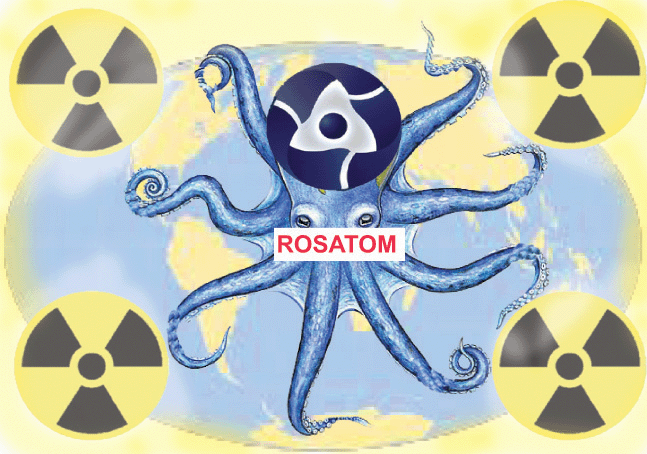 Russia’s state nuclear corporation has expressed concerns about the spread of the novel coronavirus to three of its so-called “nuclear cities,” including one that houses a top-secret research institute that helped develop the Soviet nuclear bomb. May 5, 2020 by Charles Digges charles@bellona.noThe head of Russia’s state nuclear corporation has expressed concerns about the spread of the novel coronavirus to three of its so-called “nuclear cities,” including one that houses a top-secret research institute that helped develop the Soviet nuclear bomb.
The cities hold a fabled place in Russia’s nuclear industry, which is managed by the state-controled Rosatom corporation. Most of them are closed to foreigners and even most Russians require special permission to enter them because of the top-secret facilities that many of them house.
In his most recent video appearance, Rosatom chief Alexei Likhachev said a special delivery of ventilators and personal protective equipment for medical workers has been sent to the city of Sarov and other closed towns where dozens of cases have been reported.
“This (pandemic) creates a direct threat to our nuclear towns,” Likhachev said in the video address on the Rosatom website – a communication method he has embraced since the beginning of the pandemic. “The situation in Sarov, Elektrostal, Desnogorsk is today particularly alarming.”
His remarks come as Russia reports a total of 155,370 cases of coronavirus infection and 1,451 deaths, making Russian the seventh most infected country, having surpassed China, Turkey and Iran last week.
The spread of the coronavirus has posed special challenges to the worldwide nuclear industry, where small groups of highly trained specialists are required to safely run reactors and manage nuclear fuel and radioactive waste services in close quarters.
In Russia, Rosatom has moved to sequester its nuclear technicians onsite at the plants and facilities where they work to minimize their exposure to carriers of the coronavirus.
Rosenergoatom, which is the utility subsidiary of Rosatom, hasn’t made clear precisely how many Russian nuclear workers have been put in isolation or ordered to shelter at their plants. But Rosatom controls a sprawling network of reactors, laboratories, commercial structures and fuel fabrication facilities that employ some 250,000 people.
Russia’s 11 commercial nuclear power plants operate a total of 38 nuclear reactors. Rosatom also has 36 power units at different stages of implementation in 12 countries around the world. It is currently constructing seven reactors overseas: two each in Bangladesh, Belarus and India, plus one unit in Turkey.
In a sense, Russian nuclear power and scientific facilities are uniquely designed to handle outbreaks of the virus. The 10 so-called “closed administrative territorial formations,” which were formed as part of the Soviet nuclear weapons program, are nearly entirely off limits for foreigners as well as most Russians.
The cities hosting Russia’s commercial nuclear plants, while less strictly separated from the rest of the country, are nonetheless surrounded by checkpoints and often require foreign visitors to get special permission to enter them.
As of last week, said Likhachev in his address, there were 47 infected personnel among the corporation’s ranks.
In the city of Sarov alone, there have been 23 cases of Covid-19, Likhachev said – 7 of them Rosatom employees.
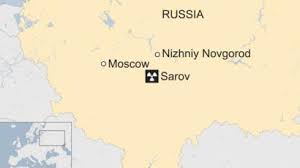
Known formerly as Arzamas-16, Sarov didn’t even appear on maps until the breakup of the Soviet Union in 1991. It remains home to the All-Russian Scientific Research Institute of Experimental Physics, which made headlines last year when five of its scientists died in a mysterious radiological explosion at a weapons testing site in the Russian Arctic.
The institute, which is now run by Rosatom, is an important part of Russia’s nuclear military complex. Likhachev indicated in his address that the workers who tested positive are affiliated with the institute.
In the city of Sarov alone, there have been 23 cases of Covid-19, Likhachev said – 7 of them Rosatom employees.
Known formerly as Arzamas-16, Sarov didn’t even appear on maps until the breakup of the Soviet Union in 1991. It remains home to the All-Russian Scientific Research Institute of Experimental Physics, which made headlines last year when five of its scientists died in a mysterious radiological explosion at a weapons testing site in the Russian Arctic.
The institute, which is now run by Rosatom, is an important part of Russia’s nuclear military complex. Likhachev indicated in his address that the workers who tested positive are affiliated with the institute.
As UK’s Torness nuclear power station deteriorates, – cheaper to build renewables than to repair aging reactors
 The Ferret 6th May 2020, Cracks that could increase the risk of a radioactive accident at Torness
nuclear power station in East Lothian will start appearing six years sooner than previously thought, according to the UK government’s safety watchdog. The Office for Nuclear Regulation (ONR) said that cracking which could cause debris to inhibit vital cooling of highly radioactive reactor fuel is now predicted to begin in 2022 rather than 2028.
After a major review ONR has given Torness permission to keep operating until 2030 –
but only if inspections to check for cracks are intensified. ONR promises
to “robustly challenge” the plant’s operators, EDF Energy, to ensure
that it “remains safe”.
Campaigners fear that Torness will become
increasingly unsafe, and warn it may have to close down sooner than
expected. EDF, however, insists that the station will keep generating
electricity safely until 2030. The coalition of 50 nuclear-free local
authorities in the UK has called on ONR to keep Torness under close
scrutiny. “These safety reservations surrounding the Torness periodic
safety review need to be cleared up as soon as possible,” said the
group’s Scotland convenor, SNP Glasgow councillor, Feargal Dalton.
“Whilst EDF is having to spend large resources trying to persuade the
regulator that it is safe to restart the Hunterston B reactors, this report
emphasises that similar issues with ageing are likely to arise at Torness
over coming years.” Councils would press ONR “to forensically
scrutinise what look like significant weaknesses in the EDF safety case,”
Dalton added.
“In the meantime, the Scottish Government should start
discussions about a ‘just transition’ for the workers at both
Hunterston and Torness so that Scotland can move to a safe, sustainable and
non-nuclear economy as quickly as possible.” The Edinburgh-based nuclear
consultant, Pete Roche, argued that it could be cheaper to build new
renewable capacity instead of continuing to operate ageing reactors.
“This could soon be the case with Torness, especially if it has to keep
being turned on and off to inspect the graphite core,” he said.
“Scotland clearly needs to be prepared for the possibility that Torness
might be forced to close not long after 2022.”
https://theferret.scot/torness-nuclear-reactors-cracking-2022/
1 This Month
23-25 October – on Zoom – World BEYOND War’s annual global conferenc

To see nuclear-related stories in greater depth and intensity – go to https://nuclearinformation.wordpress.com

Say No to NASA’s Reckless Nuclear Reactor on the Moon
Say No to NASA’s Reckless Nuclear Reactor on the Moon
-
Archives
- October 2026 (160)
- September 2026 (339)
- August 2026 (330)
- July 2026 (355)
- June 2026 (287)
- May 2026 (306)
- April 2026 (356)
- March 2026 (251)
- February 2026 (267)
- January 2026 (308)
- December 2025 (358)
- November 2025 (359)
-
Categories
- 1
- 1 NUCLEAR ISSUES
- business and costs
- climate change
- culture and arts
- ENERGY
- environment
- health
- history
- indigenous issues
- Legal
- marketing of nuclear
- media
- opposition to nuclear
- PERSONAL STORIES
- politics
- politics international
- Religion and ethics
- safety
- secrets,lies and civil liberties
- spinbuster
- technology
- Uranium
- wastes
- weapons and war
- Women
- 2 WORLD
- ACTION
- AFRICA
- Atrocities
- AUSTRALIA
- Christina's notes
- Christina's themes
- culture and arts
- Events
- Fuk 2022
- Fuk 2023
- Fukushima 2017
- Fukushima 2018
- fukushima 2019
- Fukushima 2020
- Fukushima 2021
- general
- global warming
- Humour (God we need it)
- Nuclear
- RARE EARTHS
- Reference
- resources – print
- Resources -audiovicual
- Weekly Newsletter
- World
- World Nuclear
- YouTube
-
RSS
Entries RSS
Comments RSS

