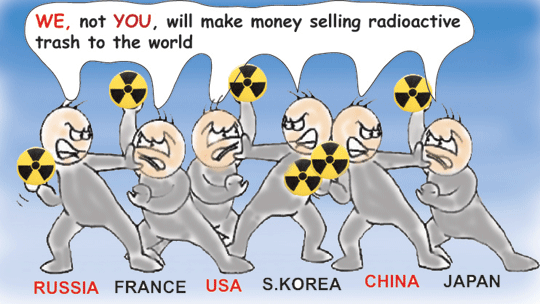
Nuclear powers battle each other to market nuclear reactors to Czech Republic
|
The Czech Republic Is Caught in a Nuclear Tug of War, FP,
Competition among China, Russia, and the West is taking the form of a battle to build reactors in Eastern Europe. BY TIM GOSLING SEPTEMBER 8, 2020”………………… The minority government of Czech Prime Minister Andrej Babis, who founded the ruling ANO 2011 party, has welcomed U.S. President Donald Trump’s embrace. But his stance looks less than certain as the country prepares to face one of its sternest geopolitical tests since the fall of communism 30 years ago: choosing a partner to expand its Soviet-built nuclear power capacity.
……….. Part of Pompeo’s mission to the Czech Republic was to convince Babis that it would pose a similar risk as Huawei should China or Russia win an upcoming tender to build a new 1.2-gigawatt reactor at the Dukovany nuclear power plant, at an estimated cost of over $7 billion. “If you choose one of these countries, it will jeopardize your freedom and sovereignty,” Pompeo reportedly stressed to the Czech leader.
However, Babis’s government is weak, and he faces building pressure at home and abroad to lean east. In turn, he has declined to exclude Chinese and Russian state-owned companies from bidding for the project and, despite welcoming Pompeo enthusiastically, demurred on signing a proffered cooperation agreement on nuclear energy………… Part of Pompeo’s mission to the Czech Republic was to convince Babis that it would pose a similar risk as Huawei should China or Russia win an upcoming tender to build a new 1.2-gigawatt reactor at the Dukovany nuclear power plant, at an estimated cost of over $7 billion. “If you choose one of these countries, it will jeopardize your freedom and sovereignty,” Pompeo reportedly stressed to the Czech leader. However, Babis’s government is weak, and he faces building pressure at home and abroad to lean east. In turn, he has declined to exclude Chinese and Russian state-owned companies from bidding for the project and, despite welcoming Pompeo enthusiastically, demurred on signing a proffered cooperation agreement on nuclear energy. The expansion of the country’s two nuclear power plants—Dukovany and Temelin—are at the center of the Czech Republic’s long-term energy strategy. However, the government has struggled for years to find a financing model agreeable to the minority shareholders at state-controlled energy group CEZ, which is tasked with building and running the nuclear energy infrastructure. The disagreement over funding saw plans to build two new units at Temelin scrapped in 2014. The two finalists in that race—which also brought a U.S. secretary of state to Prague—were the Russian state nuclear agency Rosatom and U.S.-based Westinghouse. They’ve sat in the background in Prague since, awaiting the starting gun for new projects. In the Dukovany showdown, they’re set to be joined by bidders from China, France, and South Korea……….. In the wake of Pompeo’s trip to Prague, lobbying around the nuclear plant will ramp up. “Russia has been extremely active in lobbying for the past couple of years,” Karaskova said. “The U.S., through Mike Pompeo’s comments, also showed a strong interest, probably the first time so openly and publicly.” Petr Trescak, an opposition MP, veteran of the nuclear sector, and member of the government committee for new nuclear plants said that he expects intense lobbying will soon start. Lipavsky said that the tender is already a regular topic with representatives of those countries that will bid, including the French and U.S. ambassadors. Public opinion is also key. Following Pompeo’s visit, Westinghouse launched a search for new senior PR operatives……… https://foreignpolicy.com/2020/09/08/czech-republic-nuclear-tug-of-war-china-russia-united-states/ |
|
Hinkley Point B nuclear station could close down early – EDF
 EDF Energy says UK’s Hinkley Point B nuclear plant could close earlier than planned
The 1 gigawatt (GW) plant in Somerset was due to be shut down permanently in early 2023. It began operation in 1976.
“It is possible we may need to move into defuelling within the next two years. We will review this decision in the same detailed way as we have with Hunterston B and expect to be able to confirm the outcome by the end of this year,” said a spokesman for EDF Energy, part of France’s EDF.
Last month, EDF Energy said it would start decommissioning its Hunterston B nuclear power plant in Scotland by January 2022 at the latest.
Both Hunterston B and Hinkley Point B have had issues with ageing, as cracks were found in graphite bricks which form reactor cores, prompting some industry experts to foresee their permanent closure soon.
Nearly all of Britain’s 9 GW nuclear fleet is composed of advanced gas-cooled reactors. A factor of ageing in that type of reactor is cracks in the graphite bricks.
Half of Britain’s eight operating nuclear power stations are due to move into decommissioning by March 2024, removing around 4 GW of power capacity…….. www.reuters.com/article/britain-nuclearpower/update-1-edf-energy-says-uks-hinkley-point-b-nuclear-plant-could-close-earlier-than-planned-idUSL8N2G65F8
Huge challenge to decontaminate Dounreay: ‘World’s deepest nuclear clean-up’.
 Dounreay: ‘World’s deepest nuclear clean-up’ to begin, The first work in a clean-up of a 1950s-built shaft at a nuclear power research complex is to begin this year. BBC News, 9 Sep 20, Dounreay: ‘World’s deepest nuclear clean-up’ to begin, The first work in a clean-up of a 1950s-built shaft at a nuclear power research complex is to begin this year. BBC News, 9 Sep 20,
The shaft plunges 65.4m (214.5ft) below ground and poses one of the biggest challenges in the demolition of Dounreay in Caithness.
Radioactive waste was disposed there from 1959 until 1977 when an explosion ended the practice.
Tackling the shaft has been described as the “world’s deepest nuclear clean-up”…….
A £7.5m contract has been awarded for the first steps in this work, due to begin in late autumn, and also to carry out similar engineering work at another site at Dounreay called the silo.
It is described as being like a swimming pool with a concrete roof and was also used for the disposing of radioactive waste.
Engineering firms Nuvia and Graham Construction have been awarded the contract for work that would eventually lead to the waste being removed.
David Hubbard, of Dounreay Site Restoration Ltd, said: “The shaft and silo contain solid waste and sludge which must be retrieved and repackaged for safe above-ground storage…..
Dounreay, near Thurso, was the UK site for the development of fast reactor research from 1955 to 1994.
The facility on the north Caithness coast is in the process of being closed down, demolished and cleaned up. https://www.bbc.com/news/uk-scotland-highlands-islands-54085592
|
|
INJUSTICE in the court? The extradition trial of Julian Assange
UK: Assange extradition hearing will be a key test for UK and US justice https://www.amnesty.org/en/latest/news/2020/09/uk-assange-extradition-hearing-will-be-a-key-test-for-uk-and-us-justice/?fbclid=IwAR2HY0lPIxV4m0h3u7ikxEmtaJ0m5YxUITtTgqmVViX03L6qsd40vHEwq2Y 4 September 2020,
US authorities must drop all charges against Julian Assange relating to his publishing activities, and UK authorities must reject the related US extradition request, said Amnesty International ahead of Julian Assange’s extradition hearing which resumes on Monday and is expected to last several weeks.
The hearing will decide on the Trump administration’s request for Julian Assange’s extradition to the US, where he faces a sentence of up to 175 years for publishing materials that document possible war crimes committed by the US military.
“This hearing is the latest worrying salvo in a full-scale assault on the right to freedom of expression. If Julian Assange is prosecuted it could have a chilling effect on media freedom, leading publishers and journalists to self-censor in fear of retaliation,” said Amnesty International’s Europe Director, Nils Muižnieks.
“If Julian Assange is extradited it will have far reaching human rights implications, setting a chilling precedent for the protection of those who publish classified information in the public interest.”
The US extradition request is based on charges that stem directly from the publication of classified documents as part of Assange’s journalistic work with Wikileaks. Publishing such information is a cornerstone of media freedom and the public’s right to access public interest information, and must be protected rather than criminalized.
n the US, Julian Assange could face trial on 18 charges, 17 of them under the Espionage Act; and one under the Computer Fraud and Abuse Act. He would also face a real risk of serious human rights violations including detention conditions that could amount to torture or other ill-treatment, including prolonged solitary confinement. Julian Assange is the first publisher to face charges under the Espionage Act.
The fact that Assange was the target of a negative public campaign by US officials at the highest levels undermines his right to be presumed innocent and puts him at risk of an unfair trial.
“The UK must abide by its obligations under international human rights law, which forbid the transfer of individuals to another country where they would face serious human rights violations,” said Nils Muižnieks.
The case will begin at the Old Bailey, London, on the morning (9.30am UK time) of 7 September. Stefan Simanowitz will be outside the court with an Amnesty International spokesperson. Follow @StefSimanowitz for updates and analysis
Amnesty will have trial observers monitoring remotely the entire series of hearings. During the first week, Sebastian Elgueta (@sebelgueta), a UK based barrister, will be monitoring.
Background:
Amnesty International also has concerns with regard to Julian Assange’s physical and mental well-being, particularly with the spread of COVID-19.
Conditions in UK prisons and detention centres are substandard. It is imperative that health and safety protocols are put in place to reduce the risk of COVID-19 infection, while ensuring that prisoners’ and detainees’ rights are protected. Bail or release should be considered for any detainee or prisoner who has serious underlying health conditions and is particularly at risk of infection.
See Amnesty International’s statement on prison conditions for Assange here
Climate activists mourn receding glaciers in the Alps,
|
Climate activists mourn receding glaciers in the Alps, https://www.sbs.com.au/news/climate-activists-mourn-receding-glaciers-in-the-alps [Video] Climate activists staged a protest near one of the melting glaciers in Europe’s Alps mountain range. Comparing a black and white photograph shot in 1891 to the shrinking Trient Glacier today, the activists urged authorities to take action to reduce CO2 emissions.
|
|
EDF made exaggerated and unrealistic claims about local jobs to be provided by Sizewell nuclear power project
Ipswich Star 7th Sept 2020, Independent consultants have challenged the jobs and economic benefits that building a new twin reactor nuclear power station on the Suffolk coast will bring – labelling the claims as “exaggerated” and “unrealistic”.
EDF Energy has said that Sizewell C will give the county’s economy a £125million a year boost and create 25,000 job opportunities during the 10-year construction period and 900 skilled jobs when the power plant is operational. But an independent review of EDF’s Economic Statement, assessing the impacts of Sizewell C on Suffolk’s economy, by research and analysis consultancy Development Economics – commissioned by the Stop Sizewell C campaign – has criticised key aspects of the research and evidence submitted to the Planning Inspectorate.
EDF though insists its project will deliver investment, jobs, skills, education and training for decades to come. And it says its Economic Statement in its planning application is fully compliant with relevant national policy. Development Economics though claimed some aspects were “exaggerated” and “unrealistic”. It questioned EDF’s claim of up to “2,410 jobs for Suffolk residents”, saying this included people travelling from up to 90 minutes away, which covers large population centres in Norfolk and Essex.
It said these local workers will be the overwhelming source of lower skilled roles, expected to fill 90% of jobs in ‘Site Support’ –
cleaners, bus drivers and security guards – compared with only 8% ofroles in professional and management. At peak construction 76% of the workforce will come from further away still and will have to be accommodated in the area.
https://www.ipswichstar.co.uk/news/sizewell-c-independent-economy-report-1-6824930
Petition to Wales Parliament – demands an environmental assessment on Hinkley nuclear mud dumping
Welsh Parliament Petitions (accessed) 7th Sept 2020, Demand an EIA now on the dumping of radioactively contaminated mud in Welsh waters. We, the undersigned, call on the Welsh Government to invoke the
Environment (Wales) Act 2016 in respect of uncertainties, and to ensure
that a full Environmental Impact Assessment (EIA) is carried out before any
further sediment from Hinkley Point nuclear power station can be dumped at
Cardiff Grounds. Don’t allow the Welsh government to break their own law!
Spain’s Asco 1 nuclear plant taken offline for three-day halt
|
Spain’s Asco 1 nuclear plant taken offline for three-day halt, 7 Sept 20, AuthorGianluca Baratti , EditorManish Parashar HIGHLIGHTSOutage from Sept. 5 through Sept. 8
Asco 2 planned maintenance in October Barcelona — Spain’s 1.03 GW Asco 1 nuclear plant was taken offline for an unplanned halt, operator Centrales Nucleares Asco Vandellos 2, or ANAV, said Sept. 5, leaving Spanish nuclear output at around 6 GW on Sept. 7………. Another one of ANAV’s plants — the 1.09 GW Vandellos 2 — was halted on Sept. 1 for a brief maintenance in the cooling system, coming back online Sept. 3. The group’s third plant, Asco 2, is due offline on Oct. 3 for a scheduled refueling halt through to Nov. 5. https://www.spglobal.com/platts/en/market-insights/topics/hydrogen |
|
|
France’s weekly nuclear power generation drops
|
French nuclear weekly generation falls below 30 GW to 9-week-low, AuthorAndreas Franke , EditorJonathan Dart
HIGHLIGHTS 28.4 GW average some 10 GW below Sept. 2019 Low river levels at Chooz, unplanned outages, delays France turned net importer for week ending Sept. 6 London — French nuclear generation averaged 28.4 GW in the seven days to Sept. 6, the lowest weekly average in nine weeks, according to data from system operator RTE. Nuclear output rose to 29.2 GW on Sept. 7, but that was 12 GW lower than a year earlier as the 3-GW Chooz plant remained offline due to low river levels, with a number of reactor returns delayed……… |
|
The biggest nuclear site in Europe is at risk of blowing up
Why nuclear power is always going to be unsustainable
Energy Transition 3rd Sept 2020 The biggest nuclear site in Europe containing the world’s biggest stockpile of nuclear explosives is at risk of blowing up. What does this short-term decay tell us about the very long-term sustainability of a technology whose toxic waste last at least 24,000 years? Dr David Lowry takes a closer look.
|
|
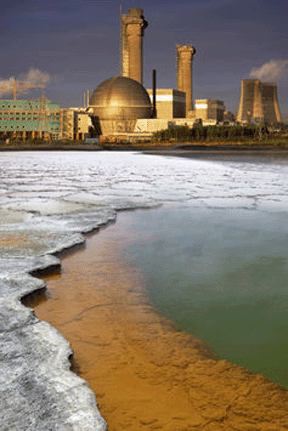
EDF’s Economic Statement on impact of Sizewell nuclear project – gives unproven, misleading evidence
 Stop Sizewell C 3rd Sept 2020, An independent review of EDF’s Economic Statement, assessing the impacts of Sizewell C to Suffolk’s local economy, has concluded that the project threatens “profitability and, in some cases, viability” of some local businesses, while others will be “at an immediate disadvantage when bidding for contracts”.
The report, Sizewell Economic Statement – Response, by highly-regarded independent research and analysis consultancy Development Economics, reveals multiple areas where EDF’s claimed benefits are over-optimistic, unproven or misleading, frequently omitting
evidence to support its figures or relying on “erroneous analysis”.
It concludes, critically, that EDF’s Economic Statement “fails to meet the minimum requirements of the legislation”, with no serious attempt to measure the deterrent effect on tourists and their expenditure, traffic congestion or competition for skills and labour.
The National Policy Statement EN-6 requires that applicants for major nuclear energy projects take into account ‘potential pressures on local and regional resources, demographic change and economic benefit’.
KILDARE OPINION SOUGHT ON NEW BRITISH NUCLEAR PLANT
 KILDARE OPINION SOUGHT ON NEW BRITISH NUCLEAR PLANT, Kildare Nationalist, SUNDAY, SEPTEMBER 06, 2020 UNDER provisions made at the United Nations, submissions are invited from interested parties in Kildare to comment on the development of a new nuclear power station planned for the east coast of England.Under the terms of the 1991 United Nations Convention, the Transboundary Environmental Public Consultation allows citizens in neighbouring nations have their say on certain public and private projects likely to have significant effects on the environment.
For this purpose, the member state of the UN in whose territory the project is intended to be carried out is required to send to its neighbours – no later than when informing its own public – a description of the project and any available information on its possible transboundary impact.
In this case, the Department of Environment, Planning and Local Government (DEPLG) was contacted by the British authorites in July about their plans to build a third reactor at the Sizewell nuclear power campus in Suffolk, to afford Irish citizens their chance to offer an opinion.
The letter from the UK’s Planning Inspectorate states that the Secretary of State has received an application to build two reactor units, giving a total site capacity of approximately 3,340MW, along with associated development required for the construction and operation of the Sizewell C Nuclear Power Station. …….
the Secretary of State decided to notify Ireland as if the development is likely to have significant adverse transboundary effects on the environment in this
State, as provided for in the UN Convention.
All documents related to the application are available to view on the Department of Environment’s website, and at the Planning Department, Kildare County Council – but by appointment only.
Submissions made in relation to the potential transboundary environmental effects of Sizewell C may be made in writing to the Planning Department, Kildare County Council, Aras Chill Dara, Naas, Co. Kildare or by e-mail to plandept@kildarecoco.ie by 28 October………….the Secretary of State decided to notify Ireland as if the development is likely to have significant adverse transboundary effects on the environment in this
State, as provided for in the UN Convention.
All documents related to the application are available to view on the Department of Environment’s website, and at the Planning Department, Kildare County Council – but by appointment only.
Submissions made in relation to the potential transboundary environmental effects of Sizewell C may be made in writing to the Planning Department, Kildare County Council, Aras Chill Dara, Naas, Co. Kildare or by e-mail to plandept@kildarecoco.ie by 28 October……..https://kildare-nationalist.ie/2020/09/06/kildare-opinion-sought-on-new-british-nuclear-plant/#.X1ViXHkzbIU
More of Britain’s ageing nuclear power stations are likely to close early
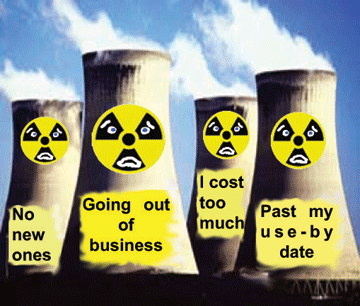 Times 6th Sept 2020, More nuclear power stations could close early as EDF wrestles with problems with patching up its ageing plants. The French power giant owns Britain’s fleet of eight nuclear power stations together with British Gas parent Centrica.
…………. just one new nuclear power station is being built, Hinkley Point C, in Somerset.
B in Somerset and Dungeness B in Kent.
happen sooner. It is currently not generating while its graphite core is inspected. EDF is due to make a decision on its future in November.
publication of a much-delayed energy white paper.
https://www.thetimes.co.uk/edition/business/nuclear-closures-pose-power-puzzle-d6bnnnrcs
Climate protestors stop Rupert Murdoch’s press in Britain
 Rupert Murdoch’s British papers delayed as climate protesters stop the presses, SMH 6 Sept, 20, London: Distribution of several British newspapers was disrupted on Saturday after climate change activists blockaded printworks used by Rupert Murdoch’s News UK, publisher of The Times and The Sun, drawing condemnation from Prime Minister Boris Johnson.Extinction Rebellion said nearly 80 people had blocked roads leading to two printworks, at Broxbourne in Hertfordshire, north east of London, and at Knowsley, near Liverpool. Hertfordshire police said they made 42 arrests and Merseyside police made 30.
The Murdoch-owned Newsprinters works also print the Daily Mail, the Daily Telegraph and the Financial Times. Campaigners said they had taken the action to highlight what they regard as the newspapers’ failure to accurately report on climate change. ……….
The blockade was part of more than a week of protests by Extinction Rebellion, which says an emergency response and mass move away from polluting industries and behaviours is needed to avert a looming climate cataclysm.
On Saturday it also protested in central London, including holding a “die-in” in front of Buckingham Palace, where demonstrators lay under white sheets to represent corpses. …….. https://www.smh.com.au/environment/climate-change/rupert-mudoch-s-british-newspapers-delayed-as-extinction-rebellion-protesters-stop-the-presses-20200905-p55sqr.html
The threatening presence of highly radioactive material in Russia’s sunken nuclear submarines
 Do Russia’s Sunken Nuclear Submarines Pose Environmental Danger? There’s radioactive fuel hanging at the bottom of the sea. https://www.popularmechanics.com/military/navy-ships/a33902569/russia-sunken-nuclear-submarines/ BY KYLE MIZOKAMI, SEP 4, 2020
- Two ex-Soviet nuclear submarines, K-27 and K-159, lie at the bottom of the Barents Sea.
- The wrecked ships still have their radioactive fuel sources aboard, which experts worry could leak into the environment.
- The Russian government has vowed to clean up the wrecks, but the work is not a priority.
Governments and environmental groups are worried a rupture of nuclear fuel supplies could cause a nuclear catastrophe, impacting local fishing areas. The Russian government is working to solve the problem, which some experts are calling a potential “Chernobyl in slow motion on the seabed.
A legacy of the Cold War threatens Russia’s people and environment, potentially irradiating a large portion of the Barents Sea and closing it to commercial fishing. Two Soviet nuclear-powered submarines are sitting on the bottom of the ocean and could unleash their radioactive fuels into the surrounding waters.
The Soviet Union built four hundred nuclear-powered submarines during the Cold War. The vast majority were either scrapped, or still serve with the Russian Navy today. A few subs, however, are trapped in precarious circumstances, lying on the seabed floor with their uranium fuel supplies still intact. The BBC reports on efforts to render two such ships, K-27 and K-159, safe.
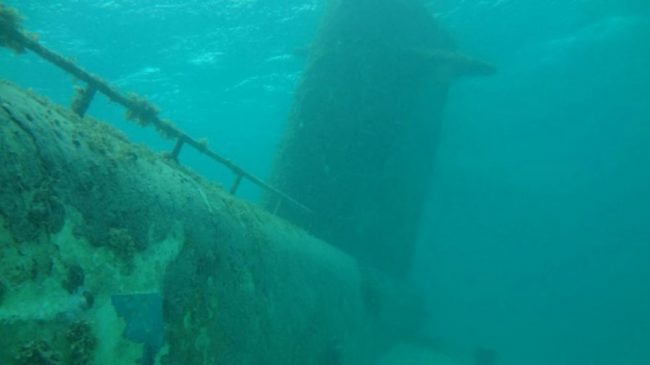 The first ship, K-27, was a Soviet Navy submarine prototype equipped with a new liquid metal reactor. In 1968, the six-year-old sub suffered a reactor accident so serious, nine Soviet sailors received fatal doses of radiation. The submarine was scuttled off the Russian island of Novaya Zemlya in 1982 with its reactor still on board.
The second ship, K-159 (shown above before sinking, on original), was a November-class submarine that served a fairly typical career with the Soviet Northern Fleet before retirement in 1989. In 2003, however, the K-159 sank while in the process of being dismantled, killing nine sailors. The ship still resides where it was lost, again with its reactor on board.
Environmentalists in Norway and Russia are concerned that eventually the reactors on both submarines will break down, releasing huge amounts of radiation.
The effects of these leaks could range from increasing local background radiation to declaring local fish and animals off limits, particularly Barents Sea fishing stocks of cod and haddock, costing local fishermen an estimated $1.5 billion a year.
While Russia’s state nuclear agency, Rosatom, has been tasked with cleaning up the ships, the effort is underfunded, resulting in a race against time (and saltwater corrosion).
1 This Month
23-25 October – on Zoom – World BEYOND War’s annual global conference

To see nuclear-related stories in greater depth and intensity – go to https://nuclearinformation.wordpress.com
-
Archives
- October 2026 (149)
- September 2026 (339)
- August 2026 (330)
- July 2026 (355)
- June 2026 (287)
- May 2026 (306)
- April 2026 (356)
- March 2026 (251)
- February 2026 (267)
- January 2026 (308)
- December 2025 (358)
- November 2025 (359)
-
Categories
- 1
- 1 NUCLEAR ISSUES
- business and costs
- climate change
- culture and arts
- ENERGY
- environment
- health
- history
- indigenous issues
- Legal
- marketing of nuclear
- media
- opposition to nuclear
- PERSONAL STORIES
- politics
- politics international
- Religion and ethics
- safety
- secrets,lies and civil liberties
- spinbuster
- technology
- Uranium
- wastes
- weapons and war
- Women
- 2 WORLD
- ACTION
- AFRICA
- Atrocities
- AUSTRALIA
- Christina's notes
- Christina's themes
- culture and arts
- Events
- Fuk 2022
- Fuk 2023
- Fukushima 2017
- Fukushima 2018
- fukushima 2019
- Fukushima 2020
- Fukushima 2021
- general
- global warming
- Humour (God we need it)
- Nuclear
- RARE EARTHS
- Reference
- resources – print
- Resources -audiovicual
- Weekly Newsletter
- World
- World Nuclear
- YouTube
-
RSS
Entries RSS
Comments RSS

