British MP’s continue to botch in the ever more costly saga of Britain’s “old” nukes and “new” nukes
 Times 27th Nov 2020, The NDA doesn’t really know because, as it told MPs, it “still does not have full understanding of the condition of the 17 sites”. It’s a point it proved with the meltdown of the £3.8 billion Magnox clean-up contract wrongly awarded to the Cavendish Fluor Partnership in 2014. That fiasco saw a High Court judge rule that the losing bidder, Energy Solutions and its partner, Bechtel, should have won the 14-year contract to bring the plants to a state of “care and maintenance”. The upshot? The government terminated the contract at a cost to the taxpayer of £142 million.
And now it’s back in the hands of the NDA, which is telling MPs that even that bit of work will now cost up to £8.7 billion and take another “12 to 15 years”. As the committee notes: “Past experience with the NDA suggests even these estimates will soon be out of date and costs may increase further”.
Isn’t that the story of everything to do with nuclear? True, you’d expect new-build plants to be better managed than Magnox and less
tricky to decommission than the Sellafield complex. The NDA also rejects the committee’s “suggestions that we may not understand the safety of our sites”. And the taxpayer-fleecing cost of the electricity coming from the £22.5 billion Hinkley Point C is meant to cover the clean-up bill.
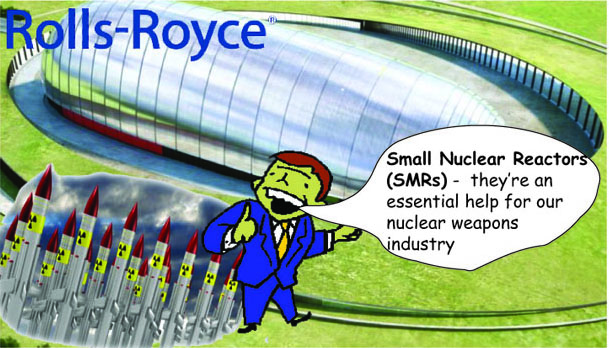 Yet before Boris presses the go button on more nukes, including Rolls-Royce’s modular type, shouldn’t there be a debate about the waste? The government’s big idea is to bribe some local authority into housing a nice toxic dump, prettily dressed up as a “geological disposal facility”. Copeland in Cumbria is the closest to volunteering. But a deal is a long way off and the plan’s been vetoed before by Cumbria county council.
https://www.thetimes.co.uk/edition/business/nuclear-clean-up-bill-needs-scrutiny-h7c3xcz27
Russia claims to have successfully tested an “unstoppable” nuclear missile
Russia tests ‘unstoppable’ nuclear missile after worrying threat to the US
Russia claims to have successfully tested an “unstoppable” nuclear missile, with state media saying it has the ability to hit US cities in minutes. news.com.auAlly Fosterallyjfoster 27 Nov 20,
The Russian military has claimed to have successfully tested an “unstoppable” nuclear missile, with the weapon almost reaching speeds of 10,000km/h.
The hypersonic weapon, known as the Mach 8 Zircon or Tsirkon, has been touted as President Vladimir Putin’s “weapon of choice”, with Russian media even claiming it could destroy prominent US locations within five minutes.
The Russian Ministry of Defence recently performed a test launch of the nuke in the White Sea, with officials claiming to have successfully hit a target located 450km away in the Barents Sea.
In a statement, the Russian Ministry of Defence claimed the missile reached speeds of more than 8 March, or about 9878 km/h.
It reportedly took just over four minutes to reach its target.
Though Russia has continually claimed success in testing and creating these nuclear missiles, the country has also recently been reminded of the dangers such weapons can pose if something goes wrong.
On August 8, 2019, an explosion at a weapons testing range in Nyonoksa killed seven people and injured multiple others.
Intelligence officials quickly came up with multiple theories about the cause of the deadly explosion, with some believing a test of a new nuclear powered missile had gone wrong and others claiming a nuclear reactor blew up.
………Russian officials remained tight lipped about the incident, simply claiming the explosion was the result of a failed test of an “isotope power source for a liquid-fuelled rocket engine”.
The country’s weather agency later confirmed the blast ejected radioactive material into the air.
Reports claimed radiation levels temporarily soared to 20 times above the normal level in Severodvinsk, a city about 30 km from the weapons testing site in Nyonoksa. https://www.news.com.au/technology/innovation/military/russia-tests-unstoppable-nuclear-missile-after-worrying-threat-to-the-us/news-story/6dfc0365ac9fcd29d22c3bb5157455e1
Depressing news for the nuclear lobby in Western Europe
 Western Europe cools on plans for nuclear power https://climatenewsnetwork.net/western-europe-cools-on-plans-for-nuclear-power/, November 25th, 2020, by Paul Brown As more reactors face closure, governments in Europe may prefer renewable energy to replace nuclear power.
LONDON, 25 November, 2020 – News that two more reactors in the United Kingdom are to shut down on safety grounds earlier than planned has capped a depressing month for nuclear power in Europe.
The news came after weeks of unfounded speculation, based on “leaks”, that the British government was about to take a stake in a giant new French-designed nuclear power station planned at Sizewell in Suffolk on the east coast of England as part of a “Green New Deal.” Taxpayers’ backing would have enabled the heavily-indebted French company EDF to finance the project.
In the event Boris Johnson, the prime minister, in his 10-point “green” plan for the UK, boosted a far more speculative alternative scheme from a Rolls-Royce consortium which was helping to pay for research and development into a full-blown proposal to construct 16 small modular reactors (SMRs).
He failed to mention the Sizewell scheme at all, and instead of singing the praises of nuclear power extolled the virtues of offshore wind power, in which the UK is currently the world leader.
Johnson hopes that offshore wind will produce enough electricity to power every home in Britain, leaving little room for a nuclear industry. He has referred to the UK as “becoming the Saudi Arabia of wind power.”
Meanwhile across the English Channel in Belgium the Electrabel company – the Belgian subsidiary of French utility Engie – has cancelled any further planned investment in its seven-strong nuclear reactor fleet because of the government’s intention to phase out nuclear power by 2025.
“The cause of this damage [at Hunterston] is not fully understood, and it is entirely possible that this form of age-related damage may be much more extensive”
Plans will only be re-instated if a Belgian government review fails to find enough alternative electricity supply to replace the reactors’ output. The seven Belgian reactors currently produce half the country’s electricity supply.
These reversals come seven years after British governments promised a nuclear renaissance by encouraging French, Japanese, American and finally Chinese companies to build ten nuclear power stations in the UK. Only one station has been begun, a £22 billion (US$29 bn) joint venture between EDF and Chinese backers.
The French, with a 70% stake and the Chinese with 30%, began work on the twin reactors, to be known as Hinkley Point C, in Somerset in the West of England more than two years ago. The station was due to be completed in 2025, but is behind schedule and has cost overruns.
The two partners wanted to replicate these reactors at the planned Suffolk plant, Sizewell C, but EDF has not found the necessary capital to finance it, hoping that the London government would either take a stake or impose a nuclear tax on British consumers to help pay for it.
The idea was for Hinkley Point C and Sizewell C to replace the 14 smaller reactors that EDF owns in Britain, thus keeping the nuclear industry’s 20% share of the UK’s electricity production. Johnson appears to have dashed these hopes. At best Hinkley Point C will produce 7% of the nation’s needs.
Meanwhile there is a question mark over the future of EDF’s remaining reactor fleet in Britain. Two of the 14, also at the Sizewell site, are French-designed pressurised water reactors opened in 1991, and have plenty of life left in them, but the other 12 are all older British-designed advanced gas-cooled reactors (AGRs) that use graphite blocks to control nuclear reactions.
Premature closure
A serious safety flaw has emerged in this design, involving hundreds of cracks in the graphite, causing doubts over whether the reactors could be turned off quickly in an emergency.
After a long stand-off with the UK’s nuclear safety watchdog, the Office for Nuclear Regulation, EDF decided earlier this year to prematurely close two of the worst affected reactors – both in a station known as Hunterston B in Scotland. Now, for the same reason, two further reactors at Hinkley Point B in Somerset will also close. All four reactors will be defuelled in 2022.
Currently six of these 12 AGR reactors are turned off – out of service for maintenance or safety checks. Two of them, at Dungeness B on the south-east coast of England, have been undergoing repairs since 2018 – this time because of corrosion of vital pipework – although cracks in the graphite blocks are also a safety issue here too.
While EDF remains upbeat about its prospects in developing nuclear power and is keeping its remaining ageing AGR reactors going until they can be replaced, it is hard to see where the company will get the money to build a new generation of reactors or attract government subsidies to do so.
The UK’s decision to back the British company Rolls-Royce to develop SMRs means it is unlikely the government has the money or the political inclination to back the French as well.
Rolls-Royce has been badly hit by the Covid-19 pandemic because a large part of its business relies on the struggling aviation business, while it needs support because it makes mini-reactors to power British nuclear submarines. The proposed SMR research programme will allow nuclear-trained personnel to switch between military and civilian programmes.
Long out of office
The Rolls-Royce SMRs are a long shot from the commercial point of view, since they  are unproven and likely to be wildly expensive compared with renewable energy. However, they have the political advantage of being British, and their development lies so far into the future that the current government will be out of office before anyone knows whether they actually work or are economic.
As far as the current crop of reactors is concerned, it is clear that at least those with graphite cores are nearing the end of their lives. Nuclear power has some way to go before it can expect a renaissance in the UK.
Paul Dorfman is a research fellow at University College London. He told the Climate News Network: “It is  apparent that the graphite cores of Hunterston B, Hinkley B, and possibly all UK AGR reactors have developed and continue to develop significant structural damage to graphite bricks, including keyway cracks in the fuelled section of the reactor.
“It is also clear that the cause of this damage is not fully understood, and it is entirely possible that this form of age-related damage may be much more extensive.
“Given that weight loss in graphite blocks and subsequent graphite cracking occurs in all UK AGRs, what’s happening with Hunterston B has significant implications for the entire UK AGR fleet.
Dr Dorfman concluded: “Given the parlous finances of EDF, who are already struggling with their own reactor up-grade bills in France, it is entirely likely that UK nuclear generation will be reduced to just Sizewell B, with electricity generation relying almost entirely on renewables by the time Hinkley C comes online, very late and over-cost as usual.” – Climate News Network
The effect on Europe of the UN Treaty on the Prohibition of Nuclear Weapons
 Nuclear prohibition: Changing Europe’s calculations https://www.europeanleadershipnetwork.org/commentary/nuclear-prohibition-changing-europes-calculations/ Beatrice Fihn |Executive Director of the International Campaign to Abolish Nuclear Weapons (ICAN),Daniel Högsta |Campaign Coordinator of the International Campaign to Abolish Nuclear Weapons (ICAN), 25 Nov 20,
On 22 January 2021, nuclear weapons will be placed in the same category as chemical and biological weapons – the other weapons of mass destruction – illegal under international law. On that date, the Treaty on the Prohibition of Nuclear Weapons (TPNW) will enter into force and will change the legal and normative landscape around nuclear weapons. This has significant implications for any European governments complicit in the practice of deployment and potential use of nuclear weapons of mass destruction.
A historic milestone for nuclear disarmament
Continue reading
Germany hosts France, Britain for talks on Iran nuclear deal
Germany hosts France, Britain for talks on Iran nuclear deal, DW, 25 Nov 20,
German Foreign Minister Heiko Mass met his counterparts Dominic Raab and Jean-Yves Le Drian in Berlin for talks on the Iran nuclear deal. The trio hopes for a change in US policy once Joe Biden is sworn in.
German Foreign Minister Heiko Maas held talks with his French and British counterparts in Berlin on Monday, with the partners urging Iran to stop breaching a nuclear deal it signed in 2015.
“From our view, Iran is systematically violating the agreement,” a spokeswoman with the German Foreign Ministry said. “Together with our European partners, we urge Iran to stop these violations and return to fulfilling all its nuclear obligations.”
Maas met with Britain’s Dominic Raab and France’s top diplomat Jean-Yves le Drian ahead of an expected change of policy towards Iran when US President-elect Joe Biden is sworn in as president in January.
Maas’s spokeswoman said she “confident” that a “constructive” US approach would help rein in the Iranian government, German news agency DPA reported.
The agreement, which world powers reached with Iran, sought to limit Tehran’s nuclear program to prevent it from developing nuclear weapons in return for the easing of economic sanctions…….
Changing US policy
Biden, who takes office on January 20, has said he would re-join the accord if Tehran first resumed strict compliance.
He wants to work with allies “to strengthen and extend it, while more effectively pushing back against Iran’s other destabilizing activities.”…..https://www.dw.com/en/germany-hosts-france-britain-for-talks-on-iran-nuclear-deal/a-55699826
European Commission approves Romania’s purchase of nuclear reactors
 EU blesses Romania’s $8bn US nuclear deal https://www.globalconstructionreview.com/news/eu-blesses-romanias-8bn-us-nuclear-deal/ 25 November 2020 | By GCR Staff EU blesses Romania’s $8bn US nuclear deal https://www.globalconstructionreview.com/news/eu-blesses-romanias-8bn-us-nuclear-deal/ 25 November 2020 | By GCR Staff
The European Commission has approved an agreement between the governments of the US and Romania to add two reactors to the Cernavoda nuclear power plant, ending longstanding plans to enlist Chinese aid in the project.Ludovic Orban, the prime minister of Romania, announced the endorsement on Friday. “We are delighted that we received this agreement from the Directorate of Energy, which will allow us to sign the agreement in the final form,” he said. Romania and the US signed an intergovernmental agreement in October for an $8bn programme of works to refurbish reactor 1 and build reactors 3 and 4 at the Black Sea plant (see further reading). The two also agreed a memorandum of understanding whereby America’s Export-Import Bank would provide $7bn of loans for the development of nuclear and related projects. In 2013 Romania and China signed two agreements that assigned China General Nuclear (CGN) a leading role in building and financing the reactors. This was followed by a deal in May 2019 between Romania’s state nuclear company Nuclearelectrica and CGN to build two 700MW reactors. Romania changed course at the start of this year as the Trump administration intensified its criticisms of China. The project will be coordinated by Aecom and will involve a consortium of companies from the US, Romania, Canada, and France to install two Canadian Candu 6 reactors. Romania and France have signed a declaration of intent on civil nuclear cooperation, and Orano, a state-owned French engineer, has also agreed to work with Nuclearelectrica on the project. |
|
Orano, formerly Areva, targeted by judicial investigation for corruption.

Orano, formerly Areva, targeted by judicial investigation for corruption. 25 Nov 20, A new case shakes the French nuclear group Orano, formerly known as Areva. An
investigation was opened by the Paris prosecutor’s office for facts “of
corruption of a foreign public official”, implicating in particular one of
the providers of Orano, the company Eurotradia International. “We had not
noticed anything abnormal and we are now at the disposal of justice,” said
the spokesperson for Orano, who claims to have terminated his contracts
with Eurotradia.
Concern in France over lack of expert inspection of nuclear sites
Montel News 24th Nov 2020, The lack of inspections at nuclear sites by safety experts, due to the
coronavirus pandemic, raises fears for the safety of the facilities, union
officials in the energy sector told Montel.
The Nuclear Safety Authority
(ASN) canceled all its physical inspections of nuclear power plants, except
the inspections considered essential, during the first containment in the
spring. Since then, some inspections have resumed in the field but many are
still carried out remotely.
This reduction in on-site checks is
exacerbating a situation where the workforce is already limited and
communication with workers is lacking, say some union officials.
Precious Suffolk Coast bird habitat to be destroyed by Sizewell C nuclear ptoject
 Bird Guides 22nd Nov 2020, Despite the UK Government this week announcing “greater protections for England’s iconic landscapes”, concerns are increasing over plans for a new twin nuclear reactor at Sizewell, on the Suffolk coast, with The Wildlife Trusts expressing deep worry. The Sizewell C project would cut through the Suffolk Coast and Heaths Area of Outstanding Natural Beauty and its associated important wildlife designations.
ahead. Christine Luxton, Chief Executive of Suffolk Wildlife Trust, commented: “Sizewell C would destroy a vast swathe of the Suffolk coastline in one of the most beautiful natural parts of the UK.
https://www.birdguides.com/news/the-wildlife-trusts-raise-concerns-over-sizewell-c/
UK could save £660m through to 2030 by scrapping Sizewell nuclear plan, switcing to flexible eneegy technologies
 Edie 23rd Nov 2020, If the UK government were to back renewable generation and flexible energy technologies like battery storage instead of a new nuclear plant, some £660m could be saved through to 2030, a new analysis has concluded. Edie 23rd Nov 2020, If the UK government were to back renewable generation and flexible energy technologies like battery storage instead of a new nuclear plant, some £660m could be saved through to 2030, a new analysis has concluded.The publication of the paper, by Wärtsilä Energy, comes shortly after the UK Government confirmed plans to back small nuclear projects with more than £525m of funding over the next year. A proportion is expected to go to Rolls-Royce. In the same week, EDF confirmed plans to move the Hinkley B nuclear plant into decommissioning by the end of 2022.
By Wärtsilä Energy’s calculations, the UK could invest in adding 7GW of flexible energy capacity through utility-scale battery storage, advanced flexible gas plants and technologies like vehicle-to-grid (V2G) by 2030, if it scrapped plans for Sizewell C nuclear power station. This would enable the UK to reach 62% clean power in the energy mix, mitigating two million tonnes of CO2e emissions annually from 2030.
…..green groups including Greenpeace have argued that the risk of radioactive waste releases and weapons proliferation should not be ignored and that the Government would be better off investing in green hydrogen and geothermal power.
|
UK government losing enthusiasm for new nuclear power stations, as grim financial realities set in
|
The government’s latest thinking on how to replace its aging fleet of nuclear plants marks a dramatic shift from 2013, when David Cameron agreed to funding for new reactors at the Hinkley Point site with support from China. Since then, relations with China have deteriorated, electricity demand slumped and renewables such as wind and solar farms became much cheaper than new atomic plants……
|
|
Greenpeace launches legal appeal against French nuclear safety authority allowing extension of lifetime of nuclear reactors
  GREENPEACE CHALLENGES FRENCH NUCLEAR AUTHORITYhttps://delano.lu/d/detail/news/greenpeace-challenges-french-nuclear-authority/212454, 18.11.2020 • CORDULA SCHNUER Environmental group Greenpeace has lodged an appeal with the French Council of State, claiming the country’s nuclear safety authority acted illegally by failing to assess environmental risks linked to extending the lifespan of nuclear power plants. GREENPEACE CHALLENGES FRENCH NUCLEAR AUTHORITYhttps://delano.lu/d/detail/news/greenpeace-challenges-french-nuclear-authority/212454, 18.11.2020 • CORDULA SCHNUER Environmental group Greenpeace has lodged an appeal with the French Council of State, claiming the country’s nuclear safety authority acted illegally by failing to assess environmental risks linked to extending the lifespan of nuclear power plants.The nuclear safety authority (ASN) is in the process of evaluating whether power plants can continue operating past the 40-year lifespan initially programmed for their reactors. “French nuclear power plants currently in operation were designed to operate for 40 years,” Greenpeace said in a statement on Wednesday. “Beyond that, nuclear reactors enter an ageing phase not foreseen by their engineers and unknown to the operator EDF, with increased risks for the environment and the population.” The Council of State acts as the supreme court for administrative justice and Greenpeace hopes it will take into account a decision by the Court of Justice of the European Union against Belgium. The country in 2015 had decided to prolong the lifespan of reactors 1 and 2 at the Doel power plant but had to overturn the decision after the EU court in July 2019 faulted the operators for not carrying out an environmental risk assessment. French energy provider EDF has already begun works to strengthen safety and security at the power plant, it says. But without an environmental risk assessment, Greenpeace said it could not be guaranteed that the works are sufficient. The activists have long campaigned for France to exit nuclear energy. The legal challenge, if successful, could also benefit Luxembourg. The reactors of the Cattenom plant–just across the border–went into service between 1986 and 1991, meaning they should be shut off between 2026 and 2031. But operator EDF has launched a procedure to extend Cattenom’s lifespan until at least 2035. Luxembourg opposes delaying the power plant’s shutting down, even though it procures around 10% of the electricity in its grid from nuclear power and is an investor in EDF through its national pension fund. |
|
Boris Johnson’s UK government adding nuclear power to its long list of failures
|
Why we should oppose nuclear power, https://morningstaronline.co.uk/article/dr-ian-fairlie-feature 22 Nov 20, Boris Johnson just recites ad nauseam the common myth that the renewables will be unable to supply all our electricity needs, writes Dr Ian Fairlie
Hinckley Point C. The carbon footprint from nuclear’s fuel chain — including uranium mining, milling, U-235 enrichment, fuel fabrication, irradiation, radioactive-waste conditioning, storage, packaging and final disposal — is astronomical
ON WEDNESDAY, Boris Johnson announced £525 million support for new nuclear power. In the coming weeks, he is expected to approve a major new nuclear power station at Sizewell in Suffolk. This government seems to have an unwavering commitment to making the wrong calls, and more support for nuclear power is now the next item on the long list of its failures. There are many options available to decarbonise the grid and meet Britain’s energy needs, but the Prime Minister has chosen to stick with the most expensive option: nuclear. He has ignored advice to the contrary from many advisors, including the Oxford energy expert Dieter Helm, the World Bank, the Office for Budget Responsibility, and the National Audit Office. He has also ignored the fact that several large multinationals including Hitachi, Westinghouse, Toshiba and Siemens have abandoned nuclear on the grounds that it is overly expensive and uncompetitive compared with renewables such as wind, solar, biofuels, and hydro power. The reality of the matter is that we are in the midst of a technological revolution that encompasses new forms of renewable energy, new ways of managing the Grid, new methods of energy storage and new ways of energy conservation. As a result, the cost of the renewables just keeps on falling, while nuclear becomes inexorably more expensive. To give just one example: offshore wind is already getting built at about £40 per megawatt hour (MWh), while the Hinkley C plant, were it ever completed, would deliver electricity at about £93/MWh. The Prime Minister often repeats the myth that nuclear will curb carbon emissions. But the carbon footprint from nuclear’s fuel chain — including uranium mining, milling, U-235 enrichment, fuel fabrication, irradiation, radioactive-waste conditioning, storage, packaging and final disposal — is astronomical. A recent study by Mark Jacobson, professor of civil environmental engineering at Stanford, estimates nuclear’s carbon footprint to be 10 to 18 times greater than those from renewable-energy technologies. Boris Johnson would do well to heed the views of the public. Some 46 per cent of participants in the UK Climate Assembly, a group of British citizens convened by six Parliamentary Select Committees, strongly disagreed that nuclear could play a role in reaching net zero carbon emissions by 2050, with a further 18 per cent undecided. Among the reasons for their scepticism were “cost, safety, and issues around waste storage and decommissioning.” Johnson recites the common myth that the renewables will be unable to supply all our electricity needs. But more than 100 academic studies indicate that this view is out-of-date and incorrect: the renewables can indeed supply all our electricity needs. There is simply no need for nuclear. Beyond this, nuclear power cannot be separated from the problem of nuclear proliferation, as fissile materials for nuclear weapons originate from civil nuclear reactors and nuclear facilities. Countries like Pakistan, India and Israel obtained their nuclear weapons from civilian reactors. This is merely one problem, albeit a serious one. Nuclear is also an extremely unsustainable energy source. This is partly due to uranium mining which creates mine and mill tailings resulting in pollution and despoilation problems. And although nuclear power has existed for about 70 years, not a single licensed facility exists to deal with these radioactive wastes which will remain dangerous for millennia. The one such facility currently under construction, in Finland, will cost more than the revenue generated by the nuclear fuel it will store. Apart from the problems of proliferation and unsustainability, we must never forget the serious nuclear accidents at Windscale (now Sellafield) in 1957, Kyshtym in the former USSR also in 1957, Three Mile Island (US) in 1979, Chernobyl (USSR) in 1986, and Fukushima (Japan) in 2011. Renewable energy sources, especially offshore wind, are cleaner, safer, more sustainable and much cheaper than nuclear. We need urgently to decarbonise Britain’s economy and create millions of well-paid, unionised green jobs while doing so. But this can only be done through mass investment in renewables, and keeping fossil fuels in the ground. More nuclear means dither, delay, and another potential cause of catastrophe. Dr Ian Fairlie is vice-president of CND. |
|
Inaccuracies in Boris Johnson’s document supporting nuclear power development
Dave Lowry’s Blog 19th Nov 2020, Prime Minister Boris Johnson is not a details man; and he often plays fast-and-loose with the truth. So it should not really come as a surprise that the document he issued in support of his ‘Ten Point Plan for a GreenIndustrial Revolution’ contains inaccuracies. I am sure he did not write it himself, so specialist officials who prepared it, have been prepared to write in his happy-go-lucky casual relation with the truth in the text they crafted.
The section covering Point 3: Delivering New and Advanced Nuclear Power, is a good exemplar of a perpetuated inaccuracy by nuclear
cheerleaders, who rewrite history for modern convenience. In the second paragraph of this section, its states: “The UK was home to the world’s first full-scale civil nuclear power station more than sixty years ago…”
The nuclear plants in question are not named, but sixty years ago there were only four nuclear power reactor plants operating in the UK. Two were experimental reactors in Scotland: the Dounreay Materials Test Reactor (DMTR) that went critical in May 1958; and the Dounreay Fast Reactor (DFR), which achieved criticality on 14 November 1959. The only other two reactors operating were the Chapel Cross Magnox production reactor in Annan, Dumfries and Galloway, in 1959, which did generate electricity, but primarily was used to produce weapons-useable plutonium, and tritium from inserted lithium, to enhance hydrogen nuclear warhead explosions
http://drdavidlowry.blogspot.com/2020/11/broris-johnson-plays-truth-or-dare-with.html
UK government’s plans for Sizewell and Wylfa nuclear stations are wavering, with doubts about costs
 Carbon Brief 18th Nov 2020, Media reaction: Boris Johnson’s ‘10-point’ net-zero plan for climatechange. In the lead up to the plan, expectations were running high for a major announcement on nuclear power, after weeks of stories about a “green light” for the Sizewell C plant and Rolls-Royce planning to build up to 16 mini-nuclear plants. In an article published at the start of November, the i newspaper said “Johnson…is expected to commit to building a new nuclear power station at Sizewell in Suffolk”. Carbon Brief 18th Nov 2020, Media reaction: Boris Johnson’s ‘10-point’ net-zero plan for climatechange. In the lead up to the plan, expectations were running high for a major announcement on nuclear power, after weeks of stories about a “green light” for the Sizewell C plant and Rolls-Royce planning to build up to 16 mini-nuclear plants. In an article published at the start of November, the i newspaper said “Johnson…is expected to commit to building a new nuclear power station at Sizewell in Suffolk”.**************
The Daily Mail’s Ruth Sunderland said new nuclear will “have to be” part of the UK’s energy mix and suggested that Johnson was posed to give approval to the new Sizewell facility, despite opposition “by protesters who say it threatens ecology and wildlife”. The reality was less specific. The plan included a fund of £525m “to help develop large and smaller-scale nuclear plants, and research and develop new advanced modular reactors”, but did not mention a specific project.
**************
A government consultation last year concluded that the UK “will…require” new nuclear power to meet its
net-zero emissions target. An analysis by environment correspondent Fiona Harvey in the Guardian noted that with proposals for new nuclear in the UK from Sizewell to Wylfa wavering “if the government wishes to expand nuclear power, it will have to prove that it can be economical”.https://www.carbonbrief.org/media-reaction-boris-johnsons-10-point-net-zero-plan-for-climate-change |
-
Archives
- October 2026 (129)
- September 2026 (339)
- August 2026 (330)
- July 2026 (355)
- June 2026 (287)
- May 2026 (306)
- April 2026 (356)
- March 2026 (251)
- February 2026 (267)
- January 2026 (308)
- December 2025 (358)
- November 2025 (359)
-
Categories
- 1
- 1 NUCLEAR ISSUES
- business and costs
- climate change
- culture and arts
- ENERGY
- environment
- health
- history
- indigenous issues
- Legal
- marketing of nuclear
- media
- opposition to nuclear
- PERSONAL STORIES
- politics
- politics international
- Religion and ethics
- safety
- secrets,lies and civil liberties
- spinbuster
- technology
- Uranium
- wastes
- weapons and war
- Women
- 2 WORLD
- ACTION
- AFRICA
- Atrocities
- AUSTRALIA
- Christina's notes
- Christina's themes
- culture and arts
- Events
- Fuk 2022
- Fuk 2023
- Fukushima 2017
- Fukushima 2018
- fukushima 2019
- Fukushima 2020
- Fukushima 2021
- general
- global warming
- Humour (God we need it)
- Nuclear
- RARE EARTHS
- Reference
- resources – print
- Resources -audiovicual
- Weekly Newsletter
- World
- World Nuclear
- YouTube
-
RSS
Entries RSS
Comments RSS

