Nuclear developers keenly await UK government support for new reactors large and small
Nuclear Developers Dust Off Plans for More Reactors in U.K. Bloomberg,By Rachel Morison, 11 December 2020,
Industry sees shift to allow more reactors to be built
Government is due to release a paper on financing projects. Nuclear power developers are refreshing plans for new reactors in the U.K. after speculation that the government could be willing to support building more plants than the industry had been expecting.
A little-noticed paper issued by the Treasury on Nov. 25 said it is important that the U.K. can “maintain options by pursuing additional large-scale nuclear projects,” assuming they can be done in a cost-effective way. That wording, with a notable plural on the word “projects,” went beyond a recommendation made two years ago that Britain should build only one more major atomic facility.
After years of waiting for a signal, the document was read by nuclear industry executives as evidence that energy policy could be shifting their way. They anticipate the government may soon look more favorably on nuclear after more than a decade of tilting toward renewables. Electricite de France SA, Hitachi Ltd. and China General Nuclear Power Corp. are looking at ways to revive designs that were shelved in the past few years.
“Large-scale projects have a bright future in Britain if the government backs a financing model to cut the cost of capital,” said Tom Greatrex, chief executive officer of the Nuclear Industry Association. “There are a number of viable sites.
For its part, government insists its policy on nuclear hasn’t changed — even with all the debate about exiting the European Union. It’s allowing EDF to seek planning permission for the Sizewell plant in east England, but ministers have been quiet about what, if any, further plants might win favor.………
China’s Bid
One of the biggest question marks is whether China will be able to move ahead with a long-planned reactor in the U.K. despite a political chill toward investment from that nation. Under pressure from the U.S., the government has clamped down on the spread of 5G mobile technology from Huawei Technologies Ltd.
China General Nuclear’s Chief Executive Officer Rob Davies said the company is willing to self-finance the Bradwell B project in southeast England. His remark suggests the company would take a market power price for electricity sold from the plant, a break from EDF’s move at Hinkley Point to secure a long-term contract before moving ahead.
The project would be a Chinese-designed reactor, called HPR1000. It would showcase the nation’s technical skill in Europe. Davies said CGN is committed to nuclear development in the U.K. regardless of the political winds.
We plan to maintain our support for Hinkley Point C, to help Sizewell C to reach a Final Investment Decision, to complete the general design assessment for the HPR1000 and to continue with Bradwell. That’s our plan and that’s our offer to the U.K. And we’ll self finance,” he said at an industry event this month.Hitachi in Wales
The CEO of Hitachi Ltd.’s Horizon Nuclear Power Ltd. subsidiary said he’s lining up a project for the Wylfa site in Wales. His remark is an indication that the project may still be revived even after Hitachi exited it in September after failing to agree on financing.EDF’s Work in Moorside
In June, EDF revamped plans for the Moorside site in Cumbria that Toshiba Corp. pulled out of in 2018. The proposed Clean Energy Hub includes a large nuclear plant, the same design as Hinkley Point and Sizewell, small modular reactors and advanced modular reactors…….
Not all of these projects will be built. In the U.K., EDF is building the Hinkley Point C nuclear plant in Somerset and next in line is the Sizewell site in Essex northeast of London. The government is keen on small modular reactors that are quicker [?} to build and cheaper [?]. If it gets enough of those, there may not be a need for any more large scale stations. That’s what policy makers will hope to avoid tying themselves into. ……https://www.bloomberg.com/news/articles/2020-12-11/nuclear-developers-dust-off-plans-to-build-more-reactors-in-u-k
Shutdown of 3 uranium mines in midst of dispute could lead to ecological disaster in Ukraine
World Socialist Web 10th Dec 2020, Three uranium mines have been shut down in the Kirovohrad region of central Ukraine over disputed payments between the state nuclear energy company Energoatom and the state-owned enterprise operating the mine, Eastern Mining and Processing. As a result of the alleged nonpayment, approximately 5,000 miners have been placed on unpaid leave. They are still owed approximately $5 million in months of back pay.
The shuttering of the mines could also lead to an ecological catastrophe if the mines lose power and water pumps fail to operate, creating a toxic mixture of radioactive uranium-contaminated groundwater that could spread throughout the vast river systems of central Ukraine.
Sizewell C nuclear power station, thrown into doubt as China ponders pulling out of £20bn project
Sizewell C nuclear power station, thrown into doubt as China ponders pulling out of £20bn project, This Is Money, By FRANCESCA WASHTELL FOR THE DAILY MAIL 12 December 2020
China is considering pulling out of the Sizewell C nuclear plant in a move that throws the future of the project into doubt.
The country’s nuclear agency, China General Nuclear Power (CGN), is planning to duck out of the next phase of the £20billion project, claim industry sources.
CGN holds a 20 per cent stake in the Suffolk plant and has spent years developing it with French energy giant EDF.
The agency has not revealed how much it has invested in the Sizewell C development phase, though it is estimated to be hundreds of millions.
Its departure at the construction stage could leave a huge hole in the project’s funding – and could deal another body blow to the Government’s energy strategy.
The reports come as tensions between London and Beijing have flared since the Government’s decision to exclude Huawei’s equipment being used in new 5G networks.
The recent clampdown on foreign investment and takeover rules have also added to the hostility.
An industry source said: ‘If the UK were to lose Chinese know-how in nuclear it would be a shame given their expertise in building and operating the reactors that would be used at Sizewell C.’………. https://www.thisismoney.co.uk/money/markets/article-9044795/Sizewell-C-nuclear-plant-doubt-China-ponders-pulling-out.html
Thieves steal equipment from Russia’s nuclear war ‘doomsday’ plane.
|
Thieves target Russia’s nuclear war ‘doomsday’ plane. https://www.theguardian.com/world/2020/dec/08/thieves-target-russia-nuclear-war-doomsday-plane
Radio equipment stolen from Ilyushin-80 aircraft designed to protect Putin and top officials, Andrew Roth in Moscow, Thieves have targeted a Russian “doomsday” plane, the military aircraft that would be used by top officials, including Vladimir Putin, in case of a nuclear war.The robbery of the Ilyushin-80, a mobile command post specially designed to keep officials alive and in command of the military during a nuclear conflict, took place at an airfield in southern Russia, state media reported. The thieves managed to open the highly classified aircraft’s cargo hatch and make off with 39 pieces of radio equipment. They have not been caught. Interior ministry officials in the city of Taganrog confirmed that a plane at Taganrog Aviation Scientific and Technical Complex was robbed, although they did not specify which one. Ren-TV, a Russian television station, reported that police had found shoe and fingerprints aboard the aircraft. Russia has just four Ilyushin-80 planes, modified Il-86s that are specially equipped to protect those aboard in the event of a nuclear war. The plane does not have any passenger windows, to prevent passengers from being blinded by atomic explosions. The planes also carry specialised communications equipment to maintain contact with the country’s armed forces, including missile forces capable of launching nuclear strikes. A miles-long retractable antenna dragged from the rear of the aircraft can maintain communications with ballistic-missile submarines. In the event of a conflict, it is expected that Putin and other political and military officials would board the planes and command the country’s defences while remaining airborne, possibly for several days (with refuelling). Some of the details of the Ilyushin-80 are kept secret by Russia. It is not yet clear how sensitive the radio equipment that was stolen may be. The planes have been in service for 15 years and are due to be replaced by an aircraft with greater range – the Il-96-400M. The new planes, designed to withstand electromagnetic pulses released by nuclear explosions, and include better shielding have updated electronics and communications systems. The US maintains four Boeing E-4 Advanced Airborne Command Posts, modified Boeing 747-200s that would be carry the US president and other top officials in case of a nuclear war. |
|
|
Significant problems for UK’s Trident nuclear deterrent ,if U.S. Congress refuses to fund a next-generation warhead.
   Guardian 8th Dec 2020, Britain’s most senior defence official admitted there would be “very significant implications” for the future of the Trident nuclear deterrent if Democrats in the US Congress refused to fund a next-generation warhead. Sir Stephen Lovegrove, permanent secretary at the Ministry of Defence, saidthat the UK was monitoring the US standoff closely but could not say what impact a refusal to start work on the new W93 warhead would have – or how many billions it would cost. Guardian 8th Dec 2020, Britain’s most senior defence official admitted there would be “very significant implications” for the future of the Trident nuclear deterrent if Democrats in the US Congress refused to fund a next-generation warhead. Sir Stephen Lovegrove, permanent secretary at the Ministry of Defence, saidthat the UK was monitoring the US standoff closely but could not say what impact a refusal to start work on the new W93 warhead would have – or how many billions it would cost.British politicians and officials have, until now, had little to say about the long-running US row over the W93, crudely estimated to be twice as explosive as the ageing Trident warhead now usedby the UK. Prior to the US presidential election, Democrats in the House ofRepresentatives had refused to fund a $53m (£40m) development programme for the first year of the W93 despite lobbying from both the White House and the UK.
|
Four organisations join in legal action aimed at stopping the Flamanville nuclear power project
  EPR DE FLAMANVILLE: FOUR ORGANIZATIONS SEEK JUSTICE TO SUSPEND ITS PARTIAL START-UP, TRANSPORT OF FUEL EPR DE FLAMANVILLE: FOUR ORGANIZATIONS SEEK JUSTICE TO SUSPEND ITS PARTIAL START-UP, TRANSPORT OF FUELAND RADIOACTIVE TESTS, http://crilan.fr/epr-de-flamanville-quatre-organisations-saisissent-la-justice-pour-suspendre-son-demarrage-partiel-le-transport-de-combustible-et-les-essais-radioactifs/ “Sortir du nuclear” Network, Greenpeace France, CRILAN, Stop EPR Ni at Penly Ni Ailleurs For the past two months, EDF has been authorized to deliver nuclear fuel to the Flamanville site and to conduct tests with radioactive gases on the facilities, although the state of the site absolutely does not justify it. On October 26, the first transport of enriched uranium was carried out from Romans-sur-Isère to Flamanville. Pending the judgment of the appeal, a summary suspension has also been introduced today to prevent any new deliveries and to minimize contamination of facilities that may never come into service.
The numerous anomalies and security flaws affecting the EPR site make partial commissioning unjustifiable. Greenpeace France and Mediapart revealed on Sunday December 6 that thousands of pages of confidential documents relating to the site’s security are in circulation outside EDF and its subcontractors. The partial commissioning of the EPR poses unnecessary risks to workers, the public and the environment. Moreover, EDF’s request for partial commissioning of the EPR dates from 2015. ASN had a maximum of two years to decide on this request, which it did not do. In this area, failure to reply from ASN equates to rejection and obliges EDF to submit a new request. This was not done: this is yet another demonstration of ASN’s lax attitude towards EDF. Finally, the environmental impact of this partial commissioning has not been examined. However, European Union law requires, when a project has been the subject of an impact study when a first authorization is issued, that the question of its updating be asked for each of the authorizations issued subsequently. . Taken together, the setbacks of the EPR demonstrate EDF’s industrial inability to carry out this project. At a time when the French government is considering the construction of new EPRs, the proof has been made that this option would be a dangerous and costly impasse. If Emmanuel Macron, who is scheduled to visit the Framatome plant in Le Creusot tomorrow, says he needs nuclear power, the planet does not need it. |
|
Botches and crisis in France’s nuclear energy system
|
Sueddeutsche Zeitung 7th Dec 2020, Group therapy with President. In the industrial forge in Le Creusot, components for nuclear power stations were tampered with. Now the French President wants to give the nuclear industry new impetus. Le Creusot, important components for France’s nuclear power plants and nuclear weapon systems are manufactured. In a country that gets 70 percent of its electricity from nuclear fission and believes in its status as a nuclear power, Le Creusot can see itself as a critical infrastructure. Emmanuel Macron is going there this Tuesday.
**************
The critical branch of the nuclear industry is itself in a critical condition after costly breakdowns and scandals. So the President wants to give encouragement to the industry that, after the Second World War, contributed more than any other to theFrench self-image.
**************
Macron will assure the top managers of the energy company EDF, the power plant builder Orano and the military shipyard Naval
Group, who have gathered in Le Creusot, that they are still “a trump card”, as it is called in Macron’s environment. And: the man who rules France’s nuclear button will announce the construction of a new nuclear submarine. **************
Nevertheless, French nuclear power is in crisis. A few days ago, the network operator RTE warned that electricity would be scarce in winter: Many of the 56 reactors in the country, which once knew an abundance of nuclear power, urgently need maintenance and are therefore shut down. The shutdown of the breakdown-prone power plant in Fessenheim, Alsace, in the summer, which was also carried out under pressure from Germany, is less significant. The shortage is exacerbated by the abandonment of coal-fired
electricity in recent years and the slow expansion of renewable energies. Macron wants to drive that forward. **************
At the same time, the life of the old nuclear power plant is to be extended – and up to six new, more powerful
reactors are likely to be built. Even if the prototype of these reactors, which is currently being built in Normandy, costs more than twelve billion euros instead of the originally estimated 3.5 billion euros. The botch in Le Creusot is also to blame for the rise in costs.https://www.sueddeutsche.de/wirtschaft/atomkraft-macron-frankreich-1.5140488 |
European Commission excludes nuclear power from the EU’s proposed green finance taxonomy,
  Energy Transition 8th Dec 2020, As we approach the end of a tumultuous 2020, with the UK finally to leave the European Union on 31 December after its transition period expires, the EU – primarily the Commission – itself has continued to refine the parameters of its sustainable energy strategy, which has been constructedvery much in the face of the pressures of the unprecedented global pandemic. Energy Transition 8th Dec 2020, As we approach the end of a tumultuous 2020, with the UK finally to leave the European Union on 31 December after its transition period expires, the EU – primarily the Commission – itself has continued to refine the parameters of its sustainable energy strategy, which has been constructedvery much in the face of the pressures of the unprecedented global pandemic.David Lowry has the details. One big issue has been whether nuclear power should have any role, and if so, what? This debate has had a long gestation period. For example, the green taxonomy, which some see as the most sensitive part of a European Commission plan on sustainable finance – which aims at shifting financial flows towards the decarbonisation of the economy – were presented in May 2018 by then Commission Vice-President Valdis Dombrovskis, who underlined that financing the energy transition could not be financed with public money alone.
Then, on 28 March 2019, the European Parliament voted on the proposed classification for sustainable assets, which would have excluded nuclear power from receiving a green stamp of approval on financial markets. The text voted in Parliament also excludes fossil fuels and gas infrastructure from the EU’s proposed green finance taxonomy, which aims to divert investments away from polluting industries into clean technologies.
|
Russian Ambassador to U.S. Sees Hope for Nuclear Arms Treaty Extension
He said several times during the forum that the Kremlin has been pushing the White House on an extension of its terms but has not received a formal answer.
The whole world depends on the United States-Russia relationship.”
On START, he added, “we need time to work out new security agreements” that cover a range of issues from missile defense, intermediate-range missiles, hypersonics and potential space weapons. For this reason, Russia has offered to extend the treaty’s term for up to five years “without pre-conditions.”
The United States wants China to be part of any new START negotiations, but Antonov said Beijing is “not happy with such an invitation.” The ambassador said Moscow wants the United Kingdom and France, both nuclear powers and NATO members, to be involved if the talks are broadened……. https://news.usni.org/2020/12/07/russian-ambassador-to-u-s-sees-hope-for-nuclear-arms-treaty-extension
France and European Union have not yet agreed on nuclear reform
France yet to agree with EU over nuclear reform: official, By Gwénaëlle Barzic-PARIS (Reuters) 7 Dec 20, – France and the European Union are yet to reach a firm agreement over Paris’s plans for a reform of its nuclear industry, an Elysee presidential palace official said on Monday, amid talks that will entail a reorganisation of power group EDF.
The talks between France and the European Commission include the ARENH price mechanism under which competitors can get access to nuclear energy produced by EDF. Because EDF is a state-owned utility, the EU has a say on its reform on competition grounds.
The looming reform, which would see EDF’s nuclear business separated from others such as renewable energy, has already raised hackles among labour unions, fearful that a split will have consequences for jobs.
“There is not yet an agreement with the Commission on some of the key parametres,” an official with the Elysee presidential palace said, speaking ahead of President Emmanuel Macron’s visit to a nuclear equipment factory run by a EDF subsidiary Framatome on Tuesday.
The official said it was too soon to say when the new legislation on the nuclear sector could emerge.
France is due to cut its reliance on nuclear energy from 75% to 50% by 2035, but must also decide by 2023 whether to commission next generation EPR reactors.
The government will be seeking more information from EDF by the middle of next year about the cost, timeframe and feasibility of new projects, the Elysee official said.
Britain’s nuclear industry is greatly threatened by climate change
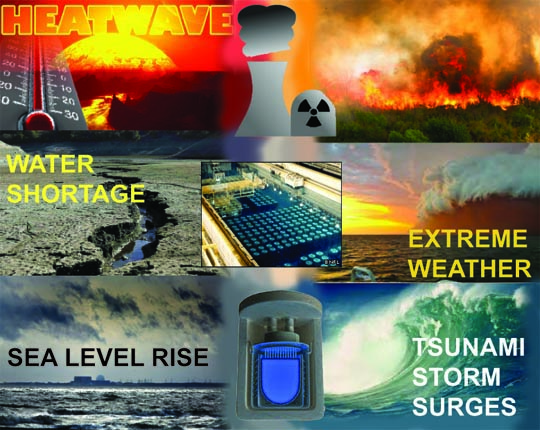
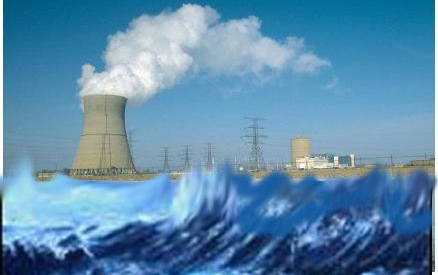 The next ‘Great Tide’, Exposed to rising tides and storm surges, Britain’s nuclear plants stand in harm’s way, Beyond Nuclear International, By Andrew Blowers, 4 Dec 20,
“……………….Apart from Hinkley Point C, which will probably struggle on through a combination of political inertia and a nuclear ideology increasingly remote from economic reality, there remain two projects – Sizewell C and Bradwell B – still in the frame, although precariously so. For both sites, climate change may prove the showstopper. These coastal, low-lying sites are highly vulnerable to the impacts of climate change, including sea level rise, flooding, storm surges, and coastal processes.
This was recognised as an issue in the rather equivocal statement that accompanied designation of the sites in 2011. Referring to Bradwell (similarly to Sizewell), it was considered ‘reasonable to conclude that any likely power station development within the site could potentially be protected against flood risk throughout its lifetime, including the potential effects of climate change, storm surge and tsunami, taking into account possible countermeasures’. …..
About a quarter of the world’s nuclear power stations are on coasts or estuaries. The sites on the east coast and Severn Estuary are especially vulnerable to flooding, tidal surges, and storms. Potential impacts include loss of cooling and problems of access and emergency response in the event of a major incident and inundation of the plant, including spent fuel storage facilities.
In areas like the east coast of England, natural protection from saltmarshes, mudflats, shingle beaches, sand dunes and sea cliffs has been rapidly declining. Recent projections indicate substantial parts of the coast below annual flood level in 2100 and a loss of between a quarter and a half of the UK’s sandy beaches, leading to extensive inland flooding. The problems of managing such coasts through adaptive measures such as managed realignment and hard defenses may be insuperable in the uncertain circumstances of climate change over the next century. It seems imprudent and irresponsible to contemplate development of new nuclear power stations in conditions which may become intolerable.
Climate predictions have focused especially on the period up to the end of the century, by which time planned new nuclear power stations starting up in the 2030s will only just have ceased operating. At the turn of the next century the legacy of today’s new build will become the decommissioning wastes of tomorrow, adding to that already piled up in coastal locations. ……
Beyond 2100 sea levels continue rising and the radioactive legacy of new nuclear power stations will remain at the sites, in reactor cores and in spent fuel and waste stores exposed to the destructive processes of climate change. It is predicted that decommissioning and clean-up of new build sites will last for most of the next century.
The logistics, let alone the cost of transplanting, decommissioning and decontaminating the redundant plant and wastes to an inland site, if one could be found, would be well beyond the range of managed adaptation. The government’s claim that it ‘is satisfied that effective arrangements will exist to manage and dispose of the wastes that will be produced from new nuclear power stations’ is an aspiration, and by no means a certainty……..https://wordpress.com/read/feeds/72759838/posts/3061243158
The next ”Great Tide” will devastate nuclear reactors and their radioactive wasies on the Suffolk and Essex coasts
The next ‘Great Tide’, Exposed to rising tides and storm surges, Britain’s nuclear plants stand in harm’s way, Beyond Nuclear International, By Andrew Blowers, 4 Dec 20,
‘It was now that wind and sea in concert leaped forward to their triumph.’
Hilda Grieve: The Great Tide: The Story of the 1953 Flood Disaster in Essex. County Council of Essex, 1959
The Great Tide of 31 January/1 February 1953 swept down the east coast of England, carrying death and destruction in its wake. Communities were unaware and unprepared as disaster struck in the middle of the night, drowning over 300 in England, in poor and vulnerable communities such as Jaywick and Canvey Island on the exposed and low-lying Essex Coast.
Although nothing quite so devastating has occurred in the 67 years since, the 1953 floods remain a portent of what the effects of climate change may bring in the years to come.
Since that largely unremembered disaster, flood defences, communications and emergency response systems have been put in place all along the east coast of England, although it will only be a matter of time before the sea reclaims some low-lying areas.
Among the most prominent infrastructure on the East Anglian coast are the nuclear power stations at Sizewell in Suffolk and Bradwell in Essex, constructed and operated in the decades following the Great Tide.
Sizewell A (capacity 0.25 gigawatts), one of the early Magnox stations, operated for over 40 years, from 1966 to 2006. Sizewell B (capacity 1.25 gigawatts), the only operating pressurised water reactor in the UK, was commissioned in 1995 and is currently expected to continue operating until 2055.
Further down the coast, Bradwell (0.25 gigawatts) was one of the first (Magnox) nuclear stations in the UK and operated for 40 years from 1962 to 2002, becoming, in 2018, the first to be decommissioned and enter into ‘care and maintenance’.
These and other nuclear stations around our coast were conceived and constructed long before climate change became a political issue. And yet the Magnox stations with their radioactive graphite cores and intermediate-level waste stores will remain on site until at least the end of the century.
Meanwhile, Sizewell B, with its highly radioactive spent fuel store, will extend well into the next. Inevitably, then, the legacy of nuclear power will be exposed on coasts highly vulnerable to the increasing sea levels and the storm surges, coastal erosion and flooding that accelerating global warming portends.
Managing this legacy will be difficult enough. Yet it is proposed to compound the problem by building two gargantuan new power stations on these sites, Sizewell C (capacity 3.3 gigawatts) and Bradwell B (2.3 gigawatts) to provide the low-carbon, ‘firm’ (i.e. consistent-supply) component of the energy mix seen as necessary to ‘keep the lights on’ and help save the planet from global warming.
But these stations will be operating until late in the century, and their wastes, including spent fuel, will have to be managed on site for decades after shutdown. It is impossible to foresee how any form of managed adaptation can be credibly sustained during the next century when conditions at these sites are unknowable.
New nuclear power is presented as an integral part of the solution to climate change. But the ‘nuclear renaissance’ is faltering on several fronts. It is unable to secure the investment, unable to achieve timely deployment, unable to compete with much cheaper renewables, and unable to allay concerns about security risks, accidents, health impacts, environmental damage, and the long-term management of its dangerous wastes.
It is these issues that will be played out in the real-world context of climate change. There is an exquisite paradox here. While nuclear power is hubristically presented as the ‘solution’ to climate change, the changing climate becomes its nemesis on the low-lying shores of eastern England. ………. https://wordpress.com/read/feeds/72759838/posts/3061243158

UK’s Ministry of Defence keeping seret most of the unsatisfactor report on safety of nuclear bomb sites
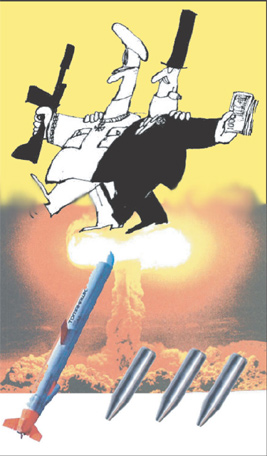 REVEALED: Nuclear bomb sites hit by fire safety problems and staff shortages, The National, By Rob Edwards 5 Dec 20, NUCLEAR bomb sites across the UK have fire safety problems as well as shortages of safety regulators and engineers, according to a new report from the Ministry of Defence (MoD).
But most of the MoD’s latest internal assessment of the safety of nuclear weapons has been kept secret for “national security” reasons – prompting fury from politicians and campaigners. They have attacked the nuclear secrecy as “deeply alarming” and “completely unacceptable”. The official attitude to nuclear safety was a “disgrace”, they said.
Previous nuclear safety assessments, revealed by The Ferret, have highlighted “regulatory risks” 86 times. Many involved the Trident warheads and nuclear submarines based on the Clyde.
The new MoD report also disclosed “significant weaknesses” on safety at non-nuclear sites. These included “serious deficiencies” on fire safety and “significant risk” from old fuel facilities – particularly on the Falkland Islands in the South Atlantic.
The MoD accepted that there were “infrastructure issues”, but insisted that they were being addressed. Defence nuclear programmes were “fully accountable” to UK ministers, it said.
The MoD has posted online the 2019-20 report from the Defence Safety Authority, which brings together seven regulators, a safety team and an accident investigation unit operating within the MoD. They are overseen by the authority’s director general, air marshal Sue Gray.
But the report said that the entire section from the Defence Nuclear Safety Regulator (DNSR), which is responsible for ensuring safety of the nuclear weapons programme, has been “marked SECRET” and given only “limited distribution”.
The MoD has previously released 10 annual DNSR reports following a challenge under freedom of information law in 2010. They flagged up risks of accidents, ageing submarine reactors, spending cuts and much else.
But in 2017 the MoD abruptly ceased publishing the reports, insisting that they had to be kept under wraps to protect national security. In 2019 that decision was challenged by campaigners at a UK information tribunal, whose verdict is still awaited.
he latest safety authority report, however, does contain a few details of nuclear risks buried in its 80 pages. It doesn’t specify which bases were affected, but they are likely to include the two major nuclear weapons sites, at Faslane on the Clyde and at Aldermaston in Berkshire.
In a discussion of problems with “fire safety assurance” across all MoD sites, the report said: “Particular issues have been noted at defence nuclear sites, where discussions continue between defence and statutory regulators.”
Between April 2019 and March 2020 as many as 374 fires were reported on all MoD sites. Although there had been some improvements “there is still more to do to reinforce the capability of defence to manage fire safety,” the report said.
A section on the “maturity” of the DNSR as a nuclear safety regulator disclosed that it was facing an 11 per cent shortage of staff in 2020-21. Shortfalls had been mitigated by the secondment of two senior staff from the UK Government’s nuclear power watchdog, the Office for Nuclear Regulation, and from the nuclear weapons company, AWE.
This had been supplemented by “making full use of partial retirees, graduate placements and development posts during 2019-20,” the report said. But these stopgap measures were failing………………
The Scottish National Party expressed concern about “a pattern of failure” on MoD safety. “Worryingly, the findings of this report reflect significant non-compliance with security and safety regulations at sensitive sites, including those where there are nuclear materials,” said the party’s defence spokesperson, Stewart McDonald MP.
“Not only is nuclear power and weaponry not safe, it is expensive, and not being handled properly under this Tory Government’s watch. The UK Government needs to transition away from nuclear entirely.”
MCDONALD described the nuclear safety failures as “alarming” and accused the MoD of “a lack of regard for public safety and transparency”. He pointed out that the UK Government’s civil nuclear watchdog, the Office for Nuclear Regulation, had criticised MoD secrecy.
The Scottish Green MSP for the west of Scotland, Ross Greer, called for nuclear weapons to be completely scrapped. “It is deeply alarming that the MoD continues to shroud so much secrecy over the safety issues with Britain’s weapons of mass destruction,” he said.
“We’ve known for years of significant issues at sites like Faslane and on the submarines themselves, so continued attempts to hold information back from the public are totally out of order.”
Lynn Jamieson, chair of the Scottish Campaign for Nuclear Disarmament, said: “The MoD’s tolerance of unsafe regimes is a disgrace for an organisation supposedly overseeing our protection. This adds to the urgency of nuclear disarmament.”
According to the Ministry of Defence, the annual assurance report and recommendations were currently being reviewed. Information that “could compromise national security” would not be published, the MoD said.,,,,,,,,,,,, https://www.thenational.scot/news/18923905.revealed-nuclear-bomb-sites-hit-fire-safety-problems-staff-shortages/
UK doesn’t have policies in place ready for COP26 Paris climate summit
climate summit since Paris in 2015, and quite possibly one of the most
important international gatherings in history. It’s the moment when
countries need to make good on the commitment they signed up to in Paris to
limit the average global temperature rise to 1.5 degrees Celsius, and agree
to reduce their greenhouse gas emissions at the scale and speed that’s
required. On Friday we learned what the UK is proposing – cutting carbon
emissions by 68 per cent by 2030 – but, at present, we do not have the
policies in place to achieve it.
https://inews.co.uk/opinion/climate-change-targets-welcome-policies-radical-enough-meet-them-782737
Nuclear incident in Belarus: Lithuanian authorities alert citizens
|
LRT 1st Dec 2020, Ecohome, a prominent environmental NGO in Belarus, has reported that Oil Price 3rd Dec 2020, Days after reports emerged that the newly opened Belarus nuclear power
plant suffered an incident, authorities in neighboring Lithuania told the Baltic country’s population on Thursday to stock up on food in case of an incident at the nuclear power facility in Belarus, which is just 30 miles away from Lithuania’s capital city Vilnius.https://oilprice.com/Latest-Energy-News/World-News/Lithuanians-Urged-To-Stockpile-Food-Amid-Reports-Of-Nuclear-Power-Incident.html |
|
-
Archives
- October 2026 (129)
- September 2026 (339)
- August 2026 (330)
- July 2026 (355)
- June 2026 (287)
- May 2026 (306)
- April 2026 (356)
- March 2026 (251)
- February 2026 (267)
- January 2026 (308)
- December 2025 (358)
- November 2025 (359)
-
Categories
- 1
- 1 NUCLEAR ISSUES
- business and costs
- climate change
- culture and arts
- ENERGY
- environment
- health
- history
- indigenous issues
- Legal
- marketing of nuclear
- media
- opposition to nuclear
- PERSONAL STORIES
- politics
- politics international
- Religion and ethics
- safety
- secrets,lies and civil liberties
- spinbuster
- technology
- Uranium
- wastes
- weapons and war
- Women
- 2 WORLD
- ACTION
- AFRICA
- Atrocities
- AUSTRALIA
- Christina's notes
- Christina's themes
- culture and arts
- Events
- Fuk 2022
- Fuk 2023
- Fukushima 2017
- Fukushima 2018
- fukushima 2019
- Fukushima 2020
- Fukushima 2021
- general
- global warming
- Humour (God we need it)
- Nuclear
- RARE EARTHS
- Reference
- resources – print
- Resources -audiovicual
- Weekly Newsletter
- World
- World Nuclear
- YouTube
-
RSS
Entries RSS
Comments RSS

