Pandemic causes Britain’s Trident nuclear submarine replacement to be delayed by another year
Announcement raises new questions as to whether UK’s current ageing fleet can be relied on, Guardian, Dan Sabbagh Defence and security editor. Fri 5 Feb 2021
Official documents released at the end of last year quietly confirmed that the current phase of the Dreadnought programme had been put back to March 2022, although the update was not highlighted and it was only spotted by a pressure group.
An SNP member of the defence select committee has now called for it to hold an inquiry into the Trident replacement programme, complaining about a lack of transparency.
An annual update on nuclear replacement, released to MPs before Christmas, said that “recognising the high levels of uncertainty caused by the pandemic” and its impact on supply chains, “delivery phase 2 will continue until March 2022”.
It did not say that this amounted to a one-year delay to the sprawling programme. This was spotted by David Cullen, of the Nuclear Information Service, who recalled a promise made a year earlier to conclude the work in March 2021.
“Covid is going to be with us for a while, and nobody will be surprised if there are other delays to Dreadnought,” Cullen said, arguing that the relative secrecy suggested “this isn’t the behaviour of a department that is confident it can deliver on its promises”.
The Dreadnought programme, first approved by Labour in 2007, has been repeatedly delayed by governments since. The first submarine was initially due to come into service in 2024, then 2028, and now the “early 2030s”, the Ministry of Defence (MoD) says……….
Britain prefers to shroud its nuclear programme in secrecy, but there have been accidents in the past. In 1998 HMS Vanguard, carrying 96 nuclear warheads and 135 crew, plunged into a deep dive following a power failure between Cornwall and the south of Ireland. The crew only managed to regain control through a backup power system.
In February 2009, Vanguard collided with a French nuclear submarine, Le Triomphant, in a freak accident in the Atlantic. Details were initially hushed up, before it was leaked to a newspaper. Fortunately the accident happened at a relatively low speed. Ministers were told that at the time that nuclear safety had not been compromised.
Martin Docherty-Hughes, an SNP member of the defence select committee, said: “It is simply unacceptable that we need to parse UK government statements for half phrases and words which the MoD could be using to cover its own backside.” He said he would be writing to the chair of the committee to demand an inquiry…… https://www.theguardian.com/uk-news/2021/feb/04/trident-nuclear-submarine-replacement-delayed-by-year
Unprecedented number of France’s nuclear reactors to go offline, and strikes continue.
From Feb. 6, six French reactors will have started 2021 maintenance, with five more to come this month, an unprecedented 11 reactors starting maintenance before March.
Reactors set for 10-year overhauls in 2021…………
S&P Global Platts Analytics assumes February output to average around 46 GW, a new record low for that month, before recovering above last year’s monthly averages………
wo strikes, an incident at Paluel and a return to milder and at times windy weather affected nuclear output in the second half of January.
Strikes continue
Another 24-hour strike was scheduled to start Feb. 9 at 2000 GMT, EDF said on its transparency website Feb. 4.
EDF workers are protesting against planned restructuring of the French state-owned utility, splitting nuclear and other operations.
Ongoing discussions with the European Commission about the details of the planned reform of the ARENH price mechanism have delayed a first presentation of those plans envisaged in January.
EDF currently has to sell 100 TWh of nuclear generation at Eur42/MWh to domestic suppliers.
The reform aims to lift prices as well as volumes………. https://www.spglobal.com/platts/en/market-insights/latest-news/electric-power/020521-french-nuclear-retreats-from-12-month-high-amid-early-start-to-2021-maintenance
USA and Russia extend The New Strategic Arms Reduction Treaty (New START Treaty) to 2026
|
US and Russia extend nuclear arms control treaty to 2026 Aljazeera,
Both Washington and Moscow cast the extension as a victory, saying it would provide stability and transparency. 3 Feb 2021 The United States and Russia have finalised an agreement to extend until 2026 a treaty limiting their stockpiles of nuclear weapons.
The New Strategic Arms Reduction Treaty (New START Treaty), which was due to expire on Friday, imposes limits on Russian and US intercontinental missiles and bombers, but does not cover new types of weapons. Both Washington and Moscow cast the extension as a victory, saying it would provide stability and transparency on nuclear issues while acknowledging some of their disagreements. …………. Tom Collina of Ploughshares Fund, which advocates for the elimination of nuclear weapons, said Russia’s priority in any new accord would be dealing with the threat it sees to its long-range strategic nuclear arsenal from US missile defences. Washington, for its part, likely will seek to limit Moscow’s vast short-range nuclear arsenal, Collina told the Reuters news agency. https://www.aljazeera.com/news/2021/2/3/us-extends-strategic-nuclear-arms-treaty-with-russia |
|
Increasing business and jobs in closing down Europe’s nuclear reactors, as renewable energy grows
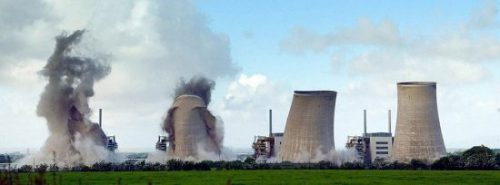
Europe Nuclear Decommissioning Service Market Forecast to 2027: COVID-19 Impact and Analysis by Reactor Type; Strategy; Application; Capacity and Country – ResearchAndMarkets.com Yahoo Finance, 3 Feb 21, The “Europe Nuclear Decommissioning Service Market Forecast to 2027- COVID-19 Impact and Analysis by Reactor Type; Strategy; Application; Capacity and Country” report has been added to ResearchAndMarkets.com’s offering.The nuclear decommissioning service market in Europe was valued US$ 2.68 billion in 2019 and is projected to reach US$ 4.29 billion by 2027; it is expected to grow at a CAGR of 6.2% from 2020 to 2027.
The growing health concerns due to radioactive emissions from aging infrastructures have compelled the European countries to decommission nuclear power plants that are nearing the end of their operational lives. France and Germany are among the leading countries in the nuclear decommissioning services market in this region.
In Germany, the nuclear energy generation sector contributes 12% to the total electricity generation. The country has no plans to construct newer nuclear power plants in the coming years. Germany decommissioned 11 nuclear power plants in the past decade, including Philippsburg nuclear facility that retired in 2019.
The German government has laid down its plans to decommission the remaining 6 nuclear power plants by 2022; these plants are Gundremmingen nuclear plant (2021), Grohnde nuclear power plant (2021), Brokdorf nuclear power plant (2021), Neckarwestheim nuclear power plant (2022), Isar nuclear plant (2022), and Emsland nuclear power plant (2022). The decommissioning strategies laid down by the government have been creating business growth opportunities for decommissioning service providers.
With the growth in the demand for electricity generated via renewable sources, rise in thermal power plants, and aging of long-established nuclear power plants, the governments are undertaking significant steps to decommission several power plants that are nearing the end of operational life. This is boosting the demand for services offered by the nuclear decommission services market players. The average lifespan of a commercial power reactor is 35-40 years.
A large number of commercial reactors operating today are soon likely to reach the end of operational life, and the governments of respective countries have approved the plans for their decommissioning. The cost of dismantling and decommissioning a commercial nuclear power plant is high and requires huge workforce.
The Italian nuclear power generation and transmission sector contributes to only 8% of the country’s overall electricity generation and transmission. The country had 4 reactors in the past, but it has been decommissioning the reactors following the Chernobyl disaster in 1986. Italy relies heavily on import of electric power and is the world’s second-largest net importer of electricity. Sogin S.p.A., a government-owned nuclear decommissioning service provider, has been engaged in dismantling and decommissioning several nuclear power plants in the country. ……….https://finance.yahoo.com/news/europe-nuclear-decommissioning-market-forecast-124000767.html
New Chernobyls on Europe’s doorstep?
|
New Chernobyls on Europe’s doorstep? https://eutoday.net/news/politics/2021/new-chernobyls-on-europes-doorstep Gary Cartwright, EU Today publishing editor. 3 Feb 21, On January 29th EUToday hosted a conference at the Press Club, Brussels, concentrating on the new and proposed nuclear power plants in Belarus, Turkey, and Uzbekistan. Moderator Natalia Richardson drew parallels between the risks surrounding nuclear energy today, and the Chernobyl disaster of 1986, of which she, as a student in Ukraine at the time, had experience. Keynote speaker Jutta Paulus, a German Green MEP who sits on the European Parliament’s Committee on the Environment, Public Health and Food Safety, told the conference that at present nuclear energy supplies around 10% of global demand for electricity. However, to maintain this level, taking into account rising demand and the decommissioning of existing reactors, new-builds will need to come online at the rate of 50 per year. She highlighted in this context the fact that most of the existing 400 plus reactor plants in the world today are more than 30 years old, and now coming to the end of their lives. In Belgium, from where the conference was hosted, the nuclear energy programme began relatively early, in 1952, with the country’s first commercial nuclear power plant feeding into the grid in 1974. Belgium, which has seven reactors in two plants, at Brussels and Antwerp, has committed to phasing out nuclear energy by 2025. In this, Belgium is following the lead of other EU member states Austria, Germany, Italy, and Sweden. Lithuania, following a 2012 referendum in which 64.7% rejected a proposal for a new-build reactor, also appeared to be heading towards a nuclear free future. This ambition has been compromised however by the controversial and accident-prone Astavets plant in Belarus, close to the border with Lithuania, and just 50km from the capital city, Vilnius. Public opinion.Ms. Paulus referred in her presentation to the levels of opposition to nuclear power in Germany, and to the diversity of protestors who are a world away from the outdated stereo-type of “the left, the long-haired hippy”. In Belarus, in 2008, anti-nuclear activists handed a petition to President Lukashenko, calling him to the site. Media coverage of this led quickly to their persecution by the government, with the organisers being searched, fined, and detained. When construction began on Turkey’s first nuclear plant at Akkuyu, on the shores of the Mediterranean, in 2015, protestors had to be dispersed by water cannon. Jan Beranek, the director of Greenpeace Mediterranean, told news agency AFP at the time that the seismic assessment in the area had been “totally inadequate” and accused the authorities of ignoring issues related to radioactive spent fuel which risked being transported through Istanbul on the Bosphorus Strait. “There is no need for the country to set on a path of unpredictable nuclear hazards and this outdated, yet very expensive technology,” he also said. In Uzbekistan questions were raised concerning public consultation: a government poll suggested that 70% of Uzbekis are in favour of nuclear, however an independent poll conducted via social media showed only 39% in favour. Interestingly, Jo’rabek Mirzamahmudov, director of the Uzatom state agency, told reporters that most of the people questioned “had not been aware of the plans to build the plant, but when they had the basic principles explained to them 70% spoke in favour.” Whilst this in itself appears highly dubious, so does the fact the Uzbek Environmental Party has officially come out in support of the programme, making them surely the only Green Party in the world to support nuclear energy. The Uzbeki government’s response to a May 2020 dam burst has, however, led to questions about Tashkent’s ability to cope with a major environmental disaster. Major concerns have also been raised concerning the political implications of the project, which comes alongside the Kremlin’s current efforts to draw Uzbekistan into its Eurasian Economic Union (EAEU). “First, there is a clear understanding that although from a formal point of view the EAEU is an economic organisation, the Kremlin’s motivation to draw Uzbekistan into this structure is clearly of a political nature. This decision, if it is final, has a double bottom: on the surface there are economic considerations, but at the bottom it is a political project. This is a step to the side of drawing Uzbekistan into the orbit of the geopolitical influence of Moscow,” wrote Alisher Ilkhamov, a senior researcher at the University of London and a leading voice in the campaign against the proposed reactors in Uzbekistan in a report for Ukraines Center for the Study of the Army, Conversion and Disarmament. Uzbekistan is expected to become a full member of the EAEU in 2022 or 2023. ROSATOM.The three plants discussed, in Belarus, Turkey, and Uzbekistan are all being built by ROSATOM, Russia’s state nuclear power company, and all will use the VVER-1200 reactors. At Astravets on July 10th 2016 a major accident occurred when a 334-ton reactor vessel “fell from a height of 2 to 4 metres,” a significantly serious accident, and one which Rosatom tried initially to cover up. In December 2011 another reactor pressure vessel sent to the Astravets site by Rosatom collided with a concrete column at a train station close to the Belarusian border. There are reports of further alarming incidents, including an explosion at the plant in November of last year. In Turkey ROSATOM has on more than one occasion been obliged to fill in cracks in the foundations of the Akkuyu Nükleer Güç Santrali plant that were discovered before construction was even completed. This plant is due to go online in 2023. Such incidents are not restricted to the projects discussed during the conference: ROSATOM’s record is very poor. Mr. Cartwright told journalists after the conference “Unless they wake up, I guess Uzbekistan has all this to look forward to.” ROSATOM, he said, is an integral part of Russia’s “weaponisation” of energy supply, and is used to further the country’s foreign policy objectives. His view echoed that of French Green MEP Michèle Rivasi, who whilst unable to participate in the event due to other commitments, did suggest in a statement that creating dependency in the energy sector is very much a part of the Kremlin’s strategy. While nuclear power is in decline in most countries of the world, Russia’s state-owned ROSATOM is exerting strong political pressure on Central and Eastern European countries such as Hungary, Bulgaria, the Czech Republic and Slovakia, Finland and Lithuania. In Belarus, two reactors in Ostrovets are being developed on credit by the Russian atomic agency Rosatom. They are supposed to reduce Belarusians’ dependence on gas sold by Russia, except that they create a new dependence, since all nuclear fuel comes from Russia. Michèle Rivasi MEP.Belarus’ President Alexander Lukashenko, Europe’s “last dictator”, has, as conference participant, writer Stephen Komarnyckyj pointed out, “always flirted with the re-unification of Belarus and Russia.” However, whilst a treaty signed with Boris Yeltsin in 1999 guaranteed that he could continue to run Belarus as his own fiefdom, Putin sees Belarus and Ukraine as “Russian land.” In tying his energy sector closer to Russia – Belarus has modest natural resources, and relies on imports from Russia to meet most of its energy needs – Lukashenko who is struggling to manage a current period of civil unrest, may be hoping to maintain the status quo, knowing that Putin fears another “colour revolution” in Europe. Belarus is also an important part of Russia’s gas transit corridor to Western Europe, although that fact will give Lukashenko negligible leverage. During the conference Mr. Komarnyckyj explained how Russia has used, particularly in 2007, energy supply to exert influence over Lukashenko. The conference concluded with a call for Uzbekistan to halt its nuclear programme while there is still time. Again and again the competence and integrity of ROSATOM is called into question. Belarus and Turkey are committed, but Uzbekistan can still halt its nuclear programme. The country should also consider that post-Soviet countries – especially in Central Asia – are keen to move away from dependency on Russia whether this be in energy, security, or political terms. Uzbekistan should seriously review this ill-conceived project. |
|
Why Spain plans to ban uranium mining.
Shock waves: what will a Spanish ban mean for uranium mining in Europe?, Mining Technology, Yoana Cholteeva12 January 2021 ” ………. Reasons behind the proposed ban
The proposed ban has been welcomed by environmental groups and local organisations concerned about the potential damage to ecosystems in the country and overall safety, as argued by the Spanish organisation Stop Uranio (Stop Uranium). The group, which was established in 2013, has since then been trying to prevent the approval and construction of Berkley Energy’s uranium mining project in the Campo Charro area of Salamanca.
For the past seven years, Stop Uranium has organised a number of campaigns and protest rallies over the country, with activists from both Spain and Portugal raising concerns over Salamanca’s agriculture lands, pastures, rural tourism, and the population’s health being at stake.
Stop Uranium member and spokesperson Jose Manuel Barrueco has written in The Free – blog of the post capitalist transition, that “the majority of the inhabitants of the area oppose the planned mines due to the negative effects that this activity will entail for the region: explosions with release of radioactive dust into the atmosphere, the continuous transfer of trucks and heavy machinery, loss of forest, diversion of water courses, etc.”.
It terms of scientific evidence to support the some of the claims, according to a 2013 peer reviewed article, ‘Uranium mining and health’, published in the Canadian Family Physician journal, the chemical element has the potential to cause a spectrum of adverse health effects to people, ranging from renal failure and diminished bone growth to DNA damage.
The effects of low-level radioactivity include cancer, shortening of life, and subtle changes in fertility or viability of offspring, as determined from bothanimal studies and data on Hiroshima and Chernobyl survivors.
….. MP Juan Lopez de Uralde has in turn voiced his support of a holistic approach, telling the Spanish online newspaper Publico that banning uranium extraction is directly linked to the energy policies of both Spain and the EU. He continued that “since no uranium mine is active in the Old Continent”, “by committing to the closure of nuclear power stations we should complete the circle entirely by banning uranium mining”………. https://www.mining-technology.com/features/shock-waves-what-will-a-spanish-ban-mean-for-uranium-mining-in-europe/
Australian uranium mining company threatens Spanish government with legal action
Miner threatens Spain over uranium ban, Cosmo Sanderson, 01 February 2021
Unusually damaging Mw 4.9 earthquake near several French nuclear reactors
industrial region that hosts several operating nuclear power plants.
about 1 km. Here we use far-field seismological observations to
demonstrate that the rupture properties are consistent with those commonly
observed for large deeper earthquakes.
sensors in the fault vicinity, we perform numerical predictions of the
ground acceleration on a virtual array of near-fault stations. These
predictions are in agreement with independent quantitative estimations of
ground acceleration from in-situ observations of displaced objects. Both
numerical and in-situ analyses converge toward estimates of an exceptional
level of ground acceleration in the fault vicinity, that locally exceeded
gravity, and explain the unexpectedly significant damage.
French parliamentarians nominate Julian Assange for Nobel Peace Prize
 A Nobel Peace Prize for Julian Assange! https://melenchon.fr/2021/01/28/un-prix-nobel-de-la-paix-pour-julien-assange/ Thursday 28 January 2021, I decided to nominate journalist Julian Assange for the Nobel Peace Prize, as I have the power to do as a parliamentarian. Julian Assange is a hero of freedom. The WikiLeaks initiative has raised awareness of war crimes and serious human rights abuses. It is right that the peoples of the world express their gratitude to him.
- Several other rebellious parliamentarians will share this process with me. I thus continue my fight for Assange’s freedom. After going to see him in London in 2012, after having held a videoconference meeting with him in 2013, I asked for political asylum in France in 2019 then 2020. At the time, the Minister of Justice Dupont- Moretti made the same request. Julian Assange served France, including revealing the spying on three Presidents by the United States.
- I call on all French parliamentarians to in turn commit to having the Nobel Peace Prize awarded to Julian Assange.
Britain’s unaffordable nuclear power plans collapse, one by one
 Times 31st Jan 2021, Nuclear winter for Britain as power plants close. Hinkley Point is last man standing as other power stations are scrapped. Hitachi president Hiroaki Nakanishi had a grand dream when
the Japanese giant paid £696 million for the right to build two nuclear power stations in the UK. “Today starts our 100-year commitment to the UK and its vision to achieve a long-term, secure, low- carbon and affordable energy supply,” declared Nakanishi in 2012, as he signed a deal to buy the Horizon nuclear project from Germany’s RWE and Eon.
particularly when they are the first of a new design. Theresa May’s government eventually offered to take a third of the equity in Horizon alongside the Japanese government and Hitachi. Boris Johnson’s administration is exploring a new financial model, the regulated asset base, where investors could earn a return during construction.
that had begged Hitachi to grant the project a reprieve, executive Toshikazu Nishino said that it had not received adequate backing from government.
https://www.thetimes.co.uk/article/nuclear-winter-for-britain-as-power-plants-close-gb8c5dx07
In its failed search for a national dump site, UK govt rebrands its nuclear waste agency, promises honesty this time.
 Cumbria Trust 30th Jan 2021, Today marks the 8th anniversary of the last attempt to bury the UK’s nuclear waste in Cumbria. On 30th January 2013, Eddie Martin, then Leader of Cumbria County Council, made an impassioned speech to his Cabinet and urged them to call a halt to the search in Cumbria.
The Cabinet agreed and by 7 votes to 3 the process known as Managing Radioactive Waste Safely (MRWS) was stopped. Since West Cumbria was the only area in the country to volunteer, that decision also marked the end of the national search process.
During the 8 years since that decision, the government have been working on a new search process and have been busily rebranding in an attempt to distance themselves from some of the less honest practices which were used during the failed MRWS process.
This time the developer is called Radioactive Waste Management (RWM), a subsidiary of the Nuclear Decommissioning Authority. RWM frequently talk about transparency and openness of the new process, and to be fair we have seen some improvements in our discussions with them, but our suspicion remains that old habits die hard.
Isle of Man Wakes Up to What is Planned – SUB SEA NUCLEAR DUMP — Keep Cumbrian Coal in the Hole

At last there is some Grrrrr over the plan to dump heat generating nuclear waste under the Irish Sea – so far the plan appears to be to looking in all seriousness at having above surface nuclear sprawl at Ghyll Scuar quarry ( on the edge of Millom Deer Park ) with the drift tunnels shunting planetary destroying nuclear wastes under the Marine Conservation Zone outwards towards the Isle of Man. Whats not to like? EVERYTHING!
Good on the Isle of Man Examiner for this headline and write up. To read the article in full (for £1) go to the Isle of Man Examiner
Isle of Man Wakes Up to What is Planned – SUB SEA NUCLEAR DUMP — Keep Cumbrian Coal in the Hole
Off to a good START — Beyond Nuclear International

Nuclear weapons will be limited, but they need to go away altogeth
Off to a good START — Beyond Nuclear International
The US and Russia have extended the treaty, but it’s not about disarmament
This story was prepared by Linda Pentz Gunter largely derived from information provided by ICANThe United States and Russia have agreed on extending New START for another five years.
Extending New START is an important action by these two countries after four years that saw both countries undermining arms control agreements. However, it is important to remember that it is not a disarmament step, but rather an extension of the current levels of nuclear arsenals.
Nevertheless, it is a welcome development to see the new US administration and Russia return to where they left off four years ago rather than escalate. It also comes at an auspicious time, as the world has just witnessed the entry into force on January 22, 2021 of the first global treaty to ban nuclear weapons, the Treaty on the Prohibition of Nuclear Weapons (TPNW).
The United States and the Russian Federation agreed on January 26, 2021 to extend the bilateral cap on U.S. and Russian nuclear arsenals, the New Strategic Arms Reduction Treaty (New START) for five additional years. …………
New START is important for a number of reasons:
- The extension of New START prevents backsliding on nuclear disarmament. However, additional steps will now be needed to make progress on disarmament.
- Since the United States and Russia first agreed to this current cap on nuclear arsenals in 2010, the international community has negotiated, adopted and brought into force a treaty banning nuclear weapons: nuclear weapons are illegal under international law. So, even as the US and Russia may cap nuclear weapons expansion, they remain outlaw pariah states in the eyes of the world as long as they continue to hold onto nuclear weapons.
- Throughout the time the New START agreement has been in place, Russia and the United States have spent billions each year to build new nuclear weapons systems. This is now banned under international law (although non-parties to the TPNW are not bound by it). Under current global pandemic conditions, this kind of spending is even more immoral and obscene.
- With the New START quickly extended and the TPNW in force, the groundwork has been laid for significant disarmament advances in the coming four years. The nine nuclear armed states have no excuses not to walk that path. Nuclear disarmament need not seem daring but simply adherence to international law.
Simply staying at the current nuclear weapon levels will not be enough to protect the world from this catastrophic threat. One nuclear missile is one weapon too many. As studies have shown, even unleashing just 100 nuclear weapons (as India and Pakistan could do against each other) would result in global devastation, suffering and famine. Therefore, New START must be seen as just that; a start. But not enough until all nuclear weapons are abolished.
- With the TPNW in force, there is a new international standard. Russia, the United States and all nuclear-armed nations must take active steps to move towards compliance with this international treaty and join it.
To read more about the implications of the extension of the New START Treaty, please visit this page on the ICAN website. https://beyondnuclearinternational.org/2021/01/31/off-to-a-good-start/
Use of illegal workers at France’s Flamanville nuclear site.
Mediapart 14th Jan 2021, After having exhausted all possible remedies, Bouygues is definitively convicted of having used on a large scale undeclared employees on the site of the EPR of Flamanville (Manche).
In a judgment delivered Tuesday, January 12, the Court of Cassation rejected the requests of the
French public works giant and two of its satellites. Through them, Bouygueshad illegally employed at least 460 Romanian and Polish workers between 2008 and 2012, on this site of the new generation reactor, essential for EDF (owner of the site) and Areva (which ensures the construction).
Acrimed 29th Jan 2021
https://www.acrimed.org/EPR-de-Flamanville-la-condamnation-de-Bouygues
From both UK and Ireland – calls for independent review into dumping Hinkley nuclear mud into the sea
Nation Cymru 29th Jan 2021, Campaigners on both sides of the Bristol Channel have called for a full independent review into proposals to dump mud from the construction of a
nuclear power plant in the sea off the coast of Cardiff, following the
announcement that a new dumping site off the Somerset coast is also being
considered.
Despite public opposition, in 2018 the Welsh Government
permitted EDF to dump large quantities of mud dredged from construction of
the new Hinkley C nuclear power plant at the Cardiff Deep Grounds inshore
disposal site. EDF insisted the site- only two miles from Cardiff Bay –
was the only suitable site available in the Bristol Channel.
Earlier this month EDF announced its intention to apply to the Marine Management
Organisation (MMO) for a license to dump at Portishead, while also making a
further application to dump at the Cardiff site. No reason has been given
by EDF for the Portishead proposal.
In a joint statement issued with Stop Hinkley and the Geiger Bay campaign, UK & Ireland Nuclear Free LocalAuthorities Steering Committee Chair, Councillor David Blackburn said:
“NFLA was surprised to hear that EDF are now seeking to look at dumping
mud from the Hinkley Point site off the Somerset coast in addition to
continuing to look to dump off the south Wales coast.
-
Archives
- October 2026 (129)
- September 2026 (339)
- August 2026 (330)
- July 2026 (355)
- June 2026 (287)
- May 2026 (306)
- April 2026 (356)
- March 2026 (251)
- February 2026 (267)
- January 2026 (308)
- December 2025 (358)
- November 2025 (359)
-
Categories
- 1
- 1 NUCLEAR ISSUES
- business and costs
- climate change
- culture and arts
- ENERGY
- environment
- health
- history
- indigenous issues
- Legal
- marketing of nuclear
- media
- opposition to nuclear
- PERSONAL STORIES
- politics
- politics international
- Religion and ethics
- safety
- secrets,lies and civil liberties
- spinbuster
- technology
- Uranium
- wastes
- weapons and war
- Women
- 2 WORLD
- ACTION
- AFRICA
- Atrocities
- AUSTRALIA
- Christina's notes
- Christina's themes
- culture and arts
- Events
- Fuk 2022
- Fuk 2023
- Fukushima 2017
- Fukushima 2018
- fukushima 2019
- Fukushima 2020
- Fukushima 2021
- general
- global warming
- Humour (God we need it)
- Nuclear
- RARE EARTHS
- Reference
- resources – print
- Resources -audiovicual
- Weekly Newsletter
- World
- World Nuclear
- YouTube
-
RSS
Entries RSS
Comments RSS

