Russia’s nuclear giant Rosatom moving into renewable energy, energy storage, grid development
The state-owned company will manufacture module type lithium-ion traction batteries for electric vehicles, as well as energy storage systems for emergency power supplies, renewable energy resources, and the smoothing of load demand. PV Magazine , OCTOBER 9, 2020 EMILIANO BELLINI Rosatom State Nuclear Energy Corp. (Rosatom) is entering the energy storage business through its TVEL Fuel Company (TVEL) unit, which has set up a dedicated subsidiary, Renera.The new company will produce module type lithium-ion traction batteries for electric vehicles, as well as energy storage systems for emergency power supplies, renewable energy resources, and the smoothing of load demand, TVEL stated……
Rosatom is already operating in the renewable energy sector via its NovaWind unit, which mostly focuses on the wind power business.
“We have an R&D center which is capable to develop energy storage solutions as for grids and substations, as well as for renewable energy sources, including both wind and solar,” the spokesperson said.,,,,,,,,https://www.pv-magazine.com/2020/10/09/russian-nuclear-giant-rosatom-enters-storage-business/
Poland to build nuclear reactor starting in 2026, excludes Small Modular Reactors (SMRs)
Construction of Poland’s first nuclear power plant to start in 2026, The government has adopted a resolution to update the Polish Nuclear Power Programme (PPEJ), the Ministry of Climate announced on Friday.
The updated PPEJ provides for the construction of six nuclear reactors with a total capacity of 6-9 GW. The first reactor should be operational in 2033…….
The programme excludes the use of boiling water reactors (BWRs) and small modular reactors, referred to as SMRs……… https://www.thefirstnews.com/article/construction-of-polands-first-nuclear-power-plant-to-start-in-2026-16542
Ukraine’s President enthuses over their nuclear reactors – but they’re all ageing Soviet ones

On a visit to Ukraine’s Rivne nuclear plant, President Volodomyr Zelensky issue full throated support for the development of his country’s nuclear industry, despite opposition from other countries and a fleet of elderly Soviet-era reactors that are reaching retirement age, Interfax reported.
His remarks came on October 1 and highlight his recent decree that orders the government to submit bills concerning the country’s nuclear power sector for parliamentary debate. Ukraine’s 15 reactors – all of which were built while the country was still a republic of the Soviet Union – supply more than half of the domestic electricity supply.
“We have a strategy for the development of nuclear energy and the completion of nuclear power plants in Ukraine,” the Zelensky said, addressing the possibility of completing two reactors at the country’s Khmelnitsky nuclear plant. The construction of those reactors, which are Russian-designed VVER-1000 units, began in the 1980s but was shelved in 1990.
He also dismissed opposition to nuclear development on grounds of safety, saying: “We understand that if professionals are doing the construction, if the state is working on the safety of nuclear power plants, then there is no threat either to the environment or the climate. It’s a safe form of electricity.”
Pushing back against a host of European countries that have begun to back away from nuclear power, Zelensky said Ukraine would instead embrace it as a national priority.
“In the coming years, many countries will work against nuclear power generation,” he said. “We, on the other hand, will defend it. We must do this because today we have every opportunity to be among the first [in nuclear energy], both in Europe and in the world.”
Zelensky’s remarks come as work to fully clean up the site of the 1986 Chernobyl disaster is still ongoing. Since 2015, an enormous steel dome, called the New Safe Confinement, has enclosed the plant’s exploded No 4 reactor, trapping radiation and facilitating risky dismantlement efforts. But most experts say it will take another 20,000 years before the area immediately surrounding the plant – called the exclusion zone from which more than 100,000 people were evacuated – will again be fit for human habitation.
When the Soviet Union collapsed in 1991, Ukraine inherited not only the embers of Chernobyl, but also four other nuclear power plants: The Rivne plant in the country’s northwest; the Khmelnitsky plant, to Rivne’s south; The South Ukraine plant, near the Black Sea, and the Zaporizhia plant, whose six VVER-1000 reactors make it the largest nuclear power plant in Europe.
All but three of Ukraine’s reactors began operations in the 1980s, putting most of them troublingly close to the end of their engineered lifespans of 40 years. In fact, 12 of Ukraine’s reactors were slated to retire this year.
To continue to produce some 52 percent of the country’s energy, it is presumed that all of these reactors will eventually be granted extensions on their runtimes of several decades.
Given the age of the nuclear industry as a whole, such lifetime extensions have become common practice worldwide. But two recent Bellona publications – one on Ukraine’s nuclear industry, and another on the practice of reactor lifetime extensions – have cast light on the dangers of this approach.
One study by Ukrainian experts, cited in Bellona’s report, shows that Ukraine’s older reactors are becoming more prone to accidents and malfunctions. It is hoped that safety upgrades that would precede the granting of lifetime would eliminate such technical glitches.
But the Bellona study highlighted that two reactors at the Rivne plant – the one Zelensky visited – had been given lifetime extensions without any safety upgrades at all.
The longer Ukraine’s reactors operate, the more they will contribute to the country’s supply of radioactive waste, which is currently the second largest in Europe. This problem has only gotten more serious since 2018, when Russia began returning to Ukraine the spent nuclear fuel and radioactive waste Moscow had been accepting and reprocessing after the Soviet Union dissolved.
The problem of Ukraine’s overabundant radioactive waste would seem less critical if the country were taking steps to build a long-term repository, such as finding a suitable location for one – or indeed even had plans to do so. But as the Bellona report reveals, the bureaucracies in Kiev that are responsible for such questions are inefficient, if not, in some instance, entirely lacking, and in any case have little in the way of public faith in their competent operation.
Prospects are slightly brighter when it comes to dealing with spent fuel from Ukraine’s nuclear reactors. Ukrainian nuclear Officials know how much there is and they intend to build a centralized facility to store it. But as is the case in other parts of the industry, Kiev has little hope of building it without significant funding from other countries.
While it’s unclear if Zelensky’s new embrace of nuclear energy has taken full account of the issues facing his aging reactors, it is hoped that any continued reliance on Ukraine’s Soviet inheritance will do so.
Design not even finished! But UK govt to subsidise Small Nuclear Reactors (SMRs)
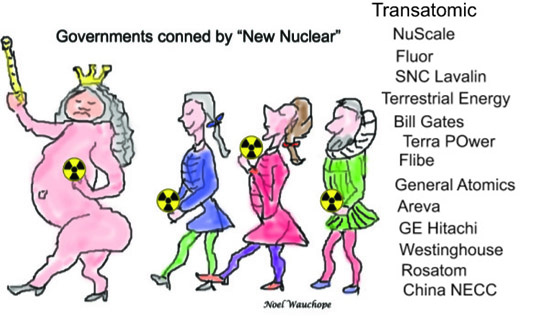
The plan is for 16 of them – at ? £2bn each?
FT 7th Oct 2020, Downing St considers £2bn support for mini nuclear reactors
Consortium wants to build up to 16 generators . Downing Street is supporting plans to spend up to £2bn of taxpayers’ money on a
new generation of mini nuclear reactors. Consortium wants to build up to 16 generators to help UK meet carbon emissions targets. The first SMR is expected to cost £2.2bn and be online by 2029.
Government and industry figures confirmed that a pledge of £1.5bn-£2bn is being discussed which could even see taxpayers acquire an equity stake in the programme.
However, discussions are still ongoing and any final decision will be subject to the Treasury’s current multiyear spending review, which is due later this year. The government could also commission the first mini power station, giving confidence to suppliers and investors. The consortium, which also includes the National Nuclear Laboratory, will seek additional funding of at least £2bn, including from private investors and the capital markets.
Support for SMR technology is expected to form part of Boris Johnson’s “10-point plan for a green industrial revolution” which he will set out later in the autumn. …….. Under the plans being considered by Number 10, the small
modular reactors would be manufactured on production lines in central plants and then transported to sites for assembly. Each mini power station would operate for up to 60 years, providing 440MW of electricity per year — enough to power a city the size of Leeds.
The government’s support “should deliver sufficient cash to get the consortium through building
factories and well on the way to construction of power stations prior to finding more money from other sources,” said one person with knowledge of the situation.
The consortium is expected to finalise the SMR design by April next year, when it hopes to launch the four-year licensing process.
During that time it hopes to begin recruiting employees for the business, and identifying the sites for powers stations and the factories to build the components and modules for the SMRs. The business department hasalready pledged £18m towards the consortium’s early-stage plans.
https://www.ft.com/content/d7016b80-e0c4-4444-a059-2daf32b9a4ab
Nuclear no option for hydrogen production: German government
Energy ministry state secretary Feicht says, however, that the rule of nuclear will be discussed at an EU level, Recharge 6 October 2020 By Bernd Radowitz
“Nuclear isn’t an option for our energy system, be it the production of electricity for our electricity demand, [or] for the production of hydrogen,” Andreas Feicht, secretary of state in Germany’s economics and energy ministry, said at a virtual conference on hydrogen organized by his ministry……..
Green’ or ‘carbon-free’ hydrogen?
Germany by the end of 2022 will phase out its last atomic power stations, and in its €9bn ($10.6bn) national hydrogen strategy has laid down that it strives to ramp up a ‘green hydrogen’ economy mostly based on renewables such as offshore wind, with a temporary and limited role for ‘blue hydrogen’ produced from natural gas linked to carbon capture and storage (CCS)…………..
the Dutch government is planning to launch a consultation on building new nuclear power plants after a study commissioned by its economics and climate ministry claimed atomic energy is as cheap as wind or solar power – and supposedly the safest way to produce electricity in the country.
The study was conducted by a nuclear energy consultancy with links to the nuclear industry, though. At the same time, a flurry of studies advises against a nuclear renaissance.
‘Nuclear and renewables don’t mix’
The University of Sussex Business School and the ISM International School of Mangement this week published an analysis of 123 countries over 25 years in Nature Energy that concludes that nuclear and renewables don’t mix, and only the latter can deliver truly low carbon energy.
The researchers found that unlike with renewables, countries around the world with larger scale nuclear attachments do not tend to show significantly lower carbon emissions – and in poorer countries nuclear programmes actually tend to associate with relatively higher emissions.
The researchers found that unlike with renewables, countries around the world with larger scale nuclear attachments do not tend to show significantly lower carbon emissions – and in poorer countries nuclear programmes actually tend to associate with relatively higher emissions.
Champagne of power fuels
Michael Bloss, a Green Party member of the European Parliament, at the same hydrogen conference stressed that only “green hydrogen is clean hydrogen.”
Blue hydrogen as considered as a temporary option by the German government is no real option due to high amounts of methane leakage during its production, which he argued is “much more detrimental for the climate than CO2.”
Despite €3.7bn in EU investments into CCS since 2009 (according to the European Court of Auditors), the technology remained at the “beginning of its development” and is still “not ready to be applied,” Bloss said.
Renewable energies such as offshore wind, meanwhile, are the most cost-competitive energy source and should be used for hydrogen production, he added, without going into the nuclear versus renewables controversy.
Bloss, however, stressed that it has been said that “hydrogen is the Champagne among power fuels,” which must be used only in difficult-to-decarbonise sectors where it cannot be replaced by other applications, such as steel, cement or chemicals.https://www.rechargenews.com/wind/nuclear-no-option-for-hydrogen-production-german-government/2-1-887905
France should reveal the location of its nuclear waste dump in Algeria

|
Calls for France to reveal location of nuclear waste dumped in Algeria https://www.middleeastmonitor.com/20201005-calls-for-france-to-reveal-location-of-nuclear-waste-dumped-in-algeria/ October 5, 2020 France should take initiative to solve the problem of the nuclear waste buried in the Algerian Sahara in the early 1960s, as no one knows its exact location, which is a classified military secret, the head of the Paris-based Observatory for Armament said.In an interview with Radio France Internationale yesterday, Patrice Bouvre said: “When France suspended its nuclear tests in 1966, it simply buried the waste of the 17 experiments it conducted over the years.”
He added that Paris classified the location or locations of the buried nuclear waste and the documents related to the affair as “a military secret”, which remains to date. As a result, there is no information available about the exact location of the nuclear waste buried in the Algerian desert, Bouvre explained. He called on the French authorities to reveal the truth about this file and to cooperate with Algeria to clean up the areas contaminated by the nuclear waste that still exposes these regions to serious environmental damages. France conducted 17 nuclear tests between 1960 and 1966 in the Algerian Sahara, and the waste from these experiments is buried in an unknown location in the area, hindering attempts to remove the radioactive materials and protect the population and the environment |
|
Severe floods in Italy and France
A storm which moved overnight across southeastern France, and then northern Italy caused major flooding on both sides of the border, damaging homes, destroying bridges, blocking roads and isolating communities………
Unrelenting rainfall overnight hit levels not seen since 1958 in northern Italy’s Piedmont region, where 630mm (24.8 inches) of rain fell in 24 hours, according to the Italian civil protection agency.
Two brothers were swept away by floodwaters while they were tending animals near the French border. One brother managed to grab onto a tree and was saved, while authorities were searching on the French side for the other brother.
Flooding in France
On the other side of the border, in southeastern France, almost a year’s average rainfall fell in less than 12 hours in the mountainous area surrounding the city of Nice.
Local firefighters said at least eight people were missing, including two firefighters whose vehicle was swept away by water when the road collapsed during a rescue operation. Several dozen people were evacuated from their homes overnight, firefighters said.
The storm, dubbed Alex, ravaged several villages around the city of Nice on the French Riviera. Nice Mayor Christian Estrosi called it the most severe flooding disaster in the area for more than a century after flying over the worst-hit area by helicopter.
“The roads and about 100 houses were swept away or partially destroyed,” he told French news channel BFM……. https://www.aljazeera.com/news/2020/10/3/one-killed-25-missing-in-severe-floods-in-italy-and-france
Daunting task of removal of Russia’s spent nuclear fuel rods from Andreeva Bay
One-third of all nuclear waste removed from Cold War dump site https://thebarentsobserver.com/en/nuclear-safety/2020/10/one-third-all-nuclear-waste-removed-cold-war-dump-site
Another 12 special design casks with spent nuclear fuel from Cold War submarines are soon to be shipped out of Andreeva Bay on Russia’s Arctic Barents Sea coast. ByThomas Nilsen October 02, 2020
About 35% of the 21,000 spent uranium fuel elements originally stored in three rundown tanks is so far lifted out, repacked and sent to Russia’s reprocessing plant at Mayak in the South-Urals, informs Aleksandr Krasnoshchekov, director of the SevRAO’s branch in Andreeva Bay. SevRAO is the federal enterprise for handling radioactive waste in the northwestern region.
The company has a staff of 100 in Andreeva Bay in the Litsa fjord, a closed-for-civilians fjord near the border to Norway where the Northern Fleet has two basing points for nuclear submarines.
Here, the navy started to store casks with highly radioactive spent uranium fuel from its first nuclear-powered in the 1960s. First in rusty containers outdoor, later in a pool-building that broke down. In the 1980s, the elements were moved over to three concrete tanks in very poor conditions.
After nearly 20 years of improving the infrastructure, securing the site from leakages and building a new crane at the port, the first shipment with nuclear waste left Andreeva Bay in 2017.
Neighboring Norway has spent more than €30 million to support the cleanup of the nuclear dump located only about 50 km from its border.
Also Sweden, Great Britain, Italy and the European Commission have contributed. Italy, as an example, paid for building the “Rossita”, a special purpose ship sailing in shuttle from Andreeva Bay to Atomflot in Murmansk where the containers are reloaded to rail wagons. According to director Krasnoshchekov, the ongoing work is done based on contracts with these countries, he says in an interview with Vesti Murman.
Most of the work done so far concerns the elements easy to lift out.
Way more challenging times are ahead, as the damaged elements in the third tank, 3A, are to be secured and lifted out.
Take a closer look at the photo below to understand the scoop of the challenge. Some of these rusty, partly destroyed steel pipes contain fuel rods where the uranium will fall out if lifted straight up.
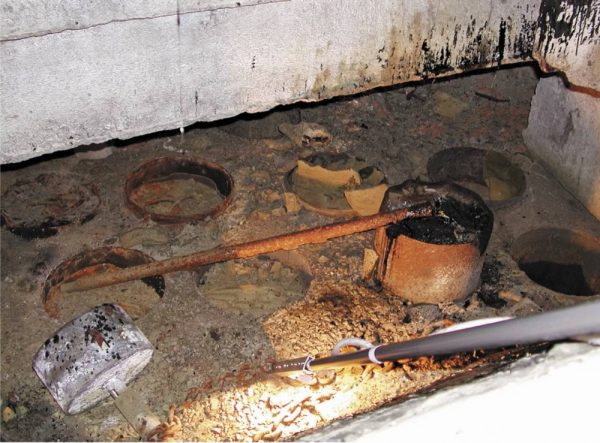
The work on tank 3A is scheduled to start in 2023, after tank 2A and 2B is completed. The experts are don’t want to start the most risky work before as much as possible of the other waste elements are removed. A criticality accident in Andreeva Bay is worst-case scenario.
As previously reported by The Barents Observer, the total radionuclide inventory in the three tanks is estimated to be equal to the remains of Rector No. 4 inside the Chernobyl sarcophagus in Ukraine. This according to a study by the British nuclear engineering company Nuvia.
The original 22,000 spent fuel elements dumped in Andreeva Bay are coming from 90-100 reactor cores powering the Soviet Union’s Cold War submarines sailing out from the naval bases along the coast of the Kola Peninsula from the late 1950s to 1982.
The first reactor cores of the November class submarines were reloaded in the early 1960s.
Additional to the spent fuel elements, some 10,000 cubic meters of solid radioactive waste from Andreeva Bay are shipped to the regional handling and storage facility in Saida Bay, a few hours sailing to the east on the Kola Peninsula. Huge piles of solid radioactive waste were stored outdoor summer and winter in the same area. Now, a building is erected to protect the boxes from rain and snow, before being repacked and shipped to the Saida Bay.
In September, French nuclear production reached its second lowest level on record
record – also its second lowest this year – at 21.6 TWh, down 21.5%
compared to 2019, while outages several reactors have been extended, RTE
data said Thursday. Nuclear output last month was thus slightly higher, by
0.3 TWh, the lowest recorded in June, at 21.3 TWh, according to Montel’s
calculations. And it has decreased by 1.2 TWh compared to August. On
average, nuclear represented 68.4% of electricity production in France,
against 69% in August. https://www.montelnews.com/fr/story/production-nuclaire-%C3%A0-un-2me-plus-bas-record-en-septembre/1153335
Two new appeals against the Flamanville EPR
have decided to seize the Council of State in order to cancel the decree
extending the construction of the Flamanville EPR until 2024. On March 25,
in the confinement, the government issued a decree extending to 2024 the
validity of the creation authorization decree of the EPR in Flamanville,
which set earlier in April 2020 its deadline for commissioning.
France, France Nature Environnement Normandy, Crilan, Stop EPR neither in
Penly nor elsewhere) “strongly denounce this government obstinacy in
tolerating the continuation of this catastrophic project.”
Heavy military clashes between Armenian and Azeri forces
|
Fierce clashes rage in Azerbaijan’s ethnic Armenian enclave, SMH, by Nvard Hovhannisyan and Nailia Bagirova
September 29, 2020 Yerevan: Armenian and Azeri forces have deployed heavy artillery during the latest fighting over the breakaway region of Nagorno-Karabakh, they both said.
The Azeri Defence Ministry said the opposing forces attempted to recover lost ground by launching counter-attacks in the directions of Fizuli, Jabrayil, Agdere and Terter. The ministry said in a statement there was fighting around Fizuli city and the Armenian army shelled the Dashkesan region on the border between the two countries, miles away from Nagorno-Karabakh on Tuesday morning. Armenia denied those reports but reported fighting throughout the night and said that Nagorno-Karabakh’s army repelled attacks in several directions along the line of contact. At least 29 people were killed on Monday when the two sides pounded each other with rockets and artillery in the fiercest round of the decades-old conflict in more than a quarter of a century. “This is a life-and-death war,” Arayik Harutyunyan, the Nagorno-Karabakh leader, told a briefing. Any move to all-out war could drag in major regional powers Russia and Turkey. Moscow has a defence alliance with Armenia, which provides vital support to the enclave and is its lifeline to the outside world, while Ankara backs its own ethnic Turkic kin in Azerbaijan. “We haven’t seen anything like this since the ceasefire to the war in the 1990s. The fighting is taking place along all sections of the front line,” said Olesya Vartanyan, senior analyst for the South Caucasus region at Crisis Group…….. Vartanyan said the use of rockets and artillery brought a higher risk of civilian casualties that could make the escalation hard to stop by diplomatic means: “If there are mass casualties, it will be extremely difficult to contain this fighting and we will definitely see a full-fledged war that will have a potential intervention of Turkey or Russia, or both of them.” Russia called for an immediate ceasefire, and Turkey said it would support Azerbaijan……….. https://www.smh.com.au/world/asia/fierce-clashes-rage-in-azerbaijan-s-ethnic-armenian-enclave-20200929-p56051.html |
|
Armenian Ambassador on Azerbaijani threats of missile strike against Metsamor Nuclear Power Plan
Armenian Ambassador on Azerbaijani threats of missile strike against Metsamor Nuclear Power Plant Public Radio of Armenia, Siranush Ghazanchyan August 3, 2020, Armenia has undertaken a number of measures to raise awareness about Azerbaijan’s threat to strike the Metsamor Nuclear Power Plant, Armen Papikyan, Armenia’s ambassador to the IAEA, said in an interview with Energy Intelligence.
“Given that the Azerbaijani leadership has no qualms about targeting civilian installations, we took the threat extremely seriously,” he said.
On Jul. 16, amid renewed fighting on the Armenia-Azerbaijan border, the spokesperson for the Azerbaijan defense ministry threatened a missile strike against Armenia’s Metsamor nuclear power plant (NIW Jul.17’20). This threat reverberated in Vienna, where Armenia’s mission to the International Atomic Energy Agency (IAEA) submitted a “Note Verbale” to the agency’s director general (DG) on Jul. 17, noting taht such threats “are an explicit demonstration of state terrorism and genocidal intent of Azerbaijan.” Baku soon responded……….. https://en.armradio.am/2020/08/03/armenian-ambassador-on-azerbaijani-threats-of-missile-strike-against-metsamor-nuclear-power-plant/
Call to British govt to not allow restart of Hinkley Point B nuclear reactors, with cracks in their cores

 Stop Hinkley 29th Sept 2020, EDF Energy has just announced that it intends to submit new safety cases to the Office for Nuclear Regulation (ONR) to re-open Reactors 3 and 4 at Hinkley Point B. It currently expects reactor 4 to return to service on 26 February 2021 and reactor 3 on 12 March 2021.
The Stop Hinkley Campaign is calling for both reactors to remain closed. Stop Hinkley spokesperson Roy Pumfrey said: “Nuclear engineer, the late John Large said more than a decade ago that it was gambling with public safety to allow reactors with cracks in their core to keep operating. (3) Every minute these reactors operate that gamble become riskier.
We call upon the UK Government to intervene and request the ONR to re-consider their unwise decisions at Hunterston B and to refuse to accept EDF’s safety cases for Hinkley Point B. It is EDF in Paris, France which will benefit from the restart of these reactors, but it is those of us who live in Somerset and middle England who are being exposed to these involuntary risks”
UK govt to give EDF a blank cheque for building Sizewell C nuclear power plant.
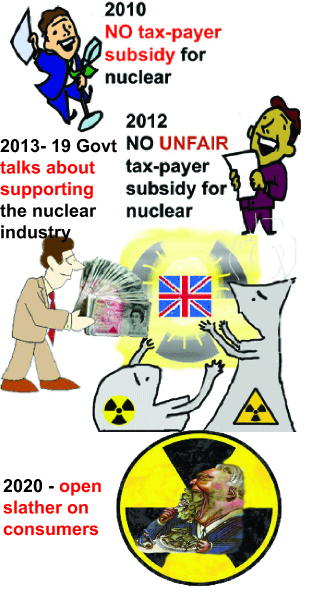 Dave Toke’s Blog 29th Sept 2020, It is looking increasingly likely that the British Government is about to cave-in to EDF’s demand that the British energy consumers should pay what could be massive cost overruns for building Sizewell C nuclear power plant.
http://realfeed-intariffs.blogspot.com/2020/09/is-treasury-about-to-cave-in-over-edfs.html
Plans for Bradwell B nuclear power station could collapse
 Campaigners claim plans for Bradwell B nuclear power station could collapse, Clacton Gazette , By Alex Gidden Reporter 28 Sept 20, CAMPAIGNERS claim plans to build a nuclear power station off the coast of Essex could collapse before the end of the year.
Group chairman Prof Andy Blowers made the bold claim after seeing Japanese firm Hitachi pull out of plans to build its own nuclear power station in north Wales.
He says Hitachi’s decision underlines the “huge expense” associated with building nuclear power stations and believes the Bradwell B project will be binned because of the costs and scale of opposition.
Both Colchester and Maldon councils have rejected planning applications for the power station in the past month.
The applications were jointly submitted by the China General Nuclear Power Group, also known as CGN, and energy firm EDF.
A spokesman for the Blackwater Against New Nuclear Group said: “CGN is now fully aware of the mountain it has to climb to get anywhere near planning permission for its massive nuclear juggernaut, which will utterly destroy the environment and wellbeing of the Blackwater region.
“Widespread public protest and influential councils have produced a powerful coalition of outright opposition to the proposals.
Its progress will not be straightforward and will take years to complete.
“By the time it could start operating, it will be a white elephant, unnecessary, uneconomic and redundant……… https://www.clactonandfrintongazette.co.uk/news/north_essex_news/18749213.campaigners-claim-plans-bradwell-b-nuclear-power-station-collapse/
1 This Month

Protect Sazan Island from the Trump family! https://secure.avaaz.org/campaign/en/protect_sazan_island_from_the_trump_family_loc/?bqFCVab&v=174511&cl=22707147157&_checksum=5e9dde668860e8231c33699735e16a1fbf22ab2cb01da50c999fe8732b9775ef&utm_source=email&utm_medium=blast_email&utm_campaign=174511
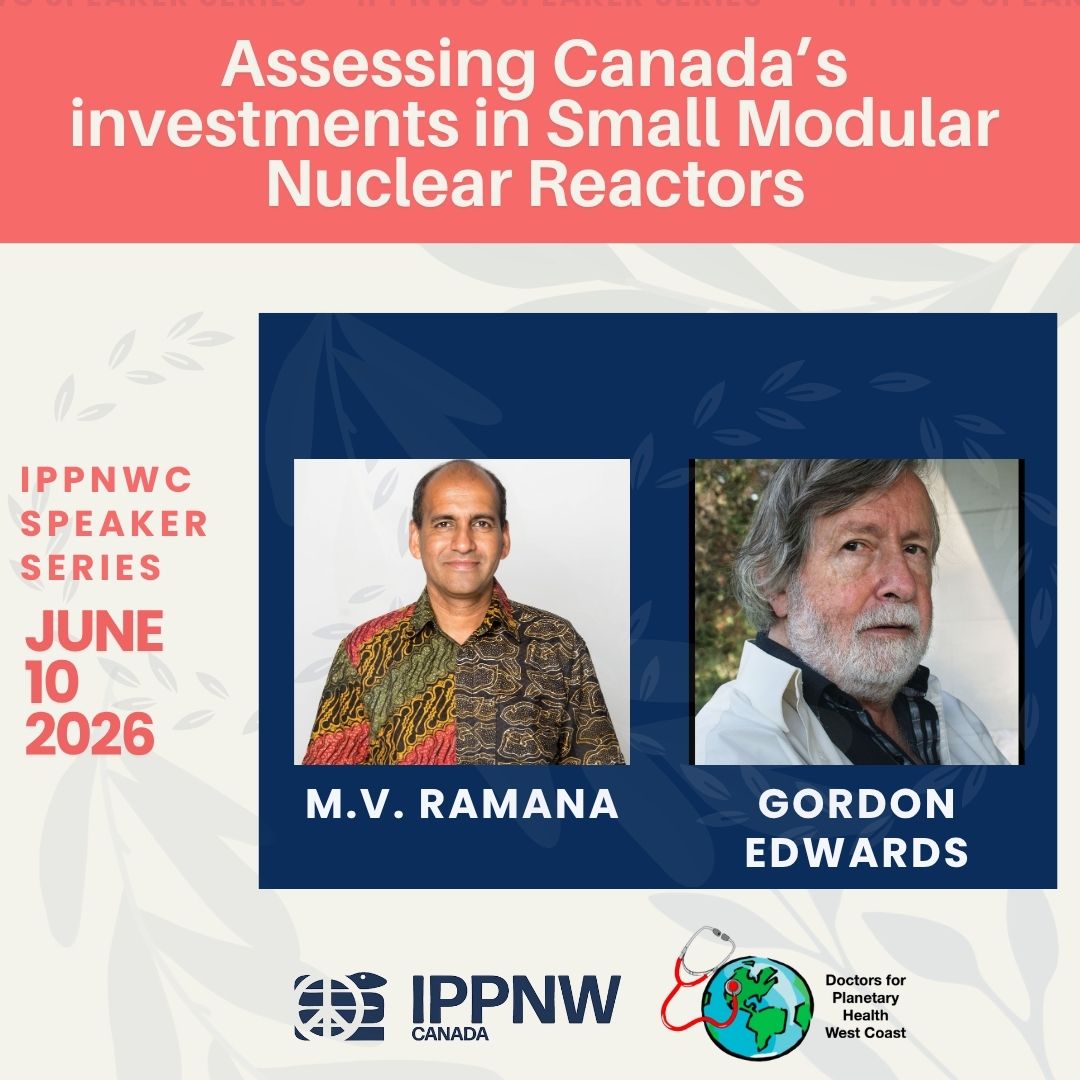
10 June – Assessing Canada’s Investments in Small Modular Nuclear Reactors – https://zoom.us/meeting/register/IiqHA5feRhaEBycOLNTJlA#/registration


Cuba Is Not a Failed State – It Is a Besieged State
PETITION: “Global Appeal to Endorse Palestinian Right of Return of Refugees”
To see nuclear-related stories in greater depth and intensity – go to https://nuclearinformation.wordpress.com
-
Archives
- June 2026 (89)
- May 2026 (306)
- April 2026 (356)
- March 2026 (251)
- February 2026 (268)
- January 2026 (308)
- December 2025 (358)
- November 2025 (359)
- October 2025 (376)
- September 2025 (257)
- August 2025 (319)
- July 2025 (230)
-
Categories
- 1
- 1 NUCLEAR ISSUES
- business and costs
- climate change
- culture and arts
- ENERGY
- environment
- health
- history
- indigenous issues
- Legal
- marketing of nuclear
- media
- opposition to nuclear
- PERSONAL STORIES
- politics
- politics international
- Religion and ethics
- safety
- secrets,lies and civil liberties
- spinbuster
- technology
- Uranium
- wastes
- weapons and war
- Women
- 2 WORLD
- ACTION
- AFRICA
- Atrocities
- AUSTRALIA
- Christina's notes
- Christina's themes
- culture and arts
- Events
- Fuk 2022
- Fuk 2023
- Fukushima 2017
- Fukushima 2018
- fukushima 2019
- Fukushima 2020
- Fukushima 2021
- general
- global warming
- Humour (God we need it)
- Nuclear
- RARE EARTHS
- Reference
- resources – print
- Resources -audiovicual
- Weekly Newsletter
- World
- World Nuclear
- YouTube
-
RSS
Entries RSS
Comments RSS
 nuclear-news