Confusion as USA- Russia nuclear arms talks fail
Nuclear arms talks spiral into confusion as Russia rejects US ‘delusion’, Top US negotiator claimed there was ‘an agreement in principle’ between Trump and Putin, Guardian, Julian Borger in WashingtonWed 14 Oct 2020 US-Russian nuclear arms control talks have sunk into confusion after the top American negotiator claimed there was “an agreement in principle” between Donald Trump and Vladimir Putin, a claim Moscow quickly rejected as a “delusion”. ………
The US had previously insisted that China be included in any future arms control negotiations rather than extending the bilateral arrangements in New Start, but Billingslea has dropped that demand in recent weeks, accepting that trilateral talks could be arranged later.
Alexandra Bell, a former state department official and now senior policy director at the Center for Arms Control and Non-Proliferation, said the pre-election urgency followed “literally months of the Trump administration saying there’s plenty of time to do this – there’s no rush”.
Senior parliamentarians from across Europe wrote to their US counterparts on Tuesday urging them to support a New Start extension.
UK: consultation with 2300 people about radioactive waste dump – only 13 people supported it.
 Northern Echo 13th Oct 2020, THOUSANDS of people have written to the Environment Agency over concerns that plans to dump radioactive waste in Teesside will pose a risk to
communities. An application has been made by Augean North Ltd for a low
level radioactive waste permit at their existing Port Clarence site,
between Stockton and Billingham.
The Environment Agency, which held a
consultation which ended in January, published its report yesterday. About
2,300 people took part in the four-month exercise, with only 13 supporting
the application.
The Environment Agency is now considering these in
determining whether to grant the permit, taking into account information
submitted by Augean North. The operator has been asked to provide further
information, with a decision expected to be made by the end of January
2021.
Members of the public, as well members of Stockton on Tees Borough
Council and Redcar and Cleveland Borough Council commented on the
socioeconomic impact and the general impact on the area, as well as the
potential impact on regeneration plans. Last year, Tees Valley Mayor Ben
Houchen criticised the plans, which he said were against the interests of
those living in surrounding areas. The report can be viewed by visiting
consult.environment-agency.gov.uk/north-east/port-clarence-landfill-permit-application
USA to market nuclear reactor to Bulgaria
 Bulgaria to hold talks with U.S. companies over new nuclear reactor, SOFIA, Oct 13 (Reuters) – Bulgaria’s government gave state-owned energy firm Bulgarian Energy Holding (BEH) a green light on Wednesday to start talks with U.S. companies on plans to build a new nuclear reactor at its Kozloduy power plant, the energy minister said…… Bulgaria to hold talks with U.S. companies over new nuclear reactor, SOFIA, Oct 13 (Reuters) – Bulgaria’s government gave state-owned energy firm Bulgarian Energy Holding (BEH) a green light on Wednesday to start talks with U.S. companies on plans to build a new nuclear reactor at its Kozloduy power plant, the energy minister said……
On Tuesday, Prime Minister Boyko Borissov said the new reactor should be based on U.S. technology and allow diversification in nuclear energy ….
Petkova did not name the companies that would be involved in talks, but said they were developers of nuclear technology, including those who work on small modular designs. She said she would have until the end of January to present the results from the research, which will explore potential technology that could be used for the new unit at the Kozloduy plant and options for its construction. Petkova did not name the companies that would be involved in talks, but said they were developers of nuclear technology, including those who work on small modular designs. She said she would have until the end of January to present the results from the research, which will explore potential technology that could be used for the new unit at the Kozloduy plant and options for its construction. https://www.reuters.com/article/bulgaria-nuclear-kozloduy/bulgaria-to-hold-talks-with-us-companies-over-new-nuclear-reactor-idUSL8N2H44VI |
|
Assange extradition case could esrablish a dangerous legal precedent
 Crumbling Case Against Assange Shows Weakness of “Hacking” Charges Related to Whistleblowing
The charge against Assange is about establishing legal precedent to charge publishers with conspiring with their sources, something that so far the U.S. government has failed to do because of the First Amendment.
Five years later, in 2018, the Trump Administration indicted Assange anyway. But, rather than charging him with espionage for publishing classified information, they charged him with a computer crime, later adding 17 counts of espionage in a superseding May 2019 indictment.
The computer charges claimed that, in 2010, Assange conspired with his source, Chelsea Manning, to crack an account on a Windows computer in her military base, and that the “primary purpose of the conspiracy was to facilitate Manning’s acquisition and transmission of classified information.” The account enabled internet file transfers using a protocol known as FTP.
New testimony from the third week of Assange’s extradition trial makes it increasingly clear that this hacking charge is incredibly flimsy. The alleged hacking not only didn’t happen, according to expert testimony at Manning’s court martial hearing in 2013 and again at Assange’s extradition trial last week, but it also couldn’t have happened.
The new testimony, reported earlier this week by investigative news site Shadowproof, also shows that Manning already had authorized access to, and the ability to exfiltrate, all of the documents that she was accused of leaking — without receiving any technical help from WikiLeaks. …….
the charge is not actually about hacking — it’s about establishing legal precedent to charge publishers with conspiring with their sources, something that so far the U.S. government has failed to do because of the First Amendment………
Whether or not you believe Assange is a journalist is beside the point. The New York Times just published groundbreaking revelations from two decades of Donald Trump’s taxes showing obscene tax avoidance, massive fraud, and hundreds of millions of dollars of debt.
Trump would like nothing more than to charge the New York Times itself, and individual journalists that reported that story, with felonies for conspiring with their source. This is why the precedent in Assange’s case is so important: If Assange loses, the Justice Department will have established new legal tactics with which to go after publishers for conspiring with their sources. https://portside.org/2020-10-10/crumbling-case-against-assange-shows-weakness-hacking-charges-related-whistleblowing
World press freedom endangered, if UK extradites Julian Assange to America
The
|
Assange Faces Extradition for Exposing US War Crimes, BY Marjorie Cohn, Truthout, October 11, 2020 Three weeks of testimony in Julian Assange’s extradition hearing in London underscored WikiLeaks’s extraordinary revelation of U.S. war crimes in Iraq, Afghanistan and Guantánamo Bay. But the Trump administration is seeking to extradite Assange to the United States to stand trial for charges under the Espionage Act that could cause him to spend 175 years in prison. Assange founded WikiLeaks during the Bush administration’s “war on terror,” which was used as a pretext to start two illegal wars and carry out a widespread program of torture and abuse of prisoners at Guantánamo and the CIA black sites. On October 8, 2011, Assange told a Stop the War Coalition rally in London’s Trafalgar Square, “If wars can be started by lies, peace can be started by truth.” In 2010 and 2011, WikiLeaks published classified material that Army intelligence analyst Chelsea Manning had provided to the organization. Manning was prosecuted, convicted and sentenced to 35 years in prison for leaking the documents. As he left office, Barack Obama commuted her sentence to the seven years she had already served. That commutation provoked “tremendous anger” in the Trump administration and drew Trump’s attention to Assange, Eric Lewis testified. Lewis, chairman of the board of Reprieve U.S. and lawyer for Guantánamo and Afghan detainees, called this “a politically motivated prosecution.” The files that WikiLeaks published contained 90,000 reports about the war in Afghanistan, including the Afghan War Logs, which documented a greater number of civilian casualties by coalition forces than the U.S. military had reported. In addition, WikiLeaks published nearly 400,000 field reports about the Iraq War, more than 15,000 unreported deaths of Iraqi civilians, and the systematic murder, torture and rape by the Iraqi army and authorities that were ignored by U.S. forces. WikiLeaks also published the Guantánamo Files, 779 secret reports constituting evidence of the U.S. government’s abuse of approximately 800 men and boys, ages 14 to 89. That abuse violated the Geneva Conventions and the Convention Against Torture and Other Cruel, Inhuman or Degrading Treatment or Punishment. Perhaps the most notorious release by WikiLeaks was the 2007 “Collateral Murder” video, which depicts a U.S. Army Apache helicopter target and fire on unarmed civilians in Baghdad. At least 18 civilians were killed, including two Reuters reporters and a man who came to rescue the wounded. Two children were injured. A U.S. Army tank drove over one of the bodies, cutting it in half. The video contained evidence of three separate war crimes prohibited by the Geneva Conventions and the U.S. Army Field Manual. As they are firing on the civilians, U.S. gunmen can be heard saying, “Look at those dead bastards.” In his written testimony, investigative journalist Nicky Hager drew a parallel between the Collateral Murder video and the television image of George Floyd screaming “I can’t breathe.” Assange Cannot Be Extradited for a Political OffenseThe 2003 U.S.-U.K. Extradition Treaty forbids extradition for a political offense. Although the treaty doesn’t define “political offense,” it generally includes espionage, treason, sedition and crimes against state power. Trump is asking the U.K. to extradite Assange for exposing war crimes. This is a classic political offense. Assange is charged under the Espionage Act and espionage constitutes a political offense as well……….. Assange’s Prosecution Violates Freedom of PressWhile the Obama administration declined to file criminal charges against Assange for fear of setting a dangerous precedent, Team Trump demonstrated no such forbearance. By charging Assange under the Espionage Act, Trump is making him a poster boy for its full court press against the media, which he calls “the enemy of the people.” Assange’s prosecution would send an ominous message to all journalists: report the unvarnished truth at your peril. No media outlet or journalist has ever been prosecuted under the Espionage Act for publishing truthful information, which is protected First Amendment activity. Journalists are permitted to publish material that was illegally obtained by a third person and is a matter of public concern. The U.S. government has never prosecuted a journalist or newspaper for publishing classified information, an essential tool of journalism. Information-gathering, reporting and disclosure fit the classic definition of activity protected by the First Amendment’s guarantee of freedom of the press. There is no distinction between what WikiLeaks did and what The New York Times, Der Spiegel, Le Monde, El País and The Guardian did as well. They all published articles based on documents WikiLeaks released. This is the reason Obama administration — which prosecuted an enormous number of whistleblowers — considered, but refrained from, indicting Assange. ……… WikiLeaks Didn’t Endanger Informants and Saved LivesAlthough the U.S. government claims that Assange endangered informants named in the published documents, John Goetz, an investigative reporter who worked for Germany’s Der Spiegel, testified that Assange took pains to ensure that the names of U.S. informants in Iraq and Afghanistan were redacted to protect their identities. …….. Moreover, WikiLeaks’s revelations actually saved lives. After WikiLeaks published evidence of Iraqi torture centers the U.S. had established, the Iraqi government refused Obama’s request to extend immunity to U.S. soldiers who commit criminal and civil offenses there. As a result, Obama had to withdraw U.S. troops from Iraq. WikiLeaks also revealed evidence of wrongdoing by other countries besides the United States. The organization uncovered Russian surveillance, published exposés of Bashar al-Assad in Syria, and some say WikiLeaks’s exposure of corruption in Tunisia and torture in Egypt helped catalyze the Arab Spring………… Assange’s Prosecution Will Chill JournalismOstensibly to get around allegations that it is prosecuting Assange for conducting journalism, the Trump administration is trying to paint him as a hacker by accusing him of conspiring with Manning to break into a government computer to steal government documents, in violation of the Computer Fraud and Abuse Act. But, as Patrick Eller, a digital forensic expert, testified, the attempted cracking of the password hash was not technologically possible in 2010, when the conversation between Assange and Manning occurred. Even if it were feasible, the purpose would not have been to conceal Manning’s identity and it would not have given Manning any increased access to government databases. The prosecution of Assange would set a disturbing example for journalists and media outlets that publish information critical of the government. Team Trump singled out Assange to deter journalists from publishing material that criticizes U.S. policy. If Assange is extradited to the United States and convicted of the charges against him, it would chill journalists from reporting the facts for fear they could be indicted under the Espionage Act………. When she set the November 16 date for the defense to submit closing arguments, Judge Vanessa Baraitser asked the defense how the U.S. presidential election would affect its case and declared that her decision on extradition would come after that election, stating, “That’s one of the factors going into my decision.” Kristinn Hrafnsson, editor-in-chief of WikiLeaks, said that the judge “acknowledged what has been clear since even before the first indictment against Julian Assange was unsealed — that this is a politically motivated prosecution.” Baraitser, who has granted extradition in 96 percent of the cases that have come before her, plans to issue her ruling on January 4. If she grants extradition, there will be several levels of appeals, including to the European Court of Human Rights. The stakes could not be higher. https://truthout.org/articles/assange-faces-extradition-for-exposing-us-war-crimes/?eType=EmailBlastContent&eId=614ce999-9844-4d61-a600-169db0c99052 |
Cracks in France’s ageing Tricastin nuclear reactor
Liberation 8th Oct 2020, EDF’s small calculations to make people forget Tricastin’s faults. The
40-year-old Drôme plant is in the process of obtaining a ten-year
operating extension. But cracks in the reactor vessel number 1 alarm
scientists, who point to “Liberation” the risks in terms of safety.
Belarus postpones launch of nuclear reactor
Radio Free Europe 9th Oct 2020, Belarus says it has postponed the full launch of the first reactor at its
Astravets nuclear power plant by two years to 2022. The plant, located near
the Lithuanian border, was scheduled to be launched on October 6 until the
cabinet order on October 9. Built by the Russian state firm Rosatom and
financed by Moscow with a $10 billion loan, the project is opposed by
neighboring EU member Lithuania, whose capital, Vilnius, is just 50
kilometers away. Lithuania, Latvia, and Estonia are moving to a full
decoupling from their Soviet-era common power system by 2025.
U.S. and Russian negotiators try tosalvage arms control pact
their nuclear warhead stockpiles in a bid to salvage their last remaining
arms control pact before it expires next year, a source has said.
https://www.thenational.scot/news/18785398.us-russia-agree-freeze-nuke-stockpile/
Big doubts about the economics of small nuclear reactors for the UK
 FT 11th Oct 2020, The big challenge facing small nuclear reactors. When Britain unveiled its
first commercial nuclear reactor back in 1956, Calder Hall in Cumbria had
the ability to generate 50 megawatts of electricity. Fast-forward four
decades to the last reactor the UK completed, at Sizewell in Suffolk. Still
functioning, it has a capacity of 1,200MW. Spot the theme? Yup, ever bigger
reactors.
Size has steadily increased because of simple nuclear economics.
Sizewell B may be able to generate 24 times as much power as a 50MW
reactor. But it doesn’t need 24 times the material inputs and staffing to
generate that extra power. Which all makes it seem faintly
counter-intuitive that Britain is considering downsizing and spending money
on a fleet of so-called small modular reactors.
The government is considering plans to put up to £2bn into developing the technology. A
number of companies, including Britain’s Rolls-Royce and GE Hitachi, are
pitching to sell their products. The aim is to fund prototypes with a view
to kick-starting a new SMR industry.
This would build perhaps dozens of
mini-reactors to [supposedly] help the UK meet its net zero emissions target while also
keeping the lights on, as well as exporting this technically advanced kit.
Large nuclear hasn’t exactly a spotless record when it comes to cost
containment. So why make it harder by forgoing those scale advantages?
Research by a team led by Tony Roulstone at Cambridge university looked at
the relative costs of building a “first of a series” SMR against a
comparable large reactor. It concluded that if you used the same project
techniques as for conventional plants, the SMR would cost (once the
interest costs incurred in construction were taken into account) roughly 70
per cent more per kilowatt (kW) to build than the larger one.
Squeezing that cost back down requires a wholly different approach to construction.
Instead of building everything in the open on a massive building site, as
with large reactors, it means making as much as possible in factories
before shipment to site. The same Cambridge team estimated that with ever
more prefabrication and standardisation of parts, you could ultimately
squeeze the cost down roughly to parity with the larger reactor.
A glance at the history of overruns and delays that plagued the Advanced Gas-cooled
Reactor project in the 1960s should suffice as a reminder. For SMRs to
avoid a similar miserable fate, the government must pick a single
commercial technology which can bring in sufficient private sector
investment and attract export orders. This cannot be some “made in
Britain” industrial exercise. If that’s what’s in prospect, then,
honestly, big is probably best.
https://www.ft.com/content/99307126-bb21-48e3-87aa-301749dec870
Conflict of interest – UK’s Centre for Environment, Fisheries and Aquaculture Science (CEFAS)
Stop Hinkley Press Release 8th Oct 2020, EDF’s Hinkley C Nuclear Power Station will be wiping out fish stocks in
Severn Estuary for 60 years. The Stop Hinkley Campaign is accusing
EDFGenco, the French and Chinese owned Company building Hinkley Point C, of
trying to bully the UK Environment Agency into allowing them to destroy
environmentally precious fish stocks for the 60 year lifetime of the
nuclear power station.
A condition placed on EDFGenco by the Environment
Agency was that permission to build Hinkley C was dependent on Acoustic
Fish Deterrents (AFDs) being placed on the two massive cooling water intake
heads 3 kilometres offshore from the Nuclear site.
Now EDFGenco is trying
to renege on its commitment to install AFDs and is seeking a variation on
the planning conditions imposed. EDFGenco claims that the Centre for
Environment, Fisheries and Aquaculture Science (CEFAS) the government’s
marine and freshwater science expert body – is happy for them to go ahead
without AFDs. The Wildfowl and Wetland Trust points out that “CEFAS’s
relationship as a paid contractor to EDFGenco and an agent of Government
raises unavoidable questions of conflict of interest”.
Lower Saxony opposes building of nuclear power plants by Netherlands – location all too close

 German state of Lower Saxony against nuclear power plant in bordering Netherlands, Nuclear phase-out 08 Oct 2020, Kerstine Appunn,– NWZ Online
The northern German state of Lower Saxony has been rattled by Dutch plans to assess the construction of up to 10 new nuclear power plants, one of which could be located near the German border. “I will do everything in my power to prevent the Netherlands from seeing a new dawn of nuclear power,” Lower Saxony’s environment minister Olaf Lies (SPD) told Stefan Idel at NWZ online. The Netherlands has only one of formerly two nuclear power stations operating but governing party VVD has suggested that reaching the Paris Agreement climate targets would require the construction of new nuclear plants.
Lies said he was surprised by the Dutch announcement, calling it a “a gigantic step backwards into old times” to invest into new nuclear power plants and “irresponsible” to produce more nuclear waste. The minister said he expected strong resistance in the Northwest of the state. Members of the Green Party in Lower Saxony’s parliament announced they would work together with their Dutch sister party “GroenLinks” to stop this “economic and ecologic lunacy”.
While a study for the Dutch government said that nuclear power had a similar price as renewable installations, critics insist that nuclear power is by now much more expensive. Lies said he would focus on promoting joint renewable energy projects. Germany will phase-out its last nuclear power plants by the end of 2022 and is currently in the decade-long process of finding a permanent repository for the nuclear waste generated in the past 60 years. https://www.cleanenergywire.org/news/german-state-lower-saxony-against-nuclear-power-plant-bordering-netherlands
Conservative UK government is considering a carbon tax, in its commitment to reduce greenhouse gas emissions
 Times 9th Oct 2020, Rishi Sunak is examining proposals for a UK-wide carbon tax that could
raise billions of pounds while encouraging the drive towards net-zero emissions. The chancellor is seeking to replace existing EU carbon-reduction schemes with the new tax when the transition period finishes at the end of the year.
“The danger with relying solely on a carbon tax is that no one believes politicians will not scrap it when things get tough, so no one invests. A cap and trade scheme that guarantees an outcome, alongside regulation and innovation support, is much more likely to lead to cuts in emissions.”https://www.thetimes.co.uk/edition/news/sunak-plans-carbon-emissions-tax-to-help-rebuild-economy-jbl3gs993
European Commission, and France’s Hercules project, plan to break up the nuclear company EDF
Reporterre 8th Oct 2020, The European Commission, according to a document obtained by Reporterre,
intends to impose on the French State the disintegration of the EDF group
in the name of respect for competition rules. The “reform” of Brussels goes
even further than the government project Hercules, which wants to dismember
EDF .
https://reporterre.net/Exclusif-Le-projet-fou-de-Bruxelles-pour-demanteler-ED
Will the UK government sacrifice the beautiful Suffolk coast in its misguided, uneconomic, Sizewell nuclear power push?
 East Anglian Daily Times 8th Oct 2020, As councils lose patience with EDF, will Suffolk businesses follow suit?
Today East Suffolk lies at a crossroads – the future of the east of the county now seems certain to rest in the hands of London-based civil servants and ministers – and to be honest I don’t know which way they will jump when push comes to shove. The deadline has now passed for councils, businesses, and residents to have their say on whether a two new nuclear reactors should be built on the Suffolk coast at Eastbridge, north of the existing stations at Sizewell.
landscape. But I do worry that there are some in government who do not understand the value of this area to the country as a whole who will be prepared to look on Sizewell C as a shiny investment to try to kick-start the UK economy after the pandemic and in a world no longer governed by EU rules, will pour in government subsidies to make up for the loss of Chinese money.
https://www.eadt.co.uk/ea-life/last-chance-to-stop-sizewell-c-1-6871419?s=09
BBC 8th Oct 2020, Campaigners against a new nuclear power station say they are “resolute”
after their bid to protect woodland was thrown out by the High Court. EDF
Energy, which wants to build two new reactors next to Sizewell B in
Suffolk, was given approval in 2019 to fell Coronation Wood on the site.
Together Against Sizewell C (Tasc) sought a judicial review, claiming that
decision was unlawful.
USA trying to beat China, in marketing nuclear reactors to Romania
Romania, U.S. to sign cooperation agreements over nuclear reactors, By Reuters Staff, 9 Oct 20, BUCHAREST (Reuters) – Romania’s economy ministry will sign cooperation and financing agreements with the United States
1 This Month

Protect Sazan Island from the Trump family! https://secure.avaaz.org/campaign/en/protect_sazan_island_from_the_trump_family_loc/?bqFCVab&v=174511&cl=22707147157&_checksum=5e9dde668860e8231c33699735e16a1fbf22ab2cb01da50c999fe8732b9775ef&utm_source=email&utm_medium=blast_email&utm_campaign=174511
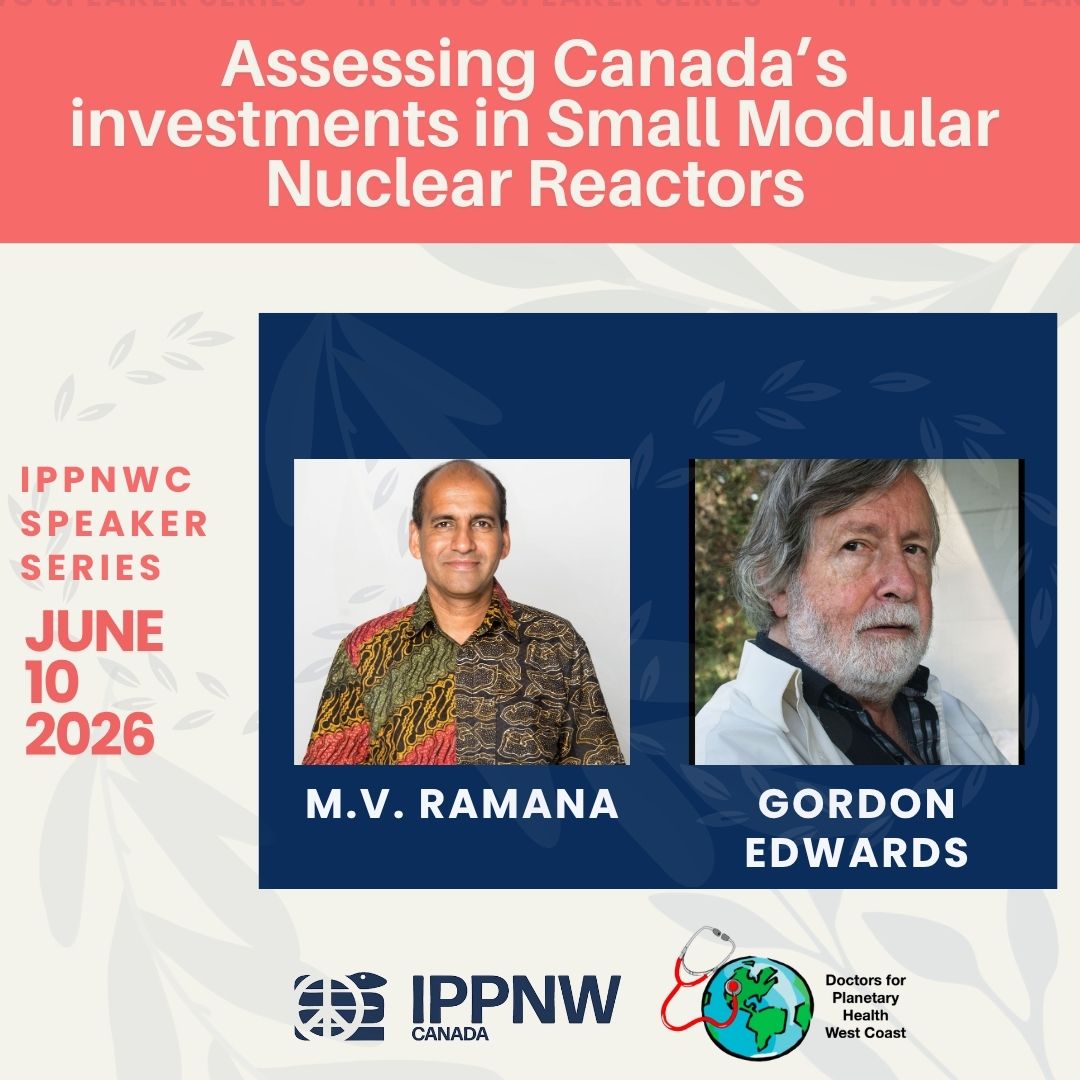
10 June – Assessing Canada’s Investments in Small Modular Nuclear Reactors – https://zoom.us/meeting/register/IiqHA5feRhaEBycOLNTJlA#/registration


Cuba Is Not a Failed State – It Is a Besieged State
PETITION: “Global Appeal to Endorse Palestinian Right of Return of Refugees”
To see nuclear-related stories in greater depth and intensity – go to https://nuclearinformation.wordpress.com
-
Archives
- June 2026 (89)
- May 2026 (306)
- April 2026 (356)
- March 2026 (251)
- February 2026 (268)
- January 2026 (308)
- December 2025 (358)
- November 2025 (359)
- October 2025 (376)
- September 2025 (257)
- August 2025 (319)
- July 2025 (230)
-
Categories
- 1
- 1 NUCLEAR ISSUES
- business and costs
- climate change
- culture and arts
- ENERGY
- environment
- health
- history
- indigenous issues
- Legal
- marketing of nuclear
- media
- opposition to nuclear
- PERSONAL STORIES
- politics
- politics international
- Religion and ethics
- safety
- secrets,lies and civil liberties
- spinbuster
- technology
- Uranium
- wastes
- weapons and war
- Women
- 2 WORLD
- ACTION
- AFRICA
- Atrocities
- AUSTRALIA
- Christina's notes
- Christina's themes
- culture and arts
- Events
- Fuk 2022
- Fuk 2023
- Fukushima 2017
- Fukushima 2018
- fukushima 2019
- Fukushima 2020
- Fukushima 2021
- general
- global warming
- Humour (God we need it)
- Nuclear
- RARE EARTHS
- Reference
- resources – print
- Resources -audiovicual
- Weekly Newsletter
- World
- World Nuclear
- YouTube
-
RSS
Entries RSS
Comments RSS
 nuclear-news