UK’s ‘small nuclear reactors’ – the real agenda is the funding of nuclear weapons
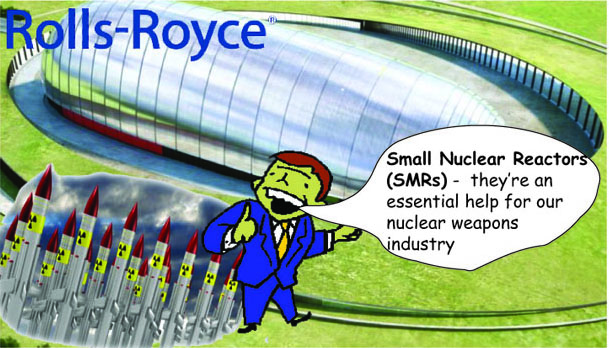
A secret military agenda. UK defence policy is driving energy policy – with the public kept in the dark, Beyond Nuclear
By David Thorpe, 8 Nov 20,The UK government has for 15 years persistently backed the need for new nuclear power. Given its many problems, most informed observers can’t understand why. The answer lies in its commitment to being a nuclear military force. Here’s how, and why, anyone opposing nuclear power also needs to oppose its military use.
“All of Britain’s household energy needs supplied by offshore wind by 2030,” proclaimed Prime Minister Boris Johnson at a recent online Conservative Party conference. This means 40 per cent of total UK electricity. Johnson did not say how, but it is likely, if it happens, to be by capacity auctions, as it has been in the recent past.
But this may have been a deliberate distraction: there were two further announcements on energy – both about nuclear power.
16 so-called “small nuclear reactors”
Downing Street told the Financial Times, which it faithfully reported, that it was “considering” £2 billion of taxpayers’ money to support “small nuclear reactors” – up to 16 of them “to help UK meet carbon emissions targets”.
It claimed the first SMR is expected to cost £2.2 billion and be online by 2029.
The government could also commission the first mini power station, giving confidence to suppliers and investors. Any final decision will be subject to the Treasury’s multiyear spending review, due later this year.
The consortium that would build it includes Rolls Royce and the National Nuclear Laboratory.
Support for this SMR technology is expected to form part of Boris Johnson’s “10-point plan for a green industrial revolution” and new Energy White Paper, which are scheduled for release later in the autumn.
Johnson will probably also frame it as his response to the English citizens assembly recommendations– a version of the one demanded by Extinction Rebellion in 2019 – which reported its conclusions last month.
While the new energy plan will also include carbon capture and storage, and using hydrogen as vehicle fuel, it’s the small modular reactors that are eye-popping.
They would be manufactured on production lines in central plants and transported to sites for assembly. Each would operate for up to 60 years, “providing 440MW of electricity per year — enough to power a city the size of Leeds”, Downing Street said, and the Financial Times copied.
The SMR design is alleged to be ready by April next year. The business and energy department has already pledged £18 million (US $23.48 million) towards the consortium’s early-stage plans.
They are not small
The first thing to know about these beasts is that they are not small. 440MW? The plant at Wylfa (Anglesey, north Wales) was 460MW (it’s closed now). 440MW is bigger than all the Magnox type reactors except Wylfa and comparable to an Advanced Gas-cooled Reactor.
Where will they be built? In the town of Derby – the home of Rolls Royce – where, as nuclear consultant Dr. David Lowry points out, the government is already using the budget of the Housing and Communities Department to finance the construction of a new advanced manufacturing centre site.
When asked why this site was not being financed by the business and energy department (BEIS), as you’d expect, a spokesperson responded that it was part of “levelling up regeneration money”.
Or perhaps BEIS did not want its budget used in such a way. Throwing money at such a “risky prospect” betrays “an irrationally cavalier attitude” according to Andrew Stirling, Professor of Science & Technology Policy at the University of Sussex Business School, because an “implausibly short time” is being allowed to produce an untested reactor design.
Only if military needs are driving this decision is it explicable, Stirling says. “Even in a worst case scenario, where this massive Rolls Royce production line and supply chain investment is badly delayed (or even a complete failure) with respect to civil reactor production, what will nonetheless have been gained is a tooled-up facility and a national skills infrastructure for producing perhaps two further generations of submarine propulsion reactors, right into the second half of the century.
“And the costs of this will have been borne not by the defence budget, but by consumers and citizens.”
Yes, military needs
UK defence policy is fully committed to military nuclear. The roots of civil nuclear power lay in the Cold War push to develop nuclear weapons. Thus has it ever been since the British public was told nuclear electricity would be “too cheap to meter”.
The legacy of empire and thrust for continued perceived world status are at the core of a post-Brexit mentality. It’s inconceivable to the English political elite that this status could exist without Great Britain being in the nuclear nations club, brandishing the totem of a nuclear deterrent.
“The civil-military link is undisputable and should be openly discussed,” agrees Dr Paul Dorfman at the Energy Institute, University College London.
Andrew Stirling talks of the “tragic relative popularity of (increasingly obsolescent) nuclear weapons”. The coincidental fact that civil nuclear installations are also crumbling provides a serendipitous opportunity for some.
The stores of plutonium in the UK are already overflowing and the military has its own dedicated uranium enrichment logistics.
Any nation’s defence budget in this day and age cannot afford a new generation of nuclear weapons. So it needs to pass the costs onto the energy sector.
“Clearly, the military need to maintain both reactor construction and operation skills and access to fissile materials will remain. I can well see the temptation for Defence Ministers to try to transfer this cost to civilian budgets,” observes Tom Burke, Chairman of think tank E3G.
The threat of nuclear proliferation
The threat of nuclear proliferation is therefore linked to the spread of civil nuclear power worldwide, says Dr David Toke, Reader in Energy Politics, Department of Politics and International Relations at the University of Aberdeen. David Lowry agrees: “India, Pakistan and above all Israel are obvious examples, each of which certainly has built nuclear weapons.”
It’s impossible to separate the tasks of challenging civil nuclear power without also challenging military nuclear interests, Stirling strongly believes. “The massive expense of increasingly ineffective military nuclear systems extend beyond the declared huge budgets. They are also propped up by large hidden subsidies from consumer and taxpayer payments for costly nuclear power.
“Huge hidden military interests will likely continue to keep the civil nuclear monster growing new arms. Until critics reach out and engage the entire thing, we’ll never prevail in either struggle.”
How new plants would be paid for still remains a question. Nuclear power is prohibitively expensive………..https://wordpress.com/read/feeds/72759838/posts/3011373103
The Public Relations battle for nuclear power in the UK- editors giving it a free ride?
 A secret military agenda. UK defence policy is driving energy policy – with the public kept in the dark, Beyond Nuclear, By David Thorpe, 8 Nov 20 , “…………The PR battle for nuclear
There is a PR battle in the UK media for new nuclear – and now there are two sides to it.
Editors seem to favour giving pro-nuclear writers a clear ride and rarely question their baseless claims that nuclear is zero carbon. This is misguided and not based on empirical data, says Dr Lowry.
If the carbon footprint of the full uranium life cycle is considered – from uranium mining, milling, enrichment (which is highly energy intensive), fuel fabrication, irradiation, radioactive waste conditioning, storage, packaging to final disposal – nuclear power’s CO2 emissions are between 10 to 18 times greater than those from renewable energy technologies, according to a recent study by Mark Jacobson, professor of civil and environmental engineering at Stanford University, California.
Another recent peer-reviewed article in Nature Energy shows that nations installing nuclear power don’t have lower carbon emissions, but those installing lots of renewables do. Moreover, investment in new nuclear “crowds out” investment in renewables.
Renewables therefore offer a more rapid and cost-effective means to address net zero targets. The opportunity cost of nuclear is severely negative. The 2019 version of the World Nuclear Industry Status Report comprehensively demolishes any evidence-based arguments on the utility of nuclear to help address climate change.
But that’s not the real argument. It’s military. At the very least, we deserve to be told………. https://wordpress.com/read/feeds/72759838/posts/3011373103
David Thorpe is author of books such as Solar Technology and One Planet Cities. He also runs online courses such as Post-Graduate Certificate in One Planet Governance. He is based in the UK. https://wordpress.com/read/feeds/72759838/posts/3011373103
Boris Johnson at a critical point on the decision about Sizewell C nuclear construction
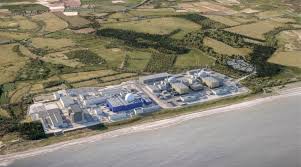 Times 7th Nov 2020, The prime minister was set to announce a ten-point plan to meet the UK’s climate change promises due the week after next.
https://www.thetimes.co.uk/article/petrol-and-diesel-car-sales-face-2030-ban-x8bn3rjgp
UK government influenced by pro nuke advisor Dominic Cummins and Rolls Royce to invest in uneconomic nuclear power
By David Thorpe, 8 Nov 20 A secret military agenda. UK defence policy is driving energy policy – with the public kept in the  dark, Beyond Nuclear By David Thorpe, 8 Nov 20 ” ……………..Rolls Royce and Dominic Cummings This sad, radioactive site is operated by – guess who – Rolls-Royce (under the Vulcan Trials Operation and Maintenance contract).
And Rolls Royce is already benefiting from public money flowing into new nuclear. It has for years been lobbying the government to support its small nuclear reactors wheeze.
Its 2017 pitch document contained phrases like “providing 440MW of electricity per year — enough to power a city the size of Leeds” – that Downing Street has literally copied and pasted into the above article fed to the Financial Times.
It doesn’t take much insight to see that Rolls Royce has turned Boris Johnson’s right-hand elf – the one who hates energy efficiency – Dominic Cummings. One can see his hand in the push for SMRs, while BEIS is pushing support for Sizewell C.
Rolls Royce is axing up to 8,000 jobs because of the pandemic-related aviation crash. This troubled company is a huge symbol of Great Britain plc. Millions of public money for SMRs is just what it needs.
But to back both Sizewell and the SMRs would be far too expensive for the public purse, already heavily in debt because of the coronavirus pandemic. Burke believes the SMR pitch is “Cummings fight back against the public pressure for Sizewell from EDF and (Tom) Greatrex”.
Tom Greatrex is the Nuclear Industry Association’s chairman. In a Times article he recently called for “a strong and unambiguous statement of the need for new nuclear to be able to meet the net-zero target” with backing for Sizewell……… https://wordpress.com/read/feeds/72759838/posts/3011373103
Belarus opens nuclear plant opposed by neighboring Lithuania
The president of Belarus has formally opened the country’s first nuclear power plant over the objections of neighboring Lithuania, abc News ByThe Associated Press, 8 November 2020, KYIV, Ukraine — Belarusian President Alexander Lukashenko on Saturday formally opened the country’s first nuclear power plant, a project sharply criticized by neighboring Lithuania……
In line with a law banning electricity imports from Belarus once the nuclear plant started up, Lithuania’s Litgrid power operator cut the inflow of electricity from Belarus when the plant began producing electricity on Tuesday…….
Belarus suffered severe damage from the 1986 Chernobyl nuclear disaster, which spewed radioactive fallout from a plant in then-Soviet Ukraine across large areas of Europe. That painful legacy has fueled opposition to the nuclear plant project in Belarus.
Andrei Sannikov, a prominent opposition figure who was imprisoned for 16 months after running against Lukashenko in the 2010 presidential election, tweeted Saturday that the plant constitutes a “geopolitical weapon” against the European Union.
Lithuania closed its sole Soviet-built nuclear power plant in 2009. In recent weeks, Lithuanian authorities have handed out free iodine pills to residents living near the Belarus border. Iodine can help reduce radiation buildup in the thyroid in case of a leak at the nuclear plant. https://abcnews.go.com/International/wireStory/belarus-opens-nuclear-plant-opposed-neighboring-lithuania-74073929
Britain’s second option for new nuclear – Big Nuclear Reactors
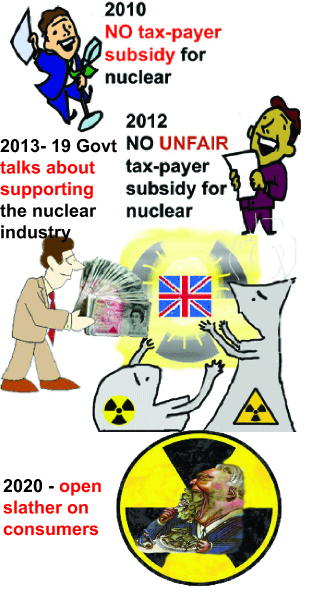 A secret military agenda. UK defence policy is driving energy policy – with the public kept in the dark, Beyond NuclearBy David Thorpe, 8 Nov 20 “……..The second option for new nuclear. While Downing Street is pushing SMRs, BEIS has been looking for a way to finance the £20 billion Sizewell C reactor which EDF has been lobbying to build in Suffolk. This could be why it did not want to bankroll Rolls Royce’s expansion.
One idea being floated by BEIS is the government taking equity stakes in future nuclear plants such as Sizewell C, the energy minister has confirmed.
French energy company EDF is unable to continue with its plans for a new UK nuclear power station without even more government support than it has already had.
The CEO of EDF, Jean-Bernard Lévy, met the Chancellor of the Exchequer Rishi Sunak recently to beg for such support. The head of Greenpeace UK, John Sauven, wrote to the Chancellor saying giving support may be in EDF’s interests, but it is not in the UK’s. Nevertheless, the government is considering taking a direct stake in the project, using a “Regulated Asset Base” (RAB) financing model, where costs are added to consumers’ bills during construction.
This would still result in multibillion-pound liabilities showing on the government’s balance sheet. So the Treasury is studying whether the government should in return have equity stakes in EDF’s Sizewell plant.
The government previously offered to take a one-third stake in Hitachi’s Wylfa plant on Anglesey, but the Japanese company still scrapped the project last month – even then it was too expensive.
The RAB approach is being challenged anyway by the national nuclear regulator, the Office for Nuclear Regulation, because it could introduce a dual regulator for the industry, which it does not regard as sensible or workable.
Renewables can supply UK energy needs and net zero targets sooner and cheaper than nuclear
Renewables are safer, cheaper, quicker to install and genuinely low carbon, with no fuel supply chain.
The Sizewell reactor could not realistically be supplying power until 2034 at the earliest, while wind and solar plants take less than two years to commission, on average.
The ability of the national grid to absorb more fluctuating renewable electricity input is improving, helped by the collapsing cost of batteries, and investment in hydrogen and other forms of storage.
The National Infrastructure Commission has testified that the absorption of 65 per cent renewables on the grid by 2030 is cost-effective – and more is technically achievable.
Implicitly recognising the truth of this, the Ministry of Defence’s Chief Scientific Adviser on nuclear science and technology matters, Robin Grimes, has just opened up another front against renewables.
Grimes is advocating nuclear power’s potential for cogeneration – using its “waste” heat for all manner of things from district heating and seawater desalination to synthetic fuel production and industrial process heat.
This is not likely to make much of a dent in the cost-benefit equation.
Alarm bells should be set ringing when you know that this same Grimes was also co-author of a once-secret report in 2014 for the Ministry of Defence where it was recommended that the UK nuclear submarine industry needs to forge links with civil nuclear power in order to extricate itself from the dire situation it is in.
This secret report discussed what to do about the radiation-leaking Vulcan Naval Reactor Test Establishment, a military submarine reactor testing facility built in 1950 at Dounreay in Scotland.
Engineers with nuclear expertise are dying out with the reactors. New nuclear subs need a new supply chain and new expertise. What better place to tackle all these issues?…………….https://wordpress.com/read/feeds/72759838/posts/3011373103
Welsh families in the shadow of Wylfa nuclear station are slowly being pushed out
Wales Online 8th Nov 2020 There used to be a tight-knit community of mostly Welsh speakers living in
the shadow of a nuclear power station — until it was decided they were in
the way. One by one, the families and farmers living and working the land
around the Wylfa nuclear power station on the island of Anglesey have been
slowly bought off and forced to move, leaving just a handful of stubborn people
https://www.walesonline.co.uk/news/wales-news/people-forced-leave-homes-factory-19224272
Fears of local community about drugs and sexual exploitation in the 10 year Sizewell C nuclear build
East Anglian Daily Times 8th Nov 2020, Fears have been voiced that the 10-year construction of Sizewell C could
bring drug gangs and prostitution – including the sexual exploitation of women and teenage girls and “pop-up brothels” – to the area.
https://www.eadt.co.uk/news/sizewell-c-pop-up-brothels-and-county-lines-1-6920469
Small and large new nuclear reactors in Britain’s so-called ‘green industrial revolution’
Mail on Sunday 7th Nov 2020, Boris Johnson is poised to launch major plans for a ‘green industrial revolution’ backing a new wave of nuclear power plants to boost the economy and slash Britain’s carbon emissions. The proposals are expected to include the green light to build a nuclear plant at Sizewell C in Suffolk and thenext stage in a programme that would lead to a production line of rapidlyn and more cheaply produced small modular reactors within a decade, The Mail on Sunday understands.
The Government is considering a ‘Made in Britain’ solution that may include a taxpayer-backed injection from an infrastructure growth fund – a plan that would need rubber stamping by the Treasury. Funding could also include backing from British pension funds. It would allow the Government to help subsidise the small modular reactor programme (SMR) with as much as £2billion and a stake in Sizewell C of up to 10 per cent of its £20billion build costs.
Sizewell C is backed by French state-backed EDF Energy, which could become a minority shareholder. Government financing would also help slash the cost of electricity produced by the plant. Britain has eight nuclear power plants, generating about a fifth of the country’s electricity. Seven are due to close by 2030.
The SMR consortium is led by Rolls-Royce and includes construction and engineering companies Assystem, Atkins, BAM Nuttall,
Jacobs and Laing O’Rourke. It hopes to build ten to 15 reactors in the UK, largely on former nuclear sites. Plans are already being discussed for the possibility of joint sites in locations including Moorside in Cumbria – where Japanese multinational Toshiba recently pulled out of developing its own reactor – that could contain a large EDF-backed reactor and a smaller modular reactor, creating a ‘clean energy hub’.
EDF has insisted synergies with Hinkley will mean the cost of energy from a second plant at Sizewell C would be slashed. It is understood site preparations could begin immediately and that planning consent for the project itself could be given
as soon as 2022, meaning the plant could be online by 2032.
https://www.thisismoney.co.uk/money/markets/article-8924115/Lift-GREEN-Industrial-Revolution.html
Putin orders Russian government to try to meet Paris climate goals
Putin orders Russian government to try to meet Paris climate goals
President Vladimir Putin has signed a decree ordering the Russian government to try to meet the 2015 Paris Agreement to fight climate change, but stressed that any action must be balanced with the need to ensure strong economic development.
Exploring the reasons why Britain is to ‘re-nationalise’ it’s nuclear weapons
UK Government move to ‘re-nationalise’ Britain’s nuclear weapons, The National
|
By Martin HannanMultimedia Journalist 6th NovemberEARLIER this week the UK Government slipped out a story about Britain’s nuclear deterrent in the form of a ministerial statement that hardly anyone noticed.
It indicated that the Atomic Weapons Establishment (AWE) headquartered on the former site of RAF Aldermaston is effectively going to be re-nationalised. Stripped of civil-servant speak, the statement says that the UK Government is exercising its right to end early a 25-year contract with a consortium of companies that run AWE plc. From next year AWE will become an arms-length operation wholly owned by the Ministry of Defence. That will include AWE’s presence at the Royal Naval Armaments depot at Coulport on Loch Long which services the Clyde Submarine Base at Faslane, home to Britain’s Trident submarines. The statement indicates the change is on grounds of efficiency. It read: “The change in Model will remove the current commercial arrangements, enhancing the MoD’s agility in the future management of the UK’s nuclear deterrent, whilst also delivering on core MoD objectives and value for money to the taxpayer. Forgive the cynical view but that all says “in other words, we’re back in complete charge and will spend what we like on the replacement for Trident with no need for reports to shareholders and that public sort of stuff”. WHEN WAS AWE ORIGINALLY PRIVATISED? THE Act to effectively privatise Aldermaston was passed under John Major’s Tory Government in 1991. The transfer of a previously MoD-run facility to the private sector caused some controversy at the time, but went ahead anyway……….. WHY IS THIS HAPPENING? GOOD question. Obviously somebody somewhere is not happy. Ending a 25-year contract four years early is not a usual tactic of HM Government – quite the opposite with contracts often renewed “on the nod”. It could also be an advance move in a long-rumoured possible project for the MoD to take back more sites and facilities and run them as arms-length operations. Babcock and other private contractors at Faslane and elsewhere will have taken note of the move. ARE ALDERMASTON AND SCOTLAND LINKED? THE convoys that take nuclear weapons between Coulport/Faslane and Aldermaston have been a worry for anti-nuclear campaigners for decades. In an independent Scotland, the Westminster Government would be asked to remove Trident and its ilk, which has always begged the question – what is the MoD’s plan B for Trident or its replacement after independence? Answer: there isn’t one. Go on, ask them yourselves. https://www.thenational.scot/news/18850871.uk-government-move-re-nationalise-britains-nuclear-weapons/ |
|
Nuclear Technology Germany Association says Small Nuclear Reactors (SMRs) will always be more expensive than large ones.
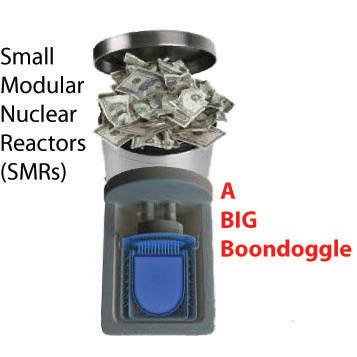 German nuclear industry cautious about usefulness of small reactors for energy transition, Nuclear phase-out Technology, Clean Energy Wire, Süddeutsche Zeitung , 6 Nov 20 Small Modular Reactors (SMR) are increasingly hailed as an effective way for using nuclear power to curb the climate crisis without the major risks associated with conventional nuclear plants, but Germany’s nuclear industry is sceptical whether the small reactors really can help boost international climate action, Christian J. Meier writes for the Süddeutsche Zeitung German nuclear industry cautious about usefulness of small reactors for energy transition, Nuclear phase-out Technology, Clean Energy Wire, Süddeutsche Zeitung , 6 Nov 20 Small Modular Reactors (SMR) are increasingly hailed as an effective way for using nuclear power to curb the climate crisis without the major risks associated with conventional nuclear plants, but Germany’s nuclear industry is sceptical whether the small reactors really can help boost international climate action, Christian J. Meier writes for the Süddeutsche Zeitung
……… Nicolas Wendler of industry association Nuclear Technology Germany (KernD) says SMRs are always going to be more expensive than bigger reactors due to lower power output at constant fixed costs, as safety measures and staffing requirements do not vary greatly compared to conventional reactors. In terms of levelised energy costs, SMRs will always be more expensive than big plants.” In order for SMRs to be profitable, these should run at maximum utilisation most of the time, Wendler argues, concluding that the potential on the German market would not be much greater than what is needed to adjust oscillating renewable power production…. https://www.cleanenergywire.org/news/german-nuclear-industry-cautious-about-usefulness-small-reactors-energy-transition
|
UK govt’s spin to Scotland, promoting nuclear submarines – but the Scots are nae sae daft
 We cannot defeat our real enemies by using nuclear weapons, https://www.thenational.scot/news/18850915.cannot-defeat-real-enemies-using-nuclear-weapons/, Jim Taylor, Edinburgh, 6 Nov 20
At the conclusion of the programme, Rear Admiral John Weale tells us that no-one really wants nuclear weapons … but “we are planning to have them for the next 50 years”.
So it’s a done deal, whether we Scots support it or not. Our UK Union membership means we will be forced against our will to be party to this inhumane weapon system, and the increased danger it puts us in with its continued location at Faslane.
Trident’s replacement is currently reckoned to cost around £200 billion, before any expected design, construction, operational cost overruns and other usual ongoing cost increases. With the potential for a further cycle of replacement during the next 50 years, going forward, the cost to the nation will rise exponentially.
Clearly the Royal Navy took the unprecedented step to permit this programme being made at the behest of the UK Government trying to warm our feelings about nuclear weapons, recognise a “need” for them and in the hope this will drive a wedge in Scotland’s drive to call upon its Claim of Right and independence.
Isn’t the UK Government’s mistake assuredly that Scots are nae sae daft?
Nuclear now costs twice the price of renewables and the gap is growing. No need for Hinkley C, Sizewell, Bradwell etc

 North writes,
” ………The Green Party have been arguing for many years in recognition of the work by Friends of the Earth, the Centre for Alternative Technology (CAT) in Wales and many others, that we do not need ‘further expansion of nuclear and gas turbines’ but to be far more clever about our energy use, easy to do now that renewables are cheaper than nuclear and new gas.
CAT has been at the forefront of development of research on renewable technology and Green building for some 50 years.
Their latest report ‘Zero Carbon Britain (Rising to the Climate Emergency)’ clearly demonstrates that the UK has the tools and technology to efficiently power this country with 100 per cent renewable technology (read the executive summary, it’s only eight pages long).
By using energy more efficiently we can power down by 60 per cent with particularly large savings in heating buildings and transport.
There is absolutely no need for nuclear power in our energy mix and we cannot afford it, let alone pay for cleaning up the sites at the end which taxpayers always end up paying for.
Nuclear now costs twice the price of renewables and the gap is growing.
How many Herald readers know that the electricity from the Hinkley Point nuclear reactor will cost UK consumers £92.50 per Kwh (the most recent offshore wind turbine fields are half of this)?
The deal was signed by (former Prime Minister) Theresa May and supported by Labour and Lib Dems.
The profits are going to the Chinese government which will run it for 40 years. The French firm (EDF) that has been building Hinkley Point and wants to build more nuclear reactors in the UK wants to cushion the financial blow of future nuclear power stations in this country by charging electricity customers a few extra pounds every month on their bill even now.
This is referred to as a new funding model, I’d call it a rip-off. Are people really happy to put billions of pounds into the coffers of the Chinese government and EDF rather than invest, as part of a Green New Deal, in insulation and draught-proofing of UK homes to keep us warmer, take over two and a half million households out of fuel poverty and permanently reduce everyone’s fuel bills. https://www.cravenherald.co.uk/opinion/opinion_letters/18824349.letter-no-need-nuclear-power/
A new nuclear power plant at Sizewell is the wrong choice for a zero carbon Britain
|
A new nuclear power plant at Sizewell is the wrong choice for a zero carbon Britain, The climate column: The proposed Sizewell C will not produce electricity until about 2040, which it means it cannot reduce the UK’s carbon emissions with the speed necessary to avoid catastrophic tipping points The Independent , Donnachadh McCarthy@DonnachadhMc 6 Nov 20,
Just weeks ago, the Climate Assembly set up by parliament rejected nuclear power as an answer to creating a zero-carbon economy. This was due to cost, safety and difficulties with waste storage and decommissioning. Yet Boris Johnson is reported to be about to commit Britain to buying another hugely expensive nuclear power station. As this new plant would not be producing electricity until about 2040, it means it cannot reduce the UK’s carbon emissions with the speed necessary to avoid catastrophic tipping points, whereas cheaper renewables can be up and running within a couple of years of being commissioned. Consider the following analogy. Four years ago, you needed to replace your gas boiler and a company came along and offered to sell you the world’s most expensive experimental boiler ever. It’s been trying to build the first four of them for over 20 years but had not yet got any actually working. The first one it tried to build, in Finland, is already 13 years behind schedule and has more than tripled in price. The second one it tried to build, in France, is 10 years behind schedule, now costs six times the original quote and has encountered monumental safety issues. They then tell you the boiler was filled with lethal toxins, which if the boiler’s seals broke, could explode and kill everybody in your house. All your neighbours would have to be permanently evacuated immediately without being allowed to collect their lethally contaminated belongings and the area around your boiler would become an exclusion zone for generations. The sales-person added that the boiler will cost up to twice as much to run as your current boiler. They demanded you sign a 35-year inflation-proofed deal that makes it difficult to switch to a cheaper renewable energy supplier or use energy efficiency measures to reduce your need for the boiler. Every single bank refused to lend you the money to install your new boiler, as they believed it was a financially insane project to lend money to. There was another problem. The experimental boiler continuously produces highly-toxic explosive waste that the supplier, after 70 years of trying, still has no idea what to do with. You would have to store it in your cellar, until somebody miraculously comes up with a way to store it safely for millennia. The salesperson neglected to add that you had to pay for the costs of removing the boiler at the end of its life but that the process takes hundreds of years to complete. I tell you this imaginary tale to try and explain the utter insanity of what the UK government did when it signed the contract with EDF Energy to build a new Hinkley Point nuclear power plant in 2016. Hinkley is already a year behind schedule and nearly £3bn over budget.
And now imagine this. Despite all of the above and knowing that renewable energy alternatives have already fallen to less than half of the cost of this experimental boiler and that new renewable electricity storage technologies have been likewise collapsing in price, the same contractor comes back to you to persuade you to buy another of these hugely expensive boilers for your second home. Unlike almost every single government in the world, Boris Johnson’s government is reported to be planning on announcing in the next few weeks that the UK will agree to build a second new EDF nuclear power plant at Sizewell in Suffolk. Why would any supposedly sane country sign such crazy energy contracts? ……… https://www.independent.co.uk/voices/nuclear-power-plant-sizewell-boris-johnson-b1622086.html |
|
1 This Month

Protect Sazan Island from the Trump family! https://secure.avaaz.org/campaign/en/protect_sazan_island_from_the_trump_family_loc/?bqFCVab&v=174511&cl=22707147157&_checksum=5e9dde668860e8231c33699735e16a1fbf22ab2cb01da50c999fe8732b9775ef&utm_source=email&utm_medium=blast_email&utm_campaign=174511
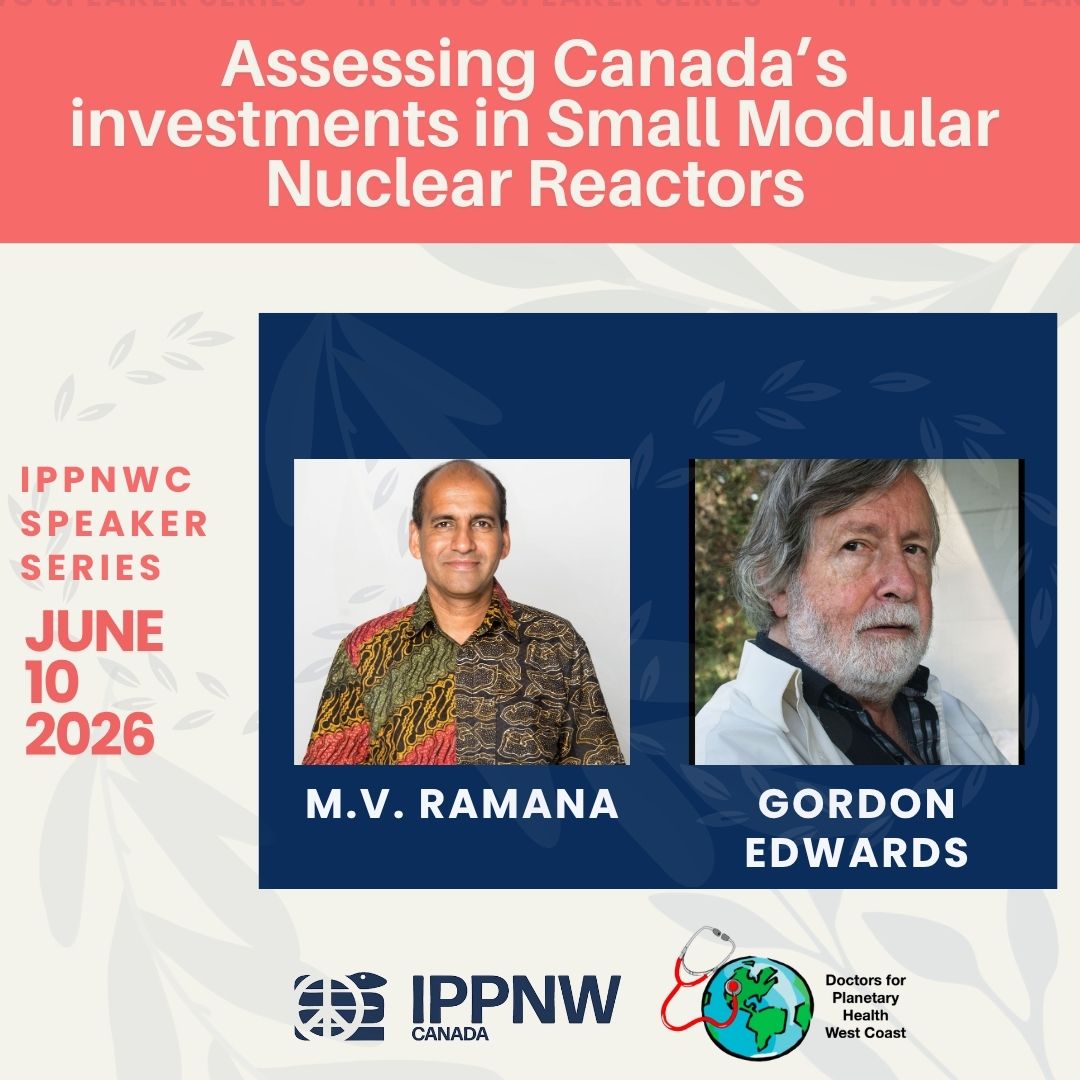
10 June – Assessing Canada’s Investments in Small Modular Nuclear Reactors – https://zoom.us/meeting/register/IiqHA5feRhaEBycOLNTJlA#/registration


Cuba Is Not a Failed State – It Is a Besieged State
PETITION: “Global Appeal to Endorse Palestinian Right of Return of Refugees”
To see nuclear-related stories in greater depth and intensity – go to https://nuclearinformation.wordpress.com
-
Archives
- June 2026 (89)
- May 2026 (306)
- April 2026 (356)
- March 2026 (251)
- February 2026 (268)
- January 2026 (308)
- December 2025 (358)
- November 2025 (359)
- October 2025 (376)
- September 2025 (257)
- August 2025 (319)
- July 2025 (230)
-
Categories
- 1
- 1 NUCLEAR ISSUES
- business and costs
- climate change
- culture and arts
- ENERGY
- environment
- health
- history
- indigenous issues
- Legal
- marketing of nuclear
- media
- opposition to nuclear
- PERSONAL STORIES
- politics
- politics international
- Religion and ethics
- safety
- secrets,lies and civil liberties
- spinbuster
- technology
- Uranium
- wastes
- weapons and war
- Women
- 2 WORLD
- ACTION
- AFRICA
- Atrocities
- AUSTRALIA
- Christina's notes
- Christina's themes
- culture and arts
- Events
- Fuk 2022
- Fuk 2023
- Fukushima 2017
- Fukushima 2018
- fukushima 2019
- Fukushima 2020
- Fukushima 2021
- general
- global warming
- Humour (God we need it)
- Nuclear
- RARE EARTHS
- Reference
- resources – print
- Resources -audiovicual
- Weekly Newsletter
- World
- World Nuclear
- YouTube
-
RSS
Entries RSS
Comments RSS
 nuclear-news