New study throws gloom on hopes for future nuclear energy in Central Europe

 | |||
Experts dampen hopes of Central Europe’s nuclear future https://www.euractiv.com/section/politics/short_news/experts-dampen-hopes-of-central-europes-nuclear-future/
By EURACTIV Network, Aneta Zachová | EURACTIV.cz, edited by Alexandra Brzozowski 3 Nov 2021
As Czechia looks to decarbonise its coal-based economy, it sees nuclear energy as the backbone of its future energy mix. The Czech government plans to build a new nuclear power plant unit that is expected to be operational in 2036. Still, experts warn of delays and high costs, already observed in Slovakia or Hungary.
According to the Industry and Trade Ministry, nuclear energy could solve the Czech need for low-carbon and stable energy sources. The country’s future energy mix is a hot topic due to the EU’s climate ambitions and the recent energy price hikes.
However, a new study published on Tuesday contradicts the current pro-nuclear narrative of the Czech government. “The new nuclear unit would not really contribute to decarbonisation, in terms of replacing the current coal sources,” said Oldřich Sklenář, author of the study and energy analyst at the Association for International Affairs, in an interview for EURACTIV.cz.
“The launch of the new unit should take place after 2036, but we have to phase out coal much earlier. Experience from the Euro-Atlantic area shows that it is a huge problem to meet the deadlines. Basically, everyone faces this problem,” Sklenář warned, adding that the actual costs of the projects could be double those expected.
Czechia is not the only Central European country betting on nuclear energy, but new nuclear projects in Slovakia and Hungary have faced long delays.
New units in Slovakia’s Mochovce were supposed to be in operation in 2012 and 2013 but have been delayed until 2022.
Planned Hungarian Paks II, to be constructed by Rosatom, faces problems as well, as the licensing of the project has been postponed. Hungary has amended its nuclear safety protocols to custom-fit the project, allowing some work to begin before the entire project gets the regulatory nod.
At the same time, the US has also tried to lure Eastern Europe with nuclear power, teasing a $23 trillion market to countries in Central and Eastern Europe by 2030.
In October last year, Poland and Washington signed a 30-year intergovernmental agreement on future cooperation in developing the Polish civil nuclear energy programme. The first nuclear power station could start operating in 2033.
With the currently ongoing energy crisis, a group of primarily Eastern European member states have heaped pressure on the European Commission to grant nuclear energy a ‘green’ label under the EU’s sustainable finance taxonomy, which guides climate-friendly investments.
A proposal from the European Commission is now expected “by the end of the year,” said Kadri Simson, the EU’s energy commissioner said after the recent energy ministerial in October.
French nuclear company pressing President Macron to declare nuclear power strategy
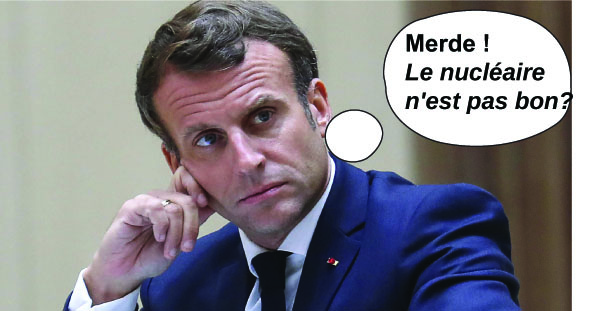
Macron’s Nuclear Power Strategy Will Be Clear by Year End, Ecology Minister Says, Bloomberg, By Francois De Beaupuy and Ania Nussbaum, 27 October 2021,
- Final decision on plants seen after next April’s election
- EDF wants construction of plants to start as soon as possible
French President Emmanuel Macron will probably say by the end of the year whether he supports the construction of new nuclear plants as part of the country’s plan to achieve carbon neutrality by 2050, Ecology Minister Barbara Pompili said…….
“The president will probably express his preference and his orientation on the scenarios before the end of the year,” Pompili told reporters in Paris Tuesday. Still, there wouldn’t be a final decision before next April’s presidential elections, she said.
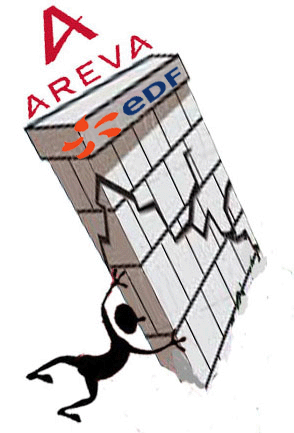
The French atomic industry, led by state-controlled Electricite de France SA, is urging the government to start constructing nuclear plants as soon as possible. That’s because most of EDF’s 56 existing reactors — which provide more than two-thirds of France’s electricity — are due to be shut by 2050 or earlier.
A report on the cost of new nuclear plants will be published in coming weeks, Pompili said. Damaging delays, cost overruns and technical failings have afflicted the country’s nuclear sector in recent years, raising questions about EDF’s ability to build new plants on budget. ……
The government will help EDF and its partners develop small modular nuclear reactors by 2030, Macron said earlier this month. https://www.bloomberg.com/news/articles/2021-10-26/macron-will-probably-announce-nuclear-power-strategy-by-year-end
A year after damaged by fire, French nuclear submarine has been repaired
The French Navy’s damaged nuclear sub is out at sea once more, By Vivienne Machi 3 Nov 21, STUTTGART, Germany — The French Navy’s nuclear submarine Perle has returned to sea following just about a year of work to repair its fire-damaged body and splice it together with a second boat.
In late October, the 26-year-old nuclear attack submarine departed Cherbourg Naval Base, where it has been undergoing repairs by manufacturer Naval Group since October 2020, and returned to the service’s main base in Toulon, French Ministry of Defense spokesman Hervé Grandjean told reporters.
The nuclear attack submarine caught fire while undergoing maintenance in June 2020 in Toulon, and burned for 14 hours. The fore of the submarine suffered the most damage, while the aft of the ship, which houses the nuclear power plant and propulsion, was left intact…………….. https://www.defensenews.com/digital-show-dailies/feindef/2021/11/03/the-french-navys-damaged-nuclear-sub-is-out-at-sea-once-more/
Jellyfish keep attacking nuclear power plants

| |||
Jellyfish Keep Attacking Nuclear Power Plants. Jellyfish are continuing to clog the cooling pipes of nuclear power plants around the world. GG, By Gabriel Geiger 3 Nov 21, Jellyfish are continuing to clog the cooling intake pipes of a nuclear power plant in Scotland, which has previously prompted a temporary shutdowns of the plant.
The Torness nuclear power plant has reported concerns regarding jellyfish as far back as 2011, when it was forced to shut down for nearly a week—at an estimated cost of $1.5 million a day—because of the free-swimming marine animals………
Like many other seaside power plants, the Torness plant uses seawater to prevent overheating. While there are measures in place to prevent aquatic life from entering the intake pipes, according to the Bulletin of the Atomic Scientists, they are no match for the sheer number of jellyfish that come during so-called “jellyfish blooms.”
“Usually, screens prevent aquatic life and similar debris from being drawn into the power plants’ cooling system,” the Bulletin of the Atomic Scientists wrote in a 2015 blog post. “But when sufficiently large volumes of jellyfish or other aquatic life are pulled in, they block the screens, reducing the volume of water coming in and forcing the reactor to shut down.” ……
“Any industry on the coast which uses seawater can find its operations complicated when seaweed or jellyfish blooms impact protective systems,” Angus Bloomfield, a marine biologist, is quoted as saying in a press release from the University of Cranfield. “They can damage machinery and even stop power generation, which could threaten stability of the electricity grid. An early warning system involving drones could allow industries in marine environments to act early and avoid the most dramatic effects these events can bring.” https://www.vice.com/en/article/epx4mj/jellyfish-keep-attacking-nuclear-power-plants
A close shave in 1999 with a flood at France’s Blayais nuclear power plant
“Sensitive affairs”. “Tcherno-Blaye”: the scenario of a French Chernobyl?
What happened at the end of December 1999, during the “storm of the
century”, at the Blayais nuclear power plant in Gironde? Incident under
control or disaster scenario narrowly avoided? That evening, in any case,
one of the jewels of the French nuclear fleet found itself … with its
feet in the water. A flood that could have led to the worst: the meltdown
of a reactor, with its dramatic consequences .
France Info TV 1st Nov 2021
Nuclear is Not Green – campaigners from Suffolk travel to COP26
Campaigners from Suffolk have travelled to COP26 host city Glasgow to
protest over Sizewell C, which they say is not the solution to the climate
emergency. Stop Sizewell C, two Suffolk Coastal 2019 General Election
candidates and local supporters unfurled a “Nuclear is Not Green” banner in
the centre of the city.
East Anglian Daily Times 2nd Nov 2021
https://www.eadt.co.uk/news/stop-sizewell-c-protest-at-cop26-in-glasgow-8458020
USA and UK’s transparent persecution of Australian Julian Assange
The goal is to set a legal precedent which allows journalists who expose the crimes of the powerful to be persecuted not covertly as is normally done in ‘free democracies,’ but right out in the open. To tell journalists “We’ll just throw you in prison if you cross us.
What makes this precedent uniquely dangerous is that it is not just threatening to imprison American journalists who expose US crimes, but any journalist anywhere in the world.
Caitlin Johnstone: The Assange persecution lays out Western savagery at its most transparent https://www.rt.com/op-ed/538713-us-appeal-of-the-julian-assange/28 Oct, 2021 By Caitlin Johnstone, an independent journalist based in Melbourne, Australia. Her website is here and you can follow her on Twitter @caitozThe first day of the US appeal in the Julian Assange extradition case saw grown adults arguing in court that the US government could guarantee that it wouldn’t treat the WikiLeaks founder as cruelly as it treats other prisoners.
I wish I was kidding.
In their write-up on Wednesday’s proceedings, The Dissenter’s Kevin Gosztola and Mohamed Elmaazi report that the prosecution argued that “the High Court should accept the appeal on the basis that the U.S. government offered ‘assurances’ that Assange won’t be subjected to Special Administrative Measures (SAMs) or incarcerated in ADX Florence, a super-maximum prison in Colorado.”
What this means is that in order to overturn the January extradition ruling which judge Vanessa Baraitser denied on the basis that the notoriously draconian US prison system is too cruel to guarantee Assange’s health and safety, the prosecution has established as one of their grounds for appeal the claim that they can offer “assurances” that they would not inflict some of their most brutal measures upon him. These would include the aforementioned Special Administrative Measures, wherein prisoners are so isolated that they effectively disappear off the face of the earth, or sending him to ADX Florence, where all prisoners are kept in solitary confinement 23 hours a day.
What’s ridiculous about these “assurances,” apart from the obvious, is that within its own legal argument the US government reserves the right to reverse those assurances at any time and impose SAMs or maximum security imprisonment upon Assange if it deems them necessary. As Amnesty International explains:
They say: we guarantee that he won’t be held in a maximum security facility and he will not be subjected to Special Administrative Measures and he will get healthcare. But if he does something that we don’t like, we reserve the right to not guarantee him, we reserve the right to put him in a maximum security facility, we reserve the right to offer him Special Administrative Measures. Those are not assurances at all. It is not that difficult to look at those assurances and say: these are inherently unreliable, it promises to do something and then reserves the right to break the promise.
So the prosecution’s legal argument here is essentially “We promise we won’t treat Assange as cruelly as we treat our other prisoners, unless we decide we really want to.”
This is not just a reflection on the weakness of the extradition appeal, it’s a reflection on the savagery of all the so-called free democracies that have involved themselves in this case.
This same prosecution argued that Assange should not be denied US extradition from the UK on humanitarian grounds as in the case of activist Lauri Love, because Love suffered from both physical and psychological ailments while Assange’s ailments are only psychological. They stood before the court and made this argument even as Assange was visibly pained and unwell in his video appearance from Belmarsh Prison, which he was only able to attend intermittently due to his frail condition.
“For my newspaper, I have worked as media partner of WikiLeaks since 2009,” tweeted journalist Stefania Maurizi who attended the hearing via video link. “I have seen Julian Assange in all sorts of situations, but I have never ever seen him so unwell and so dangerously thin.”
So they’re just openly brutalizing a journalist for exposing US war crimes, while arguing that they can be trusted to treat him humanely and give him a fair trial if granted extradition. This after it has already been confirmed that the CIA plotted to kidnap and assassinate him during the Trump administration, after we learned that the prosecution relied on false testimony from a convicted child molester and diagnosed sociopath, after it was revealed that the CIA spied on Assange and his lawyers in the Ecuadorian embassy, and after intelligence asset Jeffrey Epstein famously died under highly suspicious circumstances in a US prison cell.
The worst atrocities in history have all been legal. All the worst examples of genocide, slavery, tyranny and bloodshed have been allowed or actively facilitated by the state. The persecution of Assange is geared toward entering the imprisonment of journalists into this category.
The goal is to set a legal precedent which allows journalists who expose the crimes of the powerful to be persecuted not covertly as is normally done in ‘free democracies,’ but right out in the open. To tell journalists “We’ll just throw you in prison if you cross us.”
What makes this precedent uniquely dangerous is that it is not just threatening to imprison American journalists who expose US crimes, but any journalist anywhere in the world. This is an Australian journalist in the process of being extradited from the UK for publishing facts about US war crimes in the nations it has invaded. The aim is to set up a system where anyone in the US-aligned world can be funneled into its prison system for publishing inconvenient facts.
This is the savagery of the Western world at its most transparent. It’s not the greatest evil the US-centralized empire has perpetrated; that distinction would certainly be reserved for its acts of mass military slaughter that it has been inflicting upon our species with impunity for generations. But it’s the most brazen. The most overt. It’s the most powerful part of the most depraved power structure on earth looking us all right in the eyes and telling us exactly what it is.
And if we can really look at this beast and what it is doing right now, really see it with eyes wide open, it reveals far more about those who rule over us than anything any journalist has ever exposed.
New Study: Electricity would already be Cheaper today with a Full Supplyof 100% Renewables.
New Study: Electricity would already be Cheaper today with a Full Supply
of 100% Renewables. New short study by the Energy Watch Group (EWG) finds:
Electricity would already be cheaper today with a full supply of 100%
renewables.
In the coalition negotiations for the new German government,
both ambitious climate protection and the reduction of electricity prices
play a central role. The previous government still expects only 45%
renewables in the electricity mix by 2025.
A new short study by the Energy
Watch Group offers an answer to the rising energy costs: The study
calculates that a full supply with 100% renewables would already be
economically competitive today compared to the current energy system based
on coal, natural gas and nuclear. By 2025 at the latest, an energy system
based on 100% renewables would then be significantly cheaper than power
generation with fossil fuels.
Sonnenseite 28th Oct 2021
Portugal’s success in cutting greenhouse emissions through its offshore floating wind and solar plants

Portugal is the EU country that has been most successful at cutting
greenhouse gas emissions since 2005, partly through the use of floating
wind and solar plants located off its coast. Today, 65 percent of all the
electricity consumed in Portugal comes from renewable sources.
France24 30th Oct 2021
Greenpeace is set for a confrontation with security officials at COP26
Greenpeace is set for a confrontation with security officials at COP26
after revealing plans to dock a ship outside the venue without permission.
The climate group’s Rainbow Warrior yacht set sail from Liverpool on
Saturday night, seeking to sail up the Clyde and dock next to the COP26
venue in Glasgow. Port authorities declined the Rainbow Warrior’s request
to berth, with the area under a tight lockdown as world leaders arrive, but
Greenpeace said that the captain has “decided to ignore the warnings”
and will attempt to dock on Monday morning.
iNews 31st Oct 2021
Megaprojects like Hinkley Point C nuclear are now blamed for shortages of materials for up to 2500 construction firms
HS2 and Hinkley Point blamed for concrete shortages. Megaprojects have
been accused of gobbling up concrete supplies, while steelmakers face a
magnesium drought caused by China. Ian Anfield, managing director of Hudson
Contract, which provides services to more than 2,500 construction firms,
said small builders cannot compete for materials with mega-projects such
as HS2 and Hinkley nuclear power plant.
The British Merchants Federation
(BMF) and the Construction Products Association (CPA) have set up a task
force with the Government and major schemes including HS2 and the Hinkley
nuclear plant to monitor the situation.
Telegraph 30th Oct 2021
https://www.telegraph.co.uk/business/2021/10/30/hs2-hinkley-point-blamed-concrete-shortages/
New UHI research into tiny fragments of radioactivewaste flushed into the sea from Dounreay nuclear power plant 40 years ago.
New UHI research is to be carried out into tiny fragments of radioactive
waste flushed into the sea from Dounreay nuclear power plant 40 years ago.
Sand-sized particles of irradiated nuclear fuel got into the plant’s
drainage system in the 1960s and 1970s. Work to clean up the particles
began in the 1980s, after fragments were found washed up on the nearby
foreshore. Dounreay’s operator is funding the research by the University
of the Highlands and Islands (UHI). The UHI environmental research
institute in Thurso, near Dounreay, said the research would “explore a
difficult environmental problem”.
Press & Journal 31st Oct 2021
Mohamed bin Zayed Receives Nazarbayev Prize for a Nuclear-Weapon-Free World and Global Security
BY ASSEL SATUBALDINA in INTERNATIONAL on 1 NOVEMBER 2021
NUR-SULTAN – Crown Prince of Abu Dhabi and Deputy Supreme Commander of the UAE Armed Forces Mohamed bin Zayed received the Nazarbayev Prize for a Nuclear-Weapon-Free World and Global Security on Oct. 28 for his contribution to peace, regional stability, and sustainable economic development during the meeting with Former Kazakhstan President Nursultan Nazarbayev, reports the press service of First President.
The award was established in 2016 with a goal to urge international actors to pursue more vigorous efforts to rid the world of nuclear weapons. King Abdullah II of Jordan was the first person to receive the prestigious award back in 2017 during his visit to Kazakhstan. ……….. https://astanatimes.com/2021/11/mohamed-bin-zayed-receives-nazarbayev-prize-for-a-nuclear-weapon-free-world-and-global-security/
A damning new confidential report on France’s future nuclear reactor plans.

| Nuclear. A damning confidential report on future EPRs. It is a real bomb that has just published the information site “Context” about the new generation of nuclear power plants EDF. These EPR2 that Emmanuel Macron is about to order. “Context” has obtained a confidential report from the government which expresses serious doubts about the design, feasibility, cost and timeframe of what should constitute the new wave of French nuclear power plants. Bercy and EDF make no comment. Ouest France 29th Oct 2021 https://www.ouest-france.fr/environnement/nucleaire/nucleaire-un-rapport-confidentiel-accablant-sur-les-futurs-epr-b54a63b8-37d7-11ec-9832-1d0e4716a307 |
Minister confirms taxpayer will foot bill for UK nuclear power strategy

Minister confirms taxpayer will foot bill for UK nuclear power strategy LBC, TOM SWARBRICK, 31 October 2021 On the fourth time of asking, the Energy minister admitted energy bills will rise to fund the construction of nuclear plants in the UK.
As COP26 gets underway in Glasgow, Tom Swarbrick was joined by Minister for Business, Energy and Clean Growth Greg Hands to discuss the UK’s strategy to achieve net zero.
Tom asked Mr Hands about the Regulated Asset Base model for nuclear, which is the government’s plan to build “at least one large-scale nuclear project” by the end of parliament.
How much are bills going to go up to pay for that?” Tom asked for the first time. The Tory MP dodged the question and insisted that the RAB model “increases our level of choices” for energy production in future.
He repeated that the construction of nuclear plants “creates more options for us.”………..
Before it has been built, how much are prices going to go up as a result of this model?” Tom asked for the third time.
The Energy Minister insisted that “depends on the deals that are being done”, adding that energy bills will “be reduced by around £10.”
Can I just try one more time, and it can be a nod or a shake of the head for an answer,” a dejected Tom said.
“Can you guarantee that through this new way of funding nuclear, that bills will not go up prior to it being built?”
“No, we’re expecting that bill-payers will make a contribution based on the Regular Asset Base model” the Minister confirmed on the fourth time of asking.
“It will end up being cheaper overall for bill-payers by in the region of £10” he repeated, clarifying that the saving is “over the lifetime of that power station.” https://www.lbc.co.uk/radio/presenters/tom-swarbrick/british-taxpayer-will-pay-for-nuclear-energy-program-minister-confirms/
-
Archives
- October 2026 (112)
- September 2026 (339)
- August 2026 (330)
- July 2026 (355)
- June 2026 (287)
- May 2026 (306)
- April 2026 (356)
- March 2026 (251)
- February 2026 (267)
- January 2026 (308)
- December 2025 (358)
- November 2025 (359)
-
Categories
- 1
- 1 NUCLEAR ISSUES
- business and costs
- climate change
- culture and arts
- ENERGY
- environment
- health
- history
- indigenous issues
- Legal
- marketing of nuclear
- media
- opposition to nuclear
- PERSONAL STORIES
- politics
- politics international
- Religion and ethics
- safety
- secrets,lies and civil liberties
- spinbuster
- technology
- Uranium
- wastes
- weapons and war
- Women
- 2 WORLD
- ACTION
- AFRICA
- Atrocities
- AUSTRALIA
- Christina's notes
- Christina's themes
- culture and arts
- Events
- Fuk 2022
- Fuk 2023
- Fukushima 2017
- Fukushima 2018
- fukushima 2019
- Fukushima 2020
- Fukushima 2021
- general
- global warming
- Humour (God we need it)
- Nuclear
- RARE EARTHS
- Reference
- resources – print
- Resources -audiovicual
- Weekly Newsletter
- World
- World Nuclear
- YouTube
-
RSS
Entries RSS
Comments RSS

