“Rather than contributing to net zero, Bradwell B nuclear plant would be ‘ideally placed’ to become the casualty of climate change.”
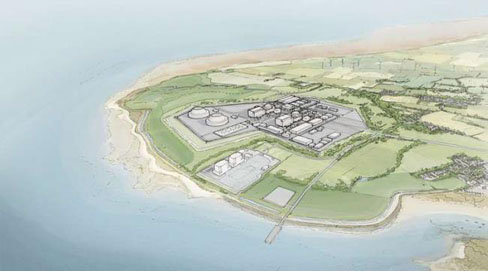
CAMPAIGNERS fighting against plans for a new nuclear power station have hit out at claims it is a key asset in the fight against climate change. The Blackwater Against New Nuclear Group (BANNG) has refuted a statement saying the Bradwell B power station would be Essex’s “biggest contribution to climate action”. The statement from Bradwell B Power Station came in relation to the COP26 climate discussions in Glasgow and said the project was “ideally placed” to play a “major part” in achieving net zero by 2050 emission goals.
But BANNG has claimed, due to the nuclear power station being on a low-lying site, rising global
temperatures would see it become vulnerable to rising sea levels and other weather events by the end of the century. BANNG’s secretary Varrie Blowers added: “Rather than contributing to net zero, Bradwell B would be ‘ideally placed’ to become the casualty of climate change.”
Braintree & Witham Times 17th Nov 2021
France has multiple nuclear problems – costs, wastes, safety and more …..

Cost, waste management and safety: eight questions raised by the announced
return of nuclear power in France. Emmanuel Macron said he wanted new
reactors, in the name of France’s energy independence and climate
preservation. But where is the sector and what does this choice imply?
Le Monde 18th Nov 2021
Electricity production choices: anticipate and control technological,
technical and financial risks.
Cour des Comptes 18th Nov 2021
Nuclear revival: the Court of Auditors highlights many obstacles.
Reporterre 18th Nov 2021
https://reporterre.net/Relance-du-nucleaire-la-Cour-des-comptes-pointe-de-nombreux-obstacles
The British public wants NATO to renounce the “first use” of nuclear weapons
The British public wants NATO to renounce the “first use” of nuclear weapons, Bulletin 19 Nov 21,
A recent survey of British public opinion revealed a two-thirds opposition to NATO retaining the first-use option for nuclear weapons. These responses are in direct opposition to official UK policy…………..https://thebulletin.org/2021/11/the-british-public-wants-nato-to-renounce-the-first-use-of-nuclear-weapons/?utm_source=Newsletter&utm_medium=Email&utm_campaign=ThursdayNewsletter11182021&utm_content=NuclearRisk_NATOrenounce_11182021
Belarus’ new nuclear power station has further problems, shut down at present .
Shut down reactor in nuclear power plant in Belarus. The Ministry of
Energy in Minsk emphasizes that there is no increased radiation to be
measured in the vicinity of the country’s only Akw in Ostrowez.
The only nuclear power plant in Belarus that went into operation a year ago appears
to have new problems. A reactor block had been taken off the grid and the
reason for the automatic step was unclear, the Ministry of Energy announced
in Minsk on Wednesday. Specialists are in the process of finding out the
cause. No increased radiation was found. The nuclear power plant in
Ostrovets on the border with Lithuania was commissioned more than a year
ago and was already struggling with technical problems.
Die Presse 17th Nov 2021
Hinkley Point C nuclear station could ‘wipe out’ 11 billion fish, Bristol Channel campaigners say
“The new post-Brexit Environment Act requires the Secretary of State to set a long-term legally binding target on biodiversity by late next year”
Hinkley Point C could ‘wipe out’ 11 billion fish, Bristol Channel
campaigners say Activist groups are campaigning against EDF’s decision to
remove Acoustic Fish Deterrents on the cooling water intakes at the nuclear
power station.
Bristol Channel campaigners have warned that EDF‘s
decision to remove the Acoustic Fish Deterrents (AFDs) on the cooling water
intakes at Hinkley Point C nuclear power station could put massive fish
stocks at risk. An AFD is a system that guides fish away from water
intakes.
A public inquiry was held into this issue by the Planning
Inspectorate from 8th to 24th June. Activist groups that had previously
launched a campaign named Stop Hinkley wrote a letter to the Secretary of
State for Environment, Food and Rural Affairs George Eustice on 7th October
asking him to refuse EDF’s appeal.
Since then, campaigners claim they
have not received a reply. A spokesperson from Stop Hinkley said: “The
new post-Brexit Environment Act requires the Secretary of State to set a
long-term legally binding target on biodiversity by late next year.“On paper,
George Eustice is committed to halting the decline in nature in England,
and beginning the restoration of our marine environment, but on current
evidence, he is failing to do so.
“He needs to set an example in tackling
the global biodiversity crisis by refusing EDF’s application to remove
the Acoustic Fish Deterrents, against Environment Agency advice,
threatening to wipe out 11 billion fish and decimate stocks in Severn
Estuary for 60 years.” Sources told ELN that the department is giving
careful consideration to all recovered appeals and the length of time taken
to decide a case depends on the complexity of each case. Chris Fayers, Head
of Environment at Hinkley Point C, said: “We are committed to reducing
environmental impact from a project which will play a key role in fighting
climate change. Hinkley Point C is the first power station in the Severn
Estuary to include fish protection measures in its design.
Energy Live News 17th Nov 2021
Bradwell nuclear project is likely to be scrapped, despite the Planning Inspectorate having supported the project.
The Blackwater Against New Nuclear Group (BANNG) is naturally disappointed
that BRB’s Appeal to the Planning Inspectorate against the refusal by
Maldon District Council of Planning Permission for further land
investigations at Bradwell was successful.
But this does not give a greenlight to a future nuclear power station at Bradwell. BANNG has always made
clear that its objections to land investigations were on the grounds that
they were unnecessary since the site is wholly unsuitable, unsustainable
and unacceptable for the development of a mega nuclear power station and
spent fuel stores.
The Planning Inspector chose to uphold the Appeal on the
narrow grounds that the works would be temporary and would create little
disruption and disturbance to the environment and human welfare. The
Inspector declined to take into account the question of need for new
nuclear, relying on a Government policy from 2011 that deems Bradwell a
‘potentially suitable’ site.
In its latest policy statements the Government is silent on Bradwell and the project seems likely to be dropped altogether on geopolitical grounds.
BANNG 15th Nov 2021
Regulated Asset Base model may save Hitachi’s Wylfa Newydd nuclear project.

RAB model may have saved Wylfa Newydd nuclear project. Access to the
regulated asset base (RAB) financing model may have helped to save
Hitachi’s plans to build a new nuclear plant in north Wales, an executive
who worked on the project has told MPs. Last year, the Hitachi-backed
Horizon consortium announced it had withdrawn from the Wylfa Newydd project
after ploughing more than £2 billion into its development.
Utility Week 18th Nov 2021
Russian diplomat calls for coordinated global efforts to enact Nuclear-Test-Ban Treaty
Russian diplomat calls for coordinated global efforts to enact Nuclear-Test-Ban Treaty
According to Maria Zakharova, the Preparatory Commission has been taking effective steps to create conditions and infrastructure facilities necessary for the treaty’s effective operation
MOSCOW, November 19. /TASS/. The international community needs to coordinate its steps to make sure that the Comprehensive Nuclear-Test-Ban Treaty becomes an effective legal tool, Russian Foreign Ministry Spokeswoman Maria Zakharova said in a statement on Friday.
“Unfortunately, despite some undeniable achievements, the Comprehensive Nuclear-Test-Ban Treaty has not yet become an effective international legal tool. Well-coordinated steps by the international community are crucial for achieving this goal. Another eight nations from the so-called list of 44 need to ratify the treaty for it to come into force,” she pointed out. “We expect that the Preparatory Commission for the Comprehensive Nuclear-Test-Ban Treaty Organization will continue large-scale activities aimed at facilitating the early achievement of this goal based on a mandate enshrined in a resolution on the commission’s establishment and the treaty itself,” she added…………….
The United Nations General Assembly adopted the Comprehensive Nuclear-Test-Ban Treaty on September 10, 1996. On September 24, 1996, the document was opened for signing, but it still hasn’t taken effect as it needs to be ratified by the 44 countries listed in the treaty’s annex. The United States, China, Egypt, Israel and Iran have signed the treaty but haven’t ratified it yet, while three new nuclear powers – India, North Korea and Pakistan – have not signed the document. https://tass.com/politics/1363719
France’s Court of Audit wants a debate on nuclear power decisions – in view of delays and costs in this sector.
Electricity production choices: anticipate and control technological,
technical and financial risks. COURT OF AUDIT,19 Nov 21,
The Court publishes notes that are part of a body of work carried out on several major public policies, which identify both the main challenges that public decision-makers will face in the coming years, and the levers likely to overcome them. As an extension of the report "A public finance strategy for exiting the crisis", submitted last June to the President of the Republic and the Prime Minister, this series of publications allows the Court to express itself on structural issues. With these educational notes, the Court is placing itself at the heart of its mission to inform citizens, at a key democratic moment.

Nearly 70% of French electricity production is provided by nuclear reactors, two-thirds of which will have ceased to produce before 2050. To renew this large part of our electricity production capacity, new means of production - “Carbon-free”, in accordance with France's climate commitments - will require not only a considerable financial investment, but also significant construction delays. This situation calls for urgent decisions now, aimed at securing the needs of an increasing energy supply.

 In this perspective, the Court of Auditors considers it necessary to hold a debate on the choice of electricity production, which constitutes a technological, technical and industrial challenge, and the consequences of which in terms of employment and development of the territory will reverberate over several decades. Cour des Comptes 18th Nov 2021

 https://www.ccomptes.fr/fr/publications/les-choix-de-production-electrique-anticiper-et-maitriser-les-risques-technologiques
Despite the frantic nuclear lobbying at COP26, Rolls Royce’s small nuclear reactors will be of zero use against greenhouse emissions – Jonathon Porritt

Rolls-Royce talks of the first plant ‘coming online by 2031’ – do please do the maths yourself. So let’s say 2035, to be generous, at the earliest. And therefore of zero benefit in terms of meeting the Government’s own target of a 78% reduction in greenhouse gas emissions by 2035.
It’s all such a pathetic waste of time – and of taxpayers’ money. Whatever the timescale, SMRs will never compete with renewables plus storage.
COP6 ‘Nuclear Sidebar, http://www.jonathonporritt.com/cop26s-nuclear-sidebar/ Jonathon Porrit, 6 Nov 21, The fact that COP26 was crawling with huge numbers of delegates from Big Oil and Gas got a lot of attention from the media. Less attention was paid to the large number of pro-nuclear delegates parasitically inserting themselves into as many events as they could engineer access to – facilitated at every turn by BEIS Secretary of State Kwasi Kwarteng and Booster Boris himself..
The nuclear industry had its own short-lived moment in the sun, on 9th November. For what is now reckoned to be the fourth time, Kwasi Kwarteng went over the top to re-re-re-confirm the Government’s enthusiasm for Small Modular Reactors, re-re-re-promising (a rather miserly) £210m of Government money for Rolls-Royce, described by Kwasi Kwarteng as ‘a once in a lifetime opportunity’.
Rolls-Royce duly obliged, conjuring up another £250m of private sector investment to deliver a new fleet of at least five SMRs (and possibly as many as 16) at around £2.2bn a pop. The company’s share price duly went up by around 4%. Job done.
It doesn’t matter how many times Ministers bang this particular drum, or how many times deplorably gullible journalists in the BBC, FT, Times and the Telegraph suck it all up, moonshine is still moonshine.
In and of itself, that £460m buys practically nothing. It will allow Rolls-Royce to take whatever design they finally settle on through the Generic Design Assessment process. This will take no less than four years, and probably more than five. Even if (and it’s a big IF) regulatory approval is secured, private sector investors will still have to be found, sites identified and planning permission for each site secured – a process which can take years.
Rolls-Royce talks of the first plant ‘coming online by 2031’ – do please do the maths yourself. So let’s say 2035, to be generous, at the earliest. And therefore of zero benefit in terms of meeting the Government’s own target of a 78% reduction in greenhouse gas emissions by 2035.
It’s all such a pathetic waste of time – and of taxpayers’ money. Whatever the timescale, SMRs will never compete with renewables plus storage.
To be fair, it would be wrong to underestimate the importance here of energy security – meeting our energy needs from home-based, ‘indigenous’ capacity. Boris Johnson keeps banging on about ‘British wind and sunshine’ – mindful perhaps of a recent poll of Daily Express readers, of whom 97.5% said that Boris ‘should pledge to make Britain self-sufficient in energy production by 2050’.
On that basis, British nuclear electrons are therefore much more desirable than those unreliable French electrons, regardless of the fact that we wouldn’t have any new nuclear electrons coming on-stream were it not for Electricité de France.
COP26 was of course a global gathering. UK energy security was therefore less of an issue. But it got a bit of an airing on 12th November, when the two big tidal stream companies here in the UK (Nova Innovation and Atlantis Energy) made a big splash about the huge potential for tidal stream technology in Scotland – with a potential capacity of more than 500 MW. This is a proven technology (with turbines anchored to the sea floor to capture the power of tidal currents) – already delivering suitably ‘indigenous’ electrons – with no moonshine to be seen anywhere.
The potential for tidal stream is indeed significant – not just in the UK, but internationally.
However, for me personally, it’s still relatively small beer in comparison to tidal range – harnessing the power of the tides to generate huge amounts of electricity from either tidal lagoons or barrages, predictably, cost-effectively, over many decades.
If our Government was genuinely serious about energy security (instead of finding ways of propping up Rolls-Royce to support our nuclear weapons programme), tidal power would be top of its list.
But is it heck! So please check out my blog about tidal energy which follows shortly.
Germany’s Chancellor Merkel maintains stand against nuclear power being classified as sustainable

Merkel defends nuclear power exit despite climate challenges, Euro News, By Andreas Rinke, 17 Nov 21,
BERLIN -Chancellor Angela Merkel has defended her decision to phase out nuclear energy, even though it has made it harder for Germany to wean its economy off fossil fuels.
In an interview with Reuters, the outgoing chancellor also said she was opposed to any plans by the European Union to label nuclear power as “sustainable”.
“It’s true, of course, that we now face the very ambitious and challenging task of completing the energy transition while phasing out coal and nuclear power,” said Merkel, who will step down once a new government is sworn in following an election in September.
“But it’s also true that this will be worth it for our country if we do it right.”
Merkel, who has led her country for 16 years, pushed for Germany to abandon nuclear power after the Fukushima disaster in Japan a decade ago, a decision that most Germans agree with……..
RENEWABLES
The share of renewables in the energy mix of Europe’s largest economy has been growing steadily since the Fukushima disaster, though energy economists say it has not risen fast enough to help Germany meet its ambitious emissions targets.
Renewables accounted for 45% of Germany’s energy last year, up from 17% in 2010, data compiled by the Agora Energiewende think-tank showed. The share of electricity generated from coal fell to 23% from 42% a decade ago. Nuclear power was halved to 11%.
The EU executive, the European Commission, is drawing up a sustainable finance “taxonomy” setting out which activities meet the environmental criteria to qualify for funding under an EU sustainable investment programme.
A document viewed by Reuters in March indicated experts were preparing to label nuclear power as sustainable because it has none of the carbon dioxide emissions produced by fossil fuels.
Merkel said Germany would continue to oppose the plan but acknowledged that it would be hard to rally 19 other members behind its position to block it.
“It’s difficult to stall the procedure as such once the European Commission has presented an act,” said Merkel.
“We in Germany believe – across party lines – that nuclear energy should not be classified as being as clean as wind and solar energy.”……… https://www.euronews.com/next/2021/11/17/germany-merkel-nuclear-exclusive
UK’s small nuclear reactor consortium indicates that it will be relying on tax-payer funding if it is to go ahead
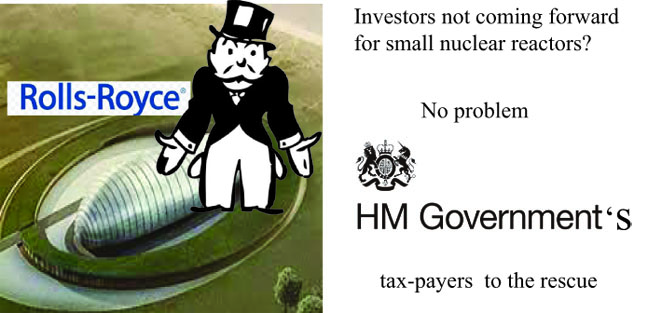
State support a fallback option for UK’s mini-nuclear plants rollout.
The head of the consortium, which is developing a £ 30 billion fleet of
mini-nuclear power stations, has indicated that it will have to rely on UK
taxpayers to help fund the construction of the first of the new designs if
there is not enough investor interest.
FT 10th Nov 2021
https://www.ft.com/content/869279aa-f771-4025-8719-c3b8bdf1f375
Non government organisations anxious about Tricastin nuclear station, and about historic law to protect whitleblowers
After Tricastin, we must “protect the whistleblowers and focus on the
alert and not on the messenger”. Three representatives of non-governmental
organizations recall, in a forum at “The World”, the importance of “the
historic law” that the National Assembly is about to vote on the protection
of whistleblowers. They are also calling for the opening of a parliamentary
inquiry into the facts relating to the Tricastin nuclear power plant.
Le Monde 15th Nov 2021
Scottish earthquake was nuclear waste ‘wake-up call’
 | |||
Scottish earthquake was nuclear waste ‘wake-up call’, Ronnie Cowan MP says, The National, By Greg Russell 17 Nov 21 A SCOTS MP has said the 3.1 magnitude earthquake off the West of Scotland was a “wake-up call” over the “dig a hole and bury it” approach to nuclear waste.
Ronnie Cowan was speaking after Tuesday’s early-morning quake – recorded just 10km beneath its epicentre – was felt on the west coast and in Ireland.
The SNP MP for Inverclyde wrote on social media: “Hopefully too small and too far away from the nuclear waste dump and weapons storage to be concerning.”
He later told The National that when it comes to nuclear powered submarines and their payload, safety had to be paramount.
Cowan said: “Likewise our nuclear energy industry isn’t just about the crucial day to day safety, it is about the long term security of the sites and the waste.
“Currently the ‘dig a hole and bury it’ attitude to nuclear waste is concerning. It feels very much like we passing on a problem to future generations, which given the heightened awareness of environmental damage and climate change seems like a deliberate dereliction of duty.
“It therefore came as a wake-up call when I read that an earthquake had taken place just off the west coast of Scotland.”
Cowan stressed he was not claiming that the incident was a threat, but wondered if it was a warning shot given the “very unforgiving” nature of nuclear energy and waste.
“One mistake and the outcome could be catastrophic and as we see the climate change and weather patterns change, we are seeing more and more extreme weather episodes, and to future-proof our existing nuclear waste dumps we must consider the state of the planet thousands of years into the future,” he said.
Scottish earthquake was nuclear waste ‘wake-up call’, Ronnie Cowan MP says, The National,
By Greg Russell @National_GregJournalist A SCOTS MP has said the 3.1 magnitude earthquake off the West of Scotland was a “wake-up call” over the “dig a hole and bury it” approach to nuclear waste.
Ronnie Cowan was speaking after Tuesday’s early-morning quake – recorded just 10km beneath its epicentre – was felt on the west coast and in Ireland.
The SNP MP for Inverclyde wrote on social media: “Hopefully too small and too far away from the nuclear waste dump and weapons storage to be concerning.”
He later told The National that when it comes to nuclear powered submarines and their payload, safety had to be paramount.
Cowan said: “Likewise our nuclear energy industry isn’t just about the crucial day to day safety, it is about the long term security of the sites and the waste.
“Currently the ‘dig a hole and bury it’ attitude to nuclear waste is concerning. It feels very much like we passing on a problem to future generations, which given the heightened awareness of environmental damage and climate change seems like a deliberate dereliction of duty.
“It therefore came as a wake-up call when I read that an earthquake had taken place just off the west coast of Scotland.”
Cowan stressed he was not claiming that the incident was a threat, but wondered if it was a warning shot given the “very unforgiving” nature of nuclear energy and waste.
“One mistake and the outcome could be catastrophic and as we see the climate change and weather patterns change, we are seeing more and more extreme weather episodes, and to future-proof our existing nuclear waste dumps we must consider the state of the planet thousands of years into the future,” he said.
“And secondly, the earthquake bothered me because for some time now I have been concerned about the amount of unexploded ordnance (UXO) in the Clyde and beyond.
“My concerns are around the safety of those working on the river and those who enjoy it recreationally.”
The MP said he wanted to see a massive clean-up of the munitions dump in the River Clyde, but it had to be disposed of thoughtfully……… https://www.thenational.scot/news/19722624.scottish-earthquake-nuclear-waste-wake-up-call-ronnie-cowan-mp-says/
Plan for solar power to UK via cable from Morocco, as nuclear power closes
As the UK’s ageing fleet of nuclear power stations begins to close –
until recently a steady source of low-carbon baseload generation –
Utility Week speaks to Simon Morrish, chief executive at XLinks, about its
plans to transmit cheap solar power thousands of kilometres across the
Atlantic seabed from the sun-drenched deserts of Morocco to help fill the
looming gap.
Utility Week 15th Nov 2021
As the UK’s ageing fleet of nuclear power stations begins to close –
until recently a steady source of low-carbon baseload generation –
Utility Week speaks to Simon Morrish, chief executive at XLinks, about its
plans to transmit cheap solar power thousands of kilometres across the
Atlantic seabed from the sun-drenched deserts of Morocco to help fill the
looming gap.
Utility Week 15th Nov 2021
-
Archives
- October 2026 (112)
- September 2026 (339)
- August 2026 (330)
- July 2026 (355)
- June 2026 (287)
- May 2026 (306)
- April 2026 (356)
- March 2026 (251)
- February 2026 (267)
- January 2026 (308)
- December 2025 (358)
- November 2025 (359)
-
Categories
- 1
- 1 NUCLEAR ISSUES
- business and costs
- climate change
- culture and arts
- ENERGY
- environment
- health
- history
- indigenous issues
- Legal
- marketing of nuclear
- media
- opposition to nuclear
- PERSONAL STORIES
- politics
- politics international
- Religion and ethics
- safety
- secrets,lies and civil liberties
- spinbuster
- technology
- Uranium
- wastes
- weapons and war
- Women
- 2 WORLD
- ACTION
- AFRICA
- Atrocities
- AUSTRALIA
- Christina's notes
- Christina's themes
- culture and arts
- Events
- Fuk 2022
- Fuk 2023
- Fukushima 2017
- Fukushima 2018
- fukushima 2019
- Fukushima 2020
- Fukushima 2021
- general
- global warming
- Humour (God we need it)
- Nuclear
- RARE EARTHS
- Reference
- resources – print
- Resources -audiovicual
- Weekly Newsletter
- World
- World Nuclear
- YouTube
-
RSS
Entries RSS
Comments RSS

