Britain is now undermining the Nuclear Non Proliferation Treaty (NPT)
ICAN (accessed) 3rd May 2021, Five Ways the UK is Undermining the NPT. The NPT has played an unparalleled
role in curtailing the nuclear arms race and it continues to play a role in keeping the world safe. It is at the centre of international efforts to stop the spread of nuclear weapons, to create a nuclear weapon free world,and to enable access to the peaceful use of nuclear energy.”
But the UK has now taken steps which dangerously undermine this crucial treaty. In its Integrated Review of Security, Defence, Development and Foreign Policy, the UK government announced that it will increase the maximum size of its
nuclear arsenal and reduce the information it provides about it.
Having consistently committed itself over the past decade to reducing its stockpile to a maximum of 180 warheads by the mid 2020s, the UK has now raised this limit to 260, an increase of over 40%. At the same time, the UK will no longer release operational stockpile, deployed warhead or deployed missile numbers.
https://www.icanw.org/five_ways_the_uk_is_undermining_the_npt
Serious concerns about China’s role in Hinkley Point nuclear power station
Independent 3rd May 2021. Chinese investors have amassed nearly £134bn of assets in key UK industries ranging from energy companies and transport hubs to breweries and schools. Nearly 200 British companies are either controlled by groups or individuals based in China and Hong Kong or count them as minority shareholders, according to an analysis of business data. The list of investments drawn up by the Sunday Times includes Hinkley Point C nuclear power station, Heathrow Airport, Northumbrian Water, pub retailer Greene King and Superdrug.
Serious concerns have been raised about the security implications of China’s investment in UK assets, most notably in relation to Hinkley Point nuclear power station which is owned by French energy firm EDF. In 2016 Theresa May’s government briefly put the project on hold before attaching new conditions to the £18bn deal. Nick Timothy, one of
the Ms May’s chief advisers, had warned that China “could use their role to build weaknesses into computer systems which will allow them to shut down Britain’s energy production at will”. China General Nuclear Power holds a 33.5 per cent stake in the plant, which is owned by the French state-owned energy firm EDF.
Bangor City Council supports the U.N. Treaty on the Prohibition of Nuclear Weapons, as do over 400 other jurisdictions.
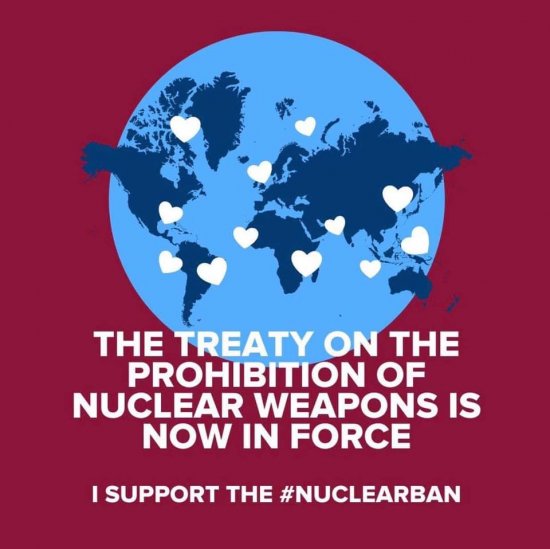
Nation Cymru 1st May 2021, Bangor City Council has become the first Welsh Council to support the
Treaty on the Prohibition of Nuclear Weapons. The treaty came into force in
January and seeks to start a process for effective nuclear disarmament and
to unlock the ongoing stalemate in discussions at the Nuclear
Non-Proliferation Treaty (NPT) Review Conferences.
There are currently 54 states that have ratified the TPNW, including the Irish Republic, Austria,
South Africa, New Zealand, Mexico and the Vatican State. A further 32
states have signed it and are in the process of ratifying it. To date over
400 towns, cities, counties and federal states have passed TPNW
resolutions, including Paris, Berlin, Oslo, Barcelona, Washington DC,
Sydney, Amsterdam, Bruges, Geneva, Montreal, Hiroshima and Nagasaki.
French nuclear giant EDF unveils first wind and battery project in Australia — RenewEconomy

French nuclear giant EDF buys 280MW wind project in central Queensland, the first of a major pipeline of wind, solar and storage projects in Australia. The post French nuclear giant EDF unveils first wind and battery project in Australia appeared first on RenewEconomy.
French nuclear giant EDF unveils first wind and battery project in Australia — RenewEconomy
China’s big stake in UK’s new nuclear projects
Times 2nd May 2021 , How Beijing bought up Britain. China has quietly spent £134bn hoovering up
UK assets, from nuclear power to private schools and pizza chains. Research
reveals that almost 200 British companies are either controlled by Chinese
investors or count them as minority shareholders. The value of Chinese
investments totals £134 billion.
Some of the biggest sums have been spent
in the energy sector, notably nuclear power. Chinese state-owned China
General Nuclear (CGN) bought a 33.5 per cent stake in Hinkley Point C power
station in Somerset, the first new nuclear facility to be built in the UK
in more than 20 years.
The main investor is France’s EDF. CGN, which has
been blacklisted in America for allegedly helping to acquire US tech for
military use in China, has also joined with EDF on the proposed nuclear
plant at Sizewell C in Suffolk. CGN will take a 20 per cent stake during
the plant’s development. Plans for a third plant, at Bradwell in Essex,
have China hawks up in arms, because CGN intends to take a majority 66.5
per cent stake during development and will use its own reactor technology.
https://www.thetimes.co.uk/article/how-beijing-bought-up-britain-hqll9tjtx
Most Scots feel unsafe about having nuclear weapons base on the Clyde
The National 1st May 2021, ONLY a quarter of Scots voters have said they feel safer having nuclear
weapons based on the Clyde, according to a new opinion poll. The latest
survey from James Kelly asked people the question: “The UK Government
argues that its nuclear weapons protect the public due to a ‘deterrent’
effect. However, others argue that the presence of nuclear weapons on the
Clyde puts the public in greater danger by making the area a target for
nuclear attacks, and by creating a risk of serious accidents.
https://www.thenational.scot/news/19272880.less-quarter-scots-feel-safer-nuclear-weapons-clyde/
UK anti-nuclear groups plan to stand candidates for elections, opposing Bradwell new nuclear station
Maldon Standard 30th April 2021, ANTI-NUCLEAR campaign groups have urged political candidates standing for
the Essex County Council elections on Thursday to support their cause
against the building of a new nuclear power station Bradwell B
.TheBlackwater Against New Nuclear Group and the Bradwell Action Network hope
to get candidates on their side in time for the elections, with responses
being posted on the groups’ respective websites. Both groups are
encouraging residents opposed to the Bradwell B project to contact their
Essex County Council candidates asking them to make their views known.
Czech Republic’s nuclear plan hangs on hope for European Commission to call nuclear ”green”

The EU’s Nuclear Showdown Comes to a Head in Czechia, World Politics Review, Tim Gosling Friday, April 30, 2021 A fight over nuclear power is heating up in the European Union. While the Czech Republic and other Central and Eastern European states insist that the technology is vital to their transition from coal-generated energy, others in the bloc want to cut it out of the equation. The outcome of the debate could also help determine the fate of a stalled tender to build a new reactor at Dukovany, one of the country’s two existing nuclear power plants.
[Nuclear] Hopes in Prague were boosted in March when the Joint Research Center, an expert group for the European Commission, delivered a report stating that nuclear power qualifies as a “sustainable” source of energy………
However, the commission was quick to state that the Joint Research Center’s opinion is far from the final word, indicating that the tussle would continue. And indeed, on April 21, when the commission finally published its first list of sustainable energy sources—known as the EU taxonomy for sustainable activities in Brussels’ policymaking circles—nuclear power was not included. Some member states, as well as lawmakers in the European Parliament, had threatened to veto an earlier draft that included nuclear and gas-powered energy.
But that’s still not the end of the story. Referring to “a delicate compromise on whether or not to include nuclear energy,” the EU executive said it would make a final decision based on further expert opinions. That could be presented in June, said Vladis Dombrovskis, the European Commission vice-president in charge of the economy.
That gives the nuclear lobby two months to push its side of the debate……
Germany will switch off its last nuclear plant next year, as part of a phased drawdown adopted in the aftermath of the 2011 Fukushima disaster. But Berlin’s anti-nuclear drive isn’t limited to its own reactor fleet. Environment Minister Svenja Schulze pledged in March that the country plans to quash nuclear power globally, with a particular focus on its neighborhood.
“Nuclear power is neither safe nor clean,” she said at the time, as she unveiled a 12-point plan that argues the technology cannot be considered part of any solution to the climate crisis. “The future is for renewable energy.”
……….. in the wake of the Fukushima disaster, the challenges and costs of building new nuclear reactors have risen dramatically, and that’s what makes the EU classification key. Classification as “sustainable” would significantly lower the cost of financing for private investors, according to industry lobbyist Foratom.
Such a classification is also crucial to staying on the right side of the EU’s competition regulations, as it’s now all but impossible to build new nuclear reactors without state aid.
“The Czech government does not hope to use EU funds to build new nuclear reactors,” says Vit Havelka of the Prague-based think tank Europeum. “They’re worried that Brussels will block [the provision of] state aid, which would make it economically unfeasible.”…….
critics contend that the alternatives haven’t been properly researched. Global consultancy Deloitte suggests that renewables could deliver the same capacity of new energy generation as Dukovany 2—which is optimistically earmarked for completion in 2038—more quickly and less expensively, helping to modernize the energy sector and support the economy along the way. According to another study, it is the focus on nuclear that is helping to keep renewable power-generation underutilized.
Jiri Jerabek from Greenpeace says in an interview that the Czech government has “no proper support schemes for most types of renewables.” Moreover, its target to raise the share of renewables in its energy mix from around 16.2 percent in 2019 to 22 percent by 2030 is well below the EU’s goal of 32 percent, earning it reprimands from the European Commission…….. https://www.worldpoliticsreview.com/articles/29616/for-eastern-europe-nuclear-power-depends-on-eu-taxonomy
Extinction Rebellion climate activists block Faslane nuclear base

Extinction Rebellion block Faslane nuclear base entrance, Climate activists set up a blockade at the Faslane nuclear base by attaching themselves to plant pots. https://www.bbc.com/news/uk-scotland-glasgow-west-56941041 30 Apr 21,
Members of Extinction Rebellion Scotland staged the protest at the north gate of the base on the Gare Loch in Argyll and Bute.
The all-female group placed three planters painted with the words “Safe”, “Green”, and “Future” on the road.
Police Scotland said they were made aware of the incident at 06:20 and officers were at the scene.
HMNB Clyde – known as Faslane – is the Royal Navy’s main presence in Scotland.
It is home to the core of the submarine service, including the UK’s nuclear weapons, and the new generation of hunter-killer submarines.
The protest group said they were demanding a future “safe from the threat of nuclear weapons and environmental destruction”.
Extinction Rebellion said the action was part of the Peace Lotus campaign, a global day of anti-war resistance celebrating the anniversary of the end of the Vietnam War.
An HMNB spokesman confirmed police were in attendance and assisting Ministry of Defence officers in dealing with the protest. He added: “Well-established, fully co-ordinated procedures are in place to ensure the effective operation of HMNB Clyde is not compromised because of protest action.”
Delays, increased costs and geopolitical uncertainties throw doubt on construction of nuclear power station in Finland.
Nuclear power plant construction in north Finland faces delay, increased costs and geopolitical uncertainties
Costs for the partly Russian-owned controversial plant will be €1 billion more than previously estimated. Barents Observer, By Thomas Nilsen , April 29, 2021
“Further deterioration of political and commercial relations between the EU, the USA and Russia could lead to more sanctions between the parties. Such deteriorated international affairs and sanctions could influence the project’s schedule and financing, in particular,” Fennovoima writes in its updated construction license application to Finnish authorities on Wednesday.
Work on the site in Pyhäjoki south of Oulu is in full swing despite final permission for the reactor itself at Hanhikivi 1 nuclear power plant is not yet granted.
The original application was delivered in 2015, but as Fennovoima sees “changes in boundary conditions,” an updated application was made. Among other things, the application includes an additional survey on the power plant’s impact on the marine environment and fishery during operation.
Other changes are related to security and preparedness arrangements and design solutions, although, no changes to the key principles of the power plant, Fennovoima underlines…….
Russia’s state-owned nuclear corporation holds a 34% stake in the plant. For Moscow, export of civilian nuclear power reactors is both a commercial revenue and a source of symbolic technology pride.
Last week, government officials in the Czech Republic said they were kicking Rosatom out of the play for bidding at a planned new reactor for the Dukovany nuclear power plant. The move came amid the diplomatic turmoil between Prague and Moscow following a 2014 blast in a weapons storage which Czech intelligence blames Russian military spies for being involved.
Like with the Czech nuclear power plant, also Fennovoima’s Hanhikivi 1 reactor is planned to receive uranium fuel supplies from Russia…….. https://thebarentsobserver.com/en/nuclear-safety/2021/04/construction-nuclear-power-plant-runs-delay-costs-increase-and-geopolitical#.YIp3J6ITqk0.twitter
High level of radioactivity near France’s uranium processing factory
France Info 29th April 2021, Residents of the largest uranium processing site in France, in Narbonne
(Aude), are worried: samples taken near the plant and analyzed in the laboratory show a high level of uranium. The site manager, however, says there is no danger to residents.
The most important uranium processing site in France is located three kilometers from Narbonne (Aude). Concerned local residents regularly check the level of radioactivity in the vicinity of the plant.
At the barrier that limits access to the site, the meter is racing and exceeds four times the natural level of radioactivity. The Orano Malvési plant is the entry point for nuclear power in France. Uranium arrives from all over the world in the form of yellow powder and must be purified and transformed into nuclear fuel. In 60 years, already more than 300,000 m3 of radioactive waste have been produced and are contained in basins, in the form of sludge.
Many hurdles to jump before Bradwell nuclear station starts construction. Meanwhile renewables race ahead
| Nuclear Engineering International 29th April 2021. JUST BEFORE THE TURN OF the year, on 18 December, UK energy regulator Ofgem granted an electricity generation licence to Bradwell Power Generation Co Ltd. The company is planning to build a new nuclear station at Bradwell on the UK’s Essex coast, near where one of the country’s first nuclear stations is in a ‘care and maintenance’ decommissioning phase. The licence was welcomed by Bradwell Power Generation chief executive Alan Raymant, who called it, “an important milestone on the journey to completing the Bradwell B project and demonstrates our continued progress”. But what may sound like the culmination of a process is in fact an early step, and Raymant admitted, “The generating licence is one of many licences and permits we will need in order to develop, construct and operate Bradwell B”. Support for the Bradwell project is mixed. The UK government generally acts on the assumption that nuclear will continue to supply around a fifth of electricity supply, as it has over the last two decades. But that is largely because it was thought that replacing this large tranche of zero-carbon power with renewables sources was too ambitious. The scale of the renewables roll-out has put that assumption under pressure in some quarters. The GDA process has been under way since January 2017 and in February 2020 it reached step four, the final step, which ONR describes as “Successful completion of the high-level technical assessment of the design”. ONR estimates that step 4 will be completed by the start of 2022. As part of this process, in January the Environment Agency opened a consultation on its assessment of the design. The EA’s role is to regulate “specific environmental matters at nuclear sites in England by issuing environmental permits to cover site preparation, construction, operation and decommissioning”. EA provides a statement about a design’s acceptability at the end of the GDA. During the GDA, it works by identifying concerns. So-called ‘GDA Issues’ are significant, but resolvable, and must be resolved before construction of the reactor starts and before GDA can be completed. ‘Assessment Findings’ are matters best resolved at the site- specific stage. In a consultation now under way EA has listed six potential GDA Issues and 40 Assessment Findings. The GDA Issues are: While operational experience is used to support safety case documentation, the Environment Agency and ONR have noted that it is not used consistently across the project. The Requesting Party has not addressed a Regulatory Observation about this. The Requesting Party has shown that it has considered the environmental aspects of the station design. However, it still has to demonstrate that it has adequately considered the safety aspects of the design. Where safety aspects are still under review the Requesting Party must ensure that environmental protection is given appropriate consideration. The Requesting Party has proposed using rectangular filters in the heating, ventilation and air conditioning system. It must demonstrate that these are equivalent or better than cylindrical types, which are considered best practice in the UK. ONR/EA have not yet received design requirements for the spent fuel, which define the specifications for an interim store which will be used before the fuel is disposed of in a geological disposal facility. The Requesting Party has yet to confirm its strategy for disposing of the in-core instrument assemblies and that this will not affect disposal of the waste in-core instrument assemblies. The Requesting Party has still to get advice from Radioactive Waste Management Ltd on whether the higher activity waste from the UK HPR1000 will be able to be disposed of in the latter’s planned geological disposal facility. No date for submission of the final application to the Planning Inspectorate have been published by Bradwell Power Generation, but it is likely to be after 2022. https://www.neimagazine.com/features/featurethe-development-clock-is-ticking-on-bradwell-b-8707354/ |
France and Russia portray nuclear hydrogen as ”green”- arousing anger of several European nations.

Atomic giants EDF and Rosatom push plan to sell nuclear-powered hydrogen as ‘green’Labelling nuclear hydrogen as green is likely to cause irritation among countries without atomic power or exiting it, 28 April 2021 By Bernd Radowitz , Recharge
French and Russian state-owned nuclear energy giants EDF and Rosatom have teamed up to develop low carbon hydrogen projects in Russia and Europe in order to decarbonise mobility and industrial sectors – but their labelling of H2 produced from nuclear power as ‘green’ is likely to cause irritation elsewhere in Europe.
As part of a strategic cooperation agreement signed last month, the hydrogen is slated to be produced both from nuclear power and from methane conversion linked to carbon capture and storage (CCS) technologies……..
Any massive use of nuclear hydrogen on an EU level is strongly opposed by countries without atomic power, or exiting it, such as Germany and Austria. Andreas Feicht, secretary of state in Germany’s economics and energy ministry, at a late-2020 virtual conference on hydrogen organised by his ministry stressed nuclear is not an option for Germany’s energy system or for the production of hydrogen.
The French government (backed by some Eastern European countries), by contrast, is trying to push nuclear hydrogen and wants it to be entitled for state support, which would be a way to use French or EU funds to help its highly-indebted nuclear utility EDF and give new life to its ageing nuclear fleet.
…… Béatrice Buffon, group executive vice-president in charge of EDF’s International Division.
“The agreement with the Rosatom Group, our historical partner in Russia and one of the country’s key players in the field of decarbonised hydrogen, illustrates EDF’s desire to develop a new energy model with lower CO2 emissions wherever we operate.”
The two nuclear companies didn’t provide more detail on specific projects being studied. https://www.rechargenews.com/energy-transition/atomic-giants-edf-and-rosatom-push-plan-to-sell-nuclear-powered-hydrogen-as-green/2-1-1002350
Ukraine’s nuclear industry in crisis – corrupt, unsafe, with politicised decision-making

Could Ukraine’s nuclear industry face another Chernobyl?
Thirty-five years after the disaster, the nuclear industry is Ukraine’s most reliable economic lifeline. But critics say it faces a perennial crisis caused by corruption, safety problems and politicised decision-making. Aljazeera, By
Mansur Mirovalev, 26 Apr 2021 ”…………………. The nuclear industry remains Ukraine’s most reliable economic lifeline.
But domestic and international critics claim that the industry faces a perennial crisis caused by corruption; safety problems with ageing, worn reactors; disruption of ties with a Russian nuclear monopoly; and a politicised switch to US-made nuclear fuel.
Industry insiders, environmentalists and politicians claim that the construction of a spent fuel storage facility near the capital, Kyiv, and the proximity of Europe’s largest nuclear station in the southern city of Zaporizhzhia to Europe’s hottest armed conflict add to their concerns about the possibility of a nuclear incident, particularly in a nation that went through two popular uprisings since 2005 and lost a chunk of its territory to Russia.
……….. uranium dioxide sealed in zirconium alloy tubes in the rods emits radiation that has to be contained in hermetically sealed reactors. Ukraine’s Soviet-designed rods are hexagonal, resembling bee cells, while Western-made rods are square.
The switch is far from simple – but necessary, because Rosatom, Russia’s nuclear monopoly that charged Ukraine hundreds of millions of dollars a year, is controlled by the Kremlin. And the Kremlin has a well-known proclivity to use energy supplies as a political cudgel.
The switch to Westinghouse fuel is potentially dangerous,” Oskar Njaa, the Russia and Eastern Europe adviser for Bellona, a Norway-based nuclear industry monitor, told Al Jazeera.
In 2012, Westinghouse fuel rods had to be removed from the South Ukrainian power station after protective envelopes in two reactors were damaged.
Ukraine asked Rosatom for fuel and help – prompting Russian President Vladimir Putin to remark gloatingly that Rosatom experts had “to solve complex technical problems, take [the Westinghouse fuel] out and load the Russian fuel back in”.
Ukraine’s losses amounted to $175 million, Mikhail Gashev, Ukraine’s top nuclear safety inspector at the time, claimed – and banned the use of Westinghouse fuel.
Ukrainian experts doubted his assessment, and his decision was overturned after he was fired among hundreds of pro-Russian officials following Ukraine’s second anti-Russian popular uprising, the 2014 Revolution of Dignity.
Former Prime Minister Nikolay Azarov, another pro-Russian political figure who fled Ukraine after the revolt, said in 2017 that the decision was made “in spite of Ukraine’s security interests”.
Westinghouse modified the rods – and no further incidents were reported.
“That might be a sign of a better culture for safety and security in the industry,” Njaa said adding that his group is, however, “worried that incidents might become more severe and greater in numbers due to the ageing equipment at the plants.”………
Apart from the fuel, observers are also concerned about Ukraine’s ageing, worn reactors, 12 of which began operating in the 1980s and were supposed to be shut down in 2020. But Energoatom extended their lifespan spending hundreds of millions on each, thanks largely to loans from the European Union.
This is a common practice worldwide – the average lifespan of almost 100 nuclear reactors in the US is 40 years, and 88 have been approved for another 20 years. But some experts are worried about the safety measures and upgrades.
“What we witness every time a decision [to extend the lifespan] is made, some of the safety upgrades have either not been made or have not been made in full,” Iryna Holovko, the Ukraine coordinator for Bankwatch, a Prague-based environmentalist group, told Al Jazeera.
Bankwatch has for years been urging Ukraine to stop extending the lifespan of its “zombie reactors” without correcting “safety deviations” and detailed assessments of all the environmental risks for the people living around the stations and in neighbouring nations……….
The fuel switch brought about another problem; unlike Rosatom, Westinghouse does not take the spent fuel back for processing or storage.
Until December, Ukraine had two pretty problematic storage facilities – and an unfinished third one. One at the shut-down Chernobyl station is almost full. At the second one, an open-air yard outside the Zaporizhzhia nuclear plant, thousands of spent fuel rods are stored in ventilated concrete containers. In 2014, the plant was about 200 kilometres (125 miles) southwest of the front line of the separatist conflict.
The sight was horrifying to a visiting expert.
“I suddenly stood in front of the utterly unprotected interim storage,” Patricia Lorenz of Friends of the Earth, an environmentalist group that visited the plant on a fact-finding mission in 2014, told Al Jazeera. “It is basically unprotected against war and terrorism, while the front was close by back then.”
In May 2014, the station’s security and police turned away dozens of armed and masked far-right nationalists who tried to enter the plant to “protect” the station from the separatists.
Since then, the front line has moved eastward, and in December, Energoatom opened a third facility a mere 70 kilometres (43 miles) north of Kyiv, in the Chernobyl exclusion zone that is scheduled to receive the first batch of spent fuel in June.
But plans to transport spent fuel via Kyiv, the city of more than two million, drew sharp criticism.
“This will be happening in a country where everything turns upside-down, collides, explodes, and where lawlessness rules,” Kyiv-based environmentalist Vladimir Boreiko told reporters……………. https://www.aljazeera.com/features/2021/4/26/does-ukraines-nuclear-industry-face-another-chernobyl
The dangers of extending the operating lives of old nuclear reactors

INRAG 26th April 2021, Risks of lifetime extension of old nuclear power plants – A look at the age structure of existing nuclear power plants shows the importance of analysing risks of life-time extension and long-term operation.
Some of the world’s oldest plants are located in Europe. Of the 141 reactors in Europe, only one reactor came into operation in the last decade, and more than 80 percent of the reactors have been running for more than 30 years . Nuclear power plants were originally designed to operate for 30 to 40 years. Thus, the operating life-time of many plants are approaching this limit, or has already exceeded it.
https://www.inrag.org/risks-of-lifetime-extension-of-old-nuclear-power-plants-download
1 This Month


of the week– Nuclear Reactor Information Task Force

14 May – online event From Bombs to Data Centres: the Face of Nuclear Colonialism
To see nuclear-related stories in greater depth and intensity – go to https://nuclearinformation.wordpress.com
-
Archives
- May 2026 (187)
- April 2026 (356)
- March 2026 (251)
- February 2026 (268)
- January 2026 (308)
- December 2025 (358)
- November 2025 (359)
- October 2025 (376)
- September 2025 (257)
- August 2025 (319)
- July 2025 (230)
- June 2025 (348)
-
Categories
- 1
- 1 NUCLEAR ISSUES
- business and costs
- climate change
- culture and arts
- ENERGY
- environment
- health
- history
- indigenous issues
- Legal
- marketing of nuclear
- media
- opposition to nuclear
- PERSONAL STORIES
- politics
- politics international
- Religion and ethics
- safety
- secrets,lies and civil liberties
- spinbuster
- technology
- Uranium
- wastes
- weapons and war
- Women
- 2 WORLD
- ACTION
- AFRICA
- Atrocities
- AUSTRALIA
- Christina's notes
- Christina's themes
- culture and arts
- Events
- Fuk 2022
- Fuk 2023
- Fukushima 2017
- Fukushima 2018
- fukushima 2019
- Fukushima 2020
- Fukushima 2021
- general
- global warming
- Humour (God we need it)
- Nuclear
- RARE EARTHS
- Reference
- resources – print
- Resources -audiovicual
- Weekly Newsletter
- World
- World Nuclear
- YouTube
-
RSS
Entries RSS
Comments RSS
 nuclear-news