Protests against nuclear storage plans that could kill the tourist industry
Protesters warn nuclear storage plans could kill tourism as council moves
forward with talks. Protesters are unhappy after county councillors agreed
to talk to the government company behind a potential nuclear waste disposal
site in Lincolnshire. Lincolnshire County Council’s Environment and
Economy Scrutiny Committee on Tuesday morning agreed to join a working
group to look at Radioactive Waste Management’s (RWM) potential plans for
a Geological Disposal Facility in Theddlethorpe. Campaigners against the
plans who gathered outside the council before the meeting, however, are not
happy with the decision and have said moving the plans forward creates
uncertainty for local businesses and residents.
Lincolnite 14th Sept 2021
Protesters warn nuclear storage plans could kill tourism as council moves forward with talks
Italy launches national debate on nuclear waste disposal
The opening plenary session of Italy’s National Seminar, which aims at
deepening the analysis of the technical aspects related to the national
repository for radioactive waste and technological park project with all
interested parties, was held yesterday. The National Seminar, a series of
consultative meetings, follows the publication in January of a list of 67
potential sites for a radioactive waste storage facility.
World Nuclear News 8th Sept 2021
https://www.world-nuclear-news.org/Articles/Italy-launches-national-debate-on-waste-repository
Climate change, sea level rise – real and present danger to UK’s Bradwell and Sizewell nuclear sites
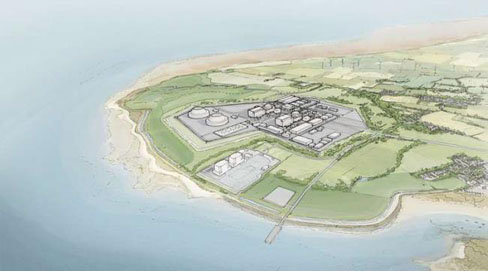
Climate Change the big issue for nuclear power on the East coast, https://www.banng.info/news/press-releases/climate-change-and-nuclear-power/ 11 September 2021 According to Andrew Blowers, Emeritus Professor of Social Sciences at the Open University, Climate Change has become the overriding issue facing the future of the proposed Sizewell C and Bradwell B nuclear power projects on the East Anglian coast. ‘Far from being a solution to the problem of Climate Change, new nuclear power stations like Sizewell C and Bradwell B on the fragile and vulnerable east coast, are likely to become victims of the inevitable, imminent and irreversible consequences of global warming’, he said.
Speaking at a Specific Hearing at the Sizewell C Examination to discuss Policy and Need, Professor Blowers stated that Climate Change was the ‘transformative issue’ of Policy and should be at the very heart of the discussion about building coastal infrastructures like nuclear power stations.
He was disappointed that the Examination Agenda was narrowly framed and the process favoured a legalistic approach. This encouraged a fragmented discussion and a tendency to focus on specific details while losing sight of the bigger picture.
The Examination process must raise its sights from the interminable and obfuscating legalistic debates controlled by developers and give attention to the real and present danger that Climate Change poses for the security and viability of projects in such unsuitable locations. ‘
‘Put simply, there is little justification for these huge structures in terms of need. But, regardless of need, given the threat to the integrity of the sites and the risks to present and future generations and environments, the proposals should be scrapped forthwith’.
The recent Report of the Intergovernmental Panel on Climate Change (IPCC) has spelled out in uncompromising, incontrovertible and unequivocal terms that a rise in global temperatures of 1.50C above pre-industrial levels is already inevitable. It is highly likely that 20C, the level which scientists say may just be manageable, will be reached by the end of the century, and possibly before, if present trends are not arrested. Sea level rise will be around a metre and, as ice melts and oceans heat up, it will continue thereafter. The IPCC states that a sea level rise of 2 metres by 2100 and 5 metres by 2150 ‘cannot be ruled out due to deep uncertainty in ice sheet processes’.
As sea levels rise, the frequency and severity of coastal flooding and erosion will increase and extreme events that occurred once in a century in the recent past are projected, in some scenarios, to occur annually in future. Of course, there is great uncertainty the further forward we look. But, what is certain, is that the impacts of climate change on sea level rise, storm surges and coastal processes could render these east coast sites unviable. This would pose a threat to the security of the highly radioactive wastes remaining stored on site until the latter half of the next century.
At the Hearing, Sizewell C’s developer, EDF relied on governmental polices enshrined in National Policy Statements (NPSs), now ten years old, to claim that the nuclear energy from Sizewell C was necessary. In its more recent pronouncements, the Government is far more equivocal in its support for nuclear energy from such large-scale power stations.
Regardless of whether nuclear is needed at all, Sizewell and Bradwell are manifestly not ‘potentially suitable’ sites as originally indicated in the NPS all those years ago. At both sites the developers claim that the hard defences proposed will be sufficient to protect the nuclear islands against the ravages of climate change.
But, beyond the end of the century, sea level will continue to rise and the impacts become more severe and scenarios for the worst case but plausible change are increasingly uncertain. It becomes impossible to make specific projections and modelling of more extreme coastal conditions is problematic. ‘What possible use will be projections into an unknowable future?’, asks Professor Blowers.
‘It is all too little, too late. I believe we must take the issue of Climate Change seriously and refuse permission to develop these coastal nuclear power stations. It seems inconceivable that the defensive structures can survive intact into the unknown but worsening conditions of continuing sea level rise and extreme events that are inevitable in the future. There can be no possible justification for inflicting this legacy on our coastal communities now and in the future.’
The Cold War near disasters at RAF Lakenheath could have left Suffolk as a nuclear wasteland

The Cold War near disasters at RAF Lakenheath could have left Suffolk as a nuclear wasteland https://www.suffolknews.co.uk/mildenhall/go-anywhere-just-get-away-from-here-how-suffolk-almost-9215663/ By Dan Barker – dan.barker@iliffepublishing.co.uk , 13 September 2021 During the height of the Cold War nuclear bombs were dotted across the country, ready to wipe the USSR off the face of the map at a moment’s notice: but, on two separate occasions, Suffolk almost became victim to the very weapons which were meant to protect it.
July 27, 1956 was like any other summer’s day. Across the country attention was glued to the Ashes fourth test at Old Trafford, and four American airmen were in a B-47 bomber, on a routine training mission from RAF Lakenheath. But, as they were practising touch-and-go landings, their bomber careered out of control and went off the runway.
it ploughed into an igloo containing three Mark-6 nuclear weapons, tearing the building apart.
The plane then
exploded, killing all four men on board, and showered the world-ending weapons with burning aviation fuel.
Most of A/C [Aircraft] wreckage pivoted on igloo and came to rest with A/C nose just beyond igloo bank which kept main fuel fire outside smashed igloo. “Preliminary exam by bomb disposal officers says a miracle that one Mark Six with exposed detonators sheared didn’t go. Firefighters extinguished fire around Mark Sixes fast.” – Telegram from RAF Lakenheath to Washington DC
Fortunately the atomic power of the bomb was missing that day, with the cores un-installed in all three for storage, but the explosives needed to trigger the deadly nuclear reaction were still in place.
With 8,000 pounds of high explosives combined with depleted uranium-238, they were a nuclear ticking time bomb as firefighters fought to put out the blaze.
Had they exploded the radioactive uranium would have been scattered over a wide area, and, depending on the wind, tens of thousands of people would have been at risk from the toxic dust across Suffolk.
Knowing the enormity of the situation base fire chief Master Sgt L. H. Dunn ordered his crew to ignore the burning wreckage of the bomber, and the airman inside, and douse the flames engulfing the nuclear storage building.
At the time it had been shrouded in secrecy, but decades later one senior US officer made it very clear how lucky Suffolk was to have narrowly missed out on a nuclear disaster. “It is possible that part of Eastern England would have become a desert,” the then former officer told Omaha World Herald in Nebraska, who revealed the potentially catastrophic incident in November 1979.
Another said that “disaster was averted by tremendous heroism, good fortune and the will of God”.
A top secret telegram sent to Washington DC from the base, which has since been revealed, told of the near miss. “Most of A/C [Aircraft] wreckage pivoted on igloo and came to rest with A/C nose just beyond igloo bank which kept main fuel fire outside smashed igloo.
Another said that “disaster was averted by tremendous heroism, good fortune and the will of God”.
A top secret telegram sent to Washington DC from the base, which has since been revealed, told of the near miss. “Most of A/C [Aircraft] wreckage pivoted on igloo and came to rest with A/C nose just beyond igloo bank which kept main fuel fire outside smashed igloo.
Suffolk was lucky this time, but the incident caused great alarm in the British government, and it was decided it would try and block US authorities from ordering base evacuations because of the concern of causing mass panic in the country.
But what would happen if word got out that its most important ally had, almost, accidentally, made a huge part of the United Kingdom a nuclear wasteland?
Simple: Its policy for decades, if the press ever caught wind of the near miss, was to just deny it. After the news was broken in the American press in 1979, only then was it acknowledged something happened.
On November 5 that year the US Air Force and the Ministry of Defence would only admit the B-47 did crash.
In fact it took until 1996, some four decades after the near disaster, for the British state to accept the true scale of the accident in public.
But that near miss wasn’t the only one.
For on January 16, 1961, an F-100 Super Sabre, loaded with a Mark 28 hydrogen bomb caught on fire after the pilot jettisoned his fuel tanks when he switched his engines on.
As they hit the concrete runway the fuel ignited and engulfed the nuclear weapon – a 70 kilotons – and left it “scorched and blistered”.
Suffolk was saved again by the brave work of base firefighters who brought the blaze under control before the bomb’s high explosive detonated or its arming components activated.
T
errifyingly it was later discovered by American engineers that a flaw in the wiring of Mark 28 hydrogen bombs could allow prolonged heat to circumvent the safety mechanisms and trigger a nuclear explosion.
Had it gone, thousands of people would be dead within seconds, and thousands more would have been injured. As with the first incident, as well as the immediate blast, radioactive debris could have fallen in towns as far away as Ipswich and Lowestoft, given the right wind direction, spreading the toxic dust across Suffolk.
Since Clement Attlee ordered the scientists to investigate the creation of a nuclear bomb in August 1945, the British state has known that being a nuclear power comes with risk as well as reward.
It also knew it paid to be part of a nuclear alliance,
NATO, and with it came American nuclear bombs and the risk they brought.
Beyond the maths of working out how large the explosion would have been, it is impossible to know the true implications.
RAF Lakenheath was listed as a probable target for Soviet attack according to now released Cold War era documents, and intelligence agencies and war planners expected two 500 kiloton missiles to hit the site if the West was under attack.
Disaster creates uncertainty. Nobody would have known it was an accident within the minutes and hours after a blast, they would have just been dragged into a nuclear bunker and told of a large explosion at an airbase in Suffolk.
Where would that have left a British prime minister, an American president, and the rest of NATO, thinking they have come under attack?
In July 1956, and again in January 1961, those firefighters didn’t just save Suffolk … they might have saved the world.
Earthquakes Stopped Fracking – So Why the Monstrous Silence On “Likely” Induced Seismicity Five Miles From Sellafield? Exactly Who is Protecting Who? — RADIATION FREE LAKELAND

Originally posted on Keep Cumbrian Coal in the Hole: The following letter has been sent to Cumbria County Council and the Planning Inquiry. Our trembling earth was the reason fracking was halted – the siesmic impacts from the Cumbrian Coal Mine are set to be far worse than that from fracking and yet there is…
Earthquakes Stopped Fracking – So Why the Monstrous Silence On “Likely” Induced Seismicity Five Miles From Sellafield? Exactly Who is Protecting Who? — RADIATION FREE LAKELAND
Nuclear ballistic missile submarine meltdown, 1961
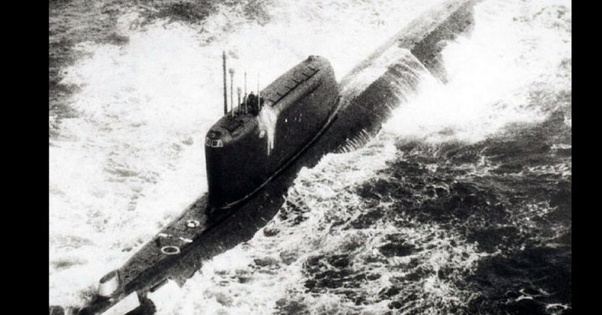
August 24, https://www.quora.com/Has a nuclear submarine ever had a meltdown? Laurence Schmidt, Worked at Air Liquide America (1975–2010,
In the early Cold War Era, many Russian nuclear submarines had catastrophic engineering plant failures. These failures were caused by the soviet’s rush to equal the USN in its nuclear submarine ballistic missile program; they were poorly design and constructed, lack safety system redundancy and had haphazardly trained crews. But the crews of these boats were heroic in risking their lives to save their boats in stark life and death emergencies at sea.
One example is the case of the K-19, the first Russian nuclear powered ballistic missile submarine, nicknamed the “Hiroshima” boat, because of her numerous incidences.
On July 4, 1961, while at sea, one of its two nuclear reactors SCRAMMED. The primary cooling system had failed, flooding the reactor spare with radioactive water, and there was no backup system to cool the reactor core. As the reactor rods overheated, the engineering staff try a desperate plan to improvise a cooling system; to tie into the sub’s drinking water system. But it would require several men entering the highly radioactive reactor compartment to weld new piping to pumps and valves. The first jury-rigged attempt failed with 8 crewmen being horribly burnt by the high temperatures and exposed to lethal doses of radiation. They all soon died. After other attempts, the jury-rigged system finally worked, but other crew members too close to the reactor compartment would also soon die. The crew was evacuated to a nearby submarine, and the K-19 was towed back to base for repair. In total, 22 of the crew of 139 died of radiation sickness.
A section of the radiation contaminated hull was replaced, and a new power reactor unit was installed. The two original reactors, including their fuel rods, were dumped in the Kara Sea in 1965. A favorite dumping ground for Russian navy nuclear waste, including damaged nuclear reactors to whole ships.
Did the K-19 reactor meltdown? I would say yes.
Expert response to the pro nuclear report by the Joint Research Centre

Any major expansion of nuclear energy would delay the decommissioning of fossil-fired power plants, as the latter would have to remain in operation during this period and therefore make it hard to achieve the climate change mitigation objective. It is even possible to argue that nuclear energy hinders the use of other alternatives with low CO2 emissions because of its high capital intensity. Otherwise this capital could be used to expand alternative energy sources like sun, wind and water
While nuclear power generation in the electricity generation phase has been associated with relatively low greenhouse gas emissions from a historical perspective, the lions’ share of greenhouse gas emissions in the nuclear fuel cycle is caused by the front-end and back-end processing stages. Based on estimates, the CO2 emissions can be broken down into the construction of nuclear power plants (18%), uranium mining and enrichment (38%), operations (17%), processing and storing nuclear fuel (15%) and decommissioning activities at the power plant (18%) (BMK, 2020, p.6)
Generating huge quantities of dangerous waste is being continued for decades without any effective disposal solution being available. The JRC itself says that the primary and best waste management strategy is not to generate any radioactive waste in the first place. However, this assessment is not consistently applied within the report.
The draft of the delegated legal act is based on the recommendations of the so-called Technical Expert Group (TEG). …..The TEG did not recommend that nuclear energy should be included in the EU taxonomy register at that time and recommended an in-depth study of the DNSH criteria (TEG, 2020b).
It is clear that the JRC barely touched on some environment-related aspects of using nuclear energy or did not consider them in its assessment at all.
.… Questions must also be raised about the ageing process and the brittleness of materials and therefore the long-term behaviour of nuclear power plants beyond the original design period.
This very positive presentation of future prospects for nuclear energy, which is shown in the JRC Report, must be viewed critically………..this presentation by the JRC is suspect from a professional point of view and possibly indicates a lack of adequate independence .
Expert response to the report by the Joint Research Centre entitled “Technical assessment of nuclear energy with respect to the ‛Do No Significant Harm’ criteria in Regulation (EU) 2020/852, the ‛Taxonomy Regulation’” Particularly considering the suitability of criteria for including nuclear energy in EU taxonomy The Federal Office for the Safety of Nuclear Waste Management (BASE) with support from the Federal Office for Radiation Protection (BfS) June 2021
Summary
The Federal Office for the Safety of Nuclear Waste Management (BASE) with support from the Federal Office for Radiation Protection (BfS), acting on behalf of the Federal Ministry for the Environment, Nature Conservation and Nuclear Safety (BMU), has examined the report by the Joint Research Centre (JRC) of the European Union (EU) entitled “Technical assessment of nuclear energy with respect to the ‘Do No Significant Harm’ criteria of Regulation (EU) 2020/852 (‘Taxonomy Regulation’)” to see whether the JRC has used expertise that is complete and comprehensible when determining whether the use of nuclear fission to generate energy can be included in the taxonomy register.
The Taxonomy Regulation defines criteria that determine whether an economic activity (and therefore investments in this activity) can be viewed as ecologically sustainable. The JRC, the EU’s research centre, concludes in its report dated March 2021 that the conditions for including nuclear energy in EU taxonomy are met in terms of the “Do No Significant Harm” criteria (DNSH). Prior to this, the Technical Expert Group (TEG) had not yet recommended the inclusion of nuclear energy in EU taxonomy and advised the EU Commission to review the DNSH criteria more closely.
This expert response finds that the JRC has drawn conclusions that are hard to deduce at numerous points. Subject areas that are very relevant to the environment have also only been presented very briefly or have been ignored. For example, the effects of severe accidents on the environment are not included when assessing whether to include nuclear energy in the taxonomy register – yet they have occurred several times over the last few decades. This raises the question of whether the JRC has selected too narrow a framework of observation. The aspects mentioned and others listed in this expert response suggest that this is true.
This expert response also points out that the JRC mentions topics, but then fails to consider them further or in more detail, although they must be included in any assessment of the sustainability of using nuclear energy. The need to consider them is partly based on the fact that certain effects on the other environmental objectives in the Taxonomy Regulation must be expected if the matter is viewed more closely or at least cannot be excluded. In other cases, this need results from the fact that the Taxonomy Regulation refers to the UN approach in its 2030 Agenda in its understanding of sustainability – and the latter, for example, contains the goals of “considering future generations” and “participative decision-making”. Any sustainability, particularly for future generations, can only be guaranteed if attempts are made at an early stage to achieve acceptance in the population, enable future generations to handle the use of nuclear energy and its legacy or waste appropriately and ensure that information and knowledge are maintained in the long term. Generally speaking, it should be noted that the problem of disposing of radioactive waste has already been postponed by previous generations to today’s and it will ‘remain’ a problem for many future generations. The principle of “no undue burdens for future generations” (pp. 250ff) has therefore already been (irrevocably) infringed, while the DNSH-hurdle “significant[ly] harm” has also been infringed.
Continue readingSmall nuclear reactors, uranium mining, nuclear fuel chain, reprocessing, dismantling reactors – extract from Expert Response to pro nuclear JRC Report
.

………… If SMRs are used, this not least raises questions about proliferation, i.e. the possible spread of nuclear weapons as well as the necessary nuclear technologies or fissionable materials for their production. ………..
By way of summary, it is important to state that many questions are still unresolved with regard to any widespread use of SMRs – and this would be necessary to make a significant contribution to climate protection – and they are not addressed in the JRC Report. These issues are not just technical matters that have not yet been clarified, but primarily questions of safety, proliferation and liability, which require international coordination and regulations.
The volume of waste arising from decommissioning a power plant would therefore be significantly higher than specified in the JRC Report in Part B 2.1, depending on the time required to dismantle it
Measures to reduce the environmental impact The JRC Report is contradictory when it comes to the environmental impact of uranium mining: it certainly mentions the environmental risks of uranium mining (particularly in JRC Report, Part A 3.3.1.2, p. 67ff), but finally states that they can be contained by suitable measures (particularly JRC Report, Part A 3.3.1.5, p. 77ff). However, suitable measures are not discussed in the depth required ……..…
Expert response to the report by the Joint Research Centre entitled “Technical assessment of nuclear energy with respect to the ‛Do No Significant Harm’ criteria in Regulation (EU) 2020/852, the ‛Taxonomy Regulation’” 2021
”…………………3.2 Analysing the contribution made by small modular reactors (SMRs) to climate change mitigation in the JRC Report
The statement about many countries’ growing interest in SMRs is mentioned in the JRC Report (Part A 3.2.1, p. 38) without any further classification. In particular, there is no information about the current state of development and the lack of marketability of SMRs.
Reactors with an electric power output of up to 300 MWe are normally classified as SMRs. Most of the extremely varied SMR concepts found around the world have not yet got past the conceptual level. Many unresolved questions still need to be clarified before SMRs can be technically constructed in a country within the EU and put into operation. They range from issues about safety, transportation and dismantling to matters related to interim storage and final disposal and even new problems for the responsible licensing and supervisory authorities
The many theories frequently postulated for SMRs – their contribution to combating the risks of climate change and their lower costs and shorter construction periods – must be attributed to particular economic interests, especially those of manufacturers, and therefore viewed in a very critical light.
Today`s new new nuclear power plants have electrical output in the range of 1000-1600 MWe. SMR concepts, in contrast, envisage planned electrical outputs of 1.5 – 300 MWe. In order to provide the same electrical power capacity, the number of units would need to be increased by a factor of 3-1000. Instead of having about 400 reactors with large capacity today, it would be necessary to construct many thousands or even tens of thousands of SMRs (BASE, 2021; BMK, 2020). A current production cost calculation, which consider scale, mass and learning effects from the nuclear industry, concludes that more than 1,000 SMRs would need to be produced before SMR production was cost-effective. It cannot therefore be expected that the structural cost disadvantages of reactors with low capacity can be compensated for by learning or mass effects in the foreseeable future (BASE, 2021).
There is no classification in the JRC Report (Part A 3.2.1, p. 38) regarding the frequently asserted statement that SMRs are safer than traditional nuclear power plants with a large capacity, as they have a lower radioactive inventory and make greater use of passive safety systems. In the light of this, various SMR concepts suggest the need for reduced safety requirements, e.g. regarding the degree of redundancy or diversity. Some SMR concepts even consider refraining from normal provisions for accident management both internal and external – for example, smaller planning zones for emergency protection and even the complete disappearance of any off-site emergency zones.
The theory that an SMR automatically has an increased safety level is not proven. The safety of a specific reactor unit depends on the safety related properties of the individual reactor and its functional effectiveness and must be carefully analysed – taking into account the possible range of events or incidents. This kind of analysis will raise additional questions, particularly about the external events if SMRs are located in remote regions if SMRs are used to supply industrial plants or if they are sea-based SMRs (BASE, 2021).
Continue readingRadiation, nuclear wastes, transportation, uncertainties – extract from Expert response to pro nuclear JRC Report
The DNSH-related TSCs state, among other things, that the repository facility must guarantee that the waste is contained and isolated from the biosphere. This also applies if extreme natural phenomena occur such as earthquakes, tornadoes, floods or the loss of technical barriers.
…… nuclear energy has been used for several decades, but there is still no repositoryfor high-level radioactive waste operating anywhere in the world. Responsibilities are therefore passed on to following generations and they are restricted in their freedom of choice. Section 6 of this expert response will deal with this matter in greater detail.
General results of the reviewThe JRC Report contains unfounded generalisations at many points. Conclusions are drawn from individual, selected examples and their global validity is assumed. Readers without any detailed specialist expertise will find it hard or impossible to recognise this.
.………. The JRC presents the disposal of high-level radioactive waste as a completely resolved problem by citing the example of the disposal projects in Finland and France. This largely ignores the fact that the Finnish repository is still under construction and the licence application from the operational company has already been delayed on several occasions. Both countries are still years away from starting to operate the facilities.
The JRC Report does not mention the aspect of transportation in its presentation of the life cycle analysis. This would have been necessary for a conclusive overall presentation of all the aspects of nuclear power.
the JRC Report states that a closed fuel cycle provides the advantage of significantly reducing the space required for a deep geological repository for HLW. It is necessary to add here that not only the volume, but also the decay heat at the time of disposing of the waste is relevant for the size of the disposal facility (KOM, 2016, p. 227). Additional low- and intermediate-level waste would also be produced and this would increase the disposal volume.
Expert response to the report by the Joint Research Centre entitled “Technical assessment of nuclear energy with respect to the ‛Do No Significant Harm’ criteria in Regulation (EU) 2020/852, the ‛Taxonomy Regulation’” 2021
“”………… 4.6 Ionising radiation and its impacts on people’s health and the environment during all the life cycle phases (apart from disposal and transportation)The JRC Report largely restricts itself in Part A 3.4 to the “impact of ionizing radiation on human health” (JRC Report, Part A 3.4.1, p. 167ff) and the environment (JRC Report, Part A 3.4.2, p. 173ff). The impact of emissions of non-radioactive substances is only considered at one point (publication [3.4-1]). ……..
The figures quoted for the radiation exposure of human beings in Part A 3.4.1 of the JRC Report are plausible. It is correct that human exposure to radiation as a result of the civil use of radioactive materials and ionising radiation is low in comparison with radiation exposure from natural sources and its range of variation. However, the report does not match the latest findings in radiation protection when specifying average effective doses per head of the population for nuclear facilities and installations. According to the latest recommendations of the International Commission on Radiological Protection (ICRP), the so-called “representative person” in the sense of the ICRP has to be considered an individual in the population, who is exposed to higher levels of radiation because of his or her lifestyle habits.
5 Criterion 2 in the Taxonomy Regulation – the DNSH criteria: disposal of radioactive waste, transportation, research and development The subject of disposing of radioactive waste is considered in this section. It professionally examines the scientific statements in the JRC Report about the topics of storage (section 5.1 of this expert response), disposing of low- and intermediate-level radioactive waste (section 5.2), disposing of high-level radioactive waste (section 5.3), transportation (section 5.4) and research and development (section 5.5). Sub-headlines have been used to interconnect the subsections
……….. The JRC Report does not adequately consider the fact that no successful, deep geological disposal of high-level radioactive waste, including the permanent seal, has yet been introduced anywhere in the world.
5.1 Interim storage of radioactive waste The JRC Report generally fails to provide any basis for the findings that are listed in the Executive Summary of the report related to storing radioactive waste. As a result, questions must be raised about the transparency of the conclusions that are drawn.
………….. the assessment of interim storage consistently takes place according to the standard adopted by the JRC, which, however, is inadequate from an expert point of view. For beyond design basis events it is impossible to exclude that uncontrolled discharges of radioactive substances and therefore considerable effects on the environment may occur through incidents and accidents or by some other intrusion involving third parties (e.g. terrorist attacks) when operating storage facilities; a risk therefore remains. A holistic assessment of using nuclear energy must therefore include a risk assessment related to these events too (cf. section 2.1 and 2.2.1 of this expert response).
Continue readingFuture generations, participative decision-making, proliferation, uranium mining – extract from Expert response to pro nuclear JRC Report
Consideration of participative decision-making in societies in the JRC Report The involvement of stakeholders is greatly oversimplified in the JRC Report and is described in very optimistic terms. For example, NGOs are not considered in the description of interest groups and their role in developing a programme for deep geological repository sites
The effects on indigenous peoples, on whose land most of the uranium mines are located, is not mentioned in the report,
Expert response to the report by the Joint Research Centre entitled “Technical assessment of nuclear energy with respect to the ‛Do No Significant Harm’ criteria in Regulation (EU) 2020/852, the ‛Taxonomy Regulation’” 2021
………………………………...6. Future and further criteria in the Taxonomy Regulation – other sustainability goals and minimum standards The JRC Report deals with other aspects that are important for sustainable development in conjunction with disposing of high-level radioactive waste, in addition to the ecological criteria. The JRC Report particularly highlights consideration for future generations (JRC Report, Part B 5.2.3.3, p. 258) and the importance of participative decision-making (JRC Report, Part B 5.2.3.1, p. 254) when searching for a repository site. The JRC Report formulates both aspects as important requirements when searching for a repository site. The two requirements of “considering future generations” and “participative decision-making“, however, are not considered in any further depth – e.g. mentioning the challenges associated with these requirements when searching for a repository site for radioactive waste. The report emphasises that there is still no repository for high-level radioactive waste in operation anywhere in the world (JRC Report, Part A 1.1.1, p. 17), but leaves open the question of whether there is any connection here with the challenges of “considering future generations” and “participative decision-making”. ..
Regardless of disposal, the problem of proliferation (cf. section 6.3), which is only mentioned in a very rudimentary manner in relation to reprocessing in the JRC Report, and uranium mining (cf. section 6.4) mean that it is necessary to treat the topics of intergenerational justice and participation separately in terms of the sustainability of using nuclear energy. Even in the case of severe nuclear power plant accidents, where large amounts of radioactive substances are discharged into the environment, generational justice is an important aspect of sustainability. The example of Chernobyl shows that coping with the consequences of an accident will also plague future generations – ranging from restrictions or non-usage possibilities in the affected areas and even the planned dismantling of the damaged reactor block and disposing of the retrieved nuclear fuel.
6.1 “Considering future generations” and “participative decision-making” in conjunction with disposal ……..
Considering future generations and participative decision-making in any society represent individual sustainability goals in the United Nations’ 2030 Agenda for Sustainable Development (UN, 2015) …….. These two sustainability goals are not adequately considered in the JRC Report with a view to nuclear disposal, but are important for assessing the fundamental issue of sustainability, which is also part of the Taxonomy Regulation
Consideration of sustainability aspects and future generations in the JRC Report Developing and introducing a geological disposal programme/disposal system takes decades and is associated with costs that are hard to calculate. Monitoring after the closure of the repository will also continue for at least another 100 years. For example, France expects the operational time for a repository alone to exceed 100 years. During this long period, following generations will have to deal with problems that have been caused by previous generations
The risk of long-term financial burdens that are hard to calculate (as the example of the Asse II mine illustrates) and the risks caused by geological disposal for several generations are not adequately treated in the JRC Report. ……… The report fails to provide any in-depth analysis of this aspect and provides a distorted picture, particularly with a view to the aspect of sustainability and intergenerational justice, by ignoring the negative consequences of using nuclear energy.
Consideration of participative decision-making in societies in the JRC Report The involvement of stakeholders is greatly oversimplified in the JRC Report and is described in very optimistic terms. For example, NGOs are not considered in the description of interest groups and their role in developing a programme for deep geological repository sites (JRC Report, Part B 5.2.3.1, p. 253-254). Part B 5.2.3.1, p. 254 of the JRC Report ignores the fact that it may not be possible to reach consensus among the stakeholders. This also oversimplifies the problem of searching for a site and presents it in a one-sided way
There is no discussion either that – where no social consensus on using nuclear energy exists – its use itself can represent a blockage factor for solving the repository issue – at least experience in Germany illustrates this. Abandoning nuclear power and therefore resolving a social field of conflict, which had continued for decades, was a central factor in ensuring that discussions were relaunched about a site election procedure and led to a broad consensus. …….
Conclusion
Overall, it is necessary to state that the consideration of sustainability in the JRC Report is incomplete and needs to be complemented in terms of the minimum objectives and other sustainability goals. The broad sustainability approach adopted by the United Nations is not picked up. EU taxonomy is based on this broad approach. It therefore makes sense to already analyse the use of nuclear energy and the disposal of radioactive waste specifically now – and in the context of other sustainability goals like considering future generations and participative involvement in societies.
6.2 Preservation of records, .Preservation of records, knowledge and memory (RK&M) regarding radioactive waste repositories is only mentioned once as a quotation from Article 17 of the Joint Convention (JRC Report, Part B 1.2, p. 206) and once rudimentarily in Part B 5.2.3.3, p. 259f. This does not do justice to its importance for future generations (cf. sections 2.1 and 6.1 of this expert response). …………. . Requirements like these are not taken into account in the JRC Report.
6.3 Proliferation The JRC Report only mentions the risk of proliferation – i.e. the spread or transfer of fissionable material, mass weapons of destruction, their design plans or launching systems – very briefly in conjunction with the civil use of nuclear power. This analysis is inadequate to do justice to proliferation in the light of the DNSH criteria related to the environmental objectives, as it represents a considerable risk for almost all sustainability goals.
The military and civil use of nuclear energy have been closely connected to each other historically. The technologies for their use are often dual-use items, i.e. they can in principle be used for both civil and military purposes. It is therefore necessary to create an extensive network of international controls as part of using nuclear energy and the supply and disposal of fuels associated with it in order to minimise the risk of military misuse by state or non-state players. This particularly applies to fissionable material like uranium-235 and plutonium-239, which are used when generating nuclear energy or produced in power reactors. In addition to this, significant risks are also created by other radioactive substances if they are stolen and used in an improper manner (“dirty bombs”).
Processes that are particularly important for proliferation are created when manufacturing nuclear fuel (uranium enrichment) and reprocessing spent nuclear fuel materials: the technologies for uranium enrichment can be used with modifications to produce highly enriched uranium to build a nuclear weapon. During reprocessing, plutonium is separated and it can be used for nuclear weapons. Even if the plutonium vector, which is produced in power reactors, does not have the ideal properties for military use from a physics point of view, it is still basically suitable for making weapons (Mark, 1993; US DoE, 1994).
Using nuclear energy to generate electricity is therefore associated with specific risks of proliferation. As nuclear weapons have unique destructive potential in many respects (Eisenbart, 2012), the issue of sustainability for this type of energy generation should not ignore this aspect. ……
6.4 Uranium mining – specific requirements for sustainable mining ……………….. There is no real discussion of the term “sustainable mining” in the JRC Report (cf. particularly JRC Report Part A 3.3.1.4, p. 76 at the bottom). The report does not examine the discussion about sustainable mining has any repercussions for investigating the environmental effects of uranium mining. However, it is important in terms of other sustainability goals or the minimum safeguards laid down in Article 18 of the Taxonomy Regulation (cf. BMK, 2020, p. 22 too)
All those involved in mining and processing uranium ore should be mentioned in conjunction with sustainability. The effects on indigenous peoples, on whose land most of the uranium mines are located, is not mentioned in the report, for example. The rights of these people for a just share in all the resources (ranging from clean water to reasonable healthcare and even the ownership of the raw material, uranium) are not considered, but should be to an extensive degree from sustainability points of view as regards taxonomy …………….. https://www.base.bund.de/SharedDocs/Downloads/BASE/EN/reports/2021-06-30_base-expert-response-jrc-report.pdf.pdf?__blob=publicationFile&v=6
The nuclear lobby gears up to take ”green” nuclear energy spin to the European Commission and on to COP26

As German election nears, EU plays for time on nuclear’s green recognition. Euractiv, 10 Sept 21, The inclusion of nuclear power in the EU’s green finance taxonomy is “the most likely” outcome in view of the scientific reports submitted to the European Commission in the past months, EU experts believe. But Brussels is not entirely decided yet and is seen playing for time before the German election this month.
Is nuclear electricity a green source of energy or does it pose a “significant harm” to the environment?This seemingly simple debate, which has divided EU politicians for the last two years, is about to reach its climax with a decision expected in the coming months……………
The Commission’s in-house scientific body, the Joint Research Centre, released a much-awaited report on nuclear power on 2 April. Its conclusions were clear: nuclear power is a safe, low-carbon energy source comparable to wind and hydropower, and as such, it qualifies for a green investment label under the EU’s green finance taxonomy.
These conclusions were subsequently backed by two other EU bodies, the Euratom Article 31 expert group and the Scientific Committee on Health, Environmental and Emerging Risks (SCHEER)…………
Diplomats and industry lobbyists consulted by EURACTIV concurred: the most likely outcome is that the European Commission will table a proposal in the coming months, possibly as late as November or December, after the formation of the new German government.
From what we understand, the [proposal] itself will likely come out around October–December this year,” said Jessica Johnson, communications director at Foratom, the trade association representing the nuclear industry in Brussels.
An EU diplomat, for his part, spoke of “September-November”.
German political hurdles
The recognition of nuclear power as a ‘green’ source of energy is not a foregone conclusion though, and the decision could still go either way because of continued opposition to nuclear in Germany and four other EU member states.
In July, Germany’s environment minister Svenja Schulze sent a letter to the Commission – also signed by her counterparts in Austria, Denmark, Luxembourg, and Spain – asking for nuclear to be kept out of the EU’s green finance taxonomy.
The topic is politically sensitive in Germany, which is about to complete its nuclear phase-out next year. Any move by the European Commission to label the energy source as ‘green’ is likely to pollute the political debate ahead of the election on 26 September………….
German political hurdles
The recognition of nuclear power as a ‘green’ source of energy is not a foregone conclusion though, and the decision could still go either way because of continued opposition to nuclear in Germany and four other EU member states.
In July, Germany’s environment minister Svenja Schulze sent a letter to the Commission – also signed by her counterparts in Austria, Denmark, Luxembourg, and Spain – asking for nuclear to be kept out of the EU’s green finance taxonomy.
The topic is politically sensitive in Germany, which is about to complete its nuclear phase-out next year. Any move by the European Commission to label the energy source as ‘green’ is likely to pollute the political debate ahead of the election on 26 September.
“Assuming that the Commission already knows it is going to propose including nuclear in the taxonomy, it would indeed be in its own interest to wait for the outcome of the German elections,” said Thomas Pellerin-Carlin, a researcher and director at the Jacques Delors Institute’s energy centre.
From the Commission’s point of view, the German election may not be the biggest source of worry, though.
In the pro-nuclear camp, positions are possibly even more entrenched, with France leading a coalition of seven pro-nuclear countries, which also includes Czechia, Hungary, Poland, Slovakia, and Slovenia.
France will fight for nuclear to be considered as a decarbonised energy source in Europe,” said the country’s economy minister Bruno Le Maire.
“I don’t want there to be any doubts about this. We will lead this fight with the greatest determination,” he said in April……..
French elections looming large
Seen from Brussels, the political context in France may actually appear more daunting than the German one.
With the presidential election coming up next April, a negative decision on nuclear risks triggering a political backlash in France, just as the country prepares to take the rotating EU Council Presidency in January.
“It would fuel French political attacks on ‘Brussels’” from a wide range of parties, Pellerin-Carlin said. In turn, this would undermine Emmanuel Macron’s re-election campaign because the French president has always positioned himself as a convinced pro-European.
“From a political point of view, the debate on nuclear power and the taxonomy risks raising questions about Macron’s European record and Europe’s place in France,” he said……………
the anti-nuclear camp has not given up just yet. And the most prominent critic is the German environment ministry, which appointed its own expert group to review the EU’s JRC study.
In their conclusions, published on 14 July, the German experts slammed the JRC report for ignoring entire subject areas like the possibility of a nuclear accident.
“For example, the effects of severe accidents on the environment are not included when assessing whether to include nuclear energy in the taxonomy register – yet they have occurred several times over the last few decades,” the report noted. “This raises the question of whether the JRC has selected too narrow a framework of observation,” it added.
The German experts also remarked that the JRC mentions topics like radioactive waste disposal, but then fails to consider them in more detail.
“The JRC itself says that the primary and best waste management strategy is not to generate any radioactive waste in the first place. However, this assessment is not consistently applied within the report,” the German experts wrote.
According to them, “the JRC Report is therefore incomplete and fails to comprehensively assess the sustainability of using nuclear energy.”
A pro-nuclear Commission
So what will the Commission now do?
According to Pellerin-Carlin, the various scientific reports have clearly paved the way for the Commission to label nuclear as ‘green’.
“The current dynamics lead me to think that the Commission will make a proposal in this direction,” he told EURACTIV. “According to expert reports that have been issued, there is not enough evidence that waste is a problem that causes ‘significant’ harm to the environment,” he said.
Besides, the European Commission itself is seen as broadly pro-nuclear. “Within the Commission, President Ursula von der Leyen is not known for taking anti-nuclear positions, unlike many German politicians,” Pellerin-Carlin pointed out.
“In fact, looking at the College of Commissioners, I don’t see anyone who is fiercely anti-nuclear,” he added, saying a majority of Commissioners “have accepted nuclear power as a transitional energy source, and in any case as a necessary evil” in the energy transition, while coal is being phased out.
“And then within the Commission, there is Thierry Breton, who is a key figure on this subject, and who somewhat exceeds his prerogatives as Internal Market Commissioner by campaigning publicly in favour of nuclear power.”
Throwing gas into the mix
The outcome of the Commission’s thinking may be slightly different though, and could also incorporate natural gas into the mix.
In its April communication on the taxonomy, the EU executive said it “will adopt a complementary delegated act” that will cover nuclear energy subject to the completion of the various EU scientific assessments. “This complementary Delegated Act will also cover natural gas and related technologies as transitional activity,” the Commission added………..
French elections looming large
Seen from Brussels, the political context in France may actually appear more daunting than the German one.
With the presidential election coming up next April, a negative decision on nuclear risks triggering a political backlash in France, just as the country prepares to take the rotating EU Council Presidency in January. https://www.euractiv.com/section/energy/news/as-german-election-nears-eu-plays-for-time-on-nuclears-green-recognition/
Radioactive water leak in Valencia, Spain
Environmentalists denounce radioactive water leak, The Portugal News
The Iberian Anti-Nuclear Movement (MIA) has denounced the existence of a “highly radioactive” water leak at the Cofrentes nuclear power plant, located in the Spanish province of Valencia, but the owner says there was no environmental or safety impacts.
By TPN/Lusa, 12 Sept 21,
In a statement sent to Lusa, MIA states that the information on the occurrence of this nuclear accident came from the Tanquem Cofrents platform, which is part of the Iberian movement and that brings together the main ecological groups and organisations of the Valencian civil society.
The accident was recorded on Thursday, with “a leak of highly radioactive water in the turbine of the plant, in the reactor’s primary circuit”……..
According to environmentalists, the Cofrentes plant “is old and deteriorated” which, together with the management policy “of maximising production at all costs, makes it more than predictable that accidents like this or more serious will be repeated.”
“The MIA has insisted that this plant be closed as it endangers all citizens, and that a rapid transition be made to a system based solely on renewable energy, that avoids catastrophic climate change and that will make it cleaner, safer and cheaper,” he concludes.
It also warns of the danger of extending the operation of the Almaraz nuclear power plant, located 100 kilometres from the border with Portugal and next to the Tagus River. https://www.theportugalnews.com/news/2021-09-11/environmentalists-denounce-radioactive-water-leak/62314
The real-life anti-nuclear peace camp that is the subject of BBC drama ”Vigil”
‘BAN THE BOMB’ Inside real-life anti-nuclear peace camp that inspired Vigil’s Dunloch from mass arrests to blockades BBC drama Vigil has had viewers glued to their screens. https://www.thesun.co.uk/news/16093525/real-nuclear-peace-camp-vigil-faslane/
The series, which pulled in 5.4 million viewers with its second episode, stars Suranne Jones as a detective sent on to a Trident submarine after the death of a sailor.
While Suranne’s character DCI Amy Silva has been trying to uncover who murdered Craig Burke underwater, her colleague and lover DS Kirsten Longacre, played by Rose Leslie, has been visiting the fictional Dunloch camp to probe possible links to a cover-up.
And it turns out that Dunloch was based on the world’s longest-running anti-nuclear peace camp in Scotland, Faslane, set up in 1982.
The camp only has three members left now – but used to have thousands of occupiers.
Faslane was set up in 1982 by anti-nuclear campaigners Margaret and Bobby Harrison, in response to the decision by former Prime Minister Margaret Thatcher to replace the ageing Polaris submarines with Trident – which were even bigger.
It began as just a couple of tents pitched outside the Faslane naval base, then slowly evolved into more permanent shacks, huts and caravans.
Margaret and Bobby eventually left after a few months – but thousands of other activists have held the fort over the years.
Nicola Sturgeon protested
In its four decades, the camp has lived on through the end of the Cold War and changes in government on either side of the Scottish border.
It has been the focus of a great number of protests at the naval base.
First Minister of Scotland Nicola Sturgeon, and her deputy John Swinney are just two of the politicians who’ve joined protests at Faslane
In 2001’s “Big Blockade”, left-wing rebels Tommy Sheridan and George Galloway were among 300 arrested, along with 15 church ministers.
In 1983, an Easter march by 1,500 Campaign for Nuclear Disarmament supporters, all singing and dancing, led to five arrests, including two women dressed as Easter bunnies.
Year-long protest
But the last major event at the camp was Faslane 365 – which was originally meant to be a year-long protest running from 2006 to 2007.
The protest, which was in response to Labour PM Tony Blair ’s decision to replace Trident with more modern nuclear weapons rather than get rid of it, saw police arrest 1,110 people over 190 days.
On 7 January 2007, a group of around 40 world-renowned academics including Sir Richard Jolly and 25 students from Oxford, Cambridge, Sussex and Edinburgh held a seminar discussing the replacement of the Trident missiles at the base.
Protesters subsequently managed to stage the most successful blockade of the campaign, closing the North Gate for six hours.
All those who blockaded were arrested and held overnight.
The vast majority of arrested protesters were released, receiving a letter from the Procurator Fiscal’s office explaining that although “evidence is sufficient to justify my bringing you before the Court on this criminal charge”, the Procurator Fiscal has “decided not to take such proceedings”.
Dwindling members
Since then, the more urgent climate emergency has been a focus for the peace camp, and, by 2017, the camp only had 10 residents.
It now has just three – however just one woman is still permanently living there, Willemein Hoogdendoorn.
She is on remand awaiting trial after refusing bail conditions following her arrest last month at a blockade on the anniversary of the Hiroshima bomb.
Despite the dwindling number of members, Faslane still definitely cares about stopping nuclear weapons.
One banner at the camp reads: “£200billion Trident Renewal. Let’s fund our NHS instead”.
A bus is colourfully graffitied with the words “Ban the bomb”.
‘We don’t want to be misrepresented’
Camp dwellers turned away Vigil producers hoping to film on location at the camp, claiming the plot is “unrealistic”.
Johnny Rodgers, 36, from Bingley, West Yorks, told the Mirror: “The BBC came and offered £500 to film on site.
“When we saw the script we said, ‘No, that’s not realistic. We don’t want to be misrepresented’.”
‘Vigil is unrealistic’
Another protester, Andy – who has lived there on and off for 15 years – claimed Vigil is unrealistic due to the fact that sailor Craig Burke was secretly dating peace camp protester Jade Antoniak.
He added: “We were told one of the women from the camp falls in love with a submariner. That just isn’t realistic.
“Sailors aren’t even allowed to come here any more as far as I’m aware, or they’d get into trouble.
“They stay at the base and we stay here, there’s no fraternisation at all.”
Michael McGuinness, 35, from nearby Helensburgh, agreed.
He said no sailors have visited in more than a decade.
He recalled: “Back in 2006 you’d have all the drunk sailors in. They’d sit and have a laugh with you.”
The remaining Faslane residents may not be onboard with Vigil, but there’s no denying the BBC drama has put it firmly back on the map.
Nuclear weapons out of Scotland within three years of independence, SNP agrees,
Nuclear weapons out of Scotland within three years of independence, SNP agrees, The National, By Kirsteen Paterson @kapaterson 12 Sept 21,
NUCLEAR weapons must be removed from the River Clyde within three years of an independence vote, SNP members agree.
At today’s party conference, which is being held remotely, members voted by 528 to 14 in favour of a resolution calling upon “a future SNP government of an independent Scotland to remove nuclear weapons from Scotland within three years”.
Speaking in favour of the move, SNP CND convener Bill Ramsay urged members not to allow HM Naval Base Clyde, which houses the Trident system, to become “Guantanamo on the Clyde”, retained as UK territory in a sovereign Scottish state, and Joan Anderson of the party’s Glasgow Kelvin branch spoke against the potential for a “Gibraltar model” which would allow “de facto colonial possession” of the site, near Helensburgh………..
Under SNP defence diversification plans, the base could become the headquarters of an independent Scottish conventional military, a move which could cushion the local economy from the impact of Trident removal. https://www.thenational.scot/news/19575650.nuclear-weapons-scotland-within-three-years-independence-snp-agrees/
Nuclear sharing must end in Europe

[ by Angelika Claussen Angelika Claussen speaks at Büchel nuclear base on September 5. […]
Nuclear sharing must end in Europe https://wordpress.com/read/feeds/39299/posts/3546434089
[On September 5, IPPNW regional Vice President Angelika Claussen spoke at a demonstration at the Büchel nuclear base in Germany, where 800 activists formed a human chain to call for the removal of the 20 US nuclear bombs that are stored there
From a peace and security policy perspective, the year 2021 has been particularly marked by two events:
1. The entry into force of the Treaty on the Prohibition of Nuclear Weapons in January 2021 and
2. The defeat of the USA as a world power in Afghanistan.
The entry into force of the Treaty on the Prohibition of Nuclear Weapons is a huge success story of the worldwide peace movement! The peace movement is a real success story. We, global civil society, in alliance with the countries of the global South and courageous, outstanding politicians from countries in Europe, from Austria and from Ireland, have achieved a nuclear ban. We expected resistance from the nuclear weapons states, as the TPNW is diametrically opposed to their interests!
Now it’s Europe’s turn! Nuclear sharing must end in Europe: in Germany, in Belgium, in the Netherlands and in Italy. We can also achieve this goal together if we are clever in our approach.
The first step is to call NATO’s nuclear dogma, the dogma of nuclear deterrence, into question.
And this is where the second major event comes into play: the defeat of the world power USA in Afghanistan. It is now crystal clear that military-based security policy is extremely destructive. The military and the arms race, whether nuclear or non-nuclear, are completely unsuitable as means to meet the humanity’s challenges in times of climate crisis. The military itself is a climate killer.
Instead, we need a civil security and peace policy that implements the important steps towards a socio-ecological transformation in cooperation with other countries. Détente and cooperative security policies require drastic disarmament steps for climate justice.
The European peace movement is therefore putting nuclear disarmament in NATO on the agenda. Why does NATO need to use nuclear weapons at all?
Now is the time for nuclear sharing countries to take concrete steps together. “Nuclear free Europe” is the name of our joint campaign to create a dialogue between the peace movement and politicians on what a roadmap to end nuclear sharing in Europe could look like.
We are in the process of building our network in Western and Eastern Europe that includes Russia. Many NGOs and some willing politicians from European nuclear weapon states and non-nuclear weapon states are involved; ICAN, IPPNW, the IPB and the trade unions are also members.
Our deadline for ending nuclear sharing is in five years. That is the time that the START treaty between the US and Russia has been extended. Talks have begun between experts from the two states with the aim of reducing military-related nuclear risks. But this is not enough for us.
Let’s build the campaign for a nuclear weapons-free Europe together in all of our countries! A campaign for a new policy of détente in Europe that explicitly includes Russia.
Let us jointly expand the cooperative relations that have long since begun in the area of climate policy to the area of security and peace! Let us look to our strengths, to our successes. A world free of nuclear weapons, stemming the climate crisis including climate justice and our right to life and health – all these goals belong together! That is what we are working for together here in Büchel!
1 This Month


of the week– Nuclear Reactor Information Task Force

14 May – online event From Bombs to Data Centres: the Face of Nuclear Colonialism
To see nuclear-related stories in greater depth and intensity – go to https://nuclearinformation.wordpress.com
-
Archives
- May 2026 (180)
- April 2026 (356)
- March 2026 (251)
- February 2026 (268)
- January 2026 (308)
- December 2025 (358)
- November 2025 (359)
- October 2025 (376)
- September 2025 (257)
- August 2025 (319)
- July 2025 (230)
- June 2025 (348)
-
Categories
- 1
- 1 NUCLEAR ISSUES
- business and costs
- climate change
- culture and arts
- ENERGY
- environment
- health
- history
- indigenous issues
- Legal
- marketing of nuclear
- media
- opposition to nuclear
- PERSONAL STORIES
- politics
- politics international
- Religion and ethics
- safety
- secrets,lies and civil liberties
- spinbuster
- technology
- Uranium
- wastes
- weapons and war
- Women
- 2 WORLD
- ACTION
- AFRICA
- Atrocities
- AUSTRALIA
- Christina's notes
- Christina's themes
- culture and arts
- Events
- Fuk 2022
- Fuk 2023
- Fukushima 2017
- Fukushima 2018
- fukushima 2019
- Fukushima 2020
- Fukushima 2021
- general
- global warming
- Humour (God we need it)
- Nuclear
- RARE EARTHS
- Reference
- resources – print
- Resources -audiovicual
- Weekly Newsletter
- World
- World Nuclear
- YouTube
-
RSS
Entries RSS
Comments RSS
 nuclear-news