France’s nuclear output lowers, as climate change affects cooling water systems of reactors.
French Nuclear Outages Risk Making Europe’s Gas Crisis Worse, By Todd Gillespie and Rachel Morison, 17 June 2022,
The cost of electricity in France jumped, adding to Europe’s gas woes, as depressed nuclear output squeezes the market.
France’s nuclear reactors are operating at less than half their full capacity and this week have produced the least electricity at this time of year since at least 2008, according to data compiled by Bloomberg. The country, where warm weather is already making it tougher to cool the fleet of reactors, is importing power from neighboring countries like the UK, which historically has taken energy from France.
Electricity generation from state-run Electricite de France SA, the continent’s largest producer of atomic energy, is struggling under lengthy maintenance of its aging fleet and risks heightening the continent’s dependence on gas, which is in short supply. The company may now need to import power from neighbors in winter, straining wider European supply and burdening consumers with higher costs………………. https://www.bloomberg.com/news/articles/2022-06-17/french-nuclear-outages-risk-making-europe-s-gas-crisis-worse
Sellafield, Britain’s most dangerous building, in the decades-long process of getting its nuclear waste cleaned up.

Britain’s most dangerous building is finally to be made safe after
engineers began removing nuclear waste from an ageing silo left over from
the arms race of the Cold War. Sellafield, at the edge of the Lake District
in Cumbria, has taken the first steps in a project described as the nuclear
industry’s equivalent of putting a man on the moon.
It has spent the past
two decades searching for a solution to the seemingly intractable problem
of cleaning up 10,000 cubic metres of radioactive sludge housed inside a
concrete silo. Known as Magnox, the silo was built in the late 1950s to
receive waste from Britain’s atomic weapons development programme, as
well as its growing fleet of nuclear reactors.
Today it holds roughly 80
per cent of all of Britain’s nuclear waste. For decades the waste has
been dissolving into a highly dangerous and potentially explosive mix
within a building no longer fit for purpose, leading to it being described
as the “most hazardous building in western Europe” – a description
Sellafield itself uses.
In 2005 a leak containing 20 metric tons of uranium
and 160kg of plutonium was discovered to have escaped from one of the
containers. The Office for Nuclear Regulation, the public watchdog, has
designated the building “an intolerable risk”.
This week, the plant
removed the first batch of waste from one of the silo’s 22 compartments
using a robotic arm specially designed for the task. The radioactive
material is then encased in cement, immobilising it to prevent any leakage,
and placed inside a metal container designed to store it permanently. The
project, which has been 20 years in the making and will take an estimated
further 20 years to complete, costs roughly £2 billion a year. Phil
Hallington, head of policy at Sellafield, described the project as the
nuclear industry’s equivalent of putting a man on the moon.
Times 16th June 2022
https://www.thetimes.co.uk/article/nuclear-waste-removal-begins-at-sellafield-power-plant-xlcmskffn
Julian Assange and family suffer as unjust detention continues
Independent Australia By Binoy Kampmark | 16 June 2022,
The documentary Ithaka powerfully depicts the fight Julian Assange’s family is putting up for him, writes Dr Binoy Kampmark.
JOHN Shipton, despite his size, glides with insect-like grace across surfaces. He moves with a hovering sense, a holy man with message and meaning. As Julian Assange’s father, he has found himself a bearer of messages and meaning, attempting to convince those in power that good sense and justice should prevail over brute stupidity and callousness.
His one object: release Julian………………………..
The documentary Ithaka powerfully depicts the fight Julian Assange’s family is putting up for him, writes Dr Binoy Kampmark.
JOHN Shipton, despite his size, glides with insect-like grace across surfaces. He moves with a hovering sense, a holy man with message and meaning. As Julian Assange’s father, he has found himself a bearer of messages and meaning, attempting to convince those in power that good sense and justice should prevail over brute stupidity and callousness.
His one object: release Julian…………………..
The documentary Ithaka powerfully depicts the fight Julian Assange’s family is putting up for him, writes Dr Binoy Kampmark.
JOHN Shipton, despite his size, glides with insect-like grace across surfaces. He moves with a hovering sense, a holy man with message and meaning. As Julian Assange’s father, he has found himself a bearer of messages and meaning, attempting to convince those in power that good sense and justice should prevail over brute stupidity and callousness.
His one object: release Julian……………………………….
Soft, a voice of reed and bird song, Shipton urged activists and citizens to join the fray, to save his son, to battle for a cause imperishably golden and pure. From this summit, power would be held accountable, institutions would function with sublime transparency, and citizens could be assured that their privacy would be protected.
In the documentary Ithaka, directed by Ben Lawrence, we see Shipton, Assange’s partner, Stella Moris, the two children, the cat and glimpses of brother Gabriel, all pointing to the common cause that rises to the summit of purpose. The central figure, who only ever manifests in spectral form – on-screen via phone or fleeting footage – is one of moral reminder, the purpose that supplies blood for all these figures.
Assange is being held at Belmarsh, Britain’s most secure and infamous of prisons, denied bail and being crushed by judicial procedure. But in these supporters, he has some vestigial reminders of a life outside.
The film’s promotion site describes the subject as ‘the world’s most famous political prisoner, WikiLeaks founder Julian Assange’ a figure who has ‘become an emblem of an international arm wrestle over freedom of journalism, government corruption and unpunished war crimes’. ………..
suffer he shall, if the UK Home Secretary Priti Patel decides to agree to the wishes of the U.S. Department of Justice (DOJ).
The DOJ insists that their man face 17 charges framed, disgracefully and archaically, from a U.S. law passed during World War I and inimical to free press protections. The Espionage Act of 1917 has become the crutch and support for prosecutors who see, in Assange, less a journalist than an opportunistic hacker who outed informants and betrayed confidences. ……………………..
Through the film, the exhausting sense of media, that estate ever-present but not always listening, comes through. This point is significant enough; the media – at least in terms of the traditional fourth estate – put huge stock in the release of material from WikiLeaks in 2010, hailing the effort and praising the man behind it.
But relations soured, and tabloid nastiness set in. The Left found tell-all information and tales of Hillary Clinton too much to handle while the Right, having initially revelled in the revelations of WikiLeaks in 2016, took to demonising the herald. Perversely, in the United States, accord was reached across a good number of political denizens: Assange had to go, and to go, he had to be prosecuted in the United Kingdom and extradited to the United States.
The documentary covers the usual highlights without overly pressing the viewer. A decent run-up is given to the Ecuadorian stint lasting seven years, with Assange’s bundling out, and the Old Bailey proceedings covering extradition. But Shipton and Moris are the ones who provide the balancing acts in this mission to aid the man they both love……….
The film has faced, as with its subject, the usual problems of distribution and discussion. When Assange is mentioned, the dull-minded exit for fear of reputation, and the hysterical pronounce and pounce.
In Gabriel Shipton’s words:
“All of the negative propaganda and character assassination is so pervasive that many people in the sector and the traditional distribution outlets don’t want to be seen as engaging in advocacy for Julian.”
Where Assange goes, the power monopolies recoil. Distribution and the review of a documentary such as Ithaka is bound to face problems in the face of such a compromised, potted media terrain. Assange is a reminder of the plague in the patient of democracy, a pox on the body politic. ……….. https://independentaustralia.net/life/life-display/julian-assange-and-family-suffer-as-unjust-detention-continues,16470#.YqqqxM6TP0M.twitter
The Rosatom Exemption: How Russia’s State-Run Nuclear Giant Has Escaped Sanctions
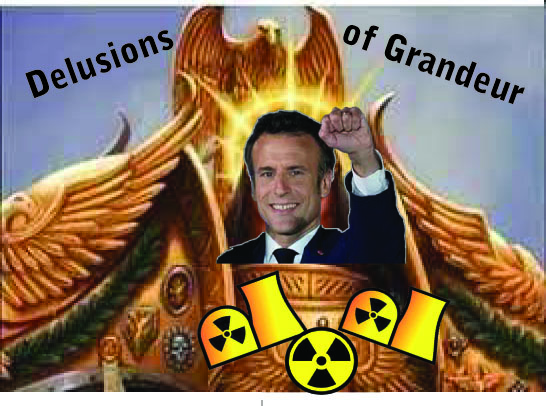
The French nuclear conglomerate Framatome has so far refused to end its cooperation with Rosatom. In December 2021, Rosatom and Framatome announced the signing of a “strategic cooperation” agreement to expand efforts to develop nuclear fuel and technologies.
And while more than 1,000 Western firms have either suspended or ended operations in Russia due to Putin’s invasion of Ukraine, Framatome doesn’t appear ready to join them.
https://www.rferl.org/a/rosatom-russia-nuclear-giant-escapes-sanctions/31899192.html 15 June 22, Europe has grappled with how to end its Russian energy addiction more than ever since Vladimir Putin launched his country’s unprovoked invasion of Ukraine on February 24.
The executive body of the 27-nation European Union agreed a plan in May to reduce its dependence on Russian natural gas by two-thirds by the end of the year, with a total phaseout of all Russian fossil fuel planned by the end of 2027. Coal, already on the outs in much of the bloc, will be banned by August.
But absent from sanctions, let alone discussion, is Rosatom, the Russian state-run nuclear power giant, despite a written appeal in the early days of the invasion from Ukrainian activists and NGOs to blacklist the company and ban nuclear fuel imported from Russia.
Brussels is not alone. When U.S. President Joe Biden announced a U.S. ban on Russian oil, natural gas, and coal imports in March, there was no mention of Rosatom. The Biden administration reportedly considered sanctioning Rosatom but backed off after nuclear industry lobbying and Biden’s plans to include nuclear power as part of the transition to clean energy, Reuters reported.
Rosatom’s footprint is deep in the global reactor and nuclear fuel business. That type of economic sway may explain why Russia’s nuclear industry “has managed to stay out of the limelight” during talk of sanctions, explained Oksana Ananyeva, an energy-policy analyst at the Ukrainian NGO Ekodia, one of the signatories of the March appeal addressed to Biden and EU leaders.
“One of the reasons for that is certainly the heavy reliance on uranium and nuclear fuel as most of the 32 countries that use nuclear power rely on Russia for some part of their nuclear fuel supply chain,” Ananyeva told RFE/RL.
The Numbers
Russian nuclear power radiates far beyond its borders. Of the 439 nuclear reactors in operation around the world in 2021, 38 of them were in Russia, an additional 42 were made with Russian nuclear reactor technology, and 15 more under construction were being built with Russian technology, according to a study published on May 23 at Columbia University’s Center on Global Energy Policy.
Russia is also a source of uranium, the key ingredient in nuclear fuel. Europe gets some 20 percent of its uranium from Russia. The United States relies on Russia for 16 percent of its uranium, with another 30 percent from two of Moscow’s close partners, Kazakhstan and Uzbekistan.
Russia owned 40 percent of the total uranium conversion infrastructure in the world in 2020 and 46 percent of the total uranium enrichment capacity in the world in 2018, according to the Columbia University report.
An EU Rethink On Nuclear Power?
In recent years, Rosatom is reported to have been part of nuclear-power industry lobby efforts to convince the EU to embrace nuclear as the bloc considers how to move faster to cleaner forms of power. According to Greenpeace, new EU nuclear capacity could be worth an estimated 500 billion euros ($521 billion) of potential investment.
The EU is scrambling to meet a goal of net-zero emissions by 2050 to prevent catastrophic global warming. Part of that process is defining what is and what isn’t a climate-friendly investment. Leaders in Brussels are seeking approval from EU countries and the European Parliament to include nuclear energy as a sustainable investment in its “taxonomy” policy for labeling green investments.
Rosatom has been accused by Greenpeace of using lobbying connections, which the environmental NGO describes as “reminiscent of nesting Russian dolls,” to press for the inclusion of nuclear energy in the taxonomy of sustainable investments, much like Russian energy firms Gazprom and LUKoil have done to include fossil gas.
In a report released on May 17, Greenpeace said its research had uncovered that Russian energy companies, including Gazprom, had met with EU commissioners and senior officials either directly or through subsidiaries and lobby groups at least 18 times since the European Commission published its action plan on sustainable finance in March 2018.
Beyond fuel, Rosatom is hoping to build new nuclear reactors, which are the core of its business. Hungary, heavily dependent on Russian gas and oil, has voiced opposition to proposed EU bans on Russian energy. It also has plans with Rosatom to build new reactors at its Paks nuclear power plant.
After meeting Rosatom’s chief executive in Istanbul on May 5, Hungarian Foreign Minister Peter Szijjarto said in a statement that the planned construction of the two new blocks at Paks served Hungary’s strategic interests.
Szijjarto said the Hungarian Atomic Energy Authority was reviewing the requests for permits submitted by Rosatom and once these are approved the project could enter its next phase.
The project, awarded in 2014 without a tender to Rosatom but plagued by delays, has often been cited as a sign of warm ties between Hungarian Prime Minister Viktor Orban and Putin.
While Hungary appears to be going ahead, Finland has announced it is pulling out from its planned reactor project with Rosatom. On May 2, the Finnish-led consortium Fennovoima said it had scrapped a contract with Rosatom citing delays and increased risks due to the war in Ukraine.
Rosatom, which owns a 34 percent stake in the consortium through a Finnish subsidiary, said on May 6 that it will demand compensation for the “unlawful termination” of the contract.
Europe’s Dependence
Continue readingTwo key committees of the European Parliament strike down EU plans to label nuclear and gas as green investment .

MEPs strike down EU plans to label nuclear and gas as green investment.
https://www.euronews.com/my-europe/2022/06/14/meps-strike-down-eu-plans-to-label-nuclear-and-gas-as-green-investment By Jorge Liboreiro & Alice Tidey • Updated: 14/06/2022
The European Commission’s highly controversial plan to label gas and nuclear as sustainable energy sources was on Tuesday struck down by two key parliamentary committees.
The Economic and Monetary Affairs Committee and the Environment, Public Health and Food Safety Committee rejected the proposal on Tuesday, with 76 MEPs voting to object and 62 voting in favour.
In a statement, MEPs on the committees said they “recognise the role of nuclear and fossil gas in guaranteeing stable energy supply during the transition to a sustainable economy.”
“But, they consider that the technical screening standards proposed by the Commission, in its delegated regulation, to support their inclusion do not respect the criteria for environmentally sustainable economic activities as set out in Article 3 of the Taxonomy Regulation,” the statement added.
They also requested that any new or amended delegated acts be subject to public consultation and impact assessments.
The objection will be put before the whole plenary in the first week of July. If the hemicycle replicates the outcome of the committees, the Commission’s plan will be officially scrapped.
The move pits lawmakers against a majority of member states, led by France, who had supported the inclusion of both gas and nuclear in the EU taxonomy.
A smaller group comprising Luxembourg, Spain, Austria and Denmark was vehemently opposed to the label, while Germany, which is highly dependent on gas, objected to the inclusion of nuclear as sustainable.
The committees’ rejection was welcomed by climate activists. Greenpeace EU sustainable finance campaigner Ariadna Rodrigo said in a statement that “MEPs stood with Ukraine today by voting to stop feeding Putin’s war machine with more money and inflaming the climate and nature crisis.”
“After more than 100 days of this devastating war, the European Parliament must now once and for all reject the greenwashing of fossil gas and nuclear energy in July. Do not give this shameful gift to Putin and his lobbyists,” she also said.
Mariana López Dávila, Programme Manager on Sustainable Finance, Environmental Coalition on Standards (ECOS) also commented, saying the vote “shows the Parliament’s willingness to stay true to science, and gives us hope that the EU can still lead the world into a truly sustainable future.”
“However, the veto is not yet a done deal. Members of the European Parliament stand a unique chance to walk the talk, and avoid greenwashing well-meaning investments into environmentally-harming projects,” she added.
Adopted in 2021, the taxonomy is a catalogue that helps private and public investors make informed choices about climate-conscious investments.
It covers a long list of projects that make a “substantial contribution” to at least one environmental objective of the EU’s climate policy while avoiding significant harm to any of the others.
Sectors already labelled as green under the taxonomy include solar energy, geothermal, hydrogen, wind power, hydropower and bioenergy.
The Commission later proposed to add gas and nuclear, arguing the two sources could be used as a temporary bridge to wean the EU off coal and achieve climate neutrality by 2050.
Many of UK’s coastal buildings may soon need to be abandoned due to sea level rise, – and what about the nuclear reactors?

Sea level rise threatens many coastal buildings in UK.
Is the UK government completely stupid? Not only are existing nuclear reactors at risk of flooding, but they plan new ones in the same threatened coastal areas?
Nearly 200,000 properties in England may have to be abandoned due to rising sea levels by 2050, a report says. It looks at where water will cause most damage and whether defences are technically and financially feasible.
There is consensus among scientists that decades of sea level rise are inevitable and the government has said that not all properties can be saved.
About a third of England’s coast will be put under pressure by sea level rise, the report says. “It just won’t be possible to hold the line all around the coast,” says the report’s author Paul Sayers, an expert on flood and coastal risks, adding that tough decisions will have to be made about what it is realistic to protect.
BBC 15th June 2022
https://www.bbc.co.uk/news/science-environment-61795783
The estimate of nearly 200,000 homes and businesses at risk of abandonment comes from researchers at the Tyndall Centre, in the University of East Anglia, published in the peer-review journal Oceans and Coastal Management.
Guardian 15th June 2022
Stop Sizewell C group questions UK government’s reasons for designating the project under the Regulated Asset Base model – and its secrecy about the plan.
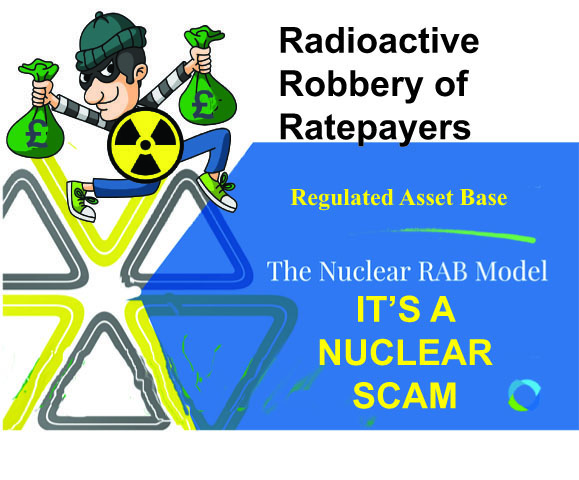
The Secretary of State is intending to designate a company which no one knows who the owners will be. EDF and the government – both apparently intending to be minority partners in Sizewell C with 20% stakes – are continuing to negotiate with each other behind closed doors.
| BEIS has today published draft reasons for designating NNB Generation Co (Sizewell C Co) as the first step towards the company being able to use a RAB funding model. All financial figures have been redacted. The BEIS press statement says “by publishing the draft reasons for designating Sizewell C under the RAB model, the government is going beyond the transparency requirements set out in legislation.” Stop Sizewell C said: “It’s outrageous that ministers are hiding the cost to electricity bill payers and the public purse of Sizewell C, while claiming to be transparent. By redacting the finances, it is impossible to know if the Secretary of State’s judgement on Value for Money is sound. We fail to understand why the government would not impose conditions related to the EPR reactor technology, when it has such a catastrophic track record, and one of the only working examples has been offline for almost a year in China” Additionally we note the following: The Secretary of State is intending to designate a company which no one knows who the owners will be. EDF and the government – both apparently intending to be minority partners in Sizewell C with 20% stakes – are continuing to negotiate with each other behind closed doors. The government intends to take a special share in Sizewell C, as a means of “protecting national security interests”, yet there is no mention of removing China General Nuclear from the project. The Value for Money assessment acknowledges that the (secret) figures provided by NNB require “uplift” (page 22 “ Given that largescale infrastructure projects have a tendency to cost more and take longer to build than expected, the analysis has applied appropriate uplifts to these assumptions”), and conclude that “the estimated return on government investment is positive in the majority of scenarios modelled” (page 22). With no indication of the size of that majority, or the various cost burdens, it is therefore clear that the return was negative in at least some scenarios. The only cost for Sizewell C in the public domain is the original estimate of £20 billion, published over two years ago. Since then there have been major changes to the project and huge price hikes in construction materials. Despite references to lessons learned at other EPR projects, there are no specific conditions linked to design adaptations that will be required for Hinkley Point C and Sizewell C’s reactors basedon the experience of Taishan 1, where problems have led to the reactor being offline for almost a year. (EDF reports, p116 “In addition [to fuel failure], a phenomenon occurring between the assemblies and a component enclosing the core has been identified, which would be linked to hydraulic stresses” and the French regulator, ASN, refers to (p14) “various anomalies observed on the cores of the EPR reactors of Taishan“. Such adaptations could have a serious impact on both cost and timescales. A government condition was attached to an (unused) offer of loan guarantees for Hinkley Point C, that the Flamanville EPR should be operating by December 2020. It is not expected to be operating until mid 2023 at the earliest. Finland’s Olkiluoto EPR is still testing at reduced capacity. Stop Sizewell C 14th June 2022 https://stopsizewellc.org/designation/ |
Hinkley Point C nuclear supply engineers go on strike
| Plating engineers creating products to supply to the Hinkley Point C nuclear power station go on strike today [13 June] in a pay dispute. Dozens of workers at Darchem Engineering, in Stockton-Upon-Tees, will walk out today after welders working for same firm were given an additional pay supplement, while the engineers weren’t. Further strikes are planned for 20,21,28 and 29 June. Industrial action could lead to big delays at Hinkley Point C – the £25 billion nuclear reactor in Somerset. GMB 14th June 2022 https://www.gmb.org.uk/news/hinkley-point-supply-engineers-strike |
UK government’s new financing plan for %20 tax-payer funded Sizewell C nuclear project will increase costs and delays, – is aimed to cut China out.
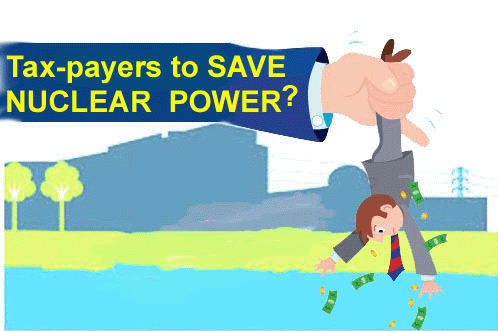
The government has bought an option to take a 20% stake in the Sizewell C nuclear power plant in a move that could ease China’s state nuclear company out of the project. Ministers took a £100m option to invest in Sizewell C’s holding company in January and said on Tuesday it would convert that into equity if the project reaches a final investment decision.
The venture on the Suffolk coast is jointly owned by EDF and China General Nuclear Power. The government is understood to be keen toremove CGN from the project amid concerns over China’s involvement in critical UK infrastructure. The business secretary, Kwasi Kwarteng, set out the taxpayer-funded financing model for Sizewell C and future projects on Tuesday.
The strategy the government plans to use – a regulated asset
base model – involves taxpayers taking on risk alongside private investors. The government is
attempting to inject urgency into a notoriously slow-moving industry amid a
drive to boost Britain’s domestic energy supplies.
In April Boris Johnson set out plans to approve up to eight reactors by the end of the decade. A
decision on whether to grant Sizewell C planning consent was last month delayed until 8 July. Research by the University of Greenwich Business School seen by the Guardian last month showed the project could cost UK taxpayers more than double government estimates and take five years longer to build.
Guardian 14th June 2022
Two European Parliamentary committees oppose inclusion of nuclear power and gas as environmentally sustainable
MEPs from the two responsible committees on Tuesday opposed the inclusion
of gas and nuclear power on the list of environmentally sustainable
economic activities. On Tuesday, at a joint meeting of the Committee on
Economic and Monetary Affairs and the Committee on the Environment, Health
and Food Safety, MEPs adopted by 76 votes for, 62 against and 4 abstentions
an objection the Commission’s proposal to include specific nuclear and gas
activities in the list of environmentally sustainable economic activities
covered by the EU taxonomy.
European Parliament 14th June 2022
The US-led bloc is unwilling to fight Russia directly and treats Ukraine as a proxy, Dutch PM admits.

NATO pledges more heavy weapons for Ukraine
The US-led bloc is unwilling to fight Russia directly and treats Kiev as a proxy, Dutch PM admits. Rt.com 15 June 22, Ukraine must get more NATO heavy weapons, the military bloc’s head said on Tuesday, ahead of a meeting of a US-led ‘contact group’ set up to discuss the plan’s logistics. NATO is trying to adapt to the “constantly changing” demands from Kiev, according to the American envoy to the bloc.
“Ukraine should have more heavy weapons and NATO allies and partners have provided heavy weapons … and they are also stepping up,” its Secretary General Jens Stoltenberg said on Tuesday in The Hague, where he met with leaders of seven member states ahead of the NATO summit scheduled for the end of June……….
Meanwhile, US Permanent Representative to NATO Julianne Smith was reported as saying that NATO states are trying to adapt to Kiev’s demands for additional weapons, which are constantly changing.
According to the Pentagon, initial efforts to supply Ukraine focused on portable anti-tank and anti-aircraft missiles, but are now shifting to tanks and heavy artillery due to the nature of the current fighting in Donbass.
Mikhail Podolyak, adviser to Ukrainian President Volodymyr Zelensky, has said that Kiev urgently needs 1,000 howitzers, 300 multiple-launch rocket systems, 500 tanks, 2,000 armored vehicles, and 1,000 drones.
While the US has pledged only four HIMARS rocket launchers, the Pentagon’s policy chief, Colin Kahl, on Tuesday revealed that they would be supplied with heavy guided missiles, with a range of 70 kilometers. ……..
Russia attacked the neighboring state in late February, following Ukraine’s failure to implement the terms of the Minsk agreements, first signed in 2014, and Moscow’s eventual recognition of the Donbass republics of Donetsk and Lugansk. The German- and French-brokered Minsk Protocol was designed to give the breakaway regions special status within the Ukrainian state.
The Kremlin has since demanded that Ukraine officially declare itself a neutral country that will never join the US-led NATO military bloc. Kiev insists the Russian offensive was completely unprovoked and has denied claims it was planning to retake the two republics by force. https://www.rt.com/news/557173-ukraine-heavy-weapons-nato/
UK government’s outrageous secrecy on the costs to consumers of the Regulated Asset Base model for funding new nuclear reactors – Stop Sizewell C Group.

The new Sizewell C nuclear power station could receive funding through a
new Government scheme that enables companies to charge consumers to cover
construction costs. Business and Energy Secretary Kwasi Kwarteng has
announced that the £20billion twin reactor will be considered to receive
finance through the Regulated Assets Base (RAB) model……………
However, Alison Downes, of campaign group
Stop Sizewell C, which is opposed to the plans, said: “It’s outrageous that
ministers are hiding the cost to electricity bill payers and the public
purse of Sizewell C, while claiming to be transparent. “By redacting the
finances, it is impossible to know if the secretary of state’s judgement on
value for money is sound.
East Anglian Daily Times 14th June 2022
Fear the fallout of UK government’s unwise Regulated Asset Base funding for new nuclear reactors
As if consumer energy bills aren’t high enough already. The government
seems hell bent on pushing them up some more. It’s poised to press the
button on its regulated asset base funding model for new nuclear power
plants: the financial bedrock of Boris Johnson’s fantasy plans to approve
eight new reactors by 2030.
The prototype is EDF’s Sizewell C, the £20
billion project nicely located on a Suffolk flood plain. By July 8
ministers will decide whether to approve the development consent order for
the 3,200MW nuke, said to be capable of powering six million homes. The
prelude to that?
Business secretary Kwasi Kwarteng going into overdrive on
the techie document front, not least over the joys of the RAB financing
model. As the law firm Slaughter and May noted in a briefing document, “a
major criticism is that . . . risk is passed on to the end consumer during
the construction phase and in a manner that may not best incentivise
developers to minimise the risk of cost overruns”.
Times 15th June 2022
https://www.thetimes.co.uk/article/fear-the-fallout-of-nuclear-funding-hszhd8lfz
An imminent radiological threat – UK’s planned Hinkley and Sizewell nuclear reactors – same design as flawed EPR reactor in China

June 14 marks the first real public reports of the accident at the
Taishan-1 nuclear reactor in China, and the Nuclear Free Local Authorities
have questioned whether the recent findings from the ongoing investigation
indicate that the EPR reactor design intended for Hinkley Point C and
Sizewell C has a ‘fatal flaw’.
Located almost 90 miles west of Hong
Kong, the Taishan-1 and 2 reactors were the first of their kind to enter
service, being of the same EPR (European Pressurised Reactors) design
intended for the Hinkley Point C and Sizewell C plants.
Designed and installed by EDF-subsidiary Framatome, building work started in 2009 and
they began commercial operations in December 2018 and September 2019,
respectively. The project is operated by Taishan Nuclear Power Joint
Venture Co. Ltd, which is jointly owned by CGN (70%) and Framatome, a
subsidiary of EDF (30%).
In late May 2021, American media outlets reported
the venting of radioactive gas at Taishan-1 following an equipment failure.
Rather than authorising an immediate shutdown, Chinese authorities
responded with obfuscation by increasing the safety limits at which the
reactor could operate. Frustrated the French operator reached out to the
international community for technical know-how and equipment to address the
problem, and in memo to the Department of Energy EDF described the
situation at Taishan-1 as ‘an imminent radiological threat to the site
and to the public’.[1]
International pressure finally prevailed and
Taishan-1 was shut-down. The reactor has ever since remained offline whilst
investigations have continued. Information remains hard to come by, but
French nuclear regulators – the ASN or Autorité de sûreté nucléaire
– have revealed that Taishan-1 suffered from two deficiencies which are
unrelated – the failure of springs in the fuel rods and excessive
vibration due to the design of the pressure vessel.
NFLA 14th June 2022
Anger that European Parliament may consider ”greenwashing” nuclear and gas.

It is time to retake the streets. In July, the European Parliament will
vote on a new taxonomy for gas and nuclear and a coalition of grassroot
groups and NGOs from across the world will show up and demand MEPs stop
this unbelievable act of greenwashing.
The Movement Hub 13th June 2022
1 This Month





PLEASE OPPOSE HR 8255 AND S.3639 – bills would accelerate satellite deployment, with no environmental review or safeguards – https://ncstd5li.quorum.us/campaign/169331/
To see nuclear-related stories in greater depth and intensity – go to https://nuclearinformation.wordpress.com
-
Archives
- October 2026 (81)
- September 2026 (339)
- August 2026 (330)
- July 2026 (355)
- June 2026 (287)
- May 2026 (306)
- April 2026 (356)
- March 2026 (251)
- February 2026 (267)
- January 2026 (308)
- December 2025 (358)
- November 2025 (359)
-
Categories
- 1
- 1 NUCLEAR ISSUES
- business and costs
- climate change
- culture and arts
- ENERGY
- environment
- health
- history
- indigenous issues
- Legal
- marketing of nuclear
- media
- opposition to nuclear
- PERSONAL STORIES
- politics
- politics international
- Religion and ethics
- safety
- secrets,lies and civil liberties
- spinbuster
- technology
- Uranium
- wastes
- weapons and war
- Women
- 2 WORLD
- ACTION
- AFRICA
- Atrocities
- AUSTRALIA
- Christina's notes
- Christina's themes
- culture and arts
- Events
- Fuk 2022
- Fuk 2023
- Fukushima 2017
- Fukushima 2018
- fukushima 2019
- Fukushima 2020
- Fukushima 2021
- general
- global warming
- Humour (God we need it)
- Nuclear
- RARE EARTHS
- Reference
- resources – print
- Resources -audiovicual
- Weekly Newsletter
- World
- World Nuclear
- YouTube
-
RSS
Entries RSS
Comments RSS

