France’s government determined to expand nuclear power, oblivious to environmental, safety, and cost ill-effects

the plant’s cooling processes have increased the water’s temperature by 6 degrees C, which has triggered ripple effects throughout the food chain.
that will have a disastrous impact on the ecosystem,”
French nuclear plants break a sweat over heat wave, DW 15 Aug 22, Successive heat waves are putting French nuclear reactors under strain. But that is not pushing them into an existential crisis, as Lisa Louis reports from Paris.
Like other European countries, France has been baking in temperatures of up to 40 degrees Celsius (104 degrees Fahrenheit) for several weeks. Although that is putting French nuclear reactors under strain, this does not seem to be calling the country’s nuclear-heavy energy strategy into question.
Nuclear power plants normally generate roughly 70% of electricity in France — making nuclear’s share of the energy mix there higher than in any other country.
But more than half of the country’s 56 reactors have been closed for several months due to planned or extraordinary maintenance.
And about a fifth of them would normally need to interrupt their activity or at least reduce it to a bare minimum, as the water temperature of the rivers into which plants discharge their cooling water exceeds a certain limit.
But the government has suspended that rule until at least September 11.
‘Ripple effects throughout the food chain’
For Jean-Pierre Delfau, an environmental activist at local group FNE86, that is an exasperating decision.
“I just can’t understand how they can keep the reactors running although that will have a disastrous impact on the ecosystem,” he told DW, as he and two other environmentalists made their way through high grass on the bank of the Garonne river to take a water sample on a recent afternoon.
The Garonne supplies cooling water for the Golfech nuclear plant in southwestern France. One of the power station’s two reactors has been standing still for months, after authorities found corrosion and small cracks on pipes relevant for the plant’s safety. The second reactor is still functioning.
“Due to the heat, the Garonne’s water throughput is already down to 50 cubic meters per second, from several thousand in normal times,” Delfau said. “The Golfech plant makes that worse, as it uses 8 cubic meters for its cooling system but only discharges 6 cubic meters back, as some of the water evaporates during the process,” he pointed out.
He added that the plant’s cooling processes have increased the water’s temperature by 6 degrees C, which has triggered ripple effects throughout the food chain.
“The warmer water destroys microalgae that are food for certain small fish, which bigger fish feed on,” explained the 79-year-old, who has been an anti-nuclear protester for more than 50 years.
“Plus, warmer water contains more bacteria. In order to make it potable, we have to add a lot of chemicals, which people then drink.”
Not an existential crisis for French nuclear power
Power company EDF, which runs all of France’s nuclear power plants, declined an interview request with DW. A spokeswoman replied by email that the situation was “extraordinary” and that so far, environmental probes had not revealed any negative impact on the flora and fauna around the respective reactors.
Despite environmental concerns, current issues are not throwing French nuclear power into an existential crisis. The government is planning to soon nationalize EDF and construct additional nuclear plants.
That has Anna Creti, climate economy director at Paris University Dauphine, scratching her head.
“It’s not quite clear how this strategy is supposed to work on a technology level, especially in the short run,” she told DW.
Technology not ready

“France is banking on so-called small modular reactors (SMRs), for which there exist roughly 40 different technologies, all of them in a pilot phase,” Creti said. “Getting them ready for deployment could take up to 10 years,” she added.
“The government also plans to construct more pressurized-water, so-called EPR reactors — a model that has encountered numerous problems,” she continued.
According to current predictions, the country’s first EPR plant is to go live next year in Flamanville in the north of the country. According to developer EDF, building costs have so far at least tripled, to roughly €13 billion ($13.3 billion).
The European Court of Auditors puts that figure at €19 billion — with construction taking more than 10 years longer than planned. Other EPRs in Britain, China and Finland are reported to experience construction, conceptual or production problems.
“The government has nevertheless earmarked €150 billion for refurbishing existing nuclear plants and constructing new ones,” Creti said, adding that no such funding boon was announced for renewables, although Paris is working on new rules to cut red tape for development of renewables.
“Putting more money intorenewables would make sense, as theyhave become ever cheaper over the past few years, and their technology is sufficiently advanced for them to be deployed immediately across the country,” she emphasized.
France is the only European country not to have reached its 2020 EU renewables targets. Renewable energies make up only roughly 19% of energy production, instead of the planned 23%……………………………………..
Energy shortages expected in winter
Philippe Mante is strongly hoping for that [shift to renewables]. He’s in charge of climate affairs at EELV, France’s green party, which is opposed to constructing new nuclear plants. For the sake of energy security, the party is not in favor of immediately dismantling existing nuclear energy plants.
Neighboring countries will be watching closely. Until now, France has been Europe’s biggest net energy exporter. This year, however, the country will have to import more electricity than it’s exporting.
That’s likely to add even more pressure to energy prices, which are already skyrocketing, due among other things to Moscow’s invasion of Ukraine and reduced delivery of Russian gas. https://www.dw.com/en/french-nuclear-plants-break-a-sweat-over-heat-wave/a-
UK nuclear to be branded green to lure investors
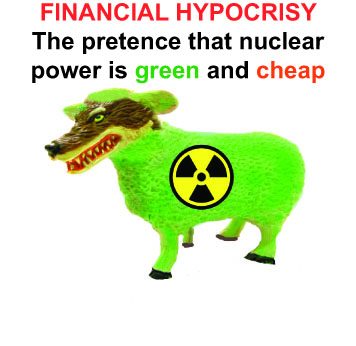
Treasury may classify reactors as eco-friendly to win pension fund backing for Sizewell C. The Government is set to rebrand nuclear power as green energy to lure reluctant investors to get behind Sizewell C.
Nuclear power is included in a draft report from the Treasury laying out which energy sources are classed as eco-friendly, a sources told The Mail on Sunday. This may clear the way for big City investors, including pension funds, to invest in nuclear power, such as the planned £20billion power station on the Suffolk
coast.
Mail on Sunday 14th Aug 2022
More shelling near Ukraine nuclear plant
The Advocate, By Natalia Zinets, August 16 2022,
Ukrainian and Russian-installed officials have reported shelling near Europe’s largest nuclear power plant, with both sides blaming each other days after the world nuclear watchdog warned of disaster if the fighting does not stop.
Russia and Ukraine have traded accusations this month regarding the Zaporizhzhia nuclear plant in southern Ukraine, which dominates the south bank of a vast reservoir on the Dnipro River……………………………
Nuclear experts fear fighting might damage the plant’s spent fuel pools or reactors…………………………………………
Reuters could not immediately verify battlefield reports. https://www.theadvocate.com.au/story/7862092/more-shelling-near-ukraine-nuclear-plant/?cs=5—
Moldova ships in radiation pills as fighting rages near Zaporizhzhia nuclear power plant in Ukraine
euronews, By Ben Turner 15/08/2022
Moldova has imported one million iodine pills as fighting rages around a nuclear power station in neighbouring Ukraine.
The eastern European country – with a population of 2.5 million people – insisted residents should not panic as it upped its stockpile of the tablets which can prevent radioactive elements building up in the body.
Shelling has intensified near Ukraine’s Zaporizhzhia nuclear power plant – the largest of its kind in Europe – with the UN warning fighting could “lead to disaster”……………………………………..
in the event of a nuclear disaster, iodine pills will be first issued to people unable to evacuate or take shelter such as emergency workers, Moldova’s National Agency for Public Health said.
Moldovan authorities advise citizens to take cover in cellars or basements, or evacuate the area, in the event of a nuclear emergency. …………………….. more https://www.euronews.com/2022/08/15/moldova-ships-in-radiation-pills-as-fighting-rages-near-zaporizhzhia-nuclear-power-plant-i
With its failing nuclear industry, France now an importer of power, no longer an exporter.
Sweden was the biggest net exporter of power in Europe during the first
half of 2022, overtaking France, according to a new report from EnAppSys.
France has long been a major exporter of power in the European market, with
a fleet of nuclear power stations generating a stable surplus of
electricity. However, that’s beginning to change, with France shifting from
a net exporter earlier in the year to a net importer.
This fall from grace
for France has, ironically, been blamed on its nuclear power station fleet,
which is beginning to show signs of age and unreliability. In fact, the
country has found several structural problems at its nuclear power
stations, which means it’s had to plug a significant gap in its electricity
supply with power generated elsewhere.
With France unlikely to be able to
fix its nuclear fleet anytime soon, it’s also unlikely to make it to the
top of the net power exporter list anytime soon either. Instead, the top
honour goes to Sweden, which exported a total of 16 TWh during the first
half of 2022. Most of that power, 7 TWh and 4 TWh, went to neighbours
Finland and Denmark, respectively.
However, the real story for the European
power export market is that Germany – a country commonly criticised for its
energy policies due to an overreliance on Russian gas – was Europe’s second
largest exporter in the first half of 2022. It exported 15.4 TWh, with
France taking the lion’s share. The UK also noticeably saw a change in its
fortunes in the first half of 2022, with the country going from a reliable
importer of electricity to a net exporter position, with power largely
flowing back to France. However, the UK still ended the six month period as
having imported 1.5% more power than exported.
Electrical Review 12th Aug 2022
Germany continues to close down its last remaining nuclear reactors
Germany’s nuclear power operators will continue to decommission the
country’s last three remaining plants, even as the government weighs
whether to keep the facilities running over the winter. E.ON, RWE and EnBW
confirmed they had not procured additional fuel to extend the life of the
Isar 2, Emsland and Neckarwestheim plants beyond the end of the year, when
they are legally-mandated to close.
FT 12th Aug 2022
https://www.ft.com/content/0257588e-0ebe-4696-8c4e-77f0a192b616
Rishi Sunak, UK Tory leader a keen supporter of the nuclear industry
Tory leader and Prime Minister contender Rishi Sunak says he is looking
forward to seeing plans for Wylfa Newydd if he’s elected and said he is a
strong supporter of nuclear. Former Chancellor Mr Sunak is going head to
head with Foreign Secretary Liz Truss to replace Boris Johnson. The UK
Government has earmarked Wylfa Newydd as a key site for new nuclear
although as yet no developer has been confirmed for the location after the
collapse of the previous plans following the withdrawal of Hitachi.
“Heunderstands that the Wylfa project is eligible for support as part of the
£120m Future Nuclear Enabling Fund, which was approved during his time as
Chancellor. He looks forward to seeing the proposals for the Wylfa Newydd
project if he is elected Prime Minister.” Wylfa and Trawsfynydd in
Gwynedd have also been tipped as potential sites for Small Modular
Reactors. Ms Truss’s campaign team have been asked to comment.
Daily Post 15th Aug 2022
https://www.dailypost.co.uk/news/north-wales-news/rishi-sunak-wylfa-newydd-nuclear-24756725
Ukraine targets Russian soldiers accused of threatening nuclear plant
ABC News, 15 Aug, 22
Key points:
- Ukraine accused Russia of deliberately hitting the nuclear power plant in a section that powers energy to the south of Ukraine
- The International Atomic Energy Agency has warned of a nuclear disaster unless fighting between forces stops
- Kyiv says it’s planning a counteroffensive to recapture Zaporizhzhia and neighbouring Kherson provinces…………………………………………………..
Climate change: Drought highlights dangers for electricity supplies from nuclear, hydro, fossil, and solar sources
BBC, By Matt McGrath, Environment correspondent, 14 Aug 22,
The ongoing drought in the UK and Europe is putting electricity generation under pressure, say experts.
Electricity from hydropower – which uses water to generate power – has dropped by 20% overall.
And nuclear facilities, which are cooled using river water, have been restricted.
There are fears that the shortfalls are a taste of what will happen in the coming winter.
hat will happen in the coming winter.
In the UK, high temperatures are hitting energy output from fossil, nuclear and solar sources.
That is because the technology in power plants and solar panels work much less well in high temperatures………………………………………………………………………………..
The exceptionally hot weather is also hitting nuclear power production, especially in France. Around half of the 56 reactors in the fleet are offline, with several affected by a systemic issue with corrosion.
Those reactors that are working are often cooled with water from rivers that are now running low, while temperatures are running high.
“Once the water in the rivers is very low and very hot, basically you have to stop cooling down nuclear power plants. That’s because the water that’s released is dangerous for fish and other species in the rivers,” said Prof Sonia Seneviratne, from ETH Zurich.
The French government is now allowing some facilities to release very warm water back into the rivers, as a temporary measure.
It underlines the stresses the heat is putting on energy production. France is now making up the shortfall in electricity by importing from the UK among others.
Analysts say this is putting additional pressure on the UK system – at a time when the very warm weather is hitting production from gas and nuclear facilities.
It’s more difficult to cool the plants in the warmer weather, explains Kathryn Porter, an energy consultant with Watt-Logic.
“Solar panels also experience quite a significant drop off above 25C. Everything just works less well when it’s hot,” she adds……………. more https://www.bbc.com/news/science-environment-62524551
Ukraine Plant Under Fire Showcases ‘Dangerous’ Nature of Nuclear Power, Experts Say
“Having reactors in a war zone is a nightmare waiting to become a grim reality,” said one critic.

https://www.commondreams.org/news/2022/08/08/ukraine-plant-under-fire-showcases-dangerous-nature-nuclear-power-experts-say KENNY STANCIL, August 8, 2022 Critics of atomic energy on Monday described the shelling of the Zaporizhzhia power station in southeastern Ukraine as “a warning that nuclear power plants are a liability, not an asset, especially under extreme conditions of war or climate change.”
While Kyiv and Moscow continue to trade blame for recent strikes on the largest nuclear power plant in Europe, advocates at Beyond Nuclear emphasized that regardless of who is at fault, damage to the six-reactor site could have deadly consequences “far beyond the war zone.”
“If even just one of the six operational reactors there suffered catastrophic damage and released its radioactive inventory we are talking about a humanitarian disaster that would dwarf Chernobyl,” Linda Pentz Gunter, international specialist at Beyond Nuclear, said in a statement.
Radioactive contamination from that 1986 nuclear accident in what is now Ukraine rendered an area of more than 1,000 square miles uninhabitable and caused the illnesses and deaths of potentially hundreds of thousands of people.
According to Beyond Nuclear, reactors at Zaporizhzhia “contain far more radioactivity, both in the working reactors and in the irradiated fuel pools, than was present at the relatively new Chernobyl Unit 4 when it exploded.”
“This situation brings home all too alarmingly just how dangerous nuclear power is as an energy source,” said Gunter. “We would not be having this conversation if we were dealing with solar panels or wind turbines.”
“The potential to cause a catastrophic accident even on a good day should have been enough to end the use of this technology,” she added. “Having reactors in a war zone is a nightmare waiting to become a grim reality.”
Beyond Nuclear is not alone in sounding the alarm about the dire consequences that could materialize following damage to Zaporizhzhia or any other nuclear power plants now at risk in Ukraine.
Last week, Shaun Burnie, senior nuclear specialist with Greenpeace, told Democracy Now! that “nuclear plants are extremely vulnerable to external attack in the context of a war zone.” He added, “You’re looking at potential massive releases of radioactivity, potentially even greater than Chernobyl.”
Buildings housing nuclear reactors are not designed to withstand missile attacks nor extreme weather events. In March 2011, a massive earthquake and tsunami led to a loss of power in three reactor buildings at Fukushima Daiichi in Japan, with calamitous results. As the fossil fuel-driven climate crisis supercharges storms, nuclear infrastructure is increasingly vulnerable to damage of that sort.
This is not the first time that nuclear engineers at Zaporizhzhia have found themselves under military assault. Russian shelling of the facility in early March sparked a fire.
None of the reactor buildings or fuel storage sites were affected then. “But after more than five months of fighting,” Beyond Nuclear explained Monday, “the site has become more perilous, given its proximity to the eastern regions that are at the heart of contention between the two countries.”
“The risk of fire is one of the most serious hazards at nuclear power plants on a routine basis,” said Paul Gunter, reactor oversight specialist at Beyond Nuclear. “A fire at Zaporizhzhia could spread to the irradiated fuel storage pools located outside primary containment and lead to explosions and meltdowns.”
“If the fuel pools are damaged and cooling water boils away, exposing the highly radioactive rods to air, we could see hydrogen explosions and the spread of radioactivity far worse than occurred at Fukushima,” he continued.
Winds would distribute radioactive gases across Europe and, depending on the scale of the disaster, beyond, potentially reaching as far away as the United States. A Greenpeace analysis published earlier this year warned that severe damage to Zaporizhzhia could render large swaths of Europe “uninhabitable for decades.”
Radioactive fallout from the facility could subject tens of millions of people to chronic or fatal health problems, with the effects of exposure lasting for years on end.
Thirty-six years after Ukraine’s first nuclear disaster, “people still living in Chernobyl-contaminated areas are showing increases in cardiovascular disorders, issues with sight and respiration, and significantly increased rates of birth defects and deformities,” said Cindy Folkers, radiation and health hazards specialist at Beyond Nuclear.
“Given the far greater amounts of radiation that could be released in the event of a major disaster at Zaporizhzhia, we would expect to see greater numbers of people seriously harmed and for far longer than the health impacts caused by Chornobyl,” Folkers said.
Electricite de France (EDF) nuclear corporation is headed for bankruptcy – that’s why France’s government is nationalising it.
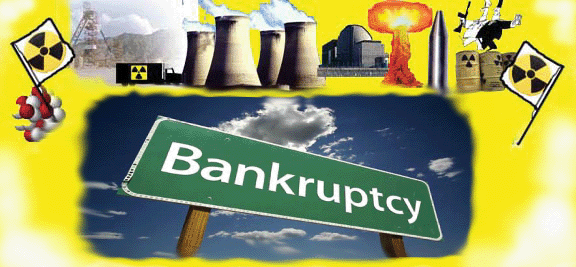
Is EDF running out of money? The French government is to spend £20
billion buying back the final 16% of Electricité de France (EDF) shares
still privately owned, bringing the company back under public ownership.
Why are they renationalising this company? The answer is simple. It is to
avoid EDF going bankrupt. Right now, over half (29 out of 56) of EDF’s
French nuclear reactors are currently offline. The company is already
hugely indebted and faces a massive bill of up to 100 billion euros (£85
billion) to keep its ageing nuclear fleet going.
And EDF’s flagship EPR reactor is over-cost and over-time everywhere it is being attempted to be
built. Aside from its debts, EDF has faced issues with ageing reactors,
after experts warned President Macron of significant corrosion safety
problems in EDF nuclear power plants in France as cracks were detected in
the cooling systems of some nuclear reactors.
Meanwhile there is delay after delay in bringing online every one of the EDF flagship nuclear
reactors, in Finland, in France, even here in Somerset. In desperation to
help fund its latest lossmaker at Sizewell, Suffolk, EDF is reaching out to
fellow utility giant Centrica for help. Could this be the same Centrica,
which in 2016 abandoned plans to invest in EDF’s Hinkley C partly because
of ‘the lengthening time frame for a return on the capital invested in a
project of this scale’?
Electrical Review 9th Aug 2022
Ukraine and its Western backers should be held accountable for the ‘suicidal’ attack on Europe’s largest nuclear powerplant

The US secretary of state hoped to make Russia look like a ‘nuclear terrorist’. Instead, he implicated himself
Even as UN Secretary-General António Guterres addressed survivors of the World War Two US atomic bomb attack on Hiroshima, halfway around the world, the armed forces of Ukraine seemed hellbent on unleashing a modern-day nuclear holocaust on Europe by firing artillery rockets at the Zaporozhye power plant.
This week’s assault, which damaged safety equipment and disrupted power to the facility, the continent’s largest, was characterized by Guterres as “suicidal.”
Kiev was quick to blame Russia for the attacks, accusing Moscow of conducting “nuclear terrorism,” and calling for the international community to send in a delegation of “international peacekeepers” to “completely demilitarize the territory.”
The Zaporozhye nuclear facility has been under the physical control of Russia since its forces occupied the site back in March. Since then, the plant has been operated by Ukrainian technicians working under the supervision of Russian atomic energy experts. The facility contains six nuclear reactors which, before the start of the military operation, generated approximately one-fifth of Ukraine’s electricity. Three of these reactors ceased operation after the Russians took control the site, and another one was forced to shut down after the facility was shelled on August 5. The two remaining reactors were likewise compelled to reduce their output to half as a safety precaution.
Ukraine’s ambassador to the International Atomic Energy Agency (IAEA), Yevhenii Tsymbaliuk, declared that Russian forces were attempting to cause electricity blackouts in southern Ukraine by shelling the plant. The Ukrainian state nuclear agency, Energoatom, has accused the Russian military of placing explosives throughout the Zaporozhye nuclear plant, which would be detonated in the event of a Ukrainian counterattack which threatened to capture the facility. The Ukrainian military has also accused Russia of placing military equipment, including ammunition, in buildings located near the nuclear reactors.
The only problem with the Ukrainian narrative is that, simply put, none of it is true. The August 5 attack on the Zaporozhye nuclear facility was carried out by artillery rockets whose impact characteristics point clearly to having originated from Ukrainian controlled territory. Moreover, Russian air defense and counter-battery radars situated in the vicinity of the plant would have detected the ballistic trajectory of the incoming rockets, providing unimpeachable evidence of the origin of the attack. So, too, would have US and NATO intelligence collection platforms operating over and around Ukraine. And, given the propaganda victory that could be achieved by releasing such evidence, one can rest assured that the US would very much take full advantage of any scenario which would reproduce the release of U-2 imagery during the Cuban missile crisis, or the release of the audio tapes of the Soviet fighter pilot downing KAL 007…………………………….
The Ukrainian attack on the Zaporozhye nuclear facility was, in typical Orwellian fashion, forecasted by the United States four days before it took place. During an August 1 news conference at the United Nations, US Secretary of State Antony Blinken accused Russia of using the nuclear facility as a base from which it conducted artillery strikes against Ukraine. Blinken declared that the act of firing artillery rockets from proximity to the nuclear power plant was “the height of irresponsibility,” implying that these rockets could land on the power plant itself. Blinken also added that the Russians were using the nuclear facility as a “nuclear shield” which prevented any Ukrainian attack out of fear of striking the nuclear reactors.
Blinken’s brazen parroting of Ukrainian government talking points was made more absurd by the absolute dearth of evidence to back up his powerful pronouncements. Normally, when someone of the stature of the Secretary of State speaks in such a public manner about issues of this importance, there is some intelligence information that is released – for instance, overhead imagery showing Russian troop locations near the Zaporozhye nuclear plant – to sustain the allegation. No such data was provided, however, because Blinken had ceased functioning as the head of the American diplomatic service, and instead was functioning as little more than a Ukrainian propagandist.
For its part, Russia has made it clear that there were no Russian forces located in the vicinity of the Zaporozhye nuclear facility save for a small contingent of troops for security purposes (it is, after all, an active nuclear power plant.) Again, while Russia can clearly provide overhead imagery of its force disposition in the vicinity of the plant, operational security precludes it from doing so. It is, after all, the job of the accuser to provide the evidence of a crime, not the accused.
Blinken’s August 1 statement served as the initiation of a public relations campaign which culminated in the Ukrainian artillery attack on the Zaporozhye nuclear facility. The goal of this campaign appears to be twofold – first, to put Russia in a bad light, and second, to allow Ukraine to accomplish that which it could not achieve through military force – the eviction of Russian troops from Zaporozhye. The calls for international intervention emanating from the West point to a concerted effort in promoting a pro-Ukrainian narrative even when all parties know the underlying facts sustaining this narrative are not true. To counteract that, Russia has extended its own invitation to IAEA monitors to visit the powerplant and summoned a UN Security Council meeting to discuss the situation.
This is far more serious than simply another information warfare campaign gone bad. While the Zaporozhye nuclear facility is constructed to standards which would be able to survive a direct hit from an artillery rocket, the disruption of power and/or damage to safety equipment could lead to the kind of runaway event that preceded the Chernobyl nuclear disaster. The Russian Defense Ministry noted that the Ukrainian attack on the power plant had caused a power surge which triggered an emergency shutdown. The head of the Ukrainian company operating the plant further noted that all but one power line connecting it to Ukraine’s energy system had been destroyed, declaring that any power blackout could be “very unsafe for such a nuclear facility.”
Secretary-General Guterres rightly called the attack on the Zaporozhye nuclear facility “suicidal.” However, the “nuclear terrorists” involved in this atrocity do not hail from Moscow, but rather Washington and Kiev. When the dust from Russia’s military operation finally settles, and those responsible for perpetrating crimes such as the attack on the Zaporozhye nuclear facility can be held accountable, Tony Blinken’s name should, if there were any justice in this world, be at the top of this list.
https://www.rt.com/russia/560561-ukraine-nuclear-powerplant-attack/
Russia summons session of UN Security Council over nuclear emergency
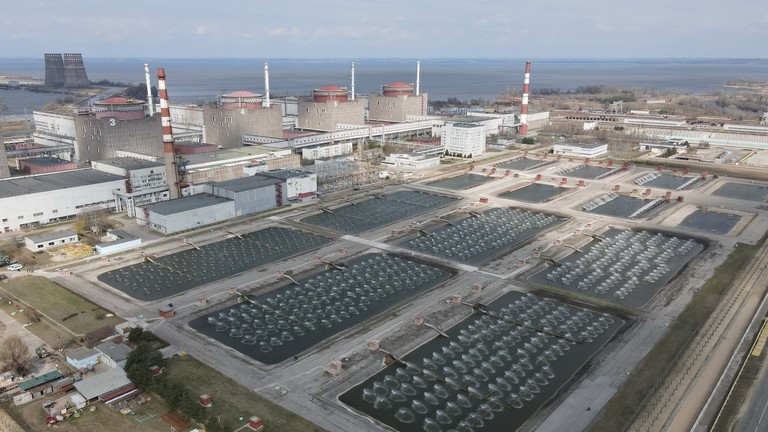
https://www.rt.com/russia/560576-zaporozhye-nuclear-plant-un/ 10 Aug 22, Moscow has accused Kiev of striking the Zaporozhye nuclear power plant, risking a repeat of the Chernobyl disaster
Russia has summoned an emergency session of the UN Security Council to discuss the situation at Ukraine’s Zaporozhye nuclear power plant, which has been the subject of regular shelling attacks. Moscow wants the chief of the UN nuclear watchdog, the International Atomic Energy Agency (IAEA), to brief the council on the situation.
The move, which was reported by Russian media on Tuesday, was confirmed by the deputy head of Russia’s mission to the UN, Dmitry Polyansky, who said the public needed to learn about “Ukrainian provocations.” The meeting is expected to take place on Thursday.
Russia has summoned an emergency session of the UN Security Council to discuss the situation at Ukraine’s Zaporozhye nuclear power plant, which has been the subject of regular shelling attacks. Moscow wants the chief of the UN nuclear watchdog, the International Atomic Energy Agency (IAEA), to brief the council on the situation.
The move, which was reported by Russian media on Tuesday, was confirmed by the deputy head of Russia’s mission to the UN, Dmitry Polyansky, who said the public needed to learn about “Ukrainian provocations.” The meeting is expected to take place on Thursday.
The IAEA has not had access to the site since before the Russian-Ukrainian conflict escalated in late February and relies on reports from Ukraine to assess the situation on the ground. The Zaporozhye plant is manned by Ukrainian nuclear workers despite being under Russian control.
On Saturday, Director General Rafael Mariano Grossi expressed the IAEA’s concern over the artillery strikes, stating that they underlined “the very real risk of a nuclear disaster that could threaten public health and the environment in Ukraine and beyond.”
“I condemn any violent acts carried out at or near the Zaporozhye nuclear power plant or against its staff,” he stressed.
Grossi is expected to lead an inspection of the facility for an independent assessment of the situation and verification that non-proliferation safeguards remain in place.
The Zaporozhye plant is the largest in Europe and stores tens of tons of enriched uranium and plutonium in its reactor cores and spent fuel storage, according to the IAEA. The watchdog chief earlier said he was alarmed that the security of the radioactive materials may be compromised amid Russian-Ukrainian hostilities.
Both Kiev and Moscow stated that they were eager for the proposed inspection to take place. However, it has yet to materialize due to security concerns. The Russian foreign ministry said on Tuesday that the delay played into Kiev’s hands by allowing it to continue its provocative attacks.
Moscow called on UN Secretary General Antonio Guterres to leverage his authority to speed up the IAEA visit. The UN Department of Safety and Security is acting irresponsibly by stalling the visit, foreign ministry spokesperson Maria Zakharova alleged in an interview on Wednesday.
Guterres last week said that “any attack to a nuclear plant is a suicidal thing.”
Russian diplomats and military officials stated that attacks on Zaporozhye power plant could result in a disaster worse than the Chernobyl reactor meltdown and steam explosion in 1986.
EDF sues French government for €8.4bn after Macron forces it to sell energy at a loss
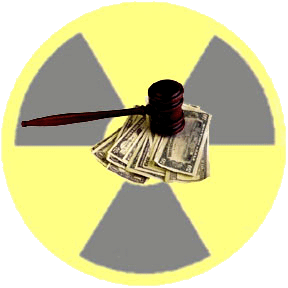
EDF is suing the French government for €8.3bn (£7bn) after Emmanuel
Macron forced the nuclear giant to sell energy at a loss.
The company has filed a compensation claim with the Conseil d’Etat, the French
administrative supreme court, over “losses incurred” as a result of a
price cap extended in January. Paris ordered EDF, which is currently 84pc
state owned, to sell more of its power to French rivals at below market
prices in an attempt to support households and businesses as energy costs
soared.
EDF, which is in the process of being fully nationalised by the
French state, said the €8.3bn figure reflected losses “estimated to
date”, suggesting the price cap could cost it €15bn over the full year.
EDF estimated the changes would cost it between €7.7bn and €8.4bn when
they were first announced and said it would consider “any measure to
protect its interests”. Before the measure was enacted, competitors were
allowed to buy 100TWh of EDF’s electricity at a heavy discount to balance
its monopoly position. In January, the Elysée ordered that cap to be
increased by a fifth.
Telegraph 9th Aug 2022
Very high radiation risks amid shelling at the Zaporizhzhia nuclear power plant.

The head of Ukraine ‘s state nuclear power firm has warned of “very high”
radiation risks amid shelling at the Zaporizhzhia nuclear power plant.
Energoatom’s chief, Petro Kotin, said it was vital Kyiv regains control
over the facility in the Russian-occupied south in time for winter.
He added that last week’s shelling had damaged three lines that connect the
plant to the Ukrainian grid and that Russia wanted to connect the facility
to its grid. Some of the shelling landed near storage facilities for spent
fuel, an area that has 174 containers of highly radioactive material, Kotin
said. He warned of the dangers of them being hit, saying: “This is…the
most radioactive material in all the nuclear power plant.
Mirror 10th Aug 2022
https://www.mirror.co.uk/news/world-news/ukraines-nuclear-chief-warns-very-27702181
1 This Month





PLEASE OPPOSE HR 8255 AND S.3639 – bills would accelerate satellite deployment, with no environmental review or safeguards – https://ncstd5li.quorum.us/campaign/169331/
To see nuclear-related stories in greater depth and intensity – go to https://nuclearinformation.wordpress.com
-
Archives
- October 2026 (74)
- September 2026 (339)
- August 2026 (330)
- July 2026 (355)
- June 2026 (287)
- May 2026 (306)
- April 2026 (356)
- March 2026 (251)
- February 2026 (267)
- January 2026 (308)
- December 2025 (358)
- November 2025 (359)
-
Categories
- 1
- 1 NUCLEAR ISSUES
- business and costs
- climate change
- culture and arts
- ENERGY
- environment
- health
- history
- indigenous issues
- Legal
- marketing of nuclear
- media
- opposition to nuclear
- PERSONAL STORIES
- politics
- politics international
- Religion and ethics
- safety
- secrets,lies and civil liberties
- spinbuster
- technology
- Uranium
- wastes
- weapons and war
- Women
- 2 WORLD
- ACTION
- AFRICA
- Atrocities
- AUSTRALIA
- Christina's notes
- Christina's themes
- culture and arts
- Events
- Fuk 2022
- Fuk 2023
- Fukushima 2017
- Fukushima 2018
- fukushima 2019
- Fukushima 2020
- Fukushima 2021
- general
- global warming
- Humour (God we need it)
- Nuclear
- RARE EARTHS
- Reference
- resources – print
- Resources -audiovicual
- Weekly Newsletter
- World
- World Nuclear
- YouTube
-
RSS
Entries RSS
Comments RSS

