Youth- led 7 day anti-nuclear march against UK government’s plan for small nuclear reactors
Members of the youth cohort of CND Cymru will be embarking on a 7-day march
from Trawsfynydd Nuclear Power Station in Gwynedd to Wylfa Nuclear Power
Station on Ynys Môn in September, in protest against the Westminster
government’s decision to locate Small Modular Nuclear Reactors (SMRs) on
the decommissioned sites.
This decision came hand in hand with the growing
frustration felt by young people following the government’s
‘greenwashing’ of nuclear energy; selling it as a form of clean, safe and
homegrown energy in the backdrop of the climate crisis.
We are equally concerned about the disastrous effects of uranium mining on the lands of
indigenous people in Australia as well as in areas of the Global South –
not to mention the links between nuclear power, the military and nuclear
weapons.
The young people who have decided to march against the
construction of SMRs in Trawsfynydd and Wylfa want their voices heard in
the debates that will depict the future landscape in which they will have
to live in. They demand to see preparations for a genuinely green future
and the creation of jobs that will not come at the expense of the health of
workers and their communities, or the environment.
Climate justice cannot
be achieved by nuclear energy. We will be walking with the support of the
Public and Commercial Services Union (PCS), Nuclear Free Local Authorities
(NFLA), CADNO, PAWB, Cymdeithas yr Iaith, XR Cymru, Youth Fusion and Mabon
ap Gwynfor (MS). Although the march will be youth-led, anyone wishing to
join will be most welcome.
CND Cymru 4th Sept 2022
If people take part in referendums in Donbass region, Ukraine government will prosecute them as criminal offenders
Kiev threatens pro-Russia Ukrainians with jail terms. more https://www.rt.com/russia/562159-kiev-referendum-jail-time/ 4 Sept 22, Ukraine’s deputy prime minister warns that voting in referendums in Moscow-controlled territories is a criminal offence
Ukrainian citizens risk criminal prosecution and a jail time of up to 12 years if they participate in referendums on joining Russia, Ukrainian Deputy Prime Minister Irina Vereshchuk warned on Saturday.
“There are not and will not be any referendums on our Ukrainian land,” Vereshchuk stated during a national broadcast.
Pro-Russian authorities in the Zaporozhye, Kharkov and Kherson Regions, as well the Donetsk and Lugansk People’s Republics, previously spoke of potentially holding referendums on uniting with Russia, but so far no dates have been set.
“It’s all a farce and a circus. But for our citizens who will take part in this, there is actually an article of the Criminal Code,” Kiev’s deputy prime minister said.
“If collaboration is proven, or, for example, participation in the referendum or incitement to participate in the referendum, then people can receive up to 12 years with confiscation (of assets),” she warned.
Vereshchuk urged Ukrainians who remain in Russia-controlled territories to evacuate or avoid voting in any plebiscites, as “no pressure, no violent incitement, etc., can later justify the fact that a person went to the referendum.”
When asked, how many people potentially might take part in voting, Vereshchuk claimed the percentage is “tiny… not even 2%.”
The Ukrainian government previously warned that citizens who attempt to become Russian citizens could be punished with up to 15 years in prison.
Ukrainian government wants to sell nuclear energy to Germany
DW, 4 Sept 22, Kyiv offers nuclear energy to Germany. Ukrainian Prime Minister Denys Shmyhal has said a proposal to export electricity to Germany amid the ongoing energy crisis would be “a very good deal for both sides.” DW rounds up the latest…….
“Currently, Ukraine exports its electricity to Moldova, Romania, Slovakia and Poland. But we are quite ready to expand our exports to Germany,” Ukrainian Prime Minister Denys Shmyhal told the dpa news agency on Saturday.
“We have a sufficient amount of electricity in Ukraine, thanks to our nuclear power plants,” he said. The issue will be discussed during Shmyhal’s visit to Berlin over the weekend, where he will be meeting with Chancellor Olaf Scholz.
Electricity consumption in Ukraine has fallen since the start of the Russian invasion, due to the mass exodus of refugees and an economic slump.
Shmyhal said such a deal “would be very good for both sides.”…….
Ukraine operates four nuclear power plants with a total capacity of more than 14 gigawatts.
However, observers fear Russia’s capture of the Zaporizhzhia facility — the largest nuclear power plant in Europe — could lead to a serious accident if the war intensifies…………. https://www.dw.com/en/russia-ukraine-updates-kyiv-offers-nuclear-energy-to-germany/a-63009289
“This is Not Our War” • Czech People Rise Up Against NATOSTAN War — Calculus of Decay

Tens of thousands took to the streets to protest the NATO involvement in the Russia/Ukraine war:
“This is Not Our War” • Czech People Rise Up Against NATOSTAN War — Calculus of Decay
Nikopol under attack: Residents flee fighting near Zaporizhzhia nuclear power plant
Euro News 4 Set 22, Every day, people gather in a wooded park just 30 kilometres from Ukraine’s Zaporizhzhia nuclear power plant and set up temporary shelters.
Some are from the southern Ukrainian city of Nikopol, situated down the river from Europe’s biggest nuclear power station.
The campers have fled Nikopol to escape shelling, with many of them sleeping in tents or their cars. When the rumbling of artillery fire stops, they return to Nikopol to work or check if their homes are still in one piece.
Attacks on Nikopol – located just 10 kilometres from Zaporizhzhia – have intensified over the past couple of weeks, as Russia and Ukrainian continue to exchange deadly blows in their six-month conflict. ……
More than 50% of Nikopol’s residents have fled the city, according to local authorities, with many of those who remain being forced to sleep in basements and shelters. https://www.euronews.com/2022/09/04/nikopol-under-attack-residents-flee-fighting-near-zaporizhzhia-nuclear-power-plant
—
IAEA at Zaporizhia nuclear station: Dr Paul Dorfman assesses the risks
The “physical integrity” of the Zaporizhzhia nuclear power station in
south-eastern Ukraine has been “violated”, the head of the
International Atomic Energy Agency (IAEA) has said, as he voiced his fears
for the site.
Rafael Grossi led a team of inspectors to the
Russian-controlled plant that has been frequently shelled in recent weeks,
raising fears of a nuclear incident. “It is obvious that the plant and
physical integrity of the plant has been violated several times,” Grossi
told reporters after he returned with part of his team to the
Ukrainian-controlled area on Thursday.
“I worried, I worry and I will
continue to be worried about the plant,” he said, while adding that the
situation was “more predictable” now. Rafael Grossi speaks to the media
before setting off to visit the Zaporizhzhia nuclear power plant “We have
spent there four or five hours. I have seen a lot, and I have my people
there, we were able to tour the whole site,” Grossi said about the
long-anticipated inspection. He said that part of his 14-strong mission to
the plant would stay at the facility “until Sunday or Monday, continuing
with the assessment”.
Guardian 2nd Sept 2022
Gorbachev Ended Cold War, Eased Nuclear Tensions But Trusted US Too Much – Experts

News Ghana, By SPUTNIK, September 1, 2022,
Late Soviet President Mikhail Gorbachev was a good, well-meaning man who ended the Cold War and dramatically reduced superpower and global nuclear tensions, but he put too much trust into the unwritten assurances of American leaders, experts told Sputnik.
Gorbachev died on Tuesday at the age of 91 in Moscow after a long and serious illness, according to the Central Clinical Hospital. He will be laid to rest at the Novodevichy cemetery in Moscow after a public farewell ceremony on Saturday.
Former US Assistant Secretary of Defense for International Security Affairs Chas Freeman paid tribute to Gorbachev’s monumental achievement in easing global tensions and ensuring superpower peace for decades.
“Until his death, he was the most consequential of all living persons,” Freeman said.
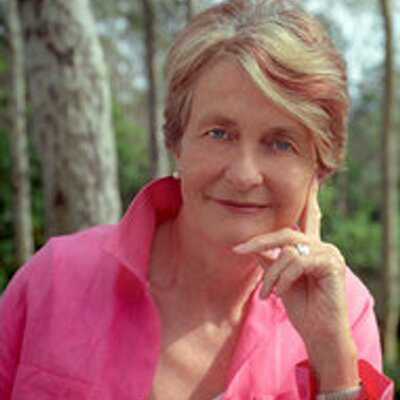
Global anti-nuclear campaigner Dr. Helen Caldicott, founder of Nobel Peace Prize winning Physicians said Gorbachev had far greater vision and determination to abolish nuclear weapons than his US counterparts.
Global anti-nuclear campaigner Dr. Helen Caldicott, founder of Nobel Peace Prize winning Physicians said Gorbachev had far greater vision and determination to abolish nuclear weapons than his US counterparts.
“A global hero died [on Tuesday]. A man who liaised with [then-US president Ronald] Reagan who brought the Cold War to an end and was one of the wisest men, if not the wisest, of this last century,” she said.
Unfortunately, when the two leaders met in Reykjavik, Iceland in October 1986 and almost agreed to abolish nuclear weapons, Reagan insisted on keeping Star Wars, the US-space-based weapons systems, Caldicott recalled.
“Gorbachev opposed this notion, so we still have our lives hanging by a thread, rapidly approaching global annihilation,” she said.
Gorbachev was also opposed to the eastward expansion of NATO in the 30 years following the end of the Soviet Union, Caldicott pointed out. A halt on NATO expansion east of the Oder River and the eastern-most border of Germany had been promised by then-Secretary of State James A. Baker III in the George Herbert Walker Bush administration, she noted.
However, this pledge was “subsequently violated by the great United States of America, hence the murderous mess in the Ukraine [today],” Caldicott commented.
American University in Moscow President Edward Lozansky agreed that Gorbachev was a good man who sought international global security and cooperation for all, especially for the Russian and American peoples, but that he was naive in trusting the assurances of successive US leaders.
“Gorbachev was a good man who clearly saw the mountains of problems in… the Soviet Union but naively expected America’s help in solving them,” he said.
In his vision which Gorbachev presented to Washington he saw this help not as a charity but an investment in the future, involving both mutually beneficial security and economic cooperation, Lozansky explained.
“Taking into account Russia’s enormous natural riches, its huge nuclear arsenal and human capital, that cooperation being performed in an honest way would definitely be good for everyone and prevent many problems that America faces today,” he pointed out.
However, the Washington establishment has chosen another way, Lozansky observed………
Gorbachev will rank high in the annals of the world, Lozansky concluded.
“Still. I believe that his historical legacy will place him in the ranks of the righteous,” he said.
California State University Political Science Professor Beau Grosscup agreed that Gorbachev had courageously approved enormous constructive changes even at the cost of his own standing and career………….. https://newsghana.com.gh/gorbachev-ended-cold-war-eased-nuclear-tensions-but-trusted-us-too-much-experts/
Caroline Lucas, Green Party MP for Brighton Pavilion condemns decision for massively costly Sizewell C nuclear station.

https://www.greenparty.org.uk/news/2022/09/01/caroline-lucas-responds-to-the-decision-to-approve-sizewell-c-nuclear-power-station/ “Sizewell C is massively costly, achingly slow, and carries huge unnecessary risks. Its approval marks Boris Johnson taking one final opportunity to kick the public in the teeth before his departure as Prime Minister.
“This project is expected to cost up to £30 billion; and in following the Regulated Asset Base business model, it will pass that enormous upfront cost directly onto the consumer. As energy bills soar ever higher and this lame duck Government leaves people in the lurch, the last thing the public needs right now is a massively costly nuclear white elephant. Even cabinet ministers are already expressing reservations about its value for money.
“When we need oven-ready solutions to delivering energy security and slashing bills, Sizewell C simply is not one of them. Hinkley Point C will have taken the best part of two decades to go from planning to production, and it’s still years behind schedule. This Sizewell plant could take anywhere between 10-17 years to build.
“Meanwhile, there are hundreds of energy-saving options and clean, cheap and home-grown renewable projects ready to go – yet solar farms are being refused at their highest rate for five years, the Government has utterly failed to adopt a retrofit revolution to slash energy bills, and now Tory leadership candidates are vowing to block onshore wind power which could be operational within days.
“Rubber stamping Sizewell C is simply Boris Johnson’s woeful final attempt at making his Prime Ministerial mark – it’s befitting of him that this vanity project is the wrong answer at the wrong time.”
Julian Cusack, chair of Suffolk Coastal Green Party, said: “For Boris Johnson to claim Sizewell C as his legacy is just outrageous. It is the wrong and unproven technology in the wrong place and will deliver the most expensive electricity sometime in the next decade. It is totally irrelevant to today’s energy cost crisis and will do wanton damage to prized landscapes and fragile local communities.”
Fighting goes on near Ukraine nuclear plant; IAEA on site
WSMV4 By YESICA FISCH, Sep. 2, 2022, ZAPORIZHZHIA, Ukraine (AP) — Fighting raged Friday near Europe’s biggest nuclear power plant in a Russian-held area of eastern Ukraine, as inspectors from the U.N.’s nuclear watchdog agency expressed concern over the facility’s “physical integrity” but didn’t blame either warring side.
International Atomic Energy Agency Director-General Rafael Grossi said he expects to produce a report “early next week, as soon as we have the full picture of the situation by the end of the weekend, more or less.”
Speaking to reporters in Vienna after returning from the Zaporizhzhia nuclear power plant, he said he will brief the U.N. Security Council on Tuesday.
“We’ve seen what I requested to see — everything I requested to see,” Grossi said, adding that his big concerns were the plant’s “physical integrity,” the power supply to the facility and the situation of the staff………………..
Russian-backed officials in Enerhodar claimed Russian forces had shot down an armed Ukrainian drone near the plant Friday.
“Ukrainian militants, apparently, continue to try to attack the plant despite the fact that there are IAEA employees there,” the press service of the municipal administration said in a statement………………….
Ukraine alleges Russia is using the plant as a shield to launch attacks. On Friday, Russian Defense Minister Sergei Shoigu rejected the Ukrainian allegations and said Russia has no heavy weapons either on the site or in nearby areas.
Shoigu said Ukrainian forces have fired 120 artillery shells and used 16 suicide drones to hit the plant, “raising a real threat of a nuclear catastrophe in Europe.” ……….. https://www.wsmv.com/2022/09/02/fighting-goes-near-ukraine-nuclear-plant-iaea-site/
Very real risks of nuclear catastrophe at Zaporizhia nuclear station, with the memory of Chernobyl ever present
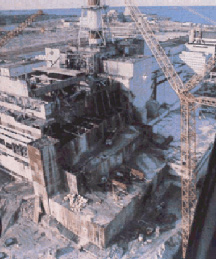
War in Ukraine. What are the risks of a nuclear accident around the
Zaporijjia power plant? For weeks, the international community has had its
sights set on the Zaporijjia nuclear power plant, which the Russians and
Ukrainians have accused each other of bombing. This Thursday, September 1,
IAEA experts arrived at the plant to assess the security situation there.
Its director general, Rafael Grossi, had earlier warned of the “real risk
of nuclear disaster”. What are the real risks of a nuclear accident around
this plant? In Zaporijjia, near the eponymous nuclear power plant, occupied
by Russian forces and the target of regular bombardments, the inhabitants
are now preparing for the worst, and some are already imagining seeing the
reactors explode.
Because the fighting around this power plant with its
imposing silhouette, the largest in Europe, has revived painful memories of
the Chernobyl disaster, which occurred in Ukraine on April 26, 1986. That
year, a reactor exploded, causing the largest civilian nuclear accident in
history and releasing a radioactive cloud that spread across Europe.
According to the UN, around thirty operators and firefighters lost their
lives there, killed by acute radiation, but the human toll of the disaster
is still debated today. According to different sources, the number of
deaths as a result of this nuclear accident varies from a few hundred to
several thousand. The NGO Greenpeace even estimates that it would have
caused 200,000 additional deaths between 1990 and 2004.
Thirty-six years later, this Chernobyl disaster is still present in people’s minds, and some
fear that the scenario will repeat itself in Zaporijjia. But are the fears
of the inhabitants of Zaporijjia, located barely fifty kilometers as the
crow flies from the plant, really justified? Is a serious nuclear accident
really possible?
“Yes, serious accidents are possible, nuclear power plants
being machines that are intrinsically very sensitive to external
aggressions and not being designed to operate in a context of armed
conflict” , explains Bernard Laponche, former nuclear engineer at the
Commissariat at the atomic energy (CEA), doctor in nuclear physics and
president of the Global Chance association. And this, especially since no
one knows today what the current state of this plant is.
Ouest France 1st Sept 2022
Zelensky aide says UN nuclear watchdog should be mistrusted ‘by default’
RT.com, 2 Sept 22,
A top advisor to the Ukrainian president says he doesn’t expect a breakthrough from the IAEA mission to the Zaporozhye power plant.
International organizations including the International Atomic Energy Agency (IAEA) are “cowardly” and cannot be trusted, a senior aide to Ukrainian President Vladimir Zelensky has said.
“I don’t like international institutions and mediation missions in general. They look extremely ineffective, extremely cowardly and extremely unprofessional,” Mikhail Podolyak said in an interview on Thursday evening.
This applies “not only to the IAEA”, but also to the UN, Amnesty International, and the International Committee of the Red Cross, the Ukrainian official claimed, adding: “By default, you should not trust them.”
Podolyak’s remarks came as he criticized the IAEA mission to the Russia-controlled Zaporozhye nuclear power plant, which arrived earlier in the day. He expressed his low expectations from the mission, based on the positive remarks that Director General Rafael Grossi made after touring the facility in Ukraine.
The Ukrainian official said he was willing to give the IAEA inspectors the benefit of the doubt and wait for them make an official report that would “show the depth of their inner destruction”.
He explained his concerns, citing several aspects of Grossi’s visit. They include its relatively short duration, which Podolyak assessed was too short for a proper fact-finding mission. He also criticized the willingness of the IAEA chief to talk to a representative of the Russian atomic energy body Rosatom, who, Podolyak said, “delivered a strange long speech” to the UN official.
The IAEA experts arrived at the station from Kiev despite continued military action in its vicinity. Kiev and Moscow have accused each other of being behind the shelling and of trying to derail the inspection. Some members of the mission stayed behind to monitor the situation, while Grossi and others left.
Podolyak said the IAEA should blame Russia for attacks on the plant, and if their report fails to do so, only stating that inspectors witnessed evidence of strikes, his opinion about the organization will be vindicated.
President Vladimir Zelensky too has expressed skepticism about the IAEA visit to the Zaporozhye nuclear power plant………….https://www.rt.com/russia/562053-iaea-mission-podolyak-interview/
High Court legal challenge to UK government against decision to build Sizewell C nuclear station

A campaign group has issued legal proceedings against the government challenging its decision to allow for the Sizewell C Nuclear Power Station to go ahead against the advice of the planning Examining Authority.
Together Against Sizewell C Limited (TASC) has issued the judicial review proceedings in the High Court following an unsatisfactory response to their pre-action protocol letter sent to Business Secretary Kwasi Kwarteng at the beginning of August.
The Examining Authority (ExA) recommended refusal of development consent, accepting in part TASC’s evidence that the 3.2 gigawatt power station to be built alongside the 27-year-old Sizewell B nuclear plant should not be built in that Suffolk location where the water supply cannot be guaranteed, and the coastline will not be resilient for the entire lifetime of the project. However, Mr Kwarteng rejected the ExA advice and granted consent on 20 July, 2022.
TASC argue in their legal case that the decision to give the go ahead for Sizewell C is unlawful on a number of grounds, including:
- Failure to give lawfully adequate reasons for departing from the advice of Natural England, who were of the view that the water supply element did form part of the Sizewell C project;
- Failure to consider all alternative solutions to the project, including alternatives to nuclear power, given the purpose of the project was to generate electricity and that could potentially be done in a less harmful way;
- Taking into account a legally irrelevant consideration, namely the contribution the project would make to reducing Green House Gas (GHG) emissions, because the electricity grid is supposed to be carbon neutral by 2035 and without a permanent water supply solution there is no guarantee Sizewell C will contribute significantly to that target;
- Acting irrationally by assuming the site would be clear of nuclear material by 2140 when evidence presented to the examination showed that it would be much later;
- Wrongly concluding that the project’s operational emissions would not have a significant effect on the UK’s ability to meet its climate change obligations, because no such assessment was conducted.
TASC is supported in this action by two other opposition groups in the area, Suffolk Coastal Friends of the Earth and Stop Sizewell C……………………….
Leigh Day solicitor Rowan Smith said:
“Our client is incredibly concerned that the government has ignored the recommendation of the Examining Authority to give the go ahead to Sizewell C. For such a locally and nationally important issue, it was vital that the Secretary of State properly assesses the environmental impacts of the project. However, TASC believes that fundamental legal errors were made, particularly in respect of water, alternatives to nuclear power, local wildlife and climate change. We hope these arguments will now be fully scrutinised by the Court.”
TASC is fundraising towards the costs of the judicial review: https://www.crowdjustice.com/case/save-suffolks-heritage-coast-w/
https://tasizewellc.org.uk/tasc-press-release-on-judicial-revue-1st-september/
UN thanks Russia for keeping nuclear team safe
https://www.rt.com/russia/562010-un-thanks-russia-nuclear-safety/ 1 Sept 22, Russia “did what it needed to do” to get inspectors to front-line facility
The UN is appreciates Russia’s efforts to safeguard the International Atomic Energy Agency (IAEA) team that came to inspect the Zaporozhye nuclear power plant, on Thursday.
That’s according to the secretary-general’s chief spokesman, who was speaking after the Russian Defense Ministry said it was “bewildered” at the lack of reaction to an alleged Ukrainian attempt to seize the facility by force.
“We are glad that the Russian Federation did what it needed to do to keep our inspectors safe,” Stephane Dujarric told reporters at a briefing in New York, when asked about Moscow’s comments.
“As with any UN mission, it is the responsibility of those who control a certain area to keep the UN staff safe,” he added, also thanking the “security people” and “drivers” for the “tremendous job” of getting the IAEA team safely in and out of the Zaporozhye NPP.
The mission, led by IAEA director Rafael Grossi, was delayed at a Ukrainian checkpoint on Thursday morning. It eventually made its way to Russian-controlled Energodar and toured the facility for several hours, before heading back to Ukrainian-controlled territory.
Right before their visit, however, Ukrainian artillery targeted the city of Energodar and the Zaporozhye NPP itself, while a group of commandos crossed the Kakhovka Reservoir by boat and attempted to storm the facility, the Russian Defense Ministry said.
Both the initial assault group and the reinforcements that followed were wiped out by the National Guard and combat helicopters, the Russian military said. Their goal, according to Moscow, was to seize the Russian-held power plant and use the IAEA staff as “human shields” to maintain control over the facility.
Energodar and the Zaporozhye NPP have been under Russian control since early March. In August, the nuclear site was targeted by regular artillery and drone attacks, which Moscow and Kiev blamed on each other. Ukrainian officials also claimed that the Russian military was using the plant as a military base, stationing heavy weapons there. Moscow denied the accusations, saying that it only had lightly armed guards defending the facility.
Moscow has called for an IAEA visit to Zaporozhye, Europe’s largest nuclear power plant, since June – but Ukraine’s insistence that the mission must travel through Kiev to uphold Ukrainian sovereignty contributed to delaying the mission until this week.
Nuclear power: the accumulating problems

With the present British government intent on a fleet of new nuclear power stations, Dr Paul Dorfman, Sussex University, looks at the major obstacles
and argues for alternatives.
Although the current UK government plans some
sort of nuclear renaissance, in this article I’ll show that new nuclear
power can do nothing for our current energy crisis and may well endanger
our response to the climate crisis.
But the coming months will tell – and
it will be a very long time in politics. This winter – with millions
struggling under the cost-of-living crisis, plunged into unmanageable debt
through energy price ramps, and choosing between eating and heating –
putting huge sums of public money into the deep pockets of French
state-owned EDF via its long-term nuclear power construction programme may
look much less palatable to the public, press and policy-makers.
Especially when cheaper, faster, more efficient renewable power and storage
technologies are available here and now. Coupled with large-scale home
insulation programmes, these are what would really make a difference to
consumers.
Responsible Science 31st Aug 2022
https://www.sgr.org.uk/resources/nuclear-power-accumulating-problems
GDF Community Partnership promotes “feel good” books to children, making nuclear waste dump ‘cute and safe’.
In 2003 The Advertising Standards Authority ruled that BNFL – now the
Nuclear Decommissioning Authority could not “make an absolute claim”
about the future of nuclear waste at Sellafield and the advert showing a
butterfly flying away from a hand, with the headline “The future of the
environment is in safe hands” was ordered to be removed.
Now in 2022,
Nuclear Waste Services, a subsidiary of the Nuclear Decommissioning
Authority has formed partnerships of Nuclear Waste Services and “the
local community” called GDF Community Partnerships (three in Cumbria and
one in Lincolnshire).
GDF Partnership literature has been produced to
promote support in communities for a Geological Disposal Facility for heat
generating nuclear wastes. All advertising literature published under the
tagline “Working in Partnership” states: “Doing the right thing for
future generations. Geological disposal is one of the UK’s largest ever
environmental protection projects, which will provide a safe and secure
long-term solution for the disposal of higher activity radioactive waste.
This programme will create investment and jobs over many generations.”
This flies in the face of the 2003 ASA ruling that no absolute claims can
be made for the future safety of nuclear waste. “GDF’s Heroes”
Advertorial Literature Targeted at Children. While all the GDF Partnership
advertising aimed at adults makes absolute claims which as the ASA
previously ruled cannot be backed up (unless the GDF Partnership have a
fail safe crystal ball), our primary complaint is the literature aimed at
children.
In particular a promotional colouring book aimed at children
called “GDF’s Heroes”. Colourful Nuclear Dump “feel good” books are
targeted at children to advertise Geological Disposal.
Radiation Free Lakeland 1st Sept 2022
1 This Month





PLEASE OPPOSE HR 8255 AND S.3639 – bills would accelerate satellite deployment, with no environmental review or safeguards – https://ncstd5li.quorum.us/campaign/169331/
To see nuclear-related stories in greater depth and intensity – go to https://nuclearinformation.wordpress.com
-
Archives
- October 2026 (74)
- September 2026 (339)
- August 2026 (330)
- July 2026 (355)
- June 2026 (287)
- May 2026 (306)
- April 2026 (356)
- March 2026 (251)
- February 2026 (267)
- January 2026 (308)
- December 2025 (358)
- November 2025 (359)
-
Categories
- 1
- 1 NUCLEAR ISSUES
- business and costs
- climate change
- culture and arts
- ENERGY
- environment
- health
- history
- indigenous issues
- Legal
- marketing of nuclear
- media
- opposition to nuclear
- PERSONAL STORIES
- politics
- politics international
- Religion and ethics
- safety
- secrets,lies and civil liberties
- spinbuster
- technology
- Uranium
- wastes
- weapons and war
- Women
- 2 WORLD
- ACTION
- AFRICA
- Atrocities
- AUSTRALIA
- Christina's notes
- Christina's themes
- culture and arts
- Events
- Fuk 2022
- Fuk 2023
- Fukushima 2017
- Fukushima 2018
- fukushima 2019
- Fukushima 2020
- Fukushima 2021
- general
- global warming
- Humour (God we need it)
- Nuclear
- RARE EARTHS
- Reference
- resources – print
- Resources -audiovicual
- Weekly Newsletter
- World
- World Nuclear
- YouTube
-
RSS
Entries RSS
Comments RSS

