NATO’s Approach to Russia’s Borders Planned Years Ago
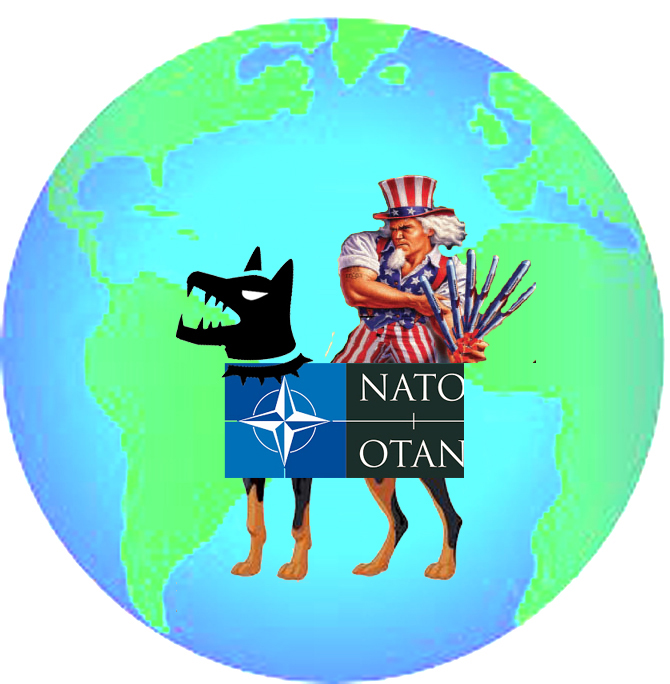
The alliance revealed plans to increase the number of prepared forces on the eastern flank to more than 300,000 soldiers in the near future.
The head of NATO’s Military Committee, Admiral Rob Bauer, stated on Saturday that NATO began planning its expansion near Russia’s borders several years ago.
Earlier on Saturday, the NATO Military Committee met in Estonia, where Supreme Allied Commander Europe General Christopher Cavoli outlined to NATO member countries his strategic considerations for NATO’s efforts on the eastern flank, among other things.
“We’re talking about the biggest overhaul of our military structures since 1949. The planning for that started several years ago, but now we’re implementing it,” Bauer said at a press conference.
NATO leaders agreed on a plan for a significant build-up of the alliance’s forces at the end of June, on the eastern flank by 2023, amid Russia’s military operation in Ukraine.
The alliance revealed plans to increase the number of prepared forces on the eastern flank to more than 300,000 soldiers in the near future. In addition, it intends to increase the composition of combat groups to the brigade level. Moreover, NATO countries pledged to increase defense spending.
Max Blumenthal tweets: In their post-counteroffensive triumphalism, US hawks reveal real objectives of the Ukraine proxy war. “A victory in Ukraine’s understanding of the term also brings about the end of Putin’s regime,” Anne Applebaum wrote, urging Russia’s destabilization.
NATO is closely collaborating with the defense sector to restock its arsenal, which has been depleted as a result of the supply of armaments to Ukraine by the bloc, according to the NATO Secretary-General.
“NATO is working closely with defense industry in order to replenish stocks for the military equipment the allies have sent to Ukraine,” Stoltenberg said on the sidelines of a forum organized by U.S. magazine Foreign Policy, adding that NATO countries were also asking defense companies to ramp up their production.
The Secretary-General added that the need for additional help for Ukraine was still urgent, and it was crucial to make sure that the bloc had adequate weapons and other equipment to stockpile and support Kiev militarily.
Caitlin Johnstone: Ukraine crawling with CIA & Co

https://johnmenadue.com/caitlin-johnstone-ukraine-crawling-with-cia-co/ 17 Sept 22
The previously unthinkable idea that the U.S. is at war with Russia has been gradually normalised, with the heat turned up so slowly that the frog doesn’t notice it’s being boiled alive.
The New York Times reports that Ukraine is crawling with special forces and spies from the U.S. and its allies, which would seem to contradict earlier reports that the U.S. intelligence cartel is having trouble getting intel about what’s happening on the ground in Ukraine.
This would also, obviously, put the final nail in the coffin of the claim that this is not a U.S. proxy war.
In an article headlined “Commando Network Coordinates Flow of Weapons in Ukraine, Officials Say,” anonymous Western officials inform us of the following through their stenographers at The New York Times:
“As Russian troops press ahead with a grinding campaign to seize eastern Ukraine, the nation’s ability to resist the onslaught depends more than ever on help from the United States and its allies — including a stealthy network of commandos and spies rushing to provide weapons, intelligence and training, according to U.S. and European officials.
Much of this work happens outside Ukraine, at bases in Germany, France and Britain, for example. But even as the Biden administration has declared it will not deploy American troops to Ukraine, some C.I.A. personnel have continued to operate in the country secretly, mostly in the capital, Kyiv, directing much of the massive amounts of intelligence the United States is sharing with Ukrainian forces, according to current and former officials.
At the same time, a few dozen commandos from other NATO countries, including Britain, France, Canada and Lithuania, also have been working inside Ukraine.”
he revelation that the C.I.A. and U.S. special forces are conducting military operations in Ukraine does indeed make a lie of the Biden administration’s insistence at the start of the war that there would be no American boots on the ground in Ukraine. And the admission that NATO powers are so involved in operations against a nuclear superpower means, we are closer to seeing a nuclear exchange than anyone should be comfortable with.
This news should surprise no one who knows anything about the usual behaviour of the U.S. intelligence cartel, but interestingly it contradicts something we were told by the same New York Times not three weeks ago.
“American intelligence agencies have less information than they would like about Ukraine’s operations and possess a far better picture of Russia’s military, its planned operations and its successes and failures,” The New York Times told us earlier this month. “U.S. officials said the Ukrainian government gave them few classified briefings or details about their operational plans, and Ukrainian officials acknowledged that they did not tell the Americans everything.”
It seems a bit unlikely that U.S. intelligence agencies would have a hard time getting information about what’s happening in a country where they themselves are physically located. Moon of Alabama theorised at the time that this ridiculous, “We don’t know what’s happening in our own proxy war” line was being pushed to give the U.S. plausible deniability about Ukraine’s failures on the battlefield, which have only gotten worse since then.
So why are they telling us all this now? Well, it could be that we’re being paced into accepting an increasingly direct role of the U.S. and its allies in Ukraine.
The other day Antiwar’s Daniel Larison tweeted, “Hawks in April: Don’t call it a proxy war! Hawks in May: Of course it’s a proxy war! Hawks in June: It’s not their war, it’s our war!”
This is indeed exactly how it happened. Back in April President Joe Biden told the press the idea that this is a proxy war between the U.S. and Russia was “not true” and Defence Secretary Lloyd Austin said “It’s not, this is clearly Ukraine’s fight” when asked if this is a proxy war. The mainstream media were still framing this claim as merely an “accusation” by the Russian government and empire spinmeisters were regularly admonishing anyone who used that term on the grounds that it deprives Ukrainians of their “agency.”
Then May rolled around and all of a sudden we had The New Yorker unequivocally telling us that the U.S. is in “a full proxy war with Russia” and hawks like U.S. Rep. Seth Moulton saying things like,
“We’re not just at war to support the Ukrainians. We’re fundamentally at war, although somewhat through a proxy, with Russia, and it’s important that we win.”
And now here in June we’ve got war hawks like Max Boot coming right out and saying that this is actually America’s war, and it is therefore important for the U.S. to drastically escalate it in order to hand the Russians “devastating losses.”
So, the previously unthinkable idea that the U.S. is at war with Russia has been gradually normalised, with the heat turned up so slowly that the frog doesn’t notice it’s being boiled alive. If that idea can be sufficiently normalised, public consent for greater escalations will likely be forthcoming, even if those escalations are extremely psychotic.
Back in March when I said the only “agency” Ukraine has in this conflict is the Central Intelligence one, empire loyalists jumped down my throat. They couldn’t believe I was saying something so evil and wrong. Now they’ve been told that the Central Intelligence Agency is indeed conducting operations and directing intelligence on the ground in Ukraine, but I somehow doubt that this will stir any self-reflection on their part.
New study reveals Russia’s comprehensive buildup of nuclear missile test-ground at Novaya Zemlya
Russia is about to scale up its dangerous testing of the Burevestnik nuclear-powered cruise missile, according to a study of satellite images obtained by military analyst Tony Roper.
 | |||
|
https://thebarentsobserver.com/en/security/2022/09/new-study-reveals-comprehensive-buildup-nuclear-missile-test-ground-novaya-zemlya By Thomas Nilsen September 18, 2022, [Excellent pictures and map]
Few places on planet earth are surrounded by more secrecy than the remote military test ranges for nuclear material at Novaya Zemlya in the Arctic. Totally forbidden to visitors since the 1950ties as atmospheric and underground nuclear weapons tests were conducted till 1990. Since then, the polygon near the Matochkin Strait has facilitated subcritical nuclear tests.
A bit to the south is Pankovo, a missile launch site where Russia in November 2017 made at least one test flight of the Burevestnik, in the West known as the SSC-X-9 Skyfall.
It could as well be named ‘a flying Chernobyl’ as the missile is powered by a small nuclear reactor which is cooled by the outside air running through the uranium core, leaving behind radioactive isotopes as it is flying.
That is the reason tests of the weapon now take place at one of the world’s most remote locations, hundreds of kilometers from nearest civilian populations.
“Should anything go wrong, then it won’t be so noticeable,” said Tony Roper to the Barents Observer. He has for years studied satellite images from Novaya Zemlya. In recent months, his focus has especially been on developments at the Pankovo site.
This weekend, Roper obtained new satellite images that drove him to blow the whistle.
“It is definitely Burevestnik,” he said.
Few places on planet earth are surrounded by more secrecy than the remote military test ranges for nuclear material at Novaya Zemlya in the Arctic. Totally forbidden to visitors since the 1950ties as atmospheric and underground nuclear weapons tests were conducted till 1990. Since then, the polygon near the Matochkin Strait has facilitated subcritical nuclear tests.
A bit to the south is Pankovo, a missile launch site where Russia in November 2017 made at least one test flight of the Burevestnik, in the West known as the SSC-X-9 Skyfall.
It could as well be named ‘a flying Chernobyl’ as the missile is powered by a small nuclear reactor which is cooled by the outside air running through the uranium core, leaving behind radioactive isotopes as it is flying.
That is the reason tests of the weapon now take place at one of the world’s most remote locations, hundreds of kilometers from nearest civilian populations.
“Should anything go wrong, then it won’t be so noticeable,” said Tony Roper to the Barents Observer. He has for years studied satellite images from Novaya Zemlya. In recent months, his focus has especially been on developments at the Pankovo site.
This weekend, Roper obtained new satellite images that drove him to blow the whistle.
“It is definitely Burevestnik,” he said.
ADVERTISEMENT
https://googleads.g.doubleclick.net/pagead/ads?client=ca-pub-2104545995324909&output=html&h=250&slotname=5022142078&adk=3712131370&adf=404035791&pi=t.ma~as.5022142078&w=300&lmt=1663528077&url=https%3A%2F%2Fthebarentsobserver.com%2Fen%2Fsecurity%2F2022%2F09%2Fnew-study-reveals-comprehensive-buildup-nuclear-missile-test-ground-novaya-zemlya&wgl=1&uach=WyJXaW5kb3dzIiwiMTQuMC4wIiwieDg2IiwiIiwiMTA1LjAuNTE5NS4xMjciLFtdLGZhbHNlLG51bGwsIjY0IixbWyJHb29nbGUgQ2hyb21lIiwiMTA1LjAuNTE5NS4xMjciXSxbIk5vdClBO0JyYW5kIiwiOC4wLjAuMCJdLFsiQ2hyb21pdW0iLCIxMDUuMC41MTk1LjEyNyJdXSxmYWxzZV0.&dt=1663539271101&bpp=16&bdt=2086&idt=393&shv=r20220914&mjsv=m202209080101&ptt=5&saldr=sa&abxe=1&cookie=ID%3D01cdbfbc9b26bc0b-22b832c0a6d600ff%3AT%3D1663539273%3ART%3D1663539273%3AS%3DALNI_MbVJ8-jessrZIStq39IULHZNtNldA&gpic=UID%3D000009cd55ded703%3AT%3D1663539273%3ART%3D1663539273%3AS%3DALNI_MaKEb-9tPO0q9SohXFpVCkMM-ooNQ&prev_slotnames=5270755046%2C2076026748%2C4761899835%2C5419331806&correlator=7050549214270&frm=20&pv=1&ga_vid=1485890113.1663539271&ga_sid=1663539271&ga_hid=1980766128&ga_fc=1&u_tz=600&u_his=1&u_h=720&u_w=1280&u_ah=672&u_aw=1280&u_cd=24&u_sd=1.5&dmc=8&adx=218&ady=2616&biw=1263&bih=512&scr_x=0&scr_y=621&eid=44759876%2C44759927%2C44759842%2C44767667%2C44761792%2C42531705&oid=2&psts=APxP-9B9zlXnYoGpvHps-ru59194T9EBOWEPbFzZTKbNUlPlKkfRHTEQ7qMmfqtsREf-jFUnbtr7Tfb14fTbIA%2CAPxP-9Bqqp6JY_UnvxjIcZhV3_0AskK8cuFdGKn9eFW6km7Pyk18Hmw05vEMYHKSlwJCpwIKXD7sU_q4u6hy%2CAPxP-9Bavt_866R27rHZI1VyPoIeTUH6MxIR6cuKFXrlbuV-5yzvwWcc5hxn7OrIPg0hDv_ZswPL5KEly-iGzw%2CAPxP-9DxiRPJQR3W_f8dqT_ILxR5X9RatOrMcGD_xIPQ6tRuA5MUw-1HvJ8xl5hLpw-5v-7yZk1nA4ajiHP77QhHA_upjNyUUg6D4rogXnVWe5Q&pvsid=3244277979942446&uas=3&nvt=1&ref=https%3A%2F%2Fnews.google.com%2F&eae=0&fc=640&brdim=0%2C0%2C0%2C0%2C1280%2C0%2C1280%2C672%2C1280%2C512&vis=1&rsz=%7C%7CoeEbr%7C&abl=CS&pfx=0&fu=0&bc=31&ifi=4&uci=a!4&btvi=2&fsb=1&xpc=IR5E9NXJ4h&p=https%3A//thebarentsobserver.com&dtd=4862
Tony Roper has published several of the satellite images on his online site, detailing the different infrastructure improvements made at the site this summer and autumn.
The size of the ongoing development is much more comprehensive than previous year’s container-based structures aimed at supporting the test launches of the nuclear-powered missile.
New infrastructure
A new jetty is placed on the shore where equipment is landed from ships, the road is improved, helicopter pads are made, new buildings are erected, shelters and concrete pads with rails are assembled.
It is, however, Tony Roper’s latest findings from a space image taken by Airbus on September 16 that prove that the Burevestnik is actually present at Pankovo.
A canister, similar to what previously has been seen in a video by Russia’s Defense Ministry, is now in place next to the rails on the launch pad partly covered by a retractable shelter.
It was in March 2018 the work on developing Russia’s nuclear-powered cruise missile was made public to the outside world. Along with other weapons of mass destruction, President Vladimir Putin showed a video of the Burevestnik in his annual speech to the nation.
Later the same year, U.S. intelligence sources reported about one of the missiles being lost at sea after a test in late 2017.
The building infrastructures to Pankovo are likely brought to shore from Rosatomflot’s nuclear-powered container ship “Sevmorput”, a vessel capable of floating out barges with containers towed to shores by smaller tugs in Arctic coastal areas where no harbor infrastructure is developed.
Rosatom in charge
Rosatomflot is a subsidiary of Rosatom, Russia’s state nuclear corporation also in charge of testing and developing the small nuclear reactors used with the Burevestnik missile.
The Barents Observer has followed AIS tracks of “Sevmorput” via the online exactEarth ShipView since August as the vessel has been shuttling back and forth between Murmansk, the waters just outside Pankovo and Rogachevo, the main military settlement on the southern shores in Novaya Zemlya.
By Sunday, September 18, “Sevmorput” is at anchor near Rogachevo.
The town is home to one of Russia’s upgraded air bases in the Arctic and also facilitates the polygon for sub-critical nuclear tests in the tunnels near Matochkin Strait. Helicopters flying personnel to Pankovo are based here, and it is likely that Rosatom’s specialists for developing and testing the Burevestnik missile are commuting to Rogachevo from mainland Russia.
Testing such a flying reactor is risky. What goes up must come down.
It will eventually have an impact zone, whether crashing at sea or ground as planned or by accident mid-air.
Radiation fear 2
The infamous accident in the White Sea outside the Nenoksa test site in 2019 happened on a barge during the salvage work of a crashed Burevestnik missile. Five Rosatom experts were killed after the explosion, which also caused a spike in radiation over the nearby city of Severodvinsk.
There have also been speculations that numerous low-level measurements of radioactive isotopes in northern Scandinavia in recent years have been related to Russia’s testing of secret nuclear-powered weapons systems.
Last year, Norway’s Intelligence Service warned about Russia’s testing and deployment of new nuclear weapons technologies in northern regions.
Objectives with such tailored weapons could be to easier penetrate missile defense systems, or to compensate for conventional inferiority.
Nuclear deterrence
“It is our worry that the New Start Treaty is not sufficient enough to cover the new technological developments,” Chief of the Norwegian Intelligence Service, Vice Admiral Nils Andreas Stensønes told the Barents Observer.
Stensønes added that the agreements should be updated.
An advantage of a nuclear-powered missile, according to Putin’s 2018 speech, is its capability to avoid any anti-ballistic missile defense systems. The missile can also, at least theoretically, conduct mid-air navigation and has a range much longer than any other cruise missile.
The Burevestnik is designed to carry a nuclear warhead.
Why future sea levels matter to Suffolk’s Sizewell nuclear plant
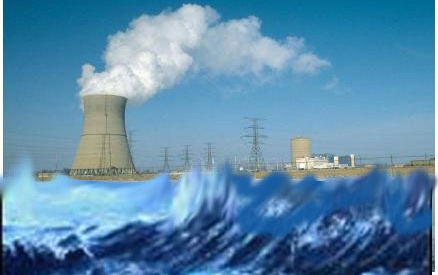
Global coastal inundation is now expected to be far worse than previously predicted
https://www.theguardian.com/news/2022/sep/16/why-future-sea-levels-matter-to-suffolks-sizewell-nuclear-plant Paul Brown, 16 Sept 22,
The caution of scientists, reinforced by accusations scaremongering from the well-funded fossil fuel lobby, has meant computer estimates of sea level rise in official forecasts have been low. Scientists mostly only counted the rise of the oceans because of expansion of warmer water then added on melting glaciers in the Alps and other temperate regions.
Originally ice caps in Greenland and Antarctica were excluded, in case increased snow fall in winter was greater than the ice melt in summer. Real time measurements of ice lost in polar regions has changed that. Coastal inundation in places such as East Anglia, Florida, and the Nile and Mekong deltas is expected to be far worse and quicker than previously predicted. Food supplies are threatened. The melting is also irreversible.
This makes Boris Johnson’s last act as prime minister to back a giant nuclear power plant on a low lying coast at Sizewell in Suffolk look a gamble. The builders, EDF, say there is no danger because the twin reactors will be built on a concrete raft seven metres above mean sea level, with a further surrounding wall to protect the nuclear island. But this concrete monolith will need to withstand sea level rise and storm surges for up to 200 years to protect future generations from its radioactive content.
U.S. Finally Admits Ukraine Bombs Zaporizhzhia’s Nuclear Power Plant.

The Duran, by Eric Zuesse, September 15, 2022, Unnamed American officials, according to the New York Times, have admitted that the explosives fired against Ukraine’s nuclear power plant in Zaporizhzhia have been fired against the plant by Ukraine’s Government, not by Russia’s Government, and furthermore these officials make clear that Ukraine’s attacks against the plant are a key part of Ukraine’s plan to win its U.S.-backed-and-advised war against Russia, on the battlefields of Ukraine, using Ukrainian soldiers.
Zaporizhzhia is a city in Ukraine that is in Russian-controlled territory, and Ukraine’s strategy is to destroy the ability of the plant to function, so that areas controlled by Russia will no longer be able to benefit from that plant’s electrical-power output. The United States Government helped Ukraine’s Government to come up with this plan, according to the New York Times.
This information was buried by the Times, 85% of the way down a 1,600-word news-report they published on September 13th, titled “The Critical Moment Behind Ukraine’s Rapid Advance”, in which it stated that, “Eventually, Ukrainian officials believe their long-term success requires progress on the original goals in the discarded strategy, including recapturing the nuclear power plant in Zaporizhzhia, cutting off Russian forces in Mariupol and pushing Russian forces in Kherson back across the Dnipro River, American officials said.”
When IAEA inspectors arrived at that plant on September 1st, after a lengthy period of trying to get there to inspect it but which was blocked by Ukraine’s Government, and the IAEA started delivering reports regarding what they were finding at the plant, no mention has, as-of yet, been made concerning which of the two warring sides has been firing those bombs into the plant.
Even when the IAEA headlined on September 9th “Director General’s Statement on Serious Situation at Ukraine’s Zaporizhzhya Nuclear Power Plant”, and reported that the plant’s ability to operate “has been destroyed by shelling of the switchyard at the city’s thermal power plant, leading to a complete power black-out in” the entire region, and that “This is completely unacceptable. It cannot stand.”, and closed by saying they “urgently call for the immediate cessation of all shelling in the entire area,” no mention was made as to which of the two sides was shooting into the plant in order to disable it, and which of the two sides was firing out from the plant in order to protect it against that incoming fire.
Previously known was only that the city of Zaporizhzhia has been and is under Russian control ever since March 4th. Consequently, all news-media and reporters have known that (since Russia was inside and Ukraine was outside) Russia has been defending the plant and Ukraine has been attacking it, but until “American officials” let slip, in this news-report, the fact that this has indeed been the case there, no Western news-medium has previously published this fact — not even buried it in a news-report.
So, although nothing in this regard may yet be considered to be official, or neutral, or free of fear or of actual intent to lie, there finally is, at the very least, buried in that news-report from the New York Times, a statement that is sourced to “American officials,” asserting that this is the case, and the Times also lets slip there that this “shelling” of that plant is an important part of the joint U.S.-Ukraine master-plan to defeat Russia in Ukraine.
It is part of the same master-plan, which the U.S. Government recommended to Ukraine’s Government, and which also included the recent successful retaking by Ukraine of Russian-controlled land near the major Ukrainian city of Kharkov, which city’s recapture by Ukraine is also included in the master-plan. Both operations — the shelling of the nuclear power plant, and the recapture of that land near Kharkov — were parts of that master-plan, according to the New York Times.
The Times report asserts that
Long reluctant to share details of their plans, the Ukrainian commanders started opening up more to American and British intelligence officials and seeking advice. Jake Sullivan, the national security adviser, and Andriy Yermak, a top adviser to Mr. Zelensky, spoke multiple times about the planning for the counteroffensive, according to a senior administration official. Gen. Mark A. Milley, the chairman of the Joint Chiefs of Staff, and senior Ukrainian military leaders regularly discussed intelligence and military support.
And in Kyiv, Ukrainian and British military officials continued working together while the new American defense attaché, Brig. Gen. Garrick Harmon, began having daily sessions with Ukraine’s top officers.
Back-up power lines restored to the shut-down Zaporizhzhia nuclear power station
Ukrainian operators of the Zaporizhzhia nuclear power station won’t restart
the plant until its occupying Russian forces leave the facility, the head
of Ukraine’s nuclear agency, Petro Kotin, tells NPR.
Ukrainian workers powered down the war-damaged plant last weekend for safety reasons amid
continued shelling. On Tuesday, workers finished restoring all three backup
power lines — a sliver of good news at the plant that officials and
energy experts have warned could face a catastrophe as fighting continues
around it.
Still, the situation remains tense and unpredictable at
Zaporizhzhia — Europe’s largest nuclear plant, which has been occupied by
Russian troops since early March but is operated mostly by Ukrainian staff
— and concerns about the risk of a nuclear disaster are still looming as
fighting picked up in that part of southern Ukraine.
NPR 15th Sept 2022
https://www.npr.org/2022/09/15/1122908577/ukraine-zaporizhzhia-nuclear-power-plant-operator-russia
32 organisations challenge French government’s decrees setting up Bure district for a nuclear waste dump that is not yet even authorised
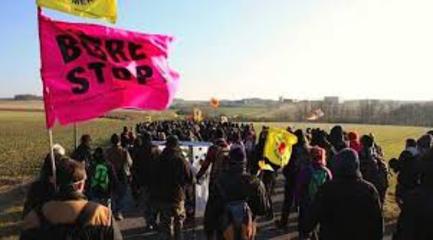
The Cigéo project, which would consist in burying in depth the most dangerous radioactive waste – of civil and military origin – must not see the light of day!
Today, 32 organizations and 30 inhabitants have just filed an appeal challenging the Declaration of Public Utility granted to it by decree on July 7, 2022, as well as its classification among the “Operations of National Interest”. By a Conseil d’Etat decree dated July 7, 2022, the government declared the Cigéo project in Bure to be of “public utility”. This decision was in line with the report of the investigating
commissioners who, despite the negative and substantiated opinions of the population, certain local authorities and institutions as well as our organizations, issued a favorable opinion.
At the same time, an Operation of National Interest (OIN) decree was issued by the Prime Minister, thus
promoting the establishment of Cigéo by allowing it to derogate from certain town planning rules and by giving all powers to the State to the detriment of local communities.
These two procedures, DUP and OIN, enable the National Agency for Radioactive Waste Management (Andra) to acquire the missing land control for the surface installations and the plumb of the underground works, i.e. approximately 3,500 hectares (l equivalent to the area of Lille) and to expropriate if necessary.
These procedures are also likely to facilitate the start of work on other so-called “preparatory” developments at Cigéo. These two decrees are thus supposed to make it possible to physically anchor on the territory an industrial site which has not yet received any authorization and which raises very serious questions in terms of safety, environmental impacts and cost.
Sortir du Nucleaire 7th Sept 2022
https://www.sortirdunucleaire.org/Projet-CIGEO-d-enfouissement-des-dechets
Committee to Protect Journalists calls on Ukrainian lawmakers to drop media bill
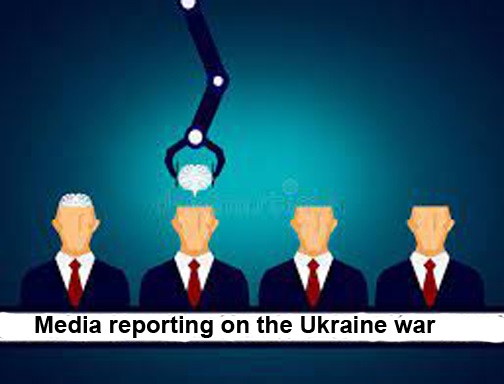
https://cpj.org/2022/09/cpj-calls-on-ukrainian-lawmakers-to-drop-media-bill/ Paris, September 13, 2022 – In response to media reports that Ukraine’s parliament passed in its first reading on August 30 a media bill that threatens to restrict press freedom, the Committee to Protect Journalists issued the following statement calling for the bill to be dropped:
“Ukraine’s media bill seriously imperils press freedom in the country by tightening government control over information at a time when citizens need it the most,” said Gulnoza Said, CPJ’s Europe and Central Asia program coordinator, in New York. “Ukrainian legislators should abandon the bill, or at least pause its progress in parliament until the European Union can weigh in with recommendations.”
Ukraine, a candidate to join the EU, is required to reform its media laws–many of which were implemented in the 1990s–in order to begin negotiations for membership. Matti Maasikas, the head of the EU Delegation to Ukraine, said in an interview published on August 23 that the bill was currently under evaluation by the EU and the Council of Europe, which could issue recommendations by the end of September.
The bill has the support of members of the ruling party, which has a majority in the Verkhovna Rada, the country’s parliament. To become law, it would need to pass two more readings in parliament and then be approved by President Volodymyr Zelenskyy.
As of September 13, the website of the Verkhovna Rada did not indicate the date of the second reading. “They have 21 days [after the first reading] to make amendments. But then it can take a month or up to the end of the year to be approved,” Sergiy Tomilenko, the head of the Ukrainian National Union of Journalists (NUJU), a local trade group, told CPJ via messaging app.
If passed, the legislation would expand the powers of the National Council of Television and Radio Broadcasting, the state broadcasting regulator, allowing it to regulate online and print outlets, invalidate the registration and license of any media outlet, block online media without a court order, and request that social media platforms and web browsers remove content forbidden under the law, according to multiple media reports.
According to an analysis posted on Telegram by NUJU, only 10% of the bill directly addressed commitments that Ukraine has undertaken as a candidate to join the EU. “The rest reflects the authorities’ desire to have more influence on the media: to issue injunctions, fines, and shut them down,” Tomilenko said in a statement NUJU posted to Telegram.
The new bill was amended only a few weeks before the vote, without a preliminary discussion with journalists and members of the media, Tomilenko said in the same statement.
CPJ emailed the Verkhovna Rada for comment, but did not receive any reply.
Ukraine cracks downs on civilians – official

Amazingly, this is reported also in the Washington Post – article headed:
“Ukraine hit squads are killing Russian occupiers and collaborators“
(I can’t read this – as it’s behind a paywall.)
https://www.rt.com/russia/562619-ukraine-crackdown-kharkov-russia/ 12 Sept 22, Kiev’s forces “are shooting people” in the north of Kharkov region, pro-Russian local authorities claim.
The Ukrainian military has unleashed repressions on the civilian population in Kharkov region, with mercenaries executing people on the streets to frame Russia, a local official claimed on Monday.
“The Ukrainian Armed Forces have occupied settlements in the north of the Kharkov region. They have started repressive actions,” Vitaly Ganchev, the head of pro-Russian administration, said.
Speaking to Russian media, he said local residents who managed to escape from the areas retaken by Kiev’s forces, described Ukrainian “mercenaries that are driving around and shooting people while filming it on camera.”
“As I see it, they want to cleanse these towns, and to portray it as if the Russian troops are behind it, to allege that it was them who had committed these atrocities,” he said.
He added that in many cases residents could no longer cross the Russia-Ukraine border due to the Ukrainian military presence, with many civilians forced into hiding.
Nevertheless, according to Ganchev, more than 5,000 people have been evacuated to Russia in recent days, with local authorities doing their best to fast-track the process.
Ganchev’s comments echo remarks made by Leonid Pasechnik, the head of the Lugansk People’s Republic (LPR), who claimed on Sunday that Kiev’s forces were cracking down on the civilian population in areas from which Russian forces had retreated.
“The Ukrainian authorities have confirmed their neo-Nazi nature. In Kharkov region, in a number of cases Ukrainian intelligence services set up purges and repressions against the civilian population“, he claimed.
The comments came after Ukraine’s State Bureau of Investigations said last week it would conduct a “filtration” of civilians in Balakleya, a town in Kharkov region that’s been retaken by Kiev’s forces.
The purpose of these efforts is to “prevent the subversive activities of the Russians and their allies” and retaliate against those “who cooperated with aggressors,” the agency said at the time.
Russia sent troops into Ukraine on February 24, citing Kiev’s failure to implement the Minsk agreements, designed to give the regions of Donetsk and Lugansk special status within the Ukrainian state. The protocols, brokered by Germany and France, were first signed in 2014. Former Ukrainian President Pyotr Poroshenko has since admitted that Kiev’s main goal was to use the ceasefire to buy time and “create powerful armed forces.”
In February 2022, the Kremlin recognized the Donbass republics as independent states and demanded that Ukraine officially declare itself a neutral country that will never join any Western military bloc. Kiev insists the Russian offensive was completely unprovoked.
Putin and Macron trade blame over risk at Ukraine’s Zaporizhzhia nuclear plant
Last operating reactor has now been shut down, says Energoatom, to transfer facility to ‘safest state’
Guardian, Isobel Koshiw in Kyiv and agencies, Mon 12 Sep 2022
Vladimir Putin and Emmanuel Macron have traded blame over safety concerns at the Zaporizhzhia nuclear power station, which has been a focal point of fighting in recent weeks.
Separate readouts of a phone call between the French and Russian presidents highlighted the difficulties in trying to find an accord to ensure safety at the site.
“The Russian side drew attention to regular Ukrainian attacks on the plant’s facilities, including
radioactive waste storage, which is fraught with catastrophic
consequences,” said a statement published on the Kremlin’s website. It
called for a “non-politicised interaction” on the matter with the
participation of the International Atomic Energy Agency (IAEA).
In its statement, the French presidency said the occupation by Russian troops of
the plant was what was putting it at risk. “He [Macron] asked that
Russian forces withdraw their heavy and light weapons and that the IAEA’s
recommendations be followed to ensure safety at the site,” the Elysee
said.
Earlier, Ukraine’s nuclear power operator said the last operating
reactor at the plant had been shut down and the plant “completely
stopped”. The six-reactor Zaporizhzhia plant was disconnected from the
grid last week after all its power lines were disconnected as a result of
fighting in the area, and was operating in “island mode” for several
days, generating electricity for crucial cooling systems from its only
remaining reactor in operation.
Energoatom, the state-run operator of all
four of Ukraine’s nuclear power stations, said one of the power lines was
restored on Saturday night, allowing plant operators to shut down the last
reactor. “A decision was made to shut down power unit No 6 and transfer
it to the safest state: cold shutdown,” the operator said. Electricity
supply to the plant has been cut with increasing frequency over the past
few weeks, including at least three times last week. Energoatom said the
risk of continued damage to the supply line “remains high” and that it
did not want to risk the plant being powered by diesel generators, “the
duration of which is limited by the technological resource and the amount
of available diesel fuel”.
Guardian 11th Sept 2022
Western media continues to ignore Ukraine’s public ‘kill list’ aimed at those who question the Kiev regime

Ukraine has a list ( Myrotvorets) of people, giving addresses and contact numbers, – people considered as enemies of the state, – able to be killed by extreme nationalists. The Ukraine government does nothing to stop this.
“There are so many people in Ukraine who want to push for peaceful negotiations with Russia. But if anybody in Ukrainian society wants to stand up and push this line, they’re most likely going to be put on that list. Myrotvorets is very much a symbol of the extremist elements in Ukraine at the moment.”
https://ingaza.wordpress.com/2022/09/11/western-media-continues-to-ignore-ukraines-public-kill-list-aimed-at-those-who-question-the-kiev-regime/ September 10, 2022, -by Eva K Bartlett
The Myrotvorets list is an issue trending in independent and Russian media, but not in the mainstream international press
This week, a number of international and Russian journalists convened in Moscow – with more joining by video link – to discuss the now-infamous Ukrainian Myrotvorets “kill list.” Many of them are included themselves.
While some don’t take it seriously, the horrific car-bombing murder of Darya Dugina on August 20 and the subsequent marking on her Myrotvorets entry as “liquidated” makes it fairly clear the people behind the list do, in fact, want people dead.
The same thing happened to the entry of Russian photojournalist Andrei Stenin and many others listed and subsequently killed, including the Italian Andrea Rocchelli.
What it feels like to be on the list
The head of the Foundation to Battle Injustice, Mira Terada, who convened the panel, noted that of the thousands of names entered on the site, 341 are journalists and, shockingly, 327 are minors.
“Publishing personal data on minors is a crime. It’s like a menu for pedophiles or people doing human trafficking.”
While her concern is for the children, journalists, activists, political figures and even ordinary Ukrainians who have somehow angered the Kiev regime and those behind the list, Terada now needs to exercise some caution after she herself was added to the database.
An hour and a half after a July 21 press conference about children being placed on Myrotvorets, Mira found herself listed. “This changed my life. I have to be vigilant 24/7,” she said.
Christelle Néant, a French war correspondent reporting from Donbass for the past six and a half years, mentioned to me before the panel began that some of the information on the site is not disclosed to the general public, and is password-locked.
Néant, who said she’s been receiving death threats for years, spoke of how it impacts her: “Every time I use my car, I check underneath it for any unpleasant surprise,” referring to a potential car bomb. “I don’t publish any photos with people I live with or love. I have to be vigilant at all times.”
“I’m not a terrorist, not a criminal, I’m just a correspondent. This list must be closed and all of those involved must be held accountable.”
German journalist Thomas Röper rightly noted that Western media outlets prefer to look the other way. “They could have reported on this, but they’re saying nothing.”
He also pointed out the silence of the German government, even when asked at press conferences.
“A state has a duty to protect its citizens, but I haven’t seen anything from my government to condemn the fact that Germans are on this list and one German national has been killed.”
And, in fact, rather than protect German journalists, the government is persecuting them, as is the case with Alina Lipp, whose bank account, and that of her mother, was closed after the German government launched a criminal case against her for her reporting from Donbass.
Russian journalist Veronika Naydenova, originally from Crimea but living in Germany, was added to the list in January, also after raising the inclusion of children, including 13-year-old Faina Savenkova, from the Lugansk People’s Republic.
The same day my article was published, I was added to the list. But this hasn’t stopped me, I’ve written many articles since.”
She highlighted an additional, very real, threat: that of the refugees who’ve come to Germany from Ukraine, it isn’t possible to know who is merely a refugee and who holds Ukrainian nationalist extremist views. This is a very real fear for Naydenova, whose address is listed on Myrotvorets.
The same happened with Syrians who entered Germany and other countries as refugees. Some of them had affiliations to, or were members of, terrorist groups in Syria, and posed very real threats to supporters of Syria in Germany. As I wrote in a previous article, Kevork Almassian, a Syrian living in Germany, was chased, smeared, harassed and even physically attacked multiple times by the sympathizers of the Free Syrian Army (FSA) and other terrorist groups.”
Dutch journalist Sonya van den Ende likewise fears returning home. “I’m labeled an ‘enemy of the state’ now in the Netherlands. I cannot go back, it’s very dangerous for me to do so.”
Janus Putkonen, a Finnish journalist who has been living in Donbass since 2015, pointed out how the risk extends globally.
“Because the Myrotvorets kill list has not been stopped, people around the world are now in danger of falling victim to the state terrorism of Ukrainian Nazism, comparable to ISIS terrorism.”
But, most of all, it threatens Ukrainians within Ukraine, something British journalist Johnny Miller emphasized.
“If you’re a journalist, blogger, political figure, or a citizen in Ukraine who wants to criticize extremism in Ukraine, which there is a lot of, or if you want to criticize Ukrainian government policies, most likely you’re going to be put on that list. And be under serious threat of death.”
Miller, who has reported from areas of western Ukraine, raised another important point:
“There are so many people in Ukraine who want to push for peaceful negotiations with Russia. But if anybody in Ukrainian society wants to stand up and push this line, they’re most likely going to be put on that list. Myrotvorets is very much a symbol of the extremist elements in Ukraine at the moment.”
For myself, I’ve been on the list since 2019, after going to Crimea and reporting from areas of the DPR where civilians were being terrorized by Ukrainian shelling, houses destroyed “street by street” as a local told me.
Main power line reconnected to Zaporizhzhia nuclear power plant
One of the Russian-held Zaporizhzhia nuclear power plant’s four main
power lines has been repaired and is supplying the plant with electricity
from the Ukrainian grid two weeks after it went down, the UN nuclear
watchdog has said.
Even though the six reactors at Zaporizhzhia, Europe’s
biggest nuclear power plant, have been shut down, the fuel in them still
needs cooling to avoid a potentially catastrophic meltdown. The plant
therefore needs electricity to pump water through the reactors’ core. The
power supply at Zaporizhzhia has been a source of concern after the last
main line went down and three backup lines that can connect it to a nearby
coal-fired power plant were also disconnected.
Guardian 17th Sept 2022
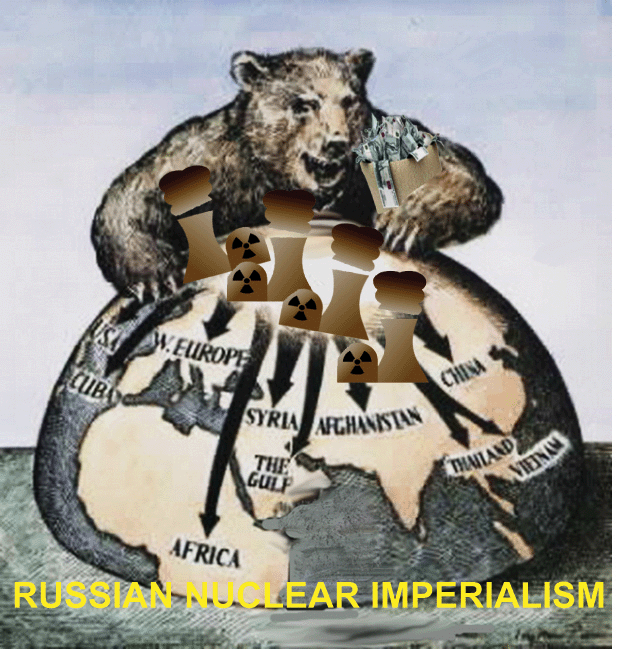
Russia’s Stranglehold On The World’s Nuclear Power Cycle
Radio Free Europe, September 01, 2022 By Kristyna Foltynova [Excellent graphics] “…………………… Here’s how Russia plays a crucial role in the world’s nuclear cycle
It’s Not Just About Mining
Russia is among the five countries with the world’s largest uranium resources. It is estimated to have about 486,000 tons of uranium, the equivalent of 8 percent of global supply…………….
However, uranium mining is just one piece of the nuclear process. Raw uranium is not suitable as fuel for nuclear plants. It needs to be refined into uranium concentrate, converted into gas, and then enriched. And this is where Russia excels.
In 2020, there were just four conversion plants operating commercially — in Canada, China, France, and Russia. Russia was the largest player, with almost 40 percent of the total uranium conversion infrastructure in the world, and therefore produced the largest share of uranium in gaseous form (called uranium hexafluoride).
World Uranium Conversion Capacity
In 2020, almost 40 percent of converted uranium came from Russia.
The same goes for uranium enrichment, the next step in the nuclear cycle. According to 2018 data (the latest available), that capacity was spread among a handful of key players, with Russia once again responsible for the largest share — about 46 percent.Therefore, Russia is a significant supplier of both uranium and uranium enrichment services. According to the latest available data, the European Union purchased about 20 percent of its natural uranium and 26 percent of its enrichment services from Russia in 2020. The United States imported about 14 percent of its uranium and 28 percent of all enrichment services from Russia in 2021.
Purchases Of Natural Uranium
In 2020, Russia supplied about one-fifth of the EU’s natural uranium and was among the top suppliers of uranium to the United States in 2021.
Did Someone Say Nuclear Reactors?
Nuclear reactors made in Russia are known as VVER — an abbreviation for the Russian vodo-vodyanoi enyergeticheskiy reactor (water-water energetic reactor). These reactors use water both as a coolant and as a moderator and were originally developed in the Soviet Union. There are several versions of VVERs (such as the VVER-440 and VVER-1000), with the volume of power being one of the significant differences.
Currently, there are 11 countries where various types of VVERs are operating, including Bulgaria, the Czech Republic, Hungary, and Finland. On top of that, other countries such as Egypt, Turkey, and Argentina currently have these reactors under construction or plan to build them.
Russia is considered the world leader when it comes to the export of nuclear plant development. Between 2012 and 2021, Rosatom initiated construction of 19 nuclear reactors; 15 of these were initiated abroad. That is far more than the next most prolific providers: China, France, and South Korea. Although China started building 29 reactors during the same period, only two of them were initiated abroad. France started building two reactors abroad, and South Korea four.
Exporters Of Nuclear Plants
Between 2012 and 2021, Russia initiated the construction of 15 nuclear reactors abroad.
Don’t Forget The Fuel
To keep the reactors operating, plants need a regular supply of nuclear fuel — usually a certain type of fuel. And this is where another level of dependency on Russia can be observed. Although there are several suppliers on the market, the Russian TVEL Fuel Company is currently the only authorized supplier of fuel needed for VVER-440s……..
Russia is also able to supply high-assay low-enriched uranium (also known as HALEU). It is a type of fuel that will be needed for more advanced reactors that are now under development by many companies across the United States. The main difference from the fuel that is currently being used is the level of uranium enrichment. Instead of up to 5 percent uranium-235 enrichment, the new generation of reactors needs fuel with up to 20 percent enrichment……………. At the moment, the only supplier able to provide the fuel on a commercial scale is Russia’s Tenex (owned by the Russian state-owned company Rosatom).
Looking For New Markets
Selling nuclear technology is also part of Russia’s effort to gain influence and reap profits in countries that are new to nuclear energy. One of the reasons countries want to cooperate with Russia is that it offers a “whole package” solution. Russia can not only build a nuclear plant and supply fuel, but it also trains local specialists, helps with safety questions, runs scholarship programs, and disposes of radioactive waste.
However, offering attractive loans is probably Russia’s most powerful tool. These loans are usually backed by government subsidies and cover at least 80 percent of construction costs. For example, Russia has already lent $10 billion to Hungary, $11 billion to Bangladesh, and $25 billion to Egypt — all to build nuclear power plants.
Russia has operating nuclear reactors in 11 countries, and more are under construction or being planned. Besides that, Russia has also signed either memorandums of understanding or intergovernmental agreements with at least 30 countries around the world, mostly in Africa. These serve as a declaration of interest in nuclear technology or set an intention to cooperate on the building of nuclear plants, respectively.
Russia has operating nuclear reactors in 11 countries, and more are under construction or being planned. Besides that, Russia has also signed either memorandums of understanding or intergovernmental agreements with at least 30 countries around the world, mostly in Africa. These serve as a declaration of interest in nuclear technology or set an intention to cooperate on the building of nuclear plants, respectively.
Some experts warn that African countries might not be ready for nuclear power, but Russia argues that the technology represents an answer to the continent’s increasing demand for electricity. It is also worth noting that African countries represent the largest voting bloc in the United Nations, which might be another reason for Russia to strengthen its ties in the region.
Nuclear Cooperation
There are at least 50 countries with some level of nuclear cooperation with Russia………. https://www.rferl.org/a/russia-nuclear-power-industry-graphics/32014247.html—
France Urges Brussels To Label Nuclear-Produced Hydrogen “Green”

EurActiv , By Paul Messad, French Energy Minister Agnès Pannier-Runacher is trying to get EU Energy Commissioner Kadri Simson to include nuclear among energy sources for the production of so-called “green” hydrogen, according to a letter seen by EURACTIV France………………..
according to the French minister, the current rules leave little room for the production of green hydrogen from “low-carbon” electricity, mostly nuclear power.
Given “the absolute priority of the next decade for hydrogen, […] the only important issue is the carbon content of the hydrogen produced and not the production vector,” Pannier-Runacher wrote to the European Commissioner…………………………….
France riding solo
The pro-nuclear position of the French when it comes to green hydrogen is not entirely shared by the industry.
Jorgo Chatzimarkakis, CEO of Hydrogen Europe, which represents the interests of the industry in 25 EU countries, said the letter is proof that France is “going solo” on nuclear and putting itself in a “dangerous insular position”……… https://www.eurasiareview.com/18092022-france-urges-brussels-to-label-nuclear-produced-hydrogen-green/
France sends reprocessed nuclear fuel to Japan, despite environmental and safety dangers

https://japantoday.com/category/national/france-sends-latest-nuclear-shipment-to-japan CHERBOURG, France 18 Sept 22
Two ships carrying reprocessed nuclear fuel destined for Japan set sail Saturday morning from northern France, an AFP photographer said, despite criticism from environmental campaigners.
The fuel was due to leave the northern French port city of Cherbourg earlier this month but was delayed by the breakdown of loading equipment.
Environmental activists have denounced the practice of transporting such highly radioactive materials, calling it irresponsible.
The previous transport of MOX fuel to Japan in September 2021 drew protests from environmental group Greenpeace.
MOX fuel is a mixture of reprocessed plutonium and uranium.
“The Pacific Heron and Pacific Egret, the specialised ships belonging to British company PNTL, left Cherbourg harbor on September 17. They will ensure the shipment of MOX nuclear fuel to Japan,” French nuclear technology group Orano said in a statement Saturday.
They are bound for Japan for use in a power plant and Orano said it expected the shipment to arrive in November.
Japan lacks facilities to process waste from its own nuclear reactors and sends most of it overseas, particularly to France.
The operation was carried out “successfully”, Orano said, and it is the second shipment that arrived in Cherbourg from a plant in La Hague, located 20 kilometers away, after the first came on September 7.
Yannick Rousselet of Greenpeace France previously denounced the shipment.
“Transporting such dangerous materials from a nuclear proliferation point of view is completely irresponsible,” he said last month.
MOX is composed of 92 percent uranium oxide and eight percent plutonium oxide, according to Orano.
The plutonium “is not the same as that used by the military,” it said.
1 This Month





PLEASE OPPOSE HR 8255 AND S.3639 – bills would accelerate satellite deployment, with no environmental review or safeguards – https://ncstd5li.quorum.us/campaign/169331/
To see nuclear-related stories in greater depth and intensity – go to https://nuclearinformation.wordpress.com
-
Archives
- October 2026 (74)
- September 2026 (339)
- August 2026 (330)
- July 2026 (355)
- June 2026 (287)
- May 2026 (306)
- April 2026 (356)
- March 2026 (251)
- February 2026 (267)
- January 2026 (308)
- December 2025 (358)
- November 2025 (359)
-
Categories
- 1
- 1 NUCLEAR ISSUES
- business and costs
- climate change
- culture and arts
- ENERGY
- environment
- health
- history
- indigenous issues
- Legal
- marketing of nuclear
- media
- opposition to nuclear
- PERSONAL STORIES
- politics
- politics international
- Religion and ethics
- safety
- secrets,lies and civil liberties
- spinbuster
- technology
- Uranium
- wastes
- weapons and war
- Women
- 2 WORLD
- ACTION
- AFRICA
- Atrocities
- AUSTRALIA
- Christina's notes
- Christina's themes
- culture and arts
- Events
- Fuk 2022
- Fuk 2023
- Fukushima 2017
- Fukushima 2018
- fukushima 2019
- Fukushima 2020
- Fukushima 2021
- general
- global warming
- Humour (God we need it)
- Nuclear
- RARE EARTHS
- Reference
- resources – print
- Resources -audiovicual
- Weekly Newsletter
- World
- World Nuclear
- YouTube
-
RSS
Entries RSS
Comments RSS

