Elon Musk supports Russia keeping Crimea—because he’s worried about nuclear escalation and World War III
Fortune, BY TRISTAN BOVE, October 18, 2022
The world’s richest man wants the West to more seriously consider the risk of nuclear conflict and World War III breaking out over Ukraine, as Russia’s hold over Crimea—illegally annexed by Russia in 2014—is thrown into question.
“If Russia is faced with the choice of losing Crimea or using battlefield nukes, they will choose the latter,” Elon Musk wrote in a tweet on Monday.
He continued: “We’ve already sanctioned/cutoff Russia in every possible way, so what more do they have left to lose? If we nuke Russia back, they will nuke us and then we have WW3.”…………………………….
Musk and Ukraine
Earlier this month, Musk, CEO of Tesla and SpaceX, made waves when he suggested that the two sides reach a compromise before the use of nuclear weapons escalates the conflict into World War III.
He did so by sharing his view on what a peaceful resolution in Ukraine would look like, including Ukraine remaining neutral and permanently ceding control of Crimea to Russia.
In his proposal, Musk wrote that this outcome was “highly likely,” and the only question was “how many die before then.” He noted at the time that a nuclear escalation was a “possible, albeit unlikely” outcome……………
In his tweet on Monday predicting World War III, Musk emphasized the strategic and symbolic importance of Crimea to Russia, equating its potential loss to the “USA losing Hawaii and Pearl Harbor.”
Global war threats
If Putin was holding back on nuclear threats in the first few months of the war, he certainly isn’t now. At the end of September, Putin announced he would employ “all means available to us” to defend the four eastern Ukrainian regions Russia had recently annexed, a threat many took to be nuclear in nature. …………………………………………………. more https://fortune.com/2022/10/17/elon-musk-world-war-3-could-happen-russia-nuclear-response-crimea-putin/
NFLA urges government to distribute iodine tablets to help prepare for nuclear threat
On the 40th anniversary of the Cuban Missile Crisis, President Jo Biden
has recently warned that the situation today is grave as the world faced in
October 1962. In response, the Nuclear Free Local Authorities have written
to the Energy and Health Secretaries urging them to follow the example of
the Polish and United States Government by acquiring and distributing
iodine tablets to the public as a precautionary protective message should
the war in Ukraine become nuclear.
NFLA 17th Oct 2022
Ukraine Rises from Near Zero to Major Recipient of US Arms

regardless of the outcome of the conflict itself, the military contractors win. The Defense Department has already started ordering replacements for some of the weapons shipped to Ukraine. US weapons manufacturers are profiting from what appears to be an open-ended commitment to supply Ukrainian forces.
“without an indication of when real peace negotiations will take place, the seemingly unending flow of weapons from the United States is likely to continue and US defense contractors will continue to increase their profits. At the same time, though, the risks of these transfers also increase as the quantity of weapons transferred grows,”
by Thalif Deen, UNITED NATIONS, Oct 14 2022 (IPS) – The Russian invasion of Ukraine in February 2022 has resulted in a never-ending flow of arms to the battle-scarred country— elevating the besieged nation to the ranks of one of the major recipients of US weapons and American security assistance.
As of last week, the US has provided a hefty $17.5 billion in arms and military assistance to Ukraine.
The five biggest arms buyers from the US during 2017-2021 were Saudi Arabia, which accounted for 23.4 percent of all US arms exports –followed by Australia 9.4 percent, South Korea 6.8 percent, Japan 6.7 percent and Qatar 5.4 percent.
The figure for Ukraine during the same period was 0.1 percent, according to the latest statistics released by the Stockholm International Peace Research Institute (SIPRI).
But this measly figure is expected to skyrocket in 2022, judging by the uninterrupted flow of American weapons.
In a statement to reporters October 4, US Secretary of State Antony Blinken said pursuant to a delegation of authority from the President, “I am authorizing our 22nd drawdown of U.S. arms and equipment for Ukraine since August 2021.”
This $625 million drawdown, he said, includes additional arms, munitions, and equipment from U.S. Department of Defense inventories.
This drawdown will bring the total U.S. military assistance for Ukraine to more than $17.5 billion since the beginning of the Biden Administration in January 2021.
Pieter Wezeman, Senior Researcher, Arms Transfers Programme at SIPRI, told IPS arms supplies to Ukraine were very small compared to those of the top-15 recipients of US arms.
This will change in 2022 as Ukraine has received major weapon systems from the US, such as 20 HIMARS long range rocket launchers, close to 1000 older model used light armoured vehicles, radars and 142 M-777 towed guns, he said.
“These are most valuable systems per item which Ukraine has received from the US, but the numbers involved and the military or financial value of these weapons are modest compared to what certain other countries have received in major systems in recent years.”
He pointed out that Ukraine has not received other items that per piece or especially valuable such as modern tanks, combat aircraft, major ships and long-range air defense systems.
Dr. Natalie J. Goldring, a Visiting Professor of the Practice in the Sanford School of Public Policy at Duke University, told IPS these weapons transfers entail numerous risks.
One significant risk is that the weapons will be captured by Russian forces and potentially used against Western forces. Another is that weapons that remain when the conflict ends will be transferred to other areas of conflict, she warned.
One of the nightmare scenarios, she pointed out, is US weapons being used against US forces. Transferring vast quantities of weapons in such a short period of time increases this risk by making it more difficult to ensure accountability and prevent diversion of the weapons.
Perhaps the largest risk, she said, “is that Russian President Vladimir Putin will not accept the argument that these weapons are only being supplied to help Ukraine defend itself, particularly if we’re supplying weapons that can attack targets inside Russia.”
That may lead to an escalation and expansion of the conflict, and would likely produce even more threats of nuclear weapons use than President Putin has already made she noted.
“Escalating threats in turn increase the risk of actual use of nuclear weapons, whether deliberate or through accident or miscalculation”, said Dr Goldring, who also represents the Acronym Institute at the United Nations, on conventional weapons and arms trade issues.
In the end, she argued, regardless of the outcome of the conflict itself, the military contractors win. The Defense Department has already started ordering replacements for some of the weapons shipped to Ukraine. US weapons manufacturers are profiting from what appears to be an open-ended commitment to supply Ukrainian forces.
…………………………. without an indication of when real peace negotiations will take place, the seemingly unending flow of weapons from the United States is likely to continue and US defense contractors will continue to increase their profits. At the same time, though, the risks of these transfers also increase as the quantity of weapons transferred grows,” she declared………………………………….. more https://www.ipsnews.net/2022/10/ukraine-rises-near-zero-major-recipient-us-arms/?utm_source=rss&utm_medium=rss&utm_campaign=ukraine-rises-near-zero-major-recipient-us-arms
Vasily Arkhipov saved the world — Beyond Nuclear International

Russian refused a nuclear launch during Cuban Missile Crisis
Vasily Arkhipov saved the world — Beyond Nuclear International
Sixty years ago the Cuban Missile Crisis erupted and nuclear war came close
By Angelo Baracca 16 Oct 22,
On October 14, 1962, a U.S. U-2 spy plane flying over Cuba revealed that the Soviet Union was building ramps for the installation of missiles with nuclear warheads. President Kennedy immediately ordered a naval blockade of Cuba. The most serious crisis since the beginning of the Cold War began: for thirteen, endless, days the Soviet Union and the United States faced off against one another, coming close to war. The whole world waited with bated breath. And indeed, not only did we get close to World War III, but also to nuclear Armageddon! The reason that none of this came to pass was the cool-headedness of a Soviet captain, Vasily Arkhipov (and “perhaps” also, quite independently, of his American counterpart, William Bassett, although we have only a posthumous testimony).
Since the outbreak of the war in Ukraine, comparisons have been made from many quarters with that crisis 60 years ago: indeed there are not only a few commonalities, but also many points of difference. History is a great teacher, in fact it is the only guide we have for the present, but it is necessary to put it in context.
At that time, 15 years after the end of World War II (and the bombs on Hiroshima and Nagasaki), there was no international agreement on arms control, much less on the nuclear arsenals that were becoming the focus of military confrontation between the two blocs. By about 1960, the U.S. had about 30,000 nuclear warheads, the USSR about 5,000, enough for total devastation: intercontinental missiles were in their infancy, and the USSR had only about 20 capable of reaching U.S. territory. Britain built their bomb in 1952; France in 1960 (in collaboration with Israel); China did not reach that point until 1964………………………………………………………………………………………………………..
another aspect to consider in assessing Washington’s behaviour back in 1962. Throughout the crisis, from October 14 to 28, the U.S. General Staff insisted on military action to eliminate the missile ramps before they became operational: little did they know that there were already 140 Soviet nuclear warheads in Cuba!…………………………………………………………………………………….
It was on that fateful day on October 27, 1962, that a U.S. naval team spotted the B-59 submarine in international waters and began an all-out hunt to force it to surface. Tensions on board were sky-high. The Arctic Fleet’s submarine ventilation system malfunctioned in the Atlantic; the temperature inside the submarine rose to 45-50 degrees. Carbon dioxide levels also rose; the crew (78 members) were hardly able to breathe.
It was impossible to contact Moscow, and under pursuit of the Americans, the captain of the B-59, Savitsky, was convinced that war had broken out. He didn’t want to sink without a fight, so he decided to launch a nuclear warhead at the aircraft carrier. We will die too, but we will take them with us. The political officer agreed with the captain, but on the flagship B-59, Arkhipov’s consent was also needed; World War III, nuclear war, hung on his decision. And Arkhipov objected to, reasoned with and convinced the commander.
On October 27, the crisis was at its height. A U.S. U-2 spy plane was shot down over Cuba and another, over Russia, was almost intercepted. Kennedy negotiated for the withdrawal of Soviet missiles from Cuba in exchange for a promise not to invade the island again (as the U.S. had done a year earlier by organizing the landing of Cuban counterrevolutionaries at the Bay of Pigs). The Soviet freighters turned back and on October 28 Khrushchev announced that he had ordered the removal of the missiles from Cuba.
Arkhipov convinced Commander Savitsky to surface the B-59; he refused U.S. fighter assistance and headed for Russia. His mission had failed.
Arkhipov continued to serve in the Soviet Navy; his role in having saved the world remaining unknown until shortly before his death in 1998 at age 72. His wife Olga recounted a few years later, “I was and always will be proud of my husband. He is the man who saved the world.” October 27 should be proclaimed Arkhipov day!
But there is another not insignificant aspect of the affair that became known only 50 years later. I pointed out that the deployment of nuclear missiles in foreign territories by Washington was being carried out secretly: and so they had also done in 1961 in Japan, in Okinawa, which Khrushchev clearly suspected, although their range could hit parts of China and not the USSR.
The Kennedy Tapes revealed that this was unknown to President Kennedy himself, elected in January 1961, and he was informed of it just as the Cuban Missile Crisis erupted. In any case, in his televised address on Oct. 22, 1962, a week after the crisis broke out, Kennedy had the impudence to say, “Our strategic missiles have never been transferred to the territory of another nation under a cloak of secrecy and deception.”
So it was not until 2015 that a testimony emerged from a serviceman named Bordne, serving in Okinawa, that on that very fateful night of October 27, his superior, William Bassett (deceased in 2011), received an order to launch the nuclear missiles, but he sensed something wrong in that order, stalled, asked for clarification, insisted twice, and finally received the counter order; stop everything!
So today we can tell this story. And it is very appropriate to remember it because things are no longer like that. With the objective of avoiding “human error” there has been a tendency to entrust nuclear weapons’ control to automation. The crucial problem is error, the high rate of false positives in predicting rare events. Unfortunately, the decision made by a machine will be irrevocable! Not only can machines make mistakes, but they can also be fooled by false signals. An article in the Bulletin of the Atomic Scientists last January commented, “If artificial intelligence controlled nuclear weapons we might all be dead!”
Today there can no longer be a man who has the authority, and the responsibility, to verify and contradict a nuclear alert, as even Colonel Stanislav Petrov did on 26 September 1983.
The parallel between the Cuban Missile Crisis and the resurgence of the nuclear nightmare is certainly evocative, but inadequate. With the 1962 agreement to withdraw Soviet missiles from Cuba, the U.S. granted in return something of fundamental importance to military balance: later on, in order to conceal the connection with the agreement reached with Moscow that October 28, 1962, the U.S. withdrew their missiles deployed in Turkey and Italy.
In recent years security in Europe has been compromised by NATO’s eastward extension: what concession could the US offer to restore it?
The parallel between the Cuban Missile Crisis and the resurgence of the nuclear nightmare is certainly evocative, but inadequate. With the 1962 agreement to withdraw Soviet missiles from Cuba, the U.S. granted in return something of fundamental importance to military balance: later on, in order to conceal the connection with the agreement reached with Moscow that October 28, 1962, the U.S. withdrew their missiles deployed in Turkey and Italy.
In recent years security in Europe has been compromised by NATO’s eastward extension: what concession could the US offer to restore it? https://beyondnuclearinternational.org/2022/10/16/vasily-arkhipov-saved-the-world/—
The misconception about Putin’s big red nuclear button
Spectator, Mark Galeotti, 16 Oct 22, There is a common misconception that the leaders of nuclear states have a ‘red button’ that can unleash Armageddon. As Vladimir Putin continues to hint at the use of non-strategic (‘tactical’) nuclear weapons in Ukraine, there is some comfort in the knowledge that it is not so easy.
Ironically, launching the kind of strategic nuclear missiles whose use would likely spiral into global destruction is somewhat easier than deploying the smaller weapons which – however vastly unlikely – could conceivably be used in Ukraine. These lower-yield warheads would need to be reconditioned in one of the 12 ‘Object S’ arsenals across Russia holding them, and then transported to one of 34 ‘base-level storage depots’. From there they would need to be loaded onto a bomber or mated onto a suitable other delivery system.
Given that Russia has not even used them since 1990, no one knows for sure what state they would be in, and likely no one still in service has any practical experience. There would presumably be a group of wary engineers gingerly thumbing their way through faded instruction manuals long before Putin could even give a fire order.
If he ever did, though, the process is mercifully much more complex that simply mashing a button in a moment of pique. Like his US counterpart, Putin is accompanied everywhere by an aide carrying the ‘nuclear briefcase’. Called the Cheget, this actually contains special communications gear that is used to issue and authenticate the president’s orders relating to a nuclear launch.
Chegets, which connect to the Kazbek nuclear command and control network. Were Putin so minded, his aide would activate his Cheget, and he would issue an encrypted launch command, which would be transmitted to them. Although there are protocols to deal with the theoretical possibility that both were out of action, such as if there had already been some decapitating strike against the High Command, generally at least one of the other two would need to validate the command.
Then, the approved order goes to the General Staff, which issues authorisation codes and targeting details. This would usually happen through the Strategic Rocket Forces’ command bunker at Kuntsevo, west of Moscow, or else the backup one at Kosvirsky in the Ural Mountains.
Again, in extremis, the command staff in the bunkers could launch without the command codes, had the General Staff also been eliminated……………………
This may all sound rather cumbersome. It is, and deliberately so, both to make absolutely sure that any commands really have come from the president, and to introduce some friction and delay into the process………………………..
What this also means is that were Putin somehow to go full Dr Strangelove, there are many other human beings in the chain of command. …………………
One of the secrets of command is never to give an order likely to be disobeyed. For Putin, it would be the beginning of the end, and he must know it.
However brutal Putin’s regime may be, this is not Stalinism. Although the Federal Security Service’s Military Counterintelligence Directorate is more concerned with watching the generals than hunting foreign spies, there are no hard-eyed political commissars waiting to put a bullet in the back of any officer’s head who disobeys an order. And that should be a comfort in these uncomfortable times. https://www.spectator.com.au/2022/10/the-misconception-about-putins-big-red-nuclear-button/
Biden authorizes more weapons for Ukraine
The US will send $725 million in additional military aid to Kiev from the Pentagon’s stockpiles. https://www.rt.com/news/564698-biden-pentagon-ukraine-weapons/ 15 Oct 22,
US President Joe Biden ordered an additional $725 million in weapons shipments to Ukraine on Friday. The White House did not specify what the latest disbursement will consist of, only that it would be yet another drawdown of Defense Department “defense articles and services.”
The Pentagon later clarified that the aid package will include an unspecified quantity of “additional ammunition for High Mobility Artillery Rocket Systems (HIMARS),” thousands of 155mm artillery rounds and more than 200 additional Humvees.
Earlier this week, the US vowed to expedite the shipment of two of the eight NASAMS air defense systems it has long promised to Ukraine. The new package, however, will not include any additional anti-air capabilities.
Washington and its NATO allies pledged to boost Ukraine’s air defenses following heavy Russian missile strikes on Ukraine on Monday and Tuesday. Moscow said that they were in response to “terrorist tactics” employed by Kiev, which included sabotage attempts at the Kursk nuclear power plant and the TurkStream gas pipeline as well as the truck bombing of the Crimea Bridge.
he US has been the strongest supporter of Ukraine since the start of Russia’s military operation, providing the country with billions of dollars in military and financial aid, as well as intelligence data. Washington’s deliveries to Kiev have included large quantities of heavy weapons, among them over 150 artillery pieces, 20 Mi-17 helicopters, 200 M113 Armored Personnel Carriers, hundreds of Humvees and at least 16 HIMARS. The list includes more than 1,400 Stinger anti-aircraft systems, over 8,500 Javelin anti-tank weapons and 32,000 other anti-armor platforms, as well as at least 700 Switchblade suicide drones and an undisclosed number of Claymore anti-personnel mines.
Biden has used his Presidential Drawdown Authority to authorize the transfer of “surplus” weapons from the Pentagon’s stocks for the 23rd time since August 2021. This year alone, the United States “has committed more than $17.5 billion in security assistance” to Kiev, the Department of Defense confirmed on October 4.
Putin Says No Need For Further Massive Air Strikes On Ukraine, Foresees End To Mobilization
Nearly eight months into his war against Ukraine, Russian President Vladimir Putin appears to be striking a softer tone, saying he sees no need for continued massive air strikes and that a mobilization of troops to support his military operation will end in two weeks.
Speaking to journalists in Kazakhstan’s capital, Astana, on October 14, Putin said that Russia was willing to hold talks on ending the war, although they would need to be held with an international mediator if Ukraine comes to the table as well………………………………………………..more https://www.rferl.org/a/putin-end-mobilization-air-strikes-ukraine-war/32083657.html
Anti-nuclear campaigners have raised fears about a plan to turn Trawsfynydd into a test-bed for a new generation of mini nuclear power plants.
The Nuclear Decommissioning Authority which owns the Trawsfynydd
nuclear power plant site has signed an agreement with the Welsh
government’s development company, Cwmni Egino, to share information on
how best to redevelop the site. Cwmni Egino chief executive Alan Raymant
has said that they are focused on installing one of a new generation of
mini nuclear reactors developed by Rolls-Royce, with an aim to start on the
work by 2027.
But anti-nuclear campaigners CND Cymru, Cymdeithas y Cymod,
CADNO, and PAWB have released a statement opposing the plans and backing
renewables instead. “Wales is already a net exporter of electricity, and
the investment into true renewables like wave, wind, tidal, and sun will be
much more effective than the billions washed down the nuclear drain,”
they said. “We jointly call on the NDA to reconsider its support of
nuclear development in Wales, and Trawsfynydd and Wylfa in particular, and
further call on the UK and Welsh Government to invest in the green, clean,
and renewable future of wave, wind, and sun that we all deserve.”
Last month anti-nuclear campaigners have protested against plans for new nuclear
power stations to be built in Wales with a 70-mile march across Gwynedd and
Anglesey. Plaid Cymru Gwynedd Council leader Dyfrig Siencyn is among those
to have backed the plans for a new reactor at the nuclear power plant,
which employed 500 people when in operation between 1967 and 1993.
“There’s quite a strong anti-nuclear lobby, and they have been
demonstrating recently; we received a petition from them as a council,”
he told the Telegraph newspaper. “But I think we need nuclear energy if
we are serious about addressing the climate change emergency.”
Nation Cymru 14th Oct 2022 https://nation.cymru/news/anti-nuclear-campaigners-raise-fears-about-trawsfynydd-mini-nuke-test-bed-plans/
Low operating costs make the case for investing in utility-scale renewable projects
Renewables met 100% of global electricity demand growth during the first
half of 2022. So says the ‘Global Electricity Mid-Year Insights 2022’
from Ember, a global energy think tank. In fact, it says there was a 389
TWh increase in the demand for electricity in the first half of 2022
compared to the first half of 2021, whereas the rise in renewables supply
was actually a bit more – 416TWh.
That’s not surprising given that
renewables are getting so cheap- including in the UK, with wind and solar
the most prolificate new sources across world. However, that in turn may
create a bit of a problem for older renewables, set up under quite
lucrative subsidy schemes, based on now high gas prices, like the
Renewables Obligation in the UK. As I have noted in earlier posts, there is
pressure on them to switch to the more competitive CfD system. Certainly
the RO system is based on adding a subsidy to wholesale gas prices, so
something has to change, since gas prices are now so high. But there are
issues- will every supplier be happy to accept less earnings? They may drag
their feet.
The record-breaking run in power prices, particularly in
Europe, is creating a favorable investment case for solar and wind
projects, making it increasingly compelling to develop renewable assets
purely based on project economics. According to Norwegian consultancy
Rystad Energy, current spot prices in Germany, France, Italy, and the
United Kingdom would all result in payback of 12 months or less.
Considering the average monthly spot prices for August in these countries
were all well over €400/MWh and the relatively low operating costs of
renewables, investing in utility-scale projects appear to be a no-brainer.
Renew Extra 15th Oct 2022
https://renewextraweekly.blogspot.com/2022/10/renewable-booming-but-windfall-tax.html
Beware of Nuclear False Flag Blaming Russia

The video below – I do find their smart-aleck tone and flippancy rather annoying.
BUT – when you listen to what Zelensky says – these guys making fun of him do have a point.
Zelinsky wants to the US to pre-emptively nuke Russia
E. Michael Jones says if someone sets off a nuke, it will be the US, not the Russians, https://www.unz.com/kbarrett/beware-of-nuclear-false-flag-blaming-russia/ KEVIN BARRETT • OCTOBER 9, 2022,
Dr. E. Michael Jones issued a disturbing warning on this week’s False Flag Weekly News:
Col. (Douglas) MacGregor was on some platform yesterday saying that there is no evidence whatsoever that the Russians are planning to use nuclear weapons. They don’t need to. They have overwhelming military superiority at the moment as they’re building up for the fall offensive. So it seems to me what we’re really talking about here is America setting off a nuclear bomb and attributing it to Russia. In case you didn’t notice, they did this already with the pipeline, so why wouldn’t they do it with a nuclear weapon?
Jones’ warning comes amid signs that the US leadership is actively considering nuclear war. Joe Biden recently announced that the world is on the brink of nuclear apocalypse. His government seems to be preparing for that eventuality:
On Wednesday, the US Department of Health and Human Services (HHS) announced that it would spend $290 million to secure an undisclosed quantity of Amgen’s blood disorder drug Nplate, which has been approved to treat blood cell injuries caused by acute radiation syndrome (ARS) in both children and adults.
The Union of Concerned Scientists agrees that a civilization-ending nukefest is closer than ever. Their Doomsday Clock is currently set to “doom’s doorstep”— 100 seconds from midnight. That is the worst “doom setting” since the Doomsday Clock was inaugurated in 1947.
Biden and the mainstream media are pre-emptively blaming Putin. They say that Russia is losing, growing desperate, and likely to resort to a nuclear strike.
But militarily experienced analysts like Col. Douglas MacGregor and Larry Johnson beg to differ. They point out that the vaunted Ukrainian advances are relatively insignificant. As Johnson writes:
Rolling across wide open plains represents a feel good moment, but this territory is not defensible once Russia decides to counter attack…Russia is baiting Ukraine to take territory and then face the task of trying to take a city Russia holds, such as Kherson…Ukraine will have to conduct a frontal assault on the city of Kherson and, in order to do this, will have to mass troops and equipment that will be easy targets for Russian artillery, missiles and bombs.
If Russia were really losing, wouldn’t the sanctions-flouting nations representing 85% of Earth’s population quickly capitulate to the US, cut off their trade with Russia, and beg for Uncle Sam’s forgiveness? And wouldn’t the Saudis and the rest of OPEC+ side with Biden rather than Putin? But that isn’t happening. On the contrary, it seems that most world leaders are betting on the Russians, not the Americans. They know the actual military score. They know that the pre-war Ukrainian military is mostly destroyed, that Ukraine has taken atrocious losses, and that the mad dashes against undefended empty plains are a desperate PR stunt, not a real threat to the success of the Russian SMO. The Russians are currently massing for their winter offensive, and when it comes, Ukraine will lose everything it has gained and then some, setting the stage for a decisive resolution to the conflict.
So it is the Ukrainians and their American neocon backers—not the Russians—who are desperate. How desperate? Well, Zelinsky wants to the US to pre-emptively nuke Russia, that’s how desperate.
Across Europe, USA and NATO to hold a show of their nuclear weapons
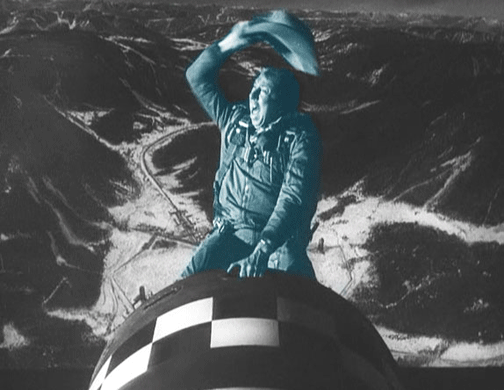
NATO’s annual nuclear exercise gets underway, NATO News, 14 Oct. 2022
Air forces from across NATO will exercise nuclear deterrence capabilities involving dozens of aircraft over north-western Europe starting on Monday (17 October 2022). The exercise, which runs until 30 October, is a routine, recurring training activity and it is not linked to any current world events. [Ed. oh yeah! Pull the other leg!]…………………………..
Exercise “Steadfast Noon” involves 14 countries and up to 60 aircraft of various types, including fourth and fifth generation fighter jets, as well as surveillance and tanker aircraft. As in previous years, US B-52 long-range bombers will take part; this year, they will fly from Minot Air Base in North Dakota. Training flights will take place over Belgium, which is hosting the exercise, as well as over the North Sea and the United Kingdom. …………………………………
NATO’s goal is a safer world for all; we seek to create the security environment for a world without nuclear weapons.“ [Ed. Whaa aa t?] https://www.nato.int/cps/en/natohq/news_208399.htm
Ukraine has de facto joined NATO says Ukraine’s defense minister
https://www.rt.com/news/564616-ukraine-nato-reznikov-stoltenberg/ 14 Oct 22, Kiev is already making a substantial contribution to the “security of the free world,” Aleksey Reznikov claimed
Ukraine is a de facto member of the NATO alliance, despite not having officially joined the US-led military bloc, Kiev’s Defense Minister Aleksey Reznikov has claimed.
He made the statement in a tweet following a meeting with NATO Secretary General Jens Stoltenberg at the bloc’s headquarters in Brussels on Wednesday.
“We have come a long way and have de facto joined the alliance,” the minister wrote, while also thanking Stoltenberg for his support for Ukraine amid its ongoing conflict with Russia.
“Ukraine is already making significant contributions to the security of the free world,” the minister added.
Reznikov also expressed confidence that victory over Moscow and “successful reforms” domestically would “open up new horizons” for his country, seemingly a reference to Ukraine officially joining the bloc at some point in the future.
Russia views NATO’s eastward expansion as a major security threat. When Moscow launched its military offensive against Kiev in late February, one of its key demands was for Ukraine to officially declare itself a neutral country that would never join any Western military alliance.
On September 30, Ukrainian President Vladimir Zelensky filed an application to join NATO and called for an accelerated admission procedure for his country.
However, Kiev’s backers in the West have not appeared overly enthusiastic on the issues. Stoltenberg has pointed out that “any decision on membership has to be taken by consensus” by all 30 NATO members and that its top priority right now is to “support Ukraine” militarily and financially during the conflict.
Washington voiced a similar stance, with US National Security Advisor Jake Sullivan saying earlier this month that the question of Ukraine joining NATO “should be taken up at a different time.”
A statement in support of Kiev’s bid for swift accession has been backed by just nine member states – the Czech Republic, Estonia, Latvia, Lithuania, North Macedonia, Montenegro, Poland, Romania and Slovakia.
Europe is still quietly importing Russian nuclear energy
CNBC, Sam Meredith @SMEREDITH19 14 Oct 22,
- Russia’s nuclear fuel industry remains conspicuously untouched by European sanctions more than seven months into the Kremlin’s war in Ukraine
- Despite eight rounds of sanctions, shipments of nuclear fuel to EU member states continue to make their way from Russia.
- Ariadna Rodrigo, EU sustainable finance manager at environmental group Greenpeace, told CNBC that it is “absolute madness” for the bloc to continue bankrolling the Kremlin by ignoring Russian nuclear trade.
………………………………………………. Russia’s energy influence goes beyond oil and gas
In April, a European Parliament resolution called for an “immediate” embargo on Russian imports of nuclear fuel and urged member states to stop working with Russia’s state-run nuclear giant Rosatom on existing and new projects.
But Russia is a dominant player in the global nuclear fuel market and any move to break the EU’s reliance on its services would likely be far from pain-free, particularly with Rosatom at the heart of Europe’s dependency……………
There are 18 Russian nuclear reactors in Europe, in countries including Finland, Slovakia, Hungary, Bulgaria and the Czech Republic. All of these reactors rely on Rosatom for the supply of nuclear fuel and other services.
Underlining the scale of Russia’s nuclear energy influence in some member states, even as the Kremlin’s onslaught in Ukraine continues, Hungary in late August announced the construction of two new nuclear reactors by Rosatom.
Moscow accounted for almost one-fifth (19.7%) of the EU’s uranium imports last year, according to the latest available data from the Euratom Supply Agency. Only Niger (24.3%) and former Soviet republic Kazakhstan (23%) were bigger suppliers of uranium to the bloc. https://www.cnbc.com/2022/10/14/ukraine-war-europe-is-still-quietly-importing-russian-nuclear-energy.html
Germany, France, Italy, conserve energy, but the UK government rejects energy conservation
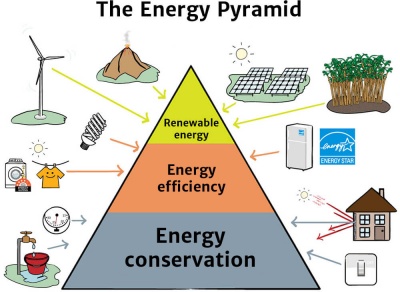
In Germany, shops must keep their doors closed to avoid heat escaping on
cold days, illuminated advertising boards have to be switched off by 10pm,
and in some public swimming pools only cold showers are available.
In France, there will be no “temeparture police”, energy transition
minister Agnès Pannier-Runacher has promised, but the country’s
“sobriety” energy-savings push asks that homes and offices are not
heated above 19 degrees centigrade. Commuters are also being asked to
car-share, and mountain resorts have pledged to reduce the speed of ski
lifts at off-peak times.
Italy has launched what has been dubbed
“Operation Thermostat” – limits to the temperature that public
buildings can set the air conditioning at in the summer and the heating
during winter. People have also been encouraged to limit the duration of
showers, the time ovens are switched on, and to use the dishwasher and
washing machine only when fully loaded.
In Britain, it is sometimes easy to
forget that there is an energy crisis. As the nation grapples with yet
another implausible leap in household bills, the festive lights started
going up on London’s Oxford Street at the end of September – almost three
months before Christmas Day. That the lights have been replaced by LED
versions this year is perhaps somewhat overshadowed by the fact that there
will still be 300,000 individual bulbs on display.
As one shopper reportedly remarked: “Lights already? We don’t even know if we’ll be able
to turn ours on this Christmas.” At the heart of this strange disconnect
is the Government’s ongoing refusal to even talk about the concept of
conserving energy, never mind encourage people to turn down the thermostat.
Not even a warning of winter power cuts from the National Grid is enough to
convince the Cabinet of the merits of promoting energy conservation.
Telegraph 14th Oct 2022
France’s national embarrassment: half of its nuclear reactors to remain out of action for months
France’s nuclear reactors will not work as normal any time soon. The
trouble will persist well into next year. when edf, the French energy giant,
warned in May that nuclear-electricity production this year would be lower
than previously forecast because half its reactors were out of action, the
timing could not have been worse.
Thanks to its nuclear industry, France is
usually Europe’s biggest net exporter of electricity. The closures turned
the country into a net power importer for the first time, just as the
continent faced an energy crunch. When in September edf then announced that
even by 2024 output would still be well below normal levels, the problem
became a national embarrassment.
France’s current nuclear troubles are
partly due to routine maintenance of the country’s 56 reactors, half of
which are about 40 years old. Each ageing reactor needs periodically to be
shut down, on a rotating basis, for inspection. During the pandemic,
scheduled maintenance was interrupted by lockdowns. The real crunch,
though, came after corrosion issues were detected in late 2021 at one
pressurised-water reactor. By this September no fewer than 25 reactors were
out of action: ten for routine maintenance, the rest for corrosion analysis
or repairs.
Economist 13th Oct 2022
1 This Month





PLEASE OPPOSE HR 8255 AND S.3639 – bills would accelerate satellite deployment, with no environmental review or safeguards – https://ncstd5li.quorum.us/campaign/169331/
To see nuclear-related stories in greater depth and intensity – go to https://nuclearinformation.wordpress.com
-
Archives
- October 2026 (67)
- September 2026 (339)
- August 2026 (330)
- July 2026 (355)
- June 2026 (287)
- May 2026 (306)
- April 2026 (356)
- March 2026 (251)
- February 2026 (267)
- January 2026 (308)
- December 2025 (358)
- November 2025 (359)
-
Categories
- 1
- 1 NUCLEAR ISSUES
- business and costs
- climate change
- culture and arts
- ENERGY
- environment
- health
- history
- indigenous issues
- Legal
- marketing of nuclear
- media
- opposition to nuclear
- PERSONAL STORIES
- politics
- politics international
- Religion and ethics
- safety
- secrets,lies and civil liberties
- spinbuster
- technology
- Uranium
- wastes
- weapons and war
- Women
- 2 WORLD
- ACTION
- AFRICA
- Atrocities
- AUSTRALIA
- Christina's notes
- Christina's themes
- culture and arts
- Events
- Fuk 2022
- Fuk 2023
- Fukushima 2017
- Fukushima 2018
- fukushima 2019
- Fukushima 2020
- Fukushima 2021
- general
- global warming
- Humour (God we need it)
- Nuclear
- RARE EARTHS
- Reference
- resources – print
- Resources -audiovicual
- Weekly Newsletter
- World
- World Nuclear
- YouTube
-
RSS
Entries RSS
Comments RSS

