Did the “stray missiles” to Poland come from Russian or from Ukrainian military?

Ukraine Weapons Tracker @UAWeapons
So what crashed in the village of Przewodów, Poland today? With the cooperation of @blueboy1969 we analyzed the available photos of fragments and came to a clear conclusion that they belong to the 48D6 motor of the 5V55-series missile of the S-300 AD system- a Ukrainian one.
So what crashed in the village of Przewodów, Poland today? With the cooperation of
@blueboy1969 we analyzed the available photos of fragments and came to a clear conclusion that they belong to the 48D6 motor of the 5V55-series missile of the S-300 AD system- a Ukrainian one.
Poland Considering NATO Article 4 Activation, Says Spokesman, By Reuters. Nov. 15, 2022,
WARSAW (Reuters) – Poland is verifying if it needs to request consultations under Article 4 of the NATO military alliance treaty, a government spokesman said on Tuesday, after a report that a blast that killed two people near the Ukrainian border was caused by stray Russian missiles.
The United States and Western allies said they were investigating but could not confirm a report on Tuesday that the blast in the village of Przewodow resulted from stray Russian missiles. Russia’s defence ministry denied it.
Westinghouse deal for Poland ushering in a new nuclear wave. Can it deliver on time and on budget?

Westinghouse spokeswoman Cathy Mann said last week that it was “too soon to say how financing will play out until we get further into developing the agreements and contracts.”
“The U.S. EXIM bank will offer robust financing,” she said, and because of its involvement, “U.S. content will be maximized.”
It was the first year that the International Atomic Energy Agency, which monitors nuclear power plants all over the world and ensures nonproliferation, had its own pavilion at the global climate event, Director General Rafael Mariano Grossi boasted on Wednesday in Egypt. He spent the day hosting panels and answering questions about how this nuclear wave differs from the ones that came before it.
ANYA LITVAK Pittsburgh Post-Gazette alitvak@post-gazette.com 14 Nov 22
Sebastian Barkowski, Poland’s special envoy for international climate and energy cooperation, arrived at the global climate summit in Egypt as a member of a new club: the nuclear club.
Earlier this month, his government picked Cranberry-based Westinghouse Electric Co. to supply the first three nuclear reactors to Poland, with another three units to be awarded in the future.
The deal, which is estimated to be worth about $20 billion, was in the works for a few years and represents Westinghouse’s first sale of its AP1000 plant abroad since it launched the reactor design in a deal with China in 2007.
Until the last moment, it was a geopolitical nail biter, with high-ranking U.S. officials such as Energy Secretary Jennifer Granholm and Vice President Kamala Harris intervening on Westinghouse’s behalf, and the U.S. nuclear firm filing a lawsuit against Korea Electric Power Corp. which had also submitted a bid for the Polish project.
Poland is surrounded by countries with nuclear power fleets but the large European nation never got its only attempt at nuclear off the ground.
Burning coal supplies 75% of its electricity needs, Mr. Barkowski said during a panel at COP27 on Wednesday, and driving that number down to meet climate goals was the main motivation behind Poland’s plan to build between 6 and 9 gigawatts of nuclear power. In 2020, the Polish government signed an intergovernmental agreement with the U.S. and Westinghouse to pursue this plan.
It was the first year that the International Atomic Energy Agency, which monitors nuclear power plants all over the world and ensures nonproliferation, had its own pavilion at the global climate event, Director General Rafael Mariano Grossi boasted on Wednesday in Egypt. He spent the day hosting panels and answering questions about how this nuclear wave differs from the ones that came before it.
In a conversation with Mr. Grossi, Fatih Birol, the executive director of the International Energy Agency, revised his year-ago prediction that “nuclear may well make a comeback” to a more definitive “nuclear is making a comeback.”
When asked what could derail that, Mr. Grossi talked of his fear that a Ukrainian nuclear powerplant in the warzone might suffer an attack that causes a nuclear accident — “the background music of my visit to Zaporizhzhia was bombs and mortars” — and that the fallout from that would ruin nuclear’s momentum the same way that Chernobyl and Fukushima had done.
Mr. Birol, meanwhile, zeroed in on the more mundane issue that has taken the wind out of nuclear’s sails before.
“The nuclear industry, to be honest with you, doesn’t have a very good reputation in terms of delivering on time and on budget,” he said.
With all the new reactor orders piling up, “It is important that the nuclear industry have more discipline,” he said.
That was something that Westinghouse’s future owner, the Canadian nuclear fuel company Cameco Corp. which signed a deal last month to acquire a 49% stake in Westinghouse, thinks about as well.
The Chinese and the Russians are good at building new nuclear plants, Cameco’s CEO Tim Gitzel said during a World Nuclear News podcast last week.
“We in the west now need to show that we’re back in the game and that we can take our share of the market,” he said.
Poland’s project with Westinghouse is a big deal, he said.
“I think there are more to come. And so we need to show the world that we can deliver our projects on time, on budget.”
In the U.S., Westinghouse’s attempt to restart large nuclear construction with a pair of reactors in South Carolina and another two in Georgia ended in bankruptcy in 2017. The South Carolina project was cancelled after billions had already been spent. In Georgia, nuclear fuel was finally loaded into the first reactor last month and the unit is slated to start producing power this year — 15 years after construction began. …………………………………………….
Westinghouse was bringing the lawsuit now, the company wrote in the complaint, because it had gotten word that KEPCO was about to sign a memorandum of intent with a group in Poland and that it had been invited to bid on projects in Czech Republic and Saudi Arabia.
Providing the technical information requested in those bids would trigger Westinghouse’s responsibility under U.S. nuclear export regulations, the company argued, and KEPCO has been non-committal about cooperating in the process.
So Westinghouse is asking the court to “enjoin defendants from delivery of technical information regarding Korean reactor designs outside the Republic of Korea,” specifically in Poland, Saudi Arabia and Czech Republic.
KEPCO had not filed a reply as of Wednesday.
Show me the money
A 15-year construction project is extremely difficult to finance, Dario Liguti, director of Sustainable Energy at the United Nations Economic Commission for Europe, said during a COP27 panel on nuclear financing.
That’s partly why “the nuclear plants that have been built, have been built with public money,” he said.
Countries like China, Russia, or France, where nuclear companies are at least partially owned by the government, offer the backing of the government when financing new builds.
In the U.S., that role, albeit much diminished, is filled by the U.S. Export-Import Bank, which provides financing for entities to buy American products and services.
The U.S. government has a variety of reasons to help such projects along.
A recent analysis of nuclear financing by researchers at Columbia University’s Center on Global Energy Policy includes this list: “supporting American jobs, assisting other countries’ decarbonization efforts and confronting the broader problem of climate change, reducing other countries’ fossil fuel dependencies for geopolitical reasons, limiting Chinese and Russian influence in general, and the national security value in the United States having some role in international nuclear reactor commerce.”
Export-Import Bank, which helped to finance dozens of nuclear export deals, mostly in the 1970s, hasn’t done any in decades.
Westinghouse asked for up to $5 billion in export assistance from ExIm when it sold the first four AP1000 units to China, the analysis said, and while the bank approved the request, the project did not end up using the offer.
In Polish newspapers, government officials suggested that the Westinghouse offer included $17 billion in financing, including through ExIm.
Elias Gedeon, Westinghouse senior vice president of commercial operations, said during an interview at an economic forum in September that the proposed financing also includes money from Westinghouse and Bechtel, the engineering and construction firm that took over the AP1000 project in Georgia in 2017.
“This is something that we have not done before,” Mr. Gedeon said, “but we have committed to put equity in this project in Poland.”
Westinghouse spokeswoman Cathy Mann said last week that it was “too soon to say how financing will play out until we get further into developing the agreements and contracts.”
“The U.S. EXIM bank will offer robust financing,” she said, and because of its involvement, “U.S. content will be maximized.”
Westinghouse is also continuing to sign agreements with companies in Poland and in other European countries to establish a European supply chain that could handle not just the Polish nuclear project but the others that might follow. Last year, it opened a shared global services center in Krakow which now employs 165 people and more will be hired, she said. In southwestern Pennsylvania, Westinghouse had about 3,100 employees at the end of last year.
Asked if Westinghouse can stick to the timeline envisioned in the Polish plan, Ms. Mann said that Westinghouse has learned from its experience delivering the first AP1000 plants in China and in Georgia.
On social media networking site LinkedIn last month, Westinghouse’s CEO Patrick Fragman thanked the governments of Poland and the U.S. for shepherding this agreement and promised full speed ahead.
“We are ready, able and willing to move very fast now.” https://www.post-gazette.com/business/powersource/2022/11/14/new-nuclear-faces-old-skepticism-can-it-deliver-on-time-and-on-budget/stories/202211130052
US and Western officials considering diplomacy as winter looms and Ukraine war cost may rise to $60 billion
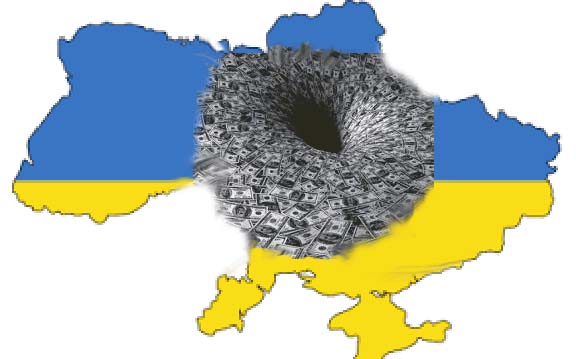
The growing belief that there’s no military resolution to the war and the rising hope that Ukraine and Russia move toward starting talks comes as Ukraine needs additional military aid. The White House and Congress are expected to consider additional funds for assistance for Ukraine, potentially $40 billion to $60 billion, NBC News has reported. Some Republicans and Democrats have begun to question whether the U.S. should send additional tens of billions of dollars to Ukraine
Some U.S. and Western officials think neither side can win and see winter as a shot at diplomacy in Ukraine-Russia war
Russia and Ukraine are most likely looking to the slower tempo of battle this winter as a time to reset and refit their forces to be ready for a spring offensive.
nbc news, By Courtney Kube, Carol E. Lee and Josh Lederman 14 Nov 22,
Some U.S. and Western officials increasingly believe that neither side can achieve all of their goals in the Ukraine war and are eyeing the expected winter slowdown in fighting as an opportunity for diplomacy to begin between Russia and Ukraine, officials familiar with the matter say.
Western defense officials question Ukraine’s ability to remove Russian troops completely from occupied areas, and if military operations on the ground stabilize over the winter that could underline that neither side is likely to achieve its goal of controlling the whole country, the officials said. They spoke on the condition of anonymity because they are not authorized to speak publicly on matters of diplomacy.
“In the winter, everything slows down,” said a Western official with direct knowledge of military operations. “The potential for talks, we would like to see that happening.”
The official pointed to a statement by Russia’s ambassador to the United Kingdom last week about the potential for negotiations as possible “messaging” toward a diplomatic path.
U.S. national security adviser Jake Sullivan made a surprise visit last week to Kyiv, where he met with President Volodymyr Zelenskyy and top Ukrainian officials. The White House National Security Council said the meetings were to “underscore the United States’ steadfast support to Ukraine and its people.” But two people familiar with the meetings and a Ukrainian government official said Sullivan did broach the idea of how the conflict can end and whether it could include a diplomatic solution. “He was testing the waters a bit,” a person familiar with the meetings said.
The Ukrainian official said that during his meetings, Sullivan raised the need for a diplomatic resolution to the war and made the point that Ukraine’s leverage would be strengthened — not weakened — if it expressed openness to ultimately negotiating with the Russians. The official said that Sullivan had not tried to pressure Ukraine to enter into negotiations immediately or to take any specific steps. Instead, the official said, Sullivan expressed the view that Ukraine would able to maintain the support of Western allies better if it is perceived as being willing to reach an end to the conflict through diplomacy……………………………………………
………………….. The growing belief that there’s no military resolution to the war and the rising hope that Ukraine and Russia move toward starting talks comes as Ukraine needs additional military aid. The White House and Congress are expected to consider additional funds for assistance for Ukraine, potentially $40 billion to $60 billion, NBC News has reported. Some Republicans and Democrats have begun to question whether the U.S. should send additional tens of billions of dollars to Ukraine. ……….. https://www.nbcnews.com/politics/national-security/ukraine-russia-war-winter-diplomacy-rcna56190—
USA, Japan, South Korea and a whole heap of companies join in the gamble of NuScam’s small nuclear reactors for Ukraine

The duration of the Ukrainian SMR project is a highly-ambitious two to three years.
the European Union has yet to approve the deployment of the technology. NuScale itself admits that its own SMR plant in Idaho is unlikely to become operational until 2029.
Ukraine joins Europe’s list of SMR hopefuls, Emerging Europe Yulia Valova 15 Nov 22,
Ukraine is the latest country in emerging Europe to sign up for an SMR project, one which aims to support the country’s energy security and signals a new direction in its energy development policy – decarbonisation.
Ukraine, in partnership with the United States, as well as Japan and South Korea, will participate in a public-private consortium to research and develop small modular reactors (SMRs).
A pilot project was announced this week by US Presidential Special Envoy on Climate Issues John Kerry and Ukrainian Energy Minister Herman Galushchenko at the UN Climate Change Conference, COP27, in Egypt.
The pilot project involves the construction of an SMR in Ukraine which, according to the US State Department, will involve the production of environmentally-friendly hydrogen and ammonia and advanced electrolysis technologies.
According to the State Department’s press service, the project builds on existing cooperation in developing nuclear energy capabilities initiated under the US Basic Infrastructure for Responsible Use of SMR Technology programme.
SMRs are a key part of the US Energy Department’s goal to develop safe [?], clean[?], and affordable[?] nuclear power options. Both Romania and Poland have previously signed agreements to explore the construction of SMRs with US technology.
The duration of the Ukrainian SMR project is a highly-ambitious two to three years. The list of participants includes both leading nuclear companies and research institutes.
In particular, NuScale (which is involved in the Romanian and Polish projects), FuelCell Energy, Clark Seed and Argonne National Laboratory will participate on the American side, with NAEC Energoatom and the State Science and Technology Centre for Nuclear and Radiation Safety representing Ukraine.
Doosan Enerbility, IHI Corporation, JGC Corporation, Samsung C&T and Starfire Energy will also participate in the project…………………….
According to the UN’s International Atomic Energy Agency (IAEA) there are around 50 SMR designs and concepts globally. Most of them are in various developmental stages and some are claimed as being near-term deployable……………..
However, while NuScale’s SMR was in August given final certification by the US Nuclear Regulatory Commission, the European Union has yet to approve the deployment of the technology. NuScale itself admits that its own SMR plant in Idaho is unlikely to become operational until 2029.
Austria digs in anti-nuclear heels as neighbours build out
https://www.euractiv.com/section/energy/news/austria-to-continue-anti-nuclear-stance-against-its-neighbours/ Nikolaus J. Kurmayer | EURACTIV.de Nov 8, 2022
The government confirmed that it would uphold its long-held anti-nuclear stance against its neighbours following media reports that Czech plans to build new nuclear reactors near the Austrian border are further ahead than scheduled.
Austria is Europe’s most fervent anti-nuclear country, and its only nuclear power plant never entered operation due to heavy opposition. Vienna is now suing the European Commission for granting the “green” label to nuclear power through the EU sustainable finance taxonomy.
This anti-nuclear stance against neighbouring countries will continue to be developed, said Green Environment Minister Leonore Gewessler, according to Ö1.
Meanwhile, six nuclear reactors in neighbouring Czechia are currently operating and provide about 37% of the country’s electricity. The government plans to have nuclear provide half of the country’s electricity in nearly 20 years, despite a projected general increase in electricity demand.
To achieve this serious nuclear build-out, the Czech government is betting on miniature nuclear power plants, so-called small modular reactors (SMRs). SMRs are far from commercial reality, as none have been built so far.
But Czechia is also looking at two regular reactors in Temelin, which is some 100 kilometres away from Linz, Austria’s third-largest city.
“Temelin is only about 50 kilometres away from the centre of our village”, from which the reactors can be seen from certain rights, Anita Gstöttenmayr, the mayor of a village located at the border, has said. “Something is simply being considered or decided without us being informed,” she added.
Anti-nuclear Austrian towns are now threatening to take the matter to the streets via protests and street blockades.
“It sounds stupid, but we will have to take to the streets again to raise awareness and make a difference,” the mayor added.
Languages: Deutsch
Russia and US hold secret talks in Ankara – Kommersant
https://www.rt.com/russia/566501-russia-us-secret-talks/ 14 Nov 22, Moscow is reportedly represented by the country’s top spy at the negotiations.
A leading Moscow newspaper claimed, on Monday, that secret US-Russian talks are being hosted by Türkiye. Kommersant, a privately owned title which is known to have good sources in Moscow, reported, citing anonymous sources, that the un-announced meeting was taking place in Ankara.
The outlet alleged that Russia had sent Sergey Naryshkin, director of the Foreign Intelligence Service (SVR) to the talks.
Kremlin spokesperson Dmitry Peskov later confirmed to Russian media that bilateral talks had taken place in Ankara, adding that they were held at the initiative of the US.
CNN claimed that CIA Director Bill Burns had represented Washington at the gathering, citing a “National Security Council spokesperson.”
Earlier this month, Western media reported that top Russian and US officials were engaging in undeclared contacts. According to the Wall Street Journal, US national-security adviser Jake Sullivan has been engaged with Yury Ushakov, a senior foreign policy aide to President Vladimir Putin, and with Nikolay Patrushev, Sullivan’s counterpart in the Russian government.
The White House did not deny the talks, with spokesperson Karine Jean-Pierre telling journalists that the contacts focused on “risk reduction.” Meanwhile, Peskov told the WSJ at the time that the British and American press tended to print “hoaxes.”
Türkiye emerged as a principal mediator during the Ukraine crisis. In late March, it hosted Russia-Ukraine talks, during which the two parties made significant progress towards settling on a peace agreement.
The negotiations were reportedly torpedoed by the UK, when then-Prime Minister Boris Johnson traveled to Kiev in April. According to Ukrainian media, he told President Vladimir Zelensky that Western nations would not support the proposed security pact that was discussed with Russia.
Ankara also helped the UN to launch the Black Sea Initiative, an arrangement that allows Ukraine to export its grain via commercial ships. The agreement, which was signed in July, expires on Friday. Moscow has repeatedly stated that it may not agree to a renewal, unless the UN delivers on its promise to facilitate Moscow’s export of Russian grain and fertilizers, which was part of the deal.
Top Zelensky advisor threatens war with Iran
The GrayZone, ALEXANDER RUBINSTEIN·NOVEMBER 12, 2022,
Mykhailo Podolyak, an advisor to Ukrainian President Volodymyr Zelensky, has called for attacks inside Iran as the country’s drones cause setbacks for the Ukrainian military.
On November 5, Mykhailo Podolyak, an advisor to Ukrainian President Volodymyr Zelensky, has advocated for military strikes on drone production sites located in Iran. President Zelensky echoed Podolyak’s belligerent rhetoric the following day, demanding Iran be “punished” for allegedly supplying drones to Russia.
Kiev adopted its hostile posture towards Tehran after claiming Russia deployed Iranian-supplied drones to strike Ukrainian civilian infrastructure throughout much of October.
In an interview with a Ukrainian news outlet on November 5, Podolyak argued that the response to Iran supplying Russia with drones should not be limited to sanctions or even a total trade embargo: “It seems to me that it should not be sanctions or even an embargo, yes a total embargo. It seems to me that it would be possible to carry out specific strikes on the production of drones, ballistic missiles, and so on.”………………………….
Podolyak has been ranked the third most influential Ukrainian by the Kiev-based Focus Magazine.
………………………………………. Though there is no record of any Iranian missile being used in an attack on Ukrainian infrastructure thus far, Zelensky declared, “We are preparing to respond.”
Just as Iranian-made drones appear to have given Russian forces a major boost on the battlefield, the US HIMARS artillery system has enabled significant Ukrainian gains, including the recapture of Kherson. However, no high ranking officials in Russian president Vladimir Putin’s office have similarly threatened the United States, or any of the other 40 countries that provided Ukraine with critical military assistance. https://thegrayzone.com/2022/11/12/zelensky-threatens-war-iran/
Ukraine joins in USA’s false story, “clean” energy from the mythical small nuclear reactors

Ukraine, United States announce cooperation on Clean Fuels from SMR pilot project. https://www.ukrinform.net/rubric-economy/3613271-ukraine-united-states-announce-cooperation-on-clean-fuels-from-smr-pilot-project.html 13 Nov 22,
—
As part of the UN’s COP27 Climate Conference, U.S. Special Presidential Envoy for Climate John Kerry and Ukrainian Energy Minister German Galushchenko announced cooperation on a Ukraine Clean Fuels from Small Modular Reactors (SMR) pilot project.
The relevant statement was made by the U.S. Department of State, an Ukrinform correspondent reports.
“Special Presidential Envoy for Climate John Kerry and Ukraine Minister of Energy German Galushchenko announced a Ukraine Clean Fuels from SMRs Pilot project that will demonstrate production of clean hydrogen and ammonia using secure and safe small modular nuclear reactor (SMR) and cutting-edge electrolysis technologies in Ukraine,” the report states.
The project aims to carry out a first-of-a-kind pilot of commercial-scale production of clean fuels from SMRs using solid oxide electrolysis.
“Building on existing capacity-building cooperation launched under the U.S. Foundational Infrastructure for Responsible Use of SMR Technology (FIRST) program, the project seeks to support Ukraine’s energy security goals, enable decarbonization of hard-to-abate energy sectors through clean hydrogen generation, and improve long-term food security through clean ammonia-produced fertilizers. Further, it aims to demonstrate Ukraine’s innovative clean energy leadership through the use of advanced technologies,” the U.S. Department of State noted.
Additionally, Special Envoy Kerry launched a new initiative, Project Phoenix, to accelerate the transition in Europe of coal-fired plants to SMRs while retaining local jobs through workforce retraining.
Project Phoenix will provide direct U.S. support for coal-to-SMR feasibility studies and related activities in support of energy security goals for countries in Central and Eastern Europe.
Surprise surprise. USA co-opts Ukraine to try out small nuclear reactors

US, Ukraine announce project on construction of small modular nuclear reactor,
New initiative aims to accelerate conversion of coal-fired power plants in central, eastern Europe: US State Department AA, Burc Eruygur |13.11.2022
The US and Ukraine have announced the launch of a project on the construction of a small modular nuclear reactor (SMR) in Ukraine during the 27th UN Climate Change Conference (COP27) in Egypt, according to the US State Department.
“Special Presidential Envoy for Climate John Kerry and Ukraine Minister of Energy Herman Halushchenko announced a Ukraine Clean Fuels from SMRs pilot project that will demonstrate the production of clean hydrogen and ammonia using secure and safe SMRs and cutting-edge electrolysis technologies in Ukraine,” read a statement by the US State Department on Saturday………………………
In addition to Argonne National Laboratory and Ukraine’s Energoatom, National Security and Defense Council, and State Scientific and Technical Center for Nuclear and Radiation Safety, the statement expresses that multiple private companies will also take part in the project’s multinational consortium.
Kerry separately announced the launch of a new initiative, called Project Phoenix, “to accelerate the transition in Europe of coal-fired plants to SMRs while retaining local jobs through workforce retraining,” it also said.
“Project Phoenix will provide direct US support for coal-to-SMR feasibility studies and related activities in support of energy security goals for countries in central and eastern Europe,” according to the statement.
On Sunday, Ukraine’s Ambassador to the US Oksana Markarova also confirmed the project, reiterating the information released by the US State Department.
“Ukraine is not only working to protect and quickly repair/replace what was destroyed but is already planning to build an innovative energy system,” Markarova said on Facebook. https://www.aa.com.tr/en/russia-ukraine-war/us-ukraine-announce-project-on-construction-of-small-modular-nuclear-reactor/27
Russia maintains its grip on global nuclear energy landscape
Increasing use of atomic power would not necessarily free economies from Moscow’s
influence. Faced with a global energy crisis and a race to slash emissions,
advanced economies are starting to reconsider nuclear power after a period
of declining investment. The incentive is all the greater among European
countries, which are urgently seeking to move away from Russian fossil
fuels to starve the Kremlin of funds for its assault on Ukraine.
But an atomic shift does not necessarily free a country from energy dependence on
Russia, given the scale of the country’s presence in the nuclear sector.
There were 437 operational reactors around the world as of 2021 excluding
those suspended, according to the International Atomic Energy Agency. About
10 per cent or 42 reactors outside of Russia were using Soviet-designed
VVER technology, with others using designs from countries including the US,
Canada, Germany and France.
Ukraine has by far the largest number of VVER
fleets outside Russia, with all 15 of its operating reactors using the
technology, with the Czech Republic next on six. Similarly, of the 52
reactors currently being built around the world excluding Russia, 21 use
VVER. China, India and Turkey have the largest number with 4 each, with
countries like Bangladesh, Egypt and Iran also taking in Russian
technology.
The prevalence of Russian-designed reactors currently being
built is in part a matter of timing, according to Jonathan Cobb, analyst at
the World Nuclear Association, who said “the Russian reactor programme
itself was very active” over the past decade when many of the contracts
for these projects were signed.
Russia was also the seventh-largest
producer of uranium in 2021. State-owned Rosatom accounts for about 40 per
cent of the world’s uranium enrichment capacity, making it a crucial
supplier as most nuclear power stations use enriched fuel.
FT 13th Nov 2022
https://www.ft.com/content/ffe76530-8fcb-45c3-aade-dc307af9c82f
UK government to dump European Union nuclear safety laws – a deregulated race to the safety bottom?
Revealed: Fears over Brexit threat to nuclear safety laws, Herald 13th November,
UK GOVERNMENT plans threatening nuclear and radiation safety laws in a “Brexit bonfire” have provoked resistance from regulators and trade unionists, opposition from Scottish ministers, and alarm from campaigners.
The Cabinet Office has published a list of more than 2,400 European Union (EU) laws which are under review as part of the Government’s bid to scrap them. They include 10 key regulations designed to protect the public and workers from nuclear accidents and radiation leaks.
The UK Office for Nuclear Regulation (ORN), which oversees safety at civil and military nuclear sites, told The Ferret it was trying “to preserve the legislative framework” to meet the “highest international standards”.
The trade union Prospect, which represents scientists and engineers in the nuclear industry, accused UK ministers of “trying to weaken or dismantle a regulatory framework that has served the UK well over many decades”.
The Scottish Government attacked Westminster for “rolling back 47 years of protections in a rush to impose a deregulated race to the bottom”.
Campaigners are worried by the dangers of “watering down” nuclear safety law, and demand tougher legal protections.
A bill to remove “retained EU law” was introduced to the UK Parliament by the former business minister, Jacob Rees-Mogg, in September. It contains a “sunset” clause requiring all remaining EU law to be repealed or assimilated by the end of 2023, though this can be extended to 2026.
Among the laws under threat is the 2019 Radiation (Emergency Preparedness and Public Information) Regulations which compel councils and companies to draw up emergency plans to deal with nuclear accidents. According to UK Government guidance in 2015, the regulations are “key” to ensuring that the public is “properly protected”.
Three sets of regulations aimed at protecting workers and the public from the hazards of radiation are also up for review. One “lays down basic safety standards for protection against the dangers arising from exposure to ionising radiation”, the Government said.
Other laws on the UK Government list cover “maximum permitted levels” of radioactivity in food after a nuclear emergency; imports of radioactively contaminated food following the Fukushima nuclear accident in 2011 and the Chernobyl disaster in 1986; and the safety of decommissioning nuclear plants.
The ORN, which regulates the Faslane nuclear base and six other sites in Scotland, is understood to be taking the threat to nuclear safety laws “very seriously”. The six other sites are Chapelcross in Dumfries and Galloway; Dounreay in Caithness; Hunterston A and Hunterston B, both in North Ayrshire, Rosyth in Fife; and Torness in East Lothian
An ONR spokesperson told The Ferret: “We are in discussions with the Government to preserve the legislative framework that allows us to hold the nuclear sector to account consistent with the highest international standards.”
According to the veteran nuclear critic Pete Roche, this meant that the ONR was resisting the UK Government’s plans. “Reading between the lines, it looks as though the ONR is planning to fight any proposals to make drastic changes to nuclear regulation,” he said.
“In recent meetings I have been involved in, ONR representatives have stressed the need to uphold the highest international standards. I can only hope I am not being overly optimistic and that they stick to their guns.”
Prospect argued that the existing regulatory framework worked well at protecting workers and communities. This was vital as old nuclear plants were being decommissioned and new ones built, it said.
“Perhaps the Government should focus on ensuring that existing regulators are properly resourced to do this important work rather than trying to weaken or dismantle a regulatory framework that has served the UK well over many decades,” said Prospect’s senior deputy general secretary, Sue Ferns.
Ferns.
“Tearing up existing regulations for the sake of purportedly ‘taking back control’ does nothing but introduce uncertainty,” she added. “Nuclear is an international industry, there is no value in seeking to craft UK specific legislative variants just for the sake of it.”
The Scottish Government has urged the Scottish Parliament to withhold consent for the “Brexit bonfire” bill. “Ministers fundamentally oppose the Retained EU Law Bill,” said a spokesperson. “This bill puts at risk the high standards people have come to expect from EU membership, rolling back 47 years of protections in a rush to impose a deregulated race to the bottom.”
The 50-strong group of Nuclear Free Local Authorities was “gravely concerned” about the “threat to water down legislation which provides the public or our environment with protection from the operational or legacy risks posed by civil nuclear power”.
The group’s chairman David Blackburn, a Green councillor from Leeds, said: “If European regulations providing protection are to be removed, we will press Government ministers to instead enact equivalent, or preferably stronger, laws into UK domestic legislation.”
The environmental campaigner and former director of Friends of the Earth Scotland, Dr Richard Dixon, thought that the EU gave the public and workers “vital protections” against radiation risks.
“No backsliding at all can be allowed,” he said.
“This has never been more important with the prospect of damage to nuclear reactors or even the use of nuclear weapons in Ukraine.
“Protection of the same strength or better needs to be put in place.”
The UK Department for Business, Energy and Industrial Strategy did not respond to requests for comment. …………. https://www.heraldscotland.com/news/23121029.revealed-fears-brexit-threat-nuclear-safety-laws/
Concern over radioactive particles on Dounreay shoreline – poor monitoring of the nuclear clean-up
Letter Tor Justad: I refer to recent press reports referring to new high
numbers of “harmful” radioactive particles found on the Dounreay
shoreline and Sandside beach which suggested they were related to leaks
between 1958 and 1984, with 73% of the particles described as
“significant”, and 15 particles found between February and March 2022.
Dounreay Site Restoration Ltd (DSRL), responsible for decommissioning the
site, said it was closely monitoring the situation and Sepa (Scottish
Environment Protection Agency) stated “we are content that the monitoring
and retrieval programme in place continues to provide appropriate
protection for the public”. DSRL stated “the foreshore is not used by
the general public”
– this is not a reassurance as nuclear radiation
has no boundaries. Highlands Against Nuclear Transport (Hant) is
represented on the Dounreay Stakeholder Group (DSG) and has regularly asked
for information about the monitoring being carried out and the results –
and has been told that information will be made available when the
monitoring report is provided by an independent body.
Neither the DSG meeting on March 22 nor the Site Restoration Sub Group meeting on October
19 were informed of these findings of concern. Given that this information
has only been made available through press reports to date, Hant would want
the following to be implemented:
i) Regular up-to-date reports provided to
the DSG and by press releases to the local press on the monitoring results,
so that the DSG can provide this information to organisations represented
by members and the general public will be informed by the local press.
Assuming that the results of the monitoring can demonstrate that there is
no danger to the public this will provide reassurance to everyone living in
the area around Dounreay;
ii) That the Dounreay “clean up” reports
provided by DSRL to the Particles Retrieval Advisory Group Dounreay (Prag)
be provided to the DSG and local press – an online search resulted in the
latest information from the Prag online being from 2016 and this is totally
unacceptable;
iii) That a presentation be made to the DSG by the outside
body carrying out the monitoring to describe its methodology and how
regularly it is carried out – to provide local reassurance. Hant looks
forward to the immediate implementation of these proposals and will be
monitoring this issue closely over the next months.
Press & Journal 11th Nov 2022
Sizewell C – proposed coastal area is not suitable for nuclear reactors
Letter: Your leader on Sizewell C ignores a couple of factors that are key
to our local objections. First, the coastline on which Sizewell A and B are
built and Sizewell C is proposed is disintegrating at an increasingly
alarming rate – just two weeks’ ago a building at nearby Thorpeness had
to be demolished due to collapse of the cliffs.
Second, there is insufficient water in Suffolk to build and operate Sizewell C, which was
one of the main reasons the government’s own planning inspectorate
advised against it recently. Water is planned to be found through the
construction of desalination plants – these require huge amounts of
energy, but more importantly the waste salt and other minerals from the
extraction process will be put back into the sea, poisoning the waters
around for miles.
There are other reasons why this is a disastrous
location: it is a site of special scientific interest and an area of
outstanding natural beauty and the prototype for this type of reactor has
yet to be proved at Flamanville – still not operational, years over
schedule and way over budget. Nuclear has moved on since the design of
these reactors. The government should think again.
Observer 13th Nov 2022
EU Needs $460 Billion Investment Just To Maintain Nuclear Power Capacity, let alone build new
Oil Price.com By Tsvetana Paraskova – Nov 11, 2022,
The European Union will need up to $462 billion (450 billion euros) in investment just to keep the current level of its nuclear power generation capacity, the EU Commissioner for Energy, Kadri Simson, said at a nuclear energy forum this week……..
This year, a year when surging energy prices have highlighted the importance of energy security, the EU is particularly focused on its nuclear power availability.
According to the EU modeling, nuclear power generation will account for around 15%-16% of the EU’s power output in 2030 and 2050, Simson said.
The EU needs a stable generation capacity, at the level of just over 100 GW, in the coming decades. Yet, a lot of investment will be needed to keep that generation capacity in the future.
“Our analysis shows that without immediate investment, around 90% of existing reactors would be shut down around the time when we need them most – in 2030,” Simson noted.
The EU will need between $360 billion (350 billion euros) and $462 billion (450 billion euros) of investment just to maintain the current generation capacity, and another up to $51.3 billion (50 billion euros) in the long-term operation of existing reactors, according to the EU commissioner……… EU Needs $460 Billion Investment To Maintain Nuclear Power Capacity | OilPrice.com
—
‘Tactical’ Nuclear Weapons Could Unleash Untold Damage, Experts Warn
By Ed Holt , BRATISLAVA, Nov 10 2022 (IPS) – Since the start of Russia’s invasion of Ukraine, the conflict’s potential to escalate to the use of nuclear weapons has been highlighted by political analysts and military experts alike.
Now growingly bellicose rhetoric from Russian president Vladimir Putin, particularly following the illegal annexations of four parts of Ukraine at the end of September, has raised fears he may be seriously considering using them. He has been quoted in September this year as saying that Russia would use “all available means to protect Russia and our people”, but last month said there was no need to consider the use of nuclear weapons. This week Russia ordered troops to withdraw from the Dnieper River’s west bank near the southern city of Kherson.
But while much of the media debate around this prospect has focused on the expected use of a so-called low-yield “tactical” nuclear weapon and what this might mean strategically for either side in the war, anti-nuclear campaigners say any discussion should be reframed to reflect the devastating reality of what the use of even the smallest weapons in modern nuclear arsenals would mean.
They say that even if only one such bomb was dropped, be it in Ukraine or in any other conflict, the consequences would cause a country – if not a continent-wide catastrophe, with horrific immediate and long-term health effects and a subsequent humanitarian disaster on a scale almost certainly not seen before.
Moreover, they say, a single strike would almost certainly be met with a similar response, quickly igniting a full-scale nuclear war that would threaten much of human life on earth.
“There is no conceivable reality in which a nuclear weapon is used, and life goes on as normal. It is very, very likely that there would be escalation and additional nuclear weapons used, but even the use of one nuclear weapon would break a decades-long taboo on the use of the most catastrophic, horrific weapon ever created,” Alicia Sanders-Zakre, Research, and Policy Coordinator, at the International Campaign to Abolish Nuclear Weapons (ICAN) told IPS.
“We have already seen the global impacts of the war in Ukraine just using conventional weapons, including worldwide rising inflation, and energy and food shortages. But the use of a nuclear weapon would really have consequences beyond what any of us can imagine,” she added……………………………………………
Campaigners against nuclear weapons worry the global public is not being made properly aware of the scale of the loss of life and ecological damage which would be wrought by the use of such a weapon.
“There has been a lot of discussion about using a tactical nuclear bomb in Ukraine. But the use of the word ‘tactical’ is no more than a rebranding exercise to make a nuclear weapon sound like a conventional one,” Dr Ruth Mitchell, Board Chair of the International Physicians for the Prevention of Nuclear War (IPPNW), told IPS.
“A tactical nuclear weapon would be about the same size as the one dropped on Hiroshima and Nagasaki, and we don’t need to imagine what the effects would be; we have already seen them,” she added.
The death toll itself would be massive, but authorities would also have to deal with radioactive fallout possibly contaminating large areas, while the event itself would trigger massive population dislocation.
And a report by ICAN also shows that even the most advanced healthcare systems would be unable to provide any effective response in such a situation, highlighting the likely destruction of local healthcare facilities and staff and pointing out that the 1945 atomic bombing of Hiroshima destroyed 80% of its hospitals and killed almost all its doctors and nurses………………………….more https://www.ipsnews.net/2022/11/tactical-nuclear-weapons-treat-could-unleash-untold-damage-experts-warn/?utm_source=rss&utm_medium=rss&utm_campaign=tactical-nuclear-weapons-treat-could-unleash-untold-damage-experts-warn
1 This Month





PLEASE OPPOSE HR 8255 AND S.3639 – bills would accelerate satellite deployment, with no environmental review or safeguards – https://ncstd5li.quorum.us/campaign/169331/
To see nuclear-related stories in greater depth and intensity – go to https://nuclearinformation.wordpress.com
-
Archives
- October 2026 (67)
- September 2026 (339)
- August 2026 (330)
- July 2026 (355)
- June 2026 (287)
- May 2026 (306)
- April 2026 (356)
- March 2026 (251)
- February 2026 (267)
- January 2026 (308)
- December 2025 (358)
- November 2025 (359)
-
Categories
- 1
- 1 NUCLEAR ISSUES
- business and costs
- climate change
- culture and arts
- ENERGY
- environment
- health
- history
- indigenous issues
- Legal
- marketing of nuclear
- media
- opposition to nuclear
- PERSONAL STORIES
- politics
- politics international
- Religion and ethics
- safety
- secrets,lies and civil liberties
- spinbuster
- technology
- Uranium
- wastes
- weapons and war
- Women
- 2 WORLD
- ACTION
- AFRICA
- Atrocities
- AUSTRALIA
- Christina's notes
- Christina's themes
- culture and arts
- Events
- Fuk 2022
- Fuk 2023
- Fukushima 2017
- Fukushima 2018
- fukushima 2019
- Fukushima 2020
- Fukushima 2021
- general
- global warming
- Humour (God we need it)
- Nuclear
- RARE EARTHS
- Reference
- resources – print
- Resources -audiovicual
- Weekly Newsletter
- World
- World Nuclear
- YouTube
-
RSS
Entries RSS
Comments RSS

