Talking football pitches but not in Qatar
thttps://www.nuclearpolicy.info/news/talking-football-pitches-but-not-in-qatar/ 5 Dec 22, Whilst the World Cup action on the pitch in Qatar is the current focus of many millions of fans of ‘the beautiful game’, the UK/Ireland Nuclear Free Local Authorities are seeking out the answer to a football-related question much nearer to home.
Rolls-Royce has been talking big about the prospects for its so-called Small Modular Reactors in recent days, but everyone remains confused as to how big the reactor is. Although the intended power output is clear, at 470 MW being roughly compatible with a first-phase Magnox nuclear reactor, various media articles have reported the SMR as occupying a surface area amounting to between ‘one and a half and ten football pitches’.
Football’s world governing body, FIFA, sets international standards for the dimensions of playing pitches based on metres, but even these are at variance. The length of a pitch can be between 90 metres and 120 metres from goal line to goal line and the width between 45 metres and 90 metres.
Quite a difference, so the NFLA decided they want to use Wembley Stadium with a playing pitch of 105 metres by 68 metres as a reference football pitch most people can relate to.
The Chair of the UK/Ireland Nuclear Free Local Authorities Councillor David Blackburn has just written to Tom Samson, Chief Executive Officer of Rolls-Royce SMR, seeking out the answer.
Councillor Blackburn said “If we do not know how big it is we do not know what we are dealing with, and it is way overdue for Rolls-Royce to provide clarity. With the FIFA standard size of a football pitch being variable, we have gone for Wembley Stadium as a reference most people, whether football fans or otherwise, can relate to. We have asked how many ‘Wembley’s’ will the SMR fill? It is now over to Mr Samson to respond. We shall of course bring you the final score when we have it.”
UK government may be covering up the extent of its involvement in the arrest and incarceration of Julian Assange
MINISTER ‘MISLED PARLIAMENT’ ON FOREIGN OFFICE ROLE IN SECRET ASSANGE OPERATION New information suggests the UK government may be covering up the extent of its involvement in the arrest and incarceration of the WikiLeaks founder.
https://declassifieduk.org/minister-misled-parliament-on-foreign-office-role-in-secret-assange-operation/ MATT KENNARD AND JOHN MCEVOY 2 DECEMBER 2022
A British MP has accused a Foreign Office minister of “misleading parliament” over his department’s involvement in the secret operation to arrest Julian Assange.
Kenny MacAskill MP, a former Scottish justice secretary, asked the Foreign Office “whether any people working on Operation Pelican were based within [its] Department’s premises.”
Pelican was the secret Metropolitan Police-led operation to seize Assange from his asylum at the Ecuadorian embassy in London, which was mounted in April 2019.
Junior foreign minister David Rutley told parliament last week in answer: “No Foreign and Commonwealth Office [FDCO] officials were directly assigned to work on Operation Pelican.”
However, in response to a Freedom of Information Act (FOI) request in July last year, the Foreign Office had already admitted: “Three FCDO officials did some work on Operation Pelican, the most senior of which was Head of Latin America Department.”
Declassified on Tuesday revealed the UK government had assigned 15 staff to Pelican, but this number did not include any Foreign Office personnel.
‘Misled parliament’
Under the Ministerial Code, ministers have a duty to “be as open as possible with parliament” and to “give accurate and truthful information”. A House of Commons guide states that “this requirement governs the answers ministers provide to parliamentary questions”.
The misleading of parliament is a serious charge that can lead to a minister’s resignation or sacking.
David Rutley, the Conservative MP for Macclesfield, has been foreign minister for the Americas and Caribbean since October 2022, and serves under foreign secretary James Cleverly.
A supporter of Rishi Sunak, Rutley has met the US ambassador to Britain and travelled to Colombia and Panama since taking up office.
Kenny MacAskill, MP for East Lothian, told Declassified: “This new information shows that foreign minister David Rutley misled parliament in answering my recent question. It demonstrates not just the standard obfuscation I have become used to, but actual distortion of the facts about the UK government’s effort to ‘get’ Julian Assange.”
He added: “The actions of the British government have not simply been to assist the US. They have been active and willing participants in the state-sponsored cruelty meted out to Assange. And then tried to hide it all.”
18 officials
Operation Pelican’s existence was only revealed in the memoirs of former foreign minister Sir Alan Duncan which were published last year. The UK government routinely blocks, or obfuscates its answers to, information requests about the Assange case.
For instance, the Home Office and the Cabinet Office have refused FOI requests regarding communication between departments about Pelican. The Foreign Office claimed it holds no information on the matter.
In March, Home Office minister Kit Malthouse even told parliament that his department, despite having eight staff assigned to Pelican, holds no information about which other ministries were involved.
Then, in a later response to a FOI request, the Home Office refused to confirm or deny whether it holds information on inter-departmental communication about Pelican. This refusal to rule out whether the Home Office does hold information on the matter raises concerns that Malthouse may also have earlier misled parliament.
The new information takes up to 18 the number of officials the UK government has admitted to deploying on Operation Pelican.
These included senior officials such as the Deputy National Security Advisor at the Cabinet Office and the International Director at the Home Office, according to documents obtained by Declassified through a FOI request.
Declassified has revealed that four of Britain’s most powerful government ministries, including the Foreign Office, are refusing to say if their officials have met with US authorities to discuss Julian Assange.
IAEA hoping to get a protection zone at the Zaporizhzia nuclear power plant
The International Atomic Energy Agency hopes to reach an agreement with
Russia and Ukraine to create a protection zone at the Zaporizhzhia nuclear
power plant by the end of the year, the head of the U.N. atomic watchdog
was quoted as saying.
Reuters 2nd Dec 2022
Europe, weaning off fossil fuels from Russia, but still dependent on Russia for nuclear fuel
France has been accused of helping to fund Vladimir Putin’s war effort
by continuing to import nuclear fuel from Russia. Greenpeace on Friday
called it “scandalous” that uranium was still being bought by European
companies to be used in nuclear power stations across the continent.
The campaigning charity this week filmed the arrival of dozens of drums of
uranium, both raw and enriched, from Russia at the northern French port of
Dunkirk. Imports of nuclear fuel from Russia remain legal in Europe as
Brussels has not been able to ban them in eight rounds of sanctions
packages.
While Europe has been weaning itself off Russian fossil fuels
since the start of the invasion of Ukraine, its nuclear sector is still
heavily dependent on Russia and imports more than €200 million worth of
uranium every year.
Telegraph 2nd Dec 2022
Macron pushes a “renaissance” while French nuclear flops

A farce that would make Feydeau blush — Beyond Nuclear International
A farce that would make Feydeau blush — Beyond Nuclear International
Misleading claims about the supposed recycling of nuclear wastes
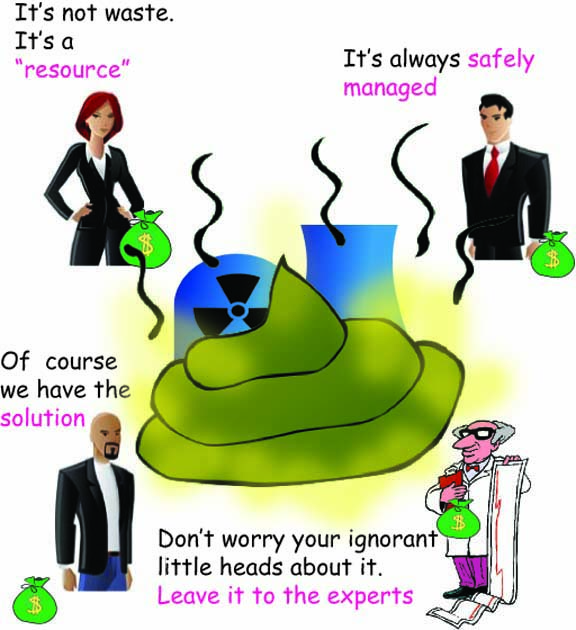
EPZ, the operator of the Borssele nuclear power plant, has long claimed
that they recycle “95 percent” of their nuclear fuel, and that only “5
percent” remains as nuclear waste.
Following a complaint by Laka, the Board
of Appeals of the Dutch Advertising Authority, ruled yesterday that these
are misleading environmental advertisement claims. In its ruling, the board
blames EPZ all the more because theses misleading claims appear on EPZ’s
website under the header “Environment & Health”, where “unsuspecting
visitors should expect accurate and balanced information about nuclear fuel
and nuclear waste.
Laka 1st Dec 2022
Small modular reactor plans to be blocked by the Scottish government
Plans to power a refinery in Scotland with a Rolls-Royce small modular
reactor (SMR) are likely to stall due to opposition from the Scottish
government. Government officials have said they will block any moves to
power the Grangemouth refinery on the Firth of Forth with a nuclear
reactor. According to the Sunday Telegraph, talks have taken place between
chemicals group Ineos and Rolls-Royce, and the two companies are understood
to have considered whether the plant could be powered by an SMR.
New Civil Engineer 30th Nov 2022 https://www.newcivilengineer.com/latest/scottish-small-modular-reactor-plans-to-be-blocked-by-government-30-11-2022/
Warning of power cuts for France, as nuclear reactors are working at half capacity
France could face the risk of power cuts this winter when electricity
supply may not be enough to meet demand, Xavier Piechaczyk, the head of
grid operator RTE, said on Thursday, citing the price to pay for slow
renewables and a nuclear energy infrastructure working at half capacity.
There is a risk of red-alert days this winter, but it would mostly depend
on the weather, Piechaczyk told Franceinfo radio today, noting that power
cuts are not necessarily “inevitable”. Due to lower nuclear generation
availability, France will import electricity this winter from most of its
neighbors, including Benelux, the manager added.
Oil Price 1st Dec 2022
Vladimir Putin open to talks on Ukraine if West accepts Moscow’s demands

ABC News 3 Dec 22
Russian President Vladimir Putin is “open to negotiations” on Ukraine but the West must accept Moscow’s demands, the Kremlin says, a day after US President Joe Biden said he was willing to talk with the Russian leader.
Key points:
- The Kremlin says the US’s refusal to recognise annexed territory in Ukraine as Russian was hindering a search for ways to end the war
- The IAEA wants to establish a protective zone around the Zaporizhzhia nuclear plant, which has been repeatedly shelled over the last few months
- An investigation into whether the Moscow branch of the Orthodox church is entitled to operate in Kyiv is underway
Speaking after talks on Thursday at the White House with French President Emmanuel Macron, Mr Biden said he was ready to speak with Mr Putin “if in fact there is an interest in him deciding he’s looking for a way to end the war”, adding the Russian leader “hasn’t done that yet”.
Mr Biden has not spoken directly with Mr Putin since Russia invaded Ukraine on February 24.
In March, Mr Biden branded Mr Putin a “butcher” who “cannot stay in power”.
In Moscow’s first public response to Mr Biden’s overture, Kremlin spokesman Dmitry Peskov told reporters: “The president of the Russian Federation has always been, is and remains open to negotiations in order to ensure our interests.”
Mr Peskov said the US refusal to recognise annexed territory in Ukraine as Russian was hindering a search for ways to end the war.
Moscow has previously sought sweeping security guarantees, including a reversal of NATO’s eastern enlargement………………………………….. more https://www.abc.net.au/news/2022-12-02/russia-open-to-talks-on-ukraine-if-west-accepts-moscows-demands/101730102
Nuclear Free Local Authorities call for Community Partnerships to include critics of the undersea Geological Disposal Facility plan

The Nuclear Free Local Authorities have sent a second letter to each of the
four Community Partnerships responsible for taking forward proposals for a
nuclear waste dump to seek assurances that opponents of the plan should
have a chance to take up membership.
The Community Partnerships in
Allerdale, Mid-Copeland, South-Copeland, all in West Cumbria, and in
Theddlethorpe, in East Lincolnshire, are each pursuing the possibility of
hosting Britain’s many tons of high-level radioactive waste, produced from
Britain’s civil nuclear and military nuclear programmes, in an undersea
Geological Disposal Facility.
NFLA 1st Dec 2022
Britain’s bunkers offer little chance of survival after a nuclear attack
https://www.theguardian.com/world/2022/dec/02/britains-bunkers-offer-little-chance-of-survival-after-a-nuclear-attack 2 Dec 22 David Saunders and Mark Newbury write that, with no bunker provision for civilians, most of us won’t have access – and those who do should not expect to live long.
The owner of the Kelvedon Hatch bunker suggests that those selected for his shelter might survive for 10 to 20 years in it while avoiding nuclear fallout (‘When you hear the four-minute warning’ … Whatever happened to Britain’s nuclear bunkers?, 24 November). This is, sadly, an unrealistic expectation if one simply looks at the likely impact on infrastructure of even a limited nuclear attack on the UK, based on exercises and analysis conducted during the cold war.
It was accepted 50 years ago that nobody above ground is likely to be left fit or alive to generate power or supply clean water. Food cannot be grown in a radioactive environment and, in the period preceding any outbreak of war, there will be diminished food stocks due to panic buying or rationing.
The scenarios modelled by civil defence analysts even during the 1980s Pershing and cruise missile deployment suggested that survival in Britain’s local government bunkers would be short lived. There was never any provision in the UK for sheltering the civilian population in the event of a nuclear conflict and Britain’s civil defence posture was abandoned as a posture after the 1960s.
While in neutral Sweden and Switzerland housebuilding rules made provision to protect the civil population, in Britain the idea of being able to survive to the same extent as in, say, the blitz in the second world war is merely a pious hope.
Nice to know that, according to the civil defence historian Nathan Hazlehurst, “Key members of central government, the military and royal family will have access to bunkers, along with those staff needed to run the country post-attack.” The rest of us will (I assume) have to make do with an updated version of the much-derided Protect and Survive booklet.
European General Court refuses Austria’s appeal against the Commission’s decision to support 2 nuclear reactors for Hungary
Judgment on state aid appeal by Austria regarding aid to build two nuclear
reactors at Hungarian power plant (General Court). On 30 November 2022, the
General Court handed down a judgment on an appeal by Austria against a
Commission decision which approved investment aid for two nuclear reactions
at a power plant (Paks II) owned by the Hungarian state.
Reuters 30th Nov 2022
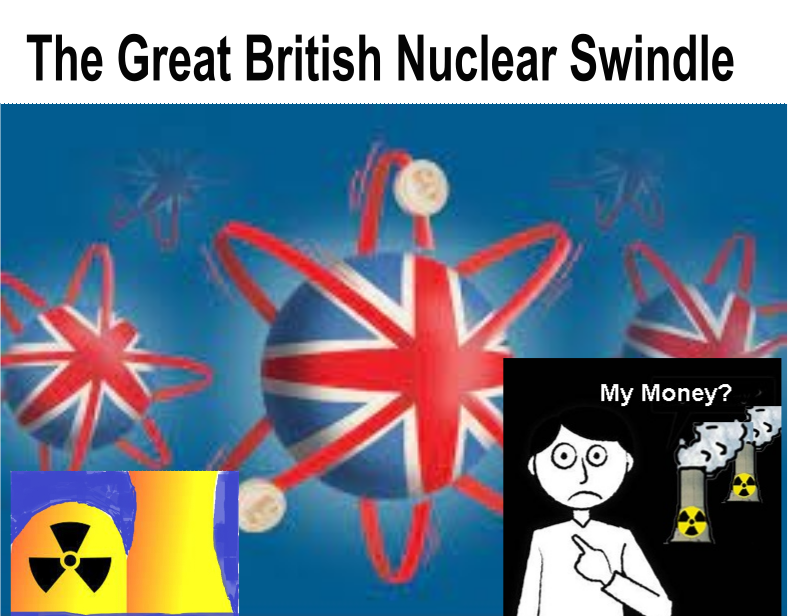
TODAY. The GREAT BRITISH NUCLEAR financial mess
In a gloomy financial statement, Chancellor Jeremy Hunt said the Office for Budget Responsibility had judged that the UK’s economy was shrinking. J.P.Morgan said on Tuesday it expects a contraction in the UK’s economy next year as it enters a lengthy period of stagnation in the face of soaring gas prices, slowing global growth and tighter economic conditions. It predicts “Tighter monetary and fiscal policy amid scarring from both the pandemic and Brexit”
In the midst of all this financial gloom, both the Tory government and the Labour opposition delight in predicting a boom in electricity production from a fleet of nuclear reactors both Big and Small – a fleet that is magically going to appear like some sort of miasma – as taxpayer funds pour into nuclear projects like Sizewell C (Big) and Rolls Royce’s 470 MWe SMR (Not Really Small At All)

Seven months ago the UK government dreamed up “Great British Nuclear” – a “flagship” to “enable nuclear projects”. Now it is clear that “Great British Nuclear” is nothing more than a public relations exercise.
Wylfa and Cumbria nuclear projects failed. because, although the
government offered to take a 30 per cent stake, no other investors came
forward. Now the government is to take a 50% stake in the up to £43 billion Sizewell C , – again desperately touting for investors.
And now – the government unveils plans to establish “Great British Energy”, a new arms-length public body to oversee UK nuclear power pipeline

The Tories pinched the name from the opposition Labour Party, which touted its plan as “all about renewables”. But Labour didn’t mind a bit, when the government co-opted it and turned it into some sort of nuclear justification body. Indeed, Labour’s just as ecstatic as the Tories, about Britain’s wonderful nuclear future – and to hell with the expense!
UK’s £26bn Hinkley Point C nuclear station now faces 11 year delay

Britain’s flagship Hinkley Point C nuclear power station is facing the risk of an 11-year delay, piling further pressure on efforts to keep the lights on. According to a new contract between the Government and French company
EDF, Hinkley will still be funded even if it does not start operating until 2036 – more than a decade after its initial deadline in 2025.
It raises the prospect of significant further hold-ups at Hinkley, which has already been delayed until mid-2027. The change to the subsidy contract terms comes as the Government is paying China a reported £100m to exit its involvement in a second planned new nuclear project, Sizewell C in Suffolk, which is also being developed with EDF. The Government confirmed on Tuesday that CGN will exit Sizewell C, with the state paying an unconfirmed sum to cover its 20pc shareholding and a commercial return. The Times reported this to be £100m. CGN’s involvement with Hinkley Point C is believed to be unaffected.
However, as part of the negotiations, Hinkley Point C now has more leeway than previously to get up and running. The project has a deal with the Government under which it gets a guaranteed £92.50 per megawatt hour for its electricity for the first 35 years of its life, backed by a levy on consumer bills.

When the project was first agreed in 2016, it was due to start generating at the end of 2025. In January 2021, that was pushed back
to June 2026, and in May 2022 it was pushed back again to 2027, with EDF blaming the pandemic and supply chain issues. Costs are now expected to be as high as £26bn. The plant is using a new type of generating technology, EPR, which is so far only in commercial operation in Taishan, China, where one reactor has been shut down due to problems.
Telegraph 29th Nov 2022
UK government to take 50% stake in the French development of Sizewell C nuclear station

Ed note: This is the Tory government plan. But didn’t they pinch the Great British Energy idea from Labour?
Sizewell C project takes major step forward as government unveils plans to establish Great British Energy, a new arms-length public body to oversee UK nuclear power pipeline. The government has approved plans to build the UK’s
first new nuclear power plant in a quarter of a century, today confirming it has agreed to invest £679m to take a 50 per cent stake in the Sizewell C project being developed in Suffolk by French energy giant EDF.
Then”historic” investment will see the UK government become joint shareholder in Sizewell C alongside developer EDF, which will also provide additionalminvestment to match the UK government’s stake, muscling out previousmshareholder China’s CGN in the process.
EDF and the government now plan to work together to attract further third-party investment in the 3.2GW low carbon power project, which once completed would be expected to provide enough power to meet the needs of six million homes for more than 50 years.
In addition, the government today also announced plans to establish Great British Nuclear, a new arms-length public body to help develop a pipeline of new nuclear projects. More details are expected early in the new year, including on the government’s funding commitment to the new body.
Business Green 29th Nov 2022
1 This Month





PLEASE OPPOSE HR 8255 AND S.3639 – bills would accelerate satellite deployment, with no environmental review or safeguards – https://ncstd5li.quorum.us/campaign/169331/
To see nuclear-related stories in greater depth and intensity – go to https://nuclearinformation.wordpress.com
-
Archives
- October 2026 (67)
- September 2026 (339)
- August 2026 (330)
- July 2026 (355)
- June 2026 (287)
- May 2026 (306)
- April 2026 (356)
- March 2026 (251)
- February 2026 (267)
- January 2026 (308)
- December 2025 (358)
- November 2025 (359)
-
Categories
- 1
- 1 NUCLEAR ISSUES
- business and costs
- climate change
- culture and arts
- ENERGY
- environment
- health
- history
- indigenous issues
- Legal
- marketing of nuclear
- media
- opposition to nuclear
- PERSONAL STORIES
- politics
- politics international
- Religion and ethics
- safety
- secrets,lies and civil liberties
- spinbuster
- technology
- Uranium
- wastes
- weapons and war
- Women
- 2 WORLD
- ACTION
- AFRICA
- Atrocities
- AUSTRALIA
- Christina's notes
- Christina's themes
- culture and arts
- Events
- Fuk 2022
- Fuk 2023
- Fukushima 2017
- Fukushima 2018
- fukushima 2019
- Fukushima 2020
- Fukushima 2021
- general
- global warming
- Humour (God we need it)
- Nuclear
- RARE EARTHS
- Reference
- resources – print
- Resources -audiovicual
- Weekly Newsletter
- World
- World Nuclear
- YouTube
-
RSS
Entries RSS
Comments RSS

