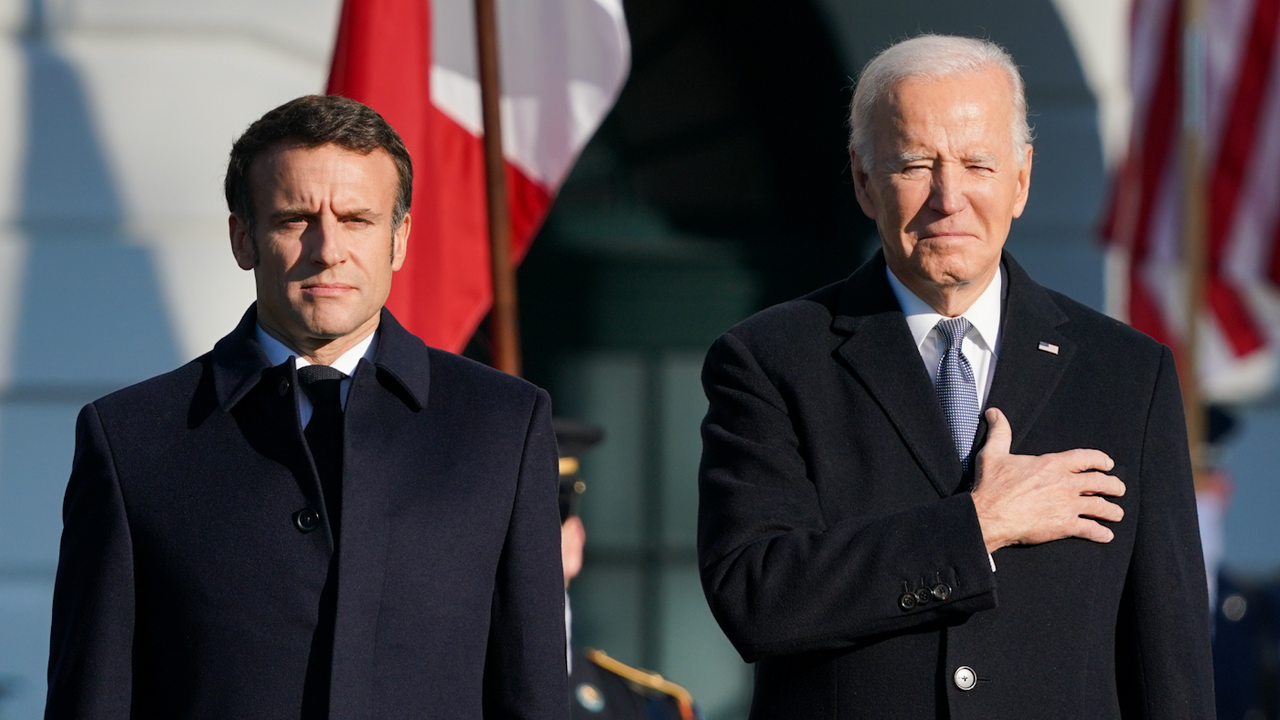
Every home and community could be a power station’: the Nuclear Free Local Authorities’s future renewable energy vision for Wales

Every Welsh home and community a renewable power station” was the vision outlined by the UK/Ireland Nuclear Free Local Authorities Secretary for a sustainable nuclear-free Wales at a meeting held in the Senedd Pierhead Building in Cardiff Bay yesterday (6 December).
The event was sponsored and opened by Senedd Member Mike Hedges and hosted by CND Cymru to celebrate the 40th anniversary of the Clwyd Declaration when in 1982 all eight of the original Welsh County Councils declared themselves nuclear-free. Throughout 2022, an exhibition to mark the anniversary has been touring the nation, and yesterday, the exhibition was on display at the Pierhead Building…………………………………….
NFLA Secretary Richard Outram described a vision where Wales could instead be powered by renewables alone.
Richard said: “The Nuclear Free Local Authorities remain implacably opposed to any new nuclear power stations in Wales. Wales is blessed with many natural resources from which to draw power – her rivers, tides, sun and wind, even the untapped geothermal power that can be derived from the earth and the many abandoned coal mines that lie beneath the feet of her citizens!
“If we fitted new and existing homes and public buildings with insulation and energy efficiency measures, each would use less heat and power, reducing customers’ bills and their carbon footprint. And if we fitted them with solar panels, heat pumps, and battery storage they could generate and store their own heat and power, making them energy sufficient and independent of the National Grid. In effect every Welsh home and public building could become an energy efficient, energy generating power station.
“And if this is combined with larger community, Council or business led renewable projects, such as hydro, onshore or offshore wind, tidal, wind, solar, or geothermal schemes, we can create a visionary and sustainable energy future for Wales more cost-effectively, more quickly, more safely and with many more jobs than nuclear. Wales already derives much of its energy from renewables, but we could do much more.”
The event ended with participants being asked to sign the Cardiff Declaration. Signatories included Councillors from Newport City Council and Rhondda Cynon Taf County Borough Council, as well as members of the following organisations: CND Cymru; ICAN, We can, Cymru can; Cor Cochion Caerdydd; Wales One World Film Festival; Labrats International; XR Peace; Trident Ploughshares and United Nations Association. https://www.nuclearpolicy.info/news/every-home-and-community-could-be-a-power-station-the-nflas-future-renewable-energy-vision-for-wales/
France: EDF extends nuclear outages by up to 42 days
EDF extends nuclear outages by up to 42 days (4.6 GW). EDF has extended
outages at its Chooz 2 (1.5 GW) and three other nuclear reactors in France
with a cumulative 4.64 GW capacity by up to 42 days.
Montel 5th Dec 2022
https://www.montelnews.com/news/1373972/edf-extends-nuclear-outages-by-up-to-42-days-46-gw
Slovakia’s new nuclear power plant delayed due to a technical fault
The newly built Mochovce nuclear power plant, the country’s third, will
have to delay electricity production due to a technical fault that could
cause financial hardship for the plant’s owner.
Technicians identified a
minor leak during stress tests a few days after the minimum controlled
output was reached. The reactor was already undergoing a fission chain
reaction, although the reactor power was very close to zero. “During the
re-pressurisation test, a minor leak was identified on the upper reactor
block.
After analysing the situation, we decided to reseal this part of the
technology,” Oľga Baková, spokeswoman for plant operator Slovenske
elektrárne a.s. told TV Markíza. “Next week we are continuing the unit
start-up and physical start-up tests. The first phasing and connection to
the grid are scheduled for about mid-January,” she added.
Euractiv 7th Dec 2022 https://www.euractiv.com/section/politics/news/new-slovak-nuclear-reactor-forced-to-delay-electricity-production/
USA and UK welded together firmly in the grip of the nuclear lobby, with their Small Nuclear Reactor folly.

UK and US ‘like-minded’ on nuclear power as key to energy security,
SMR, Rob Harris, December 7, 2022 British Prime Minister Rishi Sunak and his counterpart, US President Joe Biden, have announced a new venture to secure supply and reduce price volatility, with the US promising to more than double the amount of gas it exported to the UK last year.
British Prime Minister Rishi Sunak and his counterpart, US President Joe Biden, have announced a new venture to secure supply and reduce price volatility, with the US promising to more than double the amount of gas it exported to the UK last year.
The new “UK-US Energy Security and Affordability Partnership” will aim to reduce global dependence on Russian energy exports, stabilise energy markets and step up collaboration on energy efficiency, nuclear and renewables.
But the focus on nuclear sharpens the divide between Australia’s attitudes towards a civil nuclear power industry and those of its two closest allies – governments of all persuasions in Canberra have outlawed a domestic industry and resisted calls to overturn the ban for decades……………..
In a joint statement, Sunak and Biden said their new agreement would promote nuclear energy as “a safe and reliable part of the clean energy transition”.
“This includes deepening global collaboration on nuclear fuels and advanced nuclear technologies.”
They said both nations would work to deepen global collaboration between “like-minded countries” on small modular reactors (SMRs) and support a resilient and diversified nuclear fuel supply chain………………………………….
Nuclear power is now firmly back on the agenda, particularly in Britain and France, amid new fears for energy security following Russia’s invasion of Ukraine and the ever-greater need to reduce global carbon emissions.
The US, with 92 commercial reactors, is the world’s largest producer, accounting for more than 30 per cent of the nuclear-generated electricity worldwide.
Large reactor projects are still facing financial and construction problems, with the UK’s 3.2 gigawatt Hinkley Point C plant hit by delays and cost overruns. But analysts believe [for “analysts” read “nuclear salesmen”]the time may be right for SMRs – which could also prove affordable to nations unable to fund large nuclear plants…………
Australian Prime Minister Anthony Albanese this week rebuffed a push by South Australian Premier, Peter Malinauskas, to restart the nuclear debate in Australia, citing waste and safety concerns as key reasons nuclear should not be considered as an energy option………
“I haven’t changed my view that it’s a huge distraction from what we need to do. It just doesn’t add up,” he said on Adelaide radio 5AA. “That’s essentially the problem. Every five years or so we have this economic analysis of whether nuclear power stacks up and every time it’s rejected.”……….. https://www.smh.com.au/world/europe/uk-and-us-like-minded-on-nuclear-power-as-key-to-energy-security-20221207-p5c49q.html
UK Tories getting nervous about nuclear power plans?
Conservative Home Sanjay Sen 7 Dec 22
Fears that Jeremy Hunt’s Autumn Statement would see Sizewell C cancelled proved unfounded. The 3.3 giga-watt nuclear mega-project is now set to get under way on the Suffolk coast with a price tag of £20 billion.
Or maybe £30 billion. If the track record of its French design is anything to go by, things might not go exactly to plan.
Nick Clegg famously dismissed nuclear power because it takes a decade to come on-line. That was a decade ago, and we could really do with some extra power right now.
today’s Government has big ambitions: eight sign-offs by 2030 with nuclear supplying 25 per cent of our power by 2050. As long as no-one gets cold feet and cancels all that.
Net Zero enthusiasts and climate sceptics alike see a major role for nuclear. But is Sizewell C best way to deliver it? How did we get where we are now? And what can we learn from our French neighbours, the world’s biggest nuclear enthusiasts?
………… Meanwhile, our current nuclear fleet is fast depleting. Despite generous life extensions, all but one of the UK’s nine remaining reactors will be retired by 2030. That means Sizewell C will mostly be plugging the gap left behind, not creating extra capacity. To compound matters, our ability to import electricity could be impacted by the challenges facing the French nuclear industry.
Is Sizewell C our best option – or was it our only option?
Sizewell C is a tweaked version of Hinkley Point C which is (still) under construction. Whilst its third-generation EPR technology is intended to deliver improved efficiency and safety, it hasn’t exactly performed flawlessly to date. Operational plants at Olkiluoto (Finland) and Taishan 1 and 2 (China) have proven problematic so far. Those under construction, Flamanville 3 (France) and our very own Hinkley, continue to incur delays and cost over-runs.
Whilst engineers will recognise the technology, much differs below the surface. Hinkley is 80 per cent French (EDF) and 20 per cent Chinese (CGN). But with EDF financially constrained and relations now strained with Beijing, Sizewell ownership will be 20 per cent EDF, 20 per cent UK Government, with the remainder from infrastructure investors and pension funds.
Contracts for Difference have also been ditched. Not only blamed for Hinkley’s giant cost, they are also held responsible for scaring off other would-be nuclear investors: Hitachi Wylfa (North Wales) and Toshiba Moorside (Cumbria). Instead, Sizewell will use the Regulated Asset Base model which shares costs (and risks) with consumers from day one…………………………. https://conservativehome.com/2022/12/07/sanjoy-sen-nuclear-is-the-best-path-to-a-greener-cheaper-and-more-secure-energy-supply/
Europe accuses US of profiting from war

EU officials attack Joe Biden over sky-high gas prices, weapons sales and trade as Vladimir Putin’s war threatens to destroy Western unity.
BY BARBARA MOENS, JAKOB HANKE VELA AND JACOPO BARIGAZZI, NOVEMBER 24, 2022 “………………….. Top European officials are furious with Joe Biden’s administration and now accuse the Americans of making a fortune from the war, while EU countries suffer.
“The fact is, if you look at it soberly, the country that is most profiting from this war is the U.S. because they are selling more gas and at higher prices, and because they are selling more weapons,” one senior official told POLITICO.
The explosive comments — backed in public and private by officials, diplomats and ministers elsewhere — follow mounting anger in Europe over American subsidies that threaten to wreck European industry. The Kremlin is likely to welcome the poisoning of the atmosphere among Western allies.
“We are really at a historic juncture,” the senior EU official said, arguing that the double hit of trade disruption from U.S. subsidies and high energy prices risks turning public opinion against both the war effort and the transatlantic alliance. “America needs to realize that public opinion is shifting in many EU countries.”………………………..
As they attempt to reduce their reliance on Russian energy, EU countries are turning to gas from the U.S. instead — but the price Europeans pay is almost four times as high as the same fuel costs in America. Then there’s the likely surge in orders for American-made military kit as European armies run short after sending weapons to Ukraine. ……………………….
Officials on both sides of the Atlantic recognize the risks that the increasingly toxic atmosphere will have for the Western alliance. The bickering is exactly what Putin would wish for, EU and U.S. diplomats agreed.
The growing dispute over Biden’s Inflation Reduction Act (IRA) — a huge tax, climate and health care package — has put fears over a transatlantic trade war high on the political agenda again. EU trade ministers are due to discuss their response on Friday as officials in Brussels draw up plans for an emergency war chest of subsidies to save European industries from collapse.
“The Inflation Reduction Act is very worrying,” said Dutch Trade Minister Liesje Schreinemacher. “The potential impact on the European economy is very big.”
“The U.S. is following a domestic agenda, which is regrettably protectionist and discriminates against U.S. allies,” said Tonino Picula, the European Parliament’s lead person on the transatlantic relationship…………………………
Behind the scenes, there is also growing irritation about the money flowing into the American defense sector.
The U.S. has by far been the largest provider of military aid to Ukraine, supplying more than $15.2 billion in weapons and equipment since the start of the war. The EU has so far provided about €8 billion of military equipment to Ukraine, according to Borrell.
According to one senior official from a European capital, restocking of some sophisticated weapons may take “years” because of problems in the supply chain and the production of chips. This has fueled fears that the U.S. defense industry can profit even more from the war.
The Pentagon is already developing a roadmap to speed up arms sales, as the pressure from allies to respond to greater demands for weapons and equipment grows. ……………………… more https://www.politico.eu/article/vladimir-putin-war-europe-ukraine-gas-inflation-reduction-act-ira-joe-biden-rift-west-eu-accuses-us-of-profiting-from-war/
Macron: Russia Needs Security Guarantees ‘Essential’ To Ending The War

https://www.zerohedge.com/geopolitical/macron-russia-needs-security-guarantees-which-are-essential-ending-war BY TYLER DURDEN 6 Dec 22
As we detailed earlier, a clear division is arising between Europe and the United States over Washington’s more hawkish and hardline stance on resisting all negotiations with Russia, but instead which is centered on encouraging Kiev to pursuing ‘victory’ on the battlefield.
“The fact is, if you look at it soberly, the country that is most profiting from this war is the U.S. because they are selling more gas and at higher prices, and because they are selling more weapons,” one senior European official bluntly complained to Politico last month.
Underscoring that Europe is more ready to pursue avenues of negotiated settlement in Ukraine, over the weekend French President Emmanuel Macron urged for the West to take seriously Russia’s security concerns regarding NATO expansion near its border. He called for greater willingness to give Moscow the “guarantees” necessary for negotiations to be successful. He called them ‘essential’ if the West wants to get serious about talks and peaceful settlement.
“We need to prepare what we are ready to do, how we protect our allies and member states, and how to give guarantees to Russia the day it returns to the negotiating table,” President Macron said in an interview that aired Saturday.
That’s when he underlined something which a mere months ago would elicit rage and accusations of ‘pro-Kremlin’ stooge among Western mainstream punditry. “One of the essential points we must address — as President Putin has always said — is the fear that NATO comes right up to its doors, and the deployment of weapons that could threaten Russia,” Macron said.
The timing of the remarks was interesting given the interview was recorded while he was on the US on a state visit to the White House, and it aired as he departed.
According to The New York Times, “The interview with TF1, a French television network, appeared sympathetic to the concerns of President Vladimir V. Putin of Russia and was immediately picked up prominently by TASS, the Russian state news agency. It prompted an angry reaction in Ukraine.”
While there was no immediate reaction from the Biden administration, the Ukrainian presidency’s office said such negotiations and security guarantees would only be possible “after tribunal, conviction of war authors and war criminals” and the “imposition of large-scale reparations.”
Separately, David Arakhamia, the chief of the Ukrainian negotiating group involved in short-lived ceasefire talks in the opening months of the war, also echoed that Russian forces must first “leave the territory of our country; pay reparations; punish all war criminals; voluntarily give up nuclear weapons.”
The Times further points out that Russian state media was quick to amplify Macron’s interview statements:
Responding to a tweet from TASS featuring Mr. Macron’s remarks, Nicolas Tenzer, a prominent French political scientist and essayist, commented: “Devastating.”
During the summer months and prior, European leaders seemed to tilt toward Washington’s more hardline approach to the conflict, but with the energy crisis becoming more acute and now headed into the winter months it appears a new consensus is emerging.
As another example, German Chancellor Olaf Scholz spoke with President Vladimir Putin on Friday, with the Kremlin side later saying that Scholz admitted the West’s policy on Ukraine is “destructive” and that Berlin may pursue a rethinking of its policy
Ineos Grangemouth refinery: Anti-nuclear campaigners will put up a huge fight against any attempt to build small nuclear reactors – Dr Richard Dixon
The talks between Ineos and Rolls Royce about siting a nuclear reactor at the Grangemouth refinery are a huge gift to campaigners opposed to a new generation of nuclear.
https://www.scotsman.com/news/opinion/columnists/ineos-grangemouth-refinery-anti-nuclear-campaigners-will-put-up-a-huge-fight-against-any-attempt-to-build-reactor-dr-richard-dixon-3944799 By Richard Dixon, 8 Dec 22,
The idea contains the perfect combination of elements needed to ensure its own defeat. This is a plan to build an untested type of nuclear reactor on a site with significant explosion risks all around, in the middle of the most densely populated part of Scotland, with a government that is opposed to nuclear, and, best of all, for a man trade unionists and the public love to hate.
Up to now, nuclear reactors have been placed in out-of-the way places in case the worst happens – from leaks and explosions to terrorist attacks. Or even direct military attacks as in Ukraine. This reactor would be in the middle of the Central Belt, with maximum consequences guaranteed if something goes wrong.

The nuclear industry’s latest wheeze is the small modular reactor (SMR). They make it in a factory, bring it in on trucks and bolt it together on site. There are a number of problems. Firstly they aren’t small, needing an area the size of two football pitches and with the latest proposal having a capacity half as big as the full-scale reactors used by the French nuclear fleet.
They will cost an eye-watering sum: the current estimate is £2 billion but the one certainty about the nuclear industry is that the final cost is always several times what they originally told you. And they would produce proportionally more radioactive waste than the bigger versions. And, of course, there is still no permanent solution for nuclear waste, 70 years on from the start of the civil nuclear programme. Oh yes, and it will be well into the 2030s before an SMR could be built.
The UK Government is keen on the idea, having allocated more than £200 million to their development. But the Scottish Government has been implacably opposed to new nuclear, concentrating instead on energy efficiency and renewable energy. Renewable energy is much cheaper, much faster to install and much, much safer. The scenarios drawn up ahead of the imminent Energy Strategy did not contain any new nuclear power, small, large or otherwise, and the Scottish Government has already been quoted in the press as saying it would block any attempt to build a reactor at Grangemouth.
The Grangemouth site is home to a range of hazardous industries, so much so that Falkirk’s football stadium only has stands on three sides because the fourth would have been inside the Grangemouth ‘blast zone’. Aside from an active war zone, there can’t be a more dangerous place to put a pile of super-hot radioactive material.
Then there is Sir Jim Ratcliffe, twice thwarted in his ambition to become the UK’s Fracker in Chief and a hate figure among the unions for the way he treated workers at Grangemouth. The ideal site-based environmental campaign would be based on this being a dangerous proposal in the wrong place, with hostile politics and a really clear bad guy. This proposal has it all and, if it starts to become real, you can expect an almighty fight.
Putin: Nuclear risk is rising, but we are not mad
By Alys Davies, 7 Dec 22, BBC News
Vladimir Putin has said the threat of a nuclear war was rising, but insisted Russia had not “gone mad” and would not use its nuclear weapons first.
The Russian president insisted that his country would only use weapons of mass destruction in response to an attack.
Speaking at Russia’s annual human rights council meeting, he also said the war in Ukraine could be a “lengthy process”.
Western officials believe Putin initially planned for a rapid victory.
Russia’s capacity to use nuclear weapons has come under increased scrutiny since it invaded Ukraine in February.
“Such a threat is growing, it would be wrong to hide it,” Putin warned while talking about the prospect of nuclear war via video link from Moscow.
But he asserted that Russia would “under no circumstances” use the weapons first, and would not threaten anyone with its nuclear arsenal.
“We have not gone mad, we are aware of what nuclear weapons are,” he said, adding: “We aren’t about to run around the world brandishing this weapon like a razor.”
Putin also boasted that Russia had the most modern and advanced nuclear weapons in the world, and contrasted its nuclear strategy to the US – who he said had gone further than Russia by locating its nuclear weapons on other territories.
“We do not have nuclear weapons, including tactical ones, on the territory of other countries, but the Americans do – in Turkey, and in a number of other European countries,” he said……………………………………… https://www.bbc.com/news/world-europe-63893316
Russia accuses Ukraine of nuclear terrorism over Zaporizhzhia
The Russian defence minister, Sergei Shoigu, said that Ukraine was continuing to shell the Zaporizhzhia nuclear power plant, deliberately creating the threat of a possible nuclear catastrophe.
Shoigu said Russian forces were taking “all measures” to ensure the safety of the power plant, Europe’s largest, in the face of what he called “nuclear terrorism” from Kyiv, Reuters reported.
Ukraine denies shelling the facility, which has been under the control of Russian forces since the first days of the war, and has accused Russia of firing on it.
“Our units are taking all measures to ensure the safety of the Zaporizhzhia nuclear power plant,” Shoigu told his military chiefs in a conference call, an abridged transcript of which was published by the defence ministry.
“In turn, the Kyiv regime seeks to create the appearance of a threat of a nuclear catastrophe by continuing to deliberately shell the site,” he added.
Shoigu said Ukraine had fired 33 large-caliber shells at the plant in the last two weeks. Most had been intercepted by Russian air defences, he said, though “some still hit objects that affect the safe operation of the nuclear power plant”.
“We classify these attacks by Ukrainian troops as nuclear terrorism,” he added.
Reuters was unable to independently verify the claims. Both Moscow and Kyiv blame each other for attacks on the facility. Kyiv has also accused Moscow of using the plant as a de facto weapons depot.
If Finland joins NATO, it needs a new nuclear weapons policy
Bulletin, By Robin Forsberg, Aku Kähkönen, Jason Moyer | December 8, 2022
As an aspiring NATO member, Finland must update its nuclear weapons policy. Nuclear weapons are an important pillar of the defensive alliance, which has the official position that for as long as nuclear weapons exist, NATO will inherently be a nuclear alliance.
…………… After filing its membership application in May 2022, Finland is now in the midst of its NATO accession process, with only Turkey and Hungary’s approval remaining. In its application, Finland is not seeking any exemptions to its membership and is committing to the alliance fully. This has initiated discussions about its upcoming policy on nuclear weapons.
………………. By applying for full NATO membership without any explicit restrictions, Finland allows itself the opportunity to chart its own decisions on nuclear weapons. But there is one caveat: Under Finland’s current national legislation nuclear weapons are illegal.
……….. By joining NATO, Finland will be allied with countries that have nuclear arsenals—and are prepared to use them if deemed necessary. This aligns with the creed of the alliance: Nuclear weapons are a core component of NATO’s deterrence. This will be the new security reality facing Finland the day it joins the nuclear alliance. Yet, it has not been sufficiently debated what becoming a NATO member will mean for Finland’s approach to nuclear weapons. In part, this is due to interest in both Finland and NATO for a speedy and uncomplicated accession. But there is also a tradition of not debating national strategic security policies in public fora due to the Finns’ high trust in their national authorities. A healthy national debate, however, is needed to improve the understanding of nuclear weapons policies among the Finnish population and their potential impact on Finland’s security.
………… Finland has a history of a strong non-nuclear proliferation policy. In 1968, it was the first country to sign the Treaty on the Non-Proliferation of Nuclear Weapons (NPT) and has ever since shown strong support for multilateral non-proliferation and conventional disarmament treaties. But this dogmatism has somewhat wavered in recent years, even before Russia invaded Ukraine.
,……………….. Finland chose to abstain from supporting the treaty [United Nations Treaty on the Prohibition of Nuclear Weapons (TPNW0]…… Experts theorized at the time that Finland abstained from voting not to jeopardize its prospects of joining NATO.
……….. Discussing Finland’s revised nuclear weapons policy is important not to jeopardize the ethics of Finland’s continuous and long-standing support of disarmament and non-proliferation efforts. The debate should also be reflective of the people’s willingness to take part in NATO’s nuclear weapons exercises, activities, or planning.
…… As Finland becomes a party to a nuclear alliance, it must begin the process of updating its nuclear weapons policy. https://thebulletin.org/2022/12/if-finland-joins-nato-it-needs-a-new-nuclear-weapons-policy/
Thousands rally in Rome against arming Ukraine
Trade unionists and leftists marched after the new government promised more arms for Kiev next year
https://www.rt.com/news/567650-italy-ukraine-weapons-protest/ 5 Dec 22,
Left-wing demonstrators took to the streets in Rome on Saturday, demanding higher wages and condemning the Italian government for renewing a decree allowing it to send weapons to Ukraine until 2024.
Organized by Italy’s USB trade union and backed by a number of leftist political factions, the protest saw thousands of people assemble at the Piazza della Repubblica and march behind a banner reading “guns down, wages up.”
“The Meloni government is dragging us further and further into a spiral of war with unpredictable outcomes,” the USB wrote prior to the protest. “Italy is evidently a belligerent and active country in the conflict, despite the fact that the great majority of the population is against the war and the consequent sharp increase in military spending.”
Italy’s new prime minister, Giorgia Meloni, issued a decree on Thursday allowing her cabinet to continue sending weapons to Ukraine until the end of 2023 without seeking the formal approval of parliament. Her predecessor, Mario Draghi, was a staunch supporter of Kiev and lost power after a disagreement over arms shipments split the largest party in his coalition government, the Five Star Movement.
The Italian public is split too, with 49% opposing sending weapons to Kiev and 38% in favor, according to a poll taken by EuroWeek News last month. Additionally, 49% of Italians believe that Ukraine needs to make concessions to Russia in the ongoing conflict to speed up the peace process, while only 36% want Kiev to keep fighting.
Last month, another rally in Rome calling for a peace deal to end the Ukrainian conflict drew 100,000 people, organizers said.
Workers at hazardous nuclear waste site test positive for drugs
Random testing has been carried out on 741 workers over the past year. Seven
workers at the hazardous Sellafield nuclear waste site have tested positive
for drugs over the past twelve months. Three have tested positive for
alcohol, raising questions over safety at the site Cumbria which manages
spent fuel from Britain’s nuclear reactors.
Four of the positive drugs tests and one of the positive alcohol tests followed random testing,
carried out on 741 workers between November 2021 and November 2022. The
others followed “for cause” testing, where a worker is suspected of
being impaired by drugs or alcohol, carried out on 36 people over the same
period.
The figures were released to The Telegraph following a Freedom of
Information request. It did not reveal what action had been taken against
those who tested positive. Sellafield is considered one of the most
hazardous nuclear sites in the world, according to the Office for Nuclear
Regulation, handling more radioactive material per square meter than any
site in Europe.
Telegraph 4th Dec 2022
Sizewell C nuclear – a huge black hole for taxpayers’ money
“If the Chancellor is looking for cheap, reliable, energy independence,
he is backing the wrong project, as Sizewell C’s ultimate cost and
technical reliability are so uncertain and building it is reliant on French
state-owned EDF.
Green-lighting Sizewell C also loads more tax onto
struggling households, who would be forced to pay a nuclear levy on bills
for a decade before they could light a single lightbulb. Despite the
Chancellor’s statement, Sizewell C still needs financing, and with at least
a year before it’s decided whether it will finally go ahead, we’ll keep
fighting this huge black hole for taxpayers’ money, when there are cheaper,
quicker ways to get to net zero.”
Stop Sizewell C 3rd Dec 2022
Climate change brings risk of flooding to the multi billion pound nuclear project Sizewell C.
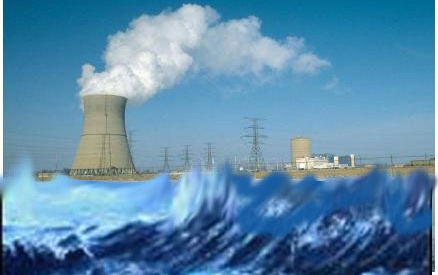
UK sent nuclear warning as new £20bn site facing risk from increased flooding: ‘Alarming!’
Earlier this week, the UK Government confirmed that £700million of public money will be invested in the Sizewell C nuclear power plant.
https://www.express.co.uk/news/science/1703570/energy-crisis-nuclear-edf-sizewell-c-increased-flooding-climate-change-suffolk By ANTONY ASHKENAZ Nov 30, 2022
Experts have issued a dire warning about the proposed Sizewell C nuclear power plant, as climate change induced flooding could mean that in future, the coastal nuclear site could turn into an island. Earlier this week, the Government confirmed that £700million of public money will be invested power plant, which once built will provide power to the equivalent of six million homes for more than 50 years. However, experts fear that the reactor, which will be built in Suffolk, could be at risk of climate change, as rising sea levels threaten to erode and swallow up the East coast of the UK, Express.co.uk was told.
Earlier this week, the UK’s former Chief Scientific Advisor Sir David King warned that the new £20billion power plant would be “very difficult to protect from flooding” due to rising sea levels on the Suffolk Coast.
Speaking to LBC, he said: “Part of the British coast that’s most at risk of rising sea level is the east coast and clearly this is very close to the oceans as is Sizewell B, and frankly that is the biggest risk.
“It would be very very useful if we could see published an analysis of sea level to the end of the lifespan of Sizewell C. It would take us to 2070 and beyond, possibly 2080.
“I do fear that it’s quite possible that we will have had a one-metre sea level rise by that time, by which time this would be very difficult to protect from flooding. I’m not saying it’s impossible, but I would love to see the safety analysis on the basis of rising sea levels.”
Dr Paul Dorfman, an associate fellow from the Science Policy Research Unit at the University of Sussex told Express.co.uk: “In 2008, the pro-nuclear group of the Institute of Mechanical Engineers published a report, which says that UK nuclear coastal installations, which specify Sizewell, will be subject to storm surge, climate-induced sea level rise, flooding and potential nuclear islanding.
“Perhaps alarmingly, IME point out that these UK coastal nuclear sites will need considerable investment to protect them against rising sea levels, and even relocation or abandonment.
“Our knowledge about climate now is that rare events then, become the norm today, so basically there are questions of Sizewell being at significant risk. So quite literally, Sizewell is at the frontline of climate change, and not in a good way.”
He also noted that very “reasonable models” of climate change showed that Sizewell within two decades, would be surrounded by flood water once a year.
He said: “If construction goes ahead, clearly they will build in defences. But the idea of a nuclear power plant within a couple of decades being almost entirely cut off by water, and what does that mean for the future.
“Because it’s not just the reactors, it’s also the high-level spent fuel points, and the hot intermediate-level waste stores that are also at risk.”
As part of its energy strategy unveiled in April, which heavily focused on a number of policies that could help weaken Russia’s grip on UK energy prices, the Government set a target of significantly scaling up nuclear so that it will account for 25 percent of the country’s projected electricity demand by 2040.
The strategy noted that Sizewell C is critically important for helping the UK reach its nuclear targets, and it has been engaging in negotiations regarding the project’s construction since January 2021.
However, Dr Dorfman added: “The other thing is, BEIS, in a statement to Parliament, state that nuclear construction can take 13-17 years. If Sizewell C gets the go-ahead next year at the earliest, we’re looking at first generation by 2040.
“Firstly, that’s much too late to help with our climate and energy problems. But by the time it’s constructed, it’s likely to be a climate risk.”
Meanwhile, Alison Downes, from the campaign group Stop Sizewell C told Express.co.uk: ““Future flood risk maps show the Sizewell site as an island, and we’re deeply concerned that planning assessments were not conservative enough in considering the potential for coastal erosion in Sizewell Bay.
“EDF is being forced to plan sea defences the height of 3 double-decker buses, but since this site will carry radioactive material for well over a century, is it a safe and sustainable approach to protecting our children’s future to locate a nuclear power station here? We say no.
1 This Month





PLEASE OPPOSE HR 8255 AND S.3639 – bills would accelerate satellite deployment, with no environmental review or safeguards – https://ncstd5li.quorum.us/campaign/169331/
To see nuclear-related stories in greater depth and intensity – go to https://nuclearinformation.wordpress.com
-
Archives
- October 2026 (67)
- September 2026 (339)
- August 2026 (330)
- July 2026 (355)
- June 2026 (287)
- May 2026 (306)
- April 2026 (356)
- March 2026 (251)
- February 2026 (267)
- January 2026 (308)
- December 2025 (358)
- November 2025 (359)
-
Categories
- 1
- 1 NUCLEAR ISSUES
- business and costs
- climate change
- culture and arts
- ENERGY
- environment
- health
- history
- indigenous issues
- Legal
- marketing of nuclear
- media
- opposition to nuclear
- PERSONAL STORIES
- politics
- politics international
- Religion and ethics
- safety
- secrets,lies and civil liberties
- spinbuster
- technology
- Uranium
- wastes
- weapons and war
- Women
- 2 WORLD
- ACTION
- AFRICA
- Atrocities
- AUSTRALIA
- Christina's notes
- Christina's themes
- culture and arts
- Events
- Fuk 2022
- Fuk 2023
- Fukushima 2017
- Fukushima 2018
- fukushima 2019
- Fukushima 2020
- Fukushima 2021
- general
- global warming
- Humour (God we need it)
- Nuclear
- RARE EARTHS
- Reference
- resources – print
- Resources -audiovicual
- Weekly Newsletter
- World
- World Nuclear
- YouTube
-
RSS
Entries RSS
Comments RSS