Another kick in the teeth for UK taxpayers as EDF pockets another £170m of public money for their Sizewell C White Elephant.
In another lame attempt to prop up French adventurism into the UK’s energy sector, the UK
government has handed a further £170m from the public purse (note 1) to
EDF. With the CGN buy-out costing UK plc close to £700m and subsequent
‘encouragements’ to tempt reluctant investors to part with funding for
the doomed development at Sizewell, this brings the total amount of public
money handed over to EDF close to £1bn. East Suffolk residents could be
forgiven for thinking that Sizewell C is ‘shovel ready’: it is not. It
is, in fact, a long way from the Final Investment Decision (FID), the point
at which construction can begin. Even if the UK government and EDF can each
stump up £6bn the project will still be 60% short of the estimated £30bn
– a matter of £18bn to find. But that’s not all: dozens of licences
and permits have yet to be issued by the regulatory authorities, including
the site licence from the Office of Nuclear Regulation, and there is the
small matter of finding 2.2 million litres of mains water every day for 60
years of operation here in the driest county in the country, already
experiencing drought conditions.
TASC 31st July 2023
Requiem for NATO’s Nightmare – the Vilnius summit.
The dysfunction of the Atlantic military alliance over Ukrainian membership was just the most public manifestation of the debacle that was the Vilnius summit.
By Scott Ritter / Consortium News, 31 July 23
Ukrainian President Volodymyr Zelensky emerges as a tragic figure in the unfolding drama that is the Russian-Ukrainian conflict.
He was asked to sacrifice the lives of his countrymen in order to be seen by the U.S. and NATO as worthy of joining their club. But when the sacrifice did not produce the desired result (i.e., the strategic defeat of Russia), the door to NATO, which had been left open a crack to tease Ukraine into performing its suicidal task, was slammed shut.
Despite NATO’s disingenuous machinations to maintain the optics of potential Ukrainian membership (the Ukraine-NATO Council, created during the Vilnius Summit earlier this month, stands as a prime example), everyone knows that Ukrainian membership in the trans-Atlantic alliance is a fantasy.
Ukraine is now left to pick a poison of its own choosing — accept a peace which makes permanent Russian territorial claims while forever foregoing the possibility, however distant, of NATO membership; or to continue to fight, with the likely outcome of the additional loss of territory and destruction of the Ukrainian nation and people……………………………………..
As Ukraine bids farewell to its former self, it must also part with its dreams of becoming one with a European community whose own longevity is very much in doubt. That is largely because of its disastrous involvement in the Russian-Ukrainian conflict.
Ukraine will never be the same after this war ends. Neither will the NATO alliance. Having defined the proxy war it is waging in Ukraine against Russia in existential terms, NATO will struggle to find both relevance and purpose in a post-conflict world.
The Vilnius summit on July 11-12 in many ways represented the high-water mark of Europe’s old order. The summit was the requiem for a nightmare of Europe’s own creation — the death of a nation, the nullification of a continent and the end of an order which had long ago lost its legitimacy.
Strange Isolation
Watching the reporting from the Vilnius summit, I was struck by the strange isolation of Zelensky as he sought to mingle with the leaders of NATO nations that called him friend and ally but treated him and the nation he leads as anything but. Zelensky had pulled out all the stops to jockey Ukraine into position for NATO membership, only to be scratched at the gate.
……………………………………………………………Later, during a press conference with U.S. President Joe Biden, Zelensky stood mute while Biden continued to pour cold water on the prospects for Ukrainian NATO membership.
…………………………………The NATO dysfunction over Ukrainian membership, however, was but the most public manifestation of the debacle that was the Vilnius Summit.
The Fantasy of Unity…………………………………………………………………………………………………………………………………………………..
To sum up: Biden and Stoltenberg highlighted the decision by Erdogan to move the application for Swedish membership to NATO onto the Turkish Parliament for ratification as a symbol of NATO’s “rock solid” unity.
Left unsaid is that Erdogan had to threaten NATO to get the U.S. to articulate a bribe that had the U.S. waiving its prior sanctioning of a NATO ally while at the same time compelling the U.S. to consider the security implications of the deal, given the open hostility that exists between Turkey and fellow NATO member Greece……………………………………………….
Goodbye to All That
If the weeks leading up to the Vilnius summit were defined by the desire on the part of NATO to see the long-awaited and much-touted Ukrainian counteroffensive reach its maximum potential, the days which preceded the NATO gathering have confronted both Ukraine and its Western allies with the reality that the war is not going well for either.
The Ukrainian counteroffensive was formed around a core force of some 60,000 Ukrainian soldiers who received special training by NATO and European militaries on weapons and tactics designed to defeat Russian defenses. Since the counteroffensive began on June 8, Ukraine has lost nearly half of these troops, and a third of the equipment provided — including scores of the Leopard main battle tanks and Bradly infantry fighting vehicles that had been viewed by many as game-changing technology.
Back in 1993, George Soros postulated an architecture for a new world order premised on the United States as the sole remaining superpower overseeing a network of alliances, the most important being NATO, which would gird the northern hemisphere against a Russian threat.
“The United States,” Soros wrote, “would not be called upon to act as the policeman of the world. When it acts, it would act in conjunction with others. Incidentally, the combination of manpower from Eastern Europe with the technical capabilities of NATO would greatly enhance the military potential” of any U.S.-led alliance structure “because it would reduce the risk of body bags for NATO countries, which is the main constraint on their willingness to act.”
Forty years later, this very scenario is playing out on the bloody battlefields of Russia and Ukraine. The billions of dollars of military assistance provided by the U.S., NATO and other European nations is the living manifestation of the “technical capabilities” Soros spoke about, which are being married to “manpower from Eastern Europe” (i.e., Ukraine) to enhance the military potential of NATO in a way that reduces “the risk of body bags for NATO countries.”
https://scheerpost.com/2023/07/31/scott-ritter-requiem-for-natos-nightmare/
As UK’s Hinkley nuclear plants costs rise to £32 billion ($41.5 billion) EDF Sees Higher Risk of Delays.

Electricite de France SA said the risk of further delay to two nuclear reactors in southwest England has risen because of construction setbacks.
Author of the article:
Bloomberg News, Francois de Beaupuy, https://financialpost.com/pmn/business-pmn/edf-sees-increased-risk-of-delay-to-new-uk-atomic-reactors
EDF flagged last year that the plants may start 15 months late. The reactors at Hinkley Point have been touted by the UK government as sparking a nuclear renaissance, boosting energy independence and reducing reliance on fossil fuels. But the work has been plagued by multiple holdups and cost overruns.
The increased risk of a 15-month delay is due to “performances on civil works and challenges on mechanical, electrical, heating, ventilation and air conditioning,” EDF said Thursday in an earnings presentation. “Progress is below the planned trajectory and action plans have been set.”
The reactors, costing as much as £32 billion ($41.5 billion), are due to start operating in 2027 and 2028. The ballooning budget has fueled controversy over the vast sums needed for new nuclear developments, even as other low-carbon technologies such as offshore wind have also faced inflationary pressures.
Hinkley Point’s setbacks come as EDF seeks to arrange financing for a second pair of atomic plants — at Sizewell in eastern England — that would use the same design. Delays and cost overruns may deter investors who also face increasing demands for capital from renewables, which provide swifter returns.
The debt-laden French utility has a 66.5% stake in Hinkley Point, while China General Nuclear Power Corp. owns the rest. As funding requirements now exceed contractual commitments, shareholders will be asked to provide additional equity voluntarily starting in the fourth quarter.
“The probability that CGN will not fund the project beyond its committed equity cap is high,” EDF said Thursday. “Financing solutions are being investigated, in the event that CGN does not allocate its voluntary equity.
Nuclear weapons on the table if Ukraine counteroffensive succeeds: Russia’s Medvedev
There would be ‘no other way out’ if Kyiv takes Russian territory, says the former Russian president and current National Security Council deputy chairman.
Politico, BY VARG FOLKMAN, JULY 30, 2023
If Ukraine’s ongoing counteroffensive against Moscow’s invasion captures Russian territory, there would be no alternative to using strategic nuclear weapons, Russia’s Dmitry Medvedev warned on Sunday.
“There would simply be no other way out” of using nuclear weapons if the Ukrainian offensive succeeded in taking Russian territory, Medvedev, former Russian president and current National Security Council deputy chairman, said in a post on social media.
“Just imagine that the NATO-supported ukrobanderovtsy’s offensive turned out successful, and they took away a part of our land: Then we would have to, following the president’s degree of 02.06.2020, use the nuclear weapon,” Medvedev wrote, referring to followers of Stepan Bandera, a nationalist leader who waged a violent campaign for Ukrainian independence in the 1930s and 1940s.
“That’s why our enemies must worship our warriors. They are keeping global nuclear fire from flaring up,” Medvedev said, referring to Russian efforts to stop the Ukrainian offensive.
Medvedev has not been shy in using Russia’s nuclear arsenal to threaten Ukraine and its Western supporters. During Wagner chief Yevgeny Prigozhin’s failed coup, Medvedev said the rebellion could lead to a nuclear war…………… https://www.politico.eu/article/russia-dmitry-medvedev-ukraine-counteroffensive-russia-invasion-war-nuclear-weapons/
When facts cut through the fog of war
As the Ukraine counteroffensive grinds on, conditions on the ground are now too obvious to ignore. Is it time for talking, yet?
Responsible Statecraft, JULY 28, 2023, Katrina vanden Heuvel and James Carden
The fog of war over much of the last 18 months has skewed press coverage and our understanding of what is happening in Ukraine. Yet media opacity can no longer mask the facts on the ground.
In only the past week, reports have emerged in the Wall Street Journal, CNN, the Financial Times and the New York Times indicating, among other things, that Ukraine’s much awaited spring offensive has ground to a virtual stalemate and munitions from its NATO-allied partners are drying up.
The situation is such that, as the Financial Times columnist Ed Luce noted, “At some point, Volodymyr Zelensky … will need to sit down with Vladimir Putin, or his successor, to reach a deal.”
Perhaps more worrying still was NATO Secretary General Jens Stoltenberg’s admission that “the war in Ukraine is consuming an enormous amount of munitions and depleting allied stockpiles. The current rate of Ukraine’s ammunition expenditure is many times higher than our current rate of production. This puts our defense industries under strain.”
None of this is exactly news. This past April, the so-called “Discord leaks” revealed that Washington officials believed back in February that the war wasn’t going as well as it had been heretofore portrayed. But at the time, the media was more focused on helping authorities hunt down the leaker than reporting the contents of the leak. The unavoidable implication of the leaks, that the Biden administration was presenting two different versions of the war’s progress — one private, the other public — seemed almost willfully deleted from the script.
And so, as the Ukrainian counteroffensive turns into a brutal slog, Kyiv seems to lack the requisite human resources or physical infrastructure to achieve its goals. Isn’t diplomacy now more important than ever? And if not now, when?
There is a growing recognition by a number of experts that conditions do exist for a negotiated settlement to end the war…………………………………………
War casualties (now estimated at well over 350,000 Ukrainian and Russians), the accompanying European economic downturn, the burgeoning food crisis in Africa, the sure-to-be devastating legacy of tens of thousands of unexploded landmines, and the ever-present nuclear risk all tell us one thing: The time has come for talks. https://responsiblestatecraft.org/2023/07/28/when-will-we-concede-that-it-is-time-for-talks/
UK has no coherent plan to develop nuclear energy
In a major report, the Science, Innovation and Technology Committee calls
on the Government to develop and publish a Nuclear Strategic Plan to turn
high level aspirations into concrete steps to deliver new nuclear. The
Committee says that the Government is right to look to nuclear power to
meet our future electricity needs and that this requires a substantial
programme of nuclear new build.
But the Report warns that the Government
target of 24 GW of nuclear generating capacity by 2050 and the aspiration
to deploy a new nuclear reactor every year are more of a ‘wish list’
than the comprehensive detailed and specific strategy that is required to
ensure such capacity is built.
The Government’s stated aim of 24 GW of
nuclear capacity is ambitious: it is almost double the highest installed
nuclear capacity the UK has ever achieved. It could involve new
gigawatt-scale nuclear power, small modular reactors (SMRs) and advanced
modular reactors (AMRs), and further development of nuclear fusion. It
would require substantial progress on technologies, financing, skills,
regulation, decommissioning and waste management.
Science, Innovation, Technology Committee 31st July 2023
Ambition alone will not build UK nuclear power
Greg Clark, former energy minister, writes that the absence of policy continuity has undermined strategy on this issue. The current government claims to be all-in for new
nuclear. Its Energy Security Strategy, published last year, set a target of
24 gigawatts of nuclear energy generating capacity by 2050.
That is highly ambitious. To put it in context, it is three times our current capacity and
nearly twice the highest nuclear capacity that the UK has ever achieved,
even before Magnox plants were retired from service.
Today the cross-party House of Commons Science, Innovation and Technology Select Committee, which I chair, will publish a report endorsing the government’s decision to
look to nuclear power to meet our future electricity needs — especially
if we are to achieve the legal requirement of net zero carbon emissions by
2050. At a time when imported supplies of energy leave us vulnerable to
price spikes at best, and shortages at worst, there is an energy security
case for nuclear power under our own control.
However, we will also warn
that expansive ambition will not get nuclear power built. Much more than
with other energy technologies, the scale, financial demands, workforce
planning and — in the case of advanced nuclear technologies — research
and development needed for new nuclear requires a dependable strategic plan
if hopes are to have any chance of being turned into reality.
Witness after witness who appeared before our inquiry told us that such a strategic plan
for nuclear is missing. For example, there is no indication from the
government on what proportion of the 24GW is intended to be met by
gigawatt-scale plants like Hinkley Point C, or smaller, more distributed
nuclear reactors such as small modular reactors.
The government’s stated
aim to deploy a nuclear reactor a year is not grounded in any explanatory
detail. The role of the new organisation, Great British Nuclear, is obscure
beyond running a competition between potential developers of small modular
reactors. Britain has an opportunity to break out of 70 years of on-off
policy towards nuclear power, with the twin imperatives of energy security
and net zero favouring a substantial future contribution of nuclear to our
electricity needs. But this will not happen without a clear and deliberate
plan on which very long-term investors can rely. If Britain is to have
substantial new nuclear capacity, there is an urgent need to turn hopes
into action.
FT 31st July 2023
https://www.ft.com/content/7499350a-2a4c-430d-a23f-415f3780e0aa
Overnight drone attack on Moscow injures one and temporarily closes an airport as Russia suffers ‘consequences’
ABC News 31 July 23
Three Ukrainian drones have attacked Moscow in the early hours on Sunday, Russian authorities said, injuring one person and prompting a temporary closure of traffic in and out of one of four airports around the Russian capital.
Key points:
- The Russian Defence Ministry referred to the incident as an “attempted terrorist attack by the Kyiv regime”
- Moscow Mayor Sergei Sobyanin said the attack “insignificantly damaged” the outsides of two buildings in the Moscow city district
- A spokesperson for the Ukrainian air force said the Russian people were seeing the consequences of Russia’s war in Ukraine
Ukrainian President Volodymyr Zelenskyy warned on Sunday that “war” was coming to Russia after the attack.
“Gradually, the war is returning to the territory of Russia — to its symbolic centres and military bases, and this is an inevitable, natural and absolutely fair process,” Mr Zelenskyy said on a visit to the western city of Ivano-Frankivsk.
It was the fourth such attempt at a strike on the capital region this month and the third in a week, fuelling concerns about Moscow’s vulnerability to attacks as Russia’s war in Ukraine drags into its 18th month.
The Russian Defence Ministry referred to the incident as an “attempted terrorist attack by the Kyiv regime” and said three drones targeted the city.
One was shot down in the surrounding Moscow region by air defence systems and two others were jammed. Those two crashed into the Moscow business district…………………………………………………………………
Without directly acknowledging that Ukraine was behind the attack on Moscow, a spokesperson for the Ukrainian air force said that the Russian people were seeing the consequences of Russia’s war in Ukraine………………………………….
Mr Ihnat also referenced a drone attack on Russian-occupied Crimea overnight.
Moscow announced on Sunday that it had shot down 16 Ukrainian drones and neutralised eight more with an electronic jamming system. There were no casualties, officials said.
In Ukraine, the air force reported that it had destroyed four Russian drones above the country’s Kherson and Dnipropetrovsk regions.
Information on the attacks could not be independently verified. https://www.abc.net.au/news/2023-07-30/drone-attack-moscow-injures-one-russia-ukraine/102667050
Government must back Rolls-Royce on nuclear, says ex-boss Sir John Rose
Sir John Rose, the former chief executive of Rolls-Royce, is calling on
the Government to back British nuclear technology developed by the
engineering giant. Rolls is spearheading a project to design a fleet of
mini power plants – known as SMRs or small modular reactors – which
have become a key part of the UK’s long-term energy strategy. Ministers
have already put more than £200 million of public money into the project.
But, rather than backing Rolls, the Government has launched a competition
to select a provider, which will pit the FTSE 100 flagship against foreign
rivals. Sir John, who led the company from 1996 to 2011, has described the
move as ‘depressing’. He warned that by not throwing its support behind
Rolls-Royce, Ministers risked killing off a potentially valuable stream of
export income and missing out on highly skilled jobs. Rolls has previously
said that if it won the contract, it could create 40,000 UK jobs by 2050
and boost the economy by £52 billion. A deal would also benefit suppliers
and potentially turn the country into a global hub for nuclear technology.
Rose described the competition as ‘a good example’ of Government failure to
provide the support British business needs. ‘The probability of achieving
export success is vanishingly small if the producer is not supported by its
Government,’ he said.
Daily Mail 29th July 2023
The Global Crisis at the Zaporizhzhia Nuclear Site Demands Immediate United Nations Intervention
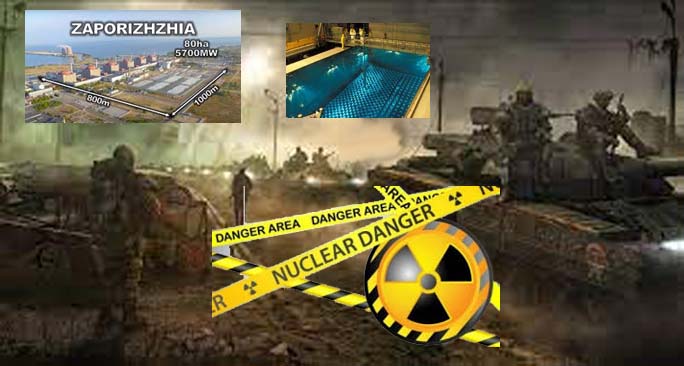
Some interests aligned with commercial reactors may wish to downplay the dangers to avoid tarnishing the industry’s image.
But the apocalyptic scope of a potential catastrophe at Zaporizhzhia is simply too great to let humankind tolerate inaction. There is no biological margin for later regrets.
BY HARVEY WASSERMAN – ET AL. 28 July 23 https://www.counterpunch.org/2023/07/28/the-global-crisis-at-the-zaporizhzhia-nuclear-site-demands-immediate-united-nations-intervention/
The global crisis at six Ukrainian atomic reactors and fuel pools has escalated to an apocalyptic threat that demands immediate action.
Protecting our lives on this planet now demands immediate deployment of a United Nations peacekeeping force to operate and protect this plant.
A petition is now circulating to help make that happen.
This week Russian occupiers threw the Zaporizhzhia site into deepening chaos by firing Unit 4 up to “hot shutdown.” Until July 25, Unit 4 had been in cold shutdown, along with Units 1,2,3 and 6. Unit 5 had been on hot shutdown to help power the plant.
But the Ukrainian nuclear agency Energoatom warns that putting Unit 4 up to hot shutdown is “a gross violation of the requirements of the license to operate this nuclear facility.”
The Russian military has occupied Zaporizhzhia since March, 2022.
It previously assaulted Chernobyl, whose melted Unit 4 core—-which exploded in 1986—-still poses grave dangers. Russian troops terrorized site workers and jeopardized operations that safeguard massive quantities of radiation still on site.
The six reactors and six fuel pools at Zaporizhzhia are burdened with far more potentially apocalyptic radiation than was released at Hiroshima, Nagasaki, Chernobyl or Fukushima. Without sufficient power and a constant supply of cooling water, the site could turn into a radioactive fireball powerful enough to send lethal radiation throughout the Earth’s eco-sphere, threatening all human life.
The Russians and Ukrainians have accused each other of acts that threaten such a catastrophe. Each has blamed the other for apparently random mining and shelling on and around the site. Just one such hit could lead to a meltdown and a series of catastrophic explosions from which our species might never recover.
On June 6, an attack widely attributed to Russia destroyed the Kakhovka hyroelectric dam, threatening vital power and cooling water supplies for Zaporizhzhia. Later that month, Ukrainian President Volodymyr Zelensky charged that the Russians had planted explosives at the site to precede a possible attack.
In 2001, 9/11 terrorists who took down the World Trade Center apparently contemplated attacking the Indian Point Nuclear Plant, 35 miles north of New York City. Such an assault could have blanketed much of New York, New England and the Atlantic Ocean in deadly radiation.
There have been other terrorist threats to atomic reactors and fuel pools. But the six at Zaporizhzhia are the first in history to endure the hostile instability of a hot war zone. on Monday IAEA inspectors spotted anti-personnel mines at the plant’s perimeter and still have not had access to reactor turbine halls or the roofs of reactors 3 and 4 to see what those new objects placed up there are.
The complex also recently lost access to its main power backup line.
With an under-skilled labor force attempting to work in an unpredictable state of terror, with at least two reactors now teetering on hot shutdown, and with six fuel pools vulnerable to loss of power and coolant, the dangers at Zaporizhzhia are on a scale never before experienced by the human race. Though all-out nuclear war might well release more radiation, the instability at these reactors and fuel pools poses as profound a threat to human survival as our species has ever experienced, at least since the Cuban Missile Crisis of 1962.
Such realities cry out for an armed, skilled, stabilizing global force.
The International Atomic Energy Agency, based in Geneva, has been providing vital expertise at the site, and does have the technical and human resources to take operational control. A peacekeeping force, such as the one deployed at Suez in 1956, must create a demilitarized zone capable of protecting the site from shelling and armed attack.
Some interests aligned with commercial reactors may wish to downplay the dangers to avoid tarnishing the industry’s image.
But the apocalyptic scope of a potential catastrophe at Zaporizhzhia is simply too great to let humankind tolerate inaction. There is no biological margin for later regrets.
The General Assembly of the United Nations must send an operational and peacekeeping force to manage and protect the Zaporizhzhia nuclear complex.
IMMEDIATELY!!!
Denys Bondar, Scott Denman, Karl Grossman, Howie Hawkins, Joshua Frank, Myla Reson, Harvey Wasserman and others are among the signees of this article, and of the petition asking the UN to send Peacekeepers to Zaophrizhzhia at https://www.change.org/p/stop-ukrainian-nuclear-disaster-unga-must-establish-dmz-at-zaporizhzhia-plant-now
Trident nuclear project can’t be delivered, says watchdog.
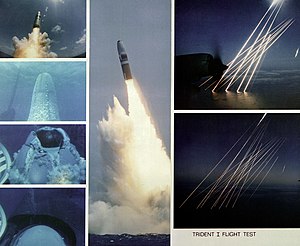
“The veil of secrecy surrounding nuclear spending is a desperate attempt by the UK Government to hide how outrageously unaffordable these weapons have become”
The Ferret, Rob Edwards, 27 Jul 23
Delivery of nuclear reactors to power a new fleet of Trident submarines on the Clyde has been branded as “unachievable” for the second year running by a UK Government watchdog.
The Infrastructure and Projects Authority (IPA) has given a £3.7 billion reactor-building project run by Rolls Royce for the Ministry of Defence (MoD) a “red” rating for 2022-23. The project was also assessed as red in 2021-22, as reported by The Ferret.
According to the IPA, red means that “successful delivery of the project appears to be unachievable”. This is because of “major issues” that do not appear to be “manageable or resolvable”.
The 2022-23 rating for another scheme crucial to renewing the Trident nuclear weapons system — a £1.9bn construction project at the Faslane and Coulport nuclear bases near Helensburgh — has been kept secret. In 2021-22 it was assessed as red.
The planned date for the final delivery to the Clyde of the new Dreadnought-class submarines, armed with Trident nuclear warheads, has also been classified as confidential by the MoD “for the purpose of safeguarding national security”.
The Scottish National Party (SNP) accused the UK Government of desperately trying to hide how “outrageously unaffordable” the Trident programme had become. The Scottish Greens described the programme as “a grotesque money pit”.
Campaigners criticised the MoD for “rewarding failure” by throwing money at nuclear projects, and for concealing the truth about the problems and delays. They warned of “everyday harms” from the risks of radiation leaks, as well as “catastrophic accidents”.
………………………………………The IPA’s latest annual report for 2022-23 assessed the feasibility of 52 military projects costing a total of £255.4bn. Eleven were related to the UK’s nuclear weapons programme and together cost more than £57bn, though the overall costs for three of them were kept secret.
The manufacture of nuclear reactors at a Rolls-Royce factory in Derby was the only project to be publicly rated as red. The reactors are to drive four new Trident-armed Dreadnought submarines due to start replacing existing Vanguard submarines at Faslane “in the early 2030s”.
…………………………………………………………….. Another previously mysterious project called Aurora was rated as amber. It is to make the plutonium components for new nuclear bombs at Aldermaston in Berkshire and is reckoned to cost between £2bn and £2.5bn.
The planned completion date for Aurora has been kept secret, along with the end dates for four other nuclear projects, including the Dreadnought and Astute submarine programmes. The dates were withheld under a freedom of information law exemption meant to protect national security.
2022-23 assessments for two other nuclear projects have also been classified as confidential so as not to prejudice international relations and the defence of the UK. One, Teutates, is a collaboration on nuclear weapon safety with France and the other is called “Clyde Infrastructure”.
The Clyde project is to build a series of new facilities at Faslane and Coulport to support nuclear submarine operations. It was rated as red by the IPA in 2021-22, and amber in 2020-21 and 2019-20.
The cost of the Clyde project has increased 19 per cent from £1.6bn to £1.9bn in the last year. According to the IPA, this is because of “challenges in delivering in a nuclear and operational environment”.
Trident ‘a moral abomination’
The SNP lambasted the UK Government for writing “blank cheques” to maintain the Trident programme. “The veil of secrecy surrounding nuclear spending is a desperate attempt by the UK Government to hide how outrageously unaffordable these weapons have become,” said the party’s Westminster defence spokesperson, Dave Doogan MP.
“The hollowing-out of the armed forces to pay for the ever-expanding nuclear vanity-weapons budget has led the UK to possess just 0.1 per cent of the world’s nuclear warheads — but at eye-watering cost while conventional capabilities atrophy.”
The Green MSP Ross Greer described nuclear weapons as a “moral abomination” that had no place in Scotland. “As these figures show, they are also a grotesque money pit that is swallowing up billions of pounds and giving huge handouts to international arms dealers,” he said.
“The Scottish Greens are proud to have secured the Scottish Government’s support for the international treaty banning nuclear weapons, already signed by 92 other countries.”
MoD ‘trying to hide’ Trident delays
The Nuclear Information Service, which researches and criticises nuclear weapons, pointed out that the MoD had been repeatedly given additional billions for its nuclear programme. “But there’s no sign that throwing money at the problem is having any effect beyond rewarding failure,” the group’s director, David Cullen, told The Ferret.
The Scottish Campaign for Nuclear Disarmament attacked the nuclear industry for its “big back catalogues” of cost escalations and time over-runs. “The nuclear propulsion of the nuclear weapon system only adds to the repertoire of everyday harms from radiation leaks and opportunities of catastrophic accidents,” said campaign chair, Lynn Jamieson……………………………………………………………….. https://theferret.scot/trident-nuclear-project-watchdog/
EDF Sees Increased Risk of Delay to New UK Atomic Reactors, financial doubts

Francois de Beaupuy, Bloomberg News, 27 Jul 23, https://www.bnnbloomberg.ca/edf-sees-increased-risk-of-delay-to-new-uk-atomic-reactors-1.1951285
– Electricite de France SA said the risk of further delay to two nuclear reactors in southwest England has risen because of construction setbacks.
EDF flagged last year that the plants may start 15 months late. The reactors at Hinkley Point have been touted by the UK government as sparking a nuclear renaissance, boosting energy independence and reducing reliance on fossil fuels. But the work has been plagued by multiple holdups and cost overruns.
The increased risk of a 15-month delay is due to “performances on civil works and challenges on mechanical, electrical, heating, ventilation and air conditioning,” EDF said Thursday in an earnings presentation. “Progress is below the planned trajectory and action plans have been set.”
The reactors, costing as much as £32 billion ($41.5 billion), are due to start operating in 2027 and 2028. The ballooning budget has fueled controversy over the vast sums needed for new nuclear developments, even as other low-carbon technologies such as offshore wind have also faced inflationary pressures.
Hinkley Point’s setbacks come as EDF seeks to arrange financing for a second pair of atomic plants — at Sizewell in eastern England — that would use the same design. Delays and cost overruns may deter investors who also face increasing demands for capital from renewables, which provide swifter returns.
The debt-laden French utility has a 66.5% stake in Hinkley Point, while China General Nuclear Power Corp. owns the rest. As funding requirements now exceed contractual commitments, shareholders will be asked to provide additional equity voluntarily starting in the fourth quarter.
“The probability that CGN will not fund the project beyond its committed equity cap is high,” EDF said Thursday. “Financing solutions are being investigated, in the event that CGN does not allocate its voluntary equity.”
Bombs away: Confronting the deployment of nuclear weapons in non-nuclear weapon countries
Bulletin, By Moritz Kütt, Pavel Podvig, Zia Mian | July 28, 2023
The countries of the Nuclear Nonproliferation Treaty (NPT) will meet in Vienna at the end of July and in early August to begin another several-year-long cycle of assessing progress on meeting the goals and obligations of this five-decade-old agreement. A particularly contentious part of the coming global nuclear debate will be the handful of NPT countries that do not have nuclear weapons of their own but instead choose to host nuclear weapons belonging to the United States or Russia. For most NPT countries, such nuclear weapon-hosting arrangements are unacceptable Cold War holdovers that should end.
The new urgency for action on the issue of nuclear host-states follows the first new agreement to transfer nuclear weapons to a host country in many decades. In June 2023, President Vladimir Putin announced that Russia had moved a number of its nuclear weapons to Belarus, its ally and neighbor, with more nuclear weapons on the way, and that “by the end of the summer, by the end of this year, we will complete this work.” For his part, the President of Belarus has proposed to other states: “Join the Union State of Belarus and Russia. That’s all: there will be nuclear weapons for everyone.”
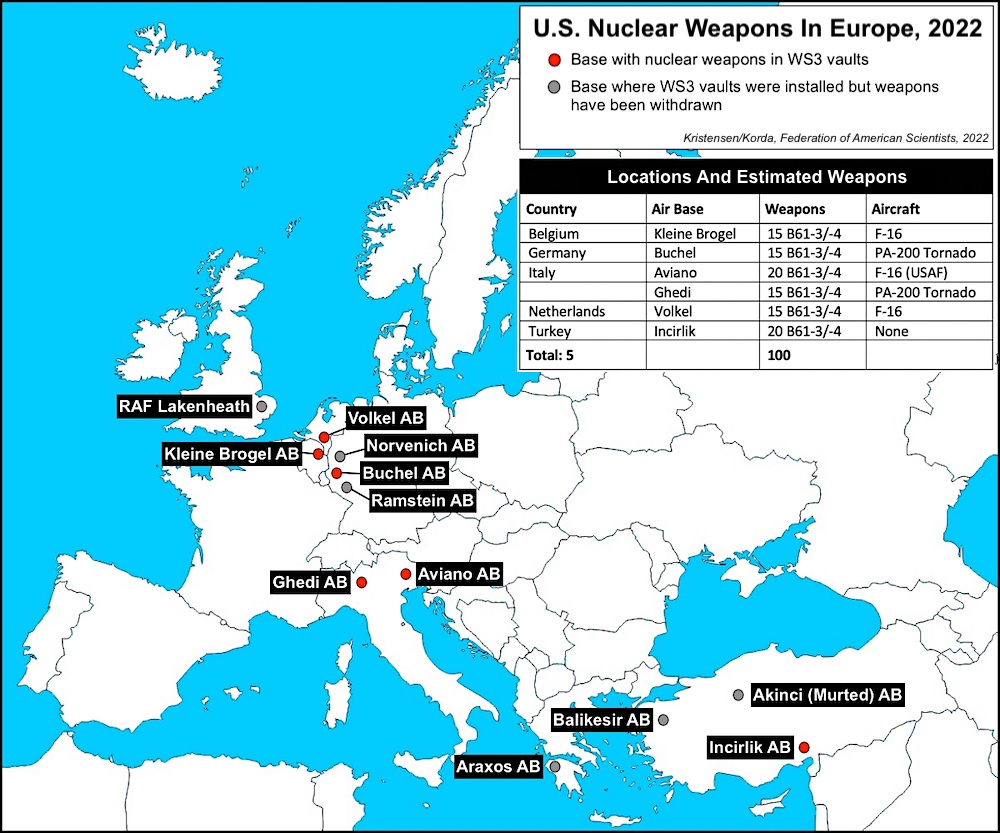
If the transfer of weapons to Belarus is completed, it will become the sixth nuclear-weapon host state. The other five hosting arrangements involve US nuclear weapons in Belgium, the Netherlands, Germany, Italy, and Turkey, in a practice euphemistically dubbed “nuclear sharing” by the US and its NATO allies. One other NATO member is increasingly vocal about wanting to join this gang. After Putin’s announcement about Belarus, Polish Prime Minister Mateusz Morawiecki repeated the call to become a host state for US nuclear weapons. Poland’s President Andrzej Duda had brought up this hosting option last year, but the idea had been floated in 2020 by Poland’s Ambassador to the United States………………………………………………………………………………….
There is a partially declassified history of US foreign nuclear weapon deployments from 1951-1977. The practice of stationing nuclear weapons in allied countries (or territories) began in 1951 with the deployment of weapon components to Guam, followed in 1954 by the dispatch of weapons to Morocco and the United Kingdom. In time, the US stationed its nuclear weapons in 16 countries, mostly in Europe and Asia (not counting Guam and Puerto Rico). Some US nuclear weapons were also stationed in Canada. By the late 1960s, there were about 7,000 US nuclear weapons in Europe, including bombs, missile warheads, artillery shells, and nuclear landmines. The number of US nuclear weapons in Europe peaked in 1971 at about 7,300 before beginning to decline later in the 1970s.
In 1959, the Soviet Union briefly deployed weapons to Eastern Germany. Its most prominent (albeit short-lived) nuclear weapons deployment was to Cuba in 1962. Later, in the mid-‘60s, longer deployments started, with Soviet nuclear weapons going to the Czech Republic, Hungary, Mongolia, Poland, and, again, East Germany. Moscow also deployed nuclear weapons in the Soviet republics, including strategic nuclear weapons in Kazakhstan, Belarus, and Ukraine.
With the end of the Cold War, the United States and Russia began to bring their weapons home. The Soviet Union had removed all weapons from Eastern Europe by the time it broke up in 1991. The withdrawal of all non-strategic weapons from former Soviet republics came by May 1992, and all strategic weapons were returned in November 1996.
Most US nuclear deployments in Asia ended in the mid-‘70s, although nuclear weapons stayed in South Korea until 1991. Deployments in Europe were significantly reduced (below 500 in 1994) and ended in Greece (2001) and in the United Kingdom (2009). However, the United States has not completed this process; about 100 US weapons remain abroad, stationed at bases in Belgium, the Netherlands, Germany, Italy and Turkey. Rather than withdraw the weapons from these countries, the US is sending modernized nuclear weapons to replace them.
The United Kingdom was the only other country to both host weapons (belonging to the US) and to deploy its own weapons in other countries. Its foreign deployments began in the 1960s and were limited to Cyprus, Singapore, and West Germany, and this practice ended in 1998.
There is no information on foreign deployments and nuclear hosting arrangements by other nuclear weapon states. There have been concerns that Pakistan might station some of its nuclear weapons in Saudi Arabia, with former US officials suggesting a “NATO-like model” might be one option for such an arrangement.
In current US nuclear hosting arrangements, the nuclear weapons are supposed to be under the control of US military personnel in peacetime. Specially trained host-nation air force units will carry and use these US weapons in wartime, in accordance with US and allied nuclear war plans. A similar arrangement now exists between Russia and Belarus, with Belarussian pilots trained to fly their planes while armed with Russian nuclear weapons; at least 10 planes may now be nuclear capable. It is also possible that Belarus could use its Russian-supplied, intermediate-range, dual-use Iskander-M missiles to deliver nuclear warheads.
According to the United Nations, the Russian nuclear hosting agreement with Belarus is the first such agreement since the NPT entered into force in 1970. The other hosting arrangements still operating are based on agreements that predate the treaty. The NPT prohibits both the acquisition of nuclear weapons by non-weapon states and the transfer of nuclear weapons to such countries by the five nuclear weapon states who are parties (Russia, China, the United States, the United Kingdom, and France)…………………………………….
While the treaty was being negotiated, US and Soviet officials agreed privately that existing nuclear hosting arrangements could continue even under the NPT.……………………………….
Most NPT member states have a different interpretation of nuclear sharing and for almost three decades have raised their concerns. …………………………………..
The most recent clash came at the August 2022 NPT Review Conference. Speaking on behalf of the 120 countries of the Non-Aligned Movement, Indonesia, said “[i]n the view of the Group … nuclear weapon-sharing by States Parties constitutes a clear violation of non-proliferation obligations undertaken by those Nuclear Weapon States (NWS) under Article I and by those Non-Nuclear Weapon States (NNWS) under Article II.” ………………………………………………………………
China is the only NPT nuclear-weapon state now consistently opposed to nuclear sharing. In its 2022 NPT Review Conference statement, China’s representative stated that “nuclear sharing arrangements run counter to the provisions of the NPT.” …………………………………………………………….
The most significant effort to confront the principles and practices of nuclear hosting is the UN Treaty on the Prohibition of Nuclear Weapons, which entered into force in 2021 and currently has almost 100 state signatories (all of whom also are NPT members). The TPNW prohibits the stationing of foreign nuclear weapons on the soil of its state parties under any circumstances. It offers a means for states who do not wish to be nuclear hosts to affirm this commitment and make it legally binding simply by joining the treaty. The TPNW also offers a path to membership for the states who currently have nuclear weapon hosting arrangements—if they sign the treaty they must undertake “prompt removal of such weapons, as soon as possible” and not later than 90 days. Once the weapons have been sent back home, the country has to make a declaration to this effect to the UN Secretary-General.
For states not yet ready to join the TPNW, several options are possible. States individually could decide to renounce nuclear hosting and sharing. For European NATO countries, one example is offered by Iceland and Lithuania, which are NATO members but refuse to host nuclear weapons under any circumstances. A less clear-cut option is offered by Denmark, Norway, and Spain, which do not allow deployment of nuclear weapons in peacetime.
States could also form nuclear-weapon free zones: Over 110 countries already are in nuclear-weapon-free zone agreements with neighbors. A European nuclear weapon free zone has been a long-standing idea. ………………………………………………
There are of course things nuclear weapon states could do. The five NPT nuclear weapon states could agree to a commitment on no-foreign-deployments as an effective measure relating to nuclear disarmament under their NPT Article 6 obligations…………………………………………
To establish a global principle, the UN General Assembly and the UN Security Council could determine that the hosting of nuclear weapons will henceforth be treated as a threat to international peace and security. https://thebulletin.org/2023/07/bombs-away-confronting-the-deployment-of-nuclear-weapons-in-non-nuclear-weapon-countries/
UK Government’s infrastructure advisors cast doubt over uks biggest energy projects including nuclear clearup
The UK Government’s infrastructure advisors have warned that it is unlikely
that work to efficiently categorise hazardous waste at the Sellafield site
will be a success.
The Infrastructure and Project Authority (IPA) has also
raised concerns about the majority of the Government’s other key energy
infrastructure programmes, including the Low-Cost Nuclear Programme funding
R&D for small modular reactors.
These warnings are contained within the
Authority’s new annual assessment. Published late last week, it assesses
whether 244 Government-backed projects with a total whole-life cost
exceeding £805bn are progressing well. Projects are given a ‘green’
rating if delivery if on time, there are no significant quality issues and
no other issues that could threaten delivery. Those that are unlikely to be
delivered without a major change of direction are ranked as ‘red’. Those
with delays, quality issues or other problems which may yet be resolved
receive an ‘amber’ rating.
Of the 19 projects covered that are overseen
by the Department for Energy Security and Net-Zero (DESNZ), only three get
the ‘green’ rating. These are the Local Authority Delivery scheme, which
funds councils to upgrade homes and reduce carbon; the SIXEP effluent
treatment plant and the storage plant at Sellafield.
But efforts to improve
analytical services at Sellafield, the former centre of nuclear
reprocessing in the UK, received a ‘red’ ranking. The Authority believes
that the successful delivery of the project “appears to be
unachievable”. The project concerts assessing and categorizing waste on
site.
The Authority has also downgraded the UK Government’s plans for a
major geological nuclear waste storage facility to ‘amber’, from
‘green’ in 2021. This facility is being built both to deal with waste
from new nuclear sites, but also to consolidate existing waste storage; at
present, more than 20 above-ground facilities across the UK are used, each
with a maximum design life of 100 years.
Two DESNZ Projects – Sizewell C
and the development of carbon capture and storage – are exempt from
assessment due to commercial sensitivities. Besides the analytical services
at Sellafield, the others are all ranked as ‘amber’. These include the
national rollout of smart meters to homes; the Net-Zero Hydrogen fund; the
Homes Upgrade Grant (HUG) for home retrofitting; the Public Sector
Decarbonisation Scheme; the Industrial Decarbonisation and Hydrogen Revenue
Support scheme and the Green Homes Grant.
Edie 24th July 2023
The coming Russian-Polish war
Armageddon Newsletter GILBERT DOCTOROW, JUL 23, 2023
This evening’s News of the Week program on Russian state television opened with a 30 minute documentary survey of Polish-Russian relations from the end of WWI and during the period of the Russian Civil War, when the government under Marshal Pilsudski wrested substantial territory from Russian control. It also dealt extensively with Poland’s well documented role as aggressor and occupier of Czechoslovak, Lithuanian, Ukrainian and Belarus lands from before the start of WWII and until Hitler overran Poland. ……………………..
Let us recall that on Friday Putin explained how and why we may expect the formal entry into the war of a Polish-Lithuanian-Ukrainian joint military force that will officially be presented as defending Ukrainian statehood by occupying the Western Ukraine. However, Putin described this as an occupying force which once installed in Lvov and Western Ukraine would never leave. This would in effect be a repeat of the sell-out of Ukrainian interests to Poles and cession of territory to Poland such as had been perpetrated by their leader Semyon Petlyura in April 1920 and has now been repeated in the secret agreements between presidents Zelensky of Ukraine and Duda of Poland. ……………………………………………………..
From Russian talk shows of the past several days, it is easy to understand the Kremlin’s reading of the present proxy war in and around Ukraine: Washington sees that the Ukrainian counter-offensive is a complete failure that has cost tens of thousands of lives among the Ukrainian armed forces and has seen the destruction of a large part of the Western equipment delivered to Ukraine over the past months. Instead of suing for peace, Washington seeks to open a ‘second front,’ using Poland for this purpose. …………………………………………….
The inescapable conclusion from the latest news is that Washington’s incendiary policies and continuing escalation of the conflict cannot secure Russia’s defeat. On the contrary, they may well lead to the total collapse of the NATO alliance once its military value is disproven in a way that cannot be talked away or papered over by the most creative propagandists in DC. https://gilbertdoctorow.substack.com/p/the-coming-russian-polish-war?utm_source=profile&utm_medium=reader2
1 This Month





PLEASE OPPOSE HR 8255 AND S.3639 – bills would accelerate satellite deployment, with no environmental review or safeguards – https://ncstd5li.quorum.us/campaign/169331/
To see nuclear-related stories in greater depth and intensity – go to https://nuclearinformation.wordpress.com
-
Archives
- October 2026 (29)
- September 2026 (339)
- August 2026 (330)
- July 2026 (355)
- June 2026 (287)
- May 2026 (306)
- April 2026 (356)
- March 2026 (251)
- February 2026 (267)
- January 2026 (308)
- December 2025 (358)
- November 2025 (359)
-
Categories
- 1
- 1 NUCLEAR ISSUES
- business and costs
- climate change
- culture and arts
- ENERGY
- environment
- health
- history
- indigenous issues
- Legal
- marketing of nuclear
- media
- opposition to nuclear
- PERSONAL STORIES
- politics
- politics international
- Religion and ethics
- safety
- secrets,lies and civil liberties
- spinbuster
- technology
- Uranium
- wastes
- weapons and war
- Women
- 2 WORLD
- ACTION
- AFRICA
- Atrocities
- AUSTRALIA
- Christina's notes
- Christina's themes
- culture and arts
- Events
- Fuk 2022
- Fuk 2023
- Fukushima 2017
- Fukushima 2018
- fukushima 2019
- Fukushima 2020
- Fukushima 2021
- general
- global warming
- Humour (God we need it)
- Nuclear
- RARE EARTHS
- Reference
- resources – print
- Resources -audiovicual
- Weekly Newsletter
- World
- World Nuclear
- YouTube
-
RSS
Entries RSS
Comments RSS

